Investor Presentation - Actionable Intelligence - Verint
←
→
Page content transcription
If your browser does not render page correctly, please read the page content below

Investor
Presentation
Actionable Intelligence®

July 2019

                                               © 2014
Confidential and proprietary information of Verint     Verint
                                                   Systems    Systems
                                                           Inc.   2018Inc.
                                                                © 2019     All Rights
                                                                       Verint  SystemsReserved   Worldwide.
                                                                                        Inc. All Rights Reserved Worldwide.
Disclaimers
Forward Looking Statements
This presentation contains "forward-looking statements," including statements regarding expectations, predictions, views,
opportunities, plans, strategies, beliefs, and statements of similar effect relating to Verint Systems Inc. These forward-
looking statements are not guarantees of future performance and they are based on management's expectations that
involve a number of known and unknown risks, uncertainties, assumptions, and other important factors, any of which could
cause our actual results to differ materially from those expressed in or implied by the forward-looking statements. The
forward-looking statements contained in this presentation are made as of the date of this presentation and, except as
required by law, Verint assumes no obligation to update or revise them, or to provide reasons why actual results may
differ. For a more detailed discussion of how these and other risks, uncertainties, and assumptions could cause Verint’s
actual results to differ materially from those indicated in its forward-looking statements, see Verint’s prior filings with the
Securities and Exchange Commission.

Non-GAAP Financial Measures
This presentation includes financial measures which are not prepared in accordance with generally accepted accounting
principles (“GAAP”), including certain constant currency measures. For a description of these non-GAAP financial
measures, including the reasons management uses each measure, and reconciliations of these non-GAAP financial
measures to the most directly comparable financial measures prepared in accordance with GAAP, please see the
appendices to this presentation, Verint’s earnings press releases, as well as the GAAP to non-GAAP reconciliation found
under the Investor Relations tab on Verint’s website www.verint.com.

                                                                                                                              2
Actionable Intelligence                                                                                                                        Strong
            Global Leader                                                                                                                             Momentum

                                                                                                                                                          $1,375
     MEETING CRITICAL
                                                            Actionable Intelligence
                                                                                                                                                                   Accelerating
                                                                                                                                               $1,245
     CUSTOMER NEEDS                                                                                                                 $1,150
                                                                                                                         $1,073
                                                                                                                                                                   Revenue Growth     1

       CLEAR GROWTH                                                                                                       FY17       FY18       FY19      FY20F
                                                            Automation and Cloud
         STRATEGY
                                                                                                                                                           $3.65
                                                                                                                                               $3.21

          SIGNIFICANT
                                                                                                                                    $2.81                          Double Digit
                                                                                                                         $2.51
         OPPORTUNITY
                                                            Market Inflection Point                                                                                EPS Growth     1

                                                                                                                          FY17       FY18       FY19      FY20F

1 Non-GAAP $ in millions, except per share data. FY20F based on May 29, 2019 guidance

Note: GAAP revenue for FY17 was $1,062 million, FY18 was $1,135 and FY19 was $1,230. GAAP Diluted EPS for FY17 was ($0.47), FY18 was ($0.10) and FY19 was $1.00                           3
Actionable Intelligence Platform

                                                        MASSIVE DATA CAPTURE

                                                            ANALYTICS AND
                                                        ARTIFICIAL INTELLIGENCE

                                                             ACTIONABLE
Recent Momentum                                               INSIGHTS            Accelerating Innovation
          Automation and Cloud                                                      1,000 Patents and Applications
                                                                                    150 in Automation Filed in Last 24 Months

                                            STRONG DEMAND FOR ACTIONABLE INTELLIGENCE
                                               $10 BILLION TAM GROWING DOUBLE DIGITS1

1   Gartner research and Verint estimates
                                                                                                                                4
Growth Strategy

  ACTIONABLE INTELLIGENCE FOR A                 ACTIONABLE INTELLIGENCE FOR A
   SMARTER ENTERPRISE                                    SAFER WORLD

      Elevating the Customer Experience                Accelerating Security Investigations
                     and                                                to
         Driving Operational Efficiency       Prevent and Neutralize Crime, Terror and Cyber Threats

                            ACTIONABLE INTELLIGENCE PLATFORM

                                                                                                       5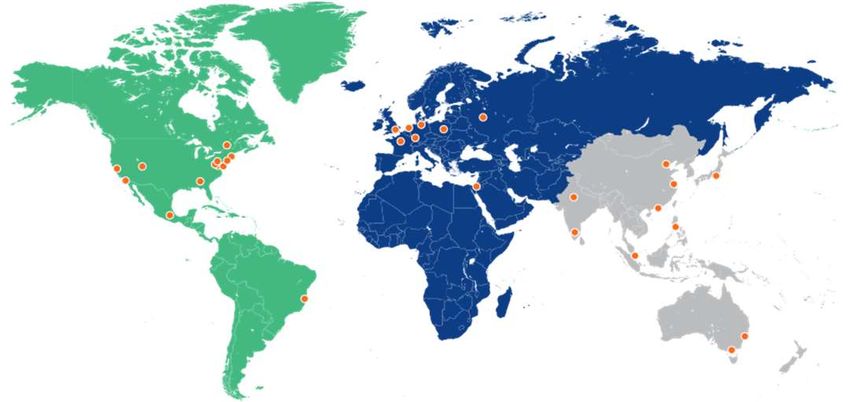
Actionable
Intelligence for a
Smarter
Enterprise

                     6
Enterprises Face Escalating Customer
Engagement Challenges
Need New Technology to do More Without Increasing Headcount

  CHALLENGE 1

   People Demand Better                                                  Response: Boards Demand
   Customer Experience                                                       CX Improvement
                                                                                                     WORKFORCE COST
                                                                                                        ALREADY
  CHALLENGE 2
                                                                                                       >$1 Trillion1
   Digital Transformation                                                  Response: Organizations
 Driving Interaction Growth                                                    Hire More Staff

    1 Sources:   Pelorus Associates, US Bureau of Labor Statistics and Verint estimates
                                                                                                                       7
Customer Engagement: Elevating CX
and Reducing Operating Cost
Verint Brings Automation to Customer Engagement Processes Across the Enterprise

  Enterprise     CONTACT CENTER                                                     FRAUD AND
                                    DIGITAL/MOBILE               MARKETING
  Functions        BACK OFFICE                                                     COMPLIANCE

                                                                                    FRAUD AND
    Verint      HYBRID WORKFORCE      AUTOMATED                 VOICE OF THE
                                                                                   COMPLIANCE
   Software        ENGAGEMENT        SELF SERVICE            CUSTOMER INSIGHTS
                                                                                   AUTOMATION

                                    Automation Infused Throughout the Enterprise

                                   ACTIONABLE INTELLIGENCE PLATFORM

                                                                                                8
Customer Value

 Financial Services                  Healthcare                          Retail                                Telecom
FUNCTION: Contact Center             FUNCTION: Digital Operations        FUNCTION: Marketing                   FUNCTION: Compliance

OBJECTIVE: Improve quality and       OBJECTIVE: Elevate customer         OBJECTIVE: Leverage the voice-        OBJECTIVE: Ensure customer
consistency of customer experience   experience and build loyalty in     of-the-customer to increase           data protection and avoid penalties
                                     competitive pharmaceutical market   revenue on their digital assets

VERINT SOLUTION                      VERINT SOLUTION                     VERINT SOLUTION                       VERINT SOLUTION

Deployed Verint Hybrid               Deployed Verint Automated           Deployed Verint Voice-of-the-         Deployed Verint Fraud and
Workforce Engagement                 Self Service solution to            Customer Insights solution to         Compliance solution to
solution to automatically capture    automatically answer patient’s      transform digital interactions into   automatically evaluate 10
and analyze interactions and         medical questions intelligently     valuable insights to automatically    million+ customer interactions
recommend next best actions in                                           identify lost revenue                 per year to detect compliance
real-time                            Provided a better patient           opportunities                         issues
                                     experience and elevated patient
Ensured adherence to processes       relationship without adding         Improved digital customer             Enabled analysis of 100% of
across millions of interactions to   headcount                           journeys to increase purchases        interactions without additional
improve operational efficiencies                                         and drive revenue                     headcount – prior manual
                                                                                                               method only covered 3% of
                                                                                                               interactions and created
                                                                                                               significant financial exposure

                                                                                                                                                     9
Cloud Revenue Acceleration
Next Three Years Cloud Growth 30% to 40% CAGR

                                               ~ $250
                                             (>40% growth)

                           $165
   $135                                                                    • FY19 ARR of $200m2 (~40% growth) driving >40% growth in FY20F

                                                                           • Maintenance revenue over $300m, opportunity to convert at 2x

                                                                           • Multi-tenant SAAS gross margins of 80%
    FY18
    FY18                    FY19
                            FY19                   FY20F
                                                   FY20F
 Non-GAAP Cloud Revenue ($ in millions)1

                                                                           • Broadest customer engagement cloud portfolio

               Competitive                                                 • Flexible hybrid cloud model with global reach
              Differentiation
                                                                           • Strong scalability from SMB to enterprise

     1 GAAP   cloud revenue during FY18 and FY19 was $122 million and $151 million, respectively
     2 Represents  cloud ARR calculated using non-GAAP cloud revenue as of Q4 FY19. Cloud ARR calculated using GAAP cloud revenue as of Q4 FY19 was $177 million   10
Leading Organizations Partner with Verint
Simplify. Modernize. Automate.
11SMB Opportunity Driven by Cloud and
Channel Partners
Cloud Portfolio Purpose-Built for Small to Medium-Sized Businesses
SMB GROWTH OPPORTUNITY GROWING PARTNER ECOSYSTEM
15% of Customer Engagement Revenue
Cloud Facilitates SMB Growth
TT
Leading SMB Cloud Portfolio
Strong Partners for SMB and Enterprise
12Recap: Automation and Cloud Strategy Drive Growth
• Automation is critical to elevating C/X while managing headcount costs
Automation • Robotics process automation purpose-built for customer engagement
• Verint solutions infuse automation across the enterprise
• Elevated demand for cloud across all customer engagement buyers
• Maintenance conversion: expected to contribute a few points of growth per year in
Cloud FY21 and FY22
• Verint cloud is differentiated across applications, go-to-market and operationsActionable
Intelligence for a
Safer World
14Security Threats are More Pervasive
and Complex
Organizations Find it More Challenging to Detect, Investigate and Neutralize Threats
EXPONENTIAL DATA GROWTH MAKES DERIVING INCREASING NEED FOR
INSIGHTS MORE CHALLENGING ADVANCED DATA MINING SOLUTION
$4 Billion TAM - Sustainable Double Digit Growth Opportunity1
1 Based on Verint estimates
15Verint Automates and Shortens Investigations
Advanced Data Mining Software Differentiated by Automation and Domain Expertise
End GOVERNMENT ENTERPRISE
Markets
Verint CYBER CYBER SITUATIONAL
Software INTELLIGENCE SECURITY INTELLIGENCE
Automation and Domain Expertise Infused Throughout Our Portfolio
ACTIONABLE INTELLIGENCE PLATFORM
16Customer Value
Government Cyber Law Enforcement Leading Semiconductor
Security Authority Organization Company
LOCATION: APAC LOCATION: Europe LOCATION: U.S. with locations globally
OBJECTIVE: Centrally protect multiple OBJECTIVE: Fight organized crime, drug OBJECTIVE: Improve employees and
government agencies from cyber attacks trafficking and other criminal activities assets protection without increasing costs
VERINT SOLUTION VERINT SOLUTION VERINT SOLUTION
Deployed Verint’s Cyber solution to Deployed Verint’s Web, Social and Deployed Verint’s Situational
help identify malware and automate Fusion Intelligence solution to Intelligence solution to capture
SOC operations for better capture and analyze social and analyze IoT data across
identification, prioritization and media/web data and unearth critical multiple locations around the world
remediation of attacks insights to expedite complex
investigations Solution designed to improve
Reduced time-to-detect (from 1 employee safety, protect assets,
week to 4 hours) and saved 40% Reduced average case resolution and speed response without
SOC staff time by 50% (from 1 week to 3.5 days) increasing security personnel.
17Growing Customer Base Across Government
and Enterprise
Added 100 New Customers Last Year
GOVERNMENT ENTERPRISE
400 Customers 600 Customers
BANK OF TAIWAN
Global Presence 100+ Countries
80% of Cyber Intelligence Revenue 20% of Cyber Intelligence Revenue
Diversified Government Agencies Industry Leaders Partner with Verint
18Strong Revenue Growth and Margin
Expansion Opportunity
• Double digit growth opportunity
• Broad portfolio powered by differentiated data mining software
• Growing customer base and improved visibility
DATA MINING SOFTWARE LEADERSHIP
Software Model Transition
>20%
• Software model transition started FY17 to drive margin expansion
15.5%
13.6%
12.8% • Achieved ~300bps margin improvement through FY19
• Targeting additional ~500bps margin improvement within 3 years
FY17 FY18 FY19 FY22F
Fully Allocated Estimated Adjusted EBITDA Margin(1)
(1) Please see the reconciliation for Fully Allocated Estimated Adjusted EBITDA Margin in the appendices.
19Recap: Automation and Software Model Drives Growth
• Data Mining software is critical to detect, investigate and neutralize security threats
Automation • Automation helps address shortage of data scientists and analysts
• Verint infuses automation across portfolio
• Significant benefits to customers from software productization and frequent refreshes
Software
• Software model makes our portfolio even more competitively differentiated
Model
• Verint offers customers the flexibility to shift from integrator model to software model
20Financial Review
21FY2019 Financial Highlights
Strong Performance Across Every Key Metric
GAAP ($ in millions, GROWTH Non-GAAP ($ in millions, GROWTH
except per FROM PRIOR except per FROM PRIOR
share data) YEAR share data) YEAR
Revenue $1,230 +8.3% Revenue $1,245 +8.2%
Gross Margin 66.6% +120bps
Gross Margin 63.5% +290bps
Operating Income $267 +18.0%
Operating Income $114 +134.9%
Operating Margin 21.4% +180bps
Operating Margin 9.3% +500bps
Adjusted EBITDA $297 +15.6%
Diluted EPS $1.00 NA Adjusted EBITDA Margin 23.8% +150bps
Operating Cash Flow $215 +22.1% Diluted EPS $3.21 +14.2%
Note: Please see appendices for GAAP to Non-GAAP reconciliations.
22Q1 Financial Highlights
Strong Start to FY20
GAAP ($ in millions, GROWTH Non-GAAP ($ in millions, GROWTH
except per FROM PRIOR except per FROM PRIOR
share data) YEAR share data) YEAR
Revenue $315 +9.0% Revenue $324 +11.0%
Gross Margin 67.4% +350bps
Gross Margin 63.8% +320bps
Operating Income $62 +35.0%
Operating Income $14 +85.9%
Operating Margin 19.2% +340bps
Operating Margin 4.6% +190bps
Adjusted EBITDA $70 29.1%
Diluted EPS $0.02 NA
Adjusted EBITDA Margin 21.6% +300bps
Operating Cash Flow $93 +54.7% Diluted EPS $0.73 +38.0%
Note: Please see appendices for GAAP to Non-GAAP reconciliations.
23Accelerating Revenue Growth with Margin Expansion
FY20 Guidance and Three Year Targets: 10% Revenue CAGR and 14% EPS CAGR
Non-GAAP Revenue Non-GAAP EPS
($ in millions)
$1,650 $4.70
$1,375 $3.65
$1,245 $3.21
$1,073 $1,150 $2.51 $2.81
FY17 FY18 FY19 FY20 FY22 FY17 FY18 FY19 FY20 FY22
Guidance Three Guidance Three
Year Year
GAAP Revenue $1,062 $1,135 $1,230 Target GAAP EPS ($0.47) ($0.10) $1.00
Target
Note: FY19 actual, FY20 guidance and FY22 three year targets reflect the adoption of ASC 606.
24Positive Dynamics in Both Segments
Customer Engagement Cyber Intelligence
Cloud First Strategy Software Model Strategy
25Customer
Engagement
Cloud
First
Strategy
26Cloud First Strategy
Positive Impact to Financial Model – Recurring Revenue Growth with Margin Expansion
$ in millions, Non-GAAP FY2018 FY2019 FY2020 Guidance FY2022 Three Year Targets
Recurring Revenue $440 $481 ~61% of Total ~70% of Total
% Growth 7.0% 9.1%
Nonrecurring Revenue $315 $330 ~39% of Total ~30% of Total
% Growth 3.3% 5.1%
Total Revenue $755 $811 ~$900 ~$1,080
% Growth 5.4% 7.5% ~11.0% ~10.0% CAGR
Fully Allocated Estimated Gross Profit $515 $560
Gross Margin 68.2% 69.0% ~70.0% ~70.0%
Fully Allocated Estimated Operating Income $183 $210
% of Revenue 24.2% 25.9% Up ~50bps ~27.5%
Fully Allocated Estimated Adjusted EBITDA $203 $229
% of Revenue 26.9% 28.3% ~28.5% ~30.0%
27Cloud Definitions
• Recurring Revenue – cloud and maintenance revenue
• Cloud Revenue – SaaS and Optional Managed Services
• SaaS – software deployed in the cloud (predominately offered as bundled SaaS)
• Bundled SaaS – software sold together with standard managed services
• Unbundled SaaS – software sold separately from managed services
• Optional Managed Services – recurring services to address technical and business
customer requirements
• Maintenance Revenue – recurring customer support revenue from on-premise deployments
• Cloud ARR – the value of cloud revenue contracts normalized to a one-year period
28Cloud First Strategy Drives Cloud Revenue Growth
Growth Generated by New SaaS Deals and Maintenance Conversion
($ in millions,
Non-GAAP)
Cloud Revenue
$500
~$450
$450 Maintenance Conversion Opportunity
$400 Cloud
$350 ARR
$200 • Expect FY20 maintenance revenue >$300 Million
$300
~$250
$250 • Opportunity for 2x revenue uplift
$200 $165 • Expect conversion to contribute a few points to
$135
$150
FY21 & FY22 growth
$100
$50
$0
FY18 FY19 FY20 FY22 Three
Guidance Year Target
Minimal Maintenance Conversion
GAAP Cloud
$122 $151
Revenue
Note: ~$450 million of FY22 non-GAAP cloud revenue assumes the high end of our 30% to 40% CAGR target range
29Cloud First Strategy – Three Year Model Recap
FY19 FY22 Three Year Targets
(Non-GAAP unless otherwise noted, $ in millions) (1/31/19) (1/31/22)
Total (@ 10% CAGR) $811 ~$1,080
Recurring Revenue (Cloud and Maintenance) $481 ~$750
Revenue
Cloud (@ 40% CAGR) (2) (3) $165 ~$450
% SaaS (1) ~75% ~85%
% Optional Managed Services (1) ~25% ~15%
Maintenance $316 ~$300
Nonrecurring Revenue (On-Premise and Services) $330 Similar Level
% Cloud 20% >40%
Mix
% Recurring 59% ~70%
Gross Margin 69.0% ~70%
Recurring Revenue Gross Margin Mid to High 70%s Similar Level
(4)
SaaS Gross Margin Mid 70%s 80% for new deals
Margins
Optional Managed Services Gross Margin Mid 30%s Similar Level
Maintenance Gross Margin Mid 80%s Similar Level
Nonrecurring Revenue Gross Margin Mid 50%s Similar Level
Operating Margin 25.9% ~27.5%
Adjusted EBITDA Margin 28.3% ~30%
1 GAAP and Non-GAAP.
2 Cloud guidance 30% to 40% CAGR; 40% assumed for Cloud revenue target.
3 SaaS revenue includes bundled SaaS, software with standard managed services and unbundled SaaS where managed services are purchased separately.
4 Margins are estimated 30
Note: Our FY22 targets are on a non-GAAP basis.Cyber
Intelligence
Software
Model
Strategy
31Transition to Software Model
Positive Impact to Financial Model – Revenue Growth with Margin Expansion
$ in millions, Non-GAAP FY2018 FY2019 FY2020 Guidance FY2022 Three Year Targets
Revenue $395 $434 ~$475 ~$575
% Growth 10.9% 9.7% ~10.0% ~10.0% CAGR
Fully Allocated Estimated Gross Profit $238 $269
Gross Margin 60.1% 62.0% Approaching Mid 60%s Approaching 70%
Fully Allocated Estimated Operating Income $43 $57
% of Revenue 11.0% 13.1% ~14.0% >17.5%
Fully Allocated Estimated Adjusted EBITDA $54 $67
% of Revenue 13.6% 15.5% ~16.5% >20.0%
32Software Model Strategy
Productization Drives Customer Benefits and Better Margins
Traditional Integrator Model New Software Model
Integrator model (bundled software, hardware, Software model (unbundle and productize software)
customizations and integration services) Verint CIS Gross Margin: approaching 70% in 3 years
Verint CIS Gross Margin: currently low 60%s Customer Benefits: accelerate software refresh cycles
Customer Benefits: single vendor accountability
Software Model Drives On-going Margin Improvements
>20%
15.5%
Software productization drives margin expansion 12.8% 13.6%
Over 700bps of improvement expected from FY17 to FY22
FY17 FY18 FY19 FY22 Three
Year Target
Fully Allocated Estimated Adjusted EBITDA Margin(1)
(1) Please see the reconciliation for Fully Allocated Estimated Adjusted EBITDA Margin in the appendices.
33Efficient Capital Structure
As of 4/30/19
Cash $516 million
Net Debt (Term B and Convertible, net of Cash) $301 million
Ratings Moody’s: Ba2; S&P: BB
Average Interest Rate 2.8%
Net Debt/LTM Adjusted EBITDA 1.0x
Notes:
• Moody’s upgraded Verint’s corporate family rating to Ba2 from Ba3 on June 24, 2019.
• Convertible senior notes due June 1, 2021 and term loan due June 29, 2024.
• Financial data is non-GAAP. See appendices for reconciliation.
• Cash includes cash, cash equivalents, short-term restricted cash and cash equivalents and restricted time deposits, short-term investments, long-term restricted cash, and long-term
restricted investments.
• Net Debt includes long-term restricted cash and long-term restricted investments, and excludes convertible note discounts and other unamortized discounts and issuance costs
associated with our debt, which are required under GAAP. See appendices for reconciliation.
• Average interest rate excludes the impact of amortization of discounts and deferred financing fees.
34Three Year Non-GAAP Targets (FY22)
Adjusted
Revenue: Diluted EPS:
Verint EBITDA Margin:
~$1.65 Billion $4.70
~27%
Adjusted Cloud Revenue Mix:
Customer Revenue: >40%
EBITDA Margin:
Engagement ~$1.08 Billion Recurring Revenue Mix:
~30% ~70%
Adjusted Gross Margin
Cyber Revenue: Expansion from
EBITDA Margin:
Intelligence ~$575 Million Software Model
>20% Transition
35Thank You
36Appendices
37About Non-GAAP Financial Measures
The following tables include reconciliations of certain financial measures not prepared in accordance with Generally Accepted Accounting Principles (“GAAP”), consisting of
non-GAAP revenue, non-GAAP cloud revenue, non-GAAP gross profit and gross margin, non-GAAP operating income and operating margin, non-GAAP other income
(expense), net, non-GAAP provision (benefit) for income taxes and non-GAAP effective income tax rate, non-GAAP net income attributable to Verint Systems Inc., non-
GAAP net income per common share attributable to Verint Systems Inc., adjusted EBITDA, net debt, constant currency measures, estimated GAAP and non-GAAP fully
allocated gross margins, and estimated non-GAAP fully allocated operating margins and estimated fully allocated adjusted EBITDA to the most directly comparable
financial measures prepared in accordance with GAAP.
We believe these non-GAAP financial measures, used in conjunction with the corresponding GAAP measures, provide investors with useful supplemental information
about the financial performance of our business by:
• facilitating the comparison of our financial results and business trends between periods, by excluding certain items that either can vary significantly in amount and
frequency, are based upon subjective assumptions, or in certain cases are unplanned for or difficult to forecast,
• facilitating the comparison of our financial results and business trends with other technology companies who publish similar non-GAAP measures, and
• allowing investors to see and understand key supplementary metrics used by our management to run our business, including for budgeting and forecasting, resource
allocation, and compensation matters.
We also make these non-GAAP financial measures available because a number of our investors have informed us that they find this supplemental information useful.
Non-GAAP financial measures should not be considered in isolation as substitutes for, or superior to, comparable GAAP financial measures. The non-GAAP financial
measures we present have limitations in that they do not reflect all of the amounts associated with our results of operations as determined in accordance with GAAP, and
these non-GAAP financial measures should only be used to evaluate our results of operations in conjunction with the corresponding GAAP financial measures. These non-
GAAP financial measures do not represent discretionary cash available to us to invest in the growth of our business, and we may in the future incur expenses similar to or
in addition to the adjustments made in these non-GAAP financial measures. Other companies may calculate similar non-GAAP financial measures differently than we do,
limiting their usefulness as comparative measures.
38About Non-GAAP Financial Measures
Our non-GAAP financial measures are calculated by making the following adjustments to our GAAP financial measures:
• Revenue adjustments. We exclude from our non-GAAP revenue the impact of fair value adjustments required under GAAP relating to cloud services and customer
support contracts acquired in a business acquisition, which would have otherwise been recognized on a stand-alone basis. We believe that it is useful for investors to
understand the total amount of revenue that we and the acquired company would have recognized on a stand-alone basis under GAAP, absent the accounting
adjustment associated with the business acquisition. Our non-GAAP revenue also reflects certain adjustments from aligning an acquired company’s revenue recognition
policies to our policies. We believe that our non-GAAP revenue measure helps management and investors understand our revenue trends and serves as a useful
measure of ongoing business performance.
• Amortization of acquired technology and other acquired intangible assets. When we acquire an entity, we are required under GAAP to record the fair values of the
intangible assets of the acquired entity and amortize those assets over their useful lives. We exclude the amortization of acquired intangible assets, including acquired
technology, from our non-GAAP financial measures because they are inconsistent in amount and frequency and are significantly impacted by the timing and size of
acquisitions. We also exclude these amounts to provide easier comparability of pre- and post-acquisition operating results.
• Stock-based compensation expenses. We exclude stock-based compensation expenses related to restricted stock awards, stock bonus programs, bonus share
programs, and other stock-based awards from our non-GAAP financial measures. We evaluate our performance both with and without these measures because stock-
based compensation is typically a non-cash expense and can vary significantly over time based on the timing, size and nature of awards granted, and is influenced in
part by certain factors which are generally beyond our control, such as the volatility of the price of our common stock. In addition, measurement of stock-based
compensation is subject to varying valuation methodologies and subjective assumptions, and therefore we believe that excluding stock-based compensation from our
non-GAAP financial measures allows for meaningful comparisons of our current operating results to our historical operating results and to other companies in our
industry.
• Unrealized gains and losses on certain derivatives, net. We exclude from our non-GAAP financial measures unrealized gains and losses on certain foreign currency
derivatives which are not designated as hedges under accounting guidance. We exclude unrealized gains and losses on foreign currency derivatives that serve as
economic hedges against variability in the cash flows of recognized assets or liabilities, or of forecasted transactions. These contracts, if designated as hedges under
accounting guidance, would be considered “cash flow” hedges. These unrealized gains and losses are excluded from our non-GAAP financial measures because they
are non-cash transactions which are highly variable from period to period. Upon settlement of these foreign currency derivatives, any realized gain or loss is included in
our non-GAAP financial measures.
39About Non-GAAP Financial Measures
• Amortization of convertible note discount. Our non-GAAP financial measures exclude the amortization of the imputed discount on our convertible notes. Under
GAAP, certain convertible debt instruments that may be settled in cash upon conversion are required to be bifurcated into separate liability (debt) and equity (conversion
option) components in a manner that reflects the issuer’s assumed non-convertible debt borrowing rate. For GAAP purposes, we are required to recognize imputed
interest expense on the difference between our assumed non-convertible debt borrowing rate and the coupon rate on our $400.0 million of 1.50% convertible notes. This
difference is excluded from our non-GAAP financial measures because we believe that this expense is based upon subjective assumptions and does not reflect the cash
cost of our convertible debt.
• Losses and expenses on early retirements or modifications of debt. We exclude from our non-GAAP financial measures losses on early retirements of debt
attributable to refinancing or repaying our debt, and expenses incurred to modify debt terms, because we believe they are not reflective of our ongoing operations.
• Acquisition expenses, net. In connection with acquisition activity (including with respect to acquisitions that are not consummated), we incur expenses, including legal,
accounting, and other professional fees, integration costs, changes in the fair value of contingent consideration obligations, and other costs. Integration costs may
consist of information technology expenses as systems are integrated across the combined entity, consulting expenses, marketing expenses, and professional fees, as
well as non-cash charges to write-off or impair the value of redundant assets. We exclude these expenses from our non-GAAP financial measures because they are
unpredictable, can vary based on the size and complexity of each transaction, and are unrelated to our continuing operations or to the continuing operations of the
acquired businesses.
• Restructuring expenses. We exclude restructuring expenses from our non-GAAP financial measures, which include employee termination costs, facility exit costs,
certain professional fees, asset impairment charges, and other costs directly associated with resource realignments incurred in reaction to changing strategies or
business conditions. All of these costs can vary significantly in amount and frequency based on the nature of the actions as well as the changing needs of our business
and we believe that excluding them provides easier comparability of pre- and post-restructuring operating results.
• Impairment charges and other adjustments. We exclude from our non-GAAP financial measures asset impairment charges (other than those associated with
restructuring or acquisition activity), rent expense for redundant facilities, gains or losses on sales of property, gains or losses on settlements of certain legal matters,
and certain professional fees unrelated to our ongoing operations, including $1.9 million of fees and expenses for the three months ended April 30, 2019 related to a
shareholder proxy contest, all of which are unusual in nature and can vary significantly in amount and frequency.
40About Non-GAAP Financial Measures
• Non-GAAP income tax adjustments. We exclude our GAAP provision (benefit) for income taxes from our non-GAAP measures of net income attributable to Verint
Systems Inc., and instead include a non-GAAP provision for income taxes, determined by applying a non-GAAP effective income tax rate to our income before provision
for income taxes, as adjusted for the non-GAAP items described above. The non-GAAP effective income tax rate is generally based upon the income taxes we expect
to pay in the reporting year. Our GAAP effective income tax rate can vary significantly from year to year as a result of tax law changes, settlements with tax authorities,
changes in the geographic mix of earnings including acquisition activity, changes in the projected realizability of deferred tax assets, and other unusual or period-specific
events, all of which can vary in size and frequency. We believe that our non-GAAP effective income tax rate removes much of this variability and facilitates
meaningful comparisons of operating results across periods. Our non-GAAP effective income tax rates for the year ending January 31, 2020 is currently approximately
10%, and was 11.0% for the year ended January 31, 2019. We evaluate our non-GAAP effective income tax rate on an ongoing basis and it can change from time to
time. Our non-GAAP income tax rate can differ materially from our GAAP effective income tax rate.
Customer Engagement Cloud, Recurring and Nonrecurring Revenue Metrics
Recurring revenue, on both a GAAP and non-GAAP basis, is the portion of our revenue that we believe is likely to be renewed in the future, and primarily consists of initial
and renewal post contract support and cloud revenue.
Nonrecurring revenue, on both a GAAP and non-GAAP basis, primarily consists of our perpetual licenses, consulting, implementation and installation services, and
training.
Cloud revenue, on both a GAAP and non-GAAP basis, primarily consists of SaaS and optional managed services.
SaaS revenue includes bundled SaaS, software with standard managed services and unbundled SaaS that we account for as term licenses where managed services are
purchased separately.
Optional Managed Services is recurring services that are intended to improve our customers operations and reduce expenses.
We believe that recurring revenue, nonrecurring revenue, and cloud revenue provide investors with useful insight into the nature and sustainability of our revenue streams.
The recurrence of these revenue streams in future periods depends on a number of factors including contractual periods and customers' renewal decisions. Please see
“Revenue adjustments” above for an explanation for why we present these revenue numbers on both a GAAP and non-GAAP basis.
41About Non-GAAP Financial Measures
Adjusted EBITDA
Adjusted EBITDA is a non-GAAP measure defined as net income (loss) before interest expense, interest income, income taxes, depreciation expense, amortization
expense, revenue adjustments, restructuring expenses, acquisition expenses, and other expenses excluded from our non-GAAP financial measures as described above.
We believe that adjusted EBITDA is also commonly used by investors to evaluate operating performance between companies because it helps reduce variability caused by
differences in capital structures, income taxes, stock-based compensation accounting policies, and depreciation and amortization policies. Adjusted EBITDA is also used
by credit rating agencies, lenders, and other parties to evaluate our creditworthiness.
Net Debt
Net Debt is a non-GAAP measure defined as the sum of long-term and short-term debt on our consolidated balance sheet, excluding unamortized discounts and issuance
costs, less the sum of cash and cash equivalents, restricted cash, restricted cash equivalents, restricted bank time deposits, and restricted investments (including long-
term portions), and short-term investments. We use this non-GAAP financial measure to help evaluate our capital structure, financial leverage, and our ability to reduce
debt and to fund investing and financing activities, and believe that it provides useful information to investors.
42Financial Outlook
Our non-GAAP outlook for the year ending January 31, 2020 excludes the following GAAP measures which we are able to quantify with reasonable certainty:
• Amortization of intangible assets of approximately $55 million.
• Amortization of discount on convertible notes of approximately $12 million.
Our non-GAAP outlook for the year ending January 31, 2020 excludes the following GAAP measures for which we are able to provide a range of probable significance:
• Revenue adjustments are expected to be between approximately $24 million and $26 million.
• Stock-based compensation is expected to be between approximately $73 million and $77 million, assuming market prices for our common stock approximately
consistent with current levels.
Our non-GAAP outlook does not include the potential impact of any in-process business acquisitions that may close after the date hereof, and, unless otherwise
specified, reflects foreign currency exchange rates approximately consistent with current rates.
We are unable, without unreasonable efforts, to provide a reconciliation for other GAAP measures which are excluded from our non-GAAP outlook, including the impact
of future business acquisitions or acquisition expenses, future restructuring expenses, and non-GAAP income tax adjustments due to the level of unpredictability and
uncertainty associated with these items. For these same reasons, we are unable to assess the probable significance of these excluded items. While historical results
may not be indicative of future results, actual amounts for the three months ended April 30, 2019 and years ended January 31, 2019 and 2018 for the GAAP measures
excluded from our non-GAAP outlook appear in the GAAP to Non-GAAP Reconciliation Tables contained in this presentation.
43Financial Outlook
Our non-GAAP Consolidated, Customer Engagement, and Cyber Intelligence three-year targets exclude various GAAP measures, including:
• Amortization of intangible assets.
• Stock-based compensation expenses.
• Revenue adjustments.
• Acquisition expenses.
• Restructuring expenses.
Our non-GAAP Consolidated three-year targets also reflect income tax provisions on a non-GAAP basis.
We are unable, without unreasonable efforts, to provide a reconciliation for these GAAP measures which are excluded from our non-GAAP Consolidated, Customer
Engagement, and Cyber Intelligence three-year targets, due to the level of unpredictability and uncertainty associated with these items. For these same reasons, we
are unable to assess the probable significance of these excluded items.
Our non-GAAP Consolidated, Customer Engagement, and Cyber Intelligence three-year targets reflect foreign currency exchange rates approximately consistent with
current rates.
44GAAP to Non-GAAP Reconciliations
($ in millions)
Three Months Ended Year Ended Three Months Ended
April 30, 2018 July 31, 2018 October 31, 2018 January 31, 2019 January 31, 2019 April 30, 2019
Revenue Reconciliation
GAAP revenue $ 289.2 $ 306.3 $ 304.0 $ 330.2 $ 1,229.7 $ 315.3
Revenue adjustments 2.8 2.2 4.0 6.5 15.4 8.9
Non-GAAP revenue $ 292.0 $ 308.5 $ 308.0 $ 336.7 $ 1,245.1 $ 324.2
Gross Profit Reconciliation
GAAP gross profit $ 175.1 $ 193.0 $ 192.7 $ 219.7 $ 780.5 $ 201.1
GAAP gross m argin 60.6% 63.0% 63.4% 66.5% 63.5% 63.8%
Revenue adjustments 2.8 2.2 4.0 6.5 15.4 8.9
Amortization of acquired technology 7.4 5.5 5.9 6.5 25.4 6.7
Stock-based compensation expenses 0.8 1.9 1.4 1.6 5.7 1.4
Acquisition expenses - - - 0.3 0.4 -
Restructuring expenses 0.4 0.7 0.1 0.3 1.5 0.5
Non-GAAP gross profit $ 186.5 $ 203.3 $ 204.1 $ 234.9 $ 828.9 $ 218.6
Non-GAAP gross m argin 63.9% 65.9% 66.3% 69.8% 66.6% 67.4%
Note: Amounts may not cross foot due to rounding. 45GAAP to Non-GAAP Reconciliations
($ in millions)
Three Months Ended Year Ended Three Months Ended
April 30, 2018 July 31, 2018 October 31, 2018 January 31, 2019 January 31, 2019 April 30, 2019
Operating Incom e Reconciliation
GAAP operating incom e $ 7.8 $ 29.2 $ 33.7 $ 43.6 $ 114.2 $ 14.5
As a percentage of GAAP revenue 2.7% 9.5% 11.1% 13.2% 9.3% 4.6%
Revenue adjustments 2.8 2.2 4.0 6.5 15.4 8.9
Amortization of acquired technology 7.4 5.5 5.9 6.5 25.4 6.7
Amortization of other acquired intangible assets 7.7 7.4 7.6 8.3 31.0 7.7
Stock-based compensation expenses 16.4 17.5 16.6 16.1 66.7 17.1
Acquisition expenses, net 2.3 0.1 1.9 5.7 9.9 3.9
Restructuring expenses 1.1 0.9 1.0 1.9 4.9 1.4
Other adjustments 0.6 0.6 (1.5) (0.4) (0.6) 2.1
Non-GAAP operating incom e $ 46.1 $ 63.4 $ 69.2 $ 88.2 $ 266.9 $ 62.3
As a percentage of non-GAAP revenue 15.8% 20.6% 22.5% 26.2% 21.4% 19.2%
Other Expense Reconciliation
GAAP other expense, net $ (8.7) $ (10.0) $ (7.8) $ (9.9) $ (36.5) $ (9.3)
Unrealized (gains) losses on derivatives, net (0.5) 0.4 0.4 0.9 1.1 0.7
Amortization of convertible note discount 2.9 2.9 2.9 3.0 11.9 3.1
Acquisition expenses, net - 0.3 - 0.1 0.4 (0.1)
Non-GAAP other expense, net $ (6.3) $ (6.4) $ (4.5) $ (5.9) $ (23.1) $ (5.6)
Note: Amounts may not cross foot due to rounding. 46GAAP to Non-GAAP Reconciliations
($ in millions, except share and per share data; shares in thousands)
Three Months Ended Year Ended Three Months Ended
April 30, 2018 July 31, 2018 October 31, 2018 January 31, 2019 January 31, 2019 April 30, 2019
Tax Provision (Benefit) Reconciliation
GAAP provision (benefit) for incom e taxes $ 0.3 $ (3.7) $ 5.6 $ 5.4 $ 7.5 $ 1.4
GAAP effective incom e tax rate -28.8% -19.4% 21.7% 16.0% 9.7% 27.3%
Non-GAAP tax adjustments 4.0 9.7 1.4 4.2 19.4 4.0
Non-GAAP provision for incom e taxes $ 4.3 $ 6.0 $ 7.0 $ 9.6 $ 26.9 $ 5.4
Non-GAAP effective incom e tax rate 10.7% 10.5% 10.8% 11.7% 11.0% 9.5%
Net (Loss) Incom e Attributable to Verint System s Inc. Reconciliation
GAAP net (loss) incom e attributable to Verint System s Inc. $ (2.2) $ 22.0 $ 18.9 $ 27.3 $ 66.0 $ 1.6
Total GAAP net (loss) income adjustments 36.7 28.1 37.5 44.4 146.7 47.5
Non-GAAP net incom e attributable to Verint System s Inc. $ 34.5 $ 50.1 $ 56.4 $ 71.7 $ 212.7 $ 49.1
GAAP diluted net (loss) income per common share attributable to $ (0.03) $ 0.33 $ 0.29 $ 0.41 $ 1.00 $ 0.02
Verint Systems Inc.
Non-GAAP diluted net income per common share attributable to $ 0.53 $ 0.76 $ 0.85 $ 1.08 $ 3.21 $ 0.73
Verint Systems Inc.
GAAP w eighted-average shares used in com puting diluted
net (loss) incom e per com m on share 63,928 65,840 66,200 66,504 66,245 67,088
Additional w eighted-average shares applicable to non-GAAP net
income per common share attributable to Verint Systems Inc 1,203 - - - - -
Non-GAAP diluted w eighted-average shares used in
com puting net incom e per com m on share 65,131 65,840 66,200 66,504 66,245 67,088
Note: Amounts may not cross foot due to rounding. 47GAAP to Non-GAAP Reconciliations
($ in millions)
Three Months Ended Year Ended Three Months Ended
April 30, 2018 July 31, 2018 October 31, 2018 January 31, 2019 January 31, 2019 April 30, 2019
Adjusted EBITDA Reconciliation
GAAP net (loss) incom e attributable to Verint System s Inc. $ (2.2) $ 22.0 $ 18.9 $ 27.3 $ 66.0 $ 1.6
As a percentage of GAAP revenue -0.8% 7.2% 6.2% 8.3% 5.4% 0.5%
Net income attributable to noncontrolling interest 1.0 0.9 1.3 1.0 4.2 2.2
Provision (benefit) income taxes 0.3 (3.7) 5.6 5.4 7.5 1.4
Other expense, net 8.7 10.0 7.8 9.9 36.5 9.3
GAAP depreciation & amortization (1) 23.3 20.3 20.6 22.0 86.2 22.3
Revenue adjustments 2.8 2.2 4.0 6.5 15.4 8.9
Stock-based compensation expenses 16.4 17.5 16.6 16.1 66.7 17.1
Acquisition expenses, net 2.3 0.1 1.9 5.7 9.9 3.9
Restructuring expenses 1.1 0.8 1.1 1.9 4.9 1.3
Other adjustments 0.6 0.6 (1.5) (0.4) (0.6) 2.1
Adjusted EBITDA $ 54.3 $ 70.7 $ 76.3 $ 95.4 $ 296.7 $ 70.1
As a percentage of non-GAAP revenue 18.6% 22.9% 24.8% 28.3% 23.8% 21.6%
1 Adjusted for patent financing fee amortization,
48
Note: Amounts may not cross foot due to rounding.Revenue by Segment Reconciliations
($ in millions)
Three Months
Three Months Ended Year Ended Ended
April 30, 2018 July 31, 2018 October 31, 2018 January 31, 2019 January 31, 2019 April 30, 2019
GAAP Revenue by Segm ent:
Customer Engagement $ 186.5 $ 200.8 $ 197.5 $ 211.5 $ 796.3 $ 207.1
Cyber Intelligence 102.7 105.5 106.5 118.7 433.4 108.2
GAAP Total Revenue $ 289.2 $ 306.3 $ 304.0 $ 330.2 $ 1,229.7 $ 315.3
Revenue Adjustm ents:
Customer Engagement $ 2.7 $ 2.2 $ 4.0 $ 6.3 $ 15.0 $ 8.8
Cyber Intelligence 0.1 - - 0.2 0.4 0.1
Total Revenue Adjustm ents $ 2.8 $ 2.2 $ 4.0 $ 6.5 $ 15.4 $ 8.9
Non-GAAP Revenue by Segm ent:
Customer Engagement $ 189.2 $ 203.0 $ 201.5 $ 217.8 $ 811.3 $ 215.9
Cyber Intelligence 102.8 105.5 106.5 118.9 433.8 108.3
Non-GAAP Total Revenue $ 292.0 $ 308.5 $ 308.0 $ 336.7 $ 1,245.1 $ 324.2
Note: Amounts may not cross foot due to rounding. 49Table of Reconciliation from Gross Debt to Net Debt,
including Long-Term Restricted Cash, Cash
Equivalents, Time Deposits and Investments
($ in millions)
As of
As of January 31, 2019 April 30, 2019
Current maturities of long-term debt $ 4.3 $ 4.3
Long-term debt 777.8 780.3
Unamortized debt discounts and issuance costs 36.6 33.0
Gross debt 818.7 817.6
Less:
Cash and cash equivalents 370.0 412.0
Restricted cash and cash equivalents, and restricted time deposits 42.3 39.7
Short-term investments 32.3 39.4
Long-term restricted cash, cash equivalents, time deposits and investments 23.1 25.1
Net debt, including long-term restricted cash, cash equivalents, tim e deposits, and investm ents $ 351.0 $ 301.4
50Reconciliation of GAAP to Non-GAAP Customer Engagement
Recurring Revenue and Nonrecurring Revenue
($ in millions)
Year Ended Three Months Ended Year Ended Three Months Ended
January 31, 2018 (1) April 30, 2018 (1) July 31, 2018 (1) October 31, 2018 (1) January 31, 2019 January 31, 2019 April 30, 2019
Table of Reconciliation from GAAP Recurring
Revenue to Non-GAAP Recurring Revenue
Custom er Engagem ent
Recurring revenue - GAAP $ 425.6 $ 107.8 $ 117.7 $ 116.9 $ 123.1 $ 465.7 $ 123.4
As a percentage of GAAP revenue 57.5% 57.8% 58.6% 59.2% 58.2% 58.5% 59.6%
Estimated revenue adjustments 15.0 2.7 2.2 4.0 6.3 15.0 8.8
Recurring revenue - non-GAAP $ 440.6 $ 110.5 $ 119.9 $ 120.9 $ 129.4 $ 480.7 $ 132.2
As a percentage of non-GAAP revenue 58.4% 58.4% 59.1% 60.0% 59.4% 59.3% 61.2%
Table of Reconciliation from GAAP Nonrecurring
Revenue to Non-GAAP Nonrecurring Revenue
Custom er Engagem ent
Nonrecurring revenue - GAAP & Non-GAAP $ 314.4 $ 78.7 $ 83.1 $ 80.6 $ 88.4 $ 330.6 $ 83.7
(1) To conform with the presentation described in footnote 2 of our April 30, 2019 Form 10-Q, the classification of Customer Engagement unbundled SaaS revenue for the three months ended April 30, 2018, July 31, 2018, October 31, 2018
and January 31, 2019 and the year ended January 31, 2018 has been updated to reflect recurring revenue which had previously been presented within nonrecurring revenue. 51Reconciliation of GAAP to Non-GAAP Customer Engagement Cloud Revenue
($ in millions)
Three Months Ended Year Ended Three Months Ended
April 30, 2018 July 31, 2018 October 31, 2018 January 31, 2019 January 31, 2019 April 30, 2019
Table of Reconciliation from GAAP Cloud
Revenue to Non-GAAP Cloud Revenue
Custom er Engagem ent
SaaS revenue - GAAP $ 24.1 $ 26.7 $ 27.6 $ 31.3 $ 109.6 $ 33.6
Managed Services - GAAP 8.7 9.9 10.1 12.3 41.1 13.5
Cloud revenue - GAAP $ 32.8 $ 36.6 $ 37.7 $ 43.6 $ 150.7 $ 47.1
Estimated SaaS revenue adjustments 2.1 1.4 3.4 5.6 12.5 8.0
Estimated managed services revenue adjustments 0.4 0.7 0.5 0.6 2.2 0.6
Estim ated cloud revenue adjustm ents 2.5 2.1 3.9 6.2 14.7 8.6
SaaS revenue - non-GAAP 26.2 28.1 31.0 36.9 122.1 41.6
Managed Services - non-GAAP 9.1 10.6 10.6 12.9 43.3 14.1
Cloud revenue - non-GAAP $ 35.3 $ 38.7 $ 41.6 $ 49.8 $ 165.4 $ 55.7
Note: Amounts may not cross foot due to rounding.
52Estimated GAAP to Non-GAAP Fully Allocated Gross Margins
($ in millions)
For Year Ended For Year Ended
January 31, 2018 January 31, 2019
Custom er Cyber Custom er Cyber
Engagem ent Intelligence Consolidated Engagem ent Intelligence Consolidated
GAAP Product revenue $ 184.2 $ 215.5 $ 399.7 GAAP Product revenue $ 221.7 $ 232.9 $ 454.6
GAAP Service revenue 555.9 179.6 735.5 GAAP Service revenue 574.6 200.5 775.1
Total GAAP revenue 740.1 395.1 1,135.2 Total GAAP revenue 796.3 433.4 1,229.7
Product costs 34.7 92.3 127.0 Product costs 35.0 90.6 125.6
Service expenses 197.6 61.5 259.1 Service expenses 208.1 69.6 277.7
Amortization of acquired technology 22.2 16.0 38.2 Amortization of acquired technology 18.0 7.4 25.4
Stock-based compensation expenses (1) 6.9 1.6 8.5 Stock-based compensation expenses (1) 4.4 1.3 5.7
Shared support service allocation (2) 9.2 4.8 14.0 Shared support service allocation (2) 9.7 5.1 14.8
Total GAAP cost of revenue 270.6 176.2 446.8 Total GAAP cost of revenue 275.2 174.0 449.2
GAAP gross profit $ 469.5 $ 218.9 $ 688.4 GAAP gross profit $ 521.1 $ 259.4 $ 780.5
GAAP gross m argin 63.4% 55.4% 60.6% GAAP gross m argin 65.4% 59.9% 63.5%
Revenue adjustments 14.9 0.4 15.3 Revenue adjustments 15.0 0.4 15.4
Amortization of acquired technology 22.2 16.0 38.2 Amortization of acquired technology 18.0 7.4 25.4
Stock-based compensation expenses (1) 6.9 1.6 8.5 Stock-based compensation expenses (1) 4.4 1.3 5.7
Acquisition expenses, net (3) 0.1 - 0.1 Acquisition expenses, net (3) 0.3 0.1 0.4
Restructuring expenses (3) 1.5 0.7 2.2 Restructuring expenses (3) 1.0 0.5 1.5
Non-GAAP gross profit $ 515.1 $ 237.6 $ 752.7 Non-GAAP gross profit $ 559.8 $ 269.1 $ 828.9
Non-GAAP gross m argin 68.2% 60.1% 65.4% Non-GAAP gross m argin 69.0% 62.0% 66.6%
Note: Amounts may not cross foot due to rounding. Please refer to notes on bottom of Slide 54.
53Estimated GAAP to Non-GAAP Fully Allocated Gross Margins – Cont’d
($ in millions)
For Thre e Months Ended
April 30, 2019
Custom er Cyber
Engagem ent Intelligence Consolidated
GAAP Product revenue $ 54.0 $ 50.2 $ 104.2
GAAP Service revenue 153.1 58.0 211.1
Total GAAP revenue 207.1 108.2 315.3
Product costs 8.5 17.9 26.4
Service expenses 57.5 18.5 76.0
Amortization of acquired technology 5.4 1.3 6.7
Stock-based compensation expenses (1) 1.1 0.3 1.4
Shared support service allocation (2) 2.4 1.3 3.7
Total GAAP cost of revenue 74.9 39.3 114.2
GAAP gross profit $ 132.2 $ 68.9 $ 201.1
GAAP gross m argin 63.8% 63.7% 63.8%
Revenue adjustments 8.8 0.1 8.9
Amortization of acquired technology 5.4 1.3 6.7
Stock-based compensation expenses (1) 1.1 0.3 1.4
Acquisition expenses, net (3) - - -
Restructuring expenses (3) 0.3 0.2 0.5
Non-GAAP gross profit $ 147.8 $ 70.8 $ 218.6
Non-GAAP gross m argin 68.4% 65.4% 67.4%
Note: Amounts may not cross foot due to rounding.
(1) Represents the stock-based compensation expenses applicable to cost of revenue, allocated proportionally to our year ended January 31, 2019, annual operations and service expense wages for each segment, and the stock-based
compensation expenses applicable to cost of revenue, allocated proportionally to our year ended January 31, 2018 annual operations and service expense wages for each segment, which we believe provides a reasonable
approximation for purposes of understanding the relative GAAP and non-GAAP gross margins of our two businesses.
(2) Represents the portion of our shared support expenses (as disclosed in footnote 16 to our January 31, 2019 Form 10-K) applicable to cost of revenue, allocated proportionally to our year ended January 31, 2019 annual non-GAAP
segment revenue, and our shared support expenses (as disclosed in footnote 15 to our January 31, 2018 Form 10-K) applicable to cost of revenue, allocated proportionally to our year ended January 31, 2018 annual non-GAAP
segment revenue, which we believe provides a reasonable approximation for purposes of understanding the relative GAAP and non-GAAP gross margins of our two businesses.
(3) Represents the portion of our acquisition expenses, net and restructuring expenses applicable to cost of revenue, allocated proportionally to our year ended January 31, 2019, annual non-GAAP segment revenue, and our acquisition
expenses, net and restructuring expenses applicable to cost of revenue, allocated proportionally to our year ended January 31, 2018 annual non-GAAP segment revenue, which we believe provides a reasonable approximation for 54
purposes of understanding the relative GAAP and non-GAAP gross margins of our two businesses.Reconciliation of Estimated GAAP to Non-GAAP Fully Allocated Gross Margins
($ in millions)
Year Ended
January 31, 2019
Custom er Engagem ent Nonrecurring Recurring Total
GAAP gross profit $ 176.1 $ 345.0 $ 521.1
GAAP gross m argin 53.3% 74.1% 65.4%
Revenue adjustments - 15.1 15.1
Amortization of acquired technology (1) 7.3 10.7 18.0
Stock-based compensation expenses (1) 1.8 2.6 4.4
Acquisition expenses, net (1) 0.1 0.1 0.2
Restructuring expenses (1) 0.4 0.6 1.0
Non-GAAP gross profit $ 185.7 $ 374.1 $ 559.8
Non-GAAP gross m argin 56.2% 77.8% 69.0%
($ in millions)
Year Ended
January 31, 2019
Optional Managed
Custom er Engagem ent SaaS Services Maintenance Total Recurring
GAAP gross profit $ 75.7 $ 10.6 $ 258.6 $ 345.0
GAAP gross m argin 69.1% 25.9% 82.1% 74.1%
Revenue adjustments 12.5 2.2 0.4 15.1
Amortization of acquired technology (1) 2.7 1.0 7.0 10.7
Stock-based compensation expenses (1) 0.7 0.2 1.7 2.6
Acquisition expenses, net (1) 0.0 0.0 0.1 0.1
Restructuring expenses (1) 0.1 0.1 0.4 0.6
Non-GAAP gross profit $ 91.8 $ 14.1 $ 268.2 $ 374.1
Non-GAAP gross m argin 75.1% 32.6% 85.1% 77.8%
Note: Amounts may not cross foot due to rounding.
(1) Represents the portion of our amortization of acquired technology, stock-based compensation expenses, acquisition expenses, net and restructuring expenses applicable to cost of revenue, allocated proportionally to our year ended 55
January 31, 2019, annual non-GAAP nonrecurring and recurring revenues, which we believe provides a reasonable approximation for purposes of understanding the relative GAAP and non-GAAP gross margins.Estimated Non-GAAP Fully Allocated Operating Margins
and Estimated Fully Allocated Adjusted EBITDA
($ in millions)
For Year Ended For Year Ended
January 31, 2017 January 31, 2018
Custom er Cyber Custom er Cyber
Engagem ent Intelligence Consolidated Engagem ent Intelligence Consolidated
Non-GAAP segment revenue $ 716.2 $ 356.5 $ 1,072.7 $ 755.0 $ 395.5 $ 1,150.5
Segment contribution (1) 269.0 85.8 354.8 286.2 94.6 380.8
Estimated allocation of shared support expenses (2) 100.3 49.9 150.2 103.5 51.2 154.7
Estimated non-GAAP operating income 168.7 35.9 204.6 182.7 43.4 226.1
Depreciation and amortization (3) 19.3 9.6 28.9 20.0 10.5 30.5
Estimated adjusted EBITDA $ 188.0 $ 45.5 $ 233.5 $ 202.7 $ 53.9 $ 256.6
Segment contribution margin 37.6% 24.1% 33.1% 37.9% 23.9% 33.1%
Estimated non-GAAP fully allocated operating margin 23.6% 10.1% 19.1% 24.2% 11.0% 19.7%
Estimated fully allocated EBITDA margin 26.2% 12.8% 21.8% 26.8% 13.6% 22.3%
Note: Please refer to notes on bottom of Slide 57. Amounts may not cross foot due to rounding. 56Estimated Non-GAAP Fully Allocated Operating Margins
and Estimated Fully Allocated Adjusted EBITDA
($ in millions)
For Year Ended Three Months Ended
January 31, 2019 April 30, 2019
Custom er Cyber Custom er Cyber
Engagem ent Intelligence Consolidated Engagem ent Intelligence Consolidated
Non-GAAP segment revenue $ 811.3 $ 433.8 $ 1,245.1 $ 215.9 $ 108.3 $ 324.2
Segment contribution (1) 316.8 114.0 430.8 78.8 27.3 106.1
Estimated allocation of shared support expenses (2) 106.9 57.0 163.9 28.6 15.2 43.8
Estimated non-GAAP operating income 209.9 57.0 266.9 50.2 12.1 62.3
Depreciation and amortization (3) 19.4 10.4 29.8 5.1 2.7 7.8
Estimated adjusted EBITDA $ 229.3 $ 67.4 $ 296.7 $ 55.3 $ 14.8 $ 70.1
Segment contribution margin 39.0% 26.3% 34.6% 36.5% 25.2% 32.7%
Estimated non-GAAP fully allocated operating margin 25.9% 13.1% 21.4% 23.3% 11.1% 19.2%
Estimated f ully allocated EBITDA margin 28.3% 15.5% 23.8% 25.6% 13.6% 21.6%
Note: Amounts may not cross foot due to rounding.
(1) See footnote 16 to our Form 10-K for the year ended January 31, 2019, 2018 and 2017, and footnote 16 to our April 30, 2019 Form 10-Q.
(2) When determining segment contribution, we do not allocate “Shared support expenses” which are provided by shared resources or are otherwise generally not controlled by segment management, the majority of which are expenses
for administrative support functions, such as information technology, human resources, finance, legal, and other general corporate support, and also include occupancy expenses, procurement, manufacturing support, and logistics
expenses. For the year ended January 31, 2017 expenses are allocated proportionally to our year ended January 31, 2017 annual non-GAAP segment revenue. For the year ended January 31, 2018 expenses are allocated proportionally
to our year ended January 31, 2018 annual non-GAAP segment revenue. For the year ended January 31, 2019 and three months ended April 30, 2019 expenses are allocated proportionally to our year ended January 31, 2019 annual
non-GAAP segment revenue which we believe provides a reasonable approximation for purposes of understanding the relative non-GAAP operating margins of our two businesses.
(3) Represents certain depreciation and amortization expenses, which are otherwise included in our non-GAAP operating income, allocated proportionally to our non-GAAP segment revenue for the years ended January 31, 2019,
January 31, 2018 and January 31, 2017, respectively, which we believe provides a reasonable approximation for purposes of understanding the relative adjusted EBITDA of our two businesses. 57You can also read


