2021 Artificial Intelligence Success Guide '0 - DDN Storage
←
→
Page content transcription
If your browser does not render page correctly, please read the page content below

      2021
      Artificial
      Intelligence
      Success Guide
       Solving 5 of the
       Most Common
       AI Infrastructure
       Challenges

© DDN 2021   +1.800.837.2298   sales@ddn.com   ddn.com
You’ve planned your AI strategy to the best
             of your organization’s abilities, but somehow
             something doesn’t feel right.
             Maybe your applications seem to be running fine, but since when
             has “fine” been good enough? Instead of celebrating the new
             business value of AI, you find yourself resetting expectations.
             DOES THIS SOUND LIKE YOUR AI IMPLEMENTATION EXPERIENCE?

             Unfortunately, despite its potential, your AI strategy may have yet to deliver on its business
             goals. Your KPIs could be set, and your ROI calculated. Yet, neither has been accomplished.

© DDN 2021      +1.800.837.2298      sales@ddn.com          ddn.com          2021 ARTIFICIAL INTELLIGENCE SUCCESS GUIDE
If this sounds even a little like your
             implementation, or exactly like what you’re
             trying to avoid, rest assured, you’re not alone.
             According to a 2020 Gartner survey of business and IT leaders, 75% of respondents said they
             would initiate or continue AI efforts post-pandemic, but only 21% of companies had AI in
             production. In other words, despite much support for AI in principle, few organizations have
             been able to follow through in practice.

                        21%                                    75%
                        Of companies had                       Would initiate or continue
                        AI in production.                      AI efforts post-pandemic.

             THE QUESTION IS, WHY ARE
             SO MANY COMPANIES SLOW
             TO IMPLEMENT AI?

             What missteps have others made that
             you could learn from?

             In reality, there are several. Some of them
             involve planning, and others, technology.
             Still, others touch on company culture.

             Below are five common challenges
             companies experience with their AI
             implementations and how you can                                  READ THE SURVEY
             meet them head-on.

© DDN 2021      +1.800.837.2298      sales@ddn.com         ddn.com         2021 ARTIFICIAL INTELLIGENCE SUCCESS GUIDE
5             KEY CHALLENGES
              For AI Infrastructure

                                               01
                                               YOUR AI PROJECT TAKES TOO
                                               LONG TO REACH PRODUCTION

                                               02
                                               YOUR SYSTEMS ARE OVERWHELMED
                                               BY THE VOLUME OF DATA

                                               03
                                               YOUR SYSTEMS ARE NOT
                                               OPTIMIZED FOR AI

                                               04
                                               YOUR AI SYSTEMS STRUGGLE
                                               TO SCALE UP TO PRODUCTION

                                               05
                                               SHADOW AI PROJECTS
                                               ARE AN IT HEADACHE

© DDN 2021   +1.800.837.2298   sales@ddn.com       ddn.com    2021 ARTIFICIAL INTELLIGENCE SUCCESS GUIDE
AI Challenge 01

              Your AI Project Takes Too Long
              to Reach Production
              When an organization sets out to leverage AI, it’s rarely
              without forethought. Artificial Intelligence is not a strategy a
              company typically assigns to entry-level IT personnel. Often the
              organization’s best and brightest are tapped to work on the project.
              Still, the challenge is that specialized AI workloads are hard to integrate and optimize at
              scale, deploying an AI workflow on an existing enterprise storage infrastructure seems
              like a sensible approach, however this is often the first misstep. Problems start to appear
              as more users take advantage of the system, and applications slow to a crawl. Maybe you
              add capacity, but jobs continue to run slowly, and then there are intermittent failures, and
              network, storage, applications issues - the list goes on.

              As a result, the timescales used in planning are slipping, and your project has been
              unintentionally set up to miss its deadlines. Still, the good news is that there are industry
              experts that can help align your needs and expectations. If you bring the right skills to the
              challenge, you can set your AI strategy up for success.

 © DDN 2021      +1.800.837.2298      sales@ddn.com          ddn.com           2021 ARTIFICIAL INTELLIGENCE SUCCESS GUIDE
AI Challenge 02

              Your Systems are Overwhelmed
              by the Volume of Data
              AI needs to be fed with huge volumes of data - video, imaging,
              language processing - not only to build initial deep learning models,
              but also to apply those models in production, and evolve through
              reinforcement learning models and MLOps techniques.
              Faced with this surge in data volumes, systems can slow, applications can underproduce, and
              the return on AI investments can decrease accordingly. However, it’s also important to note
              that solving the problem is not a simple matter of increased throughput or processing speed
              or more storage.

              AI APPLICATIONS AND WORKFLOWS HAVE SPECIFIC REQUIREMENTS
              WHICH NEED A SPECIALIZED INFRASTRUCTURE THAT IS OPTIMIZED TO
              ACCOMMODATE AND MAXIMIZE BUSINESS VALUE.

              When AI systems are unable to drive sufficient data throughput, organizations sometimes
              attempt to reduce the amount of data for learning, or reduce the precision and accuracy of
              their AI models - which compromises the depth of your AI system’s insights. It’s like expecting
              a college student to ace an exam without a sufficient amount of studying.

              SO HOW CAN YOU BUILD AN INFRASTRUCTURE THAT WILL HANDLE THE
              NEEDS OF AI WORKLOADS AND EFFICIENTLY MANAGE THE DATA THAT IS
              REQUIRED TO FEED HUNGRY AI APPLICATIONS?

              The answer is to adopt a data-first strategy. Consider the system’s data needs from the
              beginning - in other words, in the design phase of the project. Also, you should address any
              data privacy, data attribution and intellectual property issues.

              Only then, once all of these needs are taken into account, can you design your AI-optimized
              infrastructure on a reference architecture that accounts for the optimal processing, storage,
              and network needed and get the most business value from your investment.

 © DDN 2021      +1.800.837.2298      sales@ddn.com         ddn.com          2021 ARTIFICIAL INTELLIGENCE SUCCESS GUIDE
AI Challenge 03

              Your Systems Are Not
              Optimized for AI
              Although building any computing environment brings unique
              challenges, AI workloads are particularly challenging, with extreme
              performance demands.
              It’s fairly easy to build small systems with very fast data access and low latency, but more
              difficult to support sustained high-bandwidth data throughput needed by AI systems with
              massively parallel GPUs.

              However, at production scale, AI and Deep Learning architectures need to take it to another
              level: with very large numbers of small files, and the need to manage vast peta-scale datasets
              for machine learning, real-time processing and archiving. It’s no wonder that regular
              enterprise storage systems can’t handle the data at the scales needed for enterprise-class AI.

              Even with the latest in solid-state memory and high-performance networking, regular
              enterprise storage has to make compromises. AI applications are hungry for data, and
              enterprise storage infrastructure simply can’t feed the data to keep your AI systems
              working efficiently.

 © DDN 2021      +1.800.837.2298      sales@ddn.com          ddn.com          2021 ARTIFICIAL INTELLIGENCE SUCCESS GUIDE
AI Challenge 04

              Your AI Systems Struggle to
              Scale Up to Production
              As if implementing AI wasn’t tricky enough, even your greatest wins
              can be bittersweet when you finally switch into production.

                                         All of a sudden, bottlenecks can appear and you’re not sure
                                         what is causing them.

                                         As a result, the overall system starts to slow, applications
                                         aren’t performing, inference workloads are not coping, and
                                         timescales start to slide. Sadly, these bottlenecks may only
                                         become apparent when your AI systems start to take on the
                                         stress of a real-world, production-sized workload.

                                         PLANNING FOR SCALE NEEDS END-TO-END SYSTEM
                                         DESIGN, AND A STREAMLINED DATA WORKFLOW.

                                         The greater the complexity of your AI environment, the
                                         more likely it is to have problems scaling. Think of your AI
                                         infrastructure as an office building you want to grow to an
                                         indefinite height; if the foundation isn’t optimized and strong,
                                         its growth will be limited.

                                         To meet the challenge of scaling, focus your design and
                                         capacity planning using an AI reference architecture. From
                                         day one, scalability has to be a priority in the design of the
                                         environment. It’s also important to plan for both the system
                                         itself and the operations surrounding it, like backup and
                                         recovery. Again, when your environment is optimized for AI
                                         workloads in terms of current and future needs, everybody
                                         wins and you are the hero.

 © DDN 2021     +1.800.837.2298   sales@ddn.com          ddn.com           2021 ARTIFICIAL INTELLIGENCE SUCCESS GUIDE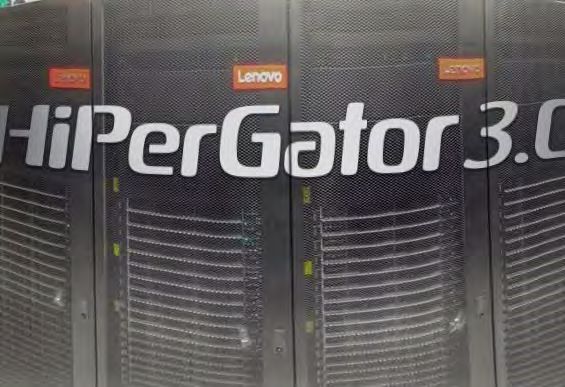
AI Challenge 05

              Shadow AI Projects
              are an IT Headache
              Unfortunately, disappointment resulting from any of the above
              factors (implementation, data management, optimized platforms,
              and scalability) can motivate other teams within your company to
              branch off and pursue their own AI strategies.
              This split causes multiple AI projects to spring up within the same organization. Whereas an
              organization may have started with one AI project, all of a sudden, they have several.

              While a “do it yourself” mentality may be commendable in other business areas, it can be
              costly when it comes to AI projects. The organization as a whole can pay the price either
              literally for investing in redundant AI tools or internally for the extra work hours devoted
              to implementing and supporting multiple systems. In this scenario, the company loses
              economies of scale and the benefits of standardization.

              JUST AS SHADOW IT CAN BE A DANGER TO THE
              ENTERPRISE, SO CAN SHADOW AI.

              In reality, most organizations need only           If a company’s first AI investment is
              one AI-optimized infrastructure strategy.          properly designed and built, other teams
              A fundamental way to prevent multiple              won’t feel the need to create their own and
              approaches is by establishing a scalable,          the initial setup can be leveraged to meet
              centralized AI infrastructure or a center of       everyone’s growing needs and plans.
              excellence.

 © DDN 2021      +1.800.837.2298      sales@ddn.com          ddn.com          2021 ARTIFICIAL INTELLIGENCE SUCCESS GUIDE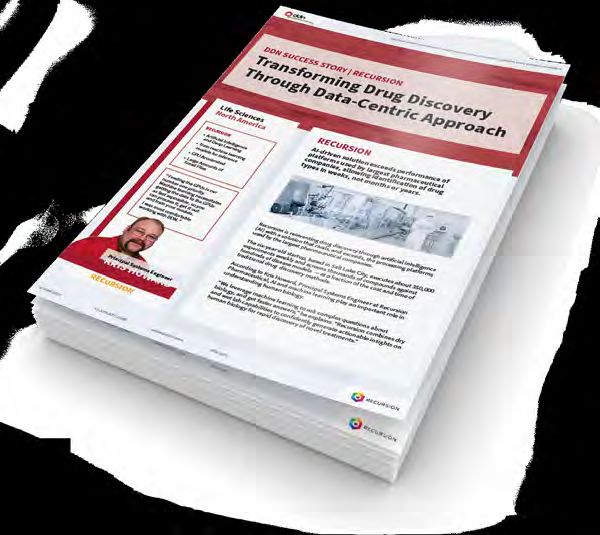
5            STEPS
             To AI Success

                                               01
                                               ARTIFICIAL INTELLIGENCE
                                               AND CORPORATE CULTURE

                                               02
                                               THE HIDDEN VALUE OF
                                               BUSINESS DATA

                                               03
                                               AI INNOVATIONS IN DRUG RESEARCH
                                               AND PHARMACEUTICALS

                                               04
                                               AI INNOVATIONS IN HPC
                                               AND SUPERCOMPUTING

                                               05
                                               AI INNOVATIONS IN MEDICAL
                                               RESEARCH AND GENOMICS

© DDN 2021   +1.800.837.2298   sales@ddn.com       ddn.com     2021 ARTIFICIAL INTELLIGENCE SUCCESS GUIDE
Steps to AI Success
AI and Its Effect on
Corporate Culture
Another benefit of a centralized AI function is the management
of expectations.
With all the excitement in recent years over Your AI Center of Excellence can be a focus
AI’s potential, it helps to have a central, for both technology strategy, as well as
grounded group of experts to differentiate for business metrics, setting KPIs and
hype from reality. measuring outcomes.
AS AI EVOLVES, SO MIGHT THE WAY WE LEVERAGE IT AND, PERHAPS,
EVEN THE WAY WE LEAD OUR ORGANIZATIONS.
© DDN 2021 +1.800.837.2298 sales@ddn.com ddn.com 2021 ARTIFICIAL INTELLIGENCE SUCCESS GUIDESteps to AI Success
Discovering the Hidden Value
of Your Business Data
Organizations such as Amazon, Google, Apple and Facebook harvest
vast amounts of data every day, for targeted advertising and intent
marketing right through to natural language processing and facial
recognition.
Still, companies in a variety of industries are finding they have plenty of their own data.
They may have access to operational data, contextual data, and ambient data from multiple
sources, which can be used to augment or enhance their existing business data. Implement
AI successfully, and your organization is in a position to drive market disruption, by turning
data innovation into competitive advantage.
© DDN 2021 +1.800.837.2298 sales@ddn.com ddn.com 2021 ARTIFICIAL INTELLIGENCE SUCCESS GUIDESteps to AI Success
For example, the drug discovery startup Recursion
uses AI to help pharmaceutical companies find the
right drugs to bring to market in an advanced, and
uniquely efficient method.
Their AI-based data-first approach dramatically
decreases the costs by increasing the efficiency of
biological research.
This approach enables them to bring
life-changing drugs to market faster.
READ THE SUCCESS STORY
“
Thanks to our AI-driven platform,
we can identify potentially lifesaving
molecules and drug types in weeks
Principal Systems Engineer — instead of months, or even years.
KRIS HOWARD
RECURSION ”
© DDN 2021 +1.800.837.2298 sales@ddn.com ddn.com 2021 ARTIFICIAL INTELLIGENCE SUCCESS GUIDESteps to AI Success
Another organization who is putting AI
infrastructure at the forefront of their
objectives is the University of Florida
with their AI Supercomputer, HiPerGator.
The University’s mission is to arm every one of their
graduates with an education in AI and understanding of
how AI applies to their discipline.
CLICK ME TO PLAY
© DDN 2021 +1.800.837.2298 sales@ddn.com ddn.com 2021 ARTIFICIAL INTELLIGENCE SUCCESS GUIDEST. JUDE CHILDREN’S
Steps to AI Success RESEARCH HOSPITAL
As more enterprise organizations apply
AI innovation, it’s nice for those who have
forged the path to share lessons learned.
In this video, Wei Guo, Computational Engineer, from
St Jude Children’s Research Hospital, talks about
considerations in building an AI infrastructure and
recommendations to others.
CLICK ME TO PLAY
© DDN 2021 +1.800.837.2298 sales@ddn.com ddn.com 2021 ARTIFICIAL INTELLIGENCE SUCCESS GUIDESetting Your AI Project
Up for Success
As you can see, for organizations to attain business value from
data and get a true ROI from their AI strategy, an investment
must be made in planning.
Thus, an AI-optimized infrastructure must be powered with a unique processing and storage
architecture that can deliver success.
When considering your AI infrastructure needs, your first logical step is to connect with an
expert that can best understand your goals and requirements. Only then can you, together,
build a solution that truly fits your organization’s needs.
When you partner with DDN, you can start with a turnkey, easy-to-implement, scalable
storage architecture that unleashes the power of AI infrastructure. With it, you can drive
maximum innovation and gain competitive advantage.
Contact one of our storage experts today to put your AI project on the path to success!
GET IN TOUCH TODAY!
© DDN 2021 +1.800.837.2298 sales@ddn.com ddn.com 2021 ARTIFICIAL INTELLIGENCE SUCCESS GUIDEYou can also read


