34 ITEA Magazine NOVEMBER 2019 - ITEA 3
←
→
Page content transcription
If your browser does not render page correctly, please read the page content below
ITEA Magazine
                  NOVEMBER 2019
                                             34

Focus on Turkey        Smart City Expo       ITEA Success stories
                       World Congress 2019   OPEES & MODRIO
Contents

3    Editorial
     Jan Jonker

                                                           Focus on
4    Country focus: Turkey
     Creating a climate for impactful R&D
                                                           Turkey
     Vice-chairman's blog

7    From old-fashioned linear TV-shows to YouTube
     fake news...our unique future? Perhaps not!

8
                                                           4
     ITEA Success story: OPEES
     Open Platform for the Engineering of Embedded
     Systems

11   Calendar
     Upcomnig events

12   Smart City Expo World Congress 2019
     New approach, new opportunities                       Smart City Expo
                                                           World Congress
14
     Community Talk: Özgün Algin

                                                           2019
     Creating innovation, results and exploitation
     with friends

16   End-user happiness
     BENEFIT's results enhancing people's lives

17   News
     ITEA project news
                                                           12
18
     ITEA Success story: MODRIO
     Digital twins for the safe and efficient design and
     operation of cyber-physical systems

22   New ITEA Office Director: Jan Jonker
     Right time, right place, right person
                                                           ITEA Success
                                                           stories OPEES
                                                           and MODRIO
     SME in the spotlight: Yazzoom

24   From downtime to uptime with real-time anomaly
     detection

26   ITEA PO Days 2019

                                                           8/18
     Mix between speed dating and a hackaton

30
     Eureka News
     Eureka Stakeholder Conference: Creating
     ecosystems for innovation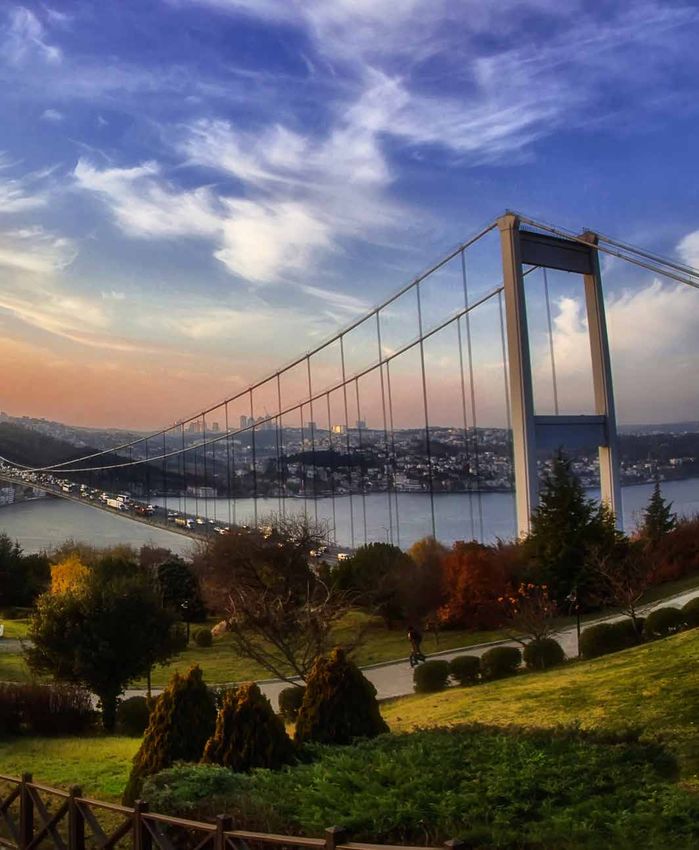
November 2019 – no. 34                                                                                                               3

Editorial                “The times they are a changing,” Bob Dylan already sang in 1964, and his words then are definitely
                         appropriate to the age we are in now. According to some, we are moving towards a period of exponential
                         growth, which is currently shown by phenomena like global urban population growth, mobility, number
                         of ageing people, use of smart phones, increasing proportion of middle classes in the emerging
                         economies, etc.

                         Software is one of the drivers of this growth, but it also delivers solutions to control and balance that
                         growth. Moore’s law is no longer the most prominent; software and big data are the factors that create
                         enormous possibilities for innovation, new products and services in modern-day society.
                         In this magazine we see some great examples in engineering/modelling application areas, such as
                         the OPEES project, in which open source partnerships facilitate model-based system engineering. We
                         also see the strong positive effect of innovative software technology in improving our healthcare, as
                         attributed to a project such as BENEFIT, which dramatically improves the success rate of the surgical
                         treatment of aneurysms.

                         MODRIO is also a great example of how software innovation helps to balance and control growth, e.g.
                         for increasing renewable energy generation. The project leads to solutions that, amongst others, help
                         enhance the energy transition, for which supply and demand of renewable energy need very secure
                         finetuning and actions to maintain a balanced energy grid.

                         Sustainability and energy are also topics of the Smart Cities World Expo that will be held in Barcelona
                         from 19 till 21 November. ITEA is proud to be prominently present during this event. No less than 12
                         projects will be participating in the ITEA booth while ITEA Chairwoman Zeynep Sarilar and Vice-chairman
                         Philippe Letellier will both give presentations and contribute to dedicated workshops about Smart Cities
                         and digital innovation.

                         Smart Cities provide the perfect platform to show how software innovation can enhance growth by new
                         products and, at the same time, deliver solutions to deal with the limits of growth in the urban world.

                         AI can play a special role this respect, for example by making more and more precise predictions and
                         supporting direct decisions and actions. ITEA is strengthening its position on AI, as evident in several
                         articles in this magazine and at the ITEA Project Outline Preparation Days in Amsterdam, where it was
                         the most represented topic/technology. How AI will change our lives is something we do not know yet,
                         but time will change, and it will change fast. If we do not actively gain a leading position, others will
                         and we will have to follow. ITEA is a strong Community that has the companies, trusted environment
                         and knowledge that is needed to be the innovator on AI. Crucial for the future position of Europe and
                         Eureka partner countries. Without a strong position they might get squeezed by the US and the Far East.
                         By investing in state-of-the-art research, but also by supporting AI propositions towards applications
                         that can be introduced in the market and have business prospects and opportunities we can ensure our
                         future position. This is where ITEA is ready to play its role as the industry-driven Community that is able
                         to develop AI top-knowledge applications that will have an impact on the market and, in the end, our
                         changing daily lives.

                         Jan Jonker

                                                                                                                    Editorial Jan Jonker
4                                  ITEA Magazine

    Focus
    on Turkey
    Creating a climate for impactful R&D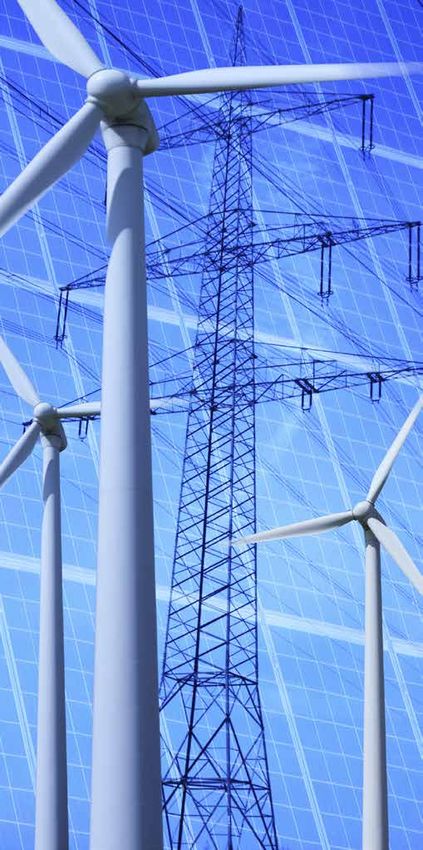
November 2019 – no. 34                                                                                             5

TÜBİTAK is a vital cog in Turkey’s wheel of innovation in which SMEs play a significant role and in which
networks are central. This much was already evident in an earlier interview (Magazine 25) in 2016 with
          Mete Karaca, Scientific Programmes expert at TÜBİTAK. Three years on and how is the situation
               today? To catch up on developments, we talk to Mehmet Aslan, who joined TÜBİTAK in 2005
              after a little over a decade working in the Defence industry, focusing on telecommunications
                there. Having begun as an expert, Mehmet rose through the management ranks to become
                    head of department at this specific arm dedicated to Technology and Innovation Support
                        Programs (TEYDEB). Mehmet has responsibility for ensuring that the programmes and
                            activities help realise industrial research and technological development, support
                                   for innovation as well as monitoring and developing collaboration between
                                     academia and industry. In this article, Mehmet elaborates on the vision,
                                               mission and practice of this TÜBİTAK arm and looks at how this
                                                             fits together with the goals and projects of ITEA.

                                                                                                  Country focus on Turkey
6                                                                                                                                                  ITEA Magazine

Support for R&D culture                              from medium-to-low technology to medium-               In terms of supporting and promoting software
“Our aim,” Mehmet begins, “is to contribute          to-high technology. This could not have been           innovation, annual investment is expected
to our country’s private sector organisations        possible without a strong ICT sector. In this          to reach 1 billion US dollars by 2023. “An
so that we can create and maintain an                context, there is a clear horizontal relationship      important date for us,” Mehmet proudly points
internationally competitive structure in the         with all other sectors ranging from chemistry          out, “since this year we will be celebrating the
development of research technology, technology       and pharmaceutical to food-processing and              100th anniversary of our Republic.” TEYDEB,
management and innovation, and to be a               machine-building. Our focus, then, is on               as the department whose task it is to provide
well-known organisation whose practices are          developing and producing ICT that can enhance          the relevant support mechanisms for software
recognised throughout the world. To do that          the capabilities and competitiveness of all            innovation in the private sector, assisted some
effectively, it is important for us to disseminate   these industries, both at home and abroad.             35,000 businesses between 2012 and 2018 to
an R&D culture that enables the research,            This way we can boost our exports and the              the tune of 1.5 billion US dollars, with 84% of
technology development and innovation                reputation of Turkish products and services on         that destined for SMEs in support of their R&D
activities of private sector organisations to        the international stage.”                              activities. A third of these are directly involved
be more competitive.” To this end, TEYDEB                                                                   in ICT.
cooperates with the relevant sectors in various      Great potential
ways, for example, applying and developing           An important vehicle to achieve this target is         Shared goals
risk-sharing support mechanisms to encourage         open innovation and open source. “This will            “ITEA is also becoming a growing and important
private sector organisations to allocate             also help us to integrate Turkey as a global           component of this support and promotion,”
resources to project-based research and              technology player,” Mehmet explains, “one              Mehmet says. “We are both on the same
technology development activities. Furthermore,      that can operate as an effective partner in            page when it comes to the goals of the two
it contributes to the establishment of national/     international networks. The European dimension         organisations. And, of course, ITEA also gives
international cooperation and technology             is important here and programmes like ITEA             Turkish firms a platform to establish contacts
transfer mechanisms between industrial               have a vital role to play for us in this respect.      and collaborate with European partners. The
organisations, universities and research             After all, it is the EUREKA Cluster that specialises   benefits of this cannot be underestimated. In
institutes as well as sets up measurement,           in software. There is so much potential in the         fact, we see it as a critical instrument in our
evaluation and monitoring systems that enable        emerging technologies and we want to be as             ambitions. The collaboration between SMEs,
the analysis of the socio-economic effects of        much at the forefront of developments as we            large companies and research institutions
support programmes.                                  can. Which means getting our research and              in various European and other countries
                                                     business communities involved where this               enhance and reinforce our capabilities
ICT – enhancing competitiveness                      can benefit our national priorities that target        and competitiveness. So, essentially, this
In all of this, the software-intensive sector and    Artificial Intelligence, information security,         collaborative environment provided by ITEA
the innovation it both needs and produces are        robotics, big data and cloud computing, among          acts as a support mechanism for our national
essential ingredients. Mehmet: “Let me put ICT       others. To this end, we have set out 154 Calls,        priorities. We realise that in the global market,
in perspective. In an economy of 766 billion         some 42 of which are in the areas mentioned.           we have to collaborate in order to compete.
US dollars last year, making Turkey among the        This is all part of the drive in the ambition          That’s a simple fact of life. Ultimately, it’s about
world’s leading economies, 27.4 billion US           Turkey has to produce smart technologies,              the transfer of critical technology knowledge
dollars can be attributed to ICT-related services    smart solutions, smart companies – and gain a          into results and, in turn, the transfer of those
and products. The software sector alone is           growing market share in these areas. A specific        results into business impact. Which means that
worth 3.8 billion US dollars, with exports valued    initiative is the establishment of a new Artificial    there are two things at play here – technology
at 775 million US dollars. Over the past ten years   Intelligence institute.” This institution will         and entrepreneurship. For the latter we also
or so, we have witnessed in Turkey a transition      develop core technologies in the field of Artificial   provide support to our companies but through
                                                     Intelligence and serve as a bridge by offering the     contact and exchange in the ITEA Community,
                                                     scientific outputs produced at the academy to          our companies can learn and so improve their
                                                     the service of public and private sectors.             competence in doing business internationally
                                                                                                            and successfully.”
November 2019 – no. 34 7
ITEA VICE-CHAIRMAN'S BLOG POST
From old-fashioned linear TV
shows to YouTube fake news...
our unique future? Perhaps not!
We observe some massive societal trends towards instability or governments far removed from the watched by interested people with thumbs up,
more individualistic behaviour: European principles of democracy. thumbs down, generating augmented content
linear, channel-based TV show viewing, which can be reused later on the web or in a TV
which was the main means of information In ITEA, an innovative path has been explored in show.
and entertainment in the past, is rapidly the MOS2S project to protect the massive personal
decreasing in popularity (the daily average content trend from fake news or mob violence, Yet another tool is the live hangout, where
in France remains at 3h18m per day, but it and, at the same time, to offer some edited anyone can behave as a journalist. If you are at an
decreased by 18m last year); content based on this personal content. The interesting location or at an event, you can call the
the huge growth of personal content is demand is clearly to allow everybody to express VRT channels where a moderator qualifies your
overwhelming internet (Facebook, Instagram, oneself on any topic. skills (technical as well as content) and puts you
YouTube). Every minute, 300 hours of video is VRT, the innovative Flemish public broadcaster, on a waiting list to be pushed on the TV live show.
uploaded to YouTube, a stellar amount; has invented some new content formats supported It is a good tool to show more personal feedback,
OTT (over the top) video consumption with by technical innovation of the MOS2S consortium. in real time, on the latest news or events.
websites like Netflix;
immediate delivery. For example, the MOS2S consortium has built For sports events, MOS2S developed some
what they call a Babbelbox. Let’s imagine, when advanced tools to acquire content and to track
Nevertheless, these trends lead to: a topic is considered as ‘hot’ (by journalists or and analyse the data so that everyone can create
a huge amount of content, which enables you pushed by people), the VRT journalists structure some augmented personalised content which can
to find something of interest, wherever this lies; an interview with a set of questions (open and be re-exploited later on.
availability of contents that are increasingly closed) to allow everyone to express their opinion.
authored by ordinary people like you and me; Then they deploy some kind of voting booth where I am convinced that MOS2S has reopened the
strong visibility of the known stars on these you have a camera, a screen and a push button to door for the TV media to become rejuvenated
media, but, on a regular basis, also the move from one question to the other. This voting with this personal content. It could realign TV
possibility to see an unknown person breaking booth collects personal videos of ordinary people media with the new trends in our society. They
through and reaching the status of a star, which responding to these questions. This generates a have developed a huge number of diverse tools
remains a dream for many people. huge personal content database on a dedicated to acquire content, support creation and share
topic. This database can be exploited on a content personal content, ensuring some moderation to
On the other hand: streaming site, but MOS2S also offers tools for safefguard the quality (technical and content-
it is becoming more and more difficult to the journalist to go quickly through all this content wise). By rejuvenating the traditional TV show
find specific content due to the quantity of and edit a synthesis of this personal content and giving society the power of enquiry on big
content (a large majority of the available with professional media quality. The role of the challenges, it can become a key tool for new
content remains invisible); and journalist is then to filter the scrap and fake, and e-Democracy.
this content generates massive fake news propose a synthesis of the different positions. To
and mob violence and due to the size of this master the personal content flood, the challenge I invite you to have a more in-depth look at the
content database, nobody understands how is to be able to do it in an efficient way and MOS2S results of MOS2S; you may find part of our future
to moderate it. has made some good steps in this direction. This there. Then we have to push for exploitation to
personal content synthesis can be then reused for deliver the impact this project deserves.
Our modern society is thus confronted by a mass the more traditional TV shows, to enrich it with the
of communication media, which is no longer added value of personal content. Feel free to contact the MOS2S project leader
under control and which destabilises global Gjalt Loots (gjalt.loots@tno.nl) and Karim Dahdah
society. Have a look at the results of last elections Another proposed tool is online debate allowing (karim.dahdah@vrt.be); they will be ready to
everywhere in the world and the associated anyone to generate a debate with several people, discuss with you how it can impact your business.
ITEA Vice-chairman's blog
8                                                                                                                      ITEA Magazine

    ITEA Success story

    OPEES
    Open Platform for the Engineering of
    Embedded Systems

    The ITEA 2 project OPEES stood at the inception of two important trends: open collaboration
    with open source in industry and open source tools for model-based systems engineering
    (MBSE). Neither of these trends were well developed in 2009, but almost 10 years later, and
    with acceleration through the OPEES project, we benefit from both good open source MBSE
    tools and many open collaboration initiatives in industry. OPEES was both a pioneer and a
    catalyst in this evolution.

                                  The ITEA 2 OPEES project was created to develop    In 2012, the first Working Group was created at
                                  an open source platform for software tools to      the Eclipse Foundation. The Eclipse Foundation
                                  support engineering technologies for embedded      provides a global community of individuals
                                  systems and to secure the competitiveness and      and organisations with a mature, scalable and
                                  development of the European software industry.     commercially-friendly environment for open
                                  One key requirement, brought by Airbus, was        source software collaboration and innovation.
                                  to be able to use tools for more than 50 years,    With actors from industrial sectors such as
                                  during the complete lifetime and duration of       aerospace, transport and energy, this PolarSys
                                  support of an aircraft programme. During the       Working Group quickly reached a larger
                                  project that ended in 2012, the 28 partners        community by recruiting both new members and
                                  not only developed and significantly improved      new technologies. It consisted of 25 members
                                  existing open source projects such as Frama-C,     including some OPEES partners such as Airbus,
                                  Eclipse Papyrus and others, but also defined the   CEA and Thales as members of the Steering
                                  governance and the structure for a sustainable     Committee.
                                  organisation to gather an ecosystem of both
                                  developers and users.                              When Airbus reached out to the Eclipse
November 2019 – no. 34                                                                                                                                 9

Foundation in 2007, they explained that they      Papyrus had been established as an Eclipse          because subcontractors did not have access to
needed to setup an organisation similar           project in 2008, prior to the launch of the OPEES   the tool due to its proprietary nature. In 2014,
to the Eclipse Foundation, but for industry       project. Aspects of project development were        the Capella open source project was created
collaboration instead of collaboration between    brought under the umbrella of OPEES, and after      in PolarSys with the goals of lowering the
software vendors. Companies like Airbus,          the project, Papyrus development continued          barriers to use and of fostering collaboration.
Thales, Ericsson and others, need tools that      via the collaboration of several industrials led    In subsequent years, Capella has been applied
have properties that fit well with the freedoms   by Ericsson. The main rationale behind this         in industries such as Aerospace, Automotive,
offered by open source: to use, study, improve    support was the need for an industrial platform     Defence, Energy and Railway. A few years later,
and share software. In industry terms this        supporting UML, that was customisable and           there are not only thousands of users of Capella
means the capability to adapt the software        extensible to allow innovation and collaboration.   on hundreds of projects inside Thales, but also
to a specific industry context, to support        And again, open source technologies seemed to       more than a hundred companies worldwide
the software for the long term (>10 years) or     be superior to proprietary closed tools in terms    using it, including European organisations such
even the very long term (>50 years), to ease      of extensibility and creation of an ecosystem.      as the European Space Agency, Ariane Group,
deployment across the supply chain and to ease                                                        Rolls Royce and Siemens, that rely on Capella
interoperability through open standards.          Capella, an MBSE tool based on the Arcadia          in their System Modelling Workbench product.
                                                  methodology, was launched in the late 2006          Finally, it supports an ecosystem of European
Innovation and collaboration in the MBSE          as an internal tool at Thales. By 2013, however,    SMEs, like Obeo and Artal, that sell packaged
tooling ecosystem                                 and thanks to their participation in OPEES,         products, support and expertise on top of
Three of the noteworthy projects that evolved     Thales realised that the closed nature of the       Capella not only in Europe, but also in North
inside PolarSys are Papyrus, Capella and          tooling was an obstacle to larger deployment,       America and in China.
OpenCert.                                         especially with an extended supply chain,

                                                                                                                                      Success story OPEES
10                                                                                                                                                                                                ITEA Magazine

A blueprint for industry collaboration in open               OPEES/PolarSys as a blueprint for Industry collaboration
source
The principles for industry collaboration through
open source, as developed in OPEES, continue                                   OPEES
to be used in a range of successful Working
Groups hosted by the Eclipse Foundation. This                                       Creation
governance model has proven to be adaptable                                                                                     Governance of PolarSys
in many different contexts and industries, with                                                                                 Focus of the Industry Consortia

goals ranging from simple collaboration amongst
stakeholders to more advanced collaboration                                                   Improve
through focused development co-funding.                                                       Focus

Open source as a catalyst for dissemination
Another aspect originating in OPEES is the use of
                                                                                                                                                                                                   ...
Open source as a catalyst for the dissemination
of research results. After this approach was
pioneered by OPEES at Eclipse, the AMASS                                           COPYRIGHT (C) 2019, ECLIPSE FOUNDATION, INC. | MADE AVAILABLE UNDER THE ECLIPSE PUBLIC LICENSE 2.0 (EPL-2.0)

project followed with the open source OpenCert,
along with others such as Amalthea4public
and Eclipse APP4MC, APPSTACLE and Eclipse
                                                    Kuksa. All use the same approach that leverages                                    on technological innovations to meet specific
                                                    open source for the dissemination and                                              challenges common to the entire industry
                                                    exploitation of research results and encourages                                    and from continuous, sustainable innovation
                                                    the development and sustainability of these                                        through open source. This model allows
                                                    technology communities.                                                            industrials to continue to compete in other areas
                                                                                                                                       while leveraging common open source assets.
                                                    OpenCert was created in late 2015 by Tecnalia,                                     Two good examples of initiatives inspired
                                                    another partner of the OPEES project, and other                                    by OPEES are: OpenMDM, a platform for the
                                                    partners from the OpenCOSS (FP7) and AMASS                                         management of diagnostic data in automotive,
                                                    (ECSEL) projects. The goal of OpenCert was                                         and OpenPaas, a platform for virtual testing of
                                                    to create an open source platform for safety                                       ADAS. These two Working Groups gather, next to
                                                    and security assurance project management,                                         all the German automotive OEMs, also several
                                                    assurance case management and evidence                                             international automotive OEMs and several
                                                    management while integrating other projects                                        Tier 1s to collaborate on industry open source
                                                    like Papyrus and CHESS for System Design                                           platforms. Engineering teams welcome open
                                                    and Analysis. This project focused on model-                                       source because of not only the advantages of
                                                    based safety and security engineering                                              using a common base, but also the enrichment
                                                    conformant to ISO 26262, ECSS 40 and other                                         of the work environment and worldwide visibility
                                                    standards. Following the pattern originating                                       and collaboration. In these industries, it could
                                                    with OPEES, the OpenCert stakeholders created                                      be said that the OPEES project has resulted in
                                                    an ecosystem to gather research institutes,                                        outcomes that have sustained their benefits well
                                                    software vendors, and users around the results                                     after the end of the project.
                                                    of several research projects.
                                                                                                                                       More inofrmation
                                                    Conclusion                                                                         https://itea3.org/project/opees.html
                                                    The structures and initiatives originating with
                                                    OPEES continue to be successful in other
                                                    European industries. Industries such as
                                                    Automotive are benefiting from collaboration
November 2019 – no. 34 11
Calendar
18 November 2019 2-5 December 2019
INTERNATIONAL SMART CITY BUSINESS FORUM AI & BIG DATA FOR INNOVATION SUMMIT
Barcelona, Spain Brussels, Belgium
https://smartcitybf2019.b2match.io/ https://www.knowledge4innovation.eu/
k4i-events/ai-data-innovation-summit/
19-21 November 2019
SMART CITY EXPO WORLD CONGRESS 3 February 2020
12TH OPENMODELICA ANNUAL WORKSHOP
Linköping, Sweden
https://www.openmodelica.org/events/
openmodelica-workshop/openmodelica-
program-2019
4-5 February 2020
Barcelona, Spain 14TH MODPROD WORKSHOP ON MODEL-BASED
http://www.smartcityexpo.com CYBER-PHYSICAL PRODUCT DEVELOPMENT
Linköping, Sweden
ITEA will be present at the exhibition together https://modprodblog.wordpress.com/
with 13 running ITEA projects. Several activities modprod-workshop-2020/
will be organised, including a side event
on Innovation trends for Smart Cities and
Innovation discoveries.
https://itea3.org/smart-city-world-expo- 14 February 2020
congress.html DEADLINE FPP SUBMISSION ITEA 3 CALL 6
19-21 November 2019 28 February 2020
EFECS 2019 LAUNCH SYNCHRONISED CALL EURIPIDES²-
Helsinki, Finland PENTA 2019
https://efecs.eu/ http://euripides-eureka.eu
http://www.penta-eureka.eu
21 November 2019
SWISS INNOVATION FORUM 2019
Basel, Switzerland
https://www.swiss-innovation.com
21-22 November 2019
SLUSH 2019
Helsinki, Finland
http://www.slush.org
Calendar12 ITEA Magazine
Smart City Expo
World Congress 2019
New approach, new opportunities
Customer orientation is one of the main ambitions in ITEA. Innovation has no purpose unless it
results in exploitation and, for exploitation to work, the results should address customer’s needs.
We therefore started organising the ITEA customer and end-user workshop in 2015, and with
success. Since then, a high number of ITEA projects are based on the needs expressed during
these workshops.
Another main ambition is business impact Exhibiting ITEA Projects are:
and (preparations for) this can already start APPSTACLE MOS2S
during the project lifetime. Furthermore, the BIMy PARTNER
ITEA Community has requested to have more CitiSim POLDER
customers at ITEA events. DANGUN PS-CRIMSON
ESTABLISH SOLOMON
That is why ITEA has decided to target several I2PANEMA SPEAR
commercial events, and Smart City Expo
World Congress (SCEWC) taking place on 19-21 SCEWC - Cities made of dreams
November at Fira in Barcelona, is the first one SCEWC is the leading international event for the
that we will attend with a set of 12 ITEA projects. smart urban solutions industry, the key meeting
This event provides a perfect opportunity point for experts and leaders of the world’s
for these projects to present their results to most innovative cities, companies, research
potential customers and for the cities and other centres and international organisations. Over
visitors to discover the latest trends in the 25,000 professional visitors are expected, with
domain of Smart cities. over 1,000 exhibitors, along with high levelNovember 2019 – no. 34 13
representatives from more than 700 cities and International Smart City Business
over 400 international speakers that will share Forum
their vision of how to build more sustainable On 18 November, the day prior
and liveable urban environments: Cities made to the SCEWC, the International
of dreams. This year’s edition will have five Smart City Business Forum will be
Come visit us!
focus areas: Digital Transformation, Urban organised at the World Trade
The ITEA booth (hall P2, stand 207) is the
Environment, Mobility, Governance & Finance Centre in Barcelona. This forum
place to understand the latest innovation
and Inclusive & Sharing Cities. is a partnership between the
trends. You can find a reply for many
Netherlands and the Nordic
Smart City challenges.
Discover innovation countries, supported by ITEA and
You want to fight against the
To strengthen the customer orientation and the has the purpose to provide government,
information silos
exploitation of the innovations developed by the city representatives, start-ups, SMEs,
You want to deploy connected services
ITEA R&D Community within the ITEA projects corporates, experts and investors with a
in your city
even more, we have designed the Innovation platform to initiate long-term partnerships.
You want to enhance the mobility in
Discovery, dedicated guided tours based on a
your city
customer’s need. The target is: Organisations and cities from all over the world
You want your city to be safe
to understand the customer’s innovation will gather to establish new alliances and
You want to offer a secure open
challenges; build on existing ones. Innovators and experts
platform for health data of your citizens
to identify some unique results developed will share their solutions and it will be a great
You need to enhance the e-Democracy
by the ITEA projects that can contribute to opportunity for investors with a Smart City focus
in your city
solving these challenges; and to find investment opportunities.
You want to protect the commercial
to help the customer to exploit some ITEA The programme will consist of inspiring
activity in the centre of your city
innovations with the support of partners from keynotes, thematic panel sessions and a high
You want to master (security, taxes,
the ITEA Community. number of interactive workshops. Additionally,
shared services) the key buildings in
there will be possibilities for matchmaking
your city
Innovation trends for Smart Cities sessions throughout the day. ITEA Chairwoman
You need to master indoor as well as
On Thursday 21 November, from 9:00-11:00, ITEA Zeynep Sarilar and Vice-chairman Philippe
outdoor air quality
will organise a Smart City innovation session in Letellier will have a keynote speech during
You need to strengthen the sporting &
room 1.4. Area CC1. During this side event, ITEA which several Smart City innovations from ITEA
cultural events in your city
project partners of Smart Cities R&D projects projects shall be highlighted. In addition, the
You need to optimise the energy
will share the latest ideas and developments projects participating in the SCEWC exhibition
consumption in your industrial
for new Smart City services. New technology will contribute to several panel sessions and
buildings
and its impact will be explained from a user workshops.
You need to enhance the efficiency and
point of view. This ITEA side event is open to all
sustainability of your port in
SCEWC visitors and is being set up especially for More information
your city
all stakeholders of a city to discover the latest http://www.smartcityexpo.com
innovative solutions to their current Smart City https://itea3.org/smart-city-world-expo-
challenges. congress.html
Smart City Expo World Congress 201914 ITEA Magazine
Community Talk with:
Özgün Algin
Creating innovation, results and exploitation
with friends
Özgün Algin is founder and managing partner of Acadron, a Turkish research consultancy company
that provides services on research strategy development, research business development,
collaborative multi-national research project/consortium development and management. He has
been in and around the ITEA Community circuit for more than a decade.
A growing Turkish presence regarding the Turkish commitment now sees a
A BSc graduate in Mathematics from Yildiz strong presence within the ITEA Community and
Technical University in 2004, Özgün already spectrum of projects.
began software programming at university so
it was a logical step to kick off his career as a During this period as Research Director, Özgün
software engineer, working both for himself and managed several projects for ITEA 2, CELTIC
for consultancy firms before moving to Mobilera and MEDEA+ within the Eureka world in which
in 2006. It was soon after this move that he Mobilera participated either as a partner,
first came into contact with ITEA, initially as a work package leader, country coordinator or
research project manager and later research project leader. “My role included the strategic
director. “It was then that I became involved planning of the research department, in terms
in the first ITEA 2 project, LifeWear, led by a of partner relationships, networking, product
Turkish company. It developed a new platform development and the research agenda as well
that enables wearable electronics to work in as being responsible for managing Eureka
conjunction with mobile computers to enhance grant submissions to local Public Authorities
the mobile lifestyle of users and create new (TÜBİTAK),” he says. “And I’m proud to say that
market opportunities.” This statement of intent we achieved a success rate of 100%.”November 2019 – no. 34 15
Transferring knowledge
In 2012, Özgün decided to taste life as an
entrepreneur as he founded his own company,
Acadron. Going over to the ‘other side of
the fence’ as it were, working actively as a
consultant for clients, Özgün helps SMEs and
large companies to apply to and benefit from
European (Eureka Clusters such as ITEA, CELTIC,
EUROGIA) and Turkish incentive programmes.
“I act as the main point of contact between
research teams and the high-level management
of my client companies on whose behalf I
establish multinational networks that embrace
the business, academic and research worlds. Of
course,” he continues, “I am able to make good
use of my experience as a research director and
involvement in ITEA and other programmes. I can
pass on to clients my knowledge and expertise
in areas like developing research agendas
based on corporate targets, developing research
networks, managing multi-million budget
research projects including idea development,
consortium building, grant application and
subsequent project management.”
Multinational collaborative research context
Four years later, in 2016, Özgün turned to an
interesting opportunity offered by Turkcell
Technology, one of Turkey’s leading R&D and
innovation companies. It was set up to develop it that appeals to him? “There is not just one involvement and experience in a Community he
competitive information and communication thing but I guess if I had to sum it up briefly, it describes as a ‘fun’ place to be.
technology (ICT) services and products and would be the fact that it creates an environment
to facilitate the international spread of the in which innovation can really thrive. I mean, Special feeling
products and solutions that create a difference the collaboration is sincere and open, and “While innovation, results and exploitation
in the environment of the Turkcell group of everyone feels free to share ideas with the aim are important for both business and society to
companies, and thus also to create value of achieving a result, of having an impact. Which benefit from our efforts and are highly rewarding
for other operators. “At Turkcell Technology I brings me to the second key point: bottom- for project participants like myself and for ITEA
represented the company in the Eureka Research up. All the projects are driven by the needs of as a whole, I must admit, it is just as rewarding
Cluster boards, such as being a member of the clients. You get to work in teams or consortia to have the opportunity to enjoy working with
ITEA Steering Group and Board Support Group that include stakeholders from all across and people who then become friends – or should
as well as being a member of the CELTIC+ Core through the ecosystem, from research and I say family? From my very first day within the
Group. Working closely with research teams engineering to industrial stakeholders, both Community I struck up friendships – such a
and managers in Turkcell Technology, we are smaller and larger companies, as well as Public variety of people, backgrounds and cultures
able to define the research agenda, identify Authorities and funding agencies. This gives – it doesn’t seem to matter, everyone wants
new research projects and develop consortiums ITEA its strength, I think. And ensures that the to be friends. Of course, that helps build trust
with universities and research partners. All in a goals of projects are aimed at real tangible and encourages the openness to collaborate
European multinational collaborative research results that have an impact on the users of effectively. So not only professionally but also
context.” those results. This is something of which I am personally I feel that my life is richer because
aware myself since my job is to help clients of ITEA. That sense of happiness in being part
The joy in networking find suitable research projects to help them of the Community cannot be underestimated.
Clearly, Özgün has a real affinity with and get an innovative idea to market.” At the time It’s quite unique and gives me a very special
commitment to the collaborative research of writing, Özgün has returned to focus full- feeling.”
context and to ITEA, in particular, so what is time on his ‘baby’ – Acadron – enriched by his
Community Talk Özgün Algin16 ITEA Magazine
ITEA project results enhancing people’s lives
Prevent rupture
of a brain artery
Each day, lives of people are endangered by aneurysms. In the
case of an aneurysm, the wall of a blood vessel gets weakened, so
it can locally bulge and in some cases even rupture. If this happens
in the brain, it may cause serious disabilities or even death.
Aneurysms can be treated by navigating a thin catheter, under
X-ray guidance, to the location of the aneurysm and placing a
perforated stent as a kind of ‘inner tube’ in the vessel. This reduces
bloodflow into the aneurysm so that it will gradually clot there and
consequently remove the pressure from the aneurysm.
Until now the physician could only predict the long-term success
of the surgery by a subjective visual assessment of flow patterns,
which could easily be influenced by several factors (e.g. the
injection of less or more contrast fluid). Only after a check-up,
a couple of months later, could the result of the surgery be
assessed. In some cases, the stent appeared to be implemented
inaccurately, which meant that the patient had been at risk for a
longer period and needed to undergo another surgery on top of
that.
In the ITEA project BENEFIT a quantitative method has been
developed, which can objectively predict the chance of success
by means of the ‘Mean Aneurysm Flow Amplitude ratio’. It is the
first interventional tool to visualise and quantify flow patterns in
a vessel and an aneurysm. It is calculated from a fast sequence of
X-ray images before and after stent placement. A ratio below 0.9
has proven to be a reliable indicator of successful treatment. If the
outcome is higher, the surgeon can take additional measures (e.g.
placing an extra stent) while the patient is still on the table and the
catheter is in place. This way, the risk for the patient is reduced as
well as the need for repeated treatments, saving money and lives
at the same time, while improving the patient’s wellbeing as well.
ITEA 2 project
BENEFIT
End user happiness BENEFITNovember 2019 – no. 34 17
MOS2S results from TNO and Kiswe win the
'2020 Dutch Eurovision Song Contest Innovation
Challenge'
On 16 May 2020, the Eurovision song contest will be organised in Rotterdam, Eventually on 30 September, three finalists were
selected to actually implement their solution for
the Netherlands. In order to enhance the experience for viewers and fans the Eurovision Song Contest, and two of these
during the 2020 Eurovision Song Contest (ESC2020), the Dutch public three solutions derived from the MOS2S project:
Kiswe Mobile (BE): Traditionally, every
broadcasting organisation NPO with AVROTROS, NOS and the European country has one TV signal made for that
country. With Kiswe Mobile, a large number
Broadcasting Union (EBU) launched the '2020 Dutch Eurovision Song Contest
of customised streams aimed at different
Innovation Challenge'. target groups can be made, with the choice
of different commentators, such as social
media influencers, who seek interaction with
the public and can show the results in the
stream.
TNO (NL): TNO provides UltraWide Viewing.
UWV records the show with special cameras
and gives a very high resolution view of the
entire stage where the performances take
place and can be projected at full size on
large screens, for example in cinemas and at
other event locations so that the audience
can experience the performance as if they
were there themselves.
Sceenic (UK) was the third winner. Its solution
lets friends and family see and hear each other
by using live real-time video chat perfectly
Photo by Natalie Bouwens
synchronised with the livestream of the show
so that they can share those essential moments
together.
Each winner received up to € 35,000 to help
realise their application in the coming period.
The organisation will ultimately decide whether
Organisations that have a solution to enhance varied enormously in terms of services and the developed application goes into production
the online experience of viewers and fans technology: from URL-shorteners and hashtag and will be connected to the live show. And
or a solution that supports or enhances the generators to 8K virtual reality and AI. A total of of course, if that happens, being officially
production of online content before and during 209 solutions from 39 countries were submitted, associated with the Eurovision Song Contest will
the Eurovision Song Contest were invited to with ten being shortlisted and invited to present give the winners worldwide exposure.
participate in this competition. their solution and talk to experts from the We congratulate MOS2S, and especially Kiswe
parties involved in the organisation of ESC2020. Mobile and TNO, on this great achievement and
The innovation challenge around the Eurovision Among those ten, three solutions resulted from we wish them good luck with the realisation of
Song Contest led to an overwhelming response the ITEA MOS2S project: from TNO, Kiswe and their applications!
from the international tech world. The entries TiledMedia.
News18 ITEA Magazine
ITEA Success story
MODRIO
Digital twins for the safe and efficient design
and operation of cyber-physical systems
Cyber-physical systems (CPS) are very large systems that not only involve a large number of
stakeholders but are safety critical and have significant impact on the economy and the environment
as well. This makes tools for the safe and efficient design and operation of such systems imperative.
The ITEA project MODRIO, which ran from 2012 to 2016, was set up to extend modelling and simulation
tools based on open standards (Modelica and FMI) from system design to system operation.
Integrated modelling and simulation framework With optimisation of the operation of large
The main technological ambition of the project transients such as start-ups or shutdowns or the
was to provide an integrated modelling and evaluation of the consequences of faults and
simulation framework able to efficiently specify, failures in mind, a new modelling approach was
design and operate CPS. To that end, new developed. The aim was to provide the ability
ideas were developed to address the complete to simulate the system behaviour away from
engineering lifecycle, from preliminary design its nominal operating point when transitions
to operation and maintenance. New features between modes, represented by completely
include the formal modelling of requirements different sets of equations, take place. For
involving objects, sub-systems, systems and the safe and efficient systems operation,
human interactions in space and time in order techniques used for weather prediction, known
to automate system design verifications. as data assimilation, were adapted to CPS inNovember 2019 – no. 34 19
order to evaluate the system state, in real-
time for predictive control or with the error
margins for system diagnosis. The stochastic
aspects of CPS were also taken into account by
associating in the same framework probabilistic
methods (such as fault-trees) with deterministic
modelling and simulation.
Key success factors
A key success factor for this project was
the involvement of large industrials whose
businesses are to design and operate large
CPS in four major industrial domains: Energy
(electricity production, transmission and
distribution), Aerospace (civil aircraft),
Transportation (trains) and Buildings. The
industrials ensured that the project was always
on the right track by providing requirements
constantly updated to the industries real
needs, which are rapidly changing because of
environmental concerns and harsh economic
competition, and by validating the results of the
project against real-life demonstrators.
Another key factor for success was to base
tool development on two existing standards,
Modelica and the FMI, whose properties of
being already mature for industrial exploitation
and yet still sufficiently flexible to be adapted
to the problems at hand fitted the bill. The fact
that all prominent players in the MODRIO project
participated in those two standards, in terms
of standard and tool development, was also a
major reason for success.
Last, but not least, the project benefited
from the cooperation between SMEs and
research organisations. The latter developed
new methods to solve the difficult scientific
and technological problems related to the
modelling and simulation of CPS, handing over
the results to the former to be implemented in
a wide range of commercial and open source
tools covering nearly all aspects of physical
modelling and simulation at the system level:
Energy performance simulation for buildings
(Sherpa Engineering), IDA ICE (EQUA Simulation
AB), JModelica.org (Modelon AB), SimulationX
(ESI ITI GmbH), Triphase (Triphase), Wolfram
SystemModeler and OPCClassic (Wolfram
MathCore AB). Having the OPCClassic Modelica
library as part of Wolfram’s offering has been
an important enabler for them to broaden their
Success story MODRIO20 ITEA Magazine
"R&D projects,
in particular ITEA
ones, helped
in creating or
enhancing new
capabilities from
quite low TRL
scope on process industry projects. After the optimisation is being made necessary by the
in particular MODRIO project, they have taken on a number of rising share of renewable energy production that
public funded research projects and consultancy forces conventional power plants to manoeuvre
domains to levels projects within the process industry domain more frequently to balance the grid, while
which, in term, has led to the development complying with all operational constraints
which now allow of their OPCUA Modelica library that further
strengthens their modelling and simulation
in order to meet safety and environmental
regulations and minimise system wear.
industrial use of platform in the process industry domain.
For Dassault-Aviation, MODRIO has enabled
these promising Results were also implemented in tools from
larger organisations such as Dymola (Dassault
many very useful breakthroughs for the design
of next-generation aircrafts, in particular the
technologies" Systèmes), LMS Imagine.Lab Amesim and LMS
Virtual.Lab Motion (Siemens), O3PRM editor
results regarding the modelling of requirements
and system architecture, associated with fast
(EDF), OpenModelica (Linköping University), multi-core simulations, multi-mode modelling
PySimulator FMI 2.0 (DLR), Simpack (Dassault of system failures and safety analysis. Outputs
Systèmes) and xMOD (IFPEN). from ITEA projects brought Dassault-Aviation
capabilities allowing working differently, in a
Power of exploitation more global capabilities to handle complex
The project results have been exploited in systems; which takes part of the global (digital)
numerous ways, starting while the project transformation of the company.
was still in progress. One of the main early
achievements was the ability to generate In the rail domain, the industrial cooperation
software code for optimising the control of partners – Knorr-Bremse and Bombardier
almost one tenth of German electrical power Transportation – focused the results on
production. Since August 2015, OpenModelica crosswind stability and friction brakes, where
has been used in ABB’s product Optimax there is high economic potential once the
Powerfit to generate optimising control code brake distance management has become
that controls and coordinates about 5000 MW adequately reliable. To raise the potential of
(ca 7.5%) of German electricity production within brake distance management, Knorr-Bremse
seconds. This has subsequently been expanded uses FMIs extensively to share simulation
to about 6000 MW. Up to 1500 MW comes from models between the stakeholders. This makes it
more than 2500 small solar and wind power possible to simulate the behaviour of the entire
generators that are coordinated to operate as a system of a passenger train in a very early stage
single big power plant. of development. As a consequence, the newly
developed braking systems allows Knorr-Bremse
As another example of early achievement, to reduce by 30% the hardware tests, which
Vattenfall used the results to optimise the in general are very resource consuming. In
start-up of conventional power plants, with an addition, the safety margins between trains can
estimated yearly gain of €850k per plant. Such be smaller with this braking system and thus aNovember 2019 – no. 34 21
more efficient usage of the track and better flow
of trains - between 5-14%, depending on the
system, paving the way for closer cooperation to
tackle the challenges of the energy transition. "The newly
type of traffic - and passengers can be achieved.
Enduring impact developed braking
In the area of connected driving, the simulation A few years after its completion, the project
of autonomous vehicles and ADAS (Advanced impact is still strong. EDF uses results regarding systems allows
Driver Assistance Systems) has been enhanced the modelling of requirements to automate the
through a City Traffic Modelica Library. A FMEA (Failure Modes, Effects and Criticality Knorr-Bremse
combined multiple-shooting and collocation Analysis) of safety critical systems. Because the
optimisation method was further developed for cost of modifications grows exponentially while to reduce the
efficient solution of complex optimal control going further into detailed design, the benefit
problems by TU Ilmenau. A student team of TU
Ilmenau applied this method in the framework
is the ability to perform safety verifications
all along the engineering lifecycle in order to
hardware tests by
of model predictive control to the autonomous
driving Audi Q2 cars in connection with another
correct design errors as early as possible and
avoid costly late modifications. The expected
30%."
software environment (ADTF), winning 1st prize in gains are estimated to be around 30% of the
the Audi Autonomous Driving Cup 2017 and 3rd cost of large projects.
prize in 2018.
EDF uses results regarding state estimation to
In the building sector, EQUA Simulation AB detect and diagnose the causes of power losses
created the only building monitoring tool (the in power plants. A new power loss monitoring
IDA ICE Building Tracker) that leverages the system, which combines physical modelling
information collected by the numerous sensors with Modelica and Bayesian networks and
installed in modern buildings to provide unique modelling based on neural patterns, is now
diagnostic capabilities. Many, very diverse, deployed in EDF's nuclear power plant fleet,
customers already have shown strong interest and has prompted the launch of a new start-up aim to develop a new standard and associated
in the IDA ICE Building Tracker. Currently, EQUA to provide model-based smart diagnosis and tools for the formal modelling and simulation
Simulation AB is in the process of building prognosis services for CPS. of requirements. The roots of EMBrACE can
prototype projects; discussions are ongoing be found in MODRIO that produced the draft
for an office building in Austria, an airport in The 1D and 3D real-time models originating from specifications for a new requirement modelling
Germany, and a multi-family residential building MODRIO are being used by Siemens Industry language called FORM-L adapted for CPS.
in Sweden. Software NV as building blocks in human-in-the-
loop simulators (car, motorcycle, aircraft), and Finally, ideas developed in MODRIO about multi-
From the start of the Modelica initiative, in Virtual Sensing (getting more out of measured mode modelling were among the incentives to
DLR-SR has used Modelica models directly in data thanks to models), a joint research line launch the development of a new modelling
controllers, with the considerable benefit that with KU Leuven that has become a leading language, named MODIA by Modelica founders,
non-linear models of the systems can be used R&D area, with the elaboration of numerous that could be the successor to the Modelica
in the controllers with acceptable design effort, applications. For Siemens Industry Software language in the long term.
enabling the controllers potentially to cover NV, the FMI/FMU is the cornerstone for recent
large operating regions. A key technique here and future developments of the Executable Dassault-Aviation states “R&D projects, in
is the so-called inverse model approach, where Digital Twin (xDT): part of a model is exported particular ITEA ones, helped in creating or
an inverted non-linear plant model is used in as an FMU, the rest of the structure is available enhancing new capabilities from quite low TRL
the control system. Modelica, with Modelica physically and tested. This is also called Model- in particular domains to levels which now allow
tools, allows such systems to be described and Based Testing (MBT). For running models on a industrial use of these promising technologies,
handled in a simulation environment. However, real-time platform, the FMI/FMU has confirmed but at the beginning difficult to implement. ITEA
generating code from Modelica models on itself as the leading technology. projects have allowed to gather skilled partners
controller hardware is not simple. The MODRIO ModeliScale, an ongoing French funded project to tackle the problem, on the base of industrial
project now makes this technique also available that aims at scaling up Modelica to very large needs provided by companies like Dassault
for non-specialists. systems, uses results regarding multi-mode Aviation, EDF ...”
modelling and state estimation.
These different exploitation examples show how More information:
the MODRIO framework can accommodate the EMBrACE is a recently labelled ITEA 3 project Daniel Bouskela, EDF Lab, Chatou
different stakeholders of the European energy in which 45 organisations across 8 countries daniel.bouskela@edf.fr
Success story MODRIO22 ITEA Magazine
New ITEA Office
Director: Jan Jonker
Right time, right place, right person
Jan Jonker, the new ITEA Office Director, also passionate music and mountain lover, finds
time to introduce himself to the ‘family’ through the medium of this magazine.
The new man at the helm – all of three weeks Twin peaks – innovation and cooperation
at the time of writing – was born and bred In this wide spectrum of topics,
in the Dutch city of Nijmegen and went to innovation was a key component, Jan
university there where he graduated in Economic points out. As managing director of an
Geography in 1989. “Then it was time to get on innovation cluster known as Health
with my career,” Jan says. “I had a variety of Valley, a role he held for around five years
roles in both the public and private sector, all in before his job heading up the energy
the area of economic and regional development team, healthcare innovation initiatives
and advice, whether this was giving advice were central. “In all these roles,” Jan
to SMEs, supporting start-ups or making explains, “innovation and cooperation
economic policy recommendations. I also had with industry and SMEs featured strongly.
plenty of international focus, for example, In all the different sectors in which I have
with international investors for the province been engaged, setting up cooperation
of Utrecht. In my work at the East Netherlands to generate innovative products and
Development Agency I covered a range of solutions was a key part of my job.”
topics over the years, from ICT and broadband Clearly, such wide-ranging experience
infrastructures to life sciences, health and built on a spine of innovation and
medical technology. In my most recent role, cooperation has stood Jan in good stead
I was team manager in the field of smart and for his new position steering the ITEA
renewable energy.” Office.You can also read


