A 10 Year Implementation Plan to Guide the Planning, Design and Management of Off-Leash Areas in Edmonton - City of ...
←
→
Page content transcription
If your browser does not render page correctly, please read the page content below
A 10 Year Implementation Plan to Guide the Planning, Design and Management of Off-Leash Areas in Edmonton

Table of Contents
Introduction                                                                         1

Smart Planning, Design and Management                                                1

Relevant Policies and Strategies                                                     2

Public Engagement                                                                    3

Goals, Actions and Priorities                                                       4

Goals                                                                               4

Focus Areas                                                                         4

Action Categories                                                                    5

Priority Actions                                                                     5

    Processes and for establishing, decommissioning and enhancing Off-Leash Areas    5

    Boundary and Barrier Guidelines                                                  6

    Communications and Education                                                     6

    Stewardship and Volunteerism                                                     7

    Increased Enforcement                                                           8

1.0 Planning Actions                                                                 9

2.0 Design Actions                                                                  12

3.0 Management Actions                                                              15

Financial Impacts                                                                   18

Acknowledgements                                                                    23

References                                                                          24
City of Edmonton | Dogs in Open Spaces Implementation Plan | 2017                                                                                           PAGE 1

Introduction
The City of Edmonton’s existing dog off-leash policy originated in the 1990s, and came about in response
to public interest in creating Off-Leash Areas (OLAs). Edmonton’s 40 existing OLAs have been estab-
lished over time on an ad hoc basis, mostly in response to public requests.

With an increasing population of dogs in cities, and with more Canadian households having dogs (32%-
41%1) than children (29%2), there is growing demand for cities to accommodate residents and their dogs
in public places. Many municipalities are recognizing OLAs as important uses of public parks with ben-
efits to dog owners and to cities more broadly.

OLAs can foster healthy activity and social well-being, provide increased “eyes on the park” to deter
crime, and can reduce unsanctioned off-leash activity in more sensitive sites. At the same time, prob-
lems with dog waste, noise, and conflicts with other park uses need to be mitigated at OLAs. Careful
planning, design and management is critical to ensure that the benefits of Off-Leash Areas outweigh
their drawbacks.

SMART PLANNING, DESIGN AND MANAGEMENT
In 2015, a consultant worked in collaboration with the City to develop the Dogs in Open Spaces Strategy
to guide the planning, design and management of OLAs in Edmonton. The project included public engage-
ment, a municipal practices review (dog off-leash program policies and practices), evaluation of the
current City of Edmonton off-leash program, identification of areas of the city that are deficient in off-
leash opportunities, and creation of a new strategy.

The Dogs in Open Spaces Implementation Plan furthers the Dogs in Open Spaces Strategy which was
created when the City recognized the need to review and update Edmonton’s current policies and prac-
tices for its Off-Leash Areas. The Strategy was endorsed by Edmonton City Council in March 2016.
Together, the Strategy and Implementation Plan reflect best practices from select winter cities across
North America and include recommendations tailored for Edmonton.

  1. 1. Consumer Corner: Canadian Pet Mark et Outlook, Alberta Agriculture and Forestry, 2014 and Latest Canadian Pet Population Figures, Canadian Animal
     Health Institute 2017
  2.   Census families by number of children at home, by province and territory, 2011 Statistics Canada Census
City of Edmonton | Dogs in Open Spaces Implementation Plan | 2017                                                PAGE 2

RELEVANT POLICIES AND STRATEGIES
A number of current City policies have been referenced and incorporated into the Dogs in Open Spaces
Strategy, as well as considered in the development of this Implementation Plan including:

˿˿ Animal control and parkland bylaws,
˿˿ Natural area policies
˿˿ Breathe, Edmonton’s Green Network Strategy
˿˿ The Ways plans
˿˿ Urban Parks Management Plan
The Dogs in Open Spaces Strategy recommended that the Implementation Plan align with Breathe:
Edmonton’s Green Network Strategy, which will be presented to City Council for approval in August
2017. Recommendations listed in Breathe that align with the Dogs in Open Spaces Strategy and
Implementation Plan include:

               4.4.3 e) Reduce conflicts among dogs and other open space users by separating off-leash
               areas from conflicting uses (e.g. recreational pathways, playgrounds) using fencing and site
               design, educating dog owners about applicable bylaws and etiquette, and providing ade-
               quate amenities (e.g. refuse bags, trash receptacles) to support responsible use.

               4.5.4 b) Prioritize neighbourhoods currently underserved by dog Off-Leash Areas for
               acquisition/development of new or expanded parks, and provide dog walking amenities
               in high demand.

               4.6.1 h) Ensure that appropriate amenities (e.g. refuse containers, benches, dog litter con-
               tainers, etc.) are provided alongside well-used trails and pathways.

               4.7.2 m) Evaluate areas where dog walking is not appropriate due to environmental impacts
               (e.g. erosion, water contamination, damage to sensitive vegetation) and conflict with wild-
               life populations. Establish access regulations for ecologically sensitive or natural areas, and
               implement signage/ communication campaigns to inform dog owners about appropri-
               ate locations for dog walking, managing waste, and appropriate behaviour during wildlife
               encounters.
City of Edmonton | Dogs in Open Spaces Implementation Plan | 2017                                          PAGE 3

PUBLIC ENGAGEMENT
Public engagement for the creation of the Dogs in Open Spaces Strategy included four interactive
workshops with over 270 people in attendance, City staff workshops, and a stakeholder workshop
with groups that expressed interest in OLAs in the City. Online surveys and Insight Community Surveys
were implemented in conjunction with these workshops, and over 2,800 citizens from across Edmonton
offered opinions and ideas about OLAs.

Feedback from these public engagement activities helped to inform the strategy recommendations.
Some specific findings included:

˿˿ Dog Off-Leash Areas are frequently used (82% of survey respondents used an OLA in the last 12
   months), and are supported by the majority of people surveyed (85%) as a legitimate use of pub-
   lic spaces.
˿˿ 90% of people surveyed support having OLAs in the city.
˿˿ The top five features people thought would make Edmonton’s OLAs successful include: fencing
   or better boundaries; increased education, training and owner responsibility; increased enforce-
   ment; dog owners picking up their dog waste; and increased/better signage.
˿˿ The majority of people who reviewed the draft strategy were supportive of the recommenda-
   tions for planning, design and management of OLAs.
The results and recommendations included in the Dogs in Open Spaces Strategy were used to inform
and prioritize the recommended actions in the Dogs in Open Spaces 10 Year Implementation Plan. Since
these recommendations were taken directly from the Strategy, no additional public engagement was
implemented for the creation of the implementation plan. A multi-departmental project team reviewed
the recommended actions, provided feedback as to what actions to prioritize, and investigated City
processes that could be used to implement priority actions. Over the 10 years this implementation
plan is delivered, further public engagement will be required in order to carry out changes in each OLA.
City of Edmonton | Dogs in Open Spaces Implementation Plan | 2017                                             PAGE 4

Goals, Actions and Priorities
Implementation of this plan will enhance Off-Leash Areas and provide safe and enjoyable experiences
for park users, while fostering healthy outdoor activity and social well being for Edmonton’s citizens.
Recommendations in the Strategy support a number of key goals.

GOALS
˿˿ Smart planning, design and management of Off-Leash Areas that take into account user experi-
   ence, safety, and environmental sensitivities.
˿˿ Better adoption of rules and bylaws by users through education and enforcement.
˿˿ Increased safety for people and dogs in off-leash and adjacent areas.
˿˿ Establishing new Off-Leash Areas in Edmonton where the need is identified.
˿˿ Creating processes for establishing and decommissioning Off-Leash Areas.
˿˿ Increasing educational opportunities in Off-Leash Areas, as well as enhancing the volunteer
   stewardship program that currently exists.
˿˿ Establishing a base level of amenities for Off-Leash Areas, and developing of cost-sharing mod-
   els for community groups interested in enhancing Off-Leash Areas with additional amenities.

FOCUS AREAS
The Dogs in Open Spaces Strategy was divided into three main recommended Focus Areas. For this
implementation plan, Action Categories and Actions have been assigned under each Focus Area. Actions
have been prioritized based on feedback gathered during the public engagement for the Strategy, as
well as documentation of day-to-day inquiries from citizens through the current Off-Leash Program.
There are three Focus Areas, twenty three Action Categories and a number of Actions in this imple-
mentation plan.

Focus Area 1.0 Planning
Planning actions focus on access and parking, distribution, adjacent site uses, establishing and elimi-
nating OLAs, funding, and categories of OLAs.

Focus Area 2.0 Design
Design actions focus on boundaries and edge conditions, amenities, environmental protection, vegeta-
tion, drainage and erosion control, surface materials (e.g. paths) and circulation (flow of users), signage
(wayfinding, enforcement and educational), winter considerations, and public health and safety.

Focus Area 3.0 Management
Management actions focus on general maintenance, waste management, dog waste bag dispensers,
vegetation management, education and communications, community stewardship and volunteerism,
animal control enforcement, rules and code of conduct, and monitoring and evaluation of OLAs.
City of Edmonton | Dogs in Open Spaces Implementation Plan | 2017                                           PAGE 5

ACTION CATEGORIES
 ˿˿ Classification                        ˿˿ Evaluation of Current State   ˿˿ Public Health and Safety
 ˿˿ Site Uses and Adjacencies             ˿˿ Drainage and Erosion          ˿˿ Signage
 ˿˿ Strategy and Policy                      Control                       ˿˿ Waste Management
 ˿˿ Government Land                       ˿˿ Enforcement                   ˿˿ General Maintenance
 ˿˿ Land Ownership                        ˿˿ Corporate Strategy            ˿˿ Communications and
                                             Alignment                        Education
 ˿˿ Establishing and
    Decommissioning                       ˿˿ Design Standards              ˿˿ Community Stewardship
 ˿˿ Funding                               ˿˿ Boundaries                    ˿˿ Parking and Site
 ˿˿ Establishing Temporary OLAs ˿˿ Amenities                                  Accessibility
                                ˿˿ Landscaping and Vegetation

PRIORITY ACTIONS
Based on feedback gathered through public engagement when creating the Strategy, as well as through
day to day observations while managing the current Dogs Off-Leash Program, a number of priority
actions have been identified and are listed below. Work has already begun on these priority actions.

˿˿ Develop processes for establishing, eliminating and enhancing Off-Leash Areas
˿˿ Develop guidelines for OLA boundaries and barriers
˿˿ Increase education and communications
˿˿ Increase enforcement
˿˿ Enhance stewardship and volunteerism opportunities

Processes for establishing, decommissioning and enhancing Off-Leash Areas
The Dogs in Open Spaces Strategy describes triggers for the identification of a new OLA, including
the City’s identification of an underserved or high demand area, application for new development or
redevelopment, or a request from the public through an application process. A public involvement plan
and evaluation period should be included in the development of new OLAs. Enhancing existing OLAs
may be funded by the City or the community, depending on the type of amenity (base or special) being
requested. Developers can also work with the City to explore the development of OLAs in existing or
new neighbourhoods.

Existing OLAs may be closed and/or have their area reduced if they are located in an over-serviced
area for OLAs, if there are safety or incompatible adjacent uses, or if there are significant issues with
the site itself or the behaviour of site users that cannot be remedied after a trial period.

Direction from the Dogs in Open Spaces Strategy, learnings from 2017 projects such as Lauderdale
Pilot Project and Alex Decoteau Neighbourhood Fenced Dog Park, as well as existing City processes
are being taken into account while drafting a process for enhancing, establishing and decommission-
ing OLAs. The process will include options for City-lead, community-lead, and developer-lead OLAs.
Further review is required of this draft process before it is made available for use.
City of Edmonton | Dogs in Open Spaces Implementation Plan | 2017                                           PAGE 6

Boundary and Barrier Guidelines
A priority action of this implementation plan is to develop guidelines for when OLAs should be fenced,
where soft barriers should be used, and when barriers should be funded by the City. Guidelines are cur-
rently being drafted and will be made available for use once finalized.

Communications and Education
Enhanced communications and education associated with OLAs can result in increased awareness and
compliance of etiquette, rules and bylaws, less conflict between park users, and increased visitation and
positive animation of OLAs. Since the Strategy was approved, the following actions have been completed:

˿˿ The development of a communications plan for OLAs city-wide
˿˿ Developing a visual identity for the Dogs Off-Leash Program
˿˿ Creation of a display to use at events and tradeshows
˿˿ Attendance at or delivery of dog-focused events to promote dog OLAs (Pet Expo, Bark in the
   Park, Dog Poop Clean-up Events, Pets in the Park)
˿˿ An updated website and interactive online map of all OLAs
˿˿ An online information hub that displays information on current construction projects in OLAs
˿˿ A postcard that drives traffic to the website
˿˿ Creation of branded promotional and volunteer appreciation items that promote good behaviour
   in OLAs (poop bag dispensers, dog collar lights, clickers, and treats)
Future communications and education activities include increased promotional pieces (e.g. OLA park
change notice template, temporary signage/poster templates, promotional videos, and social media
assets), and a full education/engagement campaign including a marketing strategy and collateral.
Financial impacts of implementing more comprehensive communications and education activities are
listed in Table 1.

City of Edmonton | Dogs in Open Spaces Implementation Plan | 2017                                        PAGE 7

Stewardship and Volunteerism
The City’s current Off-Leash Area Ambassador program is a valuable way for community members to
work with the City to achieve mutually-beneficial goals. The Dogs in Open Spaces Strategy recommended
that the City increase promotion of the OLA Ambassador program in order to recruit new volunteers.

The original Dogs Off-Leash Ambassador Program was launched in 2014 and modelled after the City
of Calgary’s volunteer program. The program had low success due to insufficient resources at the time
for training and management of volunteers, resulting in negative interactions between volunteers and
park users. In 2016 the volunteer program was re-assessed. In order to take time to align this program
with other City of Edmonton volunteer programs, the existing volunteers were asked to discontinue
volunteer activities until the review was complete. The Corporate Volunteer Resource Committee was
consulted and a new screening measures were introduced including an online application form, refer-
ences and a phone interview. Parks and Community Standards worked together to develop a more
comprehensive training program before volunteers could begin their duties.

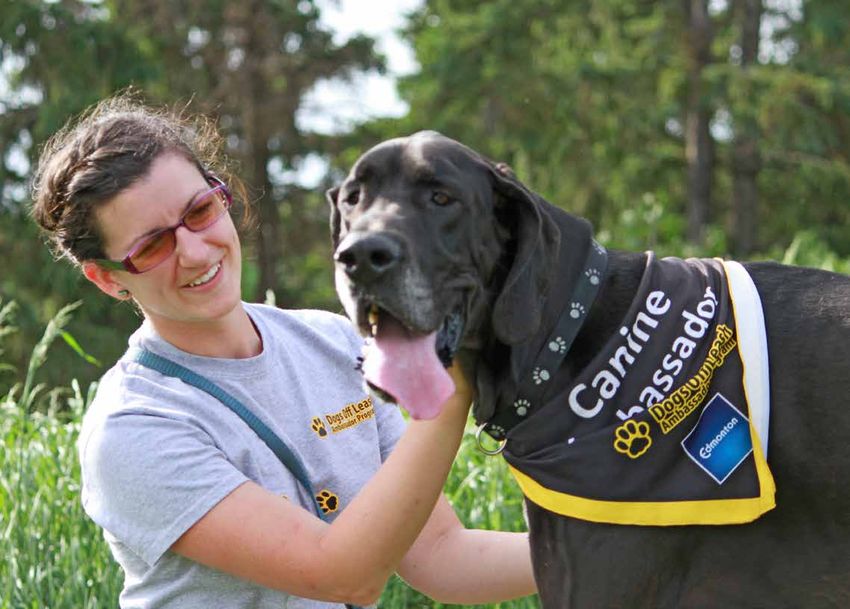
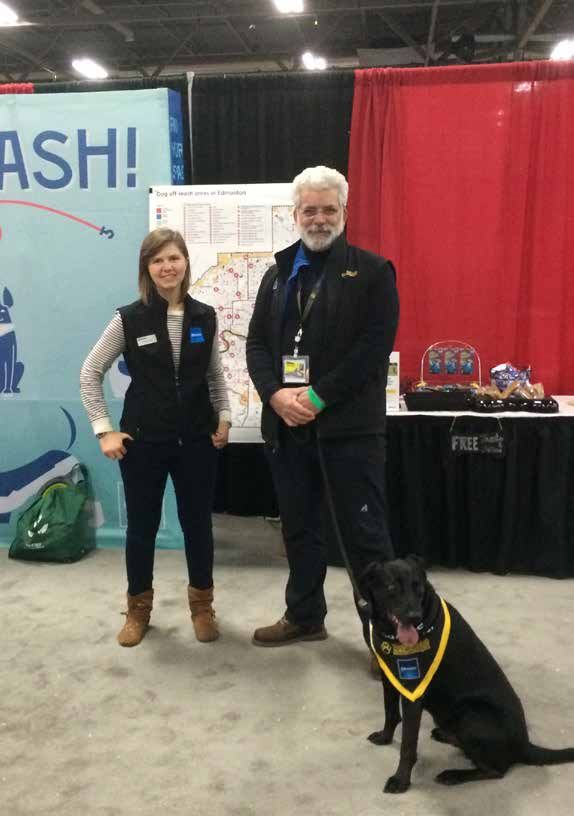
As of July 2017, the program had 22 active volunteer Ambassadors and 21 Canine Ambassadors. Off-
Leash Area Ambassadors encourage dog owners to follow OLA etiquette, share information on safety
and education, encourage dog owners to pick up dog waste, hand out information brochures, and assist
at special events. Ambassadors and their dogs also participate in events that promote the Ambassador
Program and OLAs, including the following 2017 events: Pet Expo, Pets in the Park, Spring Poop Scoop,
Root for Trees Fest and Bark in the Park. Future actions include enhancing the volunteer program to
support the creation of more Off-Leash Area Ambassador Groups. Financial Impacts of running the
Dog Off-Leash Ambassador Program are included in Table 1.
City of Edmonton | Dogs in Open Spaces Implementation Plan | 2017                                           PAGE 8

Increased Enforcement
The regular presence of Animal Control Peace Officers at OLAs is recommended to provide an incen-
tive for dog owners to follow the rules. Currently enforcement in OLAs is on an as-needed basis and
averages 15 minutes of presence in the parks each week (city-wide).

It is recommended to create four new Peace Officer positions dedicated solely to OLAs and one truck
for use of patrolling officers. With the addition of these resources, this team of officers would be ded-
icated to off-leash patrols and would attend Off-Leash Areas 6 hours per day, 7 days per week. They
would rotate between each OLA city-wide and work with the Dogs Off-Leash Program Coordinator
to identify areas that are most in need of enforcement presence.

Besides monitoring and enforcing rules and bylaws, Officers also have a large role to play in educating
about responsible pet ownership, promoting positive interactions between park users in OLAs, and
participating in educational events such as Pet Expo. The full financial Impacts of this recommenda-
tion are included in Table 1.
City of Edmonton | Dogs in Open Spaces Implementation Plan | 2017                                                           PAGE 9

        1.0 Planning Actions
  ACTION                    ACTION                    STATUS           LEAD          SUGGESTED        RESOURCE          TIMEFRAME
 CATEGORY                                                                             PARTNERS         STATUS
                     1.1.1 Classify all            Future action   City Operations   Sustainable      Existing Budget   2018
                     OLAs according to                             - Parks and       Development
                     categories described                          Roads Services:
                     in the Strategy                               Dogs Off-Leash
                     (Neighbourhood                                Program
                     Off-Leash Area,
                     Neighbourhood Fenced
                     Dog Park, District Off-
1.1 Classification   Leash Area, or River
                     Valley/Ravine Off-
                     Leash Area)
                     1.1.2. Align classification   Future action                                      Existing Budget
                     of OLAs with new
                     categories of parks
                     and open spaces
                     as described in the
                     Breathe Strategy
                     1.2.1 Determine more          Future action   City Operations   Sustainable      TBD               2019
                     detailed planning                             - Parks and       Development -
                     recommendations                               Roads Services:   Urban Analysis
                     and protocols as they                         Dogs Off-Leash
                     relate to natural areas,                      Program           Park and Roads
                     wildlife corridors and                                          Services and
                     environmentally-                                                River Valley
                     sensitive areas.                                                Operations

1.2 Site Uses and    1.2.2 Comparing               Future action                                      Existing Budget
Adjacencies          Existing OLAs to
                     sensitive areas data.
                     1.2.3 Potentially create      Future action                                      TBD
                     evaluation criteria
                     for determining
                     appropriate Off-
                     Leash Area use in
                     environmentally
                     sensitive areas.
                     1.3.1 Align the Dogs in       In Progress     City Operations   Various City     Existing Budget   2018-2019
                     Open Spaces Strategy                          - Parks and       Departments
                     and Implementation                            Roads Services:
                     Plan with existing                            Dogs Off-Leash
                     corporate strategies,                         Program
1.3 Strategy and     policies, plans and
                     standards.                                    Community
Policy
                                                                   Standards
                     1.3.2 Identify specific       Complete                                           Existing Budget
                     sections of the Breathe
                     strategy that align
                     with the Dogs in Open
                     Spaces Strategy.
City of Edmonton | Dogs in Open Spaces Implementation Plan | 2017 PAGE 10
ACTION ACTION STATUS LEAD SUGGESTED RESOURCE TIMEFRAME
CATEGORY PARTNERS STATUS
1.4.1 Investigate setting Future Action City Operations City Operations Existing Budget 2020
up a partnership with - Parks and - Parks and
the Government of Roads Services: Roads Services:
Alberta to consider Dogs Off-Leash Business
areas in Anthony Program Integration
Henday Transportation
Utility Corridor for new Sustainable Community
OLAs. Development: Standards
Development
1.4.2 Review land types Future Action Services: Zoning Sustainable Existing Budget 2018
and zoning where Bylaw Development
current OLAs exist and
1.4 Land document the type of Building and Land
Ownership use, development, and Management
amenities that would
be approved through Alberta
agreements and Infrastructure
zoning.
1.4.3 Document Future Action Existing Budget 2018
required permits,
agreements and
processes for
establishing and
maintaining OLAs on
utility right of way.
1.5.1 Establish and In Progress City Operations Community Existing Budget 2017-2018:
document protocols for - Parks and Standards Establish
establishing new OLAs, Roads Services: Protocols
including creating a site Dogs Off-Leash Sustainable
suitability checklist. Program Development:
Network
1.5.2 Recommend Future Action Coordination Existing Budget 2018-2019
a phased approach
for new OLA Integrated
establishment, Infrastructure
identifying specific Services: Open
areas currently lacking Spaces Planning
OLAs.
Citizen Services:
1.5.3 Define approach Future Action Neighbourhoods Existing Budget 2018-2019
for identifying and
establishing the 4 Communications
1.5 Establishing Destination District and Public
and Level OLAs. Engagement
Decommissioning 1.5.4 Establish In Progress Existing Budget 2018-2019
OLAs City Operations:
reasoning and process Parks and
for decommissioning Roads Services
OLAs, including a public and Business
engagement process. Integration
1.5.5 Establish Future Action Existing Budget 2019-2028
new OLAs, with River Valley
all recommended Operations
amenities, in
Utility Companies
underserved areas
using a phased Sustainable
approach. Development:
1.5.6 Decommission or Future Action Network Capital and 2019-2020
change boundaries of Coordination Operating
OLAs of high priority
(e.g. safety concerns or
low usage)City of Edmonton | Dogs in Open Spaces Implementation Plan | 2017 PAGE 11
ACTION ACTION STATUS LEAD SUGGESTED RESOURCE TIMEFRAME
CATEGORY PARTNERS STATUS
1.6.1 Create a capital Future Action City Operations Development Capital 2018
profile for bringing - Parks and Services
existing OLAs up to Roads Services (vending)
standard with base and Business
amenities as well as Integration Legal
creating new OLAs
with all required Community
amenities. Inclusion and
Investment
1.6.2 Increase dog Future Action One-time 2018-2020
licensing fees to Finance expense
allocate to OLA for public
enhancements. Public Citizen Services engagement
engagement process
required. Community
Standards
1.6.3 Create sponsor Future Action One-time 2018-2020
and donor plan and Animal Care and expense
guidelines, and Control Centre
associated marketing
plan and materials, for River Valley
sourcing funding for Parks and
OLA development, Facilities
amenity and activation.
1.6 Funding
1.6.4 Explore the Future Action Existing Budget 2018-2020
creation of a deferred
fund for future
off-leash
enhancements and
maintenance (from
sponsorship or fees).
1.6.5 Introduce a Future Action Existing Budget 2018-2020
permit fee for private
individuals/groups to
use off-leash spaces
for training, education
and events.
1.6.6 Research and Future Action Existing Budget 2018-2020
publish existing
grant opportunities;
explore the creation
of a City delivered
grant program for
community groups to
use for development or
enhancement of OLAs.
1.7.1 Evaluation of all Complete City Operations Community Existing Budget 2016
existing OLAs including - Parks and Standards
usage surveys Roads Services:
Dogs Off-Leash Sustainable
Program Development
1.7 Evaluation of
Current State Citizen Services
Parks and River
Valley Operations
Existing Budget
1.8.1 Develop process Future Action Parks and Roads Community One-time 2019: Develop
and pilot use of Services: Dogs Standards cost for public process; Public
community ice rinks Off-Leash engagement Consultation
as temporary OLAs in Program Community
summer, and fenced Leagues Operating - 2020: Pilot
1.8 Establishing
baseball diamonds and Citizen Services to maintain select sites and
Temporary OLAs
other sports fields in and provide evaluation
winter. enforcement
for increased
number of OLA
sites seasonallyCity of Edmonton | Dogs in Open Spaces Implementation Plan | 2017 PAGE 12
ACTION ACTION STATUS LEAD SUGGESTED RESOURCE TIMEFRAME
CATEGORY PARTNERS STATUS
1.9.1 Evaluate if Future Action Drainage Engineering Operating 2019-2028
drainage in new Services (for public (as OLAs are
and current OLAs City Operations consultation and monitored,
is functioning and/ Integrated Communication) evaluated,
or if changes are River Valley Infrastructure upgraded or
required to prevent Parks and Services Capital established)
contamination of water Facilities -Realignment or
bodies at affected Sustainable erosion control/
sites (e.g. grading, Development repair
1.9 Drainage and landscaping, drainage
enhancements) Dog Off-Leash
Erosion Control and River
1.9.2 Determine which Future Action Valley/Ravine
trails near rivers and Stewardship
streams need to be Groups
decommissioned
or realigned due to
erosion issues, and
if measures can be
taken to prevent future
erosion issues.
2.0 Design Actions
ACTION ACTION STATUS LEAD SUGGESTED RESOURCE TIMEFRAME
CATEGORY PARTNERS STATUS
2.1.1 Review Future Action City Operations: Sustainable Existing Budget 2018
Landscape Design Parks and Roads Development
and Construction Services - Dogs
Standards and iden- Off-Leash Landscape
tify areas where Program Design and
the Dogs in Open Construction
Spaces Strategy and Review
Implementation Plan Committee
can be integrated.
Integrated
2.1 Design 2.1.2 Submit design Future Action Infrastructure 2020
Standards recommenda- Services:
tions for OLAs to the Infrastructure
Landscape Design Planning and
and Construction Design: Open
Standards guide during Spaces Planning
the 2020 guide review. and Design
Include fencing and
soft/green barriers,
surfacing, trail design,
landscaping and other
relevant design criteria.City of Edmonton | Dogs in Open Spaces Implementation Plan | 2017 PAGE 13
ACTION ACTION STATUS LEAD SUGGESTED RESOURCE TIMEFRAME
CATEGORY PARTNERS STATUS
2.2.1 Pilot Program In Progress City Operations: Integrated Capital and 2016-2017
- Lauderdale (Grand Parks and Roads Infrastructure Operating
Trunk) - Enhance an Services - Dogs Services
existing District OLA. Off-Leash
Evaluate the process Program Community
and funding needs Standards
required to provide
Corporate
fencing in a district
Communications
level Off-Leash; evalu-
and Public
ate effect of fencing on
Engagement
park use and behaviour
while using the OLA.
2.2.2 Based off of eval- Complete City Operations: Existing Budget 2016-2017
uations of all OLAs Parks and Roads
completed in 2016, Services - Dogs
identify OLAs that have Off-Leash
recommendations for Program
barrier installation or
boundary changes
based on safety
requirements and adja-
cent use.
2.2.3 Identify and Completed City Operations: Dog Off-Leash Existing Budget 2016-2017
prioritize boundary Parks and Roads Ambassador
changes. Determine Services Groups
which maintained and
unmaintained trails River Valley
should be included Parks and
within OLA boundaries. Facilities
2.2 Boundaries 2.2.4 Implement Future Action One-time 2018+
boundary changes Expense for
where needed. public engage-
ment and signage
updates
2.2.5 Determine appro- Future Action City Operations: City Operations: Existing Budget 2018
priate species list Parks and Roads Forestry and
(trees and shrubs) for Services - Dogs Horticulture
soft barrier additions Off-Leash
to OLAs. Program Landscape
Design and
2.2.6 Add recom- Future Action Construction 2020
mended species list Standards
for trees and shrubs Committee
that can be used as
soft barriers to the
Landscape Design
and Construction
Standards.
2.2.7 Install hard or soft Future Action City Operations: City Operations: Capital and 2019-2028
barriers in appropriate Parks and Roads Parks Operations Operating
off-leash locations Services -
Dogs Off-Leash Sustainable
Program Development
River Valley
Parks and
Attractions
Integrated
Infrastructure
ServicesCity of Edmonton | Dogs in Open Spaces Implementation Plan | 2017 PAGE 14
ACTION ACTION STATUS LEAD SUGGESTED RESOURCE TIMEFRAME
CATEGORY PARTNERS STATUS
2.3.1 Prioritize OLAs In Progress City Operations: Finance Existing Budget Prioritize sites in
lacking standard ame- Parks and Roads 2016-2017
nities for immediate Services - Dogs Off-Leash
enhancement using Dogs Off-Leash Ambassador
completed evaluations Program Groups
or each area
Integrated Community
2.3.2 Move forward Future Action Infrastructure Leagues Capital Enhance pri-
on enhancing those Services ority sites
OLAs using a staged (2019-2022)
approach.
Enhance
rest of sites
(2023-2028)
2.3 Amenities 2.3.3 Establish pro- In Progress City Operations: Citizen Services Existing Budget 2017-2018
tocols for which Parks and Roads
categories of OLA Services - City Operations:
receive special ame- Dogs Off-Leash Parks and Roads
nities and how Program Services
community groups Integrated
can request, fund and Infrastructure
install them. Include Services
which types of spe-
cial amenities will be
accepted into the City’s
inventory to maintain,
and when/where/how
special amenities may
be funded by the City.
2.4.1 Work with Ongoing City Operations: Root for Trees Existing Budget 2018-2028
City programs like Parks and Roads Program and Partner
2.4 Landscaping Root for Trees and Services Funding
and Vegetation Commemorative Trees Urban Forestry
to encourage planting Dogs Off-Leash and Forestry
at off-leash sites. Program Operations
2.5.1 Apply Crime Ongoing City Operations: Integrated Existing Budget 2018-2028
Prevention Through Parks and Roads Infrastructure
Environmental Design Services Services:
(CPTED) principles to Infrastructure
promote user safety Planning and
and positive site activ- Design
ity for new or existing
2.5 Public Health OLAs Edmonton Police
and Safety Service
2.5.2 Investigate if Future Action City Operations: TBD 2018-2028
reduced speeds and Parks and Roads
traffic signage is nec- Services
essary for OLAs near
major roads Dogs Off-Leash
Program
Traffic Safety
2.6.1 Identify OLAs Future Action City Operations: Existing Budget 2018
where snow clearing on Ongoing Parks and Roads
paths would increase Services
use and accessibility in
2.6 Parking and the winter.
Site Accessibility
2.6.2 Implement Operating 2018-2028
increased snow clear-
ing on paths in certain
OLAs.City of Edmonton | Dogs in Open Spaces Implementation Plan | 2017 PAGE 15
3.0 Management Actions
ACTION ACTION STATUS LEAD SUGGESTED RESOURCE TIMEFRAME
CATEGORY PARTNERS STATUS
3.1.1 Creation of a sig- Future Action City Operations Corporate Capital - one time 2017-2019
nage plan for OLAs. Community Communications cost
Standards Integrated
3.1 Signage 3.1.2 Addition and Future Action River Valley Infrastructure
replacement of all Parks and Services
off-leash signage. Facilities
3.2.1 Determining fea- Future Action City Operations Edmonton Waste TBD 2021
sibility and cost of Management
replacing garbage Centre
drums with in-ground
bins in all appropriate
OLAs.
3.2 Waste
Management 3.2.2 Research options Future Action TBD 2021
for alternative waste
collection and disposal
methods in OLAs that
are more environmen-
tally friendly than the
current practices
3.3.1 Implement nat- Ongoing City Operations: City Operations: Existing Budget 2018-2028
uralization in select Dogs Forestry, Turf,
OLAs to identify any Off-Leash and Vegetation
areas where natural Naturalization Management and
buffers/barriers can be Programs Horticulture
created, reduce main-
tenance costs, increase
site interest for people
and OLAs, create wind
and snow buffers, and
increase shade.
3.3.2 Identify areas Future Action City Operations Existing Budget 2018+
that can be used as
3.3 General snow dump sites to
Maintenance create natural barri-
ers for permanent or
temporary OLAs in the
winter.
3.3.3 Implement reg- Ongoing City Operations: Citizen Services Operating 2019-2028
ularly scheduled Dogs Off-Leash
inspections, moni- Program and
toring, and evaluation Parks and
of OLAs; track data Road Services
related to OLAs (e.g. 311 Operational
inquiries, complaints, Teams
commendations,
conflicts) Community
StandardsCity of Edmonton | Dogs in Open Spaces Implementation Plan | 2017 PAGE 16
ACTION ACTION STATUS LEAD SUGGESTED RESOURCE TIMEFRAME
CATEGORY PARTNERS STATUS
3.4.1 Create and Completed 2017. City Operations: Corporate Operating 2018-2028
implement a commu- Renew annually. Dogs Off-Leash Communications
nications plan for OLAs Program and Public
city-wide and the OLA Engagement
Program. Citizen Services:
Community
Standards
3.4.2 Creating branding Completed City Operations Corporate One time cost 2017-2019
and promotional items branding and Communications and operating
3.4 for the Dogs Off-Leash some materials and Public
Communications Program in 2017. Engagement
and Education
3.4.3 Create and imple- Future Action City Operations Corporate Operating 2019
ment a full education/ Communications
engagement campaign Community and Public
including a commu- Standards Engagement
nications/marketing
strategy and collateral.
Focus on etiquette,
bylaws, and what
experiences people can
have in OLAs.
3.5.1 Enhance the Future Action City Operations Community Operating 2019-2020
Off-Leash Area - Parks and Standards
Ambassador Program Roads Services:
including: Dogs Off-Leash Citizen Services
Establish operational Program
3.5 Community budget for permanent Alberta
Stewardship and seasonal staff to Stewardship
adequately resource Network
the current program.
Create an Off-Leash Park People
Ambassador Group
program.
3.6.1 Increase enforce- Community Operating 2019-2028
ment presence and Standards
3.6 Enforcement
resources at DOL Areas
city-wide.
3.7.1 Assess parking Ongoing City Operations Citizen Services Existing Budget 2019-2028
availability, condition
and issues at all OLAs. Traffic Control Integrated
Infrastructure
Community Services
Standards
3.7.2 Establish or Ongoing Transportation Capital
3.7 Parking and enhance additional
Site Accessibility parking where needed, City Operations:
apply parking rec- Parks and Roads
ommendations from Services
the Strategy as park
projects , capital proj-
ects, community led
construction and
neighbourhood
revitalization are
implemented.City of Edmonton | Dogs in Open Spaces Implementation Plan | 2017 PAGE 17
ACTION ACTION STATUS LEAD SUGGESTED RESOURCE TIMEFRAME
CATEGORY PARTNERS STATUS
3.8.1 Examine protocols Future Action City Operations: Community Existing Budget 2023
for weed manage- Vegetation Standards
ment in OLAs and Management;
make recommenda- Dogs Off-Leash
tions for weed control Program
or prevention of weed
transfer by OLA users
and dogs.
3.8.2 Create a pro- Future Action Existing Budget 2023
3.8 Landscaping cess for temporary/
and Vegetation seasonal closures,
boundary changes or
decommissioning OLAs
where there is a sig-
nificant noxious weed
issue with risk of trans-
port of seeds/burrs by
dogs to other areas, or
where significant nox-
ious weed control is
required.City of Edmonton | Dogs in Open Spaces Implementation Plan | 2017 PAGE 18 Financial Impacts Implementation of this plan depends on existing operational funding, and approval of new operating funding including the establishment of a full-time, year round Dog Off-Leash Coordinator. A capital pro- file to bring current OLAs up to standard and for establishing new OLAs is recommended. Anticipated capital costs are different for each OLA and will include things such as installing signage, bringing OLAs up to base standard by installing amenities or fencing, or establishing new District Off-Leash Areas. Operating budget needs include maintaining OLAs, waste collection and disposal, maintaining dog bag dispensers, clearing snow on paths, maintaining fences and gates, delivering educational programs and communication campaigns, and ensuring bylaw enforcement. In 2016, site evaluations and usage surveys were completed at all 40 existing OLAs in Edmonton. These evaluations documented site conditions and usage, and recommendations for additional amenities to bring each OLA up to standard. Some small OLAs in Edmonton may only require additional signage, dog bag dispensers, or waste containers in order to bring them to the standard recommended in the Strategy. Some sites require more significant changes. These evaluations contributed to the estimated financial impact to improve these sites. An estimate for required operating costs required to enhance the existing condition of, and increase the number of OLAs city-wide is included in Table 1. FUNDING MODELS ACROSS CANADA AND INTERNATIONALLY To help inform funding strategies that could be used in Edmonton and research creative funding options used by other cities, Administration conducted a survey in early 2017 that focused on the funding and management of OLAs. The survey was offered to twenty-one Canadian and international municipali- ties. Representatives from nine Canadian cities and four international cities responded. Canadian Cities International Cities ˿˿ Saskatoon, SK ˿˿ Stockholm, Sweden ˿˿ Mississauga, ON ˿˿ Los Angeles, CA, USA ˿˿ Toronto, ON ˿˿ New York, NY, USA ˿˿ Surrey, BC ˿˿ Chicago, IL, USA ˿˿ Ottawa, ON ˿˿ Montréal, QC ˿˿ Calgary, AB ˿˿ Vancouver, BC ˿˿ Winnipeg, MB
City of Edmonton | Dogs in Open Spaces Implementation Plan | 2017                                          PAGE 19

Survey Results Summary
˿˿ The number of Off-Leash Areas or Off-Leash Parks in each municipality ranged from eight to
   152, with the average number being 52.
˿˿ 10 of 13 ( 77%) cities have an off-leash strategy being developed or already in place.
˿˿ When asked if they have funding to support their plans, six cities identified capital funding, six
   operational funding, one other sources of funding, and one did not answer the question.
˿˿ Three cities identified that they have no other funding strategies while the other ten reported a
   variety of additional sources of funding.
˿˿ Three of 13 (23%) cities reported having funding for maintenance of Off-Leash Areas or Off-
   Leash Parks that is separately allocated from regular park maintenance budgets.
˿˿ In two of 13 (15%) cities, licensing fees support the enhancement or programming of Off-Leash
   Areas or Off-Leash Parks.
˿˿ Three of 13 (23%) cities offer grants for community groups to enhance Off-Leash Areas and Off-
   Leash Parks.
˿˿ Just less than half (46%), of the respondents offer education or programming in their Off-Leash
   Areas or Off-Leash Parks. Programming was funded a variety of ways including by municipali-
   ties or not-for-profit groups.
Based on survey results, and the financial impacts observed during the Lauderdale Pilot Project in
Edmonton ($355,000), establishing a new OLA or enhancing a current OLA can range from $200,000 to
$500,000 or higher, depending on size, scope and design. A potential developer initiated and constructed
Neighbourhood Fenced Dog Park destined for southwest Edmonton will cost around $315,000. New
York City dedicated $1,240,000 to OLAs in 2017, and $3,078,000 for OLAs in 2018. From 2009-2016
the City of Toronto invested $5 million to improve and develop new OLAs across the City, associated
with their People, Dogs & Parks Off-Leash Policy. Surrey and Vancouver have recently invested cap-
ital funding into creating or enhancing two OLAs per year in each City, at around $200,000 per site.
City of Edmonton | Dogs in Open Spaces Implementation Plan | 2017                                         PAGE 20

OFF-LEASH AREA DISTRIBUTION
The Dogs in Open Spaces Strategy recommends that the target number of Neighbourhood OLAs should
be determined based on population density and dog ownership numbers. It is estimated that 32% to 41%
percent of Edmontonians have a dog in their household. The target number of Neighbourhood Fenced
Dog Parks should be determined based on park planning objectives, land availability, and demand. There
should be one District OLA per quadrant (e.g. northwest, northeast, southwest, southeast).

Calgary, with a population of 1.5 million, has 150 OLAs and Edmonton, with a population of 1.4 million,
has 40 OLAs. Edmonton’s population and current OLA distribution suggests that Edmonton has the
need and space for more OLAs, but the City should also consider the ability to manage well-designed,
well-used sites with adequate resources.

District and Neighbourhood OLAs are recommended to be within a 20 minute walk from people’s homes.
Population and dog ownership density was analyzed and compared to existing OLA locations. The data
suggest that there may be growing demand for dog OLAs outside of the city core, such as in higher
density areas that are experiencing population growth.

Over this 10 year plan, it is recommended that a sustainable number of new OLAs established would
be up to two annually. This estimate is based on work observed in OLAs in 2017 in Edmonton, as well as
results from the funding survey completed by other municipalities. It also takes into account manag-
ing the work involved in constructing and establishing these areas.

COST SHARING MODELS
Cost sharing models will be developed including partner funding for establishing and enhancing OLAs.
Current park development processes used in Edmonton, including the Community Led Construction
Process and Neighbourhood Park Development Program can also be used to develop or enhance OLAs.
Methods such as increased pet licensing fees, donor and sponsor programs, commemorative programs
and grants will all be investigated. Revenue generated from permit fees for businesses that wish to
work in OLAs (e.g. agility courses, dog walkers, food trucks, dog washing stations and groomers) may
also be considered. Developers funding, designing and installing new OLAs in existing or new neigh-
bourhoods have the potential to attract home-buyers to these areas.
City of Edmonton | Dogs in Open Spaces Implementation Plan | 2017                                                        PAGE 21

       Table 1: Detailed Financial Impacts of Implementing the Dogs in Open Spaces Strategy.
                  ACTIONS                                    COST ESTIMATES                                  TYPE OF FUNDING
Upgrade 40 existing Off-Leash Areas to base        Capital Requests to be developed in the 2019-   Capital Profile: 2019-2028
level with recommended amenities for each          2022, 2023-2026 and 2027-2032 budget
category of Off-Leash Area. This includes          cycles. (estimated $5M annually +/- 50%
installing hard barriers (fencing) and soft bar-
riers (e.g. trees, hedges, berms) in priority
Off-Leash Areas.
Replace all existing signage and add new sig-
nage at existing Off-Leash Areas
Establish one District Off-Leash Area in each
quadrant of the City (2 are already established
- Jackie Parker Park and Lauderdale/Grand
Trunk)
Establish new Off-Leash Areas in areas of the
city that are underserved
Establish Operating Impacts associated with        Operating Impacts of Capital                    Operating - ongoing
the above increases in capital infrastructure
                                                   2019-2022: $100,000
Deliver enhanced maintenance at Off-Leash
Areas (considering upgrades, increased ame-        2023-2026: $100,000
nities, and addition of fencing in some areas)
                                                   2027-2028: $40,000
Increase snow clearing on paths in Off-Leash
Areas
1.0 FTE for a full-time, year around, Dogs         $85,011                                         Operating - annual ongoing
Off-Leash Program Coordinator (Recreation
Officer I) to champion the Implementation Plan
and Lead the Dogs Off-Leash Program
1.0 FTE for a full-time Recreation Technician      $49,590                                         Operating - annual ongoing
I to assist the Dogs Off-Leash Program
Coordinator
Deliver Off-Leash Area Program and Events,         $35,000                                         Operating - annual ongoing
Ambassador Program and Stewardship Group
Program
Budget for part-time staff to support the          $30,000                                         Operating - annual ongoing
Community Standards temporary enforce-
ment signage program
Create enhanced communications and educa-          2019-2022: $80,000                              One-time cost
tion campaigns; increase promotional pieces
(e.g. Off-Leash Area park- change notices,         2023-2026: $80,000
temporary signage/poster templates, pro-
motional videos, and social media assets, a        2027-2028: $40,000
full education/engagement campaign includ-
ing communications/marketing strategy and
collateral.)
Update and deliver a communications plan           $60,000                                         Operating - annual ongoing
annually; annual promotional materials; fund-
ing to support both Parks and Community
Standards campaigns
Increase enforcement with four new Animal          Staffing = $400,000                             Operating - annual ongoing
Control Peace Officer Positions dedicated
solely to the 40 existing Off-Leash Areas and      Truck = $50,000
one truck for use of patrolling officers.
City of Edmonton | Dogs in Open Spaces Implementation Plan | 2017 PAGE 22
Table 2: Summary of Financial Impacts
TOTAL FOR
IN $(000) 2019-2022 2023-2026 2027-2028 10 YEARS
Operating funding:
Impact of Capital - ongoing 100 200 240 540
Program Coordination,
Education and
1,040 1,040 520 2,600
Communication - ongoing, at
$260k annually
Enforcement - ongoing 1,800 1,800 900 4,500
Communications - one-time 80 80 80 200City of Edmonton | Dogs in Open Spaces Implementation Plan | 2017 PAGE 23
Acknowledgements
REPORT AUTHOR
Parks and Roads Services, City Operations, City of Edmonton
APPRECIATION IS EXTENDED TO:
Citizens of Edmonton
The City of Edmonton would like to thank all citizens, community groups and other stakeholders who
provided input on the Dogs in Open Spaces Strategy between 2015 to 2016. Your input helped to inform
the development of this 10 Year Implementation Plan.
City of Edmonton Contributing Areas
˿˿ City Operations, Parks and Roads Services
˿˿ Citizen Services, Community Standards and Neighbourhoods
˿˿ Sustainable Development, City Planning, Urban Analysis and Parks & Biodiversity Units
˿˿ Integrated Infrastructure Services, Facility and Landscape Infrastructure,
Program and Project Development
Project Team
˿˿ City Operations, Parks and Roads Services
□□ Nicole Fraser, Management Supervisor, Beautification and Greening Initiatives
□□ Amanda Brown, Parks Program Coordinator, Dogs Off Leash Program, Beautification and
Greening Initiatives
□□ Heather Nelson, Greening Program Assistant, Beautification and Greening Initiatives
˿˿ Citizen Services
□□ Donna Harasem, Community Recreation Coordinator, Neighbourhoods
□□ Jay Row, Community Recreation Coordinator, Neighbourhoods
□□ Keith Scott, Coordinator, Community Peace Officers, Community Standards
□□ Tammy Francis, Community Relations Advisor, Community Peace Officers, Community
Standards
˿˿ Sustainable Development
□□ Paul Giang, Planner I, Urban Analysis, City Planning
Consultation
˿˿ Sarah Stephenson, Planner I, Program and Project Development, Facility and Landscape
Infrastructure, Integrated Infrastructure Services
˿˿ Michelle Bernuy, Planner I, Parks & Biodiversity, City Planning, Sustainable Development
City of Edmonton City Council
This document is being presented to City Council through the Community and Public Services Committee
in September 2017.City of Edmonton | Dogs in Open Spaces Implementation Plan | 2017 PAGE 24 References ˿˿ Dogs in Open Spaces Strategy Executive Summary, January 2016 ˿˿ Dogs in Open Spaces Strategy Technical Report, January 2016 ˿˿ Evaluation of City of Edmonton Dogs Off-Leash Areas, 2016 ˿˿ Breathe: Edmonton’s Green Network Strategy (Draft), 2017 ˿˿ Census families by number of children at home, by province and territory, Statistics Canada Census, 2011 ˿˿ Consumer Corner: Canada Pet Market Outlook, Alberta Agriculture and Forestry, 2014 ˿˿ Latest Canadian Pet Population Figures, Canadian Animal Health Institute, 2017
You can also read


