Accelerating geothermal heat adoption in the agri-food sector - Key lessons and recommendations - IRENA
←
→
Page content transcription
If your browser does not render page correctly, please read the page content below
Accelerating geothermal
heat adoption in the
agri-food sector
Key lessons and recommendations

                                  January 2019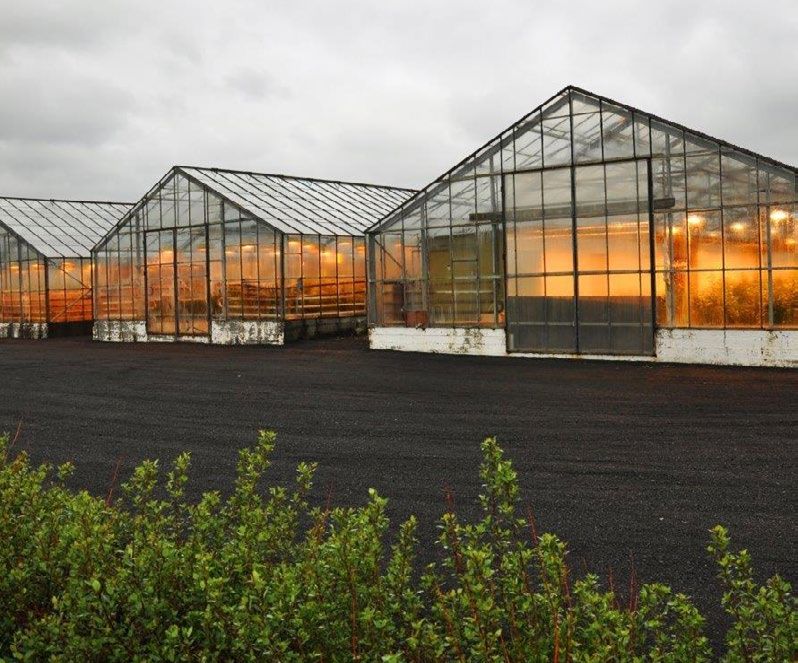
Copyright (c) IRENA 2019
    Unless otherwise stated, material in this publication may be freely used, shared, copied, reproduced, printed and/or
    stored, provided that appropriate acknowledgement is given of IRENA as the source and copyright holder. Material
    in this publication that is attributed to third parties may be subject to separate terms of use and restrictions, and
    appropriate permissions from these third parties may need to be secured before any use of such material.
    Citation: IRENA (2019), “Accelerating geothermal heat adoption in the agri-food sector”, International Renewable
    Energy Agency, Abu Dhabi.
    ISBN 978-92-9260-105-8

    ACKNOWLEDGEMENTS
    Participants in the “Geothermal Direct Utilisation and Food Security” event held in Iceland in April 2018 provided
    valuable input to this report. Presentations from the workshop are available on the IRENA website:
    https://irena.org/events/2018/Apr/GGA-Side-Events-Iceland-Geothermal-Conference.
    The report benefited from input and comments by Héctor Miguel Aviña Jiménez (National Autonomous University
    of Mexico - UNAM), Andrea Blair (Upflow), Tanja Faller (German Agency for International Cooperation – GIZ), Margeir
    Gissurarson (Matís ohf), Viðar Helgason (Iceland Geothermal Cluster Initiative), Þorleikur Jóhannesson (Verkís), Jon
    Erlingur Jonasson (Ministry for Foreign Affairs of Iceland), Johnson P. Ole Nchoe (Geothermal Development
    Company – GDC), Michelle Ramírez (former National Energy Secretariat - SENER, Mexico), Alexander Richter
    (International Geothermal Association), Loredana Torsello (Geothermal Areas Development Consortium - CoSviG),
    Paul Komor (IRENA consultant), Diala Hawila and Jihae Ko (IRENA).
    The report was developed under the guidance of Salvatore Vinci (IRENA) and authored by Luca Angelino and Fabian
    Barrera (IRENA). Valuable contributions and feedback were also provided by Gurbuz Gonul (IRENA).
    Cover image: Shutterstock

    ABOUT IRENA
    The International Renewable Energy Agency (IRENA) is an intergovernmental organisation that supports countries
    in their transition to a sustainable energy future, and serves as the principal platform for international co-operation,
    a centre of excellence, and a repository of policy, technology, resource and financial knowledge on renewable energy.
    IRENA promotes the widespread adoption and sustainable use of all forms of renewable energy, including bioenergy,
    geothermal, hydropower, ocean, solar and wind energy, in the pursuit of sustainable development, energy access,
    energy security and low-carbon economic growth and prosperity.

    Disclaimer
    This publication and the material herein are provided “as is”. All reasonable precautions have been taken by IRENA to verify
    the reliability of the material in this publication. However, neither IRENA nor any of its officials, agents, data or other third-
    party content providers provides a warranty of any kind, either expressed or implied, and they accept no responsibility or
    liability for any consequence of use of the publication or material herein.

    The information contained herein does not necessarily represent the views of the Members of IRENA. The mention of specific
    companies or certain projects or products does not imply that they are endorsed or recommended by IRENA in preference to
    others of a similar nature that are not mentioned. The designations employed and the presentation of material herein do not
    imply the expression of any opinion on the part of IRENA concerning the legal status of any region, country, territory, city or
    area or of its authorities, or concerning the delimitation of frontiers or boundaries.

2
CONTENTS
Key messages........................................................................................................................................................................4

Introduction............................................................................................................................................................................5

1. The energy-food nexus...................................................................................................................................................8

2. Geothermal energy applications in the agri-food sector: An overview........................................................10

3. Experience from selected countries..........................................................................................................................14

4. Recommendations for accelerating geothermal heat development in the agri-food sector................23

References...............................................................................................................................................................................26

FIGURES
Figure 1: Entry points for renewable energy into conventional energy supply systems..............................9

Figure 2: Utilisation of geothermal water and steam in the agri-food sector.................................................11

Figure 3: Annual production of geothermal heat in the Netherlands.................................................................16

BOXES
Box 1: Global Geothermal Alliance and outcomes of the Florence High-Level Conference.....................6

Box 2: Selected geothermal heat applications in the agri-food sector............................................................12

Box 3: Food security and business competitiveness with geothermal energy in Iceland.........................14

Box 4: Mix of policies and tools to support geothermal heat development in the Netherlands.............16

Box 5: Tuscany’s innovative geothermal governance model and the
             Renewable Energy Food Community.............................................................................................................18

Box 6: Perspectives for geothermal heat development in Mexico......................................................................21

                                                                                                                                                                                              3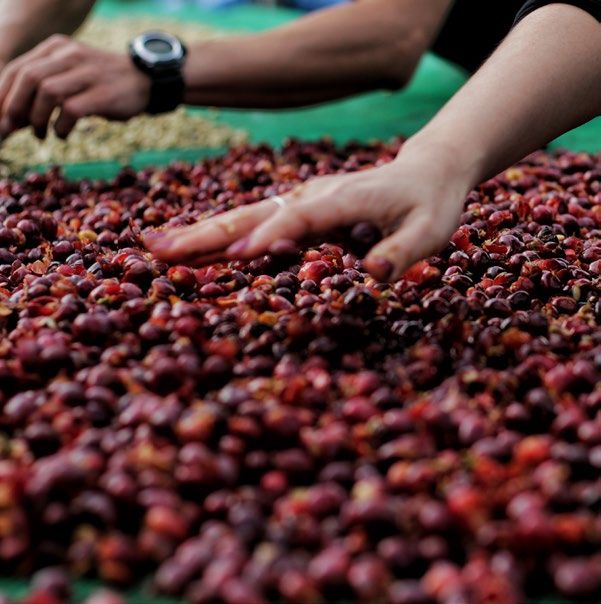
KEY MESSAGES
    Predominantly known for power generation and district heating, geothermal energy can also be used in
    its primary form (i.e. heat) in the agri-food sector – for instance in greenhouses or for food drying and
    processing. Using it for such purposes can help increase food availability, reduce dependency on fossil
    fuels, protect against price volatility and diminish harmful emissions from the sector. Furthermore, it can
    significantly reduce food waste.
    Several geothermal applications in food processing and agriculture require low temperatures and
    can therefore be deployed in areas where the geothermal resources would not be suitable for
    power generation. These applications could increase the number of countries and regions that could
    benefit from such indigenous and renewable energy source. Despite its promising potential and
    increasing interest from policy makers and key stakeholders, direct use of geothermal heat in food-related
    applications across the world is still rather limited.
    Against this background, this publication aims to increase awareness, share experiences and lessons, and
    provide recommendations for expanding geothermal heat use in the agri-food sector. The analysis in this
    document suggests the following six broad critical factors.
    • The existence of legislation awarding rights to develop geothermal resources beyond power
      generation with clear and transparent licensing procedures and, where possible, streamlined for
      smaller-scale projects.
    • The establishment of tailored policy instruments for geothermal heat, notably to share/mitigate the
      risks associated with the initial and more capital intensive phases of a project.
    • The integration of geothermal plans into industrial and rural development strategies and the
      involvement of local communities and entrepreneurs. These strategies may include measures aiming
      to attract new productive activities around geothermal areas.
    • In new and emerging markets, support provided to feasibility studies and pilot projects to improve the
      understanding of the geology and assess the heat demand profile of productive activities located near
      the geothermal resources.
    • Capacity building and training of the local workforce in food production and processing (e.g. in
      dryer use) to ensure efficient operations and catalyse the wider deployment of geothermal in
      agri-food projects.
    • Wise management of geothermal resources to ensure compatibility with the environment and
      long-term economic sustainability.
    Countries aiming to develop geothermal energy applications for food and agriculture may benefit from
    international platforms such as the Global Geothermal Alliance to share experiences and insights on
    technical, policy, regulatory and financial solutions and to explore opportunities for co-operation.
    This publication has been developed within the framework of the Knowledge Sharing Platform of the
    Global Geothermal Alliance.

4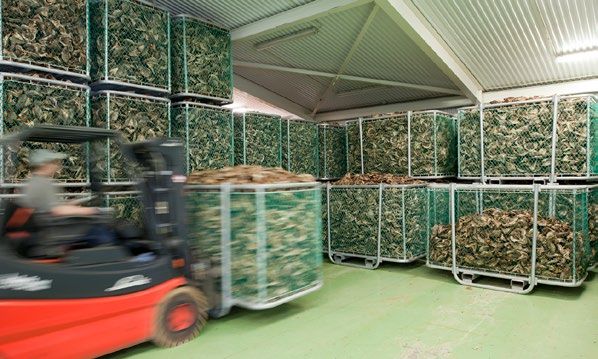
INTRODUCTION
Renewable energy has experienced a remarkable                   heat long distances from geothermal wells may not
growth over the last decade driven by innovation,               be economically viable. Hence the bankability of
increased competition and policy support in a growing           geothermal direct use projects may be undermined
number of countries. While there has been major                 by the need to find either a single large or several
progress in the power sector, enormous opportunities            smaller customers located nearby and presenting
exist to deploy renewable energy in end-use sectors.            heat demand profiles matching the temperatures
The heating sector is particularly relevant as it               of the geothermal resource.
accounted for more than half of total final
                                                                Given this background, international co-operation
energy consumption in 2015, of which over 70%
                                                                can help increase awareness, strengthen enabling
originates from burning fossil fuels (IRENA, IEA and
                                                                frameworks, and address technology, policy,
REN21, 2018).
                                                                financial and capacity building challenges. The
Geothermal energy is not dependent on weather                   Florence Declaration, adopted at the first High-
conditions and has very high capacity factors;                  Level Conference of the Global Geothermal
hence it can play a crucial role in the global energy           Alliance held in Italy in September 2017 (see Box
transformation, including in the heating sector.                1), encouraged the expansion of information and
Across the world, 25 countries had geothermal                   facilitation of knowledge-sharing on all geothermal
power plants in operation in 2017 representing                  energy applications, including the agri-food sector.
a total installed capacity of 13 gigawatts electric
                                                                To this end, IRENA, the Ministry for Foreign Affairs
(GWe) (IRENA, 2018). Meanwhile, 82 countries
                                                                of Iceland, and the Iceland Geothermal Cluster
were reported to have geothermal heat (or direct
                                                                convened experts and policy makers at a workshop
use) projects representing a total installed capacity
                                                                in Iceland in April 2018 entitled “Geothermal Direct
of around 70 GW thermal at the end of 2014 (Lund
                                                                Utilisation and Food Security”. Discussions and
and Boyd, 2015).
                                                                case studies from the workshop form the basis of
The estimated thermal energy used from geothermal               this publication, which aims to share experiences
sources amounts to 587,786 terajoules (TJ) per year,            and provide direction to scale up the deployment
of which more than half is for heating and cooling              of geothermal heat for agri-food industries.
from ground source heat pumps1, 20% for bathing                 This report is concerned with areas in which
and swimming, 15% for space heating without heat                geothermal can replace fossil fuels, as well as
pumps, 5% for greenhouses and open ground heating,              areas lacking access to modern energy services. It
2% for aquaculture ponds, 1.8% for industrial process           complements “Uses of Geothermal Energy in Food
heating, 0.4% for snow melting and cooling, 0.3% for            and Agriculture – opportunities for Developing
agricultural drying, and 0.2% for other uses (Lund              Countries”, a report produced in 2015 by the Food
and Boyd, 2015). The potential of geothermal energy             and Agricultural Organization of the United Nations
stored in aquifers2 (the focus of this report) remains          (FAO) (Van Nguyen et al., 2015).
largely untapped. Estimates suggest that less than
                                                                This document is structured as follows: Section 1
one thousandth of the technical potential worldwide
                                                                briefly introduces the energy-food nexus and the
is currently exploited (Limberger et al., 2018).
                                                                role of geothermal energy; Section 2 presents an
The wider adoption of all geothermal energy                     overview of the geothermal applications in the
applications is restricted by a variety of barriers.            agri-food value chain; and Section 3 looks at the
The most common obstacles in many countries                     experience and lessons from selected countries
with promising potential include, for instance, high            worldwide. Finally, Section 4 puts forward broad
upfront investment, risk related to the appraisal               recommendations to governments, development
of geothermal resources, inadequate policy and                  partners and key stakeholders committed to
regulatory frameworks, and a shortage of qualified              supporting geothermal development in the
workforce. In addition, transporting geothermal                 agri-food sector.

1 Ground source heat pumps, also known as geothermal heat pumps, exploit normal earth conditions, even only 3-15 °C, at depths
  ranging from one metre (m) to 400 m. This is used throughout the year for space heating and cooling and hot sanitary water in
  buildings or other applications (DiPippo, 2016; heatunderyourfeet.eu, n.d.).
2 Heat pumps are increasingly employed to boost the temperature of low temperature geothermal fluids. The hybrid district
  heating and cooling system in Paris Saclay is one example, containing seven semi-centralised heat pump stations and two
  geothermal wells reaching a depth of 700 m and temperatures of 30°C (see Galindo Fernández et. al., 2016).                      5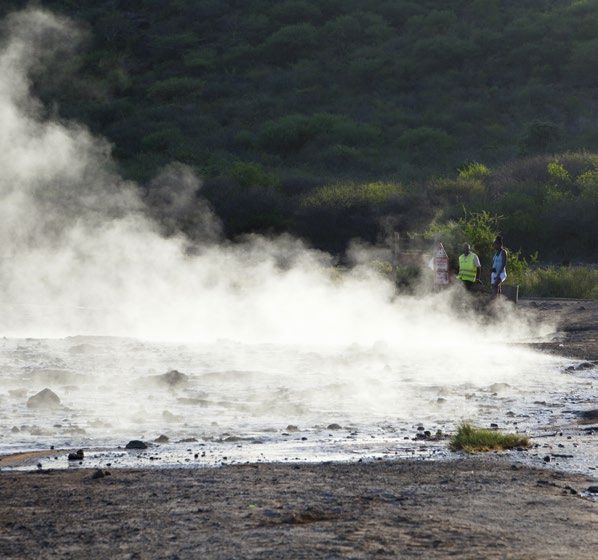
BOX 1. GLOBAL GEOTHERMAL ALLIANCE AND OUTCOMES
           OF THE FLORENCE HIGH-LEVEL CONFERENCE
    Launched in December 2015 at COP21, the Global                    As of December 2018, the Alliance has 80 member
    Geothermal Alliance provides an inclusive and                     countries and partner institutions from geothermal
    neutral multi-stakeholder platform for enhanced                   industry, development partners, international
    dialogue, co-operation and co-ordinated action                    finance institutions and academia.
    among public, private, intergovernmental and non-
                                                                      To facilitate knowledge-sharing and define the
    governmental actors that share a common vision
                                                                      way forward to accelerate the deployment of
    for accelerating the deployment of geothermal
                                                                      geothermal energy worldwide, the Government
    energy for power generation and direct use.
                                                                      of Italy and IRENA organised the Alliance’s first
    Co-ordinated by IRENA, the Global Geothermal                      High-Level Conference in September 2017 in
    Alliance aims to:                                                 Florence, Italy. The event represented the largest
                                                                      ministerial gathering dedicated to geothermal
    •
      Foster an enabling environment to attract
                                                                      energy development to date and was attended
      investments in geothermal energy.
                                                                      by 230 high-level public, intergovernmental,
    •		Provide customised support to regions and                      non-governmental        and     private     sector
       countries with geothermal market potential.                    representatives. Through the Florence Declaration
    •
      Facilitate the exchange of insights and                         – an outcome of the meeting – Global Geothermal
      experience among key stakeholders along the                     Alliance members reaffirmed their commitment
      geothermal value chain.                                         to work together to identify and implement
                                                                      measures that will significantly increase the
    •		Identify and promote models for sharing and                    speed of geothermal energy development around
       mitigating risks to attract private investment                 the world3.
       and integrate geothermal facilities into energy
       markets.
    •		Promote the visibility of geothermal energy in
       the global energy and climate debates.

    3   Further information available at www.globalgeothermalalliance.org.
6
The key messages from the 2017 High-Level               • Together with the adoption of best industry
Conference are set out below.                             practice, regulation can improve sustainability
• Due to technology advances, geothermal energy           related to the use of geothermal resources. The
  is becoming technically feasible and economically       early involvement of local communities can
  viable beyond traditional geothermal areas.             support and increase the social acceptance of
  However, to fully appreciate the contribution of        geothermal projects.
  geothermal energy to local development, there
                                                        • There is huge untapped geothermal potential
  is a need to look beyond electrical use only and
                                                          in many small islands in the Caribbean and
  support all its applications. This includes end-use
                                                          South Pacific as well as Comoros in the Indian
  sectors such as heating in industry, agriculture,
  buildings etc.                                          Ocean. However, more research is needed to
                                                          devise appropriate solutions that overcome
• As with other renewable energy technologies,            unique barriers arising from isolation, poor
  there is no one-size-fits-all approach that
                                                          interconnection and a small economy.
  guarantees the successful deployment of
  geothermal energy. Experience demonstrates            • Training and capacity building programmes
  that a combination of different policy and              are key to developing a critical mass of skilled
  financial instruments may be required at different      professionals and institutional capacity. The
  stages of market and technology development             expansion of a specialised workforce will
  that should be tailored to local conditions,            contribute to satisfying expected growing
  market maturity and type of applications.               demand from the geothermal industry.
• Sound resource assessment and innovative risk         • The Alliance can play a crucial role as a platform
  mitigation mechanisms can play a key role in
                                                          for sharing experiences, allowing expertise
  reducing real or perceived uncertainty during
                                                          to flow and mobilising international capital. It
  the early and riskiest phases of geothermal
                                                          should encourage the creation of geothermal
  projects. In addition, transparent licensing
  procedures must be put in place.                        practitioner groups to facilitate peer-to-peer
                                                          co-operation and be an open source model
• Constructive exchange and strong co-operation           to disseminate information, specific lessons
  between industry and governments as well
                                                          on policy and regulation, and technology
  as between contiguous industrial sectors can
                                                          developments.
  enable cross-sectorial synergies and contribute
  to cost reduction, especially for drilling.

                                                                                                               7
1. THE ENERGY-FOOD NEXUS
    The interlinkage between energy and food is                                      In developing countries, one-third of annual
    key when discussing major global trends such as                                  food production is wasted, costing 310 billion US
    growing population, poverty and climate change.                                  dollars per year (FAO, 2011b). This is a striking
    The energy-food nexus mostly concerns the use                                    figure considering that the population suffering
    of energy in the food supply chain, including                                    undernourishment worldwide (nearly 821 million
    food production, harvesting, processing, storage,                                in 2017) is increasing after a prolonged decline,
    transportation, retail, preparation and cooking.                                 especially in some areas of Africa and Latin
    Indeed, the FAO estimates that the food sector                                   America (FAO et al., 2018).
    accounts for some 30% of global primary energy
                                                                                     Lack of access to modern energy and technology
    consumption. It thereby contributes to significant
                                                                                     contributes to food waste at every segment of the
    fossil fuel consumption and to approximately
                                                                                     food chain. Inadequate harvesting techniques and
    20% of total annual greenhouse gas (GHG)
                                                                                     processing technology, poor storage facilities and
    emissions, excluding land use change (FAO,
                                                                                     insufficient supply of energy obstruct food security
    2011a). The extensive use of fossil fuels along the
                                                                                     and can trap rural economies into persistent
    agri-food value chain has a negative environmental
                                                                                     poverty. Losses during processing are much
    footprint and increases the cost of food
                                                                                     higher in developing (14%-21%) than in developed
    production and preservation in areas experiencing
                                                                                     countries (less than 2%) (INC, 2017).
    high energy costs, thereby undermining quality
    and availability of food (IRENA, 2015).

                                                         The IRENA report “Renewable Energy in the Water, Energy & Food Nexus”
     RENEWABLE ENERGY IN                                 looks at how adopting renewables can ease trade-offs between water, energy
     THE WATER, ENERGY & FOOD
     NEXUS                                               and food, bringing substantial benefits to all three key sectors and providing
                                                         less resource-intensive energy services compared to conventional energy
                                                         technologies. Renewable energy technologies can boost water security by
                                                         improving accessibility, affordability and safety. Integrating renewable energy
                                                         into the agri-food supply chain helps to rein in cost volatility, bolster energy
                                                         security, reduce GHG and contribute to long-term food sustainability.

                                          JANUARY 2015

                                                         The IRENA brief entitled “Renewable Energy Benefits: Decentralised
                                                         Solutions in the Agri-food Chain” analyses the socioeconomic impacts
                                                         of deploying off-grid technologies in the agri-food chain. Launched at the
                                                         Third International Off-grid Renewable Energy Conference (IOREC 2016), the
                                                         report finds that using off grid renewables along different segments of the
                                                          agri-food chain can generate considerable time and economic savings as
                                                         well as improve output. However, maximising the benefits of decentralised
                                                         renewables depends on effective policies and regulations, appropriate
              RENEWABLE ENERGY BENEFITS
              DECENTRALISED SOLUTIONS                    business models and integrated resource management.
              IN THE AGRI-FOOD CHAIN

8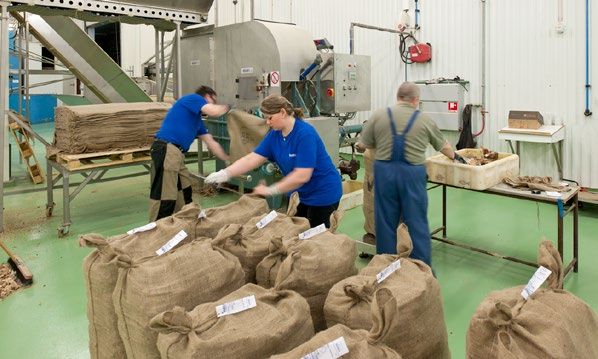
3,5                                                                                                                 35

                     3,0                                                                                                                 30

                                                                                                                                              Number of geothermal heat plants in operation
                     2,5                                                                                                                 25
          The importance of the nexus between energy
Produced heat (PJ)
                                                                                       more sustainable development. Renewable energy
          and food is addressed in the 2030 Agenda                                     applications are possible at different stages  of the
            2,0                                                                                                                    20
          for Sustainable Development4. This sets the                                  food supply chain (see Figure 1 below). Deploying
          objective by 2030 to end hunger, achieve food                                them provides a range of benefits, such as
            1,5                                                                                                            15
          security and promote sustainable agriculture as
                                                                                       alleviating energy security concerns, boosting local
          well as to ensure access to affordable, reliable,
            1,0                                                                        productive activities, reducing GHG emissions,
                                                                                                                             10
          sustainable and modern energy for all. This is
                                                                                       and supporting the achievement of Sustainable
          aligned with the need to gradually decouple food
            0,5                                                                        Development Goals (IRENA, 2015; FAO, 2011b).
                                                                                                                            5
          production from dependency on the availability
          of fossil fuels.                                                             The next section will analyse the role of geothermal
                     0,0                                                                                                                 0
          In this 2007
                  context,2008
                            renewable
                                   2009 energy
                                           2010 can2011 improve
                                                              2012 heat
                                                                      2013in direct
                                                                                2014 applications
                                                                                           2015      in
                                                                                                      2016food and2017 agriculture,

          the sustainability of the food value    chain (PJ)
                                          Heat production as well
                                                              Year including   practical   experiences      from     countries and
                                                                           Number of producing geothermal installations
          as enhance food security and nutrition towards           regions across the globe.

          Figure 1 Entry points for renewable energy into conventional energy supply systems

                                                 Energy inputs (traction, electricity, mechanical, heat/cooling)

                              Primary                Post-Harvest           Transport and                                  Retail, Preparation
                                                                                                      Processing
                             Production              and Storage             Distribution                                     and Cooking

                           Solar, wind-based
                            water pumping

                     Biofuels for tractors and
                       on-farm machinery

                           Solar-based                                                             Solar, hydro-based
                     heating and cooling for                                                        milling, threshing
                       protected cropping                                     Biofuel use for
                                                   Solar food drying,                                                      Renewable energy-based
                                                                            transportation and
                                                 cooling and refigeration                          Renewable energy-          water purification
                                                                                distribution
                      Biomass residues use                                                        based electricity heat
                       for on-site energy                                                             applications
                           generation                  Geothermal           Solar cooling and                                Modern biomass use
                                                       food drying            refrigeration                                for cooking applicatons
                                                                                                   Geothermal heat for
                       Indirect renewable                                                          milk pasteurisation
                        energy inputs for
                            fertilisers

                       Geothermal heat for
                        greenhouses, soil
                         fertilisation, etc

          Source: Based on IRENA, 2015.

          4 General Assembly Resolution A/RES/70/1 adopted on 25 September 2015, “Transforming our World: The 2030 Agenda for Sus-
             tainable Development”.

                                                                                                                                                                                              9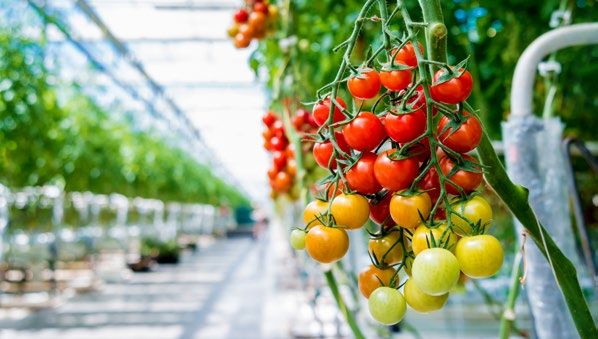
2.        GEOTHERMAL ENERGY APPLICATIONS
               IN THE AGRI-FOOD SECTOR: AN OVERVIEW
     Low and medium temperature geothermal                              and consumers from the risk of volatile prices and
     resources suitable for direct use applications are                 energy shortage. Geothermal energy in the agri-
     more widely available globally than geothermal                     food sector can be used to heat greenhouses and
     resources required to generate electricity5.                       sterilise the soil, creating growing environments
     Estimates suggest that between 4.105 and 5.106
                                                                        suitable for food production in locations where
     exajoules (EJ) stored in suitable aquifers can
                                                                        natural conditions would not normally allow.
     theoretically be used for direct heat applications.
                                                                        Additionally, protection from diseases and extreme
     With a recovery factor of 1% and an assumed
     lifetime of 30 years, the annual recoverable                       weather conditions increases productivity and off-
     geothermal energy could match world final energy                   season availability of products. Geothermal heat
     consumption of 363.5 EJ per year (Limberger                        can also serve for drying purposes, which helps
     et al., 2018). Nevertheless, actual exploitation is                preserve a wide range of foods. It contributes to
     estimated at 587,786 TJ per year (Lund and Boyd,                   mitigating food waste and results in a substantial
     2015) – less than one-thousandth of the technical                  reduction in drying space and time requirements.
     potential (Limberger et al., 2018).                                Furthermore, food drying can maintain a high
     Increasing the use of geothermal heat offers                       protein content of some products.
     significant benefits. Geothermal direct utilisation
                                                                        The wide range of geothermal applications in the
     boosts the development of economic activities
                                                                        agriculture and agro-industry sector depends on
     in the areas near the resource location, thereby
                                                                        varied fluid temperatures. This is illustrated in the
     providing employment for local communities.
     Additionally, geothermal is a renewable and                        Figure 2 known as the Lindal diagram and briefly
     indigenous energy source. Increasing its use can                   summarised in Box 2. These applications are
     reduce dependency on fossil fuels, therefore                       described in detail in Van Nguyen et al. (2015) and
     improving the trade balance and protect businesses                 Lund (2017).

     Source: Shutterstock

     5   Geothermal resources higher than 150°C are usually required for electricity generation, although advanced technologies such as
         binary cycle power plants can make use of lower-temperature resources.

10
Figure 2 Utilisation of geothermal water and steam in the agri-food sector
Refrigeration
140
Sterilisation
130
Evaporation &
Distillation
120
110
Food/
crop Greenhouse Milk
100
drying heating pasteurisation
90
Temperature( C)
Irrigation
80
70
60
50
Aquaculture Soil heating
40
30
20
Based on Lindal, 1973; Van Nguyen et al., 2015; Lund, 2017.
“Low and medium temperature geothermal
resources suitable for direct use applications are
more widely available globally than geothermal
resources required to generate electricity”
11BOX 2. SELECTED GEOTHERMAL HEAT APPLICATIONS
IN THE AGRI-FOOD SECTOR
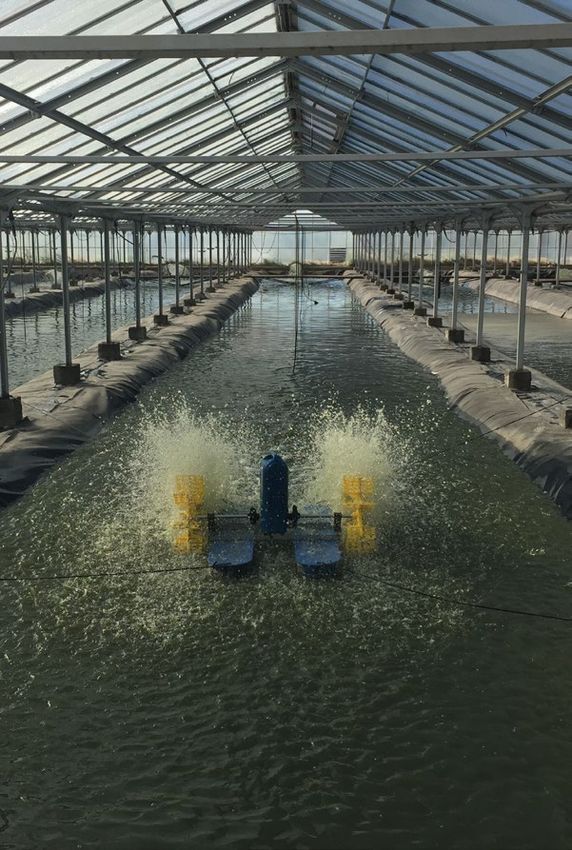
Aquaculture (20°C-40°C) Geothermal waters can which consists of removing water contained in the
be used to heat freshwater in heat exchangers product, thus reducing moisture quantity to below
or mixed with freshwater to obtain suitable 20%. Drying vegetables, fruit and fish typically
temperatures for fish farming. This application has requires temperatures of 70°C-95°C.
been reported in 21 countries worldwide and it is
Milk pasteurisation (around 70°C up to 100°C)
mainly used for aquaculture pond and raceway
Geothermal hot water can be used for milk
heating. Cultivation of algae – mainly spirulina –
pasteurisation, while geothermal steam can be
is another growing use, which requires temperatures
used for milk drying and ultra-heat treatment (UHT)
of 35°C-37°C.
processes.
Soil heating (20°C-40°C) The constant soil
Evaporation and distillation (around 80°C up to
temperature increases the yields and makes it
120°C) This is commonly employed to separate
possible to extend the growing season. Soil heating
mixtures and/or to increase the concentration of
is used, for example, to grow carrots and cabbages.
some components of the product. Examples include
Greenhouse heating (25°C-100°C) This is one of milk evaporation, sugar and liquor processing.
the most common direct applications of geothermal
Sterilisation (>105°C) Geothermal heat is used to
energy reported in 31 countries worldwide.
achieve a temperature of 121°C for food sterilisation
Greenhouse heating is employed to grow crops
in the meat and fish industry, which is a standard
such as vegetables and fruit in addition to flowers,
temperature for food sterilisation. Besides,
houseplants and tree seedlings.
geothermal water can also be used at 105°C-120°C
Irrigation (40°C-75°C) Geothermal energy at this to sterilise food processing equipment.
temperature range can be employed to heat winter
Refrigeration (>120°C) Geothermal energy can be
crops in open field agriculture and in greenhouses.
used for refrigeration by absorption technology,
Food/crop drying (around 60°C up to 100°C) Low using an ammonia/water cycle for applications
to medium temperature geothermal resources can below 0°C. So far, there has been very limited use
reduce energy consumption in the drying process, of this geothermal application.
Source: Van Nguyen et al. (2015); Lund (2017)
An important aspect to consider is that, once the An example of this can be found in New Zealand.
first process for which it was intended is complete, The Mokai geothermal field supplies steam from
the geothermal fluid still has potential for further two of its wells to a dairy factory to process more
uses requiring lower temperatures (Rubio-Maya than 250 million litres of milk every year. The milk
et al., 2015). This use of the same fluid at different supply comes from around 70,000 cows at 100
thermal levels for various processes, known as local farms located within 85 kilometres from the
cascaded use, can improve the economics of factory (Blair, 2018). Currently, dairy products
small and large projects, including power projects. from the plant are exported to 23 countries in
In addition, it increases resource efficiency and Africa, East Asia and the Pacific, Latin America
reduces primary energy consumption. and the Middle East (GNS Science, 2017).
Another approach is to use steam from the same
field in parallel for both power and direct use.
12Geothermal energy for fish farming in Kazakhstan. Source: Þorleikur Jóhannesson
133. EXPERIENCE FROM SELECTED COUNTRIES
Geothermal energy development is often cost-efficient geothermal energy. Facilitated by
accompanied not only by environmental benefits the country’s exceptional geological conditions,
but also by the creation of new and stable jobs, geothermal projects have contributed to a
security of energy supply, and the possibility to major energy transformation. Having been 80%
develop industrial and touristic activities. This dependent on imported oil and coal in the 1940s,
section highlights examples of the uptake of Iceland now sources nearly 100% of its domestic
geothermal direct use applications in the agri-food power and heating requirements from renewables.
sector in developed as well as in emerging markets. In 2017, geothermal energy met 27% and 90%
of power and heating demand respectively
3.1 Developed markets (Orkustofnun 2018a and 2018b). In addition, the
Iceland is a well-known example from the 82 use of geothermal heat in horticulture and fishing
countries reporting direct use projects in operation is very common, has dramatically enhanced food
(Lund and Boyd, 2015). In the second half of the 20th security and nutrition and has boosted the local
century, the country has experienced extraordinary industry by enabling large-scale export of stock
economic growth partly enabled by deploying fish (Box 3).
BOX 3. FOOD SECURITY AND COMPETITIVENESS
WITH GEOTHERMAL ENERGY IN ICELAND
For centuries. Iceland’s main economic activities In the seafood industry, geothermal is used
consisted of agriculture and fishing, while the basic especially for fish farming and drying. Indoor fish
diet consisted chiefly of fish and livestock. Food drying in Iceland requires large amounts of energy,
imports therefore became necessary to enhance which was very costly when using oil or electricity;
the diet. Towards the end of the 19th century, Indoor fish drying was therefore tested in areas
farmers discovered that warmer soils were more with geothermal resources because hot water or
productive, leading to the establishment of the geothermal steam was less expensive. The cost
first greenhouse using geothermal energy in 1924. reductions in the drying process allowed Iceland
to become one of the main producers of dried fish
Over the last century, geothermal energy has been
worldwide along with Norway. In 2016, dried fish
utilised to increase the availability of vegetables
exports in Iceland amounted to more than 52, 000
such as tomatoes, cucumbers, peppers, carrots,
tonnes, worth more than 200 million US dollars.
salad crops, strawberries and mushrooms.
Greenhouse horticulture in Iceland has become Iceland’s successful experience demonstrates
increasingly high-tech in terms of heat, humidity, the possibility of addressing various challenges,
carbon dioxide and lighting control. including food security, through domestic
geothermal resources. This may represent in
Locally produced food in Iceland is now abundant,
several countries potential drivers for economic
and some geothermal sites have also become
development.
tourist attractions.
Source: Flóvenz and Jónsdóttir, 2017; Statistics Iceland, 2017
14The direct use of geothermal heat in the agri-food As illustrated in Box 4, the deployment of
industry, especially in greenhouse applications, geothermal heat has been increasing for more
is also well known in China, Hungary, Russia, than a decade also due to a number of dedicated
and Turkey (Lund and Boyd, 2015). A more policies. These combine targets and plans, a
recent successful example is represented by private-public insurance scheme addressing the
the Netherlands. The Dutch horticulture sector resource risk through well productivity insurance,
is one of the pillars supporting the economy, and a market-based support scheme open
and the Netherlands has prioritised geothermal to renewable electricity as well as renewable
energy to minimise dependency on natural gas. heat sources.
Drying fish factory in Iceland. Source: Haustak.
1530
20
BOX 4. MIX OF POLICIES AND TOOLS TO SUPPORT
GEOTHERMAL HEAT DEVELOPMENT IN THE NETHERLANDS
Renewable energy has become a priority in heat since 2007 in the Netherlands, where
the Netherlands to minimise dependency on 18 out of 19 projects operating at the end of
natural gas in different sectors such as district 2017 were dedicated to heating commercial
heating and agriculture. The figure below greenhouses.
shows the exceptional growth of geothermal
Figure 3 Annual production of geothermal heat in the Netherlands
3,5 35
3,0 30
Number of geothermal heat plants in operation
2,5 25
Produced heat (PJ)
2,0 20
1,5 15
1,0 10
0,5 5
0,0 0
2007 2008 2009 2010 2011 2012 2013 2014 2015 2016 2017
Heat production (PJ) Year Number of producing geothermal installations
Source: Ministry of Economic Affairs and Climate Policy of the Netherlands, 2018
In the early 2000s there Energywas
inputsno(traction,
dedicated implementation.
electricity, Combined with solid expertise and
mechanical, heat/cooling)
policy framework for geothermal energy in the knowledge of its geological conditions originating
The Mining Act and a geological from long experience of oil and gas, this has
Netherlands.Primary
Post-Harvest Transport and Retail, Preparation
Processing the geothermal energy
enormously facilitated
database developed
Production within the framework
and Storage of oil and Distribution and Cooking
gas were the only instruments available. However, boom in the Netherlands in the recent years.
the government developed a plan for geothermal The enabling environment for geothermal energy
Solar, wind-based
water pumping
heat in the years that followed and put in place a in the Netherlands is currently composed of the
mix ofBiofuels
complementary
for tractors and measures to facilitate its following supporting instruments.
on-farm machinery
Solar-based Solar, hydro-based
heating and cooling for milling, threshing
protected cropping Biofuel use for
Solar food drying, Renewable energy-based
transportation and
cooling and refigeration Renewable energy- water purification
distribution
Biomass residues use based electricity heat
for on-site energy applications
generation Geothermal Solar cooling and Modern biomass use
food drying refrigeration for cooking applicatons
Geothermal heat for
Indirect renewable milk pasteurisation
energy inputs for
fertilisers
Geothermal heat for
greenhouses, soil
fertilisation, etc
16• Public geological database The Netherlands • Post-damage guarantee scheme Established
Oil and Gas (NLOG) portal is a public by the Ministry of Economic Affairs in 2009
database that holds all subsurface data (e.g. and renewed in 2013, this risk mitigation fund
well logs and geophysical surveys) gathered pays out 85% of well costs if the thermal power
under a mining permit. This includes data output is lower than expected. In the Dutch
from the oil and gas industry, mining and scheme, participants pay an insurance fee of
scientific research. The Dutch mining law 7% of the maximum support. The maximum
requires all parties operating under a mining support/risk covered is 7.2 million euros. A
permit to deliver the data acquired through similar risk insurance scheme linked to the
the process to the governmental organisation performance of geothermal installations has
TNO. These data are made public five years been available in France since the 1980s and
after acquisition and have significantly enabled the installation of 500 megawatts of
reduced resource risk for geothermal project thermal power.
developers. • Acceleration Plan Geothermal Energy in
• Geothermal Action Plan Published in April 2011 Horticulture Launched in 2014, the plan sets
by the Ministry of Economic Affairs, Agriculture a target for 5 PJ of deep geothermal heat per
and Innovation, this was the first white paper year and includes strategies to achieve its
on geothermal energy in the country. Among target. These are concerned with knowledge
other things, the document set the target of development and dissemination, addressing
generating 11 petajoules (PJ) from geothermal the financing constraints, and reducing risk
heat plants by 2020. exposure by improving and extending the
budget of the guarantee scheme.
• Operating grant (Stimulation of Sustainable
Energy Production -SDE+) Under this scheme, • The “energy-producing greenhouse”
geothermal heat plants operators have been programme This is a collaborative venture in
eligible since 2012 to receive financial support which government and industry work together
for a fixed number of years for the renewable to reduce carbon dioxide emissions from
energy they generate. The programme pays greenhouse horticulture, notably by providing
the difference between the price of fossil businesses with information.
fuels and the cost of the renewable fuel as a
Source: Babóczky; 2017; Boissavy, 2017; EGEC, 2016;
feed-in premium. The support scheme is Government of the Netherlands, n.d.; Ministry of Economic
open to renewable electricity, renewable heat Affairs and Climate Policy of the Netherlands, 2018; Netherlands
and biogas. Enterprise Agency, n.d.; NLOG, n.d.; Van Heekeren, et al., 2015
Aerial view of greenhouses in the Netherlands. Source: Shutterstock.
17Governments at national or local levels can also put initiatives involving all the local economic and
in place a variety of mechanisms complementing social actors.
policy and financial instruments to ensure the
One of these initiatives is the Renewable Energy
greater involvement of local communities and
Food Community. This brings together food-
fair distribution of the benefits arising from the
geothermal exploitation. As an example, part related businesses using geothermal energy and
of the revenues from the concessions for the other renewable energy sources, promotes its
exploitation of geothermal energy resources in the sustainability model through a common brand, and
Italian Region of Tuscany is channelled through supports marketing and outreach to new markets
a consortium of local municipalities to promote (Box 5).
BOX 5. TUSCANY’S INNOVATIVE GEOTHERMAL
GOVERNANCE MODEL AND THE RENEWABLE
ENERGY FOOD COMMUNITY
The 14 municipalities within the geothermal with the social, cultural and environmental features
areas in the Italian region of Tuscany developed of the area.
an innovative model for expanding the use of
As part of this strategy, CoSviG founded the
geothermal energy in the agri-food sector. This
Renewable Energy Food Community in 2009
area was home of the world’s first ever commercial
together with the Tuscany Slow Food and Slow
geothermal power plant, which was built in 1913
Food Foundation for Biodiversity. This is reported
over a complex of hot water springs used since
to be the world’s first community of local food
Roman times. In this region, however, the further
businesses using clean and renewable energy in
deployment of geothermal energy is limited by a
their manufacturing cycles. The Renewable Energy
number of social and environmental concerns.
Food Community contributes to reductions in GHG
A new governance model was therefore put in emissions by using renewable energy. It allows
place through a General Agreement on Geothermal its members to display a collective label on their
Energy which envisages revenue redistributed products as a guarantee of clean energy use and
from geothermal energy projects to benefit local respect for the principles of slow food as “good,
populations, make geothermal territories more clean and fair”. Currently the Renewable Energy
attractive to investors and/or tourism, and improve Food Community contains various projects using
the environmental impact of industrial activities. In geothermal energy in their manufacturing cycles.
this context, the Consortium for Development of Examples include geothermal greenhouses for
Geothermal Areas (CoSviG) seeks to promote growing basil and other aromatic plants to produce
the creation of development paths involving all pesto; geothermal heat in the production of fresh
economic and social actors in the Tuscan territories. sheep cheese; and geothermal steam as primary
Moreover, a roadmap for sustainability has been energy source in a craft brewery.
designed relating to the diversification in production Source: Renewable Energy Food Community, 2017;
and use of energy from renewable sources, in line Torsello, 2018
183.2 Emerging markets
While countries like Iceland or the Netherlands are well deployed in Olkaria (greenhouse heating) and
known for their commercial direct heat applications, Eburru (pyrethrum drying).
including in the agri-food sector, other countries
More recently, Kenya’s Geothermal Development
have limited the use of their geothermal energy
Company (GDC), which supports geothermal
for power generation and/or recreational purposes
development in the country, has implemented four
only. However, more and more governments are
pilot projects at Menengai for greenhouse heating,
showing interest in deploying geothermal heat as a
milk pasteurisation, aquaculture pond heating and a
solution to improve food security and nutrition and
to stimulate economic development. Many of these laundry (Nyambura, 2016). Meanwhile, a fifth project
are currently working on gaining experience and featuring a grain dryer is under development.
putting in place the necessary enabling frameworks. Moreover, further potential has been identified for
In Kenya, for example, the nexus between food meat, milk, and honey processing as well as for
and geothermal energy appears to be very strong. postharvest crop preservation and storage in Nakuru
While the country has a long tradition of geothermal County – where the Menengai field is located – and
power and more than 650 megawatts of installed in other prospects such as the counties of Narok,
capacity, the first geothermal heat projects were Baringo and Turkana (Ole Nchoe, 2018).
Hot spring in Kenya. Source: Shutterstock.
19In Africa, geothermal direct use projects are also Suitable geothermal
in operation in Tunisia for oasis irrigation and
greenhouse heating purposes, and in Algeria for resources there could
greenhouse heating and fish farming (Lund and
Boyd, 2015). However, the potential for geothermal
be harnessed by drilling
direct use remains largely untapped, notably along shallow and therefore
the East African Rift System. Suitable geothermal
resources there could be harnessed by drilling
lower-cost wells.”
shallow and therefore lower-cost wells with a depth Latin America and the Caribbean is another
of less than 1,000 m (Feliks et al., 2015). region in which policies and incentives have mostly
concentrated on power generation rather than
“The potential for direct use applications (Bergman et al., 2018).
However, the direct use of geothermal energy can
geothermal direct undoubtedly have a transformative impact in terms
use remains largely of food security and rural economic development.
In Mexico, for instance, food loss and waste are
untapped along the estimated at around 20 million tonnes annually.
East African Rift System. The development of technologies using geothermal
resources for food drying could contribute to
solve this problem (Aviña, 2018). To accelerate the
deployment of geothermal heat for productive uses
as well as for space heating and cooling, Mexico is
finalising dedicated licensing procedures and has
produced a roadmap projecting significant growth
in geothermal heat in the coming years (see Box 6).
Source: National Autonomous University of Mexico - UNAM
20BOX 6. PERSPECTIVES FOR GEOTHERMAL HEAT
DEVELOPMENT IN MEXICO
Mexico has large geothermal potential information about current direct use projects
traditionally used for power generation. As installed in the country and highlights potential
part of the Mexican energy reforms aiming to application areas and technologies for direct
liberalise the energy sector, the Government of use of geothermal heat, including cascaded use
Mexico introduced the Geothermal Energy Law in and ground source heat pumps. Furthermore,
2014. This included the use of geothermal energy it identifies the main barriers to the accelerated
for power generation as well as heat for direct implementation of direct use projects in Mexico
applications. This new law created an opportunity and proposes strategies to overcome regulatory,
to develop projects intended to harness heat for economic, capacity building, technological
all uses, including agriculture, which is considered and social barriers. It highlights commitments,
particularly important due to Mexico’s potential responsibilities and timeframes in the short
in the sector. and medium term for each of the stakeholders
involved. The targets and main outcomes of the
The National Energy Secretariat of Mexico
roadmap are the result of consultation workshops
(SENER) is currently making efforts to support
that involved stakeholders from the national
the development of projects related to direct use
government, academy, research and industry.
of geothermal energy. It has drafted guidelines
to streamline the process for the acquisition of Sources: Aviña, 2018; SENER, 2018
permits and concessions for this type of project.
At time of writing (December 2018), the draft
guidelines were under review and are expected
to be published in the first quarter of 2019.
Simpler regulatory procedures for geothermal
direct use applications are expected to facilitate
the development of projects in Mexico, with a Mapa de Ruta
special focus on food and agriculture.
Tecnológica
The main project related to food in Mexico
is a mango dehydration plant in the newest
geothermal field located in the state of Nayarit on
Usos Directos del Calor
the Pacific coast. Yet more projects are currently Geotérmico
under development, financed by public and
private funds.
Furthermore, in 2018 Mexico published a roadmap
for geothermal direct use, which projects a
rise in geothermal heat installed capacity
from around 156 megawatts thermal (MWth)
in 2013 to 1,950 MWth in 2024 while targeting
3,800 MWth by 2030. The roadmap compiles 1
21Central America is another region with good and apples for export in Guatemala. However, the
opportunities for direct applications of geothermal further development of these applications faces
resources. Key factors are the significant barriers such as lack of awareness of geothermal
geothermal potential and expertise in the direct use and its benefits; lack of dedicated
region, together with the strong engagement of licensing procedures; and concerns about
development partners to work on these types possible decrease of electricity production in
of geothermal applications. The industry and high-enthalpy fields. At the same time, the major
businesses in the region have recently shown energy companies in the region have a mandate
interest in exploiting the geothermal potential only to generate and sell electricity, and direct use
and there are a few pilot projects driven by sometimes remains a legal grey area. Different
large, experienced government-owned energy countries in the region (Guatemala, Nicaragua and
companies. They include, for instance, pineapple, Costa Rica) are working on pilot projects involving
apple, banana, coconut and coffee drying at the direct uses of geothermal energy in order to
Berlin field in El Salvador, milk pasteurising, hot overcome the main barriers mentioned above
water applications and fruit drying in Costa Rica. and to take advantage of the region’s favourable
Private sector projects include dried pineapples geological conditions (GIZ, 2018).
Source: shutterstock
224. RECOMMENDATIONS FOR ACCELERATING GEOTHERMAL
HEAT DEVELOPMENT IN THE AGRI-FOOD SECTOR
Analysing the experience of countries that have the previous section, efforts in this direction have
successfully deployed geothermal energy in past been taken in some countries such as Mexico (see
decades, as well as countries at an early stage in Box 6).
the journey, allows specific barriers and success
Develop tailored policy instruments and
factors to be identified and demonstrates that
address key financial barriers
public policy plays a crucial role in creating the
conditions for private investment. However, there is From the economic point of view, geothermal
no one-size-fits-all approach, and regulations and energy is a competitive yet highly capital-intensive
policies must be adapted to the local contexts and technology. As highlighted, the resource risk
market maturity. Bearing these considerations in related to the initial phases of a geothermal project
mind, this section puts forward recommendations remains one of the most challenging barriers to
that could help accelerate the deployment scaling up geothermal energy investments for
of geothermal direct use applications in the power generation as well as heating. To overcome
agri-food sector. the financial challenges, governments and
development finance institutions have assisted
Establish adequate licensing procedures geothermal development through national or
covering all geothermal applications regional support schemes. These instruments
The implementation of a geothermal project have often taken the form of non-recoverable
requires multiple permits during the exploration, grants, convertible grants or guarantee funds.
development, construction, and operation They either cover part of the costs of exploration
phases. The exact procedures vary based on the and drilling or provide well productivity insurance
legal system (common or civil law), the definition, (IRENA, 2016). However, very often the availability
and the classification of geothermal resources. of these support mechanisms has been limited to
Legal provisions relevant to geothermal heat geothermal power projects alone.
projects are sometimes found under the mining The Netherlands (see Box 4), is an exception. The
and/or water laws and in other cases in specific case study shows how risk mitigation mechanisms
geothermal laws. and other dedicated support schemes open to
In some jurisdictions the whole permitting geothermal heat projects have played a critical
process may be lengthy and burdensome. thereby role in attracting investors and leveraging private
increasing the overall costs of a project, Therefore, finance for geothermal direct use projects in food
one of the main prerequisites for successfully and agriculture.
developing geothermal projects is the existence of Governments and development partners willing to
a transparent licensing regime defining in advance support an increase in geothermal direct use may
the rights as well as the technical, economic, and extend/adapt the eligibility of existing support
other requirements for the licence holder. To enable mechanisms to include geothermal heat projects
geothermal direct use development, regulations or establish dedicated instruments.
should at the outset foresee the possibility for
Integrate geothermal energy in
the use of geothermal energy beyond power
development and industrial plans, involve
generation. They may allow energy companies,
local actors and promote partnerships
including independent power producers, to
to attract industry to settle near the
sell heat as well as power. In addition, where
geothermal area
possible, dedicated and streamlined authorisation
procedures for small-scale direct use projects Aligning geothermal plans with industrial, economic
could be put in place while taking the specific and rural development strategies is crucial to
legal contexts into consideration. As reported in generating consistent frameworks to attract
23productive activities close to the geothermal shortage of qualified workers can restrict the
resource. Partnerships between local authorities wider adoption of geothermal direct use. Local
and industrial operators must therefore be nurtured communities and experts even in particular regions
in order to develop local direct-use projects. with significant experience of geothermal power
As illustrated by the example of the Renewable generation would benefit from further training
Energy Food Community in Tuscany, Italy, on topics related to downstream operations, for
supporting local enterprises and promoting a local instance food processing through geothermal heat.
label for food produced or processed sustainably This would facilitate the development of more
using geothermal energy and other renewable projects for the food and agricultural industries.
energy sources can incentivise businesses to To maximise the impact and outreach in different
switch fuels. At the same time, it can open up geothermal regions across the world, collaboration
business opportunities for sustainable food. This with and between geothermal training centres
necessitates consultations with a wide range of could be useful.
stakeholders, including public authorities and the
Training the local workforce in the use of dryers
private sector involved in agriculture and rural
or in food engineering, for example, would
development, as occurred in Mexico (see Box 6
support the efficient operation of pilot projects.
above). The involvement of local communities is of
It will prevent them from falling into disuse if not
crucial importance and should be considered also
properly maintained. Furthermore, involving local
when issuing or renewing licences for geothermal
communities in the development of these projects
development.
can contribute to creating awareness and sharing
Support pilot projects and feasibility the benefits of geothermal energy development in
studies to improve knowledge of the those areas and allow for a better acceptance of
geology and assess compatibility with geothermal plants.
specific productive activities
Ensure wise management of the resource
Geological data is key to assessing resource for long-term environmental and economic
availability as well as the conditions of the sustainability
geothermal fluids, including temperature, pressure,
The direct use of geothermal energy has many
chemical composition etc. to find the most suitable
potential benefits. For example, as highlighted in
applications. High-quality geological data will
the previous sections, it can increase the economic
contribute to accurate feasibility studies, which are
viability of power generation projects. Yet technical
of utmost importance for the project evaluation.
challenges sometimes affect the cascading use of
One of the purposes of feasibility studies should geothermal resources. These can be addressed
be to map and identify any overlap between the by strategies adapted to the characteristics of the
geothermal resource available and demand for resource and the reservoir.
low, medium or high-temperature heat from
In this context, it should be noted that thermal
economic activities located, or to be located,
waters are rarely pure (Lund, 2017). In particular,
nearby. In new and emerging markets,
geothermal fluids usually contain dissolved by-
accurate feasibility studies could be supported
products of water-rock interactions and possible
through public funding or technical assistance
modification by magmatic gases. This causes
programmes. The results of these assessments
chemical elements such as silicon, aluminium,
can also be key to attracting investors or raising
sodium, potassium, calcium, magnesium, iron,
debt finance, thereby facilitating the
manganese, chlorine, boron and bromine to
implementation of subsequent phases of a project.
dissolve (Gunnlaugsson, 2014). Heat exchangers
Develop capacities for downstream direct are therefore needed to mitigate the presence of
use operations elements harmful to human health (Lund, 2017).
Some technology applications, such as food The stability and interaction between the elements
drying, can be considered mature. However, dissolved in geothermal fluids is controlled mainly
the limited experience of public authorities and by temperature, pressure and pH but changes to
24You can also read


