ACTIVE CAPITAL THE REPORT 2018 - Knight Frank
←
→
Page content transcription
If your browser does not render page correctly, please read the page content below
ACTIVE CAPITAL THE REPORT 2018

ACTIVE CAPITAL 2018

                                     Foreword
                                     We are delighted to present this second edition of
                                     Active Capital, in which we share our analysis, insight
                                     and opinions on the trends shaping global real estate.

                                                            Drawing on local expertise from across our
                                                            global network, we explore the emerging capital
                                                            superhighways, and identify the factors exerting
                                                            the greatest gravitational pull on a country’s
                                                            inbound capital flows, before turning to active
                                                            purchasers and the property sectors on which
                                                            they are focused.
                                                            This is a marketplace supported by a recovery in
                                                            global growth that is still in full swing. It is one
                                                            that is re-internationalising as it attracts ever-
                                                            greater investor demand.
                                                            However, it is also a mature cycle in many locations
                                     Andrew Sim             and, with macroeconomic change on the horizon,
                                                            we believe it has never been more important to
                                     Head of Global
                                     Capital Markets        understand both the nuances within the sector as
                                                            well as the wider financial market context.
  Active Capital
                                                            Knight Frank remains at the forefront of global
  2018                                                      capital markets. We hope you find this edition of
                                                            Active Capital even more thought-provoking than
  Commissioned by:                                          its predecessor, and enjoy reading it as much as we
                                                            enjoyed compiling it.
  Andrew Sim

  Written by Knight Frank’s global
  research team, including:
  Anthony Duggan
  Will Matthews
  James Roberts
  Flora Harley
                                                            It has never been more important to
  Liam Bailey                                               understand both the nuances within
  James Culley                                              the sector as well as the wider financial
  Nicholas Holt                                             market context.

2 |   KNIGHTFRANK.COM                                                                                              KNIGHTFRANK.COM   | 3
ACTIVE CAPITAL 2018
Overview
Dynamic 28-31
Building
sectors
the world
Front cover artwork: 24
Take five: what to watch out for in the
Johanna Pikver Asia-Pacific logistics markets
Logistics property is one of the hottest sectors
in commercial real estate. While the opportunity
Data and 8-11
Mapping the capital
in Western markets is focused on capturing
evolving retail trends, in Asia-Pacific
capital flows
superhighways markets there is much more in the mix, from
manufacturing to infrastructure to global trade.
28
Building the world
6
Shifting capital flows
Growing demand from investors for properties
Cross-border investment grew by more than overseas has been one of the defining features
10% in 2017 and, for the first time ever, the Asia- of the world’s leading urban housing markets.
Pacific region was responsible for more of it than Where the investor has led, developers have
anywhere else. What can the emerging trends of followed. We provide our view on the outlook for
the past year tell us about the outlook? cross-border development in a selection of the
world’s leading cities.
8
Mapping the capital superhighways
Which regions and countries are the most prolific
exporters of real estate capital? Where is this
investment directed, and what sort of assets is it
targeting? We analyse the major capital routes
of the present, and give our predictions for those
of the future.
12
From the Knight Frank Data Lab:
the rules of attraction
Real estate investment is increasingly global,
but the bulk of cross-border purchases still take
place within a relatively small group of markets.
Is this narrow focus still warranted given the
often intense competition for assets in these
locations, and increasing levels of transparency
seen elsewhere? Using our in-house gravity
model, we identify a number of markets that we
believe deserve to see higher volumes of inward
investment than they do at present.
Sources The
of demand outlook
16
Titans at the gate: private 32
Strategic direction:
equity raises the stakes the outlook for global
real estate investment
Huge amounts of private equity
capital has been raised in recent What are the themes that will shape the
years, in ever-larger funds: over increasingly international market over the
a quarter of a trillion dollars is now coming years?
waiting to be spent on real estate.
What is behind this rise in scale, 38
Global economic trends
and what does it mean for the and risk radar
future of real estate equity funds, A decade on from the global financial crisis,
both great and small? how sustainable is the maturing recovery and
what are the risks on the horizon?
20
The wealth of nations
With economic recovery in full 42
About Knight Frank
swing, global wealth is on a
seemingly unstoppable rise. 43
Contacts
More of it is being invested
in real estate, either directly,
or via allocations from asset
managers. We analyse data from
our Wealth Report to understand
where future growth in private
16-19
wealth will come from over the
Titans at the gate: next five years, and identify three 20-23
private equity raises the stakes trends for the year ahead. The wealth of nations
4 | KNIGHTFRANK.COM KNIGHTFRANK.COM | 5
ACTIVE CAPITAL 2018
Shifting
DESTINATION
Global investment volumes
capital f lows
When it comes to cross-border capital inflows,
the US, UK and Germany held the top three spots
in 2017, as they have done since 2010. However, Cross-border
with a great variety of investors currently targeting
Domestic
continental European markets, it is no surprise
to see the likes of Spain, France, Austria and the
Netherlands rising up the ranks too. Continental
markets will remain compelling as, despite strong $1,100bn
pricing, opportunities to capture future rental
Globally, total real estate investment activity edged up by a
growth remain.
modest 3% during 2017, belying a market that felt far more active,
and with good reason: while volumes traded saw little change, Beyond the limelight, but no less interesting for
that, are markets that are yet to see significant $1,000bn
the source, destination and even the rationale behind cross- volumes of inbound real estate investment.
border capital flows is evolving rapidly. These are countries where the overall volume of
capital inflows remain relatively low, and volatile,
but are ultimately growing very quickly: India is
perhaps the standout example of recent years, $900bn
with investment growing by 600% since 2012
SHIFTING SOURCES Long-term investors such as pension funds and to reach US$2.6 billion in 2017.
The global real estate market is re- sovereign wealth funds have also returned to the Beyond the
internationalising. In 2017, 32% of all cross-border market at scale, the latter doubling The next part of our research is all about limelight, but no
For the first time analysing these trends, both at the macro
transactions by volume involved cross-border investment in 2017 vs. 2016. This is part of a less interesting,
ever, Europe and and micro level. We begin by identifying the
$800bn
purchases, up from 25% during 2009-2011. structural shift which has seen growth in capital are markets
However, this isn’t simply a return to the levels
North America ‘capital superhighways’ - the main sources and
flows from these investor groups far outstrip that are yet to
and mix of pre-global financial crisis trade. While were eclipsed other investor types over the past decade. destinations of real estate capital at a continental
by Asia-Pacific, and country level. We then use our in-house see significant
Europe and North America continue to invest
similar volumes of capital abroad, for the first from which The most significant fall in cross-border flows gravity model (see page 13) to determine volumes of
$700bn
time ever they were eclipsed by Asia-Pacific, US$90 billion has been from real estate investment trusts and locations that we believe could be set for higher inbound real
from which US$90 billion flowed in 2017. flowed in 2017. other listed property companies. The volume of inbound investment. estate investment.
assets purchased has fallen by around half over
Which region will be the greatest exporter of the past two years.
cross-border capital flows in 2018? As we explore
$600bn
later, a slowdown in outbound capital from China
and Hong Kong might suggest that Asia will The evolving sources of cross-border capital
slip back temporarily. However, we believe the Cross-border capital outflows by source, 2017
extent of this fall will be countered by potential Asia-Pacific Europe Middle East
for greater investment from Japan, South Korea Source: Knight Frank/RCA $500bn
and other major Asian markets. Much of this US$1.1bn North America Others
demand will emanate from mature institutions, South America
used to acquiring assets globally, and more likely
US$4.1bn US$120bn
to consider opportunities beyond well-known
gateway markets than investors looking overseas
Africa
$400bn
for the first time.
US investors will continue to acquire significant
US$9.1bn US$100bn
volumes of real estate overseas, although the Middle East
impact of domestic tax changes will offer up
$300bn
compelling opportunities for investing at home. US$80bn
A similar situation will face European investors,
who currently benefit from the prospect of strong
returns in their local markets. Outbound capital US$80.9bn
from the Middle East has slowed in recent years, North America US$60bn
$200bn
but this may be about to change as rising oil prices
boost revenues and sovereign wealth inflows.
Although the overall volume of cross-border US$40bn
capital flows has changed little since 2016, there
has been a clear shift in the type of investors $100bn
active in the market. In volume terms, the biggest US$83.3bn
US$20bn
increase has come from private equity funds, Europe
which after a period building up dry powder,
increased their cross-border investment by over
60% in 2017. We expect 2018 volumes will show US$0bn $0bn
them to be even more active: US$124 billion of
2007
2008
2009
2010
2011
2012
2013
2014
2015
2016
2017
2009
2010
2011
2012
2013
2014
2015
2016
2017
fresh capital was raised in 2017, and many of the
North American funds behind the largest of these US$90.0bn
pools have a global or European remit. Asia-Pacific Source: Knight Frank/RCA Source: Knight Frank/RCA
6 | KNIGHTFRANK.COM KNIGHTFRANK.COM | 7
ACTIVE CAPITAL 2018

Mapping the capital
                                                                                                                Our detailed analysis of capital flows
                                       Inbound capital
                                       Investment volumes in 2017 by major region                               begins by looking at where investment
                                                                                                                has taken place globally.

superhighways
                                             Cross-border

                                             Domestic                                                           At the continental level, North America continues
                                                                                                                to see a greater volume of activity than anywhere
                                                                                                                else, although the vast majority is from domestic
                                                                                                                investors, with less than 15% of volume accounted
                                                                                                                for by purchasers from abroad.
                                                                                                                By contrast, more than half of the investment
                                                                                                                that took place in Europe involved a buyer from
                                                                                                                a different country. Part of the reason for this
                                                                                                                is the high volume of cross-border trading that
                                                                                                                takes place between European countries: intra-
                                                                                                                continental trade in Europe reached US$65 billion
                                                                                                                in 2017. But that is far from the whole story. In
                                                                                                                particular, it is clear that Asia’s role is growing
                                                                                                                rapidly, both as a source of outbound capital flows,
                                                                                                                and as a destination for inward investment. Indeed,
                                                                                                                both Asia-Pacific investment into Europe and
                                                                                                                European investment into Asia-Pacific doubled
                                                                                                                during the year.
                                                                                                                In the longer term, we predict the share of
                                                                                                                overseas investment in Asia-Pacific markets will
                                                                                                                gradually begin to catch up with that seen in
                                                                                                                Europe. However, in the short term, so strong
                                                                                                                is the focus from both Asia-Pacific and North
                                                                                                                American investors that Europe’s cross-border
                                                                                                                share could also continue to grow.

                                                                          US$143.5bn US$299.4bn US$391.4bn
                                                                                                                US$65bn
                                                                                                                The volume of intra-continental investment
                        Image:
                        Tom Grimbert   Source: Knight Frank/RCA            Asia- Pacific Europe North America   that took place in Europe during 2017.

8 |   KNIGHTFRANK.COM                                                                                                                      KNIGHTFRANK.COM      | 9
ACTIVE CAPITAL 2018
While much cross-border activity takes place at the intra-
Cross-border flows from regions into countries continental level (such as wider Asian investment into China or Cross-border flows from different types of investors
Where the country of origin is not the same as the country of investment Australia, or Canadian investment into the US), it is also clear that Excluding developments
a number of markets have broad appeal to investors across the
world. As we discuss on pages 12 to 15, our view is that this mix
Source: Knight Frank/RCA of countries will become more diverse over time.
There is significant variation in the foreign A similar mix of markets is also targeted their respective lists in 2017 largely Source: Knight Frank/RCA
ORIGIN DESTINATIONS real estate acquired by different types by private equity and sovereign wealth due to a few multi-billion dollar platform
of investors. The approach taken by funds, but the difference is that rapid transactions. Such activity will certainly
CONTINENT TOP FIVE PER REGION developers and institutional investors has growth in the scale of purchases made remain a feature of the global market
tended to see them invest consistently by these investors makes the ranking over the coming years, and will be
Australia US$6.3bn in a relatively broad range of established, of destinations increasingly volatile exacerbated by the high volume of capital
liquid markets. from year to year. Spanish apartments inflows that such funds are seeing.
and UK industrial real estate topped
Bulgaria US$0.8bn
China US$8.8bn
Africa
US$4.1bn
France US$5.1bn
Asia-Pacific
US$90.0bn Germany US$6.8bn
US$15.9bn
US$0.9bn TOP FIVE TOP FIVE
US$11.9bn
DESTINATIONS DESTINATIONS
$6.3bn United States, $5.3bn
Spain,
Hong Kong US$0.3bn office apartment
Hungary US$0.3bn
$5.8bn
United States, $5.2bn
Germany,
Netherlands US$5.3bn apartment office
US$0.5bn
US$5.0bn
Panama US$0.3bn
$5.1bn
United Kingdom, $3.5bn Finland,
office office
Poland US$1.3bn
Europe Romania US$0.3bn
$2.2bn
United Kingdom, $2.2bn
Japan,
US$83.3bn Spain US$0.3bn
US$8.5bn
hotel office
US$0.1bn
$1.3bn Germany, $1.7bn
China,
United Kingdom US$0.4bn
US$19.6bn retail office
US$6.8bn Developers Private equity
US$3.3bn
US$12.6bn
US$0.1bn
United States US$19.8bn
US$13.0bn TOP FIVE TOP FIVE
US$2.8bn
US$14.0bn DESTINATIONS DESTINATIONS
Middle East US$0.4bn
US$9.1bn
$10.6bn United States, $5.1bn
United Kingdom,
North America office industrial
US$80.9bn $9.1bn
Germany, $2.5bn
Germany,
office industrial
Other US$0.9bn
US$28.8bn
US$37.6bn
US$1.3bn
$7.2bn United Kingdom, $2.2bn
United States,
US$29.0bn office office
$5.0bn
Australia, $2.1bn France,
hotel industrial
Institutional $3.9bn
United States, Sovereign $1.6bn
Finland,
investors retail wealth funds industrial
South America
US$1.1bn
10 | KNIGHTFRANK.COM KNIGHTFRANK.COM | 11
ACTIVE CAPITAL 2018
THE GRAVITY MODEL
North America
The opportunity for additional inbound investment
Countries:
Canada
Potential additional annual
cross-border inflows:
US$4.5bn
attraction
The rules of South and Central America
From the
Knight Frank
Countries:
Chile, Colombia, Mexico, Peru
data lab:
Combined potential additional
annual cross-border inflows:
US$1.4bn
Why do some countries receive more inbound real estate investment than
others? What drives these cross-border flows – and should some markets
be getting more inward investment than they currently do? Our gravity model
sets out to find the answers.
The world of real estate is globalising. Gravity models are common in the field of
The volume of cross-border transactions has international trade, helping to predict the flows
grown by 80% over the past five years, but that between locations based on mainly economic
increase has been heavily concentrated within Interestingly, the factors, yet there has been little application of the
a limited number of locations. In fact, the top income tax rate technique to real estate investment.1 Western Europe (large)
five countries by capital inflows have typically and the number
accounted for well over 60% of total cross-border of days it takes By testing the model with a large number of Countries:
Germany, France, Spain
investment over the decade. The UK has been the to complete a different inputs, we were able to refine it to the
top destination for cross-border capital for six of property deal point where it explains 80% of the variation in
the past ten years. were positively annual investment flows between countries. As a Combined potential additional annual cross-border inflows:
sense check, investment volumes for the US and US$5.6bn
So why do relatively small, medium growth correlated with
UK - arguably the most developed cross-border
countries such as the UK attract more inbound deal flow.
markets – were predicted to within a few per cent
capital than larger or faster growing rivals? The Western Europe (small/medium)
of actual levels.
answers are well rehearsed: they benefit from a
significant market size, with large and high quality We explored around 40 variables for this model, Countries:
assets, good levels of transparency, consistency in carefully analysing the importance of each while Austria, Belgium, Denmark, Ireland, Netherlands,
Switzerland, Sweden
the rule of law, to name just a few. Of course there bearing in mind factors such as the likely high
are also softer factors too, such as familiarity, and level of correlation between the variables.
these often play an equally valid role in the choice Combined potential additional annual cross-border inflows:
of investment location, particularly for many first- For this version of the model we focused on US$7.2bn
time overseas investors. identifying the key factors that explained the most
variation in direct real estate investment flows.
But is there a danger that accepted notions of Many of the factors that we initially identified Middle East
attractive investment markets overshadow more were discarded due to high correlation with other
quantifiable data on factors such as demographic key factors such as GDP. Variables that were Countries:
trends or income growth prospects? If we were to Israel, Saudi Arabia, United Arab Emirates
theoretically promising such as the country’s GINI
account for these factors, would we expect some coefficient (which shows wealth distribution), or
markets to receive more inbound investment than using volume of flight routes between countries Combined potential additional annual cross-border inflows:
they do at present? as opposed to a pure physical distance separation, US$1.7bn
80%
were excluded as they were found to add no
GRAVITATIONAL PULL
improvement to the existing model.
In order to put the question to the test, we have Emerging Asia
developed our own version of a gravity model Interestingly, the income tax rate and the number
of days it takes to complete a property deal Countries:
to analyse cross-border real estate investment Indonesia, Malaysia, Philippines, Thailand
inflows. The aim was to identify markets that were positively correlated with deal flow. These of the variation in annual
currently receive less inbound capital than variables are likely to be acting as proxies for other investment flows between
factors such as a country’s economic health or Combined potential additional annual cross-border inflows: countries is explained by
their demographic, economic and business 1T
he main exception to this is the
work carried out by McAllister and
level of development in the eyes of an investor. US$3.1bn
environment rankings might suggest. Nanda of Henley Business School. our model
12 | KNIGHTFRANK.COM KNIGHTFRANK.COM | 13
ACTIVE CAPITAL 2018
THE MODEL IN DETAIL WE FOUND THAT THE BEST PREDICTORS The general equation2 for a
Past studies have tended to focus on analysing
the total amount of direct real estate flows into
OF CROSS-BORDER INVESTMENT INTO production constrained gravity
model is:
countries, rather than on the flow of direct real A COUNTRY INCLUDED:
estate investment between an/the origin country
and destination country. We have used a spatial
interaction model, also called a gravity model, to
analyse these flows. volume and growth of the destination
There are a number of regions country’s GDP per capita
Such models have long been used to predict levels
that could see higher levels of of cross-border investment and trade. They start Where:
cross-border inflows. from the premise that there are certain factors whether the destination country was in
is the direct real estate flow between
that can generate investment in one country, and the European Union origin country/and destination
certain factors that can draw that investment country
FUTURE HOTSPOTS towards a specific destination. In addition, there
percentage of MSCI’s Real Estate Index is a vector of attributes relating to
Comparing the volume of inflows predicted by is a cost, usually physical distance or a monetary
the model with the actual volume of transactions cost, which grows with the measurable separation coverage the attractiveness or otherwise of all
destination countries
seen in 2017 gives an idea of the theoretical between origin and destination country.
potential for additional investment. The results whether the destination country had been is the physical distance between the
For this particular research, which is part of a
showed that there are a number of countries and a colony of the origin country
two countries, based upon weighted
wider study, we have focused on the destination population country centres
regions that might reasonably be expected to see
aspect of direct real estate investment flows by
significantly higher levels of cross-border inflows is a matrix of coefficients to be
using an origin-constrained spatial interaction whether the countries were contiguous
each year, based on the factors that typically estimated by the model.
model. We were interested in identifying which
drive inbound investment. In the graphic on the
factors best predict the flow of direct real estate
previous page, we have grouped these countries by percentage of shared common religious
investment as well as using the resulting model
region and indicated their combined potential for worship amongst the population
to analyse countries that were over- or under-
additional annual investment.
invested in according to the model. We can then
Of course, some markets have well-understood look at these countries to see if there are obvious whether the countries shared an
reasons for seeing a lower-than-expected volume reasons that explain the findings.
ethnographic language.
of inbound investment.
Data used in the model was sourced from the
In Canada, for example, the high number of World Bank, The Heritage Foundation, MSCI
sophisticated, locally based global investors can and the CEPII research project.
effectively “crowd out” demand from foreign
The model produced a highly satisfactory
investors. Other countries operate constraints
outcome in that it explained over 80% of the Where:
such as ownership restrictions, which preclude
variation in investment flows. The final model
investment from non-domestic sources. ELEMENTS THAT WERE LINKED is a balancing factor to ensure that
found that shared ethnographic elements such as
the flow estimates from each origin
Fundamentally, however, the model accords common official language, religion and a colonial
with our outlook for global capital flows. We do history increased the amount of direct real estate
TO A REDUCED FLOW OF DIRECT REAL ESTATE sum to the known origin country
totals
not envisage the demand for real estate in the investment between countries. Not surprisingly, a INVESTMENT INTO A COUNTRY INCLUDED: As we are using Poisson regression
established European market slowing in the short country’s economic productivity and wealth were
to estimate our model we can
term, but we recognise that the hunt for returns is found to be linked to the volume of investment
transform the general equation by
causing investors to give greater consideration to that was likely to be received by that country. whether the currency of the destination taking natural logarithms of each
emerging markets. Our model demonstrates that side to form the equation.
We found that the greater the dispersion country had fallen against that of the origin
there is a quantifiable logic to these trends.
between the origin and destination countries’ country in the last three years
Few of the hurdles to inbound investment are scores in the Index of Economic Freedom, the
insurmountable in the longer term. We predict lower the investment between those countries. whether the Index of Economic Freedom
that the fixed or binary factors currently identified Currency fluctuations also played an important
score in the destination country is higher
as drivers of investment, such as location, role in predicting the flows between countries.
than that of the origin country
language and colonial ties, will become less Countries that share a border with each other
important over time. Instead, variable factors such were more likely to see greater investment levels, Where:
as transparency, economic growth and market which ties in with the finding that as the physical the distance between population weighted
liquidity will play a stronger role in determining distance grew between two countries the flow of centres within the country, with greater is the poisson distributed mean of
the volumes of capital inflows to real estate. real estate investment fell. distance being linked to lower flow direct real estate flows between
countries i and j
whether the destination country had is a constant
been a coloniser of the origin country is a fixed effect variable to ensure
the flow estimates from each origin
We predict that the fixed or binary whether the origin and destination sum to the known origin country
factors currently identified as drivers of country had both been former colonies totals
investment, such as location, language of the same country.
and colonial ties, will become less
2F
or further details see https://rpubs.
important over time. com/adam_dennett/259068
14 | KNIGHTFRANK.COM KNIGHTFRANK.COM | 15
ACTIVE CAPITAL 2018

                         Titans at the gate:
                         The rise of the real
                         estate megafunds
                         The biggest private real estate funds are getting bigger, leaving
                         a long tail of smaller rivals. What is fuelling this consolidation,
                         and what does the pursuit of scale hold for the future?

                         Left:                   AN INDUSTRY OF GIANTS
                         Burj Khalifa, Dubai
                                                                                                        equity investment managers can offer, as well as
                         Image:                  The private equity industry has thrived in recent      the potential for less bureaucracy and faster deal-
                         Clay Banks              years: since 2012 there has been over                  making as well as diversification.
                                                 US$3.6 trillion of private capital raised.
                                                                                                        The type of funds that have been successful
                                                 Traditional private equity, in the form of buyout
                                                                                                        in raising capital has evolved as the real estate
                                                 funds, still represents the largest share of the
                                                                                                        cycle has matured. Today, with yields on directly
                                                 market, but real estate is firmly in second place.
                                                                                                        held real estate at or near record lows in many
                                                 Real estate-focused private equity has seen its        developed markets, there is a recognition that the
                                                 own rapid expansion during the global real estate      years of truly exceptional returns from property
                                                 recovery of the past eight years. Data from            are over for now, at least in certain locations.
                                                 Preqin shows that at US$565 billion in mid-            Against this backdrop, some investors have sought
                                                 2017, assets under management have more than           to maintain expected performance by investing
                                                 doubled since 2009, and while capital raising          in vehicles that are further up the risk curve. In
                                                 slowed in 2016 and 2017, this did not prevent the      Q1 2018 only US$0.6 billion was raised for funds
                                                 volume of dry powder (funds allocated to real          targeting core property, while over US$20 billion
                                                 estate but as yet unspent) from reaching a record      was raised for opportunistic funds.
                                                 US$266 billion at the end of March 2018. Today,
                                                 numerous funds have upwards of US$10 billion           Increasing risk has not been the only approach,
                                                 under management.                                      however. Some investors have turned to real estate
                                                                                                        debt funds as a defensive play, reasoning that
                                                 WHY REAL ESTATE?                                       lenders are less exposed to the impact of asset
                                                                                                        value fluctuations than asset owners. Real estate
                                                 Real estate funds have attracted capital for
                                                                                                        debt funds raised over US$28 billion in 2017,
                                                 a variety of reasons, including the promise
                                                                                                        the highest volume on record.
                                                 of diversification benefits, as a means to put
                                                 relatively inexpensive debt to work, and most
                                                                                                        CONSOLIDATE TO DOMINATE
                                                 obviously, the lure of healthy performance. In the
                                                 three years to June 2017, private real estate funds    As well as changes driven by the timing of
                                                 saw annualised returns of 10.7%, outperforming         the real estate market cycle, there is a deeper
                                                 all other types of private capital bar traditional     structural shift at work: the consolidation of
                                                 private equity.                                        capital into larger and larger funds. The biggest
                                                                                                        funds are continuing to grow rapidly, creating a
                                                 However, there are clear nuances among investor        consolidation at the top, followed by a long tail
Unspent capital                                  types. Institutions, such as pension funds,            of smaller funds.
targeting real estate                            have sought to close a funding gap created or
                                                 exacerbated in the years after the financial crisis.   In recent years, the number of real estate funds

US$0.27tn
                         US$690m                 They have allocated capital to private real estate
                                                 funds hoping for both strong returns and a
                                                                                                        closed each quarter has declined, but the average
                                                                                                        volume of capital raised in these funds has risen:
                         the average size        greater degree of income stability than is offered     in 2016 the average was US$370 million, but by
                         of fund close in        by many competing asset classes. Others, such          Q1 2018 it had risen to US$690 million. What’s
                         Q1 2018                 as family offices, value the privacy that private      more, this growth has not been evenly distributed.

16 |   KNIGHTFRANK.COM                                                                                                             KNIGHTFRANK.COM      | 17
ACTIVE CAPITAL 2018
The largest funds have continued to expand relatively more heavily on smaller funds with
Equity fund purchases rapidly in size, creating a consolidation effect at fewer staff. Perhaps most importantly, scale has
2017
one end of the scale, and a long tail of smaller not imposed a performance penalty.
funds at the other.
THE FUTURE: CHALLENGES OF SCALE
Cross-border According to Preqin, firms that have raised funds
of US$1 billion or more in size since 2013 have The trend towards larger funds has further to run
Domestic secured approximately half the total capital raised and, as if to prove the point, 2018 has begun with
in the period, despite representing less than 10% a number of record-breaking fund raises. Is the
of the number of funds closed. As a result, the race for scale unique to real estate private equity?
market share left over for smaller funds has seen No. In fact, the shift is even more pronounced in
fierce competition for capital. traditional buy-out private equity. But real estate
funds that have raised very large amounts of
44% The majority of real estate investment still takes place in
the country in which the fund is domiciled. However, at WHAT HAS DRIVEN THE SHIFT money nevertheless face a number of challenges.
44% the share of cross-border investment in 2017 was TO LARGER FUNDS? First and foremost is the need to deploy capital
the highest since 2009.
The largest funds
have continued One reason is that since the financial crisis, and make a return in relatively short order (funds
We expect this share to remain elevated, as North to expand rapidly institutional investors in private equity funds have typically have a five-to seven-year life from close).
American funds are attracted to healthy returns on in size, creating been more selective, placing a greater emphasis on This means that acquiring many small assets
56% European assets and increasingly raising capital to
deploy in Asian markets.
a consolidation track record. This has favoured established names
over smaller new entrants.
is unlikely to be practical for the biggest funds.
Purchases need to be of large individual assets,
effect at one end
portfolios or even entire real estate businesses –
of the scale, and a Another reason is that scale brings efficiencies. a trend that has been growing over the past year.
long tail of smaller Raising capital can be a long and sometimes
funds at the other. labour-intensive process, and a burden that falls In the longer term, we expect the largest funds
to continue to invest along thematic lines, in
Destination of cross-border capital Sources of cross-border capital
the same way that some have targeted logistics
from equity funds from equity funds
2017 and residential property to date. These themes
will increasingly border on light infrastructure,
US$80bn especially for those seeking a way to enter
Africa
Although the bulk of cross-border
Capital raising and fund closures
emerging markets, although the nature of
capital emanates from the US, in 2017 investible stock means that fund purchases will
Asia for private equity real estate
three-quarters of it was invested in ultimately remain focused on more traditional
European assets.
Australia & NZ
real estate assets in the medium term.
US$70bn
Average fund size (rolling four quarter average) (LHS)
Indeed, suitable deals have to be sourced first,
Europe
Number of funds closed (rolling four quarter average) (RHS) which is not always straightforward.
For example, many specialist property sectors
Middle East
are appealing to private equity funds on paper,
75%
US$60bn
US$600m 120 but in reality are rendered unviable due to the
North America
level of fragmentation in these markets. This is
where smaller funds still have a place as product
Europe South Americas
aggregators, especially in niche markets where
US$50bn US$500m 100 a particular asset-level expertise is required.
Then there is the risk of sub-optimal deals.
An opportunity to deploy capital in significant
volumes could be hard to resist, even at the
16%
US$40bn US$400m 80
expense of performance. Particularly pertinent
in the current market is the danger of overpaying
simply to put funds to work, a hazard that private
Asia equity investors across all asset classes are alive
US$300m 60
US$30bn to at present.
Looking further ahead, the assembly of world-
class real estate platforms has clearly been an
US$200m 40 attractive way to drive returns, but assets must
eventually be sold to realise capital. 2017 and 2018
6%
US$20bn
to date have seen numerous examples of billion-
dollar platform sales, but it is clear that the larger
North America
US$100m 20 the entity, the smaller the pool of potential buyers.
Cross-border
investment from US$10bn Nevertheless, we remain sanguine about demand
equity funds has for these businesses. Many of today’s most prolific
risen by over 80% investors – sovereign wealth funds, or Asian
during the past US$0m 0 capital exporters – were in their infancy just ten
five years. North years ago. The next decade will see these funds
America remains
3%
Mar 2013
Jun 2013
Sep 2013
Dec 2013
Mar 2014
Jun 2014
Sep 2014
Dec 2014
Mar 2015
Jun 2015
Sep 2015
Dec 2015
Mar 2016
Jun 2016
Sep 2016
Dec 2016
Mar 2017
Jun 2017
Sep 2017
Dec 2017
Mar 2018
US$0bn grow in scale, and more importantly, be joined by
by far the largest
2007
2008
2009
2010
2011
2012
2013
2014
2015
2016
2017
wealth created from the current global economic
source, but Asian
capital is growing expansion and the rising savings of a growing
Pacific at the fastest pace. Source: Knight Frank/RCA Source: Preqin/Knight Frank global middle class.
18 | KNIGHTFRANK.COM KNIGHTFRANK.COM | 19ACTIVE CAPITAL 2018
Wealth of nations:
The impact of the changing order
The Wealth Report, published annually by Knight Frank, is the market-leading
publication for understanding global wealth trends. These trends drive
capital to commercial real estate either through direct asset acquisitions or
indirectly through increasing allocations to asset managers. What does the
latest report tell us about the quantum, routes and sources of demand for
commercial real estate?
Wealth continues to grow at pace. The number of growth overall. However, this may prove to be Growth in number
ultra-wealthy individuals with net assets of over conservative if the recent changes to corporation of UHNWIs
US$50 million rose by 10% last year according to tax encourage more investment across the US. by 2022
Wealth-X data prepared exclusively for our latest And while Europe has been overtaken by the
Wealth Report. This marks a noticeably stronger continued momentum of Asia, the next few years
Source: Wealth-X
rate of expansion than in the previous five years, will see a much-improved rate of growth than
+71%
which recorded a cumulative 18% increase. the previous five years as the economic position
improves. Therefore, expect Europe to be a more
WHERE WILL THE MONEY COME FROM NEXT? important part of the capital flows landscape than
India
The next five years is expected to see a in the recent past.
continuation of this recent return to growth, with
+66%
the global population of ultra-wealthy forecast to WHERE IS THIS PRIVATE CAPITAL HEADING?
rise by 40% over the period. This expansion in A key focus of The Wealth Report is to identify
the population of UHNWIs will continue to be sources and destinations of private capital.
driven by North America, which will remain the This year, for the first time, the report included Indonesia
world’s largest wealth region; here, growth over analysis of newly released data from the Bank
the next five years is expected to be 38%, taking
+65%
of International Settlements (BIS) on the level
the population to just under 60,000. of foreign deposits by “non-banks” in their
However, Asia is catching up rapidly and the financial institutions.
Malaysia
55% increase expected over the next five years This provides a unique perspective on the
will continue to narrow the gap with the US. movement of money around the globe and helps
Indeed, despite a much-improved rate of growth
in Europe last year, the region narrowly lost its
us to understand shifting capital flows that are
likely to have an influence on real estate markets. +51%
second-place position to Asia in 2017. And with In particular, it paints a picture of a very active
China expected to double its population of ultra- flow of capital around the world, with foreign Japan
wealthy individuals by 2022 and strong growth non-bank deposits rising by US$97 billion in the
in Japan (+51%), India (+71%), Indonesia (+66%) year to June 2017 in the 29 locations that provide
and Malaysia (+65%), it will now start to pull away detailed reporting.
from Europe.
As has been widely noted in the direct real estate
At a country level, the US continues to dominate markets, the movement of Chinese capital has
across all wealth bands, with a particularly been increasing rapidly. This is reflected in The next five years
significant dominance in the demi-billionaire the BIS data, with Chinese funds deposited in will see the ultra-
space (US$500 million+), with 1,830 individuals reporting locations (i.e. outside China) rising by wealthy population
versus the nearest closest region, China Mainland, US$172 billion over the three years to June 2017. grow by 40%.
at 490. This dominance will continue as far ahead Interestingly, the impact of Chinese government
as 2022, with the US forecast to remain the key policy can also be seen in the data, with Macau Image:
driver of global wealth accumulation at 36% recently seeing a decline in deposits (down 10%) Stephen Di Donato
20 | KNIGHTFRANK.COM KNIGHTFRANK.COM | 21ACTIVE CAPITAL 2018
The ultra-wealthy by country
Number of individuals worth U$500m+ in 2017
The continued appetite for moving money and increasing
investment cross-border shows no signs of abating. Poland Czech Republic
At the same time, governments are increasingly looking 10 10
to monitor, if not influence, these flows. Spain
Portugal
Austria 90
20 10
Netherlands
80
Canada Switzerland Italy
270 250 160 Sweden
70
UK Germany Ireland
220 430 30
Thai-
land
50 Monaco
Taiwan 10
over the 12 months to June 2017, while Hong Kong 100
has become increasingly popular with Chinese Regional change Indo- Cyprus
in US$50m+ populations nesia 10
investors, up by US$19.5 billion in the same period. 70
France Belgium
Indeed, the impact of legislation is becoming Source: Wealth-X 230 30
59,920
an increasingly important factor in the global United States China Mainland India
1830 490 200
movement of money. The introduction of the 44,000
Romania
OECD-inspired Common Reporting Standard 33,520
20
(CRS), launched in September 2017, for example, Saudi
Arabia
looks set to be a key influence on global capital North America 120
Malaysia
Japan
flows over the next few years. The BIS data 390 20
appears to show that countries not signed up to 47,110 Tanzania 10 UAE Philippines
Hong Kong
this regulation are attracting significant inflows. 80
South 320
20
In particular the US, a well-recognised global safe 32,090 35,180 Korea
Botswana 10 100
haven which has not adopted the CRS, saw non- Argentina
Turkey 20
bank deposits increase by US$122 billion over the Kenya 10 50 Singapore
Europe Egypt 100 Chile
three years ahead of its implementation, with a 20 Brazil 40
rise of US$90 billion in the 12 months to the end 57,740 Nigeria 20 130
of June 2017 alone. Russia & CIS
Mexico Caribbean
35,880 Uganda 10 220
50 10
At the same time, commentators point to 26,250 South Africa 30
other traditional low-tax jurisdictions whose
attractiveness is being eroded by the CRS and Zambia 10 New Zealand Australia Israel Peru Columbia Source: Knight Frank
other transparency measures. Bahamian non- Asia 20 50 30 20 10 Visual: howmuch.net
bank deposits fell by 25% in the last year for
example, while deposits held in the Channel 6,040
Islands also declined, with a 31% fall in Guernsey. 4,880
4,740 FUTURE TRENDS IN CAPITAL MOVEMENTS the domestic tax regime that could also lead
This strong rate of wealth creation and to a rise in foreign direct investment and, as
GROWING COMPLEXITY Middle East accumulation will drive increasing demand for the incentives for profit shifting are changed,
The continued appetite for moving money and real estate investments through both direct asset more capital and intellectual property being
increasing investment cross-border shows no purchases and also indirectly via deposits in pension repatriated that was previously being held
signs of abating. At the same time, governments
5,380 4,220 5,470 funds, insurance vehicles and savings products. offshore.
are increasingly looking to monitor, if not Indeed, as we discuss in our article on so-called —— European renaissance
influence, these flows. As well as the requirement Latin America & Caribbean
megafunds (see page 18), the strong growth in Expect the continued resurgence of strong
for investment diversification, as investors wealth accumulation plus the increasing ability of buying activity from private European buyers
become fully exposed to their local markets, there the asset management industry to capture a share as wealth growth momentum returns. Over
4,530
is an increasing number of regulatory reasons for 2,870 of this growth is driving significant increases in the last year we have noted a new wave of
3,590
this capital to move. assets under management and a rising requirement European capital looking to invest outside
Russia & CIS for real estate as part of these funds. their traditional markets, including many that
These include: the impact of capital controls on
Over the next year we expect to see: are looking overseas for the first time, and
money movements out of countries such as China
expect this trend to gather momentum.
and India; the taxes on foreign buyers increasingly 2,230
1,900 1,650 —— Increasing attractiveness of the US
being implemented in a number of jurisdictions; Strong local wealth accumulation will support —— Asian expansion
the drive for more transparency by governments; Australasia domestic demand for real estate and more of Asian buyers continue to make waves on
and the attractiveness to some nationalities of this capital may stay on-shore over the next the world stage as wealth is amassed at pace.
swapping foreign direct investment in return for few years. In addition, the BIS data shows just Capital controls may temper direct real estate
citizenship. Add in a push for more global tax 1,300 1,190 1,560 how attractive the US is currently to global buying by Chinese capital, as we have seen There’s a new
revenue to be “on-shored” rather than held outside depositors. We expect further increases in in the US in 2017, but the long-term trend wave of European
domestic tax regimes, plus the possibility of trade Africa inflows from overseas depositors into the US, remains one of global expansion, and other capital looking to
wars, and we expect capital to continue to move with positive economic growth and rising parts of Asia, such as Japan, Singapore and invest outside their
around the world at speed. 2012 2017 PROJECTION 2022 interest rates being supported by changes to Malaysia are in expansion mode. traditional markets.
22 | KNIGHTFRANK.COM KNIGHTFRANK.COM | 23ACTIVE CAPITAL 2018
Take five:
Asia-Pacific’s industrial
and logistics markets
Growth in the sector has captivated investors across the world.
Demand is particularly high in Asia-Pacific markets, driven by a
rapidly evolving mix of factors: here, we take a look at some of
the most important.
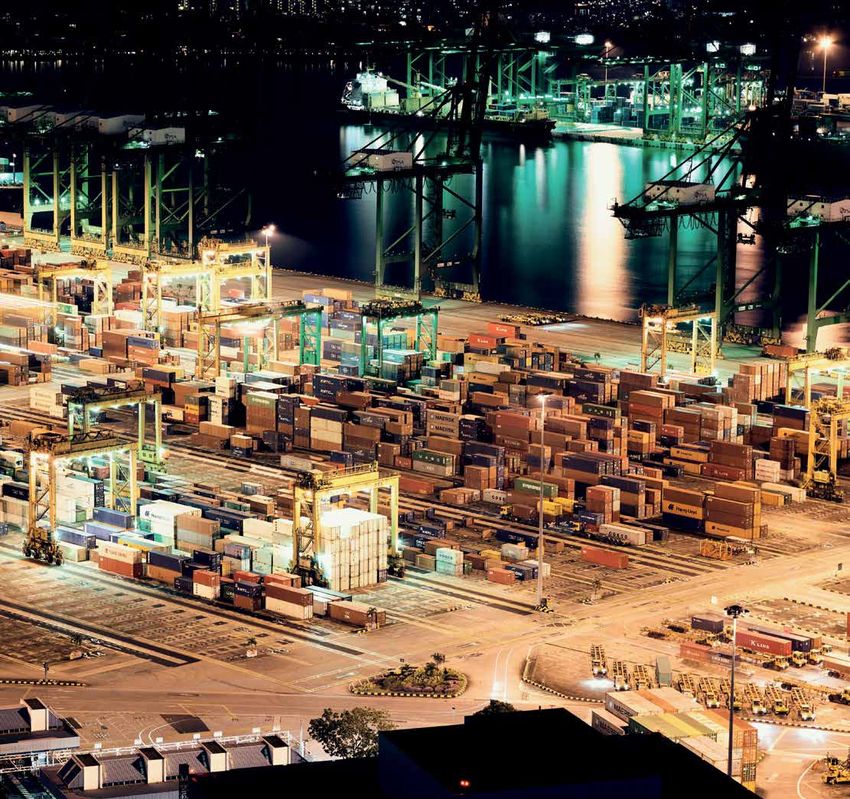
Image: Global investment into industrial and logistics
Tanjong Pager Terminal, property has doubled over the past five years,
Singapore
reaching US$126 billion, according to data from
RCA in 2017. A sector traditionally prized for its
stable income has come to see dynamic capital
growth, and in some markets logistics facilities
now attract lower yields than retail property –
almost unthinkable just a few years ago.
This evolution has been driven by exceptionally
broad investor appetite for the sector, with
demand ranging from private equity vehicles
and institutional funds to private individuals and
families. Platform and portfolio transactions have
become increasingly common among the largest
investors, such is the desire to gain exposure to
the sector. Indeed, some of the largest real estate
transactions of recent years have come via the sale
of logistics platforms, with CIC’s circa US$14.5
billion purchase of Blackstone’s Logicor business
the stand out example.
What is behind this insatiable demand for the
sector? In Western markets, a stylised answer
would highlight a structural rebalancing taking
place, as changing consumer expectations
increase retailer demand for modern distribution
facilities. The relative scarcity of this stock is one
reason why rental growth forecasts are healthy
across much of Europe.
Asia-Pacific markets share many of these
characteristics too: witness the lightning pace of
e-commerce growth forecast until 2025 overleaf.
But, as we explore in our five key trends, these
Some of the largest real locations face an arguably more complex mix of
estate transactions of investment drivers, encompassing global trade,
recent years have involved manufacturing growth and new infrastructure
logistics platforms. opportunities to name just a few.
24 | KNIGHTFRANK.COM KNIGHTFRANK.COM | 25ACTIVE CAPITAL 2018
and Africa, while new transport corridors will
01 provide significant opportunities in the logistics South-East Asia e-commerce market volume 2015-2025, by country
China moving up the value chain sector as supply chains are upgraded. (US$bn)
China’s growth over the last 30 years has been Varying levels of institutional effectiveness
largely based on being the workshop of the and market risks coupled with the sheer scale 2015 2025 Source: Temasek Holdings
world, relying on low-cost labour and often heavy of the vision mean that progress will likely be
5.5
manufacturing. However, as crystallised in the patchy and opportunities staggered, although Total
87.8
“Made in China 2025” industrial strategy launched South-East Asian markets, in particular Thailand,
Indonesia 1.7
in 2015, policy makers are making a concerted Malaysia and Cambodia, are already seeing an 46.0
effort to accelerate the country’s move up the value uptick in interest across these sectors amongst
Singapore 1.0
chain. Known as the Chinese version of Germany’s Chinese and international manufacturers and 5.4
“Industrie 4.0”, the aim is for China to compete real estate developers. 1.0
Myanmar
globally in manufacturing innovative technologies. 8.2
In terms of the impact on the built environment,
there will be more investment in high-tech
04 Thailand
0.9
11.1
Indian tax changes helping
business parks, a continued drive to upgrade modernise the logistics sector 0.5
Philippines
existing industrial sites and more investment in 9.7
modern logistics facilities, while some of the older The Goods and Services Tax (GST), regarded 0.4
Vietnam 7.5
brownfield manufacturing areas, especially in the as the biggest tax reform in the history of
country’s rust belt, could begin to be targeted in a independent India, was rolled out in 2017. The
US$88bn
nascent regeneration strategy. Externally, “Made in long-awaited move has led to the replacement of
China 2025”, along with the rising cost of labour is numerous federal and state taxes and has brought Forecast size of e-commerce
market in the ASEAN region
already pushing a number of major international about significant uniformity and certainty in the
2015 to 2025 (US$bn)
manufacturers into lower-cost locations, especially Indian market. Prior to the GST regime, the same
in South-East Asia. products were sold at different prices across state
borders owing to this lack of uniformity in the tax Forecast size of e-commerce
02 structure. GST has helped eliminate these price
market in the ASEAN region in 2025
100
2020
2025
2022
2023
2024
2018
2016
2015
2019
2021
2017
E-commerce in South-East Asia differentials and thus created a level playing field.
In the logistics and supply chain industry, this
With a challenging fragmented market, a lack
is already having a noticeable impact. First, the
of easy online payment methods, and a strong
removal of check-points has led to the faster
shopping mall culture, e-commerce in South-
East Asia has not had the same penetration as
movement of goods, which is leading to reduced Amazon
inventory holding levels. Reduced inventory
some other regions. However, while the story of
e-commerce in China, home to the world’s largest
levels directly impact the requirement for logistics 80
warehousing space and facilitate the growth of
online retail market, is well documented, the
potential in a region of 650 million consumers
fewer, larger warehouses that allow companies in Australia
to leverage enhanced economies of scale.
and a rapidly growing middle class must not
Subsequently, in a very fragmented market,
be overlooked. The significant investments of
developers and logistics players have started to
the major Chinese e-commerce giants, Alibaba Recently, the next phase of Amazon’s APAC
look at warehouse consolidation. All of these
and Tencent, into South-East Asia over recent strategy commenced with its Australian
changes are attracting increasing interest from
months have brought the region into sharper launch, highly anticipated in a market where 60
investors keen to tap into growth in the second
focus, and with cross-border payment solutions a vast geography and limited national
most populous market in the world.
being introduced, the scope for growth is
infrastructure network makes achieving
significant. As with other markets, as more
retail moves online, the growth in demand for 05 rapid delivery times a challenge.
modern logistics warehousing around major Trade tensions
Historically, Australian vendors were
urban centres and transport axes will be a strong
2018 has been marked by fluctuating trade able to sell through Amazon but had
trend going forward.
tensions, especially between the US and to send products offshore for shipping 40
03 China. The threat of escalation is forcing
some businesses to review their strategies and
and packaging. Now, a new distribution
warehouse just outside Melbourne allows
Belt and Road to shift manufacturing risk assessment. Major manufacturers who
and spur logistics markets this to be a much more streamlined process.
could potentially face increased tariffs if the
situation deteriorates could look at adjusting
Launched in 2013, China’s flagship Belt and Road These are still early days, and the
their supply chains, with many already looking
Initiative is already having an impact on markets commerce giant is yet to launch its Prime
at contingencies in case the situation worsens.
across the Eurasian continent. Spanning more offering – which accounts for 63% of
This could have an impact in a number of 20
than 70 countries in Asia, Africa, the Middle Amazon members in the US – to Australian
ways, with possible reshoring or outsourcing
There is increasing East and Europe, the BRI has directed significant
to markets where any potential tariffs could be consumers. Amazon’s expansion into other
interest in India investment into ports, railways, highways, power
circumnavigated or assembling components large markets has typically been followed
from investors plants and economic zones to the benefit of
in different markets to reduce risk. While a by significant acquisition of logistics space
keen to tap into destination markets and Chinese contractors.
deteriorating situation could have a knock-on near urban locations, and we expect a
growth in the While the initial investment is focused effect on a number of Asia-Pacific economies,
similar pattern to be followed in Australia
second most on infrastructure, the initiative is likely to political manoeuvring could resolve the situation
populous market over the next few years. 0
help encourage the movement of low-cost or potentially see increasing engagement on
in the world. manufacturing towards parts of South-East Asia other multilateral trade deals. Source: Business Insider/BI Intelligence
26 | KNIGHTFRANK.COM KNIGHTFRANK.COM | 27ACTIVE CAPITAL 2018
THE GLOBAL PICTURE
Cross-border investment is nothing if not volatile.
To understand this trend in more detail we have
analysed cross-border acquisitions of residential
development sites in a selection of key global
cities, from each region, over the past four years.
Globally, the level of cross-border acquisitions hit
Building
its highest level in 2017, having risen by 90% since
2014. Despite this new global high, and perhaps
reflecting their position at the forefront of this
the world
trend, cross-border activity in London, New
York, Singapore and Sydney has seen volatility
in recent years.
This volatility can partially be attributed to slower
markets in 2016 and 2017, and also the expansion
of cross border development activity into other
Growing demand from investors for international properties has global cities, such as Los Angeles.
At the same time, tighter capital controls in
been one of the defining features of the world’s leading urban mainland China have led to more scrutiny of
housing markets over recent years. And, where investors lead, potential high-profile investments.
developers follow.
In New York, cross-border acquisitions have
declined over the past two years. However, in
the wake of tax reforms at the end of 2017, the
attractiveness of New York to international
Left:
As real estate investment becomes progressively developers has risen and we expect activity to
One Barangaroo, Crown
Residences, Sydney more global, so does the activity of developers. start to pick up again.
The strength of this trend is confirmed by the Activity in London has swung between two
fact that the level of cross-border acquisitions of extremes. In 2015 it was the only market to see a
residential development sites across the world year-on-year decline in cross-border acquisitions,
has increased each year since 2014, rising by 26% with a fall of 26%. However, in 2017 cross-border
in 2017 alone. acquisitions increased 82% to a new peak. We
International developers are playing an expect this trend to continue with a significant
increasingly influential role in the world’s prime volume of activity seen in the first quarter of 2018.
residential markets. In itself, this process is In Sydney, it appears that the recently imposed
not new – for example, many Hong Kong and restrictions on foreign buyers, which limit the
Singapore based developers have been operating ability of overseas developers to effectively market
outside of their domestic markets for decades. projects in their home countries, have started to
However, the volume of activity has changed take hold, with acquisitions falling 83% between
up a gear with the advent of a new push from 2016 and 2017.
developers to target the world’s “gateway markets”,
in particular London, New York, Singapore Singapore has recently seen a surge in activity as
and Sydney. year-on-year cross-border acquisitions increased
by 204% in 2017. This could be attributed to the
In recent years – a leading Indian based developer housing market’s recent resurgence following the
has focused on London; a Shanghai developer cooling measures that were introduced by the
has targeted Los Angeles, New York, London and government four years ago. This trend is set to
Sydney; while Malaysian developers have been continue: in the first quarter of 2018, cross-border
building in Melbourne, London and Singapore. activity in Singapore equated to almost two-thirds
While some international developers are buying of the 2017 total.
sites to develop themselves, others are embarking
on joint ventures with domestic developers. For TOP PLAYERS
example, in London there are active developments Not only are overseas developers active in these
by a consortia of UK, Singapore and Malaysian markets; they have become some of the cities’
developers. biggest players.
Globally, the level International businesses are not only active in Despite the declines in activity noted above,
of cross-border the development space as sole developers or overseas developers have maintained a tight
acquisitions hit through joint ventures, but also through the grip in Sydney. Of the top 20 players in the
its highest level funding of developments. Investment can come city’s residential development sector, over half
in 2017, having from financial institutions (including pension were international, with YMCI (China) leading
risen by 90% funds, insurance companies and banks), sovereign the charge. There were a further nine Chinese
since 2014. wealth funds or wealthy individuals. entities – four of them in the top ten – and one
KNIGHTFRANK.COM | 29You can also read


