Advantage 2018 - moosejaweconomicdevelopment.com - Moose Jaw Economic Development
←
→
Page content transcription
If your browser does not render page correctly, please read the page content below

The Moose Jaw
                 Advantage

                                     18
                                   20
TOURISM

                                                       MANUFACTURING

AGRICULTURAL HEARTLAND

The Right Place to Live,
Work, Learn and Invest

                                             AGRIBUSINESS & PROCESSING

                           moosejaweconomicdevelopment.com
Moose Jaw Community Snapshot
                                                                                                                                Moose Jaw, truly a city as unique as its name, is located in
                                                                                                                                the heartland of the prairies, nestled in the picturesque
                                                                                                                                valley carved out by Moose Jaw River and Thunder Creek.
                                                                                                                                Halfway between Calgary and Winnipeg on the Trans-
            ALASKA
            (USA)                                                                                                               Canada Highway and less than an hour from Regina,
                     Yukon
                                  Northwest Territories
                                                              Nunavut                                                           Moose Jaw is at the agricultural heartland of Saskatchewan.
                                                                                                                 Newfoundland   Highways and rail connect Moose Jaw to major North
                                                                                              Labrador
                                                                                                                                American markets with the city acting as the western anchor
                                                                                                   Prince Edward Island
                        British
                       Columbia         Alberta                 Manitoba   Ontario   Québec
                                                                                                New
                                                                                              Brunswick           Nova Scotia
                                                                                                                                to the Moose Jaw-Regina Economic Corridor, with easy
                                                          Moose Jaw                                                             access to the Global Transportation Hub.

                                  UNITED STATES

    Quick Facts ABOUT
           Our City
MOOSE JAW 2016 CENSUS                                             LIVESTOCK Largest                                               PER CAPITA COMPARISON
POPULATION 33,890, 2018                                           distribution centre for                                         OF MUNICIPAL TAXATION
population estimated at 35,124                                    livestock in Saskatchewan                                       Moose Jaw lowest of major
TRADING AREA 60,000                                               SPECIALTY CROPS grown in                                        cities in Saskatchewan at
                                                                  the region; chic peas, lentils,                                 $790.60, Saskatoon next at
SASKATCHEWAN 2018                                                                                                                 $923.36, Regina is $1,172.28.
POPULATION 1,169,752                                              peas, soybean, mustard
                                                                  2017 BUILDING PERMITS                                           •   6th lowest for commercial   2017 EMPLOYED 19,600
KEY ECONOMIC SECTORS                                                                                                                  taxation amongst
Potash Mining, Agriculture,                                       $39,635,878 (285 permits)                                                                       MINIMUM WAGE $10.96/hr
                                                                  2016 Building Permits                                               Saskatchewan cities
Ag-value-added Processing,                                                                                                                                        2018 MLS HOME PRICE
Nato Flying Training (15 Wing),                                   $39,635,878 (306 permits)                                       DEVELOPMENT PERMIT
                                                                  2015 Building Permits                                           FEE $100 fee plus $40/$1,000;   INDEX $230,076 ytd
Transportation (Trucking and
Rail), Tourism, and Healthcare                                    $53,255,742 (290 permits)                                       Building Permit Fee             RENTAL VACANCY RATE
                                                                  SINGLE FAMILY HOUSE                                             $6.00/$1,000                    (Fall 2017) 2.3% Average Rent
POTASH RESOURCE Vast                                                                                                                                              (2 Bdrm) $915/month
reserves of high quality                                          STARTS 2017 48 2016 53                                          COMMERCIAL RETAIL
potash - two solution mines                                       2015 53 2014 81 2013 77                                         LEASE RATES Downtown            MUNICIPAL AIRPORT
are located near Moose Jaw                                        CITY LAND FOR SALE                                              Retail $12-$18/PSF; New/        Runway length 2,952 feet
                                                                  Grayson Business Park                                           prime Office/Retail $20 -       with proposed 1,000 feet
TRANSPORTATION AND                                                                                                                $23/PSF                         extension
UTILITY HUB Two national                                          serviced C-3 and Moose Jaw
railways; CP’s Soo rail line                                      Industrial Park serviced M2                                     INDUSTRIAL LEASE RATES          AVERAGE DAILY
to Chicago; Trans-Canada                                          INVESTMENT INCENTIVES                                           $5.75 (older) - $12/PSF         TEMPERATURE (July)
Highway & #2 Highway;                                             Five-Year Property Tax                                          (newer)                         +19.4°C; (January): -13.7°C
major power transmission                                          Phase-In for Commercial/                                        IN 2017 there were 1,994        Annual Sunshine Hours: 2,338
lines, natural gas and water                                      Industrial investment or Five                                   businesses operating in         TIME ZONE Central Standard
pipelines                                                         Year Industrial Property Tax                                    Moose Jaw                       (CST) year round
                                                                  Exemption for Job Creation
                                                                  (Sector Specific)

 2 > THE MOOSE JAW ADVANTAGE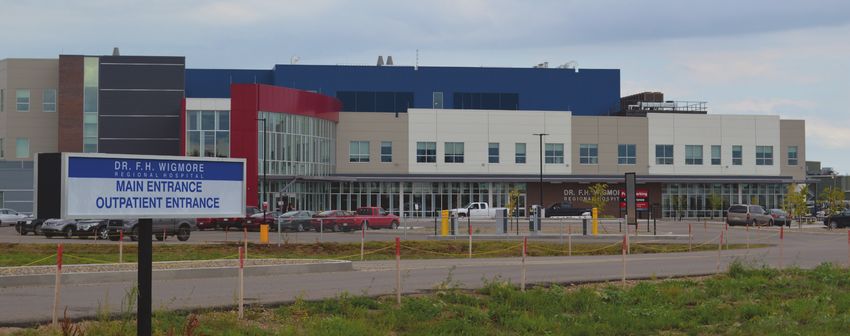
What's Inside
Moose Jaw, Community Snapshot  .  .  .  .  .  .  .  .  .  .  .  .  .  .  .  .  .  .  .  .  .  .  .  .  .  .  .  .  . 2

2018 Economic Outlook .  .  .  .  .  .  .  .  .  .  .  .  .  .  .  .  .  .  .  .  .  .  .  .  .  .  .  .  .  .  .  .  .  .  .  4

2018 Moose Jaw Economic Outlook  .  .  .  .  .  .  .  .  .  .  .  .  .  .  .  .  .  .  .  .  .  .  .  .  .  .  .  . 6

Moose Jaw’s Competitive Advantage . . . . . . . . . . . . . . . . . . . . . . . . . . . 9

Sector Overview: Mining and Heavy Industrial .  .  .  .  .  .  .  .  .  .  .  .  .  .  .  .  .  .  .  .  .13

Agriculture in the Heartland  .  .  .  .  .  .  .  .  .  .  .  .  .  .  .  .  .  .  .  .  .  .  .  .  .  .  .  .  .  .  .  . 14

Processing and Manufacturing .  .  .  .  .  .  .  .  .  .  .  .  .  .  .  .  .  .  .  .  .  .  .  .  .  .  .  .  .  .  .16

Manufacturing .  .  .  .  .  .  .  .  .  .  .  .  .  .  .  .  .  .  .  .  .  .  .  .  .  .  .  .  .  .  .  .  .  .  .  .  .  .  .  .  .18

Transportation and Warehousing  .  .  .  .  .  .  .  .  .  .  .  .  .  .  .  .  .  .  .  .  .  .  .  .  .  .  .  .  . 18

Wholesale & Retail Trade .  .  .  .  .  .  .  .  .  .  .  .  .  .  .  .  .  .  .  .  .  .  .  .  .  .  .  .  .  .  .  .  .  .  .19

Health Services .  .  .  .  .  .  .  .  .  .  .  .  .  .  .  .  .  .  .  .  .  .  .  .  .  .  .  .  .  .  .  .  .  .  .  .  .  .  .  .  .20

Education Services .  .  .  .  .  .  .  .  .  .  .  .  .  .  .  .  .  .  .  .  .  .  .  .  .  .  .  .  .  .  .  .  .  .  .  .  .  . 21

Tourism and Hospitality  .  .  .  .  .  .  .  .  .  .  .  .  .  .  .  .  .  .  .  .  .  .  .  .  .  .  .  .  .  .  .  .  .  .  . 22

Construction Sector  .  .  .  .  .  .  .  .  .  .  .  .  .  .  .  .  .  .  .  .  .  .  .  .  .  .  .  .  .  .  .  .  .  .  .  .  . 23

Housing Outlook  .  .  .  .  .  .  .  .  .  .  .  .  .  .  .  .  .  .  .  .  .  .  .  .  .  .  .  .  .  .  .  .  .  .  .  .  .  .  . 26

Socio-Demographic Overview .  .  .  .  .  .  .  .  .  .  .  .  .  .  .  .  .  .  .  .  .  .  .  .  .  .  .  .  .  .  .29

Local Workforce Attraction & Retention .  .  .  .  .  .  .  .  .  .  .  .  .  .  .  .  .  .  .  .  .  .  .  .  . 31

                                                                                                                                       THE MOOSE JAW ADVANTAGE > 3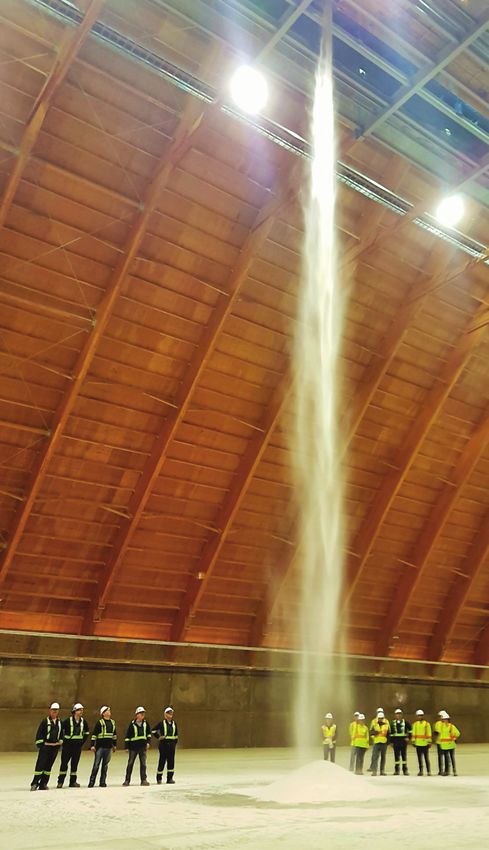
2018 Economic Outlook
CANADA In August 2018, BMO Capital Markets predicted annual          higher commodity prices”. Unless the economy continues to
economic growth at 2.0 per cent In 2018 and 1.8 per cent In 2019.    grow, employment in construction will go down. Unfortunately
Correspondingly, Saskatchewan’s annual economic growth is            there is no forecast for a sudden and rapid rebound in the prices
projected to be 1.5 percent in 2018 and 1.9 per cent in 2019. In     of oil, potash and uranium.
Canada retail sales in the first 5 months of 2018 are up 3.6% and
the continued sign the economy is building momentum.                 The federal government carbon taxing policy requires that
                                                                     by 2018 each province have a “floor price” of $10 per tonne
While the Canadian economy has shown signs of improvement            of carbon emitted, rising $10 each year to $50 per tonne in
it has not been enough to convince the Bank of Canada to raise       2022. Agriculture is expected to be hard hit. The Saskatchewan
interest rates. This will put pressure on the Canadian dollar says   government is not supporting or endorsing this policy.
with one North American economist who says he expects the
Canadian dollar to weaken to CS1.53 by the end of 2017, the most     The Canadian Federation of Independent Business reports that
bearish forecast of all analyst surveyed by Bloomberg. In August     in the next ten years more than 10 years more than 75 per cent
of 2018 the dollar was trading at .77 cents U.S.                     of businesses will be looking to transition ownership of their
                                                                     business. This creates opportunities for management buy-outs.
According to RBC Economic Research Provincial Outlook June
2018, all 10 provinces are expected to see their economic growth     2018 PROVINCIAL ECONOMY The provincial economy has
rate slow compared to last year. Energy producing provinces,         encountered challenges on account of the persistently low
such as Saskatchewan, will make progress catching up with            global commodity prices and deteriorating employment
the rest of the country over the next two years and will top the     picture. According to Sask Trends Monitor, the current declines
growth tables. A strengthening US economy should support             in the various economic indicators are beginning to look
export growth, but the risk of trade protectionism remains           like a long-term slump rather than a short-term blip. The
challenging for some industries and provinces.                       Saskatchewan government is dealing with a $1 billion deficit
                                                                     and low prices mean continued challenges in the months ahead.
The Bank of Canada Spring 2018 Business Outlook Survey               Saskatchewan’s economy is diverse and resilient, and the hope is
suggest that business sentiment continues to be positive,            for gradual improvement in job creation.
supported by healthy sales prospects. Due to strong demand,
capacity and labour pressures are evident in most regions.           Canada’s unemployment rate dropped to 5.8 per cent in July
                                                                     2018, its lowest level in two years, and a further indication that
SASKATCHEWAN The June 2018 RBC Provincial Outlook                    the national economy is on the mend from the oil price shock of
suggests that growth in the Saskatchewan economy is expected         recent years. Meanwhile, Saskatchewan contends with a new-
to remain above the national average this year and next rising       found problem of unemployment rate at or above the Canadian
to 2.4% and 2.8%, respectively. This above-average strength          average at 6.3%. According to Statistic Canada way more people
results from a number of key natural resource sectors showing        are collecting money from the government as they search for
solid growth over the next two years. The economy is expected        work and the number of people needing social assistance has
to receive a boost from the agriculture sector as well. GDP          almost doubled from past years.
growth will be accelerated as a result of these rebounds in the
agricultural and mining sectors along with rising investment         Statistics Canada’s June 2018 employment numbers for
spending. Capital spending and the construction industry look        the province show 572,000. This continues the trend from
to have positive years with the improvement in the Potash            2016 where Saskatchewan experienced the worst drop in
industry. The bank Is forecasting employment in the province to      employment since 2001. The province’s situation stands in stark
rise by half a percentage point and the unemployment rate to         contrast to the national economy, which added 86,000 full time
remain at 5.7 per cent next year.                                    jobs and 131,300 part time jobs during 2016, resulting in a 0.3
                                                                     percentage point decline in the unemployment rate. Stats Can
Canadian Mortgage and Housing Corporation predict                    data shows the province’s private sector jobs have been hit
employment growth of 1.5 per cent in 2018, “due to modestly          harder than public sector ones.

 4 > THE MOOSE JAW ADVANTAGE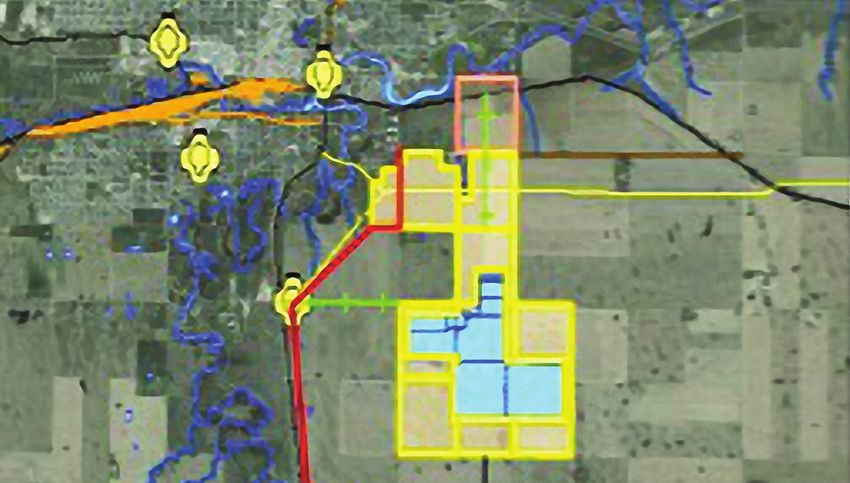
Both manufacturing and retail sales are up and leading the           compared to June 2017. This ranks Saskatchewan fourth in terms
nation. And for the first time in the province’s history, average    of year-over-year growth among the provinces. During the same
weekly earnings were $1,010.28 in May 2018 up from $999.46           period, national retail sales increased by 3.9%.In the past six
in May of 2017. Saskatchewan ranked fourth highest among             months of 2018, Saskatchewan’s retail sales went up by 0.7%,
provinces in average weekly earnings for May 2018. Nationally,       to reach $9.5B, ranking it eighth among the provinces in terms
the average was $998.37. In the past five months of 2018,            of percentage growth. Retail sales are a major contributor to
Saskatchewan’s average weekly earnings have grown by 0.6%            our gross domestic product, and growth in this area is positive.
compared to the same period in 2017.                                 Consumer demand and confidence with increased retail activity
The Canadian Federation of Independent Business (CFIB) says          helps strengthen the economy.
optimism is slowly coming back to Saskatchewan after some            According to the Government of Saskatchewan, in June 2018,
tough times. According to their survey optimism has reached its      manufacturing sales in Saskatchewan were up by 13.3%, to $1.4B,
highest point since January 2015. The barometer shows an index       compared to June 2017. In this period, Saskatchewan ranked
of 57.7 for February 2017, a 2.7 point increase from a month ago.    second in terms of percentage change among the provinces.
Optimism is on the rise for small businesses. The October release    In the first six months of 2018, the value of manufacturing
of its latest monthly Business Barometer®, reveals optimism          shipments in Saskatchewan totalled $9.3B, an increase of 11.4%
among small business owners in Saskatchewan and increased            compared to the same period in 2017 ($8.4B). Saskatchewan
slightly to an index of 52.7 in October from 50.9 in September,      ranked third among the provinces in terms of percentage
which is 4.5 points below the national average index of 57.2.        change. During this period, national average increased by 4.6%.
Highlights of the Saskatchewan Business Barometer for October:       In June 2018, Saskatchewan’s unadjusted wholesale trade
•   32% of businesses in Saskatchewan say their overall state        totalled $2.5B, a 4.6% increase from June 2017. In terms of
    of business is good (41% nationally); 18% say it is bad (11%     percentage change, Saskatchewan ranked first among the
    nationally).                                                     provinces. In the past six months of 2018, wholesale trade in
                                                                     Saskatchewan totalled $13.6B, an increase of 0.3% from the year
•   19% plan to decrease employment in the next 3-4 months           prior. During this period, the national average grew by 4.8%.
    (17% nationally) and only 11% of Saskatchewan businesses
    plan to increase full-time employment (16% nationally).
•   Insufficient domestic demand remains the main operating
    challenge (48%), followed by shortage of skilled labour (28%),
    and management skills, time constraints (23%).
•   Major cost pressures for small business include: tax,
    regulatory costs (63%), insurance costs (48%) and wage costs
    (46%).
Another economic indicator of the provincial economy is the
number of new vehicle sales – the 2018 second-quarter vehicle
sales of 14,557. Statistics Canada noted that Saskatchewan’s
unadjusted retail sales in June 2018 increased by 4.3%,

                                                                                                             THE MOOSE JAW ADVANTAGE > 5
2018 Moose Jaw Economic Outlook
In the past several years Moose Jaw has experienced sustained        CITY OF MOOSE JAW BUSINESS LICENSES
growth in virtually every category: population, building permits,                                                       AVERAGE NEW
housing starts, investment and job formation. Moose Jaw’s                                            NUMBER            BUSINESSES PER
economy is lucky to have avoided the kinds of cutbacks being                    YEAR                  ISSUED               MONTH
experienced everywhere else in the province as it does not rely
directly on the oil and gas sector. In fact, Moose Jaw’s economy                2009                    200                   16.7
continues to perform well thanks to vast reserves of high quality               2010                     181                   15.1
potash and agricultural lands. Moose Jaw’s economy is expected
to remain stable in 2018 thanks to companies like AgroCorp                      2011                     214                   17.8
moving its Canadian headquarters to Moose Jaw. World class                      2012                     185                  16.8
companies like CAE, a Montreal based company that provides
NATO Flying Training in Moose Jaw at 15 Wing, has helped drive                  2013                     276                  23.0
the local economy recently announcing new contracts and an                      2014                     216                  18.0
extension of the RCAF training to 2023 with an optional one
year extension to 2024. Canadian Protein Innovation project is                  2015                     174                  14.5
providing the foundation for continued industrial investment                    2016                    272                   22.7
in the city. Locally fundamentals for growth are expected to
continue and the local economy should grow.                                     2017                    256                   21.3
The spin off from several world class companies operating in             2018 YTD (June 30)              90                   18.4
the Moose Jaw Regina Economic Corridor, such as Mosaic Potash,
Yara, Terra Grains and K+S Potash, is helping sustain the vibrancy
of the local economy. In fact, Moose Jaw is holding its own.
                                                                     PROJECTS DRIVING
Statistics Canada puts Moose Jaw leading the provincial pack         MOOSE JAW’S ECONOMY
in terms of employment.                                              Several multi-million dollar projects in the area are helping drive
According to Stats Canada, in June 2017 the Swift Current            the local economy:
- Moose Jaw Labour Force Region had one of the lowest                •    CANADIAN PROTEIN INNOVATION CPI plans to build
unemployment rates in the entire country at 4.6 per cent,                 Saskatchewan’s first wet pea fractionation plant using
up from 3.4 per cent a year earlier.                                      yellow cotyledon pea cultivars. CPI has a conditional offer
In terms of new business start-ups, 2017 showed a strong                  to purchase 100 acres in Moose Jaw’s Industrial Park where
performance with the average number of new business starts                it plans to build a wet pea processing plant. CPI will process
at 21.3 average business licenses issued per month. This                  100,000 metric tonnes of field peas annually producing
continues to be a strong pace for some time indicating renewed            protein, starch, inner fibre, and fibre from peeling. The plant
confidence in the local economy, contributing to the city’s record        will also produce pulp, called wet feed. The company will be
high growth in employment numbers recorded in 2017. Last year             exporting into Asia and into the US.
there were 256 new business starts with net new businesses at        •    Construction will start 2019 and be operational in 2021.
119 in 2017, with an average of 21.3 business starts per month.           The plant will be constructed in two phases with the first
                                                                          phase taking almost 18 months to build, and costing $65M
                                                                          with Phase 2 following within 2-5 years. The first phase will
                         FEBRUARY       FEBRUARY     CHANGE               create 65 operational jobs. The second phase will create an
 EMPLOYMENT                2017           2016         %                  additional 45-50 job. These are high paying industrial jobs
                                                                          that will attract skilled workers and their families to Moose
 Regina CMA*               139,600        2,900        2.10%              Jaw. In addition, hundreds of in-direct jobs will be created
                                                                          in agriculture, transportation, hospitality, business services,
 Saskatoon CMA*            166,800        1,600        1.00%              finance and real estate sectors.
                                                                     •    This level of capital investment will help sustain the local
 Moose Jaw CA*                 18,800     1,500        8.70%
                                                                          economy through population growth, spin-off business
 Prince Albert CA*             20,600     -800         -3.70%             starts, increased housing activity, lower unemployment
                                                                          and increased consumer spending. Business optimism will
 *3 month moving average, Statistics Canada                               improve while smaller local enterprises look to expand and as
                                                                          the number of households they depend on grows. Synergies
                                                                          with CPI’s operations will cause other industrial plants to
                                                                          locate in Moose Jaw. Polytechnics will train ag-industrial
                                                                          workers.

 6 > THE MOOSE JAW ADVANTAGE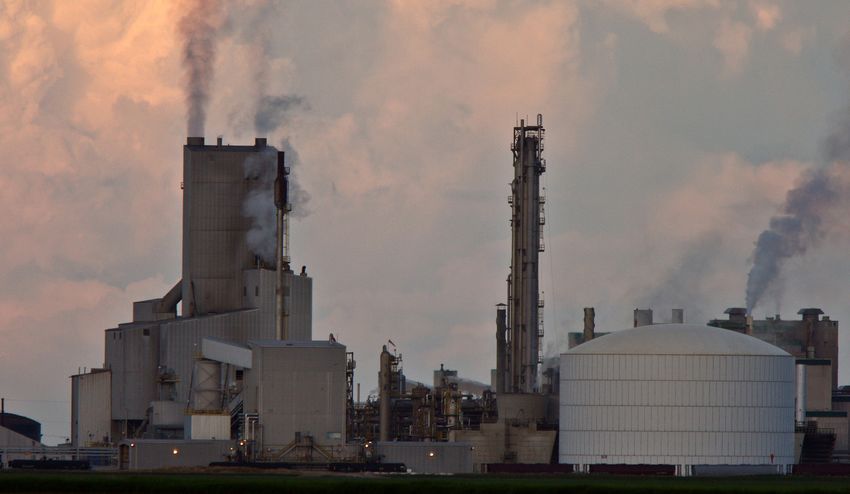
•   K+S POTASH CANADA LEGACY MINE The mine is                            •   CP RAIL SPUR (TO K+S) CP is constructing a
    located 58 kilometers north of Moose Jaw, near the village               multi-million dollar 30-kilometer rail spur from
    of Bethune. This $4.25B solution potash mine became                      Belle Plaine to the Legacy site. KPCL was awarded
    operational in 2017. K+S Potash Canada’s head office is                  the major grading contract; this is one of the largest earth
    located in Saskatoon.                                                    moving projects in Western Canada with completion
    K+S, one of Saskatchewan’s Top Employers with hundreds                   expected by fall 2017.
    of opportunities, including: industrial mechanics,                   •   CITY OF MOOSE JAW INFRASTRUCTURE A $120M 20-
    instrumentation mechanics, electricians, pipefitters, welders,           year cast iron and infrastructure replacement program
    and power engineers. Production positions will be of                     project construction started in 2016. Streets, roads, bridges,
    interest to those with skills training plus previous industrial          sanitary sewer systems and replacement of the pipeline to
    experience. It is expected that many of these new employees              Buffalo Pound Water Treatment Plant ($29.3M) are other
    will live in Moose Jaw giving them the opportunity to live               infrastructure pieces slated for upgrades.
    close-to-home while working in the resource sector, a big            •   $27M CIVIC CENTRE PLAZA Is open for business with Phase
    plus for mine workers who want to remain near family and                 II construction completed, adding 70,000 square feet of new
    friends.                                                                 commercial retail space to local inventory in 2018, including a
                                                                             new Sobey’s liquor store.
                                                                         •   SASKPOWER’S NEW $260M DOUBLE-CIRCUIT
                                                                             230-KILOVOLT TRANSMISSION LINE from Pasqua
                                                                             switching station just east of Moose Jaw to the Swift Current
                                                                             switching station. The power line will be approximately 223
                                                                             kilometers long and will create 200,000 person hours of work.
                                                                             Replacement of aging power lines and adding a second
                                                                             conductor will increase capacity. Line construction began in
                                                                             2017.
                                                                         •   FARMERS OF NORTH AMERICA’S GENESIS FERTILIZER
                                                                             DISTRIBUTION SUPER CENTRE BELLE PLAINE - $24M
                                                                             The company is building a supercentre with plans to add a
                                                                             fertilizer manufacturing centre in the future. The supercentre
                                                                             is a 52,000 tonne facility to provide area farmers with
                                                                             nitrogen, phosphorus, sulphur, potash micronutrients and
                                                                             various liquid blends. The facility includes state of the art
                                                                             blending capabilities and will be able to load eight Super-B
                                                                             trucks per hour. There are plans to build a railcar load
                                                                             and unload. Genesis has hired Stueve Canada Limited as
                                                                             contractors for the project starting spring 2017.
                                                                         •   PROPOSED RICHARDSON INTERNATIONAL $1M
                                                                             FERTILIZER MIXING PLANT The company plans to build a
                                                                             fertilizer mixing plant near Pasqua in 2017.
                                                                         •   PROPOSED $140M UPGRADES TO THE BUFFALO POUND
                                                                             WATER PLANT The Cities of Moose Jaw
                                                                             and Regina announced plans to improve and
                                                                             expand the plant over the next ten years; cost of the electrical
                                                                             upgrades is roughly $40 million. The City of Moose Jaw owns
                                                                             a 26% share in the facility while Regina holds 74%.
                                                                         •   PROPOSED SASKPOWER COMBINED CYCLE GAS
                                                                             GENERATION FACILITY Moose Jaw Industrial Park is one
                                                                             of two short listed sites for a proposed 350mW - 700mW
                                                                             combined cycle gas generation plant slated for construction
                                                                             by 2022. The locations are Belle Plaine and Moose Jaw
                                                                             Industrial park with the final site selection set for early 2019.
                                                                             The power generation facility will be powered by a new
                                                                             natural gas line and is expected to employ 500 people during
The first tonnes of marketable potash arrive in the warehouse at K+S’s       construction and 40-60 jobs after. The demand for electricity
new Bethune potash mine in Saskatchewan. (photo courtesy of K+S              is growing and this plant will help meet that demand. The
Potash Canada)                                                               combined cycle natural gas plant will be built with the

                                                                                                                    THE MOOSE JAW ADVANTAGE > 7
capacity to use wind power and other renewable sources as          •   ALTERNATE ENERGY STRATEGY With the heightened
      they become available. The plant can increase and decrease             awareness of the impact of greenhouse gases, depletion of
      the output fairly quickly and that allows SaskPower to deal            oil and gas reserves, increasing dependence on unreliable,
      with the wind slowing down. The CO2 emissions are half the             costly oil supply, and increasing demand for energy, there is
      rate as a coal fired facility.                                         growing interest in Alternative and Renewable Energy. This
•     PROPOSED AGROCORP/MACKSUN JOINT VENTURE                                industry sector has great implications for the
      10MW SOLAR FARM SaskPower’s RFP for a 10mW                             Moose Jaw region with the many advantages relating to
      solar facility was not awarded to Moose Jaw, however a                 alternate energy, including solar, wind, geothermal, and
      subsequent 10mW proposal has been submitted for the                    Biomass (from our strong agriculture industry). Moose
      original site. If the alternate proposal to build Saskatchewan’s       Jaw and region are committed to sustainability and have
      first solar farm on the west side of the city is successful then       identified a need for economic development strategies
      construction could start in the summer of 2019.                        to take advantage of this alternate energy cluster strategy
                                                                             through the engagement of industry. This will ensure
•     PROPOSED ENBRIDGE LINE 3 REPLACEMENT PIPELINE                          growing opportunities are realized. The Organization for
      In late 2016, the Prime Minister announced approval of                 Economic Cooperation and Development (OECD) defines
      both the Enbridge Line 3 Replacement and Kindermorgan’s                clusters as “production networks of highly interdependent
      TransGas Mountain Expansion. The Line 3 Replacement                    businesses (including specialized providers), united to
      Pipeline will run northwest of Regina with potential for spin-         each other in a production chain that adds value.” By
      off to Moose Jaw during the construction of 1,073 kilometers           working together to overcome barriers, it makes it easier for
      of pipeline which will replace the majority of Line 3 crude oil        businesses and government to unite efforts and resources
      pipeline, and to decommission the majority of the existing             to achieve common vision and objectives relating to
      Line 3 from Hardisty, Alberta to Gretna, Manitoba.                     alternate and renewable energy opportunities. Moose Jaw
•     PROPOSED KEYSTONE XL PIPELINE TransCanada                              has many strengths relating to an alternate energy business
      application its $8B Keystone XL pipeline was approved by               environment.
      the US President but still requires several state-level permits
      before construction can begin. This pipeline will ship Alberta
      oil sands production into the US and use pipe manufactured
      by Evraz in Regina. The project is estimated to create 2,200
      jobs during the construction phase – a win for both countries.
      TransCanada is one of the continent’s largest providers of
      gas storage and is developing one of North America’s largest
      liquid delivery systems.

    8 > THE MOOSE JAW ADVANTAGE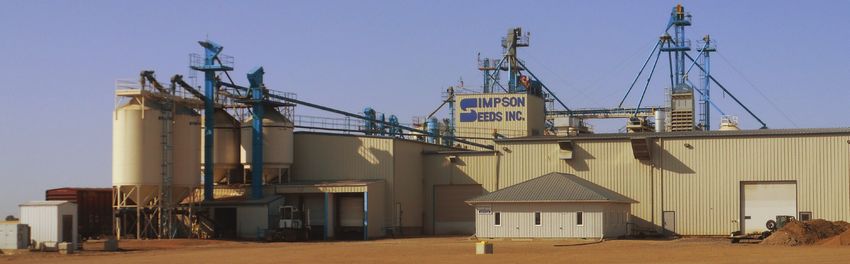
Dr. F. H. Wigmore Regional Hospital, Moose Jaw.

Moose Jaw's Competitive Advantage
The Conference Board of Canada says that Saskatchewan                 NATO FLYING TRAINING (NFTC) CANADIAN FORCES
has the lowest net business tax burden among the provinces.           BASE 15 Wing Moose Jaw is home to the world-class NATO
The report notes that Saskatchewan’s corporate income tax             Flying Training in Canada (NFTC). CAE, a simulation-training-
rates are not the lowest in the country, but if payroll taxes,        system company, provides flight simulation training and the Air
social security contributions and property taxes are included,        Force trains high-quality pilots on behalf of the NATO Alliance
then Saskatchewan’s ranking improves. Also the government             representing dozens of countries from around the world. CAE is
offers some subsidy programs for business that make the tax           the prime contractor responsible for the NFTC program which
system competitive for business owners. Saskatchewan is also          involves base facilities, delivering ground-school classroom and
among the provinces with the lowest provincial personal tax           simulator training, and support of live flying training.
burden ratios.
                                                                      CITY OWNED LAND FOR SALE
MOOSE JAW BEST PLACE TO DO BUSINESS In 2016, Canadian
Business and profitguide.com jointly published Canada’s “Best         •   NEW MOOSE JAW INDUSTRIAL PARK The City of
Places to Do Business” ranking ninth from the top. Moose Jaw              Moose Jaw is attracting the attention of global companies
was also identified as one of the Top Ten Business Friendly Places.       interested in building Ag and other types of processing and
                                                                          distribution facilities within its new industrial park located
Intensified cropping and livestock production in the area are             in the southeast quadrant of the city. The City is looking
attracting ag-processing related development. Seed processing             for buyers who want serviced industrial land with access to
plants have recently opened and are taking advantage of pulse             water, sewer, waste water treatment, power, gas, road and rail
crops grown in the area. Moose Jaw is a major agricultural                infrastructure. The City has over 700 acres for sale.
equipment supplier and service centre supporting a strong and
growing agricultural sector.                                              The new industrial park is situated next to a national railway
                                                                          and Trans-Canada Highways ideal for export of products
Moose Jaw ranks high by site selectors due to access to                   east, west and south. The industrial park is located in the
highways, rail, power, gas, water, communications, and a trained          SE quadrant of the city, near the waste water treatment
workforce. Moose Jaw is growth-focused with aggressive tax                plant, lagoons, and effluent irrigation. This is the type of
policies to attract investment capital. Moose Jaw serves as the           infrastructure is attractive to wet processing plants.
western anchor to the Moose Jaw-Regina Economic Corridor,
one of the largest economic regions in the province. The
Corridor accounts for 20 per cent of Saskatchewan’s GDP and
24 per cent of its population.
VAST RESERVES OF POTASH The world wants more potash
and the Moose Jaw area has large reserves of high quality potash.
Potash projects need a proven deposit, political stability in the
area and solid infrastructure. Saskatchewan is now the world’s
most attractive jurisdiction in the world for mining.
AGRICULTURE The area showcases some of most productive
lands on the planet, helping drive the local economy.
Saskatchewan exported 84% of Canada’s lentil exports, and 75%
of Canada’s pea exports among others.

                                                                                                                THE MOOSE JAW ADVANTAGE > 9
• GRAYSON BUSINESS
PARK Grayson Business
HIG
Park has the largest HIG
HW
AY #
1
HW
inventory of serviced HAU
LTAIN AY
#1
D RIVE
commercially-zoned
Dr. F. H. Wigmore
properties (C-3) for sale. Regional Hospital
Drivenbaker
The City of Moose Jaw has DIE
r
Drivenbake
iefe
FEN
several of 0.5 to 1.6 acre LEGEND BA
163 D
KER
ve ker
e
D ie f
DR
D r i fenb a
parcels for sale, ranging Lots for Development IV E
r
179
ve ke
D ie
Lots for Sale
D r i fenb a
in price from $120,000 to
195
Other Lots
e r
D ie
ve ak
ad
$273,000. These lots are
D r i fenb
211
c y Ro
r
ke
ie
d
ba
Ro a
7D
a
build-ready with sewer, en
73 Tr
22
iD ef rive
ac y
o ad
3 D ker
r
24
69 T
cy R
water, storm sewer, fire nb a
d
ieferive
ra
Ro a
D
65 T
TRAC 259 D
hydrants, natural gas, er
ac y
Y RO
AD b ak
r
fen
61 T
d
DieDrive
oa
power, and curbs with 5
yR
2 7
HIGHLAND ROAD
c
Tra
o ad ker
heavy haul asphalt streets. enb a
57
52 Highland Road r a cy R Dief
291 Drive
T
53
LANCASTER ROAD
As an incentive, the City o ad
ac y R
provides the purchaser 46 Highland Road
51 Chester 50 Tracy
Road Road 49 Tr
50 Chester Road
with an Environmental 47 Chester
Road
46 Tracy
Road 45 Trac y Ro
ad
Phase 1 and Commercial 46 Chester Road 43 Chester 42 Tracy
CHESTER ROAD
Road Road 41 Tracy Road
5-year Property Tax Phase 40 Highland Road
39 Chester 38 Tracy
In (excludes land). The 40 Chester Road Road Road
37 Tracy Road
34 Highland Road 35 Chester 34 Tracy
detailed map identifies Road Road
24 acres of potential land 34 Chester Road
development within
28 Chester Road RIDDELL LANE
Grayson park. Lots can be
purchased individually or
as larger parcels to suit a
development.
2018 GRAYSON BUSINESS PARK PRICE LIST
LEGAL DESCRIPTION PRICE
BLOCK LOT PLAN CIVIC ADDRESS ACRES (EXCL. GST) STATUS
3 2 102005367 163 Diefenbaker Drive 1.05 $ 273,000.00 Available
3 3 102005367 179 Diefenbaker Drive 0.96 $ 249,600.00 Available
3 4 102005367 195 Diefenbaker Drive 0.98 $ 254,800.00 Available
3 5 102005367 211 Diefenbaker Drive 0.99 $ 257,400.00 Available
3 6 102005367 227 Diefenbaker Drive 0.95 $ 247,000.00 Available
3 7 102005367 243 Diefenbaker Drive 0.90 $ 234,000.00 Available
3 8 102005367 259 Diefenbaker Drive 0.86 $ 223,600.00 Available
3 9 102005367 275 Diefenbaker Drive 0.87 $ 226,200.00 Available
3 10 102005367 291 Diefenbaker Drive 0.87 $ 226,200.00 Available
2 10 81MJ08260 52 Highland Road 1.30 $ 212,270.90 Available
2 11 81MJ08261 46 Highland Road 1.21 $ 197,981.84 Available
2 13 81MJ08260 34 Highland Road 1.27 $ 207,624.38 Available
There remain 24 acres of available land in the Grayson Business Park with various parcel sizes available for development.
10 > THE MOOSE JAW ADVANTAGETRUCKING DISTRIBUTION CENTRE Major all weather SKILLED AND EDUCATED WORKFORCE Moose Jaw has a
highways provide a fast and safe way of transporting freight higher percentage of people (47.8%) who have post secondary
with three-day trucking service to Montreal, Toronto, and certificates, diplomas or degrees compared to the province
the eastern seaboard, and two-day service to Vancouver and (46.5%). The city has more people with apprenticeship or trades
Chicago, with overnight service to Edmonton, Winnipeg, Calgary, certificates and college certificates than the province but a lower
and Minneapolis. Saskatchewan follows the central time zone percentage (10.25%) with bachelor degrees and above bachelor
year round. degrees compared to the province (15.17%).
Saskatchewan Polytechnic Moose Jaw Campus is a technical and
trade college training skilled workers for the local and provincial
labour markets. Moose Jaw Palliser Campus graduates are
highly trained in the areas of Engineering Technologies, Building
Trades, and Business Administration. Other programs such as
Food Services, Adult Basic Education and English as a Second
Language are also offered.
POWER, NATURAL GAS AND infiNET SERVICES The Crown
Investment Corporation (CIC) oversees key utilities, including
Sask Power, Sask Tel, Sask Energy and Sask Water. Moose Jaw
is Saskatchewan’s first city with a fiber optics with all homes
hooked up to infiNet network and business-grade infiNet
services – Static IP and Business Connect – to business customers
in Moose Jaw’s downtown core offering speeds up to 260 Mbps.
RAIL TERMINAL OF Findlater Silton
NATIONAL SIGNIFICANCE 354
Buena Vista 20 641
Moose Jaw is serviced by two 99
national railways. Proximity to 354
54 322
the United States makes the South Lake
Craven
Moose Jaw vital to both the 642
Sun Valley 11 322
Canadian Pacific Rail (CPR) Disley
and Canadian National (CN): 42 642
Moose Jaw is Saskatchewan Tuxford
headquarters for the CPR 734
202
and its railway terminus of
the Soo Line, a direct link to
641
Minneapolis and Chicago.
CPR has its largest main-line 301 730
Regina
Grand Coulee
refueling facility in Moose 1
Belle Plaine Pense
Jaw and trains run 24/7, with
735 Moose Jaw 1
between 30 and 38 trains 301
through Moose Jaw each day.
363
Drinkwater
339
39
Rouleau
714
2 718 Briercrest
339
Wilcox
36
715 334 334 334
715 334
Milestone
THE MOOSE JAW ADVANTAGE > 11MOOSE JAW-REGINA ECONOMIC CORRIDOR Most industrial CITY COMMERCIAL AND INDUSTRIAL TAX PHASE-IN
investment has taken place in the Corridor within the rural The City of Moose Jaw provides a five year property tax
municipalities nearest the villages of Belle Plaine and Bethune. phase-in to new builds or expansions. The exemption is
International heavy industrial giants have the capacity to locate applied to the increased assessed value resulting from
anywhere in the world but are attracted to the Corridor by its construction, as follows: 100% Year 1; 80 % Year 2; 60% Year
many assets, including rail and highway infrastructure, major 3; 40% Year 2; and 20% Year 5.
pipelines delivering natural gas and oil, wide open spaces CITY JOB CREATION INCENTIVE Eligible sectors can
distanced from urban population, a sustainable supply of water, receive a five year property tax phase-in (sliding scale
and proximity to a large workforce. Plentiful reserves of high based on the number of jobs created). For example, a
quality potash, low cost natural gas and grain crops (for ethanol company creating more than 60 new jobs in manufacturing
production) are reasons these companies exist here. or processing, transportation/warehousing distribution or
communications and research sectors can receive a five-year
Marquis Buffalo Pound
100% property tax exemption(excluding land).
Provincial Park
Tuxford Other property tax incentives are available for:
CITY HERITAGE, RE-USE OF AN EXISTING BUILDING;
Caronport
Rural Municipality Rural Municipality LIVING OVER SHOPS; REPLACEMENT HOUSING/
of Moose Jaw of Pense
Grand Coulee
Regina
VACANT LOT IN-FILL INCENTIVE; AND GRAYSON
1 Pense
ortlach Belle Plaine BUSINESS PARK (Environmental Phase I).
Moose Jaw DOR
CORRI
-R EGINA
1 MOOS
E JAW
Rural Municipality JOB GRANTS PROGRAM (CSJG) This program provides
Drinkwater
of Sherwood
financial assistance to Saskatchewan employers to help workers
get the training needed for available jobs. Through this program,
employers and government partner to fund training that will
Rouleau
provide individuals with the skills needed by employers in
Briercrest today’s workplace. The Canada Job Grant will allocate up to
$15,000 for training per prospective employee (up to $5,000 by
the employer with half allowed in the form of in-kind wages and
up to $10,000 by government) to a maximum of $250,000 yearly.
Avonlea
This is an Employer-Driven Program which means the employer
must: Decide what training is required; Select the candidates;
Mossbank
Choose a third party trainer and contract directly for training
Economic Corridor (K+S Potash Mine is located north of
(minimum of 25 hours); Have a job available for the trainee at
Buffalo Pound Provincial Park).
the end of the training; and Contribute minimum one-third of
INVESTMENT TAX INCENTIVES Saskatchewan offers a variety eligible training costs; includes tuition, student fees, textbooks,
of advantages to manufacturers, including Corporate Income Tax software, examinations. Note: Small employers with less than 50
rate as low as 10 per cent (depending on the type of operation), employees may apply trainee wages towards a portion of their
no Corporate Capital Tax, a 6 per cent refundable tax credit for in-kind contribution.
investment in manufacturing and processing equipment and COMPETITIVE TAX RATES Moose Jaw has the lowest per capita
facilities, and the ability to use 100 per cent of eligible Research tax rate in all of the province. The city is the second lowest for
and Development expenses against net income for the purpose residential taxation and the sixth lowest for commercial taxation
of calculating federal tax credits. amongst Saskatchewan cities.
MOOSE JAW AREA HEAVY INDUSTRIAL PLANTS – WORKFORCE
EMPLOYEES(F/T Permanent) +
Contract Workers FORECAST (2017-2020) 2013 2005
Mosaic Potash 260 + 400 contractors = 660 260 + Est. 400 contractors = 660 346
Yara Belle Plaine Inc. 152* 152 140
Terra Grains 52 52 -
Alpine Plant Foods 10 10 -
Canadian Salt 45 45 45
K+S Potash Canada 325 + 300 contractors = 625 67 +400 contractors = 467 -
FNA’s Proposed $1.7B
new nitrogen fertilizer plant 170 - -
Total 1,714 1386 (919 at Belle Plaine ) 539
12 > THE MOOSE JAW ADVANTAGESector Overview
SASKATCHEWAN WAS NAMED THE WORLD’S MOST ATTRACTIVE PLACE TO INVEST IN MINING BY THE FRASER
INSTITUTE ANNUAL SURVEY OF MINING COMPANIES Saskatchewan ranked No. 1 out of 104 jurisdictions in their investment
attraction index, up from No. 2 in 2016 thanks consistent, transparent regulations, a world class ore body and highly skilled workforce
help to make companies like Mosaic potash mine one of the most competitive in North America. To competitive tax regimes and
efficient permitting procedures and certainty around environmental regulations and land claims. The province has maintained a
stable royalty structure over the last number of years, supported by clear government policies.
MINING AND HEAVY INDUSTRIAL
POTASH Saskatchewan has the largest high-grade reserves of YARA INTERNATIONAL The largest producer of granular urea
potash in the world. Potash was Canada’s leading mineral by in North America, this Norwegian-based company owns and
value of mineral production and Saskatchewan accounts for operates a world-scale nitrogen production facility supporting
more than 90 per cent of Canadian potash production from the world’s ever-rising demand for food. The Belle Plaine plant
eight conventional and two solution mines. Mosaic Potash has two main operating units, the urea plant and the ammonia
Corporation and K+S, with two mines located near Moose Jaw, plant producing 700 tonnes of UAN a day (nitric acid is a key
have invested over $18 billion in the past eight years in adding component of this liquid fertilizer). Yara also produces roughly
capacity with more investment planned until 2028. The Fraser 1.1 million tonnes of urea per annum.
Institute gas called Saskatchewan, “the most attractive area for The Company’s previous plans announced in 2012 for a $2
mining investors in the world.” billion expansion were postponed due to the high cost of
Longer term potash production is expected to rebound as the construction. Should that project proceed in the future it could
industry continues to expand capacity to meet farmer demand add approximately 100 new high quality permanent jobs to its
as lower priced potash becomes more robust. Demand for current 130-person workforce.
agricultural commodities will only increase because millions of
people around the globe will keep on eating. Although there
have been short term challenges, global population growth
means the demand for food will rise in the long term.
K+S POTASH CANADA – LEGACY MINE Construction of
Saskatchewan’s first greenfield potash mine in four decades is
cause for celebration. The mine is located 58 kilometers north
of Moose Jaw, near the village of Bethune. The $4.25 billion
solution potash mine site is now operational employing about
350 people. Annual production is expected to be 2 million
tonnes in 2017, ramping up to 2.86 million tonnes by 2023 and
four million tonnes by 2034. K+S Potash Canada Legacy Mine’s
parent company is K+S Group of Kassel, Germany, Europe’s
leading potash company and the fifth largest potash producer in Yara Belle Plaine Inc.
the world. The company says the Canadian Legacy Project is an
important corporate strategy for global competitiveness. TERRA GRAIN FUELS The ethanol plant opened in 2008
MOSAIC BELLE PLAINE The company’s Belle Plaine solution and operates 24 hours a day, seven days a week. The ethanol
mine east of Moose Jaw has approximately 300 employees with plant uses leading edge technologies, including world-class
roughly 60 per cent live in Moose Jaw. Mosaic’s operational quality control on all of the biofuel products produced. The
capacity has increased from 9.3 to over 10.7 million tonnes per plant employs about 45 workers. Terra Grain Fuels purchases
year, offset by lower prices”. approximately 15 million bushels of wheat from farmers within
a radius of 160 kilometers of the plant every year. The plant
CANADIAN SALT COMPANY LTD. The parent company is K+S
produces 150 million litres of ethanol and 160,000 tonnes of
operating the Belle Plaine plant, one of the largest producers
dried distiller’s grain annually. In the past the plant has been
of commercial and industrial salt in the North America. The
challenged by high feedstock costs and lower ethanol prices.
company is primarily focused on the production of agriculture
salt in the form of salt blocks for livestock, food grade salt, ALPINE PLANT FOODS Alpine Plant Foods is the Canadian
industrial salt for de-icing roads, and salt for water softeners. The leader in seed placed liquid fertilizer with manufacturing
Windsor Salt name is the company brand name for salt product facilities located near Belle Plaine. Alpine has established itself
sold in Canada. as the leader in the liquid fertilizer business in Canada. The
THE MOOSE JAW ADVANTAGE > 13company has significant investment
in research and development, new
technology and uses a leading
manufacturing process.
MOOSE JAW REFINERY Gibson Energy
operates its local plant and markets a
variety of petroleum derived products
including several grades of road asphalt
and is a leading supplier of roofing flux.
Gibson Energy purchased the plant
in 2002, and at that time it produced
between 8,000-9,000 barrels per day
and was operational for only five months.
Today it operates year-round producing
18,500 barrels a day over 340 days.
Recently the company announced an
expansion that will improve production
efficiencies and output. Alpine Plant Foods.
Agriculture in the Heartland
Canada is the world’s fifth-largest agricultural exporter at Saskatchewan is centrally located and connected to world
$56 billion annually or 5.7 per cent of global agricultural trade. logistics systems that allow Saskatchewan products to be
Canada was the top exporter of wheat, canola, lentils, and exported worldwide.
canary seed in 2015. SASKATCHEWAN GROWS:
In 2017, Saskatchewan agriculture exports were the fourth • 6.2 million tonnes (about 86% of Canada’s durum and 34%
largest on record with total sales of $13.6 billion to 143 different of the world supply)
countries. Agriculture exports have increased more than 60
per cent since 2010. Saskatchewan agri-food exports are a • 9.8 million tonnes (about 52% of Canada’s canola and 34%
cornerstone of the province’s trade-based economy, accounting of the world supply)
for almost half of total exports. Saskatchewan is home to over 40 • 2.7 million tonnes on record 5.8 million seeded acres
per cent of Canada’s cultivated farmland and is a world leader in (about 90% of Canada’s lentils and 62% of the world supply)
the supply of consistent, high-quality products required by the
SASKATCHEWAN GROWS (APPROXIMATELY):
world’s fastest growing countries.
• 99% of Canada’s chickpeas
Exports In the province’s key sectors (oilseeds, pulses, cereal
grains and edible oils) total more than $1.6 billion each. • 90% of Canada’s lentils
Saskatchewan markets are highly diversified, with exports • 65% of Canada’s dry peas and 57% of the world supply
of more than $200 million to each of 12 different countries,
including the Unites States, China, Japan, Mexico and India. • 82% of Canada’s flaxseed and 28% of the world supply
Saskatchewan is committed to supporting the expansion • 78% of Canada’s durum
and development of industries In the province, from primary • 72% of Canada’s mustard seed and 41% of the world supply
production to the export and marketing of value-added Saskatchewan has 35,000 farms and in 2017 these agricultural
products. Our province Is particularly well-suited for the producers generated $14 billion dollars in gross farm sales, which
production of numerous agricultural commodities thanks to a represents 20 per cent of Saskatchewan’s GDP. Over 60 million
combination of: acres of farmland in Saskatchewan represent 40 per cent of total
• Our natural advantages; farmlands in Canada. Agriculture is big business in Saskatchewan
• Our skilled and innovative producers; and and accounts for over 1/3 of Saskatchewan’s total exports.
Saskatchewan’s average total crop production is around 29
• Our world class agricultural research and million tonnes. (2013 was a record breaking year recording 38.4
development facilities. million tonnes of crop production).
SASKATCHEWAN IS THE WORLD’S LEADING EXPORTER OF: In the past ten years farm income grew by roughly $20 billion
• dry peas, lentils, durum, mustard seed, canola seed, canola oil, at the national level experiencing some tremendous growth.
canola meal, canary seed, oats Farm incomes are projected to level out with farm cash receipts
toughly in line with the record year of 2015.
14 > THE MOOSE JAW ADVANTAGEFarmers are concerned carbon pricing could increase cost of followed by green peas and then specialty types such as dun,
inputs like fuel and fertilizer; as well as outputs, if companies maple, marrowfat, and forage peas.
that buy grain pass along their carbon tax to farmers. According The advantages of growing lentils were hard to ignore and this
to Agriculture Canada, 10 per cent of Canada’s greenhouse new thinking started an agricultural revolution in Saskatchewan.
emissions are from crop and livestock production - carbon Pulses’ unique properties make them a valuable replacement for
dioxide is released during soil cultivation, and methane is summer fallow, traditionally a vital part of prairie crop rotation.
associated with cattle manure. By seeding lentils into wheat stubble, producers replenish
MOOSE JAW THE HEARTLAND OF THE PRAIRIES diminished nutrients fixing nitrogen back into the soil.
Local growers are producing both good quality and quantity Consumers seek products with no gluten or genetically modified
crops given the 110 frost-free growing days and annual rainfall ingredients. Pulses can be processed into fibre, flour starch and
of 12 inches per year. This area is known for its high quality protein concentrates. Plant protein is now added to breakfast
milling wheat, durum, canola and pulse crops. The Moose Jaw cereals and other snacks as health conscious consumers seek
area is a dominant player in the world trade of pulse crops, such products with no gluten or genetically modified ingredients.
as peas, lentils and beans. Saskatchewan, Alberta, Manitoba Many of the major food companies, such as General Mills Inc.,
plus six northern U.S. states – no place on the globe can Fritolay Inc., Kraft Foods Group Inc., and Unilever Plc., have
produce as much plant protein. Demand is growing for the launched new products that contain pulses. The demand
high-protein legumes known as pulses for which Moose Jaw for protein-packed products using pulses is being added
has become known. to everything from Triscuits to Cheerios. Popcorn is dusted
FARMLAND CREATING WEALTH A Farm Credit Corporation with dehydrated vegetables and fruit and potato chips with
(FCC) Report showed Saskatchewan had double digit year a vegetable serving in each bag. This trend will continue to
over year land price increases since 2011 (22.9 per cent in 2011; increase processing and export of locally grown dried peas,
19.7 per cent in 2012; 28.5 per cent in 2013, and 18.7 per cent lentils and beans.
in 2014). While 2015 land prices saw increases, land in almost Saskatchewan’s top three export destinations include United
half the province remained the same or decreased slightly. The States, China, and India. Canada has about 12,000 pulse farmers
land in areas where lentils are grown increased the most. FCC’s exporting $1.1 billion in peas and lentils to India in 2016, a
economist predicts a modest land value increase of between country where vegetarians eat legumes at almost every meal.
two and four per cent in 2016. Saskatchewan Pulse Growers says India is one of its largest
PULSE CROPS Plant Protein Demand is growing for high- markets growing by 20 per cent a year between 2010 and
protein legumes known as pulses, a major type of crop grown 2015, and accounting for about one third of all pulses exported
around the world, including lentils, peas, chickpeas, and some in Canada. These are protein-rich crops are also popular in
types of beans, such as faba bean, dry bean and soybean. Thirty- the Middle East, where eating meat is either unaffordable or
five years ago Saskatchewan farmers knew little about pulses religiously forbidden, where lentils are the protein of choice.
let alone how to grow them. In 1981, Saskatchewan farmers A recent regulation may put India off limits to Canadian pea and
grew about 85,000 acres of lentils. Within a decade this number lentil exports as the Indian government will require crops to be
increased to 450,000 acres and in 2016 hit a record 5.3 million fumigated, The Canadian Food Agency is working on a long-
acres seeded in pulses. Today Saskatchewan produces about 50 term solution.
per cent of the world’s lentils and 50 per cent of the world’s peas.
Yellow peas are the most widely grown peas in Saskatchewan
Pea field
THE MOOSE JAW ADVANTAGE > 15Processing and Manufacturing
AG-VALUE ADDED PROCESSING New and expanding ag-
value added seed processing plants are helping prime the
local economy. Greg Simpson, President and CEO of Simpson
Seeds Inc. said, “The future is bright for agriculture. The world
population has exploded and all these people need food.”
CANADIAN PROTEIN INNOVATION CPI plans to build
Saskatchewan’s first wet pea fractionation plant using both
yellow cotyledon pea cultivars in the new Industrial Park. CPI will
purchase 100 acres in the Moose Jaw Industrial Park to build a
$100M wet pea processing plant.
Construction has been delayed but is planned to start in 2019
and be operational fall of 2021. The first phase will cost $65M
and create 65 operational jobs. The second phase will cost
$35M+ and create an additional 45-50 jobs.
CPI will process pea protein concentrate, starch and fibre and will
be exporting into Asia via Vancouver to Asia and into the US. CPI
will process 100,000 metric tonnes of field peas annually.
SIMPSON SEEDS is a major pulse processing plant in
Moose Jaw exporting globally and is one of Canada’s Best
Managed Companies. The company processes and exports Viterra
specialty crops and selected seeds after buying from farmers
throughout Saskatchewan.
VITERRA GRAIN TERMINAL formerly the Canadian
government grain elevator is one of Viterra’s largest facilities
with licensed storage capacity of 157,000 metric tonnes and
service capacity of 112 rail cars. This facility is ranked as one of
the top four in Western Canada.
AgroCorp International
in Canada. AgroCorp is a commodity trading company with a
footprint across the globe and head office in Singapore. The
company has expanded its $10M processing plant in Moose Jaw
by 150% since opening in 2013. The plant processes pulse crops
for export. The company’s Canadian Head Office was relocated
to Moose Jaw in 2016.
CWB STATE OF THE ART HIGH THROUGH PUT GRAIN
ELEVATOR PASQUA (located 10 kilometers east of Moose Jaw).
This is a 42,000 metric tonnes of storage facility with 134 car loop
track and cleaning facilities open in 2016 creating approximately
30 jobs. The new facility is in a prime location in the middle of a
Simpson Seeds Inc. high production land. The company has the ability to ship grain
east, west and south and is expected to intensify grain handling
AGROCORP INTERNATIONAL AgroCorp International is a competition in the market.
trading powerhouse in the Asia-Pacific region handling 1.5 FARMERS OF NORTH AMERICA’S GENESIS FERTILIZER
million tonnes of grains shipped to India, Bangladesh, Pakistan, DISTRIBUTION SUPER CENTRE BELLE PLAINE - $22M This
Sri-Lanka, Indonesia, Vietnam, Malaysia, China and the Middle is a 50,000 tonne facility to provide area farmers with nitrogen,
East. The company does about $250 million of its $2 billion trade phosphorus, sulphur, potash micronutrients and various liquid
16 > THE MOOSE JAW ADVANTAGEblends. The facility will be able to load eight Super-B trucks per
hour. “The urea bin alone is 20,000 tonnes”, says Terry Drabiuk,
VP of Business Development with AgraCity Crop & Nutrition, the
commercial arm of FNA, “and service an 300 kilometers radius
(LP Jan 2016).
The company long term goal is to build a nitrogen fertilizer
manufacturing facility ($2.2B) on the same Belle Plaine site. This
project would create 1900 construction jobs and 170 positions to
operate the plant. This location has access to natural gas, power
supply, water supply and infrastructure – roads and rail.
ILTA’S GRAIN PROCESSING-PLANT FOR SPECIALTY CROPS
(EST. $20M) The company has built a new processing plant
located at Belle Plaine site. The project includes a $5M rail spur.
LIVESTOCK PROCESSING Saskatchewan accommodates 6
million hectares of pastureland, home to 30% of the cowherd in
Canada. Saskatchewan’s cattle herd is the second largest in the
country at 2.715 million head (July 2015). Heartland Livestock
and JGL Livestock are examples of two companies who have
put Moose Jaw on the map, buying, selling and finishing cattle.
Existing beef feedlots and finishing facilities provide economic
spin-offs to the region.
The province’s hog industry is thriving with over $228 million
annually in revenues. Hog are benefiting from a strong pork
demand from China. Saskatchewan markets 8 per cent of all
hogs in Canada, around 2.1 million hogs every year, but still
has one of the lowest concentrations of pigs per square mile of
arable farmland in the world at 16.6. This compares to Alberta at
41.3 hogs per square mile, Manitoba at 142.7 while Iowa records
457.3 hogs per square mile. Although the XL Beef processing plant has remained closed for
MOOSE JAW’S THUNDER CREEK PORK PLANT, owned by several years, local stakeholders hope to see it re-open one day.
Donald’s Fine Foods, opened in 2011 and is processing provincial LOCAL FARMERS MARKETS Farmer’s Markets across Canada
hogs for export. It is the only hog packing plant in the province, are seeing significant increases in sales, and the future looks
processing up to 6,000 hogs a week. The company is a major bright as their economic impact exceeds $5 billion nationally.
employer with approximately 200 workers creating significant Even with higher price points, the farmers’ market movement
economic spin-off to the city and province. Labour shortages in is making inroads. Farmers markets are generating economic
the slaughtering and processing sector are especially hard hit growth for local economies and giving consumers localization
by the changes, have been exacerbated following the federal of foods, organic foods and that agrarian connection that they
government 2015 cap on the number of new foreign workers desire. And consumers are willing to pay more. During the
that companies can hire. Discussions are taking place with the summer, the Moose Jaw Farmers’ Markets attracts a steady
provincial government to help solve this labour challenge. stream of visitors to its downtown.
THE MOOSE JAW ADVANTAGE > 17Manufacturing
Locally, this sector includes a diverse production of goods, CANADIAN MANUFACTURING GRANTS also Include
such as: farm equipment, transportation equipment, trailers, Industrial Research Assistance Program (IRAP) that assists
petroleum products, glass beads for industrial use, asphalt and manufacturers to overcome technical challenges by reducing
concrete batch plants, gravel pits, clothing, jewelry, etc. the payroll cost of employees and contractors. Other grants
OIL REFINERY Moose Jaw Refinery is a petroleum processing include CanExport, SD Tech Fund and Hiring Grants to name
plant that produces products for asphalt road construction a few.
and roofing flux for asphalt shingle industry, along with other SASKATCHEWAN MANUFACTURING AND PROCESSING
products used in the oil and gas sector. TAX INCENTIVE The Province has introduced two new non-
CANADIAN MANUFACTURING 10-YEAR INCENTIVE refundable tax credits to eligible manufacturing and processing
provides manufacturers with a ten-year tax incentive to boost corporations. To be eligible the company must:
productivity-enhancing investment by providing an accelerated I. Expand the number of M&P full time employees above the
capital cost allowance (CCA) at a rate of 50 per cent on a number employed in 2014. The incentive offers tax credits of
declining-balance basis for machinery and equipment used $3,000 in respect to each incremental full-time employee for
in manufacturing and processing. This is a substantially faster each of the 2015 through 2019 taxation years, and/or
write-off than the standard 30 per cent rate, allowing businesses II. Expand the number of full time employees who primarily
to defer taxes and recover the cost of their capital investments conduct activities typically considered “head office” functions,
more rapidly. The measure will apply to capital assets acquired such as strategic planning, marketing, legal, finance, IT, HR,
after 2015 and before 2026. New investments will help position procurement, and communications. This portion of the
them to meet both present and future economic challenges, incentive offers $10,000 in respect to each incremental full-
while creating jobs and growth. The ten-year term will provide time “head office” employee for each of the 2015 through
businesses with more planning certainty for larger, long-term 2019 taxation years. To qualify the company must have a
projects. minimum of 10 employees with a payroll over $1 million and
demonstrate a 20 per cent increase over the 2014 base level
of employment.
Transportation & Warehousing
RAIL Moose Jaw is the hub of two national railways: Canadian truck weight has increased to 63,500 kg up from 62,500 kg.
Pacific Railway and the Canadian National Railway and terminus Longer aerodynamic devices attached to trucks to improve
of Soo-Line, a direct link to Minneapolis and Chicago. Moose Jaw fuel efficiency. These changes lower costs and allow for more
is the largest main-line refueling facility on CPR’s North American efficient movement of products across provincial border making
Network. Saskatchewan exporters more competitive.
Moose Jaw serves on the north-south traffic route for Corridor’s The Canadian Trucking Alliance says the industry is facing a
giant Global Transportation Hub which feeds materials east and looming labour shortage that could reach 48,000 drivers by 2024.
west, and to and from the United States. The average truck driver is over 47 and almost 30 per cent of the
TRUCKING Moose Jaw has experienced significant growth in driving force is over 55 years. The report says the average salary
its trucking sector as a prime distribution hub. Moose Jaw is of a truck driver in 2011 was $40,728 but long haul truck drivers
located halfway between Calgary and Winnipeg on the Trans- can easily make $70,000-$80,000 a year, providing excellent
Canada Highway. Highway #39 connects Moose Jaw to major career opportunities.
U.S. markets. The city is home to several large trucking firms
shipping products across North America. Some local carrier
companies include: Roberge Transport Inc., Favel Transportation
Inc., Rockport Carrier Co. Ltd, Norcan Industries Ltd., and Gibson
International Carriers. Companies like DD Truck & Trailer Repair,
Golden West Trailers & Equipment, Southern Semi-Services, 18
Wheel Car Wash, Roberge Truck Wash, Super ‘B’ Truck and RV
Wash Ltd service the local trucking industry.
Recent changes to the vehicle weights and dimensions
regulations include increasing the length of the B-train double
trailer truck combinations from 26 to 27.5 meters. The maximum
18 > THE MOOSE JAW ADVANTAGEYou can also read


