SAFETY AND SHIPPING REVIEW 2020 - An annual review of trends and developments in shipping losses and safety - Allianz Global Corporate ...
←
→
Page content transcription
If your browser does not render page correctly, please read the page content below
ALLIANZ GLOBAL CORPORATE & SPECIALTY

SAFETY AND
SHIPPING
REVIEW 2020
An annual review of trends and developments
in shipping losses and safety
Allianz Global Corporate & Specialty

                                       CONTENTS

                                                     The Golden Ray rests on its side near
                                                     the Port of Brunswick in Georgia, USA
                                                     (page 26)
                                                     Photo: US Coast Guard

                                                     The Grande America, sank on March 12,
                                                     2019 after its cargo of vehicles and
                                                     containers caught fire in the Bay of Biscay
                                                     (page 26)
                                                     Photo: Farid Mernissi - Own work, CC
                                                     BY-SA 4.0, Wikimedia Commons

                                                     The UK-flagged Stena Impero tanker
                                                     was detained by Iranian forces for two
                                                     months before eventually being released
                                                     (page 42)
                                                     Photo: By Fars News Agency, CC BY 4.0,
                                                     Wikimedia Commons

                                        Photo: ???
                                              ????

2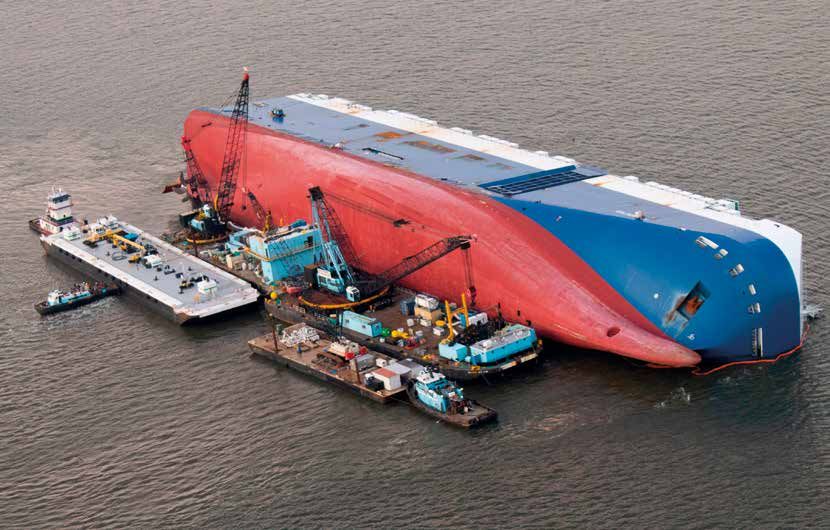
Safety and Shipping Review 2020

                         04          Executive summary
                         08          Shipping loss and incident data 2010 to 2019

              CORONAVIRUS
                         18          Outlook
                         20          Impact for crew welfare and marine claims
                         21          Economic fallout threatens years of safety gains
                         22          Cargo and machinery damage concerns
                         23          Impact of bunker analysis delays and disruption to surveys and inspections
                         24          Cruise ship industry faces increased liability
                         25          Laid up cruise ships and floating oil storage boom brings potential exposures

              LOSS TRENDS
                         26          Cargo, container ships and ro-ro vessels drive large losses
                         28          Container ship fires: Time to modernize fire prevention regulation
                         30          Extent of mis-declared cargo revealed
                         32          Viking Sky: Lessons from a close call
                         33          Incidents in Arctic Circle waters
                         34          Incident reporting: Room for improvement

              CLIMATE
                         36          IMO 2020: The potential risks of meeting new sulphur rules
                         38          De-carbonization targets: The shipping industry’s biggest challenge?
                         40          Climate change manifests in marine claims

              SECURITY
                         42          Rising geopolitical tensions threaten global shipping
                         44          Gulf of Guinea sees piracy activity soar

              TECHNOLOGY
                         46          Shore-based infrastructure and conflicts top cyber concerns
                         48          Training and data key to reap benefits from technology
                         49          Data could reduce machinery breakdown incidents

                         50          Data and sources. About Allianz Global Corporate & Specialty
                         51          Allianz Global Corporate & Specialty contacts

Cover image: The Golden Ray lying on its side in shallow water in St. Simons Sound near the Port of Brunswick in Georgia, USA.
Photo: Shutterstock.

                                                                                                                                                              3
Allianz Global Corporate & Specialty

SAFETY & SHIPPING REVIEW 2020 IN NUMBERS

                                                                  ↓                             15
                                       951 total losses           41 total losses in                 c
                                       over past 10 years         2019 – a record low.           – 3 arg o
                                                                                                    7%      s
                                                                  70% decline in 10 years              o f a h ip s l
                                                                                                            ll v o s t i
                                                                                                                ess      n
                                                                                                                    els 2019
                                                                                                                       lo s
                                                                                                                            t

2,815 shipping
incidents in 2019 – up 5%
year-on-year. Machinery
damage is the top cause

    605 incidents in 2019 in                                90% of global                1 in 3 losses in 2019
    the British Isles, North Sea,                           kidnappings reported         occurred in South China,
    English Channel and Bay                                 at sea in 2019 in the        Indochina, Indonesia and
    of Biscay region                                        Gulf of Guinea               Philippines – the global hotspot

EXECUTIVE
                                                                  Given the global shipping industry is responsible for
                                                                  transporting as much as 90% of world trade, the safety
                                                                  of its vessels is critical. The sector saw the number of
                                                                  reported total shipping losses of over 100GT decline
                                                                  again during 2019 to 41 – the lowest total this century and

SUMMARY
                                                                  a close to 70% fall over 10 years. Improved ship design and
                                                                  technology, stepped-up regulation and risk management
                                                                  advances such as more robust safety management
                                                                  systems and procedures on vessels are some of the factors
                                                                  behind the long-term improvement in losses.
Allianz Global Corporate & Specialty’s
(AGCS) Safety and Shipping Review                                 Shipping losses declined by almost a quarter year-on-
identifies loss trends and highlights                             year from 53 in 2018, although late reported losses may
coronavirus-, climate-, security- and                             increase the 2019 total further in future. Bad weather was
                                                                  reported as a factor in one in five losses. The 2019 loss
technology-related challenges for the
                                                                  year represents a significant improvement on the rolling
maritime sector.                                                  10-year average of 95 – down by over 50%.

4
Safety and Shipping Review 2020

                                                                  cause of loss of all vessels, accounting for three in four
                                                                  during 2019. Contributing factors included bad weather,
                                                                  flooding and water ingress, engine trouble and vessels
                                                                  capsizing. Fire/explosion continues to be a significant problem
                                                                  on board vessels, resulting in five total losses during 2019.

                                                                  While total losses declined significantly over the past year,
                                                                  the number of reported shipping casualties or incidents
1 in 5 losses in 2019                                             actually increased by 5% to 2,815. There were over 1,000
due to bad weather                                                cases of machinery damage/failure (1,044) – already the
                                                                  top cause of shipping incidents over the past decade –
                                                                  accounting for more than one third of all incidents reported
                                                                  in 2019. Incidents on passenger vessels and ro-ros increased.
                   1,500%                                         The British Isles, North Sea, English Channel and Bay of
                   increase in container-carrying                 Biscay maritime region replaced the East Mediterranean to
                   capacity in 50 years                           become the main incident hotspot for the first time since
                                                                  2011, accounting for one in five incidents (605).

                                                                  CORONAVIRUS IMPACTS
                                                                  The shipping industry has largely proved resilient to the
                                                                  coronavirus outbreak, keeping the life blood of global
                          6 incidents involving                   trade and essential supplies flowing. However, while many
                          the most accident-                      of the risks of the sea have been reduced for those vessels
                          prone vessel in 2019                    waiting at anchorage or in lay-up – the reduction in
                          – a Greek Island ferry                  sailings could be a positive for claims frequency – new
                                                                  challenges have evolved.

                                                                  One of the biggest issues has been the inability to change
                                                                  crews easily because of pandemic restrictions. Relief of crew
                                                                  is essential in ensuring the safety, health and welfare of
                                                                  seafarers. Extended periods on board vessels can result in
                                                                  mentally and physical fatigued crew, which is known to be
                                                                  one of the underlying causes of human error, estimated to
                                                                  be a contributing factor in 75% to 96% of marine incidents.

                                                                  The sustained economic downturn will have implications
                                                                  for shipping risks, as vessels are laid-up and companies
                                                                  take steps to manage costs. Past downturns have shown
                                                                  that crew and maintenance budgets are often among the
                                                                  first areas to be cut. It is important that the industry does
                                                                  not undo its good work of previous years and let safety
The South China, Indochina, Indonesia and Philippines             and risk management standards slip.
maritime region remains the main loss hotspot,
accounting for almost 30% of losses over the past year            Damaged goods and containers is already one of the
with 12 vessels. These waters are also the major loss             most frequent causes of insurance claims in the shipping
location of the past 10 years, driven by factors including        industry, accounting for more than one in five claims,
high levels of local and international trade, congested           according to AGCS analysis and the pandemic has
ports and busy shipping lanes, older fleets, exposure to          heightened the risk environment around high-value and
typhoons and ongoing safety problems on some domestic             temperature-sensitive goods in particular as supply chains
ferry routes. However, the number of losses in this region        have come under pressure, cargo-handling companies have
has declined for the second successive year. The Gulf of          shut down abruptly and ports operated under restrictions.
Mexico (4) and the West African Coast (3) – neither of
which featured in the top 10 loss regions last year – rank as     The coronavirus outbreak has also made it difficult for
the second and third most frequent loss locations.                vessels to obtain essential spares and consumables, such
                                                                  as oils and lubricants, and carry out maintenance and
Cargo vessels (15) accounted for more than a third of all         repairs. This could have a detrimental effect on the safe
total losses during 2019 with the majority occurring in South     operation of engines and machinery, potentially causing
East Asian waters. The number of losses involving ro-ro vessels   damage or breakdown, which in worst-case scenarios can
(3) increased year-on-year. Foundering is the most frequent       lead to groundings or collisions.

                                                                                                                                5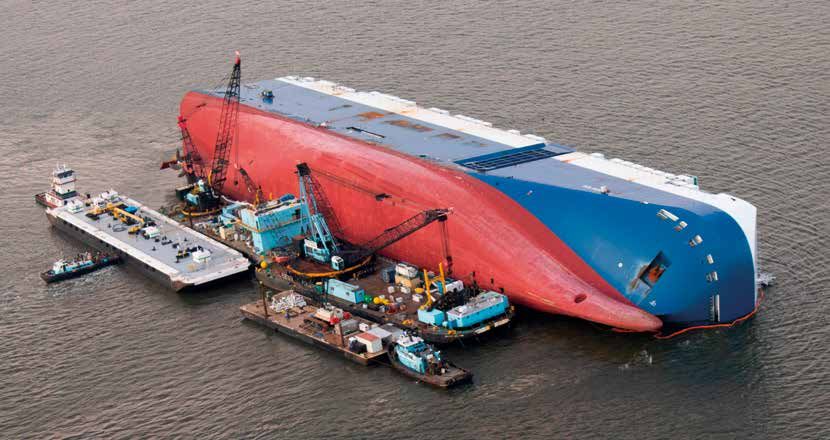
Allianz Global Corporate & Specialty

                        The cruise ship industry, which generates more         the risk of fire on board vessels, including
                        than $150bn in global economic activity and            temperature monitoring of cargo, water spray and
                        supports over one million jobs worldwide,              CO2 fire suppression in cargo holds, more active
                        effectively went into hibernation as a result of the   firefighting on deck, including water curtains,
    1,000+              pandemic. With the biggest cruise ships worth          water screens and fixed water monitors and even
                        in excess of a billion dollars, accumulations of       integrating fire suppression systems in drones.
                        risk are a potential issue while restrictions are
                        still in place. As of April 2020, some 95% of the      A National Cargo Bureau (NCB) study found the
reported incidents
                        global cruise fleet was in lay-up, with many           majority of containers it inspected had issues
  on vessels due
   to machinery
                        vessels anchored in hurricane-exposed areas in         with mis-declared or improperly stowed cargo.
 damage in 2019         North America and typhoon-exposed areas in             Of the 500 containers inspected, more than half
                        Asia. Emerging from lay-up poses another               failed with one or more deficiencies, including
                        challenge. The monthly cost of cruise ship lay-up      the way cargo was secured, labelled or
                        can be in the millions of dollars and the extent of    declared. This is an issue that needs to be
                        upkeep and crewing will affect the speed with          addressed by the whole supply chain. Too much
                        which a vessel can be brought back into service.       cargo is being loaded that is not properly
                                                                               documented and appropriately stowed,
                        As the price of oil plummeted amid concerns for        increasing the threat of fires and risking lives. In
                        the coronavirus economy, demand for floating           response, a number of major container ship
                        storage hit record levels. Many tankers have           operators are taking steps to tackle the issue,
                        been idling around major oil ports and                 including more stringent cargo verification and
                        terminals in the US, Europe and Africa, with           inspections and higher penalties and fines for
                        potential exposures to extreme weather,                infringements. Technology and machine
                        piracy and political risks. Tankers have also          learning is also increasingly being deployed to
                        been chartered for use as floating storage,            help better review cargo manifests and identify
                        which will need to be subject to certain               issues. However, this is a problem that will only
                        maintenance and contractual requirements.              get worse if action doesn’t continue, as vessels
                                                                               become bigger and the range of goods
                        LOSS TRENDS IN FOCUS                                   transported continues to grow. Chemicals and
                                                                               batteries are increasingly shipped in containers,
                        Issues with car carriers and ro-ro vessels             and these pose a serious fire risk if they are mis-
                        remain among the biggest safety issues for the         declared or wrongly stowed.
                        shipping industry. The number of total losses
                        involving ro-ros has increased year-on-year, while     CLIMATE CHALLENGES
                        reported incidents (188) are up by 20%. These,
                        and similar vessels, can be more exposed to fire       From January 1, 2020, allowable sulphur levels in
                        and stability issues than others, and can require      marine fuel oil were slashed under the
                        additional emphasis on risk management. Many           International Convention for the Prevention of
                        can have quick turnarounds in port and a               Pollution from Ships (MARPOL) Annex VI,
                        number of accident investigations have revealed        more widely-known as IMO 2020, as the
                        that pre-sail away stability checks were either        shipping industry looks to plays its part in a
                        not carried out as required or were based on           more sustainable environment. However,
                        inaccurate cargo information. In many cases            compliance with the new sulphur cap is not
                        cargo was not fully-secured prior to sailing.          straightforward, with a range of options
                                                                               available – each with its own cost implications,
                        While major losses have trended down, attritional      compliance challenges and risks.
                        claims are becoming more of an issue for
                        insurers, in part due to increasing complexity.        The sulphur cap creates uncertainty for risks of
                        Litigation, particularly in the US, can drag on,       bunkering, machinery breakdown and the use
                        while any environmental issues can also take           of scrubbers, which are used to remove harmful
                        time to resolve, adding significantly to claims        materials from industrial exhaust gases before
                        costs. In addition, the frequency of higher value      they are released into the environment. Insurers
                        claims has been rising, as has severity from           are concerned that teething problems with
                        navigation and machinery issues.                       scrubbers could lead to a surge in machinery
                                                                               damage claims, with technical and operational
                        Container ship fires continue to be an issue.          issues already having resulted in a number of
                        Vessels become larger every year – capacity has        losses. Scrubber waste is corrosive and there have
                        increased by 1,500% over 50 years – which can          been reports of incidents where this corrosion
                        impact fire prevention and salvage in the event of     has caused wastewater to flood engine rooms,
                        an incident. Awareness of this problem has been        ballast tanks and cargo holds. Further losses
                        growing, but is still a major concern and a focus of   related to scrubbers and bunker fuels are likely
                        insurers. Technology could play a role in reducing     to materialize in the months and years ahead.
6
Safety and Shipping Review 2020

Targets to cut emissions will shape risk for the       International Maritime Bureau. The Gulf of
shipping industry for years to come. The               Guinea accounted for 90% of global
International Maritime Organization proposals to       kidnappings reported at sea in 2019 with the
halve CO2 emissions by 2050 is a challenging           number of crew taken increasing by more than
target to achieve, and one that will require the
industry to radically change fuels, engine
                                                       50%. Such activity continued through the first
                                                       few months of 2020. Latin America has also seen
                                                                                                                $150bn
technology and even the design of vessels. In          a rise in piracy and armed robbery. Given the
addition to the technical challenges, de-              heightened political and economic uncertainty
carbonization will have regulatory, operational and    in the world today, piracy is a threat that is likely         annual
reputational (corporate social responsibility)         to remain, if not increase.                             contribution to the
implications for shipping companies. Investors are                                                              global economy
increasingly shunning carbon-intensive industries,                                                               from the cruise
while regulators and investors are insisting on more
                                                       TECHNOLOGY DEVELOPMENTS                                    ship industry
transparent reporting of climate change risks
                                                       Vessels are becoming more connected to shore-
and exposures. However, there is the risk that all
                                                       based systems, meaning the cyber threat is
the progress on addressing climate change
                                                       ever-evolving – from crippling ports and
could now stall with the focus on the coronavirus
                                                       terminals to spoofing attacks on ships. The
pandemic. This must not be allowed to happen.
                                                       coronavirus outbreak is impacting too, with
                                                       reports of companies having faced a 400%
The impact of more unpredictable weather is
                                                       increase in attempted cyber-attacks since the
already manifesting in claims activity. Record
                                                       pandemic began. Ship-owners are also
water levels on the Mississippi river in 2019
                                                       increasingly concerned about the prospect of
resulted in damage to vessels and shore side
                                                       conflicts. As modern vessels become increasingly
infrastructure, as well as causing major disruption
                                                       dependent on computer and software, and with
for supply chains. Such events are likely to have
                                                       heightened geopolitical risks, the threat of cyber
a greater impact on trade and claims in future.
                                                       to the shipping industry is significant.

SECURITY PROBLEMS                                      The way in which vessels and crew are
                                                       interacting with technology has become a
Political risk has become a pressing topic for         significant factor in collisions and groundings.
the shipping industry, with trade wars,                Last year, the US Navy said it was to replace
regional conflicts, civil unrest and piracy all        touch screens with manual controls in 2020 after
impacting. Shipping is a global commodity and          an investigation into an incident involving one of
can be used as a pawn in disputes due to its           its vessels in 2017 which resulted in fatalities.
impact on the economy. Shipping companies
should prepare for an increase in disruption to       When used appropriately technology can
supply chains and their operations in future.         improve shipping safety and better training and
                                                      utilization of data can result in more successful
Political rivalries are increasingly being played out integration. In particular, the industry needs to
on the seas, affecting some of the world’s busiest start learning from successful journeys, not just
transit routes. Tensions between the US and Iran accidents. Such insights can be used to develop
have led to a growing number of attacks against new technology, inform training and improve
vessels in the Gulf of Oman and off the coast of      crew and safety culture.
Yemen. There is already only a small window of
error when navigating a choke-point like the Strait Increased use of industrial control systems
of Hormuz and such security challenges put            (ICS) to monitor and maintain engines could
more pressure on crews and a financial burden         lead to a significant reduction in machinery
on shippers. In addition to physical damage           breakdown incidents in future. Over the years,
from attacks targeting vessels, there is the          the shipping industry has moved from time-
potential knock-on effect of a heightened risk of based maintenance to condition-based
collisions and groundings. The South China Sea, maintenance, and with digitalization, it will shift
where China and the US are vying for influence        towards predictive or preventative maintenance.
in Asia Pacific, is fast becoming another hotspot.
                                                      In time, the move to preventative maintenance
Heightened political risk globally raises the         could improve the reliability of engines and
threshold for unrest, with other implications for     ultimately improve safety. At present, human
shipping, such as the ability to secure crews and error is a big factor in machinery breakdown
access ports safely.                                  losses. Even a well-trained crew can make
                                                      mistakes which can result in damage, so real-time
Piracy remains a major risk for shipping. In          onshore monitoring, by owners in consultation
2019, there were still 162 incidents of piracy and with manufacturers, and preventative
armed robbery against ships worldwide, albeit         maintenance could reduce such incidences.
down from 201 in 2018, according to the
                                                                                                                                 7
Allianz Global Corporate & Specialty
LOSSES IN FOCUS The analysis over the following pages
covers both total losses and casualties/
incidents. See page 50 for further details
TOTAL LOSSES BY TOP 10 REGIONS
2010-2019 AND 2019
41 total losses in 2019
Russian Arctic and
Bering Sea
70 23
104
2 Baltic 1
British Isles, N. Sea, 137
Eng. Channel and
Bay of Biscay
228 2
38
Japan, Korea and
2 49 North China
United States
Eastern Seaboard West Mediterranean 2
East Mediterranean
4 and Black Sea
Gulf of Mexico
12
Arabian Gulf 26
207 39 and approaches 2 S. China, Indochina,
30 Indonesia and Philippines
Bay of
3 Bengal
East African Coast
West African Coast
2
9 South
Pacific
All other regions
Total Losses by region: 2010 - 2019
Total Losses by region: 2019
951 total losses between
2010 and 2019 Vessels over 100GT only
Source: Lloyd’s List Intelligence Casualty Statistics
Data Analysis & Graphic: Allianz Global Corporate & Specialty
TOTAL LOSSES BY YEAR
68% DECLINE OVER A DECADE
Annual shipping losses are now at their lowest total of the 21st Century,
having fallen from 130 in 2010 to 41 by the end of 2019.
150
130 129
120
98 111
105
90 99 95
90
60 53
41
30
2010 2011 2012 2013 2014 2015 2016 2017 2018 2019
Source: Lloyd’s List Intelligence Casualty Statistics
Vessels over 100GT only Data Analysis & Graphic: Allianz Global Corporate & Specialty
8
Safety and Shipping Review 2020

                                                                                                                                  2019 REVIEW
                                           TOTAL LOSSES BY TOP 10 REGIONS
2019: The database shows 41 total          FROM JANUARY 1, 2019 TO DECEMBER 31, 2019
losses of vessels over 100GT at the
end of 2019 around the world. This          Region                                                        Loss Total     Year-on-year change

compares with 53 during 2018 – a            S. China, Indochina, Indonesia and Philippines                      12                  ↓3
decline of 23% or almost a quarter.         Gulf of Mexico                                                       4                  ↑4
South China, Indochina, Indonesia           West African Coast                                                   3                  ↑1
and Philippines remains the main loss       Bay of Bengal                                                        2                   =
hotspot, accounting for almost 30% of       British Isles, N.Sea, Eng. Channel and Bay of Biscay                 2                  ↓2
losses with 12 vessels. However, the
                                            East Mediterranean and Black Sea                                     2                  ↓5
number of losses in this region declined
                                            Japan, Korea and North China                                         2                  ↓1
for the second successive year. The
                                            South Pacific                                                        2                   =
Gulf of Mexico (4) and the West
African Coast (3) – neither of which        United States Eastern Seaboard                                       2                  ↑1

featured in the top 10 loss regions last    Baltic                                                               1                  ↑1
year – rank second and third.               Other                                                                9
                                            Total                                                               41                 ↓ 12

                                           Vessels over 100GT only                                         Source: Lloyd’s List Intelligence Casualty Statistics
                                                                                               Data Analysis & Graphic: Allianz Global Corporate & Specialty

                                                                                                                     2010 – 2019 REVIEW
                                           TOTAL LOSSES BY TOP 10 REGIONS
                                           FROM JANUARY 1, 2010 TO DECEMBER 31, 2019
2010 to 2019: The 2019 loss year (41)
represents a significant improvement        Region                                                        Total Loss

on the rolling 10-year loss average         S. China, Indochina, Indonesia and Philippines                     228
(95) – down 57%. South China,               East Mediterranean and Black Sea                                   137
Indochina, Indonesia and Philippines        Japan, Korea and North China                                       104
(228 total losses) remains the top          British Isles, N. Sea, Eng. Channel and Bay of Biscay               70
hotspot since the turn of the century.      Arabian Gulf and approaches                                         49
This is driven by a number of factors
                                            West African Coast                                                  39
including high levels of local and
                                            West Mediterranean                                                  38
international trade, congested ports
                                            East African Coast                                                  30
and busy shipping lanes, older fleets,
exposure to typhoons, as well as            Bay of Bengal                                                       26

ongoing safety problems on some             Russian Arctic and Bering Sea                                       23
domestic ferry routes.                      Other                                                              207
                                            Total                                                              951
Together, the top 10 maritime regions
account for three in four (78%) of all     Vessels over 100GT only                                         Source: Lloyd’s List Intelligence Casualty Statistics
                                                                                               Data Analysis & Graphic: Allianz Global Corporate & Specialty
losses over the past decade, with the
top three regions accounting for
almost half (49%).                         NOTE: All figures are based on reported total losses as of March 6,
                                           2020. 2019’s total losses may increase slightly in future as, based on
                                           previous years’ experience, developments in losses lead to a number
                                           of total losses being confirmed after year-end. The average variance
                                           over the past nine years has been an increase of one total loss per
                                           year. However, in some years this can increase, with up to several
                                           additional losses being notified for one year.

                                                                                                                                                              9
MAJOR LOSSES: 2019
     LARGEST SHIPS LOST
     10 LARGEST VESSELS LOST FROM JANUARY 1, 2019 TO DECEMBER 31, 2019
     (showing approximate location of loss and type of vessel)

                                                                             TRIAS

                                                                                                              JI SHUN 16               JIA DE

                                        GRANDE                                             VIETSUN
                                        AMERICA                                           INTEGRITY

                                                           VOLGO-BALT
              GOLDEN RAY                                      214
                                                                                                                              LONDON

                                                                                     MEI CHANG
       BULK                                                                              886
       CARGO
       CONTAINER
       BARGE
       RORO
                                                                                                                           SOLO

                                                   Vessels over 100GT only                          Source: Lloyd’s List Intelligence Casualty Statistics
                                                                                        Data Analysis & Graphic: Allianz Global Corporate & Specialty

                      “The number of total losses has reduced by more than 50% in the last two years which is
                        a commendable achievement - a result of years of sustained efforts in the areas of
                        regulation, training and technological advancement, among others. However, what has
                        been achieved can be easily lost if standards are not maintained. While total losses have
                        reduced significantly, the total number of incidents has actually increased year-on-year.

                      "Large container ship fires continue to be an issue while the rise in number and severity of
                        claims on ro-ro vessels is fast becoming another concern. It will require all stakeholders to
                        come together to address this issue.”
                                                                                                                 Ulrich Kadow
                                                                                                        Global Head of Marine
                                                                                           Allianz Global Corporate & Specialty

10
Safety and Shipping Review 2020
LARGEST SHIPS LOST
GOLDEN RAY
September 8, 2019: Capsized in St. Simons Sound near
the Port of Brunswick in Georgia, USA.
71,178 GT RORO
GRANDE AMERICA
March 10, 2019: Fire started in a container and spread
through vessel in the Bay of Biscay region.
56,642GT RORO
SOLO
February 5, 2019: Ran aground near Rennell Island in the
Solomon Islands.
38,779GT BULK
VIETSUN INTEGRITY
October 18, 2019: Vessel malfunction led to it sinking in
the Long Tau River, near Ho Chi Minh City, Vietnam.
6,704GT CONTAINER
TRIAS
December 31, 2019: Vessel drifted ashore, after tow lines
broke and allided with tug Raduga Europe. Vessel then
towed to Riga shipyard.
4,774GT BARGE
MEI CHANG 886
July 4 2019: Vessel sank after it ran aground in a storm in
the Gulf of Tonkin off the coast of Northern Vietnam and
South China.
2,991GT CARGO
VOLGO-BALT 214
January 7, 2019: Vessel sank north of Sansun, Turkey.
2,516GT CARGO
JI SHUN 16
September 6, 2019: Vessel reportedly sank north east of
Zhoushan in East China Sea.
2,376GT CARGO
LONDON
January 2, 2019: Vessel capsized north east of Pengjia
Islet, Taiwan, and sunk.
2,216GT CARGO
JIA DE
October 12, 2019: Vessel sank in Tokyo Bay after
strong winds.
1,925GT CARGO
11Allianz Global Corporate & Specialty
TOTAL LOSSES BY TYPE OF VESSEL
2010 - 2019 Cargo vessels account for over 40% of
total losses over the past decade.
TOP 5 VESSEL TYPES LOST
80
70
Cargo
60
Fishery 50
40
Bulk
30
20
Passenger
10
Tug
2010 2011 2012 2013 2014 2015 2016 2017 2018 2019
TOTAL LOSSES BY TYPE OF VESSEL: 2010-2019
2010 2011 2012 2013 2014 2015 2016 2017 2018 2019 TOTAL
Cargo 62 37 62 40 31 40 34 54 17 15 392
Fishery 22 14 12 13 15 16 10 8 12 9 131
Bulk 11 14 11 15 5 13 5 7 2 1 84
Passenger 3 7 7 8 11 6 11 5 6 3 67
Tug 7 2 7 7 7 6 7 4 4 3 54
Chemical/Product 6 4 8 10 2 3 7 4 1 45
Container 5 3 7 4 4 5 5 3 2 1 39
2010 to 2019: Ro-ro 1 3 6 2 5 6 9 1 3 36
Cargo, fishing, bulk, Supply/Offshore 2 2 3 2 3 3 2 2 1 20
passenger and tug Tanker 4 4 1 1 2 3 15
are the vessel types Dredger 2 2 1 1 1 1 3 2 13
that have seen the Barge 1 3 1 3 1 2 1 12
most total losses LPG 1 1 1 1 1 5
over the past Unknown 1 2 1 1 5
decade, accounting
Other 3 5 3 6 4 4 3 1 4 33
for 75% of all
Total 130 98 129 111 90 105 99 95 53 41 951
reported losses.
Source: Lloyd’s List Intelligence Casualty Statistics
Vessels over 100GT only Data Analysis & Graphic: Allianz Global Corporate & Specialty
12Safety and Shipping Review 2020
2019: Cargo vessels accounted for
more than a third (37%) of all total
losses during 2019. Foundering was
the most frequent cause of loss and
most cargo vessels were lost in South
East Asian waters. 2019 REVIEW
The number of ro-ro losses increased TOTAL LOSSES BY TYPE OF VESSEL
year-on-year. (see page 26). JANUARY 1, 2019 TO DECEMBER 31, 2019
Cargo 15
Fishery 9
Other 4
Passenger 3
Ro-ro 3
Tug 3
Barge 1
Bulk 1
Container 1
Unknown 1
Total 41
Vessels over 100GT only Source: Lloyd’s List Intelligence Casualty Statistics
Data Analysis & Graphic: Allianz Global Corporate & Specialty
Bad weather was reported as being a factor in
the vessel loss in one in five cases.
13Allianz Global Corporate & Specialty
TOTAL LOSSES BY CAUSE
2010 - 2019 Foundered (sunk/submerged), wrecked/stranded and
fire/explosion are the top three causes of total losses
over the past decade, accounting for 85% of all losses.
TOP 5 CAUSES OF LOSS
80
70
Foundered
60
Wrecked/stranded 50
40
Fire/explosion
30
20
Machinery
damage/failure
10
Collision
2010 2011 2012 2013 2014 2015 2016 2017 2018 2019
ALL CAUSES OF TOTAL LOSS: 2010 - 2019
2010 2011 2012 2013 2014 2015 2016 2017 2018 2019 TOTAL
Foundered (sunk) 65 46 55 70 50 66 48 57 31 31 519
Wrecked/stranded (grounded) 25 28 29 21 18 19 20 15 11 3 189
Fire/explosion 12 9 14 15 7 9 12 8 6 5 97
Machinery damage/failure 4 6 15 1 5 2 10 9 2 54
Collision (involving vessels) 10 3 5 2 2 7 2 1 2 1 35
Hull damage (holed, cracks etc.) 5 3 7 1 5 2 4 5 1 1 34
Miscellaneous 6 2 2 1 2 1 14
Contact (e.g harbor wall) 2 1 3
Piracy 2 1 3
Missing/overdue 1 2 3
Total 130 98 129 111 90 105 99 95 53 41 951
Source: Lloyd’s List Intelligence Casualty Statistics
Vessels over 100GT only Data Analysis & Graphic: Allianz Global Corporate & Specialty
14Safety and Shipping Review 2020
2019: Foundered (sunk/submerged)
was overwhelmingly the main cause
of total losses reported during 2019,
accounting for three in four losses
(75%). Contributing factors included
bad weather, flooding and water
ingress, engine trouble and vessels 2019 REVIEW
capsizing.
CAUSES OF TOTAL LOSS
Fire/explosion continues to be a JANUARY 1, 2019 TO DECEMBER 31, 2019
significant problem on board vessels,
resulting in five total losses during
2019. In addition, the number of
reported fire incidents overall totaled
197, up 13% year-on-year.
Foundered (sunk) 31
Fire/explosion 5
Wrecked/stranded (grounded) 3
Collision (involving vessels) 1
Hull damage (holed, cracks etc.) 1
Total 41
Vessels over 100GT only Source: Lloyd’s List Intelligence Casualty Statistics
Data Analysis & Graphic: Allianz Global Corporate & Specialty
15Allianz Global Corporate & Specialty
TOTAL LOSSES IN ALL REGIONS: 2019
This map shows the approximate locations of all 41 reported total losses during 2019.
1
Canadian Arctic
and Alaska
1 Russian Arctic
and Bering Sea
1 Iceland and
Northern Norway
2 1
British Isles, N. Sea,
Eng. Channel and Baltic
Bay of Biscay 2
1 12 Japan, Korea and
North American 2 1 2 North China
West Coast North
Atlantic East Mediterranean and Black Sea
4 United States
Eastern Seaboard
1 Gulf of Mexico S. China, Indochina,
Indonesia and Philippines
1
North Pacific
West Indies 2
3
Bay of
1 Bengal
West African Coast East African Coast
2
South Pacific
1
TOTAL
41 S. Atlantic and
East Coast S. America
Regional loss rankings Losses % Share
1 South China, Indochina, Indonesia and Philippines 12 29%
2 Gulf of Mexico 4 10%
3 West African Coast 3 7%
Bay of Bengal 2 5%
British Isles, North Sea, English Channel and Bay of Biscay 2 5%
East Mediterranean and Black Sea 2 5%
4
Japan, Korea and North China 2 5%
South Pacific 2 5%
United States Eastern Seaboard 2 5%
Baltic 1 2%
Canadian Arctic and Alaska 1 2%
East African Coast 1 2%
Iceland and Northern Norway 1 2%
North American West Coast 1 2%
5
North Atlantic 1 2%
North Pacific 1 2%
Russian Arctic and Bering Sea 1 2%
South Atlantic and East Coast South America 1 2%
West Indies 1 2%
Vessels over 100GT only
Source: Lloyd’s List Intelligence Casualty Statistics
Data Analysis & Graphic: Allianz Global Corporate & Specialty
16Safety and Shipping Review 2020
2019 REVIEW
2019: While the number of total losses ALL CASUALTIES INCLUDING TOTAL LOSSES: 2019
has declined significantly over the TOP 10 REGIONS
past year, the number of reported
shipping casualties or incidents Region Casualty Total Year-on-year change
actually increased from 2,688 to 2,815 British Isles, N. Sea, Eng. Channel and Bay of Biscay 605 ↑ 113
in 2019, up 5%. East Mediterranean and Black Sea 472 ↓ 63
S. China, Indochina, Indonesia and Philippines 255 ↑ 21
The British Isles, N.Sea, Eng. Channel Great Lakes 195 ↑1
and Bay of Biscay maritime region West Mediterranean 151 ↑ 48
replaced the East Mediterranean to
Baltic 143 ↓ 19
become the top incident hotspot for
North American West Coast 120 ↑ 18
the first time since 2011, accounting
Newfoundland 114 ↑ 23
for one in five incidents.
Iceland and Northern Norway 109 ↑5
The number of incidents on both Japan, Korea and North China 103 ↓ 12
passenger vessels and ro-ros Other 548
increased year-on-year. Total 2,815 ↑ 127
Including 41 total losses Source: Lloyd’s List Intelligence Casualty Statistics
Data Analysis & Graphic: Allianz Global Corporate & Specialty
Vessels over 100GT only
2010 - 2019 REVIEW
ALL CASUALTIES INCLUDING TOTAL LOSSES: 2010 - 2019
TOP 10 REGIONS
Region Total
East Mediterranean and Black Sea 4,687
British Isles, N. Sea, Eng. Channel and Bay of Biscay 4,266
WHAT IS THE MAJOR CAUSE S. China, Indochina, Indonesia and Philippines 2,423
OF SHIPPING INCIDENTS? Baltic 1,617
It is machinery damage/failure, with Japan, Korea and North China 1,474
over 1,000 reported incidents on
Great Lakes 1,393
vessels over 100GT during 2019
Iceland and Northern Norway 1,078
(1,044). This accounts for more than
West Mediterranean 1,001
one third of all incidents in total
(see page 49). North American West Coast 936
West African Coast 799
Other 6,397
Total 26,071
Including 951 total losses Source: Lloyd’s List Intelligence Casualty Statistics
Data Analysis & Graphic: Allianz Global Corporate & Specialty
Vessels over 100GT only
2010-2019: The East Mediterranean and Black Sea region remains
the location of the most shipping incidents over the past decade
(4,687), accounting for 18%.
Of the 26,000+ reported incidents over the past decade, more than a
third (35%) were caused by machinery damage or failure – over twice
as many as the next highest cause, collision.
17Allianz Global Corporate & Specialty 10 CORONAVIRUS CHALLENGES SHIPPING TRADES THROUGH BUT UNPRECEDENTED RISKS LIE AHEAD The shipping industry has largely proved resilient to the coronavirus outbreak, keeping the life blood of global trade and essential supplies flowing. A sharp economic downturn and difficult operating conditions, however, present a unique set of challenges. 18
Safety and Shipping Review 2020

                     “The knock-on effects of the pandemic and economic
                       fallout could have far-reaching implications,
                       including potential consequences of cost-cut ting, crew
                       fatigue, lay-ups, regulation, disruption to maintenance,
                       port inspections and emergency response capabilities.”

Operationally, the sector appears to have responded well       “Although the number of vessel losses is at a record low,
to the initial impact of the pandemic, including disruption    coronavirus has struck at a difficult time for the maritime
to crew changes, shore-side services and the risk of           industry as it implements IMO 2020 (reduction of sulphur
outbreaks on board vessels.                                    emissions), navigates issues such as climate change, political
                                                               risks and piracy, and deals with ongoing problems such as
“The shipping industry has largely continued to operate        fires on board large ships. Now the sector also faces the
around the world, despite disruptions at ports and to crew     task of operating in a very different world, with the
changes, facilitating the movement of essential supplies and   uncertain public health and economic implications of the
medicines that are needed to keep a country running and        pandemic. While risks from perils of the sea are reduced
to deal with the global public health crisis,” says Baptiste   for vessels waiting at anchorage or in lay-up, new
Ossena, Global Product Leader Hull Insurance at AGCS.          challenges have evolved which were not present in
                                                               historical situations involving global economic slowdowns.”

                                                                                                                           19
Allianz Global Corporate & Specialty
1 Crew welfare could lead to increase in human error
One of the biggest immediate issues for shipping
companies during the pandemic has been the
inability to change crews, which is essential to
ensure safety, crew health and welfare,
“Adjustments in work and rest hours offer
effective means of fatigue management while
incentives in cash or kind will also have a
positive impact on crew wellbeing,” says Captain
according to Captain Andrew Kinsey, Senior Nitin Chopra, Senior Marine Risk Consultant at
Marine Risk Consultant at AGCS. AGCS. “Hiring from the pool of locally available
seafarers may be an option in some cases that
Many of the 100,000 crew members that leave can be further facilitated by cooperation among
their ships each and every month have been the crew management companies.”
unable to do so during the pandemic. Port, border
and travel restrictions have led crew members to Where crew are able to leave and join vessels,
extend their service on board ships, unable to ship-owners will need to ensure they take steps to
return to homes and family. Most major ports have avoid introducing or spreading the virus onboard.
imposed restrictions on vessels and crew — some The International Maritime Organization has
120 countries implemented restrictions, while 92 issued recommended protocols for crew joining
prohibited crew changes entirely, according to or leaving a ship, ensuring safe ship crew changes
data from Inchcape Shipping Services1 . and travel during the coronavirus outbreak.
Extended periods of working onboard a vessel
can lead to crew fatigue, which is known to be
one of the underlying causes of human error,
estimated to be a contributing factor in 75% to
96% of marine incidents, says Kinsey.
2 Impact for marine insurance claims
While it is too early to estimate the final total of
insured losses, it is thought the biggest impact of
pandemic-related insurance claims for marine
will be felt by the cruise ship and protection and
Lockdown measures and reduced staffing levels
at warehouses and facilities may also increase
the risk of theft and fire and damage due to
extended storage.
indemnity sectors, through ship-owners’ liability
to passengers and crew and disruption to Initially, hull insurance has been largely
operations. Cruise ship operators may hold unaffected by the pandemic, although there is
specialist business interruption policies, although the potential for some loss of hire claims.
such cover will typically exclude pandemics and
infectious diseases, unless specific extensions “Longer term, however, the knock-on effects of
have been intentionally purchased. the pandemic and economic fallout could have
far-reaching implications, including potential
The cargo insurance sector is also likely to see consequences of cost-cutting, crew fatigue, lay-
claims as lockdown measures cause delays to ups, regulation, disruption to maintenance, port
goods held in storage or in transit. High-value, inspections and emergency response
perishable or temperature-sensitive cargo is capabilities,” says Majid Beladraoui, Senior
particularly at risk of damage or reduced value, Business Analyst Hull Insurance at AGCS.
as the outbreak disrupts supply chains.
20Safety and Shipping Review 2020
3 Economic fallout threatens to unwind years of safety gains
One of the biggest impacts of coronavirus
on the shipping industry is likely to be the
economic fallout of lockdowns and containment
measures, which are disrupting production and
The first half of 2020 could see a 25% fall in
shipping traffic, with a 10% drop for the year
overall, according to maritime analyst, Sea-
Intelligence. Many of the world’s largest ports
supply chains, and damaging consumer and have reported reductions in volumes while AP
business confidence. Moller - Maersk 3, the world’s largest container
shipping company, says container volumes are
As the world emerged from the first wave of expected to be as much as 25% lower in the
coronavirus, the future for trade looked bleak. second quarter of 2020.
The International Monetary Fund2 says global
GDP growth will fall to -3% in 2020, while the "A sustained economic downturn will have
World Trade Organization (WTO) expects world implications for shipping risks, as cruise ships
trade to fall by between 13% and 32% in 2020. A and other vessels are laid-up and as shipping
partial recovery is expected in 2021, although companies take steps to manage costs," says
this is dependent on the duration of the outbreak Elisabeth Pinquier, Regional Head of Marine,
and the effectiveness of policy responses. Mediterranean at AGCS.
The pandemic has already started to affect Revenues generated by German shipping
maritime trade, which had already been slowing, companies declined by 30% to 40% in March
weighed down by trade tensions and weakening and April 2020, according to the German Ship-
economic growth. The WTO Goods Trade owners Association (VDR) 4 , which warned that
Barometer showed a sharp contraction in the the existence of substantial segments of the
second quarter of 2020, falling to its lowest German merchant fleet are endangered.
value on record. The biggest falls were in
automotive products and container shipping, A reduction in trade and shipping will have
reflecting weak demand for goods as well as implications for safety and claims. Efforts to cut
supply-side constraints. costs could impact marine insurance claims
longer term, although a reduction in sailings
could be a positive for claim frequency.
“Ship-owners will face additional cost pressures
from a downturn in trade and will no doubt put
efficiency measures in place,” says Captain
Rahul Khanna, Global Head of Marine Risk
Consulting at AGCS. “We know from past
downturns that crew and maintenance budgets
are among the first areas that are cut. But it is
important that safety and maintenance
standards are not impacted by the downturn.
“The next few years will likely be a difficult time
for the shipping industry. However, we hope the
industry will not undo all the good work of
previous years and let safety and risk
management standards slip.”
1 I nchcape Shipping Services, Coronavirus Port / Country Implications
2 I nternational Monetary Fund, Exceptional Times, Exceptional Action, April 15, 2020
3 B loomberg, World’s Biggest Container Shipper Warns of 25% Slump In Volumes, May 13, 2020
4 P ort of Hamburg, Pandemic fallout: German maritime shipping headed for deep crisis, May 19, 2020
21Allianz Global Corporate & Specialty
4 Cargo damage and delay likely as supply chains come under strain
The coronavirus pandemic has brought about
sudden changes for cargo transportation,
impacting shippers, air freight and transport
companies around the world. Although cargo
“Companies should do all that they possibly can
to implement robust planning of cargo
shipments and ensure they have back-up plans
in place because of the last minute shutdowns
transportation is widely recognized as an essential we are seeing around the world. Loss prevention
activity, a number of cargo handling companies measures to consider also include using ‘Internet
shut down operations during the outbreak while of Things’ technology to obtain real-time
ports have been operating under restrictions. location information in case of delay or
deviation and reviewing requirements for
Cargo stored in high-risk areas without perishable cargos,” says Khanna.
appropriate security controls or protective
safeguards runs the risk of large losses from fire
or extreme weather events, while delays may
also result in cargo damage to perishable or
temperature-sensitive goods. Damaged goods
and containers is one of the most frequent
causes of insurance industry claims in the
shipping industry, accounting for more than one
in five claims, according to AGCS analysis.
The pandemic has heightened the risk
environment around high-value and
temperature-sensitive goods in particular,
according to Khanna.
5 Disruption to maintenance raises machinery damage concerns
Ship-owners run the risk of delays and machinery
breakdown as the pandemic hinders essential
maintenance and servicing. Disruption in supply
of spare parts and essential consumables like
“When changing the grade or type of lube-oil,
technical advice should be sought from the
equipment manufacturer and the changeover
procedures well-planned and documented.
lube-oil and hydraulic oils can delay scheduled Where recommended maintenance is not
maintenance or result in crews using alternative carried out at prescribed intervals, close
grades or brands. At the same time, travel monitoring of operational parameters will
restrictions may affect the ability of specialist be required.”
engineers to access ships to make repairs.
Machinery damage or breakdown is already the
“The current situation is making it difficult for most common cause of shipping incidents over
vessels to obtain essential spares and the past decade, accounting for more than a
consumables, and carry out maintenance and third (9,081) out of 26,071 incidents analyzed
repairs. This could have a detrimental effect on between January 2010 and December 2019.
the safe operation of engines and machinery
and potentially cause damage or breakdown,
which in turn can lead to groundings or
collisions,” warns Khanna.
22Safety and Shipping Review 2020
6 Bunker analysis delays increase risk of engine damage
With the introduction of the cap on sulphur
emissions under IMO 2020, many vessels have
switched to using blended low-sulphur fuels,
which require analysis prior to use in order to
Procedures laid out in the technical manager’s
manuals provide detailed methodology for
dealing with this situation and a comprehensive
risk assessment will help mitigate the hazards
avoid engine damage and machinery breakdown. and consequences arising from use of bunkers
However, with coronavirus restrictions it may not without analysis. Onboard testing kits are useful
be possible to dispatch fuel oil samples for for carrying out preliminary checks while pre-
analysis by shore-based laboratories. bunker analysis reports can help to address
concerns regarding bunker specifications meeting
“Analysis of bunker fuel samples before use is the International Organization for Standardization
essential to ensure quality of fuel and to avoid quality criteria. Where feasible, supply and use
damage to engines,” says Khanna. “However, of distillate fuels can also be considered.
analysis is taking longer during the pandemic
and some operators may need to consume fuel
before knowing the results of analysis, which will
increase the risk of machinery damage.”
7 Disruption to surveys, port inspections and
emergency response could endanger safety
"Lockdown measures and physical distancing
rules can cause delays in surveys and servicing
of vessels and emergency equipment," says
“In the case of a major incident, it remains to be
seen how well emergency rescue and support
services respond if operating under coronavirus
Nicolas Thoreau, Senior Marine Hull restrictions,” says Khanna. “Fires, collisions and
Underwriter, Mediterrean region at AGCS. groundings are dependent on external support
for the safety of the vessel and its crew, as well
For example, classification societies may not be as the protection of the environment. Delays in
able to carry out statutory surveys and inspections emergency response could mean a situation is
at some ports while ship yards could experience allowed to get out of control very quickly.”
delays due to a shortage of workers or the
implementation of social distancing measures.
“Where statutory surveys and port inspections
are reduced or delayed this could lead to
unsafe practices or equipment going
undetected. Port inspections are essential
for weeding out vessels that operate under
sub-par conditions,” says Khanna.
Incident response services could also be
affected by coronavirus measures, with
worrying consequences for a major incident,
such as a fire, collision or grounding, especially
in an environmentally-sensitive area.
23Allianz Global Corporate & Specialty
8 Cruise ship industry faces new reality with increased liability
The cruise industry, which generates more than
$150bn in global economic activity and supports
over one million jobs worldwide 5 , effectively
went into hibernation as a result of the
“The cruise ship industry will survive the
coronavirus crisis. But when it does return, it will
be operating in a very different world,” says
Chris Turberville, Head of Marine Hull And
pandemic. Before the outbreak, the industry had Liabilities, UK at AGCS. “The problem of
enjoyed impressive growth, with some 32 million infectious diseases is not about to go away and
passengers6 forecast to sail on cruise ships vessels will need to operate with much more
worldwide in 2020, up from 30 million in 2019. stringent levels of protections for outbreaks than
However, large coronavirus outbreaks on board in the past.”
a number of cruise ships, travel restrictions, port
closures and a ‘no-sail order’ from the US In this new environment, cruise operators will
Centers for Disease Control (CDC) in March 14 face uncertain liabilities. A number of cruise lines
put the industry on hold. face coronavirus-related legal action from crew,
passengers and investors, while the owners of
Cruise operators face an uncertain future with the Ruby Princess faced a criminal investigation
vessels laid-up and questions over how they can after disembarked passengers were linked to an
operate during the pandemic. However many outbreak in Sydney, Australia.
cruise lines are reporting strong demand for
cruises in late 2020 and into next year and some
are hoping to resume operations this summer,
albeit with new safety measures and new routes.
24Safety and Shipping Review 2020
9 Laid-up cruise liners present sizable risk accumulation
With the biggest cruise ships worth in excess of a
billion dollars, accumulations of risk are a
potential issue while coronavirus restrictions are
still in place. As of April 2020, some 95% of the
Emerging from lay-up poses another challenge
for cruise operators. The monthly cost of cruise
ship lay-up can be between $1mn and $3mn,
but the extent of upkeep and crewing will affect
global cruise fleet was in lay-up, with almost half the speed with which a vessel can be brought
in and around the Americas, according to Lloyd’s back into service.
List Intelligence7. Satellite imagery shows large
clusters of vessels in the seas around Florida and “Until the cruise industry resumes sailings, it will
the Caribbean, raising concerns about need to carefully balance costs and expenditure
accumulations of risk for ship-owners and with the upkeep of vessels. Operators will need
insurers alike, given the arrival of the Atlantic to maintain vessels so that when they emerge
hurricane season. Similarly, at the end of May from lay-up they are in reasonable condition and
2020, more than 20 cruise ships, including those with quality crew. This will be a real test for the
from the biggest operators, were at anchor in industry,” says Turberville.
Manila Bay in the Philippines, ahead of the start
of what is typically the most active period of the
Pacific typhoon season.
10 Floating oil storage boom brings potential exposures
As the price of oil plummeted amid growing
concerns for the coronavirus economy, demand
for floating storage hit record levels, causing
tanker rates to hit new highs. In mid-May, 2020,
Oil products stored for long periods are also at
risk of degradation and cargo loss. The quality
of refined products can degrade over time or
spoil with bacterial contamination, while some
there was more than 200 million barrels of oil products are known to evaporate, resulting in
and products on floating storage in tankers, cargo shortfalls.
around 5% of global-carrying capacity,
according to data from S&P Global Platts8 .
Many tankers are idling around major oil ports
and terminals in the US, Europe and Africa, with
potential exposures to extreme weather, piracy
and political risks. Tankers are also being
chartered for use as floating storage, which will
need to be subject to certain maintenance and
contractual requirements.
5 ruise Lines International Association, Update On Cruise Industry Response To Covid-19, April 21, 2020
C
6 ruise Lines International Association, 2020 State Of The Cruise Industry Outlook
C
7 eatrade Cruise News, Where Are All The Cruise Ships Now? April 17, 2020
S
8 &P Global Platts, Oil On Floating Storage Soars To Record Highs, But Peak Still Some Way Off, May 14, 2020
S
25Allianz Global Corporate & Specialty
LOSS TRENDS
CARGO, CONTAINER SHIPS AND
RO-RO VESSELS DRIVE LARGE LOSSES
Although large shipping losses declined by more than 40% in 2018 and by
over 20% in 2019 to their lowest level this century, foundering of cargo ships,
container ship fires and incidents involving ro-ro vessels continue to be
among the leading causes of loss activity. At the same time, the number of
shipping incidents overall is up, as is the number of claims from navigation
and machinery issues. Meanwhile, environmental issues can significantly
lengthen the “tail” of a loss.
On September 8, 2019, the Golden Ray, a two- “Ro-ro vessels can be more exposed to fire and
year old 200-meter-long car carrier, partially stability issues than other vessels, and require
capsized while heading out of the Port of additional emphasis on risk management,” adds
Brunswick, Georgia, in the US. The vessel, which Justus Heinrich, Head of Marine Hull
was carrying 4,200 new cars at the time, Underwriting, Germany at AGCS. “ We look
grounded in an environmentally-sensitive area deeply into the risk management of operators
and was subject to a complex and costly salvage and have worked with a number of companies
and wreck removal operation that was still operating ro-ro vessels to agree a robust risk
ongoing in May, 2020. management program.”
“Issues with car carriers and ro-ro vessels, as well Many ro-ros and similar vessels can have quick
as container ship fires, remain among the biggest turnarounds in port, according to Captain Rahul
safety issues for the shipping industry,” says Khanna, Global Head of Marine Risk
Volker Dierks, Head of Marine Underwriting, Consulting at AGCS. A number of accident
Central and Eastern Europe at AGCS. “Vessels investigations concerning these vessels have
continue to become larger every year, which can revealed that pre-sail away stability checks were
have an impact on fire prevention and salvage either not carried out as required or were based
in the event of an incident. Awareness of this on inaccurate cargo information. In many cases
problem has been growing, but this is still a cargo was not fully-secured prior to sailing.
major concern and a focus of underwriting,”
“These vessels depend upon the shipper to
Earlier in the year on March 12, the ro-ro cargo provide accurate weights of the cargo loaded.
ship, the Grande America, sank after its cargo of Discrepancies could mean the difference in
vehicles and containers caught fire and incidents sufficient or insufficient stability for the vessel,”
have continued through 2020. In June, a blaze says Khanna. “However, it's the master’s
on the car carrier Höegh Xiamen lasted for responsibility to ensure the vessel has enough
eight days before it was extinguished, while stability prior to departing port. Too many times
ro-ro passenger ferry Cruise Bonaria also commercial considerations have endangered
suffered a fire. the vessel and its crew and it is vital that this is
addressed both on shore and on board.”
26Safety and Shipping Review 2020
The Golden Ray salvage operation has been complex and costly.
Photo: Shutterstock
While major losses have trended down, While total losses have seen a positive trend, the
attritional losses are becoming more of a frequency of higher value claims has been rising,
pressing issue for insurers – as evidenced by a as has claims severity, explains Dierks: “The
5% year-on-year increase in the number of market continues to see a developing loss trend
casualties/incidents (see page 17) – in part due for claims due to navigation and machinery
to the increased complexity of claims. issues. At the same time, insurance premiums
“A claim can take on a life of its own,” says Captain have not kept pace.”
Andrew Kinsey, Senior Marine Risk Consultant
at AGCS. “Litigation, particularly in the US, can
drag on for a long time, while any environmental
issues can have a long tail and add significantly
to the overall cost of a claim. Big claims happen,
and that is why we have insurance. But it’s the
little losses that eat your lunch. That is why insurers
need to address the issue of loss control.”
“Big claims happen, and that is why we have insurance.
With regards to environmental issues, the salvage
of the Golden Ray is a perfect example – 80 But it’s the little losses that eat your lunch.”
piles needed to be driven into the seabed around
the vessel to hold the environmental protection
barrier (EPB) in place. The construction of the
EPB had to be completed before the actual
cutting-up of the vessel could proceed.
“Subsequently, the salvage operation extended
into the 2020 hurricane season,” says Kinsey.
Similarly, the grounding of the Kea Trader on a
15
Number of total
188
Incidents involving ro-ro
reef off New Caledonia in the South Pacific in losses involving cargo vessels in 2019, up 20%+
July 2017, which resulted in debris and oil spilling ships in 2019 year-on-year
onto the reef and into the ocean1 , also shows
how environmental concerns can greatly
complicate and increase the cost of a salvage.
French authorities did not declare the
emergency response over until two years later2 .
1 T ransport Malta, Marine Safety Investigation Report, Kea Trader
2 R adio New Zealand, Kea Trader Emergency Response Lifted In New Caledonia, November 21, 2019
27You can also read


