AlpBioEco Best Practice Brochure - Potentials of eco-innovative bioeconomy business models in EU Alpine regions - Alpine Space
←
→
Page content transcription
If your browser does not render page correctly, please read the page content below
AlpBioEco
Best Practice Brochure
Potentials of eco-innovative bioeconomy business models in EU Alpine regions

                                                                 www.alpine-space.eu /alpbioeco
2
Table of contents

      Dear reader,
      This brochure is the result of the collective work of the AlpBioEco project partners. We would
      like to give you an insight into the business models we have developed and validated during
      our project, displaying the potential of the bioeconomy in the Alpine regions.

                                                                                  Together, let’s make the bioeconomy grow!

TABLE OF CONTENTS

1.        AlpBioEco project ............................................................................................................................................... 3

1.1       AlpBioEco team................................................................................................................................................ 3

1.2       Promoting bioeconomy in the Alps................................................................................................... 3

2.        AlpBioEco project step by step.............................................................................................................. 4

2.1       Analysis of bioeconomic value chains ............................................................................................. 4

2.2       Development of eco-innovative business model blueprints............................................ 4

2.3       Validation of the bio-based business model blueprints ..................................................... 5

2.4       Development of policy guidelines and transfer of results.................................................. 5

3.        Pilot actions on eco-innovative business models..................................................................... 6

3.1       Apple business models .............................................................................................................................. 7

3.2       Walnut business models...........................................................................................................................15

3.3       Herbs business models............................................................................................................................. 22

3.4       Overarching business model for apples, walnuts and herbs......................................... 30

4.        Conclusion......................................................................................................................................................... 34

AlpBioEco                                                                                                                                                   Best Practice Brochure
3
                                                                                                1. AlpBioEco project

1. ALPBIOECO PROJECT
The AlpBioEco project addresses the bioeconomy potentials in six Alpine regions of the European Union
(EU). It uses innovative methods to foster sustainable development in the Alps, raises awareness regar-
ding the economic potential in bioeconomy and actively supports interdisciplinary and supra-regional
cooperation for the development of innovative business concepts. It thus stimulates the creation of new
jobs in the Alpine regions.

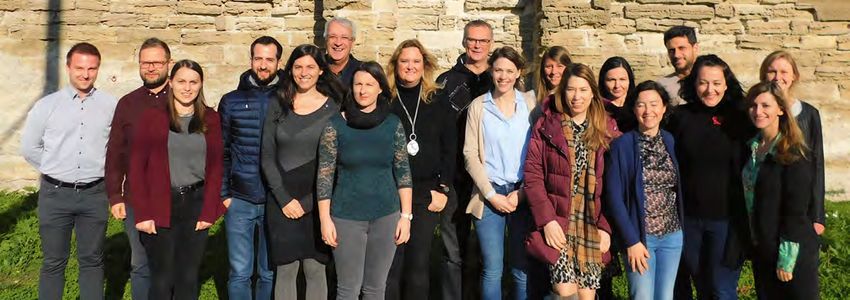
The AlpBioEco project partners in Avignon, France.

1.1 ALPBIOECO TEAM
We are an interdisciplinary project group consisting of 13 partners from 5 different countries in the
Alpine Space (Austria, France, Germany, Italy and Slovenia). We comprise research, business, innovation
centres, academia, local entities, NGOs and Chambers of Commerce. Together, we are looking for new
ways to create economic value from vegetable products. For this purpose, the value chains of walnuts,
apples and herbs are examined in terms of their bioeconomic potential. Together with various stake-
holders involved in the project, we develop and validate eco-innovative bioeconomic business models
that are transferable to other crop products and, in the long term, to other regions.

1.2 PROMOTING BIOECONOMY IN THE ALPS
Bioeconomy has a huge innovation potential for Green Growth and professional development and is
thus considered as a key discipline of the 21st century. According to the 2012 EU Bioeconomy Strategy,
bioeconomy can be defined as the production of renewable biological resources and their conversion
into vital products and bioenergy. The strategy, which was updated in 2018, emphasises in its action
plan the rapid deployment of local bioeconomies across Europe 1. Expanding bioeconomy, particularly
in rural areas, represents a major development potential, especially in terms of job creation. The overall
objective of AlpBioEco is to foster the sustainability of the local economy in the Alpine Space through
the valorisation of innovative bioeconomic potentials along bio-based food and botanical extract value
chains. By choosing the value chains of apples, walnuts and herbs, AlpBioEco is focusing on important
regional value chains in the Alpine regions of its project partners and is committed to the development
of a local bioeconomy in harmony with the territories. AlpBioEco increases capacities of SMEs to jointly
develop bio-based innovative products and contributes to better cohesion and integrated territorial
development, since rural regions become connected in new bio-based value chains. High value jobs are
thereby generated in the agricultural sector. On a macro-regional level, AlpBioEco contributes to lower
disparity in the Alpine Space regions.

1
    EU bioeconomy policy available at: https://ec.europa.eu/research/bioeconomy/index.cfm?pg=policy&lib=strategy

AlpBioEco                                                                                  Best Practice Brochure
4
2. AlpBioEco project step by step

2. ALPBIOECO PROJECT STEP BY STEP
2.1 ANALYSIS OF BIOECONOMIC VALUE CHAINS

                                                        In the first work package, the AlpBioEco team
                                                        mapped and analysed the value chains of apples,

                               ?
                                                        walnuts and herbs (including Alpine hay) in the
                                                        Alpine Space under the leadership of project
                                                        partner Competence Center for Nutrition Bavaria,
                                                        Germany. The main goal was to examine the value
                                                        chains for novel (raw) compounds, key actors,
                                                        innovation gaps and missing partners in these
                                                        value chains as well as to find fields of bioeco-
                                                        nomic potentials and new application possibi-
                                                        lities. The results of the value chain analyses can
                                                        be found in a comprehensive report on the
                                                        AlpBioEco website.

In addition, a general guideline to analyse value chains with bioeconomic aspects was developed, using
the findings from the AlpBioEco value chain analysis processes: the so-called “Replicable Roadmap”.
The main aim of the Replicable Roadmap is to make value chain analysis easier for interested busi-
nesses and organisations searching for new bioeconomic potentials in interesting or own value chains.
Although the value chains studied in the AlpBioEco project have their particularities, the steps taken in
the course of the analysis and the structure of the analysis can be generalised and standardised. This
was accomplished, and the Replicable Roadmap is now an easy-to-use guideline even for firms and
other interested organisations outside the AlpBioEco project.

2.2 DEVELOPMENT OF ECO-INNOVATIVE BUSINESS MODEL BLUEPRINTS

The results of the analyses conducted in the first
work package served as a base for the activities
in the second work package: the development
of eco-innovative business models targeted at the
examined untapped economic opportunities. To
develop these new business models, the AlpBio-
Eco team conducted 22 interactive workshops,
involving SME, cluster, academic and other societal
actors, in 9 different locations in 5 AlpBioEco
countries under the leadership of Management
Center Innsbruck, Austria.

                                                        As an output, 26 business model ideas were deve-
                                                        loped, targeting the sustainable exploitation of
                                                        the identified innovation opportunities. Of those,
                                                        the seven most promising business model ideas –
                                                        two for each value chain and one transversal busi-
                                                        ness model - were then selected and developed
                                                        further as “business model blueprints” – ready to
                                                        be implemented, tested and validated with local
                                                        businesses and organisations in the next work
                                                        package. Detailed descriptions of selected busi-
                                                        ness models can be found in a comprehensive
                                                        report on the AlpBioEco website.

Workshop on walnut business models at the InnoCamp in
Sigmaringen, Germany.

AlpBioEco                                                                        Best Practice Brochure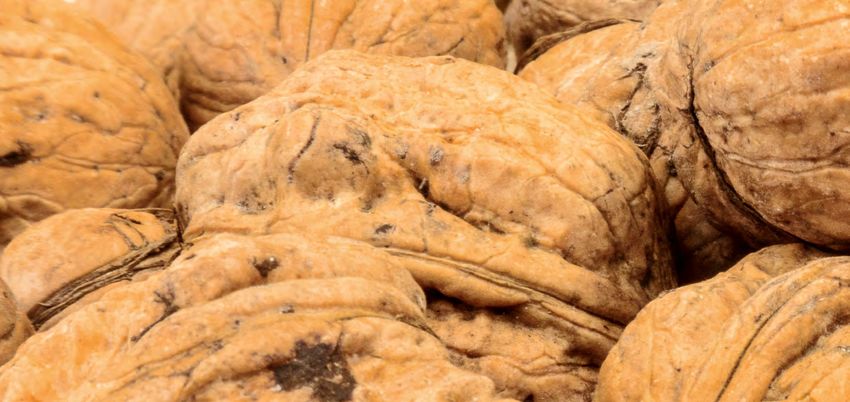
5
                                                                            2. AlpBioEco project step by step

2.3 VALIDATION OF THE BIO-BASED BUSINESS MODEL BLUEPRINTS

                                                        In the third work package, under the leadership
                                                        of the Chamber of Commerce and Industry of
                                                        Slovenia, the seven selected business model blue-
                                                        prints were validated and tested to check them
                                                        for feasibility. To do so, small and intensive group
                                                        interviews were conducted – so-called focus group
                                                        workshops.

In these focus group workshops, in-depth discussions on the business models took place: the business
models were first examined in detail and then further developed, also looking for relevant implementa-
tion hurdles, together with small and medium enterprises (SMEs), industry representatives, researchers,
marketing experts and other actors. The AlpBioEco team conducted 17 focus group workshops in 9
different regions. In addition to the focus group workshops, the AlpBioEco team visited several existing
companies that are active in similar or neighbouring businesses to discuss the implementation possi-
bilities and opportunities in bilateral meetings and to test the business model on site in the companies.
In total, 16 online and offline business visits took place in 6 different regions.

In response to the COVID-19 crisis, all AlpBioEco
workshops and other activities were completely
shifted to online formats from mid-March onwards.
The results of this practice-related work package
are presented in this Best Practice Brochure. This
entails validating the business models as well as
highlighting existing best practices. This report
builds the basis for the upcoming and final work
package, which aims at the development of policy
guidelines on how business model implemen-
tation and eco-innovation in the Alpine regions
can be supported. Furthermore, guidelines will
be developed to transfer implementation proce-
dures to other Alpine Space regions or projects.
                                                        Harvesting of the eternal flower, business visit in Krkavče,
                                                        Slovenia.

2.4 DEVELOPMENT OF POLICY GUIDELINES AND TRANSFER OF RESULTS

In August 2020, the fourth and last work package
began under the leadership of Business Upper
Austria. In this work package, the AlpBioEco team
transfers the results from the previous work into
policy learning. This will be done through the estab-
lishment of up to 12 regional advisory boards that
will support the AlpBioEco project partners in
developing regional policy guidelines. These re-
gional policy implementation guidelines will be
available at the end of 2020 for all AlpBioEco re-
gions, aiming to promote the implementation of
the selected business models in defined regions.

AlpBioEco                                                                                 Best Practice Brochure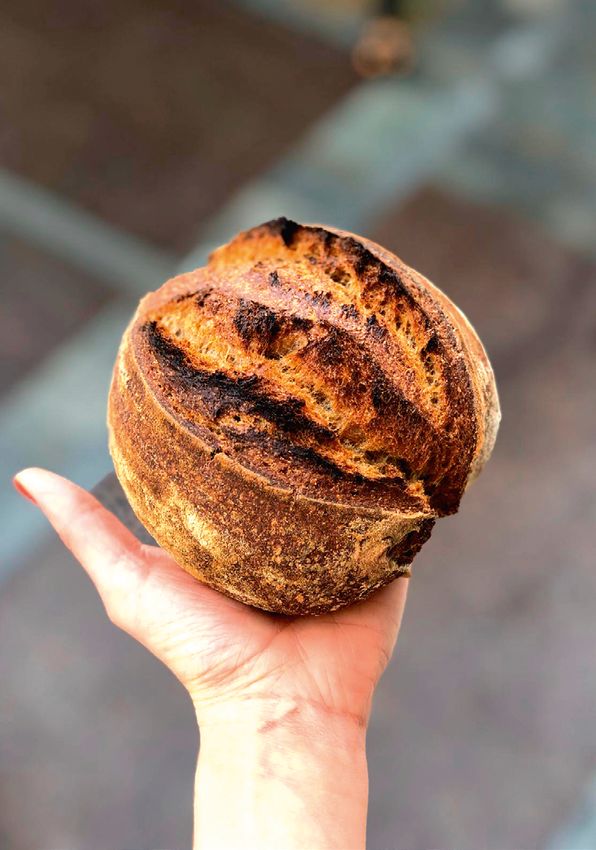
6
3. Pilot actions on eco-innovative business models

3. PILOT ACTIONS ON ECO-INNOVATIVE
BUSINESS MODELS
In this chapter, we present to you the main results of our work in our third work package and highlight
best practices. During the last seven months, the AlpBioEco project partners have worked with local
businesses and research institutions to further develop and validate seven selected business models. In
this chapter, we have now summarized the most relevant information, including information about the
product, about business and marketing opportunities, about implementation hurdles and also about
suggested next steps for all seven selected business models.

The map below shows the region and the project partner for each business model developed.

    • BM#8: Walnut Spreads                    • BM#22: Digital Service Platform                               • BM#11 and BM#20:
    • BM#17: Walnut Flips                     •P roject partner: KErn, Germany                                  Disposable Tableware &
    • Project partners:                                                                                         Biodegradable Packaging
       BUND and SIG, Germany                                                                                  • Project partner:
                                                                                                                 Biz-Up, Austria

                                   GRAND                                                                                   NIEDER-
                                   EST                                                                                   ÖSTERREICH
                                                                         SCHWABEN                    OBER-
                                                            TÜBINGEN                               ÖSTERREICH                   WIEN
                                           FREIBURG                             OBERBAYERN

                 BOURGOGNE-           NW-SCHWEIZ
                                                                                                                                       BURGENLAND
                                                   ZÜRICH                                                          STEIERMARK
                 FRANCHE-                                          VORARLBERG                  SALZBURG
                                                            LIECHTEN-                TIROL
                 COMTÉ          ESPACE       ZENTRAL-
                              MITTELLAND     SCHWEIZ        STEIN
                                                            OSTSCHWEIZ
                                                                                                         KÄRNTEN
                                                                                    BOLZANO
                                                   TICINO                                      FRIULI
                                  RÉGION
                                LÉMANIQUE
                                                                                               VENEZIA        SLOVENIJA
                                                                             TRENTO            GIULIA
                                VALLE
         AUVERGNE-             D´AOSTE                      LOMBARDIA                 VENETO
         RHÔNE-ALPES

                                  PIEMONTE
                                                                                                                       • BM#26:
                                               LIGURIA                                                                    Gluten-Free
                                                                                                                          Apple Flour
         PROVENCE-ALPES-                                                                                               •P  roject partner:
         CÔTE D´AZUR                                                                                                      BC Naklo,
                                                                                                                          Slovenia

                                      • BM#21: Revegetation
                                         with Alpine Hay Seeds                                     • BM#2: Herbal Pacifier
                                      • Project partner:                                          • Project partner:
                                         RIW, Austria                                                 GZS, Slovenia

                                                                                                                      • BM#22: Digital Service
• BM#26: Gluten-Free Apple Flour                                   • BM#2: Herbal Pacifier                               Platform
• Project partners:                                               • Project partner:                                • Project partner:
   ITKAM and Envipark, Italy                                          ITKAM, Italy                                       BC Naklo, Slovenia

Friends of the Earth Germany, Regional Association Bodensee-Oberschwaben / Bund für Umwelt und Naturschutz,
Regionalverband Bodensee-Oberschwaben = BUND; City of Sigmaringen = SIG; Competence Center for Nutrition Bavaria /
Kompetenzzentrum für Ernährung Bayern = KErn; Business Upper Austria = Biz-Up; Italian Chamber of Commerce for
Germany = ITKAM; Regio Im Walgau = RIW; Chamber of Commerce and Industry of Slovenia – Chamber of Agricultural
and Food Enterprises (CCIS - CAFE) = GZS; Biotechnical Center Naklo = BC Naklo

AlpBioEco                                                                                                      Best Practice Brochure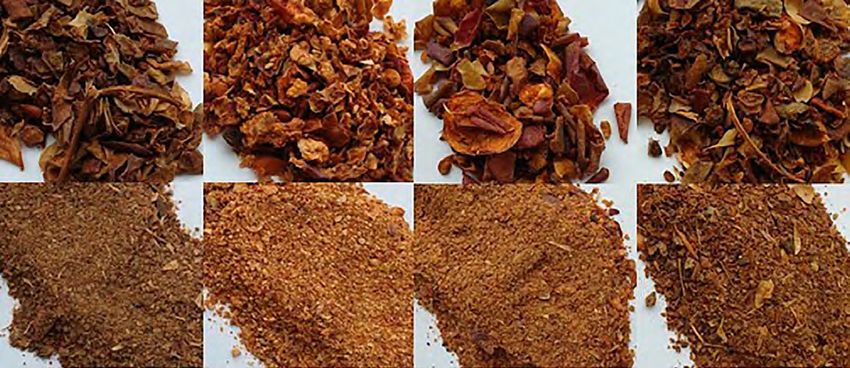
3.1
Apple
business
models
8
3.1 Apple business models

BM #26: GLUTEN-FREE APPLE FLOUR

PRODUCT DESCRIPTION

Apple flour is gluten-free and can be used either
for human nutrition or for natural cosmetics. Basi-
cally, there are two ways that apple flour can be
produced: One way is to process apples directly
into apple flour, and the second is to process fine-
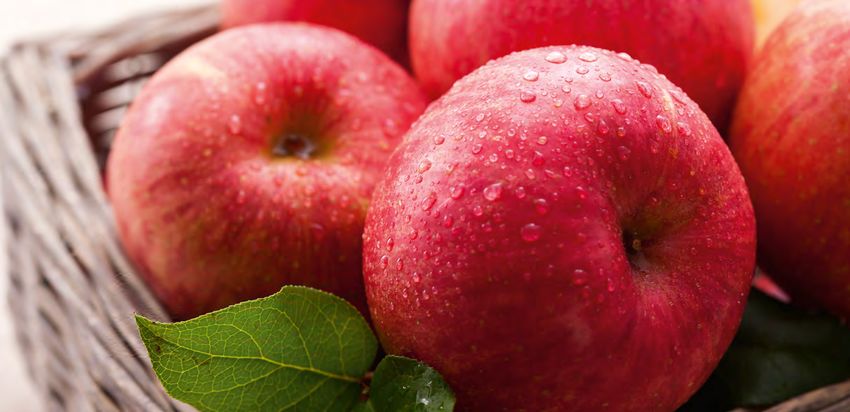
ly milled, dried apple pomace. Apple pomace is a
by-product of apple juice production and is com-
posed of apple pulp residues, peels and seeds.
Apple pomace is often considered as waste, but
it still contains a high amount of nutrients, which
makes apple pomace interesting and valuable for
human nutrition and skin care.                          Apple flour bread sample, business visit in Barge, Italy.

ITALY

In the project, apple flour was produced by using apple pomace originating from ancient organic vari-
eties of Italian apples. These ancient varieties are more resistant to parasites and contribute to local
biodiversity. No chemical substances have been used at any stage in the production process. The apple
flour produced still contains high quantities of sugars, fibres, pectin and different antioxidants with anti-
radical activities. Given these characteristics, it is possible to produce an apple paste by rehydrating and
homogenising the flour, thus obtaining a more water-soluble product. In the project, apple flour was used
in different bakery products (sponge cake, bread, shortbread cookies and cereal bars). Moreover, the apple
paste served as a functional ingredient for the realisation of three cosmetic products: face cream, micellar
water and shower gel. This cosmetics line is 100% organic, rich in natural antioxidants and sustainable.

BUSINESS AND MARKETING OPPORTUNITIES

In the Piedmont Region, more than 4 thousand companies annually produce 230,000 tons of apple;
the total Italian apple production amounts to 2.2 Mio tons per year available for further processing. Of
this volume, about 2.3 - 2.5% (50,600 – 55,000 tons) are side streams – residues from primary and secon-
dary production, mainly apple pomace. The possibilities to use and further process these quantities
of apple pomace could lead to an increase in the profitability of the companies by diversifying the
incomes. Especially interesting is further processing into ingredients for the food industry, in particular
for the gluten-free sector. Moreover, apple flour could be also used for production of functional and
nutraceutical foods. Additionally, the chemical characteristics of apple flour make it interesting for
applications in the cosmetic sector due to its high content of different types of antioxidants. It even
serves as a major ingredient for different types of cosmetic formulas.
In both application cases, the market penetration of apple flour should be strictly correlated to the
concept of territoriality and sustainability, by using an effective storytelling approach.

IMPLEMENTATION HURDLES

For successful production, a dedicated logistical process needs to be set up in order to further process
apple pomace into apple flour immediately after the production of apple pomace or to ensure imme-
diate refrigerated storage in case of post-production. This is especially important, as the food indus-
try and cosmetic companies require products with high levels of standardisation in terms of chemical
characteristics as well as taste, texture etc. Thus, the entire production process needs to consider these
requests from all points of view (logistic, quality assurance, etc.), which is difficult due to the different
origins of the apple pomace and the different varieties included in the apple pomace.
As apple flour is not water-soluble, its use in the cosmetic sector is difficult. As an alternative, apple
paste can be used. It is water soluble and suitable for all cosmetic categories but is produced at higher
costs. Apple paste production requires more processing and the use of more technologies.

AlpBioEco                                                                                 Best Practice Brochure
9
                                                                                                3.1 Apple business models

SUGGESTIONS FOR THE NEXT STEPS

The next steps for the implementation of the apple
flour business model are related to the differ-
ent market opportunities. In the case of the food
sector, food design has to be completed with fur-
ther development of recipes as well as laboratory
analysis and sensory studies. In addition, a more
detailed analysis of market trends and opportu-
nities to enter niche markets (like organic and
gluten-free) still has to be done.
In the case of the cosmetic sector, further pro-
duct development and quality management are
also necessary. Policy requirements also have to
be addressed: firstly, apple paste should be regis-
tered with the International Cosmetic Ingredient      AlpBioEco plantable seed postcard and apple paste.
Nomenclature Committee (INCI), which provides
the systematic name for the identification of a cosmetic ingredient. Then, apple paste should receive
the declaration of safety and approval for use according to the relative directives. Moreover, a complete
formula design for the cosmetic line is needed, together with the developing of a solid cosmetics brand-
ing strategy.

PROCESS AND MILESTONES

     NOVEMBER               JANUARY              FEBRUARY             MARCH                APRIL                JUNE
     2019                   2020                 2020                 2020                 2020                 2020
    •b
      usiness model       •c
                             ollaboration      • technical focus   •d
                                                                       evelopment        • production of       roduction of
                                                                                                               •p
     development            with project           group workshop     and production        food products       cosmetic
                            partners working       for implemen-      of apple flour        with apple flour    products with
    • contact with         on the business        tation of apple    prototypes                                apple flour
      Azienda Agricola      model                  flour
       Magnarosa                                                     • analysis of the
       interested in the   • Conducting                                apple flour
       implementation         preliminary-
                              research for
                              the focus group
                              workshop

i
        ADDITIONAL INFORMATION AND CONTACTS
        You can find additional information about the gluten-free apple flour business model –› here.

        If you want to get more information about this business model or on our related research
        activities, you can contact the following AlpBioEco project partners from Italy:
        –› Envipark, Barbara La Licata:
            barbara.lalicata@envipark.com | www.envipark.com
        –› Italian Chamber of Commerce for Germany, ITKAM, Sonia Barani:
            SBarani@itkam.org | www.itkam.org

        For the development of this business model, we have worked with the following company
        from Italy:
        –› Azienda Agricola Magnarosa:
            info@magnarosa.com | www.magnarosa.com

AlpBioEco                                                                                           Best Practice Brochure
10
3.1 Apple business models

SLOVENIA

In Slovenia, apple flour is relatively new on the
market, but it is considered as a product with a
high potential, as it can be used in gluten-free
food production. Production and use were dis-
cussed during a focus group workshop with experts
from Slovenia. Later, the apple flour was tested in
gluten-free pastry production and its parameters
evaluated.

                                                       Gluten-free pastries made with apple flour at BC Naklo,
                                                       Slovenia.

BUSINESS AND MARKETING OPPORTUNITIES

Business and marketing opportunities were              represented by the product. In kitchens of public
discussed according to the customer segments,          institutions that are tied to public procurement,
such as end consumers and users using apple            a different approach is needed in terms of green
flour as an additive to the final product. In the      public procurement. The consumer market has
case of end consumers, the material and design         increased interest in zero waste and circular eco-
of the packaging must be such as to inform the         nomy food production. A product such as apple
customer that it is a natural product and that         flour being based primarily on leftover material
this product represents the specific values mentio-    and offering a gluten-free alternative to tradi-
ned above. Among bakers, confectioners, innkeep-       tional flour offers excellent opportunities for suc-
ers and restaurant managers, it is necessary to        cessful marketing positioning.
find those who share similar values as those

IMPLEMENTATION HURDLES

First of all, it is still unclear how large the market for apple flour in Slovenia is. This makes it hard to
estimate the costs and benefits. Although gluten-free products are more and more in demand on the
market, apple producers see gluten-free apple flour as a niche product with strong competition on the
market. In addition, apple flour production from apple pomace has many technical and investment-
related hurdles. To process the apple pomace, special machinery is needed. As many businesses don’t
yet own such a machine, investments into equipment would be needed. Also, the logistics of the apple
flour tend to be demanding in terms of storage conditions and packaging material.

SUGGESTIONS FOR THE NEXT STEPS

Connecting apple growers with food processing companies and product development and testing
are two important next steps, including aspects of quality, taste and standardisation. In addition, rai-
sing the awareness of consumers, promoting and educating them about bio-based food products,
the development and implementation of marketing activities and gaining support and funding from
government institutions are crucial for the implementation of the business model.
In Slovenia, the conditions for mass production of gluten-free apple flour and international marketing
are currently limited due to a lack of appropriate technical equipment in the food industry to produce
such products. Thus, it is necessary to develop a product that targets certain groups of early adopting
customers and consumers who value the special advantages of the product, such as sustainability,
regionality and circularity.

AlpBioEco                                                                              Best Practice Brochure
11
3.1 Apple business models
PROCESS AND MILESTONES
MARCH APRIL MAY JUNE JULY
2020 2020 2020 2020 2020
•c
ollaboration with • planning of • f ocus group •o
nline business • f ocus group
project partners the focus group workshop with visit an apple workshop for
working on the workshop experts from producer experimenting
business model Slovenia on the with gluten-free
topic of apple pastry recipes
• conducting production and and carrying out
preliminary- food processing the evaluation
research for
the focus group
workshop
i
ADDITIONAL INFORMATION AND CONTACTS
You can find additional information about the gluten-free apple flour business model –› here.
If you want to get more information about this business model or on our related research
activities, you can contact the following AlpBioEco project partner from Slovenia:
–› Biotechnical Center Naklo, | www.bc-naklo.si
Mihela Špelko (project coordinator, food technology and nutrition expert):
mihela.spelko@bc-naklo.si
Nuša Levičnik (project office manager):
nusa.levicnik@bc-naklo.si
AlpBioEco Best Practice Brochure12
3.1 Apple business models
BM #11/20: DISPOSABLE TABLEWARE AND BIODEGRADABLE PACKAGING
PRODUCT DESCRIPTION
Bio-based and bio-degradable packaging based
on apple pomace is a highly promising alterna-
tive to existing conventional plastic products in
order to reduce environmental pollution caused
by plastic waste. Its relevance will become even
greater when single-use plastic products will be
forbidden due to EU legislation by 2021. Dispos-
able tableware and bio-degradable packaging
made from apple pomace is likely to be accepted
by consumers due to their increased awareness
of this topic and their increasing need for better
alternatives to conventional plastic.
Biodegradable straws made of apple pomace.
AUSTRIA
For the project, we collaborated with a research centre for scientific analysis of apple pomace. The aim
was to gain deeper knowledge about the raw material, e.g. whether and how different varieties of apple
pomace require different production parameters, and which raw material is more or less promising
for further research in this field of application. Four different samples were analysed. To compare the
different samples, they were all subjected to the same procedure. The same solvents, temperature
and duration were used for the extractions. The results of the analysis show that that the drying
process of the apple pomace has an influence on the composition of the ingredients and nutrients.
This is an important aspect, because apple pomace containing a high amount of important nutrients
should not be used for packaging. Instead, it could preferably be used for further processing into
products for human consumption or as animal feed, since the high content of e.g. sugar and protein is
also beneficial to animals.
BUSINESS AND MARKETING OPPORTUNITIES
A large amount of apple pomace is currently used for animal feed. For apple juice producers, selling
apple pomace to packaging companies (which produce and/or sell the disposable tableware and
biodegradable packaging) would be an attractive opportunity to increase the valorisation of their
by-product. The first choice for the marketing of disposable tableware and packaging products would
be business to business – “B2B”. For example, standardised products and single-use dishes can be sold
and distributed via gastronomy suppliers and via wholesalers. A second promising opportunity would
be B2B marketing through cooperation with food producing companies, which are in need of more
sustainable, alternative packaging materials. For example, a great opportunity lies in the replacement
of conventional plastic yoghurt cups. In general, biodegradable packaging is perceived as a possibility
to stand out from the competition, as it offers a unique selling point on the market, which can in turn
have a positive effect on the companies.
IMPLEMENTATION HURDLES
Since packaging and tableware made from apple pomace are new products, there are many uncer-
tainties that still need clarification. Firstly, the amount of packaging material that can be produced
from regional raw material is limited depending on the availability of raw material in the region, which
again might vary from season to season. Importing the necessary volumes of raw material appears
AlpBioEco Best Practice Brochure13
3.1 Apple business models
not to be desirable, because it would mean losing the economic effects on the region. Secondly,
developing the product in such a way that it meets all hygiene and food technology requirements (e.g.
shelf life of the food, no residues, e.g. from pesticides, in the produced packaging) represents another
hurdle. A major challenge is that apple pomace is normally not obtained from a single variety of apples
but from an unknown mixture. Consequently, there is a broad range in the quality levels and materials
characteristics, which is likely to result in varying quality of the final packaging/tableware products.
Furthermore, the different treatments such as drying of the raw material can also make it difficult to
produce packaging with the same hygiene and food technology properties. Thirdly, it is important
to distinguish between different types of raw materials in order to ensure sustainability: some raw
materials still contain a lot of high-quality nutrients. In this case, the processing needs to be set up to
ensure that nutrient rich apple pomace remains usable for human consumption or as animal feed.
Another technical implementation hurdle is the compatibility with existing machinery: are the new
packaging materials compatible with existing machinery? Producers will be asking for assurance that
the alternative material will also work with their equipment. Otherwise, the companies would have to
develop or buy new, costly machines, which would be big obstacle for implementation. Additionally,
bio-degradable packaging has to withstand conventional solutions from an economic point of view.
If they do not offer similar margins and features, it will be difficult to make companies enthusiastic
about the product.
Apple pomace samples, Austria.
SUGGESTIONS FOR THE NEXT STEPS
As a first step, market research on the availability of raw materials is needed to find out how much raw
material is available and how much packaging/tableware could be produced from that raw material.
As a second step, more interested companies need to be identified and connected: companies that
provide the raw material, a research centre or research company with relevant expertise, a packaging
company that wants to work on the development of the product and a machine manufacturer, if
needed. In addition, a further laboratory analysis of the raw material is needed (e.g. hygienic testing
of the packaging material, testing machinery, shelf life of food products packaged in biodegradable
packaging) as well as comprehensive product development to find the most suitable raw material.
Based on the results, the financial resources need to be calculated in detail, including the price of the
raw material, certification costs and costs for logistics/marketing. In addition, it is useful to look for
investors and sponsors for the development of biodegradable packaging.
AlpBioEco Best Practice Brochure14
3.1 Apple business models
PROCESS AND MILESTONES
MARCH APRIL MAY JUNE JULY
2020 2020 2020 2020 2020
• conducting • focus group • s tart of raw • conduction •p
resentation
preliminary- workshop material analysis of several of results of
research for with German business visits raw material
cooperation speaking • bilateral analysis
and focus experts exchanges with • analysis of
group workshop experts raw material
i
ADDITIONAL INFORMATION AND CONTACTS
You can find additional information about the disposable tableware and biodegradable
packaging business model –› here.
If you want to get more information about this business model or on our related research
activities, you can contact the following AlpBioEco project partner from Austria:
–› B
usiness Upper Austria, Heidrun Hochreiter:
heidrun.hochreiter@biz-up.at | www.biz-up.at | www.lebensmittel-cluster.at
For the development of this business model, we have worked with the following organisation
from Austria:
–› U
niversity of Applied Sciences Upper Austria, FH OÖ Forschungs- und Entwicklungs GmbH,
DIin Dr.in Bettina Schwarzinger:
research@fh-ooe.at | forschung.fh-ooe.at/en/
AlpBioEco Best Practice Brochure3.2 Walnut business models
16
3.2
Walnut
business
models
BM #17: WALNUT SPREADS
PRODUCT DESCRIPTION
Walnut spread is a high quality, vegetarian spread
with healthy and regional ingredients. The spread
is made with walnut press cake (the residue from
the walnut oil production) from regional oil mills
that process regional walnuts. Therefore, it con-
tributes to the cultivation of walnut trees in the
region and regional consumption. The walnut
spread tastes great with bread but also goes well
with grilled vegetables or pasta. The flavours can
vary and range from sweet to savoury.
Walnut spreads, focus group workshop in Bodnegg, Germany.
GERMANY
In the project, we produced several walnut spreads with up to 20% share of walnut press cake. The
flavours are tomato-walnut, paprika-walnut, mint-walnut and chocolate-walnut-cinnamon, with vary-
ing shelf-lives. Some of the spreads were produced as fresh products with a comparably short shelf-life
of max. 2 weeks, and some spreads have been conserved with pasteurisation.
BUSINESS AND MARKETING OPPORTUNITIES
Producing and selling regional walnut spreads is cracking. Of those 5 tons, a total of 2.5 to 3 tons
an interesting opportunity for oil mills to make of oil can be produced. This means that 2 to 2.5
their regional walnut oil production more prof- tons of walnut press cake are available for further
itable. In addition, the production and selling of processing, e.g. as spreads. If one produces 300g
walnut spreads is also interesting for catering- glasses of spreads with each containing approx.
services or spread/pesto producers as well as 20% walnut press cake, this would amount to 4,166
walnut farmers (selling only). Many plant-based, glasses of walnut spread. The regional selling of
often vegetarian spreads are already available on walnut spreads on the conventional food retail
the German market. As this market continues to market (e.g. REWE, EDEKA) would be problematic
grow, walnut spreads offer a promising market due to the low production volumes. Likewise, it
potential. Yet, given its characteristic walnut taste would be difficult to get into the product portfo-
and, most importantly, its content of nut aller- lio as a “newcomer” with only one product. Thus,
gens, walnut spread is not suitable for everyone. direct selling e.g. in small shops or directly to cater-
To place the product on the market, the aspect ing firms seems more appropriate. To market
of regionality needs to be considered: in the area the spreads, an effective “storytelling” approach
of Ravensburg-Oberschwaben, a market study is required that highlights the regional, circular
in 2018 counted a total of 93 tree owners with and health aspects as well as the preservation
355 trees that produce 20 tons of fresh walnuts of regional walnut trees. A relation to the Alpine
available for regional marketing. After drying, 10 area could also be an idea to market the product,
tons of dried walnuts remain and only 5 tons after especially to tourists.
AlpBioEco Best Practice Brochure17
3.2 Walnut business models
IMPLEMENTATION HURDLES
There are several technical, logistical and legal aspects making the implementation of the business
model difficult. Firstly, processing walnuts is costly due to the lack of adequate sorting machinery. Most
frequently, the walnuts are sorted manually after cracking. This makes regional walnut products labour
intensive and expensive. Furthermore, there is also the risk that there are still parts of the wooden shell
in the cracked nut kernels. Secondly, in Southern Germany, many oil mills often do contract manufac-
turing for private persons. They are provided with the already cracked walnuts to produce oil, and then
they are “allowed” to keep the walnut press cake. This walnut press cake consists of many different
varieties with different tastes. In addition, the storage of the nuts also varies. This has two major conse-
quences: firstly, it makes it difficult to work with only one standard recipe for the spreads, as the taste of
the walnut spread can change from batch to batch.
Secondly, it also increases the need for a quality management system for good taste and for food safety,
e.g. to minimise the risk of processing rancid or moulding walnut press cake that was not stored well.
Not knowing how the nuts were stored before the processing comes with a risk. Thirdly, the amount of
available walnuts varies from season to season. Finally, these reasons make it almost impossible to get
one of the desired certifications of an organic product. In addition to these hurdles, strict food decla-
ration laws that need to be followed are difficult to be met by smaller businesses. For businesses that
don’t yet own machinery to process the press cake into walnut “flower” and finally spreads, the invest-
ment costs might be a considerable implementation hurdle.
SUGGESTIONS FOR THE NEXT STEPS
The existing networks of walnut farmers or walnut tree owners need to be opened-up. Further market
research is needed on the availability, walnut varieties and seasonal availability of the regional walnuts
and walnut press cake. This is necessary in order to find out about the availabilities and material costs
for production. Based on that, the opportunities for walnut cooperatives need to be explored. A full cost
calculation will be needed, including costs for all processes and activities, including logistics, adminis-
tration and marketing. This would be done by the interested business, to take into consideration the
specifications of the operator: this could for instance either be an oil mill a service provider, a catering
service or a cooperative. Also, the possibility to certify the walnuts as organic walnuts from different
farms needs to be explored. Lastly, further development of the recipes and production is needed to
create spreads with a long-enough shelf life, good taste and high quality. To do this, laboratory analyses
are required. When using press cake from varying actors, a good quality management protocol needs
to be developed and set up for ensuring good storage of the walnuts before processing.
PROCESS AND MILESTONES
JANUARY FEBRUARY APRIL MAY JUNE
2020 2020 2020 2020 2020
•p
resentation of • f ocus group •c
reation of the • bilateral exchange • business visit
project idea at workshop with oil mill map with businesses
nature conser- German speaking •b
usiness
vation days at experts • business •b
usiness visits experiments
Lake Constance experiments via phone calls with walnut
•p
resentation with walnut presscake
• collaboration with of business presscake • business
project partners model idea at experiments
working on the International • business visits with walnut
business model Fair „Fruchtwelt via phone calls presscake
Bodensee“ • product
prototyping
AlpBioEco Best Practice Brochure18
3.2 Walnut business models
i
ADDITIONAL INFORMATION AND CONTACTS
You can find additional information about the walnut spreads business model –› here.
If you want to get more information about this business model or on our related research
activities, you can contact the following AlpBioEco project partners from Germany:
–› F
riends of the Earth Germany, Regional Association Bodensee-Oberschwaben / Bund für
Umwelt und Naturschutz, Regionalverband Bodensee-Oberschwaben, BUND, Ulfried Miller:
ulfried.miller@bund.net | www.bund-bodensee-oberschwaben.net
–› C
ity of Sigmaringen, Anna Bäuerle:
alpbioeco@sigmaringen.de | www.sigmaringen.de
For the development of this business model, we have worked with the following companies
from Germany:
–› F eines aus dem Hegau Delikat essen, Markus Bruderhofer:
info@feines-aus-dem-hegau.de | www.feines-aus-dem-hegau.de
–› F ruchtbares von lebendigen Böden, Angela Abler-Heilig:
info@fruchtbares.de | www.fruchtbares.de
–› I nntalnuss, Korbinian Heiß:
info@inntalnuss.de | www.inntalnuss.de
AlpBioEco Best Practice Brochure19
3.2 Walnut business models
BM# 08: WALNUT FLIPS
PRODUCT DESCRIPTION
Walnut flips are puffed snacks or puffed addi-
tives for cereals or energy bars made mostly from
starch, e.g. potato, wheat or corn, and walnut
press cake. The flips can vary in size and form: as
small pellets, they can be part of breakfast cereals.
As larger flips, similar to the well-known peanut
flips, the walnut flips could be a snack to be served
with an aperitif, at business events or back home
as a healthier, more regional alternative to potato
crisps.
Walnut flips can be produced in two ways. One
option is to use already made starch extrudates
that are subsequently coated with oil, spices and
walnut press cake. The second option is to include
walnut press cake in the extrudate mass and
then process the mass into puffed extrudates, so
that the starch extrudate also contains walnut
press cake. For smaller businesses, the first option
appears to be more attractive, as it requires less
product development, less technological know-
how and smaller investments into production
facilities. The following business and marketing
opportunities therefore only refer to the coated
version.
Walnut flips prototypes, tasting in Ravensburg, Germany.
GERMANY
In the project, we produced several types of walnut flips with different starches, oils and flavours: As a
base, we used extrudates made from oats (pellets and pillows) and millet. By coating these three extru-
date types with different spices, oils and amounts of walnut press cake, we produced over twelve varie-
ties in two stages, such as walnut-chili, walnut-paprika, walnut-herbs or also walnut-vanilla-cinnamon.
The favourite savoury flips were made with walnut oil, walnut press cake, paprika and salt. The favourite
sweet version was made with walnut oil, walnut press cake, sugar and cinnamon and was preferred as
a muesli additive.
BUSINESS AND MARKETING OPPORTUNITIES
There is considerable interest from regional retailers, walnut farmers and oil mill owners in the business
model for the reason that it represents an innovative product that is not yet available on the market
and could add additional value to walnut oil production. It offers a possibility for oil mills to process wal-
nut press cake, which is often used as animal feed or even thrown away. For the retailers, it appears to
be an interesting regional and healthier substitute for conventional peanut flips. Yet, the business and
marketing opportunities for walnut flips still require some research, since no detailed market study
has taken place. The flips can be produced and sold directly by oil mills. In addition, the production
and selling of walnut flips could also be interesting for existing snack or cereal producers – they have
relevant knowledge and necessary technological equipment – or a service provider. If further allergens
can be avoided (e.g. using potato starch instead of wheat to make it gluten-free) and regionality and
health aspects are considered, the flips could be interesting for people who care about a healthy diet
and regional products. However, both for the spreads and for the flips the aspect of regionality makes
AlpBioEco Best Practice Brochure20
3.2 Walnut business models
the production, market placement and development of a suitable marketing strategy of regional flips
difficult. Selling walnut flips regionally on the conventional food retail market (e.g. REWE, EDEKA) is
hardly possible due to low production volumes, open issues of certification and seasonality aspects.
Direct selling thus appears to be the preferable option. A successful marketing strategy needs good
“storytelling” to highlight the regional origin, the health-related features and the ecological aspect
of preserving the old cultural heritage of regional walnut trees. One strategic option to achieve this
could be regional cooperatives of walnut farmers. The raw materials required for the coating are oil
and by-products of oil extraction, which makes the snack more sustainable than existing, comparable
products. In addition, business relationships are to be established that will make it possible to bring
the walnut flips to the end consumer on a larger scale. Conceivable here are (walnut-)farm-shops,
farmers-markets, regional retailers, supermarkets, drugstores, cinemas, schools, universities, cafeterias
or catering services and similar companies.
IMPLEMENTATION HURDLES
The lack of a detailed market study is the first hurdle. To date, it is not clear whether and under which
circumstances this product would be successful on the market. In addition, to implement this business
model, investments into product development, expertise and equipment are needed. Likewise, the
available product prototypes need further improvement regarding food design. To produce walnut flips,
a mill or a cutter is needed to mill the walnut press cake. In addition, a coating machine and a packaging
machine are needed. Like any other natural raw materials, the quality variations in the processed walnut
press cake represent another challenge. Many oil mills process walnuts from different owners, not
knowing about the varieties or the previous treatment of the walnuts. This increases the need for sound
quality management and flexibility in the production. Given that the taste and composition of the press
cake could significantly vary across different batches, quality management and reproducing a steadily
similar taste are difficult. In addition, the product itself might be sensitive in terms of distribution and
shelf life due to the fats it still contains after processing.
SUGGESTIONS FOR THE NEXT STEPS
As a first step, profound market research on raw materials, competition and market demand is needed
to figure out which walnut flip product seems more promising: cereal pellets or flips (as a crisps substi-
tute and healthy snack). At the same time, further research on the product and product development is
necessary to ensure a good taste and longer shelf-life. In any case, oil mills play a central role. Based on
this information, a cost-benefit analysis could be done to check the economic benefits for the walnut
oil mills.
PROCESS AND MILESTONES
JANUARY FEBRUARY APRIL MAY
2020 2020 2020 2020
•p
resentation of • focus group workshop • product prototyping • bilateral exchange
project idea at nature with selected by the company with businesses
conservation days at stakeholders and experts Sinne & Sensorik, on product
Lake Constance Cornelia Ptach
• presentation of • bilateral exchange
• collaboration with project business model idea • tasting of 12 different with research
partners working on the at International Fair coatings institutions on the
business model „Fruchtwelt Bodensee“ possibilities to
• bilateral exchange produce extrudates
• conducting preliminary- with coating companies
research for the focus on the possibilities
group workshop to produce extrudates
AlpBioEco Best Practice Brochure21
3.2 Walnut business models
i
ADDITIONAL INFORMATION AND CONTACTS
You can find additional information about the walnut flips business model –› here.
If you want to get more information about this business model or on our related research
activities, you can contact the following AlpBioEco project partners from Germany:
–› Friends of the Earth Germany, Regional Association Bodensee-Oberschwaben / Bund für
Umwelt und Naturschutz, Regionalverband Bodensee-Oberschwaben, BUND, Ulfried Miller:
ulfried.miller@bund.net | www.bund-bodensee-oberschwaben.net
–› City of Sigmaringen, Anna Bäuerle:
alpbioeco@sigmaringen.de | www.sigmaringen.de
For the development of this business model, we have worked with the following company
from Germany:
–› Sinne & Sensorik, Cornelia Ptach:
cornelia@ptach.de | www.ptach.de
AlpBioEco Best Practice Brochure3.3 Herbs business models
23
3.3
Herbs
business
models
BM #02: HERBAL PACIFIER
PRODUCT DESCRIPTION
The implementation of this business model is
about the production of a herbal pacifier made of
organic rubber. The dummy contains vessels with
Alpine herbal fluids and can be used to treat the
most common disorders of early childhood (toot-
hache, colic, insomnia, skin diseases, etc.). The
herbal pacifier can be divided into two different
products, which can be purchased together or
separately: a dummy made of organic and eco-
sustainable materials and vessels containing
herbal fluids. Once the therapy is finished, the
vessels can be returned to the point of sale
through a returnable vacuum system inspired by
the “Pfand”-system of German-speaking countries. Herbal pacifiers may help provide better pain relief for many
children.
ITALY
During the validation and implementation phase, the interest of the target group in the product and
we collaborated with Christoph Kirchler, an expert to find out which early childhood ailments are the
in the Alpine herb value chain that is interested most difficult to treat, ITKAM carried out a market
in the development of innovative products to foster analysis involving both parents and experts who
local small-scale economies. Since the herbal paci- accompany the parent in early childhood: paedia-
fier can potentially be used to treat a variety of tricians, midwives and pharmacists. The results are
disorders, we first needed to select a health claim available on the project website.
to focus on for the pilot project. In order to gauge
BUSINESS AND MARKETING OPPORTUNITIES
The herbal pacifier can be used to treat a variety of early childhood ailments, including insomnia, tooth-
ache, colic, cough, etc. Potential customers are parents that buy the product for their babies. In particular,
the typical consumer is a medium-to-high income parent that is environmentally aware and accus-
tomed to buying biological and organic products. Paediatricians and midwives also play an important
role, as they often advise parents on products to buy for early childhood.
The herbal pacifier is a totally innovative product: if traditionally dummies are a comfort device for
babies, in this case it is used to treat pain in a totally natural way using herbs as raw material. This pro-
duct is regionally replicable and enables promoting small-scale economies: for pacifiers sold in South
Tyrol, Alpine herbs can be used, for pacifiers sold in France, Provencal herbs, and likewise for other
regions. The herbal pacifier can be sold as a botanical product in organic shops and supermarkets,
pharmacies and herbalist shops, both online and offline.
IMPLEMENTATION HURDLES
The realisation of this product has some technical criticalities that need to be addressed. A first critical
point concerns the form in which the herbs will be administered to the child: among the options
still under consideration are hydrolysates and aromas. Being a product intended for infants, it will be
necessary to carry out the appropriate toxicological analysis, once the prototype is ready. A second
AlpBioEco Best Practice Brochure24
3.3 Herbs business models
critical point concerns the taste of the fluids administered: as the herbs naturally have a bitter taste,
there is a risk that the child will reject the pacifier. This problem can be solved with the use of natural
sweeteners such as cyclodextrins or manuka honey. Furthermore, as there is no quality protocol for the
cultivation of Alpine herbs in South Tyrol, these herbs cannot be sold in pharmacies as medicinal herbs.
The product will belong to the category of botanicals, not medical devices. As it is an innovative product,
it is not possible to determine in advance the interest of the target group (parents) in the product.
SUGGESTIONS FOR THE NEXT STEPS
Once the results of the market analysis are available, the herbs to be used in the trial recipe need to be
selected, and the first tests need to be carried out in order to determine the most suitable form in which
the herbs will be administered. Appropriate toxicological tests will also have to be carried out. Several
South Tyrolean Alpine herb producers have declared their interest in collaborating in the implemen-
tation of the business model. At this point, it is necessary to form a partnership with a local bio-rubber
producer. This material will be used to produce the dummy. Afterwards, a cost-benefit analysis must be
done to calculate the optimal product price. Partnerships with local points of sales are also needed in
order to put in place the returnable vacuum system. Eventually, due to the very innovative character
of the product, a marketing campaign is necessary to arouse the interest of the target group in the
product.
PROCESS AND MILESTONES
JANUARY FEBRUARY MARCH – MAY JUNE – AUGUST
2020 2020 APRIL 2020 JULY 2020
2020 2020
• collaboration •c
ontact with • organisation • online business •m
arket • end of market
with project the company of focus group visit at the research research
partners working Ecopassion, workshops company
on the business interested in with selected Ecopassion • presentation
model the business experts and discussion
model of the market
• conducting implementation research‘s
preliminary- results
research for
the focus group
workshop
i
ADDITIONAL INFORMATION AND CONTACTS
You can find additional information about the herbal pacifier business model –› here.
If you want to get more information about this business model or on our related research
activities, you can contact the following AlpBioEco project partner from Italy:
–› Italian Chamber of Commerce for Germany, ITKAM, Sonia Barani:
sbarani@itkam.org | www.itkam.org
For the development of this business model, we have worked with the following company
from Italy:
–› Azienda Ecopassion:
www.ecopassion.com
AlpBioEco Best Practice Brochure25
3.3 Herbs business models
SLOVENIA
Alternative medicine for treating skin diseases has
been in the focus of the herbal pacifier in Slovenia.
Due to difficulties with clinical testing and needed
research about the herbal pacifier as a vessel for
essential oils and hydrosols, the focus in Slovenia
was on the choice and product development of
the fluid products, such as herbal essential oils
and hydrosols. The essential oils and hydrosols are
made of locally grown and indigenous medicinal
plants called everlasting flower (lat. Helichrysum
italicum) and lemon balm (lat. Melissa officinalis).
Hydrosols are particularly good for eliminating
skin problems, because they act on the connective
tissue of the skin and as a disinfectant and mild
antiseptic. Moreover, with its production, the typi-
cal cultural landscape of Slovenian Istra is maintai-
ned, along with the creation of new job opportu-
nities in the area.
Distillation of the eternal flower (lat. Helichrysum italicum),
business visit in Krkavče, Slovenia.
BUSINESS AND MARKETING OPPORTUNITIES
Herbal essential oils and hydrosols made of locally grown indigenous herbs have excellent business and
marketing opportunities at the local as well as national level in Slovenia, as regionality is an important
aspect for customers. At present, herbal essential oils and hydrosols are already being sold in super-
markets, specialized stores and via the internet and could additionally be sold in pharmacies and local
stores. In the long-term, the international distribution of these products could also be an interesting
business opportunity. In addition to the production and selling of the herbal fluids, setting up a small
distillation centre with a small-scale laboratory and educational content, such as demonstration units,
lectures and practical workshops, all related to herb production and herb processing, is also seen as a
great business opportunity. Eventually, the post-distillation fresh plant material can be used as compost
or as a raw material to produce pellets for heating. This highlights an exceptionally good example of
sustainable, circular use of side stream products in the herb processing industry.
IMPLEMENTATION HURDLES
The biggest implementation hurdle is clinical testing of the product, especially if it is considered as a
medical product. Usually, clinical tests are very expensive, time consuming and involve a large number
of people and therefore can hardly by financed by SMEs. In addition, well-developed marketing of the
product is seen as a hurdle. The product needs to be carefully made, as it addresses various types of
consumers, primarily mothers and children. One of the hurdles related to the herbal pacifier as well as
essential oils and hydrosols is also related to financing. Finding appropriate regional or national funding
schemes for this type of business is a major success factor.
AlpBioEco Best Practice BrochureYou can also read


