ACQUISITION PROJECT FOR 2016-2020 - A - TRCA
←
→
Page content transcription
If your browser does not render page correctly, please read the page content below
ACQUISITION PROJECT
                                                   FOR 2016-2020

A
    Greenlands Acquisition Project for 2016-2020
1.0 INTRODUCTION
TABLE OF CONTENTS
AUTHORITY RESOLUTION........................................ i 5.1 Types of Ownership........................................20
LIST OF BOXES...................................................... iii 5.1.1 Fee Simple...............................................20
LIST OF FIGURES.................................................. iii 5.1.2 Easements...............................................21
LIST OF MAPS....................................................... iii 5.1.2.1 Conservation Easements......................21
LIST OF TABLES.................................................... iii 5.1.2.2 Access Easements...............................21
EXECUTIVE SUMMARY...........................................iv 5.1.3 Covenants................................................21
5.1.4 Leases and Agreements.............................21
1 INTRODUCTION................................................... 1 5.2 Greenlands Securement Tool Box.....................21
1.1 Greenlands Securement....................................2
1.2 Public Benefits of Greenlands Securement..........2 6 PROPERTY SELECTION...................................... 23
1.2.1 Healthy Rivers and Shorelines......................5 6.1 Criteria for Greenlands Securement..................23
1.2.2 Greenspace and Biodiversity........................5 6.2 Factors for Greenlands Securement..................24
1.2.3 Sustainable Communities............................6
1.2.4 Business Excellence, a Green Economy 7 FINANCIAL STRATEGY....................................... 25
and Responsive Governance.........................7 7.1 Land Securement Costs..................................25
7.2 Land Securement Funding Sources..................25
2 CONTEXT............................................................ 8 7.2.1 Federal Government..................................26
2.1 The Living City Vision.......................................8 7.2.2 Provincial Government...............................27
2.2 The United Nations Earth Charter......................8 7.2.3 Municipal Funding Partners........................27
AUTHORITY RESOLUTION 2.3 Legislated Mandate and Purpose 7.2.3.1 City of Toronto....................................27
of Conservation Authorities...............................9 7.2.3.2 Regional Municipality of Durham...........27
7.2.3.3 Regional Municipality of Peel................28
3 SUPPORT AND DIRECTION FOR 7.2.3.4 Regional Municipality of York................28
At Meeting #8/15 of Toronto and Region Conservation Authority held on September 25, 2015 the following was GREENLANDS SECUREMENT............................. 10 7.2.3.5 T own of Mono and Township of
adopted by Resolution #A161/15. 3.1 TRCA Plans, Policies and Projects...................10 Adjala-Tosorontio.................................28
3.1.1 Building The Living City: 10-Year 7.2.4 Local Municipalities..................................28
“THAT the Greenlands Acquisition Project for 2016-2020 be approved; Strategic Plan, 2013-2022........................11 7.2.5 Non-government Organizations...................28
3.1.2 The Living City Policies for Planning and 7.2.6 Foundations, Private and
THAT the Minister of Natural Resources and Forestry be requested to approve the project pursuant to Section 24 of Development in the Watersheds Corporate Donations.................................28
the Conservation Authorities Act; of the TRCA.............................................12 7.3 Greenlands Care and Uses..............................28
3.1.2.1 Environmental Protection......................12 7.3.1 Management Agreements..........................30
THAT the project be circulated to Toronto and Region Conservation Authority (TRCA) participating municipalities as 3.1.2.2 Sustainable Near-urban Agriculture........13 7.3.2 Special Agreements and Rentals.................30
3.1.2.3 Cultural Heritage Preservation...............13 7.3.3 Conservation Parks...................................30
the basis for funding and land securement opportunities;
3.1.3 Integrated Restoration Prioritization 7.3.4 Education Field Centres.............................30
Framework...............................................14 7.3.5 Limited Interest Acquisitions......................30
THAT the project be circulated to the Credit Valley, Central Lake Ontario and Lake Simcoe Region conservation
3.2 Drinking Water Source Protection....................14 7.3.6 Other TRCA Lands....................................30
authorities, Nature Conservancy of Canada and Oak Ridges Moraine Land Trust and other relevant organizations for
3.3 Provincial Land Use Plans and Policies.............16 7.4 Conservation Land Care Costs.........................30
their information and as the basis for any joint land securement opportunities which may arise;
4 LEGACY OF LAND SECUREMENT........................ 17 8 CONCLUSION.................................................... 32
AND FURTHER THAT authorized TRCA officials be directed to take any necessary action to implement the Greenlands 8.1 Priorities for 2016 to 2020.............................32
Acquisition Project 2016-2020.” 5 TYPES AND TOOLS OF
GREENLANDS SECUREMENT............................. 20 REFERENCES....................................................... 33
i ii
Greenlands Acquisition Project for 2016-2020 Greenlands Acquisition Project for 2016-2020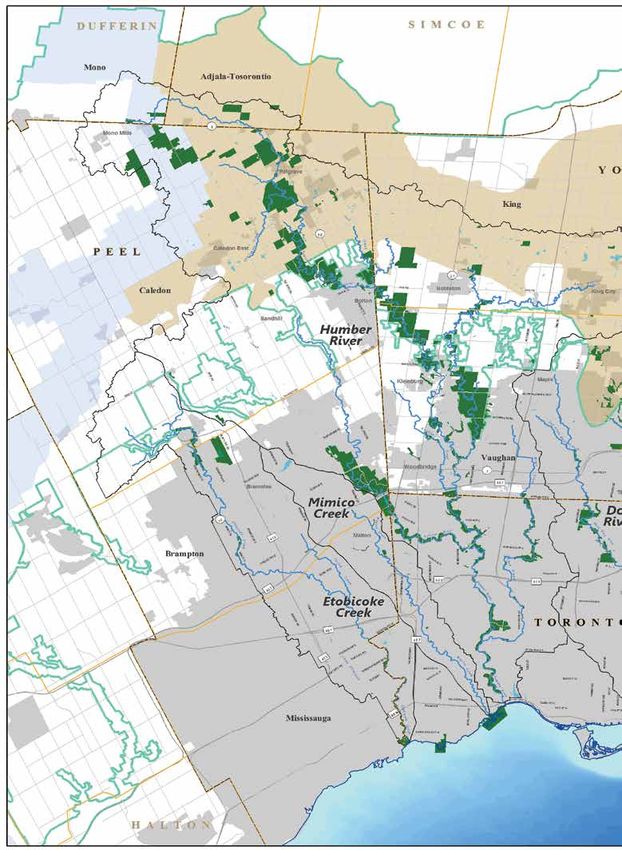
LIST OF BOXES                                                                                                                                            EXECUTIVE SUMMARY

      Box 2.1: C
                onservation authorities’ objectives and powers regarding greenlands securement in the Conservation                                            The purpose of the Greenlands Acquisition Project for        Recent support for greenlands securement is provided
                                                                                                                                                               2016-2020 (GAP) is to provide background about, and          by plans and strategies. These include TRCA’s integrated
                  Authorities Act, R.S.O. 1990, Chapter 27.......................................................................................... 9         implementation tools for, the securement of greenlands by    watershed and waterfront plans that combine the latest
                                                                                                                                                               Toronto and Region Conservation Authority (TRCA).            science including the Terrestrial Natural Heritage System
      Box 4.1: TRCA land securement projects, 1959-2015.................................................................................... 17
                                                                                                                                                                                                                            Strategy, provincial plans for drinking water source
      –––––––––––––––––––––––––––––––––––––––––––––––––––––––––––––––––––––––––––––––––––––––––––––––––––                                                      The Greenlands Acquisition Project for 2011 - 2015 set       protection and provincial land use plans.
                                                                                                                                                               a target of 1,000 hectares of greenlands to be secured
                                                                                                                                                               during 5 year term of the project. Toronto and Region        Toronto and Region Conservation Authority’s history of
      LIST OF FIGURES                                                                                                                                          Conservation Authority has secured 802 hectares of           securement began with purchases in the late 1940s and
      Figure 4.1: TRCA land securement, 1949-2014............................................................................................ 18               this 1,000 hectares-target as of December 31, 2014.          involved numerous projects that made these purchases
                                                                                                                                                               This GAP builds on the Greenlands Acquisition Project        possible. The GAP reviews the types of ownership and
      Figure 4.2: TRCA greenlands per capita, 1971-2011..................................................................................... 18                for 2011 - 2015 and previous TRCA land securement            the tools used by TRCA to secure greenlands. Toronto
                                                                                                                                                               projects. It continues on the course of those projects       and Region Conservation Authority evaluates greenlands
      –––––––––––––––––––––––––––––––––––––––––––––––––––––––––––––––––––––––––––––––––––––––––––––––––––                                                      with new knowledge and refined direction provided            against the criteria and factors for securement established
                                                                                                                                                               by Building The Living City, TRCA’s strategic plan for       in the GAP.
      LIST OF MAPS                                                                                                                                             2013-2022, and The Living City Policies for Planning
                                                                                                                                                               and Development in the Watersheds of the Toronto and         Finally the project details the financial strategy including
      Map 1.1: TRCA greenlands............................................................................................................................ 2   Region Conservation Authority, and provincial plans for      potential funding partners. The GAP identifies funding
                                                                                                                                                               land use.                                                    partners and estimated financial contributions over its
      –––––––––––––––––––––––––––––––––––––––––––––––––––––––––––––––––––––––––––––––––––––––––––––––––––                                                                                                                   five year duration. By making a projection based on
                                                                                                                                                               Securements made under the GAP are based primarily on        experience in recent years, it is estimated that TRCA
      LIST OF TABLES                                                                                                                                           identifying and assessing land opportunities which may       could secure approximately 1,000 hectares (2,500 acres)
                                                                                                                                                               arise in the real estate market. Therefore, the project is   over the five year duration of the GAP, at a projected
      Table 4.1: TRCA greenlands by securement method, as of December 31, 2014................................................ 18                              limited by the unpredictable nature of this market.          purchase expense of $33.235 million.
      Table 4.2: TRCA greenlands by watershed, as of December 31, 2014.............................................................. 18
                                                                                                                                                               This document discusses the need for securing
      Table 4.3: TRCA greenlands by municipality, as of December 31, 2014............................................................ 19                       greenlands into public ownership and the role of
                                                                                                                                                               acquisition in relation to other forms of securement. It
      Table 5.1: TRCA greenlands securement tools................................................................................................ 22           relates the GAP to the broader context of TRCA’s vision
                                                                                                                                                               for The Living City and to the United Nations’ Earth
      Table 7.1: Funding sources for TRCA greenlands securement .......................................................................... 26                  Charter. Details of TRCA’s legislated mandate for land
                                                                                                                                                               securement are also provided.
      Table 7.2: TRCA greenlands management categories...................................................................................... 29

      Table 7.3: TRCA conservation land care program components......................................................................... 31

iii                                                                                                                                                                                                                                                                                             iv
      Greenlands Acquisition Project for 2016-2020                                                                                                                                                                                               Greenlands Acquisition Project for 2016-2020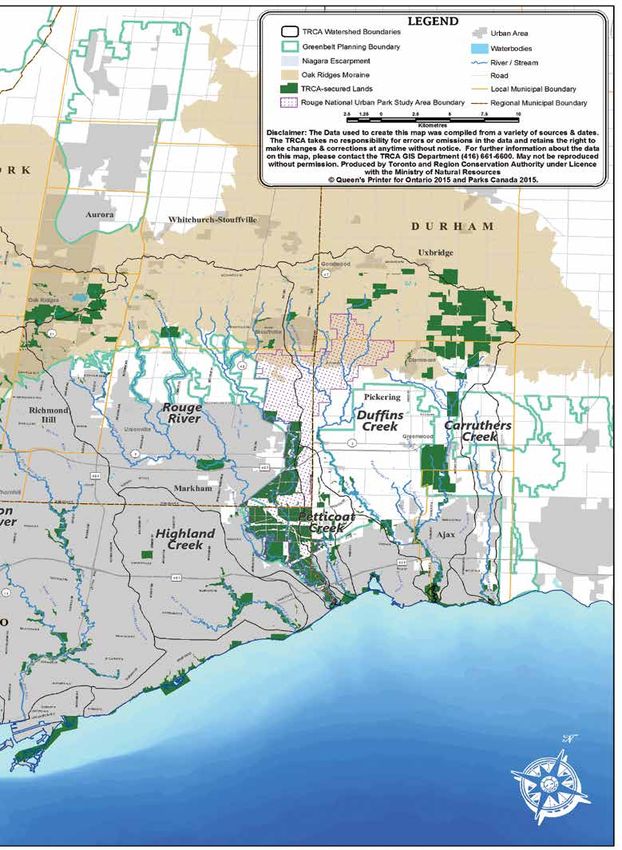
1.0 INTRODUCTION
1.1 Greenlands Securement •S
ecures public access for outdoor education, an inter-
regional trail and other appropriate resource-based
Land securement relies on various tools including the recreation or other uses.
1
following (see Section 5 for more details):
•E
nsures the land remains unaltered in order to protect
important or sensitive species, landforms, features
•R
egulation and planning, including provincial policy,
INTRODUCTION official plans and zoning.
or functions, and thus ensures more certainty of
permanent care and control than other methods can
provide (e.g., Environmentally Significant Areas, habitat
•S
tewardship, including voluntary action, which can be
for species at risk and wellhead protection zones).
encouraged by incentives and education.
• Conserves a key property when no other solution exists.
•S
ecurement of full or partial interest, by means such as
fee simple, covenant, easement, lease or agreement.
1.2 Public Benefits of Greenlands Securement
Municipal and provincial land use regulations and plans
The Toronto region offers a vibrant economy and a high
are important, but such plans to protect natural areas
quality of life, attributes that are enjoyed by residents
are susceptible to policy revisions and cannot guarantee
and serve to attract investment and immigrants from
protection in perpetuity. Private land stewardship is
around the world. The region’s economy and quality of
also important, but offers no certainty that owners
life are dependent in no small measure upon the many
will practice careful stewardship, or that voluntary
environmental, economic, social and health benefits
stewardship will be continued by future owners.
provided by natural areas and processes. In The Living
City Report Card, TRCA calculated the known annual
The GAP deals with greenlands securement. Other TRCA
Toronto and Region Conservation Authority is the The Toronto region continues to experience enormous value of the existing natural cover (not including street
policies and programs such as Ontario Regulation 166/06,
environmental custodian of the lands and waters in its population growth and urban areas are expanding rapidly. and backyard trees) in its jurisdiction as a community
The Living City Policies for Planning and Development in
jurisdiction, which is the most populous city region in Urban development threatens the quantity and quality asset with an annual value of over $1.2 billion
the Watersheds of the Toronto and Region Conservation
Canada. A city region is healthy only when it has clean air, of our water and natural areas. A larger population has (Greening Greater Toronto and TRCA, 2011). This
Authority (TRCA, 2014) and watershed plans address
clean water, a sound natural heritage system, and natural greater need for the benefits of natural areas. There is number would double if the system is expanded to the
regulation, planning and stewardship.
areas and open space for its people. Greenlands are lands growing public understanding and appreciation of the targeted natural system in the Terrestrial Natural Heritage
that support a healthy city region. A permanently secure values of such lands. System Strategy (TRCA, 2007).
Acquisition is often the most financially costly approach
system of publicly-owned greenlands is required to provide
to securing greenlands, and is therefore used where the
all of these. Greenlands are not only spaces to be set aside Until around the turn of the 21st century the amount As the urban area expands, additional buildings and
public interest cannot be achieved effectively through
elsewhere, but are integral to the city environment. of publicly owned greenlands in the TRCA region pavement block the absorption of water and degrade its
planning, regulation or voluntary measures such as
was no longer keeping pace with the increases in quality. Natural habitats are lost, their quality is degraded
stewardship. Land acquisition will be considered where
Toronto and Region Conservation Authority undertakes population. With the continued population increase and biodiversity is reduced. Population growth creates
the securement:
a broad variety of projects and programs to meet its through initiatives such as intensification, brownfields more demand for outdoor recreation and puts greater
legislated mandate of conserving, restoring, developing redevelopment and greenfields redevelopment, TRCA pressure on remaining natural areas.
and managing natural resources other than gas, oil, coal must continue its securement of greenlands. Within • Expands properties already in public ownership.
and minerals. Key to the success of these projects has the past five years, TRCA has secured large blocks of Securing greenlands for public ownership offers many
been the securement of greenlands into public ownership. greenlands in its securement of Bolton Camp in the •P
rovides a link between lands which are already in
benefits that allow a community to thrive and grow.
Over 18,000 hectares (over 44,500 acres) of greenlands Town of Caledon and the Greenwood Conservation public ownership.
The securement of greenspace must keep pace with
have been secured by TRCA between 1949 and 2014 Lands in the City of Pickering. •F
acilitates a project such as flood control, erosion urbanization and population growth to maintain these
which is 7.2% of TRCA’s jurisdiction. Map 1.1 shows the control or shoreline protection. benefits, supporting human health and quality of life.
distribution of these lands within the 249,000 hectares
(615,000 acres) of TRCA’s jurisdiction. • Is needed to regenerate a degraded area.
1 2
Greenlands Acquisition Project for 2016-2020 Greenlands Acquisition Project for 2016-2020
1.0 INTRODUCTION                                          1.0 INTRODUCTION

3                                                                                                 4
    Greenlands Acquisition Project for 2016-2020   Greenlands Acquisition Project for 2016-2020
1.0 INTRODUCTION 1.0 INTRODUCTION
1.2.1 Healthy Rivers and Shorelines Riverside vegetation reduces bank erosion, and tree shade They are home to diverse plants and animals, including The Trust for Public Land’s Center for City Park Excellence
keeps streams cool in summer for the benefit of native 688 species of conservation concern, both resident and indicates that Philadelphia experienced US$16 million
fish. Secured valley lands provide space for rivers to flood migratory. Kettle lakes, streams, estuaries and Lake in annual public cost savings as a result of storm water
naturally without damage to property. Ontario are home to fish and other aquatic species of management and air pollution reduction (The Trust for
plants and animals. Genetic diversity is crucial to their Public Land, 2008).
All these functions benefit not only the immediate long term survival, and provides resilience to mediate
area, but the entire downstream watercourse. Securing natural stresses and stresses caused by humans. Toronto and Region Conservation Authority works with
river headwater lands in the Oak Ridges Moraine can Greenlands providing healthy terrestrial and aquatic municipalities and community groups to develop an
benefit all Toronto area river systems, the downstream natural heritage systems can sustain that biodiversity. inter regional trail system, with routes along the Oak
municipalities and Lake Ontario. Ridges Moraine, the Lake Ontario waterfront, the Niagara
A healthy, diverse ecosystem keeps populations in Escarpment and the river valleys from the Oak Ridges
Along the Lake Ontario waterfront, shorelines that are balance and pests under control. Natural organisms Moraine to the waterfront. Such trails require secure
secured in public ownership provide protection for provide many services. They recycle organic wastes corridors of public greenlands. Toronto and Region
coastal processes, such as natural erosion of shorelines into nutrients, maintain soil structure and fertility, and Conservation Authority also works with these groups to
and transportation of sediments, offer water-based recycle oxygen and carbon dioxide to maintain a healthy develop local trail systems. These systems allow for active
recreational opportunities, provide public access, and atmosphere and to moderate temperature. transportation and can provide recreational opportunities.
present unique views and vistas of Lake Ontario.
1.2.3 Sustainable Communities
1.2.2 Greenspace and Biodiversity
Well planned neighbourhoods that provide easy access
to employment, school, recreation and amenities – on
foot or by bicycle – and support a variety of careers,
lifestyles and income levels are part of the TRCA’s
sustainable communities pillar. Greenlands secured
through the GAP make our communities more sustainable
and more liveable in many ways. Vegetation can reduce
Healthy rivers and shorelines is one of the four pillars
noise pollution. Woodlands can absorb carbon dioxide
of TRCA. The Living City envisions a city region where
emissions from cars in the atmosphere and store it for
the water in our rivers, streams and waterfront is
generations. Trees can remove sulphur dioxide, reduce
swimmable, fishable and easily treatable for drinking,
particulates in the air and provide for the oxygen needs
even in the most highly populated areas. Greenlands
of people. By reducing air pollution levels, the burden
secured through the GAP will protect our waters. Natural
of disease from stroke, heart disease, lung cancer, and
landforms and natural cover encourage the absorption of
both chronic and acute respiratory diseases, including
rain and snowmelt. This serves to reduce runoff, flooding
asthma, can be reduced. The lower levels of air pollution,
and erosion, recharge soil moisture, groundwater and
the better the cardiovascular and respiratory health
wetlands, and sustain baseflow in streams and rivers.
Another pillar of TRCA, greenspace and biodiversity, of the population will be, both long- and short-term.
envisions a robust, resilient and equitably distributed Reducing outdoor air pollution also reduces emissions of
Secured greenlands can buffer streams from agricultural or
system of green infrastructure that provides ecological carbon dioxide and short-lived climate pollutants such as
industrial activities, filter runoff, and exclude incompatible
services to all residents of The Living City. Greenlands black carbon particles and methane, thus contributing
uses from wellhead areas and recharge zones, thereby
secured through the GAP will protect natural to the near- and long-term mitigation of climate change
protecting drinking water sources. A report by The Trust
communities that are important in Ontario and Canada. (World Health Organization, 2014). Evaporation from
for Public Land’s Center for City Park Excellence indicates
Toronto and Region Conservation Authority’s jurisdiction the leaves of a large tree in summer can provide a
that Philadelphia experienced US$16 million in annual
overlaps the Carolinian and the Great Lakes cooling effect similar to air conditioners. In a study to
public cost savings as a result of storm water management
St. Lawrence forest regions, which is the most species capture the value of services provided by trees in the
and air pollution reduction (The Trust for Public Land,
rich in Canada, and the provincially significant Oak Puget Sound basin, American Forests estimated that
2008). In a study to capture the value of services provided
Ridges Moraine and Niagara Escarpment (also a tree cover in the country’s urban growth boundary area
by trees in the Puget Sound basin, American Forests
UNESCO World Biosphere Reserve). The natural had reduced generated annual air quality savings of
estimated that tree cover in the country’s urban growth
communities of these areas, and of the river valleys and US$19.5 million (American Forests, 1998). A report by
boundary area had reduced stormwater storage costs by
waterfront, include many types of forests and wetlands,
US$910 million (American Forests, 1998).
as well as some natural meadows and coastal habitats.
5 6
Greenlands Acquisition Project for 2016-2020 Greenlands Acquisition Project for 2016-2020
1.0 INTRODUCTION 1.0 INTRODUCTION
1.2.4 Business Excellence, a Green Economy and The values of properties adjacent to natural greenlands
Responsive Governance are typically about eight to 20 per cent more than
2
comparable properties elsewhere (Crompton, 2001).
Even views of greenspace can improve mental health
(Maller et al., 2008).
CONTEXT
People come to greenlands to relax, enjoy the beauty,
draw artistic inspiration, find open spaces, exercise,
escape the noise, odours and crowds of the built
environment, and for contemplation and spiritual
connection. Public greenlands are known to encourage
relaxation and friendly social interaction and reduce
stress. Nearby greenlands have been shown to make
higher residential densities more liveable.
Education activities offered in greenlands provide
children and adults with direct experience in the natural
environment and an essential understanding of the
critical role that nature plays in sustaining our lives and
economies. Individuals and groups using greenlands
for study and research contribute to that knowledge.
Environmental education is essential to TRCA’s work
in transforming communities toward sustainable living
Greenlands securement helps TRCA achieve its vision The Living City Strategic Plan (TRCA, 2006) targeted
Business excellence, a green economy and responsive and building a public commitment to environmental
for The Living City® and support the principles of the securement of a further 4,000 hectares (10,000
governance, where residents are actively engaged in conservation.
the United Nations’ Earth Charter of which TRCA acres) of greenlands by TRCA. Toronto and Region
community life and empowered to make meaningful endorsed. Conservation authorities are permitted by the Conservation Authority has secured 1980 hectares since
contributions to long-term ecological stability, improved Toronto and Region Conservation Authority greenlands
Conservation Authorities Act R.S.O. 1990, Chapter 27 2006, meeting 49.5% of the securement target. While
human health and well-being and prosperity, and where provide such benefits to people of all ages, cultures and
(Government of Ontario, 1990a). no specific target for securement was set in the latest
they are able to connect easily and mobilize quickly income levels. They are especially valuable to those who
strategic plan, there is continued support for greenlands
to address challenges and opportunities, is the final lack the money or freedom required to travel.
2.1 The Living City Vision securement to achieve The Living City.
pillar of TRCA’s ongoing commitment to The Living
City. Publicly-owned greenlands provide opportunities Forecasts suggest that the population of the Greater
Toronto and Region Conservation Authority has a vision 2.2 The United Nations’ Earth Charter
for resource based recreation and outdoor education Toronto Area could grow by approximately two million in
for The Living City®:
that are compatible with ecological values. Greenlands the next 20 years. Greenspace that is crowded with people
In 2002, TRCA joined thousands of organizations and
provide an attractive setting for many forms of physical cannot provide the same benefits to people or natural
The quality of life on Earth is being determined in rapidly individuals in endorsing the United Nations’ Earth Charter,
activity needed to promote good health and to reduce heritage. Over-use degrades natural values and leads to
expanding city regions. Our vision is for a new kind of an international declaration of the fundamental principles
the economic burden of physical inactivity (estimated conflicts among users. Expensive intervention is required
community – The Living City – where human settlement to create a just, sustainable and peaceful global society
to cost Ontario CDN$1.8 billion annually). Recreation to protect and rehabilitate threatened natural areas, and
can flourish forever as part of nature’s beauty and diversity. in the 21st century. For TRCA, the Earth Charter provides
may include activities such as walking, cycling, to manage conflicts. More public greenlands are needed to
a broad conception of sustainable development and
snowshoeing, cross country skiing, horseback riding, meet the demand of a rapidly growing population.
The vision of The Living City is based on the four pillars sustainable living.
nature appreciation, wildlife viewing, photography, of TRCA’s ongoing commitment to healthy rivers and
fishing, canoeing, child play and discovery. Public shorelines, greenspace and biodiversity, sustainable The GAP supports several principles of the Earth Charter,
health researchers have found that living close to urban communities, and business excellence, a green economy including the following:
greenspaces like parks and trails can increase urban and responsive governance. Sustaining The Living City
residents’ levels of physical activity and reduce the requires a commitment to protect and restore the natural •E
stablish and safeguard viable nature and biosphere
likelihood of being overweight or obese. This reduces the environment. This commitment is critical to the future reserves, including wild lands and marine areas,
risk of diabetes and several types of cancer (Bedimo- health of our communities, our region and our planet. The to protect Earth’s life support systems, maintain
Rung, et al., 2006). GAP supports The Living City vision and its four objectives. biodiversity, and preserve our natural heritage.
7 8
Greenlands Acquisition Project for 2016-2020 Greenlands Acquisition Project for 2016-2020
2.0 CONTEXT                                                                                                                                                                                                                      2.0 CONTEXT

    •S
      ecure Earth’s bounty and beauty for present and future    As permitted by the Conservation Authorities Act,
     generations.                                                the GAP’s aim is to secure property, whether by fee
                                                                 simple, leasehold, easement, covenant, or stewardship
    • Accept that with the right to own, manage, and

                                                                                                                             3
                                                                 agreements in hazard, conservation and environmentally
       use natural resources comes the duty to prevent           significant lands in order to protect against unwise
       environmental harm and to protect the rights of people.   use which would affect the lands’ ability to perform
    • Protect and restore the integrity of Earth’s ecological
                                                                 its natural functions and to conserve the lands for the     SUPPORT AND DIRECTION FOR
       systems, with special concern for biological diversity
                                                                 benefit of the people within TRCA’s watersheds. Under       GREENLANDS SECUREMENT
                                                                 the GAP, whenever any land or any use or right therein
       and the natural processes that sustain life.
                                                                 is secured, it is being secured for one or more of the
    • Transmit to future generations values, traditions, and    following purposes: flood control, erosion control,
       institutions that support the long term flourishing of    bank stabilization, shoreline management works or the
       Earth’s human and ecological communities.                 preservation of environmentally sensitive lands. If it is
                                                                 determined by TRCA that the land, use or right therein,
    • Respect Earth and life in all its diversity.              is not being secured for any of the aforementioned
                                                                 purposes, TRCA will comply with the consent provisions
    2.3 Legislated Mandate and Purpose of                       of the Planning Act (Government of Ontario, 1990b) prior
         Conservation Authorities                                to securement, if applicable.

    Toronto and Region Conservation Authority, by its
    objectives and purpose as provided by the Conservation
    Authorities Act R.S.O. 1990, Chapter 27 (Government of
    Ontario, 1990a), as amended (Box 2.1), is authorized to
    secure land and interest in land.
                                                                                                                             Toronto and Region Conservation Authority’s Watershed          The combination of integrated scientific understanding
                                                                                                                             Plan (1980a and 1986a) and The Greenspace Strategy             and shared objectives among watershed stakeholders
     Box 2.1                                                                                                                 (1989). Watershed (Crombie, 1990), the report from             informs the TRCA’s securement strategies in terms of
     Conservation authorities’ objectives and powers                                                                         the Royal Commission on the Future of the Toronto              locations and priorities for securement.
     regarding greenlands securement in the Conservation                                                                     Waterfront, and the Province of Ontario’s Space for All:
     Authorities Act, R.S.O. 1990, Chapter 27.                                                                               Options for a Greater Toronto Area Greenlands Strategy         Several new initiatives also call for land securement and
                                                                                                                             (Kanter, 1990) recognized the need to conserve and             public ownership since TRCA’s Greenlands Acquisition
     Objects                                                                                                                 enhance the natural heritage of the Greater Toronto Area.      Project for 2011 - 2015 was approved in 2011. These
     20. (1) T
              he objects of an authority are to establish                                                                                                                                  include Building The Living City, The Living City Policies
             and undertake, in the area over which it has                                                                    Additional plans and reports support public securement         for Planning and Development in the Watersheds of the
             jurisdiction, a program designed to further the                                                                 of greenlands. A goal of TRCA’s Integrated Shoreline           Toronto and Region Conservation Authority and provincial
             conservation, restoration, development and                                                                      Management Plan: Tommy Thompson Park to                        plans and policies, and are described below.
             management of natural resources other than                                                                      Frenchman’s Bay (1996) is to complete public ownership
             gas, oil, coal and minerals.                                                                                    of that shoreline. Our Toronto Waterfront: Gateway to          3.1 TRCA Plans, Policies and Projects
                                                                                                                             the New Canada (Toronto Waterfront Revitalization Task
     Powers of authorities                                                                                                   Force, 2000) recommends making the water’s edge an             Numerous TRCA plans, policies and projects inform
                                                                                                                             accessible public amenity from Etobicoke to Scarborough        TRCA’s greenlands securement. Recent such projects are
     21. (1) F
              or the purposes of accomplishing its objects,                                                                 and reconnecting the city to its waterfront.                   profiled in this section.
             an authority has power, (c) to acquire by
             purchase, lease or otherwise and to expropriate                                                                 Land securement is one of a suite of implementation
             any land that it may require, and, subject                                                                      tools recommended in TRCA’s integrated watershed
             to subsection (2), to sell, lease or otherwise                                                                  plans. These plans incorporated significant advances
             dispose of land so acquired.                                                                                    in scientific understanding of natural heritage, surface
                                                                                                                             water and ground water systems, improved stakeholder
                                                                                                                             engagement, and the integrated scientific information
                                                                                                                             from different disciplines along with stakeholder interests.

9                                                                                                                                                                                                                                                              10
    Greenlands Acquisition Project for 2016-2020                                                                                                                                                                Greenlands Acquisition Project for 2016-2020
3.0 SUPPORT AND DIRECTION FOR GREENLANDS SECUREMENT                                                                                                                3.0 SUPPORT AND DIRECTION FOR GREENLANDS SECUREMENT

     3.1.1 Building The Living City: 10-Year Strategic Plan,         of our region. Programs and policies to build and grow         Faced with declining quality of much of the greenspace       no longer found in the region. This happened primarily
            2013-2022                                                 The Living City, including TRCA land securement, must          in the region and increased demands for this essential       through the direct loss of natural cover, due first to the
                                                                      accommodate and support future growth patterns or risk         resource by a rapidly growing urban population, now          conversion of forest lands to agricultural uses and later to
                                                                      being displaced by traditional development approaches          is the opportune time to rethink greenspace as an            urbanization. The remaining natural cover was affected
                                                                      and other short-term fixes.                                    integrated system. Through thoughtful planning and           through changes in water quantity and quality, soil
                                                                                                                                     action we will help develop a network of greenspace          compaction, invasive plants and recreational use.
                                                                      The population in the Toronto region is diversifying, aging    for the Toronto region that maximizes community well-
                                                                      and growing. The programs of TRCA must accommodate             being and protection of our local ecosystems. This will      The Living City Policies for Planning and Development in
                                                                      the needs and aspirations of a more diverse and aging          include helping people become healthier and happier          the Watersheds of the Toronto and Region Conservation
                                                                      population base, addressing accessibility issues, language     by promoting appropriate access to existing nature and       Authority (TRCA, 2014) replaces TRCA’s Valley and
                                                                      barriers, cultural sensitivities, and an increase demand for   by creating new green infrastructure in urban areas.         Stream Corridor Management Program (MTRCA, 1994)
                                                                      recreational facilities and access to greenspace.              To ensure that future generations also benefit from          as TRCA’s main policy document for planning and
                                                                                                                                     greenspace, TRCA will also create awareness of the need      regulation. The Living City Policies for Planning and
                                                                      Urban greenspace in all its forms – from large natural         to invest in its long-term management and renewal.           Development in the Watersheds of the Toronto and
                                                                      areas and agricultural land to neighborhood parks,                                                                          Region Conservation Authority contains the principles,
                                                                      street trees and green roofs – is vital to healthy and                                                                      goals, objectives and policies approved by TRCA for the
                                                                      resilient communities. Greenspace can remove carbon            3.1.2 The Living City Policies for Planning and             administration of TRCA’s legislated and delegated roles
                                                                      from the atmosphere, reduce summer heat and energy                    Development in the Watersheds of the TRCA             and responsibilities in the planning and development
                                                                      consumption, purify our air and water, support wildlife,                                                                    approvals process. In addition, it reflects and clarifies the
                                                                      provide food, increase our physical and mental health,                                                                      current practice of TRCA’s role as a public commenting
                                                                      add beauty to our communities, bring people together                                                                        body, service provider, resource management agency,
                                                                      and provide sanctuary to all members of society.                                                                            a representative of the provincial interest for natural
     The future health and well-being of the residents of                                                                                                                                         hazards, a regulator, and a landowner in the context of
     the Toronto region depend on clean air, pure water and           The strategic plan for TRCA, Building The Living City                                                                       the planning and development process.
     wholesome local food supplies, on the integrity of natural       (TRCA, 2013), commits TRCA to working to restore the
     systems, on access to greenspaces and green jobs, and            integrity and health of the region’s rivers and waters, to                                                                  3.1.2.1 Environmental Protection
     on vibrant sustainable neigbourhoods that meet the needs         working to establish a regional system of natural areas
     and support the aspirations of their residents.                  that preserves habitat, improves air quality, and provides                                                                  The document identifies various securement tools used
                                                                      opportunities for the enjoyment of nature and outdoor                                                                       by TRCA through the greenlands securement projects
     A robust, resilient and equitably distributed system             recreation, and to facilitating broad community support                                                                     within the environmental protection policies (Section 7.3).
     of green infrastructure, defined as natural vegetation,          for sustainable living and city building that improves                                                                      One of the goals related to environmental protection is to
     vegetative systems, soil in volumes and qualities                the quality of life for residents, business and nature. It                                                                  secure the natural system in public ownership for its long
     adequate to sustain vegetation and absorb water, and             commits TRCA to strive to create a network of greenspace                                                                    term protection and maintenance. As such, policy 7.3.2
     supportive green technologies that replicate ecosystem           and green infrastructure that weaves through every                                                                          promotes the conveyance of lands in the natural system
     functions (Green Infrastructure Ontario Coalition and            community to connect a healthy and resilient landscape,                                                                     into public ownership through the planning process. While
     EcoJustice, 2012) provides ecological services to all            to improve the protection of the Toronto region’s natural                                                                   fee simple public ownership provides the best protection
     residents of The Living City. Large and interconnected           systems, and to support more people engaging with                                                                           of the natural system for the long term and is the most
     greenlands offer a wide range of active and passive              nature more often.                                                                                                          preferred form of ownership, other mechanisms listed in
     recreational opportunities, while safeguarding their                                                                                                                                         the greenlands securement projects may be used.
     natural environmental functions and providing suitable           Toronto and Region Conservation Authority will work            As one of the most rapidly growing and ethnically diverse
     habitats for plant and animal species. Land suitable             with our partners to secure, design and distribute             city-regions in North America, TRCA’s jurisdiction was       Public ownership of waterfront lands is a key means to
     for growing food is recognized and protected as a vital          greenspace and green infrastructure to all communities         home to some 3.4 million people in 2011 (Ontario             managing natural hazards, while providing accessible
     and irreplaceable resource, providing locally sourced,           in an equitable manner, directing ecosystem services to        Ministry of Natural Resources and Forestry, 2012),           open space integrated with opportunities for public
     affordable and healthy foods to The Living City.                 the areas where the need is greatest. Toronto and Region       compared to approximately 1.2 million in 1951. The           enjoyment and aquatic and natural heritage restoration.
                                                                      Conservation Authority will work with its partners to          impacts of the urbanization taking place to accommodate      With regards to the Lake Ontario shoreline, it is the policy
     While the current pace of development challenges our             create key linkages between natural areas, and to identify     this growth are evidenced in historical Ontario Ministry     of TRCA to prevent, eliminate or reduce the risk of flood
     capacity to carefully plan for green infrastructure, effective   and protect the significant spaces in our region that are      of Natural Resources and Forestry records, settler reports   and erosion hazards to life and property through the
     public transit and livable communities, it also presents         sensitive and ecologically important that will benefit from    and other sources, which show that over 120 species,         conveyance of hazard lands into public ownership, where
     significant opportunities to improve the sustainability          careful control of community use.                              including elk, bobcat, Atlantic salmon, yellow bullhead,     feasible [policy 7.2.4 a) iii)].
                                                                                                                                     wood turtle, calypso orchid and Indian paintbrush, are

11                                                                                                                                                                                                                                                                     12
     Greenlands Acquisition Project for 2016-2020                                                                                                                                                                       Greenlands Acquisition Project for 2016-2020
3.0 SUPPORT AND DIRECTION FOR GREENLANDS SECUREMENT                                                                                                               3.0 SUPPORT AND DIRECTION FOR GREENLANDS SECUREMENT

     3.1.2.2 Sustainable Near-urban Agriculture                      3.1.2.3 Cultural Heritage Preservation                       for holding archaeological resources. With the goal of         These include the Terrestrial Natural Heritage System
                                                                                                                                  promoting the importance of cultural heritage to the           Strategy, watershed plans, fish management plans, and
     Agricultural land is a vital resource, which must be                                                                         planning and development of sustainable communities,           restoration opportunity plans. The detailed assessment of
     conserved. Progressive environmental stewardship in the                                                                      it is the policy of TRCA to encourage the protection and       the data collected and derived through these initiatives
     farming/agricultural sector will be a requirement for TRCA                                                                   enjoyment of cultural heritage resources, including built      is used to develop a spatially explicit map that highlights
     to collectively realize The Living City vision for a healthy,                                                                heritage, cultural heritage landscapes, and archaeological     the priorities for restoration such that the natural
     attractive, sustainable urban region extending into the                                                                      resources throughout the watersheds’ urban and rural           system function and ecosystem services are maximized.
     22nd century, based on a foundation of healthy rivers                                                                        landscapes, and to continue to celebrate the interpretive      This allows for the strategic allocation of restoration
     and shorelines, greenspace and biodiversity, sustainable                                                                     value of cultural heritage resources through adaptive re-      efforts to the locations that provide the maximum
     communities, and business excellence, a green economy                                                                        use, restoration and education programs on TRCA lands          benefit to the natural system function and services.
     and responsive governance. Agricultural lands provide the                                                                    (policy 6.9.1).                                                The IRP assessment provides support to TRCA and the
     following values:                                                                                                                                                                           partner municipalities as well as other stakeholders in
     • A source of local food production and employment;                                                                         3.1.3 Integrated Restoration Prioritization Framework         the management and restoration of natural systems
                                                                                                                                                                                                 throughout TRCA’s jurisdiction.
     • A cultural heritage landscape;
                                                                                                                                                                                                 Given that the IRP assessment provides a decision
     • Areas with a high potential for containing                                                                                                                                               support tool to help select sites for restoration that will
        archaeological sites;                                                                                                                                                                    contribute most to enhance natural system function and
                                                                                                                                                                                                 services, it aligns strongly with the restoration need and
     • Connecting lands to support native flora and fauna
                                                                                                                                                                                                 opportunity criteria for securement identified in the GAP
        populations; and
                                                                                                                                                                                                 for 2016-2020 (Section 6.1). With support from the
     • Pervious surfaces that permit infiltration of water to       Cultural heritage plays a key role in building sustainable                                                                  IRP framework, securement strategies can systematically
        help maintain aquifer water levels and minimize runoff.      communities where residents enjoy a satisfying quality                                                                      identify areas for securement that are in line with the
                                                                     of life and sense of place. Working to preserve and                                                                         restoration priorities.
     A vision for sustainable near-urban agriculture on TRCA         celebrate the cultural heritage of the TRCA watersheds
                                                                     can also provide a connection to the past that increases                                                                    3.2 Drinking Water Source Protection
     lands includes the use of diverse crops and innovative
     and sustainable agricultural production methods, such as        our understanding of human relationships with the
     a combination of appropriate technology, environmental          environment. Cultural heritage resources in TRCA’s
     goods and services, beneficial management practices,            watersheds consist of cultural heritage landscapes (such
     community shared agriculture, and community gardens.            as countryside roads, agricultural communities, clusters
     These may be on a smaller scale than the typical agri-          of century homes and 20th century ethnic architecture),
     food industry approach and do not compromise other              built heritage resources (heritage buildings and
     TRCA objectives, such as the Terrestrial Natural Heritage       structures), and archaeological sites. Watershed groups
     System Strategy and The Living City objectives. The             for the Rouge and the Don rivers have developed cultural
     Living City Policies for Planning and Development in            heritage master plans to help identify opportunities to
     the Watersheds of the Toronto and Region Conservation           integrate heritage features, landscapes, and stories into    Toronto and Region Conservation Authority has a
     Authority identify that it is TRCA policy to support and        new developments and community-based initiatives.            responsibility to direct its restoration efforts and related
     encourage the protection of agricultural land as important      Toronto and Region Conservation Authority’s archaeology      investments wisely to help achieve The Living City
     landscape components within TRCA watersheds (policy             unit developed a master plan mapping tool for all of         objectives, which are in line with the objectives of our
     7.2.2). Securement of lands that can be used for near           TRCA’s properties as a first phase in the management of      municipal and other funding partners. In this regards,
     urban agriculture into public ownership can secure these        cultural heritage resources on TRCA lands.                   TRCA developed an Integrated Restoration Prioritization
     types of lands and their benefits. The TRCA’s sustainable                                                                    (IRP) framework (2015) that is rooted in a systems
     near-urban agriculture policy then governs the agricultural     The Living City Policies for Planning and Development in     approach to landscape planning that emphasizes the
     lands within TRCA’s ownership.                                  the Watersheds of the Toronto and Region Conservation        importance of building resilience and achieving multiple
                                                                     Authority direct that, where possible, Aboriginal            ecological benefits to the natural system.
                                                                     archaeological sites are incorporated into the natural
                                                                     system and preserved for the future, with limited            The IRP process identifies the restoration priority
                                                                     investigative excavations. Euro-Canadian archaeological      locations across the TRCA jurisdiction based on the
                                                                     sites are also protected by TRCA. The unique riverine        synthesis of existing strategies, plans and programs.
                                                                     association of TRCA lands provides an unlimited potential

13                                                                                                                                                                                                                                                                   14
     Greenlands Acquisition Project for 2016-2020                                                                                                                                                                     Greenlands Acquisition Project for 2016-2020
3.0 SUPPORT AND DIRECTION FOR GREENLANDS SECUREMENT 3.0 SUPPORT AND DIRECTION FOR GREENLANDS SECUREMENT
Land securement is considered an important tool for sources can be protected by conserving important 3.3 Provincial Land Use Plans and Policies plans or by locally-generated policies regarding matters of
source protection. Significant groundwater recharge areas hydrological features such as wetlands, lakes, ponds, municipal interest. Provincial plans and municipal plans
that maintain water levels in aquifers can be protected watercourses, headwater areas and wellhead areas. In The watersheds under the jurisdiction of TRCA include build upon the policy foundation provided by the PPS
by securing lands and maintaining their natural cover. the TRCA jurisdiction, these areas have been identified areas that fall under the Province’s Niagara Escarpment and provide a framework for supporting and integrating
Greenlands securement can also protect groundwater as part of the Approved Assessment Report: Toronto and Plan (revised 2005; Government of Ontario, 2005b), the principles of strong communities, a clean and healthy
quality in areas where aquifers may be vulnerable to Region Source Protection Area (TRCA, 2012). Oak Ridges Moraine Conservation Plan (2002), environment and economic growth for the long term.
contamination from activities on the landscape. Water Greenbelt Plan (Government of Ontario, 2005c) Some of the updated policies in the 2014 Provincial
and Growth Plan for the Greater Golden Horseshoe Policy Statement that relate to the securement and
(Government of Ontario, 2006a). These plans define management of greenlands focus on the following:
land use zones and designations and legislate additional •P
romoting the use of active transportation and
protection through the planning process. The provincial providing for connectivity among transportation modes.
plans are subject to amendment through regular 10-
year reviews. A coordinated review is taking place in •R
equiring the consideration of potential impacts of
2015 and implications of this review on TRCA land climate change (e.g., flooding due to severe weather)
securement will be better reflected in TRCA’s next that may increase the risk associated with natural
greenlands acquisition strategy. In the meantime, TRCA hazards and to support the reduction of greenhouse gas
continues to participate as a partner in coordinated emissions and adaptation to climate change.
programs to secure lands in the Greenbelt, Oak Ridges
Moraine and Niagara Escarpment. •E
ncouraging green infrastructure and strengthening
stormwater management requirements.
Growing the Greenbelt was initiated in 2008 to allow • Requiring the identification of natural heritage systems.
the Ontario government to assess requests from
regional, county and single-tier governments to expand •P
romoting the conservation of cultural heritage and
the Greenbelt. Associated funding could help secure archaeological resources.
long-term protection of greenlands through public
ownership. The cities of Mississauga and Toronto are
The Government of Ontario is pursuing the Ontario Trails
two municipalities within the TRCA jurisdiction that are
Act. Bill 100, supporting Ontario’s Trail Act, 2015,
seeking to expand the Greenbelt within the urban river
was carried at its first reading in May 2015. One of
valleys in their municipalities.
the purposes of the proposed Act is to protect trails
for today’s generation and future generations. Bill 100
The 2014 Provincial Policy Statement (PPS) under
identifies that landowners may grant an easement, with
the Planning Act provides policy direction on matters
or without covenants, with conservation authorities for
of provincial interest related to land use planning
any the following reasons.
and development. It sets the policy foundation for
regulating the development and use of land, and •T
he preservation, enhancement or management of
supports the provincial goal to enhance the quality of the use of, or access to, all or a portion of the land for
life for all Ontarians. The PPS provides for appropriate purposes relating to trails or to activities relating to trails.
development while protecting resources of provincial
•T
he creation, maintenance or management of trails for
interest, public health and safety, and the quality of the
public use.
natural and built environment.
•T
he purposes as may be prescribed by the regulations
The PPS states that land use planning is only one of made under the Act.
the tools for implementing provincial interests and that
If enacted, the Ontario Trails Act will provide additional
a wide range of legislation, regulations, policies and
legislative support for TRCA’s commitment to securing
programs may also affect planning matters and assist in
lands for the purposes of creating trail connections.
implementing these interests. It goes on to say that the
policies of the PPS may be complemented by provincial
15 16
Greenlands Acquisition Project for 2016-2020 Greenlands Acquisition Project for 2016-20204.0 LEGACY OF LAND SECUREMENT
Securements were rapid in the years after 1954’s The greenlands secured are distributed between the
Hurricane Hazel, when there was great interest in nine watersheds and Lake Ontario waterfront in TRCA’s
purchasing floodplains and lands for flood control works, jurisdiction (Table 4.2) and between TRCA’s municipal
4
and spending was matched by the Province and in some funding partners (Table 4.3).
cases by the federal government. Some of the largest
single securements to have occurred in recent years Table 4.2: TRCA greenlands by watershed, as of
LEGACY OF LAND SECUREMENT include the purchase of the 400 hectare (1,000 acre) December 31, 2014.
Walker Woods in 1991, a transfer from the Ontario
Realty Corporation of more than 1,300 hectares (more
WATERSHED HECTARES ACRES
than 3,200 acres) in 2004, the purchase of the 392
hectares (969 acres) of Brock North and South lands in Carruthers Creek 66 162
2009, and the management of the 428 hectare (1,057
acre) Oak Ridges Corridor Park on behalf of the Province Don River 1,153 2,849
of Ontario in 2010. Securement costs varied by location Duffins Creek 3,342 8,257
(urban or rural) and by type of tool used to secure the
land (Table 4.1). Figure 4.1 shows the amount of land Etobicoke Creek 389 961
secured by TRCA from 1949 to 2014 by year.
Highland Creek 399 985
Table 4.1: TRCA greenlands by securement method, as of Humber River 7,842 19,378
December 31, 2014.
Lake Ontario Waterfront 1,374 3,396
SECUREMENT METHOD HECTARES ACRES Mimico Creek 48 119
Toronto and Region Conservation Authority has a long The GAP builds on previous TRCA projects aimed at Easements 470 1,161 Petticoat Creek 306 757
history of effective land securement and protection. The securing land for conservation purposes (Box 4.1). Leases and Agreements 841 2,077
first generation of conservation authorities in the Toronto Rouge River 3,106 7,676
Fee Simple 16,714 41,301
region included the Etobicoke and Mimico (established TOTAL 18,024 44,539
Box 4.1: TRCA land securement projects, 1959-2015. TOTAL 18,024 44,539
in 1946), Humber Valley (1948), Don Valley (1948)
and Rouge Duffins Highland Petticoat (1954). Some
• Plan for Flood Control and Water Conservation Figure 4.1: TRCA land securement, 1949-2014.
of the earliest properties they secured included land for
(1959)
flood control works (Etobicoke Creek in Brampton), for 1600
• Interim Water and Related Land Management Project
conservation areas (Albion Hills, Heart Lake and Boyd),
• Lake Ontario Waterfront Projects (1972-76, 1977-
for headwater protection (Uxbridge Forest) and for 1400
81, 1982-86, 1987-91, 1992-94)
heritage protection (Black Creek Pioneer Village).
• Hazard and Conservation Land Acquisition Project
1200
within The Municipality of Metropolitan Toronto
When the four authorities amalgamated in 1957 as the
(1987-91)
Metropolitan Toronto and Region Conservation Authority, 1000
• The Municipality of Metropolitan Toronto Valley and
more than half of the first year’s budget was devoted
Shoreline Regeneration Project (1992-1996)
to the purchase and development of conservation area
• Project for the Acquisition of Land within the Niagara 800
lands. Securement continued at a rapid pace for many
Escarpment Park System (1986-96)
years, particularly in the valley lands of what was then
• Interim Greenspace Protection and Acquisition Project 600
known as Metropolitan Toronto. That early foresight and
(1993-1995)
leadership established the foundation for a greenlands
• Greenspace Protection and Acquisition Project 400
system which now comprises more than 18,000 hectares
(1996-2000)
(44,500 acres). Toronto and Region Conservation
• Natural Heritage Lands Protection and Acquisition 200
Authority secured 802 hectares of greenlands between
Project (2001-2005)
2011 and 2014, less than 200 hectares short of the
• Greenlands Acquisition Project for 2006-2010
target of 1,000 hectares established in the Greenlands 0
• Greenlands Acquisition Project for 2011-2015
Acquisition Project for 2011 - 2015 with one year
• Numerous site specific projects
remaining in the project. -200
1949 1954 1959 1964 1969 1974 1979 1984 1989 1994 1999 2004 2009 2014
17 18
Greenlands Acquisition Project for 2016-2020 Greenlands Acquisition Project for 2016-2020You can also read


