DRAFT - Real Estate Foundation
←
→
Page content transcription
If your browser does not render page correctly, please read the page content below

DRAFT

     DRAFT

UNDERSTANDING OUR

Guide to REFBC’s Impact Model,
Strategic Priorities, and Measures Framework

                               March 2018

REAL ESTATE FOUNDATION OF BC                   1   UNDERSTANDING OUR IMPACT
Why I Regret Pushing Strategic Philanthropy

Foundations should have clear goals based on a
substantive understanding of issues and a strong
sense of what drives change. They must track
whether plans deliver results. They must use
intelligence to course-correct. They must focus —
and persist.

But they must do all of this while making greater
investments in institutions and leaders instead of
projects. Above all, they must respect the strategic
insights of others and learn to keep a light hand on
the process and reporting buttons.

HAL HARVEY
Table of Contents

4    Introduction                            14 Impact Assessment Framework                          26 Appendix A: REFBC Goals + Priorities

6    Impact Model + Theories of Change       15     A: Overall Project Activities, Interest Areas,   27      Sustainable Land Use
                                                    Funding Investments
7        1: Our Vision                                                                               32      Built Environment Sustainability
                                             17     B: Strategic Interventions and Desired
7        2: Our Assets                              Impacts                                          41      Freshwater Sustainability

8        3: Activities                       19     C: Outcome Areas                                 46      Local and Sustainable Food Systems

9        4: Decision Frameworks              23     D: Feedback on Process                           50      Professional Excellence in Real Estate

9        ~ Theories of Change We Draw From   25 Conclusion + Moving Forward                          53 Appendix B: Impact Report Examples

10       5: Outcome Areas                                                                            55 Glossary

12       Diagram: Impact Model

13       Diagram: Strategic Interventions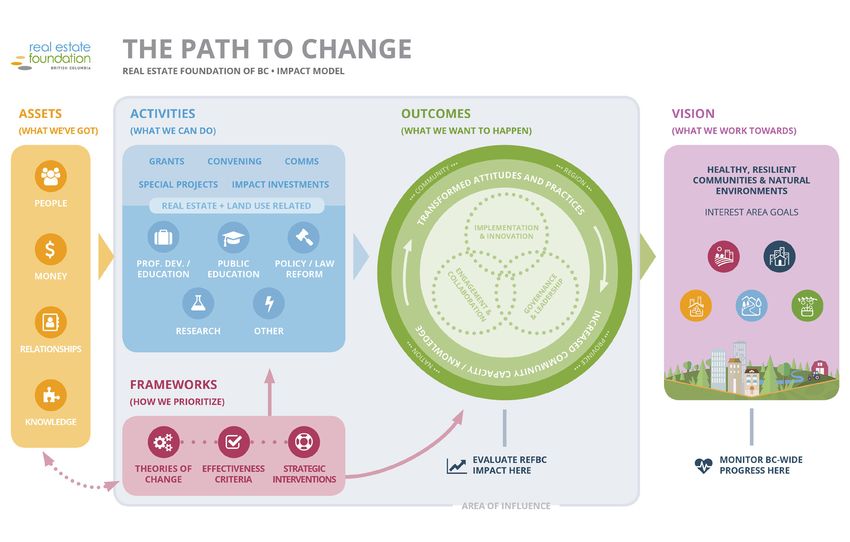
DRAFT

Introduction

The Real Estate Foundation of BC (REFBC) is a           At the Real Estate Foundation of BC, we’re on           And no organization can tackle change alone.
philanthropic organization that helps advance           a mission to transform land use attitudes and           We’re fortunate to work with community partners,
sustainable land use in BC.                             practices across these areas.                           Indigenous and non-Indigenous governments,
                                                                                                                academics, non-profits, and other funders who share
Our work supports land use and real estate practices    The verb in our mission statement – transform – is      our interests in sustainable communities and natural
that contribute to resilient, healthy communities and   central to what we do. As a foundation, we exist to     environments.
natural environments through research, education,       make change towards a more sustainable future
and law and policy reform across five interest areas:   where the needs of humans and our environment are
                                                        in balance.
         Sustainable Land Use                                                                                   For a foundation, one grant maker explained, a theory
                                                        So, what does it mean to be a ‘changemaker’? And        of change is a powerful way to promote “accountability
                                                        – more importantly – how do we go about this            and transparency. It’s a way to explain why we fund
         Built Environment Sustainability               business of making change in a meaningful and           what we are funding.” Applied to evaluation, it can help
                                                        effective way?                                          grant makers and grantees alike know if their work is
                                                                                                                achieving the changes they intend.
         Freshwater Sustainability                      No organization – no matter how well funded, staffed,
                                                        or connected – has the formula for change completely    Theory of change is one tool grant makers use
                                                        figured out. There are theories we can borrow from,     to help themselves and their grantees understand
         Local and Sustainable Food Systems             experiences we can draw from, and educated guesses      change, manage the change process, and assess the
                                                        we can make. As we do more, we learn from our           effects of their work.
                                                        successes (and failures) and become more effective in
         Professional Excellence in Real Estate         matching our work to our intended outcomes.             GRANT CRAFT

UNDERSTANDING OUR IMPACT                                                         4                                                     REAL ESTATE FOUNDATION OF BC
DRAFT

Why theories of change and impact models?                                                                          Our process

Theories of change and impact models are recognized        outcomes (that flow from our work), and the ultimate
as valuable tools for organizations that want to make a    goals we’re trying to achieve. This helps us identify
difference, because they help to:                          how and where we will measure impact, so we can be                            2015 to 2016
                                                                                                                     RESEARCH &
                                                           accountable, reflective, and adaptive.
                                                                                                                    DEVELOPMENT
 \\ Understand and identify how positive change
    happens; to help guide our work and priorities.        Theories of change and impact models are part of
                                                           an ongoing adaptive strategic planning process.                               2017
 \\ Understand the relationship between the                There is no one ‘perfect’ theory of change. These           REFINE &          June: impact model,
    activities and approaches we fund, and the             theories are a best guess of how to have influence         INTEGRATE          theories of change.
    outcomes and impacts we’re trying to achieve in        now, that we would continually test, learn from, and        MODEL
    support of our vision and goals.                       adapt.
                                                                                                                                         November: impact
 \\ Build shared understanding among our staff,                                                                        CREATE            measures, evaluation
    Board, and partners of what we are trying to do        Theories of Change and the Strategic                      IMPACT GUIDE        framework.
    and why.                                               Planning Process                                         & FRAMEWORK

 \\ Focus and align our efforts, with greater                                                                                            2018
    transparency and intention (using common                                                                          TEST WITH          March: introduce
    principles and vocabulary, and making implicit                                                                    GRANTEES           externally, test.
    assumptions explicit).                                                                                            & PARTNERS

 \\ Identify how and where to measure impact, for                                                                                        May: adapt measures,
    accountability, reflection, and adaptation.                                                                        REFINE &          framework based on
                                                                                                                        ADAPT            feedback.
 \\ Measure and assess progress; learn and adapt.

Theories of change help explain why we fund                                                                                              September:
what we are funding. By understanding how change                                                                    INCORPORATE &        incorporate into grant
occurs, it helps us identify what type of activities and                                                            COMMUNICATE          application, reporting.
approaches are likely to have the greatest influence in
achieving our intended goals.
                                                                                                                                         2019
When these are described and articulated as part of                                                                                      January: launch
                                                                                                                       LAUNCH
an impact model, we create a tool for understanding                                                                                      externally.
the relationships between our activities and intended

REAL ESTATE FOUNDATION OF BC                                                         5                                              UNDERSTANDING OUR IMPACT
DRAFT
Impact Model + Theories of Change
REFBC’s current ‘working model’ is new and we expect it to evolve as we learn, test, and make changes. It has two
major components:
Overall Impact Model Strategic Interventions
Impact Model
This model illustrates the ways our team works, For each of our five interest areas, we’ve identified
together with our grantees and other partners, to set more specific goals, desired impacts, and strategic
criteria and priorities for our activities and funded interventions.
projects that achieve outcomes leading to positive
change in land use and real estate practices. The strategic interventions represent approaches
we believe will be most influential in achieving the
Theory of Change: Impacts and Priorities
This, in turn, gets us closer to our overall vision desired impacts and outcomes, based on our research,
MANDATE: MISSION: VISION:
– for healthy, resilient communities and natural experience, and understanding of theories of change
Real estate public and professional education, real estate law reform, real To transform land use attitudes and practices through innovation, To support land use and real estate practices that contribute to
estate research and other projects intended for the public or professional stewardship and learning. resilient, healthy communities and natural environments.
good in relation to real estate activities.
environment. such as systems theory, social network theory, force SUSTAINABLE
LAND USE
BUILT
ENVIRONMENT
FRESHWATER
SUSTAINABILITY
LOCAL AND
SUSTAINABLE
PROFESSIONAL
EXCELLENCE IN
SUSTAINABILITY FOOD SYSTEMS REAL ESTATE
field theory, and market transformation theory BIG GOAL:
Land use decisions and practices promote
thriving, resilient communities and natural
BIG GOAL:
A province where built environments support
thriving, resilient communities and natural
BIG GOAL:
Freshwater ecosystems in British Columbia
are safe, sustainable and valued by all as a
BIG GOAL:
Land in BC is protected and enhanced to
support thriving, local, sustainable food
BIG GOAL:
Real estate professionals and industry partners
demonstrate leadership and innovation in
environments for current and future environments through smart community result of progressive leadership in community- systems now and in the future. contributing to sustainable land use and real
(discussed further along).
generations. planning, affordable and diverse housing, driven freshwater protection, governance and estate practices, and improved quality of life
eficient buildings and infrastructure, and active management. for BC residents.
Strategic
transportation and transit. DESIRED IMPACTS:
DESIRED IMPACTS: a Land is protected and accessible for increasing food
a Sensitive natural areas, biodiversity and natural capital DESIRED IMPACTS: production, now and in the future. DESIRED IMPACTS:
are protected and conserved. DESIRED IMPACTS: a All freshwaters in BC are in good health.
a Knowledge and capacity of decision-makers,
a Highly knowledgeable real estate professionals are
a Ecosystem and environmental health are at the practitioners and the public to support local,
a Integrated ‘smart’ communities – compact, complete, a A fully implemented, regulated, financed, and enforced sustainable food systems through land use initiatives is equipped to serve the public interest, and advise on
forefront of planning for development and natural
mixed use development and land uses with: 1) Water Sustainability Act. increased. real estate, land use and built environment trends,
resource activities.
protected green space and natural environments; 2) a A diverse population of individuals, organizations laws and standards.
a Community-to-community engagement and
efficient infrastructure, renewable energy, natural and communities act with a shared stewardship ethic a Support for sustainable land use and real estate
collaboration, between indigenous and non-indigenous
capital, and sustainable transportation; 3) good ensuring the health of our freshwater and land. practices among professionals, the public and policy
peoples, on land use decision-making and practices
access to housing, amenities, jobs and services; and 4) a Constituencies with influence engage in effective makers is fostered through cross sector collaboration.
support well-informed and appropriate uses of lands.
comfortable, well-designed places and spaces. collective decision making and exercise authority STRATEGIC INTERVENTIONS: a Professionals contribute to real estate and land use
Interventions
a Housing that meets the full spectrum of needs related towards strong freshwater protection. practices that enable resilient, healthy communities
to age, access, affordability and livability. and natural environments.
Increase land access and tenure options through
a Buildings, energy systems and infrastructure that are
#1 tools, research and innovative models coordinated
STRATEGIC INTERVENTIONS: green, efficient, healthy and renewable.
and implemented at local and regional levels
a Transportation systems that increase use of transit and
active transportation and support reduced emissions, STRATEGIC INTERVENTIONS:
Support initiatives which inform land use decision- low impact goods movement, better health outcomes Work with all levels of governments to enhance STRATEGIC INTERVENTIONS:
making with assessments and benchmarking of land use policies, planning and decision-making
#1 ecosystems and environmental health, including
and equity through walking, cycling, transit and road Revitalize freshwater policies and implement
networks linked at the community and regional level. policy tools through collaborative community- #2 that support integration of sustainable and local Build real estate and land use knowledge that
evaluation of natural capital assets. #1 food systems into community planning, urban
based watershed management, planning and #1 contributes to resilient, healthy communities and
governance. design and neighbourhood planning natural environments.
Enhance the understanding of natural capital
and how it can support community amenities, Encourage collaboration between real estate
#2 infrastructure, ecosystem services and values STRATEGIC INTERVENTIONS: Pool and expand freshwater knowledge by
#2 supporting the development of robust and industry organizations and other partners, and
through research and education initiatives. #2 build support for sustainable land use amongst
credible citizen-science.
Build public awareness and support for
#1 sustainable built environments.
real estate professionals, the public and policy
Promote innovative community engagement Build the freshwater movement through education makers.
and collaboration best practices, models and #3 and public engagement.
#3 approaches which support informed uses of lands #2 Build understanding of First Nations’ interests. Support real estate professionals in their role
and natural resources, based on research and as advisors on real estate, land use and built
education.
Implement smart growth principles through #3 environment trends, laws and standards that help
#3 integrated land use and transportation to achieve foster a high quality of life and/or serve the public
Build understanding of Indigenous peoples’ co-benefits. interest in other ways.
#4 interests
Provide support for NGOs and other change
#4 agents through funding, shared research,
monitoring and collaboration.
Make a clear case for government investment
in sustainable development: transit and active
#5 transportation, green buildings and infrastructure,
affordable housing, climate action.
Align financial tools with sustainability objectives to
reflect long-term costs and benefits in government
#6 pricing/fees, tax levers, accounting and asset
management.
UNDERSTANDING OUR IMPACT 6 REAL ESTATE FOUNDATION OF BC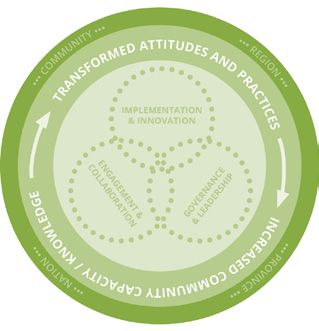
DRAFT

1 • Our Vision                                             2 • Our Assets

“Healthy, resilient communities and natural                When starting any major, strategic effort, it’s crucial
environments.”                                             to list all your assets. Resources – time, money,
                                                           people, knowledge – are the currency of change.
That’s our vision, and it’s the goal we keep in mind for   Accounting for these assets also helps organizations                People                     Money
every decision we make about grants to fund, projects      set reasonable short-term goals and make sound
to begin, and working groups to join.                      decisions.

We also know that we can’t get there alone. We’re          As a foundation that makes grants, our most
a small foundation, and we play a modest role in           obvious asset is money. In the last few years the Real          Relationships               Knowledge
the land use and real estate communities. To make          Estate Foundation of BC has granted an average of
change that lasts, we need to work with partners,          $3.5 million per year. We also have a reserve fund
listen to people with experience and expertise, and        of around $14 million, which helps to generate
to match our efforts to bigger social movements.           investment income for our grants program and
                                                           operations.                                               The world doesn’t change one person at a time. It
                                                                                                                     changes as networks of relationships form among
                                                           Other assets include our team (nine staff members         people who discover they share a common cause
                                                           and seven governors), who bring energy and                and vision of what’s possible.
                                                           knowledge, and do the work of building relationships,
                                                           evaluating grant applications, conducting research,       This is good news for those of us intent on changing
      Healthy, resilient communities                       bringing partners together, and sharing our findings.     the world and creating a positive future. Rather than
                                                                                                                     worry about critical mass, our work is to foster
         and natural environments.                         We’ve been making grants since 1988, so we also have      critical connections.
                                                           experience on our side, and relationships with non-
                                                           profits, project partners, First Nations, government,     MARGARET WHEATLEY
                                                           and industry.

                                                           Our experience and relationships help us to link
                                                           partners together, leverage resources with other
                                                           funders, and contribute ideas to project proposals -
                                                           together we hope this strengthens project impact.

REAL ESTATE FOUNDATION OF BC                                                          7                                                      UNDERSTANDING OUR IMPACT
DRAFT

        3 • Activities

        We use our assets – money, time, connections,
        experience – to carry out activities like making grants,   THE FOUNDATION CAN:
        convening working groups, communicating with
        partners, leading research projects, or making impact         Make grants to non-profits
        investments.                                                  Lead special projects
                                                                      Make impact investments
        The Real Estate Foundation of BC was created in 1985          Convene experts and decision makers
        through changes to the Real Estate Services Act.              Communicate ideas

        Under legislation, we’re mandated to support “real
        estate public and professional education, real estate      IN ONE OF OUR MANDATE AREAS:
        law reform, real estate research and other projects
        intended for the public or professional good in               Professional development and education
        relation to real estate activities.”                          Public education
                                                                      Policy and / or law reform
        That means that we use our financial assets to fund           Research
        grants and activities that include land use and real          Other projects for the public good
        estate related areas of research, education, policy and
        law reform, or other projects in the public interest.
                                                                        “Related to land use and real estate
                                                                               in British Columbia.”

                                   8                                                REAL ESTATE FOUNDATION OF BC
DRAFT

4 • Decision Frameworks
                                                                                                                          Theories of Change We Draw From

When we’re allocating our assets, we want to fund projects that incorporate strategies and approaches
that are useful and influential. To help guide our funding criteria and priorities, we use frameworks and theories        MARKET TRANSFORMATION THEORY
of change to identify which activities and approaches are likely to be most impactful.
                                                                                                                          Different players, opportunities, and barriers
Theories of Change                                          Strategic Interventions                                       at different market stages. Tailor interventions
                                                                                                                          to suit the most relevant market segments
There are several models for predicting the kinds           For each of our interest areas, we’ve also identified         and stage. (e.g. Right now we need to ‘scale
of activities that will influence social change. In our     strategic interventions to help guide the specific type       up’ adoption of green building practices with
work, we’ve borrowed elements from market                   of work we want to prioritize our activities around (see      incentives and training.)
transformation theory, systems theory, force field          Appendix A). These actions work towards higher level
theory, and social network theory (see sidebar). We         desired impacts and goals. Identifying these strategic        SYSTEMS THEORY
draw from these in our effectiveness criteria, and in       interventions has been a big part of our work over the
choosing strategic interventions we believe are best        past year. It has helped us better articulate our interests   We are part of a complex web of
placed to influence change in each of our interest areas.   and focus our efforts within our grants program.              relationships. Influential points of leverage
                                                                                                                          within a complex system can have ‘ripple
Effectiveness Criteria                                      Some of our strategic priorities or interventions             effects’ on the whole. (e.g. better integrate
                                                            have been informed by very in-depth research,                 land use and transportation.)
Another framework we use in reviewing grants is             collaboration, and theories of change (as is the case
referred to as our effectiveness criteria. (On our          with the built environment, fresh water, and food             FORCE FIELD THEORY
website, we call these “elements of a good project.”)       systems) and the others have been informed at a
                                                            higher level by our general knowledge, experience,            Political, economic, social/cultural, technical,
When making funding decisions, we choose projects that:     and Board direction (as is the case for real estate and       and environmental forces at play; these
                                                            land use).                                                    make certain interventions particularly
 \\ Respond to significant need or opportunity                                                                            effective at certain times. (e.g. sudden
 \\ Demonstrate leadership and apply new ideas or           We believe these strategic interventions are well             drought = public concern about climate
    approaches                                              positioned to target action in three main outcome             change = timely opportunity for public
 \\ Foster collaboration and partnerships                   areas that are key to making change and getting us            education.)
 \\ Are sustainable and long-lasting                        closer to our vision and goals:
 \\ Can be scaled up or replicated by another group                                                                       SOCIAL NETWORK THEORY
                                                             \\ Engagement and collaboration
These criteria have been chosen from theories of             \\ Innovation and implementation                             Many orgs working in tandem; actions
change and from experience. REFBC has funded                 \\ Governance and leadership                                 may be complementary or conflicting.
projects for more than 25 years and we’ve seen how                                                                        Coordinating and aligning efforts is key (e.g.
these qualities can affect the success of a project.                                                                      BC Water Funders Collaborative).

REAL ESTATE FOUNDATION OF BC                                                            9                                                      UNDERSTANDING OUR IMPACT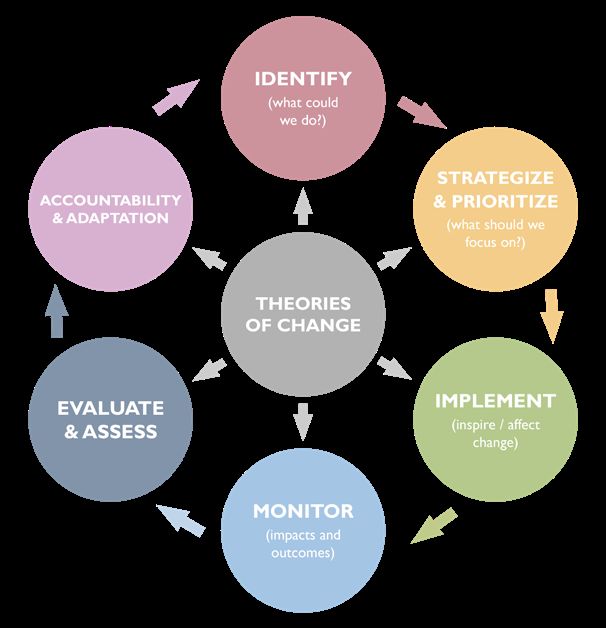
DRAFT

5 • Outcome Areas

So far we’ve covered what we have (our assets) and what we do (activities) and how we do it (theories of change,
effectiveness criteria, strategic interventions). These fall well within our sphere of control. Our activities and how
we do them generate outcomes that we believe will increase community capacity and knowledge and transform
attitudes and practices in ways that lead to significant change. We think of outcomes as the ‘result’ of the work
we fund: the deliverables and impacts our grantees achieve, the community benefit from an impact investment,
or new policy directions stemming from our research.

These outcomes happen at different geographic scales (local, regional, provincial, national), and in three key ways:

Engagement and collaboration                                 Innovation and implementation                               Governance, decision making, and leadership

 \\ Networks and collaborations that facilitate                \\ Research, training, education, and pilots that          \\ Improved land use processes and decision making.
    coordinated action on new policies or practices.              support development and implementation of
                                                                  Innovative new tools or approaches.                        For example:
    For example:                                                                                                             » Fair Mining Collaborative’s Best Practices Mining
    » BC Water Funders Collaborative                              For example:                                               Code
    » Pembina’s Thought Leaders Forum                             » Canada Green Building Council’s Establishment
                                                                  of a Building Energy Benchmarking Framework             \\ Community engagement and involvement in
 \\ Mobilized action around a shared vision and                   report                                                     land use governance, management, and decision
    goals.                                                        » Adoption of the BC Energy Step Code                      making.
                                                                  » Pembina’s B.C. Shale Scenario Tool
    For example:                                                  » Affordable housing through New Market Fund               For example:
    » Coquitlam River Watershed Roundtable’s                      and Small Housing models                                   » Cowichan community based watershed
    watershed planning process                                    » REEP workshops for REALTORs                              governance pilot
                                                                  » Richmond’s pilot training on building energy             » Wildsight’s citizen water monitoring project
 \\ Building capacity and knowledge to develop and                benchmarking for property managers                         » Coquitlam River watershed plan
    deliver new tools and approaches.
                                                                                                                          \\ Effective and progressive new laws, polices, and
    For example:                                                                                                             regulations.
    » Watersheds 2016, 2018 forums
    » REFBC’s Building Change report                                                                                         For example:
                                                                                                                             » Water Sustainability Act and regulations
                                                                                                                             » BC Law Institute’s Strata Property Act law reform
                                                                                                                             project

UNDERSTANDING OUR IMPACT                                                                 10                                                   REAL ESTATE FOUNDATION OF BC
DRAFT
And Back to: 1 • Our Vision
If we’ve judged correctly, the activities and approaches
we identified as most influential will lead to outcomes Healthy, resilient communities
that bring us closer to our vision of healthy, resilient
communities and natural environments supported by: and natural environments.
\\ Sustainable Land Use
\\ Built Environment Sustainability
\\ Freshwater Sustainability
\\ Local and Sustainable Food Systems
\\ Professional Excellence in Real Estate
Vision
Outcomes
Theory of
Assets
Change
Frameworks
Activities Prince Rupert, BC / Hedy Rubin
REAL ESTATE FOUNDATION OF BC 11DRAFT Described on pages 6 to 11 UNDERSTANDING OUR IMPACT 12 REAL ESTATE FOUNDATION OF BC
DRAFT
Theory of Change: Goals, Desired Impacts, and Strategic Interventions
The Real Estate Foundation of BC Mandate Mission Vision
is a philanthropic organization that helps advance Real estate public and professional education, real estate law reform, real estate research, and other projects intended for the To transform land use attitudes and practices through To support land use and real estate practices that contribute
sustainable land use in British Columbia. public or professional good in relation to real estate activities. innovation, stewardship, and learning. to resilient, healthy communities and natural environments.
BUILT ENVIRONMENT FRESHWATER LOCAL AND SUSTAINABLE PROFESSIONAL EXCELLENCE
SUSTAINABLE LAND USE
SUSTAINABILITY SUSTAINABILITY FOOD SYSTEMS IN REAL ESTATE
BIG GOAL BIG GOAL BIG GOAL BIG GOAL BIG GOAL
Land use decisions and practices promote Built environments support a high quality of life Freshwater ecosystems in British Columbia are Land is protected and enhanced to support Real estate professionals and industry partners
thriving, resilient communities and natural without undermining natural systems. healthy, sustainable, and valued. thriving, local, sustainable food systems now demonstrate leadership and innovation in
environments for current and future and in the future. contributing to sustainable land use and real
generations. estate practices, and improved quality of life for
DESIRED IMPACTS DESIRED IMPACTS BC residents.
DESIRED IMPACTS DESIRED IMPACTS
` Integrated smart growth communities - compact, ` All fresh waters in BC are in good health.
` Sensitive natural areas, biodiversity, and natural complete, mixed use development and land uses with: ` The Water Sustainability Act is fully implemented, ` Land is protected and accessible for increasing DESIRED IMPACTS
capital are valued, protected and conserved. \ Protected green space and natural environments regulated, financed, and enforced. food production.
` Ecosystem and environmental health are at the \ Efficient infrastructure, renewable energy, ` People, organizations and communities act with a ` Decision makers, practitioners, and the public ` Highly knowledgeable real estate professionals are
forefront of planning for development and natural natural capital, and sustainable transportation shared stewardship ethic to ensure the health of have the knowledge and capacity to support local, equipped to serve the public interest and advise
resource activities. \ Good access to housing, amenities, jobs, and fresh water and land. sustainable food systems. on real estate, land use, and built environment
` Community-to-community engagement and services ` Communities engage in effective collective trends, laws, and standards.
collaboration, between Indigenous and non- \ Comfortable, well-designed places and spaces decision making and exercise authority towards ` Industry leaders collaborate with researchers,
Indigenous peoples, supports well-informed and ` Housing that meets the full spectrum of needs strong freshwater protection. STRATEGIC INTERVENTIONS planners, and policy makers to support sustainable
appropriate uses of lands. related to age, access, affordability, and livability. ` Freshwater protection, governance, and land use and real estate practices.
` Buildings, energy systems, and infrastructure that management are driven by progressive community 1 Increase land access and tenure options through ` Professionals contribute to real estate and land use
are green, efficient, healthy, and renewable. leadership. tools, research, and innovative models coordinated practices that enable resilient, healthy communities
STRATEGIC INTERVENTIONS ` Transportation systems move people and goods and implemented at local and regional levels. and natural environments.
within communities and regions in ways that 2 Work with all levels of governments to enhance
1 Inform land use decision-making with are healthy, efficient, and fair. Public transit, STRATEGIC INTERVENTIONS land use policies, planning, and decision-making in
assessments and benchmarking of ecosystems active transportation (walking, cycling), and road ways that integrate sustainable, local food systems STRATEGIC INTERVENTIONS
and environmental health, including evaluation of networks support equitable mobility, reduced 1 Revitalize freshwater policies, implement policy with broader community planning.
natural capital assets. emissions, and better health outcomes. tools, and build community capacity for watershed 3 Conduct research, economic analysis, and 1 Build real estate professionals’ knowledge of
2 Improve understanding of natural capital and how management, planning, and governance. modelling to inform decision making on sustainable land use and real estate practices.
it can support community amenities, infrastructure, 2 Pool and expand freshwater knowledge through agricultural and food land planning. 2 Connect real estate industry organizations with
ecosystem services, and values through research STRATEGIC INTERVENTIONS coordinated, robust, and credible community- other partners to collaborate and build support for
and education initiatives. based monitoring and reporting. sustainable land use practices amongst real estate
3 Foster new models and approaches to land use 1 Build public awareness and support for sustainable 3 Build the freshwater movement through education professionals, the public, and policy makers.
planning and policy development, including built environments. and public engagement. 3 Support real estate professionals in their role
community engagement and collaboration, so that 2 Build understanding of Indigenous peoples’ interests. 4 Support Indigenous communities’ capacity as advisors on real estate, land use, and built
diverse interests and knowledge are reflected in 3 Integrate land use and transportation planning in for freshwater management, planning, and environment trends, laws, and standards that help
land use decisions, programs, policies, codes, and ways that reflect smart growth principles and achieve governance. foster a high quality of life and/or serve the public
designations. social, economic, and environmental benefits. interest in other ways.
4 Build understanding of Indigenous peoples’ 4 Support NGOs and other change agents through
interests. funding, shared research, monitoring, and
collaboration.
5 Make a clear case for government funding and
other investments in sustainable development (e.g.
transit and active transportation, green buildings and
infrastructure, affordable housing, climate action).
6 Align financial tools (fees, pricing, taxes,
accounting, asset management) with sustainability
objectives to reflect long-term costs and benefits.
Described on pages 26 to 52
REAL ESTATE FOUNDATION OF BC 13 UNDERSTANDING OUR IMPACTDRAFT
Impact Assessment Framework
Based on our overall impact model and theories of Guiding Principles In 2018, we will be testing and getting feedback on
change, REFBC is working to develop a framework this draft framework with our grantees and other
and process to measure, evaluate, and report out on \\ Doable – Impact assessment can be challenging. partners. This will help us to further develop, refine
our grant-funded projects (activities, progress, and We want our approach to be simple enough so as and adapt questions or measures which will become
impacts). This will help us be accountable, learn from not to burden our grantees and ourselves. part of our final reporting process for grant funded
our experiences, and support strategic conversations. projects. Insights and findings from these final reports
\\ Meaningful – We want it to be useful – to inform will form the basis for higher level reports on REFBC
Our draft evaluation framework is structured to our strategies, programs, and decision-making. or project activities and impacts.
identify indicators, measures, and methods of We are seeking both quantitative and qualitative
reporting out for three areas of our impact model: measures, recognizing that stories of impact are We are a small grant funder (Foundation) and we want
often as telling and powerful as numbers and data. to make the biggest impact we can. We are seeking
1. Overall project activities, interest areas, funding meaningful insights on the relationship between the
investments \\ Flexible – We want to be realistic – Impact activities and approaches we fund, and the outcomes
2. Desired impacts and strategic interventions Assessment is one of many ways to gain insight and impacts we’re trying to achieve in support of our
3. Outcome areas and direction. We work in five complex interest vision and goals. Learning from our projects’ impacts
areas on projects of varied size, and we plan to will help us make better decisions.
These are the areas that REFBC and its partners have adapt and customize our approach as needed.
the most direct influence over in the change process, Impact assessment is new for REFBC. We see it as a
in terms of the amount of funds we contribute \\ Collaborative – We want to design and implement learning process, with results shared among grantees
and leverage, the extent and type of projects and it in collaboration with grantees and others. and other partners.
organizations we support, and the activities and
impacts they achieve. \\ Transparent – We want to use it as a learning
process – with results and lessons shared among
grantees and partners.
UNDERSTANDING OUR IMPACT 14 REAL ESTATE FOUNDATION OF BCDRAFT
A • Overall Project Activities, Interest Areas, Funding Investments
Reporting Questions/Measures [DRAFT] How We’ll Use This Data
1. Describe the key project objectives and results. Narrative examples of the types of projects we fund.
Narrative summary which shares your story (usually ~250-500 words, as appropriate to the project). Include
photos if appropriate.
2. Which of the Foundation’s mandate areas apply to your project? Percentage and dollars ($) of REFBC funding dedicated
You may choose more than one option. to each of our mandate areas.
Research Professional Education
Law / Policy Analysis and Reform Public Education
3. Which of our interest areas does the project focus on? Number of REFBC projects (by interest area).
Only select the areas that apply to your project significantly. You may choose more than one option.
Percentage and dollars ($) of REFBC funding by
Built Environment Sustainability Sustainable Land Use interest area.
Freshwater Sustainability Professional Excellence in Real Estate
Local and Sustainable Food Systems
4. What were the total cash costs for the project? Extent of REFBC funding leveraged with dollars
($) from other funders to support overall project
investments. (REFBC grants overall and by interest
area.)
5. What was the amount of the REFBC grant funding for this project?
REAL ESTATE FOUNDATION OF BC 15 UNDERSTANDING OUR IMPACTDRAFT
A • Overall Project Activities, Interest Areas, Funding Investments (continued)
Reporting Questions/Measures [DRAFT] How We’ll Use This Data
6. What is the duration of this project? Not reported out directly but could be used to group
other responses by shorter term projects vs. multi-
Short term (less than 2 years) Multi-year (2 years or more) year projects.
7. At what scale(s) is this project primarily operating? Could report out # of projects and $ value for each
You may choose more than one option. scale and region of BC.
Community / Local Provincial For other measures, responses could be grouped
by geographic scale (e.g. were certain types of
Regional / Bioregional / Watershed National strategic interventions or outcomes more/less likely to
happen at certain scales? What type of innovation is
happening in which areas of BC? Where and at what
8. Please indicate in which region(s) this project operates. level is engagement and collaboration happening?
You may choose more than one option. Did projects involving collaboration and partnerships
most often happen at a community/regional scale?
Cariboo & Northern BC Okanagan & Southern Interior Other scales?)
Fraser Valley Vancouver Island
Kootenay Region Victoria & Gulf Islands
Lower Mainland & Howe Sound All regions of BC
END OF SECTION
UNDERSTANDING OUR IMPACT 16 REAL ESTATE FOUNDATION OF BCDRAFT
B • Strategic Interventions and Desired Impacts
Reporting Questions/Measures [DRAFT] How We’ll Use This Data
9. How has the project directly contributed toward the Foundation’s land use and real estate mandate, Narrative examples of the types of how the projects
and our mission to transform land use attitudes and practices through innovation, stewardship, and we fund are contributing to our mandate and mission.
learning?
10. Which strategic interventions were employed by your project? (please select up to 4) Quantitative / qualitative assessment of which
Depending on the scope of your project, select 1-4 of the strategic interventions listed in REFBC’s Theory of strategic interventions are considered most influential
Change that best reflect the most influential strategies employed in your project. in our grant funded projects. Could group by larger /
multi year projects vs smaller / shorter term projects.
Checkboxes: Theory of Change / strategic interventions Could also group by geographic scale.
11. Which strategic intervention(s) do you think had the greatest impact? In what way? Why? Qualitative / anecdotal – for each of our strategic
interventions, REFBC staff could identify, list, or
illustrate ‘highlights’ of what was implemented and
achieved through REFBC grant funding.
12. Which desired impacts did/will your project contribute to most significantly? REFBC could show amount of our grant dollars ($)
Choose from list of REFBC desired impacts from our Theory of Change. You may choose more than one working most directly towards each of the desired
option and you made add impacts we hadn’t anticipated in our Theory of Change. impacts (and identify other ‘unanticipated’ impacts as
well).
Checkboxes: Theory of Change / desired impacts
Could list or describe projects contributing towards a
given impact.
REAL ESTATE FOUNDATION OF BC 17 UNDERSTANDING OUR IMPACTDRAFT
B • Strategic Interventions and Desired Impacts (continued)
Reporting Questions/Measures [DRAFT] How We’ll Use This Data
13. Please tell a story that illustrates the most significant change (in relation to your project’s desired REFBC staff could look for themes, and capture key
impacts) that your project has created/inspired. impacts and insights achieved through our grant
See REFBC’s desired impacts and consider a change that may be related to those impacts in any of REFBC’s funded projects.
five interest areas. Choose the change you feel is most significant and explain why you chose this particular
change. Why is this story significant for you? Feel free to include testimonials from project participants or Could share these stories for each interest area.
end users.
• What were contributing factors to the change?
• Who was involved? Where, when, how?
• Why is this significant to you? How did it influence an important outcome / impact?
14. What is a major challenge or barrier to this project’s desired impacts that you feel will need to be REFBC staff could group and capture key themes and
addressed for further progress? insights for each interest area.
Could help us identify needs / gaps for future funding
or to share with grantees and partners working in this
area.
END OF SECTION Helps identify system barriers. Could be a reason to
collaborate with other groups to address.
UNDERSTANDING OUR IMPACT 18 REAL ESTATE FOUNDATION OF BCDRAFT
C • Outcome Areas
Reporting Questions/Measures [DRAFT] How We’ll Use This Data
15. Please refer to your list of partners from your application. Which partner organizations were directly Could report out on the number and type of
engaged in your project? organizations/ partners engaged or involved in REFBC
Please include any from your original application plus any others added during the project. funded projects.
Could report out for REFBC grants as a whole and/or
by interest area.
Showing by total shows the extent of our projects’
16. Please indicate how many of your partners fit into each of the categories below. reach.
NGO Industry Groups & Associations Showing proportion shows the nature, diversity
or ‘mix’ of groups directly engaged/collaborating
First Nations Academic / School / Post-Secondary through REFBC funded projects.
Education
Local / Regional Government Showing by interest area helps us understand if there
Media / Communications are trends or gaps in engagement by interest area.
Provincial or Federal Government
Provides insight into engagement and collaboration
outcome area.
REAL ESTATE FOUNDATION OF BC 19 UNDERSTANDING OUR IMPACTDRAFT
C • Outcome Areas (continued)
Reporting Questions/Measures [DRAFT] How We’ll Use This Data
17. Please refer to your list of deliverables from your REFBC grant funding agreement (listed in Schedule This will help us understand the type, extent, and mix
A). List (with web-links, when available) the key project deliverables that have been achieved during the of activities and deliverables coming out of REFBC
grant period for the project. grant funded projects.
These may be the same, similar or different to the grant agreement list, as appropriate.
Feedback on what type of deliverables are most
impactful could offer valuable insight and direction for
REFBC, our grantees, and other partners.
May help us better understand how project
18. Which project deliverable(s) do you think had the greatest impact? In what way and why? deliverables affect change by increasing community
How did they increase community capacity and knowledge? How did they transform attitudes and practices? capacity and knowledge, and / or transforming land
use attitudes and practices (or through other ways
identified by the grantee). REFBC can gain / share
insights from this.
19. Please quantify how many of each type of deliverable were produced by this project. If you do not
have deliverables in a category, please leave it blank.
Convening (events, conferences, networking, community engagement, roundtables, forums)
Training, educational workshops, webinars
Studies, reports, data and mapping, publications, policy and planning documents
Program development/piloting/testing/implementation
Knowledge building or decision-making tools, toolkits, portals, modelling, analysis, or assessment tools
Strategic planning, visioning, Terms of Reference / MOUs for collaborative processes
UNDERSTANDING OUR IMPACT 20 REAL ESTATE FOUNDATION OF BCDRAFT
C • Outcome Areas (continued)
Reporting Questions/Measures [DRAFT] How We’ll Use This Data
20. Please list the number of individual participants impacted by the deliverables in this project. This may be challenging to track for some projects. If
If you do not have deliverables in a particular category, please leave it blank. it can be tracked, it could be used to report out on the
total number of individuals or organizations engaged
in REFBC grant-funded projects. This could be broken
down by interest area, mandate area, geographic
scale, etc.
21. Please list the number of organizations impacted through the deliverables in this project Will need to test the practicality of these measures.
If you do not have deliverables in any category, please leave it blank.
Provides insight into engagement and collaboration
outcome area.
22. In which region(s) do you think your project had the greatest impact? Proportion of REFBC funds invested in impactful work
You may choose more than one option. in each region of BC (could be for REFBC overall, and
/ or by interest area, and / or by mandate area). Areas
Cariboo & Northern BC Okanagan & Southern Interior of BC where impactful work is happening.
Fraser Valley Vancouver Island Could help us understand needs, gaps, and
opportunities for scaling up or sharing influential work.
Kootenay Region Victoria & Gulf Islands
This is similar to, but slightly different from, question 8
Lower Mainland & Howe Sound All regions of BC (it may seem redundant).
REAL ESTATE FOUNDATION OF BC 21 UNDERSTANDING OUR IMPACTDRAFT
C • Outcome Areas (continued)
Reporting Questions/Measures [DRAFT] How We’ll Use This Data
23. At which scale(s) do you think your project had the greatest impact? Insight into what level the most significant impacts
You may choose more than one option. are happening at (could be by interest area, and/or by
mandate area).
Community / Local Provincial
Regional / Bioregional / Watershed National
24. Please describe ground-breaking or influential outcomes in these areas: REFBC staff could look for themes, and capture
ground-breaking impacts achieved through our grant
• Engagement and Collaboration. projects in each of the outcome areas. Could share
• Innovation and Implementation; and/or these stories for each interest area.
• Governance, Decision Making, and Leadership.
END OF SECTION
UNDERSTANDING OUR IMPACT 22 REAL ESTATE FOUNDATION OF BCDRAFT
D • Feedback on Process
Feedback Questions [DRAFT] How We’ll Use This Data
1. Do you think these questions are too much for grantees to report out on? Answers will help us understand the effort needed
from grantees to complete the impact assessment
survey.
2. Do you have any feedback on which questions you would suggest eliminating or changing and why? Answers will help us understand which questions were
useful, repetitive, and / or missing.
3. Do you have any suggestions for valuable questions that we are missing?
4. Approximately how long did it take you to report out on these questions/measures? Answers will help us understand the effort needed
from grantees to complete the impact assessment
survey.
5. Compared to other final reporting forms you have filled out, how does this one compare?
• Clarity?
• Meaningfulness?
• Time and effort required relative to its purpose/function/importance?
REAL ESTATE FOUNDATION OF BC 23 UNDERSTANDING OUR IMPACTDRAFT
D • Feedback on Process (continued)
Feedback Questions [DRAFT] How We’ll Use This Data
6. How interesting or helpful was the explanatory information provided? Answers will help us understand where grantees
look for information. We’ll also learn about which
• REFBC Impact Guide communications formats work best and which formats
• REFBC Theory of Change website information need improvement.
• Webinar
• Explanatory info contained within the reporting form/questions?
• Any suggestions for improvements or additions?
END OF SECTION
UNDERSTANDING OUR IMPACT 24 REAL ESTATE FOUNDATION OF BCDRAFT
Conclusion: Moving Forward
We see this guide as a starting point for a larger Moving forward
conversation about the use of impact assessment to
inform and improve both the impact of grant-funded \\ We’re a small grantmaker and we want to make
work and the Foundation as a whole. The impact the biggest impact that we can.
assessment function will continue to evolve, and we
welcome feedback to help shape that process. \\ Evaluation and impact assessment is new for
REFBC.
\\ More information about the projects we fund will
Philanthropy is about making choices, and there are help us to make better decisions (like, what areas
many right answers. need more funding, stronger partnerships, which
are going through change, etc.)
It’s easy to be overwhelmed.
\\ We’re starting small by testing and piloting with
And it’s easy to feel that no matter what you do, no a small group of grantees in 2018. We hope to
matter how thoughtful you are, your efforts are small expand with a full launch for our whole grant
compared to the size of the problems in the world, program by 2019.
for philanthropy can be a confounding mixture of
power and powerlessness. \\ We hope to learn and adapt as we go, and we’re
interested in any (and all) feedback grantees
KATHERINE FULTON share with us.
Kitimat, BC / Hedy Rubin
REAL ESTATE FOUNDATION OF BC 25 UNDERSTANDING OUR IMPACTDRAFT
Appendix A: REFBC Goals + Priorities
Our mission is to transform land use attitudes and Understanding our interest areas The Real Estate Foundation of BC
practices. That’s a big mission and a wide scope. To
help narrow our focus, we’ve chosen five interest areas Big goal: Mandate:
related to land use and real estate:
Our vision of a better future. Real estate public and professional education, real
\\ Sustainable Land Use estate law reform, real estate research, and other
\\ Built Environment Sustainability Desired impacts: projects intended for the public or professional good
\\ Freshwater Sustainability in relation to real estate activities.
\\ Local and Sustainable Food Systems Evidence and specific examples of the change we’re
\\ Professional Excellence in Real Estate working towards. Mission:
For each interest, we’ve stated a big goal, outlined Strategic interventions: To transform land use attitudes and practices through
desired impacts, and listed strategic interventions. innovation, stewardship, and learning.
In the sections following, we’ve also highlighted Actions we expect will lead to the change we want to
strategies and projects that can act as examples of see. Whenever possible, we align REFBC’s work and Vision:
these interventions. grantmaking to these interventions.
To support land use and real estate practices that
These strategies and examples have been identified contribute to resilient, healthy communities and
through an adaptive process – they will continued to natural environments.
be reviewed, informed, and adapted by knowledge
and insights from past grant funded projects, ongoing
research and engagement with our partners, and the
findings from our impact assessment work.
UNDERSTANDING OUR IMPACT 26 REAL ESTATE FOUNDATION OF BCDRAFT
Sustainable Land Use
Big Goal
Land use decisions and practices promote thriving, resilient communities and natural environments for current and future generations.
Desired Impacts Strategic Interventions
» The change we want to see. » We want to fund projects that...
`` Sensitive natural areas, biodiversity, and 1 Inform land use decision-making with
natural capital are valued, protected and assessments and benchmarking of ecosystems
conserved. and environmental health, including evaluation of
natural capital assets.
`` Ecosystem and environmental health
are at the forefront of planning for 2 Improve understanding of natural capital and
development and natural resource how it can support community amenities,
activities. infrastructure, ecosystem services, and values
through research and education initiatives.
`` Community-to-community engagement
and collaboration, between Indigenous 3 Foster new models and approaches to land use
and non-Indigenous peoples, supports planning and policy development, including
well-informed and appropriate uses of community engagement and collaboration, so
lands. that diverse interests and knowledge are reflected
in land use decisions, programs, policies, codes,
and designations.
4 Build understanding of Indigenous peoples’
interests.
Columbia Basin / REFBC
REAL ESTATE FOUNDATION OF BC 27 UNDERSTANDING OUR IMPACTDRAFT
Sustainable Land Use
Project Strategies + Examples
» Grant-funded projects that demonstrate strategic interventions.
Strategic Intervention #1
Inform land use decision-making with \\ Conduct research on assessing the cumulative
assessments and benchmarking of ecosystems impacts of development that informs land use
and environmental health, including evaluation of decisions at local, regional, and provincial levels.
natural capital assets.
For example:
\\ Conduct research (which may include a
combination of outreach, data collection, ¤¤ The University of Northern BC Cumulative
mapping, indicators, and/or monitoring Impacts Research Consortium is developing
initiatives) that supports informed land use new tools and methods for assessing and
decisions. monitoring environmental, social, and health
impacts of resource development across
For example: northern BC.
¤¤ Thompson Rivers University is establishing \\ Outreach to share information and provide land
a Centre for Ecosystem Reclamation to use planners and policy-makers with knowledge
establish biodiversity and ecosystem and tools to make the best decisions.
baselines before mining disturbances take
place, and to use them as a monitoring tool Access road near Dawson Creek / Stephanie Butler
to meet ecosystem recovery benchmarks.
¤¤ Peace River Regional District’s Regional
Groundwater and Aquifer Baseline Project BC Tomorrow (2017 • $31,500)
helps increase understanding of regional Has developed an education tool to help students, teachers
groundwater resources and water quality, and residents understand the impacts of land use decisions
and shares that information with PRRD and explore options for balancing human and ecological
residents. needs.
UNDERSTANDING OUR IMPACT 28 REAL ESTATE FOUNDATION OF BCDRAFT
Sustainable Land Use
Project Strategies + Examples (continued)
» Grant-funded projects that demonstrate strategic interventions.
Strategic Intervention #2
Improve understanding of natural capital and \\ Implement asset management systems and \\ Analyze and pilot land use policies and programs
how it can support community amenities, processes that include natural capital. thatintegrate social, environmental, economic,
infrastructure, ecosystem services, and values and cultural objectives. For instance, programs
through research and education initiatives. For example: that help municipalities to conserve and enhance
the natural capital that supports civic services
\\ Develop assessment tools to evaluate the ¤¤ Smart Prosperity is creating pilot examples, (e.g. water use, flood protection).
potential long-term impacts of land use a business case, incentives, and tools for
development options and ensure land use municipalities to conserve and enhance For example:
planners and decision-makers have as much the natural capital that supports civic
information as possible. services (e.g. storm water management, ¤¤ The David Suzuki Foundation developed
water purification, disaster risk reduction) innovative funding mechanisms to help
For example: by increasing the use of natural capital municipalities protect and enhance their
measurement within asset management green spaces.
¤¤ The Ministry of Community, Sport and systems at the municipal level.
Cultural Development piloted and offered ¤¤ The Windermere District Farmers Institute
training on a Community Lifecycle researched and piloted a payment for
Infrastructure Costing (CLIC) Tool, which ecosystems services program (Farmland
compares long term infrastructure costs of Advantage) to help offset the cost of land
land use scenarios. management interventions that enhance
ecological services on farmland.
REAL ESTATE FOUNDATION OF BC 29 UNDERSTANDING OUR IMPACTDRAFT
Sustainable Land Use
Project Strategies + Examples (continued)
» Grant-funded projects that demonstrate strategic interventions.
Strategic Intervention #3
Foster new models and approaches to land use \\ Build public understanding of the relationship \\ Support innovative processes to ensure/enable
planning and policy development, including between land use and social, environmental, community engagement in determining the
community engagement and collaboration, so that economic and cultural outcomes. future uses of lands and natural resources
diverse interests and knowledge are reflected in (particularly in Indigenous territories which may
land use decisions, programs, policies, codes, and For example: be under-served or under-represented).
designations.
¤¤ The Fair Mining Collaborative created Fair For example:
\\ Ensure that professionals and the public have Mining Practices: A New Mining Code for BC
the appropriate knowledge to make decisions to support community education on land use ¤¤ Yellowstone to Yukon (Y2Y) has worked with
that are informed by the latest research and and mining policies. groups in the Peace Region to consider
understanding of issues. treaty rights and values in the context of
cumulative effects from resource industries.
For example: A First Nations led working group engaged
community members and partners to
¤¤ SFU’s Adaptation to Climate Change develop a cumulative effects framework for
Team is researching and analyzing climate the Murray River watershed.
change adaptation policy, implications, and
resources for municipal governments and
First Nations, and recommending actions
to drive policy, governance, and financing
for urban, coastal, and watershed resilience.
This includes delivering education and Sierra Club of BC Foundation (2017 • $90,000)
outreach resources for practitioners and Is working with residents to map endangered rainforest ecosystems and conservation values
professional associations on responsibilities on South Vancouver Island. These maps will inform regional planning, support First Nations-
for sustainability planning. led land use planning, facilitate financing options, and strengthen a shared conservation
vision.
UNDERSTANDING OUR IMPACT 30 REAL ESTATE FOUNDATION OF BCYou can also read


