BAML Global Metals, Mining and Steel Conference - Glenn Kellow President and CEO May 2019 - Peabody ...
←
→
Page content transcription
If your browser does not render page correctly, please read the page content below
BAML Global
Metals, Mining
and Steel
Conference
Glenn Kellow
President and CEO

May 2019

Statement on Forward-Looking Information
This presentation contains forward-looking statements within the meaning of the securities laws. Forward-looking statements can
be identified by the fact that they do not relate strictly to historical or current facts. They often include words or variation of words
such as "expects," "anticipates," "intends," "plans," "believes," "seeks," "estimates," "projects," "forecasts," "targets," "would,"
"will," "should," "goal," "could" or "may" or other similar expressions. Forward-looking statements provide management's current
expectations or predictions of future conditions, events or results. All statements that address operating performance, events or
developments that we expect or anticipate will occur in the future are forward-looking statements. They may include estimates of
revenues, income, earnings per share, cost savings, capital expenditures, dividends, share repurchases, liquidity, capital structure,
market share, industry volume, or other financial items, descriptions of management’s plans or objectives for future operations, or
descriptions of assumptions underlying any of the above. All forward-looking statements speak only as of the date they are made
and reflect the company's good faith beliefs, assumptions and expectations, but they are not guarantees of future performance or
events. Furthermore, the company disclaims any obligation to publicly update or revise any forward-looking statement, except as
required by law. By their nature, forward-looking statements are subject to risks and uncertainties that could cause actual results to
differ materially from those suggested by the forward-looking statements. Factors that might cause such differences include, but are
not limited to, a variety of economic, competitive and regulatory factors, many of which are beyond the company's control, that are
described in our Annual Report on Form 10-K for the fiscal year ended Dec. 31, 2018, as well as additional factors we may describe
from time to time in other filings with the SEC. You may get such filings for free at our website at www.peabodyenergy.com. You
should understand that it is not possible to predict or identify all such factors and, consequently, you should not consider any such
list to be a complete set of all potential risks or uncertainties.

                                                                                                                                   2
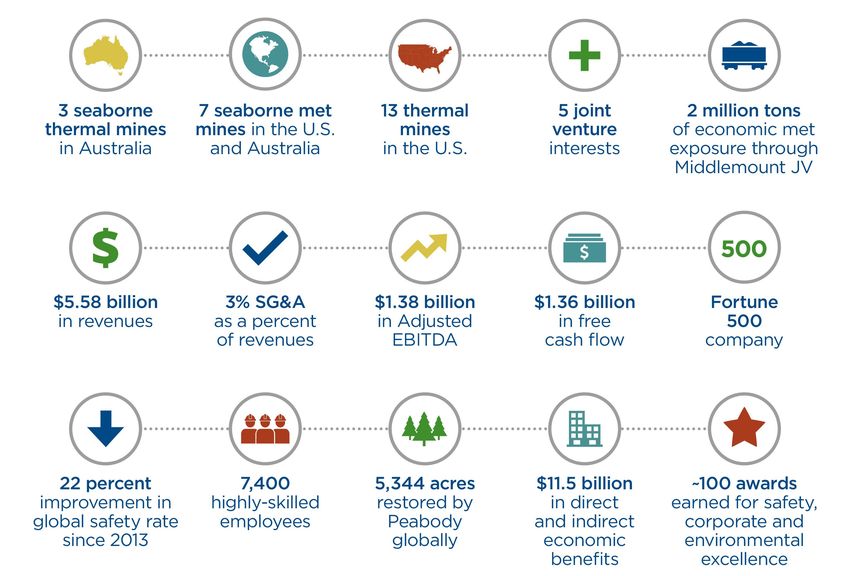
Peabody: Leading Global Pure-Play Coal Producer

        Note: Adjusted EBITDA and Free Cash Flow are non-GAAP metrics. Refer to the reconciliation to the nearest
        GAAP measures in the appendix. All metrics for calendar-year 2018, with the exception of awards received , which   3
        cover the past decade.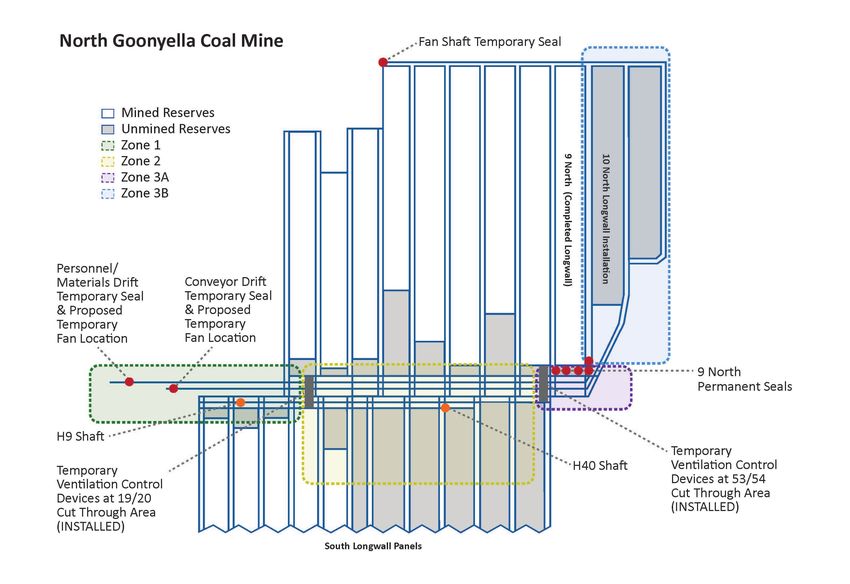
Peabody Implementing Multiple Strategies in Support
of Mission to Create Superior Value for Shareholders

1) Continuing to reweight our investments toward greater
seaborne thermal and seaborne metallurgical
coal access to capture higher-growth Asian demand

   2) Optimizing our lowest-cost and highest-margin
   U.S. thermal assets in a low-capital fashion
   to maximize cash generation

         3) Executing our financial approach of generating
         cash, maintaining financial strength, investing
         wisely and returning cash to shareholders
                                                           4
Peabody Taking Aggressive Steps
to Return Cash to Shareholders

    Highly active share repurchase program

    Target to return amount greater than 2019 free cash flow

    Third increase to quarterly dividend per share since initiation

    Periodic review of supplemental dividends

    Actions move Peabody closer to liquidity target

    Maintaining debt at high-end of targeted range

          Note: Free Cash Flow is a non-GAAP metric. Refer to the reconciliation to the nearest GAAP measures in the
          appendix.                                                                                                    5
Scale and Diversity Offer Significant Competitive Advantage
    Percentage of Total Revenue from Customer                                           ● Wide distribution
            Geographic Region in 2018                                                     of revenue, Adjusted
                                China               South                                 EBITDA contributions
               India                                Korea
                                                                                        ● Multi-regional exposure
                                                                                          limits demand, logistics and
                                                                   Other
   Australia                                                                              seasonal operational risks
                                                                                        ● Increased risk-adjusted
Taiwan                                                                                    returns; Non-correlative
                                                                                          demand drivers
                                                                                        ● No single exposure to
                                                                                          currency and economic
                                                                                          fundamentals
  Japan
                                                                         U.S.           ● Regulatory, political
                                                                                          diversification

                Note: The company attributes revenue to individual regions based on the location of the physical delivery
                of the coal. Revenue breakdown for FY 2018. Adjusted EBITDA is non-GAAP metric.                             6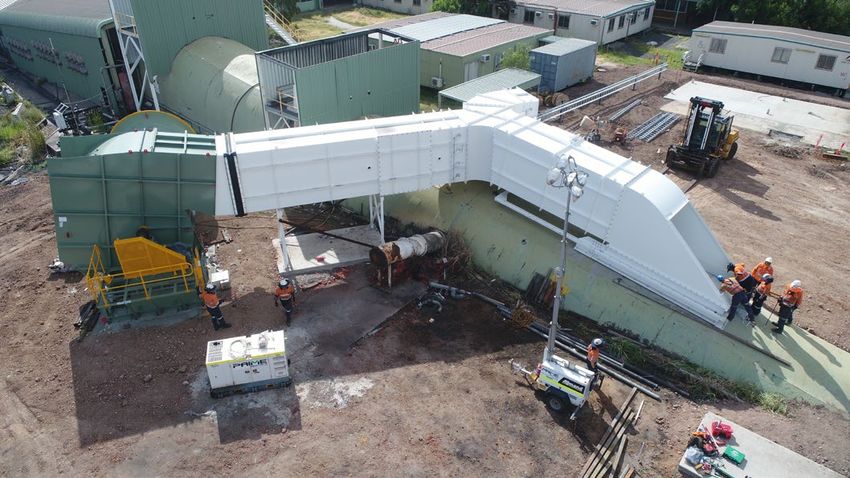
Among Top Global Producers with Diverse Production
Portfolio; Well-Positioned to Serve Long-Term Coal Demand
       Seaborne Thermal Coal
                                                                                          Q1 2019 Adjusted EBITDA
        Producers by Volume
 130             (million tons)
                                                                                            by Mining Portfolios
                                                    Global Producers

                                                    U.S. Producers
                                                                                                                        Seaborne
                                                    BTU                                                                   Met
       35 32 32
                      19 15 11                                                                                           $88.8M
                               8 5 3

             Metallurgical Coal
 47         Producers by Volume
                      (million tons)                                                                                           U.S.
                                                                                 Seaborne                                    Thermal
                                  Peabody: largest                                Thermal                                    $112.3M
       29
            24                     U.S.-Listed met                                $94.7M
                 18                coal producer
                      13 12
                                8 7
                                    4 3
                                        1

                  Source: Industry sources; 2018 production volume. BTU seaborne thermal production includes Australian domestic tons
                  and met coal production includes ~2 million tons from Middlemount Mine. Includes only private-sector coal producers.   7
                  Adjusted EBITDA is a non-GAAP metric. Refer to the reconciliation to the nearest GAAP measures in the appendix.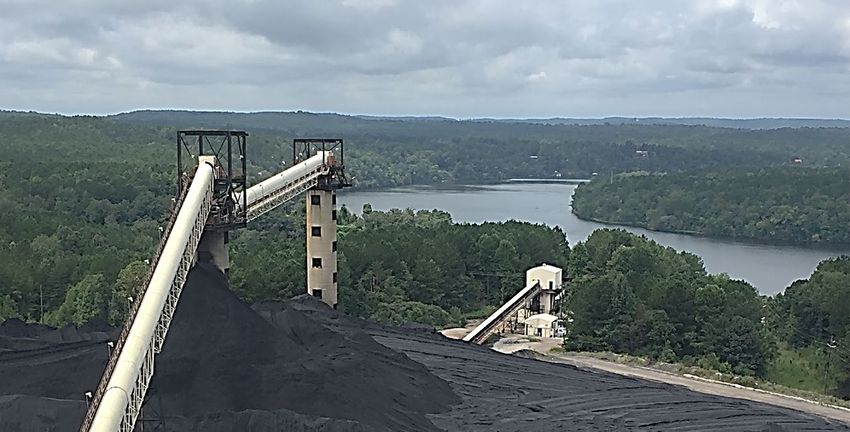
Coal to Continue to Play a Significant Role
in the Global Energy Mix for the Foreseeable Future

● Global coal generation capacity                                                     Global Coal Generation Capacity
  surpasses 2,000 GW for first time                                                                                 ~2,015 GW
  ever in 2018 per WoodMac
● ~50 gigawatts of new coal-fueled                                                       62% increase from
  generation expected to come                                                              2000 to 2018
  online in 2019                                                                          ~1,245 GW
● ~300 GW of new coal-fueled
  generating plants currently
  under construction in Asia
   – Each GW uses ~3 million tons per year
● IHS Markit projects Southeast Asia’s
  coal fleet to double in size by 2030

                                                                                                2000                      2018
           Source: World Coal Association Q1 2018 Presentation. © 2019 IHS Markit. All rights reserved. The use of this content was
           authorized in advance. Any further use or redistribution of this content is strictly prohibited without prior written
           permission by IHS Markit.                                                                                                  8
Advanced Technologies Offer Path for Significant
Reduction in Emissions from Coal-Fueled Generation
                                  CO2 Reduction Potential of Advanced Coal Technologies

                          Subcritical                                                                                 CO2 Reduction
                              30%
                        1,116g CO2/kWh       Supercritical                              ISOGO Power Station, Japan            21%
CO2 Emissions per kWh

                                                                      Ultra -
                                                38%                                     Advanced ultra-                      33%
                                                                   supercritical
                                           881g CO2/kWh                                                                                Gas OCGT
                                                                       45%               supercritical                       40%
                                                                                                                                     700 CO2/kWh
                                                                  743g CO2/kWh               50%
                                                                                        669g CO2/kWh
                                                                                                                                       Gas CCGT
                                                                                                               CCS Technology        450 CO2/kWh
                                                                                                               (efficiency loss
                          Efficiency                                                                            7-12% points)
                        CO2 Emissions                                                                                        90% +
                                                                                                             Boundary Dam, Canada

 ● Nearly 1,000 GW of HELE plants                                                                        Major coal consumers
   in use or under construction                                                                          include advanced coal
 ● Raising efficiency of coal-fueled plants to 40%                                                        technologies in NDCs
   from 35% today reduces global emissions by 2                                                            to Paris agreement
   gigatons – or the equivalent of India’s annual total

                                  Source: World Coal Association/VGB PowerTech 2013 .                                                              9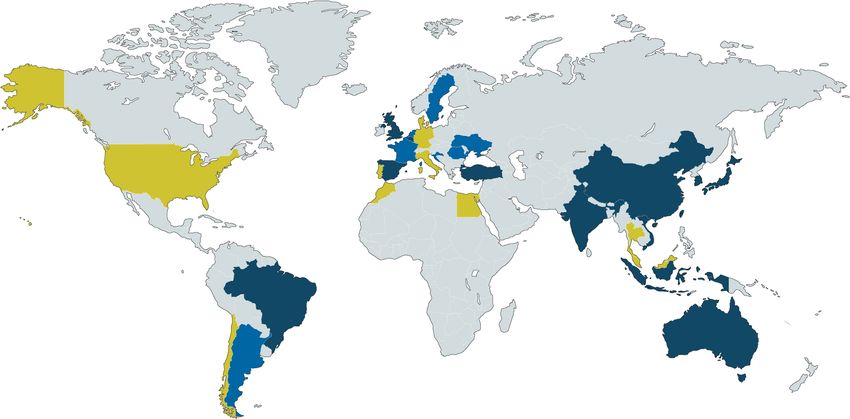
Metallurgical Coal Serves as Primary Component
for ~70% of World’s Steel Production
● Total 2018 seaborne                                                      HVA and HCC Index Price
  met coal demand                                 $400                              (USD per tonne)
  totals ~315 MTPY                                $350
● Supply tight with                               $300
  new sources largely                             $250
                                                                                   Avg: $174 per tonne
  offsetting natural                              $200
  declines, disruptions                           $150
                                                  $100
● India becomes second
                                                    $50
  largest met coal
                                                      $0
  importer; Expected
  to surpass China
● Australia projected
                                                                              HCC Index                HVA Index
  to supply majority
  of met coal growth                                   HVA Index Price averages 5%
                                                     Discount to HCC index since 2012

           Source: World Coal Association Q1 2018 Presentation, industry reports and Peabody Global Analytics.
                                                                                                                   10
Coal: Leading Position in Numerous U.S. Regions;
PRB, ILB Projected to Supply Majority of Long-Term Demand
NYISO
NW Power Coal: 1%
Pool Gas BTU: 0 mt
Coal: 33% Rockies SPP
BTU: 1 mt MISO
Coal: 51% Coal: 43%
Coal: 47% PJM
BTU: 3 mt BTU: 30 mt
BTU: 68 mt Coal: 28%
BTU: 13 mt ISO-NE
Coal: 1%
BTU: 0 mt
CAISO
Coal: 2% Desert SW SERC
BTU: 0 mt Coal: 32% Coal: 30%
BTU: 13 mt BTU: 9 mt
ERCOT
Coal: 25% FRCC
BTU: 12 mt Coal: 16%
BTU: 20% of electricity from coal Two-thirds of Peabody’s shipments goSeaborne Thermal Coal Platform Represents Tier-One Assets
with Strong Margins; Positioned to Serve Asia-Pacific Demand
Seaborne Thermal Coal Adjusted EBITDA Margins
50% Margin % Average NEWC Price 48%
45% 44%
42%
40% $117
40% 38% 38%
37%
$103 $104 $105
35% $98
$93 31% $97
30%
$80
25%
20%
15%
10%
5%
0%
Q2 17 Q3 17 Q4 17 Q1 18 Q2 18 Q3 18 Q4 18 Q1 19
Note: Adjusted EBITDA margins are non-GAAP metrics. Adjusted EBITDA margin is equal to segment Adjusted EBITDA
divided by segment revenue. Refer to the reconciliation to the nearest GAAP measures in the appendix. 12Advancing Attractive Seaborne Thermal Life Extension
Projects to Maintain Export Thermal Coal Volumes
• Peabody raises 2019 target
for thermal export coal volumes 2019 Target
to 12.0 to 12.5 million tons 12.0 million to 12.5 million
tons of export thermal coal
– Priced export volumes locked
in above forward curve
Product Split
• Unincorporated joint venture 60% to 70% NEWC (6,000 spec)
with Glencore will give access to
30% to 40% API5 (5,500 spec)
stratified reserves and extend
life of Wambo open cut mine Wambo Mine
• Wilpinjong extension project
ensures long-term access
to seaborne demand centers;
extends life of mine to 2030
– Expected to provide substantial
returns with rapid payback period
13Shoal Creek Acquisition Upgrades Seaborne Met Portfolio;
Represents Multiple Strategic and Financial Benefits
● Q1 cash flows imply payback Clearly meets strict
period of less than 2 years investment filters
● Targeting ~2.5 million tons
of high-quality HVA seaborne Strategic portfolio fit
met coal shipments in 2019 Maintains financial strength
● Mine well-capitalized; Generates returns above
Strategically positioned cost of capital
Provides a reasonable
payback period
Provides tangible synergies
Creates significant value
for our shareholders
14Targeting Progressive Increase in Peabody’s Quality
and Quantity of Met Coal Production Over Time
• Completed all physical activities
2019 Target
in advance of reventilating
9.4 million to 10.4 million tons
Zone 1 of North Goonyella Mine
of seaborne met coal
– Mine expected to produce ~2 million
tons of HCC in 2020 should plan Additional ~2 million tons of
progress as contemplated met exposure from middlemount
• Progressing opportunities
Product Split
to utilize existing infrastructure
40% to 50% HCC
to mine adjoining lease to
50 to 60% PCI
south of Moorvale Mine
• Potential opportunities for Moorvale Mine Wash Plant
metallurgical development
and organic growth in
Bowen Basin over time
Note: 2019 mix assumes mid-point of guidance range; Should the company’s reventilation and re-entry plan now progress as
originally contemplated, Peabody would expect to product approximately 2 million tons from North Goonyella in 2020. If
further delays occur, the company will re-evaluate its reventilation and re-entry plans, including longwall production targets, 15
quarterly project costs and capital expenditures.U.S. Thermal Operations Focused on Generating
Meaningful Returns to Maximize Cash Generation
● Emphasizing lowest-cost, highest
2019 Targets
margin mines; Operating adjacent
PRB: 105 to 115 million tons
mines as complexes
– Ability to move contracts, people ILB: 17.5 to 18.5 million tons
and equipment between complexes Western: 11 to 12 million tons
• Segment anchored by world’s largest coal mine –
North Antelope Rochelle Mine
– Offers reliable source of supply to over 50 customers in 21 states
– Strategically positioned on rail joint line
– Benefits from prior reserve acquisitions and fleet upgrades
– Operates out of 7 – 10 pits of 60 – 80 feet thick coal seams
– Advanced technology reduces costs, drives higher margins
North Antelope Rochelle Mine
16BTU Offers Significant Intrinsic Value;
Generating 2018 Results Superior to Benchmarks
SG&A as a Adjusted EBITDA Return on TEV/EBITDA
% of Revenue Margin Equity
11.4x
25%
22%
18%
17%
16%
14% 6.2x
13%
5.4x
9%
6% 2.6x
4%
3%
BTU
Coal & Consumable Fuels
S&P 400
S&P 400 - Energy -8%
Source: CapitalIQ; Coal and Consumable Fuel group per CapitalIQ includes 199 companies. TEV/EBITDA represents
market capitalization as of May 6, 2019 plus net debt divided by 2018 EBITDA per CapitalIQ. Adjusted EBITDA (may not
be calculated identically by all companies), return on equity and TEV/EBITDA are non-GAAP metrics. Refer to the 17
appendix for a reconciliation of these metrics.Proven Access to Capital Markets Strengthens Financial
Position; Allows for Significant Cash Returns to Shareholders
$500 million Second increase Third
share Quarterly to quarterly increase
repurchase dividend per dividend to quarterly
program Quarterly share increased per share dividend
authorized dividend Upsized
$1.5 billion Share buyback per share
initiated share
in equity repurchase authorization Supplemental
raised program to expanded to dividend
$1.0 billion $1.5 billion declared
2017 2018 2019
$1.95 billion Secured first-of- Executed consent
Reduced term
debt raised; its-kind third-party solicitation for
loan interest;
Offering over- surety program Senior Notes to
Increased ability
subscribed in Australia expand restricted
to execute share Extended
buybacks payment capacity ARS program;
$1.3 billion Further reduced Reduced
third-party Reached term loan interest pricing
U.S. bonding deleveraging rate; Extended
facilities targets ahead maturity to 2025
secured of schedule
18Peabody Intends to Return to Shareholders
Amount Greater Than Free Cash Flow in 2019
Cumulative Shareholder Returns
($ in millions) $1,417
$1,383
$1,070
$920
$580
$366
$176
$69
Q3 17 Q4 17 Q1 18 Q2 18 Q3 18 Q4 18 Q1 19 April 19
Share Repurchases Quarterly Dividend Supplemental Dividend
Note: Free Cash Flow is a non-GAAP metric. Refer to the reconciliation to the nearest GAAP measure in the appendix.
Ongoing quarterly dividend pace ($0.14 per share per quarter) and supplemental dividend of $1.85 per share equates to 19
a 2019 yield of ~8% based on current share price as of May 9, 2019.Commitment to Shareholder Returns Brings Liquidity Closer to
Targeted Liquidity Levels; Operating at High End of Debt Range
Debt & Liquidity June March
Change ● Reduced total liabilities since
($ in millions) 2017 2019
mid-2017 by ~$1.06 billion
Unrestricted Cash
$1,096 $798 ($298) – $550 million voluntary
& Cash Equivalents
debt reduction
Revolver Availability $0 $244 $244
● Total debt within $1.2 billion
ARS Availability $78 $72 ($6) to $1.4 billion target range
Total Liquidity $1,174 $1,114 ($60) ● ARO supported by $1.36 billion
Total Funded Debt $1,957 $1,362 ($595) of surety bonds
– Targeting 2019 reclamation
Net Debt $861 $564 ($297) cash outlays of ~$50 million
Other Liabilities June March ● Liquidity in excess of
Change
($ in millions) 2017 2019 $800 million target
OPEB $746 $544 ($202) ● EBITDA to cash conversion strong
ARO $635 $692 $57 with substantial NOL position
– $3.2 billion in U.S.
Pension $151 $32 ($119)
– A$3.3 billion in Australia
Total Liabilities $5,084 $4,025 ($1,059)
Note: Liability balances represent non-current balances. Adjusted EBITDA and net debt are non-GAAP financial measures. 20
Refer to the reconciliation to the nearest GAAP measures in the appendix. NOL balances as of Dec. 31, 2018.Peabody’s Emphasis on ESG Complements Financial Approach
to Create Long-Term Value for Shareholders
Environmental Social Governance
• Restored 1.4 acres • Outperforms • Separation of CEO
for every acre industry averages and Chairman
disturbed in 2018 for safety • Independent and
• Recycled/reused • Provided $11.5 billion diverse board skills
48% of total water in direct/indirect and experiences
withdrawn; economic benefits • Exec compensation
61% of waste • Member of UN based on safety, free
• Advocate for Global Compact cash flow per share,
low-emissions • Signatory to CEO Adjusted EBITDA,
technologies Action for Diversity ROIC, TSR,
& Inclusion® pledge environmental
performance
Recognized with ~100 honors in past decade for
Safety, Reclamation and Corporate leadership
Note: All figures for 2018 calendar year. Peabody’s 2017 Corporate and Social Responsibility Report
is available on PeabodyEnergy.com. 21Appendix
2019 Guidance Targets
Sales Volumes (Short Tons in millions)

  PRB                                      105 – 115        Quarterly North Goonyella Costs                        $30 – $35 million
  ILB                                      17.5 – 18.5      Quarterly SG&A Expense                                    ~$40 million
  Western                                    11 – 12        Full-Year Capital Expenditures                        $350 – $375 million
  Seaborne Metallurgical                   9.4 – 10.4       Full-Year DD&A                                        $600 – $650 million
     HCC1:                                 40% – 50%        Full-Year Interest    Expense4                           ~$150 million
     PCI2:                                 50% – 60%        Full-Year ARO Cash Spend                                  ~$50 million
  Seaborne Export Thermal                  12.0 – 12.5      Cost Sensitivities5
     NEWC:                                 60% – 70%          $0.05 Decrease in A$ FX Rate6                          + ~$65 million
     API 5:                                30% – 40%          $0.05 Increase in A$ FX Rate6                          - ~$65 million
  Australia Domestic Thermal                  7–8             Fuel (+/- $10/barrel)                                 +/- ~$20 million
Revenues per Ton                                            2019 Priced Position (Avg. Price per Short Ton)
  Total U.S. Thermal                     $17.10 – $18.10      PRB                                                          $11.25
                                                              ILB                                                           ~$42
Costs Per Ton (USD per Short Ton)                             Seaborne Export Thermal Volumes (Q2 – Q4)       7             ~$83
  PRB                                       $9.25 – $9.75     ~95% of Peabody's 2019 U.S. thermal volumes are priced
  ILB                                        $32 – $35          based on the mid-point of 2019 volume guidance
  Total U.S. Thermal                      $13.95 – $14.95     ~5.7 million short tons of seaborne export thermal coal priced (Q2 – Q4) 7

  Seaborne Thermal3                          $32 – $36      2020 Priced Position (Avg. Price per Short Ton)
  (includes Aus. Domestic Thermal)
  Seaborne Metallurgical3                                   ~40% and ~60% of Peabody’s 2020 U.S. thermal volumes are priced and
                                             $90 – $95
   (excluding North Goonyella)                                 committed, respectively, based on the mid-point of 2019 volume guidance
                                                             Seaborne Export Thermal Volumes                             ~$77
                                                               ~2.1 million short tons of seaborne export thermal coal priced for 2020
                                                                                                                                         23
2019 Guidance Targets
1 Peabody expects to realize ~80%-90% of the premium HCC quoted index price on a weighted average across all its products.
2Approximately 40% of Peabody’s seaborne metallurgical PCI sales are on a spot basis, with the remainder linked to the quarterly contract. Peabody
expects to realize ~80%-90% of the LV PCI benchmark for its PCI products.
3 Assumes 2019 average A$ FX rate of $0.72. Cost ranges include sales-related cost, which will fluctuate based on realized prices.
4 Interest expense includes interest on funded debt, surety bonds, commitment fees and letters of credit fees issued under the revolver and accounts
receivable securitization program, and non-cash interest related to certain contractual arrangements and amortization of debt issuance costs.
5 Sensitivities reflect approximate impacts of changes in variables on financial performance. When realized, actual impacts may differ significantly.
6As of March 31, 2019, Peabody had outstanding average rate call options to manage market price volatility associated with the Australian dollar in
aggregate notional amount of approximately AUD $975 million with strike price levels ranging from $0.76 to $0.77 with settlement dates through Dec.
31, 2019. Sensitivities provided are relative to an assumed average A$ FX exchange rate of ~$0.71 as of March 31, 2019.
7Approximately 40%-50% of Peabody’s unpriced seaborne thermal export volumes is NEWC-specification, with the remainder closer to an API5 product.
Priced position assumes settlement of JFY tons at $94.75 per tonne.
Note 1: Peabody classifies its seaborne metallurgical or thermal segments based on the primary customer base and reserve type. A small portion of the
coal mined by the seaborne metallurgical segment is of a thermal grade and vice versa. Peabody may market some of its metallurgical coal products as a
thermal product from time to time depending on industry conditions. Per ton metrics presented are non-GAAP measures. Due to the volatility and
variability of certain items needed to reconcile these measures to their nearest GAAP measure, no reconciliation can be provided without unreasonable
cost or effort.
Note 2: A sensitivity to changes in seaborne pricing should consider Peabody’s estimated split of products and the weighted average discounts across all
products to the applicable index prices, in addition to impacts on sales-related costs, and applicable conversions between short tons and metric tonnes
as necessary.
Note 3: As of April 30, 2019 Peabody had approximately 107.1 million shares of common stock outstanding. Including approximately 3 million shares of
unvested equity awards, Peabody has approximately 110 million shares of common stock on a fully diluted basis.
24Historical Seaborne Pricing ($/Tonne)
Time Period HCC – HCC – Spot LV PCI – LV PCI – Spot NEWC – API 5 -
Settlement Settlement Spot Prompt
Q1 2019 $210 $206 $141 $126 $97 $60
Q4 2018 $212 $221 $139 $128 $105 $63
Q3 2018 $188 $189 $150 $128 $117 $69
Q2 2018 ~$197 $190 $155 $140 $104 $75
Q1 2018 $237 $228 $156.50 $149 $103 $82
Q4 2017 $192 $205 $127 $126 $98 $76
Q3 2017 $170 $189 $115/$127 $117 $93 $74
Q2 2017 $194 $190 $135 $124 $80 $67
Q1 2017 $285 $169 $180 $110 $82 $65
Q4 2016 $200 $266 $133 $159 $94 $73
Q3 2016 $93 $135 $75 $88 $66 $55
Q2 2016 $84 $91 $73 $72 $52 $43
Source: HCC, LV PCI, NEWC and API5 spot prices per Platts; Settlement prices per IHS Markit benchmark history. 25Peabody Executive Leadership Team
Glenn Kellow
President and CEO
A. Verona Dorch
EVP, CLO, Government Affairs
and Corporate Secretary
Charles Meintjes
EVP – Corporate Services and COO
Paul Richard
SVP and Chief Human Resources Officer
George J. Schuller Jr.
President – Australia
Amy Schwetz
EVP and CFO
(Standing, from left) Amy Schwetz, Glenn Kellow, A. Verona Dorch, Charles Meintjes
Kemal Williamson (Seated from left) George J. Schuller Jr., Paul Richard, Kemal Williamson
President – Americas
26Peabody Board of Directors Represents Diversity
of Skills, Knowledge and Experience
Andrea Bertone – Teresa Madden –
Former Director, Duke Former EVP and CFO
Energy International of Xcel Energy, Inc.
Bob Malone – Executive
Nicholas Chirekos – Chairman, President and CEO
Former North America First Sonora Bancshares; Retired
Head of Mining J.P. Morgan Chairman of the Board and
President of BP America, Inc.
Stephen Gorman – Kenneth Moore –
CEO of Air Methods Corporation; President of KWM Advisors LLC;
Former COO, Delta Air Lines, Inc. Former Managing Director of
First Reserve Corporation
Glenn Kellow – Michael Sutherlin –
Peabody President and CEO Former President and CEO
of Joy Global Inc.
Joe Laymon – Shaun Usmar – CEO of Triple Flag
Former VP of Human Resources Mining Finance Ltd.; Former
and Corporate Services Senior EVP and CFO
for Chevron Corporation of Barrick Gold Corporation
27Peabody Serves Power and Steel Customers
in More Than 25 Countries on 6 Continents
Diversity of Geography, Customers and Products
Note: Highlighted countries represent customers served in at least one year between 2016 – 2018. 28North Goonyella Mine: Segmenting of Multiple Zones
North Goonyella Fan Installation
29Reconciliation of Non-GAAP Measures
Apr. 2 through Quarter Ended Quarter Ended Quarter Ended Quarter Ended Quarter Ended Quarter Ended Year Ended Quarter Ended
Jun. 30, 2017 Sept. 30, 2017 Dec. 31, 2017 Mar. 31, 2018 Jun. 30, 2018 Sept. 30, 2018 Dec. 31, 2018 Dec. 31, 2018 Mar. 31, 2019
Tons Sold (In Millions)
Seaborne Thermal Mining Operations 4.6 5.2 4.8 3.8 5.0 4.8 5.5 19.1 4.5
Seaborne Metallurgical Mining Operations 2.0 3.5 4.0 3.0 2.9 2.8 2.3 11.0 2.3
Powder River Basin Mining Operations 28.5 33.7 31.8 32.4 26.2 31.7 30.0 120.3 25.3
Midwestern U.S. Mining Operations 4.6 4.9 4.5 4.7 4.7 4.9 4.6 18.9 4.2
Western U.S. Mining Operations 3.2 4.0 4.1 3.7 3.5 4.0 3.5 14.7 3.7
Total U.S. Thermal Mining Operations 36.3 42.6 40.4 40.8 34.4 40.6 38.1 153.9 33.2
Corporate and Other 0.7 0.7 0.6 0.7 0.8 0.9 0.3 2.7 0.5
Total 43.6 52.0 49.8 48.3 43.1 49.1 46.2 186.7 40.5
Revenue Summary (In Millions)
Seaborne Thermal Mining Operations $ 239.2 $ 265.8 $ 267.5 $ 201.4 $ 267.4 $ 305.1 $ 325.3 $ 1,099.2 $ 251.0
Seaborne Metallurgical Mining Operations 287.8 415.9 517.3 466.2 417.5 370.3 299.0 1,553.0 324.5
Powder River Basin Mining Operations 365.4 420.9 392.4 389.3 321.5 373.7 340.3 1,424.8 287.3
Midwestern U.S. Mining Operations 194.9 207.7 189.7 201.7 197.5 208.5 193.3 801.0 179.1
Western U.S. Mining Operations 125.4 155.7 159.6 143.7 139.6 156.1 152.6 592.0 155.7
Total U.S. Thermal Mining Operations 685.7 784.3 741.7 734.7 658.6 738.3 686.2 2,817.8 622.1
Corporate and Other 45.6 11.2 (9.4) 60.4 (34.1) (1.1) 86.6 111.8 53.0
Total $ 1,258.3 $ 1,477.2 $ 1,517.1 $ 1,462.7 $ 1,309.4 $ 1,412.6 $ 1,397.1 $ 5,581.8 $ 1,250.6
30Reconciliation of Non-GAAP Measures
Apr. 2 through Quarter Ended Quarter Ended Quarter Ended Quarter Ended Quarter Ended Quarter Ended Year Ended Quarter Ended
Jun. 30, 2017 Sept. 30, 2017 Dec. 31, 2017 Mar. 31, 2018 Jun. 30, 2018 Sept. 30, 2018 Dec. 31, 2018 Dec. 31, 2018 Mar. 31, 2019
Total Reporting Segment Costs (1) Summary (In Millions)
Seaborne Thermal Mining Operations $ 133.3 $ 168.0 $ 164.6 $ 139.8 $ 159.8 $ 159.8 $ 187.8 $ 647.2 $ 156.3
Seaborne Metallurgical Mining Operations 215.9 272.8 317.4 299.8 259.0 279.6 273.2 1,111.6 238.7
North Goonyella Costs, Less Insurance Recoveries - - - - - 9.0 49.0 58.0 3.0
Seaborne Metallurgical Mining Operations, Excluding
North Goonyella Costs, Net 215.9 272.8 317.4 299.8 259.0 270.6 224.2 1,053.6 235.7
Powder River Basin Mining Operations 280.6 308.2 311.1 314.8 259.5 285.5 280.5 1,140.3 250.9
Midwestern U.S. Mining Operations 148.4 158.2 161.3 170.5 155.5 169.8 160.0 655.8 145.8
Western U.S. Mining Operations 80.5 121.2 107.2 111.7 105.7 127.6 101.6 446.6 113.1
Total U.S. Thermal Mining Operations 509.5 587.6 579.6 597.0 520.7 582.9 542.1 2,242.7 509.8
Corporate and Other 49.6 22.1 35.9 31.6 19.5 35.8 28.3 115.2 20.4
Total $ 908.3 $ 1,050.5 $ 1,097.5 $ 1,068.2 $ 959.0 $ 1,058.1 $ 1,031.4 $ 4,116.7 $ 925.2
Adjusted EBITDA (2) (In Millions)
Seaborne Thermal Mining Operations $ 105.9 $ 97.8 $ 102.9 $ 61.6 $ 107.6 $ 145.3 $ 137.5 $ 452.0 $ 94.7
Seaborne Metallurgical Mining Operations 71.9 143.1 199.9 166.4 158.5 90.7 25.8 441.4 85.8
North Goonyella Costs, Less Insurance Recoveries - - - - - 9.0 49.0 58.0 3.0
Seaborne Metallurgical Mining Operations, Excluding
North Goonyella Costs, Net 71.9 143.1 199.9 166.4 158.5 99.7 74.8 499.4 88.8
Powder River Basin Mining Operations 84.8 112.7 81.3 74.5 62.0 88.2 59.8 284.5 36.4
Midwestern U.S. Mining Operations 46.5 49.5 28.4 31.2 42.0 38.7 33.3 145.2 33.3
Western U.S. Mining Operations 44.9 34.5 52.4 32.0 33.9 28.5 51.0 145.4 42.6
Total U.S. Thermal Mining Operations 176.2 196.7 162.1 137.7 137.9 155.4 144.1 575.1 112.3
Middlemount (3) 10.0 7.7 13.7 14.6 17.2 11.2 8.1 51.1 3.9
Resource Management Results (4) 1.2 0.4 0.9 20.8 0.7 21.3 1.9 44.7 2.0
Selling and Administrative Expenses (34.7) (33.7) (37.9) (37.0) (44.1) (38.6) (38.4) (158.1) (36.7)
Acquisition Costs Related to Shoal Creek - - - - - (2.5) (4.9) (7.4) -
Other Operating Costs, Net (5) (12.7) (0.7) (25.4) (0.2) (8.2) (10.7) (0.4) (19.5) (8.1)
Adjusted EBITDA (2) $ 317.8 $ 411.3 $ 416.2 $ 363.9 $ 369.6 $ 372.1 $ 273.7 $ 1,379.3 $ 253.9
Note: Refer to definitions and footnotes on slides 34-35. 31Reconciliation of Non-GAAP Measures
Apr. 2 through Quarter Ended Quarter Ended Quarter Ended Quarter Ended Quarter Ended Quarter Ended Year Ended Quarter Ended
Jun. 30, 2017 Sept. 30, 2017 Dec. 31, 2017 Mar. 31, 2018 Jun. 30, 2018 Sept. 30, 2018 Dec. 31, 2018 Dec. 31, 2018 Mar. 31, 2019
Reconciliation of Non-GAAP Financial Measures (In Millions)
Income from Continuing Operations, Net of Income Taxes $ 101.4 $ 233.7 $ 378.0 $ 208.3 $ 120.0 $ 83.9 $ 233.5 $ 645.7 $ 133.3
Depreciation, Depletion and Amortization 148.3 194.5 178.8 169.6 163.9 169.6 175.9 679.0 172.5
Asset Retirement Obligation Expenses 11.0 11.3 18.9 12.3 13.2 12.4 15.1 53.0 13.8
Provision for North Goonyella Equipment Loss - - - - - 49.3 17.1 66.4 24.7
North Goonyella Insurance Recoveries - Equipment (6) - - - - - - - - (91.1)
Changes in Deferred Tax Asset Valuation Allowance and Reserves and
Amortization of Basis Difference Related to Equity Affiliates (4.3) (3.4) (9.6) (7.6) (8.4) (6.1) 3.8 (18.3) -
Interest Expense 41.4 42.4 35.9 36.3 38.3 38.2 36.5 149.3 35.8
Loss on Early Debt Extinguishment - 12.9 8.0 - 2.0 - - 2.0 -
Interest Income (1.5) (2.0) (2.1) (7.2) (7.0) (10.1) (9.3) (33.6) (8.3)
Net Mark-to-Market Adjustment on Actuarially Determined Liabilities - - (45.2) - - - (125.5) (125.5) -
Reorganization Items, Net - - - (12.8) - - - (12.8) -
Gain on Disposal of Reclamation Liability - - (31.2) - - - - - -
Gain on Disposal of Burton Mine Assets - - (52.2) - - - - - -
Break Fees Related to Terminated Asset Sales (28.0) - - - - - - - -
Unrealized (Gains) Losses on Economic Hedges (9.4) 10.8 21.6 (38.6) 48.1 26.8 (54.6) (18.3) (39.8)
Unrealized (Gains) Losses on Non-Coal Trading Derivative Contracts (3.2) 1.7 3.0 1.8 (0.1) (0.3) (0.7) 0.7 (0.2)
Fresh Start Coal Inventory Revaluation 67.3 - - - - - - - -
Fresh Start Take-or-Pay Contract-Based Intangible Recognition (9.9) (6.5) (6.1) (8.3) (7.8) (5.4) (5.2) (26.7) (5.6)
Income Tax Provision (Benefit) 4.7 (84.1) (81.6) 10.1 7.4 13.8 (12.9) 18.4 18.8
Adjusted EBITDA (2) $ 317.8 $ 411.3 $ 416.2 $ 363.9 $ 369.6 $ 372.1 $ 273.7 $ 1,379.3 $ 253.9
Operating Costs and Expenses $ 927.9 $ 1,039.1 $ 1,085.7 $ 1,057.2 $ 946.5 $ 1,047.9 $ 1,021.0 $ 4,072.6 $ 948.4
Break Fees Related to Terminated Asset Sales 28.0 - - - - - - - -
Unrealized Gains (Losses) on Non-Coal Trading Derivative Contracts 3.2 (1.7) (3.0) (1.8) 0.1 0.3 0.7 (0.7) 0.2
Fresh Start Coal Inventory Revaluation (67.3) - - - - - - - -
Fresh Start Take-or-Pay Contract-Based Intangible Recognition 9.9 6.5 6.1 8.3 7.8 5.4 5.2 26.7 5.6
North Goonyella Insurance Recoveries - Cost Recoveries and Business
Interruption (6) - - - - - - - - (33.9)
Net Periodic Benefit Costs, Excluding Service Cost 6.6 6.6 8.7 4.5 4.6 4.5 4.5 18.1 4.9
Total Reporting Segment Costs (1) $ 908.3 $ 1,050.5 $ 1,097.5 $ 1,068.2 $ 959.0 $ 1,058.1 $ 1,031.4 $ 4,116.7 $ 925.2
Net Cash Provided By Operating Activities $ 65.7 $ 248.0 $ 499.7 $ 579.7 $ 335.7 $ 345.4 $ 228.9 $ 1,489.7 $ 197.6
Net Cash Used In Investing Activities (18.5) (16.4) (58.5) (6.4) (11.6) (47.5) (451.8) (517.3) (38.1)
Add Back: Amount Attributable to Acquisition of Shoal Creek Mine - - - - - - 387.4 387.4 2.4
Free Cash Flow (7) $ 47.2 $ 231.6 $ 441.2 $ 573.3 $ 324.1 $ 297.9 $ 164.5 $ 1,359.8 $ 161.9
Note: Refer to definitions and footnotes on slides 34-35. 32Reconciliation of Non-GAAP Measures
Reconciliation of Non-GAAP Financial Measures (In Millions)
Dec. 31, 2017 Dec. 31, 2018 Average
Total Stockholders' Equity $ 3,655.8 $ 3,451.6 $ 3,553.7
Jun. 30, 2017 Dec. 31, 2018 Mar. 31, 2019
Total Debt $ 1,957.1 $ 1,367.0 $ 1,361.7
Cash and Cash Equivalents 1,095.7 981.9 798.1
Net Debt (8) $ 861.4 $ 385.1 $ 563.6
May 6, 2019
Shares Outstanding 107.0
Share Price $ 29.20
Market Capitalization $ 3,124.4
Market Capitalization as of May 6, 2019 $ 3,124.4
Net Debt (8) as of Dec. 31, 2018 385.1
Noncontrolling Interests as of Dec. 31, 2018 56.0
Total Enterprise Value (9) $ 3,565.5
Note: Refer to definitions and footnotes on slides 34-35. 33Reconciliation of Non-GAAP Measures: Definitions
Note: Total Reporting Segment Costs; Adjusted EBITDA; Free Cash Flow; Net Debt; Return on Equity and Total Enterprise Value are non-
GAAP financial measures. Return on Equity is equal to income from continuing operations, net of income taxes divided by average total
stockholders' equity. Management believes that non-GAAP performance measures are used by investors to measure our operating
performance and lenders to measure our ability to incur and service debt. These measures are not intended to serve as alternatives to U.S.
GAAP measures of performance and may not be comparable to similarly-titled measures presented by other companies.
1) Total Reporting Segment Costs is defined as operating costs and expenses adjusted for the discrete items that management excluded
in analyzing each of our segment's operating performance as displayed in the reconciliation above. Total Reporting Segment Costs is
used by management as a metric to measure each of our segment's operating performance.
2) Adjusted EBITDA is defined as income from continuing operations before deducting net interest expense, income taxes, asset
retirement obligation expenses, depreciation, depletion and amortization and reorganization items, net. Adjusted EBITDA is also
adjusted for the discrete items that management excluded in analyzing each of our segment's operating performance as displayed in
the reconciliation above. Adjusted EBITDA is used by management as the primary metric to measure each of our segment's
operating performance.
3) We account for our 50% equity interest in Middlemount Coal Pty Ltd. (Middlemount), which owns the Middlemount Mine, under the
equity method. Middlemount's standalone results exclude the impact of related changes in deferred tax asset valuation allowance
and reserves and amortization of basis difference recorded by the Company in applying the equity method. Middlemount's
standalone results include (on a 50% attributable basis): Quarter Ended
Mar. Mar.
2019 2018
(In millions)
Tons sold 0.4 0.5
Depreciation, depletion and amortization and asset retirement obligation expenses $ 3.6 $ 3.9
Net interest expense 2.2 3.6
Income tax provision 1.7 5.1
34Reconciliation of Non-GAAP Measures: Definitions
4) Includes gains (losses) on certain surplus coal reserve and surface land sales, property management costs and revenues and the Q1
2018 gain of $20.6 million on the sale of certain surplus land assets in Queensland's Bowen Basin.
5) Includes trading and brokerage activities, costs associated with post-mining activities, certain coal royalty expenses, minimum
charges on certain transportation-related contracts and the Q1 2018 gain of $7.1 million recognized on the sale of our interest in the
Red Mountain Joint Venture.
6) We recorded a $125.0 million insurance recovery during the quarter ended March 31, 2019 related to losses incurred at our North
Goonyella Mine. Of this amount, Adjusted EBITDA excludes an allocated amount applicable to total equipment losses recognized at
the time of the insurance recovery settlement, which consisted of $24.7 million and $66.4 million recognized during the quarter
ended March 31, 2019 and the year ended December 31, 2018, respectively. The remaining $33.9 million, applicable to incremental
costs and business interruption losses, is included in Adjusted EBITDA for the quarter ended March 31, 2019.
7) Free Cash Flow is defined as net cash provided by operating activities less net cash used in investing activities and excludes cash
outflows related to business combinations. Free Cash Flow is used by management as a measure of our financial performance and
our ability to generate excess cash flow from our business operations.
8) Net Debt is defined as total debt less cash and cash equivalents.
9) Total Enterprise Value is defined as market capitalization plus Net Debt and noncontrolling interests. Market capitalization is as of
May 6, 2019; Net Debt is as of Dec. 31, 2018.
35You can also read


