Baseball Manual 2021 - Nebraska School Activities Association
←
→
Page content transcription
If your browser does not render page correctly, please read the page content below
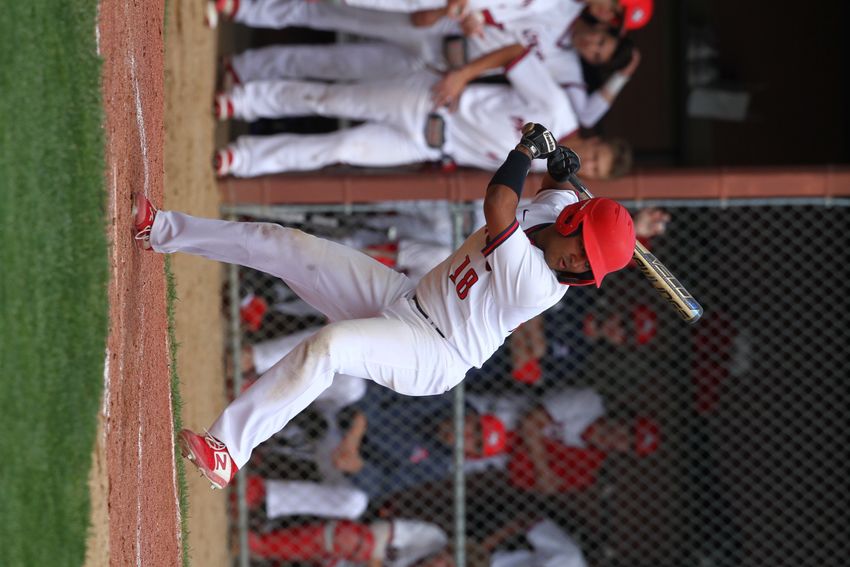
Baseball Manual 2021
NSAA MISSION STATEMENT
   The public and non-public high schools of Nebraska voluntarily agreed to form the Nebraska School Activities
   Association for the following purposes:
         • To formulate and make policies which will cultivate high ideals of citizenship, fair competition, sportsmanship and
             teamwork which will complement the member schools' curriculum programs.
          • To foster uniformity of standards in interscholastic activity competition.
          • To organize, develop, direct and regulate an interscholastic activity program which is equitable and will protect and
              promote the health and physical welfare of all participants.

This BASEBALL MANUAL has been prepared and designed to provide general information for
use in the administration of NSAA Baseball competition. It will serve as a guide to the
participating schools and will provide for greater consistency between games. The regulations
in this manual shall be considered official unless the schools are notified of a change. All
coaches and athletic directors are urged to read the instructions in this manual thoroughly and
save it for future reference.

Assistant Director, Dan Masters, is the NSAA staff member responsible for administering
Baseball and is the contact person for schools with questions regarding this activity. He can be
reached at (402) 489-0386 or dmasters@nsaahome.org or Marketing Specialist, Ashton
Honnor, ahonnor@nsaahome.org.

                   NSAA Approved Rulings/Points of Emphasis

   •   Pitch Counts – page 6

   •   Class B District Tournament Dates – page 17

   •   Class A District Host When the Top Seed Loses & Play Is Not Completed/Started
       On Saturday – page 18

                                                               1
2021 NFHS Baseball Rule Changes
2021 NFHS Baseball Rules Changes
3-1-4 Designated Hitter Rule, DH & Starting Defensive Player
2021 Major Editorial Changes
None
2021 Points of Emphasis
3-1-4 Designated Hitter Rule, DH & Starting Defensive Player
Game-Ending Procedures
Force-Play Slide Rule
Compliant Baseball
Compliant Body & Chest Protector
Compliance of Player Equipment
Proper Pitching Positions
Enforcement of NFHS Jewelry Rule
AUTHORITY
Baseball exists as an activity via authority of paragraph 3.11.2.1 in the Nebraska School Activities
Association Athletic Bylaws, which states:
Baseball shall be conducted during the spring sports season. The season shall begin with the first day of
practice as permitted by NSAA rules and shall end with the state tournament.
INTERNET INFORMATION
The Nebraska School Activities Association (NSAA) website may be accessed at
http://www.nsaahome.org.
There are several sections within this website, including a sub-page for each of the NSAA’s sponsored
activities. The internet offers another means of communication among the state office, the member
schools, coaches, and patrons.
You are encouraged to check the NSAA home page where your activity is involved. Here are some of
the topics for baseball:
District Assignments District Pairings/Results
State Championship Brackets State Championship Results Wild Card Standings
Past State Champions State Championship History
IMPORTANT DATES
The season starts the first day of practice. The first date for a practice is Monday of Week 35 of the
Standardized Calendar. The first date for interscholastic contests is Thursday of Week 37 of the
Standardized Calendar. Districts will be conducted on Friday and Saturday of Week 44 and Monday and
Tuesday of Week 45. The season ends with the state championship tournament, which is scheduled to
begin the Saturday of Week 45.
2First Practice First Contest District State Championship
Year Date Date Dates Tournament Dates
2021 March 1 March 18 May 6 (B), 7-8 May 15-17-18-19-20
2022 February 28 March 17 May 5 (B), 6-7 May 14-16-17-18-19
SUMMER BASEBALL RELEASE DATES, VARSITY TEAM MEMBERS
The NSAA has a working agreement with the Nebraska American Legion allowing for a special
exemption to NSAA Bylaw 3.2.7.6 (listed later in the manual). The agreement allows summer baseball
programs to begin tryouts and practice once the entire high school program has been eliminated from
NSAA post-season play.
Non-High School Coaches & High School Coaches &
NSAA Season Done NSAA Season Done
Year NSAA Calendar Date NSAA Calendar Date
2021 Sunday, Week 45 May 9 Sunday, Week 46 May 16
END OF SEASON, NON-VARSITY PARTICIPANTS
APPROVED RULINGS AND INTERPRETATIONS FOR 3.1.1
1. A season begins on the first day of allowable practices for that sport, as designated in 3.1.1.2
below. The season officially ends with the conclusion of the State Championship in that sport.
Students may not participate in outside group instruction or competition once the season
officially begins, and outside group instruction or competition may not commence until the
school varsity team has been completely eliminated from further participation in that sport.
2. All scheduled and postponed regular season varsity contests must be played prior to the start of
sub-district, district or state competition. Once sub-district, district or state competition begins,
no regular varsity contests shall be permitted.
3. Students who are not listed on the NSAA District entry form may participate in outside group
instruction or competition of the same sport before the varsity school team has been completely
eliminated from post-season competition. Those students who have participated in outside group
instruction or competition following their regular season schedule would not be eligible to be
placed on the district or state entry form of the same sport and would not be allowed to practice
with the varsity team.
NSAA ONLINE RULES MEETING
The NSAA presents rules meetings online in order to inform and educate coaches and officials about
NFHS playing rules and rules changes, NSAA guidelines and approved rulings, and to discuss health
and safety issues related to activities participation. Head coaches are required to view the online rules
meeting. Failure to view the online meeting will result in sanctions against the coach and/or the school.
NSAA ONLINE RULES MEETING SCHEDULE
NSAA rules meetings are available online by logging into the NSAA website with your school or
official login passcode.
February 12-February 27 -- No Charge
February 28-March 6 -- $25.00 fee
March 7-March 9 -- $50.00 fee
APPROVED RULINGS AND INTERPRETATIONS FOR 2.12
All head coaches are required to attend an NSAA Rules Meeting or complete an NSAA Rules
Meeting online annually. Failure to do so will result in possible late fees and suspension penalties.
Absence from the required rules meeting or failure to complete the online rules meeting will result in
the following sanctions:
First Offense in Three-Year Period
The head coach will be suspended from coaching in any competition in that sport until
3(1) the head coach completes the NSAA’s online rules meeting offered at the late fee of $100; and
(2) the head coach successfully completes the open book test for officials/judges of that activity
(70% or higher); and the school’s administration verifies that the coach has read all the
supporting NSAA, National Federation, and safety information.
During this regular season suspension period, the head coach may continue to coach the team at
practices.
Second and Subsequent Offenses in Three-Year Period
The head coach will be suspended from coaching in all NSAA end-of-season play (sub-districts,
districts, playoffs, and state competition).
(1) the head coach completes the NSAA’s online rules meeting offered at the late fee of $200; and
(2) the head coach successfully completes the open book test for officials/judges of that activity
(70% or higher); and the school’s administration verifies that the coach has read all the
supporting NSAA, National Federation, and safety information.
During this regular season suspension period, the head coach may continue to coach the team at
practices.
FEDERATION RULES
All contests shall be conducted under the official baseball rules of the National Federation of State High
School Associations (NFHS), or those approved by that organization with modifications approved by the
NSAA. Each school is provided one NFHS Baseball Rules Book.
The National Federation Rules Book contains several references to rules, which may be altered "by state
association adoption." The NSAA Board of Directors, which makes such adoptions for the Association,
has approved the 10-run rule, suspended game policy, and speed-up rules for courtesy runners. These
rules are in effect for all games, regular season and postseason play.
STEROID POLICY
The Nebraska School Activities Association (NSAA) and the National Federation of State High School
Associations (NFHS), strongly oppose the abuse of anabolic steroids and other performance-enhancing
substances by high school student-athletes. Such use violates legal, ethical and competitive equity
standards, and imposes unreasonable long-term health risks. The NSAA and the NFHS support
prohibitions by educational institutions, amateur and professional organizations, and governmental
regulators on the use of anabolic steroids and other controlled substances, except as specifically
prescribed by physicians for therapeutic purposes.
UNIFORM POLICY
Participants must keep their uniforms on while in the competition area. Coaches who are in the live-ball
area to perform coaching duties must wear uniform pants, with a school-issued jersey, sweatshirt, jacket,
pull over, etc. The coach’s top must be in school colors.
UMPIRES
Schools make their own arrangements for hiring umpires for interscholastic competition. The Nebraska
School Activities Association has registration requirements concerning baseball umpires. The NSAA
provides a list of registered umpires to each high school and local assignor to ensure only registered
officials are used for varsity competition.
SUPERVISION
The superintendent, principal or an authorized representative of the faculty shall accompany and
supervise the team for its competition. This bylaw pertains to all competition during the season, as well
as throughout the entire district/state championship series.
4PARTICIPATION ON NON-HIGH SCHOOL TEAMS & IN NON-HIGH SCHOOL
COMPETITION
Bylaw 3.5.1 Any student who participates in any athletic contest other than as a representative of
his/her high school during the season of the sport involved becomes ineligible to
represent his/her school in that sport for one or more contests or the remainder of the
season.
The baseball season starts with the first day of practice, March 1, 2021.
• Girls may participate on boys’ teams when there is no girls sport or comparable sport (e.g., softball
and baseball) or team offered in that sport by the member school. (See Bylaw 2.14, Appendix 3, C.,
2).
• Students on high school baseball teams cannot physically participate in baseball clinics from March
1st through the end of the baseball season.
• A team’s competition can come only from teams sponsored by another high school.
• Pitchers are under pitch count limitations as shown on pages 6-9, 26.
• In order to participate in a district or state contest in baseball, a student is required to meet the
requirements under NSAA Bylaws 3.3.7 and 3.5.1.
Accommodations for Students with Disabilities. Each state association may, in keeping with
applicable laws, authorize exceptions to NFHS playing rules to provide reasonable accommodations to
individual participants with disabilities and/or special needs, as well as those individuals with unique
and extenuating circumstances. In order to determine if the NSAA can authorize such an
accommodation, the school administration should contact the NSAA to request an accommodation
hearing.
PLAYING RULES
Suspended Game Policy. A game called for any reason where a winner cannot be determined, or any
game called at anytime for mechanical failure (i.e. artificial light, water systems, etc.) may be treated as
a suspended game. If the game is to be completed, it will be continued from the point of suspension,
with the lineup and batting order of each team the same as the lineup and batting order at the moment of
suspension, subject to the rules of the game. Both schools involved in the game must agree to the
suspension. Any game tied but not completed will be treated as no-game, from a team won-lost
standpoint.
Last Date for Playing Regular Season Games. All scheduled and postponed regular season varsity
contests must be played prior to the start of district competition. Once district competition begins, no
regular season varsity contests shall be permitted.
Protests. Only protests based upon eligibility of players will be honored by the NSAA. Protests based
upon play situations and those that involve judgment on the part of umpires will not be accepted.
Schools mutually agree in advance on the umpires to be used. After the contest has begun, the decisions
of the officials are final.
Speed-Up Rules Approved For Use.
1. The team at bat may use courtesy runners for the pitcher and/or the catcher as soon as they get on
base. The same runner may not be used for both positions. Neither the pitcher nor the catcher will
be required to leave the game under such circumstances.
2. Players who have participated in the game in any other capacity are ineligible to serve as courtesy
runners.
53. A player may not run as a courtesy runner for the pitcher or the catcher and then be used as a
substitute for another player in that half inning.
Note: The rulebook’s speed-up rules on handling the ball after a putout with no runners on base were
not adopted and are not required.
Pitch Counts
Pre April 1st
Varsity Sub-Varsity
Pitches Required Rest Pitches Required Rest
71-90 3 Days 71-90 4 Days
51-70 2 Days 51-70 3 Days
31-50 1 Day 31-50 2 Days
1-30 0 Days 1-30 1 Day
1. The NSAA pitch count rule is based on the number of pitches thrown in a game. The pitch count
is based on pitches thrown for strikes, balls and foul balls. *Note – the required rest days are
calendar days
2. No pitcher may throw more than 90 pitches in a game. A pitcher will be allowed to finish a
batter if they hit the maximum limit (90) during an at-bat, but must exit the position after the
hitter.
3. “Swing” players who play multiple days at multiple levels should combine pitches thrown and
use the VARSITY chart for mandated rest.
April 1st – State Championships
Varsity Sub-Varsity
Pitches Required Rest Pitches Required Rest
91-110 4 Days 71-90 4 Days
71-90 3 Days 51-70 3 Days
51-70 2 Days 31-50 2 Days
31-50 1 Day 1-30 1 Day
1-30 0 Days
1. The NSAA pitch count rule is based on the number of pitches thrown in a game. The pitch count
is based on pitches thrown for strikes, balls and foul balls. *Note – the required rest days are
calendar days
2. No pitcher may throw more than 110 pitches in a game (90 for sub-varsity pitchers). A pitcher
will be allowed to finish a batter if they hit the maximum limit (110 in varsity; 90 in sub-varsity)
during an at-bat, but must exit the position after the hitter.
3. “Swing” players who play multiple days at multiple levels should combine pitches thrown and
use the VARSITY chart for mandated rest.
6Consecutive Days: No player may make more than two appearances as a pitcher during any
consecutive three-day period. If a player returns as a pitcher in the same game, he will be charged with
another appearance.
SITUATION: A varsity pitcher throws 15 pitches in game one of a doubleheader on Thursday.
He then throws 10 pitches in game two.
RULING: The pitcher will be required to rest Friday and Saturday despite pitching fewer than
31 pitches on Thursday.
SITUATION: A varsity pitcher throws 20 pitches in a game on Thursday. He then throws 22
pitches on Friday.
RULING: The pitcher is not eligible to pitch on Saturday despite having fewer than 31 pitches
the previous day.
SITUATION: A varsity pitcher throws 20 pitches in a game on Thursday. He then throws 22
pitches in game one of a doubleheader on Friday.
RULING: The pitcher is not eligible to pitch in game two of the doubleheader on Friday or any
game on Saturday.
Doubleheaders/”Swing” Players: If a player pitches in more than one game in a day, the pitch count
for the day should be the two-game total and this number will be used to figure the days’ rest. No
pitcher shall pitch over the daily max.
SITUATION: A pitcher throws 63 pitches in the JV game and 10 pitches in the varsity game,
both on the same day (April).
RULING: The pitcher is required to rest for 3 days as the total pitch count for the day was 73
pitches.
SITUATION: A pitcher throws 63 pitches in the first game of a varsity doubleheader and then
10 pitches in game two, both games on the same day (April).
RULING: The pitcher is required to rest for 3 days as the total pitch count for the day was 73
pitches.
12 AM: The calendar day in which a game is started shall be used to determine pitcher eligibility. If a
game extends beyond 12 AM, a pitcher shall not be counted as now eligible, nor should a pitcher lose a
day of rest because they’ve pitched past 12 AM.
SITUATION: A varsity game begins at 9 PM on Monday and is completed at 12:05 AM on
Tuesday (May). Team A uses two pitchers during the game, each throwing 45 pitches. When
are both eligible to pitch again?
RULING: Both pitchers are eligible to pitch again on Wednesday after receiving 1 day of rest.
The game is considered to have been played on Monday.
SITUATION: A varsity game begins at 9 PM on Monday and is completed at 1 AM on Tuesday
(May). A relief pitcher enters the game in the 6th inning at 12:45 AM on Tuesday and throws 32
pitches. When is he eligible to pitch again?
7RULING: The pitcher is eligible to pitch on Wednesday after receiving 1 day of rest. The game
is considered to have been played on Monday.
SITUATION: A varsity game begins at 9 PM on Monday and is completed at 12:15 AM on
Tuesday. At 12:05 AM on Tuesday, Team A considers substituting a pitcher that is not
considered eligible until Tuesday, following 4 days rest. Is this pitcher eligible?
RULING: No. The game is considered to have been played on Monday.
Suspended Games: If a game is suspended/canceled, do not input your score or pitch counts into
MaxPreps. Still “sign-off” on the pitcher’s record sheet and keep that as your hard copy record. The
pitch count rule is a daily rule and follows calendar days. The pitchers in a suspended/canceled game
should follow the recommended day’s rest based on the number of pitches thrown that day.
SITUATION: A varsity game on a Monday is postponed in the 3rd inning and the pitcher has 63
pitches.
RULING: The pitcher is required to rest 2 days and is eligible to pitch on Thursday.
SITUATION: A varsity district (May) game is postponed in the 3rd inning. The game is
scheduled to be completed the next day. Team A’s pitcher has 63 pitches and Team B’s pitcher
has 25 pitches.
RULING: Team A’s pitcher is required to rest 2 days and will not be able to pitch. Team B’s
pitcher may pitch in the game but must follow the guidelines for pitching in consecutive days.
SITUATION: A varsity game on a Monday is postponed in the 6th inning. The game is
scheduled to be completed the next day. Team A has a pitcher that was not eligible to pitch on
Monday, but eligible to pitch on Tuesday. Can he pitch in the resumed game on Tuesday?
RULING: Yes. Any substitution is subject to the rules of the game.
SITUATION: A varsity district (May) game is postponed in the 5th inning and scheduled to be
completed the next day, prior to playing an additional game (1 ½ games total). Team A’s pitcher
has thrown 20 pitches in the postponed game. Can he pitch in BOTH games the next day?
RULING: No, not both games according to the “consecutive days” guidelines. However, he
may pitch in one of the games.
Ambidextrous Pitchers: If the pitcher is ambidextrous, the pitch count guidelines apply to the
individual pitcher, not to the individual arm.
SITUATION: An ambidextrous pitcher throws 20 pitches with his right arm and 15 pitches with
his left arm during a varsity game. Is the individual eligible to pitch the next day?
RULING: No. Even though each individual arm total is below 30 pitches, his total pitch count
is 35, which requires 1 day of rest.
PENALTY:
The use of a pitcher not eligible to pitch by the pitch count restrictions or any discrepancy found after
the game should be reported to the NSAA. The NSAA Executive Director will enforce appropriate
penalties as outlined in Bylaw 2.11 ranging from forfeiture of a contest to school probation. If a
8violation is confirmed during a game, the head coach shall be ejected from the game, and the pitcher
removed from the pitcher’s position.
RECOMMENDATIONS:
• It is strongly recommended that once a pitcher is removed, consideration be given to what
position he is assigned once he is done pitching. Consideration should be given to the throwing
requirement of the fielding position, especially catcher, once the pitcher vacates the mound.
• It is strongly recommended that coaches consider pitch count adjustments when the “Feels Like”
temperature is below 50°.
• It is strongly recommended that pitchers not throw more than 40 pitches in one individual inning.
• Coaches must be cognizant of each pitchers “fatigue threshold” (can be measured by velocity
and accuracy among other factors) and adjust pitches to accommodate, learning what constitutes
throwing “hurt” and throwing “injured.” Each pitcher will be different in his ability and
threshold. In essence, the coach must learn the behaviors of his/her players.
• It is strongly recommended that each school develop a season-long pitching limit for each player.
USA BASEBALL:
USA Baseball (www.usabaseball.com) has determined the following risk factors (not a complete list)
contribute to arm overuse issues:
• Pitching while fatigued
• Not taking enough time off from baseball every year
• Throwing too many pitches and not getting enough rest
• Pitching on consecutive days
• Playing for multiple teams at the same time
• Throwing breaking pitches at a young age
TRACKING/REPORTING:
1. The home team should designate a “Pitch Counter” prior to the start of the game. This could be
a scorekeeper, volunteer, coach or manager. This person will serve as the official counter for the
home team. The visiting team should also keep count.
2. The record of each pitcher used in a regular or post-season game should be entered into the
Pitcher’s Record form (page 26). The form must be completed immediately following each
game and signed by both head coaches as this will determine eligibility of each pitcher.
3. A coach shall carry this form to all games and shall present it to the opposing head coach at the
conclusion of the game for his signature.
4. Coaches, without the form, have the responsibility to submit the correct form to the opposing
coach of the previous team. Coaches must notify their athletic director if the opposing coach
does not have the form.
5. If there is a discrepancy in pitch counts following the game, the “Pitch Counter” retains
jurisdiction and their number will be the number to be recorded. The individuals keeping team
pitch counts should compare their numbers after each inning.
6. Each team is required to submit the pitch counts for their respective pitchers into MaxPreps.
This must be done immediately following each game. The numbers submitted into MaxPreps
must match the numbers recorded on the Pitcher’s Record form.
i. We recommend using GameChanger for stat keeping as you may export the pitch
counts directly to MaxPreps.
7. Coaches must keep a hard copy of the Pitcher’s Record from each game on file throughout the
season.
9Smokeless Tobacco Ban. During regular season, district or state competition, the use of smokeless
tobacco by any participant is prohibited. If a participant or substitute is detected using smokeless
tobacco during competition, that individual shall be disqualified from further participation in that
contest.
Permissible Contests.
Bylaw 3.11.2.2 No team representing a member school may participate in more than twenty-four dates
in addition to the state sponsored series of tournaments from the date of the first permitted contest to the
close of the State Baseball Championships. Participation in any baseball tournament shall count as one
date of the twenty-four dates permitted in which the team participates. A team may not participate in
more than four tournaments, which includes the conference tournament.
Teams playing baseball shall be allowed to schedule the following events, counting each as one of its
twenty-four permissible dates:
Approved Ruling to 3.11.2.2
Single Game – two schools playing one game on one day.
Doubleheader – two schools playing two games on one day.
Triangular – three schools playing two pre-determined contests in one day.
Double-Dual – four schools playing two pre-determined contests or two of the other schools in one day.
Tournament – 4 or more teams where winners continue to advance or compete until a champion is
determined (straight bracket or pool play with championship criteria).
Daily Contest Limit. No member school shall play more than two baseball games in one day.
Rescheduled Events. Rescheduling regular season or postponed varsity competition in all sports after
sub-district, district or state competition begins is prohibited.
Baseball Tournaments – All games in four-team baseball tournaments must be played within two
consecutive days. Bracketed tournaments with eight or more teams shall be played within a calendar
week (Monday-Saturday) with no other regular season games scheduled in between. Pool-play
tournaments shall be played over two consecutive days. Pool-play shall take place the first day with
place vs. place competition from each pool taking place (i.e., first place pool A vs. first place in pool B;
second place in pool A vs. second place in pool B, etc.) on the second day. The only exception to the
consecutive day period shall be when weather forces postponement of one or more contests in that
tournament.
Once the baseball season has begun, schools CANNOT add games to their regular season schedules.
All scheduled contests shall be played. Postponed contests shall be rescheduled by all participating
schools if possible.
NSAA GUIDELINES & EJECTIONS
1. Enforcement of the “sit-out rule” for ejections from high school contests for unsportsmanlike
conduct is a responsibility of the member school. Failure to properly enforce this rule could
result in other sanctions by the NSAA.
2. Administrators will be expected to promptly file a report with the NSAA whenever a
participant or coach from their school has been ejected from any high school contest. Such
filing must be done online under the AD login section of the NSAA website.
3. A participant or coach ejected from a contest for unsportsmanlike conduct shall be ineligible
for the next athletic contest at that level of competition and any other athletic contest at any
level during the interim.
104. Enforcement of the “sit-out rule” is expected to begin immediately, regardless whether it is
regular season or tournament play.
5. Any participant ejected a second time during a season from a contest for unsportsmanlike
conduct shall be ineligible for the next two contests at that level of competition and all other
athletic contests at any level during the interim, in addition to other penalties the NSAA or
school may assess.
6. Any participant ejected a third time during a season from a contest for unsportsmanlike
conduct shall be ineligible for the next three contests at that level of competition and all other
athletic contests at any level during the interim, in addition to other penalties the NSAA or
school may assess.
7. During the time of their “sit-out” suspension, athletes who are ejected for unsportsmanlike
conduct may not suit up or participate, but it is the school’s discretion whether such athlete is
able to travel with the team or sit on the team bench.
8. Coaches who are ejected for unsportsmanlike conduct may not coach in any contest or be
present at the contest site during the time of their “sit-out” suspension. Coaches who are
ejected will also be required to successfully complete an NFHS Teaching and Modeling
Behavior online course within 10 days of the ejection. Failure to successfully complete the
course will result in a suspension from coaching for the remainder of the season. In those
situations in which the ejection of the coach occurs near the end of the season or during the
NSAA end-of-season play, the coach will be required to successfully complete the NFHS
Teaching and Modeling Behavior online course before being able to coach the following
season or year.
9. Coaches who are ejected a second time in a season will be required to sit-out the next two
contests at that level, plus all other contests at other levels during the interim. Coaches may
not be present at the contest site during the time of their “sit-out” suspension. Any coach
ejected a second time will also be required to successfully complete the NFHS Fundamentals
of Coaching online course within 10 days of the ejection. Failure to successfully complete
the course will result in a suspension from coaching for the remainder of the season. In those
situations in which the ejection of the coach occurs near the end of the season or during the
NSAA end-of-season play, the coach will be required to successfully complete the NFHS
Teaching and Modeling Behavior online course (or the NFHS Fundamentals of Coaching
course if second ejection) before being able to coach the following season or year.
10. If the ejection takes place in the final game of the season, the suspension will carry over to
the following season of the same sport.
11. When schools have students or coaches with multiple ejections, the school shall submit to the
NSAA a written management plan on how they plan to remediate the problem.
12. Officials will be expected to file with the NSAA an ejection report for any ejection of a
player or coach from a contest online. Any unusual situation that occurs prior to, during, or
after a contest should also be reported.
13. Prompt reporting to the NSAA office by the official is necessary. Officials are asked to
submit their electronic report or call the NSAA office by the day following the ejection.
14. Officials are asked to be specific in listing the reason(s) for an ejection. Affiliated officials
(officials registered from contiguous states) will also be required to perform this reporting
function.
15. There is no appeal process for ejections for unsportsmanlike conduct.
16. The Executive Director shall reserve the right to consider the length of suspensions when
some levels of competition are scheduled on an irregular basis (e.g., three weeks between
regularly scheduled non-varsity contests).
NSAA BYLAWS & APPROVED RULINGS
APPROVED RULINGS AND INTERPRETATIONS FOR 2.1.2
Medical Personnel at Regular Season Games
11Severe injuries, sudden illnesses and other critical incidents do not often occur during
school activities, but it is important for every school to have an emergency action plan
(EAP) for administrators, faculty, coaches and staff members to follow should
emergencies occur. Due to lack of universal availability of medical coverage and other
logistical reasons, NSAA does not require that schools have a physician, trainer or
ambulance on-site at regular season activities; however, each school should have a plan
in place should there be an emergency involving athletes, coaches, officials or spectators
requiring medical attention.
2.11.5 Investigation. Prior to the assessment of any penalty, the Executive Director will gather
data in order to establish intent, fault, and the effect an ineligible participant had on any
interschool contest. These factors shall be weighed in determining the severity of the
penalty assessed. The Executive Director’s decision may be appealed to the Board of
Directors.
2.11.6 Institution Control. If the said violation is brought to the attention of the Board of
Directors as a result of self-policing by the offending school, the Board of Directors shall
issue the highest of commendations to the administration of the school for its efforts in
enforcing the Constitution.
2.12 APPROVED RULING FOR 2.12
Concussion in Sports, Heat Illness Prevention, Sudden Cardiac Arrest Education
All coaches and volunteers are required to complete the NFHS Concussion in Sports,
Heat Illness Prevention, and Sudden Cardiac Arrest Training courses once every three
years. These courses should be taken prior to any pre-season or regular season physical
workouts that the respective coach would be present for or involved in administering.
Any course taken after May 1 would be considered valid for the following school year.
All first year coaches are required to complete all three courses prior to the start of the
activity season which they are to coach.
3.3 General Regulations Governing Competition
3.3.11 Conduct and Sportsmanship. Member schools shall maintain proper crowd control and
enforce the principles of good sportsmanship and ethics during all interscholastic
contests. Failure to fulfill this obligation shall subject the school to penalties as provided
in Article 2, Section 2.11, NSAA Bylaws Governing All Activities.
3.3.11.1 Conduct of Coaches and Athletes. Coaches and athletes shall conduct themselves in
accordance with the playing rules of the sport contest and refrain from unsportsmanlike
conduct during interscholastic competition. Failure to fulfill this obligation will subject
the individual(s) to the penalties as provided in Article 2, Section 2.11, NSAA Bylaws
Governing All Activities.
3.3.11.2 Definition of Unsportsmanlike Conduct. Unsportsmanlike conduct shall include the
following: fighting, verbal abuse or dissent directed toward an official or opponent, racial
or ethnic slurs, inappropriate comments or actions that may be construed as sexual
harassment, profanity, obscene gestures, flagrant and violent fouls, taunting, trash talk,
baiting, cheating, throwing or abusing equipment, inappropriate posters, physical
intimidation or abuse of an official or opponent, and unauthorized leaving of a team
bench area.
123.2 Out of Season Programs
3.2.3 Organized Practice. No organized practice in any sport shall be held during the “school-
year, out-of-season” period. An organized practice shall be defined as follows:
(b) Basketball, Baseball, Softball, Volleyball, Tennis and Wrestling. An organized
practice shall mean: more than four students under the direct supervision of a sponsor. If
more than one group is practicing at the same time, it shall be called an organized
practice. In baseball and softball, beginning four weeks prior to the official start of
softball and baseball practice, sponsors may work with up to eight (8) players using only
balls, gloves and protective catchers’ equipment. No other equipment; including bats may
be used by players or coaches. An organized practice shall mean more than eight (8)
students under the direct supervision of a sponsor. If more than one group is practicing at
the same time, it shall be called an organized practice. During the four weeks prior to the
official start of practice, sponsors will have the option of working with four (4) student
athletes or eight (8) student athletes using the prescribe allowable equipment.
APPROVED RULINGS AND INTERPRETATIONS FOR 3.2.3
Applicable to Coaches During the School Year:
Any individual who served as a school’s head coach, assistant coach, coach’s aide, or
volunteer coach shall not coach athletes from that member school in non-high school
competition if the number of athletes from the school which the individual served exceeds
the number permitted for an organized practice in the sport involved.
3.2.6 Camp Definition. Camps include planned physical participation that is of a competitive
nature where actual games are played or simulated by camp attendees. Participation shall
mean physically taking part in the sport activity in which instruction is offered in the
camp or school.
Clinic Definition. A clinic includes planned activities of instruction or demonstration
directly related to the teaching of individual skills. There shall be no competition between
athletes who are in attendance.
3.2.6.1 “School-Year, Out-of-Season”. Athletes and coaches may attend professional or
commercial sports camps/clinics sponsored by non-member high schools. During the
“school-year, out-of-season” period, the organized practice rule for the sport in which
instruction is being given shall apply. No more than the limit permitted for organized
practice may attend and receive instruction. Attendance to “school-year, out-of-season”
clinics shall be voluntary. No coach or school representative may directly or by
implication direct a student to attend a clinic as a condition for membership on the high
school team or restrict the level of team participation within the high school program.
APPROVED RULINGS AND INTERPRETATIONS FOR 3.2.6 and 3.2.6.1
Applicable to Students During the School Year.
The purpose of specialized sports camps/clinics is to give individual athletes an
opportunity to improve his/her skills in a particular activity. The athlete and/or his/her
parents shall pay the fees and expenses for attendance to such camps or schools. The
school, booster clubs, individuals and/or other organizations shall not provide expenses,
or support for individuals participating in clinics. Team fundraisers may be used to
finance summer league and camp/clinic activities. The AD/coach can hold money
collected from fundraising in a school account until the money is needed to pay for
summer league or camp activities. Any athlete receiving money for summer league,
camps/clinics must participate in the fundraising activity. The school may provide
transportation for individuals participating in clinics with prior approval from the
district’s Board of Education.
133.2.7 Summer Activities. From the Tuesday following Memorial Day to July 31, a member
school may not sponsor a team or individual, provide uniforms, individual player
equipment (except football, baseball, and softball protective equipment for commercial
camps), or otherwise be responsible for a student in summer competition. Attendance at
summer activities shall be voluntary. No coach or school representative may directly or
by implication direct a student to attend summer activities as a condition for membership
on a high school team or restrict the level of team participation within the high school
program.
APPROVED RULINGS AND INTERPRETATIONS FOR 3.2.7
Applicable to Coaches During the Summer.
The school year, out-of-season period begins on the date of the official start of fall
practices. Summer activities are regulated between the Tuesday following Memorial Day
and July 31. Between the end of the summer activities period and the start of the school
year, out-of-season period (August 1 through the official start of fall practices), the
following shall apply: (1) The organized practice rule shall be in effect; (2)
Conditioning programs may be held; (3) Attendance at commercial camps and clinics is
permissible, but the organized practice rules shall be in effect for such camps and clinics;
and (4) No school-sponsored clinics or camps may be held. (5) Due to safety concerns,
schools may permit the use of football helmets and softball and baseball protective
equipment for summer leagues, camps, clinics, and other summer activities. NSAA
Catastrophic Insurance does not cover coaches/students/schools during the summer
activities period. (Tuesday following Memorial Day through July 31)
3.2.7.6 Summertime Regulations for Athletes and Coaches. From the Tuesday following
Memorial Day or final day of school (whichever is later) until July 31, there shall be no
restrictions on the contact between students and high school coaches, provided no support
is received from the school district.
APPROVED RULINGS AND INTERPRETATIONS FOR 3.2.7.6
Applicable to Athletes and Coaches During the Summer.
1) The organized practice rule shall be in effect during the school year until Memorial
Day, except in the case of organized teams (e.g., Legion baseball, USA softball, etc.). If a
high school coach or other adult associated with the school program is also the coach of
an organized non-school team, practice and competition involving the coach and athletes
of that non-school team may begin at the conclusion of the state tournament of that
activity or during Week 46 of the standardized calendar, whichever date is later.
2) If a high school coach or other adult associated with the school baseball program is
also the coach of an organized non-school Junior or Senior Legion baseball team that
will practice and compete after July 31st in preparation for a qualifying state, regional or
national Legion baseball tournament; that school must seek a waiver for the school-year,
out-of-season Bylaw 3.2.3 (Organized Practice) from the NSAA Executive Director to
continue their practice and competition through the completion of these tournaments.
3.5.2 Individual Instruction. During a season of a sport, a student is permitted to take
instruction from a person other than the high school coach at times other than scheduled
high school practice sessions, but such instructions shall not interfere with, nor be
substituted for the high school coaching, practice sessions, or contests.
14APPROVED RULINGS AND INTERPRETATIONS FOR 3.5.2
During a season of a sport, a student is permitted to take instruction from a person other
than the high school coach. Group instruction, practices with outside teams, and tryouts
for outside teams other than as part of a college or university recruiting visit, however,
are not permitted.
NSAA POLICY ON COMMENTS AND NEGATIVE ACTIONS AGAINST OFFICIALS
The National Federation of State High School Associations has devised Code of Ethics guidelines for
high school coaches. The function of a coach is to educate students through participation in
interscholastic competition. The coach or sponsor shall respect and support contest officials and judges.
The coach or sponsor shall not indulge in conduct that would incite players or spectators against the
officials. Public criticism of officials, judges or players is unethical.
The Nebraska School Activities Association has embraced that Coaches Code of Ethics and has
established policies and standards that will cultivate the ideals of good sportsmanship, professionalism
and conduct. It shall be the responsibility of each member school to ensure that all individuals directly
associated with the interscholastic program conduct themselves in a sportsmanlike and professional
manner.
The high school coach or director is a representative of the school at interscholastic activity events. It is
the responsibility of all coaches and directors to serve as role models for students and the public.
It is the expectation that all coaches, directors, administrators and student participants shall refrain from
negative criticism of NSAA member institutions, officials, adjudicators, judges, etc. in public statements
before, during or after interscholastic events. The appropriate public response to media questions at all
venues regarding officiating/judging is “per NSAA policy, I am unable to comment.” Any other
response is a violation of this board policy and is subject to penalty.
It would be considered a violation of this NSAA policy to include, but are not limited to the following:
a. Making degrading and/or critical remarks about officials or adjudicators or the officiating or
judging before, during or after \\an event either on or off-site, via social media, or through any
public means.
b. Detaining the officials/adjudicators/judges during or following the event to request a ruling or
explanation of actions or evaluation by the official(s)/adjudicator(s)/judges.
c. Entering the officials dressing area following the contest.
Negative actions by an individual directly associated with the program shall be reported to the NSAA
office by the school and/or by the head contest official, adjudicator, judge, or manager. The school shall
document the results of their investigation and actions taken, where necessary and appropriate. The
NSAA Executive Director shall determine the appropriate penalties for violation of this board policy.
DISTRICT & STATE ELIGIBILITY
APPROVED RULINGS AND INTERPRETATIONS FOR 3.3.7
1. In all athletic activities, teams wishing to enter a sub-district, district, or state contest shall have
participated in a minimum of five interschool varsity contests prior to the sub-district, district, or
state contest.
(a) Exceptions to the requirements for a team that has not participated in at least five
interschool varsity contests would be considered if the team was unable to participate if
weather conditions forced a cancellation of scheduled contests. Other extenuating
circumstances would be considered by the Executive Director on a case-by-case basis.
152. In order to participate in a district or state tournament, a student is required to have been a member
of the school’s team for at least twenty school days prior to the first day of the sub-district, district,
or state tournament.
(a) Exceptions to the requirements for a student who is not a member of the school team for
twenty school days would be considered if an individual was unable to participate because of
illness, injury, or transfer from another high school. School, team, or game suspensions,
regardless of the underlying cause, shall not be considered as exceptions to this participation
rule.
3. To be eligible to participate in a sub-district, district and/or state contest, a student shall have been
a member of a school’s team and shall have been “available to participate” in at least thirty percent
(30%) of the school’s scheduled interschool contests.
(a) Exceptions to the requirements for a student who has not been available to participate in at
least 30% of the school’s varsity interschool contests would be considered if an individual
was unable to participate because of illness, injury, transfer from another high school, or if
weather conditions forced a cancellation of scheduled contests.
(b) When determining whether a student has been available for (30%) of the school’s varsity
interschool contests, one would divide the number of varsity interschool contests for which
the student was available by the school’s total number of varsity interschool contests; all
decimals .1 or above would be rounded up to the next higher whole number.
(c) The term “available to participate” means that the student was a bona fide member of the
team eligible to participate for the school at some level of competition in the sport and is not
suspended from participation in activities by virtue of NSAA rules.
4. For situations pertaining to eligibility to participate in district or state contests that are not
specifically addressed by these guidelines, the Executive Director shall have the authority to waive
membership and participation requirements on a case-by-case basis.
NSAA POST-SEASON TOURNAMENT PLAY
Classification of Schools. Baseball has two classes of competition. Class A will be classified based on
a total enrollment of 850 and above (Approved Rulings & Interp. For 2.13.2). The remaining schools
will be placed in Class B. The total enrollment figures shall be doubled for unisex schools.
District Assignments. All Class A schools in baseball are to be placed into six districts. All six of the
districts will be determined using a serpentine method (not modified), based upon the NSAA wildcard
point system within one week prior to the first district tournament.
All games played through Tuesday of Week 44 (in-state and contiguous out-of-state) will be used to
calculate wildcard points for district seeding. The district seeding date shall be Wednesday, May 5,
2021. The top seed in each district will be offered a contract to host the district tournament. If the higher
seed is unable to host the district tournament, the subsequent seed shall be offered a contract until a
location is secured. District tournament seeding and brackets shall be posted on Wednesday, May 5,
2021.
Class B schools in baseball are to be placed into six districts. All six of the districts will be determined
using a serpentine method (not modified), based upon the NSAA wildcard point system within two
weeks prior to the first district tournament.
All games played through Tuesday, April 27th, 2021 (in-state and contiguous out-of-state) will be used
to calculate wildcard points for district seeding. The district seeding date shall be Thursday, April 29th,
2021. The top seed in each district will be offered a contract to host the district tournament. If the higher
seed is unable to host the district tournament, the subsequent seed shall be offered a contract until a
location is secured. District tournament seeding and brackets shall be posted on Thursday, April 29th,
2021.
16District tournament directors have the responsibility to plan and run their single-elimination tournament
according to NSAA and National Federation baseball rules. The NSAA will contract and assign all
umpires.
Bands & Artificial Noisemakers.
1. Bands are permitted during district and state contests.
2. Members MUST pay regular admission for district and state contests.
3. The use of artificial noisemakers is prohibited. (Examples: thunder sticks, air horns, whistles,
bells, etc.) Megaphones are to be used by cheerleaders only. Band instruments, including drums,
are not to be played at any time other than when the entire band is playing. Bands should not be
permitted to play except prior to the game, at intermissions and time-outs.
Cheerleaders & Drill Teams.
1. Due to potential liability in case of injury, mounts and pyramids by cheerleaders and drill teams
during the district and state tournaments are prohibited. A mount is defined as any stunt where
one individual is supported above the level of the ground by another individual or individuals.
The height of the mount or pyramid, or the number of people involved, has no bearing on the
type of stunt performed.
2. Cheerleaders and drill team members MUST pay regular admission to district and state events.
Media – Student Media, Media Credentials & Broadcasting.
1. All media operations (admission, access and accommodations) for Regular Season contests are
at the Host School discretion.
2. The NSAA Media Manual outlines policies for Media Credentials, Student Media, Broadcasting
Policies and other specifics surrounding NSAA post-season contests.
3. Post-season contests include: Districts, Sub-Districts, Sub-State, Playoffs and State
Championships.
4. The Media Manual is posted on the NSAA website’s Media Page. http://nsaahome.org/media-
info/
DISTRICT TOURNAMENT INFORMATION
District Tournaments. The district tournaments will be single-elimination with the winner qualifying for
the state championships.
District Dates. District tournaments will be held May 6th (B), 7th-8th.
Class A: District tournaments for five and six team districts will be held on Friday, May 7th and
Saturday May 8th. District tournaments for four team districts will be held on Saturday May 8th. Rain
out dates include Monday, May 10th and Tuesday, May 11th.
Class B: District tournaments will be held on May 6th, 7th and 8th. Rain out dates include Monday, May
10th and Tuesday, May 11th.
District Entry Deadline. NSAA Entry Forms are now accessed and submitted online. The
Athletic/Activities director will give the certified coach the login to this activity. Go to the NSAA
website (www.nsaahome.org) and click on “Login” and select your school and enter your login
code/password. On the subsequent page, click on “District Entry Form” and complete your roster form
(detailed instructions can also be obtained from the website). You will need to print this form for your
files and email a copy to the district director. You do NOT need to email or fax the form to the NSAA
office. Once the form has been completed and submitted by the school, the NSAA office will
automatically receive an electronic version of this form. Schools may make changes to this form up until
the due date, which is April 26th. After that, you will need to contact the NSAA.
17District Assignments & Seeding. All Class A schools in baseball are to be placed into six districts. The
districts shall be determined using a serpentine method (not modified), based upon the NSAA wildcard
point system within one week prior to the first district. Games through Tuesday of Week 44 will be
counted for Class A district assignments and seeding. The top seed in each district will be offered a
contract to host the district tournament. If the higher seed is unable to host the district tournament,
the subsequent seed shall be offered a contract until a location is secured.
If the top seed of the district loses in the first round and the championship game is not started
(weather/mechanical issues/other) on Saturday, the next highest seeded team will host the
championship (Monday). If the higher seed is unable to host, the subsequent team shall be offered a
contract to host.
If the top seed of the district loses in the first round and the championship game is started on
Saturday, but suspended/postponed (weather/mechanical issues/other), the game will resume
(Monday) at the venue in which the game began, unless field conditions dictate otherwise.
The district champion will advance to the state tournament. District tournament seeding and brackets
shall be posted on Wednesday, May 5th.
Class A:
Group 1 Group 2 Group 3 Group 4 Group 5 Group 6
1 2 3 4 5 6
12 11 10 9 8 7
13 14 15 16 17 18
24 23 22 21 20 19
25 26 27 28 29
Class B schools in baseball are to be placed into six districts. The districts shall be determined using a
serpentine method (not modified), based upon the NSAA wildcard point system within one week prior
to the first district. Games through April 27th will be counted for Class B district assignments and
seeding. The top seed in each district will be offered a contract to host the district tournament. If the
higher seed is unable to host the district tournament, the subsequent seed shall be offered a contract
until a location is secured. After the first round of districts and the top seed of the district loses, the
next highest seeded team would host in championship or return to host site for the game (if they are
able to host the event). The district champion will advance to the state tournament. District
tournament seeding and brackets shall be posted on Thursday, April 29th.
Class B:
Group 1 Group 2 Group 3 Group 4 Group 5 Group 6
1 2 3 4 5 6
12 11 10 9 8 7
13 14 15 16 17 18
24 23 22 21 20 19
25 26 27 28 29 30
36 35 34 33 32 31
37 38
District Pairings.
Class A:
District pairings will be made for four-team districts in the following manner: Seed 1 vs. Seed 4; Seed 2
vs. Seed 3. District pairings for five-team districts: Seed 4 vs. Seed 5, with winner playing Seed 1; Seed
2 vs. Seed 3. In a six-team district, the seeding will be: Seed 4 vs. Seed 5, with winner playing Seed 1;
and Seed 3 vs. Seed 6, with the winner playing Seed 2. Should there be a tie in wildcard points for
district seeding; the wildcard tie-breaking procedure shall be used. The highest seeded team will be the
home team for all district games.
18Class B:
District pairings will be made for four-team districts in the following manner: Seed 1 vs. Seed 4; Seed 2
vs. Seed 3. District pairings for five-team districts: Seed 4 vs. Seed 5, with winner playing Seed 1; Seed
2 vs. Seed 3. In a six-team district, the seeding will be: Seed 4 vs. Seed 5, with winner playing Seed 1;
and Seed 3 vs. Seed 6, with the winner playing Seed 2. In a seven-team district, the seeding will be:
Seed 4 vs. Seed 5, with the winner playing Seed 1; Seed 2 vs. Seed 7 with the winner playing the winner
of Seed 3 vs. Seed 6. Should there be a tie in wildcard points for district seeding; the wildcard tie-
breaking procedure shall be used. The highest seeded team will be the home team for all district games.
Handicapped Accessibility. Facilities used as a district site must provide reasonable accommodations to
people with special needs.
District Admissions. An admission shall be charged, and proceeds used by the director to offset
expenses of the tournament. The NSAA share of the district receipts will cover the cost for the
catastrophic injury insurance premium. District admission prices are $5.00 for adults and $4.00 for
students.
Finances. An online financial form from each district site must be filled out and submitted to the NSAA.
This baseball financial form is accessible through your NSAA home page by using your login code. Under
district host information, you will find the “Baseball” financial form to complete and submit. After paying
the umpires, any other expenses incurred, plus the NSAA portions, the remaining receipts are for your
school to keep. To complete this online form you will need: 1) the approximate attendance; 2) total gate
receipts; 3) total game fees for officials; and 4) total mileage for officials. If the host school does not meet
expenses, the schools in the district may be assessed a fee to equal the deficit.
Eligible Players. Players listed on the District Entry Form will be eligible to play in district and state
tournament games. Substitutions to this list can be made, but no more than 22 players may suit up for
district or state championship games. Once the tournament begins, no substitutions may be made unless
an injury or illness occurs. If substitutions are made, inform the district tournament director and NSAA
office as soon as possible. Anyone substituted must be eligible according to all NSAA rules.
Suspension of Play. Play during district and state championship contests may be suspended when the
umpires consider the weather or ground conditions unfit to play. District tournament officials and umpires
will determine when play is to resume. Once play has been resumed, the game will continue from the point
of suspension with the lineup and batting order of each team exactly the same as the lineup and batting
order at the moment play was suspended. The Association has permission from the National Federation
to extend the suspended game rule so all games not terminated by the 10-run rule will play a full seven
innings or more if necessary to determine a winner. This means a team could build a 4-3 lead in the
district championship and be up to bat in the bottom of the fifth inning with the score still at 4-3 when
weather forces the game to be stopped. The game would be suspended and resumed when weather
permits. Prior to the post-season, this game would be terminated and the final score set at 4-3 because
play went beyond 4-1/2 innings and one team was ahead.
Umpires. Assigned by the NSAA at $55 per game, with possible mileage. Umpires are encouraged to
carpool whenever possible. Umpires living in the host city will not be paid mileage. District baseball
umpires are hired as a crew. Therefore, the umpire who lives farthest away from the host city (among
that crew or set of officials/judges) and who drives his/her own vehicle will be paid mileage using the
following formula: (Using the NSAA mileage chart) one-way miles (to the site of the host city) x
number of trips made x $1.00.The crew or set of officials/judges may split this mileage fee
between/among themselves in any manner they determine.
19You can also read


