Best Practices Catalogue for Horizon 2020 National Contact Points - NCP Academy 2 WP 3.4
←
→
Page content transcription
If your browser does not render page correctly, please read the page content below

Best Practices Catalogue

                           for

                       Horizon 2020

      National Contact Points

NCP Academy 2 WP 3.4                  1
Authors: Eija Auranen, Serena Borgna, Anabela Carvalho, Jana Cejkova, Lenka Chvojkova,
Veronika Dugovicova, Sari Federley, Christian Frey, Eleana Gabriel, Magdalena M.
Glogowska, Cristina Gouveia, Joël Graf, Astrid Hoebertz, Andrea Hoffmann, Andrea
Höglinger, Marina Jurjevic, Outi Kauppinen, Anna Krivjanská, Jaana Lehtimäki, Camille
Lépinay, Vlatka Godinić Mikulčić, Tomasz Mróz, Ülle Napa, Vaya Pieteli, Bożena Podlaska,
Matteo Sabini, Riccardo Scarinci, Cornelia Spycher, Mirka Tužinská, Randi Wallmichrath,
Katja Wirth, Judith Zbinden.
All publishers listed at end of document.

Layout and Proofread: Denise Erpen & Hanna Estadieu, Euresearch

Published by: NCP Academy 2

Funding: This project has received funding from the European Union’s Horizon 2020
research and innovation programme under grant agreement No 633563.

© 2020 ncpacademy.eu
No Rights Reserved

NCP Academy 2 WP 3.4                                                                       2
Introduction
National Contact Points (NCPs) provide guidance, practical information and assistance on all aspects
of participation in Horizon 2020. NCPs are established in all EU member States as well as in many
non-EU and non-associated countries ("third countries"). In general, they offer basic services in
accordance with the NCP Guiding Principles1 agreed by all countries. Briefly, they
offer guidance on choosing relevant H2020 topics and types of action
advice on administrative procedures and contractual issues
offer trainings and provide assistance on proposal writing
ensure distribution of documentation (forms, guidelines, manuals etc.), and
offer assistance in partner search
The NCP systems can vary from one country to another, from highly centralised to decentralised
networks, and a number of very different actors, from ministries to universities, research centres and
special agencies to private consulting companies. Consequently, the type and level of services
offered may differ from country to country.
NCPs of different countries and different Horizon 2020 programmes are connected in so called NCP
networks. These networks facilitate transnational cooperation among NCPs, upgrading their systemic
knowledge and tools in order to raise their standard of support. These networks have been
consulted for identification and compilation of this „Best Practices” document. It’s aim is to enable
knowledge - and experience transfer between the different national NCP systems. The overarching
goal is to constantly improve the NCP services as outlined above, and consequently ensure good
quality and successful applications in Horizon 2020. This compilation of selected best practices
tackles different needs of different stakeholders and is organized in sections based on the
recipients/target groups of the best practices (see Table of Contents on next page).
Each case description includes key features such as: target audience, methodological approach,
impact, success factor, potential for replicability, NCP contact details, related Web site(s).
Some of best practices examples are illustrated with testimonies and pictures of their beneficiaries.
We hope that this catalogue will sum up the successful service of NCPs in Horizon 2020 and become
a useful handbook for newly appointed NCPs in Horizon Europe. We would like to thank all the
National Contact Points and all NCP networks for contributing to this catalogue.
1
Minimum standards and Guiding principles for setting up systems of National Contact Points (NCP
systems) under Horizon 2020.
NCP Academy 2 WP 3.4 3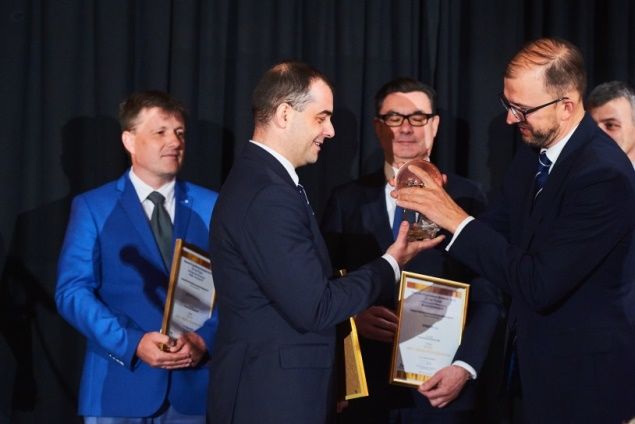
Table of Contents

                                                                                                                                                    R&I stakeholders
                                                                                                                                  Advisors & NCPs
  Best Practice                           Target Audience

                                                                                                                  Beneficiaries
                                                                                                     Applicants
                                                                                         Prospects
  1. The Idea Check                       Prospects H2020                                  x
  2. The Topic Preview                    Prospects H2020                                  x
  3. Strategic Consultation Formats       -Vice Rectors for Research of Universities       x
  ‘ERA Dialogue’ and Core Customer        or big research institutions
  Concept (C3)                            -“Core Customer”: CEOs, Heads of R&D or
                                          Head of Funding Management or similar
                                          positions of selected, high-potential
                                          companies (big companies and SMEs)
  4. E-learning Videos                    H2020 beneficiaries – mainly project             x
                                          managers
  5. Training for EIC Accelerator         Companies that have been selected to                                        x
  Pitching                                pitch their EIC Accelerator proposals in
                                          Brussels (Step 2 of the application process)
  6. Guideline for Financial              Financial Managers, Project Managers and                      x
  Implementation of Horizon 2020          Accounting Departments
  Projects in Croatia
  7. Starting a H2020-funded project      Companies granted the H2020 funding.                                        x
  ( Financial & Legal Management)
  8. Study Visits to Brussels             Prospect applicants of higher education,                                    x
                                          research institutes, large companies, SMEs,
                                          NGOs
  9. Crystal Brussels Prize               EU Research Programmes` beneficiaries                                       x
  10. Mission to Countries of less        Newcomers / less experienced NCPs from                        x             x               x
  Experienced NCPs                        Associated and Third Countries
  11. Framework Programme Compact         New Horizon 2020 advisers in Higher                                                         x
                                          Education Institutions, research
                                          institutions, companies and newly
                                          appointed NCP colleagues
  12. Overview of Italian Participation   National R&I stakeholders                                                                   x
  in Horizon 2020
  13. Working Group for Regional          Selected and nominated project managers                                                                       x
  Contacts                                from different Czech regions
  14. Training Programme for New          Newly nominated NCPs                                                                        x
  Horizon 2020 NCPs in Finland
  15. Best Practices for Trainings        NCPs                                                                                        x
  16. E-Booklet of Best Practices         SC5 NCPs                                                                                    x
  17. What is My EEN Job About?           SC5 NCPs                                                                                    x
  18. NCP& EEN Brokerage Events           SC5 NCP and SC5 clients                                                                     x
  19. Measuring Impact in NCP             NCP networks                                                                                x                 x
  Networking Projects

NCP Academy 2 WP 3.4                                                                                                                                                   4
1. The Idea Check
Target Audience Type of Best Practice?
Any researcher (from academia or private sector) seeking service a document
European funding for her/his collaborative research. event/training a video
meeting study visit
prize platform
Objective
1. Comparing the project ideas or RDI needs of a client with funding or partnering opportunities
on EU level and assessing their thematic suitability.
2. Ensuring a good match between applicant’s research and scope of a thematic topic.
3. Streamlining work of an NCP by avoiding proposals to topics that do not align with
research/expertise of applicants.
Methodological Approach
To compare the project ideas or needs of a client with EU funding or partnering opportunities an
Idea Check Assessment Form is sent to client to be filled out.
The filled and returned form allows the NCPs to perform a preparatory assessment to identify:
if topics and research of applicants match,
identify major gaps,
propose next steps for successful proposal writing.
Impact
Align project idea of client with thematic topic in efficient and timely manner
Effectively identify gaps between topic text and project idea
Reduce number of submissions of proposals not adequately matching the topic
Validation
Quality check of Idea Check Service by NCP and by service process owner; Feedback by Clients.
Success factors
1. The client needs to invest enough resources/time to fill out the Idea Check form.
2. The NCP needs to plan enough time to evaluate the filled-out form and to identify gaps.
3. If Idea Check reveals a good match, the NCP should ensure seamless support to client until
submission through e.g. offering a proposal review or giving consortium advice.
If Idea Check reveals no match with topic, NCP should signpost client to:
other topic in same thematic domain;
other thematic NCP, or ERC/MSCA NCP (not thematically prescriptive programmes);
other (inter-)national funding programme.
Constraints
This service requires that the client already has a basic knowledge on the European Research
Programme Horizon 2020. The Idea Check service to clients requires dedicated resources from
NCPs.
NCP Academy 2 WP 3.4 5
Sustainability High sustainability as service can be offered with regards to any call. The Idea Check Assessment Form remains the same. Replicability and/or up-scaling Replicability: High, not dependent on a specific institution or country. Upscaling: may easily be upscaled. Conclusion This service unifies two central aims: Ensuring a good match between the researcher/applicant and the topic he/she applies to, thus lowering number of submission of proposals below threshold due to content not matching the topic. This service aims at more effective use of NCP resources threshold due to content not matching. Publisher Euresearch. Stakeholders and Partners Euresearch National Contact Points. NCP contact details Euresearch Idea Check Process Owner: Riccardo Scarinci riccardo.scarinci@euresearch.ch Related Website(s) www.euresearch.ch Related resources that have been developed Idea Check forms for particular thematic areas. NCP Academy 2 WP 3.4 6
2. The Topic Preview
Target Audience Type of Best Practice?
All potential participants of Horizon 2020 Service a document
(researchers, companies, NGOs, public bodies etc.). event/training a video
meeting study visit
prize platform
Objective
Provide a simple and compact summary of individual thematic work programmes or cross-cutting
thematic fields and their topics.
Methodological Approach
1. NCP compiles data from newly published or updated Work Programmes: she/he retrieves
Topic ID, Topic Title, Type of Action, TRL level, and Deadline for every Topic of a WP into a
table. The topic titles are hyperlinked to the topic webpage in the participant portal.
This document is referred to as Topic Preview.
2. NCP publishes Topic Preview on Euresearch Website.
3. NCP and Euresearch Offices in the Regions distribute Topic Previews among clients.
Validation
A quality check of Topic Preview is performed by NCP and communication unit. Feedbacks are
collected from Euresearch Offices in the Regions and from the clients.
Impact
“Hands-on” and “in a nutshell” information on upcoming funding opportunities for clients.
Information on funding opportunities for Euresearch Offices in the Regions.
Raised general awareness of Horizon 2020.
Success factors
Regular and prompt update of Topic Previews by National Contact Point (NCP).
Good cooperation between NCPs and Euresearch Regional Offices.
Widespread dissemination.
Interest by clients.
Constraints
The Topic Preview document dissemination is mainly limited to registered clients and Euresearch
website users. The quality control depends mainly on the individual NCP.
Sustainability
High sustainability as the Topic Preview can be constantly updated and is also adaptable to new
Framework Programmes.
NCP Academy 2 WP 3.4 7
Replicability and/or up-scaling The replicability is high, and not dependent on a specific institution or country. May easily be upscaled to European level, i.e. through NCP networks. Furthermore, Topic Previews are not limited to Work Programmes but may also be used cross-thematically (e.g. for SSH Integration topics). Conclusion It is an effective and efficient document, which provides an overview of the funding opportunities for individual Work Programmes or cross-cutting thematic areas. Publisher Euresearch. Stakeholders and Partners Euresearch National Contact Points: drafting, publishing, and distributing the Topic Previews. Euresearch Offices in the Regions: distributing Topic Previews. NCP contact details Euresearch Topic Preview Process Owner: Joël Graf joel.graf@euresearch.ch Related Website(s) www.euresearch.ch Related resources that have been developed Thematic and cross-thematic Topic Previews. NCP Academy 2 WP 3.4 8
3. Strategic Consultation Formats ‘ERA Dialogue’and
Core Customer Concept (C3)
Short Description
Since the beginning of Horizon 2020, FFG started offering new “strategic consultation formats” (in
contrast to individual consulting of researchers). These comprise mainly two formats:
- the “ERA Dialogue”, which is targeted at universities and big research organisations, and
- the “Core Customer Concept” (in short: C3), which is targeted at high-potential companies.
The aim of these new formats was to inform, empower and support organisations to fully exploit
possibilities in EU-RTDI Programmes on a more strategic level. They are a continuous
process/dialogue, with regular meetings and follow-up activities.
Target Audience
For “ERA Dialogue”: Vice Rectors for Research of universities or Type of Best Practice?
big research institutions.
service a document
For “Core Customer Concept”: CEOs, Heads of R&D or Heads event/training a video
of Funding Management or similar positions of selected, meeting study visit
high-potential companies (big companies and SMEs) prize platform
Objective
Support organisations to fully exploit possibilities in EU-RTDI Programmes on a strategic
level (early information about calls and strategic developments tailored to the needs and
strategic goals of the customer).
Communicate current developments in EU-RTDI programmes.
Translate and evaluate EU Programme-portfolios and (strategic) networks/initiatives.
Support strategies on internationalisation .
Identify opportunities to position research priorities of organisations.
Provide a single point of contact to facilitate interaction and communication.
Enforce organisations’ networks on a regional, national and international level.
Deepen expertise in applying for EU funding and in managing EU projects.
Methodological Approach
Continuous process/”dialogue”.
ERA-Dialogue starts with a first (pre)meeting to discuss objectives and process, followed by
at least 1 meeting/year, plus several follow-up activities and feedback/reflection
meetings/questionnaires.
C3 starts with a first meeting including a detailed analysis of the company’s needs and
targets, followed by ongoing (approx., 1/month) communication and meetings whenever
necessary.
Before every meeting, detailed internal preparation including analysis of current
performance, opportunities in upcoming calls, policy updates, current important
developments in ERA and relevant EU-RTDI programs etc.
NCP Academy 2 WP 3.4 9
Methodological Approach (continued)
The meeting encompasses detailed discussion of status quo and relevant current and future
developments. Follow-up activities for further support are defined: they range from more
detailed analysis (benchmarking, network analysis….) to internal organizational changes (changes
in grant service support, HR Award, ERC mentoring…), workshops etc.
Validation
ERA-Dialogue: Feedback talks/questionnaires on a regular basis (in writing, or by
phone/meeting).
C3: Detailed report on the year’s activities including a foresight to the next year with feedback
from all customers.
Impact
Empowerment at organisational level.
Long-term strategic view on “how to best use EU funding programmes” .
Strengthened EU funding expertise at organisational level.
Raised awareness at organisational level of current & future EU-RTDI + ERA developments.
Support for organisations to network on EU level.
Success factors
Access to good data monitoring and analysis, plus customer database.
Enough NCP resources.
Good knowledge of the respective organisation with a hands-on approach, especially for
SMEs.
Ability to gain the trust of the organisations.
Interest and openness of organisations for strategic consultations.
Constraints
It requires NCP resources (persons, time and traveling), preparatory tasks and capacities for
follow-up tasks.
Sustainability
High sustainability, since continuous long-running process and contact in most cases.
Replicability and/or up-scaling
Replicability: medium. Every case is different and handled on a customized basis due to the
different needs and strategies in the respective organisations.
Upscaling dependent on internal resources (how many organisations can be accompanied in
this quite intensive format, e.g. ALL universities, or focus on high potential? Which
companies to select as Core Customers?
NCP Academy 2 WP 3.4 10Conclusion
Very good experiences with these kinds of formats, now running very well and highly accepted in
the Austrian community. The set-up in initial phase took some time.
Publisher
Austrian Research Promotion Agency (FFG).
Stakeholders and Partners
Cooperation internally at FFG with data monitoring unit, and where useful in combination
with national funding programmes.
Local partners (e.g. grant offices at universities) are involved.
Thematically relevant NCPs and programme managers.
C3 meetings: Regional agencies (when outside of Vienna).
NCP contact details
NCP Coordinator: Andrea Höglinger andrea.hoeglinger@ffg.at
ERA Dialogue: Andrea Hoffmann andrea.hoffmann@ffg.at
Core Customer Concept: Christian Frey christian.frey@ffg.at
Related Website(s)
ERA Dialogue:
https://www.ffg.at/sites/default/files/downloads/Pr%C3%A4sentation_ERADialog_english1.pdf
C3 is a format that is not proactively advertised. The companies are chosen by the experts.
NCP Academy 2 WP 3.4 11Testimonial ERA Dialogue
Mag. Dr. Edith Huber, Head - Office for
Research Services, Danube University Krems:
“A knowledgeable analysis of strong and weak
points was conducted, which helps the Danube
University Krems to increasingly participate in
the upcoming calls in Horizon Europe.
Furthermore, FFG offers targeted trainings
(focus on COST and Marie Curie) directly at the
University in Krems.”
Dr. Barbara Haselsteiner-Zach, Director
Research Management and Service, University
of Graz:
“Overall, we see the ERA Dialogue as gratifying
initiative, as it enables a regular exchange
between FFG and the University of Graz at
rectorate's level. Beside regular monitoring
reports of the University's participation figures
within the overall context, it provides impetus
for further strengthening the University of Graz
within the EU-context.”
NCP Academy 2 WP 3.4 12Testimonial Core Customer Concept (C3)
Dr. Jama Nateqi, CEO, Symptoma GmbH:
"We expected only basic funding advice. Instead,
we received precisely tailored recommendations
for calls, which we have already successfully
addressed, and advice on our strategic direction.
This was far beyond our initial expectations. The
level of support is often better, more detailed
and coordinated than that of business
consultants. As recommended by FFG, we have
hired a dedicated Chief Research Officer who
has already increased our scientific
collaborations to +63 worldwide. We have now
+30 research projects under our belt validating
Symptoma.com.”
Nils Berger, CEO, Viewpointsystem GmbH:
“FFG - for me this actually means "Financing
Future Growth". It includes everything that a
deep tech company could wish for from a
financing partner: to initiate growth potential in
a future-driven, goal-oriented and research-
financing way. It is always a pleasure for us to
work with people who know what they want the
future to be like. Not to forget the tailor-made
core customer support provided by FFG - we feel
perfectly supported at all times.”
NCP Academy 2 WP 3.4 134. E-learning Videos
Target Audience Type of Best Practice?
Horizon 2020 beneficiaries – mainly project managers. Service a document
event/training a video
meeting study visit
Objective prize platform
To provide information to beneficiaries in a user-friendly way.
To make life easier for LaF NCPs who have to repeat the same things many times (we send
videos instead of explain the issues – e.g. on validation, roles, reporting, FTOP etc).
To make our events more entertaining (we use these videos as part of the events).
Methodological Approach
Video (e-learning) on a website.
Validation
We have a group of people who send us comments whether a video is good or not and what to
improve (thematic NCPs, colleagues from PR department and IT department).
Impact
We can see how many people already watched a given video.
After section videos have been published on the website, LaF NCPs have received less questions
on those topics.
Success factors
Beneficiaries have to know about the existence of the videos. There are still many who do not
know. It is important to introduce this possibility at each NCP event and in the newsletters.
Constraints
Creating the correct content, graphical design and then the video itself is very time-consuming. It
requires more competences than NCPs often have.
Sustainability
Very sustainable.
NCP Academy 2 WP 3.4 14Conclusion This tool seems very successful. It makes life easier for Legal and Financial NCPs (even though it is very time-consuming to create the videos), it makes events more interesting and is positively assessed by the beneficiaries. Publisher The Technology Centre of the CAS. NCP contact details Lenka Chvojkova Chvojkova@tc.cz Related Website(s) https://www.h2020.cz/cs/financni-aspekty/e-learning-h2020 Related resources that have been developed https://www.h2020.cz/cs/financni-aspekty/e-learning-h2020 NCP Academy 2 WP 3.4 15
Video Screenshots

NCP Academy 2 WP 3.4       16
5. Training for EIC Accelerator Pitching
Target Audience Type of Best Practice?
Those companies that have been selected to pitch their EIC service a document
Accelerator proposals in Brussels (Step 2 of the application event/training a video
process). meeting study visit
prize platform
Objective
To prepare participants for successful pitching sessions in order to secure EIC Accelerator funding.
Methodological Approach
Simulation of the actual pitching session. The company’s representatives deliver their pitch, and
mock panel asks relevant questions. The mock panel consists of SME NCPs and other Business
Finland senior advisors/directors. Strengths and weaknesses of the presentation, ideas for
improvement are discussed. It allows participants to get to know what to expect in the actual
pitching situation as well as best practices.
Impact
Company representatives feel more prepared for the pitching session and can be more successful
as a result.
Success factors
Our pitching training is successful when:
the applicant company’s representatives are interested in the added value provided by the
training,
we have a well-rounded mock panel,
we can schedule training sessions well in advance of the actual pitching event.
Constraints
Not all companies invited to Step 2 pitching are willing to take advantage of the training.
It can also be a challenge to schedule training times, but we can usually always make it work.
Replicability and/or up-scaling
The pitching training is easy to set up and it can be replicated for all Finnish applicants.
Conclusion
Companies generally feel better prepared for pitching after our mock panel training session.
Feedback has been quite positive.
NCP Academy 2 WP 3.4 17Publisher Business Finland. NCP contact details Outi Kauppinen, SME NCP, outi.kauppinen@businessfinland.fi NCP Academy 2 WP 3.4 18
6. Guideline for Financial Implementation of
Horizon 2020 Projects in Croatia
Target Audience Type of Best Practice?
Financial Managers, Project Managers and Accounting Service a document
Departments. event/training a video
meeting study visit
prize platform
Objective
To collect, explain and summarize Horizon 2020 financial rules in one document and align them
with Croatian legislation.
Methodological Approach
Collect all problematic issues of financial implementation sent as enquiries to Financial &
Legal NCPs.
Gather feedback from the members of the Working Group on problematic aspects of
financial implementation.
Explain and align these issues with Croatian legislation.
Validation
Ministry of Science and Education
Impact
The Guideline received strong positive feedback from its targeted audience and they have
become an example of success story in Croatia (when it comes to the financial implementation of
Horizon 2020 projects in Croatia).
Success factors
The Guideline is a document that collects and summarizes rules on financial implementation of
Horizon 2020 projects, all in one place.
Constraints
The Guideline should be considered as a helping/counseling document and its recommendations
may only be used for informational purposes. It should not be considered as a binding document.
Sustainability
The Guideline will be updated according to the new provisions and rules of Horizon 2020 and
Horizon Europe Programmes, due to the increase in the number of applicants for above-
mentioned Programmes.
NCP Academy 2 WP 3.4 19Replicability and/or up-scaling The Guideline will be updated in accordance with future changes/updates of the Annotated Model Grant Agreement. Conclusion It has been shown that the Guideline is an extremely useful document that, all in one place, includes an explanation of the rules for financial implementation of Horizon 2020 projects and aligns these rules with Croatian legislation. Publisher Agency for Mobility and EU Programmes (Financial & Legal NCPs) and Ministry of Science and Education. Stakeholders and Partners To design the Guideline, a Working Group was formed. Members of the Group were employees of project offices in public scientific organizations. NCP contact details Ana Ključarić (Financial NCP) ana.kljucaric@mobilnost.hr Martina Kožul Kolarić (Legal NCP) martina.kozulkolaric@mobilnost.hr Related Website(s) Horizon 2020 website (in Croatian) www.Obzor2020.hr Related resources that have been developed Workshop on "Financial Reporting and Fundamentals of Horizon2020 Contractual Obligations". NCP Academy 2 WP 3.4 20
Testimonial on The Guidelines for
            Financial Implementation of the Horizon
            2020 Projects in the Republic of Croatia

                              Ivana Klarin, Centre for EU projects, Projects
                              and Programmes Manager at the University of
                              Rijeka):

                              The Center for EU projects represents the
                              central point for all EU funding-related questions
                              at the central level of the University of Rijeka. As
                              the University of Rijeka participates in a
                              significant number of research, infrastructural
                              and cooperative projects, we deal mainly with
                              Horizon 2020, Erasmus+, European Regional, and
                              Development Fund and European Social Fund
                              projects.
                              The document „Smjernice za financijsku
                              provedbu projekata iz programa Obzor 2020.“
                              contains great guidelines for our researchers,
                              research support staff and I always direct
                              colleagues to it, especially newcomers. These
                              national guidelines represent daily help and
                              show that we can always rely on our NCPs'
                              support.

NCP Academy 2 WP 3.4                                                            21
7. Starting a H2020-funded Project
(Financial & Legal Management)
Target Audience Type of Best Practice?
Service a document
All companies that have been granted Horizon 2020 funding,
event/training a video
in particular SMEs, which received SME Phase 2 grant and are
meeting study visit
just starting their project.
prize platform
Objectives
To provide the Beneficiary with sufficient expertise mainly in financial, but also in legal
management of Horizon 2020-funded project.
To provide a guideline on how to manage, report and make payment requests correctly and
successfully.
Methodological Approach
A face-to-face meeting or a Skype meeting with company representatives and L&F NCP.
At the meeting the main financial and legal matters including articles of the Grant Agreement are
discussed. Furthermore, all specific financial questions asked by the Beneficiary are answered.
The company representatives are also introduced to the main sources of information: Funding
&Tenders portal, Annotated Model Grant Agreement (AMGA), special training organised by us
(Business Finland) etc.
Impact
Company representatives feel more prepared to manage their H2020-funded project.
They know to whom to turn to with possible questions and where to find more information.
Success factors
A launch meeting is successful when:
it is scheduled before the H2020 project starts, so the Beneficiary can carry out the project
and monitor the costs correctly right from the beginning,
the Beneficiary´s reports and payment requests are approved without delay,
no errors are revealed by audits,
customer feedbacks.
Constraints
Limited time and NCP resources. Not all companies are willing to take advantage of this training,
or it is challenging to schedule a meeting. NCPs can only give advice and correct information, but
are not able or allowed to interpret complex situations or give any “official” conclusions on behalf
of the Commission.
NCP Academy 2 WP 3.4 22Replicability and/or up-scaling The launch meeting is easy to set up and it can be replicated for all Finnish participants in H2020 and in future Framework Programmes. Conclusion Feedback has been positive. Companies generally feel better prepared and confident in the financial and legal management of their H2020-funded projects. L&F NCPs get valuable feedback from Beneficiaries on what is challenging for them, and how these processes could be improved. Publisher Business Finland Stakeholders and Partners L&F NCPs, SME NCPs NCP contact details Sari Federley sari.federley@businessfinland.fi Related Website(s) businessfinland.fi https://www.businessfinland.fi/suomalaisille-asiakkaille/palvelut/rahoitus/horisontti- 2020/osallistujan-opas/ Related resources that have been developed Guidelines for SMEs on financial matters in Horizon 2020 (written document in Finnish). NCP Academy 2 WP 3.4 23
8. Study Visits to Brussels
Target Audience Type of Best Practice?
EU Research Programmes target groups: higher education Service a document
institutions, research institutes, large companies, SMEs, NGOs. event/training a video
meeting study visit
prize platform
Objective
The main objective of the study visits is to increase the participation of the Polish in the European
Research and Innovation Programme Horizon 2020, and in the key European thematic initiatives.
In addition, a study visit is a unique opportunity to present achievements to foreign partners and
to the European Commission, and to exchange good practices and experiences.
Methodological Approach
The study visits have been organised six times already in different thematic areas related to
H2020. A study visit agenda always comprises of the following elements:
Day 1
-Networking lunch
-Opening session
-Presentation of Polish potential in a thematic area (participants’ pitch presentations)
-Presentations given by EU officers representing the thematic area, followed by panel discussion
-Networking dinner
Day 2
-Presentation of H2020 projects coordinated by Polish partners or with Polish participation
-Panel discussion with EU and Polish speakers and a networking lunch.
-A visit to an interesting company or a research facility is also an option. In most cases a Polish–
Belgian mini brokerage event has been organised as well.
Impact
Each study visit gathered approximately 60 participants representing various types of H2020
stakeholders. Representatives of Polish companies, research institutes, higher education
institutions and non-governmental organizations had a unique opportunity to meet in person
with European Commission Policy officers. It has been an opportunity to discuss the challenges
of the Polish participation in H2020 and to present the most successful teams. Furthermore, mini
brokerage events with Belgian partners have allowed for some participants to join international
consortia applying to H2020 or to create other business opportunities.
Validation
2015 – study visit Energy [1] 2017 – study visit Bioeconomy [4]
2016 – study visit Chemical Industry [2] 2018 – study visit Circular Economy [5]
2017 – study visit ICT [3] 2019 – study visit Transforming Industry [6]
NCP Academy 2 WP 3.4 24Success Factors
Interesting agenda.
Notable speakers.
Cooperation with the Permanent Representation of the Republic of Poland to the EU in
Brussels, the Polish Embassy in Brussels and the European Commission.
Constraints
Participants need to pay their travel and accommodation costs.
Sustainability
6 study visits organised , next one is planned for 2019 (Space).
Replicability and/or up-scaling
Study visits are fully replicable for other countries/thematic areas.
Conclusion
Study visits are an effective tool to encourage potential beneficiaries to apply to Horizon 2020 by
presenting them closely to the EC research and innovation ecosystem. It is also a good
opportunity to present a country’s success stories of participation to H2020 as well as its general
research and innovation potential.
Publisher
National Contact Point for Research Programmes of the EU, Institute
of Fundamental Technological Research Polish Academy of Sciences.
Stakeholders and Partners
The Permanent Representation of the Republic of Poland to the EU in Brussels.
The Polish Embassy in Brussels.
The Ministry of Science and Higher Education, the Ministry of Entrepreneurship and
Technology, and the Ministry of Investment and Economic Development, other thematic
ministries (for example the Ministry of Environment, the Ministry of Agriculture).
Higher education institutions, research institutes, large companies, SMEs, NGOs.
The XY
NCP contact details
Magdalena Głogowska , PhD
magdalena.glogowska@kpk.gov.pl
Related Website(s)
link 1, 2, 3, 4, 5 ,6
Related resources that have been developed
http://www.kpk.gov.pl/wp-content/uploads/2018/04/KPK_3R_katalog_final.pdf
NCP Academy 2 WP 3.4 25Testimonial Study Visits
Dr. Eng. Agnieszka Sznyk, CEO, The Institute of
Innovation and Responsible Development
INNOWO
Two-day study visit “3Revolution: Reduce,
Reuse, Recover” was a unique opportunity to
present achievements to foreign partners, the
European Commission and the exchange of good
practices and experiences. It highlighted the
awareness of benefits resulting from joining
international cooperation programs, expert
groups, European public-private partnerships
and advisory bodies. We have also visited a
company that focuses on the concept of circular
economy.
NCP Academy 2 WP 3.4 269. Crystal Brussels Prize
Target Audience
Beneficiaries of the EU Research Programmes. Type of Best Practice?
Service a document
event/training a video
meeting study visit
prize platform
Objective
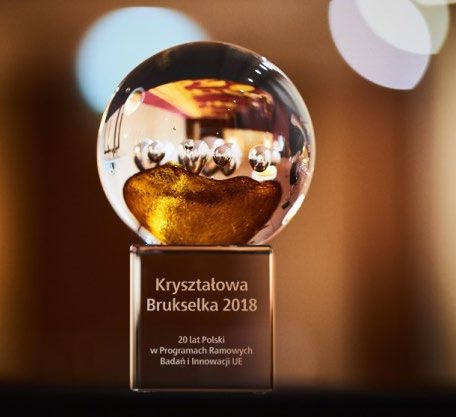
The award has been created to give credit to the Polish institutions that are active on the
international level, but also to motivate other institutions to be more active in that sense and to
demonstrate the fact that participation in Framework Programmes is worthwhile.
Methodological Approach
The Crystal Brussels Prize is awarded in various categories: research teams, enterprises, public
administrations, non-profit organizations and individual scientists. The laureates are ranked
based on statistical data concerning their participation in the Framework Programmes. The
number of submitted and awarded proposals, the amount of funding and the number of
coordinated projects were taken into account in the selection.
The nominees of the individual award are selected from a group of people proposed by the
scientific community. The criteria of selection include: active participation, coordination of
projects, work in Programme Committees and expert groups, promotion of Framework
Programmes and participation in initiatives that foster Polish participation in Framework
Programmes.
The list of nominated organizations and people is prepared in line with rules prepared by the
Polish NCPs. Laureates are selected by the Competition Jury of the Crystal Brussels Award, which
includes members of the public authorities, institutions that provide support to scientists and the
industry. The Jury is appointed by the Ministry of Science and Higher Education.
Impact
The Crystal Brussels prize has been a motivation for EU Research programme beneficiaries since
2001. Due to its large public recognition it is also an important instrument for dissemination of
information about international research, successful researchers and their projects, key project
results etc.
Validation
The Crystal Brussels was awarded for the first time in 2001. In the most recent edition the Crystal
Brussels Prize 2018 was awarded to the best Polish scientists and entrepreneurs for their success
in the Framework Programmes (5FP, 6FP, 7FP, Horizon 2020). The Crystal Brussels Prize 2018 was
exceptional because it summarized the last 20 years of Polish participation in the Framework
Programmes.
NCP Academy 2 WP 3.4 27Success Factors
Access to participation statistics; preparation of award criteria, conducting a thorough
analysis of gathered data.
Competition Jury.
Financial resources to organize a Gala and produce the statuettes for the winners.
Involvement of Ministry of Science and Higher Education (Minister present at the Gala).
Sustainability
The Crystal Brussel Prize has been awarded regularly in 2001, 2002, 2004, 2006, 2010, 2013, 2016
and 2018 and is planned to be continued in the coming years.
Replicability and/or up-scaling
The Crystal Brussel Prize has full potential for replicability.
Conclusion
The Crystal Brussel Prize is a unique way to reward the top H2020 participants and to motivate
applicants.
Publisher
National Contact Point for Research Programmes of the EU, Institute of Fundamental
Technological Research Polish Academy of Sciences.
Stakeholders and Partners
The Crystal Brussels is an exceptional prize for the top performing and most active scientific
institutions (universities, research institutes), enterprises and individual participants, who have
been extremely successful in applying for funding from the Framework Programmes.
NCP contact details
Magdalena Głogowska , PhD
magdalena.glogowska@kpk.gov.pl
Related Website(s)
http://en.kpk.gov.pl/Crystal-Brussels-Prize/
Related resources that have been developed
Brochure about the Crystal Brussels Prize 2018 summarizing the last 20 years of Polish
participation in Framework Programmes (in Polish):
http://www.kpk.gov.pl/wp-content/uploads/2018/07/20lat-KPK_nominowani_katalog_web.pdf
NCP Academy 2 WP 3.4 28Testimonial Crystal Brussels Prize
Krzysztof Samp, ITTI Sp. z o.o. (IT Company)
"Crystal Brussels Award has increased our
recognition and credibility among foreign and
domestic partners, so we could strive for more
responsible roles (e.g. coordinator) in
subsequent Horizon 2020 competitions and in
the European Space Agency's programmes."
NCP Academy 2 WP 3.4 2910. Mission to Countries of Less
Experienced NCPs
Target Audience
Newcomers / less experienced national contact Type of Best Practice?
points (NCPs) from Associated & Third Countries. Service a document
event/training a video
meeting study visit
coaching/mentoring
Objective
The main objective is to improve the standard of support services offered by Bio-NCPs, and
organisation of capacity building workshops / infodays in less experienced countries outside
Europe.
Methodological Approach
The basic condition for BioHorizon was that the project supported workshops/info days on-site,
but did not organise them. The BioHorizon provided know-how and trainers (coaching, not
organisation). Such events were executed as part of the mentoring scheme - the MISSION
module.
Method could be used for assisting local NCPs with the info day organization, mobilization of the
stakeholders, new entrees, potential applicant’s engagement, synergies with national funds and
local partners.
Methods are flexible and fully adapted to the needs of the NCP and its clients. It could be easily
modified according to the specific requirements. Specific workshop could be: (i) how to write
IMPACT in you EU proposal, or (ii) how to maximize your matchmaking opportunities for a
brokerage event.
Validation
To be agreed with the local organizer.
Impact
Connecting new potential applicants on the local level.
Improve the knowledge of potential applicants.
Improve the standard of support services offered by local Bio-NCPs.
Optimization the networking activities between Bio-NCPs globally.
Strengthening the connection between Bio-NCPs.
Success factors
Number of participants (feedback forms might be used in the future).
Constraints
Human resources, travel costs of experts from the outside.
NCP Academy 2 WP 3.4 30Sustainability
Depends on the needs of single National Contact Point (NCP).
Replicability and/or up-scaling
Events on the international level, involving The EC, project trainers, successful coordinators from
the country.
Conclusion
High demand on this kind of activities among new NCPs fellows.
Publisher
BioHorizon Project
NCP contact
bozena.podlaska@kpk.gov.pl
Stakeholders and Partners
Direct support in organization of the event dedicated to SC2 and KET-B stakeholders in the
country of newcomer / less experienced NCP.
Workshop - up to 30 participants;
Info Day- up to 100 participants;
Related Website(s)
www.ncp-biohorizon.net
NCP Academy 2 WP 3.4 31Testimonial Mission to Countries of Less
Experienced NCPs
Liliia Kalachniuk, Bio-NCP from Ukraine
“I liked very much the relaxed but energetic
environment of the events, the kind and
respectful relationship between the trainers and
trainees, experts, and both the more and the
less experienced Bio-NCPs in attendance.”
NCP Academy 2 WP 3.4 3211.Framework Programme Compact
Short Description
Five-day event/training (Monday-Friday) about the EU Framework for Research and Innovation
for a maximum of 25 participants; twice a year. Participation fee 250 Euro.
Target Audience Type of Best Practice?
New Horizon 2020 advisers in Higher Education Institutions, Service a document
research institutions, companies and newly appointed NCP event/training a video
colleagues. meeting study visit
prize platform
Objective
New advisers/multipliers for Horizon 2020 will get to know the FP for Research and Innovation
extensively, including all Horizon 2020 parts (including an outlook on HEU), political context and
crosscutting issues such as legal and financial aspects, grant application, evaluation, partnership
instruments etc. An additional objective is fostering the networking between the participants
themselves and between the participants and the NCP representatives.
Methodological Approach
Mixed methodological approach: lectures (PPT), interactive sessions, working in small groups
accompanied by two social events on the 1st and 3rd evening.
Validation
The chosen format has been proven to work very well and it is well known and highly appreciated
in the community of FP multipliers in Germany.
Impact
Transfer of a lot of knowledge within a short time, establishment of networks, and establishment
of contacts with NCPs.
Success factors
Feedback from participants (feedback form and feedback slot) and speakers, demand from newly
appointed multipliers.
Sustainability
The five-day format enables intensive learning, questions and discussions are always welcome.
The networking of the participants and the meeting of many NCPs create important contacts
which can be used at any time for questions and advice. The exercises are practical and take up
the tasks of FP multipliers. Detailed reference materials support sustainability additionally.
NCP Academy 2 WP 3.4 33Replicability and/or up-scaling The format can be replicated and adapted. The current format has been optimized on the basis of many years of experience. Conclusion Excellent, well-established and well received event format for FP multipliers in Germany. NCP Academy 2 WP 3.4 34
Publisher
 Organised by the EU Bureau of the BMBF, DLR-PT as the coordinator of the NCP system in
 Germany, on behalf of the German NCP system.

 Stakeholders and Partners
 The complete NCP system in Germany. Within the five-day event every NCP introduces their
 specific framework part and additional contact points (e.g. COST, Women into EU Research etc.)
 plus other stakeholders (such as an experienced Horizon 2020 adviser from a university, an
 experienced evaluator, a representative of the Federal Ministry of Research and Education in
 Germany) are present to introduce their framework part.

 NCP contact details
 https://www.eubuero.de/rp-kompakt.htm

 Related Website(s)
 https://www.eubuero.de/rp-kompakt.htm

 Related resources that have been developed
 Participants receive a detailed folder with all lectures and additional information.

NCP Academy 2 WP 3.4                                                                              35
12. Overview of Italian Participation in
Horizon 2020
Target Audience
Type of Best Practice?
Italian Research & Innovation community.
Service a document
event/training a video
meeting study visit
prize platform
Objective
The report shows the figures of the Italian participation in Horizon2020. The document (˃ 500
pages) analyzes the Italian performance in the first 3 years of the H2020 programme. The report
is divided into two main sections: the first gives a horizontal overview about the Italian numbers
in the programme also with a comparison with other EU countries; the second section focuses
on an analysis at the level of single H2020 themes.
The report includes not only a detailed statistical analysis but also specific comments to the
figures and tables, a policy overview by the Italian Ministry for Research and University, and a
comment on each theme by the national representative at the H2020 configuration that aims to
justify the figures and numbers shown in the report.
Methodological Approach
Statistical analyses.
Impact
It is the first report that analyses the Italian participation in H2020. The report is public and
includes more than 500 pages and more than 100 figures and tables.
Success factors
It is a complete analysis about the performance of a country in H2020 that takes into
consideration both the horizontal aspects of the programme, and the specific characteristics of
each theme.
Other key factor is the annual update of the horizontal section of the report.
Constraints
The report requires a strong effort in collecting and elaborating all the data needed for the
analysis.
NCP Academy 2 WP 3.4 36Sustainability Accessibility to raw data. Replicability and/or up-scaling Annual update. Possibility to use the methodology to replicate the report in other countries. Publisher Agency for the Promotion of European Research (APRE). Stakeholders and Partners The report was under the responsibility of APRE. A strong cooperation between the NCPs, the Italian ministry, and national representatives was the key element for having a detailed, updated and interesting report. NCP contact details APRE, Responsible for the report: Serena Borgna (sc2 NCP) borgna@apre.it Matteo Sabini (from the APREdati team)Sabini@apre.it Contact for the NCP Academy: Caterina Buonocore (SC1 NCP) buonocore@apre.it Related Website(s) https://www.apre.it/apredati/ NCP Academy 2 WP 3.4 37
13. Working Group for Regional Contacts
Short Description Type of Best Practice?
Working group + meetings + common communication Service a document
platform. event/training a video
meeting study visit
prize platform
Target Audience
Selected and nominated project managers from different Czech regions.
Objective
To provide more information to advanced regional project managers who can disseminate it in
their regions. To receive feedback from the regions and individual beneficiaries (more contact
with real life).
Methodological Approach
Train-the-trainer approach.
Mutual learning.
Meetings twice a year (usually right after the LaF NCP meeting in Brussels).
Common communication platform ninet@ninet.cz.
Common event calendar.
Validation
No formalized procedure. Feedback from regional project managers.
Impact
Better dissemination of information from Brussels.
Better dissemination of real cases and problems and information from beneficiaries.
Success factors
Active participation of regional project managers.
Constraints
Some regional project managers would like to use the platform only for receiving information and
are not willing to share their experience (due to the lack of time, confidentiality, etc.). This poses
problems especially with the use of the common event calendar, which should prevent the
organization of events on the same day, duplication of events organised by different regional and
national contacts and so forth. While the calendar is welcomed by all, not all enter their events in
it.
NCP Academy 2 WP 3.4 38Sustainability Depends on the activity of the organiser (Technology Centre CAS). Conclusion Existence of a working group of regional and national contacts is a very good platform for exchange of information and knowledge. Publisher The Technology Centre of the CAS. Stakeholders and Partners Project managers from the regions and NCPs. NCP contact details Lenka Chvojkova, chvojkova@tc.cz Related Website(s) http://ninet.cz/ NCP Academy 2 WP 3.4 39
Working Groups for Regional Contacts

NCP Academy 2 WP 3.4                          40
14. Training Programme for New
Horizon 2020 NCPs in Finland
Target Audience Type of Best Practice?
Newly nominated National Contact Points (NCPs). Service a document
event/training a video
meeting study visit
prize platform
Objective
New NCP acquires as soon as possible the necessary knowledge and skills that allow her/him to
start working as an NCP, to provide good services to customers, and to be an active member in
the national and European NCP networks.
Methodological Approach
On-site face-to-face training sessions with exercises for a new NCP to do before and after the
date/ specific sessions.
possibility for personal / individual training sessions with NCP Coordinator, L&F NCPs or
other experienced NCPs.
Impact
H2020 potential applicants, participants and intermediaries receive up-to-date, high-quality and
prompt guidance and advice, information and other services they need in order to successfully
participate in H2020 or guide and advice on H2020 (intermediaries).
Success factors
Customer satisfaction: based on feedback received from customers.
NCP satisfaction: feedback received from the new NCP as well as from other NCP colleagues on
whether or not the new NCP is fully conversant with the her/his new role and tasks.
Constraints
Time and NCP resources;
not all NCPs in Finland work full-time as an NCP but they have other tasks and responsibilities as
well, and sometimes it is difficult for an expert/adviser to find a good balance between these
different tasks.
NCP Academy 2 WP 3.4 41Conclusion In a decentralized NCP system that we have in Finland, this has proven to be a very good way to support and assist a new NCP to acquire the necessary basic knowledge and skills that he/she needs to be able to start working as an NCP both independently and as a member of the national & European NCP network. This is a learning-by-doing exercise also to the NCP Coordinator and the core EU team supporting the NCP network in Finland, so we are improving and developing this NCP training programme also for our future needs (eg. Horizon Europe programme). Publisher Business Finland. Stakeholders and Partners NCP Coordinator with the core EU team, incl. L&F NCPs. NCP contact details Eija Auranen H2020 NCP Coordinator eija.auranen@businessfinland.fi NCP Academy 2 WP 3.4 42
15. Best Practices for Trainings
Target Audience Type of Best Practice?
(SC5) National Contact Points (NCPs). Service a document
event/training a video
meeting study visit
prize platform
Objective
To improve (SC5) NCPs’ training skills. This is achieved by offering a guide with methods for 7
thematic trainings.
Methodological Approach
Methods for each thematic training are described in the guide. This guide can be found at NCPs
CaRE website(see below under “relevant link”)
Topic 1: Exercise on Communication, Dissemination and Exploitation
Topic 2: Reporting. Practical insight into how a consortium works. Differences between
milestones and deliverables
Topic 3: Partner search
Topic 4: How to increase your competitiveness in Horizon 2020 calls?
Topic 5: Project writing
Topic 6: Project evaluation
Topic 7: Project management
Sustainability
Methods could be easily modified according to specific NCP needs (e.g. different examples or
texts could be used/replaced).
Replicability and/or up-scaling
Suitable for all NCPs (e.g. specific case studies could be replaced by thematic texts).
Conclusion
The guide consists of 7 different topics with suitable methods to help NCPs carry out NCP
trainings on these topics to clients.
Publisher/ NCP contact details
NCPs CaRE Project
Ulle.napa@etag.ee
Relevant Link
http://www.ncps-care.eu/?wpdmpro=guide-best-practices-for-trainings
NCP Academy 2 WP 3.4 4316. E-Booklet of Best Practices
Target Audience Type of Best Practice?
(SC5) National Contact Points (NCPs). Service a document
event/training a video
meeting study visit
prize Online manual
Objective
The “E-booklet of Best Practices“ was compiled to provide practical help to all National Contact
Points (NCPs) of Horizon 2020 programme Societal Challenge 5 “Climate Action, Environment,
Resource Efficiency and Raw Materials“ (SC5). The booklet facilitates and fosters common
knowledge as well as best practices shared within the member organisations of NCPs CaRE
network.
Methodological Approach
Descriptions of different best practices .
Validation
An impact assessment has been conducted.
Impact
The conducted impact assessment stated high impact on new SC5 NCPs.
Constraints
Very SC5-NCP specific material.
Replicability and/or up-scaling
General best practices would be useful to other NCPs as well.
Partly applicable also to the new Framework Programme.
Conclusion
The main aim was to create a versatile practical guiding manual, which would identify and openly
disseminate good practices of supporting interested researchers and programme applicants
within the network.
Publisher/ NCP contact details
NCPs CaRE Project
Ulle.napa@etag.ee
Relevant Link
http://www.ncps-care.eu/?wpdmpro=e-booklet-of-best-praticies-second-updat
NCP Academy 2 WP 3.4 4417. What is My EEN Job About?
Target Audience Type of Best Practice?
(SC5) National Contact Points (NCPs). Service a document
event/training a video
meeting study visit
exchange programm
Objective
This NCPs CaRE staff exchange programme or study visit allowed a National Contact Point on
Societal Challenge 5 (Climate action, environment, resource efficiency and raw materials) to make
a study visit to an Enterprise Europe Network advisor from his/her country for up to a day and a
half. The objective was to boost synergies between the National Contact Point (NCP) and
Enterprise Europe Network services at national/regional level. NCPs CaRE helped the NCP to
identify the relevant EEN adviser and had a budget to reimburse domestic travel expenditures of
the NCP.
Methodological Approach
Guidelines were elaborated to explain the programme to both the NCP and EEN services.
Impact
Output: 11 of such exchanges were organised in Germany, Portugal, Poland, Turkey, Tunisia,
Slovakia, Belgium (Wallonia), Estonia, Helsinki (with 2 NCPs), France, Switzerland. Excellent
feedbacks were received from all participants, both from the EEN and NCP sides. This was very
helpful in particular for the validation of profiles for the 3rd brokerage event organised by NCPs
CaRE, for which the involvement of EEN co-organisers in cooperation with their “local” NCPs was
easier.
Impact: currently under evaluation but one impact already identified is the Memorandum of
Understanding (MoU), which was signed between the Portuguese NCPs (hosted at FCT) and EEN
Central Portugal during one exchange, and which led to the elaboration of a template for MoU
made available to all SC5 NCPs.
Success factors
Having a double agent (NCP / EEN) able to put the NCP in contact with the most relevant
persons.
Support of the relevant sector group in EEN.
Incentive of the project so that NCP takes the time to do it.
Good communication campaign (at the beginning a misleading name of the programme was
chosen, which hampered the initial uptake of the project).
A budget for reimbursing (local) transportation and eventual accommodation was less of a
success factor as it was not much used.
NCP Academy 2 WP 3.4 45You can also read


