Boosting organic seed and plant breeding across Europe 2017 2021 - Liveseed
←
→
Page content transcription
If your browser does not render page correctly, please read the page content below
Boosting organic seed and plant
      breeding across Europe
             2017 - 2021

This project has received funding from the European Union’s Horizon 2020 research and innovation programme under grant
agreement No 727230 and by the Swiss State Secretariat for Education, Research and Innovation (SERI) under contract
number 17.00090. The information contained in this communication only reflects the author’s view. Neither the Research
Executive Agency nor SERI is responsible for any use that may be made of the information provided.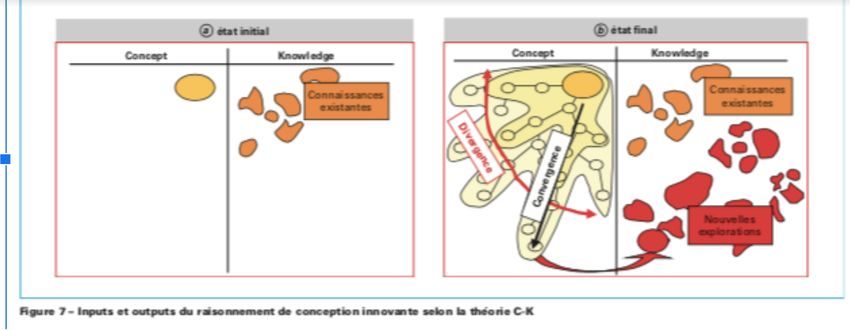
WORKSHOP
            New models of cultivar testing
               for organic agriculture
                             LIVESEED final conference & Organic Innovation Days
                                         the 24th of November 2020

Organizing team: Frederic Rey and Pierre Rivière (ITAB), Ambrogio Costanzo (ORC), Abco de Buck (LBI)
                   and Judit Feher (ÖMKi)
             This project has received funding from the European Union’s Horizon 2020 research and innovation programme under grant
             agreement No 727230 and by the Swiss State Secretariat for Education, Research and Innovation (SERI) under contract
             number 17.00090. The information contained in this communication only reflects the author’s view. Neither the Research
             Executive Agency nor SERI is responsible for any use that may be made of the information provided.
Agenda

• 11:10 – Introduction (Ambrogio Costanzo)
• 11:15 - “New models of cultivar testing for organic
  agriculture” – (Frederic REY)
• 11:35 – Interactive discussion
   – feedback on outcomes presented
   – next steps and further cooperation opportunities on this issue
• 12:05 – Wrap up (Ambrogio Costanzo)
• 12:10 – End of the workshop

Set-up the rules

?
How to set-up and optimize
cultivar* testing networks
for organic?
* cultivar = varieties, breeding lines, landraces, populations…

                                               Frederic Rey, ITAB
Breeding, post-registration, informal
 cultivar testing networks                                                      farming system and
                                                                                   environment

                                                 Farmers’
            information
                                                  choice

                                                     adapted
                                                     cultivars

                                                     boosting

                          yield                           end product        Farm + value
productivity                              autonomy
                        stability                           quality         chain incomes

                                                        …benefit to the whole organic sector
“conventional” variety testing
       DUS & VCU
     Registration trials

       information

         post-registration       Heavy logistic
     variety testing             Infrastructures
       on experimental sites

                                 Time consuming
          Variety
     recommendations
                                 Costly
      (extension services)

         Farmers
CONVENTIONAL                                                 ORGANIC                             variety
                                                                                           LOW INPUT                            testing
    chemical                                                                                                                    site /
     inputs                                                                                                                     farms
environment

                                 environments                                        plants are tested in
                                are adapted to                                             various
                                    plants                                              environments

                              Conventional and                                        Decentralised and
                              centralised testing                                    participatory testing
Figure adapted from P. Rivière. L’interaction génotype environnement GxE: sélection centralisée versus décentralisée. Licence CC BY NC SA. 2015
What’s the problem?
• Farmers need information on cultivars
• Organic food and farming systems are diversified = many crops + many
  contexts/situations
• Cultivar testing is expensive ←→ few funding resources available
• Few cultivar testing networks for organic: not in every EU country and only
  for a few major crops
• When organised on-farm: heavy logistic, data return generally slow and low,
  results shared too late, low external validity, low efficiency and impact…

                      … a need of “New models of cultivar testing
                      for organic agriculture”
Design new models of
                                               cultivar testing considering:
                                               • EU countries with limited or
     T2.1.1             D 2.3 - Optimised        no infrastructure for trials
Cultivar testing        cultivar trials for
& organisational
                                               • on-farm and participatory
                        organic
    models              agriculture:             trials, run with farm equipment and
     ÖMKI               methods, tools             calendar, with simple protocols
                        and guidelines         • high-quality data
                        (Jan. 2021)            • alternative funding models

                                         steering: ITAB, LBI, ÖMKi, SEGES, ORC and FiBL-CH
                            T2.1-Edwin, LBI
              Variety
              tes/ng

            WP2
How to set-up and optimize cultivar
testing networks for organic?

                 1. Method

                2. Outcomes

               3. Perspectives
How to set-up and optimize cultivar
testing networks for organic?
1. Method
2. Outcomes
3. PerspectivesDesign of new models
using the KCP method
KCP= Knowledge Concept Projects - with the support from IDEAS team (France)
initial stage
Concept Knowledge
Existing K
New organisational Liveseed D2.1 report
models for organic Overview over 15 EU
cultivar testing countries of cultivar
testing models for
organicDesign of new models
using the KCP method
KCP= Knowledge Concept Projects - with the support from IDEAS team
initial stage final stage
Existing K
New organisational
models for organic D2.1 Liveseed
cultivar testing
Workshops
3 Webinars
Iterative processconcepts
initial state final state
Organic cultivar trials New organisational
as decentralized and
models for organic D2.1 Liveseed
cultivar testing
multi-actor networks Innovative
Dominant approaches Workshops
design explored 3 Webinars
Iterative process
Organised and information produced
coordinated by a by multi-actors
major actor
Same criteria for all - Common and Criteria linked to a Common and
simplified protocols shared criteria diversity of situations shares values
Made by Made by
professionals professionals Made on-farm Made elsewhere
(breeders, coop, (breeders, coop, by farmers and by other
technicians) on technicians) on themselves actors
station or on farm station or on farminitial state final state
3 webinars New organisational
models for organic
cultivar testing
D2.1 Liveseed
www.liveseed.eu/tools-for-practitioners/videos/webinars/ Workshops
3 Webinars
Iterative process
Experimental designs Citizen science for
& statistical methods variety testing
for on-farm breeding
SeedLinked June 24th, 2020
Liveseed
Pierre Rivière (Mètis) Jacob van Etten Nicolas Enjalbert
Alliance of Bioversity International and CIAT Nico Enjalbert, Co-founder, CEO:
nico@seedlinked.com
www.climmob.net www.seedlinked.com
Simplify Collaboratioinitial state final state
Frugal innovation New organisational
models for organic
cultivar testing
D2.1 Liveseed
Workshops
3 Webinars
Iterative process
https://youtu.be/cHRZ6OrSvvI10 key concepts - Frugal Innovation
1. The solution is in the problem 6. Foster co-creation among the whole
value chain
2. Simplify what’s complex- keep it
simple 7. Use constraints as a lever to make
ingenuity arise
3. Think about a solution that is both
sustainable and accessible 8. Give responsibility and autonomy
to the smallest unity - think and act
4. Attribute new functions/tasks to
horizontally
underutilized resources - do not
reinvent the wheel 9. Foster diversity
5. Use new technologies as a lever to 10.Contribute to the common good
democratize, decentralize and
“disintermediate”How to set-up and optimize cultivar
testing networks for organic?
1. Method
2. Outcomes
3. Perspectivesa strategy in 3 steps
to set-up and optimize cultivar testing networks
Set up the objectives
Identify your constraints
Apply a dedicated methodologySet up the objectives
Network facilitation • Participatory and multi-actor approach
and coordination • Facilitators’ skills
Identify your constraints • Research support
Propose solutions
• sourcing seeds and information
• amount of seed available
Experimental • number of cultivars to be tested
design • work force and the material available
• number of locations
• number of plots per location
• size of plots
• number of replicated/control varieties
• number of years
Quality of data • type of data (Texts / Rank / Qualitative / Quantitative
• critera assessed
management
• protocols
Economic • Who measures
• Which measures
• How to measure
• How to store/share data
• statistical methodsSet up the objectives for many constraints, there are
Identify your constraints statistical methods that can
Propose solutions generate robust and useful
data decision-making
Experimental Experimental
Objective Type of data Experimental design Method
constraints constraints
Compare
several
Quantitative Large number of 1 location and 1 All entries are replicated at least twice
cultivars in traits plots per location year fully-replicated design
Anova
different
locationsExperimental Experimental
Objective Type of data Experimental design Method
constraints constraints
1 replicated control in all locations and at
Low number of Workshop
Text At least 2 locations least 1 other variety to test
plots per location analysis
text design
Qualitative Low number of
traits plots per location
Compare Low number of 3 varieties in each location
several Rank At least 2 locations Rank analysis
plots per location triadic design
cultivars in
different
At least 1 Entries are replicated at least twice and Mixed models for
locations environment (i.e. distributed among environments incomplete block
number of location x
number of year ≥ 1)
incomplete block design designs
Low number of
plots per location
At least 25 All locations share one replicated control
Bayesian
environments (i.e. or more; entries are not replicated within
hierarchical
number of location x and among locations
model
number of year ≥ 25) satellite-farm & regional-farm design
Quantitative
traits
Full or incomplete replications; one
control is replicated in rows and columns Spatial analysis
Large number of 1 location and 1 row-column design
plots per location year
All entries are replicated at least twice Anova
fully-replicated designSet up the objectives
Example 3
Quantitative
UK
data
Identify your constraints Example 1
France
Propose solutions
Rank Example 2
Example 4 Nicaragua
Example 5
USA
5 contrasted
examples
Qualitative
data
Research
with on-farm trials < 50 farms involved
> 50 farms involved
> 1000 farms involved team support
and different
constraint levelsHow to set-up and optimize cultivar
testing networks for organic?
1. Method
2. Outcomes
3. PerspectivesOpportunities for a future EU model
• Simplifying collaboration to involve more people
• Amplifying results and impacts
• Connecting farmers and their data
…with a collaborative digital platform
Future model?
Based on the frugality principles and SeedLinked experience (inputs from N. Enjalbert)
Collaborative
Multi-actor
Simpler Experimental design
Less protocol needed
like Tricot or rating
Keep It
Less time of analyses
Simpler traits like score SIMPLE
Less time needed by
Simpler protocol farmers and facilitators
Simpler logistic via digitization:
app, invitation, reminder
(instant sharing)Future model? Accessible
Multi-actor
simpler,
and
Decentralized less time consuming
Democratic and
more participants Horizontal get direct value from it
= better result validity =more participants
critical virtuous cycle
Cloud computing, Instant result sharing Data crowdsourced directly
data architecture, data connectivity from farmers via mobile app
data science, (Scoring and ranking)
data visualization Data ownership based on EU regulation;
GDPR. Each user own their data
highly diverse systems: people, place, high-quality information on cultivars
Co Creation
culture, crops, management
with high-value
highly frugal for everyone high engagement
Find and plant Better characterize
the best seed cultivars /
for you Breed best seed
locally adaptedTake home messages
• Organic farming requires higher emphasis on crop adaptation to environment: generate
novel organisational models
o Decentralised + Multi-actor + Collaborative + Frugal
• For many constraints, there are methods that can generate robust and useful data for
decision-making:
o Examples range between “in-depth, quantitative data on few pilot farms” and “qualitative
data from a wide base of participation through citizen science”
o Protocols as open platforms to identify key common metrics
• Perspectives: adding value through an open system of data integration?
o Overcome barriers to collaboration?
o Distribute ownership of information?
o Testing innovative business models?This workshop in Zoom is now
ending.
Please be so kind as to return to the
LIVESTREAM in SpotMe.Your involvement
Follow our activities on Participate in:
Liveseed • Surveys
• Interviews
• Workshops
@LIVESEEDeu
• Events
www.liveseed.euYou can also read


