California Complete Count Committee - PUBLIC MEETING 400 R STREET SACRAMENTO| DECEMBER 3, 2018
←
→
Page content transcription
If your browser does not render page correctly, please read the page content below

California Complete Count Committee
                 PUBLIC MEETING
  4 0 0 R STR E ET SAC R AM ENTO| D EC EMBER 3 , 2 0 1 8

                                                           1
Establishment of Quorum

         Marybel Batjer

               Chair
California Complete Count Committee

                                  2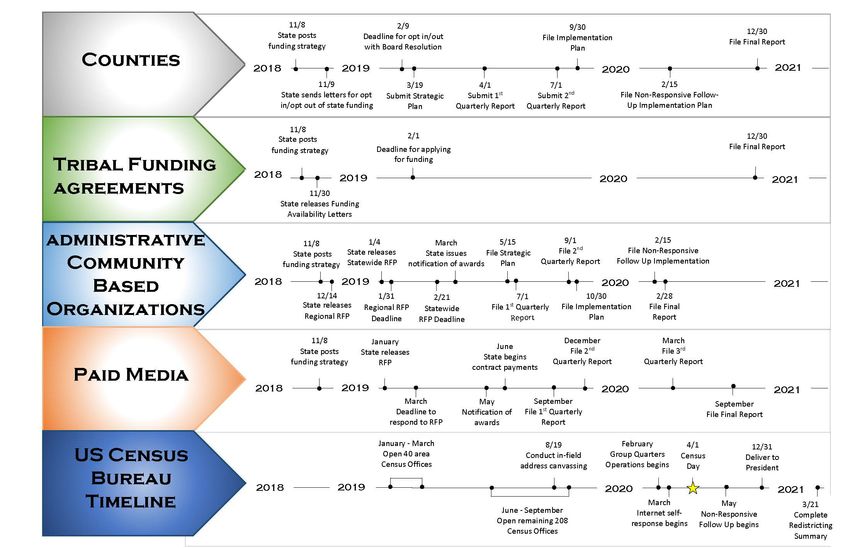
Agenda

•   Approval of October 1, 2018 Meeting Minutes
•   U.S. Census Bureau Updates and Responses to Committee
    Questions
•   Census 2020 Budget Update
•   Behavior Science & “Nudge” Marketing Tactics
•   Overview of Statewide Outreach and Communications
    Strategy (SOCS)

                                                            3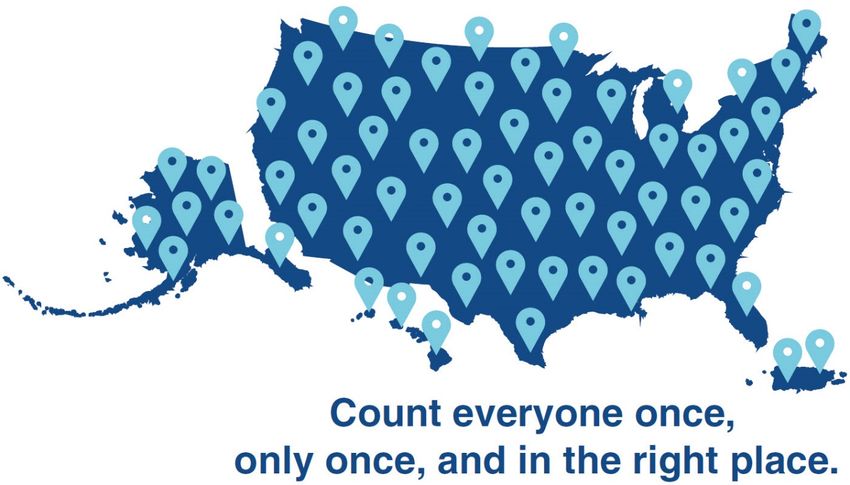
Agenda Continued
•   Statewide Outreach and Rapid Deployment (SWORD)
    Mapping Portal Update
•   Discussion of Hard to Count (HTC) Communities around the
    State
•   Working Group Break Out Sessions
•   Working Group Updates to Governor’s Office Jan. 1 Report
•   Opportunity for Public Comment
•   Adjourn

                                                               4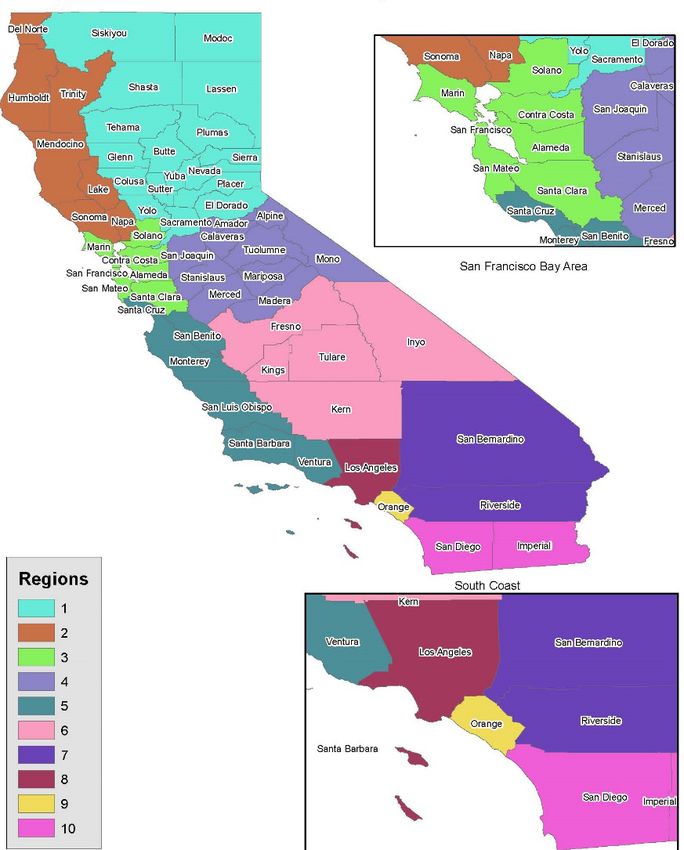
U.S. Census Bureau Updates

• James Christy, Assistant Director for
  Field Operations, U.S. Census Bureau

• Luz Castillo, Regional Census Manager,
  U.S. Census Bureau

                                           5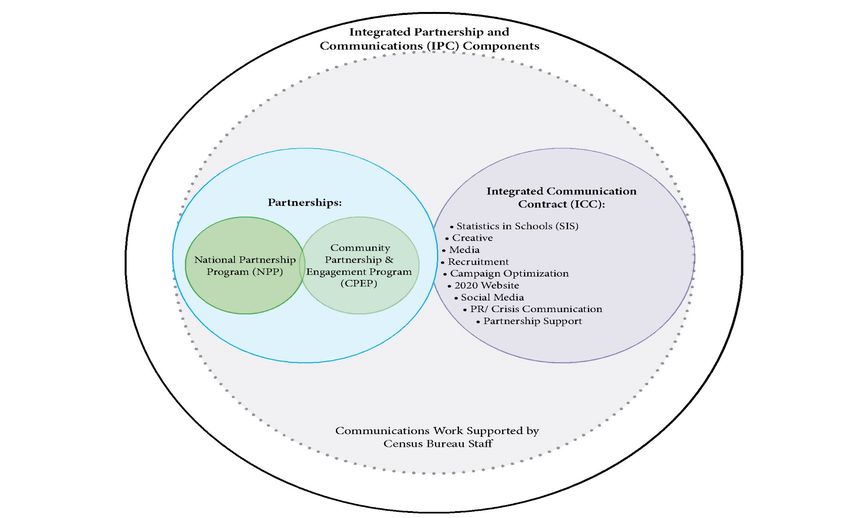
2020 Census Overview and Update

California Complete Count Committee
December 3, 2018

James Christy
Assistant Director for Field Operations

The Decennial Census
Purpose:
To conduct a census of population and housing and disseminate the results to the
President, the States, and the American People
                                                   Apportion representation among states as mandated
                                                   by Article 1, Section 2 of the U.S. Constitution:
                                                   Representatives and direct Taxes shall be
                                                   apportioned among the several States which may
                                                   be included within this union, according to their
                                                   respective Numbers …
                                                   The actual Enumeration shall be made within three
                                                   Years after the first Meeting of the Congress of the
                                                   United States, and within every subsequent Term of
                                                   ten years, in such Manner as they shall by Law direct.

Primary Uses of Decennial Census Data:
•   Apportion representation among states as mandated by Article 1, Section 2 of the U.S. Constitution
•   Draw congressional and state legislative districts, school districts, and voting precincts
•   Distribute more than $675 billion federal dollars annually to states
•   Inform federal, tribal, state, and local government planning decisions
•   Inform business and nonprofit organization decisions (e.g., where to locate, size of the market)

                                                         7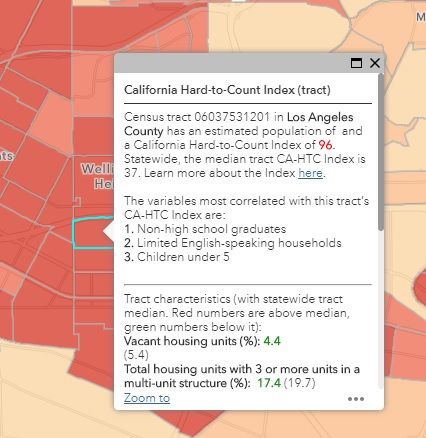
The Decennial Census
The 2020 Census Environment
                                                         Constraine
                                                           d fiscal
                                                         environme      Rapidly
                                           A mobile           nt       changing
The 2020 Census is being
                                           populatio                     use of
conducted in a rapidly changing               n                       technolog
environment, requiring a                                                   y
flexible design that takes
                                   Informal,
advantages of new technologies      complex
and data sources while               living
                                                           2020              Informatio
                                                                                  n
                                    arrange-              Census
minimizing risk to ensure a high                                              explosion
                                     ments
quality population count.
                                           Increasing
                                                                      Distrust in
                                            ly diverse
                                                                      governme
                                           populatio
                                                         Declining        nt
                                                 n
                                                         response
                                                           rates

                                       8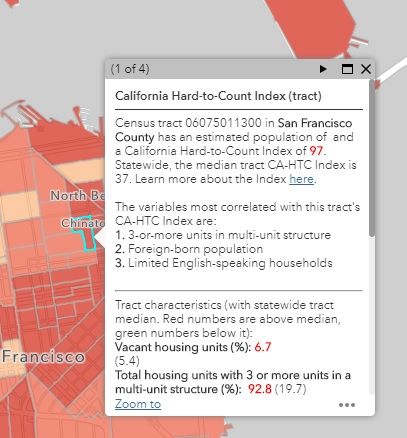
2020 Census
A Complete and Accurate Count of the Population and Housing

                                SELF-RESPONSE                     GROUP
                                                                 QUARTERS

              MOTIVATE PEOPLE                                               NONRESPONSE
               TO RESPOND                                                    FOLLOWUP

    ESTABLISH WHERE                                                              TABULATE DATA AND
       TO COUNT                             Count everyone once,               RELEASE CENSUS RESULTS

                                       only once, and in the right place.

                                                       9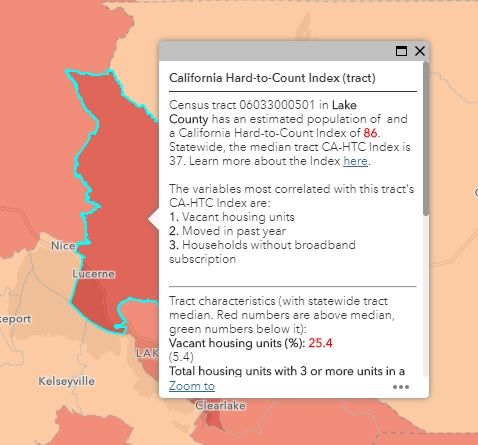
2020 Census
Goal and Key Innovation Areas

Goal: To count everyone once, only once, and in the right
place.
                                    Focus on Four Key Innovation Areas

                                                             Utilizing
         Reengineering Address      Optimizing                                 Reengineering Field
                                                      Administrative Records
              Canvassing           Self-Response                                  Operations
                                                       and Third-Party Data

                                                                                 10
2020 Census
Establish Where to Count
SELF-RESPONSE GROUP
QUARTERS
Identify all addresses where people could live
• Conduct a 100-percent review and update of the nation’s address list
• Use tablets and laptops to verify addresses in the field, building on the use
of handheld devices for address listing in the last census
MOTIVATE PEOPLE • Delineate types of enumeration areas, including those designated as Update NONRESPONSE
TO RESPOND Leave, where Census hand delivers questionnaires to addresses that do not FOLLOWUP
have “city-style addresses” and to areas affected by natural disasters
• Use multiple data sources to identify areas with address changes
• Get local government input through the Local Update of Census Addresses
Reengineering Address Canvassing for the 2020 Census
• Minimize in-field work with in-office updating
• Use aerial and street-view imagery to review addresses from the office and
ESTABLISH WHERE updating most Master Address File/Topologically Integrated Geographic TABULATE DATA AND
TO COUNT Encoding and Referencing system (MAF/TIGER) data remotely, substantially RELEASE CENSUS RESULTS
cutting in-person workload
• Leverage workload models and technology to efficiently manage and route
on-the-ground staff assignments for Address Canvassing
112020 Census
Motivate People to Respond
GROUP
SELF-RESPONSE QUARTERS
Conduct a nationwide communications and partnership campaign
• Build on the success of using paid advertising and audience
segmentation in recent decades
MOTIVATE PEOPLE NONRESPONSE
TO RESPOND FOLLOWUP
Optimizing Self-Response for the 2020 Census
• Communicate about the census based on advanced modeling
techniques to increase awareness and self-response
• Add digital advertising to target and tailor messages to various
audiences
ESTABLISH WHERE TABULATE DATA AND
TO COUNT RELEASE CENSUS RESULTS
12Census Data Stewardship – Insuring Your Data Is Safe And
Secure
Our Culture Values Data Security
Data Stewardship is the formal process the Census Bureau
uses to care for respondent information—from the beginning,
when a respondent answers, to the end, when the statistical
data products are released.
Data Stewardship is a comprehensive framework designed to Informatio
protect information over the course of the information n Security
lifecycle, from collection to dissemination, and it starts with
creating a culture of confidentiality that is based on the law
and designed to maintain public trust. Data
Stewardshi
p
Confidenti
Privacy
ality
13Secure System Design
Designed to Contain, Sustain, and Maintain Public Trust
Census design is focused 1st on data security to protect respondents’
data and 2nd on user experience so that respondents may confidently
Security respond to the 2020 Census.
User
Experience Contain Issues + Sustain Services = Maintain Public Trust
Employ “Physical Security” Techniques
Data “Layer” physical entry with the appropriate level of security
Security (doors, walls)
Performance “Isolate” separate areas within layers to efficiently handle
interactions (lines, guards)
“Lock down” valuables behind closed doors (vaults, safes)
142020 Census
Motivating Response through a Multifaceted Approach
152020 Census
Integrated Partnership and Communications
The Integrated Partnership and
Communications operation
communicates the importance of
participating in the 2020 Census to the
entire population of the 50 states, the
District of Columbia, Puerto Rico and
the island areas to:
• Engage and motivate people to
self-respond, preferably via the
internet
• Raise and keep awareness high
throughout the entire 2020
Census to encourage response
162020 Census
Community Partnership and Engagement Program (CPEP)
CPEP’s purpose and mission is to enroll community partners to help increase participation in the census
by those who are less likely to respond or are often missed by using what we call the 3 “E’s”.
• Educate people about the 2020 Census and foster
Educate cooperation with enumerators.
• Encourage community partners to motivate people to self-
Encourage respond.
• Engage grass roots organizations to reach out to hard-to-
count groups and those who aren’t motivated to respond to
Engage
the national campaign.
172020 Census
Self-Response
SELF-RESPONSE GROUP
QUARTERS
Make it easy for people to respond anytime, anywhere
• Mail materials across the nation so people can respond on their own
MOTIVATE PEOPLE NONRESPONSE
TO RESPOND FOLLOWUP
Optimizing Self-Response for the 2020 Census
• Provide multiple modes of response: internet, paper, and phone
• Encourage people to use the new online response option
• Provide online questionnaires and phone support in 13 languages
ESTABLISH WHERE TABULATE DATA AND
TO COUNT RELEASE CENSUS RESULTS
182020 Census
Optimizing Self-Response
Generate the largest possible self-response, reducing the number of households requiring follow-up
192020 Census Language Program
Summary of Non-English Support
Internet Self-Response (ISR) & • 12 Non-English Languages for ISR* and 13 Non-English Languages for CQA**:
Census Questionnaire Assistance (CQA) Spanish, Chinese, Vietnamese, Korean, Russian, Arabic, Tagalog, Polish, French,
Haitian Creole, Portuguese, Japanese
* Chinese (Simplified) for ISR;
** Chinese (Mandarin and Cantonese) for CQA
Language Selection Criteria: 60,000 or more housing units
Language Guides (Video and Print) • 59 Non-English Languages
Language Glossaries • Language Guides include American Sign Language, braille, large print
Language Identification Card
Paper Questionnaire & Mailing Materials • Spanish
Field Enumeration Instrument & Materials
Communications and Partnership • Advertising, Partnership and Promotional Materials in 12 Non-English Languages (minimum)
• Procedures and Materials to Support Partnership Specialists and Partners
• Support Materials for Regional Offices and Partnership Specialists
202020 Census
Group Quarters
GROUP
SELF-RESPONSE
QUARTERS
Enumerate people living or staying in group quarters and provide
an opportunity for people experiencing homelessness and
receiving service at a service-based location to be counted in the
MOTIVATE PEOPLE NONRESPONSE
TO RESPOND census FOLLOWUP
• Conduct operation for all people living in group living arrangements in
facilities that are owned or managed by an entity or organization
providing housing or services for the residents (e.g., college/university
student housing, residential treatment centers, nursing/skilled nursing
facilities, group homes, correctional facilities, workers’ dormitories,
and domestic violence shelters)
• Conduct Group Quarters Enumeration of all group quarters through in-
field visits or administrative records data
ESTABLISH WHERE TABULATE DATA AND
TO COUNT
• Conduct Service-Based Enumeration at locations including
RELEASE CENSUS RESULTS
emergency/transitional shelters, soup kitchens, regularly scheduled
mobile food vans, and targeted non-sheltered outdoor locations (e.g.,
under bridges, cemeteries, etc.)
212020 Census
Nonresponse Followup
SELF-RESPONSE GROUP
QUARTERS
Collect data from all households
• Conduct in-person follow-up with those households who have not
responded on their own
MOTIVATE PEOPLE NONRESPONSE
TO RESPOND Reengineering Field Operations for the 2020 Census FOLLOWUP
• Operations such as recruiting, training, and payroll will be automated
• Leverage automation to efficiently manage and route on-the-ground
field staff, as well as manage case assignment and the number of
contact attempts
• Field workers will use handheld devices for collecting the data
Utilizing Administrative Records for the 2020 Census
• Use of administrative records (i.e., data from other government
ESTABLISH WHERE TABULATE DATA AND
TO COUNT agencies) to enable us to identify millions of vacant or nonexistent RELEASE CENSUS RESULTS
housing units before sending field staff to nonresidential addresses or
vacant houses
222020 Census
Tabulate Data and Release Census Results
GROUP
SELF-RESPONSE
QUARTERS
Process and provide Census data
• Deliver apportionment counts to the President by December 31, 2020
• Release counts for redistricting by March 31, 2021 to the states
MOTIVATE PEOPLE • Make it easier for the public to get information; provide flexible tools, NONRESPONSE
TO RESPOND FOLLOWUP
allowing the public to view 2020 Census data any way they want
• Improvements will include visualizations, easier search functionality,
and improved access to data tables and data sets
• Releasing results on a new, user-oriented Web platform featuring
easier search, visualizations, and navigation to enhance dissemination
and increase access to data through
ESTABLISH WHERE TABULATE DATA AND
TO COUNT RELEASE CENSUS RESULTS
23The Questions
• Has the Census Bureau submitted a work waiver request for
  non-citizens, when was this submitted and what is the
  timeframe for approval/when will they be available?
  – While there is an annual appropriations act restriction regarding the
    ability to hire and pay residents who are not U.S. citizens, there is not
    a ban and we will use all legal flexibilities provided by Congress to
    hire the workforce we need. These flexibilities, among other things,
    allow the Census Bureau to hire a permanent legal resident applying
    for U.S. citizenship, a person admitted as a refuge or granted asylum
    who has filed a declaration of intent to become a permanent
    resident and then a citizen when eligible, or a person who owes
    allegiance to the United States.

                                     25
• Beyond 508 compliance, how is the Census Bureau meeting
the needs of the disability community in ensuring that
completion of the census questionnaire is accessible for
people with disabilities? What’s the ADA plan for the public?
– The 2020 Census questionnaire will be available in more ways than
ever before. In addition to paper, responses will be accepted online
on a 508 compliant website and via phone. There also will be a
braille language guide. The Census Bureau also looks forward to
working with partners that serve the disability community to
determine ways in which partners and the Census Bureau can work
together to ensure a positive experience for people with disabilities.
26• How is the Census Bureau safeguarding the misuse of census data
(specifically related to the citizenship question) and when will
talking points, messaging materials, etc. be available to states? Will
there be a messaging campaign around the safety of the
citizenship question?
– Information submitted to the Census Bureau is strictly protected by federal
law. The Census Bureau is forbidden from sharing individuals’ information
with other entities including the FBI, ICE, or any other law enforcement
entity at the federal, state or local level. This law does not change with the
addition of the citizenship question. At every step in the information
collection and processing process, data is encrypted. In addition, the Census
Bureau is keeping pace with industry leaders in information protection by
changing the way we guard statistics when we release them. This state-of-
the-art technology ensures that individual information cannot be pieced
together when our data sets are paired with others. Our advertising
campaign will absolutely address the issues of confidentiality, privacy and
security.
27• Can a census questionnaire be edited/changed/updated post
submission? What is the process? Related to this, if you are
completing a form online and get interrupted, can you save a
partial form and go back to complete the form at a later
time?
– When completing the 2020 Census online, you can hit the back
button to return to previous questions and change your answers.
There is also a check at the end where you can review the
information you have submitted. Once you have submitted your
information to the Census Bureau, you cannot edit or change it.
When filling out the form online, you will not be able to save the
answers you have submitted so far and then return later to finish the
remaining questions. This is a deliberate cyber security decision the
Census Bureau made to protect your information.
28• The CCC would like to be more aware of recruiting
announcements as posted.
– The Census Bureau’s Los Angeles Regional Office will communicate
with the California CCC regarding recruiting. We appreciate the
CCC’s assistance in spreading the word about available jobs.
• Will there be other recruiting events in addition to the ACO
recruiting events being held this week; example: will the
Census Bureau be present at job/recruiting fairs? Will there
be recruiting events for Wave 2 ACO openings as well?
– Yes. The Census Bureau will attend job fairs and hold recruiting
events for Wave 2 ACO openings.
29• The Census Bureau needs to highlight opportunities for
when/where the state can assist in certain efforts
(recruitment, homeless, disability, tribal, etc.) – how can the
Census Bureau and the state best collaborate?
– The Census Bureau agrees with this statement. As the Census
Bureau solidifies its plan, particularly around the advertising
campaign, the assistance of CCCs and partners will be instrumental in
allocating funding and time to reach and motivate segments of the
population best reached by state or partner-level voices. As the
campaign develops, the Census Bureau will have on-demand
messaging and materials (posters or social media posts/images, for
example) that CCCs and partners can customize and use to reach
particular audiences.
30• When a form is completed online, what happens at the end – do
you receive a confirmation number or verification that your form
has been successfully submitted/received?
– Yes, you will receive a confirmation screen when you have successfully
submitted the 2020 Census online. Once you hit send, your information is
protected by state-of-the-art encryption and cyber security protection
measures.
• Will there be in-language phone lines dedicated to technical
support when completing the form online? All 12 non-English
languages?
– Yes. There will be phone lines the public can use to contact agents who will
help them with completing the 2020 Census online. The agents will also be
able to take responses by phone which may be faster than working through
technical problems. And, the phone response is just as secure as paper or
online response.
31• Who gets directed to complete the form online versus paper
so CCC can organize outreach efforts?
– Approximately 80% of households will be directed initially (via a
postcard they receive in the mail) to complete the 2020 Census
online. The fourth piece of mail they receive will include a paper
form so they can choose between online and paper submission (and
phone). The other 20% of households will receive a paper form in
the first mailing they receive. Those 20% of households will be
identified using American Community Survey data that identifies low
internet connectivity areas and populations less likely to use the
internet (for example, older individuals). The Census Bureau expects
to have those delineations finalized in Spring 2019 to ensure we have
information that is as up-to-date as possible.
32• When completing a form online, at what point can you select
your preferred language? Is there an immediate drop down
menu prior to instructions?
– After you move from the landing page into the form, you will select
your preferred language from a menu at the top of the page or from
a drop down menu.
• How are we advertising the paper census form?
– The advertising campaign, and other non-paid communications, will
encourage online response but will absolutely ensure that the public
understands that paper and phone are other viable and secure
response options.
33• What’s the timing for bringing on translators? When will that
be an option?
– (Also see question and answer #1) We will hire census takers, or
enumerators, who live in the communities in which they work to
help ensure they speak the language(s) of the households they visit.
In the past, in some instances we hired translators to work side-by-
side with enumerators when those language capabilities did not exist
on our enumerator team. For 2020, we plan to hire enumerators
who will fill that role. We are in the midst of our paperwork process
for some of those roles and will have a better sense of timing once
that process concludes.
34• What happens with LUCA appeals? When do those come in, what
happens? What’s the entire LUCA appeals process and timing?
(Expectation is the Census Bureau will discard thousands of
addresses they’ve added – what’s their recourse to appeal?)
– The LUCA appeals process is managed by the Office of Management and
Budget (OMB). Should a government disagree with the Census Bureau’s
2020 LUCA feedback, it has 45 days from receipt of the LUCA feedback
materials to file an appeal. The specifics of that appeals process, including
the procedures a government should follow to file an appeal, will be
available in the summer of 2019. If your government files an appeal, OMB
will notify you about whether your appeal is accepted or rejected. If it is
accepted, the Census Bureau will include the address in the list of addresses
used in the 2020 Census.
35• How will we provide response rates publicly? At what level
and interval?
– Response rates will be provided publicly via our website and other
communications like press releases and social media. We have not
yet determined the geographic level or interval of that information
but understand how valuable it is for CCCs and partners to use to
focus their resources and time to motivate response and work
toward a complete and accurate count.
36• What are the census guidelines for hiring community
navigators to provide census form assistance?
• For those using community navigators (non census
employees) in the field with tables, laptops, smartphones to
provide census form assistance…will there be a process in
place to register these devices so that they are not triggering
a fraud investigation (i.e., register as an online census form
site)?
– Need more info on these questions
37• When will the results of the Census Bureau pilots be available?
– To review findings of our 2015-2017 Census Tests, please visit our website at
census.gov. Our 2018 Census Test findings will be available next Spring.
• Will the online questionnaire be ADA compliant (accessible to the
blind and in large print)?
– The 2020 Census questionnaire will be available in more ways than ever
before. In addition to paper, you can respond via a 508 compliant website
and via phone. There also will be a braille language guide. The Census
Bureau looks forward to working with partners that serve the disability
community to determine ways in which partners and the Census Bureau can
work together to ensure a positive experience for all.
38• Wilbur Ross said there will be information to tell people
about security. The Committee wants to see what has been
drafted by the Census Bureau.
– The Census Bureau frequently communicates about the security
measures we put in place – from encrypting responses at rest and in
motion to employing state-of-the-art cybersecurity technology to
releasing statistics using the most sophisticated data protection
measures available. We invite the Committee to review a recent
Director’s Blog that discussed confidentiality
https://www.census.gov/newsroom/blogs/director/2018/05/the_u_
s_census_bure.html
– In addition, our 2020 Census communications campaign will address
these issues. Materials are not created yet, but we will let you know
when they are available.
39• When will we find out if the Federal Census will accept the online
questionnaire if certain questions are not completed?
– In the 2020 Census, as in past censuses, we expect that some respondents
will skip or not answer some of the questions. Historically item
nonresponse has been very low; in the 2010 Census between 2 to 4 percent
of questions were left blank or incomplete. It is important to note that
questionnaires with incomplete information are still counted, but we highly
encourage people to fill out the census as completely and accurately as
possible. Leaving questions blank may lead to a phone call or in-person visit
from a census enumerator. During final data processing if we still are still
missing information there are several procedures that we use. In the 2020
Census we are planning to use administrative information, such as from
some federal and state records or previous census responses, to fill in
missing data. As a last resort, we use statistical techniques to impute for
missing responses.
40• What happens at the end when someone fills the form out
online? Is there verification that it was done and received?
– Yes, you will receive a confirmation screen when you have
successfully submitted the 2020 Census online. Once you hit send,
your information is protected by state-of-the-art encryption and
cyber security protection measures.
41Connect with Us
Sign up for and manage alerts at
https://public.govdelivery.com/accounts/USCENSUS/subscribe facebook.com/uscensusbureau
r/new
twitter.com/uscensusbureau
More information on the 2020 Census Memorandum Series:
http://www.census.gov/programs-surveys/decennial-
census/2020-census/planning-management/memo-
series.html
youtube.com/user/uscensusbureau
More information on the 2020 Census:
http://www.census.gov/2020Census
American instagram.com/uscensusbureau
Community More information on the American Community Survey:
Survey
http://www.census.gov/programs-surveys/acs/
42Thank You
James Christy
Assistant Director for Field Operations
United States Department of Commerce
Bureau of the Census
4600 Silver Hill Rd.
Suitland, Maryland 20233
Office 301-763-6228
james.t.christy@census.gov
43Break
44Census 2020 Budget Update
Justyn Howard
Deputy Secretary for Census,
Government operations Agency
45State Funding
2018/19
o $90.3M for statewide
outreach
46Census 2020 Funding Allocations
47California’s
Census 2020
Regions
48Community Outreach
49◦ Latinos
◦ African Americans
◦ Asian Americans/Pacific Islanders
◦ Native Americans and Tribal
◦ Middle Eastern/Northern Africans
California ◦
◦
Immigrants and Refugees
Farmworkers
Hard to ◦ People with Disabilities
Reach and ◦ Areas with low broadband subscription rates or
low/no access to broadband
Hard to ◦ Homeless Individuals and
Families/Nonconventional Housing
Count ◦
◦
Veterans
Seniors/Older Adults
◦ Children 0-5
◦ Households with Limited English Proficiency
◦ Technical Assistance for Statewide Outreach
and Rapid Deployment (SwORD)
50Funding Timeline
51Key Funding Distribution Dates
11/9/18 - Documents describing the State’s funding
methodology, solicitation documents, timelines and
resources were posted to census.ca.gov
11/9/2018 - County funding letters were
distributed
Nov. – Jan. 11/30/2018 - Tribal funding agreement letters will
be distributed
12/14/18 – State releases regional ACBO RFP
1/04/19 – State releases statewide ACBO RFP
1/19 – State releases media RFP
52Funding Information on
census.ca.gov
• Identifying California’s Hard-to-Count in Census 2020
• Program Funding Overview and Pie Chart (PDF)
• Community Outreach Funding Allocations and Pie Chart (PDF)
• ACBO Regional Funding Allocations (PDF)
• County Contract Amounts (PDF)
• City Share of HTC (PDF)
• Methodology for Calculating City Percentages of County Hardest-to-Count
• Tribal Government Funding Availability (PDF)
• Census 2020 Regions Map (PDF)
• Funding Timeline (PDF)
• Census 2020 Funding FAQs
53Behavior Science & “Nudge”
Marketing Tactics
Stuart Drown
Deputy Secretary for Innovation and
Accountability, Government Operations
Agency
54Overview of Statewide Outreach and
Communications Strategy (SOCS)
Tamma Adamek
Deputy Director, External Affairs and
Media Relations, California Complete
Count Office
55Lunch Break
56SwORD Mapping Portal
Jim Miller
Data & GIS Mapping Manager,
California Complete Count
57Hard-to-count tracts in Lake County and San Francisco
Hard-to-count tracts in Fresno and Los Angeles counties
Working Group Break Out Sessions
All Working Group Break-Out Sessions will be hosted on the third floor
Access and Outreach- Conference Room 300
Housing- Suite 359
Content and Citizenship- Conference Room 357
Trust and Confidentiality- Conference Room 353
60Governor’s Office Jan 1st Report
David Ceppos
Managing Senior Mediator
Sacramento State CCP
61Working Group Updates to the
Governor’s Office Report
● Presentation of updates
● Review and Discuss updates
● Final Update Recommendations
● Voting on Final Updates for Draft of the
January 1st Report20 Minute Public
Comment
63California Complete Count Office
Website: census.ca.gov
Email: info@census.ca.gov
(916) 852-2020
64You can also read


