Cave Post Offices Georgia, North Carolina, and South Carolina - in - by Thomas Lera
←
→
Page content transcription
If your browser does not render page correctly, please read the page content below
Cave Post Offices
                          in
   Georgia, North Carolina,
     and South Carolina

                  by Thomas Lera

          American Spelean History Association
Special Publication Number Two                 May 2018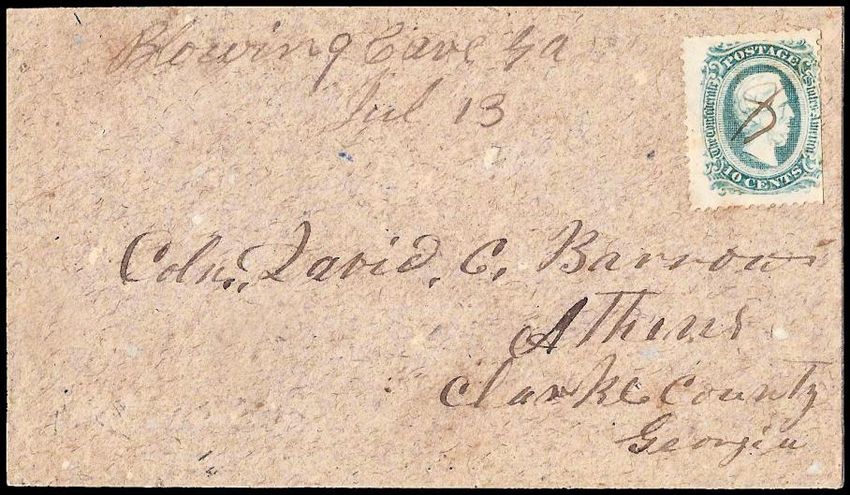
The American Spelean History Association
The American Spelean History Association (ASHA) is an internal organization of the
National Speleological Society. It is devoted to the study, interpretation, and
dissemination of information about spelean history, which includes folklore, legends, and
historical facts about caves throughout the world and the people who are associated with
them, their thoughts, philosophies, difficulties, tragedies, and triumphs.

Membership: Membership in the Association is open to anyone who is interested in the
history of man’s use of caves. Membership in the National Speleological Society is not
required.

The Journal of Spelean History is the Association’s primary publication and is mailed to
all members. The Journal includes articles covering a wide variety of topics relating to
man’s use of caves, including historical cave exploration and use, saltpeter and other
mineral extraction, show cave development and history, and other related topics. It is the
primary medium for conveying information and ideas within the caving history
community.

A cumulative Journal of Spelean History index is available on the Association’s Web site,
www.cavehistory.org, and issues over five years old may be viewed and downloaded at
no cost.

Membership: ASHA membership (or subscription) cost $2.00 per Journal of Spelean
History issue mailed to U.S. addresses. Checks should be made payable to “ASHA” and
sent to the Treasurer (Robert Hoke, 6304 Kaybro St, Laurel MD 20707). Sorry, we
cannot accept credit cards. Check the Association’s Web site for information on foreign
membership.

This publication was originally published in April 2018 and included Florida. Florida was
removed in this version and is now included in the publication with Alabama and
Arkansas.

This Special Publication of the American Spelean History Association is available on the
Association’s Web site at www.cavehistory.org/special-pub-2.pdf. It can be
downloaded at no cost.

                                        May, 2018

Cover
Upper image: Manuscript cancellation on 3-cents Nesbitt envelope dated June 2, [185?]

Lower image: Illustrated Cover, Art Cover Exchange, by W.C. Sharp, Ace # 70,
             Kannapolis, N.C. NCPH Type 6, 33mm Type C/1 4-Bar postmark
CAVE POST OFFICES IN GEORGIA,
                      NORTH AND SOUTH CAROLINA

                                         Thomas Lera

When reorganizing my collection of United States cave postmarks, I was inspired to research the
history of the existing and discontinued cave post offices, which included, among those in
Georgia, North Carolina and South Carolina. This is one of the monographs which updates and
expands on my 2011 book Cave Post Offices, published by Cave Books.
The major source of information regarding the postmasters and post offices can be found at:
   •   The digitized daily U.S. Postal Bulletin and U.S. Postal Laws and Regulations at
       http://www.uspostalbulletins.com;
   •   Official Register of the United States, containing a List of Officers and Employees in the
       Civil, Military, and Naval Service. The Post Office and The Postal Service, Washington
       D.C. Government Printing Service, published every two years;
   •   Prior to 1971, the primary sources of information are National Archives Microfilm
       Publication M1131, Record of Appointment of Postmasters, October 1789 – 1832, and
       M841, Record of Appointment of Postmasters, 1832 – September 30, 1971. Record Group
       28: Records of the Post Office Department, 1773 – 1971.
       https://catalog.archives.gov/id/17027522.
   •   Reports of Site Locations, 1837 – 1950, from Records Group 28, Georgia, North and
       South Carolina.
   •   Francis J. Crown, Jr., The Turbulent Decade: Georgia’s Post Offices 1860-1869
       (Capshaw, AL: self-published, 2007)
   •   North Carolina Postal History Society (NCPH), www.ncpostalhistory.com/. Bat Cave
       postmark types are from this site and labeled as NCPH Type “#”.

Generally, a Post Office’s establishment date is that of the appointment of its first postmaster.
http://webpmt.usps.gov/pmt002.cfm.
Historical maps were found at the University of Texas Libraries, Perry-Castañeda Library Map
Collection http://www.lib.utexas.edu/maps/topo/virginia/.
I would like to thank Sandy Fitzgerald who edited the monograph, Francis J. Crown, Jr. for
Confederate postmasters information, Robert Hoke, American Spelean History Association,
provided comments on the organization and layout, and posted it on their website
(http://www.cavehistory.org), Tony Crumbley for his review and images, and lastly Baasil
Wilder, NPM Librarian for his research on Georgia Post Offices. I appreciate all their help.
If after reading this monograph and you have postmarks of these caves, natural bridge, or grotto
in your collection, I would appreciate a scan sent to me at: frontier2@erols.com.
                                                                                                    1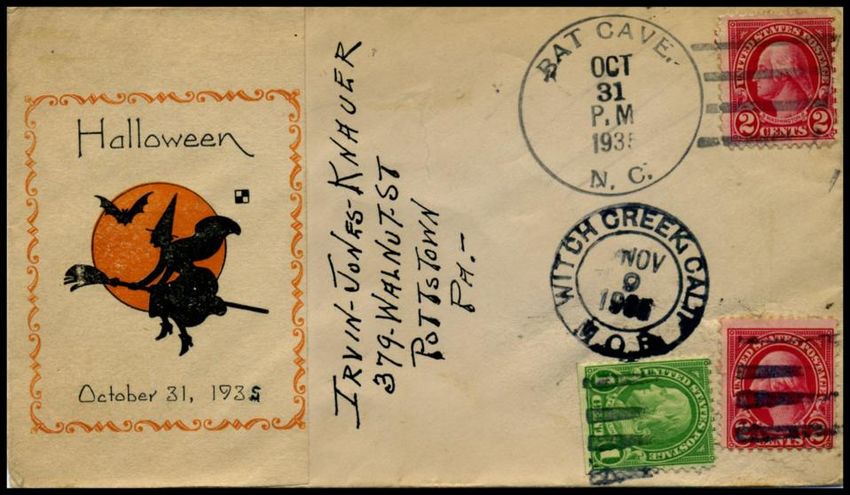
Table of Contents
     Georgia Post Offices

     •     Blowing Cave --- page 4
     •     Cave --- page 6
     •     Cave Hill --- page 8
     •     Cave Spring --- page 9

     North Carolina Post Offices

     •     Bat Cave --- page 17
     •     Grotto --- page 23

     South Carolina Post Office

     •     Cave --- page 25

     End Notes --- page 25

2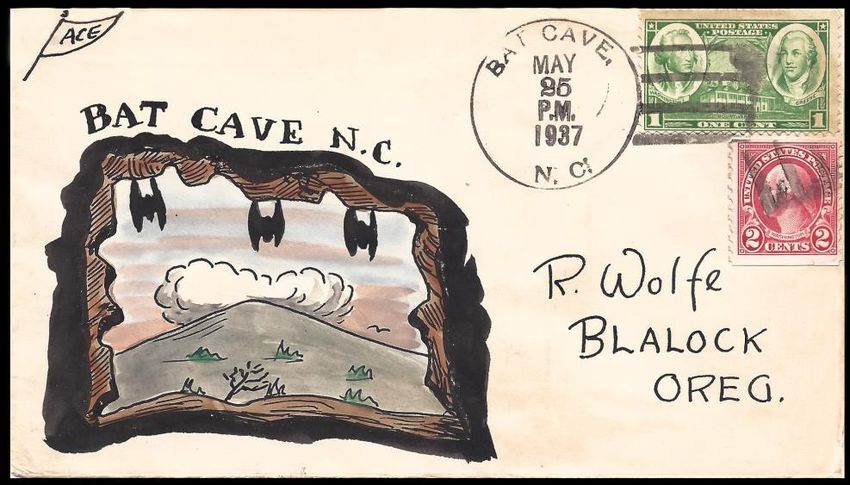
Blowing Cave, Georgia Post Office
                     (12/28/1852 – 01/05/1867; 07/12/1887 – 12/26/1890)

               Figure 1. Lloyd’s Topographical Map of Georgia 1864, Decatur County.1

Blowing Cave2, also called Glory Hole, is in extreme southwest Georgia not far from the Florida
and Alabama borders, and, over time, was in three different counties. Prior to 1825, the entire
southwest corner of Georgia was Early County. In 1825, Early County was divided, and the
southern part became Decatur County (fig. 1). A year later, part of Decatur County was split, the
eastern part becoming Thomas County. In 1905, Decatur and Thomas Counties were each split
once again, and adjacent parts of each became Grady County. Since 1905, Blowing Cave has
been in Grady County.

Blowing Cave Post Office first opened in Decatur County on February 28, 1853 with William S.
Rackley as postmaster. Georgia seceded from the Union on January 19, 1861 and joined the
Confederacy on March 16, 1861. Blowing Cave Post Office was discontinued for a short period
at the start of the war before being reopened in 1863.
The post office was discontinued after the Civil War until July 2, 1887 when it was reestablished
and was discontinued again on December 26, 1890.

                                                                                                3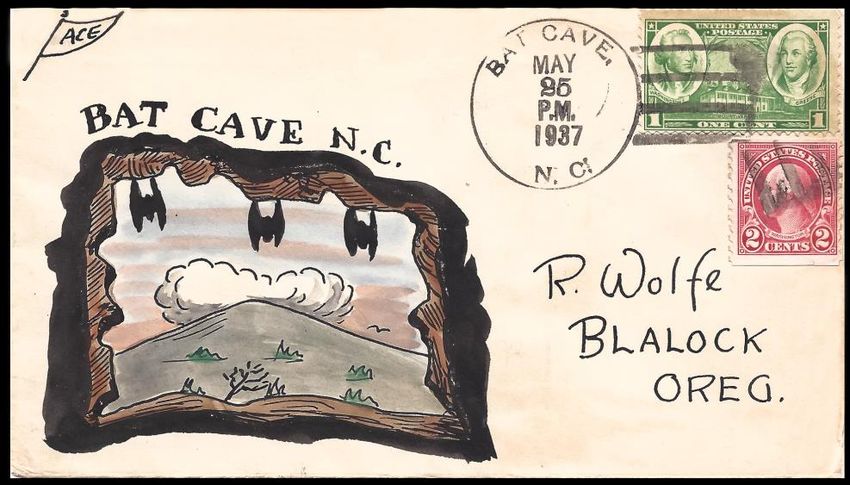
POSTMASTERS 3, 4

              BLOWING CAVE POST OFFICE
              DECATUR COUNTY
              Name                            Title            Date
              William S. Rackley              Postmaster       12/28/1852
              Isaac P. Brooks                 Postmaster       03/20/1854
              William S. Rackley              Postmaster       02/10/1855

                      Georgia seceded from the Union on January 19, 1861

              William S. Rackley              Postmaster       1861

                      Post Office discontinued and reopened in 1863

              Barnard Divine                  Postmaster       03/11/1863
              William S. Rackley              Postmaster       09/1863

              Post Office Discontinued after the Civil War Jan. 5, 1867 and reestablished July 2, 1887.

              Thomas W. Dollar                Postmaster       07/12/1887

                      Post Office discontinued 12/26/1890, mail to Cairo

Figures 2 and 3 show manuscript cancels when the post office was open during the 1850s and
1860s.

         Figure 2. Manuscript cancellation on 3-cents Nesbitt envelope dated June 2, [185?].

4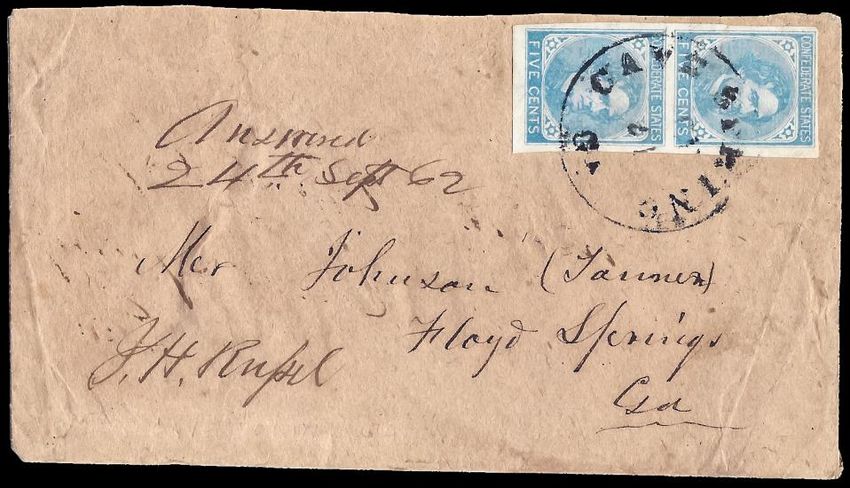
Figure 3. Jul 13, [186?] Confederate manuscript postmark. (CSA Cert. 1521).

                            Cave, Georgia Post Office
                                    (10/10/1890 – 10/15/1940)

Cave, Georgia was a stop west of Cartersville on the Central Georgia Railway (fig. 4). There
were about 200 residents in the area when the post office opened there in 1890. The village was
named after the numerous caves found in the area.

      Figure 4. Cave, GA. is located at Cave Station depot on the Western and Atlantic Railroad,
           later the Nashville, Chattanooga & St. Louis. The above map is a portion of the
                        Cartersville Topographic Quadrangle reprinted 1914.

                                                                                                   5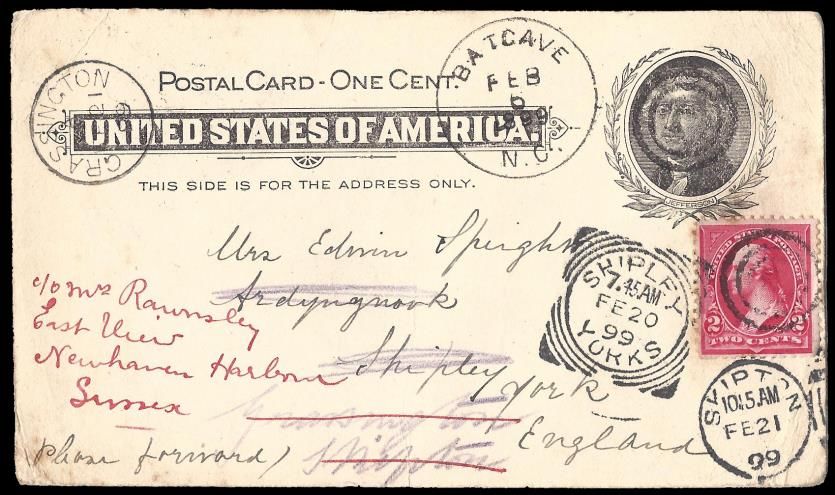
POSTMASTERS 5

              CAVE POST OFFICE
              BARTOW COUNTY

              Name                            Title                   Date Appointed
              Lewis P. Gaines                  Postmaster             10/10/1890
              Henry Cowart                     Postmaster             11/10/1919
              Ernest E. Helms                  Postmaster             12/10/1920
              J. P. Gaines                     Postmaster             12/20/1921
              Mrs. Lillie Graves Gaines        Acting Postmaster      10/17/1939
              Mrs. Lillie Graves Gaines        Postmaster             12/19/1939
                       Post Office discontinued 10/15/1940 mail to Kingston

Figures 5 and 6 show the two different Doane postmarks used by the Cave Postmasters between
January 10, 1907 and October 15, 1940.

    Figure 5. Cave, GA, Type 2 – 1 Doane with railroad track-type bars. The "1" in the bars means
                   the postmaster’s compensation for the year was less than $100.6

6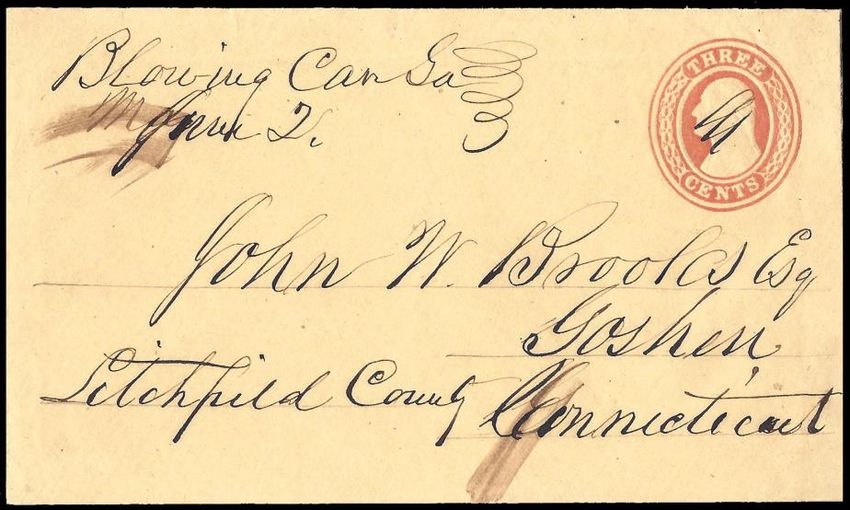
Figure 6. Cave, GA. (wide spaces between letters and solid bars) Doane 3 – 1 postmark. J. P. Gaines used
this cancel on a postcard to Mrs. Frank Gosley of Bristol NH where he wrote “Hope these are all good
clear postmarks and cards will be mailed soon. Signed J. P. Gaines PM.”

                           Cavehill, Georgia Post Office
                                     (09/27/1898 – 03/31/1903)

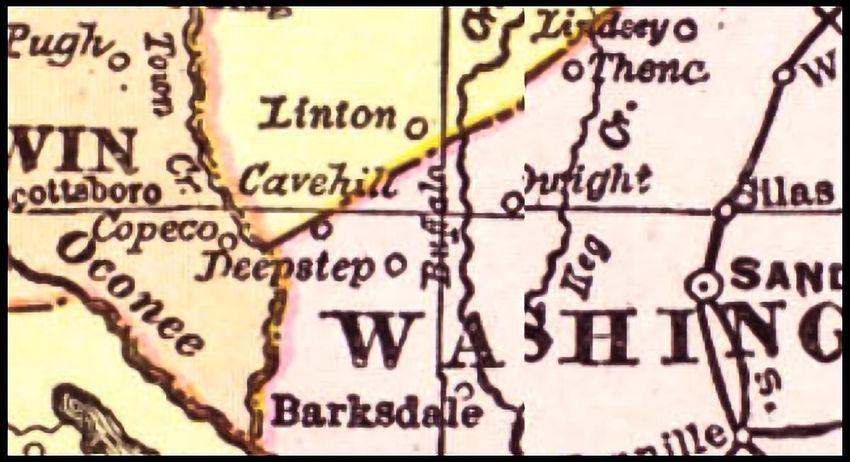
On August 27, 1898, W. R. Veal completed the site survey for the Cavehill post office location
in Washington County,7 four miles west of Deepstep and six miles southwest of Linton (fig. 7,
red arrows).

      Figure 7. Portion of Georgia Map by Rand, McNally & Co. Copyright 1895, 1898, and 1902.

Early postal historians showed the post office was open only in 1900. According to post office
site records, Cavehill, GA was established 09/26/1898 with William R. Veal appointed
postmaster effective 11/09/1898. The post office served about 100 residents. It was discontinued
on 03/31/1903 with mail going to Deepstep.
There are no known postmarks from Cavehill, Georgia.

                                                                                                       7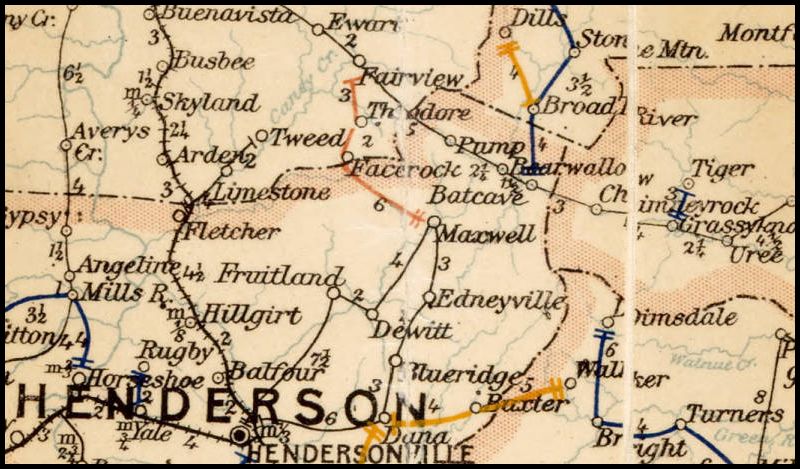
Cave Spring(s), Georgia Post Office
                                        (01/06/1840 – open)

Floyd County, Georgia's 82nd county, was formed from part of Cherokee County in 1832, and
was named for General John Floyd, a South Carolina Indian fighter and U.S. Congressman.
Located fifteen miles southwest of Rome, on Hwy 411 South, is the city of Cave Spring,
established on January 22, 1852 (figs. 8 & 9). Cave Spring Cave, for which it was named, is a
natural limestone cave and spring, in Rolater Park just off the town square. The post office
opened in 1840 and is still in operation.

An interesting side note about Cave Spring Cave, from Marion Smith’s 1986 article “Cave
Spring Cave Nitre Works, Ga” in the Journal of Spelean History, stated “…the Confederate
Nitre Bureau had earlier in the war mined Cave Spring Cave for saltpetre, the main ingredient of
gunpowder. Documents in the National Archives show Cave Spring Cave was mined at least
from May 1862, to March 1863. It is not known when saltpetre digging was discontinued at Cave
Spring, but probably it was in the spring of 1863 when more productive operations at Kingston
Saltpetre [Bartow] Cave in Bartow County, Georgia was being heavily worked. The fact remains
Cave Spring Cave, Georgia, was a Confederate Government saltpetre works.” 8

Examples of the Cave Spring(s) postmarks and cancellations are seen in Figures 10 - 23.

    Figure 8. Post route map of the state of Georgia showing post offices with the intermediate distances
    on mail routes in operation on the 1st of December 1903, United States. Post Office Department,
    accessed March 5, 2018, https://collections.leventhalmap.org/search/commonwealth:cj82km538.
8
Figure 9. Site Map drawn by Postmaster Paul C. Sewell, April 18, 1939.9
The post office was located about 2000 feet from the Cave Spring depot of the Alabama Division
of the Southern Railroad (fig. 9).
POSTMASTERS10
CAVE SPRING(S) POST OFFICE
FLOYD COUNTY, GEORGIA
Date
Name Title Appointed
Carter W. Sparks Postmaster 01/06/1840
Richard S. Simmons Postmaster 08/12/1845
Samuel Albea Jr. Postmaster 10/08/1853
Walton R. Webster Postmaster 03/02/1855
Judson Braselton Postmaster 09/08/1858
Walter R. Webster Postmaster 04/16/1859
Simeon Hamil Postmaster 11/09/1859
L. W. Dean Postmaster 11/13/1860
Simeon Hamil (resigned Civil War started) Postmaster 07/02/1861
Pitman Lumpkin (Confederate) Postmaster 07/29/1861
9Simeon Hamil (Confederate) Postmaster 10/09/1861
L. W. Dean (Confederate) Postmaster 07/01/1862
Sanford C. Trout (Post Office reestablished) Postmaster 12/20/1865
Simeon Hamil Postmaster 03/02/1866
John M. Carroll Postmaster 04/13/1869
Simeon Hamil Postmaster 01/23/1875
Robert N. Smith Postmaster 05/22/1876
Robert B. Tilly Postmaster 10/24/1881
Daniel W. Simmons Postmaster 09/14/1885
John T. Wheeler Postmaster 04/27/1897
Albert N. Tumlin Postmaster 07/06/1901
Emma Pettis Postmaster 10/01/1914
Albert N. Tumlin Acting Postmaster 09/05/1923
Albert N. Tumlin Postmaster 01/10/1925
Mrs. Frances B. Watts Acting Postmaster 07/01/1933
Fred J. Forbes Acting Postmaster 01/09/1934
Fred J. Forbes Postmaster 01/30/1934
Paul C. Sewell Acting Postmaster 09/01/1937
Paul C. Sewell Postmaster 03/24/1938
Mrs. Alma L. Montgomery Acting Postmaster 06/01/1949
Grady F. Medlock Postmaster 08/22/1950
Andrew J. Casey Jr. Acting Postmaster 07/20/1962
Andrew J. Casey Jr. Postmaster 09/11/1963
Mrs. Fay S. Mathis Officer-In-Charge 01/09/1970
Mrs. Fay S. Mathis Postmaster 03/20/1971
Sherry F. Bohannon Officer-In-Charge 08/29/1980
Sibyle T. Lindsey Postmaster 12/13/1980
Susan N. Walker Officer-In-Charge 03/11/1985
William H. Blankenship Jr. Postmaster 07/06/1985
Elizabeth Cox Officer-In-Charge n/a
Susan D. (Price) Dessimoz Postmaster 01/09/1993
Jerry Justice Officer-In-Charge 08/25/1995
Susan D. Price's surname changed to Dessimoz on August 30, 1995.
Rebecca Carol H. Deese Postmaster 03/02/1996
Angela Hall Officer-In-Charge 06/02/1997
Dennis C. Holland Officer-In-Charge 08/01/1997
Effie Linda Clark Officer-In-Charge 05/18/1998
Dennis C. Holland Postmaster 08/01/1998
Effie Linda Clark Officer-In-Charge 11/10/2004
Effie Linda Clark Postmaster 12/11/2004
Nadine Ballenger Officer-In-Charge 04/26/2007
Lillie Cathy Moss Postmaster 09/15/2007
Rita A. Kinard Officer-In-Charge 12/30/2008
Tracey L. Martin Postmaster 02/13/2010
10Figure 10. Addressed to John M[acpherson] Berrien, Whig Party, 1841-1852.
Figure 11. Handstamped “Free” by Samuel Albea, Jr., 31mm circular date postmark, dated October 28.
Figure 12. Circular date postmark, 32mm, on pair of CSA # 6 dated September 21, 1862.
11Figure 13. Siegel Auctions Sale 840, 12/17/2001. The Hall Collection of Confederate States Lot 448
10c Lithographed Carmine Shade (5a) tied by "Cave Spring Ga. Jul. 20" circular date stamp.
Figure 14. Circular date postmark, 32.5mm, dated October 11 with small “A” in GA.
Figure 15. Circular date postmark, 32.5mm, dated Jan 12, [185?] with small “A” in GA on 3-cents Nesbitt.
12Figure 16. Octangle postmark, 25mm, dated 02/28/1874.
Figure 17. Cave Springs GA. circular date postmark, 27mm, dated 2/13/1875.
Figure 18. Cave Springs GA. circular date postmark, 25mm, dated Jan 10.
13Figure 19. Purple circular date postmark, 25.5mm, dated 6/25/1876.
Figure 20. Circular date postmark, 27mm, with negative “N” fancy cancellation.
Figure 21. Left, Cave Spring Precancel, Type 744 first used 11/1944.
Right, Duplex Cancel which combined a date stamp, Dec 8, 1938, and an obliterator with #1.
14Figure 22. Magenta Rural Free Delivery cancellation.
Figure 23. Circular date postmark, 29mm, dated 12/29/1915
Researching postmasters is challenging since both Union and Confederate post offices did not
always keep accurate records. Case in point, Simeon Hamil was postmaster at Cave Springs,
Georgia from October 9, 1861 to July 1, 1862, when he resigned. The Official Register shows a
Samuel Hamil as postmaster for Cave Spring, Alabama, from July 1, 1862 to July 1, 1865. On
March 2, 1866, S. Hamil returns as Cave Spring, Georgia postmaster. Was this the same person
who moved between Cave Spring, Georgia, and Cave Spring, Alabama? Father and Son?? Post
Office error??? Drop me a line if someone knows or discovers the answer.
15Bat Cave, North Carolina Post Office
(12/12/1878 – open)
Figure 24. Illustrated Cover, Art Cover Exchange, by W.C. Sharp, Ace # 70, Kannapolis, N.C.
NCPH Type 6, 33mm Type C/1 4-Bar postmark.
Figure 25. Postal Route Maps of North and South Carolina, Henderson County portion.11
In 1878, the Chimney Rock Post Office, in Rutherford County, with Kate C. McRee as post
mistress moved to Henderson County in 1879 (fig. 25). Its name was changed to Bat Cave and
Louisa T. Duvall was appointed as post mistress.
Bat Cave Nature Preserve is a designated 93-acre National Natural Landmark near the
community of Bat Cave which in 1879 had only about 200 residents.
16The cave system consists of ten passable and several impassible entrances leading into a complex
underground network. The main chamber is more than 300 feet long and approximately 85 feet
high. A 1984 survey measured the total length of passageways at 5,560 feet, making Bat Cave
system the second longest known granite fissure cave in the world, and the longest granite cave
in North America.
The cave itself is closed to the public, however, the preserve is open mid-April through
September when it closes until the following April to allow the Indiana Bats to hibernate
undisturbed.
Bats are a mystery to most people. Many have never seen one, yet they live all over the United
States. Bats are warm blooded, have fur, their babies are live born rather than hatched from
eggs, and they are the only mammals that can fly. Bats are the world’s most important predators
of night flying insects; consuming mosquitoes, beetles, moths, grasshoppers, and many bugs that
destroy crops.
Bats have always played an important part in myths because they are nocturnal animals. People
have regarded them as evil spirits - friends of witches, vampires, and other creatures of the night.
They are a favorite Halloween motif.
Figure 26. Halloween cachet from Bat Cave, NCPH Type 7, 34.5mm 4-Bar Type C/1
dated 10/31/1935 with add-on double circle Witch Creek, California M.O.B.
(Money Order Business) dated 11/9/1935. (courtesy of Tony Crumbley Collection)
The North Carolina Postal History Society (NCPH) (http://www.ncpostalhistory.com/) has a
category under the Resource Tab called NC Postmark Catalog. Under Henderson County,
beneath Bat Cave pages 4 - 7, there is a list of the postmasters and postmarks used. Figures 24,
26 – 35.
17Postmasters
Bat Cave Post Office
Henderson County, North Carolina 12
Postmaster Date Appointed
Chimney Rock Post Office in Rutherford County
Kate C. McRee 12/12/1878
Name changed to Bat Cave 12/22/1879
Moved to Henderson County
Louisa T. Duvall 12/22/1879
Louisa T. Edney (marriage) 01/11/1882
James M. Owenby 08/08/1890
Robert F. Henderson 12/11/1890
Joel F. Freeman 01/16/1892
Sarah F. Freeman 04/06/1896
James M. Owenby 03/02/1898
Ladson M. Hudgins 01/23/1899
Adolphus E. Hudgins 05/05/1905
Mable H. Freeman 06/06/1914
Garnold Dodson 01/31/1921
Mrs. Garnold Sumner, Acting 02/15/1921
Mable H. Freeman 07/07/1924 Acting, 10/29/1925 Permanent
Harris C. Hudgins 01/19/1927 Acting, 01/09/1928 Permanent
DeWitt T. Freeman 01/01/1942 Acting, 03/16/1942 Permanent
Daniel F. Dodson, Acting 02/28/1959
William A. Burch, Jr. 03/17/1961 Acting, 08/31/1961 Permanent
Jerry Cook Officer-In-Charge 03/04/1983
Carlene E. Burleson 06/11/1983
Marsha S. Elliott Officer-In-Charge 10/01/2004
John C. Carroll 05/14/2005
Marsha S. Elliott Officer-In-Charge 06/30/2012
Converted to Level 6 (6-hour) Remotely Managed Post Office of Lake Lure 11/17/2012.
18Figure 27. NCPH Type 1, 27mm Circular date postmark, 08/31/1893.
Figure 28. NCPH Type 2, 28mm Circular date postmark 10/20/1902.
Figure 29. Left, Bat Cave, Type PSS 841(4), precancel first used 12/1974;
Right, NCPH Type 3, 28.5mm Doane postmark Type 2 - 2
used between 08/16/1904 and 10/10/1910.
19Figure 30. NCPH Type 2, 28mm Circular date postmark dated 02/06/1899.
Figure 31. Registered letter, stamps cancelled with magenta bat, not authorized by the post office so, the
postmaster applied by hand the black marking on each stamp. The Bat Cave postmark is NCPH Type 6,
33mm 4-Bar Type C/1 dated 4/2/1934 (courtesy of Tony Crumbley Collection)
Figure 32. Three different Bat Cave postmarks. NCPH Type 9, 32.5mm Type F/1 4-Bar; Type 10,
30.5 mm magenta double circle; the bottom rectangular postmark is for third-class parcels.
20Figure 33. Three Bat Cave Temporary Station pictorial cancellations. Note the subtle design changes.
Figure 34. A different Bat Cave Temporary Station pictorial cancellation
for National Stamp Collecting Month Station.
21Figure 35. NCPH Type 18, 32mm red self-inking postmark with zip code 28710.
The Bat Cave Post Office is shown on the left side of the envelope.
Grotto, Post Office North Carolina
(03/03/1893 – 03/31/1905)
Figure 36. 1891 Postal Route Maps of North and South Carolina, Moore County portion.13
In 1891, Grotto (fig. 36) was in Moore County, two and one-half miles from Broadway, six miles
from Lonely, and one-half mile east of Mail Route 18363. An original site survey completed by
Judson C. Thomas on January 25, 1893, indicated mail was carried twice a week on Mail Route
18363 between Broadway and Lonely. The above map shows mail was delivered three times a
week, but by 1893, this was changed to twice a week.
22The post office was discontinued March 31, 1905, when service changed to rural free delivery on
Route J2 from Jonesboro. County boundaries changed, and Grotto is now in Lee County (figs. 37
& 38).
Figure 37. Grotto in Lee County, the “+ - +” lines mean Rural Free Service14
Figure 38. Rural Free Delivery in Lee County North Carolina, Route J2. 15
The blue arrow is the approximate location of Grotto.
There are no known postmarks from Grotto, North Carolina.
23Cave, Post Office South Carolina
(01/39/1899 – 08/31/1916)
Figure 39. Postal Route Maps of North and South Carolina, USPO John Wanamaker PM, Routes of 1891.
On March 9, 1898, the post office department proposed the name Sunny Slope for this post
office, however, Walter W. Pratt, the proposed postmaster, suggested the name be Cave. The
post office was officially established as Cave, Abbeville County, on January 24, 1899, serving
about 200 residents. The mail route ran 9.38 miles from Level Land to Cave to Due West, with
mail delivered six times a week (fig. 39). Walter served as postmaster from January 24, 1899 to
September 23, 1901, when Robert M. Pratt was appointed. On January 24, 1914, Charles M.
Pratt was appointed postmaster.16
Effective August 31, 1916, the post office was discontinued. Star routes continued handling the
mail between Due West and Level Land, with M.A. Baldwin, a resident of Due West was
awarded the contract from October 16, 1916 to June 30, 1920.
There are no known postmarks from Cave, South Carolina. The above information updates and
corrects page 79 of my 2011 book Cave Post Offices.
1
Lloyd’s Topographical Map of Georgia 1864, Decatur County, Accessed February 27, 2018,
http://georgiainfo.galileo.usg.edu/PlaceNames/pnalpha.htm.
2
Krakow, Kenneth K. Georgia Place Names. Winship Press, Macon, Georgia. 1975.
3
Personal email communication, Frank Crown, March 3, 2018. Postmasters and dates from his 2007 book
The Turbulent Decade - Georgia’s Post Offices 1860–1869.
4
The digitized daily U.S. Postal Bulletin and U.S. Postal Laws and Regulations found at
http://www.uspostalbulletins.com; Official Register of the United States, containing a List of Officers and
Employees in the Civil, Military, and Naval Service, Vol. II, The Post Office and The Postal Service,
24Washington D.C. Government Printing Service, published bi-annually. Accessed September - December
2017.
5
The digitized daily U.S. Postal Bulletin and U.S. Postal Laws and Regulations found at
http://www.uspostalbulletins.com; Official Register of the United States, containing a List of Officers and
Employees in the Civil, Military, and Naval Service, Vol. II, The Post Office and The Postal Service,
Washington D.C. Government Printing Service, published every two years. Accessed September -
December 2017.
6
The Website of Doane Cancel Lists of Known Doane Cancels, Georgia, Accessed February 27, 2018.
http://www.doanecancel.com/georgia_doanes.html.
7
Small, Richard E., 2007, The Post Offices of Georgia 1764-1964. Reston, VA. p. 16 & 23.
8
Smith, Marion.1986. “Cave Springs Cave Nitre Works, Ga.” Journal of Spelean History, Vol. 20(4):81-
85.
9
Post Office Department. Bureau of the Fourth Assistant Postmaster. Division of Topography. (1942 -
1949); Post Office Department. Bureau of Facilities. 8/20/1949- ?; Post Office Department. Office of the
Postmaster General. 1792-7/1/1971. Reports of Site Locations, 1837 – 1950, from Records Group 28,
Cave Spring, Floyd County, Georgia, Image 514, accessed December 13, 2017.
10
United States Postal Service, Postmasters by City, http://webpmt.usps.gov/pmt002.cfm. Accessed
March 9, 2018.
11
Postal Route Maps of North and South Carolina, USPO William Wilson PM with routes of 1896.
Accessed March 1, 2018. http://dc.lib.unc.edu/cdm/ref/collection/ncmaps/id/611.
12
North Carolina Postal History Society, http://www.ncpostalhistory.com/,under the Resource Tab, go to
NC Postmark Catalog, scroll to Henderson County, then Bat Cave (p. 4 - 7). Accessed March 9, 2017.
13
Ibid. Postal Route Maps of North and South Carolina. 1896.
14
Post Route Map of the States of North Carolina and South Carolina: Showing Post Offices with the
Intermediate Distances on Mail Routes in Operation on the 1st of March 1910 published by order of
Postmaster General Frank H. Hitchcock, University of Virginia Library.
http://search.lib.virginia.edu/catalog/uva-
lib:1003436#?c=0&m=0&s=0&cv=0&xywh=2312%2C4522%2C731%2C903.
15
North Carolina Collection, Portion of the Rural Delivery Routes in Lee County, United States Post
Office. 1910-1919. http://dc.lib.unc.edu/cdm/singleitem/collection/ncmaps/id/1726/rec/16. Accessed
March 9, 2018.
16
The digitized daily U.S. Postal Bulletin and U.S. Postal Laws and Regulations found at
http://www.uspostalbulletins.com.
25You can also read


