CITY OF LAUNCESTON
TRANSPORT STRATEGY
             2020-2040
←
→
Page content transcription
If your browser does not render page correctly, please read the page content below

CITY OF LAUNCESTON
TRANSPORT STRATEGY
2020-2040
Mayor and General Manager’s Foreword                   2
Launceston Transport Strategy: Themes and
   Connections                                         4
Key Definitions                                        6
Executive Summary                                      8
Introduction                                       10
Roles and Resposibilities                          11
About the City of Launceston                       13
Launceston’s Accesibility                          28
A Vision for Launceston                            38
A Liveable Launceston                              40
A Healthy Launceston                               44
A Connected Launceston                             46
Future Transport Initiatives                       50
References                                         54

Acknowledgement

The City of Launceston acknowledges the
traditional custodians of the land on which the city
and its surrounds are located, and pays respect to
their Elders – past, present and emerging.

Their legacy is evident in the natural and cultural
values of this special place, and it speaks to us of
the duty we have to preserve these values for future
generations.
CITY OF LAUNCESTON
TRANSPORT STRATEGY
             2020-2040
Mayor’s
Message

Launceston is one of the most liveable cities in                                Our community will have access to diverse transport
Australia. It has all the amenities of a big city with                          choices that connects them to our places. Our focus
a small town feel and some of the world’s most                                  on partnerships and innovation will promote our
stunning landscapes at its doorstep.                                            community’s wellbeing and improve Launceston’s
                                                                                liveability.
So how do we improve on that? How do we make
Launceston more liveable - and more loveable?                                   I encourage residents to view the document online at
                                                                                yourvoiceyourlaunceston.com.au and to comment.
One way is to encourage more people to walk, to
cycle and to utilise public transport so that they are                          This is a vision that can only be achieved if we work
less car reliant.                                                               together with a genuine commitment to leading
                                                                                healthier lifestyles and helping Launceston to achieve
It will help ease traffic congestion in the CBD and will
                                                                                its economic, tourism and investment potential.
also address our commitment to reducing greenhouse
gas emissions.
                                                                                Albert van Zetten
This isn’t going to be easy - in fact it will be a very                         Mayor
long and challenging process involving a wide range
of stakeholders.
But the end result will be a Launceston that is more
liveable, more healthy and more connected.
Over the past few months the City of Launceston has
been working on the development of the Launceston
Transport Strategy 2020-2040.
This strategy draws on information from other major
planning documents, on public consultation through
Council’s Tomorrow Together community engagement
initiative and on a series of workshops with key
partner stakeholders.
It is a comprehensive document listing a series of
actions to deliver on our 20-year transport vision:

2      DRAFT City of Launceston Launceston Transport Strategy (23 March 2021)
CEO’s
Message

The City of Launceston has always been a key             lead the region by transitioning to a zero-emission
settlement and transport hub.                            fleet in the next 20 years. We will investigate the
                                                         potential to replace our ageing fleet with electric
This will continue to be the case - however
                                                         or fuel-cell vehicles in accordance with end-of-life
Launceston’s continued growth and prosperity will
                                                         procurement and management processes. We will
depend on transport networks that connect people
                                                         also advocate for State Growth and Metro Tasmania
and places.
                                                         (Metro) to adopt a zero-emission bus fleet.
Council recently engaged consultants WSP to help
                                                         By working together we can help Launceston achieve
with the development of a long-term transport vision
                                                         its economic, tourism and investment potential while
for our city.
                                                         retaining and enhancing the existing character and
The strategy has three key themes:                       liveability the community enjoys.
   • A Liveable Launceston
                                                         Michael Stretton
   • A Healthy Launceston
                                                         Chief Executive Officer
   • A Connected Launceston
Under these themes sit a range of strategic directions
and actions that will help achieve our vision.
Obviously this is not a strategy that can be delivered
by Council on its own. It has been developed in
consultation with key stakeholders and its success
will ultimately depend on close partnerships with
other levels of government, key road user groups and
the community as a whole. Ambitious but certainly
not unachievable.
Council is pleased to be setting an example in
some key areas. Plans are already in place for end-
of-trip facilities at Town Hall for those staff who
walk or cycle to work. Construction is scheduled to
commence in 2021. The City of Launceston will also

                                                               DRAFT City of Launceston Launceston Transport Strategy (23 March 2021)   3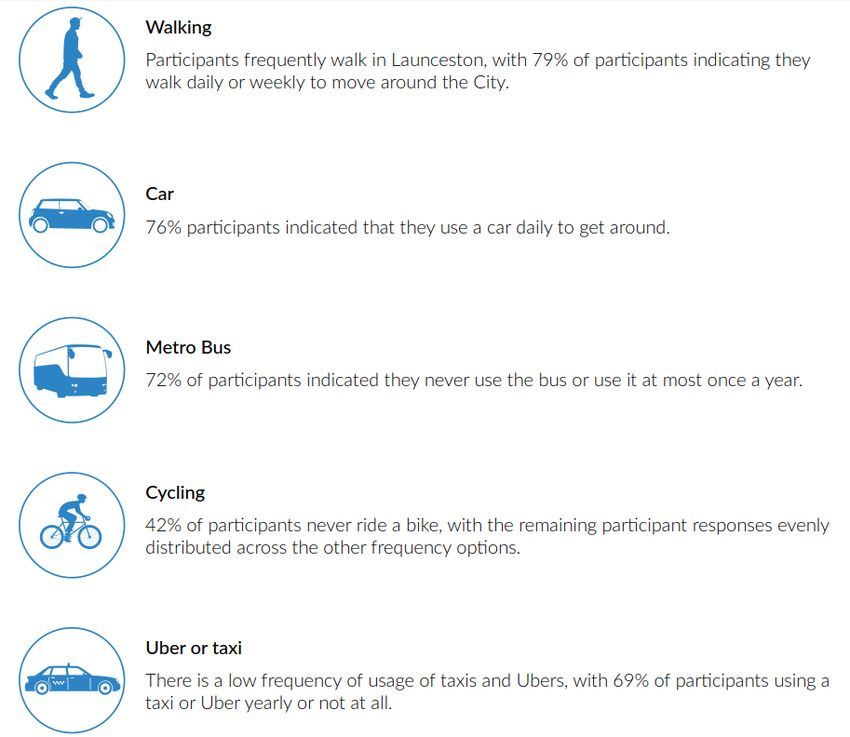
Launceston Transport Strategy
Themes and Connections

A Livable Launceston                                               A Healthy Launceston    A Connected Launceston
Increased active and public                                        Reduced casualties on   15-minute access to centres,
transport uptakes                                                  the road                education and health facilities

                         Greater Launceston Plan Overarching Goals

                         •      Governance and Accountability
                         •      Creativity and Innovation
                         •      Liveability and Amenity
                         •      Connected and Networked Region
                         •      Building Diversity
                         •      Social Inclusion and Equity
                         •      Environmental Sustainability
                         •      Land Use, Transport and Infrastructure
                         •      Economic Development

                       City of Launceston Corporate Strategic Plan Priorities

                       •       We Connect with our Community and our Region
                       •       We Facilitate Prosperity
                       •       We are a Progressive Leader
                       •       We value our City’s Unique Identity
                       •       We Serve and Care for our Community
                       •       We Protect our Environment
                       •       We are a City Planning for our Future

                        Greater Launceston Transport Vision Objectives

                        •       Integrated Transport, Land Use and Economic Planning
                        •       Greater Launceston Network Planning
                        •       Transport Options
                        •       Primary Transport Corridors

4     DRAFT City of Launceston Launceston Transport Strategy (23 March 2021)
Vision, Mission
and Values
Greater Launceston Plan Community Vision Statement
Sustainable prosperity for greater Launceston will be achieved by consolidating and building
nationally and internationally recognised strategic advantages for the region through a focus on
creativity and innovation, maintaining exceptional environmental and liveability qualities and
ensuring a diverse, connected and inclusive region.
Our Vision Our Purpose
Inspired people, working together to create We are a progressive organisation, working
the best outcomes for our community. with our community to create
a positive future for Launceston.
Our Values
Our people We care about We bring an We go home
matter our community open mind safe and well
• we value clear and • we take pride in our • we actively seek • we show care for
open communication work and pursue opportunities people and look out
a standard of to continuously for one another
• we support and
excellence improve • we speak up and
encourage each
other • we genuinely • we respect and support others to be
listen, and value explore different healthy and safe
• we respect diversity
collaborative ideas and • we take personal
• we recognise relationships perspectives responsibility for
individual needs,
• we strive towards • we embrace change our own health and
experience and
the best outcome that leads to positive wellbeing
strengths
for our community outcomes • we value work-life
• we make responsible • we value innovation fit
and sustainable and creativity
decisions
DRAFT City of Launceston Launceston Transport Strategy (23 March 2021) 5Key Definitions
First- and last-mile: Last-mile: Short journeys:
For walking or cycling: refers to the For freight: refers to delivery of Generally refers to 1 to 2
walking or cycling leg of the total small goods to local businesses and kilometres for walking and 3 to 5
journey. For example, walking from residents, and the ability of delivery kilometres for cycling trips (viable
a bus stop to a place of work; or vans to navigate streets and access alternative modes to short car trips)
properties
walking or cycling from a parked
car to wo
City of Launceston Transport Strategy
Central Activities District and Central Business District Map
6 DRAFT City of Launceston Launceston Transport Strategy (23 March 2021)Greater Launceston Area Map
DRAFT City of Launceston Launceston Transport Strategy (23 March 2021) 7Executive
Summary
The City of Launceston, in conjunction with key A number of studies, reports and strategies produced
stakeholder groups, has developed a clear vision for between 2009 and 2016 identified transport
the future of transport locally: usage and needs for the City of Launceston. This
strategy has also drawn heavily on community
“Our community will have access to diverse transport feedback provided as part of Council’s Tomorrow
choices that connect them to our places. Our focus Together community engagement initiative. One of
on partnerships and innovation will promote our the key Tomorrow Together themes - A mobile and
community’s wellbeing and improve Launceston’s accessible City - explored the aim: “To create a city
liveability”. where people and business have access to greater
transport choices and can access the things they
The City of Launceston Transport Strategy 2020- need. Launceston being mobile and accessible means
2040 provides a roadmap to help turn this vision people across the city can connect to businesses,
into a reality. It integrates with a number of other access services, education, employment and the
key planning documents including the Greater facilities they need. It requires clever thought about
Launceston Plan and City Deal Vision to help achieve what type of transport we use and when.”
the overarching goal of making Launceston Australia’s
most liveable regional city. It also aligns with the The City of Launceston Transport Strategy Project
Greater Launceston Transport Vision which aims to was launched in July 2020 to bring together all the
help Launceston ‘achieve its economic, tourism and information contained in previous studies, reports
investment potential while retaining and enhancing and strategies as well as the feedback received as
the existing character and liveability enjoyed by the part of Tomorrow Together.
community’.
A City of Launceston Transport Strategy
Launceston’s transport vision is underpinned by three Implementation Plan will also be developed to work
key themes: towards the strategy’s vision, strategic direction
and initiatives. The Implementation Plan will include
• A Liveable Launceston measures of success and will prioritise actions for
• A Healthy Launceston each initiative. It will be reviewed regularly as part of
• A Connected Launceston Council’s annual planning processes.
The themes are further supported by 14 Strategic
Directions and 30 initiatives to deliver the Strategic
Direction. Each initiative has an owner and a
timeframe for delivery. The list of actions is neither
exhaustive nor is it set in stone. The strategy will
need to be reviewed regularly as the city grows and
evolves.
8 DRAFT City of Launceston Launceston Transport Strategy (23 March 2021)Our Vision
Our community will have access to diverse transport choices
that connect them to our places. Our focus on partnerships and
innovation will promote our community’s wellbeing and improve
Launceston’s liveability.
Our Strategic Directions
A Liveable Launceston
L1 · Support vibrant places
L2 · Enable a sustainable transport lifestyle
L3 · Work with partners and community to deliver transport outcomes
L4 · Create innovative transport solutions
A Healthy Launceston
H1 · Promote healthy transport choices
H2 · Work ‘Towards Zero’ road casualties
A Connected Launceston
C1 · Optimise transport networks and services
C2 · Ensure adequate infrastructure is in place
C3 · Encourage the right modes on the right streets
C4 · Provide multimodal transport choices
C5 · Help people get to where they want to go
C6 · Help goods get to where they need to go
C7 · Promote evidence-based planning
C8 · Respond to future transport trends
DRAFT City of Launceston Launceston Transport Strategy (23 March 2021) 9Introduction
The Launceston Transport Strategy is a collaborative document to
serve the future transport needs of our community.
Launceston is the economic, social and cultural hub particularly to the city centre, providing vital footfall
of Northern Tasmania. Its position at the junctions and vibrancy to our streets. These interactions
of the North Esk, South Esk and kanamaluka/Tamar allow our people to connect, do business and
River estuary has long made it a key settlement and socialise. Increased pedestrians can also increase the
transport hub. attractiveness and safety of a place (both perceived
and real).
The region’s continued prosperity is reliant on an
efficient, sustainable and coordinated transport Cycling should be a ‘go-to-choice’ for short trips
network that connects people to our places. This throughout Launceston. Launceston has a lot
important role can make our transport challenges of cycling potential with the right network and
complex and unique. infrastructure in place. With a decentralisation
of services and shops to our activity centres, the
The population of the Launceston Local Government
opportunity to choose cycling is greater. Technological
Area (LGA) is projected to increase by up to 4 per cent
advances such as e-bikes can also mitigate existing
in a medium case scenario (increasing to 13.5 per cent
barriers like topography.
in the high case scenario) over the life of this Strategy
(up to 2040)1 . In addition, growth will be delivered Working with all providers, our public transport
on the edge of the current urban envelope within the network must respond to the needs of customers,
neighbouring local government areas of West Tamar particularly for longer trips. High frequency bus
and Meander Valley. services will facilitate a greater movement of people
on the ever limited road space. The key to this will be
The City of Launceston understands that a suitable
providing a simple and easy to understand network,
transport system for the whole of community will
high quality bus stop infrastructure, passenger
require close and continued liaison with partner
information (such as real time travel information) and
organisations, including the State Government and
a high quality bus fleet.
road user groups.
Our city has a large rural hinterland, where economies
Currently, most of Launceston’s residents drive or
of scale mean that providing mass transport solutions
travel as a car passenger to work, with 91 per cent
can be limited. Where there are few options beyond
choosing this mode. Active transport (walking and
private vehicles, we will look to provide other
cycling) and public transport combined account
solutions through shared or community transport
for less than 9 per cent of journey to work trips.
and micromobility, such as ebikes, and cycle rental
Launceston needs to continue diversifying travel
services.
mode share to enjoy the well-established economic,
social and environmental benefits that result from Technological advances in transport will also
streets which are more accessible, welcoming and safe continue to change our way of travel and the City of
for all road users. Launceston will leverage these innovations to provide
more choices for transport throughout our city.
Walking is critical to our retailers everywhere and
Fig 0.1 - Projected population growth for the Launceston Local Government Area (LGA).
Fig 01 Source: Tasmanian Government (RePPP) for Department of Treasury and Finance.
1 Source: Tasmanian Government (RePPP) for Launceston region, 2019
10 DRAFT City of Launceston Launceston Transport Strategy (23 March 2021)Roles and
Responsibilities
City of Launceston Key Partners
In Tasmania, the State Government delegates the In addition to the Tasmanian Government and its
authority to manage and develop local transport agencies (including the Department of State Growth),
networks to local governments, including the City of the City of Launceston maintains a close relationship
Launceston. The City can make policies and develop with partners who also contribute to the city’s
strategies like this one, to guide the management and transport network. They have provided invaluable
development of local transport networks. insight into the development of this strategy. Key
partners and their relevant roles include:
The City is responsible for:
• Surrounding local government areas: George
• Maintaining parts of the road network Town Council, Meander Valley Council, Northern
• Maintaining the last-mile access to places such as Midlands Council, West Tamar Council. These
bus stops, taxi stands and loading zones councils have similar responsibilities within their
jurisdictions to those of the City of Launceston.
• Maintaining the footpath network
• Northern Tasmania Development Corporation: The
• Regulating footpaths and the associated crossings Corporation, funded by seven Council Members
(including outdoor dining, signboards and events) including the City of Launceston, plays a strategic,
• Regulating parking provisions proactive role – identifying regional priorities,
undertaking strong advocacy, and collaborating
• Advocating for change on the community’s behalf with business, the community and the three tiers
with partners and external stakeholders. of government to improve the region’s prosperity.
The soon to be appointed City of Launceston’s • University of Tasmania: The University manages
Transport Committee will play an integral role in transport networks within their campuses,
supporting the successful delivery of this Strategy including the proposed Inveresk campus, and
and the Greater Launceston Transport Strategy. With collaborates with local and state governments to
propsed membership from the City of Launceston maintain access.
(Councillors and Officers), the Department of State
Growth, Tasmania Police, Metro, RACT, Tamar Bicycle • Launceston Chamber of Commerce: The Chamber
Users Group and two community representatives, leads business efforts to grow existing industries,
the Committee will be well placed to provide a recruit new companies and develop Launceston’s
communicative and consultative link between Council active entrepreneurial environment to create
and its relevant stakeholders. quality jobs and a diverse economy.
• Visit Northern Tasmania: This organisation drives
Tasmanian Government development of Northern Tasmania’s tourism and
visitor economy through destination management.
The Tasmanian Government is responsible for major
state road, rail and port projects. The Government • Tasmanian Logistics Committee: The Committee
operates and maintains the state-owned road network, engages and cooperates with other freight and
which primarily connects cities, major towns, rural transport industry bodies to achieve mutually
catchments, key marine hubs and air transport hubs. beneficial outcomes for the total supply chain
Aside from the road network, day-to-day transport encompassing all modes of freight transport,
operations are normally delegated to separate state- transport logistics and transport infrastructure in
owned companies such as TasRail (for freight rail) and Tasmania.
TasPorts (for the four major ports in Hobart, Burnie, • Tasmanian Bicycle Council: This body represents
Bell Bay and Devonport).The government provides the interests of Tasmanian cyclists and promotes,
public transport funding through Metro Tasmania and advocates and supports cycling in Tasmania.
contracted private operators across the state.
• Royal Automobile Club of Tasmania (RACT):
The Tasmanian Government also regulates vehicle The Club represents the interests of Tasmanian
licensing and registration; legislates for and enforces motorists and provides services such as roadside
road rules (including speed limits); and owns and assistance, vehicle insurance, car loans, driver
operates traffic signals (including those on the local education and tourism services.
road network).
DRAFT City of Launceston Launceston Transport Strategy (23 March 2021) 111 About Launceston
The People
 Launceston is Tasmania’s largest city – home to 15                    needs is largely driving Launceston’s economy.
 per cent of the state’s population2. It is also a major               Having a reliable local transport network is, therefore,
 tourist destination, welcoming a third of Tasmania’s                  key to maintaining Launceston’s economic growth.
 visitors.
                                                                       Today, 75 per cent of workers (aged 15 years and
 As a growing region, Greater Launceston’s population                  above) travel to work by car as driver or passenger,
 is expected to increase from 66,800 to 75,800 under                   while the remainder walk, work at home, or catch a
 a high-growth scenario (exclusive of associated urban                 bus. Launceston’s public transport uptake is very low:
 growth in neighbouring LGAs) 3. These people live,                    only 2 per cent of people use buses as part of their
 work and study in Launceston and also welcome over                    journeys to/from work – lower than the state (3 per
 572,000 visitors a year to the city as of 2018. As with               cent) and national (11.5 per cent) averages.
 other Tasmanian cities, Launceston’s population tends
                                                                       The results of City of Launceston’s Tomorrow
 to be older than the national average.
                                                                       Together 18-month engagement program further
 Census data shows that of those of working age                        corroborated the travel mode findings. Much like the
 residents, 87 per cent work full or part-time. This                   journey-to-work data, most respondents said they
 figure is comparable to the state and national                        used a car daily to get around. Most also either never
 employment levels, although Launceston has a higher                   used the bus, or used it once a year or less; almost
 proportion of part-time workers. Most workers are                     half never rode a bike in Launceston.
 in the household services sector, followed by goods-
                                                                       However, walking is a proven-popular transport mode
 related and business services. The household services
                                                                       among respondents. Almost four-in-five Tomorrow
 sector includes health, education, hospitality, and
                                                                       Together respondents said they walk daily or weekly
 art and recreation, and is increasingly important to
                                                                       to move around the city. Over a third listed walking
 Launceston’s local economy, growing in proportion
                                                                       as their most preferred transport mode.
 from 36 per cent in 2010 to 43 per cent in 2019. This
 growth suggests that meeting the local population’s

                    Fig 1.1 - Tomorrow Together engagement results from A Mobile and Accessbile City report

2 Source:   Census data, 2016
3 Source: Tasmanian   Government (RePPP) for Launceston region, 2019

                                                                              DRAFT City of Launceston Launceston Transport Strategy (23 March 2021)   13
The Places
Launceston’s beautiful places make the city unique. Launceston CBD and the wider Launceston
They include our homes, shops, offices, schools and Central Area (LCA)
universities along with the heritage-listed gardens of
City Park, the natural beauty of the Cataract Gorge
and the confluence of the waterways in the centre of Urban District Centres
the city.
Almost 80 per cent of Launceston’s land is used for Kings Meadows
residential purposes, and homes are relatively well Mowbray
distributed across the region4 . Jobs, however, tend to
be concentrated in the Launceston CBD, Invermay,
Suburban Activity Centres
and Kings Meadows.
Almost one-in-five Launceston residents live and Launceston (Wellington Street)
work in the same area and have shorter commutes,
Legana
while the rest need to commute somewhere else to
work5 . Most people travel less than 10 kilometres Longford
each way to work – although this pattern will likely Newstead
have changed since the COVID-19 pandemic shifted
many into working remotely6 . Norwood
Launceston’s residential areas rely on some activity Prospect Vale
centres for shopping and access to important Prospect
services. The Greater Launceston Plan has identified
the following activity centres hierarchy: Ravenswood
Riverside
Trevallyn
Youngtown
Neighbourhood Stores
Evandale
Perth
St Leonards
Rural District Centres
George Town
Rural Local Centres
Beaconsfield
Exeter
Lilydale
4 Source: Land use data, City of Launceston, 2018
5 Source: Census data, 2016
6 Source: Census data, 2016
14 DRAFT City of Launceston Launceston Transport Strategy (23 March 2021)Land use plays an important role in managing transport demands through
planning. Good planning practice should prioritise providing access to public
and active transport choices, followed by private vehicles.
As Launceston increasingly becomes a major attractor • Newnham – located adjacent to the existing
in the region, more people come to the city to live, urban area and bounded by the East Tamar
work, study or visit. A recent study based on the Highway to the west and north. Strategic
Department of Treasury and Finance projections, planning is currently underway to consider
suggests that Launceston will need between 2,600 the supporting road network, drainage areas,
and 4,200 net additional dwelling stock between open space and buffering from the East Tamar
2016 and 2032. Highway.
To meet this demand, the City of Launceston Similarly, Meander Valley Council, Northern Midlands
proposes two new suburban activity centres in South Council, and West Tamar Council have also identified
Prospect and St Leonards to accompany the following growth areas within their respective municipalities.
growth areas:
Beyond these places, roads and streets also act as
• South East Corridor – comprising the existing public spaces for people. Some roads and streets
residential-zoned land supply in the Waverley– have higher place functions because people dwell
North St Leonards area together with an and mingle there, while others balance the competing
identified future growth area in South St movement and place needs. This Launceston
Leonards. A structure plan is currently being Transport Strategy recognises these challenges in
prepared to include potential locations for planning our transport network.
commercial areas, community facilities and a road
network.
• South West Corridor – including South
Prospect in Launceston. Strategic planning is
currently underway to consider mixed-use and
commercial areas, a road network, drainage areas,
conservation area and other provisions.
DRAFT City of Launceston Launceston Transport Strategy (23 March 2021) 15Launceston’s Centres
and Key Projects
Mowbray
KEY PROJECT: UTAS NORTHERN
TRANSFORMATION PROJECT
University of Tasmania (UTAS) is a public
research university and a major employment
centre in Launceston.
In 2018, UTAS launched the $300 million Trevallyn
Northern Transformation project to build new Launceston
campuses in Inveresk (Launceston) and West CBD and LCA
Park (Burnie) in partnership with local, state and
Australian governments.
The Inveresk campus will serve as a centre
for education, culture and sport, and further
strengthen UTAS’ role in facilitating Launceston’s
economic growth. The campus will host
student hubs and innovation spaces, state-of-
the-art research facilities, and small student-
accommodation clusters on both sides of the
North Esk River.
Easy pedestrian, bike, and public transport access
will facilitate the flow of campus life and vitality
to/from the CBD, and a new pedestrian and
cycle bridge links Inveresk to Boland Street in the
master plan.
Expanding UTAS will not only transform the
university, but will also reinvigorate life in
Launceston’s CBD.
Prospect
16 DRAFT City of Launceston Launceston Transport Strategy (23 March 2021)Ravenswood
KEY PROJECT: PROPOSED LAUNCESTON
INTERCHANGE AND CITY HEART
CBD REDEVELOPMENT
The City of Launceston has purchased a share
of the Paterson Street Central car park to
Newstead develop a new bus interchange and creative
precinct.
The interchange will include dedicated bus
stops as well as an undercover waiting area
and an arcade that links through to the
Brisbane Street Mall. The new facility will
allow bus stops currently located on St John
Norwood Street to be relocated, paving the way for the
St Leonards City in partnership with the State Government
to redevelop the street.
The rest of the site is proposed for
redevelopment into an $80 million creative
industries precinct funded by the New
Kings Meadows Creative Group. The precinct will house a
world-class design and technology education
facility, a virtual and augmented-reality
enterprise, commercial offices, modern
food and retail offerings, and student
accommodation.
The new interchange, creative industries
and inner city living will greatly increase the
CBD’s vibrancy, grow its visitation and expand
economic activity around Launceston’s key
activity centre.
DRAFT City of Launceston Launceston Transport Strategy (23 March 2021) 17The Transport Network
To access places in Launceston, people need elderly and wheelchair users. Some areas also lack
accessibility crossings and clearways, shade/weather
transport. Launceston’s transport network protection and wayfinding. The recent Launceston
is complex, with infrastructure and services City Heart project made upgrades that improved
for pedestrians, cyclists, bus passengers, taxi the CBD walking experience, but other key activity
passengers or drivers. Sometimes, people centres are yet to receive such improvements.
use more than one transport mode in one Launceston has many pedestrian types who often
need different infrastructure and services to support
trip. them. The Tomorrow Together engagement results
clearly indicate that the people of Launceston want
Currently, however, most trips in Launceston to walk to places. This Launceston Transport Strategy
are still undertaken by cars, as suggested by aims to create a more walkable Launceston – a city
the ABS journey to work data and Tomorrow where walking is a viable transport mode for many
trip purposes.
Together engagement results. By contrast,
Even though many Launceston residents choose walking
the Greater Launceston Plan identifies car as their most preferred transport mode, only a fraction of
use as undesirable and makes reducing the them walk to work.
proportion of travel by car as one of the key Cycling
indicators of success. Cycling accounts for a small proportion of
Launceston’s journey-to-work trips. Although many
The following section outlines Launceston’s people enjoy cycling for recreation, cycling for other
transport network by mode, and each purposes still has a relatively low uptake.
mode’s relevant future indicators. Currently, the cycling network is disjointed with
some corridors ending abruptly or transitioning to
undesirable on-road provision. The most desirable
Walking off-street paths are scattered around Invermay,
Ravenswood and Norwood. The CBD and Invermay
Walking is the backbone of a liveable city.
areas have relatively extensive on-road cycling
Walking is not only a transport mode in its own networks, but they are not well connected to feeder
right, but also an enabler of other transport modes – corridors. Largely suburban areas, such as West
people walk in their journeys to access bikes, buses, Launceston and Prospect, have almost no cycling
or cars. Despite this, the importance of walking often paths. Topography is a barrier to cycling, but safety,
goes uncaptured. directness, and lack of end-of-trip facilities also
contribute to a difficult environment for cyclists.
Tomorrow Together’s engagement results found
that almost 80 per cent of respondents walk daily or This Launceston Transport Strategy aims to make
weekly to get around Launceston, and 76 per cent cycling a more attractive option, particularly for
said walking was their most-preferred or second- people less confident riding on the road. It values
most-preferred transport mode. This desire has not improving cycling infrastructure and services, and
yet translated to action as only 7 per cent of residents capitalises on opportunities to integrate land use and
currently commute by walking, suggesting a gap transport planning by making cycling provision part
between people’s desires and current actions. Some of new development and redevelopment projects –
attribute this to the lack of infrastructure; others to providing end-of-trip facilities, connections to centres
the convenience of driving, which makes walking less and feeder routes, and more training for adults and
attractive, even for short trips. students. This strategy also considers the potential
that electric bikes and bike sharing programs uptake
Although most streets in Launceston are already
can have in making micromobility modes more
equipped with footpaths on both sides, their quality
attractive in Launceston.
varies. Some footpaths have uneven/inconsistent
surfaces, which make them less accessible to the
18 DRAFT City of Launceston Launceston Transport Strategy (23 March 2021)DRAFT City of Launceston Launceston Transport Strategy (23 March 2021) 19
CASE STUDY
Context                                                        Cycling City and Town Program        Build it and they will come

Cities and towns across the UK                                 Between 2005 and 2011, the           Increasing the share of transport
have low cycling mode share for                                UK Department for Transport          funding allocated to cycling
journeys to work and other trips,                              ran the Cycling City and Towns       projects can accelerate provision
and existing funding methods                                   Programme to demonstrate how         of connected networks and lead to
or approaches to infrastructure                                public investment in cycling can     rapid growth in cycling uptake.
provision have not led to strong                               increase its uptake. The program
growth in mode-share.                                          increased funding for cycling
                                                               infrastructure from AU$30 to
                                                               $50 per person/per year in 10
                                                               towns with populations between
                                                               75,000 and 240,000. It invested
                                                               in measures to stimulate cycling
                                                               uptake by combining physical
                                                               infrastructure, promotion, and
                                                               other measures.
                                                               After this 3 to 5-year experiment,
                                                               a programme review found that
                                                               participating towns achieved an
                                                               annual cycling growth rate of 5
                                                               to 8 per cent. Over the project’s
                                                               lifespan, cycling grew by an
                                                               average 27 per cent with one
                                                               town experiencing a 62 per cent
                                                               increase.
                                                               Towns with the greatest increases
                                                               had also invested in behaviour-
                                                               change programs to encourage
                                                               sustainable travel.
                                                               Limited political support led
                                                               to towns with limited growth
                                                               implementing poor networks with
                                                               missing links.

20    DRAFT City of Launceston Launceston Transport Strategy (23 March 2021)
The City of Launceston has previously worked closely with State Growth,
Metro and the bus operators to improve the network and services, and this will
continue. The strategy will build on these improvements and further cement the
City of Launceston’s role in advocating for more-attractive public transport.
Public Transport increase patronage. The previous network’s complexity
and limited service frequency made it unattractive.
Public transport provides modal choice for all Also, some routes were designed to prioritise coverage
Launceston residents – vital for those without access over direct connections to places, making travel times
to private transport. High-volume trips along corridors longer.
also make better use of the road space.
In January 2020, a new Launceston Metro network
Launceston is currently served by urban and regional was introduced to improve the connections and better
bus services, operated by Metro and several private integrate services across different bus operators
operators. Urban services cover Launceston’s urban through:
footprint, while regional services connect Launceston
with areas further afield, such as East Tamar, West • Simplified routes: from 41 long routes to 22 more
Tamar, Bridport and Scottsdale to the north, and Cressy, direct routes (some of which form the Turn-up-and-
Longford, Perth and Evandale to the south. Regional GO services along key corridors of Invermay Road,
services form part of Launceston’s integrated network, Hobart Road and Westbury Road)
with shared ticketing and supplementary urban services • Increased frequency: expanded Turn-up-and-GO
along high-frequency corridors. The City of Launceston services on Launceston’s north/south corridor
also runs Tiger bus – a free bus service that connects
key places such as Launceston General Hospital, • Longer span of bus operating hours
Princes Square, Launceston Aquatic Centre, Cataract • Fully-accessible bus fleet.
Gorge and the Inveresk Park and Ride.
While this created a simple, highly-legible bus network
Overall, Launceston’s Metro bus patronage has with increased overall frequency, the impact on
stagnated in recent years due to an aging network patronage is not yet clear. This is because the natural
and fleet. More than 1.8 million trips were recorded in adjustment period for passengers and operators to
2015, but by 2018 the numbers had dropped by over become familiar with the new arrangements, is likely to
50 per cent to only 867,000. Some growth observed be extended by the impact of the COVID-19 pandemic
in 2019 (1.3 million trips a year, equivalent to 3,500 on patronage from March 2020.
trips a day), but still much lower than 2015 7. This
pattern is likely due to the dominant car culture and Council, together with the Department of State Growth
perceived poor experiences on public transport. Almost and developers, proposes relocating bus stops along
half the Tomorrow Together responders rated the bus St John Street to a new bus interchange on Paterson
somewhat unsatisfactory or unsatisfactory, with 72 per Street. The new interchange will be more conveniently
cent saying they had not taken the bus in the past year. located, have a comfortable waiting area, and will be
integrated with other vibrant uses in the CBD. This will
Patronage data between 2015 and 2019 shows that further improve users’ experiences and, in the long run,
most of Metro’s passengers travel with a concession will increase public transport use across the city.
card (pensioners, seniors, college students, or
students under 16). Only 21 per cent were full-fare- The City of Launceston has previously worked
paying adults 8 . This suggests the bus is not yet a closely with State Growth, Metro and the bus
primary choice for those who can drive as opposed operators to improve the network and services,
to concession holders and students with fewer and this will continue. The strategy will build on
opportunities to drive. This pattern is common in other these improvements and further cement the City of
regional cities. In the United States, the American Launceston’s role in advocating for more-attractive
Public Transport Association found that the highest public transport.
public transport users in US towns and rural areas The Department of State Growth’s 2020 network
were seniors, veterans and people with disabilities. But, restructuring addressed many issues with simplified,
demand on Metro trips will likely increase since more more direct and higher-frequency bus routes along key
than 18 per cent of Launceston’s population is over 65 corridors. The proposed Launceston Interchange on
years old and UTAS is expected to grow 9 . Paterson Street will also improve users’ experiences
and increase long-term public transport use across the
Jointly, the Department of State Growth and Metro city.
have been working on improving the bus network to
7 Source: Metro Tasmania provided data, 2020
8 Source: Metro Tasmania provided data, 2020
9 Source: Census data, 2016
DRAFT City of Launceston Launceston Transport Strategy (23 March 2021) 21Launceston Urban Network effective 5 July 2020
to Legana, Exeter, Beaconsfield, Beauty Point and Rowella to George Town Rocherlea
115 Legend
Alanvale 116 Blackwood Dr
Bus route
West Tamar Hwy
N
Tompsons Lane 117
s
Limited or trial bus route
re
Lilydale Rd C
y
Alanvale
w
W
s
H
fra
ar
a Common bus route
Reservoir Rd
ar
Alanvale Rd
at
m
115 771
Sass
ah
Ta
Fr
Dr Non-urban bus route
Rd
770 772
st
an
Ea
m
Blackwoo
Rocherlea
d
aree Rd
Viewbank Rd Hume St Terminus
780
Interchange
Treherne St
782 Bartlett Gr
784 Tompsons Lane
Hospital
785
Wo o
M
North 787 Educational institution
ou
788
nt
dl
Riverside 117
S
an
116 Shopping centre
tu
d
ar
G
t
r
Mayfield Point of interest
Dr
Rd
North Riverside 151 TAFE
Alanvale Rd
Mayfield St
Cormiston Rd
n
Newnham Map not to scale
e Cres
w
To
West Tamar Rd 781
Lawson St
Egan St
e
rg
eo
av
G
Har
gr
University Way
Br
West Tamar Rd
ook
s
Newnham
Rd
110
Ma ri
151 University
Dr
Mowbray
am
University
tim
New Ecclestone Rd e
e
nh
Invermay Rd
Av
of Tasmania
w
W
n
Ne
or Newnham Campus
ay
gh
le
Foch St
C
Beatty St
Rd
Wood St Jellico St
Riverside
ne
to
es
150
cl
Mowbray
Ec
122
Ra rith
W
Pe
Invermay Rd Mowbray Link
es
Ve
Ri
nn S
n
tT
ve
r
oc t
East Tamar Hwy
West
m
rs
am
on
h
id
C
Av
tR
ar
Riverside
e
on
e
Dr
Rd
d
ay St
w
e
Av
Ecclestone Rd
Ravenswood
al
Rd
or
Mornington Dr
a
lm
Henty St
on
Amundsen St
Ba
m
Po
Mayne St
West Riverside
150 Mowbray
Riverside Dr
Ro
to Launceston City
Forest Rd
w
Invermay 122
sp
150 Bendigo St
ho
151 780 110
r
Common bus route
n
781 Forster St 120
Rd
Pitt Ave
782 115 116 117 770 771 772 Rosny St
Invermay Rd
Cherry Rd
Warring St
784
Wildor Cres
Vermont Rd
Blyth St
Trevallyn Reatta Trevallyn 785
152
d
Rd
Bald Hill R
Reatta Rd Veulalee Ave 787 University Ravenswood
788 Lindsay St 120 Prossers Forest Rd
of Tasmania Lambert St
t
rS
Inveresk
ve
C
Gorge
lte
orld A
Campus
as
ou
ma
Rd
Fulford St
t
West Tamar Rd
le
152
C
Henry St
in Rd
New
Trevallyn Rd
Anderson Rd
St
W
d
Esplanade Bola
Delungra Rd
Trethewie St
Ravenswood Rd
Innes St n
Faraday St
William St
St John St
Ra
Fairthorne Rd
wling St
La
mbert St
ce
Charles St
Denman Rd Dandenong Rd Launceston
co
College Cimitiere St
ur
Paterson St
se
TAFE
Common bus route Launceston
Tamar St
Dr
Common bus route 121
C
Do
re
Brisbane St Faulkner Rd
w
150 151 152
s
122
ie
Cataract Gorge 120 121
yv
El
ph
Brisbane St
Ba
in
161 115 130 145 152 167 781 788
Newstead
C
Rd
Lon gv
York St Calvary
la
116 131 146 160 770 782 792 York St
George St
Dalkeith St
re
Launceston City St Lukes
nc
Elizabeth St
Hillside Cres
117 140 147 161 771 784 794
e
Interchange Cypress St
is
Canopus Dr
St
ta
120 141 150 162 772 785 796 Frederick St TAFE
Rd
Ar
Panorama Rd
121 142 151 165 780 787 Waverley 121
Rd
Ba
130
th
Bathurst St
Charles St
Margaret St
Calvary Newstead Bunbury St
ur
g ton St
sin
ey
131 Tasman Hwy 122
High St
St Vincents College
St
ls
Regent St Naroo St
Rd
Abbott St
Ke
Blackstone Brougham St 167 140
Heights West Hart
Hogarth St
121
lin
St
Gran vi
el
Launceston 122
C
Frankland St
W
y
w
on
165 Howick St 141 142
H
130
na
Cres
an
ug
lle
Glover David St
sm
Mulgrave St
ht
Cres Hoblers Bridge Rd
Bl
St
Kings Meadows
Ta
Av
130
ac
Launceston Eldon St
e
ks
to Launceston City General
Salisbury
to
Waverley
Midland Hwy
Pe
Hospital
ne
Wellington
nq
Wentworth St
Rd
Neptune Dr
ui
Talbot Rd
te
Strahan Rd
Rd
As
Meredith Cres
hl
S
ei
Blackstone Heights Amy Rd Punchbowl 141
g
161
h
C
Summerhill
t
Punchbowl Rd 142
St
am
Panorama Rd
Av
St
am
e
Outr
br
ux
l Rd
id
Westbury Rd
110
Va
ge
Hardwicke St
Norwood
Havelock St
St
t
tS
Stanley St
ow
Lavender Gr 165
Prospe c
hb
St
M
Pi
167
nc
or
L
tc
eo
s
Pu
he
d Ave
he
na
Ainslie Gr
Rd
rP
ad
Norwoo
Peel St W
rd
Normanstone
de
Bl
s
Rd
St
Willow Lane
mey
Rd
a
Hawth o
In Hobart Rd
Penquite Rd
Punchbowl Ave ne St
olyman Gascoyne St
y
Norwood
Rossmo
St
Dr
H
147 rn St 121
nt
Prospect
heltenham Way
Rd
ce
O
130
Chifley St
no
ak
y
C
Jillian St
ur
Mount Leslie Rd
de
as
rd St
Boiton Hill Rd
tb
Riseley St 131 Rd
n
in
es
o
Rd
Rd
ch
140
W
Guy St
Rise
Johnston Rd
Kert
m
ha
u
South Launceston Bond St
r R ic
ss
Ernest St
ountry Club 147
po
Normanstone Rd
s
Blaydon St
Opossum Rd
C
v
O
re
Rd
C
A
C
Bi
D
s
m
e
Station Rd
e
Kings Meadows
eg a
e
in
Jar d
y
bi
Midland Hwy
in
110
w
M
m
nt
160
H
Hobart Rd
ac
St Leonards
bi
ra
ss
V
Kings
e
ua
Av
161 a
St Leonards Rd
s
Ba
St
Q
e
Opossum Rd
L
Prospect Vale
160 Prospect Meadows Youngtown
Country Club Tasmania 146
Vale Woolven St St Leonards 130
C
is
St
hr
Kings Meadows Link Kertch Rd 131
Glenwood Rd
Po
H
Woolven St
ar
Common bus route Common bus route
p
le
la
y
rP
160 161 162 145 147 794
Rd
Pd
Waroona St
de
e
y
146 792 796
ur
tb
es
Victoria St Clarendon St
W
y
h Esk
ut
w
ne St
Youngtown 140
H
r er Valley Rd Prospect Vale 165 Talune St 146
So
ss
D
Poplar Pde 145
nd
Ba
Marketplace 167 Lo
Bo
ea
Cartography by www.transitgraphics.com.au TG20200
pl Delta Ave r
gs Dr
M
w
Belg a
de
Hadspen 162
ns
r
Rd
in
i
ch
Alma St Pde
ve
St
e
Pi
Pd
R
n
pe
Hobart Rd
Rd
ai
ar
rA
M
Re
y
ve
lle
Po
dw
Youngtown
Va
oo
er
d
nd
145
C
Ba
re
ea
rtl
s
M
ey
St
Bass Hwy
792
t 794
Ru
Blessington Rd
e
Glenwood Rd
h
Midland Hwy
796
Pateena Rd
rg
n
le
Rd
Hadspen
162
Rutherglen Rd to Perth, Longford, Cressy and Evandale
20 DRAFT City of Launceston Launceston Transport Strategy (4 December 2020)
22 DRAFT City of Launceston Launceston Transport Strategy (23 March 2021)CASE STUDY
Context Although there is a clear Opportunities for collaboration
separation of scope between local
The City of Ipswich lies on Greater and state governments, there Ipswich’s approach demonstrates
Brisbane’s western fringe. It is an are opportunities for local and local governments’ strong
urban area of 200,000 people and state governments to collaborate understanding of their
a rural hinterland. The rail network and create a shared vision in the communities’ needs and ability
connects Ipswich to Greater community’s best interest. to advocate for solutions. Local
Brisbane, and a bus network governments can develop a clear
To ensure the State Government
primarily connects the city’s urban communication and establish
suitably considers the community’s
area to centres and train stations. working relationships with
public transport needs, the Plan
other stakeholders, often with
identifies issues impacting existing
strong community engagement
customers and sets out a vision
iGO Public Transport and support. This in turn helps
and strategies to grow public
Advocacy and Action Plan state governments improve
transport patronage by attracting
public transport services and
In July 2019, the City of Ipswich potential customers. Instead of
infrastructure in accordance
released the iGO Public Transport delivering the improvements
with communities’ and local
Advocacy and Action Plan as a itself, the City will collaborate
governments’ inputs.
part of its transport strategy. and advocate with the State
Government for any changes.
The Plan recognises that
providing, managing and operating One of the Plan’s key actions
public transport in Ipswich is includes developing half-yearly
the core responsibility of the advocacy material to coordinate
State Government and its public the advocacy approach and
transport operators. However, communicate the region’s
the City also understands the challenges and priorities
State Government’s challenges when liaising with the State
in working with multiple Government. Advocacy materials
stakeholders and identifying public are issued to align with reviews
transport issues and opportunities of the Department of Transport
in Ipswich. and Main Roads (DTMR) Transport
System Planning Program projects.Launceston’s CBD location means it has to deal with being a through trip
corridor as much as an end of trip destination.
Driving and Parking overall connectivity. This will be a long but rewarding
process that creates a more sustainable transport
Driving is Launceston’s most popular transport mode. system for Launceston. It also needs to consider the
The city has minimal congestion and low parking needs of those who are unable to drive or do not
costs, making driving today’s most desirable transport have access to a private vehicle. Other modes such as
mode. Reliance on private cars leads to almost half shared rides (including community services vehicles,
of Greater Launceston’s households owning two taxis and Ubers) or shared car schemes (e.g. GoGet
or more vehicles. Many visitors also drive a car or and Flexicar) will also be considered as alternatives to
caravan to visit Launceston and other destinations in ownership.
Tasmania.
In 2018, the Department of State Growth released Freight and Deliveries
the Launceston Traffic Origin Destination Report
that used a number plate survey to identify overall Launceston’s strategic position at the intersection of
movements on the road network. The study found the Midland, Bass, Tasman and East Tamar highways
that during the morning peak, between 50 and 60 per means it receives a high volume of freight traffic
cent of trips that started outside inner Launceston, through the city centre, particularly trips to/from
finished in the CBD area. North Tasmanian ports such as Bell Bay. The impacts
of these movements should be mitigated by defining
A high proportion of trips also bypass the Launceston clear routes that separate freight from areas of high
CBD. Trips that pass through Launceston will mostly vibrancy and activity.
pass the CBD since all the major road corridors (the
West Tamar Highway (northwest), Midland Highway Launceston Airport has also been identified as a
(southwest), East Tamar Highway (northeast) and A3 key air freight gateway for Tasmania. The Tasmanian
(east), are connected to the CBD’s Bathurst Street, Integrated Freight Strategy 2016 acknowledges the
Wellington Street, Brisbane Street and York Street. airport’s importance for freight, particularly in light of
These through trips are counterproductive and work the recent $6 million upgrade of its southern freight
against the goal to make Launceston’s CBD and inner apron, providing capacity for the equivalent of a fully
city more pedestrian and cyclist-friendly, with less loaded B737-800 freighter plane (approximately 2
traffic and slower speeds. The Launceston City Heart semi-trailer loads). More airport freight movements
Project is currently rethinking the street design to will further increase pressures on the Midland
reduce through traffic in the CBD. Highway and Evandale Road.
Trips that end in the CBD are facilitated with more Launceston also needs last-mile delivery access for
than 3,900 parking spots. Despite a perceived lack of residents and businesses. The recent COVID-19
parking, most parking facilities are rarely more than crisis has increased delivery demand with more
80 per cent full 10 . Launceston people turning to online shopping.
Research by Australia Post (2020 eCommerce
Low congestion levels and low-cost parking make Industry Report) showed that in April 2020, there was
driving popular, but this is unsustainable in the long a 94 per cent increase in online shopping purchases
term. As more people live, work, study and visit across Tasmania compared to April 2019. This last-
Launceston, more cars on the road will result in mile delivery is often constrained by narrow city
congestion, impacting the city’s connectivity and streets and lack of kerbside infrastructure. While
making Launceston less liveable. Vehicle exhuast pipe new technology such as drones or e-bike couriers
emissions will also impact public health outcomes are changing delivery patterns in large cities, vans
and the environment. Our streets must also continue and small lorries still account for most inner-city
to provide unimpeded access to our key emergency deliveries.
and community centres such as Launceston General
Hospital and police, fire and ambulance stations. The City of Launceston will assess the changing
need for freight and delivery provisions and identify
This Launceston Transport Strategy recognises the appropriate initiatives to ensure clear access
the challenge of providing transport alternatives and minimise impact. Some considerations include
to driving. Our strategic directions and themes adaptive and responsive parking and kerbside
address the need to make other modes as attractive restrictions and the potential use of collection points.
as driving, so the shift does not impact the city’s
10 Source: Provided data, City of Launceston, 2020
24 DRAFT City of Launceston Launceston Transport Strategy (23 March 2021)FUTURE TRENDS
The role of parking has shifted over time. The following section outlines some
key trends that we considered in planning for Launceston’s future parking.
Parking for access >> Ubiquitous parking >> Single purpose parking >>
Parking for travel demand Need-based parking Multi-purpose parking
management
In the past, parking was Finally, car park designs and use
Parking was previously considered considered cheap because land have also changed. Parking was
necessary. Driving was the was “abundant”. People believed considered necessary in a ‘modern’
ultimate transport mode and parking was needed for all city. It was common to design
parking was needed to support developments. The cost of building car parks that only store cars
it. Parking was treated as a public parking was directly transferred and provide convenient access
amenity for all because everyone from developers to users (retailers, for drivers at the cost of creating
was encouraged to drive to access residents, etc.), even those who do places for people.
jobs, services and shops. not drive. Non-drivers subsidised
Today, people demand more
drivers.
Today, however, we have a more green active space: parking often
balanced view that recognises the Today, parking is expensive uses the valued space we need.
importance of private vehicles, to build and should be priced Cities now look for ways to
while acknowledging that they accordingly. The amount of reduce parking impacts, such as
can impact the quality and space it requires means parking by combining it with other uses
amenity of our cities and the is a premium and should be other than just storing cars. This
health of citizens. In this context, provided only to those who really way, parking areas can be used for
a shift towards public and active need it, potentially achieved people gathering, such as weekend
transport is beneficial and should by not requiring parking with markets and community events.
be prioritised over private vehicles. new developments, or setting a With the help of technology and
Parking plays an important role maximum parking standard (rather forward planning, parking spaces
in this shift as it influences mode than the traditional minimum can be dynamically programmed
choice. Therefore, it can be used approach). Parking costs should for other uses following demand
as a tool to manage travel demand be unbundled so whoever drives, changes throughout the day, week
for cars. pays for the cost of building and or season.
operating car parks.Challenges and Opportunities As Launceston evolves, it aspires to have more than just an efficient transport system. The community now also needs a sustainable system that supports a liveable, healthy and connected regional city lifestyle. Launceston’s reliance on private cars is a key challenge that other policies and plans consistently identify. Not only are private cars an inefficient transport mode (cars need more road space than other modes), their current reliance on non- renewable energy and exhaust pipe emissions make the mode unsustainable. Age and economic conditions render some of Launceston’s community unable to drive, also making private cars non- inclusive. To reduce Launceston’s reliance on private cars, the city will need to improve other transport options, while also limiting the incentive to drive. The following table summarises Launceston’s transport challenges and opportunities to create a more efficient, sustainable and inclusive transport system. 26 DRAFT City of Launceston Launceston Transport Strategy (23 March 2021)
You can also read


