CLIMATE CHANGE ADAPTATION: FROM THEORY TO PRACTICE IN NATURAL PROTECTED AREAS
←
→
Page content transcription
If your browser does not render page correctly, please read the page content below
CLIMATE CHANGE ADAPTATION:
  FROM THEORY TO PRACTICE
IN NATURAL PROTECTED AREAS

  CLIMATE CHANGE ADAPTATION: FROM THEORY TO PRACTICE IN NATURAL PROTECTED AREAS   1
The components of the Climate Change Strategy from Protected Areas are:

       Component: Institutional Coordination

       Component: Landscape management in context of climate change

       Component: Knowledge for decision making

       Component: Social participation and communication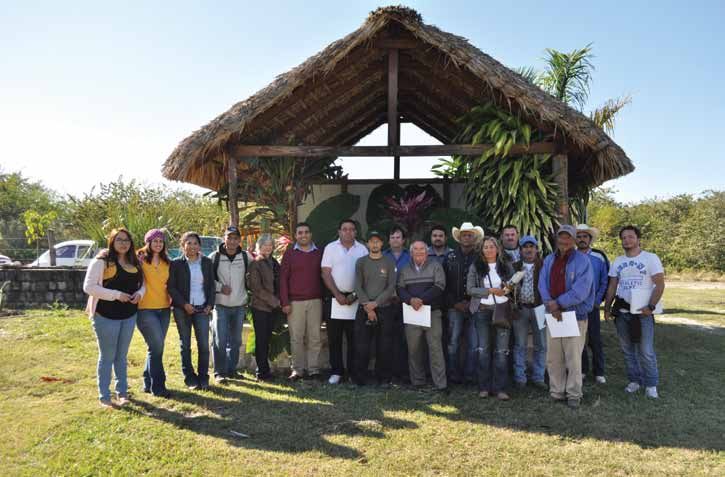
CLIMATE CHANGE ADAPTATION:
            FROM THEORY TO PRACTICE
          IN NATURAL PROTECTED AREAS

            Business training for producers’ groups in
the Sierra del Abra Tanchipa Biosphere Reserve in San Luis Potosí
              as a climate change adaptation measure
I. SOCIO-ENVIRONMENTAL VULNERABILITY
AND NATURAL PROTECTED AREAS

There is evidence at the global, national and regional level that climate change, combined
with other pressure factors, will have adverse ecological, economic and social impacts.1
The degree to which a socio-environmental asset is susceptible to harm or damage in
this context is known as vulnerability. Vulnerability is dynamic, varying as a function of
temporal and spatial patterns and social factors.2 Different dimensions of vulnerability
can therefore be ascertained, affecting livelihoods, human welfare and adaptation (at the
individual, household, collective and institutional level).3

Addressing climate vulnerability involves identifying and taking account of priority eco-
systems and species in conjunction with human populations and their livelihoods, which
together form a socio-environmental system. In this way, adaptation and mitigation actions
can be designed to cope with the impacts of climate variability and climate change in a given
area and on the required scale.4

Mexico has made progress in developing its policy for dealing with the effects of climate
change. Policy instruments include the General Climate Change Act and the Special Cli-
mate Change Programme (PECC), which serve as a basis for harmonising, coordinating and
aligning government efforts with those of other actors, with a view to designing and imple-
menting mitigation and adaptation actions. The National Commission of Natural Protected
Areas (CONANP) of the Ministry of Environment and Natural Resources has developed the
Climate Change Strategy for Protected Areas (ECCAP), which establishes priority areas of
action for climate change adaptation and mitigation. Activities implemented by CONANP
include the Climate Change Adaptation Programme for the Central Region of the Sierra
Madre Oriental (PACC-RCSMO). This programme covers four natural protected areas:5 the
Sierra del Abra Tanchipa Biosphere Reserve (San Luis Potosí), the Xilitla Priority Conserva-
tion Area (San Luis Potosí), the Cloud Forest Priority Conservation Area (Hidalgo) and the
Necaxa River Basin Natural Resources Protection Area (Puebla).

                                                                                           5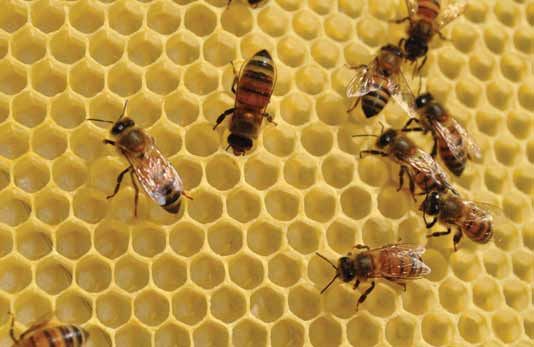
< Pg. 4: Sierra del Abra Tanchipa            On the whole, Mexico’s natural protected areas (NPAs) are an effective in-
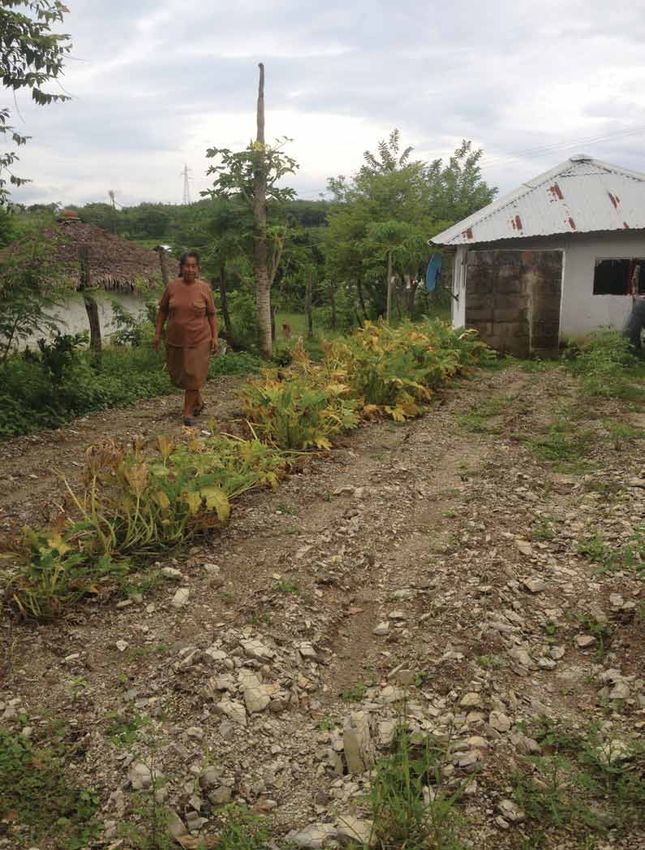
> Pg. 7: Family vegetable garden             strument for conserving and protecting the country’s natural capital.6 In
                                             collaboration with the people living in these areas, the NPAs enable sus-
                                             tainable economic activities to be carried out and ecosystem services to be
                                             provided.7 As the NPAs are located largely in priority conservation areas in-
                                             habited by rural communities, they can contribute towards reducing vulner-
                                             ability, as a natural response to climate change.8,9 NPA planning and man-
                                             agement focuses on promoting and strengthening sustainable economic
                                             activities by providing economic incentives and developing the capacities of
                                             the inhabitants to maintain and improve ecosystems and the services they
                                             provide. Effective management ensures the availability of ecosystem ser-
                                             vices, contributing to the survival, development and wellbeing of the com-
                                             munities. It also enables the people to adapt to climate change impacts and
                                             perturbations.10

VULNERABILITY ANALYSIS CHART

                                                                                                                Political, socio-
                                    Climate variability and
                                                                                                                economic and
                                    climate change
                                                                                                                institutional structures

                                                       Ecosystem-based                                       Livelihoods and
                                                       adaptation                                            social organisation
                                                                  .

Ecosystem
processes

6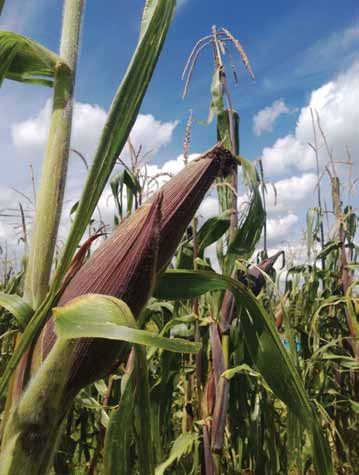
CLIMATE CHANGE ADAPTATION: FROM THEORY TO PRACTICE IN NATURAL PROTECTED AREAS 7
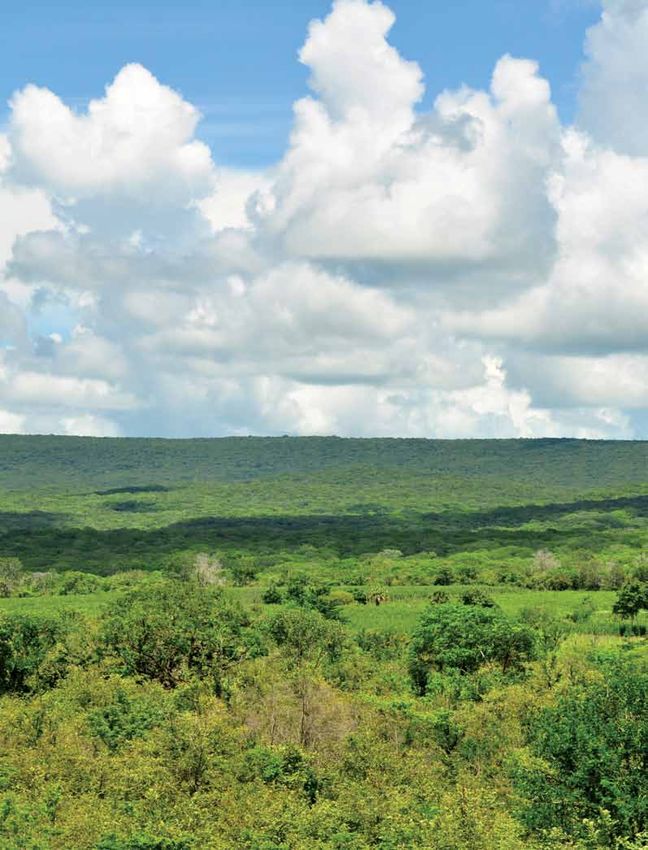
Left: Mexico, S.L.P. Right up: Los Sabinos cave. Right down: Low deciduous forest

                                                   II. SIERRA DEL ABRA TANCHIPA BIOSPHERE RESERVE,
                                                   SAN LUIS POTOSÍ

                                                   The Sierra del Abra Tanchipa Biosphere Reserve (RBSAT) is located in the
      730                     269                  central part of the Sierra Madre Oriental mountain range in the state of San
      Vertebrate              Plants               Luis Potosí. It is noted for its vegetation, including semi-deciduous forest,
      Species                                      low deciduous forest, thorn forest and oak forest, which are home to a great
      (63% are birds)                              diversity of species. The reserve also contains caves where little known spe-
                                                   cies live. The reserve’s rich flora and fauna include the elephant’s foot palm
                                                   or pony tail palm, the military macaw, the red-crowned parrot, the ocelot
                                                   and the jaguar. There are 730 recorded vertebrate species (63% of them
                                                   birds) and 269 plant and tree species.11,12

                                                   The RBSAT has a beneficial effect on regional climate regulation owing to
                                                   its location and vegetation, the latter affecting rainfall and temperatures.
                                                   Its fractured carbonate bedrock allows water to seep into the ground, drain-
                                                   ing into the Gulf of Mexico. Furthermore, it forms a natural barrier against
                                                   tropical storms and hurricanes.13 Its abundance of flowers is beneficial for
                                                   pollination and honey production.14

      8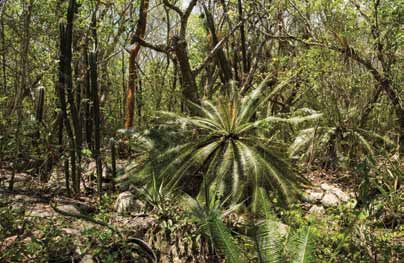
Left up: Sierra del Abra Tanchipa Left down , Cactus. Right up: butterflies. Right down: RBSAT’s night sky.

             In some ways, the RBSAT is like an island. Although there are no communi-
             ties or economic activities within its boundaries, it is surrounded by 70,000
             hectares of farmland where 28 different crops (55% sugar cane) are grown
             and extensive livestock activities are carried out. This poses the following
             threats to the RBSAT and adjacent localities:

                 a. overexploitation of resources (soil, water, forests and wildlife);
                 b. clearing of forest land for crop and livestock farming;
                 c. use of agrochemicals (pesticides and fertilisers);
                 d. poor management of water resources;
                 e. crop rotation undertaken without the required technical expertise;
                 f. agricultural burning.

                                                                                                              RBSAT
             III. ECONOMIC ACTIVITIES

             People living in the area of influence of the RBSAT pursue a variety of eco-
             nomic activities. Over the last five years, the Biosphere Reserve staff has
             provided them with support, through the CONANP Conservation Pro-

                                               CLIMATE CHANGE ADAPTATION: FROM THEORY TO PRACTICE IN NATURAL PROTECTED AREAS   9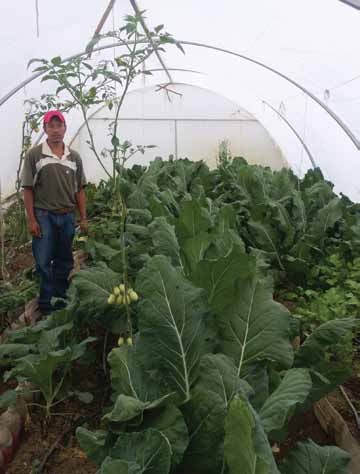
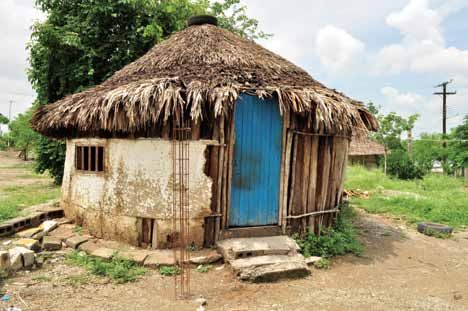
Left: traditional rural construction “Bohio”. Right: Gustavo Garmendia rural communty.

                                                    gramme for Sustainable Development (PROCODES), to help them improve
                                                    their practices and adopt new production models.

    ACTIVITIES PURSUED BY RURAL COMMUNITIES                                 NEW ACTIVITIES UNDERTAKEN BY RURAL COMMUNITIES
                                                    IV. CLIMATIC CONDITIONS

                                           Over the last thirty years, climatic conditions have changed in the Sierra
                                           Madre Oriental region. The average temperature has risen by 1°C, the
                                           frequency of hot days has increased, cold days are less frequent and
   Aquaculture            Fishing           Livestock
                                           precipitation          Beekeeping
                                                         has declined.   ProjectionsBakery         Nursery
                                                                                      for 2050 indicate          Horticulture
                                                                                                          that the average
                                                                                                  gardening
                                           temperature will have risen by between 0.7 and 1.2° C, and extreme
   · Establishment of producers’ organisations
                                           temperatures
                                                 with    could rise
                                                                 · Creation
                                                                    by as muchof producers’
                                                                                  as 1.5° C. Most
                                                                                              organisations
                                                                                                   models predict a slight
     a solid basis and experience in production
                                           reduction
                                                 and in precipitation
                                                                 · Adoption
                                                                        (5-10%),
                                                                               of a gender
                                                                                    but stronger
                                                                                            and age-inclusive
                                                                                                   hurricanes.�approach
                                                                                                                  Regional
     marketing                             climate change trends · Work
                                                                     will on
                                                                           result
                                                                              the basis
                                                                                   in threats
                                                                                         of sustainable
                                                                                               to and impacts
                                                                                                         production
                                                                                                                  on models
                                                                                                                      local
   · Shift towards sustainable practices   communities and their · Targeting
                                                                   livelihoods,ofincreasing
                                                                                  a specifictheir
                                                                                             market
                                                                                                  vulnerability.
   · Markets reactivation
                                           CLIMATE CHANGE THREATS AND IMPACTS AFFECTING THE
                                           LAGUNA DEL MANTE COMMUNITY

                                                    The main problems facing them are:

                                                       •   Weak institutional presence;
                                                       •   Lack of technical training, business advice and investment in produc-
                                                           tive infrastructure;
                                                       •   Poorly organised, low-income activities, with limited access to mar-
                                                           kets, and insufficient knowledge of best practices;
                                                       •   Little interest in efficient natural resource management and conser-
                                                           vation;
                                                       •   Need to increase the area of production, reduce costs and improve the
                                                           production model.

      10
IV. CLIMATIC CONDITIONS
The Sierra Madre Oriental
Increase of average temperature
Hurricane
+2.2ºC
Cold days
+1.7ºC
30 years
Rain
+1ºC
ago
Warm days
1980 today 2050
Increase of extreme temperature
Temperature
proyections to year
+1.5ºC
Hurricanes Cold days
Warm days Rain
30 years ago 2050
Over the last thirty years, climatic conditions have changed in the Sierra
Madre Oriental region. The average temperature has risen by 1°C, the fre-
quency of hot days has increased, cold days are less frequent and precipita-
tion has declined. Projections for 2050 indicate that the average tempera-
ture will have risen by between 0.7 and 1.2° C, and extreme temperatures
could rise by as much as 1.5° C. Most models predict a slight reduction in
precipitation (5-10%), but stronger hurricanes.15
Regional climate change trends will result in threats to and impacts on local
communities and their livelihoods, increasing their vulnerability.
CLIMATE CHANGE ADAPTATION: FROM THEORY TO PRACTICE IN NATURAL PROTECTED AREAS 11CLIMATE CHANGE THREATS AND IMPACTS AFFECTING THE LAGUNA DEL MANTE COMMUNITY
Drought Fire Pests Heavy rains Rising temperatures
Sugar cane, the most Farmers often lose con- The higher incidence of Heavy rains lead to a Over recent decades
important crop in the trol of the fires they set crop pests has an adver- significant decline in locals have noticed a rise
Laguna del Mante ejido to burn sugar cane, put- se effect on sugar cane lime production, causing in temperatures and a
(Mexican system of land ting other inhabitants, and other crops. the flowers and fruit decline in rainfall.
tenure that combines economic activities and to drop from the trees.
communal ownership animal and plant species Other commercial
with individual use), in the RBSAT at risk. activities can also be
is fairly resistant to These fires also increase affected, because heavy
drought, but it can the concentration of po- rains deter people from
nevertheless succumb to llutants in the air, which going out to shop.
severe conditions, such can cause respiratory
as those seen in 2011. illnesses.
The scale of the impact of these conditions depends on people’s varying ability
to cope, which is determined by social factors, their livelihood or sources of
income (migration and remittances, farming activities, non-farming activities,
etc.), access to and control of resources and conservation incentives.
Different forms of vulnerability16
1. Participation in decision-making on ecosystem use
The governance system and legal framework in place for ejidos, grant political power over ecosystem
use to male ejido members only, effectively excluding other groups from decision-making and from the
distribution of a substantial part of ejido rights and obligations.
2. Gender
The livelihoods of men and women differ significantly, with women and the household as a whole
depending primarily on the earnings of men, many of whom are engaged in agriculture. This means that
the women’s level of vulnerability and coping capacity depend to a large extent on the income of the
husband or other members of the household.
3. Lack of conservation incentives
Payment for environmental services only benefits ejido members with parcels of land who participate in
the Payment for Environmental Water Services (PSAH) scheme. It does not therefore help those groups
most vulnerable to the effects of climate change. The payments received by households that are entitled to
them do not make a significant contribution to their inco
12V. NATIONAL COMMISSION OF NATURAL PROTECTED
AREAS (CONANP)
Global
CONANP is the body responsible for the country’s NPAs, which are admin-
Climate change
istrated on the basis of a Management Programme, the planning and regula-
Inter-institutional public policies
tory tool that sets out the activities, actions and guidelines for NPA manage-
ment and administration.17 In the case of the RBSAT, the staff is responsible National
for implementing the Management Programme. It is supplemented by ad-
Strategy (PACC-RCSMO)
aptation, mitigation and monitoring strategies identified in the PACC-RCS-
MO, which facilitates stakeholder coordination on a regional scale.18
CONANP
Adaptation strategies
Regional
Through CONANP’s work, climate change issues are thus mainstreamed
from the national level down to implementation in the field (Figure 1).
The RBSAT management has supported the implementation of conservation Territory
and local development processes. These include the transition of economic
practices towards models that contribute to conserving local ecosystems
and related ecosystem services and to strengthening livelihood options.
This helps to reduce vulnerability. Fig. 1
VI. IMPLEMENTATION OF ADAPTATION MEASURES:
THE CASE OF ABRA TANCHIPA
With a view to providing training for producers’ groups, CONANP and the
German organisation Deutsche Gesellschaft für Internationale Zusam-
menarbeit (GIZ) carried out a joint economic and community assessment
in 2013 as part of the Climate Change and Protected Area Management
Project. They focused on producers’ groups engaged in aquaculture, fishing,
livestock farming, beekeeping, bread making, plant nursery activities and
vegetable farming in the areas around the RBSAT. The work involved par-
ticipatory workshops and interviews with producers, in addition to a market
analysis and expert consultancy. As a result of this assessment, the current
situation was documented and options for improvement identified, based
on a review of best practices in other parts of the country.19
Training needs were identified, and the topics to be included in the tech- Fish production unit
nical and business parts of the training were established. A directory of
potential instructors was drawn up, and a basic business training plan was
designed and implemented on two levels, taking into account the organisa-
tional differences of the groups.
CLIMATE CHANGE ADAPTATION: FROM THEORY TO PRACTICE IN NATURAL PROTECTED AREAS 13Based on this, business training was designed for the groups and carried out.
The subjects addressed were:
• options and solutions to problems;
• project management and planning tools;
• sustainable development approach;
• organisational strengthening and best practices;
• notions of public policy.
CAPACITY DEVELOPMENT FOR PRODUCERS AND ORGANISATIONAL CONSOLIDATION: CRUCIAL FACTORS
IN REINFORCING THE ACTIVITIES.
CONANP, the RBSAT, GIZ and AgroDer devised a training scheme aimed at strengthening the business capability of producers’ organ-
isations operating in the area around the RBSAT.
The process involved:
1 2 3 4 5
Workshops and Visits to other Interviews Definition of the Customised
interviews with rural production with experts to optimum scenario basic business
producers; units to compare identify areas for achievable training for
practices; improvement; by producers eight producers’
(reference model); organisations.
14Honeybee producer
THE GROUPS INVOLVED AND SOME PERSONAL
BACKGROUND STORIES
Eight groups were required to prepare the business training. Each of the
groups is organised in its own particular way. The personal background sto-
ries of some of their members are given below.
BEEKEEPING Enedino
The Cuallinextli group was formed in 2011 by 16 families from the ejidos of Enedino was a livestock farmer and
León García and La Aguaje. They had been livestock farmers until changes is now president of the Cuallinex-
in the use of the Reserve and livestock diseases caused a decline in this ac- tli beekeepers’ group. He and the
tivity. Since then, the RBSAT staff has been working with them to develop other members have undergone
monitoring and fire control activities. It has also helped them to acquire technical and organisational train-
beehives and equipment and to undergo training in beekeeping. ing. They market the honey they
produce through an organisation
It is a social organisation and highly vulnerable in terms of marketing and with stores in the city of Querétaro.
commercialisation in addition to environmental contingencies. For ex- Enedino also grows corn and beans
ample, in 2013, forest fires affected the production of honey because there and, as a community forest guard,
were fewer flowers. takes part in fire prevention and
conservation activities.
The group needs organisational strengthening, capacity building and train-
ing courses in the basic concepts of business, production and marketing.
Their main aim is to ensure continued operations to produce and sell pack-
aged honey and to grow as an organisation. However, they have no plans to
make investments using their own resources and will seek financing to pay
for more beehives and training.
CLIMATE CHANGE ADAPTATION: FROM THEORY TO PRACTICE IN NATURAL PROTECTED AREAS 15Left: vegetables greenhouse. Right: native corn production.
Fabiola FAMILY VEGETABLE GARDENS
Fabiola, who is thirty-three years Twenty-five families established small backyard vegetable gardens in the
old and a wife and mother of two, ejido Gustavo Garmendia. However, the funding did not cover technical
owns a family vegetable garden (72 training and advice, and what they grow is only sufficient for their own per-
m2) in Gustavo Garmendia. She sonal consumption. The group is keen to increase the quantity and quality
belongs to a vegetable producers’ of their output, so that they can sell the surplus produce. Their short-term
group with 25 other members. needs include organisational strengthening, technical and production ad-
When she was invited to join the vice and guidance on increasing and diversifying production.
family vegetable garden project,
she was excited because she would
be doing something she liked as
well as supporting her family. With
the vegetables she grows for the
family’s consumption (pump-
kins, chilli peppers, tomatoes,
carrots, onions and coriander),
she improves her family’s diet and
can exchange produce with fellow
members. Fabiola would like train-
ing in soil preparation, seedling
germination and handling, the use
of water and pest control for all the
project members.
16Silvopasture group and trainers.
SILVOPASTURE Gregorio
This group was set up by 12 members in the ejido Laguna del Mante with His main economic activity is
a view to receiving support from the Trust Funds for Rural Development planting and harvesting sugar cane.
(FIRA). With the Suppliers Development Programme (PDP), they are plan- He is also a livestock farmer and
ning the installation of a storage and distribution facility, a silo and shared belongs to a 12-member coopera-
equipment to facilitate production. Although it is a heterogeneous group, tive. Gregorio has 60 head of cattle
they are all interested in changing over to a silvopasture production sys- and is seeking technical, financial
tem and selling direct to regional packers with no intermediaries. Some of and commercial support from dif-
the members have past experience in production and commercial activities. ferent institutions. Together with
In addition to livestock farming, these producers sow grain and grow sugar his fellow cooperative members,
cane. Some are also community forest guards who work with CONANP he is identifying innovative pro-
to monitor and patrol the area. Diversification of income sources lessens duction and market models. He
pressures caused by livestock activities, which in turn reduces the use of regards the silvopasture production
resources in the short term. With technical support, the group is working on system as a means of making bet-
a land-use management plan to ensure more efficient use of their resources ter use of resources and, above all,
for each form of land-use. as an adaptation measure to cope
with the increased frequency and
intensity of droughts.
CLIMATE CHANGE ADAPTATION: FROM THEORY TO PRACTICE IN NATURAL PROTECTED AREAS 17RECOMMENDATIONS AND NEXT STEPS
Reducing the vulnerability of producers’ groups contributes to biodiversity
conservation and also supports local development. Strengthening groups
by enhancing their organisational and technical capacities (improving pro-
cesses or innovating) is therefore a climate change adaptation measure. Fur-
thermore, if the items produced by the groups are geared to the market and
based on production models that are compatible with land use, it will be
possible to revive the local economy.
With this in mind, it is recommended that a programme be implemented
as a socio-environmental, production-related adaptation measure to assist
producers’ groups, focusing on three areas of action:
1. capacity building;
2. adoption of sustainable models;
3. institutional mainstreaming. These strategic areas of action have spe-
cific mechanisms and objectives (Figure 2).
In the case of organisational development for groups operating in the prox-
imity of the RBSAT, the following steps are proposed (Figure 3):
1. local capacity building;
2. expansion of production and area;
3. institutional coordination; and
4. project management.
18SOCIO-ENVIRONMENTAL, PRODUCTION-RELATED ADAPTATION MEASURE
Threats
Apathy
Technical/ Natural
Climate Commercial produced by
organizational resources
vulnerability failures institutional
incapacity depletion
absence
Producers’ groups
and families
3 main actions
Capacity building Sustainable models Institutional cross-cutting
adoption
Processes
Training, advisory Catalogue Multi-institutional
and fora (local technical guides) commitment
Objectives
- Market oriented
production Sustainable activities Attention for different
-Geographical indication promotion group’s requirements
for products
Fig. 2
CLIMATE CHANGE ADAPTATION: FROM THEORY TO PRACTICE IN NATURAL PROTECTED AREAS 19NEXT STEPS FOR ORGANISATIONAL DEVELOPMENT FOR SUSTAINABLE ACTIVITIES IN THE RBSAT
I. Local capacity building III. Production and territory
expansion
- Identify and formulate projects
- Provide advice and monitoring - Include other existing activities,
- Provide assistance with improving production models
application procedures/ - Extend to other areas of the reserve
monitoring protocols and to other reserves (connectivity)
- Plan sustainable activities - Introduce more activities with
sustainable development potential
(with technical support)
Producer
organizations
IV. Project management
III. Institutional
coordination - Reduce the risk of groups
breaking up
- Disseminate to other
- Provide technical and business
institutions and businesses
training
(potential sponsors and
- Improve infrastructure and
partners)
productive assets
- Develop CONANP’s
- Provide organisational
institutional liaison role
monitoring: cohesion
- Provide services and management
Fig. 3
20Endnotes
1 IPCC. 2014. Climate Change 2014: Impacts, Adaptation, and Vul- 11 CONANP. 2014. Programa de Manejo. Reserva de la Biosfera Si-
nerability. Summary for policymakers (IPCC WGII AR5). WGII AR5 erra del Abra Tanchipa. Comisión Nacional de Áreas Naturales Prote-
Phase I Report Launch 1 (31 March 2014). gidas (CONANP). México.
2 BID-INDES 2014. Aula Virtual Fundamentos del Cambio Climáti- 12 Sahagún-Sánchez Francisco Javier & Jaime Castro Navarro 2013,
co. Banco Interamericano del Desarrollo (BID) a través del Instituto Programa para el monitoreo de aves de interés para la conservación de
Interamericano para el Desarrollo Económico y Social (INDES) 2014. la Reserva de la Biósfera Sierra del Abra Tanchipa y su zona de influ-
encia. Comisión Nacional de Áreas Naturales Protegidas (CONANP)
3 CONANP-GIZ. 2014. Comisión Nacional de Áreas Naturales y Deutsche Gesellschaft für Internationale Zusammenarbeit (GIZ)
Protegidas –Deutsche Gesellschaft für Internationale Zusammen- GmbH. México.
arbeit (GIZ) GmbH 2014, Herramienta para analizar vulnerabilidad
social a impactos de cambio climático en áreas protegidas de México. 13 Santacruz de León, G. y J.A. Ramos 2010. Estudio del compor-
CONANP, GIZ. México. tamiento hidrogeológico del área natural protegida el Abra Tanchi-
pa. Comisión Nacional de Áreas Naturales Protegidas (CONANP)
4 CONANP-GIZ. 2013. Programa de Adaptación al Cambio Climáti- y Deutsche Gesellschaft für Internationale Zusammenarbeit (GIZ)
co Región Central de la Sierra Madre Oriental. Comisión Nacional GmbH. México.
de Áreas naturales Protegidas - Deutsche Gesellschaft Für Internatio-
nale Zusammenarbeit (GIZ) GMBH. México. 14 CONANP. 2014.
5 CONANP. 2014. Las Áreas Naturales Protegidas. Respuestas Natu- 15 Magaña, V. et al. 2012. Escenarios de cambio climático en la
rales Frente al Cambio Climático. Comisión Nacional de Áreas natu- región de Sierra Madre Oriental. Reporte Final. Comisión Nacional
rales Protegidas. México. de Áreas Naturales Protegidas (CONANP) y Deutsche Gesellschaft
für Internationale Zusammenarbeit (GIZ) GmbH. México.
6 Figueroa, F. et al. 2011. Evaluación de la efectividad de las áreas
protegidas para contener procesos de cambio de uso del suelo y la veg- 16. Newsham, A. et al. 2012. Análisis de los resultados de la apli-
etación. ¿Un índice es suficiente? Revista Mexicana de Biodiversidad cación de herramientas de metodología participativa para el análisis
82:951-963. de vulnerabilidad de estrategias de vida al cambio climático. Comuni-
dad Laguna del Mante, San Luis Potosí, Reserva de la Biósfera Sierra
7 Dudley, N. et al. 2014. Where now for protected areas? Setting the del Abra Tanchipa. Comisión Nacional de Áreas Naturales Protegidas
stage for the 2014 World Parks Congress. Fauna & Flora Internation- (CONANP) y Deutsche Gesellschaft für Internationale Zusammen-
al, Oryx: 1-8 arbeit (GIZ) GmbH. México.
8 CONANP. 2014. 17 DOF. 2004. Reglamento de la Ley General del Equilibrio Ecológi-
co y la Protección al Ambiente en Materia de Áreas Naturales Prote-
9 Dudley, N., et al. (Eds.). 2009. Soluciones Naturales: Las áreas pro- gidas. Diario Oficial de la Federación (DOF). Última reforma publi-
tegidas ayudando a la gente a enfrentar el cambio climático, IUCN- cada: DOF 28-12-2004.
WCPA, TNC, PNUD, WCS, El Banco Mundial y WWF, Gland, Suiza,
Washington DC y Nueva York, EE.UU. 138 pp. 18 CONANP-GIZ. 2013.
10 Quintero, M. et al. 2012. Análisis multi-escalar de vulnerabi- 19 Agroder. 2014. Plan de capacitación empresarial y técnica, y brin-
lidad al cambio climático de ecosistemas terrestres prioritarios y es- dar los módulos básicos empresariales en la Reserva de la Biósfera
trategias de vida de la población rural en la Sierra Madre Oriental. Sierra Abra Tanchipa, San Luis Potosí. Comisión Nacional de Áreas
Marco Conceptual. Comisión Nacional de Áreas Naturales Protegidas naturales Protegidas - Deutsche Gesellschaft Für Internationale
(CONANP) y Deutsche Gesellschaft für Internationale Zusammen- Zusammenarbeit (GIZ) GMBH. México.
arbeit (GIZ) GmbH. México.
CLIMATE CHANGE ADAPTATION: FROM THEORY TO PRACTICE IN NATURAL PROTECTED AREAS 21First Edition, 2014
D.R.© Secretaría de Medio Ambiente y Recursos Naturales Acknowledgements:
Boulevard Adolfo Ruiz Cortines No. 4209 This document was prepared by the collaborative programme
Col. Jardines en la Montaña, Delegación Tlalpan. Climate Change and Natural Protected Areas Management
C.P. 14210, México D.F. (CCyANP). It is being implemented in cooperation within the
National Commission of Natural Protected Areas and the Deutsche
Comisión Nacional de Áreas Naturales Protegidas Gesellschaft für Internationale Zusammenarbeit (GIZ) on behalf
Camino al Ajusco No. 200 of the German Federal Ministry for the Environment, Nature
Col. Jardines en la Montaña, Delegación Tlalpan. Conservation, Building and Nuclear Safety (BMUB).
C.P. 14210. México, D.F
For supporting, advisory and engagement, to the ejidos Laguna del
Deutsche Gesellschaft für Internationale Zusammenarbeit (GIZ) Mante, Gustavo Garmendia y La Aguaje; to Biosphere Reserve staff:
GmbH Alejandro Durán Fernández, Jorge Mauricio Sánchez López, Romina
Dag-Hammerskjöld-Weg 1-5 65760 Eschborn/Alemania www.giz. Gutiérrez Hernández and Obed Godínez Vizuet.
de
This document is based on the consulting project requested by the
GIZ Agency México CCyANP programme, CONANP-GIZ: Morales, R.; C.P. Pliego;
Torre Hemicor. Av. Insurgentes Sur No. 826, PH I. Rojas: R. Ramos; A. Staines; F. Herrera y J. Ornelas. Plan de
Col. Del Valle, Del. Benito Juárez capacitación empresarial y técnica, y brindar los módulos básicos
03100, México, D.F. empresariales en la Reserva de la Biosfera Sierra Abra Tanchipa, San
t: +52 55 55 36 23 44 e: giz-mexiko@giz.de Luís Potosí. AgroDer, SC. Comisión Nacional de Áreas Naturales
www.giz.de/mexico Protegidas (CONANP) y Deutsche Gesellschaft für Internationale
Zusammenarbeit (GIZ) GmbH. México, 2014.
General Coordination:
Mariana Bellot, CONANP Printed and made in Mexico.
Andrew Rhodes Espinoza, CONANP Free distribution. Not for sale.
Carlos Sifuentes Lugo, CONANP The use for other uses that social development is prohibited.
Alejandro Durán Fernández, CONANP The reproduction of the document material is allowed without
Richard Modley, GIZ information modifications, with non-profit objectives and proper
Tobias Wittmann, GIZ reference citation.
How to cite: Design by:
Comisión Nacional de Áreas Naturales Protegidas - Deutsche Sakbe Comunicación para el cambio social. www.sakbe.org.mx
Gesellschaft für Internationale Zusammenarbeit (GIZ) GmbH
2014, Climate change adaptation: from theory to practice in Natural Photo credits:
Protected Areas. Business training for producers’ groups in the Sierra CONANP-GIZ photo file, except:
del Abra Tanchipa Biosphere Reserve in San Luis Potosí as a climate Cynthia Pliego/AgroDer - p.9 (Photo 1), p.11 (Photos 2 & 3), p. 12
change adaptation measure. CONANP, GIZ. México. (Photos 1 & 2), p.15 (photo 1), p.17 (Photos 1 & 2), p.18 (Photo 2)
Ricardo Morales/AgroDer: p.19 (Photo 1)
Authors: Ivette Rojas/AgroDer - p.18 (Photo 1)
Juan Antonio Reyes González, GIZ
Xóchitl Cantellano Ocón, GIZ
Alejandro Durán Fernández, CONANP
2224
You can also read


