CLIMATE CHANGE AND SECURITY IN THE ARCTIC
←
→
Page content transcription
If your browser does not render page correctly, please read the page content below
CLIMATE CHANGE AND
SECURITY IN THE ARCTIC
                               JANUARY 2021

               Sherri Goodman, Kate Guy, and Marisol Maddox,
Center for Climate and Security, an institute of the Council on Strategic Risks

   Vegard Valther Hansen, Ole Jacob Sending and Iselin Németh Winther,
                Norwegian Institute of International Affairs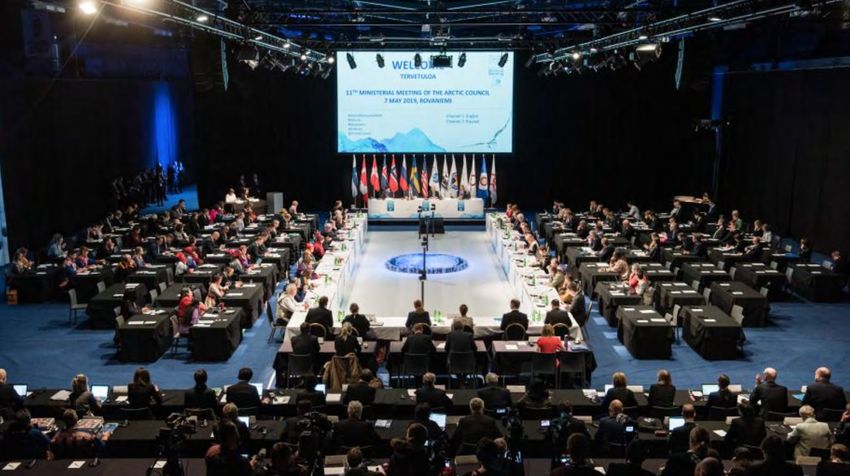
Report sponsored by the Norwegian Ministry of Defense.

                 CLIMATE CHANGE AND
                SECURITY IN THE ARCTIC
                                                      JANUARY 2021

  This report should be cited as: “Climate Change and Security in the Arctic.” A product of The Center for Climate and Security
  (CCS), an institute of the Council on Strategic Risks (CSR), and The Norwegian Institute of International Affairs (NUPI).
  Authors: Sherri Goodman, Kate Guy, Marisol Maddox (CCS); Vegard Valther Hansen, Ole Jacob Sending, Iselin Németh
  Winther (NUPI). Edited by Francesco Femia and Erin Sikorsky (CCS). January 2021.

  © 2021 The Center for Climate and Security (CCS), an institute of The Council on Strategic Risks

Cover Photo:
Listening post and Norwegian coast guard in Svalbard, Norway.
Neil Moralee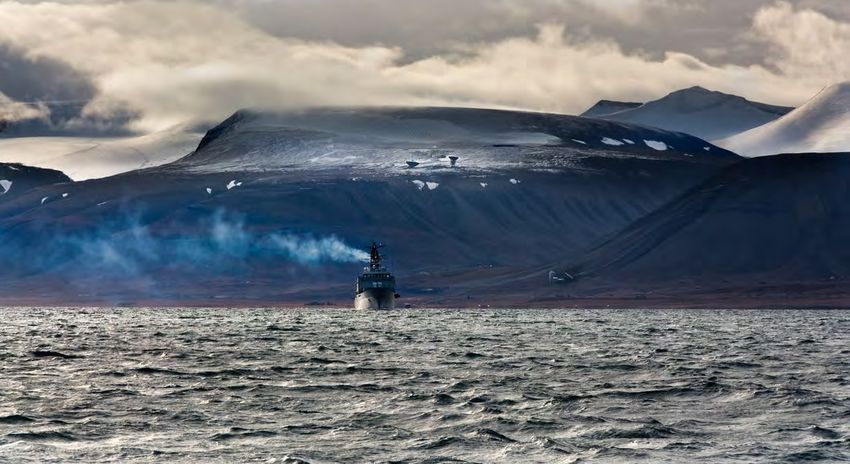
CONTENTS

  4    EXECUTIVE SUMMARY

  6    INTRODUCTION: CLIMATE CHANGE IN THE ARCTIC

  8    CLIMATE SECURITY SCENARIOS

  10   CLIMATE IMPACTS ON INFRASTRUCTURE AND
       COMMERCIAL ACTIVITY

  14   CLIMATE IMPACTS ON INSTITUTIONAL CAPABILITIES

  18   CLIMATE IMPACTS ON MILITARY OPERATIONS

  20   CONCLUSION

                         The Council on Strategic Risks
           1025 Connecticut Ave., NW ∙ Suite 1000 ∙ Washington, DC 20036   3
                          www.councilonstrategicrisks.org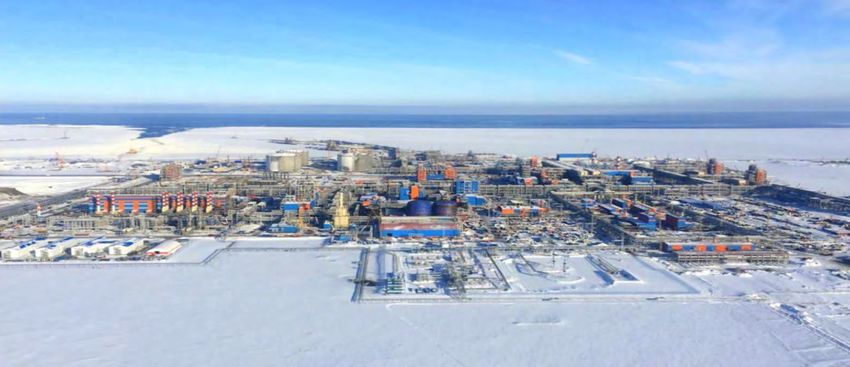
EXECUTIVE SUMMARY

 Across the world, climate change already poses severe threats to the natural and human systems on which
 security depends. These changes are of acute concern in the High North, the geography of land, sea, and ice that
 lies above the Arctic Circle.

 The temperatures in the Arctic are rising faster than any other area on earth, causing permafrost thaw, ice melt,
 rising sea levels, and more frequent and extreme weather. As a result, there is increased interest in how these
 changes will affect the security situation in the Arctic. This report identifies key climate trends and their security
 implications by the year 2030, from the Norwegian perspective.

 Our analysis relies on two different scenarios of global climate change to compare these effects: one in which humans
 substantially curb climate-change causing emissions (Curbed Warming) and one in which they do not (Uncurbed
 Warming). These two scenarios do not diverge substantially in terms of the direct climate change impacts faced in
 the Arctic in the next few years. However by 2030, it will be increasingly clear which future climate trajectory is more
 likely, allowing for planning for two significantly different Arctic climate security realities in the decades to follow.

 Our Curbed Warming Scenario describes a future of a relatively swift transition to renewable energy, as the world
 works to constrain global warming to below 2°C from pre-industrial levels (the 2015 Paris Agreement target).
 In this scenario, melting ice, sea level rise and extreme weather will significantly impact the Arctic, but are likely
 to happen at a more manageable pace compared to the Uncurbed Warming Scenario. Further, climate change
 mitigation policies aimed at a swift reduction of emissions may result in new political dynamics, economic
 shifts, and so-called “stranded assets” for Russia and other fossil fuel-dependent economies. However, climatic
 changes in the Arctic in this scenario will have both regional and global consequences, which could drive broader
 international security risks with highly uncertain consequences.

 The Uncurbed Warming Scenario describes a future where emissions have not been constrained, and the globe is
 on track to well above what climate scientists deem “safe” levels of warming. In the Arctic, temperatures could rise
 as much as 3-5°C by mid-century, and as much as 9°C by 2100, compared to pre-industrial levels.1 This level of
 swift warming, due to the lack of a global energy transition, would create an ice-free Arctic for much of the year,
 rocked by rapid environmental changes, and crowded with commercial shipping, drilling, mining, and potentially
 military activities. The most intense climate impacts of this scenario will begin in the next decade, and become
 increasingly severe approaching mid-century and beyond. In this scenario, the most significant security risks are the
 destabilization of security infrastructure in the region, the opportunities for more aggressive or accidental interaction
 of militaries and commercial interests; and the lack of institutional capabilities to handle the rate of change.

 From the perspective of the Norwegian security and defense apparatus, the security risks associated with a warmer
 Arctic must be layered on top of the already intensifying tensions projected for the next decade in the High North.
 Increasing threats of kinetic warfare, commercial competition, and demand for search and rescue is likely to put strains
 on military operations in the region under both climate scenarios. Moreover, existing infrastructure in the region will
 deteriorate due to extreme weather, and existing institutional frameworks (e.g. UNCLOS) and capabilities (e.g. Arctic
 Council) have not been designed or empowered to manage the new security challenges caused by climate change.

 One need look no further than the Arctic island of Svalbard to understand how climate change and security risks
 are together destabilizing infrastructure and institutions. Interest in access and control to the port, including by
 Russia and China, is leading to more commercial activity around the island, as well as more aggressive military
 and diplomatic posturing. As warming increases, particularly if fossil fuel interests in the High North do not
 eventually wane, Svalbard could become a more contested area.

                                            The Council on Strategic Risks
                             1025 Connecticut Ave., NW ∙ Suite 1000 ∙ Washington, DC 20036                                   4
                                             www.councilonstrategicrisks.org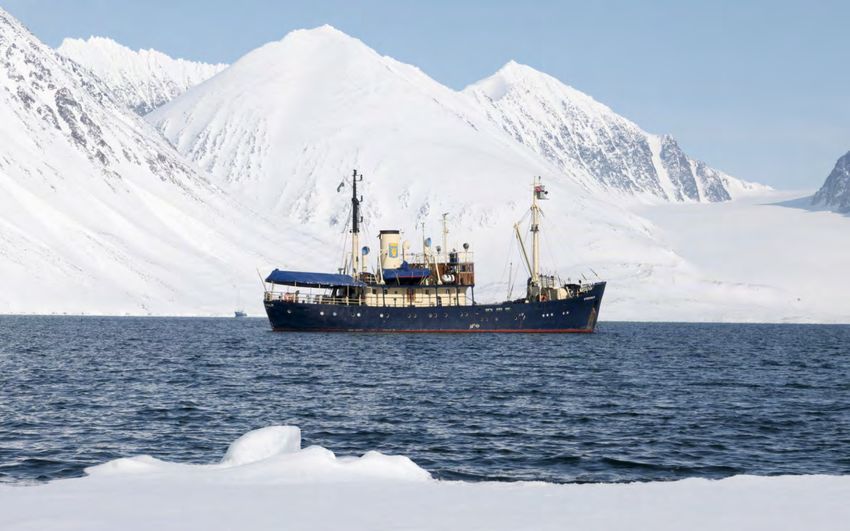
With protection of expanding commercial interests across the Arctic of increasing importance, and
distinguishing between defensive and offensive realities more difficult, the Arctic region could see accidents or
misunderstandings more easily leading to escalation of conflicts. These activities and tensions will be present in
both climate scenarios, but more acute under the Uncurbed Warming Scenario.

There are five key takeaways resulting from our analysis:

1. A warmer Arctic will lead to more commercial and civilian activity, rendering the Arctic increasingly
    navigable, and more prone to accidents and misunderstandings between major players.

2. Increased commercial activity significantly expands the likelihood of states like Russia and China using
    civilian and commercial actors as vehicles for strategic positioning and for gray zone operations which may
    escalate to direct confrontation.

3. The institutions that have helped depoliticize and produce stability in the Arctic for several decades may not be
    resilient enough to withstand new demands resulting from climate change, as climate change introduces significant
    uncertainties about established rules and norms, and may open the door to politicization of existing institutions.

4. To manage in a more complex operating environment in the Arctic, with ever more state and non-state
    actors, governments will need an integrated toolbox that includes legal, economic, diplomatic, and military
    instruments. Robust mechanisms for cooperation and communication with civilian and commercial actors
    will be particularly useful.

5. States are likely to place higher demands on their military forces in the Arctic, particularly as regards to monitoring
    and assertions of sovereignty, given higher levels of overall activity in the region. New climactic realities may also
    reduce the constraints for force projection in the region. At the same time, over-reliance on military approaches
    in the region could risk escalating conflicts.

Against this backdrop, a key recommendation for the Norwegian Ministry of Defense is to carefully consider its
opportunity to approach its American counterparts at the start of a new US Administration. As President-elect,
Joe Biden has pledged to advance rapid decarbonization and diplomacy to confront the climate challenge world
wide, including on climate security risks. He has likewise pledged to expand cooperation in the Arctic region,
and together with similar goals expressed by NATO and EU member states, new opportunities to confront
climate security risks in the Arctic could be dawning.

Should the Norwegian Ministry of Defense ask the US to advance a Military Code of Conduct for Arctic Forces,
or other form of renewed dialogue among Arctic security forces, the new Biden Administration is likely to
seriously consider these opportunities. As historic precedent, when the Norwegian Minister of Defense in 1994
requested that the US Secretary of Defense engage Russia in Arctic Military Environmental Cooperation, this
request became the basis of a decade long effort to reduce the risk of liquid waste streams from decommissioned
Russian submarines in the Kola Peninsula. Norway may again have such a moment, when its priority can shape
the direction of Arctic security for the coming decades.

Overall, the difference between a low or high warming scenario will be the difference between a changed world to
which states can adapt or a world in which states are constantly scrambling to keep up with escalating and destabilizing
change. These dramatic changes will be felt early, and perhaps most acutely in the next few years, in the Arctic. How
states respond to threats and alter their behaviors to mitigate risks in the High North will reverberate globally.

                                           The Council on Strategic Risks
                            1025 Connecticut Ave., NW ∙ Suite 1000 ∙ Washington, DC 20036                                    5
                                             www.councilonstrategicrisks.org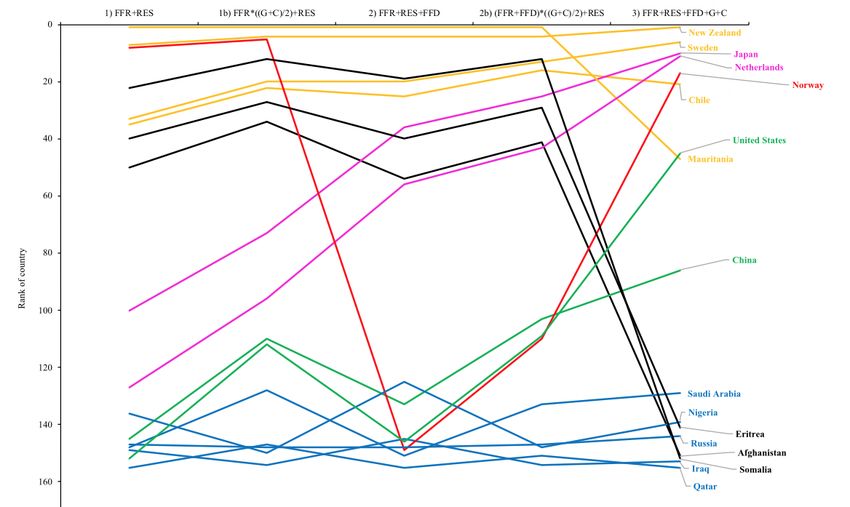
INTRODUCTION: CLIMATE
CHANGE IN THE ARCTIC

 As the world’s climate increasingly warms due to human activities, the climate across the High North region
 is changing rapidly. As of the summer of 2020, the earth had warmed an average of 1.1 °C from pre-industrial
 times, while the Arctic region experienced an average of 2.3 °C in warming from the 1970s alone.2 With these
 temperature anomalies have come other extreme events across the region, including rapid permafrost thaw,
 increased and enduring wildfires, sea ice decline, and shifting ecosystem dynamics.

 As the climate and environmental realities of the High North shift, so too are regional interactions in this
 increasingly navigable space. Such shifts are already palpable and by as soon as the next decade could define
 a new operational reality for militaries in the region. Several forecasts indicate that the Arctic will begin
 experiencing ice-free summer months as soon as the 2030s.3 The opening of northern maritime routes will have
 large implications for shipping and economic activities, with an open Northern Sea Route (NSR) route between
 the European and Asian continents projected to reduce transport times by up to 40 percent.4 These changes are
 also presenting new security realities, including the potential for increased drone, submarine, and intelligence-
 gathering activities, and concerning signs of a strategic capabilities arms race starting in the region.

 How exactly climate change might impact security outcomes in the Arctic, particularly in the near-term window
 of the next decade, depends on a number of causal factors of varying levels of uncertainty, including: the
 speed and nature of regional environmental change; the ambition of global mitigation efforts to curb climate
 pollution; and the actions of governmental and non-governmental actors to advance their interests in the region.
 The effects of these changes on security will be felt across a few response variables which this study analyzes. The
 report sets out from two future scenarios for understanding climate and security implications in the Arctic: one
 in which the world pursues aggressive climate change mitigation (Curbed Warming Scenario), and the other
 in which few attempts are made to shift global economic systems away from fossil fuels (Uncurbed Warming
 Scenario). By comparing these two scenarios across a range of dimensions focused on i) commercial activity and
 infrastructures, ii) institutional frameworks and distributional effects, and iii) military and operational issues,
 the aim is to provide a realistic assessment of how climate change will affect security dynamics in the Arctic and
 its implications for Norway.

 How climate change will concretely affect Norwegian security in the Arctic will depend on a range of factors.
 These include geopolitical developments, some of which proceed independently from the physical effects of
 climate change, but they also include the effects of political efforts to curb climate change emissions.5 For
 example, will the EU succeed in shifting to a renewable resource base by 2050? How will the Russian and
 Norwegian economies be affected by a more permanent fall in oil prices? These economic and political variables,
 which are ultimately determinants of the security situation in the Arctic, must be considered in conjunction
 with the physical changes caused by climate change.

 Against this backdrop, the report focuses on the direct, physical effects of climate change and what these mean for
 both military and economic infrastructures in the Arctic, while also assessing likely broader political-economic

                                          The Council on Strategic Risks
                            1025 Connecticut Ave., NW ∙ Suite 1000 ∙ Washington, DC 20036                               6
                                           www.councilonstrategicrisks.org
effects of climate change. For example, one of the most important determinants of Norwegian security in the
       Arctic region relates to developments in Russia. A key question is how a global shift towards renewable energy
       will affect the Russian economy and how this, in turn, will shape its ability and willingness to project force in
       the Arctic.

       To manage the considerable uncertainty about likely or plausible future developments, we rely on scenarios.
       These scenarios are identified using the scientific projections of future climate change, but we expand on these
       to identify political dimensions and security dimensions in each scenario. In this, we follow the methods used in
       other research and official reports, such as that of the Norwegian Climate Risk Commission,6 the International
       Military Council on Climate and Security,7 the Center for Climate and Security’s National Security, Military,
       and Intelligence Panel on Climate Change,8 and the NUPI-Wilson Center report on Arctic Security.9 Each
       scenario is not an exact description of the world to come, but a snapshot of how things might look a decade
       from now if certain trends develop in likely ways. They should be used as a planning instrument to better
       understand how different risks interact and impact security futures in the Arctic region, and globally.

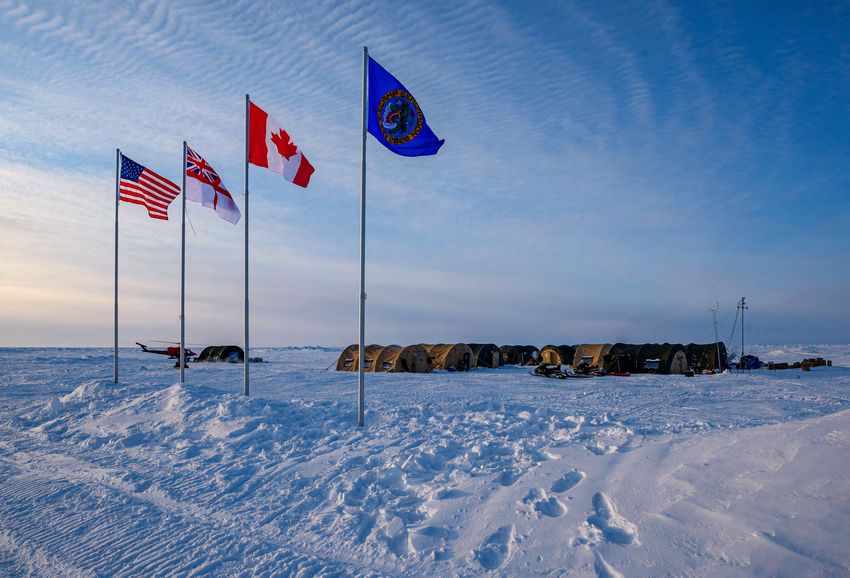
Partner nation's flags fly over Ice Camp Seadragon during Ice Exercise (ICEX) 2020.
U.S. Navy photo by Mass Communication Specialist 1st Class Michael B. Zingaro / Flickr

                                                  The Council on Strategic Risks
                                   1025 Connecticut Ave., NW ∙ Suite 1000 ∙ Washington, DC 20036                           7
                                                   www.councilonstrategicrisks.org
CLIMATE SECURITY SCENARIOS

 Whether humankind allows global temperatures to rise as high as 3.2°C from pre-industrial averages by 2100,
 as current trajectories predict, or limits the temperature increase to 1.5°C above pre-industrial levels, as the
 2015 Paris Climate Agreement commits, will make a considerable difference for long-term climate security
 challenges, though the fate of the next decade is relatively locked in by past greenhouse gas emissions. This is
 because these two scenarios do not diverge significantly in terms of temperature change or physical impacts
 until the decades following 2030. However, the next decade is crucial for setting the warming path to 2050
 and beyond; the IPCC cautions that by 2030 the world must achieve an average 45 percent global reduction
 in greenhouse gas emissions to be on track to become net-zero by 2050--the target needed to meet the Paris
 goal. Thus, soon, we will know which trajectory is most likely: one that points towards a successful transition
 to reduced climate emissions and a warming of around 1.5°C degrees (Curbed Warming Scenario), or one that
 leads to a higher level of warming with much more dramatic effects (Uncurbed Warming Scenario).

 To achieve the curbed climate change scenario, new and comprehensive climate policies must be quickly
 implemented, and new economic and distributional consequences will follow. For example, a rapid shift from
 fossil fuels to renewable energy is likely to lead to a reduction in the value of petroleum resources (so-called
 “stranded assets”), with significant economic consequences for fossil fuel-dependent economies.10

 Uncurbed climate change will likely cause significant economic effects in the long term. This scenario would
 likely alter the security priorities of many states as global economic markets are impacted by more frequent and
 severe climate impacts, and could lead to an increase in Russian force projection in the Arctic.

 In both scenarios, it is likely that investments in and maintenance of infrastructure will increase due to changes
 in weather conditions, and that transport, commercial activity (fish, minerals, and oil and gas) and military
 activity will increase---and there are strong signs that these trends have already begun. The rise in commercial
 and military activity is likely to increase the risk of misinterpretation and miscommunication, which could lead
 to accidents and threaten infrastructure safety.11

 The analysis underlying these scenarios is based on a triangulation of sources. Most importantly, we rely on
 scientific climate research to understand the potential differences between the curbed and uncurbed warming
 trajectories and to identify probable developments and risks associated with each scenario towards 2030. The
 focus on 2030 is informed by considerations of the time horizon for military planning. To compare these
 scenarios, this report draws on existing studies of climate change impacts in the Arctic, including on the US
 military.12 In addition, the report draws on the GeGaLO index13 that assesses gains and losses of a green energy
 transition, coupled with other analyses focused on economic gains and losses for different countries due to
 climate change.14 We also draw from international climate security institutional analyses to understand impacts
 at the systemic level.15

 In sum, the methodology is to extrapolate differences from Curbed and Uncurbed warming futures, and to
 identify the operational, infrastructural, and institutional-distributional effects that these scenarios will have on
 security in the Arctic region by 2030. We stress that while in both scenarios there are both negative and positive
 security effects of climate change, the negative effects significantly outweigh the positive when understood from
 the perspective of cumulative and destabilizing effects. It is necessary to use these two scenarios as one input
 among many, and a means of looking more specifically at the implications for Norwegian security in the region.

                                          The Council on Strategic Risks
                            1025 Connecticut Ave., NW ∙ Suite 1000 ∙ Washington, DC 20036                                8
                                            www.councilonstrategicrisks.org
CURBED WARMING SCENARIO
This scenario is based on a world in which global mean temperatures are kept to around or under 2°C of
warming from pre-industrial levels. In the Arctic, continued sea ice melting will occur by the timeframe of
2030, with a moderate rise in sea levels and gradual opening of sea routes, especially in the summer. Fish and
seafood stocks will be impacted by northern migrations and acidification. Economic exploration of the Arctic
increases, but the value of oil and gas resources in the region will be less certain, significantly impacting the
Russian economy, but also the economies of Norway and other Arctic states. The effects on military relevant
infrastructures are serious, but manageable. Operational challenges for force projection will require adaptation
within existing platforms. Under this scenario, the political landscape will likely shift in the direction of more
cooperation on climate change, and the expectation is that success in curbing emissions will yield higher trust
among states. However, the transition away from non-renewable energy will be costly and unevenly distributed,
which may cause friction and political tension between and within key states.16
UNCURBED WARMING SCENARIO
In this high emission, low mitigation scenario, human-caused emissions are not dramatically changed from their
current trajectory, and global mean temperatures are on track to rise well above 3°C by the end of the century.
In the Arctic, these changes are felt more rapidly, leading to extensive ice melting, rising sea levels, and ice-free
summers in just a few decades. These changes may lead to a relatively short-term burst of economic activity in
the area, with shipping and oil and mineral exploration, as well as more fishery activity. However, there will be
uncertainty about long-term economic investments as ecosystems become more unstable. Adaptation to climate
change will be costly, and increasingly so over time. Demand on security services for both force projection and
search and rescue operations will increase, including possible contestation over sea routes and economic zones.
Increased tension between states is also likely, as the cost of managing climate change grows. Institutions for
international cooperation will likely lack the capability to manage the results of climate change.
As presented in Figure 1, below, the two scenarios are quite different in terms of their effects on the broader
political context in which Arctic security must be assessed. These effects are identified here as a frame for
the subsequent detailed discussion below of commercial and infrastructure developments, institutional and
distributional challenges, and military and operational issues.
F igure 1: S ummary of C limate S cenarios
Curbed Warming Uncurbed Warming
Climate change regime Low emission/high mitigation High emission/low mitigation
Direct effects of climate change Moderate/manageable Significant/dramatic
Effects of climate change Costly and potentially politically Small climate policy adjustments, long term
policies for Norway difficult energy transition. radical political and security effects.
Effects of climate change Owners of non-renewable Owners of non-renewable resources maintain
policies on global political resources lose political power. economic position in the short/medium turn,
context Global context characterized by but intensified political pressure produces
friction and debates over burden- rapid shifts in economic-political power.
shifting and institutional change. Global turmoil and high levels of institutional
uncertainty hinder efforts to manage
dramatic effects of climate change.
The Council on Strategic Risks
1025 Connecticut Ave., NW ∙ Suite 1000 ∙ Washington, DC 20036 9
www.councilonstrategicrisks.orgCLIMATE IMPACTS ON
INFRASTRUCTURE AND
COMMERCIAL ACTIVITY
One of the more direct and noticeable effects of climate change will be on infrastructure in the Arctic. As
warming intensifies, commercial activities will also increase, subsequently increasing demand for patrolling and
introducing new actors to the region. Below, we discuss the Northern Sea Route, effects on development and
maintenance, and increases in commercial activity as a result of climate change.
THE NORTHERN SEA ROUTE WILL INCREASE IN IMPORTANCE
There has been much discussion of the economic and strategic potential for the Northern Sea Route (NSR), as
it reduces costs and time of sea transport from Asia. Even under our Uncurbed Warming Scenario, however, the
Northern Sea Route is unlikely to emerge as a real competitor to southern sea routes such as the one that transits
the Suez Canal. The risks and associated costs will remain considerable under both scenarios.17 Even so, the melting
of ice has and will continue to increase commercial activity in the Arctic. China, for example, is interested in
developing the NSR as part of its “Polar Silk Road,” linked to the Belt and Road Initiative. Future ice melting will
extend the period each year in which NSR risks are manageable, leading to an increase in the use of the route. One
constraint that will remain unchanged, however, is the seasonal variation in sunlight, including the persistence of
Polar Night where the region is in perpetual night for extended periods of time, increasing operational complexity.
We note that there is a significant – and politically important – difference between transit cargo and destination
cargo via the NSR. It is the latter that has placed the NSR as a possible game changer for international transport,
with clear commercial and also security implications for Arctic states, including Norway. Figure 2, below, shows
that after an initial increase in transit cargo in 2012-2013, almost all of the increase in cargo using the NSR is
destination cargo, with ships transporting supplies to infrastructure projects and gas installations in the Arctic.
During this time period, the primary drivers were Russia's Yamal LNG facility, in which China and France both
own a stake, and the construction of the Sabetta Port.
Figure 2: Cargo tonnage in the Russian Arctic, 2010-2019 18
10The Yamal Liquified Natural Gas Plant, Sabetta, Russia. Yamal LNG.
Russian authorities expect destination cargo to reach around 75 million tons per year by 2025, a three-fold
increase from 2019. Again, the big driver is the planned expansion of LNG infrastructure: The Russian company
Novatek, aided by the Russian government through tax breaks and regulatory support, is planning new plants
close to the existing Yamal plant, aiming to make the Russian Arctic a zone for gas production and export on
par with Qatar and the United States.19
At the same time, growing public and corporate awareness about the risks and environmental impacts of expanded
shipping in the Arctic could act as a potential counterweight to these trends. For example, support may increase
for initiatives such as The Arctic Shipping Corporate Pledge, a voluntary commitment of companies to not send
ships through the Arctic region.
Given that ever more private actors have significant stakes in the Arctic, and we can observe a trend toward
private regulatory efforts on climate issues in general, such initiatives are not without importance, also in the
context of debates about security issues.20 These developments raise important questions about the interface
between military, civilian and commercial actors in the overall management of security in the Arctic, an issue to
which we return below under military operational issues.
REGIONAL COMMERCIAL ACTIVITY INTENSIFIES
With increased temperatures, ice melt, and accessibility, commercial activity in the Arctic will intensify. As noted
above, the emissions over the next decade will be crucial in determining whether climate changes will follow a
Curbed or an Uncurbed Warming Scenario. Thus, by 2030, one of the scenarios will be much more likely than
the other, with important effects on investment decisions for future economic activity and also for how, and
where, infrastructure will be built in the Arctic. There is already increased economic activity, mainly in oil and
gas. But mineral extraction, including potentially sub-sea extraction, commercial fishing and tourism are also
emerging as areas for commercial expansion.21 There are considerable differences among the Arctic states in how
important Arctic economic activity is for the country as a whole, with Russia by far the most reliant. Whereas
The Council on Strategic Risks
1025 Connecticut Ave., NW ∙ Suite 1000 ∙ Washington, DC 20036 11
www.councilonstrategicrisks.orgthe US Arctic accounts for 1% of US GDP, the Russian Arctic accounts for around 20% of Russian GDP.22 The
Russian Arctic economy is significantly larger than the Arctic economies in Canada, Norway, and Finland as
well. The sectors which dominate the respective Arctic economies vary; oil and gas extraction minerals, fisheries
(harvest, farmed, processing), and resource sectors each play significant roles in different states.23
Under the Curbed Warming Scenario, the world moves away from fossil fuels toward renewable energy, whereas
in the Uncurbed Warming Scenario, oil and gas remain central. How these two different scenarios will affect
global oil prices, and more regionally determined gas prices, is uncertain.24 It is therefore difficult to assess how
climate change will affect oil and gas activity in the Arctic over the next decade, but given the increase in global
demand for energy, the assumption here is that – ceteris paribus – the Uncurbed Scenario would increase oil and
gas exploration in the Arctic. Investment decisions made during the next decade will have a significant impact
on the patterns of pipelines, ports, and installations in the Arctic in the longer term.
The extent to which warmer temperatures will affect commercial fishing is also uncertain. One report notes
that while “large commercial harvests in future accessible areas of the Arctic Ocean are not likely, at least not in
the next 10–20 years,” there is also potential for increased activity as states expect migration of fish northward,
and possible development of harvesting further north.25 Given the extent of fishing already conducted in the
Arctic by both Arctic and non-Arctic states, it is likely that increased commercial activity will further strain the
monitoring and enforcement of existing regulatory agreements.26
INFRASTRUCTURE COSTS WILL INCREASE, NECESSITATING NEW PLANNING AND INVESTMENTS
One of the more direct and noticeable effects of climate change will be on infrastructure in the Arctic. As detailed
above, states and private companies are likely to expand infrastructure development as warming occurs, including
plants, pipelines, ports, roads and railroads. Also, the region is already home to critical telecommunications
infrastructure such as SVALSAT (owned jointly by the Kongsberg Group and Norweigan Space Authority),
which includes fiber optic cables between Svalbard and mainland Norway, and satellite coverage of fourteen
polar orbits. The costs of maintaining such infrastructure will increase with warmer temperatures and more
extreme weather, such as heavy rain which causes flooding, melting of permafrost, rising sea levels, and stronger
winds. One recent report, focused principally on permafrost thaw, concludes that climate change could lead to
“a 27% increase in infrastructure lifecycle replacement costs across the circumpolar permafrost regions.”27 This
will imply a significantly higher cost of building and maintaining the necessary military infrastructures in the
region. In the Curbed Scenario, these costs will be significantly lower, given that the predictability of weather
systems in the Uncurbed Scenario is much lower, with much more extreme weather expected.
INCREASING RISK OF GRAY ZONE OPERATIONS, BUT OPPORTUNITIES FOR COOPERATION RISE
The likely increase in commercial and civilian activity in the region under both scenarios will have direct and
indirect consequences for Norwegian security. On the one hand, increased commercial activity increases the
demands on the military to monitor and patrol the Arctic. This is especially important because we know from
other theatres – e.g., Georgia andUkraine – that military tactics are evolving towards relying on hybrid and
“gray zone” operations.28 In a context of increased military and political tensions, it is likely that some states,
like Russia, may deploy commercial vessels and installations for military purposes. Further, increased activity
also makes the region more prone to accidents, which can not only lead to loss of life, but also be a source of
misunderstanding between states. On the other hand, increased commercial activity also provides the potential
for increased cooperation on technical and regulatory issues where the actors have some level of converging
The Council on Strategic Risks
1025 Connecticut Ave., NW ∙ Suite 1000 ∙ Washington, DC 20036 12
www.councilonstrategicrisks.orginterests in a shared governance regime, and to expand existing agreements and exercises on Search and Rescue
(SAR). Established by the Arctic Council in 2011, the Arctic SAR Agreement notes that “Parties shall ensure that
assistance be provided to any person in distress” but does not specify the resources that parties are obliged to
provide.29 A series of tabletop and live full-scale exercises has been conducted under the Arctic SAR Agreement
to date, and the Arctic Coast Guard Forum still includes active participation from all eight Arctic states, even
after Russia’s annexation of Crimea.
One clear impact of climate change is thus that the Arctic becomes more accessible for both military and
commercial activity, and that operations there will be more complex and costly due to extreme weather, increasing
unpredictability in conditions, and permafrost thaw. As we discuss in the next section, there are considerable
ripple effects for the institutional frameworks that govern activity in the area, and for the relevance and efficacy of
both civilian and military capabilities. In particular, we focus on how climate change introduces uncertainty about
the institutional fitness of existing governance arrangements, and about the capabilities shortfall when security
depends on managing a more complex set of activities and actors (both military and civilian) in the Arctic.
The archipelago of Svalbard is seen as a potential flashpoint between Moscow and the West as climate change has
opened up the region and Russia has built up its military presence. Christopher Michel / Flickr
The Council on Strategic Risks
1025 Connecticut Ave., NW ∙ Suite 1000 ∙ Washington, DC 20036 13
www.councilonstrategicrisks.orgCLIMATE IMPACTS ON
INSTITUTIONAL CAPABILITIES
Climate change will challenge established economic models for key Arctic states, and will also constitute a stress-test
on institutions tasked with promoting cooperation and security in the region. Globally, the rapid onset of the effects
of climate change is likely to put multilateral institutions under new strains over the next decade. These realities
could lead to a significant capability shortfall crucial for the provision of security in the Arctic and other regions,
including the strengthening of diplomatic engagement and conflict reduction mechanisms. As geopolitical tensions
grow, and climate effects intensify, the ability of states to collaborate and trust each other could further weaken.
International law, guided by treaties such as the United National Convention for the Law of the Sea (UNCLOS),
provides a stabilizing force in the Arctic, and Arctic nations continue to have common interests in this stability
and the rule setting it provides. There is no legal vacuum in the Arctic. However, resolving international legal
disputes in the Arctic can be a lengthy process---such as the process for resolving maritime boundary disputes-
--is in some ways evidence of the stability of the regime, as the requirement to provide evidentiary support for
the claims and to have a thoroughly adjudicated process evinces the wheels of justice at work.
A high emissions scenario may portend immense challenges to the legitimacy not only of states as they struggle
to manage the demands of a world experiencing the destabilization of multiple complex systems. This may then
challenge the legitimacy and the perception of higher order multilateral institutions (such as The International
Tribunal for the Law of the Sea, an independent judicial body established by UNCLOS) to remain effective.
If institutions tasked with providing global or regional stability in the Arctic fail to respond to the rate of
change, they could likewise face increasing politicization and gridlock, as can be observed in many other
global institutions such as the World Trade Organization. Shortfalls in the capabilities of the NATO alliance
or the Arctic Council may undermine member countries' political and defense abilities. Growing political
divisions within countries, particularly democracies, are beginning to threaten the consensus at the heart of
multilateral security cooperation and international institutions. Grievances among affected populations, be they
the vulnerable geographies of northern indigenous communities or the wealthy elites owning coastal properties,
could be further mobilized by actors adversarial to Arctic stability.
The implications of the Curbed and Uncurbed Warming Scenarios for the likely resilience of international
governance are hard to assess given the uncertainties involved. Some analysts argue that climate change may
unleash a perfect storm of intractable problems, destabilizing the foundations on which the modern state system
is based. One report notes, for example, that “seemingly stable states can be overburdened by the combined
pressures of climate change, population growth, urbanization, environmental degradation and rising socio-
economic inequalities.”30 The same stressors experienced by the state would influence the efficacy and legitimacy
of multilateral institutions, which are key to a stable and conflict-free Arctic.
We seek to assess the impact on institutions by providing a description of existing mandates and capabilities in
light of the challenges that are likely to emerge with climate change. Moreover, the distributional and economic
risks associated with our two scenarios depend on the future of global demand for oil and gas, new technological
advances in carbon capture and storage and renewable energy, among many other factors. For distributional
The Council on Strategic Risks
1025 Connecticut Ave., NW ∙ Suite 1000 ∙ Washington, DC 20036 14
www.councilonstrategicrisks.orgrisks, we rely on the GeGaLo Index, which assesses likely geopolitical gains and losses associated with an energy
transition, including “the changes in geopolitical power relative to the situation before the energy transition and
specifically related to energy resource access.”31
GROWING STRESS ON ESTABLISHED ARCTIC INSTITUTIONS
In both warming scenarios, it is likely that the combined pressure of managing climate change effects and other
security issues will increasingly stress the capabilities of the Arctic Council, NATO, the United Nations Security
Council, and other relevant regional and security institutions.
Since 1996, the Arctic Council has seen success as the premier intergovernmental forum to discuss Arctic issues.
In no small part, this success can be attributed to how member states have deliberately sought to depoliticize issues
and focus on technical cooperation.32 In either scenario, the Arctic Council is likely to have to expand its mandate
or seek partnerships with other intergovernmental bodies to remain relevant and effective. Several challenges are
likely to emerge, including negotiations of existing agreements and treaties on fisheries and biodiversity, marine
protected areas, the development of economic zones, and the freedom of navigation, among others.
In addition, increased commercial and military activity in the Arctic is likely to lead other organizations –
notably NATO, the EU, and the Nordic Council – to become more engaged in pushing new agendas. This
will complicate the development of new institutional arrangements, but may also lead to innovation in tools
to address new challenges. Private regulatory arrangements are likely to increase in importance, given the
importance of such mechanisms in climate governance.33
In a high emissions, Uncurbed Warming Scenario, the competition and efforts to shift costs and political blame
for the effects of climate change are likely to become much more intense. It is doubtful the rules and norms
of existing arrangements will be able to withstand and channel such developments in a direction that reduces
conflict. Rather, intense competition typically produces situations where states (mis)use established institutions
to weaken their opponents and gain advantages at the expense of institutional rules.34 This will likely apply to
the Arctic Council and a myriad of other key bilateral and multilateral regulatory arrangements.
To help manage these challenges, the eight Arctic nations would benefit from a venue for discussing hard security
issues. Prior to Russia’s illegal annexation of the Crimean region of Ukraine in 2014, Moscow was engaged in the
Arctic Security Forces Roundtable and the Arctic Chiefs of Defense--two fora for discussing hard security matters
with the 7 other Arctic nations. Following 2014, Russia was barred from both groups, which has resulted in a
lack of dialogue about regional military matters. This is increasingly problematic as military forces conduct more
training, exercises and operations in the Arctic, raising the risk of a potential misunderstanding, miscommunication,
accident, or spillover from another regional conflict.35 In either a low or high emissions scenario, military presence
in the region will continue to grow, so it would be useful to develop Track II dialogues as a step towards better
communication and reducing risk. Additionally, high level dialogues among civilian leaders of Arctic defense
ministries could become the basis for developing confidence building measures and early warning mechanisms.
NATO will continue to be the primary security guarantor for Norway, and NATO´s efforts to adapt to climate
change in the Arctic are already underway. A complicating factor is that NATO may not have the necessary political
and diplomatic tools at its disposal to successfully manage climate change issues, particularly given the increase in
civilian and commercial activity in the Arctic. The EU is arguably better positioned to shape the future trajectory of
climate-related issues in the region because it has more non-military instruments to deploy. Even so, the development
towards ever tighter military cooperation within the framework of the EU will be an issue in the Arctic.
The Council on Strategic Risks
1025 Connecticut Ave., NW ∙ Suite 1000 ∙ Washington, DC 20036 15
www.councilonstrategicrisks.orgArctic Council Ministerial Meeting, Rovaniemi, Finland, 2019. Jouni Porsanger / Ministry for Foreign Affairs of Finland
The increased investment in Nordic Defence Cooperation (NORDEFCO), as well as Sweden and Finland´s ever
tighter partnership with NATO,36 forms an integral part of the institutional framework of Norwegian security in
the Arctic and provides a solid platform for addressing climate-related challenges. NORDEFCO’s future strength
will likely be more greatly influenced by US and European Union political dynamics than by the different climate
scenarios. However, given the overlap between Arctic Council and NORDEFCO members, and the tradition of
cooperation within the Nordic region, NORDEFCO will likely emerge as an important platform for discussing
shared security interests in the Arctic.37 In the same vein, all Nordic states are members of the European Civil
Protection Mechanism and the NATO Euro-Atlantic Disaster Response Coordination Centre (EADRCC), both
of which could be strengthened in areas relevant to climate security such as civilian preparedness.
GEOPOLITICAL AND DISTRIBUTION EFFECTS OF CLIMATE CHANGE VARY BY SCENARIO
The GeGaLo Index (see Fig. 3) is based on a set of indicators to determine countries likely to emerge as geopolitical
winners and losers after a full-scale transition to renewable energy. Indicators used in the index include: fossil
fuel production, fossil fuel reserves, renewable energy resources, governance, and conflict. While these outcomes
will materialize beyond our report’s time frame by 2030, there will be clear indications whether the planet is on
a trajectory toward a full energy transition by the next decade. Figure 3 below provides a diverse picture of which
countries stand to lose or gain from a transition to a system more heavily based on renewable energy.
Of the 156 countries included in the study, Iceland stands to gain the most from a global energy transition,
while Norway and the US are likely to perform quite well despite their current reliance on oil and gas exports.
Russia (and a handful of other major oil and gas producers) stand to lose significantly, with China occupying a
The Council on Strategic Risks
1025 Connecticut Ave., NW ∙ Suite 1000 ∙ Washington, DC 20036 16
www.councilonstrategicrisks.orgFigure 3: The GeGaLo Index - Possible outcomes of green transition on economic resources for select countries38
position in-between. Perhaps counterintuitively, developments in Russia are arguably more negative under a
Curbed Warming Scenario than in an Uncurbed Warming Scenario, given that quickly constraining emissions
will require a swift economic transition with massive losses in fossil fuel-based income.
The distributional effects of climate change must also be assessed with a view to relations between states. There
is considerable debate on this topic, with some arguing that policies to mitigate climate change and a shift to
renewable energy will not affect fundamental geopolitical dynamics, whereas others see renewable energy as less
prone to politicization and securitization. Rothkopf, for example, notes that a new energy system will produce
“new types of conflict, controversies, and unwelcome surprises in our future.”39 Månson, in contrast, stresses
that the technical attributes of renewable energy as well as its wider geographical distribution, will reduce the
motivation to “weaponize” renewable energy.40 Valchuk, Overland and Scholten summarize this discussion by
noting that “the geopolitics of renewables will probably be different from the geopolitics of fossil fuels, regardless of
whether it is more peaceful or not,” suggesting that “energy- security concerns will generally shift from a strategic
emphasis on energy resources to a focus on energy distribution.”41 On balance, however, we judge climate change
will indirectly affect the distribution of valued assets, with Russia more vulnerable than most other countries given
that the Russian economy is so dependent on oil and gas. The security implications are difficult to pinpoint, but
an economically weaker Russia is likely to be more politically unstable, given the economic burdens of an aging
population, and a regime organized around a strong leader which makes power transitions more uncertain.42
Though Norway is in a stronger position than Russia given its more diverse and open economy it will still face
economic risks associated with climate change. The government-appointed Climate Risk Commission, whose
mandate was to assess economic risks associated with climate change, highlighted Norway’s dependence on
global economic trends, and noted that climate change will increase the risk of “political instability, humanitarian
disaster and violent conflict in and between states.”43 While these effects of climate change are beyond the scope
of this report, they matter to the extent that global political stability affects broader security dynamics, and
economic resources determine the ability to invest in military capabilities.
The Council on Strategic Risks
1025 Connecticut Ave., NW ∙ Suite 1000 ∙ Washington, DC 20036 17
www.councilonstrategicrisks.orgCLIMATE IMPACTS ON MILITARY
OPERATIONS
As noted in the introduction of this report, the potential for conflict in the Arctic is lower than in many other
parts of the world. However, with the changes brought about by climate change and rising geopolitical tensions
generally, the region’s stability is now much more uncertain than a few years ago. Russia's deteriorating relations
with the West and NATO, especially after the 2008 invasion of Georgia and worsened by the Ukraine conflict
in 2014, have strained its bilateral relations with Norway and neighboring countries. On the one hand, it
is expected that Russia will have an interest in good cooperation with other Arctic coastal states, including
Norway. This applies to areas such as fisheries supervision, maritime safety (including SAR-operations) and oil
spill preparedness.44 On the other hand, Russian military infrastructure and activity in the Arctic has increased
significantly in recent years, with a notable increase in frequency of military exercises and their proximity to
Norwegian territory and assets of importance.45 However, it is important to note that the Russian military
modernization on the Kola Peninsula and in other parts of the Arctic began prior to 2014.
As discussed in sections IV and V, above, climate change will lead to i) more commercial and civilian activity
in the Arctic, and ii) greater uncertainty about the ability of existing institutions to manage risks. When viewed
in the context of the increased military activity in the region, these developments may together produce a more
lasting security dilemma in the High North. This is because higher activity overall - commercial, civilian, and
military - may make it more difficult to discern intentions. This is perhaps most clearly expressed in the case
of Svalbard, which may become a greater vulnerability for Norway, as Russia, China, and other actors seek to
establish a stronger presence there and commercial, research and military interests intersect.
This is all the more important given that the rules governing the islands under the Svalbard Treaty are perceived
as insufficiently defined.46 There is disagreement about whether the Treaty extends to the continental shelf and
Exclusive Economic Zone surrounding Svalbard. Russia also has the option of using the protection of its own
national or economic interests as a pretext for intervention, possibly using gray zone operations as discussed above.
Of particular concern for gray zone conflicts are regions geographically separated from the rest of a country's
territory, or that have their own status under international law -- Svalbard is both.
An example of these dynamics is the Fisheries Protection Zone (FPZ) around Svalbard, established by Norway
in 1977, but which is contested by Russia. The Norwegian Coast Guard has enforced the FPZ by arresting
Russian fishing vessels, for example. In several cases – in 1998, 2001, 2005 and 2011 – these operations risked
escalation due to tense reactions both from fishermen and from Russian officials. In the past, Norway and Russia
have managed these volatile incidents by both sides recognizing their shared interests in reducing tensions. As
with other governance arrangements in the Arctic, climate change may alter economic and military stakes,
rendering the FPZ more fragile and increasing the potential for conflict.47
BALANCING MILITARY AND CIVILIAN ACTIVITIES
Russia’s military posture in the Arctic will continue to be shaped by climate change, alongside a changing
geopolitical environment. The state’s core security priorities in the region are organized around the maintenance
of sea-based nuclear deterrence and control over sea lanes in the North Atlantic. In addition, to ensure perimeter
defence of the Kola Peninsula for the survivability of second-strike nuclear assets, Russia’s ‘Bastion’ defence
concept consists of the projection of multi-layered sea denial and interdiction capabilities.
The Council on Strategic Risks
1025 Connecticut Ave., NW ∙ Suite 1000 ∙ Washington, DC 20036 18
www.councilonstrategicrisks.orgAnother Russian priority is to ensure the Northern Fleet’s access to, and passage along, the NSR from the
Atlantic Ocean to the Pacific Ocean. This has up to now been achieved through the development of military
infrastructure along the NSR. However, due to the receding ice caused by climate change, Russia is likely to seek
to assert increased control over a larger portion of its Arctic area that it deems to be part of its territory into the
future. Moscow has upgraded portions of its military, including the Arctic Brigade, to be “Arctic-capable” and
has developed concepts of operations tailored to that specific environment. Moreover, parts of the Northern
Fleet have provided military technology and training adapted to the Arctic environment to its forces.48 We have
also observed a substantial strengthening of multi-role submarines, for instance with a new submarine class
developed for operations in the High North (Severodvinsk-class).
The melting of the Arctic ice will increase access to new areas and open new possibilities for naval operations, but
will also reduce the ability of submarines to hide under the ice and diminish other kinds of underwater capabilities.
The melting of land-based ice is resulting in an influx of freshwater into the ocean, affecting overall salinity, with
implications for submarine operations and other underwater capabilities dependent on sonar and hydrophones.
These are examples of the known changes affecting the Arctic operating environment, but uncurbed warming and
rapid environmental changes will impact infrastructure and technologies in unforeseen ways.
These changing conditions are also rising to the strategic level. Exercises with and tests of strategic assets are
increasingly common, often accompanied by news coverage and other strategic communications efforts to
portray military might.
In an important sign, for years Russia has been expanding its cruise missile capabilities in the Arctic. In response,
the United States has stated the intention of building cruise missile capabilities into future Arctic Coast Guard
icebreakers. This sends a strong signal of how both countries view the strategic situation. Unless both countries
forego nuclear cruise missiles in the future, these weapons if deployed in the Arctic could introduce significant
ambiguity in the region, with both countries unable to distinguish if a cruise missile that is launched is carrying
a nuclear or conventional warhead.49
In this context, Norwegian and allied military and policy planners are faced with a delicate balancing act between
the need for upgrading plans and investments to adjust to a different and more active Arctic, while at the same
time avoiding security dilemma dynamics and maintaining the Arctic as a region of low tension. To achieve this
balance, an inclusive process to establish a regulatory framework guiding military security in the Arctic would be
stabilizing. Such a policy framework could help Norway and its allies in the region strengthen military security
and domain awareness in a careful way which is cognizant of sensitivities so as to not heighten tensions. This
could start with the creation of a “Military Code of Conduct for the High North.” It would send a powerful
signal that cooperation should remain an absolute priority for all Arctic states, and that maintaining the region’s
‘low tension’ status requires deliberate action and investments in institution-building to reduce uncertainty.
Norway’s strategic location requires a cautious approach as it seeks to signal peacetime control of the High
North to the rest of NATO, attract allies to train and exercise, and signal deterrence, restraint, and reassurance
to Russia.50 As military and civilian activity increases on the heels of a warming Arctic, and existing institutions
are not resilient enough to manage new challenges linked to climate change, it will be even more important for
Norway’s defence apparatus to have a coherent security policy that encapsulates the full spectrum of risks. In
operational-military terms, this also means investing in new guidelines on how to update and change operational
concepts as well as develop and introduce new and adapted technology. Additionally, developing a more robust
interface for cooperation with foreign, commercial, and civilian actors to manage accidents and crises in a way
that builds trust will be critically important.
The Council on Strategic Risks
1025 Connecticut Ave., NW ∙ Suite 1000 ∙ Washington, DC 20036 19
www.councilonstrategicrisks.orgCONCLUSION
As the High North becomes more accessible and gains strategic importance, it will play a critical role in regional
and global security relations in the years to come. Geopolitical tensions, institutions in various states of flux,
increased commercial, civilian, and military activity, and emerging threats to populations and infrastructure are
likely to pose significant challenges to stability in the region, particularly in an Uncurbed Warming Scenario.
At the macro-level, these risks are unfolding against the backdrop of accelerating climate change and increasing
global instability, which will challenge conventional methods of international cooperation. Climate change effects
will further exacerbate existing international cooperation challenges on trade, arms control, and cyber operations,
especially under an Uncurbed scenario. Climate change will also offer opportunities for cooperation on shared
risks, including with commercial and other non-state actors, as evidenced by the Paris Agreement and other
initiatives. In an era that is increasingly characterized by irregular warfare, however, part of the challenge will be
in balancing cooperation with an appropriate recognition of the risks of hybrid warfare and gray zone tactics.
These macro-level developments will affect security in the Arctic, where climate change serves as a multiplier of risks. In
a low emissions scenario, likely marked by high levels of multilateral cooperation on shared climate concerns, smaller
Arctic countries like Norway are likely to retain relative strength. In a high emissions scenario, climate change will rapidly
destabilize systems without the benefits of strong multilateral action, requiring states and other actors to take on higher costs,
deal with internal instabilities, and compete in new ways, all of which could be particularly dangerous to small countries.
Developments across 2021 and the early years of this decade will have profound implications on the direction of
security and stability in the region over the ten year time horizon of this report. With the election of U.S. President
Joe Biden, it is likely that an aggressive climate foreign policy agenda, with the overarching goal of curbing global
emissions, will be pursued by the United States. The global pressures of the coronavirus pandemic and related
economic crisis could produce significant green stimulus spending from the worlds’ major economies, as global
expectations also mount for countries to follow a path to reach carbon neutrality by mid-century. These growing
domestic and diplomatic mitigation commitments increase the likelihood of realizing a Curbed Warming Scenario.
Likewise, global commitments to better integrate climate change into security planning could be promising
for multilateral defense capabilities in the High North. President Biden has pledged to exert significant U.S.
diplomatic power in the Arctic region, which could be a stabilizing force and opportunity for the development
of new regional institutional capabilities. NATO has likewise begun new efforts to integrate climate into its
2030 strategic planning processes, and the EU is emerging as a more important actor to coordinate and mobilize
resources to mitigate and adapt to climate change in the region and abroad.
Given these opportunities and growing regional challenges, it is a key moment for the Norwegian Ministry of
Defense to advance new efforts to address the critical shortfall in capabilities and partnerships around climate
security in the Arctic. Dialogue will be critical among militaries operating in the region, and few rules or
institutions exist to resolve crises or misunderstandings that may arise alongside the changes caused by a warming
climate. Norway is well-positioned to establish new mechanisms of cooperation, and could readily advance a
Military Code of Conduct for Arctic Forces, as described in this report.
If Arctic tensions continue to grow in the years ahead, it will be increasingly important for security actors in
the region to prioritize understanding climate change in their forecasts and scenarios. It is clear from our initial
forecasting in this report that long-term security outcomes in the High North will significantly depend upon
success in efforts to curb global climate change. The current decade will be critical for determining which security
pathway the Arctic region will follow - one of cooperation, clean energy transition, strengthened institutions,
resilient infrastructure, and globally proportionate military activity; or one of rapidly escalating change, fossil fuel
demand, destabilized institutions, and high likelihood of short-term focused, aggressive commercial endeavors.
The Council on Strategic Risks
1025 Connecticut Ave., NW ∙ Suite 1000 ∙ Washington, DC 20036 20
www.councilonstrategicrisks.orgYou can also read


