CLOSE-UP: AVOCADO Doha non-agreement & the banana dispute European apple & pear harvest forecasts
←
→
Page content transcription
If your browser does not render page correctly, please read the page content below
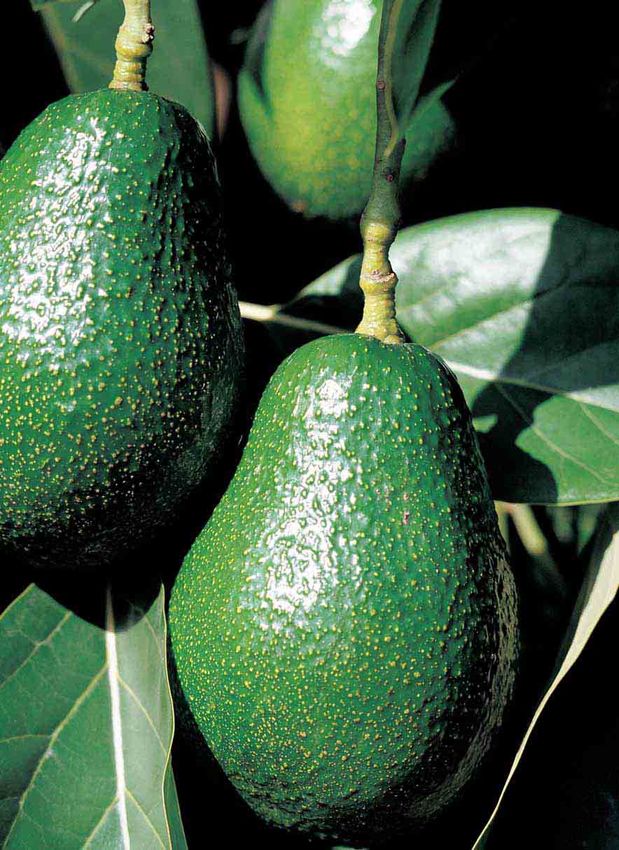
September 2008 - No. 159

                                                                                        English version

                                                                              CLOSE-UP:
                                                                              AVOCADO

                                                                              Doha non-agreement
                                                                              & the banana dispute
      http://passionfruit.cirad.fr

                                                                              European apple & pear
                                                                              harvest forecasts

Content published by the Market News Service of CIRAD − All rights reserved
> Leader européen en avocats sélectionnés avec soin aux quatre coins du
                                           monde : Israël, Mexique, Kenya, Chili, Pérou, République Dominicaine et
                                           Afrique du Sud.

                                         > En France, Dole commercialise plus de trois millions de cartons importés
                                           chaque année.

                                         > Un engagement de tous les instants pour offrir le meilleur des fruits et la
                                           plus grande diversité : Fuerte, Hass, Ettinger ou Ryan…
                                                                                                                         Conception TPC Tél. : 01 41 31 58 90

                                             Dole vous offre son savoir-faire marketing et une large
                                                    segmentation pour promouvoir l'avocat.
    ISO 9001 : 2000

Content published by the Market News Service of CIRAD − All rights reserved
   Dole France
   Cour d’Alsace - Bât. C6A - 94619 Rungis Cedex - Tél. : 01 56 34 26 26 - Fax : 01 56 34 26 99
   www.dole.fr
French Agricultural
                             Research Centre
                             for International Development
                             Performance of Tropical Production
                             and Processing Systems
                             Department
                                                                              “T        he term democracy contrasts historically
                                                                              with monarchical and oligarchical systems in which the power rests with
               Publisher                                                      and is transmitted by a small elite group”. This is the definition of democ-
               Cirad                                                          racy proposed in Wikipedia, the web-based encyclopedia. This simple,
               TA B-26/PS4                                                    straightforward and semantically clearcut sentence seems to be hard to
               34398 Montpellier cedex 5
               France                                                         interpret in the language of international trade in Switzerland—at least
               Tel: 33 (0) 4 67 61 71 41                                      with that of WTO members when they are in Geneva. By member, I
               Fax: 33 (0) 4 67 61 59 28                                      should specify that I am referring to the ‘most influential members’ of this
               Email: odm@cirad.fr
               http://passionfruit.cirad.fr                                   prestigious group.
               Publishing director
               Hubert de Bon                                                  The Doha Round of negotiations last July, involving ministers of the
                                                                              153 WTO member countries, provided further evidence of the democratic
               Chief Editors
               Denis Loeillet and Eric Imbert                                 shortcomings that prevail even within international institutions. Most of
                                                                              these negotiations were actually held in small working groups formed with
               Editor
               Catherine Sanchez                                              a scant number of ministers from a few G7 countries. We should never-
                                                                              theless be heartened by the fact that some emerging countries that were
               Computer graphics
               Martine Duportal                                               recently still in the developing stage—such as Brazil and India—will here-
                                                                              after be integrated in this ‘happy few’ group. But efficiency takes prece-
               Iconography
               Régis Domergue                                                 dence over everything else, of course. However, the other sovereign
               Website
                                                                              States and full members of the United Nations may still not be really
               Unité multimédia (Cirad)                                       pleased about this jumpseat. If only for this reason, the parties waiting in
               Advertising Manager
                                                                              the wings must have been delighted that these discussions failed.
               Eric Imbert
                                                                                                                                             Denis Loeillet
               Subscriptions
               Sylviane Morand
               Translator
               Simon Barnard
               Printed by
               Imp’Act Imprimerie
               34980 St Gély du Fesc, France
               Separate French
               and English editions
               ISSN
               French: 1256-544X
                                                                               C           ontents
                                                                               The latest on...
               English: 1256-5458
                                                                              p. 2    Doha non-agreement and the banana dispute
               CPPAP                                                                  Deus ex machina?
               French: 0711 E 88281
               English: 0711 R 88282                                                  Denis Loeillet
               © Copyright Cirad                                              p. 4    European apple and pear production
                                                                                      Prospects for 2008: open market for pear but keep an eye on
                            Subscription rate
                                                                                      apples
                             EUR 190 euros
                            11 issues per year                                        Cécilia Ceylerette
                                                                               Close-up by Eric Imbert
                                                                              p. 7    AVOCADO
               EURO - 23 September 2008                                               x The European avocado market: a 2007-08 balance marked by
                     Currency                      1 euro =                              a strong deficit from northern hemisphere production sources
              US dollar                               1.4731                          x Avocado production in Chile: continued dynamism
              Japanese yen                            155.42                          x Statistics panorama: world, EU, USA, Japan
              Swiss franc                             1.5926                          x Producer country sheets: Israel, Peru, Spain
              Pound sterling                        0.79505                           x Cultivation of avocado
              Swedish krona                           9.5924                          x Avocado varieties
              Danish krone                            7.4599                          x Avocado pests and diseases
              Norwegian krone                          8.215                          x Avocado post-harvest
              Canadian dollar                         1.5233
              Australian dollar                       1.7511                   European Market - June 2008
              New Zealand dollar                      2.1393                  p. 48   x   Indicators            x   Litchi
              Brazilian Real                            2.67                          x   Avocado               x   Mango
              Czech koruna                            24.143
                                                                                      x   Banana                x   Pineapple
              Polish zloty                            3.3116
                                                                                      x   Orange                x   Sea freight
              Chinese yuan renminbi                   10.037
                                                                                      x   Grapefruit
              Estonian kroon                        15.6466
              Slovak koruna                           30.285                          Eric Imbert, Pierre Gerbaud, Thierry Paqui, Richard Bright
              Turkish lira                            1.8295                   Wholesale market prices in Europe
              South African rand                    11.8953
              South Korean won                       1 692.0                  p. 59   June 2008
                      Source: Central European Bank
                                                                                 Cover photograph courtesy of Régis Domergue
Content published by the Market News Service of CIRAD − All rights reserved
            No. 159 September 2008                                                                                                                           1
THE LATEST ON...

            Doha non-agreement and the banana dispute

                                                                                                                  Deus ex machina?

                                                    T
                                       he WTO discussions that
                                       started in Geneva on 21
                                  July broke down on 29 July.
                                                                              which had been presented
                                                                              quite rightly as the subject of
                                                                              the most delicate negotiation.
                                                                                                                   Geneva in July had let to me-
                                                                                                                   diation by Pascal Lamy and
                                                                                                                   the proposing of EUR150 per
                                  The tenacit y—sometimes                                                          tonne on 1 January 2009 and
                                  bordering on stubbornness—                                                       EUR116 in 2016. In July, the
                                  of Pascal Lamy, Director of                                                      Latin American countries in
                                  the WTO, did not vanquish the                                                    the Tropical Products Group
                                  misgivings in very many coun-               Doubts with regard to                made a counter-proposal:
                                  tries with regard to opening                the partial agreement                EUR141 in 2009 and EUR109
                                          their economies a little            on banana                            in 2014. The ACP countries
               The impossible             more. For this fear was                                                  then replied by setting the
               agreement on the           the reason for the mul-             The question of the scheduled        starting point at EUR150 in
                                          t i l a t e r al a g re e m e n t   lowering of customs dues on          2009 and a decrease to
               Doha Round                 running aground.                    European banana imports              EUR116 in 2019. Finally, the
               negotiations of July Technicians explain                       from third countries (excluding      bargaining finished with a
               1998 blocks the            that it is a blockage on            ACP countries) would thus            compromise between the
               scheduled lowering a secondary theme,                          seem to be a file that closed        Latin American countries and
                                          that of SSM (special                provisionally. The satisfaction      the EU on the basis of
               of the customs             safeguard mecha-                    shown by the ACP countries           EUR148 in 2009 following a
               tariffs applied to         nisms) that allow de-               and EU producers is meas-            decrease ending at EUR114
               dollar bananas             velopment countries to              ured however as the defence          in 2016.
               imported to the EU.        raise customs tariffs               of the customs tariff of
                                          temporarily to handle               EUR176 per tonne is still topi-      The few ACP countries most
               This suits ACP and         an increase in imports              cal for them. Indeed, real pro-      concerned by this agreement
               community                  or a fall in prices. The            gress was made on the sub-           fear that this compromise may
               producers. But the         official line is reassur-           ject during the nine days of         serve as a basis for all future
               Geneva talks led to        ing and minimises the               discussions at the WTO and           discussion of the banana
                                          difficulties that remain            during pre-Geneva negotia-           question, quite apart from the
               a compromise               before the Doha                     tions. Thus, on 30 July, as          future of the Doha Agreement.
               between Europeans Round is finally com-                        soon as the ministerial meet-        The Latin American countries
               and Latin                  pleted. This grain of               ing was over, the Latin Ameri-       have played very well. They
               Americans. It              sand in the machinery               can countries profited from the      divided carefully in order to
                                          can also be seen as a               W T O Tr ad e Ne go tia ti on s      rule better, drastically reduc-
               remains to be              way for a majority of               Committee to deplore the             ing the number of ACP states
               known whether the          members to slow or                  overall breakdown but above          that feel concerned by the
               EU will wish to set        even halt the process.              all to congratulate themselves
               up a partial               Negotiators showed                  on the agreement with the EU

                                                                                                                                                     © Régis Domergue
                                          their relief when India             to settle 16 years of disagree-
               agreement in order         and the United States               ment on banana. However,
               to get rid of the          finally came head to                the European Commission
               whole business or          head and took the                   dampened the enthusiasm of
               wait for a                 blame for a failure that            dollar producers by stating
                                          everybody hoped for                 that the banana dispute is an
               hypothetical               but that nobody wished              integral part of the Doha
               resumption of              to endorse. Wrongly or              Agreement and cannot be
               multilateral               rightly, the globalisa-             removed and signed sepa-
               negotiations.              tion of economies                   rately. The risk for the EU is to
                                          seems to be the sacri-              have to further lower the cus-
                                          ficial victim for the diffi-        toms tariff on the occasion of
                                  culties of small peoples to                 a possible completion of the
                                  develop at best or even, for                Doha Round or the bloc by
                                  some, to succeed in feeding                 bloc (CACM, Andean Commu-
                                  themselves. Phew! The EU                    nity or Mercosur) conclusion
                                  will not take the blame and                 of bilateral agreements.
                                  neither will France, very upset
                                  with the European Commis-                   However, the dossier did not
                                  sioner Peter Mandelson and                  lead to forecasting a possible
                                  with Pascal Lamy. And blame                 compromise. The preparatory
                                  will not be laid on bananas                 discussions for the meeting in

Content published by the Market News Service of CIRAD − All rights reserved

            2                                                                                                           September 2008 No. 159
THE LATEST ON...
of the ACP states and their growers at a high-
level meeting with Michel Barnier, the French
minister of agriculture, in Paris on 30 April 2008.
They joined a few ACP states in Yaoundé
(Cameroon) at the end of August to state once
again their solidarity as regards the defence of
the customs tariff. They also encouraged the
Commission not to give up and to appeal against
the conclusions of the panels formed at the re-
quest of Ecuador and the United States. Indeed,
at the end of 2007 the EU had be condemned to
ensure the conformity of its market with interna-
tional law. The European Commission had until
the end of August to lodge appeals against the
two decisions with the Dispute Settlement Body
(DSB).
… and the Commission's appeal
The suspense lasted until 28 August, when the
Commission decided to appeal to the DSB. The
Commission kept to the regulation and legal
aspects of the ruling, setting aside the strictly
economic arguments such as the increase in
problem (Cameroon, Côte d’Ivoire and Surinam), European banana imports and the favourable
with the others considering the discipline of the trend in the market share of the most-favoured
group and the erosion of the preferences nation (MFN) group. The process has been set
awarded to sugar, rum or cocoa. The ACP coun- in motion and the calendar is a tight one. The
tries concerned have very little margin for nego- Commission delivered its written argument to the
tiation. It is possible to use the absolute weapon, DSB on 4 September and the other parties have
that is to say not ratifying the Economic Partner- until 22 September to deliver theirs. The hearing
ship Agreement (EPA) signed with the EU is scheduled in Geneva on 16 and 17 October.
(FruiTrop 151, December 2007, pages 7 to 9). The final decision should be made by the end of
But this seems fairly unlikely. The most probable November or a few weeks later. Indeed, the DSB
option is that of obtaining financial aid, as had secretariat's agenda seems particularly full.
been decided when the common market organi-
sation of bananas was set up in 1994 by the As always on the subject of banana, it is very
adoption of the special support actions (SSA) difficult to make even short-term predictions. Will
system, with funding of EUR78 million, subse- a partial agreement come into force to please
quently broadened in 1999 by the special frame- Latin American suppliers, most member-states
work of assistance (SFA) with an allocation of and the Commission—all of whom are ex-
some EUR367 million and that is to cease at the hausted by the question? Will there be a cate-
end of 2009. gorical refusal of the partial agreement so as not
to jeopardise the future? Will the Doha Round
negotiations be resumed? Will there be final
conclusions as regards the US and Ecuadorean
The Yaoundé appeal… panels? Uncertainty concerning the near future
of the sector still remains 16 years after the set-
European producers look askance at a decrease ting up of the common market organisation of
in the customs tariff too. They know that the level banana
contributes to the good behaviour of the Euro-
pean market and hence their incomes. It will be Denis Loeillet, Cirad
remembered that they shared the point of view denis.loeillet@cirad.fr
Banana — European Union — Evaluation of banana supplies — Tonnes
Banana type or origin
Year Sub-total Exports Supplies
Community ACP Others ($)
2003 754 216 786 798 2 578 827 4 119 841 6 020 4 113 821
2004 750 910 782 598 3 073 764 4 607 272 11 029 4 596 243
2005 648 395 764 357 2 959 464 4 372 216 4 970 4 367 246
2006 641 559 905 692 3 290 022 4 837 273 8 392 4 828 881
2007 551 798 837 050 3 841 908 5 230 756 9 270 5 221 486
Source: Eurostat, European Commission / Processing: Cirad Market News Service
Content published by the Market News Service of CIRAD − All rights reserved
No. 159 September 2008 3
THE LATEST ON...
European apple and pear production
Prospects for 2008: open market for pear but keep an eye on apples
E
uropean apple and pear
production first of all
suffered frosts in April that in
parison with 2007). Total
production in EU-27 should
therefore reach 9.97 million
shipped to Russia. However,
forecasts total 630 000 ton-
nes at best this year. Like-
particular reduced the abun- tonnes (+ 13.6% in compari- wise, intra-community trade
dant flowering. Some species son with 2007), an average flows may be smaller as de-
sustained losses of more figure 10 to 11 million tonnes mand may well be duller on
than 80%. Pears were par- less than the harvests at the the northern European mar-
ticularly seriously affected by beginning of the decade. The kets. Indeed, the German
frost. However, harvests 2008 pear harvest is the market seems clearer today
were compromised above all smallest of recent years at than it was last year (945 000
by a long cold, damp spell in 2.16 million tonnes, 14% tonnes, i.e. a 12% fall in com-
the spring. These conditions down on last year's crop. parison with 2007), but the
also affected fruit size, decrease in German apple
which is fairly promis- exports to eastern European
ing and even slightly markets may result in a heav-
larger than average ier domestic market. Simi-
European apple and for both apple and The great return of larly, the British market may
pear. Colour should eastern European be lacking for European ex-
pear harvest
be satisfactory but apples porters as it may open very
forecasts were scab is som etim es late, especially for bicolour
made public at the serious. Many fruits After a fairly euphoric first fruits, because of the in-
Prognosfruit were also damaged by half of 2008, the apple mar- crease in UK production
hail and will be har- ket should gradually return to (+ 16% in 'Gala' and + 11% in
congress held in vested for processing. its traditional pattern with the 'Braeburn' in comparison with
Kent, UK, last return of eastern European 2007). Processing outlets will
apples to the markets. It is be much less buoyant for
month. They show
true that parameters at the western European production
that European start of the season are more as this benefited in 2007 from
Average apple
production has favourable than in 2007, with the strong deficit in eastern
harvest and a prices 20 to 30%
been strongly deficit in pears higher as a result of Apple
affected by the small quantities
Finally, a European Estimated European crop
particularly of southern hemi-
(EU-15) apple harvest Comparison with (%)
sphere apples re-
unfavourable of 6.6 million tonnes is maining (shipments 000 tonnes 2008-09 last 4 years
2007-08
weather in the 7% down on 2007, a to the European average
deficit comparable to market 15% down Total EU-27
spring. This is 9 978 + 13.6 + 1.4
that of 2006 and the on 2007) and prac- of which EU-15
resulting is fairly second smallest har- tically no stocks of Spain
6 652 -7 - 4.3
643 +7 +7
substantial losses vest of the decade. fruits from previous
Greece 236 0 - 10
However, the harvest harvests. However,
in most production in the eastern Euro- United Kingdom 193 -2 +6
this trend may not
zones in western pean countries is re- last and the Euro-
Netherlands 385 -3 +1
Portugal 245 -5 -6
Europe. turning to a volume pean market might
Italy 1 992 -7 -3
close to normal with become heavier
France 1 522 -9 - 10
3.3 million tonnes, f a i r l y r a p i d l y f or
Germany 945 - 12 -3
after the very large lack of export out-
Belgium 311 - 13 - 10
deficit observed last lets. In 2007, ex-
Austria 154 - 18 - 10
year (+ 103% in ports to destina-
Denmark 26 - 19 -5
com- tions outside the
of which NMS 3 326 + 103 + 15
EU reached a re-
Slovakia 44 + 340 + 63
cord cumulated
Hungary 525 + 159 + 15
778 000 tonnes in
Poland 236 + 115 + 17
April, that is to say
© Régis Domergue
Lithuania 85 + 113 + 12
44% more than in
Czech Rep. 144 + 27 0
2006 and including
Slovenia 60 -2 +4
354 000 tonnes
Bulgaria 56 -7 - 12
Source: Eurofel
Content published by the Market News Service of CIRAD − All rights reserved
4 September 2008 No. 159
THE LATEST ON...
Apple — Estimated European crop Europe, especially potential is similar to that of 2007. Likewise, the
by variety as a large proportion 'Granny Smith' market may be fairly buoyant as
Comparison with (%)
of the eastern Euro- production is the same as last year's and export
pean harvest— outlets are growing, with shipments going to
000 tonnes 2008-09 last 4 years especially in Hun- Russia in particular and also to Asia.
2007-08
average
gary and Poland—
Jonathan 198 + 288 + 401 has been damaged
Idared 640 + 127 +8 by hail.
Shampion 294 + 71 + 18
Market for pears very clear,
Gloster 130 + 51 + 17
Lobo 150 + 50 -9
especially in the second part
Red Delicious 701 + 19 +7 of the season
A market
Jonagold 713 + 10 +5
Granny Smith 303 +1 -2
strongly In contrast, the situation is distinctly clearer on
Gala 1 016 0 +1 supplied by the pear market as a result of a major deficit for
Golden 2 389 -1 -3 bicolour fruits the whole range—both summer, autumn and
Fuji 185 -3 + 35 winter fruits. The European season has started
Elstar 451 -7 The situation may
-2 under excellent conditions with no remaining
Jonagored 207 - 12 well be difficult for
+2 2007 pears or 'Packham's' from the southern
Cripps Pink 125 - 13 bicolour apples, and
+ 52 hemisphere—as a result of the previous
Braeburn 274 - 14 especially for
-7 European deficit. Trade in summer
Source: Eurofel 'Gala', with pears has been very satis-
factory, with a slight deficit
e
pro-
gu
er
in comparison with 2007
om
duction now exceeding a mil-
D
s
('Guyot' - 3%,
gi
lion tonnes. The 2008 har-
Ré
©
vest is similar to that of previ- 'Williams' - 6%) and
ous years but the increase in this promises a good
domestic production in the transition to autumn
northern European countries and then winter pears.
(Germany and the United King- The market should be
dom) is upsetting flows and reducing a little very clear in the second part
more each year the exports from the other EU of the season as a result of the marked deficit
exporting countries. In contrast, supplies of in 'Conference' in northern Europe (- 22% in
'Elstar' (- 7% in comparison with 2007) and comparison with 2007) and 'Abate Fetel' in Italy
'Braeburn' (- 14%) are smaller than they were
last year when the crops were large, but the Pear — Estimated European crop
figures are similar to previous averages. The by variety
'Cripps Pink' (- 13%), 'Fuji' (- 3%) and Comparison with (%)
'Jonagored' (- 12%) crops should also be
000 tonnes 2008-09 last 4 years
smaller than they were in 2007. However, they 2007-08
average
will be distinctly above the average for the last
three years as production has increased (by Rocha 173 + 27 + 14
Coscia-Ercollini 109 -1 +4
52%, 35% and 2% respectively), while the pro-
Guyot 102 -3 -6
duction of other club varieties such as 'Kanzi',
William BC 302 -6 -7
'Junami', 'Rubens', 'Jazz', 'Honey Crunch',
Abate Fetel 257 - 21 - 14
' Ar i a n e ' , ' C am e o ' Conférence 641 - 22 - 20
and 'Pinova' is still Source: Eurofel
Pear
increasing in many
Estimated European crop
countries. The red
Comparison with (%) apple market should (- 21% in comparison with 2007), especially as
000 tonnes 2008-09 last 4 years also be more com- these producers have developed strong export
2007-08 movements (to Russia and also to Asia and
average petitive this year in
both Europe and South America) to sell the very large potential
Total EU-27 2 161 - 14 - 16 planted in recent years. Only the 'Rocha' har-
Russia as a result of
of which EU-15 2 074 - 16 - 16 vest in Portugal will be large but it cannot make
the return of the
Portugal 177 + 25 + 11 up the deficit, while Portugal is also developing
eastern European
Greece 54 +6 +5 countries. In con- its capacity for export to destinations outside
Spain 508 +3 -6 trast, the market Europe (South America, Canada and Russia).
United Kingdom 25 - 14 - 15 should be fairly sat- Prices are also distinctly higher than in 2007.
Italy 755 - 18 - 16 isfactory for 'Golden They should remain firm, especially as in the
Germany 46 - 18 - 19 Delicious' even if it light of the deficit operators have already re-
France 157 - 29 - 34 might suffer from served part of their production on a contract
Netherlands 170 - 33 - 26 backlash from the basis. The deficit is particularly marked in
Belgium 177 - 38 - 30 bicolour market as France and the Benelux countries
of which NMS 87 + 67 + 13 the remaining stocks
Poland 40 + 29 - 33 of the last harvest Cécilia Celeyrette, Infofruit
Hungary 40 + 233 + 31 c.celeyrette@infofruit.fr
are very small and
Source: Eurofel
Content published by the Market News Service of CIRAD − All rights reserved
No. 159 September 2008 5
Content published by the Market News Service of CIRAD − All rights reserved
A report by Eric Imbert

   A         fter being exemplary in recent seasons, in particular thanks to the vigour of
   the US market, growth of the world avocado trade has been obliged to mark time in
   2007-2008. Our market watch shows that the volumes traded internationally have
    fallen from some 650 000 t to 630 000 t. However, the decrease is not a cause for
     concern as it results from a shortage of supply. Serious production losses in Chile
     and then in Israel as a result of frosts strongly limited the quantities available
      during the winter season. This original situation has confirmed the strategic
       choices made by Mexican exporters in favour of the United States; they made
         up for the under-supplying of the latter market rather than the EU even
          though the euro has been strong. The European summer season has
            also been very interesting. In contrast with the winter season,
              supplies were large and showed the capacity of the EU market to
                take large volumes while maintaining a good economic level,
                   probably as a result of accurate forecasting of volumes
                     and the efforts made in promotion by Chilean and
                        Peruvian professionals. This is a promising
                           feature as the world area under
                                avocado is still increasing
                                       rapidly.

                          Contents
              p. 9 The European avocado market: a 2007-08 balance marked by
                   a strong deficit from northern hemisphere production sources

            p. 19 Avocado production in Chile: continued dynamism

            p. 30 Statistics panorama: world, EU, USA, Japan
            p. 33 Producer country sheet: avocado in Israel
            p. 37 Producer country sheet: avocado in Peru
            p. 41 Producer country sheet: avocado in Spain
            p. 43 Cultivation of avocado
            p. 44 Avocado varieties
                                                                                                                © Régis Domergue

            p. 46 Avocado pests and diseases
            p. 47 Avocado post-harvest

Content published by the Market News Service of CIRAD − All rights reserved
            No. 159 September 2008                                                                          7
Content published by the Market News Service of CIRAD − All rights reserved
CLOSE-UP

                                           The European avocado market
                                           A 2007-08 balance marked by a strong
                                           deficit from northern hemisphere
                                           production sources

                                                 H    as the breeze of dynamism that blew in
                                                      the EU avocado market in 2006-07
                                                 dropped? This is what might be concluded from
                                                                                                        It is true that these initiatives are
                                                                                                        not at all on the same scale as
                                                                                                        the promotion campaigns in the
                                                 analysis of the volumes traded from September          USA and the UK. The powerful
                                                 2007 to August 2008 (2007-08 winter season             sales lever formed by ripe/ready-
                                                 and 2008 summer season).                               to-eat fruits is still under-used on
                                                                                                        the continent for lack of involve-
                                                 After reaching 235 000 t in 2006-07 for the very       ment by distributors. However,
                                                 first time, consumption appears to have de-            these campaigns confirm the de-
                                                 creased to around 215 000 t. The drop was              termination of certain production
                                                 particularly marked during the winter season,          sources to invest to benefit from
                                                 with volumes sold losing nearly 50 000 t and           the substantial scope for devel-
                                                 slipping beneath the 100 000-tonne mark. How-          opment that still exists on most
                                                 ever, analysis of the downward trend should            European markets. It is important
                                                 reassure operators as demand is not called into        to remember once again that this
                                                 question.                                              type of operation has given ex-
                                                                                                        emplary results in the United
                                                                                                        Kingdom. A decade of operations
                                                                                                        to highlight avocado has resulted
                                                 Promotion in Europe:                                   in the doubling of consumption,
                                                 'Trying, but could do better'                          making the market the second-
                                                                                                        largest in the EU in terms of
                                                 The sales promotion programmes set up in               quantity. This groundwork has been
                                                 Europe in 2006-07 after a long period of total         continued in the current season
                                                 inertia have continued. The SAAGA (South               as household penetration of
                                                 African Avocado Growers Association) renewed           avocado is still less than 30%
                                                 its campaign on the French market. Likewise,           and this says much about the
                                                 the campaign run by the AECA (the Spanish              potential for further development.
                                                 association for the promotion of sales of 'Hass')      The synergy between South Af-
                                                 has been renewed. Launched by a group of
                                                 Spanish operators and South American firms
                                                 exporting to Spain, the initiative is a particularly
                                                 interesting one as it is the first generic, multi-
                                                 origin programme in continental Europe.

                                 Avocat - Evolution des im portations des principaux
                                    Avocado - Import trends on the main markets
                                                      m archés
                           350
                                                                                         2003-04
                           300                                                           2004-05
              000 tonnes

                                                                                         2005-06
                           250                                                           2006-07
                                                                                         2007-08
                           200
                           150
                           100
                                                                                                                                                    Photos © Régis Domergue

                           50
                            0
                                          USA
                                          USA                            EU-25
                                                                         UE-25        Japan
                                                                                      Japon
                                             Sources:
                                               Sourcesnational customs,
                                                        : douanes       Cirad Cirad
                                                                   nationales,

Content published by the Market News Service of CIRAD − All rights reserved
            No. 159 September 2008                                                                                                              9
Content published by the Market News Service of CIRAD − All rights reserved
CLOSE-UP
in the EU, Chilean shipments
Avocat - Approvisionnem ent du m arché européen
Avocado - European market supply by season to the latter market de-
par saison
creased by about 10 000 t in
160 comparison with the preced-
140 Winter season ing season when the 40 000 t
120 shipped gained Chile the posi-
000 tonnes
100 tion of second-largest winter
80 season supplier.
60 Summer season
Spanish exporters were unable to profit fully
40 from this very favourable context, as production
20 was not large enough either. The harvest to-
0 talled some 45 000 to 50 000 t, which probably
99/00 00/01 01/02 02/03 03/04 04/05 05/06 06/07 07/08 gave export volumes similar to the preceding
year (about 35 000 to 40 000 t). After a period
Sources
Sources: : Eurostat,
Eurostat, FruiTrop
FruiTrop of expansion, the planted area has stabilised at
nearly 9 500 ha. Firstly, the areas still available
are limited in the Axarquia area where most
rica and Chile also seems to be causing growth avocados are grown, and a fair proportion of
dynamics to accelerate, with the operations farmers prefer mango as it is less demanding
performed by the Comité de la Palta, the Chil- as regards water, easier to manage and has
ean promotion body, being relayed for the third been profitable in recent years. In addition, the
year running. spider mite known locally as 'acaro crista-
lino' (Oligonychus perseae)
has continued to damage
the crop although pest
Major stakeholders management has started
hit by serious to give results. The pest
production losses appeared in 2004 and
has since colonised al-
during the winter
most all the orchards in
season continental Spain. Some
professionals say that it has
It is clear that supply was caused a production loss of
inadequate during the winter some 30% since it appeared,
season as two of the main sup- the average fruit weight de-
plier countries suffered drastic creased markedly and the trees
decreases in production. Israeli were weakened, but not fatally.
professionals were doubly hit as
the frosty period at the end of Mexican exporters did not benefit
January caused serious losses to a from the very open market either in
crop that was in the downswing of spite of enormous production reserves
alternate bearing. The volumes ex- totalling more than a million tonnes.
ported thus fell by half—from 57 000 to Shipments to the EU totalled only 12 500 t,
27 000 t in comparison with the generous an increase of only 2 000 t in comparison with
2006-07 season. The decrease was particularly the preceding season. Exporters clearly fa-
marked in 'Hass' as much of the crop remained voured the US market, as shipments during the
to be harvested when the cold spell hit. Only period in question increased by 50 000 t in
1.2 million boxes of this variety were exported. comparison with the previous year. This is a
Frost seriously affected the Chil-
ean harvest too. The northern Avocat - Evolution de l'approvisionnem ent d'été par
part of Region V, the main pro- Avocado - Evolution of the summer season supply
origine
duction zone, was hit by three
50
waves of frost during summer South Africa
2007. Thus even though the
000 tonnes
40
planted area had increased (see
the article about Chile), Chilean 30
Peru
exports amounted to some
116 000 t, about 50 000 20
t less than in the
10
Photos © Régis Domergue
preceding sea- Kenya
son. In spite of 0
a clear determi-
99/00 00/01 01/02 02/03 03/04 04/05 05/06 06/07 07/08
n a t i o n t o
strengthen the Sources:
Sources Eurostat,
: Eurostat,FruiTrop
FruiTrop
country's position
Content published by the Market News Service of CIRAD − All rights reserved
No. 159 September 2008 11CLOSE-UP
Content published by the Market News Service of CIRAD − All rights reserved
12 September 2008 No. 159CLOSE-UP
Content published by the Market News Service of CIRAD − All rights reserved
No. 159 September 2008 13Content published by the Market News Service of CIRAD − All rights reserved
CLOSE-UP
Avocat - Prix m oyen m ensuel sur
Continued dynamism during
Avocado - Monthly average price on le mFrench
the arché français
market
the summer season
2.5
Although the volumes changing hands clearly
2.0
marked time during the winter, trade statistics
euro/kg
1.5 for the 2008 summer season should reveal a
new, marked increase. The figures are not yet
1.0 final but the total should approach 100 000 t, for
0.5 the first time ever equivalent to the volumes
sold in the winter season! This performance
0.0 deserves praise, especially as the increase has
O N D J F M A M J J A S been very rapid, with the volumes doubling
since the beginning of the decade.
07/08 06/07 05/06 04/05
Source: :FruiTrop
This progress results to a considerable extent
Source FruiTrop
from shipments from Peru, which have in-
creased tenfold in six seasons and should
probably exceed 45 000 t in 2008. Production
clear illustration of the strategic choices made should continue to grow in the years to come as
by most Mexican exporters, for whom the EU is some 6 000 ha of 'Hass' plantations were re-
just an occasional market. corded in 2007 according to Prohass—the
Outsiders doing
very well
The greatest increase was seen in
shipments from 'outsider' sources.
Arrivals from the Dominican Re-
public exceeded 3 000 t for the
first time, an increase of about
1 000 t in comparison with the
previous season.
The increase in Moroccan exports
to Europe is even more spectacu-
lar and seems to be less opportun-
istic. After being almost unknown
as an avocado shipper in 2006-07,
this source exported more than
1 700 t to the EU in 2007-08, most
of this being sold on the French © Régis Domergue
market. A few operators are work-
ing on the building up of an avocado export equivalent of a 60 000 t harvest in the end—
chain with the EU market as the main outlet and the planted area is still increasing! It will
(see box). therefore be understood that the Peruvian
chain, practically a captive of the European
market (the Chilean market opened in 2007 still
takes only very moderate quantities), is impa-
tiently awaiting the opening of the US frontier.
Avocat
Avocado- Prix m oyenprice
- Average en France
in Franceet (euro/kg)
volum es The negotiations for the recognition of all or part
andcomvolumes marketed
m ercialisés in the
dans l'UEEU of Peruvian production as free of fruitfly could
250 soon reach a conclusion and perhaps allow the
1.94 1.85 shipment of the first batches during the next
200 1.82 season. What welcome will await Peruvian avo-
1.60 1.59
000 tonnes
cado on the US market, as the export season in
150 Peru runs from April to August, the heart of the
1.48 1.41
California season? Reasonable optimism is
100 1.26 1.20 allowed as consumption is tending to increase
considerably during this part of the year, but
50 volumes
Volumes commercialisés
marketed (EU) (UE) competition with Mexico, whose exports are
prix moyen
average (France)
price (France)
strongly present at this time of the year, may
0 well be fierce. However, although Michoacán
99/00 00/01 01/02 02/03 03/04 04/05 05/06 06/07 07/08 exporters have clear advantages as regards
Sources:
Sources Eurostat, FruiTrop
: Eurostat, FruiTrop proximity, the game is far from being lost by
Content published by the Market News Service of CIRAD − All rights reserved
No. 159 September 2008 15CLOSE-UP
Is Morocco the new outsider? fairly strong wind, can be a problem in some years. A few
plantations in the Souss and in the Azemmour region com-
plete Moroccan avocado production.
Hitherto unknown on the international scene, the Moroccan
avocado sector seems to be coming out into the open. Pre- Production is handled by a very small number of large op-
viously marginal exports reached some 2 000 t during the erations and by a great number of small growers. The fruits
2007-08 season. The sector is still modest and its size diffi- are mainly sold locally and often eaten in the form of a milk-
cult to estimate for lack of recent figures. Professionals con- shake. The varieties such as 'Bacon' and 'Zutano' that are
sider that some 1 000 not particularly sought-
ha yields 7 000 to after for export still form
8 000 t. They also agree a fair proportion of pro-
t h a t t h e r e ha s b e en duction and small fruits
considerable recent g ro wn l oc al l y o r i m -
expansion. ported from Spain sell
well.
Most of the plantations
on the north-western Two structures handle
coastal strip of Morocco practically all exports,
from between the south that consist mainly of
of Rabat (Temara) and 'Hass'. The fruits are
Tangiers. However, the sold mainly on the
planted area is decreas- French market and a
ing in the Rabat region few batches are shipped
because of pressure to the UK.
from building and the
heart of the planted area Sector development is
is tending to be between currently driven by a few
Larache and Kenitra. rare specialists who are
The mild Mediterranean investing significantly in
climate with very rare the crop and should
frosts is well–suited to the crop, as are the fairly sandy soils accelerate. First, the good results achieved during the last
in the coastal area. Furthermore, water availability is fairly season will probably attract new producers. Second, Span-
good. Average rainfall has decreased in recent years and is ish growers seem to be increasingly interested in Morocco
now only 300 to 400 mm. However, groundwater is not as in order to achieve growth in a sector that is difficult to de-
heavily exploited as in the south of the country and is still velop in the Malaga region, in particular as a result of the
fairly plentiful and of good quality. The Chergui, a hot and growth of urban pressure and shortage of water.
their Peruvian counterparts whose pro- and steps are still in progress to obtain
duction prices seem to be very reason- access to the Chinese, Japanese and
able in spite of the cost of transport US markets.
(high productivity, inexpensive labour,
etc.).
Moderate volumes
from Kenya
A 'normal' season for
Kenyan exports were moderate, espe-
South Africa
cially when the market was very open.
Sector professionals suffered from a
At 43 000 t, supplies of South African series of problems. Serious spring drop
fruits have remained within the usual followed by very wet weather limited the
35 000 to 45 000 t range. Although the quantity of exportable fruits. In addition,
planted area is not increasing any more political problems paralysed business at
and seems to have stabilised at 12 000 the beginning of the season. Finally,
ha since 2002-03, its varietal composi- although transport times to Europe are
tion is still changing to the benefit of better than they were in 2007, loading
'Hass'. The share of the latter variety in times in Mombasa were often incompati-
total exports has increased from 45% ble with what fresh fruits can stand.
at the beginning of the decade to some Ironically, this deterioration is linked with
50% in recent seasons. New cultivars the setting up of a new system of com-
have appeared recently, including puterised container management at the
'Maluma Hass'®, a variety that is more port that should have corrected past
productive than traditional 'Hass' and weaknesses. However, real efforts have
about a month earlier. The volumes been made to improve the quality of
earmarked for export to the EU should fruits from small growers, especially
not increase in the medium term. The under the aegis of USAID. Control of
domestic market is tending to develop anthracnose has been strengthened and
© Régis Domergue
Content published by the Market News Service of CIRAD − All rights reserved
16 September 2008 No. 159CLOSE-UP
several small oil mills have been installed
to make used of category II fruits.
European markets with varied
dynamics
Not all EU countries were affected to the
same degree by the decrease in supply
during the winter season. Analysis of ap-
parent consumption from June 2007 to
May 2008 shows that two countries suf-
fered a considerable decrease. Not sur-
prisingly, the fall affected France first of
all. It is true that it is the largest consumer
market in the EU but it is also very com-
petitive and distribution still operates on Photos © Régis Domergue
a spot basis to a considerable ex-
tent. The sharp decrease in the vol- since September 2007 probably affected export
umes shipped to the United King- destination allocations by certain exporters.
dom is more surprising. This mar- Arrivals also decreased strongly in Germany
ket is closely managed at the pro- where avocado is still little distributed and
motion level and retailers have where the price factor is of great importance. In
understood the importance of contrast, Scandinavia was little affected by the
'ripe' fruits and had displayed the decrease. Swedish imports even continued to
best growth dynamics in preced- increase, with consumption approaching
ing seasons. However, the sub- 10 000 t. Denmark and Finland are still the sec-
stantial fall in sterling against the euro ond and third largest markets in the zone, with
Content published by the Market News Service of CIRAD − All rights reserved
No. 159 September 2008 17CLOSE-UP
volumes stables at 6 500 t per box at the import stage in
Forecasts for the and 1 000 t respectively. France at the end of Decem-
2008-09 winter season: These countries are still ber. An exceptional EUR12.00
choice targets. 'Hass' is (i.e. EUR3.00 per kg) was even
supply still moderate
known there, per capita in- attained at the end of April for
come is high and the poten- the last batches of Spanish
Supply during the winter season should
be a little larger than in 2007-08 but will tial increase in consumption 'Hass'. In spite of a difficult start
remain moderate. The Chilean and Is- is considerable. Chile is to to the season, the balance was
raeli harvests will still be marked by the launch a promotion cam- positive overall for the green
frosts of summer 2007 and winter 2008 paign in Denmark and Swe- varieties, with prices exceeding
respectively. Chilean production should den in 2008. Growth also EUR8.00 per box when the
be some 5 to 10% less than the already continued in Poland where shortage was at its most severe
limited volume recorded last year, with imports exceeded the mod- in April.
the drought that has affected the La est 2 000-t mark for the first
Ligua, Cabildo and Petorca valleys time.
added to the effects of the frost men-
tioned above. Thus, in spite of allocation Good price behaviour
of fruits that should favour the EU mar- in the summer season
ket as the euro is still strong and where Historically firm deserves reflection
a new promotion campaign is scheduled quay prices
(in the UK, Spain, Denmark and Swe-
den), arrivals should only be similar to Good price behaviour in the
The serious under-supply summer was also a positive
those of 2007-08, that is to say about 6
observed during the winter feature, even though no par-
to 7 million boxes. Production in Israel
should be slightly smaller than average
season in both green varie- ticular record was broken. In
in spite of a marked increase in com- ties and 'Hass' resulted in spite of the record supply men-
parison with last year. Exports should excellent prices. Calculated tioned above, the average price
therefore total between 8.0 and 8.5 mil- by our market news service for the season should be satis-
lion boxes. Volumes should return to an for the French market, the factory in spite of two fairly diffi-
average level in 2009-10. The increase average season's price for cult periods in June and end of
in production may be delayed for a few all varieties was much higher August-September. First, better
years as some parts of new orchards than both last year and the anticipatory management of
have been destroyed by frost and avail- average. However, the sea- volumes made it possible to
ability of planting material is limited. The son did not start well. Supply forecast periods of substantial
vast development programme still was substantial until mid- supply and to run promotion
planned targets production of about November as the 'Ettinger' operations. Second, the
130 000 t towards 2015. Only the Span- crop in Israel was a gener- sources delivering during the
ish harvest should recover to slightly ous one and Chilean exports summer are also those that
above the average of some 55 000 t, concentrated shipments on invest most heavily in promo-
with an increase of about 10 000 t in the EU. However, as under- tion. Is this a coincidence or an
comparison with the last season. supply increased, the trend example to mull over?
reversed and the price of
What complementary volume will size 18 'Hass' climbed to Eric Imbert, Cirad
be shipped from Mexico? The more than EUR8.00 eric.imbert@cirad.fr
Spanish harvest could be a little
Photos © Régis Domergue
more generous than it was last
year. Although produc-
tion from the first flow- Avocado — European market supply
ering ('flor loca') has Main origins
been very limited, that tonnes 1999-00 2000-01 2001-02 2002-03 2003-04 2004-05 2005-06 2006-07 2007-08
of the subsequent flow-
erings ('aventajada' Winter season 117 866 107 723 120 892 96 480 110 893 126 794 96 008 145 808 103 782
and 'normal') may turn
out to be a little larger. Israel 44 548 38 841 44 333 26 529 25 299 50 481 26 538 55 931 25 811
Mexican exporters are Chile 9 35 528 2 190 4 046 11 532 17 801 40 379 25 671
concerned about the
recession in the United Mexico 14 479 13 002 10 139 21 925 18 705 16 516 20 769 10 289 12 500
States, which is hitting
Spain* 58 000 55 500 65 300 45 000 62 000 47 000 30 000 37 000 35 000
Hispanics in particular,
who eat large amounts Dominican Rep. 830 345 591 195 842 1 264 901 2 209 3 100
of avocado. If the ef-
fects are severe, they Morocco - 1 1 641 - - - - 1 700
m a y b e c o m e m o r e Summer season** 49 799 57 357 52 190 67 498 60 698 80 509 80 083 85 813 99 000
interested in the Euro-
pean market in 2008- South Africa 38 205 38 908 36 266 36 404 29 872 46 955 35 934 38 067 43 000
2009.
Peru 1 299 2 849 4 401 11 266 14 590 18 096 30 508 35 857 46 000
Kenya 10 294 15 600 11 523 19 828 16 236 15 458 13 641 11 889 10 000
* except volumes for the domestic market / ** Estimates for 2007-08 / Sources: Eurostat, FruiTrop
Content published by the Market News Service of CIRAD − All rights reserved
18 September 2008 No. 159CLOSE-UP
Avocado production in Chile
Photos © Régis Domergue
Continued dynamism
T he 2008-
may well be
09 Chilean harvest
as small as the previ-
ous one. However, errors of interpretation
should be avoided. Two seasons in a row with
small crops is the result of circumstances
alone—three frost spells in summer 2007.
Analysis of the 2007 agricultural census (http://
www.censoagropecuario.cl) shows that the
planted area is still increasing—and much
more strongly than expected. The study shows
that the total area under avocado is slightly
greater than 39 000 ha. In Region V, the main
production zone in Chile (Aconcagua, Petorca
and Ligua valleys), the area increased from
15 000 to 22 000 ha between 2002 and 2007.
Likewise, the area increased considerably in
the other main production regions (+ 2 800 ha
from 2005 to 2007 in Region IV and + 1 300 ha
between 2004 and 2007 in the Metropolitan
Region).
Some 9 000 ha of orchards are not yet har-
vested, including nearly 4 000 ha planted in
2007. It would seem that the areas managed
by smaller and medium-sized growers have
stabilised while the main producers are still
planting on a fairly massive scale. Thus, in
contrast with what might be imagined after the
strong decrease in profitability in recent years,
production is not yet stabilising. With an aver-
age yield of 8 to 10 t/ha, the harvest should
exceed the 300 000-t mark during the first part
of the next decade. The largest so far was
some 220 000 t in the 2006-07 season. Finding
a market for these large additional quantities is
a real challenge. However, professionals seem
fairly confident as they possess the resources
to meet this—the existing organisation and
dynamics.
A development model still
based on exports
The strategic approach developed by profes-
sionals clearly includes exports. The domestic
market probably has room from growth but it is
fairly limited. Consumption has increased
strongly in recent years thanks to a decrease in
retail prices and promotion operations run by
the Comité de Palta. However, at nearly
Content published by the Market News Service of CIRAD − All rights reserved
No. 159 September 2008 19maerskline.com
CREATING We believe that creating opportunities is the key
to success - in your business and in ours.
OPPORTUNITIES With our complete range of cold chain solutions,
our dedicated reefer specialists take care of your
IN GLOBAL perishables from pick-up to delivery.
And with our truly global reach, we ensure your
COMMERCE products arrive in the best possible condition –
anywhere in the world.
Content published by the Market News Service of CIRAD − All rights reservedCLOSE-UP
able increase in Mexican
Chili - Avocado
Chile Avocat - Production
- Production shipments: exports have
220* increased threefold in
three seasons, reach-
000 tonnes
160 155*
130 140140 140 ing nearly 220 000 t in
99 98 110 2007-08. Plantation
82 figures show that
58 50 60 55
42 Mexican growers
probably do not
intend to stop there.
92/93 94/95 96/97 98/99 00/01 02/03 04/05 06/07 The planted area is still
increasing, with 117 000 ha in 2007 according
Source:
Source :ODEPA
OPEDA--*estimate
*estimation to USDA in comparison with 100 000 five years
before. It is true that a proportion of the crop is
for the still buoyant domestic market. However,
75 000 t per year (i.e. some 4.4 kg per capita), the parallel increase in orchards declared free
it is high, even for a producer country. It is true of the large avocado seed weevil and the small
than consumption approaches or exceeds avocado seed weevils, the only orchards ap-
10 kg per person per year in the main Central proved by USDA, shows that this is not the
American producer countries such as Mexico only objective. Slightly more than 38 000 ha of
and the Dominican Republic, but the climate is orchards were registered in 2007-08
more favourable for avocado consumption and in comparison with less than
the fruit is much more strongly 10 000 ha at the beginning of
anchored in the diet. the decade. A further increase
should be seen in 2008-09
with the recent addition of
more provinces in Jalisco
The US market is state to the 14 already
authorised in Michoacán.
the main axis of
development in
spite of Mexican
competition East Coast consumer
The comparative optimism of Chilean profes-
deserts targeted
sionals with regard to the future results mainly
from their analysis of the potential of the US There are no doubts with regard to Mexico's
market. This viewpoint might seem surprising dynamism. However, Chilean professionals
as the increase in the strength of competition also have advantages—their competitiveness
from Mexico, discussed at length in FruiTrop, on the East Coast. These markets are choice
is real. The very favourable situation of Mi- targets for two reasons. First, they are avocado
choacán operators in 2006-07 and 2007-08 as consumption deserts in spite of their large
a result of frost in California and then in Chile is population. For example, the north-east is
not the only factor to account for the consider- home to nearly 18% of the US population but
‘Hass’ avocado — Chilean and Mexican competitiveness compared
Mexico Chile
Cost at production (USD/ha)
irrigated 5 400-5 900 6 600
dry farming 4 600-4 900
Average yield
10 t/ha 13 t/ha*
Average price per kg (USD cents/kg)
46-59 51
Freight to New York
type by road by sea
cost (USD per 11.14 kg lug) 3.00-3.20 4.00-4.50
Customs dues
duty-free quota of some 50 000 t
duty free approx. 10 cents/kg for volumes
over quota **
* approx. 8 t/ha on average in the country, but 13 t/ha on average for orchards with a high technical level
Photos © Régis Domergue ** 2008 figures. Total liberalisation in 2015 after a gradual decrease
Content published by the Market News Service of CIRAD − All rights reserved
No. 159 September 2008 21GEORGES HELFER S.A. GEORGES HELFER S.A. GEORGES HELFER S.A.
(France) (Site Pays-Bas) (Suisse)
1, rue des Tropiques ENT. 133 Transportweg 23 C Chemin de Fontenailles
94538 RUNGIS CEDEX (FRANCE) 2676 LM MAASDIJK CH-1196 GLAND - SUISSE
Tél. : +33 1 45 12 36 50 Tél. : 003 11 74 67 11 80 Tél. : + 41 22 999 99 99
Fax : +33 1 45 60 48 52 Fax : 003 11 74 67 11 88 Fax : + 41 22 999 99 98
Content published by the Market News Service of CIRAD − All rights reserved
www.helfergroup.comCLOSE-UP
moderate for their Chilean counterparts who
Chili - Avocat
Chile - Exportations
- Avocado par
- Exports by destination
destination ship fruits by sea.
150
000 tonnes
It is true that Mexico benefits from other non-
Europe
economic parameters. Its season is longer,
100 USA
Autres
Others
thanks to four flowerings. Arrivals by road avoid
the massive quantities available when a full
50 shipload of avocados is unloaded. However,
Chile is more equal to Mexico on the east coast
0 than in the other parts of the USA.
92/93 94/95 96/97 98/99 00/01 02/03 04/05 06/07
Factors that could further reduce the difference
Source::ODEPA
Source ODEPA are at the heart of discussions in Chile today.
The target is an increase in the average yield
from 8 to 13 t per ha. Replacing single-run
takes only 11% of volumes. According to an- picking by more selective harvesting according
other, more recent (spring 2008) study, only to size is one of the ways of achieving consid-
slightly less than half of the population had erable gain, as is irrigation management ac-
purchased avocado for consumption at home cording to soil type.
in comparison with nearly 80% on the west
coast. These markets are
also potentially more profit-
able than those of the west Promotion
coast as prices are markedly advantages
higher (+ USD2.40 per lug in are in position
2006, + USD4.00 in 2007 and
+ USD5.50 in the first half of So the potential is there and
2008). Finally, the 'source' the marketing tools are lined
aspect is probably less impor- up. The Hass Avocado Board
tant than in the producer founded jointly by Californian,
states in the west where there Mexican, Chilean, New Zea-
is a large Mexican population. land and Dominican produc-
ers in 2002, conducts opera-
tions to develop demand and
coordinated management of
The difference in cost the market. As an example,
price between Chile this impressive facility makes
© Régis Domergue
and Mexico is more it possible to estimate weekly
limited on the east market supply in real time.
coast than on the
west coast This joint procedure has many
advantages. First, avocado is
Production costs in orchards with a good tech- promoted all the year round with no breaks.
nical level are fairly similar in Chile and Mexico. Second, as unity is strength, the budget result-
However, Chilean exporters must pay customs ing from a contribution of USD0.25 for every
dues on most of their goods (the duty-free box sold is considerable (USD25 million in
quota is too small) while their Mexican counter- 2005-06). It is widely used for the promotion of
parts are exempted. This is not the most impor- avocado in radio and TV campaigns and ge-
tant factor as a progressive neric marketing or specific operations for the
decrease is under way, various participating production sources. Thus,
with total liberalisation the Chilean Avocado Importers Association,
planned for 2015. It the promotion arm for Chilean avocado in the
is transport costs
that inevitably give Avocado — United States
Mexican exporters Consumption from January to July
a n adv an tag e , bu t
Comparison Market Population
less so for shipments to share
Population
share
the east coast of the USA. 2007-06 2008-07 (millions)
by region by region
While Mexican exporters North-East - 10% + 15% 11% 54.6 18%
suffer a very strong increase
in road freight costs when California - 15% + 5% 38% 36.6 12%
they ship avocados to the Mid-South - 16% + 8% 4% 36.1 12%
east coast rather than Cali- Total - 16% + 7% 100% 303.0 100%
fornia and even more so for
South-East - 24% - 3% 5% 39.7 13%
Texas, the increase is only
Sources: HAB - US census
Content published by the Market News Service of CIRAD − All rights reserved
No. 159 September 2008 23Votre spécialiste Avocat depuis 20 ans.... COMEXA 5, Bld du Delta Zone Eurodelta 94658 Rungis Cedex Tel : +33(0)1 46 86 71 77 Fax: +33(0)1 46 86 80 43 Mail : comexa@wanadoo.fr Leader en Afrique du Sud, dans toutes les variétés et la production issue de l'Agriculture Biologique. Présent toute l'année, pour vous servir au quotidien dans les origines Pérou, Mexique, Chili, . . . . Une structure uniquement dédiée au Mûr à point, avec une technologie unique en France. Content published by the Market News Service of CIRAD − All rights reserved
CLOSE-UP
US market, should strengthen promo-
Chile
Chili - Avocado
- Avocat - Exports
- Exportations
tion on the east coast. This should
correct the ignorance about Chilean 166
avocado in the USA. A recent study
000 tonnes
138
showed that although Californian and 108 118
Mexican avocados are known by 86 90
about 60% and 40% of the population 48 55 59
respectively, those from Chile are 32
15
only known by 25%—less than Flor-
ida avocado whose production totals
only some 10 000 t. 97/98 99/00 01/02 03/04 05/06 07/08
Source
Source:: ODEPA
ODEPA
A risky gamble?
the environment could also have a negative
It remains to be seen whether the receptive- effect on demand for imported avocado. A re-
ness of the market equals that of the west cent study commissioned by the California
coast. This question is justified as a major dif- Avocado Commission shows that 58% of buy-
ference between these two parts of the country ers feel that it is important to favour avocados
is the size of the Hispanic population. This is grown in the United States. This feature was
about 30% of the population in California in immediately incorporated in the promotion
comparison with 10% campaign run by Cali-
on the east coast. This fornian professionals,
minority buys very who highlighted fruit
large quantities of avo- that were 'hand grown
cado, accounting to a in California' and pre-
considerable degree sented in TV spots by
for the rocketing avo- growers and their fami-
cado sales in the USA. lies in the good and
Another major differ- generous Californian
ence is the hard win- sunshine. Generic pro-
ters in the east as motion, yes, but well
these are less favour- ordered charity…
able for the consump-
tion of salad type pro-
duce. A recent survey
shows that avocado is
Large potential
clearly a fruit associ-
ated with summer for development
weather. in Argentina
However, the latest The Argentinian market
consumption figures also forms part of this
published by the Hass strategy. Consumption
Avocado Board are is low in a country with
fairly reassuring as a population of 40 mil-
regards the dynamics lion. In addition, local
of the market on the northern east coast. The production is small at some 3 000 t—mainly in
decrease in the volumes marketed in the first Tucuman province in the north-east where it is
half of 2007 in comparison with the first half of harvested during the Chilean counter-season.
2006 is less marked than the average for Exports are still moderate at some 1 300 t in
Chile - Avocado - Outlets
the other regions and the increase in 2007) but display dynamic growth.
Domestic the first half of 2008 was stronger.
market
The performance has been even
distinctly better than in California.
25%
Europe is not forgotten of course
Fresh
A new threat for Development on the EU market is also a prior-
exports
imported avocados? ity for Chilean professionals. In three seasons,
75%
this source has done more than come out in to
The 'eat local' movement, based as the open, becoming one of the three main sup-
in Europe on a vague and often false pliers of the EU during the winter season. Joint
Source: Comité de la palta 2006
vision of the product in terms of food second largest supplier with Spain in 2006-07,
safety, organoleptic qualities and impact on Chile descended to third position in the last
Content published by the Market News Service of CIRAD − All rights reserved
No. 159 September 2008 25You can also read


