CO2 emissions from geothermal power plants: evaluation of technical solutions for CO2 reinjection - European ...
←
→
Page content transcription
If your browser does not render page correctly, please read the page content below

European Geothermal Congress 2019
Den Haag, The Netherlands, 11-14 June 2019

CO2 emissions from geothermal power plants: evaluation of technical solutions
                           for CO2 reinjection

                 Joseph Bonafin1, Claudio Pietra1, Arianna Bonzanini1, Paola Bombarda2
                                   1
                                       Turboden SpA, via Cernaia 10, 25124 Brescia, Italy
                       2
                           Politecnico di Milano, Piazza Leonardo da Vinci 32, 20133 Milano, Italy
                                                 joseph.bonafin@turboden.it

Keywords: NCG reinjection, CO2 emission, ORC                       NCG content have been brought into exploitation.
binary power plant, geothermal energy                              Bertani and Thain (2002) estimated that the average
                                                                   global CO2 emission factor is 122 g/kWh; this value is
ABSTRACT                                                           lower in Iceland and in California, where the average is
                                                                   34 g/kWh 107 g/kWh respectively. In Italy, the
Geothermal utilization for power production, may
                                                                   emission factor is generally rather high, ranging from
result in some greenhouse gas emissions. Non                       100 to 950 g/kWh, and in Turkey it can reach 1.300
condensable gases (NCG) are naturally present in most              g/kWh, for example in the Gediz graben.
of geothermal fluids. The dominant is carbon dioxide
(CO2), typically constituting more than 95 percent of              The difference of these emission factors is based on the
the total NCG content. CO2 emission from geothermal                chemical composition of the host rocks of the
power plants is generally small in comparison to                   geothermal system: Italy and Turkey have in common
traditional base load thermal energy power generation              the presence of carbonate bearing rocks, Iceland
facilities.                                                        geothermal reservoir instead are mainly composed by
However, as the geothermal sector has expanded, a                  igneous rocks, which contains less carbonate, and thus
wider range of geothermal resources have been brought              release less CO2.
into exploitation, including geothermal systems with
                                                                   The emission factors of geothermal power plants
relatively high CO2 concentrations in the reservoir
                                                                   located in Italy or in Turkey can be higher than the
fluid.
                                                                   emission factor of a coal-fired power plant, which can
Binary (ORC) geothermal plants can offer an effective              range between 750 and 1.050 g/kWh, World Bank
solution to avoid emissions of CO2 in the atmosphere.              (2015). Thus, the main objective of NCG reinjection is
The CO2 can be collected under pressure at the outlet of           the reduction of the environmental footprint of the
the ORC vaporizer, and then compressed and reinjected              geothermal power plant. Furthermore, it has been
together with the liquid in the reinjection well.                  observed that the NCG reinjection has positive effects
                                                                   on the reservoir, Stefánsson (1997) and Kaya et Al.
Subject of the paper is the evaluation of the state of the         (2011): the NCG reinjection sustain the reservoir
art solution for CO2 compression and reinjection in the
                                                                   pressure, enhance the well productivity and reduces the
reservoir, with implications on the equipment
                                                                   pH, thus inhibiting the silica scaling. Moreover, credit
employed and environmental benefits.
                                                                   institutes and banks are more willing to finance project
1. INTRODUCTION                                                    with low GHG emissions, thus the reinjection makes
Geothermal energy is a renewable energy source                     the financing of the construction of the power plant
employed for power production or directly for heating.             easier.
The exploitation of geothermal resources may lead to
                                                                   The energy conversion technology available for
greenhouse gases (GHG) emission, due to the non-
                                                                   geothermal power production are mainly back pressure
condensable gases (NCG), contained in the geothermal
                                                                   plants, condensing plants, two-phase flashing binary
fluid. These gases are referred to non-condensable
                                                                   plants and single-phase pumped binary plants.
since they do not condensate at the same condition of
water vapour, but remain in the gas phase; they are                The choice of the energy conversion technology
composed mainly (typically more than 95%, ESMAP                    depends on several factors, such as the resource
Technical Report (2012)) by carbon dioxide, which is               temperature, pressure, flow rate and chemical
often released in the atmosphere after passing through             composition, see Table 1. The back pressure,
the power plant together with the geothermal fluid. The            condensing and two-phase binary processes use steam,
GHG emission is generally smaller if compared to                   which rises from the production well since the pressure
traditional power plants, such as oil, gas or coal-fired           in the reservoir is higher than the pressure at the
plants; however, the geothermal sector has expanded in             production well, whereas the single-phase binary uses
the last years, and geothermal reservoirs with high
                                                                                                                         1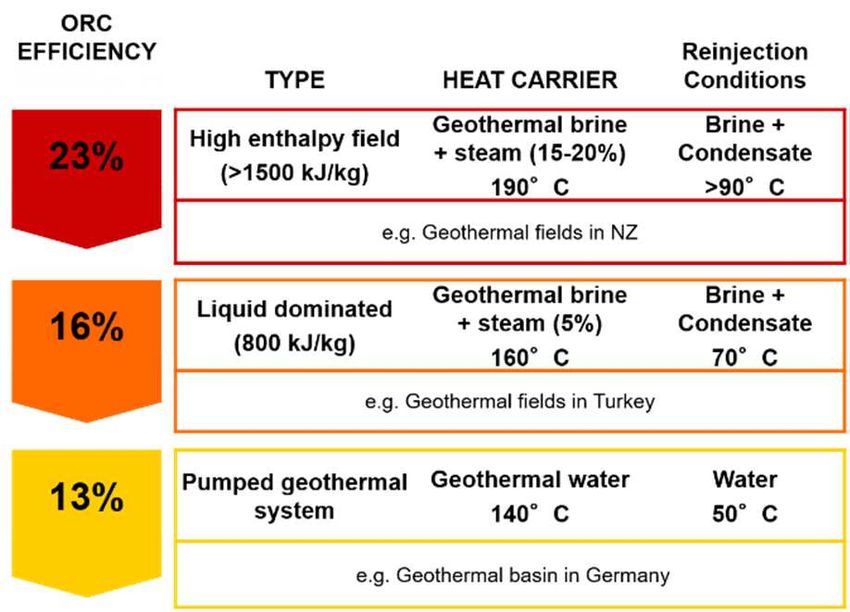
Bonafin et al.

liquid only, and often submersible pumps are required       2. ORC BINARY GEOTHERMAL POWER
to extract the geothermal fluid.                            PLANT
                                                            The Organic Rankine Cycle turbogenerator uses the
Table 1: Energy conversion technology depending             geothermal fluid to preheat and vaporize a suitable
      on the resource temperature.                          organic working fluid, which is expanded in the
                                                            turbine. Organic fluids have different thermodynamic
                         < 150°C    180°C ÷    > 200°C
    Plant type           ÷ 180°C     200°C                  characteristics, if compared to water, and they make
    Back pressure                                 x         possible and cost-effective the exploitation of low to
    Flash condensing                              x         high enthalpy geothermal reservoir.
    Two-phase binary        x          x          x
    Single-phase                                            Fig. 1 shows the temperature-entropy diagram of a
                            x          x                    general thermodynamic cycle of the ORC, and Fig. 2
    (pumped) binary
                                                            shows schematically the ORC binary loop. The organic
                                                            working fluid is pumped (1>2) into the recuperator
In a back pressure power plant, the steam and the NCG       (2>3), where it is heated before entering the evaporator
expand in the turbine after the flash in a separator, and   (3>4>5); here the geothermal source, (mix of brine and
the exhaust gases are released in the ambient at            steam or only brine coming up from the production
atmospheric pressure; this kind of plant is rarely          well) is cooled through the heat exchangers, giving heat
employed (1% only of the global geothermal power            to the working fluid which flows inside an independent
capacity, GEA (2015)).                                      loop. The cooled geothermal source can be reinjected
                                                            entirely. The hot working fluid passes through the
In the flash condensing plant, the expanded steam and       turbine (5>6), which is directly coupled to the electric
NCG are condensed in a cooling system, in order to          generator, resulting in reliable electric power. The
increase the expansion ratio through the turbine;           exhaust organic vapour flows through the regenerator
roughly, the 84% of the global installed capacity is        (6>7), where it heats the organic liquid (2>3) and then
based on this latter method, GEA (2015).                    enters the condenser (with water or air) where it is
                                                            condensed by the cooling circuit (7>8>1), thus
The two-phase and single-phase binary power plants
                                                            completing the closed-cycle operation.
use the geothermal fluid to heat the working fluid,
which is then expanded in a turbine. In the two-phase
power plant, the working fluid is heated by geothermal
fluid both in steam and in liquid phase, while in the
single-phase power plant only geothermal water in
liquid phase is present. Binary plant are the 15% of the
total installed capacity, GEA (2015). The NCG exit the
heat exchangers at a pressure close to the inlet pressure
of the heat exchangers, and the temperature is generally
low (60 ÷ 80 °C); the NCG from back pressure and
condensing power plant exit the process at about 1 bar
and 100°C. Hence, the NCG from a binary power plant
are better suited for reinjection, if compared to NCG
from back pressure and condensing power plant, Verkís
(2015).

In the case if single-phase binary power plant, the NCG
remain dissolved in the brine and are often reinjected
totally in the reservoir, thanks to the submersible
pumps. However, these pumps are usually a critical
component due to the high temperature operating
conditions and, the higher the NCG content in the
geothermal water, the higher must be the design
pressure to keep the NCG dissolved in the liquid phase.
Hence, the pumps may consume a substantial fraction
of the generated power. When the NCG content is high,
an alternative solution to the use of submersible pumps
should be found.                                            Figure 1: Temperature vs Entropy diagram of a
In this paper, we focus mainly on the NCG reinjection             general ORC thermodynamic cycle.
in the case of two-phase and single-phase binary ORC
power plant. The following Section reports a brief
explanation of this technology.

2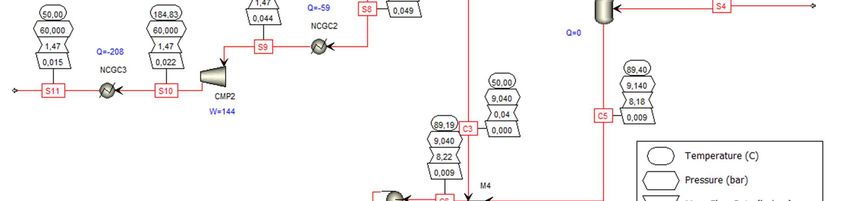
Bonafin et al.

                           Figure 2: Schematic representation of the ORC binary loop.

The ORC conversion efficiency depends on the type of        CO2 sequestration in mineral calcite were performed at
geothermal reservoir, see Fig. 3. The ORC efficiency is     Ogachi Hot Dry Rock (HDR) geothermal site and at
computed as the net power output divided by the total       Hijiori HDR system. Several binary power plant
thermal input. In the case of high enthalpy field, the      located in Germany reinjected the NCG mainly by
ORC efficiency can go significantly beyond 20%;             using submersible pumps.
moreover, the organic fluid make possible the cost-
effective exploitation of low enthalpy geothermal           The CarbFix project started in 2007, as an EU funded
reservoir.                                                  industrial and academic research project. Its overall
                                                            objective consists in the development of a cost-
                                                            effective technology for the mineral storage of CO2 in
                                                            basaltic rock. The pilot reinjection started in 2012, and
                                                            in 2014 the first industrial scale injection took place,
                                                            Sigfússon et Al. (2018). In 2017, about 10.000 tonnes
                                                            of CO2 and 5.000 tonnes of H2S were injected in the
                                                            geothermal reservoir, corresponding respectively to the
                                                            34% and 68% of the annual emission of the geothermal
                                                            power plant.

                                                            The project developed a technology able to inject CO2
                                                            in the young basaltic rock: here the CO2 reacts with the
                                                            basaltic rock to form stable carbonate minerals and this
                                                            provides the permanent storage of the CO2 and H2S.
                                                            The process is described in Gunnarson et Al. (2018):
                                                            the NCG are first dissolved into pure water in a
Figure 3: ORC efficiency depending on the                   scrubbing tower; the water (36 kg/s, 6 bar, 20 °C) is
      geothermal source.                                    sprayed at the top of the scrubbing tower, while the
                                                            exhaust gases (0,366 m3/s) are injected at the bottom of
3. NCG REINJECTION SUCCESSFUL CASES                         the tower. The tower is able to trap in the water the 56%
                                                            of the CO2 and the 97% of H2S of the NCG stream, the
At present, NCG reinjection has been applied in few         remaining gases are vented in the atmosphere. The
cases; two effective experiences can be found at            liquid water-CO2 mixture is then pressurized to 9 bar
Hellisheiði (Iceland) geothermal power plant, in the        before the transport from the capture plant to the
frame of the CarbFix project, and at Umurlu geothermal      injection well. The gas-charged water is injected
reservoir (Turkey), where the binary technology is          through a stainless steel pipe to a depth of 750 m, where
employed. In the past, reinjection of NCG was carried       it is mixed with effluent water (no gas-charged).
out at Coso flash geothermal plant (California, USA)
and at Puna geothermal field (Hawaii, USA).
Experimental activities to evaluate the possibility of
                                                                                                                    3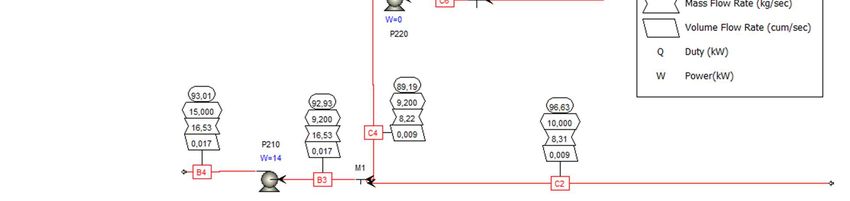
Bonafin et al.

At the Umurlu geothermal reservoir, it has been             Umurlu geothermal reservoir. If a total cost of the
observed that the CO2 content in the geothermal water       reinjection plant of about 3.000.000 US$ (comprising
from the production well declined due to the injection      compressor, transport pipeline, injection and control) is
of degassed brine in the injection well. The injection of   considered, a lifetime of the plant of 30 years, and a
the CO2 was developed to restore the NCG content            flow rate of 1,5 kg/s, the cost is about 2,1 US$/ton of
(about 2%) in the extracted geothermal fluid, since the     gas mixture. This technology seems to be more
CO2 content affects significantly the reservoir pressure,   convenient from the economical point of view, it can
Yücetaş et Al. (2018). Yücetaş et Al. (2018) describe       achieve the zero emission target, and can be more easily
the technical feature of the dual string-dual phase         applied to the binary ORC power plant, if compared to
reinjection system: it consists of a pipeline for cold      a flash turbine plant.
water in the well casing, plus an ad-hoc designed
compressor. The cold brine and the compressed NCG           The reinjection of the NCG was performed at Coso
pass through an injector, then they are pumped together     geothermal field (California, USA) for 12 years, and at
in the injection well and mixed at more than 700 m          Puna geothermal field (Hawaii, USA) to carry out the
depth. The reported CO2 flow rate is 2,65 ton/h, and the    silica scale control, DiPippo (2016). At Coso
CO2 reinjection pressure is 52 bar.                         geothermal filed, the effect of NCG reinjection the
                                                            brine pH reduction was demonstrated: the pH was
From these two principal experiences, two main              lowered from 8 to 5, preventing the silica scaling.
methods for NCG reinjection can be recognized:              However, the geothermal plant at Coso was based on a
                                                            dual-flash condensing technology, and this led to the
1. injection of gas-charged water, dissolving the NCG       passing through of residual oxygen to production well,
by means of an absorption column;                           resulting in severe corrosion of the equipment; in the
                                                            end, the NCG reinjection was replaced with
2. injection of compressed NCG and mixing with              conventional H2S abatement and pH-mod systems. At
geothermal fluid in depth in the reinjection well.
                                                            Puna geothermal field, the low NCG content allowed
The reinjection strategy depends on the NCG content of      for total gas injection from the start-up, and the
the geothermal fluid and on the technology employed         resulting pH reduction was effective in the silica
to convert the geothermal energy into electricity: the      scaling mitigation at an SSI (super saturation index) of
first method can be applied in geothermal system with       over 2, DiPippo (2016). However, the total gas
low NCG content and applying a flash steam turbine,         injection was not technically implemented in the case
such as at Hellisheiði power plant. However, the            of flash power plants, since the NCG are contaminated
absorption column is not a viable solution in the case of   with oxygen; this issue does not occur in the case of
geothermal fluid with high NCG content (more than           ORC technology, and thus silica scaling inhibition can
2%), since part of the NCG are vented in the                be carried out without corrosion problems, DiPippo
atmosphere. This can be acceptable in the case of a         (2016).
geothermal fluid with a low NCG content (so the total       Experiments for CO2 injection were performed in the
vented NCG is low), however this practice is not
                                                            case of Hot Dry Rock (HDR) geothermal system,
acceptable in the case of high NCG content and it
                                                            Kaieda et Al. (2009) and Yanagisawa (2010). Here the
prevent the achievement of the zero-emission goal. In
                                                            CO2 is dissolved in the river water injected to recover
the case of geothermal field with high NCG content,
                                                            heat from the hot dry rock; the purpose consists in the
such as at Umurlu geothermal field, the second method       CO2 sequestration in carbonate minerals (calcite), as
was successfully applied. The Umurlu power plant is         proposed at Hellisheiði geothermal field. In the
based on the binary conversion cycle and uses an
                                                            Japanese experiments, the effect of CO2 injection on
Organic Rankine Cycle (ORC) to convert geothermal
                                                            calcite scaling is investigated, showing that the
energy into electricity.
                                                            injection of CO2 increases the SSI of CaCO3, leading to
Gunnarson et Al. (2018) estimated that the cost of the      the deposition of calcite.
reinjection at Hellisheiði geothermal plant is about 25     In Germany, the reinjection of the NCG was achieved
US$/ton of gas mixture (CO2+H2S), comprising
                                                            by means of deep well submersible pumps: this method
capture, transport, injection and monitoring of the
                                                            was applied in the case of pumped binary cycle power
NCG. This cost can be acceptable in case of low NCG
                                                            plant, where the geothermal fluid is maintained liquid
content in the geothermal fluid, but it would be too high
                                                            throughout the entire process by keeping the brine
in the case of a geothermal fluid with a high content of    pressurized in the heat exchangers. In this way, it is
NCG, such as at Castelnuovo site (Italy). Here the NCG      possible to achieve the zero emission target. However,
content in the steam varies from 6% to 10%, with a
                                                            this method cannot be used in the case steam is also
corresponding flow rate of 1 ÷ 2 kg/s. Considering a
                                                            present and when the NCG content is high (more than
cost of 25 US$/ton, the cost to reinject all the NCG
                                                            2%), since in this case a too high pressure would be
would range approximately between 790.000 and
                                                            required to keep the CO2 dissolved in the liquid brine,
1.580.000 US$/year. Such reinjection cost is quite          ESMAP Technical Report (2012).
substantial, considering that this power plant may
produce 40 GWh/year, thus that the cost per kWh
ranges between 0,0198 and 0,0395 US$/kWh. This cost
can be reduced by using the technology proposed at
4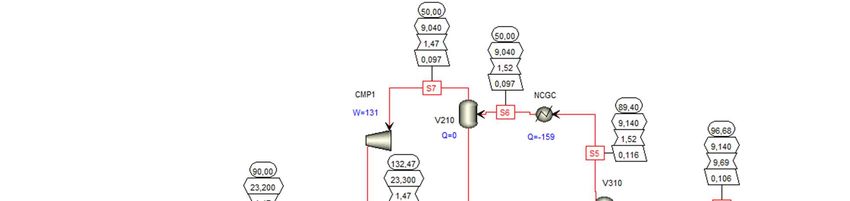
Bonafin et al.

4. NUMERICAL SIMULATIONS OF NGC                               5.1 Compressor technology
REINJECTION IN LITERATURE
                                                              Compressors are available in different types, size and
Numerical simulations and preliminary studies for
                                                              models, each of them suitable for a particular need.
reinjection can be found in literature. Batini et Al.
                                                              Two basic categories of compressor are:
(2016) analysed a typical Italian geothermal field. Kaya
and Zarrouk (2017) simulated the simultaneous NCG                 1.    Dynamic compressors, which include axial
and water reinjection by means of 3D models. Kaya et                    and centrifugal compressor
Al. (2018) applied a 3D numerical model to simulate               2.    Positive displacement compressors, divided in
the CO2-water mixture reinjection at Wairakei-Tauhara                   reciprocating and rotary type.
geothermal field. Manente et Al. [12] proposed three
different possible layout for the reinjection plant of        Fig. 4 shows a more detailed classification.
condensing power plant, comparing costs and
performances.                                                                     Compressors

A total reinjection system for NCG is under study at the
Castelnuovo pilot plant (Italy), which is based on the                                              Positive
                                                                   Dynamic
ORC technology, Batini et Al. (2016). The reported                                               displacement
numerical simulations show that a closed loop power
system is feasible, and a first evaluation of reinjection
                                                                       Centrifugal     Reciprocating        Rotary
depth and pressure was assessed. In this case, the
compressed NCG are mixed directly with the steam
condensate at a certain depth in the injection well,
without a previous dissolution of NCG in pure water,                      Axial                 Piston            Screw
as done at Umurlu geothermal plant. However, the
uncertainty on these results is still high, the cost of the
injection plant was not estimated, the performance                                         Diaphragm               Lobe
reduction of the power plant, due to compressor own
consumption, are still to be defined and the bore hole
gas/liquid system should be carefully dimensioned to                                                            Sliding vane
achieve the correct NCG mixing with the condensate.

Possible configurations of flash condensing geothermal                                                          Liquid ring
power plants with NCG reinjection are proposed in
Manente et Al. (2019), and the cost and the
performances of three different abatement systems             Figure 4: Compressor types classification.
were compared. The proposed layouts comprise an
absorption column, similar to the one described in            The choice of the compressor type depends mainly on
Gunnarson et Al. (2018) implemented at the Hellisheiði        the inlet volumetric flow rate to be compressed and on
power power plant, but differs from the point of view         the discharge pressure. Table 2 reports schematically
of the cooling technology: the solutions with a dry           the typical operating characteristic of the compressors,
cooling tower, an air condenser (AC) and a hybrid dry         PIP (2013).
cooling tower – AC systems were investigated. This is
an interesting study for the flash technology, but it         The NCG stream may contain some percentage of H2S:
cannot be applied in the case of binary plant.                particular attention should be paid on the choice of the
                                                              materials of the compressor part in contact with the
5. EVALUATION OF THE REINJECTION                              gases, due to the high corrosion potential of hydrogen
PROCESS                                                       sulphide. A comparison of different materials with high
                                                              corrosion resistance should be carried out, in order to
As reported in Section 3, two main different strategies       assess the best trade off, in terms of performances and
may be recognized to carry out the NCG reinjection,           costs, depending on the chemical composition of the
namely the injection of gas-charged water, dissolving         NCG mixture and of the geothermal fluids.
the NCG by means of an absorption column and the
injection of the compressed NCG, which are mixed              5.2 NCG reinjection process in case of high NCG
with the geothermal fluid in depth in the reinjection         content in geothermal steam
well. The second solution seems to be more suitable
than the first in the case of binary power plant, and it is   We report here a preliminary dimensioning of the
able to achieve the zero-emission goal. The main              compressor in the case of high NCG content in a steam
component of such technical solution is the                   dominated geothermal field. This kind of geothermal
compressor.                                                   reservoir represents a typical situation of the
                                                              geothermal field present in Tuscany, Italy.

                                                                                                                               5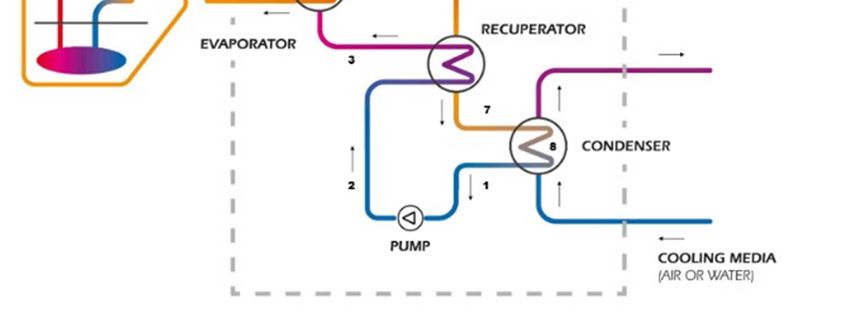
Bonafin et al.

Table 2: Summary of the typical operating ranges          After passing through the binary plant heat exchangers,
      of compressors (PIP (2013)).                        the condensed steam is separated from the NCG at
                                                          about 90°C. We assume that the temperature and
                                         Maximum
                     Inlet capacity                       pressure of the NCG stream are respectively 50°C and
                                         discharge
                    (ACMH, m3/h)                          9 bar; 50°C are achieved by means of a dedicated cooler
                                       pressure (bar)
    Dynamic                                               to reduce the compression work. In these conditions,
     Centrifugal     170 ÷ 850.000          690           the NCG volumetric flow rate is 350 m3/h (ACMH).
     Axial          50.000 ÷ 850.000         17           Considering a reinjection depth of the compressed
    Positive                                              NCG of 400 m and considering the CO2 solubility in
    displacement                                          water, we assume that a discharge pressure of the
     Piston           20 ÷ 34.000           4.150         compressor of about 60 bar(a) would be enough to
     Diaphragm          0 ÷ 250             1.400         ensure the NCG mixing with condensed steam in the
     Rotary screw    200 ÷ 100.000         1 ÷ 50         reinjection well. Comparing these NCG conditions with
     Rotary lobe      25 ÷ 50.000         0,3 ÷ 1,7       the typical operating parameters reported in Table 2, we
     Sliding vane     15 ÷ 5.000              10
                                                          observe that the compressor may be a centrifugal
     Liquid ring      10 ÷ 17.000        5,5 ÷ 10,5
                                                          compressor or a reciprocating compressor; the other
                                                          compressor types are excluded due to the limits on the
We assume steam+NCG stream coming from the                discharge pressure and on the volumetric flow rate.
artesian well has the following characteristics:          Considering a two stage intercooled compressor, it has
                                                          been computed by means of Aspen Plus, that the power
     •    Mass flow 65 ton/h.
                                                          required to compress the gas is about 270 kW, with the
     •    Temperature 180 °C
                                                          assumption of an intercooling temperature of 90 °C and
     •    Pressure 10 bar(a)                              the compressor isentropic efficiency of 0,8. The
     •    NCG content 8% in weight                        flowsheet of the simulation is shown in Fig. 5.

Figure 5: Aspen Plus flowsheet of the simulation model of the NCG compression system. S4 and C2 represent the
      geothermal fluid streams coming from the heat exchangers.

6
Bonafin et al.

5.3 NCG reinjection process in case of moderate                     brine, and their temperature is reduced to 50 °C, to
NCG content in a single-phase geothermal fluid                      reduce the compression work; the volumetric flow rate
                                                                    of NCG in these conditions is about 1.600 m3/h
The reinjection solution with the compressor can be
                                                                    (ACMH), and we consider again a compressor
used to achieve the total reinjection in presence of
                                                                    discharge pressure of 60 bar. The intercooling
liquid-dominated geothermal reservoir with high NCG
                                                                    temperature of the two-stage compressor is assumed to
content (2% weight). In such cases, the pressure
                                                                    be 100 °C.
required to keep the CO2 dissolved in the geothermal
fluid (liquid brine) would be too high (more than 50                The use of the compressor implies a saving on the
bar) in the whole path from production to reinjection               consumption of the submersible pump ΔWSP, due to the
well, leading to very expensive submersible pumps,                  reduction of the discharge pressure (assuming that the
high own consumptions and high design pressure of the               reservoir pressure, the productivity index of the well
equipment (heat exchangers, pipelines, etc). Instead of             and the installation depth of the submersible pump are
using such pumps, it would be possible to pressurize the            the same in the two scenarios). However, the
geothermal fluid at well head at lower pressure (7 bar),            consumption of the compressor WC and of the
let the NCG escape from the liquid brine to the steam               reinjection pumps WRP should be taken into account.
phase, collect them, send them to the compressor, and
reinject the NCG in depth, where they mix with the                  ΔWSP has been computed as the power saved due to the
liquid brine, reinjected by means of reinjection pumps.             reduction of well head pressure from 53 bar (pressure
                                                                    required to keep the CO2 dissolved in the brine, given
Such alternative configuration may lead to cost and                 the CO2 concentration and brine temperature) to 7 bar.
own consumption reduction depending on the                          This saving is considered as constant, since it depends
Injectivity Index (I.I.) of the brine reinjection well,             on the variation of the submersible pump discharge
which is defined as the injection rate divided by the               pressure only and does not depend on the condition in
injection pressure (ton/h/bar). If this latter is high, and         the production well.
thus the required pressure of the reinjection pump is
low, the solution with the compressor presents some                 Table 4 reports the saving on the own consumption of
advantages if compared to the use of submersible                    the submersible pump ΔWSP and the sum of the
pumps.                                                              consumption of the compressor and of the reinjection
                                                                    pump (WC + WRP) as function of the Injectivity Index
To explain better this point, we report a numerical                 of the reinjection well. The extra own consumption ΔW
example: we assume a liquid brine with the following
features                                                                        ΔW = (WC + WRP) - ΔWSP                       [1]

     •    Volumetric flow rate 400 l/s,                             has been normalized on the gross power output Wgross
     •    temperature 135 °C,                                       of the power plant (considering a 14% gross
     •    NCG content 2%.                                           efficiency).

Table 3 reports the required equipment in the two                   It is possible to see that, as the I.I. increases, the extra
configurations.                                                     own consumption decreases and turns negative, due to
                                                                    the reduction of the required reinjection pressure. Thus,
                                                                    the use of the compressor has a positive effect on the
Table 3: Comparison of the equipment required in
                                                                    performances of the power plant in case of high
      Configuration 1, without compressor, and in
                                                                    Injectivity Index.
      Configuration 2, with compressor and
      reinjection pumps. Reservoir characteristics                  As well as the cost reduction of the submersible pump,
      at production well are assumed to be the                      keeping a low well head pressure lead to a further cost
      same.                                                         reduction thanks to the lower design pressure of the
     Resevoir conditions: flow rate 400 l/s, Temperature 135 °C,    heat exchangers and of the pipelines transporting the
                          NCG content 2%                            geothermal fluid.
                       Submersible pump: discharge pressure 53
   Configuration                            bar
          1                           No compressor                 Table 4: Saving on the own consumption as
                                  No reinjection pump*                    function of the Injectivity Index of the
                      Submersible pump: discharge pressure 7 bar
                                                                          reinjection well.
   Configuration      NCG Compressor discharge pressure 60 bar
          2           Reinjection pump: discharge pressure                 I.I.       ΔWSP     WC + WRP (kW)       ΔW/Wgross
                      depends on I.I.                                  (ton/h/bar)    (kW)                           (%)
*Supposing that the submersible pump discharge pressure is enough
                                                                           20                       3.570            10,2%
to ensure reinjection
                                                                           30                       2.690            1,8%
                                                                           40                       2.250            -2,4%
The reinjection solution with the NCG compressor                           50                       1.986            -4,9%
requires the use of injection pumps, which are not                                    2.453
                                                                           60                       1.810            -6,6%
needed in Configuration 1 when the discharge pressure                      70                       1.684            -7,8%
of the submersible pump is enough to ensure the                            80                       1.590            -8,7%
reinjection pressure at the reinjection wells. In                          90                       1.517            -9,4%
Configuration 2, the NCG are first separated from the
                                                                                                                               7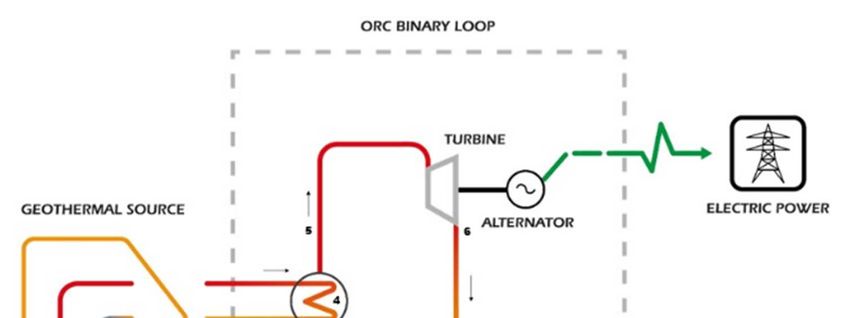
Bonafin et al.

6. CONCLUSIONS                                               DiPippo, R. Geothermal Power Generation:
In this paper, the state of the art of the NCG reinjection       Developments and Innovation. Woodhead
methods has been outlined. Two main successful cases             Publishing, (2016). ISBN 978-0-08-100337-4.
have been presented, namely the reinjection experience       ESMAP [Energy Sector Management Assistance
at the Hellisheiði power plant at the Umurlu geothermal         Program]. (2012). Greenhouse gases from
field. Two different reinjection methods can be                 Geothermal power production. ESMAP Technical
identified: the NCG injection can be carried out by             Report 009/16. Washington DC: World Bank.
means of an absorption column and the subsequent
mixing of water and NCG above the ground, or by              GEA [Geothermal Energy Association]. 2015. 2015
means of the NCG compression alone and the mixing               Annual U.S. & Global Geothermal Power
with geothermal fluid at great depth in the reinjection         Production Report. (2015). http://geo-
well. With respect to the method involving the                  energy.org/reports/2015/2015%20Annual%20US
absorption column, this latter is more suitable to binary       %20%20Global%20Geothermal%20Power%20Pr
power plant, since the NCG can be easily kept separated         oduction%20Report%20Draft%20final.pdf.
from the geothermal steam and brine; moreover, this          Gunnarsson, I., Aradóttir, E. S., Oelkers, E. H., Clark,
method can achieve the zero-emission goal.                      D. E., Arnarson, M., Sigfússon, B.,
                                                                Snæbjörnsdóttir, S. O., Matter, J. M., Stute, M.,
The numerical simulations reported in Batini et Al.
                                                                Júlíusson, B. M. and Gíslason, S. R. The rapid and
(2016) and in Manente at Al. (2019) have been
                                                                cost-effective capture and subsurface mineral
analysed, showing respectively the feasibility of the
                                                                storage of carbon and sulfur at the CarbFix2 site.
100% NCG reinjection in the case of high NCG content
                                                                International Journal of Greenhouse Gas Control,
and some possible reinjection plant layouts in the case
                                                                79, (2018), 117-126.
of flash power plant. Other numerical analyses of the
NCG reinjection, Kaya and Zarrouk (2017), which have         Kaieda, H., Ueda, A., Kubota, K., Wakahama, H.,
not been analysed in detail for the sake of brevity, show        Mito, S., Sugiyama, K., Ozawa, A., Kuroda, Y.,
the interest about the possibility of CO2 sequestration.         Sato, H., Yajima, T., Kato, K., Ito, H., Ohsumi, T.,
The NCG reinjection can be implemented in a more                 Kaji, Y. and Tokumaru, T. Field experiments for
straightforward way in the case of binary power plant,           studying on CO2 sequestration in solid minerals at
with respect to the flash and back pressure power plant,         the Ogachi HDR geothermal site, Japan. Thirty-
since the NCG stream can be kept separated from the              Fourth Workshop on Geothermal Reservoir
working fluid and it is not contaminated by air.                 Engineering, Stanford University, Stanford,
                                                                 California, February 9-11, (2009).
Finally, some technical aspects of the compressor, the
main component of the reinjection system, have been          Kaya, E., Zarrouk, S. J., and O’Sullivan, M. J.
shown. A possible compressor has been selected in a             Reinjection in geothermal fields: A review of
numerical example representative of a typical situation         worldwide experience. Renewable and Sustainable
of the Italian geothermal field. In the case of single-         Energy Reviews, 15, (2011), 47–68.
phase binary power plant, the comparison of two              Kaya, E. and Zarrouk, S. J. Reinjection of greenhouse
possible configuration to perform the total reinjection         gases into geothermal reservoirs. International
have been presented, showing the advantages of the              Journal of Greenhouse Gas Control, 67, (2017)
reinjection with NCG compressor, depending on the               111-129.
Injectivity Index of the reinjection well. The choice of
one configuration depends on several parameters, such        Kaya, E., Callos, V. and Mannington, W. CO2-water
as the characteristics of the geothermal reservoir, of the      mixture reinjection into two-phase liquid
production and of the reinjection well, on the NCG              dominated geothermal reservoirs. Renewable
content. The development of a best practice guideline           Energy, 126, (2018), 652-667.
for the reinjection of NCG shall be developed taking         Manente, G., Lazzaretto, A., Bardi, A. and Paci, M.
into account the possible different features of the single      Geothermal power plant layouts with water
case.                                                           absorption and reinjection of H2S and CO2 in fields
                                                                with a high content of non-condensable gases.
REFERENCES                                                      Geothermics, 78, (2019), 70-84.
Batini, F., Lisi, S., Guglielmetti, L., Bellini, F.,
                                                             Process Industry Practices Machinery, PIP REEC001,
    Trinciarelli, V. and Pucci, M. Well engineering
    and simulation for Non-Condensable Gases Total               Compressor Selection Guidelines, April 2013.
    Reinjection systems. European Geothermal                     https://pip.org/docs/default-source/practices-
                                                                 documents/reec001bf1ca80395a262f789edff0000
    Congress 2016, Strasbourg, France, 19-24 Sept
                                                                 8ddc6a.pdf?sfvrsn=d3beca9e_0
    2016.
                                                             Sigfússon, B. Arnarson, M., Snæbjörnsdóttir S. O.,
Bertani, R., and Thain, I. Geothermal power generating
                                                                 Karlsdóttir, M. R., Aradóttir, E. S. and
    plant CO2 emission survey. IGA News, 2002, 49,
    1-3.                                                         Gunnarsson, I. Reducing emissions of carbon
                                                                 dioxide and hydrogen sulphide at Hellisheiði
                                                                 power plant in 2014-2017 and the role of CarbFix

8
Bonafin et al.

    in achieving the 2040 Iceland climate goals.
    Energy Procedia, 146, (2018), 135-145.
Stefánsson, V. Geothermal reinjection experience.
    Geothermics, 46, (1997), 99-139.
Verkís Consulting Engineers. Geothermal Power
    Plants–CO2 Emissions. Verkís Report (2015)
    14298-001-1.
World Bank Guidance Manual: Greenhouse Gas
   Accounting for Energy Investment Operations.
   Transmission and Distribution Projects, Power
   Generation Projects, and Energy-Efficiency
   Projects (ver. 2.0). Washington, DC: The World
   Bank. (2015)
Yanagisawa, N. Ca and CO2 Transport and Scaling in
   the Hijiori HDR System, Japan. Proceedings
   World Geothermal Congress 2010, Bali,
   Indonesia, 25-29 April 2010.
Yücetaş, İ., Ergiçay, N. and Akın, S. Carbon dioxide
   injection field pilot in Umurlu geothermal field,
   Turkey. GRC Transactions, 42, (2018).

                                                                   9
You can also read


