COALITION FOR SUSTAINABLE LIVELIHOODS (CSL) - PHASE 2 PLANNING AND DESIGN WORKSHOP REPORT
←
→
Page content transcription
If your browser does not render page correctly, please read the page content below
COALITION FOR
SUSTAINABLE LIVELIHOODS (CSL)
PHASE 2 PLANNING AND DESIGN WORKSHOP REPORT

                  CSL REPORT | PHASE 2 PLANNING AND DESIGN WORKSHOP REPORT 1
                                                  © Conservation International/photo by Tory Read
TABLE OF CONTENTS
3..............SUMMARY

4..............CSL BACKGROUND

6..............THE WORKSHOP

         6..............Workshop Objective

         6..............Workshop Structure

         6..............Overview of Key Workshop Conclusions

         7..............Summary of Identified Next Steps

         8..............Summary of Feedback on Working Groups’ Recommendations

         10..............Overview of Workshop: Day 1 and Day 2

         10..............Workshop Day 1

         13..............Workshop Day 2

17..............APPENDICES

         17..............Appendix 1: Workshop Agenda

         19..............Appendix 2: List of Participating Organizations

         20..............Appendix 3: Overview of 2019 CSL Working Groups

         22..............Appendix 4: Media Summary

         23..............Appendix 5: Points of Contact and Links to Learn More

2 CSL REPORT | PHASE 2 PLANNING AND DESIGN WORKSHOP REPORT
© Conservation International/photo by Tory Read

SUMMARY
The Coalition for Sustainable Livelihoods (CSL) held a participatory workshop from
October 30 to 31, 2019 in Medan, Indonesia. The objective: to further advance
the CSL as an initiative supporting sustainable livelihoods within the Indonesian
provinces of Aceh and North Sumatra. Over 130 representatives from across private
sector, government and civil society organizations, together with CSL’s initial
supporting partners, participated in sessions purposely designed to support active
engagement and collaboration. In a showing of support for CSL, H. Musa
Rajekshah, Vice Governor of North Sumatra, officially opened the workshop and set
the stage for the opportunity ahead.

The 2019 workshop built on the progress made since              All of the working groups presented their recommendations
the launch of CSL in September 2018, where participants         during the 2019 workshop, with time for discussion to
identified the development of working groups as critical        gather input for refinement and finalization. This led to
to addressing key needs moving forward. Thus, in the            clear recommended Action and Investment Plans (included
lead up to the 2019 workshop, the CSL established five          in page 20) which will guide phase 3 implementation
working groups focused on the key thematic areas requiring      of the CSL. High level follow-ups from the workshop are
attention: governance, metrics, growth, and one for each        summarized on page 7 under the ‘Summary of Identified
district initiative: Aceh Tamiang and Tapanuli Selatan.         Next Steps.’
Between August and October 2019, the working groups
successfully conducted a total of 14 meetings with over 90      By encouraging active participation from diverse
participants from across government, private sector and         stakeholders, the workshop facilitated trust-building,
civil society. Following each group’s discussion, the working   collaboration and a sense of collective ownership for
groups drafted recommendations for action and investment        achieving results and driving CSL’s success. The workshop
to guide how CSL should move forward in relation to each        also created space for stakeholders to cultivate new
thematic topic.                                                 opportunities for partners and projects to advance CSL’s

                                                        CSL REPORT | PHASE 2 PLANNING AND DESIGN WORKSHOP REPORT 3
vision. For example, South Pole’s efforts to establish a fund      While page 7 summarizes further conclusions from
to incentivize low-carbon farming practices in production          the workshop; fundamentally, the workshop successfully
landscapes. This collaborative spirit, alongside the input         brought together numerous stakeholders, representing
and refinement of the working groups’ recommendations for          various sectors, to discuss and agree upon shared
actions, not only established a strong path forward for CSL,       objectives and activities for CSL. Ultimately, the workshop
but also clarified roles and expectations for all stakeholders.    concluded with two positive outcomes: the strengthening of
                                                                   CSL’s role to convene stakeholders to support development
Participants reaffirmed the value of collective action to          of jurisdictional plans, and CSL’s position as a place-
strengthen livelihoods and improve economic well-being             based platform driving collective action and investment to
of communities in a sustainable manner. They also noted            implement those plans.
the importance of considering sustainable development
pathways that not only include multiple crops and farming          Partners supporting the continuation of CSL’s growth, the
systems, but that look beyond producers to also include            establishment and implementation of working groups, and
laborers and related stakeholders, as well as looking beyond       the second workshop include Barry Callebaut, Conservation
agriculture to include opportunities in other sectors, such        International (CI), Danone, Earthworm Foundation (formerly
as tourism. Participants offered constructive feedback on          The Forest Trust), The Livelihoods Fund, Mars Wrigley
the proposed governance structure for CSL and supported            Confectionary, Mondelēz International, PepsiCo, The
the notion of providing flexibility to district initiatives that   Sustainable Trade Initiative (IDH), Walmart Foundation,
meet certain minimum requirements related to process,              Unilever and the United Nations Development Program
participation and monitoring. In addition, participants            (UNDP). By working collectively with governments to
discussed the proposed membership model for CSL, which             demonstrate positive landscape transformation, CSL can
aims to enable broad participation and engagement. Of note,        continue to shape encouraging narratives and drive positive
CSL is not an initiative of any one organization, but rather       impact for sustainable livelihoods within Aceh and North
CSL belongs to all relevant stakeholders of Aceh and North         Sumatra.
Sumatra – governments, private sector representatives, civil
society organizations and farming communities.

CSL BACKGROUND
The Indonesian provinces of Aceh and North Sumatra are important production regions for key commodities such as palm
oil, rubber, cocoa, coffee and timber – supporting thousands of smallholder farmers and representing a critical component
of the regional and national economies of Indonesia. In addition, both provinces contain significant areas of natural forest,
providing a home to threatened species as well as securing essential ecosystem services important to human well-being and
in managing the climate. The importance of this region has spurred numerous government, private sector and civil society
programs aimed at advancing the economic, social and environmental sustainability of both provinces. Although many of
these initiatives have achieved important successes, gaps remain and further alignment is required to reach desired impacts.

CSL’s initial supporting partners believed an approach             they convened an initial workshop in September 2018 in
integrating the economic, social and environmental context         Medan, Indonesia, to test the assumptions behind CSL,
of a specific district or province would continue to drive         assess stakeholder interest in building such an initiative, and
economic development and improve natural resources                 identify a path forward for collective action.
management; help achieve the common objectives shared
by government, civil society and private sector; and address       During the first workshop, numerous participants from
inconsistencies or remaining challenges resulting from             various sectors expressed understanding, and support
disparate initiatives. They also recognized that successfully      for, CSL’s approach to drive collective action, in order to
implementing an integrated landscape initiative requires           facilitate desired impact, scale and longevity of investments.
alignment across multiple sets of actors and activities. Thus,     Participants also noted their interest and willingness to work

4 CSL REPORT | PHASE 2 PLANNING AND DESIGN WORKSHOP REPORT
together towards driving common objectives to achieve real      The process noted above, in addition to the existing work
and measurable progress in identified places – indicating       leveraged within each district or landscape, has formalized
collective support for CSL. In addition, participants at the    CSL as a jurisdictional initiative driving collective action
first workshop identified key steps for moving forward,         and investment for the advancement of shared goals
including the establishment of working groups to further        from government, private sector and civil society to drive
define CSL’s approach, at an initiative level and within        livelihood gains for communities, contribute to economic
districts and/or landscapes, and the need to reconvene for      development and improve natural resource management.
a second workshop in 2019. Please visit www.conservation.
org/CSL for additional information on the first workshop.       As an initiative, CSL convenes stakeholders from across
                                                                sectors to focus on the advancement of shared goals and
After the first workshop, the CSL established five working      government-endorsed sustainable development plans in
groups and began planning to reconvene stakeholders for a       Aceh and North Sumatra. To achieve alignment and drive
second workshop. Each working group had a question that         collective action, the CSL coordinates targeted engagement
guided their discussions, as follows:                           and specific activities across three levels – CSL initiative,
                                                                provincial, and district and/or landscapes. At the initiative
1.   Governance: What is the CSL governance model and           level, CSL links supply chains to production areas,
     how do interested organizations participate?               sustainable practices and end users. At both the provincial
                                                                and district levels, CSL provides a space for alignment,
2. Growth: How will CSL grow and expand beyond the
   initial regency level pilots?                                learning and investment to encourage the development and
                                                                implementation of jurisdictional sustainable development
3. Metrics: How will CSL define success?
                                                                plans such as FoKSBI Action Plans for Sustainable Palm
4. Aceh Tamiang: What is Aceh Tamiang’s specific action         Oil and the Green Aceh Initiative. Finally, also at the district
   plan?                                                        and/or landscape level, CSL strengthens existing or
5. Tapanuli Selatan: What is Tapanuli Selatan’s specific        develops new integrated landscape initiatives to implement
   action plan?                                                 government-supported sustainable development plans.

During the second workshop, the working groups presented
their recommendations for action and investment for
discussion and refinement. Once updated, these will be
integrated into the CSL systems for operating as appropriate.

                                                                                        © Conservation International/photo by Tory Read

                                                        CSL REPORT | PHASE 2 PLANNING AND DESIGN WORKSHOP REPORT 5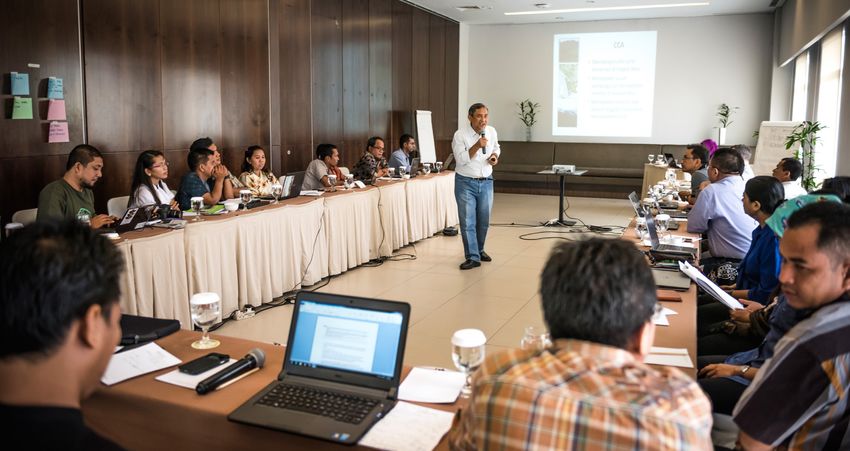
© Conservation International/photo by Tory Read

THE WORKSHOP
Workshop Objective
To achieve its primary objective, the workshop used participatory sessions to refine and align stakeholders on recommended
actions and next steps for CSL and to identify clear roles and responsibilities across all stakeholders. This generated a
greater sense of clarity for CSL’s activities while also establishing collective responsibility and ownership for CSL to succeed
and achieve impact at scale.

Workshop Structure                                                Overview of Key Workshop
The design of the two-day workshop focused on three               Conclusions
elements: (1) to feature and further expand upon the              Several key messages and conclusions emerged during
existing sustainable development activities in Aceh               workshop discussions:
and North Sumatra, (2) to present each working group’s            1.   The workshop achieved its primary objective, with over
set of recommendations for action, and (3) to allow                    130 people coming together to discuss and agree upon
stakeholders’ to express concerns, priorities and resulting            shared objectives and activities for CSL. In addition,
shared opportunities. The workshop included a variety of               the workshop produced two significant outcomes.
programming, including panel discussions and keynote                   First, the workshop strengthened CSL’s role in bringing
speeches to allow the sharing of diverse perspectives as               stakeholders together to support the development
well as common priorities; and breakout sessions to allow all          and implementation of jurisdictional plans. Second, the
participants an opportunity to provide input. In addition, the         workshop solidified CSL’s purpose as a place-based
use of the Slido software throughout the workshop allowed              platform driving collective action to advance shared
participants to answer questions posted on two large                   goals.
screens using their mobile phone, which created a fun and
interactive dynamic for particular discussions.

6 CSL REPORT | PHASE 2 PLANNING AND DESIGN WORKSHOP REPORT

2.   During the workshop, all participants reviewed and                and landscape initiatives to define stakeholder
     supported CSL’s draft vision and mission.                         management systems reflective of their situation. At a
     • Vision: By 2030, communities and farmers in Aceh                minimum, however, district initiatives should include a
       and North Sumatra are thriving, natural resources are           multi-stakeholder platform aimed at developing and
       well-managed, economies are delivering sustained                implementing jurisdictional development plans inclusive
       and equitable benefits, and appropriate governance              of monitoring frameworks.
       systems are in place to support continuous                  10. To measure success and drive impact, the CSL must
       improvement.                                                    ensure alignment and collaboration amongst the district
                                                                       and provincial level activities, as well as to the CSL
     • Mission: CSL aims to align initiatives, financing
                                                                       initiative level.
       opportunities and local, governmental and market
       interests to collectively drive livelihood gains for
       farming communities, economic development and
       improved natural resource management. CSL efforts           Summary of Identified Next Steps
       are focused in Aceh and North Sumatra and are               Identified activities for advancing CSL into its next phase
       developed with partners and processes aimed at              of implementation:
       enabling replication as appropriate.                        •   Update each working groups’ recommendations based
                                                                       on participant feedback.
3.   Although CSL activities revolve heavily around
     agriculture, CSL’s fundamental focus on properly              •   Write and distribute workshop report to all participants,
     managing natural ecosystems, upon which                           inclusive of resources and materials relevant to the
     communities, farming and other economic pursuits rely             workshop.
     upon, underscores CSL’s mission to drive sustained            •   Incorporate working groups’ recommendations and key
     positive impacts for livelihoods.                                 outcomes from the 2019 workshop (Phase 2 outcomes)
4.   CSL is a multi-commodity initiative. Palm oil provides an         into a Phase 3 workplan and budget. Phase 3 will
     initial starting point for collaboration and district-level       focus on the implementation of activities across all
     sustainability initiatives but CSL intends to contribute to       operating levels: CSL initiative, provincial, and district or
     broader sustainable development and benefit a wider               landscape. Examples of specific activities include:
     range of stakeholders.                                            • In partnership with national and subnational
                                                                          government, continue implementation of each district
5. CSL does not belong to one organization or entity,
                                                                          initiative’s work as captured in each district’s working
   but is a coalescing of diverse local, provincial, national
   and international stakeholders with a common vision                    group. For example, in Aceh Tamiang, developing
   for sustainable livelihoods through the utilization of                 and establishing robust information and monitoring
   government-supported sustainable development plans.                    systems, increasing sustainable palm oil volumes and
                                                                          farmer capacity through Good Agricultural Practices
6. As a unifying platform, CSL coordinates and
   encourages collaboration between different landscape                   (GAP) and Indonesian Sustainable Palm Oil (ISPO)
   initiatives and actors in Aceh and North Sumatra.                      trainings, and further developing and refining the
                                                                          structure, framework and financing model required to
7.   Human well-being and environmental conservation and
                                                                          operationalize the PUPL (Pusat Unggulan Perkebunan
     restoration are not mutually exclusive. To address both
                                                                          Lestari) and PUKP (Pusat Unggulan Komoditas
     topics, CSL uses an integrated landscape approach
     within the district initiatives.                                     Berkelanjutan - Center of Excellence). Activities
                                                                          in Tapanuli Selatan include providing technical
8. With CSL still early in development, current district
                                                                          assistance and support on policy development for
   initiatives should remain the focus. However, identifying
                                                                          District Strategic Area Development Plans (plans
   opportunities to grow into other districts or landscapes,
   while remaining cautious to not expand beyond current                  integrating landscape protection, restoration,
   abilities and capacity, is also important.                             production and infrastructure development), building
                                                                          capacity of 1,000 smallholder farmers through GAP
9.   The proposed governance model provides structure,
                                                                          trainings and RSPO/ISPO certification by 2022
     to promote consistency and integrity, across the
                                                                          and 100% (~6,000) by 2028, training government
     levels in which CSL operates. It also ensures flexibility
     to promote individuality and scaling, for district                   extension officers, restoring 1,000 hectares of
                                                                          encroached forest through the social forestry scheme

                                                           CSL REPORT | PHASE 2 PLANNING AND DESIGN WORKSHOP REPORT 7
by 2024, and coordinating with government to                  5. Suggest greater clarity on key definitions, for example
       improve capacity of Forest Management Units (FMU)                what ‘sustainable’ means in relation to each commodity.
       to promote forest integrity and resiliency. (see links in
       appendix 3 below for the full recommended Action
       and Investment plans for Aceh Tamiang and Tapanuli
                                                                     CSL Governance
       Selatan)
                                                                     6. An important next step will be to detail clear scopes
     • Formalize the membership structure by further                    of work for the identified groups and roles within the
       detailing and refining the requirements to join or               governance structure (district coordinator, advisory
       participate, associated benefits and costs, etc.                 groups, etc.);
       Publish final framework on CSL’s webpage/website
                                                                     7.   The CSL Secretariat should have the authority to
       and begin implementation of membership structure.
                                                                          coordinate all CSL stakeholders;
     • Establish the governance structure by developing              8. The physical location of the CSL secretariat (and
       terms of references and/or job descriptions for the              identified roles within the Secretariat) must be strategic
       CSL Advisory Council, CSL Secretariat, and each                  for both Aceh and North Sumatra;
       of the District Initiative Advisory Groups and begin
                                                                     9.   More clarity is required on the connection between
       recruiting participants and/or individuals to fill specific        District Level Advisory and CSL Advisory Council;
       roles.
                                                                     10. Need for greater understanding of CSL’s funding and
     • Recruit and hire staff to lead locally, including a CSL           how funding will be allocated;
       Lead, District Coordinators (one for each district
                                                                     11. It is important for trade unions, farmer groups, and
       initiative), Provincial Directors (one for each province),
                                                                         NGOs to be involved in the CSL governance structure;
       etc.
                                                                     12. Potential benefit to establishing CSL as a legal
     • Further develop and refine CSL’s metrics to measure               Indonesian entity for government dealings and
       progress and communicate impact.                                  formalities.
•    Fundraise for, and begin implementation of, the Phase 3
     workplan.
•    Establish a communications hub to serve as a central            CSL Growth
     resource for CSL partners and to provide information            13. Continuous stakeholder engagement is important for
     to support knowledge and awareness building for                     managing expectations of potential districts for growth;
     interested participants and the public in general.
                                                                     14. Within the stakeholder engagement processes, it
•    Lead continuous efforts to grow CSL membership and                  is important to include local communities, domestic
     participation and to support internal alignment and                 companies, and domestic consumers in the analysis of
     coordination.                                                       growth districts;
                                                                     15. Clarity needed on CSL’s specific plan and timeline for
                                                                         growth;
Summary of Feedback on Working                                       16. Suggest growth look at economic potential within and
Groups’ Recommendations                                                  outside the agricultural sector;
General                                                              17. Suggest including a mapping of facilities and
1.   Specifics related to CSL membership and joining                     infrastructure to support the provision of public
     requirements needs further definition and clarification;            services and community economic activities as well
                                                                         as to promote more effective uptake and longevity of
2.   Suggest further documentation and dissemination of                  impacts managed by local actors;
     CSL processes and learnings for knowledge sharing to
     benefit similar current, and future, initiatives;               18. A report of Aceh Tamiang and Tapanuli Selatan
                                                                         ‘tangible’ results for 2020 would help potential future
3.   Shifting the focus to impact could benefit how CSL                  districts in understanding the value of CSL.
     measures success;
4.   Regular information exchange between Aceh Tamiang
     and Tapanuli Selatan is important;

8 CSL REPORT | PHASE 2 PLANNING AND DESIGN WORKSHOP REPORT
37. Suggest for the activities in Aceh Tamiang to involve
                                                                       ecotourism as well as multiple commodities, including
CSL Metrics                                                            non-timber forest products (NTFPs), rubber, and coffee.
19. Important for CSL to set clear short-term and long-term
    targets in measurement;
20. Collecting baseline data for CSL is important;                 Tapanuli Selatan
21. Suggest measuring impact as indication of success.             38. Beneficial for action plans to accommodate multiple
    Example: rather than number of farmers trained,                    commodities such as NTFPs, rubber and coffee;
    measuring the level of farmer adoption;
                                                                   39. Suggest incorporating wider communities in Tapanuli
22. Important to include indicators related to the community           Selatan, and not only the farmers within action plans;
    and labor;
                                                                   40. Suggest including the mitigation of animal conflicts and
23. Beneficial to harmonize CSL metrics with government                the construction of biodiversity corridors;
    metrics and the Sustainable Development Goals;
                                                                   41. Suggest seeking a village regulation for conservation
24. Suggest identification of currently certified areas as well        efforts;
    as which areas have the potential for certification;
                                                                   42. Suggest developing a special database related to
25. Beneficial for landscape level indicators to relate                sustainable commodities and zoning;
    to sustainable production as well as carbon
    measurements;                                                  43. Important for plans to further integrate with local
                                                                       government planning, such as the FoKSBI platform, as
26. Suggest development of an indicator on deforestation,              well as market linkages;
    not only restoration and land change;
                                                                   44. Beneficial for activities to be carried out related to
27. Suggest metrics being further divided by commodity                 the legality of farmers’ land, standardization, farmers’
    along with commodity specific certification indicators;            business models and agroforestry;
28. Important to spend additional time and resources on            45. Important to include local CSOs in the implementers of
    further developing and refining a metrics framework                the Tapanuli Selatan plans;
    prior to finalization and adoption by CSL.
                                                                   46. Need to agree upon, and articulate, clear goals and
                                                                       a monitoring and evaluation framework for Tapanuli
                                                                       Selatan.
Aceh Tamiang
29. Suggest including coastal areas in the action plans;
30. Utilizing social media could establish greater reach;
31. Need for clarification of PUPL (Center of Excellence)
    activities;
32. Important to include mitigation of animal conflicts,
    development of biodiversity corridors, and associated
    mangrove area degradation in the plans;
33. Important to include community and laborers in the
    scope of actors;
34. There is a need for activities related to increasing
    farmers’ technical capacity, such as good agricultural
    practice (GAP) training and social forestry;
35. PUPL (center of excellence) needs clear work
    procedures, monitoring systems and reporting systems;
36. Important for indicators of success to go beyond
    increased productivity as increasing sustainable palm
    oil is not enough for sustainable livelihoods;
                                                                                    © Conservation International/photo by Ade Budi Kurniawan

                                                            CSL REPORT | PHASE 2 PLANNING AND DESIGN WORKSHOP REPORT 9
© Conservation International/photo by Tory Read
Overview of Workshop: Day 1 and Day 2
Workshop Day 1
The focus of the first day was to understand the opportunities for CSL from the perspective of the private sector, government,
and civil society, and to align on collective priorities for CSL during further development and implementation. To facilitate this,
sessions included panel discussions featuring input from government and private sector as well as specific sessions to hear
presentations by, and review the recommendations from, the Governance Working Group and the Metrics Working Group.
Emerging from the first day’s panels and speeches from both national and provincial government and the private sector
representatives, was the mutual desire and support for economic development, prosperity of farming communities, and
positive impact on the livelihoods for all Indonesians. The various national and provincial government representatives gave
workshop participants a glimpse of projects on the ground and the potential of communities to achieve conservation,
restoration and economic goals. Likewise, the various private sector representatives gave workshop participants an
understanding of market needs and the multitude of endeavors currently being supported in Aceh and North Sumatra to
reach sustainability goals. Working Group discussions began with a member of the working group giving a brief presentation
on the Group’s process, key discussion points, and identified recommendations. Participants then broke into smaller,
facilitated, groups to further review, and provide comments and input for refinement, the draft recommendations for action
and investment.
Top 5 insights from Workshop Day 1:
1. Greater clarity and understanding for the proposed CSL governance structure, the roles of stakeholders within
the structure, and how CSL will function as a multi-scale initiative;
2. Particular concerns of the private sector, such as independent monitoring systems, transparent reporting, and
verification of data;
3. The need for integration of existing initiatives, both at the provincial and district levels, including institutional
measurement and reporting;
4. CSL’s priority goes beyond smallholders and into the community;
5. Indications of success transitioning from measurements of outputs to impact.
10 CSL REPORT | PHASE 2 PLANNING AND DESIGN WORKSHOP REPORTI. Welcome address separately, across both North Sumatra and Aceh.
• Ketut S Putra, Vice President of Conservation Connecting the various stakeholders would scale
International Indonesia shared the need for holistic efforts, investments, and ultimately drive greater
and collective solutions, noting the strength that impact and successes for all stakeholders: farmers,
emerges from government, private sector and civil communities, governments, and private sector.
society working together in harmony for economic Livelihoods became the central theme of CSL
and environmental objectives. and, building on the messages from the first CSL
workshop, the second workshop would continue to
II. Keynote speech by Hj Musa Rajekshah, Vice strengthen alignment for supporting livelihoods.
Governor of North Sumatra
V. Discussion panel: The Vision of CSL: Sustainable
• The Vice Governor addressed the need for Livelihoods
overcoming the false assumption that conservation
and development are at odds, highlighting that • Panelists from the national and provincial
conservation needs must align with the economic governments, together with private sector
welfare of communities. He also noted the urgency of representatives and a representative of the Maju
instilling a love for nature and the environment in the Bersama Farmer Cooperative, shared presentations
younger generation. and discussed how smallholders should be
empowered to improve social and economic
III. Opening address by central government conditions in their own communities.
representatives Mamat Rahmat, Ditjen Konservasi • The Bupati of Aceh Tamiang, Mursil, shared pointed
Sumber Daya Alam Ekosistem (KSDAE) and Ersa remarks about the need for those who desire a better
Herwinda, Badan Perencanaan Pembangunan environment and improved economic conditions to
Nasional (Bappenas) align their actions and words. In relation to livelihoods
• Mahmat Rahmat shared CSL is aligned with the vision and income, he noted the importance of clear land
and mission of the Sub Directorate of Ecosystem tenure and the challenging reality of farming plots
Recovery Conservation Area while also noting growing significantly smaller as they are distributed
conversation must include ecology and discussions across family members.
about local economy, culture, and knowledge. • Hasmi Lubis, the Head of the North Sumatra
Collaboration amongst stakeholders, such as the Development and Planning Agency pointed out
CSL, he added, is key to addressing this need. the development investment plan of North Sumatra
• Ersa Herwinda highlighted the commitments of focuses on tourism and developing rural areas,
Indonesia to the Sustainable Development Goals potentially impacting urban development. He echoed
(SDGs) and mentioned the importance of all previously expressed concerns for rural communities,
stakeholders’ participation to be built on principles noting the struggle caused from not earning enough
of trust, respect and openness. The National Action from one’s land. He invited civil society and the
Plan of the SDGs and the Regional Action Plan of the private sector to join the government in finding
SDGs are legal instruments to achieve Indonesia’s solutions to these challenges, particularly in 23
commitments. To meet the country’s commitments, villages indicating promise.
these plans must be politically supported and be • Julhadi Siregar, of the Maju Bersama Farmer
streamlined within local government’s policies and Cooperative, shared insight from the realities of
plans. the over 1,000 oil palm farmers his organization
IV. Sharing a Vision of CSL: Past, Present and Future, represents. He spoke about the farmer capacity
John Buchanan, Vice President, Conservation building work that the government and Conservation
International International have been involved in – such as the
good agricultural practice (GAP) training for over 700
• John Buchanan shared how CSL emerged – from a
farmers, increasing government extension workers’
shared recognition across diverse stakeholders of
technical capacity, and creating 7 demo-plots as a
the great work, but associated limitations to working
medium to learn and practice GAP. He provided a
CSL REPORT | PHASE 2 PLANNING AND DESIGN WORKSHOP REPORT 11positive example of what can be accomplished when private sector and government must lead to added
farmers are trained in good agricultural practices, value for local peoples.
including increased yield and environmental • The prospect of employing the landscape approach
protection skills, and invited the government and within a larger jurisdictional initiative, which is central
civil society to continue to support farmers efforts to to the CSL strategy, is a great opportunity for the
improve their own livelihoods. private sector, government, and local communities
• Martin Huxtable, of Unilever, shared his company’s to collectively advance sustainable agricultural
vision of making sustainable palm oil the norm, and practices. In addition, private sector representatives
their concrete steps within North Sumatra working shared their support for credible reporting and
with thousands of smallholder palm oil farmers. monitoring, indications of progressive positive social
He also noted the importance of collaboration and and environmental impact, and transparency as key
the need to continue to strengthen the CSL as an to an integrated sustainable landscape approach.
initiative to bring the vision of sustainability into • Private sector representatives noted the challenge
reality. and impact of negative messaging around palm oil
• Olivier Tichit, of Musim Mas, shared insight from in certain markets for both producers, smallholders
the various sustainability and farmer development included, and end users. The opportunity, however,
programs they support, noting the essential role of is in local stakeholders working together to shape
government in supporting smallholder farmers and encouraging stories and narratives by demonstrating
farming communities. He also expressed the desire positive landscape transformation through working
to cooperate more closely with government to scale collectively with government. The CSL provides a
technical trainings through government systems while vehicle for this type of constructive collaboration.
emphasizing the importance of the CSL in building
VII. Overview of CSL Working Groups and Process
deeper relationships amongst stakeholders.
• Background to the development and implementation
VI. Discussion panel: Brief Overview of Market Needs for of CSL’s five working groups, arising from the first CSL
Sustainable Commodities Relevant to North Sumatra workshop, was shared and results of those working
and Aceh groups – drafted recommendations for action and
• A panel of private sector buyer representatives, investment – would be the focus of discussions for
including Jonathan Horrell of Mondelēz International, the workshop.
Charlene Lin of Mars Wrigley Confectionary, Gregory
VIII. Brief comments from representatives of working
Bardies of Barry Callebaut, and Reuben Blackie
groups
of PepsiCo, shared their responsibilities related to
purchasing sustainably sourced commodities while • Representatives from each of the working groups
also highlighting their work, alongside supply chain shared information related to the processes of
and CSO partners, within Aceh and North Sumatra discussions and the drafting of documents, noting the
to encourage a sustainable supply of commodities working group meetings provided space to explore
into the future. Representatives noted the importance the future of the CSL as well as the opportunities for
of the CSL for the private sector as a way to engage further development in the district landscape projects
with government and local CSOs to better respond of Aceh Tamiang and Tapanuli Selatan.
to the needs and opportunities for collaboration
IX. Presentation and discussion: CSL Governance and
emerging on the ground.
Metrics Working Groups’ Recommendations
• A key message of the private sector representatives
• A member of the CSL Governance Working Group
was the crucial need for government participation and
shared the group’s recognition of needing to develop
collaboration. With clear government engagement,
a structure which accommodated CSL’s work across
programs and activities can be aligned to supporting
the global supply chain, provincial, district and
the development and implementation of government-
landscape levels. The structure proposed for CSL
led sustainable development action plans within a
governance requires CSL at the broader initiative
given district. Crucially, the conversation between the
12 CSL REPORT | PHASE 2 PLANNING AND DESIGN WORKSHOP REPORTlevel to be governed as a network with each district project, or certification levels but is intended to
or landscape level to be governed separately while be adapted as necessary over time in order to
using similar structures to drive cohesion while adequately represent the agreed upon desired
accommodating for varying differences across impacts.
landscapes. Finally, links between the broader • After presentations by members of the Governance
CSL initiative and the district and landscape level and Metrics Working Groups, workshop participants
work are provided through key staff positions, as separated into eight small groups, each with a
identified in the recommended roles for hiring. The facilitator, to analyze and provide input for refinement
proposed membership structure would be open for each working group’s drafted recommendations
for wide participation from across stakeholders for action and investment. The small groups then
however would specifically identify between formal presented their findings to the larger workshop,
members, who have membership responsibilities allowing time for questions and additional comments,
and related benefits, and participants, who have less leading to enthusiastic conversations amongst all
responsibilities but also limited access to benefits. participants as well as a productive input sharing
• A member of the CSL Metrics Working Group shared session for each working group’s action plan. A
the group’s main objective was to consider how summary of recommendations arising from these
CSL would measure success. The working group discussions is provided above in the Summary of
members agreed the focus of indicators would Recommendations for Working Groups section of this
be on economy (inclusive of human well-being), report.
environment and governance, consistent with the
X. Plenary Discussion: Implementing the Working
emerging vision statement for CSL. In addition,
Group Recommendations
leveraging linkages between current metrics
and frameworks, such as government indicators, • Following these discussions from the first day,
SDGs, etc. was an important consideration of the workshop participants explored potential steps
group. Finally, it was also agreed the purpose of required, and actual feasibility, for the implementation
the proposed CSL metrics framework was not to of the recommended actions.
duplicate what is already being done at landscape,
Workshop Day 2
The focus of the second day was to consider CSL’s work at the district level, particularly within the initial district initiatives of
Aceh Tamiang and Tapanuli Selatan. After an opening panel which presented the sustainable development work within Aceh
Tamiang and Tapanuli Selatan over the last year, breakout sessions were held to analyze and refine each district initiative’s
drafted recommendations for action and investment.
Day 1 – Example of Slido poll question and top responses from workshop participants
When you read a newspaper in 2030 and an article for CSL is written, what headline would you want to see for what
you have achieved?
1. CSL reduced poverty by 40%
2. Better forests, better water supply
3. No forest fires
4. Ecosystem saved thanks to CSL
5. Sustainable investment model is implemented in Indonesia
6. No deforestation, sustainable production
7. CSL wraps up after completing all of its objectives
CSL REPORT | PHASE 2 PLANNING AND DESIGN WORKSHOP REPORT 13I. Presentation and Discussion: How is CSL and regulating activities in the district towards
Implemented in Aceh and North Sumatra? environmental responsibility. The government also
• Representatives from the Bupati of Aceh Tamiang sees potential for Lake Toba tourism and invites
and the Bupati of Tapanuli Selatan shared their NGOs and the private sector to participate in its
commitment to achieving sustainability amongst plans. Nassat Idris, of Conservation International,
highlighted the government’s District Sustainable
Palm Oil Action Plan – which was built using a
Top 5 Insights from Day 2: multistakeholder process focused on mainstreaming
landscape approaches – has been incorporated
1. CSL is a multi-commodity platform. Palm oil is the into the Tapanuli Selatan Working Group’s
current focus and ‘entry point’ for Aceh Tamiang
and Tapanuli Selatan due to the urgent needs of recommendations for action and investment. He also
conservation; noted the need for increasing technical capacities
2. Suggest documentation related to the process of farmers and raising awareness for alignment
of developing CSL and disseminating across
district, provincial, and national levels; between production and conservation. In fact,
3. Institutional support at the district and provincial agroforestry is being considered as a means towards
level is essential for execution of CSL related alternative livelihoods and the protection of forests,
activities; ensuring conservation together with the well-being of
4. Diversified income at the district level is a communities.
concern for stakeholders – with ecotourism and
agroforestry as potential models for alternative • Zakki Hakim, of IDH, shared background on
livelihoods;
IDH’s work in Aceh Tamiang with farmers, farming
5. The scope of CSL participation is “CSL is for all”.
communities, and in enabling farmers to access
capital, reduce deforestation, and increase equality.
He shared the vision of multistakeholder platforms
all farmers in the districts. Yunus, of the Agency of at the local level to ensure the ability for plans to be
Agriculture, Plantations, and Farmers in Aceh Tamiang coordinated and developed at both the provincial
shared the government’s desire to establish Aceh and local levels. Within Aceh, IDH is working towards
Tamiang as an example of sustainable development a verified sourcing area.
progress for all districts. Farmers have learned from • Arief Perkasa, of Earthworm Foundation, shared
past mistakes and are open to learning new methods about Earthworm’s efforts in Aceh Tamiang, with a
and approaches. The Bupati of Aceh Tamiang is specific look at community well-being and poverty’s
ready to support the sustainability of oil palm and link to driving deforestation. Programs have been
in doing so requires technical support for water empowering women to become farmers, specifically
sourcing issues and infrastructure development. He planting vegetables and fruits, to encourage
noted the Center of Excellence in Aceh Tamiang was increased family income and opportunity as well
established by the government and is a key aspect of as prevent further encroachment by communities
the Aceh Tamiang Working Group’s recommendations in need. Education is also a key area of focus with
for action and investment. The aim of the Center curriculum aimed at empowering students to find
of Excellence is to bring together NGOs, farmer alternative income and engage in conservation and
communities, and the government in order to restoration activities being utilized in schools.
support sustainable production and environmental
preservation. The district government is also working II. Discussion: Implementing the Working Group
towards improved integrated monitoring systems and Recommendations in Aceh and North Sumatra
forest restoration, as well as making the legality of • Following the previous sessions, workshop
land easier to establish. The Center of Excellence will participants divided into eight small groups, led by
assist in achieving these aims from the government. a small group facilitator, to review and provide input
• Abadi, the Head of Bappeda in Tapanuli Selatan, for refinement on the drafted recommendations for
highlighted the government’s aims to achieve action and investment from each district initiative’s
its policy for spatial planning management working group. A summary of recommendations
14 CSL REPORT | PHASE 2 PLANNING AND DESIGN WORKSHOP REPORTemerging from these discussions is provided above For example, expansion to additional districts in
in the Summary of Recommendations for Working North Sumatra could leverage and link to the FoKSBI
Groups section of this report. platform for sustainable palm oil, which further aligns
with the National Action Plan. The working group
III. Presentation and Discussion: How will CSL Expand discussed criteria for expansion to a new district
in Aceh and North Sumatra? A look at the CSL should include, but not be limited to, environment,
Growth Working Group’s recommended action and economic, and human well-being elements existing
investment plan and an overview of available data in within the district. Through further discussion, the
priority districts. wider workshop participants agreed there should be
• A CSL Growth Working Group Member shared how a baseline requirement for a district to be involved in
the group approached determining a process for CSL, such as having at minimum a multi-stakeholder
CSL to use when considering growth into other process or forum already established, government
landscapes or districts. The suggested process engagement and commitment, and the development
includes comprehensive data gathering and of a clear action plan inclusive of a monitoring and
summary report, stakeholder engagement and evaluation system. However, any requirements must
communications plan, and clear recommendations for also carefully be defined as it is important to not
the CSL Advisory Council. Furthermore, future areas becomes exclusive or burdensome for interested
should align with existing government programs or districts to engage and participate.
policies as this is a key element of CSL’s programs.
© Conservation International/photo by Tory Read
© Conservation International/photo by Tory Read © Conservation International/photo by Tory Read
• Data relating to key metrics across districts in Aceh
CSL REPORT | PHASE 2 PLANNING AND DESIGN WORKSHOP REPORT 15and North Sumatra were shared with workshop V. Closing remarks from founding members of CSL
participants which led to a comprehensive discussion • Representatives of Earthworm, IDH, UNDP, CI, and
of both the need for CSL to expand beyond the initial Mars shared reflections on the development of CSL,
districts of Aceh Tamiang and Tapanuli Selatan as emphasizing their excitement that CSL is growing
well as the importance of involving local stakeholders and becoming more established as an initiative.
in potential districts, documenting key learnings from While the understanding for CSL was less clear
the current districts, and not waiting too long to move during the initial development stages, something
into new districts. common to all new initiatives, it was clear that the
• After both presentations, workshop participants 2019 workshop provided clarity and structure to the
divided into small groups, each with a facilitator, road ahead while lending reinforcement to the work
to analyze and provide input for refinement on the already underway in the landscapes. Representatives
recommendations for action and investment. This also emphasized CSL is a collective enterprise with
led to enthusiastic conversations from all participants everyone having a role in collaboration, participation,
as well as helpful input on the improvement of and communication and remarked how impressed
the group’s recommendations. A summary of they were with the level of ownership emerging
recommendations emerging from these discussions is with international, national, provincial, and local
provided above in the Summary of Recommendations stakeholders supporting CSL and recognizing its
for Working Groups section of this report. value in achieving common sustainable development
objectives where people, nature, and economies are
IV. Growing CSL: A Shared Opportunity and all thriving.
Responsibility
• Workshop participants completed the workshop
by considering the next steps for CSL as it moves
into its next phase. Participants agreed on the Day 2 – Example of Slido poll question and
key next step for moving forward — revising, top responses from workshop participants
and then implementing, each Working Group’s What is your role in the development of the CSL in the
recommendations for action and investment. A Slido next 6-12 months?
poll of participants helped to consider who must carry
out what responsibility going forward for CSL and the 1. Expand the training of smallholders and working
responses are written below. closer with the district government to improve the
livelihoods of smallholders
2. Financially support the CSL activities in North
Sumatra and Aceh
3. Implement the CSL action and investment plans
4. Take the first step to operationalize the Center of
Excellence in Aceh Tamiang
5. Strengthen institutional capacity
6. Make stuff happen!
7. Support reforestation efforts in Tapanuli Selatan
and Aceh Tamiang involving communities and
local stakeholders
8. Increase awareness and investment in programs
that support smallholders, communities and the
local government to increase sustainability
16 CSL REPORT | PHASE 2 PLANNING AND DESIGN WORKSHOP REPORTAPPENDICES
Appendix 1: Workshop Agenda
Coalition for Sustainable Livelihoods
Phase 2 Planning and Design Workshop
October 30-31, 2019
Santika Premiere Dyandra Hotel & Convention – Medan, Indonesia
Day 1
Objective: To align stakeholders on the vision of CSL and present recommended draft action and investment plans for
deliberation.
Target Outcome: To finalize recommended draft action and investment plans by theme and foster collective ownership of the
plans in order to have clear actionable steps for CSL into the future.
8:00 – 9:00 Registration and Networking Coffee
9:00 – 9:10 Welcome Address by CSL Representative
9:10 – 10:00 Opening Address by Guests of Honor
10:00 – 10:10 Sharing a Vision of the Past, Present, and Future of CSL
10:10 – 11:30 Opening Discussion Panel – The Vision of CSL: Sustainable Livelihoods
Discussion Panel – Brief Overview of Market Needs for Sustainable Commodities Relevant to Aceh &
11:30 – 12:30
North Sumatra
12:30 – 12:45 Press Response Session
12:30 – 14:00 Lunch
14:00 – 14:45 CSL Working Group & Process
Deep-Dive: Presentation & Discussion
14:45 – 16:00
CSL Governance & Metrics Working Groups’ Recommendations
16:00 – 16:30 Coffee Break & Continued small group discussions
16:30 – 17:30 Plenary Discussion: Implementing the Working Group Recommendations – Bringing It All Together
17:30 – 17:45 Day 1 Closing Remarks
Optional Side Event – Unlocking Private Finance through the Aceh / North Sumatra Landscape Carbon
17:45 – 18:45
Fund, Led by South Pole
Mars and South Pole have partnered to facilitate the creation of a fund to support livelihoods through carbon finance, this
session will present the vision and will serve as an initial consultation.
CSL REPORT | PHASE 2 PLANNING AND DESIGN WORKSHOP REPORT 17Day 2
Objective: To align stakeholders on the vision of CSL at the provincial level and present recommended draft action and
investment plans for deliberation.
Target Outcome: To have a clear set of roles and responsibilities for each stakeholder group, with specific stakeholders
agreeing in principle to carry out specific actions to advance CSL.
8:00 – 9:00 Networking Coffee
9:00 – 9:15 Welcome and Recap of Day 1
9:15 – 9:45 Keynote Address
Deep-Dive, Presentation and Discussion – How is CSL Implemented in Aceh & North Sumatra?
9:45 – 10:45 A look at Aceh Tamiang and Tapanuli Selatan Working Group Recommended Action & Investment
Plans
10:45 – 11:00 Networking Coffee Break
Discussion: Implementing the Working Group Recommendations in Aceh & North Sumatra – Bringing
11:00 – 12:00
It All Together
12:00 – 13:30 Lunch
Deep-Dive – Presentation & Discussion: How Will CSL Expand in Aceh & North Sumatra?
13:30 – 15:00 A look at the CSL Growth Working Group’s Recommendations for Action in Investment and an
overview of available data in priority districts.
15:00 – 15:30 Networking Coffee Break
14:45 – 16:00 CSL Phase 2: Summary of All Recommendations
16:00 – 17:00 Facilitated Closing Discussion: CSL Phase 2, Growing CSL: A Shared Opportunity & Responsibility
17:00 – 17:30 Closing Remarks
18 CSL REPORT | PHASE 2 PLANNING AND DESIGN WORKSHOP REPORTAppendix 2: List of Participating Organizations
• Aceh Green Community/Forum DAS Krueng Peusangan • Pak Pak Bharat- Medan: Bupati
• Aceh Tamiang Government: BAPPEDA Kabupaten Aceh • Pepsico
Tamiang • Perkebunan (Crop Estate Agency North Sumatra)
• ANJ • Proforest
• Apical • PT Indo Cafco-Ecom Group
• Bakrie • PT Mopoli Raya
• Bappeda Province Sumatera Utara • PT SAS
• Bappeda Tapsel • PT. London Sumatera
• Barry Callebaut • PT. Permata Hijau Sawit
• CI • PT. SINTONG ABADI
• COE Aceh Tamiang • PUPR Tapsel
• Dinas Disperindag • Pusat Penelitian Kelapa Sawit
• Dinas Kehutanan (Forestry Service) • SERBUNDO
• Dinas Perkebunan Prov. Sumut • South Pole
• Dinas Pertanian Perkebunan dan Peternakan • Starling Resources
• Dinas Sumber Daya Air Cipta Karya & Tata Ruang • Tapanuli Selatan Planning Agency/Bappeda
Sumut
• UNDP
• Disbun SU
• UNDP-SPOI/FOKSBI
• DLH
• Unilever
• Earthworm
• University Malaya
• Forum Konservasi Leuser (FKL)
• University of North Sumatra
• IDH
• Walhi Sumut
• IFC
• Yagasu
• IKEI Sumut
• Yayasan Pelatuk Indonesia
• Kempra
• YEL
• KLHK Jakarta
• Koompasia Enviro Institute
• KTNA Aceh Tamiang
• Lestari Capital
• Louis Dreyfus Company
• LTKL
• Maju Bersama (TapSel Farmer Cooperative)
• Mars
• Mondelez
• Musim Mas
• OIC
• OPPUK
• P&G
CSL REPORT | PHASE 2 PLANNING AND DESIGN WORKSHOP REPORT 19Appendix 3: Overview of 2019 CSL Working Groups & Recommended
Action and Investment Plans
Below is a summary of each Working Group’s discussion, which was shared and discussed during the 2019 workshop, as well
as links to the recommended plans for action and investment.
Governance Growth
The Group’s Guiding Question: What is the governance The Group’s Guiding Question: How will CSL grow and
model and how do interested organizations participate? expand beyond the initial regency level pilots?
The Coalition for Sustainable Livelihoods’ Governance The Coalition for Sustainable Livelihoods’ Growth Working
Working Group met over four sessions between August Group met over three sessions between August and
and October 2019 in order to address the question of October 2019 in order to address the question of how CSL
how CSL would develop a governance structure into the would scale beyond the initial districts of Tapanuli Selatan
next phase of its development and how the membership in North Sumatra Province, and Aceh Tamiang in Aceh
structure would be open enough for all to participate, yet Province. Between each session, working group members
robust enough to efficiently and effectively support CSL contributed to the creation of collective working group
landscapes towards achieving sustainability objectives. documents in order to aid their discussions and provide
Between each session, working group members contributed structure to the process of how new districts would be
to the creation of collective working group documents in identified. In doing so, the group considered CSL’s potential
order to aid discussions and provide a clear approach to to scale beyond the initial district initiatives (Tapanuli
creating a CSL governance structure. The working group Selatan and Aceh Tamiang) to additional districts within the
considered best practices from other landscape and provinces of Aceh and North Sumatra. However, the group
jurisdictional approaches from across different regions and, also fully recognized the importance and need for CSL to
in doing so, recognized the importance for a model with continue to focus on initial implementation and the resulting
both a structure to encourage integrity as well as flexibility to learnings from these first two district initiatives within CSL.
promote scaling beyond the initial landscape level initiatives. A key document that emerged during discussions was
Further supporting conclusions drawn during the first CSL an outline of essential criteria for determining where to
workshop, the group also agreed the governance structure grow. Another milestone was the translation of this criteria
must be flexible enough to reflect realities at the initiative into a broad process for determining the potential of a
level, yet clear and formalized enough to ensure the integrity district under consideration. These discussions led to the
of the CSL. Thus, in an effort to achieve this difficult balance, development of recommended actions for CSL to take into
the working group recommended a structure to support its next phase of development as well as the development
consistency and collaboration across each of CSL’s main of a process map which outlines an approach to data
areas of operation and engagement (initiative, provincial, gathering and determining key new districts for CSL.
district, landscape) and proposes for CSL governance to
primarily focus on governing the CSL member network while Click the following link to access the detailed growth plan
providing flexibility for the districts to shape and define the with recommendations, timelines and targets: CSL Growth
direction of their specific projects. All CSL members will, Working Group Recommended Action and Investment
however, adhere to certain guiding principles, reporting Plan
structures, and communications procedures agreed by all.
Metrics
Click the following link to access the detailed governance The Group’s Guiding Question: How will CSL define success
plan with recommendations, timelines and targets: CSL and what are the most effective ways to measure progress?
Governance Working Group Recommended Action and
Investment Plan The Coalition for Sustainable Livelihoods’ Metrics Working
Group met over four sessions between August and October
2019 in order to address the question of how CSL would
define success and what ways were most effective to
20 CSL REPORT | PHASE 2 PLANNING AND DESIGN WORKSHOP REPORTYou can also read


