Concept ruhr & change as chance // - perspective 2020 - Konzept Ruhr
←
→
Page content transcription
If your browser does not render page correctly, please read the page content below
concept ruhr & change as chance

concept ruhr &
change as chance //
Perspective 2020

                             Regionalverband Ruhr
Titel: Parlamentarium – European Parliament Brussels
concept ruhr & change as chance //Perspective 2020

                                          content
                                          Participants                                 5
                                          Introduction                                6

                                          Challenges to 2020                           8
                                          Horizontal and vertical cooperation         12
                                          City – Education – Climate                  13
                                          Integrated project development              19
                                          Local authority projects in the EU funding
                                          period 2007 to 2013                         24
                                          Results and outlook                         25
                                          Person of contact                           26
                                          Edition notice                              30

                                                                                            |3
Metropole Ruhr

               North Rhine Westphalia

               Germany

4   Perspective 2020
concept ruhr & change as chance //Perspective 2020
participants
The following bodies have worked on “Concept Ruhr//Change n The consortium of Ruhr Cities “Städteregion Ruhr 2030“
as Chance – Perspective 2020“: n The Ruhr Regional Association (RVR)
n The business development agency “Wirtschaftsförderung
n The cities of Bochum, Bottrop, Dortmund, Duisburg, Essen, metropoleruhr GmbH”
Gelsenkirchen, Hagen, Hamm, Herne, Mülheim an der Ruhr n The regional tourism organisation “Ruhr Tourismus GmbH” (RTG)
and Oberhausen n The “GseProjekte“ (office for regional development) – support in
n The County of Ennepe-Ruhr and the cities of Hattingen, the conception, text and implementation.
Herdecke, Wetter and Witten
n The county of Recklinghausen and all local authorities of the The city of Herne took over the job of coordinating the inter
county municipal networks. The members of the inter-municipal networks
n The county of Unna and all the local authorities of the county are employed in the planning offices and/or business develop-
n The business development agency in the county of Wesel ment offices. The RVR department of “European and Regional
and the cities/ towns of Dinslaken, Kamp-Lintfort, Moers, Networks Ruhr“ was responsible for coordination activities
Neukirchen-Vluyn, Schermbeck with the responsible bodies in the regional state of North Rhine
n The business development agency in the county of Steinfurt Westphalia, and for the printed edition of this report.
and the cities of Ibbenbüren and Mettingen
COUNTY OF
RECKLINGHAUSEN
COUNTY OF
WESEL
Wesel
Participants Concept Ruhr
Voerde
COUNTY
OF UNNA
COUNTY
Mettingen OF ENNEPE-
RUHR
COUNTY
Ibbenbüren
OF STEINFURT
COUNTY OF
COUNTY RECKLINGHAUSEN
OF WESEL
COUNTY
DORTMUND OF UNNA
Participants Change as Chance
HAGEN
|5
Introduction

      Zollverein – Essen

6   Perspective 2020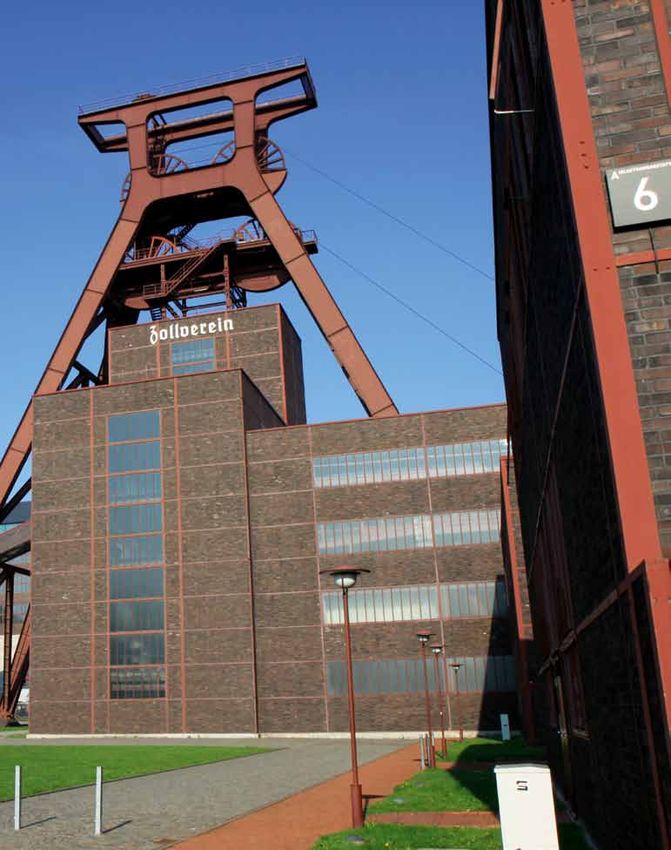
concept ruhr & change as chance //Perspective 2020
Introduction
The cities and counties in the Metropole Ruhr appreciate The implementation of all the local authority projects which
the commitment of the European Union to regional have been co-financed by grants from the European Regional
Development Fund (ERDF) in the current funding period, can
development in the member states. They are constructive
be followed at all times in the annual “status reports“. These also
participants in the regional debate on shaping operatio include plans which are being implemented with public fund-
nal programmes in the REGIONAL STATE of North Rhine ing, but without the use of EU funds. Over and above their work
Westphalia and would like to submit their ideas on the in monitoring projects the cities and counties are continually de-
veloping strategies for sustainable urban and regional develop-
main development themes until 2020 for discussion at
ment, and presenting them in the status reports.
European level.
The Metropole Ruhr – over 5,000,000 inhabitants in one of the Since mid-2012 the towns, cities and counties have been con-
largest conurbations in the European Union – is a region which cerned with preparing for the next EU funding period. Here they
places great value on cooperation. This is shown by the past are orientating their work on the priorities laid down in the EU-
projects, the IBA Emscher Park, the European Capital of Culture ROPE 2020 strategy for intelligent, sustainable and integrative
2010 and the joint design of the Emscher Landscape Park. All growth. The aim is to link urban development with measures to
these were linked to regular major events for the general public. improve employment, raise energy efficiency, raise educational
At the moment the Metropole Ruhr is preparing its own in standards, and fight poverty and exclusion. For this reason – us-
dependent contributions along with a regional structure for ing sound analyses of the strengths and weaknesses of the region
“KlimaExpo.NRW (2022)“. – the Metropole Ruhr has been contributing its own propositions
to the discussions on preparing the operational programme
There are around 370 co-operative projects in all areas of public and formulating regional perspectives for the period 2014–2020.
life in the 53 cities and four counties. Regional development
strategies have been agreed by the inter-municipal networks, These perspectives for 2020 are at the centre of the current
the “Städteregion Ruhr 2030“ (Region of Ruhr Cities 2030), the report, which concludes with a description of the projects which
business promoters’ working group, regular meetings between have already been implemented or are in the process of com-
the Lord Mayors, county leaders and the Ruhr Regional pletion.
Association (RVR). In the area of education and science the
region‘s universities and colleges are working together in a
body known as the “Universitätsallianz Metropole Ruhr“
(University Alliance Ruhr).
The common aims for urban and regional development are
summarised in “Concept Ruhr“ and linked with concrete projects
from 2007 onwards. Since 2008 the Ruhr Concept has been ex-
tended by a collaboration with the working group “Wandel als
Chance“ (Change as Chance). In addition those local authorities
which have been or will be specially affected by the closure of
collieries have joined forces to work together.
The reason for the work on “Concept Ruhr“ was originally the
starting signal for the EU funding period 2007–2013. Since then
the cities and counties in the Metropole Ruhr have been sub
mitting their ideas and plans for regional development with the
aim of implementing them in the “operational programme“.
|7
Challenges to 2020

8   Perspective 2020
Challenges to 2020

                     Nordstern – Gelsenkirchen

                                                 |9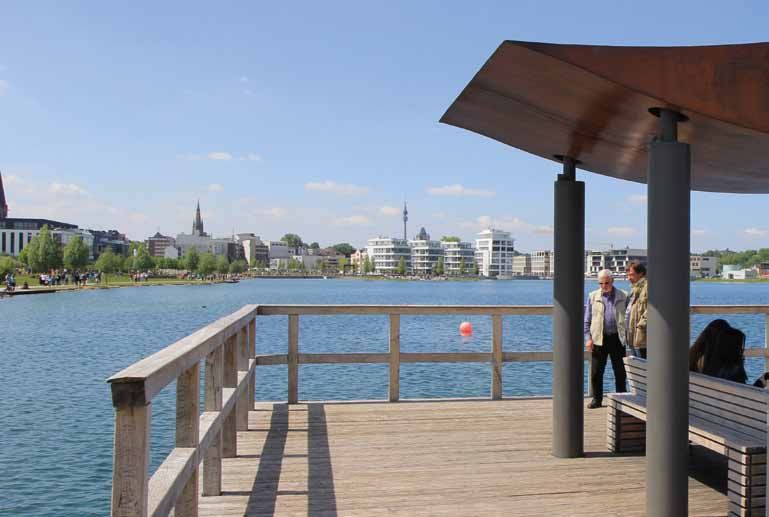
Challenges to 2020
     PhoenixSee – Dortmund

    To date the metropole Ruhr has succeeded in coping         But structural change is not yet at an end. Urban landscapes
    with the economic structural changes caused by the         are continually changing. Demographic change and the
                                                               changes in social structures caused by immigration and grow-
    decline of coal mining and steel production. Many
                                                               ing poverty are creating new challenges. Many housing stocks
    jobs have been created, above all in the service sector.   are technically out-of-date, unsuitable for new forms of living
    The quality-of-life in the cities has been improved in a   and burdened with problematic ownership structures. Further
    sustainable manner. The inter-municipal development        disused industrial sites will arise as a result of the decision to
                                                               close down the remaining collieries until 2018, and current
    of the huge Emscher Landscape Park has created many
                                                               structural changes in other business branches. At the same time
    different linked recreation areas in conurbation centres   pressure is growing to create new jobs and training opportunities.
    and, along with the positioning of industrial heritage,    Because of population density and the late consequences of
    has succeeded in setting down a new idea of urban          structural change the Metropole Ruhr has been considerably
                                                               more affected than other parts of the state of North Rhine
    cultural landscapes.
                                                               Westphalia.

10 Perspective 2020
Challenges to 2020
In collaboration with the Ruhr Regional Association (RVR) and
the business development metropoleruhr GmbH the cities and
counties have created the basic foundations for meeting new
challenges and developing integrated projects.
The most important of these include: the analysis of the regional
housing market, the regional climate analysis, the Ruhr education
report, the Ruhr commercial areas management, the Ruhr
business report including formulated lead markets, the Emscher
Landscape Park 2020+, and “Concept Ruhr” as a joint platform
for sustainable urban and regional development. The future
and unified Ruhr regional plan with statements of aims for the
long-term spatial development of the region will be the responsi-
bility of the Ruhr Regional Association (RVR) in dialogue with
all the participating bodies in the area. The results of the 2013
competition for ideas “Future Metropole Ruhr“ will also be fed
into the development process. Five international planning teams
participated in the competition alongside many private indivi
duals, social and scientific institutions and associations.
The Metropole Ruhr is well prepared to meet the new challenges
with jointly worked out perspectives, procedural transparency,
organised collaboration in planning processes and jointly agreed
actions in a dialogue with national levels.
Thus the region is developing into a model for the European
principle of multilevel governance – self-contained, responsible
public/private collaboration at regional and local municipal
levels.
The upshot is that classical instruments of urban redevelopment
must be extended and broadened. Alongside upgrading urban
suburbs and city centres, measures to combat poverty and im-
prove educational offers, secure housing stocks, prepare trading
and industrial construction areas and increase energy efficiency
are gaining in importance. In addition all plans must be aimed
at strengthening the economic and technological basis of the
Metropole Ruhr.
The focus here is no longer on city districts but on perspectives
for “neighbourhoods” with comparable social structures, housing
stocks, public infrastructures and corporate landscape. It is vital to
have integrated projects which link economic, ecological and
social aims in a sustainable manner.
| 11Horizontal and vertical
cooperation
This principle is continued at the level of implementation by The EFRE fund is the most important source of funding to local
means of jointly defined fields of action and the development authority led investments in the Metropole Ruhr. The outline plan
of integrated projects suitable for dealing with complex tasks. of the North Rhine Westphalia government envisages four main
axes for priority promotion:
Here the development of integrated projects must take place
both “horizontally” and “vertically” – and must include govern- n Strengthening research, technological development
mental levels alongside local municipal levels. and innovation
n Improve the competitiveness of small and medium-sized
At the levels of cities and districts this leads to the development businesses
of project groups which bring together the talents and resources n Promoting efforts to reduce CO emissions
2
of the different administrative arms more strongly than in the n Promoting the sustainable development of districts and
past. This level also relies on the co-operation of local actors. All neighborhoods
plans are agreed on at a regional level and implemented to an
increasing extent in an inter-municipal manner. In principle the selection of these main areas provides a good
foundation for developing integrated projects in the Metropole
Such approaches can, however, only be implemented when Ruhr.
funding possibilities at governmental levels are equally conceived
in an integrated manner and linked with new forms of financing. It remains essential to accompany such plans with combinable
To achieve this it is essential to have funding offers that are com- funding possibilities from the funding priorities of the European
patible and combinable over and above programme boundaries. Social Fund (ESF).
At the same time the processing of funding applications should
be arranged in such a way that complex applications from local The core points of the ESF operational programme in NRW foresee
authorities can be processed speedily and by a single hand. the following four priority axes:
In this context the European Union regional funds EFRE, ELER and n The long-term integration of young people without employment
ESF along with the respective operational programmes for North or occupation
Rhine Westphalia have a particularly important status. By contrast n Adapting workers, companies and entrepreneurs to change
with national programmes regional funds offer a broad and n Promoting access to lifelong learning and
regionally-specific spectrum of funding opportunities. But these n Active social integration and combating poverty.
can only be optimally applied when major overarching project
applications within a single fund and applications covering The government of North Rhine Westphalia has taken up a
more than one fund are possible and can be managed and range of proposals from the Metropole Ruhr on how to shape
executed at an administrative level. the operational programme. These include basic decisions on
simplifying administrative procedures and the mutual removal
For this reason local authority bodies are participating in an in of barriers between EFRE, ELER and ESF as well as the creation
tensive discussion process with regional institutions to create the of the content of operational programmes for EFRE.
operational programmes for 2014–2020 in NRW.
12 Perspective 2020Challenges to 2020
CITY – Education – Climate
Universitätsviertel – Essen
The Metropole Ruhr is an agglomeration of 53 cities and towns measures to shape the future are initiated by people in cities,
and four counties covering around 4,400 km² and containing and implemented the cities. In the Metropole Ruhr demographic
more than 5,000,000 inhabitants. It has around 2,300,000 people change, changes in social structures, innovative processes in
in work ranging from small businesses to global enterprises. production and services, and new challenges to mobility are
Around 238,000 students are enlisted in 21 colleges and universi- all clearly visible. This has put new demands on politicians
ties. Approximately 560,000 people with a migration background and administrations. But at the same time it has also created
from 200 nations live here. 27.6 % of citizens are already over 60 new opportunities for economic development. The European
years old and this proportion will increase further in the coming Union has recognized this and confirmed it with its decision
years. Unemployment has markedly decreased in the last few to “strengthen the urban-political dimension” in its cohesion
years. But it is still more than 10 % and clearly above the average strategy.
of the Federal Republic of Germany as a whole.
Therefore the sustainable reshaping of the whole urban landscape
There are numerous advantages – and also challenges – when is a central challenge to the actors in the region. This involves
many people are living closely together in city centres, suburbs, many modules which have to be conceived and implemented
trading areas and open spaces. Innovative ideas, projects and in integrated projects.
| 13HA
A
DORSTEN
pe
Lip
SCHERMBECK
MARL
Rhein
HERTEN
VOERDE
DINSLAKEN BOTTROP GLADBECK
GELSENKIRCHEN
OBERHAUSEN
Em
KAMP-LINTFORT
sc
he
r
MOERS
NEUKIRCHEN-
VLUYN
A 40
ESSEN
DUISBURG
MÜLHEIM
AN DER RUHR
ConCept Ruhr 2013
14 Perspective 2020Project Overview
ALTERN
AM SEE
WERNE
OER-
DATTELN SELM HAMM
ERKEN-
SCHWICK
BERGKAMEN
RECKLING- WALTROP
HAUSEN
LÜNEN
BÖNEN
KAMEN
CASTROP-
RAUXEL UNNA
HERNE DORTMUND A 40
FRÖNDENBERG
HOLZ-
BOCHUM WICKEDE
Ruhr
HERDECKE
SCHWERTE
WITTEN
WETTER
(RUHR)
HAGEN
HATTINGEN
Participants
Partner Concept
Konzept RuhrRuhr
abgeschlossene Projekte
Implemented projects
Ongoing in
Projekte projects
Umsetzung
Ruhrlines
| 15Attraktivitätssteigerung
Emscher der Dinslakener Innenstadt
RHEINBERG DINSLAKEN
OBERHAUSEN
intermunicipal
projects Emschertal-Erlebnis
Oberhausen (Entwicklung und
ökologische Aufwertung im
Bereich Westliche Emscher
Insel / Kaisergarten / Grafenbusch)
Duisburg und Oberhausen:
EmscherErlebnis
Alte Emscher
Oberhausen
(Teilprojekt: Emscher-
Sportpark Oberhausen)
Grünzug / Grüngürtel
Duisburg und
Duisburg Nord - Projekt Marxloh
Oberhausen:
Alte Emscher
MOERS Grünzug / Grüngürtel
Duisburg Nord -
Projekt Bruckhausen
Wettbewerb
Integriertes "StandtortInnenstadt NRW"
Grünzug / Grüngürtel Handlungskonzept (Projekt: Mobile Gärten)
Duisburg Nord -Projekt Beeck Oberhausen-Lirich
Soziale Stadt -
Innenstadt
Kommunaler Alt-Oberhausen
Grundstückfonds
Ruhrtal Oberhausen - Maßnahmen
zur Aufwertung und Attraktivierung
Seite 40 deutsche fassung KARTE Netzlückenschluss
Moerskonzept/Masterplan Einzelmaßnahmen des Ruhrtal
Innenstadt, des Duisburger integrierten Radweges
Stadtplätze, Handlungsprogramms Soziale
Umfeldgestaltung Bahnhof,
ISG Altstadtdreieck Stadt / Stadtumbau West
Erweiterung Bahnhofsvorplatz
Ruhr Maßnahmen
zur naturnahen
Umfeldgestaltung Entwicklung
Moerskonzept/ Bahnhof, Vinzenzpark der Ruhraue
Masterplan
Innenstadt, RHEINplan A 40 Ruhrpark in
Musenhof (inkl. Mercatorinsel) Oberhausen-Alstaden
Masterplan Ruhr Visitor Center -
Innenstadt / Ganzheitliches Kundenleitsystem
Integriertes
Handlungskonzept
Innenstadt
Duisburger
Freiheit
Rheinische Bahn -
Bauabschnitt 1 und 2a
(Essen und Mülheim)
DUISBURG
Sportpark
Duisburg
MÜLHEIM
Rhein
AN DER RUHR
Landmarke Angerpark -
"Tiger & Turtle - Magic Mountain"
Duisburg 2027
16 Perspective 2020BOTTROP
Project Overview
local
projects
GLADBECK
Bottrop
Bottrop:
Vorthbach
Seite 44 deutsche fassung Bottrop-Karte
Umbau Innenstadt Bottrop: Programm Stadtumbau West gesamt
Umbau Innenstadt Bottrop: Programm Stadtumbau West sonstige Maßnahmen
Hochschule
N Ruhr West -
Standort Bottrop
InnovationCity Ruhr: Umgestaltung Trapez
Umbau Innenstadt Bottrop:
Architekturwettbewerb Umbau Innenstadt Bottrop: Städtebauliche Neugestaltung des Berliner Platz
EUROPAN 10 - Bereich
Peterstraße, Hochstraße, Umbau Innenstadt Bottrop:
Schützenstraße Umgestaltung Ehrenpark
InnovationCity Ruhr:
Modellstadt Bottrop gesamt
EnEff:Stadt – Bottrop,
Welheimer Mark
Emscher
Emscherinsel Bottrop-Ebel:
Multifunktionale
Grünachse Polderstraße
Emscherinsel Bottrop-Ebel:
Integriertes Handlungskonzept Lehmkuhle-Ebel ges.
Emscherinsel Bottrop-Ebel:
Emscherinsel Bottrop-Ebel: Neandertalerrastplatz
Verbindungsachse Lehmkuhle-Ebel
Emscherinsel Bottrop-Ebel: Integriertes Handlungskonzept Emscherinsel Bottrop-Ebel:
Lehmkuhle-Ebel sonstige Maßnahmen Nachfolgenutzung Kläranlage Bernemündung
| 17Urban development to upgrade city centres and suburbs are The “City” field of action
being extended by measures to manage demographic change, Three fields of action underlie this area. These are the sustaina-
combat poverty and integrate immigrants. This is linked to the ble development of cross-municipal urban spaces; new funding
attempt to raise educational levels, as well as professional and forms to deal with the challenges thrown up by problematic
social qualifications particularly in “neighbourhoods” threatened urban areas; and the regionally agreed preparation of trading
by neglect. In addition there is the spatial integration of colleges and industrial areas for a consistent reuse of disused industrial
and research institutes into the overall urban picture, and the sites.
use of their competences for developing innovations which can
then be tried out in the region and made marketable. In the The “Climate” field of action
next few years the motors for research and technical innovation The climate-orientated development of neighbourhoods includes
will mainly come from such projects which contribute to increasing measures to lower energy consumption as well as projects to
energy efficiency and improving the climate. Because of its raise energy efficiency by means of an innovative measurement
high population density the urban topography in the Metropole and storage system, the use of district heating and the increased
Ruhr is pre-destined for model projects and the serial use of new use of renewable power sources like the sun, wind and biomass.
technologies in this area. As far as new buildings are concerned environmentally friendly
construction materials are also fundamentally thought through.
Against this background the cities and counties have jointly
worked out three main themes from their analyses. Under the There are not only housing stocks in the selected urban neighbor-
title of “Perspectives 2020” these themes will focused on the hoods, but also existing trading estates and redeveloped industrial
sustainable urban development in the Metropole Ruhr. sites. Modules for reducing consumption costs and raising energy
efficiency are also included in the projects in the “City” fields of
City – Education – Climate. action.
The “Education” field of action
City The field of action in the area of education is committed to
the 2012 Education Report Ruhr and the core idea behind the
Education Ruhr 2020+ “Bildungsregion Ruhr” whose development is being monitored
at regional level.
Climate
Here too three fields of action are foreseen. These include a
revaluation of the importance of education and science for the
The content of the three main themes is closely linked and each development of the Metropole Ruhr including linking current or
theme mutually enhances the others. Thus the actors in the future colleges in the overall urban topography, managing
Metropole Ruhr together constitute a symbol for an innovation measures for urban renewal and the targeted improvement of
concept comprising social, cultural, technological, economic, educational offers in problem areas, and the use of compe-
ecological and infrastructural components. tences from universities and non-university research facilities for
innovative projects related to energy efficiency. CO2-neutral
The following is valid for all three areas: each of the city and mobility and the optimisation of the use of environmentally-friendly
county has its own considerable room for action in shaping the building materials.
future. This is realised in local responsibility and regional collabo-
ration – with many joint partners from civil society and business.
Nonetheless all the actors are fully conscious that the corre-
sponding funding programmes and legal conditions of the
regionale state of North Rhine Westphalia, the Federal Republic
of Germany and the European Union are the factors which
make integrated measures possible.
Collaborative developed fields of action underscore the three
main themes. They will be thought out in an integrated manner
and filled with appropriate corresponding projects on a step-
by-step basis.
18 Perspective 2020Challenges to 2020
Integrated project
development
Niederfeldsee – Essen
On the basis of the main themes, “City – Education – Climate” n B7 >17 (Hagen/county of Ennepe-Ruhr/Gevelsberg/Ennepetal/
the towns and cities are gradually developing approaches for Schwelm): Urban upgrading along the B7; the redevelopment
integrated projects with mutually extending modules. of empty industrial sites and long-term security for business
enterprises; free access to the river Ennepe for pedestrians
Cross-municipal urban spaces and cyclists; the optimisation of cycle links and local railway
Cross-local authority urban spaces are characterised by particu- services; the improvement of the microclimate.
lar shortcomings with similar spatial, economic, ecological and
social features. Joint aims are being formulated in inter-municipal n The development area of Emil Emscher – Welheimer Mark
development strategies and concepts for action. Appropriate (Essen/Bottrop): The linked development of trading and indus-
part projects will be implemented at a local level but in the sense trial estates with special consideration for energy efficiency; free
of a joint aim. access for pedestrians and cyclists along the river Emscher; their
embedding in the huge area of the Emscher landscape park.
The following examples include:
n The Emscher-Lippe area (county of Recklinghausen/Bottrop/ n Cross-city district collaboration for the city district of Hassel
Gelsenkirchen): The Emscher-Lippe area is particularly affected (Gelsenkirchen) and Westerholt/Bertlich (Herten). The inte
by the gradual closure of collieries up to the year 2018. The grated project developments of two cities to create a higher
main foreground idea is a targeted stimulation of economic quality of life in comparably structured city districts with special
innovations as well as the preparation of abandoned sites to regard to power resources in urban renovation. The whole
create adequate business areas. These are to be stimulated project comprises the redevelopment of the former Westerholt
by intensifying the collaboration between local authorities and colliery. This plan is part of the “Colliery Areas Agreement”
their social partners, targeted in particular at the economic made by local authorities, the region, the regional state of
potential of the powerful chemicals and energy branches. NRW, RAG AG and RAG Montan Immobilien.
| 19Urban redevelopment with new forms of funding: cept and with the active support of the urban development
The aim is to create flexible instruments for purchasing, renovation company of Herne measures to purchase, demolish and/or
and reselling inferior housing stocks in problem neighborhoods. renovate the houses should be implemented.
It is planned to combine fundings for unprofitable measures
with promotional loans and private funding. This is dependent Commercial site development:
on new forms of management and accounting to increase flexi The short-term, mid-term and long-term potentials available
bility. With this in mind, an appropriately well-stocked urban for trading and industrial areas, and the restrictions on the use
redevelopment fund seems to be the best way of setting down of certain areas have been comprehensively analysed by
a framework and creating a financial basis. the “Ruhr Business Area Management (“Gewerbliches Flächen
management Ruhr“ or GFM). A common agreement on the
Examples include: redevelopment of empty industrial sites is essential to avoid
n The Gelsenkirchen urban renewal company: Within the bottlenecks in availability.
framework of an overarching strategy to pick up neglected
property the company aims to renew and modernise buildings Examples include:
as well as implementing measures for demolition and con- n
A colliery site agreement (Local authorities/Region/State/RAG
structing new buildings. This will be achieved in agreement concern): The regional state of NRW, the RAG concern and the
with a strategic master plan and after a detailed examination local authorities have made a joint agreement with regard to 20
of the buildings. After the buildings have been renovated closed (or to be closed) sites relevant to urban redevelopment.
and/or given a new public use they will be re-privatised. The The agreement lays down the responsibilities and procedures
resulting income is to be invested in further property purchases for preparing and implementing the areas for redevelopment.
and urban projects The agreement covers around 1,000 ha of disused colliery
areas which are to be redeveloped in the next ten years as busi-
n The development of the Solbad and Wanne-Süd neighbor- ness and industrial estates, leisure and recreation spaces and
hoods (Herne): There is a considerable loss of urban building housing areas on the basis of integrated concepts.
functions, and many shortcomings in this area. The precarious
situation can be seen in its difficult socio-demographic develop- n
Opel I-III (Bochum): A defined procedure is underway to rede-
ment, a high amount of empty buildings, slum properties, a velop the three sites belonging to Adam Opel AG. The aims to
lack of good quality local supplies and the closure of the local develop these areas in the centre of the Ruhrgebiet to interna-
hospital and the indoor swimming baths. The planning tasks tionally important sites by collaborating with neighbouring local
for the quarter consist of reshaping the former district centre authorities, the Chamber of Industry and Commerce, the Ruhr
into a housing area. Within the framework of an integrated con- University Bochum and the “Hochschule Bochum”. The areas
Rheinpark – Duisburg
20 Perspective 2020Challenges to 2020
will be kept for business and industry. Because of their size they n
Examination areas West & East (Bochum): Integrated plan-
offer an opportunity for differentiated procedures. Alongside ning conceptions for two large districts with 60,000 to 90,000
manufacture and plant construction it is aimed to develop fur- inhabitants, combining energy measures for housing stock,
ther major business areas related to the environment, climate climate projects with housing strategies, local mobility, social
and power on the total area of ca. 160 hectares. It is further in- prevention and measures to create jobs. A variety of very differ-
tended to mesh future-orientated and innovative production ent facilities and institutions from kindergartens to schools to
with research, development and service industries. The first steps senior citizens homes will be included in the development. The
to prepare the areas have to be funded jointly by the partners. aim is to combine a huge number of differently effective meas-
The preparation of the areas must be jointly financed by all the ures. This is also true for funding. EFRE funding, KfW funds and
bodies concerned. The content qualification and support for financial help from the federal government can be linked in
businesses settling in the areas could then receive additional with manpower administration measures as well as part areas
financial aid from the future operational programme of the which can be addressed according to the “Social City” and/or
European Fund for regional development (OP EFRE) 2014–2020. “Urban Redevelopment West” programmes.
Climate-orientated neighbourhood development: Cities and knowledge:
These plans aim at raising energy efficiency, reducing CO2 Brand new specialist colleges, the modernisation of higher edu-
emissions and improving the local climate by comprehensive cation facilities and the extension of universities with additional
measures with regard to existing housing stocks and new climate- institutes offer the chance to use cooperative urban redevelop-
neutral buildings, as well as the use and combination of innova- ment to link college and university areas with the neighbouring
tive technologies to produce and distribute electricity and heat. urban districts.
Examples include: Examples include:
n Innovation City, Bottrop: In the next few years an area of n A development axis between the city centre and the uni
around 70,000 inhabitants is intended to be changed into a versity of Bochum.
model neighbourhood for energy efficiency. The concrete aim The investigation of the future need for a development profile
is to reduce energy needs in the pilot area by 50 % up to the and science cluster can be synthesised into mid-term and long-
year 2020, whilst simultaneously improving the quality of life. The term requirements. The plans offer the chance to push on with
idea for the project was developed in the Initiativkreis Ruhr, a a systematic extension of academic facilities and ensure that
group of almost 70 leading businesses from all over the region. innovations from academic research and development can
The basis of the whole process is a comprehensive inter-depart- be implemented and patented by currently existing businesses
mental master plan covering the themes of building stocks and/or new companies.
(housing, trade and commerce), energy renewal, the extension
of decentralised energy production systems, mobility and the n A new University of applied science as an anchor point for the
redevelopment of empty spaces, all the way to the water redevelopment of a colliery site (Kamp-Lintfort):
economy. The proposed master plan will be worked out with The brand new University of applied science links the centre
the appropriate political guidance and will trigger off new im- of the town with the former “Bergwerk West” site (still to be re
pulses for urban land-use planning and urban redevelopment. developed). A new railway line for persons and goods will link
The city of Bottrop won the competition because it was able the inner area of the town, the University and new service and
to ensure that the masterplan process could be transferred to trading areas to the main railway network.
other cities in the Ruhrgebiet.
n
The use of competencies of universities and non-university
n
The CO2-neutral development of the Lohberg quarter in research facilities for innovative energy efficiency projects,
Dinslaken: The overall use of renewable energy, environmental- CO2-neutral mobility and the optimisation of the use of environ-
friendly local heating and the testing of storage technologies to mentally friendly building materials in the framework of projects
supply a city district containing a population of around 6,000 in the whole of the Metropole Ruhr.
inhabitants, a listed garden city and a recently redeveloped
colliery site with trading companies, science-based services,
workshops and new housing units. A new park creates a link
to open spaces and a national network of cycle tracks. The
neighbouring spoil tip landscape can be used to produce
biomass.
| 2122 Perspective 2020
Challenges to 2020

                     Zollverein – Essen

                                          | 23
Local authority projects
in the EU funding period
2007 to 2013
RUHR mayors in Brussels
For North Rhine Westphalia there are three main funding pillars “Phoenix-West” site. Business enterprises have already begun to
within the operational programme during the current EFRE period. settle there. In the former “Phoenix-Ost” area a further 98 ha of
These are an “economy based on innovation and knowledge”, the disused steel industry site are being redesigned into a multi-
the “strengthening of an entrepreneurial base” and “sustainable functional development area. Approximately 1,200 housing units
urban and regional development”. and around 5,000 jobs in service and trading industries are being
created around a new 24 ha lake. A large amount of new office
The main area of local authority led investments in the Metropole buildings and many housing units in an attractive area by the
Ruhr is dedicated to sustainable urban and regional develop- lake have already been completed.
ment. Around 268,000,000 € of EU funding was agreed between
2007 and 2012. The City of Gelsenkirchen is redeveloping seven districts by co
ordinating and implementing building measures in connection
The main expenditure blocks in the Metropole Ruhr are spent with local citizens activities, educational projects and business
on measures to upgrade disused industrial areas, and projects promotion to stabilise these districts. All in all around 90,000 citizens
to renew and stabilise social structures in urban districts. are profiting from these projects for sustainable urban renewal.
Led by a coordination centre all areas of the administration
One example of how to upgrade a disused industrial area is are working on the project development together. Alongside
the redevelopment of around 220 ha. on the former steel mill the use of EU funds financial help is being targeted on regional
site in Hörde, a district of the city Dortmund, which has received and federal funding programmes. The overall volume of public
around 34,000,000 € support from the EU. New trading and funding in the period between 2010 and 2013 amounted to
industrial areas are being developed on around 110 ha of the around 41,000,000 e.
24 Perspective 2020Challenges to 2020
Results and
outlook
Funding from the European Union has been targeted on sustain-
able urban and regional development in the Metropole Ruhr.
All the measures have been agreed on in the region.
Inter-municipal projects have already taken up a large amount
in the current funding period.
In the next funding period such plans will become even more
important. These will be joined by projects directed at linking
research and development, as well as technical innovations
with urban development plans. Here special priority will be given
to measures to enhance energy efficiency and reduce carbon
dioxide emissions.
The Metropole Ruhr is well prepared for this. Thanks to the further
extension of mechanisms for inter-municipal and regional co
operation the Metropole Ruhr is taking a pioneering role in the
area of multilevel governance.
Bergbauflächenvereinbarung/Ewald - Herten
| 25concept ruhr
Bergkamen Essen Herten
Christiane Reumke Wolfgang Siebel Michael Blume
c.reumke@bergkamen.de wolfgang.siebel@amt68.essen.de m.blume@herten.de
Bochum Fröndenberg Holzwickede
Andreas Borchardt Martina Garder-Manz Ralf Bessinger
ABorchardt@bochum.de m.garder-manz@froendenberg.de r.bessinger@holzwickede.de
Bottrop Gelsenkirchen Kamen
Ursula Dickmann Michaela Klee Monika Holtmann
ursula.dickmann@bottrop.de michaele.klee@gelsenkirchen.de monika.holtmann@stadt-kamen.de
Bönen Gladbeck Kamp-Lintfort
Sabrina Kohl Kurt Hemmersbach Andreas Iland
sabrina.kohl@boenen.de kurt.hemmersbach@stadt-gladbeck.de andreas.iland@kamp-lintfort.de
Castrop-Rauxel Hagen Lünen
Martin Oldengott Martin Bleja Thomas Berger
martin.oldengott@castrop-rauxel.de Martin.bleja@stadt-hagen.de thomas.berger.41@luenen.de
Datteln Haltern am See Marl
Karl-Heinz Marscheider Gunther Albrecht Georg Reynoss
stadtplanung@stadt-datteln.de gunther.albrecht@haltern.de georg.reynoss@marl.de
Dinslaken Hamm Moers
Ruth Reuter Silke Bielefeld Jens Heidenreich
ruth.reuter@dinslaken.de bielefeld@stadt.hamm.de jens.heidenreich@moers.de
Dorsten Hattingen Mülheim a. d. Ruhr
Hans Rommeswinkel Astridt Hardtke Volker Lierhaus
hans.rommeswinkel@dorsten.de a.hardtke@hattingen.de volker.lierhaus@muelheim-ruhr.de
Dortmund Herdecke Neukirchen-Vluyn
Dagmar Knappe Daniel Matißik Hans-Willi Pergens
dagmar.knappe@stadtdo.de daniel.matissik@herdecke.de hans-willi.pergens@neukirchen-vluyn.de
Duisburg Herne (overall control) Oberhausen
Helmut Höffken Peter Weichmann-Jaeger Georg van Wessel
h.hoeffken@stadt-duisburg.de peter.weichmann-jaeger@herne.de georg.van.wesse.@oberhausen.de
26 Perspective 2020personal contact
Oer-Erkenschwick Witten
Sandra Bonnemeier Bernd Fahrenson
sandra.bonnemeier@oer-Erkenschwick.de bernd.fahrenson@stadt-witten.de
Recklinghausen County of Ennepe-Ruhr
Hans-Georg Siegens Petra Soika-Bracht
hans-georg.siegens@recklinghausen.de p.soika@en-kreis.de
Schermbeck County of Recklinghausen
Friedhelm Koch Alexander Behringer
friedhelm.koch@schermbeck.de alexander.behringer@kreis-re.de
Schwerte County of Unna
Ulrich Jung Sabine Leiße
ulrich.jung@stadt-schwerte.de Sabine.leisse@kreis-unna.de
Selm Emschergenossenschaft
Thomas Wirth Dr. Simone Timmerhaus
t.wirth@stadtselm.de Timmerhaus.simone@eglv.de
Unna Regional tourism organisation
Uwe von Hofen Ruhr Tourismus GmbH
Uwe.vonHofen@stadt-unna.de Sarah Thönneßen
s.thoennessen@ruhr-tourismus.de
Voerde
Hans Martin Seydel business development agency
hans-martin.seydel@voerde.de Wirtschaftsförderung metropoleruhr GmbH
Martina Behrens
Waltrop behrens@wfgmetropoleruhr.de
Burkhard Tiessen
burkhard.tiessen@waltrop.de Regional Association Ruhr
Michael Schwarze-Rodrian
Werne Schwarze-rodrian@rvr-online.de
Rebecca Sulke-Nettsträter Jeanette Sebrantke
r.sulke-nettstraeter@werne.de sebrantke@rvr-online.de
Wetter GseProjects
Birgit Gräfen-Loer Gerhard Seltmann
birgit.graefen-loer@stadt-wetter.de seltmann@gseprojekte.de
| 27change as chance
Bergkamen Hamm Recklinghausen
Christiane Reumke Silke Bielefeld Cornelia Doehlert
c.reumke@bergkamen.de bielefeld@stadt.hamm.de Cornelia.doehlert@recklinghausen.de
Bochum Herne (overall control) Wetter
Andreas Borchardt Peter Weichmann-Jaeger Birgit Gräfen-Loer
ABorchardt@bochum.de peter.weichmann-jaeger@herne.de Brigit.graefen-loer@stadt-wetter.de
Bottrop Herten County of Recklinghausen
Christina Kleinheins Michael Blume Peter Haumann
christina.kleinheins@bottrop.de m.blume@herten.de peter.haumann@kreis-re.de
Dinslaken Ibbenbüren County of Unna
Ruth Reuter Heinz Steingröver Sabine Leiße
ruth.reuter@dinslaken.de Heinz.steingroever@ibbenbueren.de Sabine.leisse@kreis-unna.de
Dorsten Kamp-Lintfort County of Wesel
Hans Rommeswinkel Andreas Iland Rainer Weiß
hans.rommeswinkel@dorsten.de andreas.iland@kamp-lintfort.de Rainer.weiss@kreis-wesel.de
Dortmund Lünen County of Steinfurt
Dagmar Knappe Thomas Berger Guido Brebaum
dagmar.knappe@stadtdo.de thomas.berger.41@luenen.de guido.brebaum@westmbh.de
Duisburg Marl
Helmut Höffken Rolf Hentschke
h.hoeffken@stadt-duisburg.de Rolf.hentschke@marl.de Zukunftsaktion Kohlegebiete e.V. (ZAK)
Wolfgang Steingräber
Essen Mettingen Zak-hamm@t-online.de
Steffen Lenze Helmut Kellinghaus
Steffen.lenze@amt61.essen.de kellinghaus@mettingen.de
Gelsenkirchen Moers
Andreas Piwek Jens Heidenreich
andreas.piwek@gelsenkirchen.de jens.heidenreich@moers.de Regional Association Ruhr
Michael Schwarze-Rodrian
Hagen Neukirchen-Vluyn Schwarze-rodrian@rvr-online.de
Michael Ellinghaus Hans-Willi Pergens Jeanette Sebrantke
ellinghaus@hagenagentur.de hans-willi.pergens@neukirchen-vluyn.de sebrantke@rvr-online.de
Haltern am See Oberhausen GseProjects
Gunther Albrecht Regina Dressler Gerhard Seltmann
gunther.albrecht@haltern.de Regina.dressler@oberhausen.de seltmann@gseprojekte.de
28 Perspective 2020personal contact
Rheinpark – Duisburg
| 29Edition Notice
Publisher: Regional Association Ruhr (RVR)
Department European and Regional Networks Ruhr
Kronprinzenstraße 35
45128 Essen
www.metropoleruhr.de
Editor: Michael Schwarze-Rodrian (RVR)
Gerhard Seltmann (GseProjekte)
Peter Weichmann-Jaeger (City of Herne)
Contact: Michael Schwarze-Rodrian
schwarze-rodrian@rvr-online.de
Cartographie: Office of regional analysis (BFR, Dortmund)
Maps basis: Regional Association Ruhr (RVR)
Layout, Design: Reviergold Kommunikation GbR
Photo credits: Michael Schwarze-Rodrian
(page 1, 6, 8-9, 10-11, 13, 19, 20, 22-23, 24, 25, 29)
Sixth Edition: Essen, October 2014
Further Information: www.konzept-ruhr.de
30 Perspective 2020Edition Notice
konzept-ruhr.de
32 Perspective 2020
You can also read


