CONGOLESE SITUATION ANNEX - BURUNDI - Supplementary Appeal - UNHCR
←
→
Page content transcription
If your browser does not render page correctly, please read the page content below
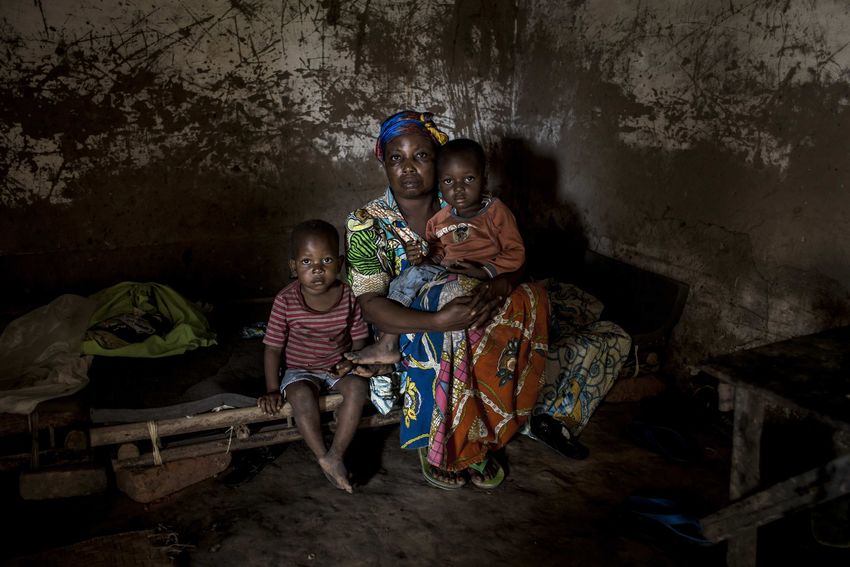
CONGOLESE SITUATION
RESPONDING TO THE NEEDS OF DISPLACED CONGOLESE AND REFUGEES

ANNEX - BURUNDI

Supplementary Appeal
January - December 2018
SUPPLEMENTARY APPEAL > CONGOLESE SITUATION
                 RESPONDING TO THE NEEDS OF CONGOLESE DISPLACED AND REFUGEES

    Burundi
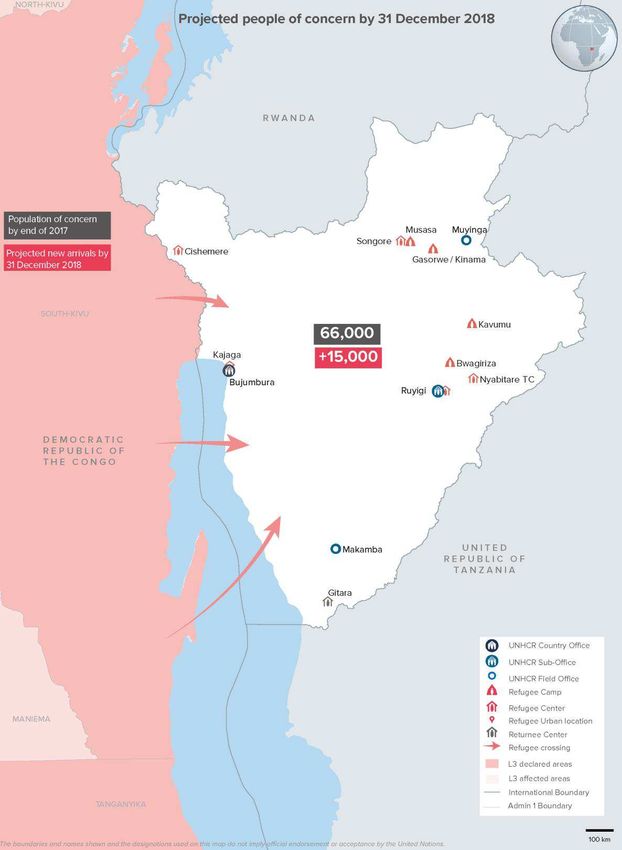
    Map of the area covered by this appeal

2                                                           UNHCR / February, 2018
SUPPLEMENTARY APPEAL > CONGOLESE SITUATION
RESPONDING TO THE NEEDS OF CONGOLESE DISPLACED AND REFUGEES
Overview
807,000 81,000 79% UNHCR Presence
Congolese refugees Congolese refugees Of Congolese 126 national and
expected to be hosted expected to be hosted in refugees are international staff
in the region by end Burundi by end 2018 women and
2018 children 4 offices in the country
The Burundi country annex is part of the supplementary appeal for Congolese situation, which outlines UNHCR’s
protection interventions planned in 2018 and its response to the additional and most urgent needs of people of concern
fleeing from the Democratic republic of the Congo (DRC).
Population of concern
Burundi hosts 66,000 refugees and asylum-seekers
originating from the Democratic Republic of the Congo
(DRC) fleeing violence and armed conflict in South Kivu. 15,000 new
arrivals
Approximately 41 per cent are urban refugees, while the estimated
remaining 59 per cent are living in four refugee camps, trhoughout
2018
namely Kavumu, Bwagiriza, Kinama and Musasa.
Approximately 51 per cent are women and girls and 56 are
children. In 2017, Burundi has been receiving on average
more than 430 Congolese asylum seekers per month, with
more than 6,300 new arrivals transferred to Kavumu camp. 66,000 Congolese refugees
hosted by end 2017
Burundi acceded the Refugee Convention and its Protocol,
and created a solid asylum system through the 2008 Law on
Asylum and Refugee Protection and relevant implementing
tools, establishing under the Ministry of Interior a national
office for the protection of refugees and stateless persons Financial requirements
(ONPRA) and regulating the asylum procedure. The refugee
status determination for the asylum seekers coming from
North and South Kivu is an accelerated process, based on 7% or $ 22.7 million
requested for
the 1969 OUA Convention. Burundi
The situation remains volatile in the North and South Kivus
Provinces of the DRC, and UNHCR is expected refugee
flows will continue in 2018 with 15,000 new Congolese
refugees in 2018 in Burundi, bringing the overall Congolese
refugee population to 81,000 by the end of December.
UNHCR’s strategy response will focus on ensuring access $368.7 million requested
to territory and providing protection and multi-sectoral for the overall
assistance to refugees. Congolese situation
UNHCR / February 2018 3SUPPLEMENTARY APPEAL > CONGOLESE SITUATION
RESPONDING TO THE NEEDS OF CONGOLESE DISPLACED AND REFUGEES
Needs and response
Identified needs
Since 2015, Burundi is experiencing a multidimensional socio-political and macroeconomic crisis
impacting different sectors and aspects of protection and livelihoods, which has led to displacement
and food insecurity.
The Congolese situation has created enormous humanitarian needs:
The general protection environment in the country presents challenges also for the Congolese
refugees and asylum-seekers, particularly in terms of security, freedom of movement, and
access to basic social services such as education and health, and local integration including
self-reliance and naturalization prospects.
In case of an emergency influx, the reception capacity of transit centres and camps will have to
be increased, and the resources allocated to the implementation of the asylum procedure and
the general protection and durable solutions strategy also be incremented.
Lack of funding is hindering the quantity and quality of multisectoral assistance provided to
refugees—education, health care, WASH, shelter, core relief items, cooking energy and income-
generating activities.
Response
Throughout 2018, UNHCR interventions will be guided by the following strategic priorities to
response to protection and immediate needs of Congolese refugees:
Access to territory and legal assistance—UNHCR will strengthen the capacity of ONPRA and the
immigration and border police, who are primarily responsible for the asylum procedure in order to
ensure asylum-seekers access to territory, asylum procedures and refugee status determination and
prevent any refoulement risk. In addition, the Office will also conduct individual and biometric
registration and documentation and support the local authorities for the issuance of civil
documentation.
Protection and multisectoral assistance—UNHCR will ensure timely identification and assistance
of vulnerable cases, including children at risk and SGBV survivors. In 2017, the Office has run a
project to carry out the assessment of the best interests of 300 unaccompanied and separated
children and children at risk in the northern camps. This pilot exercise will be extended to the camps
in the East and for urban refugees. Community-based protection structures and local welfare
institutions will be supported, particularly for child protection and SGBV prevention and response as
well as for general referrals to basic social services.
Promoting inclusion of refugees in national programmes—UNHCR will advocate with the
Government for access to and inclusion of refugees in national service delivery systems. UNHCR will
continue to support national health structures and the establishment of a mutual health system for
urban refugees, ensuring refugee access to health care including medicine and promoting in
particular urban refugees’ inclusion into national structures health.
Self-reliance and livelihoods improved—Refugee resilience and self-reliance capacity will be
boosted through skills-building initiatives, sustainable rural livelihood strategies and environmental
protection at community level.
4 UNHCR / February, 2018SUPPLEMENTARY APPEAL > CONGOLESE SITUATION
RESPONDING TO THE NEEDS OF CONGOLESE DISPLACED AND REFUGEES
Key intervention areas
Protection
UNHCR’s strategy will focus on registration, enhanced access to protection services, prevention and
respond to SGBV and child protection. UNHCR will:
Ensure refugees and asylum-seekers’ access to territory and asylum procedures, civil registration and
documentation, and support the Government through ONPRA to maintain an effective registration and
efficient refugee status determination system through which all new arrivals and their family members are
registered and their vulnerabilities captured for better assistance.
Build the capacity of the Government to manage and respond to refugee matters at large and protection in
particular including through training, provision of relevant technical and material support and advisory and
functional support towards policy and law development.
Strengthen child protection response—including through the establishment of child friendly and safe
spaces, identifying and providing support to unaccompanied and separated children, building the capacity
of community protection structures to prevent and respond to child’s exploitation, violence, abuse and
neglect, (promoting active participation of children in their own protection through the establishment and
strengthening of children's clubs.
Ensure prevention of and response to SGBV, including specialized services and support for survivors.
Education
UNHCR and its partners will ensure access of aged of school refugee children to education. UNHCR will:
Support refugee school age children access to the public education system, including access to education
services for children with special needs.
Shelter and core relief items
Bearing in mind the parameters set by the Government of Burundi, UNHCR will:
Provide shelter to the most vulnerable household and support people of concern with the rehabilitation of
essential infrastructures and by prioritizing the construction in the camps and transit centres of
public/communal WASH facilities.
Support all new arrivals with kits to construct their own shelters and latrines.
Establishment of a new camp(s) to provide accommodation and assistance the new refugees.
Health
UNHCR will strengthen, expand and support the health services so as to meet the health needs. Through its
UNHCR will:
Promote health assistance for refugees, including vaccinations, screening for acute malnutrition of children,
identification and referral of cases of acute and chronic illness and pregnant women.
Support partners to deliver in camps and transit centre access primary health care and nutrition services,
including infant and young children feeding.
Promote preventive health measures through awareness raising of refugees and host communities.
Advocate for the inclusion of refugees in the national health system.
UNHCR / February 2018 5SUPPLEMENTARY APPEAL > CONGOLESE SITUATION
RESPONDING TO THE NEEDS OF CONGOLESE DISPLACED AND REFUGEES
Community empowerment and self-reliance
UNHCR will strengthen the local capacity to host refugees and promote peaceful coexistence among refugees
and with host communities. UNHCR will:
Enhance the resilience, self-reliance and livelihoods activities of refugees in Burundi through skills-building
initiatives, sustainable rural livelihood strategies and protection of shared environment.
Carry out a market analysis to identify which sectors have potential to provide real economic and self-reliance
opportunities for people of concern.
Link refugees who are more suited for employment to jobs or apprenticeships in partnership with the National
Agency of Youth Employment. A tailored programme for employment will target skilled refugees.
Refugees and host communities will acquire greater knowledge and improved skills on organic agriculture,
non-farm livelihoods (recycling and petty-trade) from technical training, skills training, and language courses
for livelihood purposes.
Facilitate small animal raising projects, agricultural and fisheries production by providing kits and inputs in
collaboration with national authorities and FAO.
Foster peaceful co-existence among the refugees themselves and with the host communities.
Logistics and operations support
UNHCR will ensure timely provision of immediate life-saving needs and support effective sourcing,
transportation, delivery, storage, distribution and accounting for assistance.
Maintain order of core relief items to pre-position them for a possible influx estimated at 20,000 people
Conduct a good market study to make the most of the local market, as there are a few items that can be
purchased locally.
Establish frame agreement contract for these different types of goods identified during this market study.
Enhance the storage capacity for non-food items and increase space in the existing 3 concrete
warehouses and install 4 new rub hall.
Increase transport capacity of concern people and their goods.
6 UNHCR / February, 2018SUPPLEMENTARY APPEAL > CONGOLESE SITUATION
RESPONDING TO THE NEEDS OF CONGOLESE DISPLACED AND REFUGEES
Coordination and working in partnership
UNHCR’s main government counterpart in Burundi is the Ministry of Interior and Patriotic Education
through the National Office for the Protection of Refugees and Stateless Persons (ONPRA-Office
national de protection des réfugiés et apatrides). UNHCR will continue to coordinate and work closely
with the Government of Burundi and all partners to realize the most effective services delivery and
outcomes for refugees, and avoid overlaps and gaps.
UNHCR will continue to strengthen its partnership with local NGOs/INGOs and community-based
organizations in order to support refugee with an integration potential. UNHCR’s main partners are:
ONPRA, as the main governmental counterpart;
International Rescue Committee – SGBV, child protection and logistics;
Jesuit Refugee Service – Education;
Caritas – Food and CRIs;
Gruppo di Volontariato Civile – Health.
UNHCR will continue working closely with the Resident Coordinator in Burundi, the Humanitarian
Country Team and the UNCT. UNHCR cooperates with governmental partners, NGOs and UN sister
agencies, including WFP, UNICEF, UNFPA, WHO, UNAIDs and regional organizations such as the
ICGLR. UNHCR will also expand its network of development actors in line with the New York
Declaration, such as the World Bank.
UNHCR / February 2018 7SUPPLEMENTARY APPEAL > CONGOLESE SITUATION
RESPONDING TO THE NEEDS OF CONGOLESE DISPLACED AND REFUGEES
Financial requirements
UNHCR’s ExCom budget for Burundi to respond to the Congolese situation amounts $22,680,913,
presented below. No additional requirements are requested in this appeal.
Congolese situation
ExCom Budget
and subsequent
adjustments Additional
Total
related to the requirements
Congolese
situation
Favourable protection environment
264,492 - 264,492
Legal assistance and legal remedies
Fair protection processes and documentation 1,572,765 - 1,572,765
Reception conditions
Status refugee determination
Civil registration and civil status documentation
Level of individual documentation
Registration and profiling
Security from violence and exploitation
1,120,029 - 1,120,029
Prevention of and response to SGBV
Protection of children
Basic needs and services 15,073,310 - 15,073,310
Health 2,898,979 - 2,898,979
Food security and Nutrition 740,632 - 740,632
Shelter and infrastructure 4,253,044 - 4,253,044
WASH 1,258,458 - 1,258,458
Basic and domestic items 786,054 - 786,054
Services for people with specific needs 509,513 - 509,513
Education 2,301,607 - 2,301,607
Energy 2,325,023 - 2,325,023
Community empowerment and self-reliance 794,555 - 794,555
Community mobilization
Self-reliance and livelihoods
Durable solutions 959,580 - 959,580
Voluntary return
Resettlement
Logistics and operations support 2,061,382 - 2,061,382
Leadership, coordination and partnerships
834,800 - 834,800
Coordination and partnerships
Donor relations and resource mobilization
SUBTOTAL 22,680,913 - 22,680,913
Support costs (7 per cent) - - -
TOTAL 22,680,913 - 22,680,913
8 UNHCR / February, 2018CONGOLESE SITUATION RESPONDING TO THE NEEDS OF DISPLACED CONGOLESE AND REFUGEES ANNEX - BURUNDI Supplementary Appeal January - December 2018 UNHCR hqfr00@unhcr.org P.O. Box 2500 1211 Geneva 2 www.unhcr.org reporting.unhcr.org Published on February 2018 Cover photo: Displaced and struggling to survive. © UNHCR/John Wessels
You can also read


