Controlling the Sense of Embodiment for Virtual Avatar Applications: Methods and Empirical Study
←
→
Page content transcription
If your browser does not render page correctly, please read the page content below
JMIR SERIOUS GAMES                                                                                                                       Kim et al

     Original Paper

     Controlling the Sense of Embodiment for Virtual Avatar
     Applications: Methods and Empirical Study

     Chang-Seop Kim1, MS; Myeongul Jung1, BS; So-Yeon Kim2, PhD; Kwanguk Kim1, PhD
     1
      Department of Computer Science, Hanyang University, Seoul, Republic of Korea
     2
      Department of Psychology, Duksung Woman’s University, Seoul, Republic of Korea

     Corresponding Author:
     Kwanguk Kim, PhD
     Department of Computer Science
     Hanyang University
     222 Wangsimni-ro
     Seongdong-gu
     Seoul, 04763
     Republic of Korea
     Phone: 82 2 2220 2319
     Email: kenny@hanyang.ac.kr

     Abstract
     Background: The sense of embodiment (SoE) is the feeling of one’s own body, and research on the SoE extends from the
     rubber hand illusion to the full-body ownership illusion with a virtual avatar.
     Objective: The key to utilizing a virtual avatar is understanding and controlling the SoE, and it can be extended to several
     medical applications. In this study, we aimed to clarify these aspects by considering the following three subcomponents of SoE:
     sense of agency, ownership, and self-location.
     Methods: We defined a human avatar (HA), point light avatar (PLA), and out-of-body point light avatar (OBPLA) and compared
     them in three user studies. In study 1, 28 participants were recruited and the three avatar conditions (HA, PLA, and OBPLA)
     were compared. In study 2, 29 new participants were recruited, and there were two avatar conditions (HA ad PLA) and two motion
     synchrony conditions (synchrony and asynchrony). In study 3, 29 other participants were recruited, and there were two avatar
     conditions (PLA and OBPLA) and two motion synchrony conditions (synchrony and asynchrony). Dependent measures included
     sense of agency, ownership, and self-location; emotional response; presence; and simulator sickness.
     Results: The findings of study 1 showed that the three avatar generation methodologies can control the sense of ownership and
     self-location in a stepwise manner while maintaining a high sense of agency. In studies 2 and 3, we found dependencies among
     the three subcomponents of SoE and observed that they affected users’ subjective experiences.
     Conclusions: Our findings may have implications for boosting the effects of virtual avatar applications in medical areas, by
     understanding and controlling the SoE with a full-body illusion.

     (JMIR Serious Games 2020;8(3):e21879) doi: 10.2196/21879

     KEYWORDS
     embodiment; virtual avatar; full-body illusion; motion capture; virtual reality

                                                                            experiences himself/herself [3,4]. In the field of cognitive
     Introduction                                                           neuroscience, embodiment is related to how the brain expresses
     The sense of embodiment (SoE) is the feeling of one’s own              the body [5,6].
     body. When we move our bodies in our everyday lives, we feel           Because the SoE is an unconscious process, its alteration or
     the SoE unconsciously. The SoE is intimately related to the            manipulation is difficult. However, Botvinick and Cohen
     sense of self and is considered as the starting point of having        manipulated the SoE using an experiment [7]. With the rubber
     self-identity [1,2]. The term embodiment has been defined              hand illusion paradigm, the authors demonstrated that
     differently in various contexts. From a philosophical perspective,     participants experienced the SoE on the rubber hand, generating
     embodiment is considered to be how a person defines and                an ownership illusion [7,8]. The rubber hand illusion experiment
     http://games.jmir.org/2020/3/e21879/                                                          JMIR Serious Games 2020 | vol. 8 | iss. 3 | e21879 | p. 1
                                                                                                                 (page number not for citation purposes)
XSL• FO
RenderX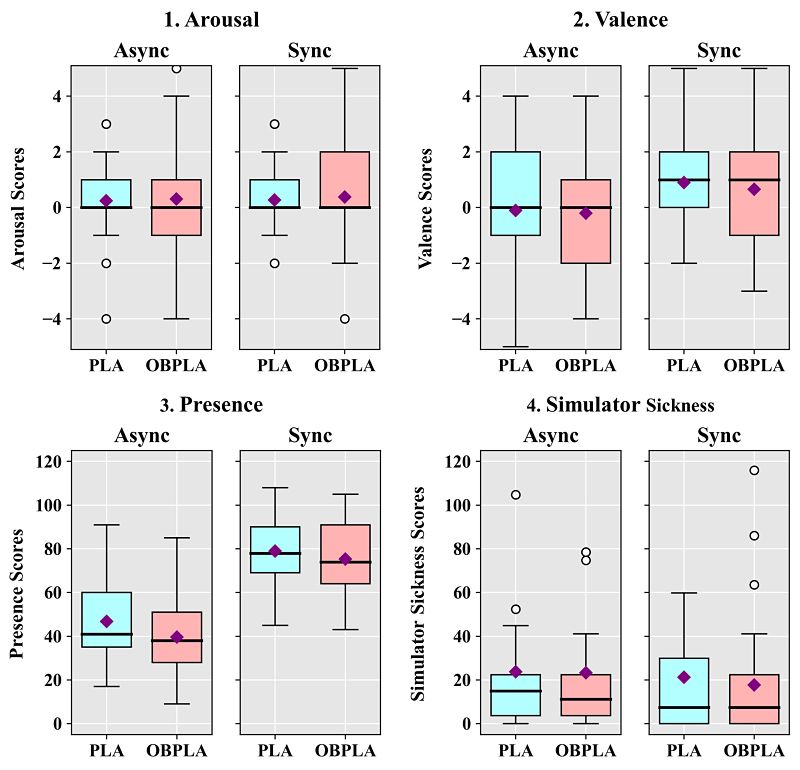
JMIR SERIOUS GAMES                                                                                                                                Kim et al

     showed that concurrence of visual and tactile stimulation could             signals are also considered to have an important role in
     generate an embodied experience for a part of one’s body.                   self-localization [19].
     Recently, researchers have begun to apply virtual reality (VR)
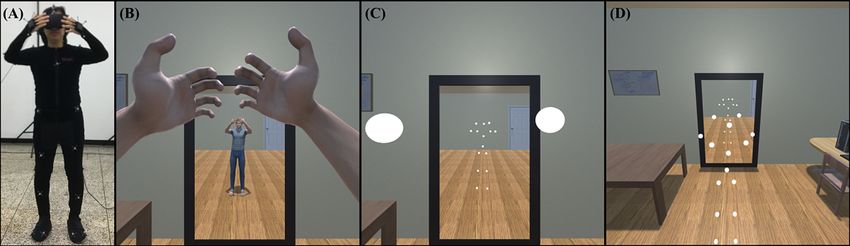
                                                                                 In this study, we proposed three virtual avatar methods (Figure
     techniques to expand the SoE to the whole body. A life-sized
                                                                                 1) based on the definition of the three subcomponents of the
     virtual avatar for a full-body ownership illusion has been
                                                                                 SoE, as approaches to understand and control the SoE. The first
     developed [9]. Slater et al showed that participants perceived
                                                                                 method is human avatar (HA), which is expected to maintain
     the ownership illusion from virtual arms [10], and Jun et al
                                                                                 agency, ownership, and self-location at high levels. The HA
     demonstrated that a full-body ownership illusion and changes
                                                                                 method uses a human-shaped avatar that moves congruently
     in an avatar’s facial expression meaningfully affected users’
                                                                                 with the movement of the user and matches the gender and body
     emotions [11].
                                                                                 size of the user [11]. The second method is point light avatar
     The effects of the SoE on perceptual and behavioral alterations             (PLA), which is expected to maintain high levels of agency and
     can be extended to several medical areas. Pioneers have made                self-location but a low level of ownership. The PLA method is
     efforts to apply them in psychological counseling programs                  based on the point light method proposed by Johansson in his
     [12], and others have used them to enhance cognitive-behavioral             biological motion perception study [20]. The point light is placed
     therapy for eating disorders [13]. In addition to these                     at the joint position of the HA to sufficiently reflect the
     applications, systematic desensitized experiences with a virtual            movement of the user but does not have human visual
     avatar could be extended to pain distraction among burn patients,           characteristics. Because it does not have human visual
     phobias, and posttraumatic stress disorder [14-16]. However,                characteristics, the PLA is expected to produce a low sense of
     for these purposes, we may need to control the SoE, which has               ownership compared with the HA. However, biological motion
     not yet been rigorously examined.                                           is the movement of a living creature and contains information
                                                                                 such as behavior, intention, emotion, and personality [21]. Thus,
     Previous theories have suggested that the SoE can generally be
                                                                                 we expect PLA users to be aware of their movement, and their
     divided into the sense of agency, ownership, and self-location
                                                                                 agency will not be lowered. The third method is out-of-body
     [2]. First, the sense of agency is the subjective feeling that “I
                                                                                 point light avatar (OBPLA), which is expected to maintain a
     am the one who is causing or generating an action” [17]. It
                                                                                 high level of agency and low levels of ownership and
     includes the subjective experience of action, control, intention,
                                                                                 self-location. The OBPLA method places the user’s viewpoint
     and motor selection, as well as the conscious experience of will
                                                                                 behind the PLA so that the user can see the PLA from a third
     [3,18]. Second, the sense of ownership is the feeling that “I am
                                                                                 person perspective. Therefore, we expect that the OBPLA will
     the one who is undergoing the current experience” [17]. The
                                                                                 show lower self-location compared with the PLA while
     sense of ownership is about the self-attribution of a body that
                                                                                 maintaining a high level of agency. We defined the HA, PLA,
     distinguishes it from the sense of agency because it can occur
                                                                                 and OBPLA and compared them in three user studies. In study
     even without a behavior being conducted. Finally, the sense of
                                                                                 1, we manipulated the SoE by controlling the presence of the
     self-location is the determinate volume in space in which one
                                                                                 virtual avatar and point of view. In studies 2 and 3, we
     feels to be located [18]. It is determined by visuospatial
                                                                                 manipulated the SoE by controlling motion synchrony. The
     perspectives, which are usually egocentric [3], and vestibular
                                                                                 differences among the three studies are illustrated in Figure 2.
     Figure 1. Proposed virtual avatar methodologies. A: real world; B: human avatar condition; C: point light avatar condition; D: out-of-body point light
     avatar condition.

     http://games.jmir.org/2020/3/e21879/                                                                   JMIR Serious Games 2020 | vol. 8 | iss. 3 | e21879 | p. 2
                                                                                                                          (page number not for citation purposes)
XSL• FO
RenderX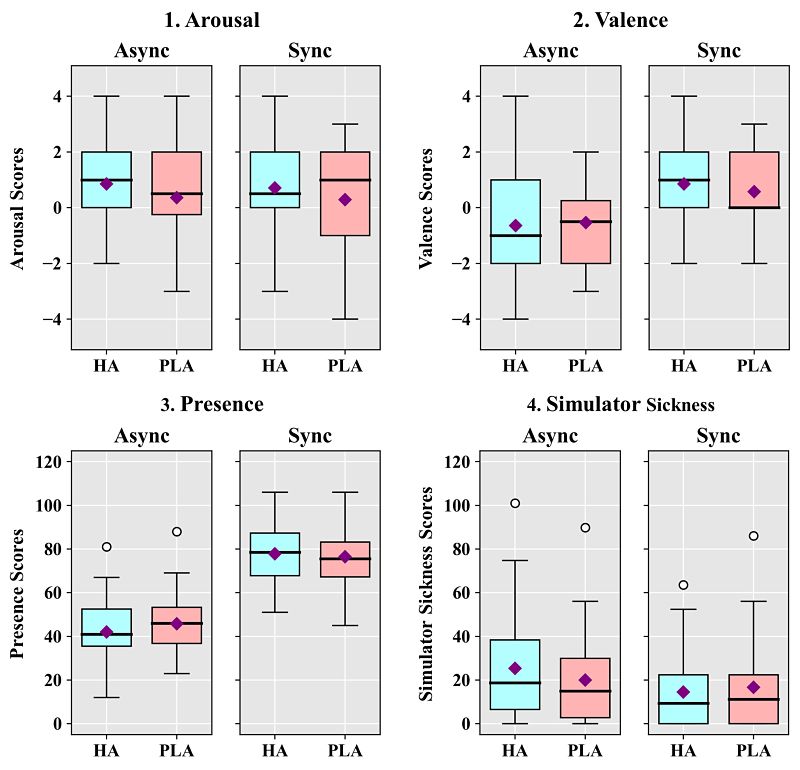
JMIR SERIOUS GAMES                                                                                                                               Kim et al

     Figure 2. Designs of studies 1, 2, and 3. Async: asynchrony; HA: human avatar; OBPLA: out-of-body point light avatar; PLA: point light avatar; Sync:
     synchrony.

                                                                                size using the height, shoulder, waist, and pelvis sizes of the
     Methods                                                                    participant measured before the experiment. The gender of each
     Study 1                                                                    avatar was also matched to that of the participant. The third
                                                                                module was a head rotator module, which received the head
     Participants                                                               rotation information of the HMD and rotated the camera in the
     Twenty-eight participants (50% female participants, 14/28)                 virtual space, providing visual information to the participant.
     were recruited for the experiment (mean age 23.89 years, SD                The PLA condition involved moving a PLA using a full-body
     3.08 years). One participant was excluded from the analysis                motion capture system. The PLA was composed of 15 spheres,
     because of having a high risk of mental illness, as assessed by            each with a diameter of 5 cm, according to the study of Troje
     the Symptom Checklist-90-revised (SCL-90-R; mean score                     [21]. The 15 spheres were all white without shadows. In the
     34.07, SD 40.22) [22]. The experimental protocol was approved              PLA condition, the avatar animator module sent skeleton data
     by the institutional review board of the research site university.         to the PLA, and different from the HA condition, the size
     Hardware and Software Setups                                               adjuster module reflected the height, shoulder, and pelvis sizes.
                                                                                The head rotator module was operated the same as under the
     The virtual environment of the experiment was implemented                  HA condition. Therefore, the camera in the virtual space rotated
     using Unity3D 2017.3.1f (Unity Technologies). The software                 and moved to match the head position of the PLA.
     was executed on a desktop PC with a Nvidia GeForce GTX
     1080 graphics card (NVIDIA). The participants wore a                       The OBPLA condition utilized the out-of-body experience in
     head-mounted display (HMD; Oculus Rift CV1, Oculus VR)                     the PLA condition, so that the PLA could be seen from the
     with a resolution of 1080×1200 pixels per eye and a refresh rate           outside. The OBPLA condition was created by moving the
     of 90 Hz.                                                                  camera in the PLA condition backward by 120 cm and upward
                                                                                by 30 cm relative to the global coordinate axis. The participants
     A motion-capture system (Motive 2.0.2; NaturalPoint) was used              were able to observe their PLAs from a third person perspective.
     with 14 Flex13 cameras (NatrualPoint) and 37 markers on a
     motion-capture suit. Each Flex13 camera had a resolution of                Virtual Environments
     1280×1024 pixels, a frame rate of 120 frames per second (fps),             A virtual mirror was placed in the virtual room so that the
     and a latency of 8.33 ms. The positions of the markers within              participants could easily observe their avatar. Participants saw
     the tracking area were mapped onto a predefined avatar skeleton            the avatar by both looking directly toward the avatar and by
     using Motive 2.0.2. After generating the avatar skeleton, the              looking at its reflection in the mirror. Several objects, such as
     values for the skeleton bones with six degrees of freedom were             computers, a copier, and chairs, were placed in the room for
     streamed using socket communication at 120 fps with a                      participants to be able to perceive their own body size in relation
     streaming latency of less than 3 ms.                                       to these objects.
     Three Types of Avatars                                                     Dependent Measures
     For this study, the following three avatar conditions were                 As part of a prequestionnaire, personal information, such as
     implemented: HA, PLA, and OBPLA.                                           gender and age, was obtained, and the SCL-90-R was used. An
     The HA condition involved moving a human-shaped avatar                     embodiment questionnaire (EQ) was used to measure the level
     using a full-body motion capture system. Three Unity3D                     of the SoE. A part of the EQ developed by Piryankova et al was
     modules were developed to implement the HA condition. The                  selected and modified to fit our experiment [23]. The questions
     first module was an avatar animator module, which streamed                 in the EQ are explained in detail in Table 1. The EQ used a
     21 bones of the skeleton in real time from Motive 2.02 to the              seven-point Likert scale to measure agency, ownership, and
     avatar. The second module was a size adjuster module, which                self-location separately. Participants filled out the EQ after
     matched the size of the avatar to the actual participant’s body            experiencing each condition.

     http://games.jmir.org/2020/3/e21879/                                                                  JMIR Serious Games 2020 | vol. 8 | iss. 3 | e21879 | p. 3
                                                                                                                         (page number not for citation purposes)
XSL• FO
RenderX
JMIR SERIOUS GAMES Kim et al
Table 1. List of the items used in the embodiment questionnaire.
Question statementa Sense aspect
I felt I could move the virtual body. Agency 1
Sometimes I had the feeling that I had control over the virtual body. Agency 2
I felt as if the virtual body was my body. Ownership 1
I experienced the arms of virtual body as parts of myself. Ownership 2
I experienced the legs of virtual body as parts of myself. Ownership 3
Sometimes I had the feeling that the virtual body belonged to me. Ownership 4
I experienced the virtual body as myself. Ownership 5
I felt as if I was inside the virtual body. Self-location 1
I had the feeling that I was standing in the same location as the virtual body. Self-location 2
a
The scale ranges from 1 (fully disagree) to 7 (fully agree).
advance instead of delivering the motion capture data to the
Procedure avatar through the avatar animator module. Although each
Prior to the experiment, all participants completed consent forms participant’s movement was not delivered to the avatar, the
and were instructed on the experimental procedures. All other conditions were controlled. The size of the avatar was
participants also completed a set of prequestionnaires. After the adjusted according to the body size of the participant, and the
prequestionnaires were completed, participants watched a video participant could freely look around even in the asynchrony
clip containing human motion for 5 minutes to prevent condition. The avatar conditions (HA and PLA) were the same
participant immobility. Thereafter, participants wore a as those used in study 1.
motion-capture suit and practiced the HA condition for 3
minutes to familiarize themselves with VR and the Dependent Measures
motion-capture environment. In the main session, participants In study 2, personal information and the SCL-90-R were used
were asked to move freely in the virtual room under the three in the same manner as in study 1. The EQ was the same as in
conditions. Each condition lasted for 5 minutes and was study 1. Furthermore, self-assessment manikin (SAM), presence,
counterbalanced. After completing each condition, participants and simulator sickness questionnaires were completed. The
removed the HMD and completed the EQ. The purpose of the SAM is a nine-point bipolar scale that uses pictures as a measure
study was explained to the participants once they had completed of participants’ subjective emotional responses to virtual
all tasks. experiences [24]. In this study, arousal and valence were
measured as emotional responses. The presence questionnaire
Study 2 (PQ) consists of a seven-point Likert scale and is used to
Study 2 was designed to address the limitations of Study 1. measure presence in VR [25]. The simulator sickness
First, we manipulated the level of SoE by controlling motion questionnaire (SSQ) is about the degree of simulator sickness
synchrony. Second, we investigated the differences in subjective and consists of a four-point Likert scale [26].
measures achieved by controlling the SoE. Specifically, emotion,
presence, and simulator sickness were measured. In study 2, Study 3
there were two avatar conditions (HA and PLA) and two motion Study 3 was designed to include the OBPLA condition
synchrony conditions (synchrony and asynchrony). The (OBPLA-sync and OBPLA-async). The PLA and OBPLA were
differences in experimental design between studies 1 and 2 are used as avatar conditions, and synchrony and asynchrony were
illustrated in Figure 2. used as motion synchrony conditions. This experiment had a
2×2 within-subject design (Figure 2) considering motion
Participants synchrony (sync vs async) and avatars (PLA vs OBPLA).
Twenty-nine new participants (52% female participants, 15/29)
were recruited for study 2. The mean age of the participants Participants
was 25.31 years (SD 2.62 years). One of the participants was Twenty-nine participants (48% female participants, 14/29) were
excluded from the analysis because of the identification of high recruited for the experiment. The mean age of the participants
risk of mental illness according to the SCL-90-R (mean score was 24.14 years (SD 2.74 years). No participants were excluded
39.03, SD 38.41). from the study with the SCL-90-R (mean score 36.86, SD
35.68).
Conditions
This study implemented the synchrony and asynchrony Conditions
conditions to control motion synchrony. The synchrony This study used the same synchrony and asynchrony conditions
condition was implemented with the avatar animator, size implemented in study 2 to control motion synchrony. The PLA
adjuster, and head rotator modules used in study 1. The and OBPLA conditions used in study 1 were used as the avatar
asynchrony condition used an avatar animation captured in conditions.
http://games.jmir.org/2020/3/e21879/ JMIR Serious Games 2020 | vol. 8 | iss. 3 | e21879 | p. 4
(page number not for citation purposes)
XSL• FO
RenderXJMIR SERIOUS GAMES Kim et al
the HA was found to be significantly higher than that of the
Results PLA (t26=2.245, P=.03) and OBPLA (t26=3.967, PJMIR SERIOUS GAMES Kim et al
Figure 4. Box-and-whisker diagrams showing the results of the embodiment questionnaire according to the synchrony and avatar conditions in study
2. Square points are means, thick lines are medians, and round points are outliers. Async: asynchrony; HA: human avatar; PLA: point light avatar; Sync:
synchrony.
Figure 5. Box-and-whisker diagrams showing the results of the subjective measures according to the synchrony and avatar conditions in study 2. Square
points are means, thick lines are medians, and round points are outliers. Async: asynchrony; HA, human avatar; PLA, point light avatar; Sync: asynchrony.
http://games.jmir.org/2020/3/e21879/ JMIR Serious Games 2020 | vol. 8 | iss. 3 | e21879 | p. 6
(page number not for citation purposes)
XSL• FO
RenderXJMIR SERIOUS GAMES Kim et al
The agency results showed a significant main effect for motion motion synchrony (F1,27=25.354, PJMIR SERIOUS GAMES Kim et al
Figure 7. Box-and-whisker diagrams showing the results of the subjective measures according to the synchrony and avatar conditions in study 3. Square
points are means, thick lines are medians, and round points are outliers. Async: asynchrony; OBPLA: out-of-body point light avatar; PLA: point light
avatar; Sync: synchrony.
The arousal results showed no significant main effects for for avatar (P=.46) and no significant interaction effect between
motion synchrony (P=.75) and avatar (P=.56). There was no the two factors (P=.47).
significant interaction effect between motion synchrony and
avatar (P=.94). The valence results showed that there was a Discussion
significant main effect for motion synchrony (F1,28=20.190,
In this research, we proposed virtual avatar methodologies to
PJMIR SERIOUS GAMES Kim et al
of the HA compared with the PLA for those two SoE variables. is also possible in a high agency situation, such as in a full-body
Additionally, we found that the PLA increased agency, motion-capture system. In study 1, there was no relevant
ownership, and self-location compared with the OBPLA. difference in the sense of self-location between the HA and
Presence, emotion, and simulator sickness were affected by PLA conditions, but in study 2, there was a difference in the
motion synchrony and avatar conditions. Our findings suggest sense of self-location according to the avatar’s visual
that the SoE and subjective experiences can be affected characteristics. Moreover, in study 3, we found that changes in
differently with different avatar types in the full-body illusion. the viewpoint (first vs third person perspective) affected the
We believe that these results can be applied to various fields. sense of agency. This suggests the possibility of mutual
For example, the results can be used for systematic dependencies among the three subcomponents or the possibility
desensitization of phobias or pain reduction by controlling the of the context effect of synchrony and asynchrony. However,
level of SoE. They can also be used to control the effects of additional studies are required on this issue.
emotion and presence associated with using virtual avatars.
This study also found that there were significant differences in
In study 1, no relevant differences were found for agency among emotional response, presence, and simulator sickness according
the three conditions. Despite the absence of human visual to avatar type and motion synchrony. Although the design of
characteristics, if full-body motion-capture is maintained, the this study did not include an emotional evocation context, it
level of agency is not lowered. Recently, Zopf et al [29] was shown that the participants felt different emotional levels
compared virtual fingers and a virtual sphere moving depending on the condition. Participants felt higher arousal
correspondingly to a participant’s hand and found that the under the HA condition than under the PLA condition. The HA
moving sphere did not lower the level of agency. This study expresses a human face, but the PLA expresses the face as point
suggests that the degree of visual stimulation does not affect light, so the HA contains more facial information than the PLA.
the sense of agency for not only the hand but also the whole Although the avatar under the HA condition had a neutral face,
body. Therefore, based on existing research and this study, we it is possible that the human appearance influenced arousal. The
suggest that movements induced by one’s intent and predictions present results also showed an interaction effect between motion
determine the sense of agency. Moreover, in the comparison synchrony and the avatar’s visual characteristics and a main
among the avatar conditions, we found that the details of the effect in the avatar’s perspective. It would be beneficial to
avatar’s visual characteristics did not affect the sense of agency. control presence more precisely by using these combinations
of SoE subcomponents.
In studies 2 and 3, we investigated the effects of motion
synchrony on sense of agency, ownership, and self-location, This study has some limitations. First, the participants in our
and the results suggested that motion synchrony greatly affects study were all healthy young college students. It is possible that
all SoE subcomponents. Interestingly, the effects of motion the characteristics of the participants affected the results of
synchrony overwhelmed all other effects. Therefore, motion embodiment and subjective responses. Therefore, in future
synchrony may need to be controlled if we wish to control the studies, it is necessary to collect data from participants of various
SoE in general. However, the results of study 1 also suggested ages and health statuses. Second, this study asked participants
that the sense of body ownership and self-location can be to move freely and measured arousal and valence as emotions,
controlled once motion synchrony is satisfied. Merging the but pain, anxiety, and fear were not accurately represented.
results from studies 1, 2, and 3, we expect that we can use These emotions should be considered for future medical
motion synchrony for the general control of the SoE, and we applications. Therefore, in future studies, it is necessary to give
can use the presence of the virtual body and point of view for specific tasks to participants and check how these methods of
more detailed control over the SoE. The sense of ownership controlling the embodiment affect participants in emotional
under the HA condition was higher than that under the PLA tasks. Third, this study proposed the HA, PLA, and OBPLA to
and OBPLA conditions. This result is an extension of previous control the external appearance and perspective of the avatar.
findings that the sense of ownership is induced when the virtual However, an extension of these methods can be used to control
body and physical body are morphologically coincident the SoE. For example, we can use lines to express the body or
[7,30,31]. This also suggests that the HA and PLA are low-polygon human avatars to control the level of visual
appropriate tools for controlling the level of ownership. The characteristics. We can also control the point of view, allowing
point light (PL) method is known to have sufficient information the human avatar to be seen from another third person
to not only express human behavior but also determine gender perspective, or we can see our avatar from the front. Future
[32,33] and recognize emotion [34]. On the other hand, human studies must use additional methods to regulate the SoE and
visual features, such as important interjoint expressions, finger identify the impacts.
expressions, rotation of some joints, and skin texture are
In this study, we proposed and compared the HA, PLA, and
excluded in the PL method. These characteristics of the PL
OBPLA conditions to understand and control the SoE. We also
method seem to be suitable for controlling ownership when the
studied how emotional response, presence, and simulator
PLA is used as a virtual body. Participants experienced a higher
sickness can be affected by controlling the subcomponents of
sense of self-location under the HA and PLA conditions than
the SoE. The results suggested that the three avatar generation
under the OBPLA condition. This result supports previous
methodologies and two synchrony levels can control the sense
findings that self-location can be controlled through viewpoint
of agency, ownership, and self-location, and emotional response,
changes in low agency situations [35,36]. This study suggested
presence, and simulator sickness were differently affected by
that the control of self-location through changes of perspective
each methodology. This study may have implications for
http://games.jmir.org/2020/3/e21879/ JMIR Serious Games 2020 | vol. 8 | iss. 3 | e21879 | p. 9
(page number not for citation purposes)
XSL• FO
RenderXJMIR SERIOUS GAMES Kim et al
boosting the effects of virtual avatar applications in several education, by controlling the SoE with a full-body illusion.
fields of study, such as psychotherapy, entertainment, and
Acknowledgments
This research was supported by the National Research Foundation of Korea (NRF) funded by the Ministry of Science and ICT
(NRF-2017M3C7A1029688 and NRF-2018R1A5A7059549). The funders were not involved in the design or conduct of the
study; data collection; management; analysis; interpretation; or preparation, review, or approval of the manuscript.
Conflicts of Interest
None declared.
References
1. Cassam Q. Self and World. Oxford, UK: Oxford University Press; 1997.
2. Longo MR, Schüür F, Kammers MP, Tsakiris M, Haggard P. What is embodiment? A psychometric approach. Cognition
2008 Jun;107(3):978-998. [doi: 10.1016/j.cognition.2007.12.004] [Medline: 18262508]
3. Blanke O, Metzinger T. Full-body illusions and minimal phenomenal selfhood. Trends Cogn Sci 2009 Jan;13(1):7-13. [doi:
10.1016/j.tics.2008.10.003] [Medline: 19058991]
4. Metzinger T. Empirical perspectives from the self-model theory of subjectivity: a brief summary with examples. Prog Brain
Res 2008;168:215-245. [doi: 10.1016/S0079-6123(07)68018-2] [Medline: 18166398]
5. Berlucchi G, Aglioti S. The body in the brain: neural bases of corporeal awareness. Trends Neurosci 1997
Dec;20(12):560-564. [doi: 10.1016/s0166-2236(97)01136-3] [Medline: 9416668]
6. Graziano MS, Botvinick MM. How the brain represents the body: insights from neurophysiology and psychology. In: Prinz
W, Hommel B, editors. Common Mechanisms in Perception and Action: Attention and Performance. Oxford, UK: Oxford
University Press; 2002:136-157.
7. Botvinick M, Cohen J. Rubber hands 'feel' touch that eyes see. Nature 1998 Feb 19;391(6669):756. [doi: 10.1038/35784]
[Medline: 9486643]
8. Armel KC, Ramachandran VS. Projecting sensations to external objects: evidence from skin conductance response. Proc
Biol Sci 2003 Jul 22;270(1523):1499-1506 [FREE Full text] [doi: 10.1098/rspb.2003.2364] [Medline: 12965016]
9. Slater M, Spanlang B, Sanchez-Vives MV, Blanke O. First person experience of body transfer in virtual reality. PLoS One
2010 May 12;5(5):e10564 [FREE Full text] [doi: 10.1371/journal.pone.0010564] [Medline: 20485681]
10. Slater M, Perez-Marcos D, Ehrsson HH, Sanchez-Vives MV. Inducing illusory ownership of a virtual body. Front Neurosci
2009 Sep;3(2):214-220 [FREE Full text] [doi: 10.3389/neuro.01.029.2009] [Medline: 20011144]
11. Jun J, Jung M, Kim SY, Kim K. Full-Body Ownership Illusion Can Change Our Emotion. In: CHI '18: Proceedings of the
2018 CHI Conference on Human Factors in Computing Systems. 2018 Presented at: 2018 CHI Conference on Human
Factors in Computing Systems; April 21-26, 2018; Montreal, Canada. [doi: 10.1145/3173574.3174175]
12. Osimo SA, Pizarro R, Spanlang B, Slater M. Conversations between self and self as Sigmund Freud--A virtual body
ownership paradigm for self counselling. Sci Rep 2015 Sep 10;5:13899 [FREE Full text] [doi: 10.1038/srep13899] [Medline:
26354311]
13. Cesa GL, Manzoni GM, Bacchetta M, Castelnuovo G, Conti S, Gaggioli A, et al. Virtual reality for enhancing the cognitive
behavioral treatment of obesity with binge eating disorder: randomized controlled study with one-year follow-up. J Med
Internet Res 2013;15(6):e113 [FREE Full text] [doi: 10.2196/jmir.2441] [Medline: 23759286]
14. Hoffman HG, Patterson DR, Carrougher GJ. Use of virtual reality for adjunctive treatment of adult burn pain during physical
therapy: a controlled study. Clin J Pain 2000 Sep;16(3):244-250. [doi: 10.1097/00002508-200009000-00010] [Medline:
11014398]
15. Reger GM, Gahm GA. Virtual reality exposure therapy for active duty soldiers. J Clin Psychol 2008 Aug;64(8):940-946.
[doi: 10.1002/jclp.20512] [Medline: 18612993]
16. Tardif N, Therrien C, Bouchard S. Re-Examining Psychological Mechanisms Underlying Virtual Reality-Based Exposure
for Spider Phobia. Cyberpsychol Behav Soc Netw 2019 Jan;22(1):39-45. [doi: 10.1089/cyber.2017.0711] [Medline:
30256675]
17. Gallagher S. Philosophical conceptions of the self: implications for cognitive science. Trends in Cognitive Sciences 2000
Jan;4(1):14-21. [doi: 10.1016/s1364-6613(99)01417-5] [Medline: 10637618]
18. Kilteni K, Groten R, Slater M. The Sense of Embodiment in Virtual Reality. Presence: Teleoperators and Virtual Environments
2012 Nov;21(4):373-387. [doi: 10.1162/pres_a_00124]
19. Lopez C, Halje P, Blanke O. Body ownership and embodiment: vestibular and multisensory mechanisms. Neurophysiol
Clin 2008 Jun;38(3):149-161. [doi: 10.1016/j.neucli.2007.12.006] [Medline: 18539248]
20. Johansson G. Visual perception of biological motion and a model for its analysis. Perception & Psychophysics 1973
Jun;14(2):201-211. [doi: 10.3758/bf03212378]
http://games.jmir.org/2020/3/e21879/ JMIR Serious Games 2020 | vol. 8 | iss. 3 | e21879 | p. 10
(page number not for citation purposes)
XSL• FO
RenderXJMIR SERIOUS GAMES Kim et al
21. Troje NF. Decomposing biological motion: a framework for analysis and synthesis of human gait patterns. J Vis
2002;2(5):371-387 [FREE Full text] [doi: 10.1167/2.5.2] [Medline: 12678652]
22. Derogatis LR. SCL-90-R: Administration, scoring & procedures manual-II for the (revised) version and other instruments
of the psychopathology rating scale series. Baltimore, MD: Clinical Psychometric Research; 1992.
23. Piryankova IV, Wong HY, Linkenauger SA, Stinson C, Longo MR, Bülthoff HH, et al. Owning an overweight or underweight
body: distinguishing the physical, experienced and virtual body. PLoS One 2014 Aug 1;9(8):e103428 [FREE Full text]
[doi: 10.1371/journal.pone.0103428] [Medline: 25083784]
24. Bradley MM, Lang PJ. Measuring emotion: the Self-Assessment Manikin and the Semantic Differential. J Behav Ther Exp
Psychiatry 1994 Mar;25(1):49-59. [doi: 10.1016/0005-7916(94)90063-9] [Medline: 7962581]
25. Witmer BG, Singer MJ. Measuring Presence in Virtual Environments: A Presence Questionnaire. Presence 1998
Jun;7(3):225-240. [doi: 10.1162/105474698565686]
26. Kennedy RS, Lane NE, Berbaum KS, Lilienthal MG. Simulator Sickness Questionnaire: An Enhanced Method for Quantifying
Simulator Sickness. The International Journal of Aviation Psychology 1993 Jul;3(3):203-220. [doi:
10.1207/s15327108ijap0303_3]
27. Kim S, Park H, Jung M, Kim KK. Impact of Body Size Match to an Avatar on the Body Ownership Illusion and User's
Subjective Experience. Cyberpsychol Behav Soc Netw 2020 Apr;23(4):234-241. [doi: 10.1089/cyber.2019.0136] [Medline:
32074457]
28. Yoshie M, Haggard P. Negative emotional outcomes attenuate sense of agency over voluntary actions. Curr Biol 2013 Oct
21;23(20):2028-2032 [FREE Full text] [doi: 10.1016/j.cub.2013.08.034] [Medline: 24094850]
29. Zopf R, Polito V, Moore J. Revisiting the link between body and agency: visual movement congruency enhances intentional
binding but is not body-specific. Sci Rep 2018 Jan 09;8(1):196 [FREE Full text] [doi: 10.1038/s41598-017-18492-7]
[Medline: 29317726]
30. IJsselsteijn WA, de Kort YA, Haans A. Is This Hand I See Before Me? The Rubber Hand Illusion in Reality, Virtual Reality,
and Mixed Reality. Presence: Teleoperators and Virtual Environments 2006 Aug 01;15(4):455-464. [doi:
10.1162/pres.15.4.455]
31. Sanchez-Vives MV, Spanlang B, Frisoli A, Bergamasco M, Slater M. Virtual hand illusion induced by visuomotor
correlations. PLoS One 2010 Apr 29;5(4):e10381 [FREE Full text] [doi: 10.1371/journal.pone.0010381] [Medline: 20454463]
32. Barclay CD, Cutting JE, Kozlowski LT. Temporal and spatial factors in gait perception that influence gender recognition.
Percept Psychophys 1978 Feb;23(2):145-152. [doi: 10.3758/bf03208295] [Medline: 643509]
33. Kozlowski LT, Cutting JE. Recognizing the sex of a walker from a dynamic point-light display. Perception & Psychophysics
1977 Nov;21(6):575-580. [doi: 10.3758/bf03198740]
34. Dittrich WH, Troscianko T, Lea SE, Morgan D. Perception of emotion from dynamic point-light displays represented in
dance. Perception 1996;25(6):727-738. [doi: 10.1068/p250727] [Medline: 8888304]
35. Lenggenhager B, Smith ST, Blanke O. Functional and neural mechanisms of embodiment: importance of the vestibular
system and the temporal parietal junction. Rev Neurosci 2006;17(6):643-657. [doi: 10.1515/revneuro.2006.17.6.643]
[Medline: 17283609]
36. Maselli A, Slater M. The building blocks of the full body ownership illusion. Front Hum Neurosci 2013;7:83 [FREE Full
text] [doi: 10.3389/fnhum.2013.00083] [Medline: 23519597]
Abbreviations
ANOVA: analysis of variance
EQ: embodiment questionnaire
fps: frames per second
HA: human avatar
HMD: head-mounted display
OBPLA: out-of-body point light avatar
PL: point light
PLA: point light avatar
PQ: presence questionnaire
SAM: self-assessment manikin
SCL-90-R: Symptom Checklist-90-revised
SoE: sense of embodiment
SSQ: simulator sickness questionnaire
VR: virtual reality
http://games.jmir.org/2020/3/e21879/ JMIR Serious Games 2020 | vol. 8 | iss. 3 | e21879 | p. 11
(page number not for citation purposes)
XSL• FO
RenderXJMIR SERIOUS GAMES Kim et al
Edited by G Eysenbach; submitted 27.06.20; peer-reviewed by SH Choi, J Kim; comments to author 04.08.20; revised version received
18.08.20; accepted 18.08.20; published 22.09.20
Please cite as:
Kim CS, Jung M, Kim SY, Kim K
Controlling the Sense of Embodiment for Virtual Avatar Applications: Methods and Empirical Study
JMIR Serious Games 2020;8(3):e21879
URL: http://games.jmir.org/2020/3/e21879/
doi: 10.2196/21879
PMID:
©Chang-Seop Kim, Myeongul Jung, So-Yeon Kim, Kwanguk Kim. Originally published in JMIR Serious Games
(http://games.jmir.org), 22.09.2020. This is an open-access article distributed under the terms of the Creative Commons Attribution
License (https://creativecommons.org/licenses/by/4.0/), which permits unrestricted use, distribution, and reproduction in any
medium, provided the original work, first published in JMIR Serious Games, is properly cited. The complete bibliographic
information, a link to the original publication on http://games.jmir.org, as well as this copyright and license information must be
included.
http://games.jmir.org/2020/3/e21879/ JMIR Serious Games 2020 | vol. 8 | iss. 3 | e21879 | p. 12
(page number not for citation purposes)
XSL• FO
RenderXYou can also read


