CYCLING HIGH PERFORMANCE STRATEGIC PLAN - WESTERN AUSTRALIAN - WestCycle
←
→
Page content transcription
If your browser does not render page correctly, please read the page content below
WESTERN AUSTRALIAN
CYCLING
HIGH PERFORMANCE
STRATEGIC PLAN
Prepared and published by:
WestCycle Incorporated

With funding and support from:
Department of Sport and Recreation

Contact:
WestCycle Incorporated
info@westcycle.org.au
www.westcycle.org.au

Acknowledgements:
WestCycle would like to acknowledge
the contribution of the Western
Australian cycling community in the
development of this document.

Photography:
Various Sources

Design:
Media on Mars, Fremantle, WA

Copyright:
The information contained in
this document may be copied
provided prior approval is received
from WestCycle and that full
acknowledgement is made.
CONTENTS
EXECUTIVE SUMMARY             2
01 HIGH PERFORMANCE VISION    4
02 CURRENT ENVIRONMENTS       8
   Track                      9
   Road                      13
   Mountain Bike             17
   BMX                       21
03 FUTURE FOCUS              26
RESOURCES                    40
GLOSSARY                     44

                              1
EXECUTIVE
    SUMMARY
WestCycle the peak body of cycling     their best in state, national and     development environment. Strong
in Western Australia has prepared      international competition.            consultation with the Western
this High Performance Plan to          In addition, the high performance     Australian Institute of Sport
help shape the successful future       environment must nurture and          (WAIS) and the development
of high performance cycling across     identify Western Australia’s next     of stronger centralised shared
all disciplines. This specific plan    generation of athletes, providing     resources pathways will result in
is focusing on the state talent        the right support at the right time   not only greater success at a high
development area (13-19 years of       to ensure Western Australian          performance level but also an
age.) All disciplines are aligned to   athletes continue to achieve          increase in participation numbers
the Winning Edge aims, which are:      international sporting success.       from grass roots upwards. The
Top 5 nation at the Olympic and        A successful high performance         plan includes an analysis of the
Paralympics. Number 1 nation at        environment at the state level will   current cycling environment across
the Commonwealth Games. 20+            help shape our national sporting      all disciplines followed by a future
World championships winners            success. It will also help create     focus that will showcase key
annually. WestCycle is central         a culture of “living excellence”      strategic outcomes as well as
to Western Australia’s high            for athletes, coaches, clubs,         a description of resource allocation,
performance system within cycling      officials and all stakeholders        operational objectives and key
and is responsible for delivering/     involved. Within this document        personnel required to create a
assisting with high performance        will be the vision and strategies     sustainable high performance
cycling. Our role is to create         required for WestCycle and all        cycling environment.
environments that support coaches,     our member associations to
athletes and teams to perform at       grow a sustainable state athlete

2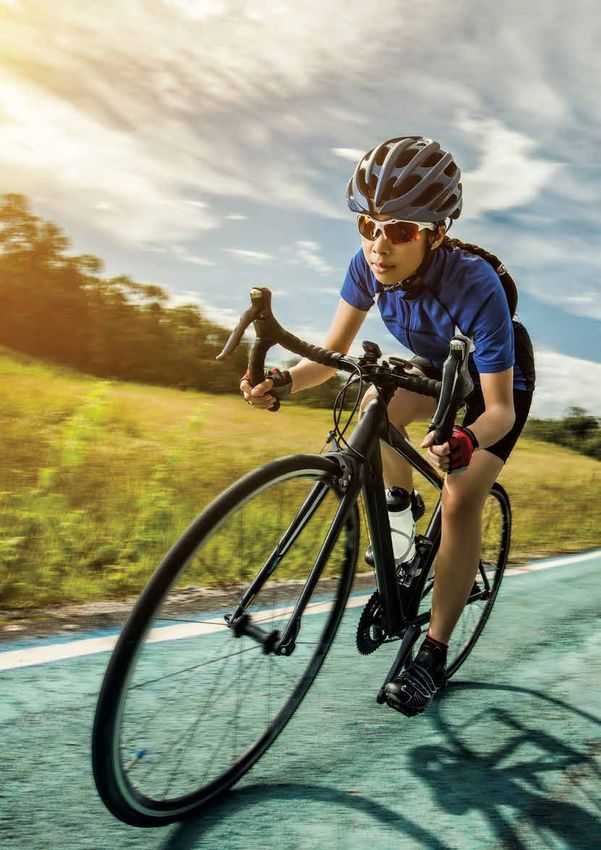
METHODOLOGY
The Brian Miller review into high
                                                 WESTCYCLE HIGH PERFORMANCE VISION
performance cycling released in
April 2013 has been extensively
used throughout this document as
                                                             CYCLING
well as the Department of Sport        WAMBA     BMXWA                      WAIS         DSR
                                                            AUSTRALIA
and Recreation facilitated reviews
across all disciplines completed
in 2015. Key areas of concern
as well as opportunities have                                  CYCLE        PROFESSIONAL RACING
been identified from both the                                SPORT WA             TEAMS
report and further research. This
information has then been used
to create key strategic outcomes
that will help deliver a high           CLUBS    CLUBS        CLUBS
performance environment across
all cycling disciplines.
Additionally, the following
procedures/ stakeholders have          COACHES               COACHES
been engaged to provide direction
and informative opinions as to how
the high performance environment
should be shaped in WA. WestCycle
would like to thank all stakeholders
for their engagement and support
of the High Performance Plan.

                                                                                                  3
01 HIGH PERFORMANCE
    VISION

    STRATEGIC ALIGNMENT
    CULTURE AND VALUES
    BENCHMARK TARGETS
Within this section, the current values and culture
of cycling in WA will be examined. From this, new
bench mark targets and goals will be identified to
measure the success of our planned state development
environment for all cycling disciplines.

4
INTRODUCTION
Western Australian Cycling’s High         While this plan focus is 2016-2020    focus and the resources necessary
Performance Plan 2016-2020 will           some of the structure will have a     for us to deliver on our overarching
provide structure, investment,            long-term focus beyond 2020. We       goals and benchmark targets.
and accountability across all             believe these targets will serve      It is our vision that cycling at a
cycling disciplines in Western            to provide a clear focus and a        state level in Western Australian
Australia. It will identify where         strategically consistent approach     will significantly improve. This
investment is needed within               to operational decisions and          improvement will be measured via
cycling in order to provide a clear       investment. This plan covers the      the bench mark targets and KPI’s
focus on obtaining successful             sport’s high performance vision,      associated with the relevant state
outcomes at benchmark events.             the current environment, the future   development environment.

                               WestCycle TARGET:
                 Increase the number of West Australian Cyclists
                   winning medals at National Championships.

        # 1 ranked state across                    Minimum 2 athletes
        all disciplines by 2020.              transitioned to WAIS annually.

                                                                                                                   5
OUR VISION
To create a Western Australian high
performance environment with strategic
alignment, strong culture and values which
in turn will create a champions mindset to
increase the number of National Champions.
STRATEGIC ALIGNMENT WESTCYCLE’S HIGH PERFORMANCE
An important aim of this plan is to ensure there is VALUES
strategic alignment across all cycling disciplines as well Commitment
as relevant National Sporting Associations (NSO). This Holistic athlete development
alignment will provide clarity amongst our community Resource maximisation
and ensure there is a shared strategic direction, vision Collaboration
and focus across all our external stakeholders - this will Communication
create optimisation of available resources. Integrity across our high performance programme.
CULTURE AND VALUES DEVELOPMENT OF A CHAMPION
MINDSET
A key focus throughout the period of this plan will be on
the promotion of sound values and a positive culture. Some people have a misconception about how
This High Performance Plan will adopt a new approach champions think and act. They might be influenced by
to the culture of high performance cycling in Western an extrovert who’s a champion. Yet the real champion
Australia. Based on sound values which are consistent doesn’t go around beating their chest. The champion’s
with today’s environment and the principles of best response is “It is about how I perform, winning is a by-
practice, which reflect the behavioural and cultural product of performance on the day”.
standards to which we aspire.1
6
BENCHMARK TARGETS
These benchmark targets below will be used as key measuring tools to assess the success of the high performance
environment of each discipline. These targets are subject to change and will be reviewed on a half yearly basis.

  DATE                  DISCIPLINE                EVENT       AGE BRACKET        TARGET
  Feb 2017              Track                     Nationals   U 17/U15           Podium >3
  Feb 2018              Track                     Nationals   U 17/U15           National Champion
  Feb 2019              Track                     Nationals   U 17/U15           National Champion >2
  Feb 2020              Track                     Nationals   U 17/U15           National Champion > 4

  Sep 2017              Road                      Nationals   U 17/U15           Podium >3
  Sep 2018              Road                      Nationals   U 17/U15           National Champion
  Sep 2019              Road                      Nationals   U 17/U15           National Champion >2
  Sep 2020              Road                      Nationals   U 17/U15           National Champion > 4

  Feb 2017              BMX                       Nationals   8-16 years*        Podium >6
  Feb 2018              BMX                       Nationals   8-16 years*        National Champion>1
  Feb 2019              BMX                       Nationals   8-16 years*        National Champion>2
  Feb 2020              BMX                       Nationals   8-16 years*        National Champion>4

  Mar 2017              MTB                       Nationals   U 17/U15           Podium >1
  Mar 2018              MTB                       Nationals   U 17/U15           National Champion>1
  Mar 2019              MTB                       Nationals   U 17/U15           National Champion>2
  Mar 2020              MTB                       Nationals   U 17/U15           National Champion>4

* BMX HP environment begins at 13 years of age.

                                                                                                               7
02 CURRENT
    ENVIRONMENTS

    SITUATION ANALYSIS
    PERFORMANCE BARRIERS
    ATHLETE PATHWAYS
Within this section of the plan, the current
environment of each discipline will be analysed. This
will result in the identification of performance barriers
and the creation of updated and documented athlete
development pathways.

8
TRACK
CURRENT ENVIRONMENT
INTRODUCTION
Track cycling dates from the Western Australia has a
mid-to-late nineteenth century rich history of success at
and is one of the oldest forms of the Olympic level within the
cycle sport. With the exception of track environment. Henk
the 1912 games, track cycling has Vogel was the first track
featured at every edition of the based representative at the
modern Olympics. 1954 Olympics. Since the
Track cycling events fit into two 1984 Olympics held in Los
broad categories: sprint and Angeles Australia has won a
endurance, with each typically total of 30 medals across all
requiring different skill sets and track events with 8 of them
physical attributes. Sprint events gold and 2 of these gold
are raced individually or against results coming from Western
one or more competitors and focus Australian riders.2
on explosive power and high- In 2016 our current class of U19 Oceania 3x 2nd place). The rest
speed skills over a small number Western Australia Institute of of the group have all set personal
of laps. Endurance events are held Sport (WAIS) scholarship holders best times or power in their
over longer distances and test the within the track program are development towards sporting
endurance abilities of individual highly decorated. There are 3 improvement.3
or groups of riders. Track cycling athletes who have been put At a club level there are 2 major
offers the highest elite-level medal on or are transitioning onto CA clubs that our focused on track
count of the cycling disciplines, with HPU scholarships (fully funded racing - Midland Cycling Club
10 Olympic events and 19 events positions for those athletes who and Track Cycling WA. Both clubs
in the World Championships. Its are tacking towards an Olympic operate out of the velodrome
cross-training gains are also widely medal) to be supported in Adelaide located in Midvale. The Midvale
recognised, with training and racing for international competition and Speed Dome and WA local clubs
on the track consistently shown preparation. We have 3 athletes have contributed 25% of Australia’s
to build fitness, improve bike skills who participated in Junior World gold medals on the track since the
and technique and develop tactical Championships in 2015 with 1980 Los Angeles Olympic games.
knowledge. Multiple elite road Alex Rendell achieving a world
cyclists, including Greenmount- title. Additional athletes who
born former national road and time achieved national titles in 2015
trial champion Luke Durbridge include (Jade Haines 6x, Darcy
and Kalamunda-born world team Pirotta 1x, Craig Wiggins 1x), or
pursuit champion Melissa Hoskins, who achieved their first national
have had prestigious track careers and international podium (Kye
before moving to the road. Bonser U17 National Podium and
910
Non-Elite Pre-Elite Elite
(Foundation Movement) (Potential to be Elite) (Senior International)
FTEM Phases F1 F2 F3 T1 T2 T3 T4 E1 E2 M1
Extension and Sport Specific
Basic Practicing Breakthrough Senior
Refinement Commitment Demonstration Talent Podium Sustained
Movement and and National
of Movement and/or of Potential Verification Success Success at E2
Foundations Achieving Reward Representation
Foundations Competition
CURRENT ATHLETE PATHWAY
Participating Potential
Demonstrating Training within
in organised verified and Excelling at A Podium Continued
Attending HP potential MTBA
Learning the skill and embedded National series Competing finisher Podium
coaching and/ from training, Under 17
An athelete is fundamentals development within a level and at World Cup at an elite success over
or competition competition Junior
of riding a bike initiatives and/ state based accumulating Events international 4 years or
sessions and/or talent Development
or informal development UCI Points event more
ID testing Squad
mountain biking program
Primary Cycling WAIS Cycling
Informal
Australia’s WestCycle State Programs/ Cycling Australia’s High Preformance Unit and/or
Development settings Clubs
Lets Ride Development Program Professional Professional Road Cycling Teams.
(e.g family)
Environment Program Road Team
National
Local events
and Oceania UCI World
and state
Competition National Championship and Champs, Junior Cups and/ Olympic Games, UCI Elite World Championships
Non-competitive based events;
other national level events World Champs or other UCI and ‘Monumental’ Road Events
Target National Junior
and/or UCI events
Track Series
events
Potential
Athlete Emerging Developing Podium
Participation Underpinning Podium
(AWE) (AWE) (AWE)
Category (AWE)SITUATION ANALYSIS
STRENGTHS WEAKNESSES
The success of WA athletes at an elite level. The lack of marketing of the sport- When are
The level of volunteerism across the clubs- sessions on, where can I access this information
people willing to give their time to the sport. as a rider?
WAIS involvement with elite riders as well as Further opportunities needed for coaches to
assisting in the state (Club-T-2 space). become professional.
Very strong junior clubs that support and Number of competitions and level of competitions
nurture young cyclists. is not adequate for a performance environment.
A small environment that creates a personal feel Lack of pathways and evidence or a young rider
for all athletes striving towards mastery status. to stay in the sport and keep their dream alive.
Shared services between WestCycle and The distance and cost of travelling to national
CycleSport Western Australia. level events.
Only 1 current velodrome in WA.
OPPORTUNITIES THREATS
Coaching environment can be up skilled and Pressure put on volunteers is significant due
professionalised. the large amount needed for competitions. If
There is a lot of upside as there has been volunteerism decreases this will have a negative
relative success without a defined environment effect on events.
– this will only improve once we improve T1-T3. Single velodrome in WA.
Creation of a bike education and inter school Loss of athletes to other sports due to the lack
competition which will have spinoffs as a talent of a defined state based training environment.
identification. Junior numbers at several cycling clubs are
Transfer of disciplines BMX/Road/MTB. decreasing if this continues into the future clubs
Shared High Performance resource servicing face a huge challenge.
all disciplines. General lack of direction for track cycling at
a national level.4 & 5
11PERFORMANCE BARRIERS
GEOGRAPHIC LOCATION QUALITY OF HOME as well as inadequate coaching and
The geographic isolation of WA and COACHES officials’ pathways has resulted in
the vast distances to competition With our ties to WAIS we are lucky a lack of retention of track cyclists
both nationally and internationally to have a small number of high within club-based environments.
creates a barrier for track athletes quality track coaches in WA. This
based in WA. This can result in small number is an area of concern. REGIONAL ATHLETES
Western Australian athletes not HP coaches play a key role in the We have a history of regional
being exposed to enough high development of athletes. Currently, athletes performing successfully
performance level competition. This within the track pathway there is at the national level. Time spent
creates a greater requirement on no state coach or anyone who has on the track is an integral part of
the local racing scene at state level accountability for the transition of the development for both road
to provide adequate competition. athletes into WAIS scholarships. and track athletes. From a track
There is no identified pathway for perspective, regional athletes are
LACK OF A QUALITY coaches or athletes to progress not adequately serviced and these
TRACK FACILITY from club level to state coach level. athletes face an enormous task to
The Midvale SpeedDome is half way stay level with the metropolitan-
through its build life and is clearly UNDERSTANDING OF based athletes. Change is needed
not supporting Western Australia’s HIGH PERFORMANCE in this area in the form of a training
push towards producing Olympic REQUIREMENTS AND facility or the availability of suitable
track champions. Regardless of its ENVIRONMENTS grants for regional athletes.
geographical location, the Perth Within track cycling in general
SpeedDome is not an adequate high there is a low understanding COMPETITIONS
performance training environment amongst the cycling community There is no current state series of
for our talented athletes, and as per of what constitutes a high events for track cyclists. There are
UCI regulations is not currently fit performance environment and the designated track racing days at the
to host a world championship level requirements and commitment it club level but these lack promotion
event. In comparison to other states takes to be successful or deliver to the wider community. There is
and taking into account the number outcomes. This includes the daily a lack of transparency as to who
of track riders in WA, we are in need training environment, training can race in these days and what
of a new velodrome as facilities play load, technical elements, body level they are at. Due to Western
an integral role in the development maintenance, dietary requirements, Australia’s isolation, track cyclists
of high performance athletes.4 coaching philosophies and tactics, often lack variety within the
During writing of this strategic engagement and integration of competitions as well and always
plan an upgrade to the Midvale support services and the overall seem to be racing against the
SpeedDome was announced. accountability and responsibility for same riders. There is also a lack of
performance and preparation. information on events, when they
are running and general promotion
RETENTION/TRANSFER of events.
OF ATHLETES
Track and BMX disciplines are both
sprint-based events. Currently there
are no initiatives or programmes in
place to encourage athletes from
these disciplines to experience the
other. There is significant evidence
in the form of past and current
Olympic champions that shows
the benefits of a transferable
environment. The lack of a current
state-based training environment
12ROAD
CURRENT ENVIRONMENT
INTRODUCTION
Dating from at least the mid gender, performance level e.g. Western Australia has had
nineteenth century, road racing is from high-level A Grade through significant success on the world
the oldest form of cycle sport. The to beginner’s/juniors F Grade) or stage within the road racing
first recognised road race world age (e.g. open or masters, under discipline. In the last 20 years
championship was held in 1893 17, Under 15 etc.) and this provides WA has produced a vast number
and the discipline has featured opportunities and fair competition of road racing champions. From
in every edition of the modern for different types of riders. Grades Barry Waddell in the 1960’s who
Olympic Games. typically compete over the same won a record 5 straight Herald Sun
Road racing takes place on a variety course, although there can be tours from 1964 to1968 as well as
of courses with different course variation in course configurations winning the Australian National
lengths, styles and terrains (e.g. and race durations and lengths. Road Title in 1964 and 1968 through
flat, rolling, hilly etc.), therefore There are three broad types of road to Henk Vogels Jnr. who retired in
offering a range of experiences and races in Western Australia: 2008 after winning the Australian
providing opportunities for riders National Road Title in 1999 as well
Road race
with different skill sets and physical as finishing third in the 21st stage of
Criterium – short course racing
attributes. In Western Australia, the 1997 Tour de France.5
Time trial
road races are usually graded by
1314
Non-Elite Pre-Elite Elite
(Foundation Movement) (Potential to be Elite) (Senior International)
FTEM Phases F1 F2 F3 T1 T2 T3 T4 E1 E2 M1
Extension and Sport Specific
Basic Practicing Breakthrough Senior
Refinement Commitment Demonstration Talent Podium Sustained
Movement and and National
of Movement and/or of Potential Verification Success Success at E2
Foundations Achieving Reward Representation
Foundations Competition
CURRENT ATHLETE PATHWAY
Participating Potential
Demonstrating
in organised verified and Training Excelling at A Podium Continued
Attending HP potential
Learning the skill and embedded within WAIS National series Competing finisher Podium
coaching and/ from training,
An athelete is fundamentals development within a or State level and at World Cup at an elite success over
or competition competition
of riding a bike initiatives and/ state based Development accumulating Events international 4 years or
sessions and/or talent
or informal development environment. UCI Points event more
ID testing
mountain biking program
Primary Cycling WAIS Cycling
Informal
Australia’s WestCycle State Programs/ Cycling Australia’s High Preformance Unit and/or
Development settings Clubs
Lets Ride Development Program Professional Professional Road Cycling Teams.
(e.g family)
Environment Program Road Team
National
Local events
and Oceania UCI World
and state
Competition National Championship and Champs, Junior Cups and/ Olympic Games, UCI Elite World Championships
Non-competitive based events;
other national level events World Champs or other UCI and ‘Monumental’ Road Events
Target National Junior
and/or UCI events
Track Series
events
Potential
Athlete Emerging Developing Podium
Participation Underpinning Podium
(AWE) (AWE) (AWE)
Category (AWE)SITUATION ANALYSIS
STRENGTHS WEAKNESSES
The success of WA athletes at an elite level. Lack of marketing the sport- when are sessions
The level of volunteerism across the clubs- on? Where can I access this information as a rider?
people willing to give their time to the sport. Lack of a facility in terms of designated racing
Professional road racing national series tracks or criterium.
teams exist in WA giving young riders an elite The level and variety of competitions is not
environment. adequate for a performance environment.
2-3 very strong junior clubs that support and There is no current pathway for a young rider to
nurture young cyclists. stay in the sport and keep their dream alive.
Shared services between WestCycle and
CycleSport Western Australia.
OPPORTUNITIES THREATS
Coaching environment can be up skilled and the The pressure put on volunteers is significant due
spin off affect this will have on athletes. the large amount needed for competitions. This
There is a lot of upside as there has been could fall away.
relative success without a defined environment Loss of athletes to other sports due to the lack
– this will only improve once we improve T1-T3. of a defined state based training environment.
Creation of a high school league, which will have Junior numbers at several cycling clubs are
spinoffs as a ID initiative. continually decreasing, this has been an
New facilities and the positive effect this will ongoing problem and needs to be addressed
have on the sport. immediately.
Shared High Performance resource servicing The growth of teams taking away from the club
all disciplines. environment.
Races becoming more about team success rather
than individual performance.4 & 5
15PERFORMANCE BARRIERS
GEOGRAPHIC LOCATION UNDERSTANDING OF a satisfactory level. They also
Similar to track athletes, the HIGH PERFORMANCE require constant exposure to
majority of national road REQUIREMENTS AND metro/interstate based competition
competition can be found on the ENVIRONMENTS and relevant funding opportunities
eastern seaboard. As WA has no set With the emergence of professional to help offset the cost of additional
road racing tracks the geographical racing teams in WA the travel to and from events.5
location becomes more of an issue understanding and implementation
due lack of available infrastructure of a high performance environment COMPETITIONS
that can be used for a daily high appears to be improving. Further There are currently 28 road races
performance training environment effort is required in fostering the on offer for junior riders in WA.
relationships between professional These range from open road races
LACK OF A QUALITY ROAD teams and clubs. This needs a through to criterium based events.
RACING FACILITY high performance mentality that Most events have a basic grading
As criterium format of racing the athlete’s development is the system however with such a small
increases in popularity, there is number one priority within all number of entrants some events
a significant need for Western decision-making processes. There are often combined or cancelled
Australia to develop a cohesive, is currently no state-based training which leaves a gap in the level of
planned network of accessible, environment or pathways that competition provided. The grading
sustainable and appropriate short indicate how an athlete moves systems, promotion of events and
course tracks (1 to 5 km). This through each stage of development. long term event strategy must
network should include existing, be looked at in order to increase
revitalised and new facilities, with RETENTION/TRANSFER participation rates.
all course tracks evaluated for their OF ATHLETES
suitability for upgrading and use. At a grass roots club level
Longer distance road races also more must be done to create
require greater strategic direction an environment that nurtures
as these play an integral role in the young athletes and provides
development of cyclists across all them with knowledge and skills
disciplines. Training areas that are in order to progress along the
safe and traffic free are required development pathway. There
for developmental riders as well as is also no programme in place
access to roads for racing that are that encourages road riders to
supported and protected by local experience track and mountain
government bike disciplines- there has been
significant evidence that these
QUALITY OF HOME disciplines are interchangeable.
COACHES
The road racing coaching REGIONAL ATHLETES
environment is made up of both Bryce Lanagahn, Connor Lambert
club-based coaches and private and Craig Wiggins are all regional
businesses. Currently in WA we road athletes who are or have
require an increase in grass roots competed at a national level. This
level coaches at the club level which is evidence that regional athletes
will in turn increase the number of have the capacity to win national
riders progressing through to the championships however they
high performance end. There is require further support. Regional
currently no state coach overseeing road athletes require a complete
all WA coaches with support and daily training environment, which is
professional development. currently not being delivered at
16MOUNTAIN BIKE
CURRENT ENVIRONMENT
INTRODUCTION
Mountain biking (MTB) is one of Olympic games in Atlanta. Tour de The local MTB environment consists
the world’s fastest growing sports France champion Cadel Evans was of member-based clubs that are
and Western Australia is following Australia’s first MTB representative involved in the development of
the trend. at the 1996 summer games finishing MTB across all ages and disciplines.
19% of Western Australians own a very competitive 9th place. Currently in WA there are 13
a mountain bike and this figure is From a local perspective, Western member-based clubs which are
on the rise. Mountain bike racing Australian born Sam Hill is a affiliated with WAMBA located
became an Olympic discipline in professional downhill mountain bike throughout WA.
1996 and a cross-country type rider. He is a three time downhill
mountain biking race has been held world champion having won the
ever since its debut at the summer world titles in 2006, 2007 and 2010.6
1718
Non-Elite Pre-Elite Elite
(Foundation Movement) (Potential to be Elite) (Senior International)
FTEM Phases F1 F2 F3 T1 T2 T3 T4 E1 E2 M1
Extension and Sport Specific
Basic Practicing Breakthrough Senior
Refinement Commitment Demonstration Talent Podium Sustained
Movement and and National
of Movement and/or of Potential Verification Success Success at E2
Foundations Achieving Reward Representation
Foundations Competition
CURRENT ATHLETE PATHWAY
Participating Potential
Demonstrating Training within
in organised verified and Excelling at A Podium Continued
Attending HP potential MTBA
Learning the skill and embedded National series Competing finisher Podium
coaching and/ from training, Under 17
An athelete is fundamentals development within a level and at World Cup at an elite success over
or competition competition Junior
of riding a bike initiatives and/ state based accumulating Events international 4 years or
sessions and/or talent Development
or informal development UCI Points event more
ID testing Squad
mountain biking program
Primary Basic coaching
Family/ MTBA High
at club or Part of the WAMBA Mountain Bike Australia High Performance Unit/
Development informal Clubs Performance
informal Development Squad Australian Teams
environment Environment
Environment environment
National Series
Top 5 finishes in state series, Top 5 finishes/ Accumulation
Competition Local events/ World Championships Australian Team
Non-competitive National series participation, Australian of 20 UCI
State series Australian Olympic Team
Target WA Junior State Team National Points
Championship
Potential
Athlete Emerging Developing Podium
Participation Underpinning Podium
(AWE) (AWE) (AWE)
Category (AWE)SITUATION ANALYSIS
STRENGTHS WEAKNESSES
The rapid increase in MTB participation across A lack of direction and cohesion between
all age levels. MTBA and other states within the talent/HP
Appealing sport to the young generation as it is environment.
fast and action based. No state team or centralized training
Investment into new trails at a state based level environment for those riders looking to move
has increased and plans are in place to increase along the athlete pathway.
trails throughout WA. No current transparent and structured high
The creation of the Mountain Bike strategy and performance environment.
the current investment into MTB.
Shared services between WestCycle and Western
Australia Mountain Bike Association (WAMBA).
OPPORTUNITIES THREATS
There is no performance environment and no Losing athletes and coaches to other states due
direction nationally this allows WA to become to the lack of HP environment.
the first completed environment. Coaching development pathways need to be
Strategies and plans have been created to grow implemented to assist HP pathways.
the sport significantly in the next 5 years. Lack of funding sources to maintain a
Shared High Performance resource servicing all development environment.4 & 5
disciplines.
19PERFORMANCE BARRIERS
GEOGRAPHIC LOCATION accreditations are provided from clubs lack exposure to a daily high
Majority of MTB competition is a national level. There is no state performance environment in both
based on the eastern seaboard with coach and or talent development a training and competition aspect.
a maximum of only one national network of coaches. This lack There is also a lack of communication
series event in WA each year. This of a cohesive coach education and understanding of regional
lack of a major competition is a environment will continue to junior riders and their current
significant issue for aspiring MTB have a negative effect on the performances, abilities and talent.
riders. There is a state series style high performance state-based
calendar for both downhill and environment unless it is changed. COMPETITIONS
cross country disciplines. There are currently 38 registered Similar to the other disciplines, MTB
MTBA coaches residing in WA access to competition in regional
with only 2 of them being level WA from a high performance
2 accredited which would be perspective is not adequate. There
considered as a high performance is a state series of events however
coach.6 these events do not link to any form
of performance pathway, criteria
UNDERSTANDING OF or selection process. The events
HIGH PERFORMANCE themselves also do not indicate
REQUIREMENTS AND whether they are for a beginner,
ENVIRONMENTS intermediate or advanced rider. 7
From a state governing body
perspective there is no current
high performance environment
within Western Australia. There
are several professional coaching
companies who are filling this gap
at the moment to the best of their
abilities with limited resources.6
RETENTION/TRANSFER
OF ATHLETES
Retention of athletes who are
progressing towards being part of
a high performance environment
LACK OF A QUALITY is a major concern for MTB in
TRAILS Western Australia. These athletes
There is currently no infrastructure are forced to relocate to the eastern
and/or trails that would be capable states due to the lack of a daily
of hosting a UCI event in Western high performance environment in
Australia. Currently in Western Western Australia. There are also
Australia, there are 26 MTB trails no direct programmes to link in with
with many of them not adequately BMX and or Track cycling to create a
maintained or underdeveloped transfer of athlete programme.
to service the high performance
athlete. REGIONAL ATHLETES
MTB is well represented in regional
QUALITY OF HOME WA from a club perspective with
COACHES 11 of the 14 clubs based in regional
Currently in WA there is no WA. Similar to metropolitan-
coach education pathway as all based athletes, riders from these
20BMX
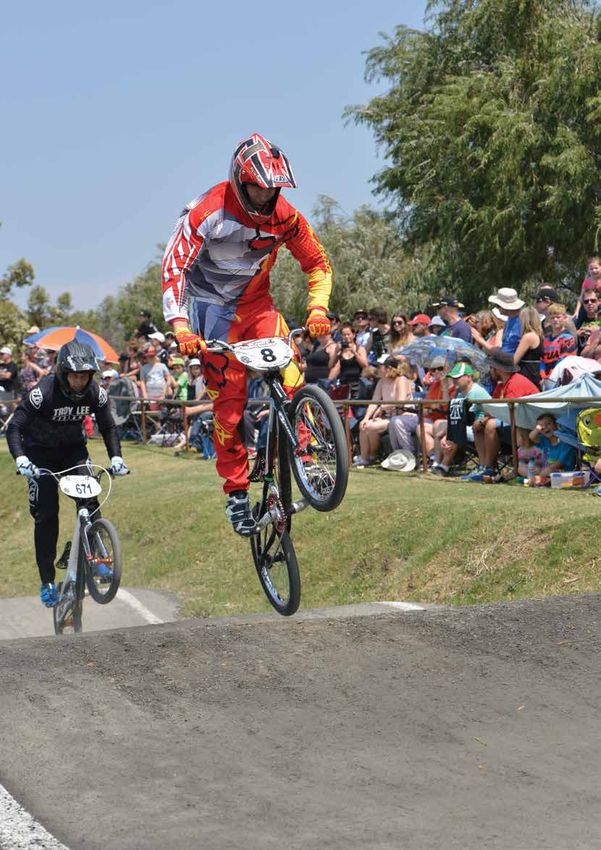
CURRENT ENVIRONMENT
INTRODUCTION Bunbury Western Australia is 2012 Games where she finished
currently the highest profile BMX a creditable 15th. BMX Sports
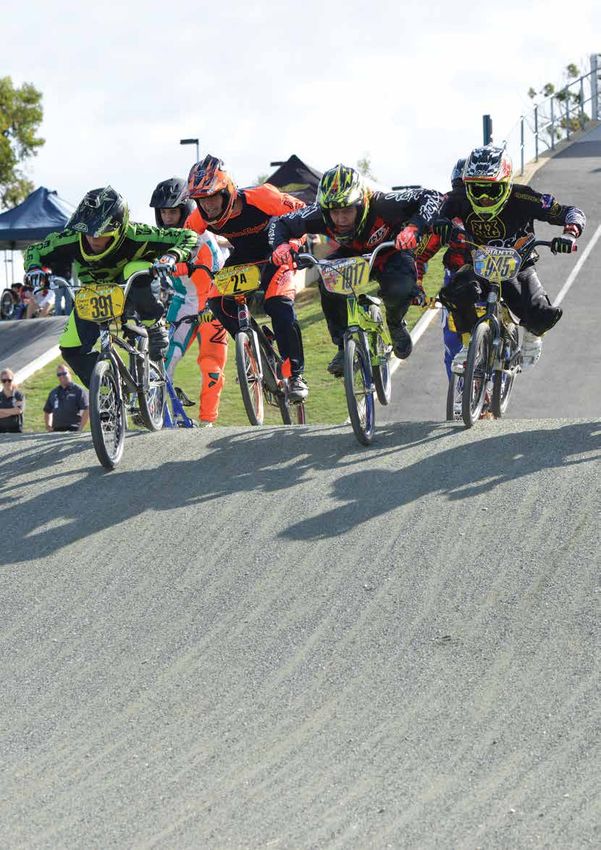
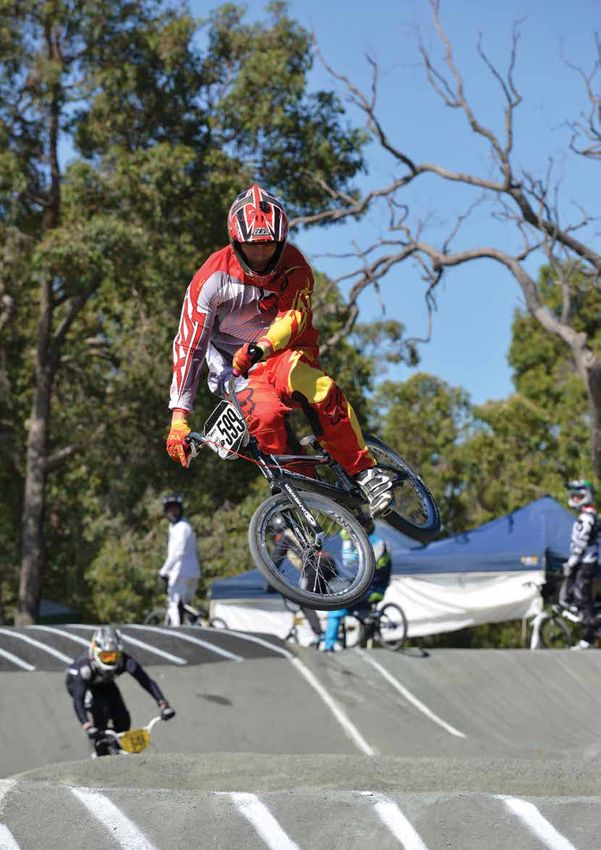
BMX was derived from Motocross
athlete to have come through our Western Australia is the peak
Racing. BMX bicycle races are sprint
system. Reynolds finished 2nd at the organisation for the sport of BMX
races on purpose-built single lap
2011 Australian Championships in racing in Western Australia, and
race tracks. The track is usually
Cairns, Australia. She finished 11th at currently has 20 affiliated clubs
between 300 – 400m and consists
the 2011 BMX World Championships across the state. They currently
of a ramp-style starting gate for
in Copenhagen, Denmark. manage a high performance state-
up to eight racers, and is made of
Reynolds was selected to represent based environment catering for
various jumps and rollers and a
Australia in the individual BMX athletes 14-19 years of age. 7
finish line.
competition at the 2012 Summer Lauren Reynolds also represented
BMX racing became a medal sport
Olympics She was one of five Australia at the 2016 Olympics.
at the 2008 Summer Olympics in
Australian BMX riders selected
Beijing under the UCI sanctioning
to represent the country at the
body. Lauren Reynolds from
2122
Non-Elite Pre-Elite Elite
(Foundation Movement) (Potential to be Elite) (Senior International)
FTEM Phases F1 F2 F3 T1 T2 T3 T4 E1 E2 M1
Extension and Sport Specific
Basic Practicing Breakthrough Senior
Refinement Commitment Demonstration Talent Podium Sustained
Movement and and National
of Movement and/or of Potential Verification Success Success at E2
Foundations Achieving Reward Representation
Foundations Competition
CURRENT ATHLETE PATHWAY
Participating Potential
Demonstrating Training within
in organised verified and A Podium Continued
Attending HP potential BMXA
Learning the skill and embedded Excelling Competing finisher Podium
Phases and coaching and/ from training, Under 19
fundamentals development within a at National at World Cup at an elite success over
or competition competition Junior
description of riding a bike initiatives and/ state based series level Events international 4 years or
sessions and/or talent Development
or informal development event more
ID testing Squad
mountain biking program
Learning the Participating Scholarship
Effective Effective holder within A consistent
fundamentals in organised
identification development the BMXA An Australian podium
of riding skill initiatives A member of a Effective
of HP talent of pre-elite Development representative A podium finisher over
a bicycle (e.g. Sprocket local BMX club confirmation
via State athletes Academy. at the finisher at the multiple High
through the Rocket and attending of potential
An athelete is Teams and Academy Podium Olympics and/ Olympics and/ Performance
BMX Mini Program/ club coaching and HP talent
National rider who has rewards. or UCI Elite or UCI Elite cycles at the
Wheeler coaching) and/ competition (entry point
Shadow achieved a set Invitation to World Champs. World Champs. Olympics and/
Program or or unorganised in Club/State/ to the BMXA
Squad and/or benchmark/ HP camps. or UCI Elite
from other BMX activities National Development AWE Podium Podium
National level performance World Champs.
mediums (e.g. riding events/Series Academy) AWE Potential A & B
competition/ standard and
(e.g. parents, around the Developing Podium
performance results
teachers, etc.) neighbourhood and EmergingSITUATION ANALYSIS
STRENGTHS WEAKNESSES
The large number of competitions across all Accountability measures for those in the state
age groups. development environment need to be developed
A State development environment and culture as to what is actually being delivered.
already exists. It is relatively unknown at a club level as to what
The current use of external providers such happens within the state environment.
as Strength and Conditioning coaches and Coach accountability and “buy in” to the state
biomechanical experts within local universities. programme requires work as there appears to
be a lack of cohesion.
Clubs require education on what talent
development is and what their coaches should
be looking for.
OPPORTUNITIES THREATS
Professionalise and further developing the Clubs and coaches supporting the environment
current state environment will result in WA in the long term.
becoming a power house in the sport. The ability to financially support the HP
Creating a shared resource with other disciplines programme under the current self funded model.
which will result in less budgetary constraints. Coach development and retention and the
The setup of a talent ID system will allow BMX development of coaches within the high
to integrate the state development environment performance environment is currently very low. 4 & 5
with local clubs and coaches.
Engagement in a shared services model with
WestCycle.
Shared High Performance resource servicing
all disciplines.
23PERFORMANCE BARRIERS
GEOGRAPHIC LOCATION facility with an 8 metre ramp which to be addressed in order to create
Similar to all disciplines, the is necessary to truly practise in complete buy-in from all local clubs.
majority of BMX coaching/ an environment similar to that at
competition/development takes national events.7 RETENTION/ TRANSITION
place on the eastern seaboard. OF ATHLETES
BMXWA have created a high UNDERSTANDING OF Currently there are no transfer of
performance culture and do offer
HIGH PERFORMANCE athlete programmes involving BMX
an environment that attempts
REQUIREMENTS AND and other disciplines such as track
to minimise the geographical
ENVIRONMENTS or MTB riding. Without a purpose-
isolation of WA. There is significant There is a current high performance built training facility, many high
investment made in accompanying environment in place that gives the performance athletes are forced to
riders to events over east. athletes support in areas both on train on the eastern seaboard due to
and off the track. This environment the lack of an 8 metre ramp in WA.7
LACK OF A QUALITY requires further support and
FACILITY direction in regards to both the REGIONAL ATHLETES
From a local club perspective, delivery of the service but also in
BMX is well represented in regional
BMX athletes are well serviced the promotion and transparency to
WA with Bunbury being the major
throughout WA. There is still the local clubs. Selection criteria of
hub in terms of a facility in WA.
however a lack of a central training both coaches and athletes needs
Athletes in the South West region
need to engage with the regional
talent development programme
and this needs to occur in all other
regional areas as well. BMX is
hugely popular in regional WA and
this growth must be administered
and the talent must be managed as
these athletes are often over looked
due to the lack of resources.
COMPETITIONS
There is a range of competitions
for BMX athletes across each age
group bracket. There are initiatives
in places to allow for competition
to begin at a very young age and
there is the use of competitions in
the selection of state teams. Super
Series is a State Racing Round.
There are between 8 - 10 events per
year, with several occurring in the
country. These events can attract
up 450+ riders competing in the
one-day event. Riders who compete
at all of these events, including
the required country rounds, will
qualify for an overall ranking for the
entire series.
24SUMMARY
It is clear that all disciplines have
both a lack of resources and
understanding of what is required
to operate a successful high
performance environment. In order
to adress this, all disciplines must
fall under a coordinated and aligned
high performance model. Current
problems that have been identified:
No overarching approach to high
performance cycling with each
discipline operating in isolation of
each other.
Inconsistent decision making
processes.
Lack of communication flow
between clubs, coaches and state
bodies.
There is no cross discipline
environment to act as a talent
identification tool.
Minimal coach education
opportunities exist.
There is minimal transparency
and a lack of understanding
around state team/state squad
selection across the disciplines.
Each discipline needs to acquire
its own state coach and relevant
training environment with a High
Performance Manager in charge
of all operational aspects.
2503 FUTURE FOCUS
STRATEGIES
PRIORITIES - TIME FRAMES
STAKEHOLDER ENGAGEMENT
This part of the plan will focus on the 7 key strategies that
will govern and provide direction for our state development
environment. Investment models and engagement of
relevant stakeholders will also be discussed.
26OUR VISION
Create a Western Australian high
performance environment with
strategic alignment, strong culture
and values with a champions
mindset to increase the number of
national champions.
FUTURE FOCUS STRATEGIES
The future of high performance 1. Effective monitoring procedures of athletes/coaches and clubs.
cycling across all disciplines
2. Development of a complete athlete development pathway/state
requires key strategic direction
based training environment.
in order to create a sustainable
environment that not only 3. Development of stronger ties with Regional Talent Development
maximises the resources available Network programmes.
but also creates an accountable
4.Creation of extended competition pathways to include schools
and transparent environment for
riders who are located both in 5. Creation of FTEM pathways for all disciplines
metropolitan and regional WA. 6. Coach development pathway and mentoring coach programme
The below 7 strategies will help to be created.
deliver the vision and benefit the
7. Stronger ties to be formed with WAIS, CA, BMXA, and MTBA and
cycling community from grass
creation of a HPAG group.
roots participation through to the
development of future Olympic and
world championship gold medallists.
Key priorities, time frames and
objectives have been developed in
order to successfully deliver each of
these strategic outcomes.
27STRATEGIES The cycling-specific components will holistically assist the
are: environment by
1. Effective monitoring procedures
Tactical Make cycling enjoyable for the
of athletes/coaches and clubs.
Physical participant
The sport needs to look at a
Technical Create a pathway of
monitoring and communication
Psychological development of cyclists across
tool to be used with athletes and
These are then combined with all disciplines
coaches. All state-based athletes
the below attributes: Allow for cyclists to transfer
and relevant coaches must have
between disciplines
access to this programme as Social Recruit and retain athletes
well as relevant State Sporting Parental within programs
Associations (SSA), WAIS and Educative Create an understanding of an
National Sporting Organisation Competitive athletes “developmental “age
staff. Commitment and where they sit within the
2. Development of a complete The four stages of the Athlete athlete pathway.
athlete development pathway/ Development environment
3. Development of stronger
state based training environment. There are four proposed distinct ties with Regional Talent
A complete athlete development stages in the cycling development Development Network
environment is required to be environment. programmes.
created that will include athletes, They are:
Stronger ties must be developed
coaches, officials, competition, Learn to ride (3–6years) with the Regional Talent
clubs and parents involved in the Progress (7–13 years) Development Network (DSR)
cycling development journey. Develop (14–17 years) programmes. This network is set
The athlete development Performance (17+ years) up to support regional athletes
environment will showcase roles The environment must be working with State Sporting
and responsibilities for everyone developed to guide an athlete Associations. We must identify
involved in delivering the sport of and their support team in regional talented athletes then
cycling across all disciplines and understanding the key skills link them with their nearest RTD
at all levels. It looks to develop to that are required at the programme to give the athlete
the individual by covering all major milestones in a cyclist’s the support they require.
areas that focus on both cycling development. This information
specific and personal attributes. 4. Creation of extended
competition pathways to include
schools
There needs to be a broader
competition pathway for athletes
across all disciplines and stages
of the FTEM model. A high school
cycling programme can add to the
competition pathway as well as
act as a talent search tool. It can
also help with a cross discipline
model of athletes competing
across all disciplines.
5. Creation of FTEM pathways for
all disciplines
The Foundations, Talent, Elite
& Mastery (FTEM) model is a
user-friendly framework of
athlete development that is
representative of the “whole of
28sport” pathway continuum and Foundations (F1, F2 and F3); 6. Coach development pathway and
integrates common and unique Talent (T1, T2, T3 and T4); mentoring coach programme to
phases of development for Elite (E1 and E2); and be created.
participants at the active lifestyle, Mastery (M). While athlete- Coach development pathways
sport and high performance sport centric, the framework has been need to become clearer as well
phases. It provides a practical designed to encapsulate the as opportunities for coaches to
method to assist sporting holistic and integrated nature of upskill across disciplines. A coach
stakeholders to construct a more development through the specific mentor programme must be set
functional athlete and sport differentiation of the development up within the state development
development system. transition, performance, process, environment to allow succession
The FTEM model is essentially acknowledgement and recognition plans for future state coaches
integrative and representative of complementary factors as well as upskilling the general
of the greater Australian sports supporting athlete development coaching environment.
system in that it not only focuses such as coaching, resource and
organisational support. 7. Stronger ties to be formed with
on the high performance pathway
WAIS, CA, BMXA, and MTBA and
but also is inclusive and formally The FTEM framework offers a
creation of a HPAG group.
recognises the importance and practical planning and review tool
This strategy looks at building
contribution of ‘Active Lifestyle’ for cycling and each individual
and strengthening our
activities and ‘Recreational discipline should adopt the
relationship with WAIS and the
Sport’. The model acknowledges framework to be aligned with
key disciplines and departments
the critical importance of the the Australia Sports Commission
that can provide or add expertise
acquisition and refinement of (ASC) as well as other sports
to the organisation. Greater ties
fundamental movement skills to allow a cross over of talent
with NSO bodies will allow for
to lifelong sports participation if possible. Note: Ideally, the
more continuity across programs
and high performance athlete cycling-specific FTEM model
as well as best practice at the
development. should be developed by the
state level with guidance from
As demonstrated, the FTEM National Sporting Organisation
NSO’s. The formation of a High
framework consists of 4 (NSO) and then rolled out for
Performance Advisory Group
macro stages of the skill and implementation in the States.
will help shape and guide the
performance development of In the absence of this, then WA
environment.
sporting participants, which needs to consider the FTEM
are further differentiated into framework when creating
10 micro phases. These are development programs.
29STATE DEVELOPMENT ENVIRONMENT
MISSION STATEMENT Transitioning ‘potential’ into
The State Development ‘talent’ by developing, reinforcing
Environment (SDE) involves and monitoring positive training
the systematic and progressive habits
identification, selection and Increased contact with expert
development of athletes in the 13 to coaches
Under 19 age groups, with the aim Further educate athletes about
of preparing riders to represent WA sports science and sports
at the Australian Championships. medicine concepts
Prepare athletes for national
OUTCOMES championships, in their home
environments
Identify athletes at State
Improved support for local
Championships, State Team Trials
coaches
and through club competition/
Improved preparation and
training, with identified athletes
development of lower-age cyclists
displaying characteristics and
Provide regional support for
abilities of a potential elite athlete
identified coaches and athletes.
30STATE DEVELOPMENT ENVIRONMENT
TRACK STATE DEVELOPMENT ENVIRONMENT
International)
(Senior
Elite
Local road racing teams WAIS Professional coaching/clubs
State Development Environment-
(Potential to
Supplementary environment
Pre-Elite
be Elite)
Talent ID sessions/camps
(Foundation
Movement)
Non-Elite
Clubs and coaches
ROAD STATE DEVELOPMENT ENVIRONMENT
International)
(Senior
Elite
Local road racing teams WAIS Professional coaching/clubs
State Development Environment-
(Potential to
Supplementary environment
Pre-Elite
be Elite)
Talent ID sessions/camps
(Foundation
Movement)
Non-Elite
Clubs and coaches
31MOUNTAIN BIKE STATE DEVELOPMENT ENVIRONMENT
International)
(Senior
Elite
MTBA HP Environment Professional coaching/clubs
State Development Environment-
(Potential to
Supplementary environment
Pre-Elite
be Elite)
Talent ID sessions/camps
(Foundation
Movement)
Non-Elite
Clubs and coaches
BMX STATE DEVELOPMENT ENVIRONMENT
International)
(Senior
Elite
BMXA HP Environment Professional coaching/clubs
State Development Environment-
(Potential to
Supplementary environment
Pre-Elite
be Elite)
Talent ID sessions/camps
(Foundation
Movement)
Non-Elite
Clubs and coaches
32HIGH PERFORMANCE STRUCTURE
HIGH PERFORAMANCE ADVISORY GROUP
WAIS WESTCYCLE HIGH PERFORMANCE MANAGER NSO’S
STATE COACH MTB STATE COACH TRACK STATE COACH ROAD STATE COACH BMX
Road and Track
MTB State Development Track State Development BMX State Development
State Development
Environment Environment Environment
Environment
Athlete daily training Athlete daily training Athlete daily training
Athlete daily training
environment environment environment
environment
support support support
support
Coach support Coach support Coach support
Coach support
SHARED RESOURCES
Strength and Conditioning Sports Psychology and Media Skills
Nutritional education State team management and logistics
Sports science and testing Athlete monitoring software
Parent education Camps and workshops
Developing Champions Program (DSR/WAIS) Office Administration
33PRIORITIES, TIME FRAMES AND OBJECTIVES
Strategy: Effective monitoring processes of athletes and coaches.
Objective: To create an accountable high performance environment for all stakeholders involved.
PRIORITY
OPERATIONAL PLAN L = LOW TIMEFRAME RESPONSIBILITY
M = MEDIUM
H = HIGH
Creation of databases and systems to
H 2017 HPM
monitor athlete results.
Tracking system to monitor coaches,
qualifications, experiences as part of a coach H 2017 HPM
succession plan.
Research and purchase of an athlete
H 2017 HPM
monitoring software.
Set up a Talent development coach status
based on criteria to be developed by working
group. Coaches would be offered extra H 2017 HPM, HPAG
upskilling opportunities linking in with WAIS
coaches and programmes.
Identify key stakeholders to have access to
the software as part of individuals’ athlete M 2017 HPM, State coach
development plans.
Work with WAIS to use the data collected
for future WAIS selection and as a motioning M Ongoing HPM, State coach, WAIS
tool of potential athletes.
34Strategy: Development of a complete athlete development FTEM/state based training environment.
Objective: To create high performance training environments for all athletes and coaches
involved within each discipline which will include shared resources amongst all programmes.
PRIORITY
OPERATIONAL PLAN L = LOW TIMEFRAME RESPONSIBILITY
M = MEDIUM
H = HIGH
All High Performance programmes to fall
H 2016 HPM
under one central coordination point.
State coaches to be employed via service
H 2016 HPM, HPAG
agreements.
Sport specific matrix to be developed
covering all aspects of athlete development M 2017 HPM, WAIS, CA
in each learning phase.
Development and appointment of a High
Performance Manager (HPM) based on
H 2016 HPAG
the objectives and priorities of this plan.
Implementation of this High Performance plan.
Create a state development program for all
disciplines. This program will be squad/camp
based for each discipline – Mountain Bike,
Road and Track and BMX, supporting training
for national championships plus sharing
common resources and athlete education.
• Support to High Performance athlete
H 2016 HPM, WAIS
pathways
• Coaching sessions and camps
• Individual athlete development
• Athlete education sessions for all disciplines
• Updated state team selection policies
• Coach education sessions
Enter into a partnership with a University
to ensure that talented athletes gain
H 2016 HPM
access to regular testing and sports science
opportunities
35Strategy: Development of stronger ties with Regional Talent Development Network centre programmes.
Objective: To better service regional athletes within the high performance pathway.
PRIORITY
OPERATIONAL PLAN L = LOW TIMEFRAME RESPONSIBILITY
M = MEDIUM
H = HIGH
Creating stronger links with Regional Talent
H 2016 HPM
Development Programmes.
Actively engaging regional athletes with
the DSR/WAIS Developing Champions M 2017 HPM
programme.
Providing information on all possible grants
M 2017 HPM
available for regional athletes.
Provide talented athletes living in regional
areas with support to attend coaching, H 2016 HPM
testing and racing opportunities in Perth.
Visiting key regional areas on a 6-month
M 2017 HPM
basis to talk to clubs, coaches and athletes.
Strategy: Creation of extended competition pathways to include schools.
Objective: Develop an inter/intra school competition including talent ID aspects.
PRIORITY
OPERATIONAL PLAN L = LOW TIMEFRAME RESPONSIBILITY
M = MEDIUM
H = HIGH
Linking competitions to state development
M 2017 HPM
environments.
Creation of a school-based competition that
will also be used for talent ID. L 2017 HPM
Cross discipline competition formats created
M 2017 HPM
to allow for transfer of athletes.
Beginner/intermediate competition levels to
be created in order to create a competitive M 2017 HPM
edge at the grass roots level.
36You can also read


