Developing effective off-griD lighting policy - Guidance note for Governments in africa
←
→
Page content transcription
If your browser does not render page correctly, please read the page content below

Developing Effective
Off-Grid Lighting Policy

Guidance note for governments in Africa
Acknowledgements Table of content
This document was prepared for the United Nations
Environment Programme (UNEP)’s en.lighten initiative in Acknowledgements 02
cooperation with the Global Off-Grid Lighting Association
(GOGLA). Germany’s Federal Ministry for Economic Co- Introduction 04
operation and Development (BMZ) is providing support
Copyright © United Nations Environment Programme 2015 to UNEP to facilitate the development of a regional policy 1 The Case for Off-Grid Lighting 05
to enable the penetration of sustainable off-grid lighting
This publication may be reproduced in whole or in part and 1.1 The success of market based solutions 05
solutions in the Economic Community of West African States
in any form for educational or non-profit purposes without
(ECOWAS) region. Many thanks are extended to the ECOWAS 1.2 The international policy landscape 06
special permission from the copyright holder, provided
Regional Centre for Renewable Energy and Energy Efficiency
acknowledgement of the source is made. UNEP would 1.3 Choosing the right policies to increase basic energy access 07
(ECREEE) for the ongoing collaboration with UNEP to develop
appreciate receiving a copy of any publication that uses this
publication as a source.
a Regional Efficient Lighting Strategy that addresses off- table of figures
grid lighting concerns. 2 Call to Action: Strategies to Create an Enabling Environment 07
No use of this publication may be made for resale or for
2.1 Step 1: Get the fundamentals right – Figure 1 05
any other commercial purpose whatsoever without prior Authors
permission in writing from the United Nations Environment engagement of informed stakeholders and proper monitoring 08 Scenarios achieving universal
Essel Ben Hagan (UNEP), Olola Vieyra Mifsud (UNEP) and energy access
Programme. 2.1.1 Ensure all relevant stakeholders understand the benefits of the technology 08
Johanna Diecker (GOGLA)
2.1.2 Engage all stakeholders, specially the private sector 09
Disclaimer
Reviewers and Contributors Figure 2 06
2.1.3 Develop Transparent National Energy Strategies 09
The designations employed and the presentation of the Energy ladder
UNEP extends its thanks to the following reviewers for their
material in this publication do not imply the expression of 2.1.4 Monitoring and verification of measures 09
time and expert insights: Laura Williamson (REN21); Evan Mills
any opinion whatsoever on the part of the United Nations
(Lawrence Berkeley National Laboratory); Bohzil Kondev, 2.2 Step 2: Kick-start the market – fiscal/financial tools that attract
Environment Programme concerning the legal status of Figure 3 08
Carsten Hellpap (Deutsche Gesellschaft für Internationale the private sector 10
any country, territory, city or area or of its authorities, Diagram illustrating the sequence
Zusammenarbeit – GIZ); Ibrahim Soumaila (ECREEE); Koen
or concerning delimitation of its frontiers or boundaries. 2.2.1 Introduce exemptions on value-added tax and tariffs 10 for developing off-grid lighting
Peters (Global Off-Grid Lighting Association – GOGLA);
Moreover, the views expressed do not necessarily represent policies
Itotia Njagi (International Finance Corporation – IFC); Abdel 2.2.2 Remove subsidies on lighting fuels 11
the decision or the stated policy of the United Nations
Karim Traoré (SNV Netherlands Development Organisation);
Environment Programme, nor does citing of trade names or 2.2.3 Facilitate access to finance across the supply chain 11
Charlie Miller (Solar Aid); Jacob Lewandowski (d.light); Micah Figure 4 10
commercial processes constitute endorsement.
Melnyk (World Bank); Sarah Bendahou, Kathryn Conway, 2.3 Step 3: Scale up the market 12 Benefits of monitoring, evaluation,
The information contained within this publication is for Laura Fuller, Gustau Mañez Gomis, Elizabeth Mastny, Moira
2.3.1 Ensure product quality through promotion of internationally and enforcement
general guidance on matters of interest only, and may be Mathers, Michael Scholand (UNEP).
subject to change without notice. While we have attempted accepted minimum standards 12
to ensure that the information has been obtained from 2.3.2 Raise awareness for solar lighting benefits among the population 14 Figure 5 24
reliable sources, the UNEP-GEF en.lighten initiative is not Integrated policy approach for
responsible for any errors or omissions, or for the results 2.3.3 Encourage development of local skills to support market growth 15
a transition to efficient off-grid
obtained from the use of this information. All information 2.3.4 Leverage public private partnerships to increase market penetration 15 lighting products
is provided on an “as-is” basis with no guarantee of
completeness, accuracy, timeliness or of the results obtained 2.4 Step 4: Sustain the positive impact and keep market at steady growth rates 16
from the use of this information, and without warranty of 2.4.1 Strengthen enforcement and monitoring of quality assurance programs 17
any kind, express or implied, including, but not limited to
warranties of performance, merchantability and fitness for 2.4.2 Provide infrastructure/regulation for proper recycling of spent products 17
a particular purpose.
In no event will the en.lighten initiative, its related
3 Conclusion 20
corporations, contributors, or the partners, agents or their
respective employees have any liability to you or anyone 4 References 21
else for any act and conduct in connection with or related
to the information provided herein. This disclaimer applies 5 Annex I: UNEP integrated policy approach 24
to any damages or liability and in no event will the en.lighten
initiative be liable to you for any indirect, consequential, 6 Annex II: Estimated potential benefits from a market
exemplary, incidental or punitive damages, including lost transition to efficient off-grid lighting in Africa 25
profits, even if the en.lighten initiative has been advised of
the possibility of such damages.
Cover photo: Courtesy of NIWA
UNEP
promotes environ-
ISBN: DTI/1911/PA
mentally sound practices
globally and in its own activities.
This publication is printed on 100%
recycled paper, using vegetable -based
inks and other eco-friendly practices.
02/28 Our distribution policy aims to reduce 03/28
UNEP’s carbon footprint.
1 The Case for Off-Grid basic energy access at moderate costs and to the benefit
of consumer households. The initial purchasing costs for
Lighting efficient off-grid lighting products are often higher than
the purchasing costs for kerosene or candles. However, in
To date, 1.3 billion people live without access to the elec- the long run, solar off-grid lighting products are cheaper
tric grid (IEA 2013). Another one billion only have unreli- – as running costs are zero and the solar light device is a
able and unstable connections (IEA 2012). Both groups re- one-time cost. Typically, the investment for a mid-priced
vert to traditional means of lighting, such as candles, wick solar lantern is paid back in four to five months.
lamps and torches. There are approximately 600 million
people in Africa with no access to grid electricity, includ-
ing around 465 million from rural areas and 121 million Figure 1 Scenarios achieving universal energy access
in urban areas (IEA 2011). Meanwhile, grid-extension ef-
Cost:
forts of governments fall short of population growth. The
Introduction number of people on the African continent living in areas Proposition by international
organizations Grid.
without access to the electric grid is expected to rise to (like the International Energy Agency) Average grid/mini grid
investment per household
The purpose of this report is to provide strategic advice to By transitioning to efficient off-grid lighting, countries in about 700 million by 2030 (Lighting Africa 2013). The pop-
policymakers within governments and regulatory agen-
$4,000
Africa could secure large annual savings from reduced use ulations without access to grid electricity rely on polluting (USD)
cies to accelerate the penetration of efficient off-grid of fuel-based lighting sources, such as kerosene and oils, and dangerous sources of lighting such as kerosene lamps, Goal:
Universal Energy Access
lighting products. It includes an industry perspective on as well as greatly reduce the greenhouse gas and other candles and battery-powered torches. Fuel-based lighting by 2030
how various policy measures could stimulate growth of is generally of low quality and expensive, impeding learn-
emissions associated with fuel-based lighting. The wide- Off Grid.
the efficient off-grid lighting market, accelerate access to
efficient lighting and reduce the environmental impact of
spread use of modern off-grid lighting technologies can
deliver significant socio-economic, health and environ-
ing and economic productivity.
8.3bn
Projected world
Electrification through
solar solutions
From SPL to SHS
population by 2030
fuel-based lighting. $25 - 120
mental benefits, such as: new income-generation oppor-
tunities for small businesses; longer lighting hours, and
The success of market
1.1 (USD)
The need for off-grid lighting products in Africa remains
critical, as a large proportion of households still have no better illumination, for studying by school children and for based solutions Source: Adapted from A.T. Kearney and GOGLA 2014
access to electrical services. In many countries, household other productive uses in homes and businesses; and im-
proved health and safety through reductions in indoor air Lighting and cooking with traditional methods costs poor
electrification via expansion of the electricity grid fails to The rationale behind offering solar-based lighting is sim-
pollution and in the fire hazard associated with flammable populations globally USD 23 billion a year, of which around
keep pace even with population growth. There is however ple. Solar off-grid lighting products are cheaper, brighter,
fuels. USD 10 billion is spent in Africa (UNEP 2013b). Poor house-
strong evidence of the significant benefits of even low lev- more efficient and healthier than kerosene lamps. Prod-
holds are buying lighting at the equivalent of USD 100 per
els of electricity access, for lighting and other basic elec- The scope of this report is based on lessons learned from ucts consist of three parts: a solar panel; a battery; and at
kilowatt-hour, more than a hundred times the amount
tricity services, on social aspects such as effective length the integrated policy approach process followed in the least one LED. They come in a broad range, have a battery
people in rich countries pay. Research by SolarAid found
of working days, education, safety and access to informa- Economic Community of West African States (ECOWAS) run time of six hours or more, with a light output of up to
that households at the base of the pyramid spend as much
tion. Growing evidence of the negative health impact of sub-region and other regions. The publication discusses 100 lumens. Many products also offer additional import-
as 10% of their income on fuel for lighting (SolarAid 2014).
using fuel-based lighting products makes a strong case the context and cross-cutting issues of the transition to ant functionality, such as mobile phone charging outlets.
Kerosene is not just expensive; it is also dangerous: stoves
for switching to cleaner alternatives. Off-grid lighting and efficient off-grid lighting, including potential benefits. It ‘Solar kits’ offer multiple light sources, as well as an exter-
and lamps can catch fire. Indoor fumes cause 600,000
electrification products have already proven themselves identifies best practices, proven case studies and practical nal power outlet. Quality entry-level products start from
preventable deaths a year in Africa alone. Moreover, tradi-
as effective, reliable and economically efficient solutions recommendations for establishing a regulatory framework as little as USD 8. The wide product range available allows
tional means of lighting are harmful for the environment
for basic level household electrification, at far lower costs and policy strategies for efficient off-grid lighting promo- different consumers to benefit from the technologies and
and contribute to climate change. UNEP estimates that
than traditional grid expansion strategies. Yet few coun- tion, including the four elements of an integrated policy use clean lighting products for specific purposes, includ-
the burning of fossil fuels for the purposes of lighting cur-
tries have established an integrated policy framework to approach to accelerate and ensure a successful transition. ing lighting households, small businesses, hospitals, or
rently accounts for 90 million tons of CO2 annually (UNEP
reduce the dependence on fossil fuels for lighting and to schools.
2015b). Additionally it is estimated that 270,000 tonnes of
accelerate the penetration of efficient off-grid lighting
black carbon are emitted annually from kerosene lamps. What solar lantern owners save on kerosene, they can
products and thereby secure benefits that include signifi-
The warming effect of these emissions is equivalent to invest in other important things like food, education for
cantly reduced health and safety impacts, decreased car-
about 240 million tonnes of CO2, equivalent to approxi- their children, healthcare etc. – in addition to a general
bon emissions and the creation of green jobs.
mately 4.5% of the United States’ CO2 emissions. improvement to their living standards. Under the assump-
Especially connecting the rural population to the grid is tion of a three-year life cycle for a solar lighting product
logistically challenging as well as resource and main- (Lighting Africa 2012a), a household can save up to 86% of
tenance intensive. Based on numbers projected by the their previous energy expenses for kerosene and mobile
International Energy Agency’s new policy scenario (IEA charging. Better quality and longer lighting allows school
2011) investments needed to achieve universal energy children to study more and better. On average school
access via grid-extension and mini-grids is equivalent to children study for one additional hour per day (SolarAid
an average investment of approximately USD 4,000 per 2014a). The longer hours of lighting lengthen the day and
electrified household (A.T. Kearney and GOGLA 2014). give additional productive hours to small businesses or for
However, technological innovation in the field of lighting, socialising within families and communities.
solar photovoltaics (PV) and energy storage has led to the The multiple benefits for households are obvious and thus
emergence of leading edge and very cost-effective tech- solar lighting products are highly sought after. The off-
nology products that come at prices affordable to the con- grid lighting industry is trying to meet this huge demand
sumers. These new products are well equipped to provide and market based solutions have borne first fruits. Since
04/28 05/28
2012, sales figures have tripled and the market is projected Today, market growth is limited by the supply and not the of energy access, as well as proven success in recent years, are still small will need to start with different policies to a
to continue to grow at rates of 55% per year (A.T. Kear- demand side. The industry is struggling to meet the in- has prompted these actors to pay attention to small-scale country where market penetration is well advanced. While
ney and GOGLA 2014). This means that the private sector creasing demand due to a number of market barriers, such energy access on a household level. Countries such as certain policy recommendations can be given to boost
has provided clean lighting, and in many cases also phone as: general lack of awareness for the products; missing Tanzania and Kenya have embraced the opportunity of market development, there is no ‘one size fits all’ solu-
charging systems, to 35 million people in Africa alone transparency on government plans with respect to ener- market-based solutions and set incentives for solar prod- tion. For instance, consumer education campaigns may
(Lighting Africa 2015). The household itself carries the cost gy policies; difficult access to capital; high tax and tariff ucts, such as VAT elimination. The markets in Kenya and have a great positive effect in markets where products
for the products and there is thus no need for the govern- burden; and low quality products undermining consumer Tanzania are growing particularly fast, allowing the pri- are already widely available; it would on the other hand be
ment to directly subsidise the product price. Innovative trust. Many of these barriers can be overcome by cre- vate sector to deliver basic energy access to thousands of completely ineffective in a market that still needs to de-
business models such as ‘pay as you go’ allow consumers ating an enabling environment in which new business households. velop basic distribution channels. In addition, each coun-
to access products by paying small increments over time, would find it easier to serve the market. Not only are try has its own unique characteristics, including strengths
They have realised that by transitioning to efficient off-
thereby overcoming the high initial purchasing costs. For incentives for a market-based transition to clean lighting and weaknesses. Stakeholder consultation and engaging
grid lighting, developing countries could secure large
governments, solar off-grid lighting and electricity is the and energy access missing,. companies often encounter the private sector will inform the decision on which policy
annual savings from reduced use of fuel-based lighting
cheapest zero carbon route to energy access. uneven playing fields in which environmentally and eco- options to choose. The next chapter will present, in an in-
sources, such as kerosene and oil, as well as greatly reduce
nomically smarter products are struggling to, or are un- tegrated approach, actions policymakers should consider
A full transition to clean sources of lighting would also the greenhouse gas and other emissions associated with
able to compete, with traditional means of lighting. This when trying to employ market support mechanisms. Ac-
have several macro-economic benefits. The market-based fuel-based lighting. Few actions can reduce greenhouse
is often due to out-dated policies that were originally tions recommended will include: supporting policy
approach taken so far is proving to be a real job-boost- gas emissions as inexpensively and easily as a sus-
adopted to support low-income households but have mechanisms; the implementation of minimum quality
er. The industry has the potential to create an additional tainable transition to efficient off-grid lighting. Yet
adverse effects in the technology landscape of today. In- standards; monitoring, verification and enforcement;
500,000 jobs only in the ECOWAS region (Mills 2014c). few countries have established an integrated policy
creased awareness among policymakers offers the unique as well as environmentally sound management (see
Additional income generated through the use of addi- framework5 to reduce the dependence on fuel-based
chance to benefit from market trends. Often slight adjust- more information on the integrated policy approach
tional productive hours also leads to new sources for tax lighting and to accelerate the penetration of efficient
ments of policies and regulations can have huge impacts in Annex 1). While recommendations are presented in a
revenues. On the spending side, governments could sig- off-grid lighting products, thereby concretely reduc-
on the market development. modular structure, the reader should be aware that these
nificantly decrease their spending on kerosene subsidies, ing health impacts and carbon emissions and creating
activities are in many cases interdependent. Whenever
and reduced health risks will have a positive impact on the green jobs.
possible, an integrative approach should be taken, that
national health budget and social spending. The international policy
1.2
takes into account all four key areas.
Lighting is only the first rung on the energy ladder. Com- landscape Choosing the right
1.3
panies among GOGLA members report that consumers
are always coming back – but never for the same product. To increase attention and donor support to tackle energy policies to increase basic 2Call to Action:
Household savings from the first solar lighting product are
often re-invested into the next bigger solution. Lighting
poverty, the United Nations has declared the decade 2014
2024 as the Decade of Sustainable Energy for All (SE4All)
energy access Strategies to Create an
is the enabler for demand evolution, and as new tech- and aims to reach universal energy access by 2030. Energy Governments that seek to reduce or eliminate fuel-based Enabling Environment
nologies become available to the bottom of the pyramid, access is also part of the Sustainable Development Goals2 lighting can take steps now to increase access to efficient
demand for bigger and more expensive systems will rise. that follow the Millennium Development Goals. off-grid lighting products that are affordable, clean and Governments and policymakers have a critical role to play
Consumers start with an entry-level product and re-invest dependable (A.T. Kearney and GOGLA 2014). Market based to provide universal energy access creating an enabling
To measure the progress made towards SE4All tar- environment that will allow market forces to fully unfold
their savings into a bigger system. The Figure below illus- approaches have led to an unprecedented increase in
gets, a global tracking framework has been estab- and deliver solar products to rural households. Policy and
trates the concept of the energy ladder showing demand adoption of solar lighting products. Government efforts,
lished. Instead of using binary definitions of electric- regulatory changes should always be calibrated care-
progression. in cooperation with the private sector and civil society, will
ity access, the framework defines different tiers of fully, especially in nascent markets where inappro-
contribute to an increased penetration of off-grid lighting
energy access. Off-grid lighting products with a min- priate policies can be very distortive to market devel-
products and thus meeting the universal energy access
Figure 2 Energy ladder imum lumen output and phone charging capabilities opment. Any policy or regulatory changes, government
objective.
count as basic energy access3. or public driven programmes or interventions should, by
Purchase
The right set of policies at the right time will acceler-
Price
Large In this international policy landscape, more and more do-
ate market development to the benefit of the entire
all means, be closely coordinated with the private sector
to ensure they support the market and go hand-in-hand
nor governments focus their development assistance on
USD
200+
SHS USD
2000 - 5000 energy access. For instance, President Obama announced
society. However, policies always need to be well de- with industry efforts, in order to maximise efficacy and
Can supply large signed and implemented to support market development impact of the action taken.
TV, small fridge an ambitious Power Africa initiative4 that provides tools
SHS Replaces diesel
generators &
and resources to accelerate energy access on the con-
rather than undermine it. A proper analysis of the exist-
ing market is necessary in order to choose the right and The enabling environment can, and should, grow in a nat-
USD
Can supply
car batteries tinent. Other donors continue, or scale up, their efforts, ural way in conjunction with the market. There is no blue-
multiple LEDs USD most efficient steps: a country in which market activities
50-150
Can also supply
500 - 1200 including multilateral development banks such as the print of consecutive steps that have to be taken. Rather,
SPL radio/small TV World Bank Group, national governments (Netherlands, a careful analysis of the current market situation and
Replaces Germany, Norway, and the UK) and NGOs (Practical Ac- 5 The integrated policy approach was developed by the UNEP-GEF en.lighten
exchange with the industry, as well as with policymakers
kerosene lamps initiative. It incorporates best practices to achieve a permanent and
USD USD tion, SNV, SolarAid and others). Instead of supporting only sustainable transition to efficient on-grid and off-grid lighting. An that have some experience in the field already, will be nec-
Offers USB
10-40 charging 500 or less grid-extension projects or micro-grids, the new definition integrated policy approach ensures that all pertinent policy aspects
essary to understand which of the recommended policy
related to energy-efficient lighting are considered in the development
of an efficient lighting strategy. Following an integrated policy approach actions can, and could best, be applied in the local con-
Low High Additional will significantly increase the likelihood of a successful transition to
Performance Household 2 More information on the Sustainable Development Goals is available here: efficient lighting, leading to financial, energy and environmental benefits;
text. Wherever possible, best practices or lessons learnt
https://sustainabledevelopment.un.org/sdgsproposal it will also streamline the process for those involved in designing and are shared for each of the policy actions below.
and features Income
3 More on the concept of tiered energy access SE4All / World Bank Global implementing policies. Each country and region should determine how
Tracking Framework: http://www-wds.worldbank.org/external/default/ the elements of the integrated policy approach fit within their national or Quality monitoring and verification, as well as sound mar-
WDSContentServer/WDSP/IB/2013/05/28/000112742_20130528084417/ regional context and ensure that all relevant authorities and stakeholders
Source: adapted from A.T. Kearney and GOGLA 2014 are involved to guarantee a consensus-based process in the development ket analysis, will allow policymakers to understand which
Rendered/PDF/778890GTF0full0report.pdf
of a national or regional efficient lighting strategy. See Annex I for more measures worked well and what next steps it would be ap-
4 More information on Power Africa can be accessed here: http://www.usaid. information.
06/28 07/28
gov/powerafrica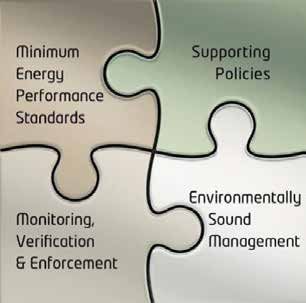
propriate to take. Monitoring all measures taken and ana- A major factor for the success of publicly directed efficient Engage all stakeholders,
2.1.2 2.1.3 Develop
Transparent
lysing the impacts is key to design the next step in an effi- off-grid lighting programmes is convincing government
cient manner. It should therefore be an integral part of all decision makers about the overall benefits for the econ- specially the private sector National Energy Strategies
action taken. The figure below illustrates the sequenced omy, environment and society at large. It is essential to
It is also very important to communicate with non-gov- For the private sector, entering a new market or expand-
steps to develop off-grid lighting policies supporting mar- identify and enlist a ‘champion’ – an individual, civil so-
ernmental stakeholders, such as utilities and civil society ing into a new region is a big investment. Before a com-
ket development. ciety organisation or ministry who understands the po-
groups, and especially the private sector to generate broad pany decides to invest into building up new structures, it
tential benefits and impact of an efficient off-grid lighting
support. Much of the deployment of these new technolo- carefully analyses the situation in the country in question
programme and who can convince other decision makers.
Figure 3 Diagram illustrating the sequence for gies currently takes place without government involve- to understand in which regions/population segments its
The role of the champion within the government should
developing off-grid lighting policies ment – such as through market-based mechanisms and products would be best placed and successful. Critical
fall within the mandate of the Ministry of Energy or rural
at the initiative of individual firms, not-for-profit organi- factors for success are information on the govern-
energy agencies but can also be taken by other public sec-
sations and social enterprises. The cooperation of govern- ment’s energy policies and strategies. Official energy
tor organisations. Both central governmental institutions
ments with these actors can significantly accelerate the policies and strategies will help the private sector to make
and local authorities need to be engaged in the efficient
market transition. an informed decision as to where its products best com-
off-grid lighting programmes. The engagement with na-
plement government activities. If the government is, for
tional policymakers helps ensure that national energy Thus governments should recognise stakeholders such as
4 Sustain
example, planning to extend the national grid or install
3 Scale up
positive impact programmes incorporate the deployment of efficient off- national renewable energy associations as key partners
and keep market mini-grids in certain regions, distributors of solar lighting
the market at steady grid lighting products in rural electrification schemes. since they have the mandate to speak on behalf of the
growth rates products would focus its efforts on other regions. Trans-
2 Kickstart industry and can efficiently channel industry feedback.
the market Different government organisations play a decisive role parent energy policies and strategies would thus lead to
Associations are important to sustain balanced market
in creating an enabling environment and can also benefit overall better results in terms of energy access. Nation-
1 Get the development and to ensure that the positive impacts
fundamentals from a faster transition to clean and sustainable means of al energy strategies can also form part of long-term de-
right of market-based avenues to clean and efficient off-grid
off-grid lighting: velopment plans for a country. This ensures long-term
lighting continue to work. They can consult with the gov-
Source: Author’s original creation 2015 • Local authorities, in particular, often have the most in- ernment on future policies and regulations and provide
planning stability and a consistent policy approach from
subsequent governments. Rural electrification policies
sight into their local situations and implementation consolidated industry feedback on plans. They further-
challenges and can provide valuable and practical infor- and plans may also be expanded to include a role for off-
more serve as a platform for the private sector to work
mation. grid solutions to reflect the possibility of using a stepped
Step 1: Get the
2.1 together on joint objectives, such as skilled workforce (see
approach in providing access.
• Ministries of Finance can benefit from additional revenue the KEREA example in Box 8). Renewable energy associa-
fundamentals right – for the government, mobilisation of foreign investment, tions typically evolve as the market unfolds. Governments Although such policies are also crucial for coordination
engagement of informed FOREX saving from reduction of fossil fuel imports, and
can help to set the right fiscal incentives to accelerate
should engage these associations and stimulate their
growth by recognising them as valid partners early on.
within the government, these policies are often not in
place. A long term policy paper or strategy would however
stakeholders and proper market development. benefit all stakeholders by:
monitoring • Social and Economic Ministries can benefit from addi- Box Engagement with government 1. Providing the private sector with planning security;
tional jobs created, local value creation, and the devel-
1 institutions 2. Helping to inform fellow ministries about plans and al-
At an early stage of market development, four measures opment of a local industry. They can be an important
counterpart for the industry in leveraging public private lowing them to implement regulations that are condu-
in the field of supporting policies are important to creating In 2013, SNV Netherlands Development Organisa-
partnerships. cive to the national energy policy; and
an enabling environment, and in turn accelerating market tion (SNV), in collaboration with the United Nations
development. Governments and other public agencies, • Ministries of Education can help with distribution to ex- Development Programme (UNDP), successfully en-
gaged the private sector and academia with govern-
3. Providing the consumer with information on when they
such as rural electrification agencies, must be aware of tremely remote communities by leveraging school net- can expect the national grid to be functional in their
ment institutions in Niger to develop the Roadmap
the off-grid lighting and electricity market potential. De- works, and thus contributing to better education of the area –information, which is key to making the signifi-
for Achieving an Enabling Environment for a Sustain-
veloping transparent energy access policies will help to population. able Solar Market. cant purchasing decision of buying a solar light or kit.
develop a joint vision and mission that can be clearly com-
municated to the population and other stakeholders, such
• Last, but not least, Ministers of Energy will welcome Hence, the development of a national energy policy /
the reduction of fossil fuel imports, increased energy strategy should be a consultative process that allows all
as the private sector. The engagement of all stakeholders independence, and the provision of access. They are of stakeholders, especially civil society, to contribute.
in the process of developing such a strategy, as well as importance to set the right policies overall and take a
for the planning of concrete steps to be taken, will help coordinating role.
to increase the impact. In particular, renewable energy Monitoring and
2.1.4
associations can provide valuable feedback on the market Actors can use supporting evidence from studies carried
stage and needs. Monitoring and verification should be out, such as the SolarAid Impact report, UNEP publica- verification of measures
an integral part of all steps taken by the government to tions on the livelihood, health impacts, and kerosene sub-
The efficient off-grid lighting sector is a very dynamic
track progress and to inform the planning phase for the sidies to convey the message within the policy arena6.
market that is beginning to see a constant growth. Effec-
next steps. In parliamentary democracies, the push for an enabling tive monitoring of the market, and the impact of policies
environment can also come from a parliament request- on it, can help to verify the success of measures and to
Ensure all relevant
2.1.1 ing ministers to implement respective regulations. The inform next steps. In an integrated policy approach, mon-
broader the coalition of support within the government, itoring and verification of progress is essential. Existing
stakeholders understand the easier it will be to implement integrative policies that
The engagement also resulted in the following ac-
complishments: monitoring systems of relevant public actors (e.g. Minis-
the benefits of the complement one another.
•Niger’s law on Renewable Energy was put on the tries of Health) could be leveraged to monitor the impact
agenda of the Council of Ministers. of clean and sustainable off-grid lighting technologies.
technology •Tax-exemption was achieved for 1.26 million solar
lamps.
6 See References section for details of these publications
•APE-Solaire (the National Association of Solar Pro-
fessionals) organised an official kick-off meeting
with a press conference.
08/28 Source: SNV Niger 2014. 09/28
Policymakers and programme implementers can strive to ity, efficient off-grid lighting devices more affordable. While this is a key measure, its implementation needs vertently distorts markets, impedes progress towards
integrate monitoring, verification and enforcement activ- The second measure is a reduction or elimination of buy-in from the Ministry of Finance, which can be gen- more efficient and cleaner solutions, and runs contrary to
ities into every aspect of their lighting and energy effi- kerosene subsidies in order to create a level playing erated through supportive evidence or data. Therefore, a sound environmental and human health policies.
ciency programmes. Knowledge sharing and peer-to-peer field for energy-efficient lighting technologies and well-defined strategy to convince and educate the Minis-
Subsidy reforms on kerosene need to be pursued to en-
exchanges between countries and across regions provide increase their value proposition to the consumer. try of Finance is an essential success factor.
hance the growth of the market for efficient off-grid
effective means for promoting best practices. Govern- The third measure is to facilitate access to finance in a
Furthermore, note that capacity building is required to lighting products. However, any changes in kerosene
ments can thereby devote more attention to existing transparent and inclusive way for companies enter-
successfully implement new measures via national cus- subsidy may affect other end-uses, notably cooking, and
programmes for the transfer of expertise and information. ing the market, as this is one of the main barriers for the
toms authorities. Although laws may allow for duty or tax thus measures must be taken to proactively minimise
International and regional cooperation for enforcement growing industry.
exemptions for high-efficiency off-grid lighting products, any unintended consequences. Subsidies could therefore
through the sharing of testing facilities, the results of test-
Beforehand, it is important to underline that free give- enforcing the exemptions may be challenging if customs be phased out gradually parallel to market development.
ing and professional development programmes (for labo-
aways and direct retail subsidies of efficient off-grid and duties officials are not prepared, or do not have suf- Clean, and modern, lighting technologies will help to re-
ratory and enforcement staff) is very valuable for quality
lighting products are not a viable tool to support long- ficient resources, to identify, categorise and process the duce the dependency of the population on kerosene. As
assurance programmes.
term market development. They are often mistaken as products that are exempted. the demand for kerosene shrinks, governments can make
an appropriate measure to initiate market development. significant savings on money spent on subsidies and con-
Figure 4 Benefits of monitoring, evaluation, and However, giveaway programmes, as well as direct retail Box tinue to reduce kerosene subsidies.
enforcement subsidies, undermine balanced market development. Such VAT exemptions in Rwanda
2
programmes would only provide short term benefits and
should therefore only be considered in extreme situations Since November 2014, the Government of Rwan-
Facilitate access to
2.2.3
Consumers where lighting products form an essential part of disaster da has introduced VAT exemptions on solar lighting finance across the supply
relief (e.g. after natural catastrophes). In all other cases, products that are quality assured. Hence products
receive the expected
product when free giveaways and reduced product costs may create an approved by the Lighting Global Quality Assurance chain
making purchasing Program* are not charged any VAT. This gives qual-
expectation that efficient off-grid technologies have low
decision
ity products a competitive pricing advantage to Access to capital, especially working capital, is a key con-
value, or that they should be heavily subsidised. This could
low-quality products and incentivises the consumer straint for the industry when scaling up. Today the market
undermine consumers’ willingness to invest in the prod-
to buy a superior product instead of spending money is limited by the supply not the demand side. Partnerships
ucts in the same way that they might invest in other ap-
on a product that is likely to fail after a short period between financiers and suppliers need to be developed
pliances that provide valuable services. This could create a
of time. to increase the supply of capital from conventional and
mve culture of dependency and a lack of care for, and mainte-
non-traditional institutions. Often the lack of a sound
*See www.lightingglobal.org/activities/qa/
measures nance of, products.
business environment inhibits investment in off-grid
Source: GOGLA 2014
participant lighting8. Governments can improve finance and market
policymakers
businesses
are provided with can assess the
Introduce exemptions on
2.2.1 conditions by supporting transparent and equitable legal
systems for financial transactions and for recourse in the
a level playing field
and do not lose
effectiveness of
their programmes value-added tax and tariffs case of non-compliance or corruption.
competetiveness and evaluate
Some countries have successfully increased access to ef-
Remove subsidies on
2.2.2
by complying improvements To encourage and support supply chains9 that make avail-
ficient lighting by reducing, or eliminating, import tariffs lighting fuels able and distribute efficient off-grid lighting products,
on efficient off-grid products, and/or by introducing, or components and services where needed, financing for the
increasing, deterrents for buying or importing fuel-based Current subsidies on lighting fuels, specifically kerosene,
Source: UNEP 2012a. private sector is essential. This could include: credit for
supplies and equipment (such as increased taxes on fuels, slow the progress of market mechanisms that have al-
product imports; a FOREX facility (to access foreign ex-
fuel-burning lanterns, wicks or candles). To document at- ready begun to promote efficient off-grid lighting prod-
change funds); capital equipment loans; microfinance for
tempts that address import tariffs and barriers to entry for ucts that offer safer, more reliable, and more economical
distributors10 and other financial instruments. Govern-
Step 2: Kick-start the
2.2
off-grid products, the United Nations Foundation recently long-term solutions. The cost to consumers of inefficient
ments can work with financiers and investors, or private
lighting sources, even when subsidised, is higher than
market – fiscal/financial set up a searchable tariff database, available through the
those of more efficient and unsubsidised alternatives
sector associations, to better understand business needs
Sustainable Energy for All Energy Access Practitioner Net- and to explore potential avenues to facilitate access (A.T.
tools that attract the work 7. (Mills, 2014b). Nevertheless, considerable funds are al-
Kearney and GOGLA 2014).
located to kerosene subsidies. The annual global cost of
private sector In Kenya and Tanzania, two markets where the efficient subsidies across the entire energy sector (coal, natural
off-grid lighting products market is growing particular- gas, petroleum fuels, and electricity), including negative
Three financial incentive measures have been identified as ly strongly, solar products are VAT- and tariff-exempted externalities, reached USD 1.9 trillion in 2011 or 2.5% of
effective strategies to support the introduction of more which eases market entry and allows companies to offer global GDP. Petroleum fuel subsidies alone amounted to
high-quality and affordable products in the markets in Af- lower prices to consumers. As the Rwanda example shows, USD 879 billion (IMF 2013).
rican countries. All of these fiscal measures are supporting VAT exemptions can also be used as a tool to incentivise
policy mechanisms. the purchase of quality products (see Box 2). Fuel subsidies are routinely criticised for failing to achieve
their intended goals and not reaching the poorest consum-
The first measure consists of removing duty and offer-
ers. According to the International Monetary Fund (IMF),
ing tax exemptions on imports of high-quality, effi- 8 According to the OBIN report, the most problematic factor for business in
the richest 20% of households in low- and middle-income
cient off-grid lighting products. The objective is to en- Africa is “access to financing”, closely followed by “corruption” (Stiftung
countries capture six times more in total fuel product sub- Solarenergie 2014).
courage private players to invest in the efficient off-grid
7 See link to the searchable tariff database on the Sustainable Energy for sidies (43%) than the poorest 20% of households (7%) 9 See, for example, Dalberg 2013.
lighting market by eliminating the additional surtax on eli- All website at http://www.energyaccess.org/resources/tariffs-database.
By searching for tariffs by product and then choosing type of product and (IMF 2013). Additionally, fossil-fuel subsidisation inflates 10 See description of the Lighting Rural Tanzania project, implemented by
gible good-quality products. Assuming that these benefits
tariff, for example, ‘solar lanterns’ and ‘bound’, the tariff rate is listed in true demand through artificially low prices, which inad- ARTI with support from the World Bank and the Rural Energy Agency, at
are passed along to the consumer, this makes high-qual- chart and graphic displays. http://arti-africa.org/projects/lighting-rural-tanzania/.
10/28 11/28Box Finance facility in Ethiopia – 2.3 Step 3: Scale up the market Global program, which runs a voluntary quality assurance that allows government to access information on key en-
programme through which manufacturers can qualify ergy performance characteristics such as rated run time,
3 Lighting Africa
Once first companies have entered the market and there is their products to meet programmatic requirements. battery capacity and photovoltaic power. These labels in-
a critical mass of capacity to supply products, policymak- form and empower end-users to make educated choices
Access to finance all along the supply chain is a key The promotion of quality standards for efficient off-grid
bottleneck impeding the sale and distribution of ers can contribute to scale up the market. After a period and motivate suppliers to deliver quality products.
lighting products is best done by connecting quality re-
off-grid lighting products across Africa. Using funds of modest growth, the period of scaling-up is essential in
quirements to market incentives, such as VAT exemptions. The Lighting Global test method was adopted by the In-
provided by the World Bank, the Government of Ethi- delivering efficient lighting products to a maximum num-
As a stand-alone measure it can be supported by a man- ternational Electrotechnical Commission (IEC) as part of
opia, with support from Lighting Africa, established ber of households. It is the period in which a small market
datory or voluntary labelling and certification programme, its body of product testing standards. The test method
a USD 20 million financing facility in 2013 to address evolves into a mass market. At the consumer level, this
whereby labels are placed on the packaging to provide was incorporated into its technical specification, IEC TS
this issue. means that products are not only purchased and used by
end-users or distributors with information about the prod- 62257-9-5:201311 . For the benefit of harmonising stan-
The fund is administered by the Development Bank early adopters, but are used on the broader consumer level.
uct’s light output and performance. Business-to-business dards, it is recommended that national standardisation
of Ethiopia (DBE) and provides foreign exchange-de-
To scale up the market faster, four measures can be taken. communications can have positive impacts on quality in bodies consider adopting the Lighting Global framework
nominated working capital to private sector enter-
The first measure is to ensure the dominance of quality the market (for example, Lighting Global standards). A for all quality assurance of off-grid lighting products.
prises to allow them to import qualifying products,
including solar products that meet Lighting Global’s products in the market. The second measure is to create consumer-facing label would add great value, however it
Quality assurance can also take place further down the
Quality Standards. Microfinance Institutions (MFIs) awareness for the benefits of solar lighting among the is also costly to implement and requires a substantial bud-
line with qualified technicians that can provide appropri-
can also access this credit line for household-level population. The third measure is to encourage the de- get for consumer education.
ate after sales services. Accrediting vendors that are only
loans for qualifying product purchases. velopment of local skills to support the market growth.
re-selling quality products are another opportunity to
In its first 18 months of operation, this facility enabled Finally, the fourth measure is to leverage public private
Structure and main components provide guidance to customers on where to buy a product
over 300,000 quality-verified solar lighting products partnerships to the benefit of both sides. These measures Box
of the Lighting Global quality (see case study below).
to be imported, providing 1 million Ethiopians with are detailed in the section below and are all supporting 5 assurance (QA) framework
access to modern energy services. policy mechanisms. When properly designed, all of them
Source: Lighting Africa 2015. have the potential to help ensure that products promoted Box
KEREA vendor accreditation
adhere to minimum energy performance standards. OFF-GRID LIGHTING 6
QA PROGRAM
With the objective of reducing market spoilage and
Public support to facilitate access to finance across the
supply chain should be structured in a way that leverages
Ensure product quality
2.3.1 increasing consumer confidence in solar PV in Ken-
ya, KEREA is implementing a voluntary accreditation
commercial investments and doesn’t unintentionally re- through promotion of TEST METHODS & TESTING & MARKETING framework for solar PV businesses. The process con-
sult in a reduction in private investment. Reporting and
monitoring should be efficient without putting too much
internationally accepted QUALITY STANDARD VERIFICATION COMMUNICATION sist of:
burden on companies. It is further important to under- minimum standards • Developing a criterion for accreditation of renew-
Source: Lighting Africa 2015. able product and service providers that would be
stand that public money used for direct retail subsidies is based on conditions such as businesses adhering
not a sustainable way of initiating market development. Ensuring quality in the market is essential to sustain to an agreed upon code of conduct, selling a certain
The minimum quality standards developed by Light-
De-risking commercial money or other public-private growth. Poor quality products undermine consumer trust quality of products and having certain verifiable
ing Global define requirements for participating pri-
partnerships can on the other hand lead to interventions in the technology at large, especially in nascent markets. technical capacity/skills.
vate sector entities for truth-in-advertising, durabil-
Quality assurance can be achieved via minimum energy
that support sustainable market development.
performance and quality standards -e regulations focused
ity, quality, lumen maintenance and warranty terms . • Promoting the accreditation system to solar PV
As of January 2015, these standards have the follow- businesses countrywide and providing guidance on
on the quality of products. Minimum energy performance ing requirements (Lighting Global, 2015a): what they need to do to meet the accreditation cri-
experience with a rural and quality standards for products are used to establish teria.
Box
electrification agency in West • Truth-in-advertising: Advertising and marketing
4 Africa
minimum desired performance and methods to test the
quality characteristics of products. Product performance
materials accurately reflect tested product perfor- • Receiving applications from interested businesses
mance. and implementing the auditing and testing process
specifications based on these standards can be used for for these businesses. This would include testing
Through the Lighting Lives in Liberia programme, the bulk procurement programmes, voluntary or mandatory
• Durability: Product is appropriately protected from
of randomly selected products, visits to selected
Rural and Renewable Energy Agency of Liberia col- water exposure and physical ingress and survives
labelling schemes, and for buyers’ selection of products. being dropped. installed systems to check design and installation
laborated with Lighting Africa to enable Niwa Solar standards.
It is important that any minimum energy performance
to enter the country’s off-grid lighting market. High-
and quality standards are harmonised with international-
• System quality: Product passes a visual wiring and • Promotion of accredited businesses, engineers or
lights of the initiative include: assembly inspection.
ly accepted standards. Standards that are defined only at technicians to the public and potential markets
• The programme enjoys zero per cent import duty national level risk being more a barrier than a support to a • Lumen maintenance: Product maintains at least through branding and/or providing their details to
and VAT for solar off-grid products and focuses on 85 per cent of initial light output after 2,000 hours the public through press, media, awareness cam-
bridging importer/reseller financing in order to build prospering and sustainable market environment. of operation. paigns and the KEREA website.
up local resellers through competitive selection. In West Africa, for example, ECOWAS is adopting a Techni- • Warranty: A one-year (or longer) retail warranty is • Developing and implementing sustainable process
• The programme is funded by grants from the Global cal Specification for Off-Grid Lighting Products as part of available. of regular and continuous monitoring and verifi-
Environment Facility (GEF) and the Africa Renew- its Regional Efficient Lighting Initiative. These in turn will cation which would include a feedback/complaints
able Energy Access Trust Fund (both administered be implemented by each of its member countries replac- desk.
by the World Bank). ing existing national standards. The new standards are The minimum quality standards developed by Lighting
For off-grid lighting products and solar kits, only
• The Rural and Renewable Energy Agency of Liberia based on the International Electrotechnical Commission Global for participating manufacturers and distributors of business selling / manufacturing Lighting Global ac-
is responsible for project implementation from 2012 (IEC) technical specification IEC/TS 62257-9-511 and the efficient off-grid lighting products include truth-in-adver- credited products will be eligible.
to 2016. World Bank/International Finance Corporation’s Lighting tising, which requires truthful and accurate consumer fac-
Source: KEREA 2015
Source: NIWA and World Bank 2014 ing labelling of the product. It is a voluntary programme
11 Recommendations for small renewable energy and hybrid systems for
12/28 rural electrification - Part 9-5: Integrated system - Selection of stand-
alone lighting kits for rural electrification
13/28There are some considerations that should be noted be- Demonstration projects that are coordinated with aware- • Local and regional authorities, which interact directly required skill set is often not part of the curricula of sec-
fore establishing minimum quality standards for efficient ness-raising campaigns show how efficient, high-quality with consumers and can provide them with valid argu- ondary schools, but could be facilitated through innova-
off-grid lighting: off-grid lighting products can be used in applications fa- ments and facts on the benefits of efficient lighting, and tion incubators or similar institutions. Training centres for
miliar to the target audiences. They are an excellent op- on the proper handling of efficient off-grid lighting prod- electrical technicians should consider including the neces-
• Standards should be scheduled allowing sufficient time portunity for public-private partnerships to offer users ucts and components (such as batteries). sary skill set for reliable technical training.
for compliant products to be made widely available in
the market.
hands-on experience with good-quality off-grid lighting • Customs authorities, which exercise authority in moni- Governments should encourage training and make it part
products and systems. Demonstrations can be simple, toring, verification and enforcement schemes to ensure
the energy efficiency and quality of imported lighting of the curricula for technicians and entrepreneurs in close
• Where possible, harmonisation of standards is an ad- portable displays for short-term use, larger-scale installa-
products. coordination with industry needs. Training could take
vantage, and thus using existing, widely referenced tions in a public space (such as a school or clinic) or lighting
standards such as Lighting Africa standards can be an systems installed throughout a community. Demonstra- • Political leaders, who can champion and facilitate en- place in cooperation with the private sector (see Box 8).
National institutions need adequate preparation time to
advantage. tions can be coordinated with government procurements abling legislation if they are well informed about the
goals and benefits of efficient off-grid lighting. provide structures to meet new provisions of regulations.
and bulk procurements, thus serving as a way to increase
• The initial costs of compliant products may exceed those early demand for off-grid lighting products and systems. To promote the penetration of quality products in the
This is a prerequisite for regulations to be efficient14.
of inefficient products. Governments may, therefore,
consider combining standards with measures to lower Pairing demonstrations with various means of evaluation market, campaigns should work with companies that are
the price, such as a VAT exemption on compliant prod- distributing quality-verified products and also educate
gives all parties additional evidence of the benefits of
Box Kenya Renewable Energy
ucts. the population to distinguish a quality product from a
modern lighting13. Tools could include: user surveys; mea- Association (KEREA) training for
surement of amount of light and hours of use; and sum- low-quality product. 8 technicians
• The mandatory energy performance and quality stan- maries of initial and operating costs, showing how to cal-
dards may not be readily attainable by the local man-
culate a return on investment. Results of demonstrations With support from various donors, the Kenya Re-
ufacturing industry (if it exists); therefore, adequate Box Awareness raising campaigns –
can show governments the value of the new technologies newable Energy Association (KEREA) has helped to
preparation time must be built into the market transfor- 7 Lighting Africa
and increase demand for products among consumers. develop trainings for solar technicians and equipped
mation12.
training institutions with the necessary materials to
Other media, such as radio programmes or in-person com-
• Quality assurance programmes should be supported by munity health presentations, can also deliver safety infor-
As part of their consumer outreach activities, the joint
IFC-World Bank Lighting Africa program has devel-
train technicians properly. To make the two-week
training more affordable to technicians, the cost of
other policy options and market surveillance activities
mation and introduce information about safer off-grid oped engaging and entertaining educational materi- the training is subsidised. In a second step, KEREA
such as monitoring, verification and enforcement to
products. These kind of ‘above the line marketing’ efforts als, including radio and TV spots, posters, and comic seeks to work with training institutions for electrical
reach their full market potential.
will not reach the consumers living in rural areas, but will books to raise awareness of, and trust in, solar light- technicians to ensure their curriculum reflects the
help to increase the general awareness among the popula- ing products among potential consumers. These ma- provisions of the regulation so that all future tech-
Raise awareness for
2.3.2 tion for products and help to spread the word. terials explain what solar lighting products are, how nicians will have the right skill set for solar lighting
they work, their use and maintenance, their benefits when they leave any electrical training institution.
solar lighting benefits Key governmental institutions that can play an active role and how they transform lives. They can be adapted Source: Interview with KEREA 2015
in a communications and awareness-raising programme to feature available quality-verified products and to
among the population on efficient off-grid lighting include: inform consumers and retailers where they can pur-
chase reliable solar products locally.
Public information campaigns designed by government • Ministry or Department of Energy, which has oversight These materials compliment the road shows that the
on national energy policy and strategies, and whose sup-
agencies or utilities are effective tools to raise awareness,
port of an efficient off-grid lighting programme is crucial. program carries out in rural villages on market days Leverage public private
2.3.4
as well as educate and mobilise the public and influence
social or individual behaviours, attitudes, values and • Rural electrification agencies, which incorporate efficient during awareness raising campaigns. These shows
feature product demonstrations, fun quizzes, dance
partnerships to increase
off-grid lighting in their energy access programmes.
knowledge on the benefits of efficient off-grid lighting.
Informed consumers will be more likely to seek out and • Ministry of Environment, which has high interest in pro-
performances and a chance to test solar lighting market penetration
products first-hand.
participate in efficient off-grid lighting programmes. grammes that reduce CO2 emissions and also is involved
In Kenya, Lighting Africa’s consumer education Partnerships between the public and private sector can
with sustainable end-of-life treatment of spent lighting
Accurate information helps consumers understand the campaign also imbedded key consumer messages in many ways help to increase the market penetration of
products.
long-term impact of using the improved products on their into one season of ‘Makutano Junction’, a popular clean and efficient off-grid lighting. Local or state gov-
health, safety and household expenditure. Community
• Ministry of Health, which can inform other policymak- ‘edutainment’ soap opera, as well as conducting an- ernments can for example include off-grid lighting as an
ers and the public about the impact of efficient off-grid nual campaigns to encourage urban residents to gift
events are excellent ways to interact directly with con- eligible product class for economic development incen-
lighting on health and safety, and also can support col- solar lighting products to their rural relatives.
sumers and to encourage them to make environmentally lection and recycling schemes for spent lighting prod- tives. By opening up their networks to companies, gov-
responsible choices in their daily behaviour. Participants ucts to minimise exposure and health risks to workers Source: Lighting Africa 2015 ernment institutions can be of support to reach new con-
will spread the message to their peers - family, friends and and users. sumers. Endorsement of solar products by government
representatives can also have a very strong effect on the
neighbours. • Ministries of Finance, Trade, Labour and Industry, which population. SunnyMoney successfully partners with Min-
can apply fiscal policies to facilitate the market transfor-
mation for efficient off-grid lighting products. Encourage development
2.3.3 istries of Education to leverage national school networks
11 Recommendations for small renewable energy and hybrid systems for
rural electrification - Part 9-5: Integrated system - Selection of stand- • Ministry of Education, which can encourage parents to of local skills to support
procure efficient off-grid lighting products for their chil-
market growth
alone lighting kits for rural electrification
dren to be able to study at home in the evening, and can 14 “For example, in Kenya, the regulatory authority had rightly identified
12 “For example, in Kenya, the regulatory authority had rightly identified the lack of qualified technicians as a leading cause for the failure of SHS
support teachers and administrators who can participate [solar home systems]. A law was enacted to rectify this real problem, i.e.
the lack of qualified technicians as a leading cause for the failure of SHS
[solar home systems]. A law was enacted to rectify this real problem, i.e. in spreading the word about the risks of fuel-based light- Local skills are key for building sustainable markets. Savvy SHS companies require qualified technicians to operate. It was a good
SHS companies require qualified technicians to operate. It was a good ing and the benefits of efficient off-grid lighting. entrepreneurs that know how to develop their business law, but by the time it came into effect, there were very few trained
law, but by the time it came into effect, there were very few trained technicians nationwide and, indeed, few training institutes to increase
technicians nationwide and, indeed, few training institutes to increase are the foundation of a lasting and scalable distribution the numbers. It was a good law but there was a gap in the strategy to
the numbers. It was a good law but there was a gap in the strategy to network can also deliver reliable after-sales services. The effectively achieve this.” Nana Nuamoah Asamoah-Manu, IFC, personal
effectively achieve this.” Nana Nuamoah Asamoah-Manu, IFC, personal 13 For an example of a creative, community-based demonstration project communication during peer review process, 2014
communication during peer review process, 2014. that had a strong evaluation approach, see SunnyMoney 2014.
14/28 15/28You can also read


