Digital transformation: How Siemens EDA helps you engineer a smarter future faster
←
→
Page content transcription
If your browser does not render page correctly, please read the page content below

SIEMENS DIGITAL INDUSTRIES SOFTWARE

   Digital transformation: How
   Siemens EDA helps you engineer
   a smarter future faster
Executive summary
We are living in an age of ever accelerating digital innovation, where world-wide knowledge,
commerce and communication are broadly accessible and literally at our fingertips. Over the past six
decades, thousands of companies in the tech sector have worked diligently to bring new, ever-more
sophisticated electronic innovations to market daily, culminating in today’s age of digitalization,
which is rapidly changing how we live, travel, conduct business and communicate. This pace of
digital transformation will accelerate even more rapidly as more companies begin to incorporate
artificial intelligence (AI) and machine learning (ML) into their systems to leverage and even
monetize the exponentially increasing amount of data produced by seemingly “everything digital.”
Siemens EDA is dedicated to helping more companies advance in their digital transformation and
engineer a smarter future faster.

Mike Santarini, EDA content director
Siemens Digital Industries Software

siemens.com/eda
White Paper – Digital transformation: How Siemens EDA helps you engineer a smarter future faster

                                                              Contents

                                                              Introduction3

                                                              Digitalization, big data and AI5

                                                              Semiconductors at the heart of digitalization6

                                                              Digital transformation begins with ICs designed
                                                              with the end-system in mind 8

                                                              Digital transformation for next-generation
                                                              electronics systems design11

                                                              Conclusion13

SIEMENS DIGITAL INDUSTRIES SOFTWARE                                                                             2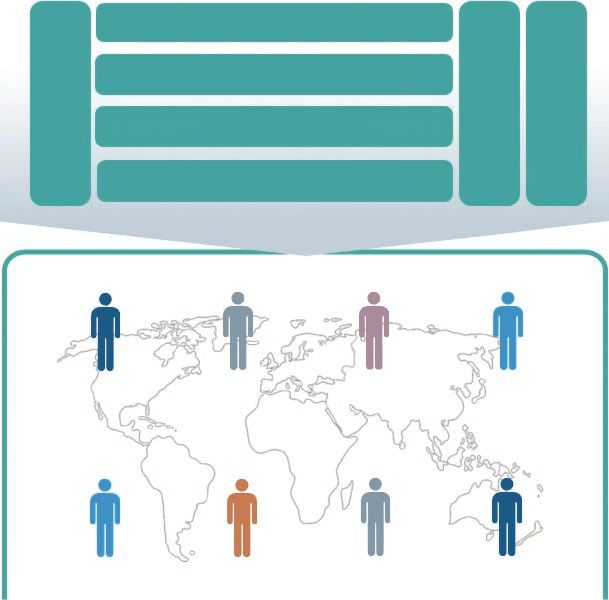
White Paper – Digital transformation: How Siemens EDA helps you engineer a smarter future faster

               Introduction

                                  With the 2017 acquisition of Mentor Graphics by                                                                      To deliver optimal, safe, secure and truly innovative
                                  Siemens AG’s PLM (product lifecycle management)                                                                      products to market requires not only designing,
                                  business, the newly formed Siemens Digital                                                                           verification/validation and testing the functionality
                                  Industries Software (Siemens PLM plus Siemens                                                                        of each of these systems individually but also
                                  EDA) became the first tech company to tear down                                                                      testing them running together virtually in the
                                  the barriers between engineering disciplines to                                                                      context of the end-system or entire ecosystem
                                  facilitate the design of entire digital ecosystems.                                                                  before committing to manufacturing. And after
                                  Siemens recognized that to develop tomorrow’s                                                                        manufacturing, the data from the design
                                  digital innovations more rapidly, the most successful                                                                end-product running in the field and the manufac-
                                  companies and their suppliers either have adopted                                                                    turing processes can be analyzed to ensure safety,
                                  or are in the process of adopting a system of                                                                        build better next-generation products, and optimize
                                  systems mindset, in which “the system” is no longer                                                                  manufacturing and business processes.
                                  just the IP core your team is developing, or the IC,
                                                                                                                                                       Mirroring what is happening with customers,
                                  PCB, the embedded software, the ECU, or even
                                                                                                                                                       Siemens, with its Xcelerator portfolio, is also
                                  automobile your team is developing. Rather it is all
                                                                                                                                                       adopting a system-of-systems mindset by building
                                  those electrical, software and mechanical systems
                                                                                                                                                       the industry’s most comprehensive, integrated
                                  and the network connecting all those systems
                                                                                                                                                       product design ecosystem to enable more
                                  integrated into smart business environments, smart
                                                                                                                                                       companies to design with the end-system/
                                  factories, smart infrastructure and smart cities – it is
                                                                                                                                                       ecosystem in mind and deliver tomorrow’s
                                  the whole ecosystem your enterprise or your
                                                                                                                                                       innovations to market today
                                  customers’ enterprises are building (Figure 1).
                                                                                                                                                       (Figure 2).

               What
               What is  is digitalization?
                           digitalization?
               It’s
               It’s the
                     thewhole
                          wholeecosystem
                                  ecosystem.

               Apple                                                                     Google                                                                      Microsoft
                                                     Siri                                                                                                                                                Cortana

                              iCloud                                                                     Drive
                          Pages, Numbers,                                                           Docs, Spreadsheet,         Google TV                                      Office 365
                          Keynote, Mail, Calendar,                                                  Presentation, Google+,                                                    Word, Excel, PowerPoint,
                          Contacts, Facetime                                                        Groups, Hangouts                                                          One Drive, Skype
                                                     Apple TV       iTunes                                                            YouTube Music                                                      Xbox      Xbox

                   Apple Pay          Health          Carplay        Homekit                 Google Pay      Android Wear Android Auto Nest                               Microsoft     HealthVault      Microsoft  Home OS
                                                                                                                                                                          Wallet                         Automotive
                                                                                                Google Wear, Glass, Android phones & tablets,
                        Apple Watch, iPhone, iPad, Macs, Macbooks                                                                                                              Windows Phone, Surface, Windows 10
                                                                                                Chromebooks

            Figure 1. The most successful companies and their suppliers design with the end-system ecosystem in mind.
               Page 1      Restricted | © Siemens 2021 | Joe Sawicki | Executive Vice President, IC EDA | Siemens Digital Industries Software | Where today meets tomorrow.

SIEMENS DIGITAL INDUSTRIES SOFTWARE                                                                                                                                                                                           3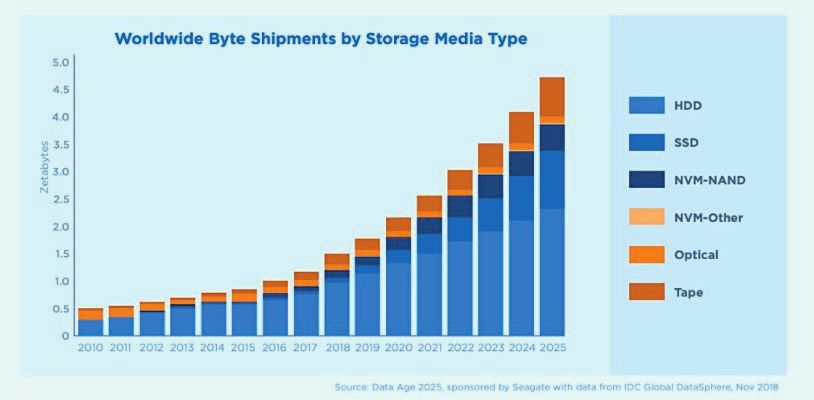
White Paper – Digital transformation: How Siemens EDA helps you engineer a smarter future faster

                         Siemens’ acquired Mentor to help its customers                     off-the-shelf, trunk-size product by 2.5x while also
                         make their digital transformation faster. Siemens’                 conserving 10x more energy. This computer has
                         acquisition of Mentor came at a time when a                        become a key differentiator, which has helped Tesla
                         growing number of the largest and most successful                  maintain its dominant 79 percent market share lead
                         systems and ecosystems customers – many of which                   in the electric vehicles market.
                         were already customers of Siemens PLM software –
                                                                                            Likewise, Apple has increasingly brought more chip
                         started to bring not only electrical system develop-
                                                                                            development in house to achieve new levels of
                         ment but even chip development in house.
                                                                                            functionality, performance and profitability, while
                         Many systems and ecosystems companies today are                    better guarding their trade secrets and upcoming
                         finding that developing their own ICs or, alterna-                 product specifications. Roughly a decade ago, the
                         tively, hiring semiconductor companies to develop                  company developed its own system on chip (SoC)
                         custom ICs or application-specific ICs (ASICs) specifi-            processor architecture for its iPhone line. Building
                         cally for their end-systems are far more preferable                on that success, the company has more recently
                         than using off-the-shelf generic systems. These                    built its own SoC architecture to power its Mac PCs
                         ASICs deliver better power, performance and area                   and tablet lines – all of which are tightly tied into its
                         (aka, PPA) optimization while offering competitive                 many subscription services.
                         differentiation from those that purchase the same
                                                                                            Both Apple and Tesla represent system companies
                         off-the-shelf chips to create easily cloned products
                                                                                            that became ecosystem companies by whole-heart-
                         that commoditize once hot markets.
                                                                                            edly embracing digitalization to consistently intro-
                         Apple and Tesla are two ecosystem companies that                   duce disruptive innovations to the world and
                         exemplify how internal IC development and scaling                  become iconic leaders. They are fortifying their
                         has reaped many benefits. For example, rather than                 leadership positions and digitalization dominance
                         going with an off-the-shelf, self-driving computer                 by creating their own SoCs. And with the aid of
                         system (announced at CES 2019 1/2019), Tesla                       Siemens Digital Industries Software, a number of
                         developed and announced at Tesla Autonomy Day                      other companies are following their formula for
                         (in April of 2019) its own book-size, self-driving                 success.
                         computer product that reportedly outperformed an

               Xcelerator for electronic design automation
               Xcelerator for electronic design automation

                                                                                     IC Design, Verification and Manufacturing

                                                                                     IC Packaging Design and Verification

                                                                                     PCB Systems Design and Manufacturing

            Figure 2. Siemens EDA is the first, foundational step for companies and their suppliers designing with the end-system
            ecosystem in mind.

SIEMENS DIGITAL INDUSTRIES SOFTWARE                                                                                                                 4
White Paper – Digital transformation: How Siemens EDA helps you engineer a smarter future faster

               Digitalization, big data and AI

                             When people in the high-tech industry hear “digi-                                         Indeed, the realities of the COVID-19 pandemic have
                             talization” or “digital transformation” referred to as                                    laid bare the frailties of businesses that do not have
                             “emerging trends,” they may be quick to dismiss                                           a robust digital presence or that partner with
                             them as something they accomplished 20 years                                              companies and manufacturers that are not digitally
                             ago. However, today there are still a vast number                                         robust. The disruption the pandemic created has
                             of companies that are not fully digital – prime                                           made evident the value and even necessity of
                             examples being the myriad of small businesses                                             investment in new digital transformation technolo-
                             and larger enterprises in the factory sector that                                         gies (Figure 3).
                             Siemens serves. Further, with the pace of innova-
                             tion producing more digital systems annually and
                             in turn generating exponentially more data to be
                                                                                                                      “Digital transformation is
                             analyzed and potentially monetized, digital trans-                                        the integration of digital
                             formation is a perpetual journey, as even those
                             companies that have been digital for decades
                                                                                                                       technology into all areas of
                             recognize. To stay viable and competitive they                                            a business, fundamentally
                             need to continually update and improve their
                             digital transformation and partner with like-
                                                                                                                       changing how you operate
                             minded companies in their supply chain.                                                   and deliver value to
                                                                                                                       customers.”

               Digitalization rapidly accelerating and providing real benefits
               Accelerated changes due to COVID-19                                                                    Benefits accrued

                 63%                                  56%                                  55%                         24%                  22%
                 Increased use of                     Permanent                            Permanent work-             Revenue              Profitability
                 cloud and/or                         reduced travel                       from-anywhere               improvement for      improvement
                 automation                           policies due to                      and/or flexible             digital vs.          over 5 years
                 technologies                         video/collaboration                  hours                       non-digital          for digital vs.
                                                      technologies                         arrangements for            manufacturers        non-digital
                                                                                           some employees              over last 5 years    manufacturers

               Sources: KPMG Global Semiconductor Industry Survey 2021 & KPMG CEO Outlook COVID-19 Special Edition,
               IDC Manufacturing Insights’ Global Performance Index Analysis 2015-2020

            Figure 3. The COVID-19 pandemic has made evident the benefits of having a robust digital enterprise.

SIEMENS DIGITAL INDUSTRIES SOFTWARE                                                                                                                                         5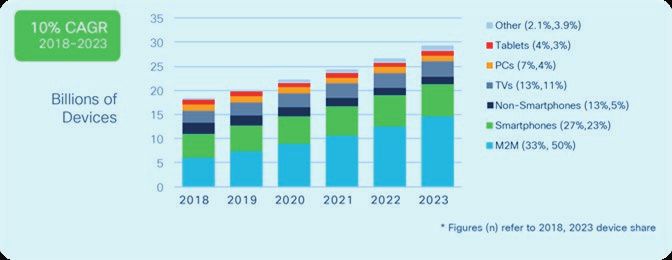
White Paper – Digital transformation: How Siemens EDA helps you engineer a smarter future faster

               Semiconductors at the heart
               of digitalization

                                        The integrated circuit is the heart of many genera-                              data, the worldwide volume of which is expected to
                                        tions of modern electronics innovations and every-                               skyrocket from 897 exabytes in 2020 to 392,540
                                        thing involved with digitalization. Every two years,                             exabytes by 2030, due in large part to more busi-
                                        in step with Moore’s Law (devised by Intel                                       nesses becoming digitalized and thus consuming
                                        co-founder Gordon Moore in 1965), the many                                       and generating more data. Tech industry analysts
                                        companies involved in the design, development and                                point to dramatic demand growth in the sensor and
                                        manufacturing of ICs work together (though                                       actuator market used for collecting data, a 10
                                        competitively) to deliver a new silicon process                                  percent CAGR for connected devices consuming and
                                        technology, which engineering teams can leverage                                 producing data, and continued growth in demand
                                        to deliver new ICs with greater hardware function-                               for the various devices used to more efficiently store
                                        ality and faster performance to power newer and                                  this ever-growing amount of data (Figure 4) as key
                                        better electronic innovations.                                                   indicators that growth in data, supercharged by
                                                                                                                         growth in digitalization, translates to dramatic
                                        Today semiconductor industry growth is driven by
                                                                                                                         growth for semiconductors.
                                        key digitalization trends mostly centered around

               Semiconductor growth driven by digitalization trends

                Sensor and actuator annual unit shipments                                       10 percent CAGR for connected devices
                                               45
                                                                                                        Billions of devices

                                               40
                           Billions of units

                                               35
                                               30
                                               25
                                               20
                                               15
                                               10
                                                    2014   2016   2018   2020     2022   2024
                 Source: IC Insights 2020                                                       Cisco Annual Internet Report (2018 – 2023) 3/9/2020

                Global byte shipments by storage media type                                     Data traffic (exabytes)
                                                                                                1,455X Growth Rate in data traffic

                                                                                                                                                                         392,540
                                                                                                                                       92% CAGR

                                                                                                                                 897              16,024

                                                                                                                                2020                  2025                  2030

                Source: Data Age 2025, sponsored by Seagate with data from IDC 2018             Source: IBS, Impact of AI on Electronics and Semiconductor Industries, April 2020

            Figure 4. Digitalization will further accelerate the creation and consumption of data and drive new uses of AI/ML to find ways to leverage
            and ultimately monetize data.

SIEMENS DIGITAL INDUSTRIES SOFTWARE                                                                                                                                                 6
White Paper – Digital transformation: How Siemens EDA helps you engineer a smarter future faster
VLSI Research predicts digitalization adoption by As an example, in a keynote at the Samsung SAFE
businesses worldwide will become the prime (Scaled Agile Framework) event in October of 2020,
revenue driver for the semiconductor industry the Raja Koduri, senior vice president of Architecture,
foreseeable future, vaulting the semiconductor Graphics and Software at the world’s largest semi-
industry to new highs. Meanwhile, research firm IBS conductor company, Intel, outlined how after inno-
predicts the semiconductor market will become a vating the 1980’s era of “digitize everything,” the
$1 trillion market with a 9.9 percent CAGR by 2030 1990’s era of “network everything,” the 2000’s era of
(IBS, January 2021). “mobile everything” and today’s era of “cloud every-
thing,” we are today readying “the emerging era of
Underlying collecting, transferring and storing data,
Intelligent Everything,” where AI-enabled ICs will be
an increasing number of semiconductor, software
at the heart of 100B intelligent, connected devices
and system companies are turning to artificial
worldwide. “Today, with the world generating close
intelligence and machine learning to help filter,
to 175 zettabytes of data a day, we are generating
sort, interpret, and analyze that data faster to speed
data faster than our ability to analyze, understand,
business processes and derive new ways to mone-
transmit, secure, and reconstruct it in real-time,”
tize that data.
said Koduri. The way to address this explosion of
In fact AI/ML is quickly becoming pervasive as it is data growth is for the tech industry to work
finding its way into an increasing number of points together to enable “exascale compute performance
in the ecosystem (and all the key markets predicted for everyone,” said Koduri. To make that a reality by
to drive semiconductor growth), from embedded 2025, Koduri said it would require a 1000X improve-
accelerator and pattern recognition blocks in ICs in ment in AI computing, which would need to be
edge devices and ADAS and autonomous vehicles, aided by advancement in three areas, which can be
to new generations of wireless infrastructure trans- summarized as: scaling of IC process technology, IC
ferring data, to datacenters storing the data in the design, and systems.
cloud, and throughout the software running across
all those systems as well as the software to design
all the components of those systems.
To stay ahead of the game, the companies at the
heart of digitalization are constantly looking for
new ways to increase compute power. And for this,
they are increasingly turning to AI/ML and extraordi-
narily complex architectures and manufacturing
technologies.
SIEMENS DIGITAL INDUSTRIES SOFTWARE 7White Paper – Digital transformation: How Siemens EDA helps you engineer a smarter future faster
Digital transformation begins
with ICs designed with the
end-system in mind
Siemens EDA is the electronics division of Siemens strained physics of new manufacturing processes.
Digital Industries Software. Siemens EDA offers To address these increasing complexities, Siemens
design flows for: EDA has been a pioneer in the use of AI/ML technol-
ogies inside of EDA tools to enable those tools to
• IC design, verification and manufacturing
produce more accurate results faster. Meanwhile, to
• IC packaging design and verification better address growing capacity and compute power
challenges, Siemens EDA offers high-performance
• Electronic systems design and manufacturing
computing configurations via on-demand fog and
Joseph Sawicki, executive vice president of IC EDA, public cloud configurations for those verification
runs Siemens EDA’s IC EDA business. AJ Incorvaia, tasks that are especially compute intensive.
senior vice president, Electronic Board Systems EDA
To enable process technology scaling, Siemens EDA
runs Siemens EDA’s IC packaging and verification
works closely with foundry partners and customers
as well as its Electronic Systems Design and
to deliver Calibre® signoff quality physical verifica-
Manufacturing businesses. Both report to Tony
tion, design for manufacturing (DFM), lithography
Hemmelgarn, CEO of Siemens Digital Industries
and Tessent yield and test tools for each emerging
Software.
process technology node. These enable the found-
In recent keynotes, Sawicki has outlined the vision ries to bring up new process nodes quickly as well as
for how Siemens EDA is enabling process tech- help IC design teams ensure they are getting the
nology, design, and systems scaling as fundamental highest PPA possible and that their ICs are
steps to helping companies deliver IC innovations completed as fast as possible.
and accelerate their and their customer’s digital
For companies wanting to achieve “More than
transformation.
Moore” densities for their ICs, Siemens EDA has
Enable process technology scaling The semicon- worked with foundry partners and design customers
ductor and EDA businesses are unique in that with to deliver Xpedition™ advanced packaging solu-
the introduction of new silicon process technologies tions, which enable customers to use chiplet and
every two years, the EDA tools and methods to stacked die methodologies to develop 2.5D and 3D
design and manufacture ICs on these new silicon ICs and system-in-package products to achieve
processes not only have to scale in capacity and optimal PPA for their end-systems.
compute power to handle much larger design files
and exponentially more foundry design rules, they
must also scale to address new complexities and the
SIEMENS DIGITAL INDUSTRIES SOFTWARE 8White Paper – Digital transformation: How Siemens EDA helps you engineer a smarter future faster
To speed data on and off chip faster, Mentor is also They can use Catapult HLS to synthesize the C code
a pioneer in silicon photonic design tools, with its into RTL code and then use Catapult HLS to verify
LightSuite™ Photonic Compiler. Though not a main- the algorithm’s overall performance with one part
stream technology yet, silicon photonics brings fiber running in custom logic and the other part running
optics directly onto the IC for IO speed hungry as software on the embedded processor. They can
applications such as high-speed communications, refine the hardware and software mix until they
high-performance computing, storage in data reach their desired PPA for the end-system specifica-
centers and LiDAR for military and autonomous tion and then advance the design to the rest of the
driving systems. IC design process, ensuring they are developing an
optimal mix of hardware and software for their end
Siemens EDA also offers full custom, analog, and
system.
analog/mixed-signal and MEMS design (Tanner™)
and verification (Analog FastSPICE™) flows for What’s more, they can leverage PowerPro power
companies developing custom, MEMS and analog IC analysis in Catapult HLS throughout the entire flow,
designs and those developing AMS (Symphony™) from C-level design down to implementation, to
high-speed IOs. It also pioneered AI-powered library ensure their designs do not stray from the intended
characterization with its Solido™ technology. power budget. They can then use the Questa™ line
of functional verification tools and Veloce™ FPGA-
Enable design scaling As companies take a more
based prototyping platforms to ensure the function-
holistic systems-of-systems view of their chip
ality of the RTL is correct. They can then use Veloce
designs and integrate AI/ML into their SoCs, the chip
Strato+ emulation system to verify the functionality
and system architects who plan the system can
of the entire SoC running in the context of the end
develop mathematic algorithms representing the
system. They can then use Siemens Embedded
end-functionality they want their system or the AI/
solutions to get an early jump on software
ML functions in their system to accomplish.
development while the SoC design is moving
Instead of jumping right into designing the silicon at through the implementation flow (with Oasys-RTL™
the register transfer level (RTL), using a hardware logic synthesis and Aprisa place and route), then
design language, and perhaps going down a wrong gets verified with Calibre, and then manufactured
path, they can transfer that mathematic algorithm and tested with Tessent™.
into C code (using a tool from MathWorks). They
Enable systems scaling When EDA and semicon-
can then run that C code on a standalone processor,
ductor veterans hear the term digital twin floated as
SoC or FPGA-based prototyping system to see which
a new concept, they are typically quick to point out
functions of the algorithm run fast and what runs
that companies have been creating “twins,”
slow. To speed up the slow parts of the algorithm
“models” and “prototypes” of their ICs since the
and achieve the goal of best PPA, they can use
earliest days of semiconductors – with solutions
Catapult™ HLS to harden those parts by imple-
evolving from breadboards to SPICE models to
menting them as logic gates in an SoC design and
today’s emulation systems digitally modeling multi-
run the rest of the algorithm as software in the
billion gate
SoC’s embedded processor.
SIEMENS DIGITAL INDUSTRIES SOFTWARE 9White Paper – Digital transformation: How Siemens EDA helps you engineer a smarter future faster
processors and SoCs. But semiconductor and insert specialized IP blocks into their ICs. These
conventional EDA companies typically stop there – blocks monitor, in real-time, on-chip faults, security,
at their IC system – when it comes to addressing a power and performance of ICs and potentially ECUs
digital twin. With Mentor now a part of Siemens as well as the full systems they are built into. In an
Digital Industries Software, Siemens is in a unique automotive configuration, companies can configure
position to offer the industry’s only true system- the blocks to report warnings to the vehicle’s occu-
level, cross-discipline, comprehensive digital twin. pants, to the dealership for preventative mainte-
As an example, in 2019 Siemens announced its PAVE nance and part ordering or to the tier-1 chip supplier
360, which ties Siemens EDA’s IC tool flow with or even the OEM to head-off recalls and improve
Siemens EDA’s Veloce emulation system to a slew of derivative designs and even manufacturing
Siemens PLM technologies to enable automotive processes. To deploy this technology to its full
OEMs and their suppliers to essentially verify auto- potential not only requires a partner, like Siemens
motive IC designs and validate related software in EDA, with the right IP, but also the ecosystem soft-
virtual driving scenarios before committing the ware infrastructure, like Siemens Digital Industries
silicon and the rest of the system to manufacturing. Software, to interpret and take action on that data.
While PAVE 360 is an automotive-specific implemen- While Sawicki’s group in Siemens EDA is innovating
tation of a comprehensive digital twin, there are new IC design technologies for companies wanting
many other systems and ecosystem opportunities to speed and optimize their digital transformation
that will benefit from such cross-disciplinary, into digital ecosystems, AJ Incorvaia’s group is
comprehensive digital twin environments in the not extending digitalization from the PCB and intercon-
too distant future. nected electronic systems into the mechanical
design sphere.
Siemens EDA also pioneered a silicon lifecycle
management technology called Tessent
MissionMode (released in 2017) and last year
acquired UltraSoC, which enables companies to
SIEMENS DIGITAL INDUSTRIES SOFTWARE 10White Paper – Digital transformation: How Siemens EDA helps you engineer a smarter future faster
Digital transformation for
next-generation electronics
systems design
Where IC design is constantly challenged by the Incorvaia describes five core transformational
complexities of new process nodes and the market’s capabilities that are required to deliver these keys to
relentless demand for greater functionality and product differentiation, profitability and faster
performance, PCB systems design is relatedly chal- time-to-market:
lenged with adequately powering and cooling these
1. Digitally integrated and optimized multi-domain
complex, faster ICs as well as routing and main-
design Enterprises must choose a PCB design
taining signal and thermal integrity of every high-
environment that not only scales with the
speed signal between the ICs on a board. Rapidly,
complexities of design, but also facilitates a
the challenges, and thus the technology to design
digital thread that enables design teams and
and analyze them, must encompass all the boards
manufacturing to stay up to date on project sta-
on a system and be synchronized with related
tus and collaborate worldwide across engineering
mechanical systems. Increasingly, design teams
domains.
must deliver these ever more complex PCBs and
interconnected electronic systems with best-in-class A digital thread between design and manufac-
performance at the lowest power possible and do so turing enables design and manufacturing teams
within shrinking time to market windows. But the to better collaborate to speed up the design
challenges are not limited to design complexity and process and minimize the respins. Streamlining
time-to-market pressure. the transition to manufacturing requires sharing
a complete understanding of the product and
In a series of keynotes, Incorvaia has outlined how
enabling early downstream access to the data.
the technologies (Xpedition Enterprise and PADS™
Using a digitally integrated platform helps teams
Professional design flows as well as the tightly
develop a complete and accurate multi-domain
integrated HyperLynx™ and Valor analysis suites)
bill of materials that companies can easily inte-
from Siemens Digital Industries Software uniquely
grate with a wide variety of other enterprise
enable customers to address product, organiza-
applications. Design teams can also develop
tional, and process complexities that have
templates that help teams enterprise wide to
persistently hindered organizations from delivering
reuse best practices and enforce standards.
PCBs and interconnected electronic systems on time
with minimal revisions or respins.
SIEMENS DIGITAL INDUSTRIES SOFTWARE 11White Paper – Digital transformation: How Siemens EDA helps you engineer a smarter future faster
2. Model-based systems engineering (MBSE) To trade-offs in different domains from a functional
facilitate a system-of-systems mindset, many level, earlier in the design cycle. Because each of
systems companies are turning to model-based these trade-offs may have an impact in each of
systems engineering (MBSE), where sub-systems the individual domains, the earlier it can be
from the electrical, mechanical and software determined what tradeoffs work best for the
domains are each functionally modeled and overall product, the better the product will be.
brought together in a comprehensive digital twin Furthermore, by looking at the entire system
at a systems architecture level, before design through a model-based systems perspective,
begins. teams can not only look at the electrical and
functional trade-offs earlier in the design cycle,
MECHANICAL but also product trade-offs that might be based
MANUFACTURING
REQUIREMENTS
on such things as weight, cost, or even available
VERIFICATION
ELECTRONIC
components.
ELECTRICAL
3. Digital-prototype driven verification To shorten
SOFTWARE time-to-market and maximize profitability,
leading design teams perform analysis during the
design process in iterative, short loops – rather
than performing analysis only after the design
has been completed or is in the lab after a phys-
PCB MECHANICAL SOFTWARE WIRING
ical prototype of the board or system has been
ENGINEER ENGINEER ENGINEER ENGINEER
assembled. Environments such as Xpedition allow
design groups to perform analysis iteratively and
create a digital-prototype of their systems for
much earlier analysis.
COMPONENT RELIABILITY QUALITY MFG
ENGINEER ENGINEER ENGINEER ENGINEER What’s more, having a comprehensive system not
only allows for localized iterative loops for
Figure 5. Choosing a multi-domain, trans-geography solution is
imperative for digital transformation.
correct-by-construction design, but also facili-
tates broad system analysis. In today’s environ-
ment, it is no longer viable to analyze only a few
With an MBSE methodology, the architectures for
individual parts of a design outside the context of
the electronic sub-systems are extracted and
the entire system. Performance must be analyzed
communicated as a bill-of-functions, which are
and verified at the largest system level – from 3D
then used to drive the electronic system defini-
electromagnetic modeling of complex design
tion with appropriate configurations. At the
structures to the creation of multi-substrate,
beginning of the process, the systems architects
digital, system-level models that feed power-
define all the external interfaces for harness and
aware system-level signal analysis.
cable design. The electronics are then placed into
Heterogeneous silicon integration and advanced
their appropriate logical and subsequent physical
IC packaging require true, system-level thermal
design implementations. The comprehensive
digital twin allows engineers to start working on
SIEMENS DIGITAL INDUSTRIES SOFTWARE 12White Paper – Digital transformation: How Siemens EDA helps you engineer a smarter future faster
analysis along with concurrent analysis, where 5. Supplier strength and credibility To embark upon
IC thermal effects on packages and the corre- a digital transformation and then continue to
sponding PCB are modeled in the context of the grow throughout that transformation to deliver
entire system. generations of innovation to market requires
partnering with reliable suppliers who not only
4. Capacity, performance, productivity, efficiency
offer leading solutions for today, but also are
The companies who have been most successful
committed to formulating new ways to make
in making a digital transformation choose design
companies more successful. Siemens is that sup-
environments that scale to their organization’s
plier. It can help companies realize their digital
size, challenges and design team expertise. In
transformation by offering not only the industry’s
addition, the most sophisticated environments
most complete digitally integrated, next-gener-
enable companies to catalog and leverage design
ation systems design platform but also one that
reuse across their organization. In the IC design
works seamlessly with manufacturing, PLM and
space, this has proven to have several benefits for
enterprise flows.
reducing cost as well as design time by enabling
development of derivative designs across an
organization.
Conclusion
Digital transformation is a journey. The most
successful companies that have built their systems
into ecosystems understand that to obtain the
highest levels of business success and deliver true
value to customers, they must partner with compa-
nies that not only understand and share their larger
vision but are equipped to help them achieve their
goals. With Siemens EDA, Siemens Digital Industries
Software is committed and uniquely positioned to
help you in every stage of your digital journey.
For more information, visit Siemens EDA at
siemens.com/eda.
For sales, contact eda.sales.sisw@siemens.com.
SIEMENS DIGITAL INDUSTRIES SOFTWARE 13Siemens Digital Industries Software About Siemens Digital Industries Software
Americas: 1 800 498 5351 Siemens Digital Industries Software is driving transformation to
enable a digital enterprise where engineering, manufacturing
EMEA: 00 800 70002222
and electronics design meet tomorrow. Xcelerator, the compre-
Asia-Pacific: 001 800 03061910 hensive and integrated portfolio of software and services from
Siemens Digital Industries Software, helps companies of all sizes
For additional numbers, click here.
create and leverage a comprehensive digital twin that provides
organizations with new insights, opportunities and levels of
automation to drive innovation. For more information on
Siemens Digital Industries Software products and services, visit
siemens.com/software or follow us on LinkedIn, Twitter,
Facebook and Instagram. Siemens Digital Industries Software –
Where today meets tomorrow.
siemens.com/software
© 2021 Siemens. A list of relevant Siemens trademarks can
be found here. Other trademarks belong to their respective
owners.
83731-D6 7/21 CYou can also read


