Do people with multiple sclerosis receive appropriate support from the National Disability Insurance Scheme matching their level of disability? A ...
←
→
Page content transcription
If your browser does not render page correctly, please read the page content below
CSIRO PUBLISHING
Australian Health Review
https://doi.org/10.1071/AH21056

     Do people with multiple sclerosis receive appropriate
     support from the National Disability Insurance Scheme
     matching their level of disability? A description of disease
     ‘burden and societal cost in people with multiple sclerosis
     in Australia’ (BAC-MS)

                                       1,2,4
     Jeannette Lechner-Scott                   PhD, FRACP, Senior Staff Specialist
                       2
     Penny Reeves Health Economist, Conjoint Research Fellow
     Karen Ribbons 2 Project Manager
     Bente Saugbjerg 2 Clinical Trial Coordinator
     Rodney Lea 2,3 PhD, Bioinformatician
     1
       John Hunter Hospital, Department of Neurology, New Lambton Heights, NSW 2305, Australia.
     2
       Hunter Medical Research Institute, University of Newcastle, New Lambton Heights, NSW 2305, Australia.
       Email: penny.reeves@hmri.org.au; karen.ribbons@newcastle.edu.au;
       Bente.Saugbjerg@health.nsw.gov.au; Rodney.a.lea@gmail.com
     3
       Queensland University of Technology, Brisbane, Qld 4000, Australia.
     4
       Corresponding author. Email: jeannette.lechner-scott@health.nsw.gov.au

     Abstract.
        Objective. This study is the first to assess if the National Disability Insurance Scheme (NDIS) package allocated to
     people with multiple sclerosis (pwMS) is correlated with the disability level measured by standardised neurological
     assessment.
        Methods. We aimed to recruit 10 pwMS per expanded disability status score (EDSS) step, including EDSS 0 (no
     disability) up to 9 (bedridden), and requested information about their NDIS application. Value of their packages was
     compared with mobility, cognition and psychological impact.
        Results. Out of 186 pwMS, only 49% of all patients had an NDIS package approved. The mean values of the
     annual allowance were AU$30 318 for patients with mild disability, AU$38 361 for moderate disability and AU$115 113
     for severe disability. There was a striking variability in packages approved, but restricted mobility seems to be the
     driving factor. Rejection rates were ,20% in patients with mild and moderate disability and none in those with severe
     disability. The package value correlated with EDSS steps, cognitive impairment and physical impact, but not
     psychological impact.
        Conclusions. This is the first study to assess if NDIS packages correlate with internationally accepted disability
     scales. The NDIS support was correlated with disability measured by EDSS steps and cognition, but not psychological
     impact of the disease.

     What is known about the topic? There are over 25 000 Australians living with multiple sclerosis, which is one of the
     most common neurological diseases leading to disability in early age. The National Disability Insurance Scheme has been
     introduced since 2013 to particularly assist young disabled Australians to participate in the community. Whether the
     approved package correlates with internationally accepted disability scores has not yet been assessed.
     What does this paper add? This study is the first to correlate disability, as assessed by the Expanded Disability Severity
     Scale (EDSS), with the approved package value.
     What are the implications for practitioners? Multiple sclerosis is a very variable disease affecting quality of life not
     only due to impairment of mobility, but also cognition and mental health. Although the NDIS package value was correlated
     with an EDSS and cognition, the psychological impact of the disease is often neglected.

     Received 19 February 2021, accepted 24 May 2021, published online 21 September 2021

Journal compilation  AHHA 2021 Open Access CC BY-NC-ND                                              www.publish.csiro.au/journals/ahr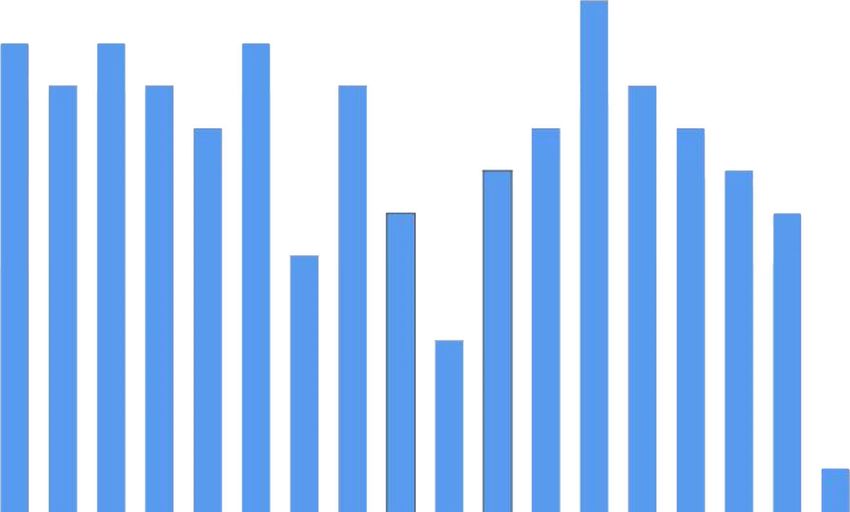
B     Australian Health Review                                                                                       J. Lechner-Scott et al.

Introduction                                                           measure in therapeutic MS trials14 and, despite its limitations,
There are 4.3 million Australians living with permanent dis-           most patient registries rely on monitoring via the use of this
ability.1 The National Disability Insurance Scheme (NDIS) was          disability measure. EDSS steps are not equally distributed, and
created to financially support Australians aged ,65 years with         participants tend to spend more time around scores of 3 and 3.5
intellectual, physical, sensory, cognitive and psychosocial dis-       and then at around 6 and 6.5.15 An EDSS of 0 reflects normal
ability. The purpose of the NDIS is to support eligible partici-       neurological examination, but not necessarily no impairment as
pants to achieve their goals, including increased independence,        impaired mood does not change the EDSS. An EDSS of 1
greater social participation and employment opportunities.2 In         represents findings of which the patient is not aware. A func-
2013, a staged roll out commenced to replace the old support           tional score of 2 represents mild disability, a functional score of
services with a national approach. We selected the region that         3 moderate disability in any given function. A reduced walking
was chosen as one of the first trial areas to study the success of     distance determines the EDSS from 4 (.500 m) to 6.5 (bilateral
the scheme. In 2015, a citizen jury assessed the viability of the      assistance required). Scores .6.5 reflect dependence on a
scheme, but no objective evaluation has been performed to              wheelchair or other assistance. In order to improve consistency
determine if the funds are being disbursed according to formally       in these assessments, a worldwide training module has been
assessed disability.3 In 2018–19, the NDIS budget was AU$11.9          developed.16 Despite the high prevalence of cognitive decline
billion. During this period, 300 000 people with disabilities          observed in MS patients,17 a formal cognitive assessment is not
received support under this scheme.4 Only one-third were new           part of routine EDSS.16
recipients of support services, whereas two-thirds had previ-             Health technology assessment of new treatment options
ously received funding provided by the states and territories.         requires a deeper understanding of the socioeconomic impacts
    Neurological disorders are now the leading cause of disabil-       of disability prevention or even disability improvement as
ity globally, with MS affecting young adults in particular.5 The       measured by the EDSS for each country. Worldwide, there is a
total NDIS expenditure for MS has accumulated to AU$378                clear correlation with cost and disability measured by EDSS,18
million annually, or an average plan of ,AU$90 000 per                 but support structures differ from country to country. No study
patient.4 The incidence and prevalence of MS are rising in most        has so far assessed the cost of disability for patients with MS
developed countries, but this varies according to latitude.6 In the    since the introduction of the NDIS for disability. We therefore
Hunter region, Australia, where we recruited for this study, the       aimed, in this study, to assess the relationship between EDSS
prevalence has more than doubled in the past 15 years and is now       and NDIS package value in a cohort of patients from the Hunter
estimated to be 124/100 000.7 Despite advances in treatment, the       region.
excess mortality of patients with MS has not changed over the
last 50 years.8 In highly disabled patients, mortality is eight-fold   Methods
higher than in the general population.9 Life expectancy, in            Patients for this study were recruited from a single centre in a
contrast, is only reduced by ,7 years,9,10 which often translates      regional MS clinic, where over 1100 patients are prospectively
into decades of dependency. Although the societal impact of MS         followed and biannually evaluated by the EDSS.
in Australia has been reported,11 these estimates omit the NDIS-           Only patients with a confirmed clinically definite diagnosis
specific costs. Furthermore, these reports generally split patients    of MS as evidenced by multiple lesions on MRI and clinical
into mild, moderate or severe categories, but do not associate the     symptoms and aged at least 18 years were included. If the
cost with each EDSS steps.                                             participants were aged ,65 years and had an EDSS level of at
    NDIS support is divided into three pillars: core support;          least 3.5, they must have previously been assessed for an NDIS
capital costs; and capacity building.1 Core support is meant to        package to be included. To ensure stable disease, we excluded
enable patients to participate in work and communities. Core           participants with a relapse (new symptoms) within 6 months of
support can fund activities of daily living (showering, dressing,      the assessment date.
grooming, meal time assistance, toileting) and independent                 The Expanded Disability Status Score (EDSS)19 was per-
activities of daily living (shopping, transport, etc.). The second     formed by a Neurostatus-approved rater. Mild disability was
pillar, capital costs, are investments in home modification and        defined as an EDSS of 0–3.5, moderate 4.0–6.0 and 6.5–9 was
assistance technology. The third pillar, capacity building, sup-       considered severe disability. The study aimed to recruit 10
ports coordination, assists with improved life choices (diet,          patients per EDSS step to cover the breadth of disability with
exercise programs), as well as activities to find a job or social      MS (n ¼ 180). Following informed consent, data were collected
interactions.2 Many participants apply online and then they have       for disease course, severity and treatment, as well as for quality
a face-to-face meeting with a Local Area Coordinator to assess/        of life, employment status and productivity, support needs,
review their plan. This takes place in an interview format, with       receipt of services and overall costs. Cognitive assessment
the focus on the participant stating what their goals are and what     was collected within 12 months of the EDSS assessment via
supports they need to achieve their goals.                             an Audio Recorded Cognitive Score (ARCS), which assesses
    Neurologists monitor disease progress with standardised            five domains including attention, memory, visual construction,
disability assessments for people with MS according to the             fluency and language.20 When participants were unable to attend
Expanded Disability Status Scale (EDSS), which indicates               the clinic due to disability, EDSS was assessed by phone.21,22 In
disability steps ranging from 0 (no disability or signs) to 10         addition, data on the patient-reported physical and psychologi-
(death due to MS). The EDSS was introduced in 1955 by JF               cal impact of MS was assessed by the Multiple Sclerosis Impact
Kurtzke as a (1) 10-point scale;12 and (2) enlarged with half steps    Scale (MSIS-29),23 and patient and carer-reported quality of life
in 1983.13 The EDSS is the most commonly used outcome                  and health state utility was rated by the five-level EuroQoL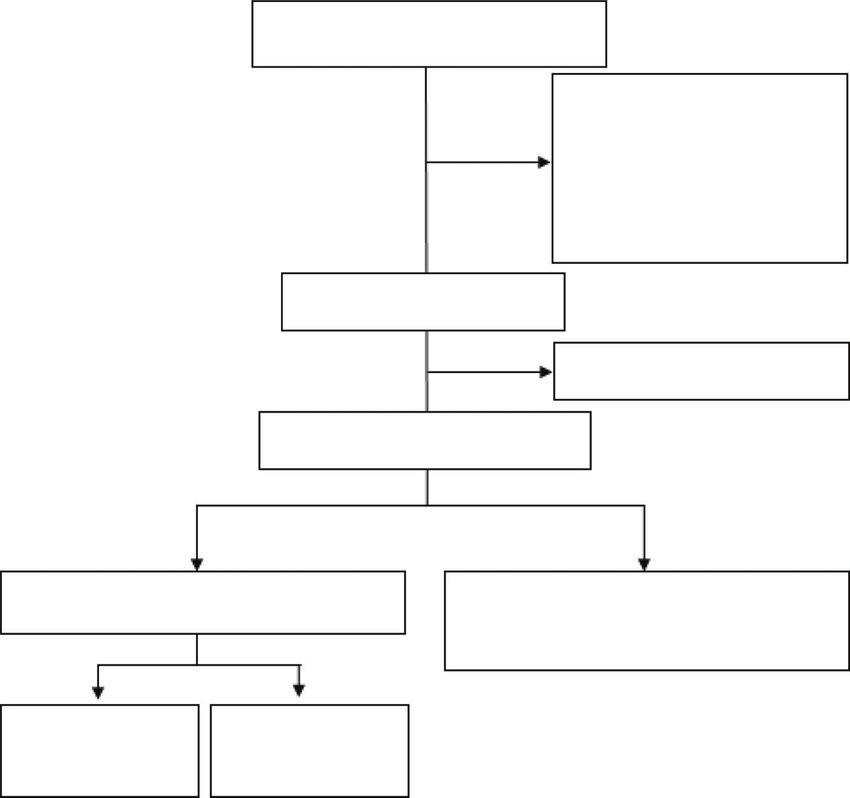
National Disability Insurance in a MS cohort                                                                              Australian Health Review    C

(EQ-5D-5 L) questionnaire24 as well as work productivity and                  Results
activity impairment, assessed by the Work Productivity and                    Cohort summary
Activity Impairment General Health (WPAI-GH) question-
                                                                              For this study, 186 patients were recruited in 2018–19, 162
naire25 and resource utilisation, captured in the modified Client
Services Receipt Inventory (CSRI),26 which was collected as                   patients were eligible for analysis and 156 participants were
part of a larger study, but will be analysed separately and                   included in this analysis; two patients awaited outcome of their
reported on in a separate publication. This study focused on                  application and four did not provide details of their package
the NDIS resource utilisation, recorded across each of the three              (Fig. 1 and Table 1). The mean age of the cohort was 51.4 years
package components (i.e. core, capacity building and capital).                (s.d. ¼ 13.6), and 117 (75%) were female. The mean disease
Copies of the NDIS plan were collected if the participant was                 duration was 12.5 years (s.d. ¼ 9.5) and 112 patients (72%) were
eligible for support. NDIS package value was correlated with                  on disease-modifying therapies (DMTs). The MS disease course
EDSS, cognitive function, quality of life and employment status.              distribution at the time of recruitment was: 94 (60%) with
    Statistical analysis was performed using SPSS (SPSS Inc.).                relapsing remitting, 45 (29%) with secondary progressive and

                                                         Assessed for eligibility (n = 186)

                                                                                                      Excluded (n = 24)
                                                                                              Reasons:
                                                                                              -screen failure (n = 6)
                                                                                              -lost to follow-up (n = 4)
                                                                                              -patient/guardian decision (n = 6)
                                                                                              -physician decision (n = 6)
                                                                                              -technical problems (n = 2)

                                                             Eligible patients (n = 162)

                                                                                              data unavailable (n = 6)

                                                           Included in analysis (n = 156)

                              Patients with NDIS package (n = 76)                   Patients without NDIS package
                                                                                                (n = 80)

                               Patients
D Australian Health Review J. Lechner-Scott et al.
17 (11%) with primary progressive disease. Of the cohort, 68 Of the group that were aged ,65 years, seven patients were
(44%) patients had mild disability, 40 (26%) moderate and 48 rejected for a NDIS plan, including two patients with mild
(30%) severe disability according to EDSS. In total, 76 patients disability and five with moderate disability according to EDSS;
(49%) were receiving an NDIS package and 126 (81%) were none of the patients with severe disability had their application
aged ,65 years (Table 1). rejected (Table 1).
The disability profile of the selected cohort was comparable The largest part of the NDIS package was spent on core
to the total patient registry of the clinic.23 Compared with the support. For milder disability, this support was used for house
total international MS Base cohort, more advanced-stage MS cleaning or gardening, or in the higher disability category, this
patients are seen in this clinic.23 This was of benefit for selecting support was used for self-care, transport, etc. Capacity-building
patients with higher EDSS steps, although we had difficulties costs were similar in all three categories; only capital costs,
recruiting participants in the EDSS categories 3.5, 5.0 and, in which are usually used for equipment like wheelchairs, are
particular, with severe disability 9.0 (Fig. 2). higher for the severely disabled patients, but not significantly
Of the 156 patients, only 49% were currently on a NDIS plan. so (Fig. 6).
Twenty-two patients were aged .65 years and might have Having received an NDIS package was associated with a
received other support than from NDIS. Thirty-two patients higher EDSS, longer disease duration, higher physical and
had an EDSS of less than two, which is identified as less than psychological impact of the disease, as well as lower cognitive
mild disability, but some of this group still had a plan supporting function and quality of life (P , 0.05). The increased mean age
exercise programs and household support. The range in package of the group receiving a NDIS package was not statistically
value of packages was highly skewed, with one package valued significant (P ¼ 0.1) (Table 2).
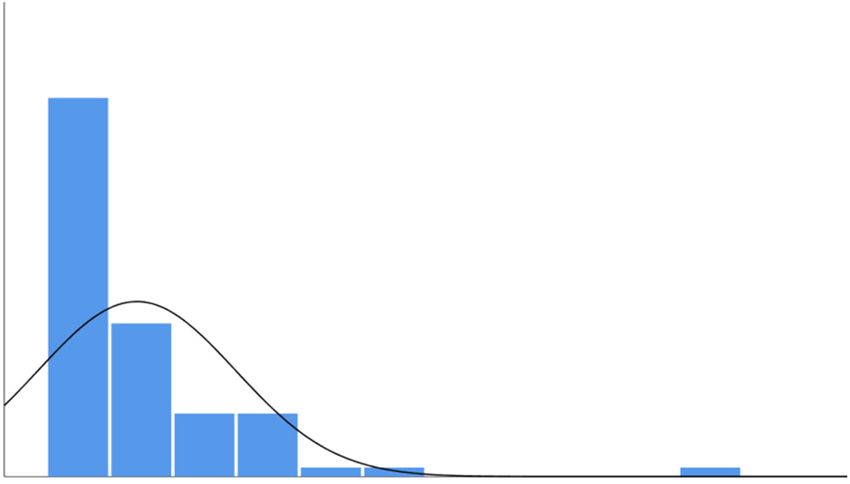
at AU$516 703 (an extreme outlier). This resulted in quite a The total value of the NDIS package correlated moderately
substantial difference between mean (AU$71 452) and median with EDSS (r ¼ 0.51) and physical impact (r ¼ 0.47) and quality
(AU$44 989) package value (Fig. 3). of life (r ¼ –0.58), but not with age, disease duration or
The mean values of the NDIS package were AU$34 224 for psychological impact. Cognition as measured by the ARCS
patients with mild disability, AU$40 342 for moderate disability was also moderately correlated with the size of the package, in
and AU$114 585 for severe disability (Fig. 4). The total NDIS particular memory (r ¼ –0.41), attention (r ¼ –0.26) and speed
package value for the severe disability group was statistically of writing (r ¼ –0.41). All correlations were statistically
significantly higher than the two less severe groups (P , 0.001). significant (P , 0.05).
When plotting the NDIS package value per EDSS step, it is The rate of PwMS not employed out of the total cohort
apparent that mobility influences the packages. For an EDSS of (aged ,65 years) was 56%. There was a significantly higher
below four, there is great variability in the NDIS packages, but unemployment rate for the NDIS group compared with the
when a walking aid is required ( EDSS of 6.0) the plan value non-NDIS group (73% vs 35%, P , 0.0001), but also, the mean
rises (P ¼ 0.0001). When a wheelchair is required and assistance NDIS package value was higher for the unemployed
to transfer ( EDSS of 8) is needed, another significant increase group: unemployed (n ¼ 52) ¼ AU$88 439 vs employed
can be observed (P , 0.0001) (Fig. 5). (n ¼ 19) ¼ AU$33 881 (P ¼ 0.0003).
12
10
8
Count
6
4
2
0
0.0 1.0 1.5 2.0 2.5 3.0 3.5 4.0 4.5 5.0 5.5 6.0 6.5 7.0 7.5 8.0 8.5 9.0
EDSS (half step)
Fig. 2. Number of participants included per EDSS half step.National Disability Insurance in a MS cohort Australian Health Review E
50
40
Mean = $71 452 (SD = $78 075)
Median = $44 989 (Range = $4901 – $516 703)
30
Frequency
20
10
0
0 100 000 200 000 300 000 400 000 500 000 600 000
NDIS total cost ($)
Fig. 3. Distribution of NDIS package cost.
125 000
100 000
NDIS total cost ($)
75 000
50 000
25 000
Mild Moderate Severe
EDSS grouping
Fig. 4. NDIS package cost per disability level (mild/moderate/severe).
The NDIS sets out to increase work participation for people Discussion
with disabilities. Therefore, we attempted to address this in the This is the first study to report on the value of NDIS packages for
small subgroup of patients on NDIS packages who were employed. people with MS in Australia. Here, we assess the correlation of
Employment was negatively correlated with age, EDSS and NDIS package value with formally assessed disability (EDSS)
duration of disease (P , 0.05). When we adjusted for NDIS, the as used in clinical trial outcomes. In our study, participants were
strong correlation with EDSS became statistically non-significant. selected by EDSS in order to have a wide range of disabilityF Australian Health Review J. Lechner-Scott et al.
400 000
300 000
NDIS total cost ($)
200 000
100 000
0
1.0 1.5 2.0 2.5 3.0 3.5 4.0 4.5 5.0 5.5 6.0 6.5 7.0 7.5 8.0 8.5 9.0
EDSS half step
Fig. 5. NDIS package cost per EDSS step.
Mean NDIS utilisation by disability
Table 2. Factors associated with receiving a NDIS package
120 000 EDSS, expanded disability status score; ARCS, audio recorded cognitive
screen; MSIS, MS impact score
100 000
Variable NDIS Mean s.e.m. P-value
80 000
Age (years) No 49.8 1.8 0.1
60 000 Yes 53.1 1.1
EDSS half step No 3.1 0.3 ,0.0001
40 000
Yes 5.6 0.2
20 000
Disease duration No 10.7 1 0.02
Yes 14.3 1.2
0 MSIS-29 physical No 40.1 2 ,0.0001
Mild disability Moderate disability Severe disability Yes 57.1 1.8
Core support Capacity building costs Capital support cost MSIS-29 psychological No 18 0.8 0.002
Yes 21.3 0.8
Fig. 6. Mean NDIS utilisation by disability level. ARCS (total) No 89.5 2.4 0.009
Yes 79.2 3.1
EQ-5D-5 L utility No 0.6 0.05 ,0.0001
rather than the bimodal distribution typical for this scale.27 Yes 0.3 0.05
Importantly, we were successful in including patients with
higher EDSS, three of which were in residential age care
facilities. package was surprisingly higher in the mild than the moderate
Not surprisingly, the NDIS package value was significantly disability group, which might reflect better tenacity in the mildly
larger in the severe compared with the mild disability group. The impaired group than a different range of deficits. None of the
total value of the package was moderately correlated with patients with high disability were rejected, but the value of the
the EDSS step as well as cognitive assessments, although the package varied widely.
support varied significantly. Core support costs for mildly Unfortunately, the majority of patients who had a NDIS
disabled patients varied from AU$5000 to AU$72 000. One package NDIS were unemployed. But the fact that the strong
patient with severe disability received a package of more than correlation of employment with EDSS becomes non-significant
AU$500 000. This might be because of varying individual after adjusting for NDIS package value suggests that the support
functional deficits or surrounding support structures, but it might that NDIS offers does change the disparity caused by disability.
also reflect that there are no disease-specific guidelines given to This analysis is, of course, limited by the low numbers. Already
the NDIS assessor. The likelihood of being accepted for a at moderate EDSS (3.5), only 50% of patients are employed,National Disability Insurance in a MS cohort Australian Health Review G
which is similar to the level in other countries.28 Larger and References
prospective studies are required to determine conclusively 1 Australian Institute of Health and Welfare. People with disability in
whether NDIS improves work-related engagement. Australia. 2019. Available at: https://www.aihw.gov.au/ [verified May
The EDSS is not a perfect reflection of MS disability, 2020].
especially in the range of EDSS 4.0 to 7.5 where it is very much 2 Nugent HM. Corporate Plan NDIS. 2018–2022. Available at: https://www.
dependent on mobility. In addition, cognitive dysfunction is not ndis.gov.au/about-us/publications/corporate-plan#past-corporate-plans.
sufficiently accounted for by EDSS and does warrant formal [verified April 2021].
testing. It is reassuring that cognition seems to have been taken 3 People with Disability Australia. Citizen Jury score card. 2018. Avail-
able at: https://pwd.org.au/ndis-citizens-jury-scorecard. [verified April
into account as much as physical disability when evaluating
2021].
patients for a support package. In contrast, the psychological 4 The National Disability Insurance Agency. Budget NDIS. 2018/2019.
impact, as measured by MSIS, does not seem to influence the Updated September 2019. Available at: https://www.ndis.gov.au/news/
value of support. This is despite up to 60% of people with MS 3731-national-disability-insurance-agency-statement-ndis-expenditure
suffering from anxiety and depression, which has been shown to 5 Feigin VL, Abajobir AA, Abate KH, et al. Global, regional, and national
also have an impact on their cognitive function.29 Interestingly, burden of neurological disorders during 1990–2015: a systematic
the majority of NDIS-supported patients are not employed, analysis for the Global Burden of Disease Study 2015. Lancet Neurol
although one of the stated aims of NDIS is to increase the work 2017; 16: 877–97. doi:10.1016/S1474-4422(17)30299-5
participation of disabled citizens. Also, the support employed 6 Simpson S, Wang W, Otahal P, et al. Latitude continues to be signifi-
MS patients were receiving is significantly lower. Unfortu- cantly associated with the prevalence of multiple sclerosis: an updated
meta-analysis. J Neurol Neurosurg Psychiatry 2019; 90: 1193–200.
nately, our study was not longitudinally designed to investigate
doi:10.1136/jnnp-2018-320189
whether receiving support actually does improve work partici- 7 Ribbons K, Lea R, Tiedeman C, et al. Ongoing increase in incidence and
pation and quality of life. prevalence of multiple sclerosis in Newcastle, Australia: A 50-year
One major limitation of this study is that only patients from a study. Mult Scler 2017; 23: 1063–71. doi:10.1177/1352458516671819
single centre were included and so generalisation of findings to a 8 Manouchehrinia A, Tanasescu R, Tench CR, et al. Mortality in multiple
national level is not possible. The location was chosen for the sclerosis: meta-analysis of standardised mortality ratios. J Neurol
fact that this region has been a trial centre for NDIS. One would Neurosurg Psychiatry 2016; 87: 324–31. doi:10.1136/jnnp-2015-
expect that the majority of patients would have at least applied 310361
for funding, but more than half of the cohort do not have a 9 Leray E, Moreau T, Fromont A, Edan G. Epidemiology of multiple
package and even with moderate disability, 17% of applications sclerosis. Rev Neurol 2016; 172: 3–13. doi:10.1016/j.neurol.2015.10.
006
were rejected. This regional MS clinic has the advantage in that
10 Palmer AJ, van der Mei I, Taylor BV, et al. Modelling the impact of
it includes ,85% of the region’s population with MS.7 If this multiple sclerosis on life expectancy, quality-adjusted life years and
study can be replicated in other regions, it would strengthen the total lifetime costs: Evidence from Australia. Mult Scler 2020; 26:
evidence of the benefit of NDIS with regards to work produc- 411–20. doi:10.1177/1352458519831213
tivity of MS patients in Australia. 11 Palmer AJ, Colman S, O’Leary B, Taylor BV, Simmons RD. The
economic impact of multiple sclerosis in Australia in 2010. Mult Scler
Conclusion 2013; 19: 1640–6. doi:10.1177/1352458513488230
12 Kurtzke JF. A new scale for evaluating disability in multiple sclerosis.
The NDIS provides a vital infrastructure for people with mul- Neurology 1955; 5: 580–3. doi:10.1212/WNL.5.8.580
tiple sclerosis, although this study has not prospectively assessed 13 Kurtzke JF. Rating neurologic impairment in multiple sclerosis: an
the benefit of this support. Support provided by NDIS correlated expanded disability status scale (EDSS). Neurology 1983; 33: 1444–52.
with disability as measured by EDSS, and it also correlated with doi:10.1212/WNL.33.11.1444
measures of cognitive impairment (ARCS) used at our centre. 14 Cohen JA, Reingold SC, Polman CH, Wolinsky JS. Disability outcome
As cognitive impairment is not captured with standard EDSS measures in multiple sclerosis clinical trials: current status and future
measures, it underscores the importance of clinicians assessing prospects. Lancet Neurol 2012; 11: 467–76. doi:10.1016/S1474-
cognition with validated tools as this may be incorporated into 4422(12)70059-5
NDIS eligibility considerations. However, psychological impact 15 Hohol MJ, Orav EJ, Weiner HL. Disease steps in multiple sclerosis: a
simple approach to evaluate disease progression. Neurology 1995; 45:
of the disease was not associated with a NDIS package. More
251–5. doi:10.1212/WNL.45.2.251
can be done to improve a more individual disability-related 16 D’Souza M, Yaldizli O, John R, et al. Neurostatus e-Scoring improves
value of packages. consistency of Expanded Disability Status Scale assessments: A proof
of concept study. Mult Scler 2017; 23: 597–603. doi:10.1177/
Competing interests 1352458516657439
17 Grzegorski T, Losy J. Cognitive impairment in multiple sclerosis – a
The authors declare no competing interests.
review of current knowledge and recent research. Rev Neurosci 2017;
28: 845–60. doi:10.1515/revneuro-2017-0011
Acknowledgements 18 Kobelt G, Eriksson J, Phillips G, Berg J. The burden of multiple sclerosis
This non-interventional study was sponsored and funded by Novartis 2015: Methods of data collection, assessment and analysis of costs,
Pharmaceuticals Australia, Pty Limited. Novartis employee, Mary-Ann quality of life and symptoms. Mult Scler 2017; 23: 4–16. doi:10.1177/
Bonney, was involved in the study design and drafted the protocol and 1352458517708097
clinical study report; and Novartis employee, Patricia Berry, managed the 19 Kappos L, D’Souza M, Lechner-Scott J, Lienert C. On the origin of
study contracts and development of the electronic clinical report form and Neurostatus. Mult Scler Relat Disord 2015; 4: 182–5. doi:10.1016/
study database. j.msard.2015.04.001H Australian Health Review J. Lechner-Scott et al.
20 Lechner-Scott J, Kerr T, Spencer B, et al. The Audio Recorded Cogni- 25 Reilly MC, Zbrozek AS, Dukes EM. The validity and reproducibility of
tive Screen (ARCS) in patients with multiple sclerosis: a practical tool a work productivity and activity impairment instrument. Pharmacoeco-
for multiple sclerosis clinics. Mult Scler 2010; 16: 1126–33. nomics 1993; 4: 353–65. doi:10.2165/00019053-199304050-00006
doi:10.1177/1352458510374743 26 Feagan BG, Reilly MC, Gerlier L, et al. Clinical trial: the effects of
21 Collins CD, Ivry B, Bowen JD, et al. A comparative analysis of Patient- certolizumab pegol therapy on work productivity in patients with moderate-
Reported Expanded Disability Status Scale tools. Mult Scler 2016; 22: to-severe Crohn’s disease in the PRECiSE 2 study. Aliment Pharmacol
1349–58. doi:10.1177/1352458515616205 Ther 2010; 31: 1276–85. doi:10.1111/j.1365-2036.2010.04303.x
22 Lechner-Scott J, Kappos L, Hofman M, et al. Can the Expanded 27 MSBase. 2020. Available at: https://registry.msbase.org/patient-demo-
Disability Status Scale be assessed by telephone? Mult Scler 2003; 9: graphics [verified May 2020].
154–9. doi:10.1191/1352458503ms884oa 28 Flachenecker P, Kobelt G, Berg J, et al. New insights into the burden and
23 Hobart J, Lamping D, Fitzpatrick R, et al. The Multiple Sclerosis Impact costs of multiple sclerosis in Europe: Results for Germany. Mult Scler
Scale (MSIS-29): a new patient-based outcome measure. Brain 2001; 2017; 23(2), 78–90. doi:10.1177/1352458517708141
124: 962–73. doi:10.1093/brain/124.5.962 29 Ribbons K, Lea R, Schofield PW, Lechner-Scott J. Anxiety Levels Are
24 Herdman M, Gudex C, Lloyd A, et al. Development and preliminary Independently Associated With Cognitive Performance in an Australian
testing of the new five-level version of EQ-5D (EQ-5D–5L). Qual Life Multiple Sclerosis Patient Cohort. J Neuropsychiatry Clin Neurosci
Res 2011; 20: 1727–36. doi:10.1007/s11136-011-9903-x 2017; 29: 128–34. doi:10.1176/appi.neuropsych.16050085
www.publish.csiro.au/journals/ahrYou can also read


