ECRs in preparation - Preparations for installation of SND detector Pablo Santos Díaz, Richard Jacobsson - CERN Indico
←
→
Page content transcription
If your browser does not render page correctly, please read the page content below
Preparations for installation of
        SND detector
   - ECRs in preparation -

 Pablo Santos Díaz, Richard Jacobsson

              CERN Geneva / 30-09-2020
              TREX meeting (link)
              EDMS 2422718 v.1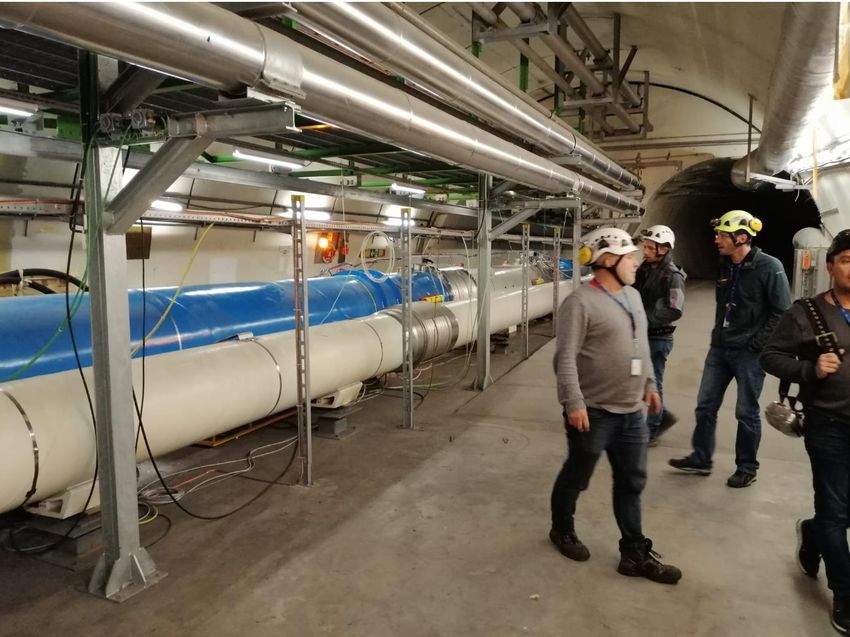
P. Santos Diaz – 30th September 2020, 2422718 v.1 2
Outline
1. Introduction

2. Experimental area preparation in 2021

3. Essential works in 2020

4. Conclusions

                        P. Santos Diaz – 30th September 2020, 2422718 v.1   3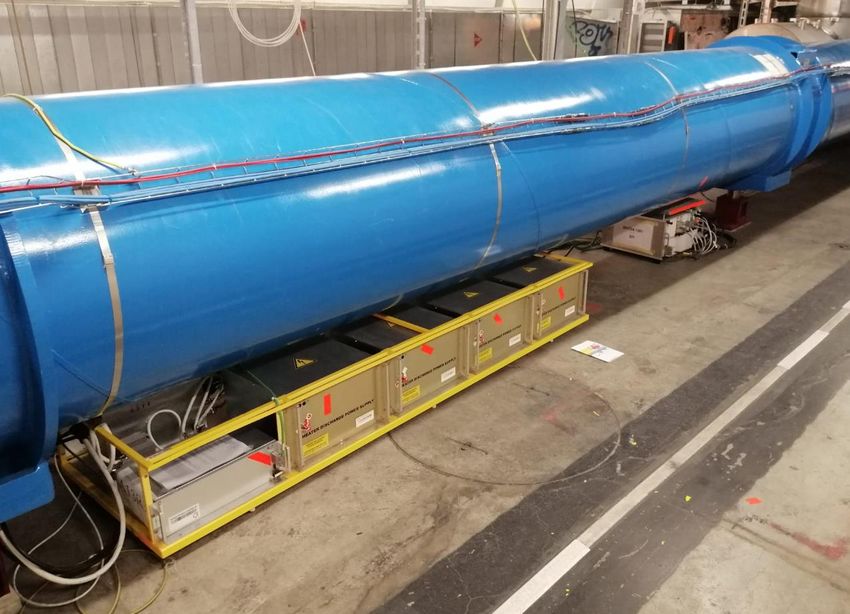
Integration
• Particular effort has been placed on services
  integration studies to guarantee a cost efficient
  conceptual design of the SND detector and evaluate
  the feasibility of its installation inside the TI18 cavern.

• Study seeking for approval in September 2020.

• Several iterations with the CERN groups performed:
    •   EN-SMM, HSE-OHS, HSE-RP, EN-HE, EN-EL-EIC, EN-EL-FC,
        IT-CS-DO, EN-CV, IT-CS-CS, EN-STI-BMI, EN-EA-AS, BE-OP-
        LHC, TE-CRG-OP, TE-CRG-CI, EN-SMB, TE-MPE-EP & EN-
        ACE-OSS.

• Subjects evaluated:
    •   Cooling & ventilation.
    •   Powering & lighting.
    •   Signals, readout and networking.
    •   Survey.
    •   Transport.
                                                                                       TI18 entrance
    •   Safety.
    •   Radiation protection.
    •   Radiation protection to electronics.

                                               P. Santos Diaz – 30th September 2020, 2422718 v.1       4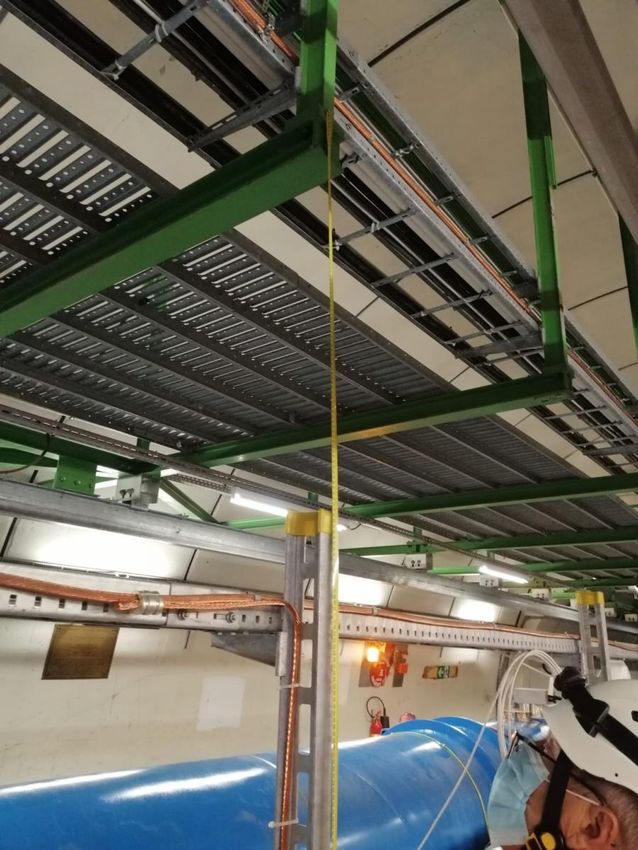
TI18 SND integration                             Smoke
                                                detection
                             He pipe
                                                                         Lighting
        Cable trays

  AUG                                                                                        Racks
                                                                                           Cooling system

                                                                                  Ventilation
                  Electrical box       Insulated room            SND                 duct

                                                    SND 3D model provided by A. Di Crescendo & A. Crupano

                                       P. Santos Diaz – 30th September 2020, 2422718 v.1              5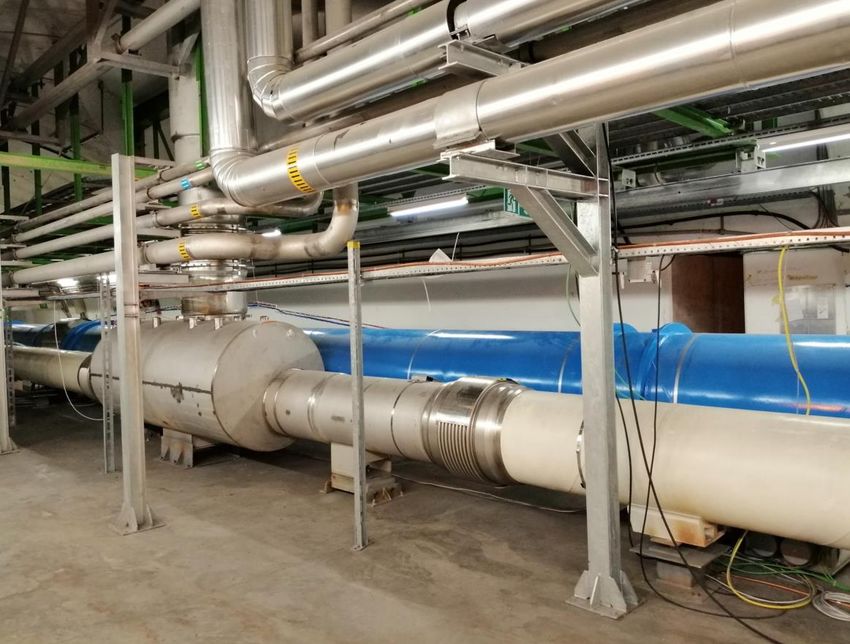
Activities to prepare the experimental area
                       (2020)
• Inside UJ18:
    •   Relocation of two electrical distribution boxes on the cable tray in UJ18 and rerouting of the cables
        (cryostat pressure and temperature monitoring) connected to the cryogenics control box
        QYCDA.13R1 and quench protection box DYPB.B13R1.
    •   Attach the signal cables of the cryogenics control box, currently laying on the floor, to the cryostat to
        free the passage for transport of equipment.

                                                   P. Santos Diaz – 30th September 2020, 2422718 v.1         6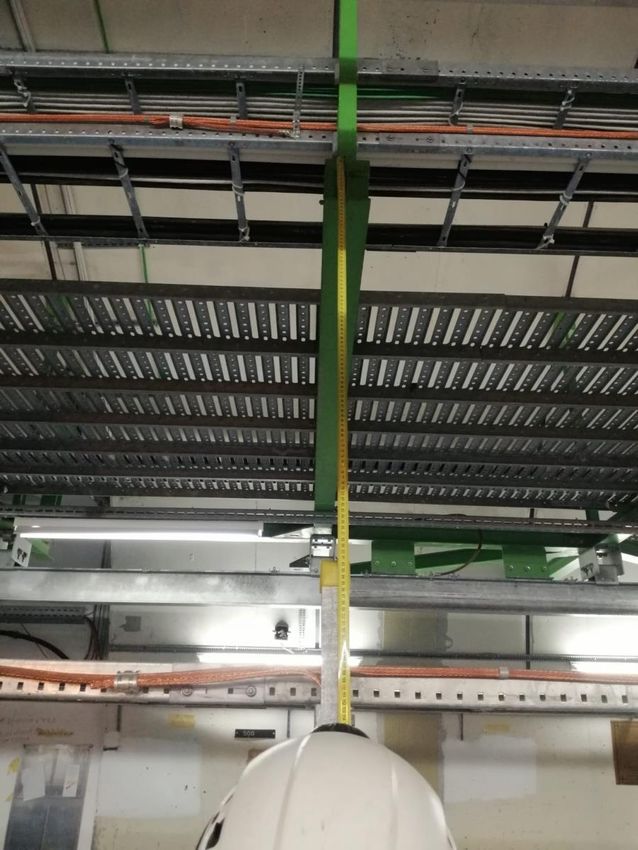
Activities to prepare the experimental area
                            (2021)
•   Inside UJ18:
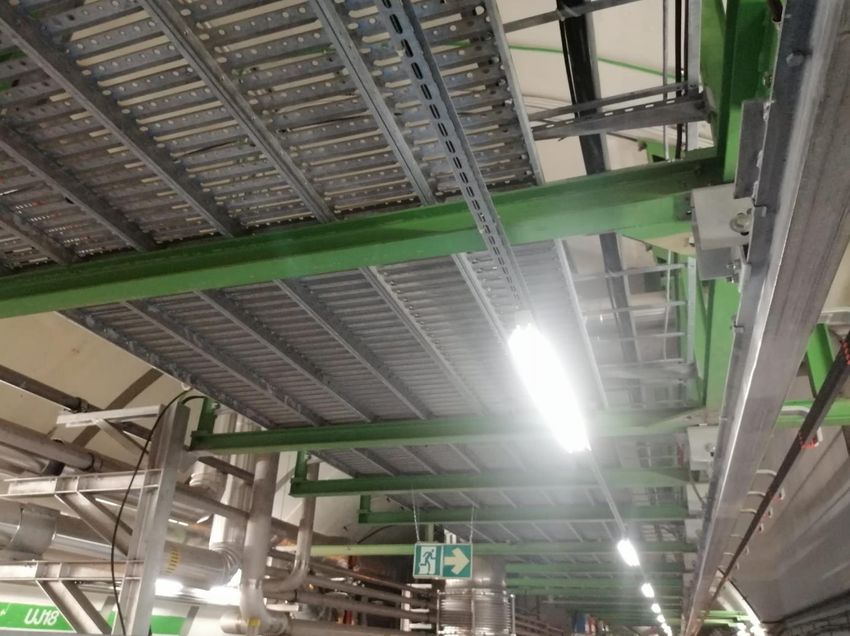
     •   Raising a section of the cable tray (EN-EA-AS), involving also relocating electrical distribution boxes and
         rerouting cables.
     •   Installation of the QRL protection, including drilling fixations in the floor (EN-HE-PO).
           •   Floor scans to be made to avoid drilling on any service integrated in the concrete floor.
     •   Displacement of a light (EN-EL-EWS) to make space for the installation of a rail and manual hoist (EN-
         HE-PO) above the LHC machine.
     •   Displace current electrical distribution box above footbridge (EN-EL-EWS).
     •   Connect and route a power cable for the SND from the distribution box within UJ18 to a connection box
         to be installed in TI18 (EN-EL-EWS).
     •   Pull cables for AUG and lights in TI18 (EN-EL-EWS).
•   Inside TI18:
     •   Removal of the unused ventilation duct within TI18 (EN-CV).
     •   Installation of a closed circuit cooling system (EN-CV).
     •   Installation of an electrical distribution box for the experiment together with normal lighting, emergency
         lighting, power sockets and AUGs (EN-EL-EWS).
     •   Installation of racks for detector electronics (EN-EL-AS).
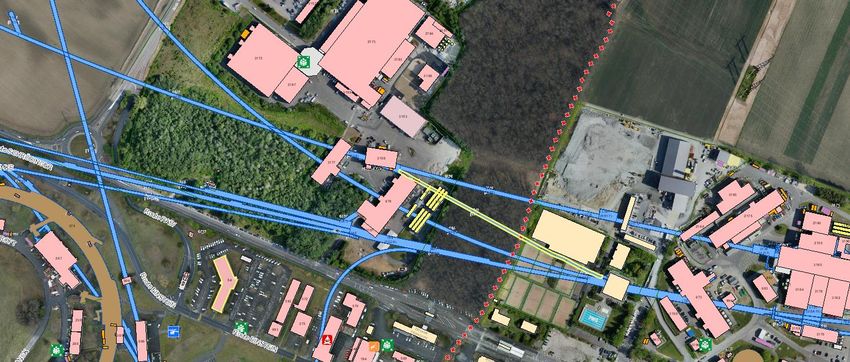
•   From TI18 to ATLAS site surface:
     •   Installation of optical fibre tubes from RE18 to TI18 (EN-EL-FC).
     •   Pulling of optical fibres (EN-EL-FC).

                                                            P. Santos Diaz – 30th September 2020, 2422718 v.1   7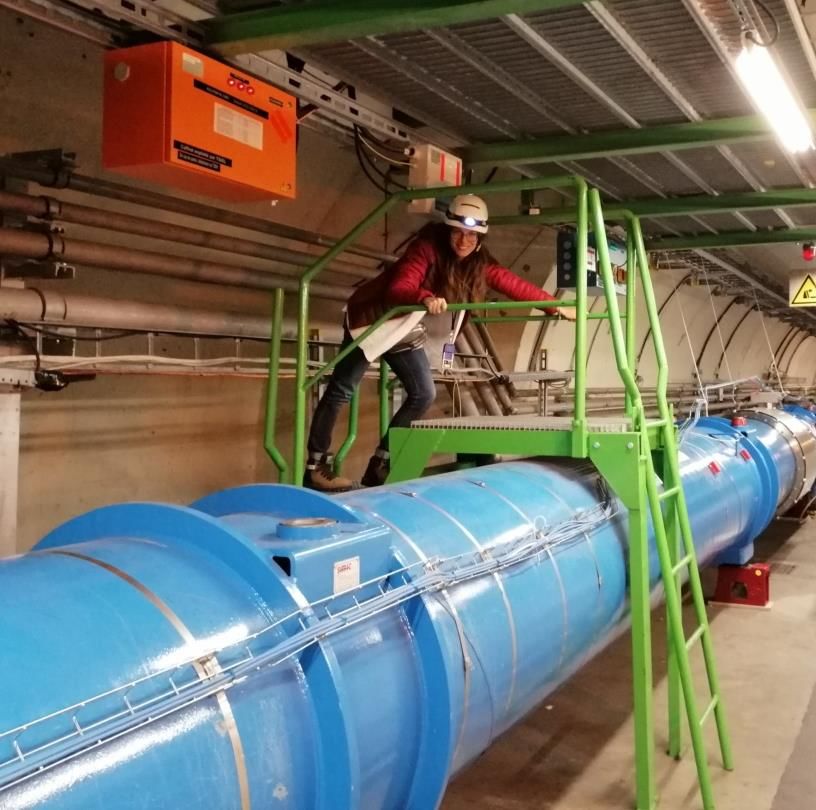
2. Experimental area
 preparation in 2021

        P. Santos Diaz – 30th September 2020, 2422718 v.1   8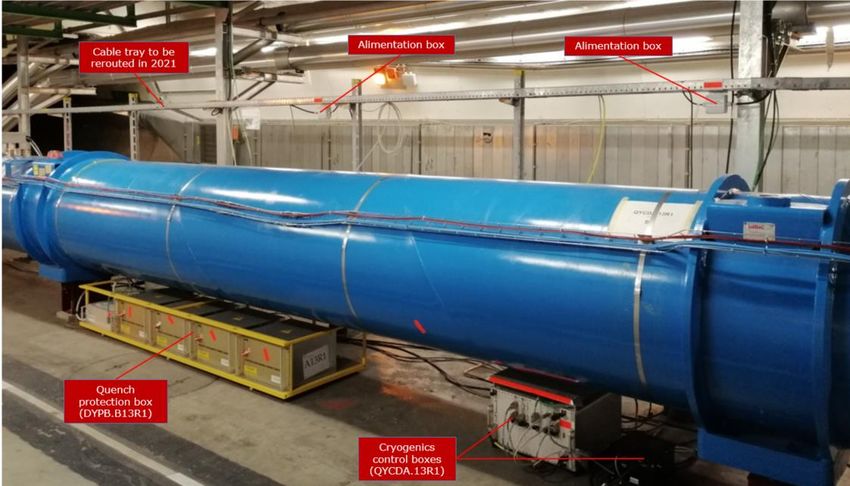
Ventilation
• 20m ventilation duct to be removed to avoid interferences with the SND.
     •   Cable tray layout will be modified!

• Side duct is made of three bolted pipes and a connection piece, therefore,
cutting and duct spread is not expected.

                        Duct to be
                         removed

                                                                               Pilar to be
                                                          Cable tray            removed
                                                         to be raised

                                               P. Santos Diaz – 30th September 2020, 2422718 v.1   9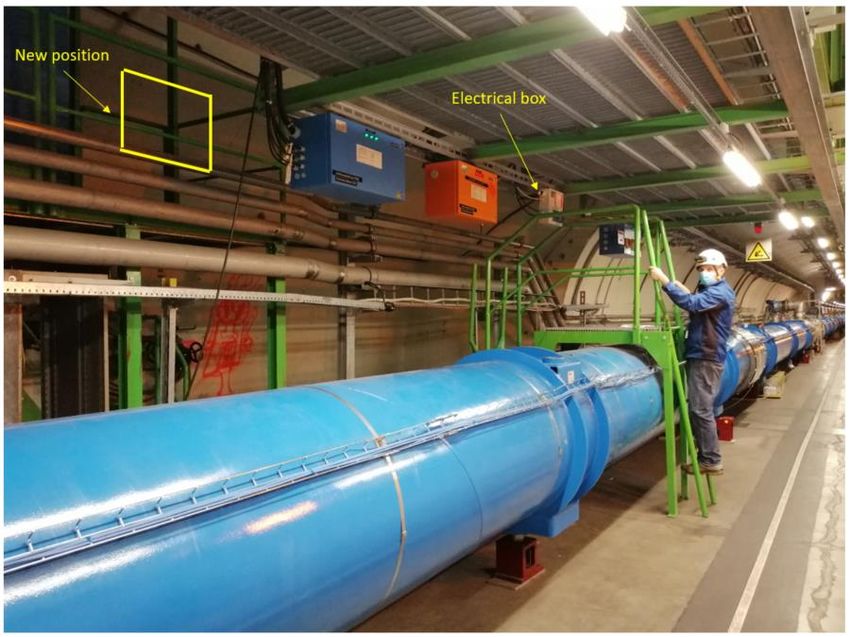
Transport
• A manual hoist (250kg capacity) to pass components above the LHC is required.
    •   QRL protection foreseen.

• Small parts can be passed bellow the LHC machine with a simple low trolley.
    •   Free passage is about 80cm wide and 37cm high.

                     Free passage

                                        P. Santos Diaz – 30th September 2020, 2422718 v.1   10
Main items to be passed to TI18 cavern
• The most restricitve item that need to pass over the LHC machine are the chillers.
P. Santos Diaz – 30th September 2020, 2422718 v.1 11Cable tray raising within UJ18
• Electrical boxes to be relocated and cables rerouted.
• Cable length sufficient for the new cable path.
Manual hoist reservation space
(200x100mm)
Electric box Electric box
Raised cable tray
ATLAS
LHC machine
QRL
TI18 slope
Below
Below Quench protection box to
2m QRL protection be lightly displaced
P. Santos Diaz – 30th September 2020, 2422718 v.1 12Hoist and QRL protection integration
• QRL protection designed for 2t while 250kg are required for the SND
detector. Manual hoist reservation
• Support design slightly modified to free rack access. space (200x100mm)
Raised cable tray
ATLAS
LHC machine
Quench protection box 2m QRL protection proposed Electronic rack
slightly displaced slightly modified design for cryogenics
P. Santos Diaz – 30th September 2020, 2422718 v.1 13Transverse section cut
Structure can withstand a 250kg load
(verifications to be done)
SND
Cable tray to be
locally rerouted
Space reservation for
the hoist’s profile
P. Santos Diaz – 30th September 2020, 2422718 v.1 14Integration cable tray – beam hoist
Cable tray to be
locally rerouted
Omega Light
configuration.
Courtesy of Y.
Maurer
Beam where the hoist
will be attached
P. Santos Diaz – 30th September 2020, 2422718 v.1 15Relocation of distribution box
• An electrical distribution box is on the foot bridge passage, so, it has
to be displaced for safety reasons and easy access to TI18.
P. Santos Diaz – 30th September 2020 16Powering & lighting
• Electrical box for distribution.
Cable trays in place Lighting
• x2 AUG (arret d’urgence general) required.
• Permanent lighting. Anti-panic
lighting
• x3 normal lamps.
• x2 anti-panic lighting. AUG
• x2 sockets of 220V.
• Maximum power to be installed: 11kW.
• Detailed list of power per component
under development.
Electrical box
P. Santos Diaz – 30th September 2020, 2422718 v.1 17Cooling
• Cooling required for the SciFi electronics and for keeping the emulsions at 15deg.
1. Two chillers to cool down the water.
2. An insulated room.
3. Air fan which takes air from the tunnel and is cool down by the chillers.
• The preliminary water-cooling capacity expected is 2.5kW.
• SciFi: 1kW.
• Emulsions: ∆T≈5deg.
• Detailed study to be performed for the complete design.
Preliminary
cooling P&D
Chiller
FASER cooling rack (for illustration)
- new design to be done for SND
P. Santos Diaz – 30th September 2020, 2422718 v.1 18Signals, readout and networking
• Set of 12 optical fibers.
• x2 units of 19’’ in the nearby rack for the fiber connection modules are required.
• Ethernet connection.
• 1/10Gbit/s for the SciFi.
• A rack on surface to host the server for data acquisition.
• Integration and location under discussion with ATLAS PO.
• Two 19' racks close to the detector for the fibre optics connection modules,
NIM crates and power supply for the detector components.
RE18
(SX1/SR1)
ATLAS
SND
(TI18)
Blowing tube to be installed
Blowing tube already in place
Preliminary optical fiber layout due to HL-LHC upgrade during LS3
P. Santos Diaz – 30th September 2020, 2422718 v.1 193. Essential works in
2020
P. Santos Diaz – 30th September 2020, 2422718 v.1 20Cable rerouting and electrical boxes relocation
• x6 cables are to be rerouted and x2 electrical supply boxes to be relocated due
to pressure and temperature monitoring of the cryogenics system while the machine is
cold.
P. Santos Diaz – 30th September 2020, 2422718 v.1 21New configuration after the works
• Activity foreseen for the last week of October.
P. Santos Diaz – 30th September 2020, 2422718 v.1 22Free future equipment passage
• Attach of two cables to the cryostat which are connected to the cryogenic control
boxes to free the future passage for the SND components.
Cables to be attached
Free passage
to the cryostat
P. Santos Diaz – 30th September 2020, 2422718 v.1 234. Conclusions
P. Santos Diaz – 30th September 2020, 2422718 v.1 24Conclusions
• Very productive and effective discussions with the CERN groups concluded that
the SND integration and installation of the required infrastructure are feasible.
• ECR on minor intervention in 2020 in circulation, and ECR on complete set of
preparatory works in preparation for circulation.
• CERN groups are aware and waiting for the approval to launch the design phase
and include the activities in their planning.
• Seeking and waiting for approval to launch design, manufacturing and installation
phase.
• Windows identified in 2021 for experimental area preparation and detector installation.
P. Santos Diaz – 30th September 2020, 2422718 v.1 25THANKS YOU FOR YOUR ATTENTION!
&
Many thanks for your big contribution!
The CERN groups: EN-SMM, HSE-OHS, HSE-RP, EN-HE, EN-EL-EIC, EN-EL-
FC, IT-CS-DO, EN-CV, IT-CS-CS, EN-STI-BMI, EN-EA-AS, BE-OP-LHC, TE-
CRG-OP, TE-CRG-CI, EN-SMB, TE-MPE-EP & EN-ACE-OSS.
SND detector colleagues: G. De Lellis, A. Di Crescendo, G. Haefeli, C. Betancourt &
A. Crupano.Back-up slides
27Integration cable tray – beam hoist 3D
Omega configuration.
Courtesy of Y. Maurer
Light
Beam hoist
Cable tray to be
locally rerouted
P. Santos Diaz – 30th September 2020 28SND detector
Courtesy of A. Di Crescendo & A. Crupano
P. Santos Diaz 29He pipe [I]
He pipe
P. Santos Diaz – 30th September 2020 30He pipe [II]
He pipe
P. Santos Diaz – 30th September 2020 31He pipe [III]
He pipe
P. Santos Diaz – 30th September 2020 32Quench protection box integration
P. Santos Diaz – 30th September 2020 33Position of the hoist
P. Santos Diaz – 30th September 2020 34Cable tray new routing
Raised cable tray
Manual hoist
reservation space
(200x100mm)
P. Santos Diaz – 30th September 2020 35Radiation protection to electronics
• The measured radiation values during 2018 are almost an order of magnitude
larger than the limits which EN-STI-BMI considers to declare an area as radiation safe
for pure commercial electronics systems.
• However, it is to be noted that the limits consider distributed systems,
whereas for a single unit system, they can be regarded as clearly pessimistic.
• The prospects are that commercial electronics in TI18 are expected to operate in
radiation safe conditions, however, a more detailed study of the environment is required
for validation.
Courtesy of R. Garcia Alia
P. Santos Diaz – 30th September 2020 36Survey
• The positional link of the experiment with the LHC machine is feasible.
• Survey fiducials are being integrated in the detector design.
• Alignment system and strategy in work.
Target region – platform design Alignment design of the full detector
P. Santos Diaz – 30th September 2020 37You can also read


