Effectiveness of Mobile Health-Based Exercise Interventions for Patients with Peripheral Artery Disease: Systematic Review and Meta-Analysis
←
→
Page content transcription
If your browser does not render page correctly, please read the page content below
JMIR MHEALTH AND UHEALTH                                                                                                                        Kim et al

     Review

     Effectiveness of Mobile Health–Based Exercise Interventions for
     Patients with Peripheral Artery Disease: Systematic Review and
     Meta-Analysis

     Mihui Kim1, MSN; Changhwan Kim2, MSN; Eunkyo Kim1, BSN; Mona Choi3,4, PhD
     1
      College of Nursing and Brain Korea 21 FOUR Project, Yonsei University, Seoul, Republic of Korea
     2
      Department of Critical Care Nursing, Samsung Medical Center, Seoul, Republic of Korea
     3
      College of Nursing and Mo-Im Kim Nursing Research Institute, Yonsei University, Seoul, Republic of Korea
     4
      Yonsei Evidence Based Nursing Centre of Korea, A JBI Affiliated Group, Seoul, Republic of Korea

     Corresponding Author:
     Mona Choi, PhD
     College of Nursing and Mo-Im Kim Nursing Research Institute
     Yonsei University
     50-1 Yonsei-ro, Seodaemun-gu
     Seoul, 03722
     Republic of Korea
     Phone: 82 2 2228 3341
     Fax: 82 2 2227 8303
     Email: monachoi@yuhs.ac

     Abstract
     Background: Peripheral artery disease (PAD) affects over 236 million people worldwide, and exercise interventions are
     commonly used to alleviate symptoms of this condition. However, no previous systematic review has evaluated the effects of
     mobile health (mHealth)–based exercise interventions for patients with PAD.
     Objective: This study aimed to assess the effect of mHealth-based exercise interventions on walking performance, functional
     status, and quality of life in patients with PAD.
     Methods: A systematic review and meta-analysis were conducted. We searched in seven databases to identify randomized
     controlled trials of patients with PAD published in English up to December 4, 2020. Studies were included if patients participated
     in mHealth-based exercise interventions and were assessed for walking performance. We analyzed pooled effect size on walking
     performance, functional status, and quality of life based on the standardized mean differences between groups.
     Results: A total of seven studies were selected for the systematic review, and six studies were included in the meta-analysis.
     The duration of interventions in the included studies was 12 to 48 weeks. In the pooled analysis, when compared with the control
     groups, the mHealth-based exercise intervention groups were associated with significant improvements in pain-free walking
     (95% CI 0.13-0.88), maximal walking (95% CI 0.03-0.87), 6-minute walk test (6MWT) distance (95% CI 0.59-1.24), and walking
     distance (95% CI 0.02-0.49). However, benefits of the interventions on walking speed, stair-climbing ability, and quality of life
     were not observed.
     Conclusions: mHealth-based exercise interventions for patients with PAD were beneficial for improving pain-free walking,
     maximal walking, and 6MWT distance. We found that exercise interventions using mHealth are an important strategy for improving
     the exercise effectiveness and adherence rate of patients with PAD. Future studies should consider the use of various and suitable
     functions of mHealth that can increase the adherence rates and improve the effectiveness of exercise.

     (JMIR Mhealth Uhealth 2021;9(2):e24080) doi: 10.2196/24080

     KEYWORDS
     peripheral artery disease; mobile health; exercise; adherence; meta-analysis

     http://mhealth.jmir.org/2021/2/e24080/                                                             JMIR Mhealth Uhealth 2021 | vol. 9 | iss. 2 | e24080 | p. 1
                                                                                                                      (page number not for citation purposes)
XSL• FO
RenderX
JMIR MHEALTH AND UHEALTH Kim et al
mHealth-based exercise interventions on patients with PAD.
Introduction To guide the development of future exercise interventions, there
Peripheral artery disease (PAD) is a major cardiovascular is a need for evidence regarding mHealth-based exercise
disease characterized by limitations to arterial blood flow in the interventions. Thus, in this study, we conducted a systematic
lower extremities (commonly due to atherosclerosis) and review and meta-analysis with a particular focus on the effects
ischemia that can induce walking impairments [1,2]. PAD of mHealth-based exercise interventions on walking
affects the lower extremities more commonly than the upper performance, functional status, and QoL in patients with PAD.
extremities and may present as intermittent claudication, atypical In addition, adherence rates in exercise interventions and the
leg symptoms, critical limb ischemia, and functional applied mHealth functions were investigated.
impairments [1,3]. Regardless of the presence of symptoms,
however, patients with PAD are at a significant risk of Methods
cardiovascular morbidity and mortality [2].
The systematic review and meta-analysis were performed in
PAD is estimated to affect over 236 million people worldwide, accordance with the Preferred Reporting Items for Systematic
and the prevalence increases steeply with age [4,5]. Given the Reviews and Meta-Analyses (PRISMA) guidelines (Multimedia
increases in the pace of population aging in many countries, Appendix 1). The protocol for this study is registered with
PAD prevalence can be expected to increase further [5]. PROSPERO (registration number: CRD 42020191744).
Structured exercise programs are an important therapy for Systematic Search Strategy
patients with PAD and can be administered in the form of The systematic literature search was designed to identify
supervised exercise therapy (SET) or structured community- or randomized controlled trials (RCTs) of patients with PAD that
home-based exercise therapy (HBET) [1,3]. SET is directly were published in the English language in peer-reviewed
supervised by health care providers in hospital or outpatient journals up to December 4, 2020. We performed searches in
facilities, and HBET is self-exercise under the guidance of health the following seven databases: PubMed, CINAHL, Cochrane
care providers in a personal setting [3]. Structured exercise CENTRAL, EMBASE, IEEE Xplore Digital Library, Web of
programs have been found to improve walking performance, Science, and Scopus. We used a combination of keywords and
functional status, and health-related quality of life (QoL) and controlled vocabulary terms such as MeSH and Emtree subject
also to prevent functional decline and mobility loss [3,6]. headings using Boolean operators, and this was followed by
However, these benefits are most effective when patients consultation with a professional medical librarian (Multimedia
actively and comprehensively participate in the interventions Appendix 2).
[7,8].
Inclusion and Exclusion Criteria
According to previous systematic reviews, 30.3% of the patients
who participate in exercise interventions show incomplete Studies that met the following inclusion criteria were selected:
adherence, mainly due to a lack of motivation, health reasons, (1) included adult patients with PAD; (2) conducted
patient choice, and a lack of results [6,9]. Adherence to exercise mHealth-based exercise interventions, such as with mobile
interventions is directly related to the likelihood of a participant phones, wearable devices, and activity trackers; (3) reported
changing or maintaining his/her health behaviors [10]. walking performance comparing an mHealth intervention group
Therefore, it is necessary to find strategies for improving with a control group; and (4) used an RCT design. We excluded
adherence rates to promote behavior changes. studies with the following criteria: (1) not published in English;
and (2) not an original article.
Data-driven approaches involving the use of mobile devices
such as mobile phones and wireless devices in exercise Study Selection
interventions have been shown to be effective for improving Based on the search strategy, studies were extracted from the
health outcomes [10,11]. The mobile health (mHealth) approach seven databases and duplicates were removed. Two authors
facilitates extensive supervision and the monitoring of patients (MK and EK) independently screened the titles and abstracts
without requiring an increase in human resources [12]. In of the remaining studies to determine their eligibility for the
particular, the provision of interventions based on mHealth study based on the inclusion and exclusion criteria. The full
technologies allows health care providers to provide real-time texts of the selected studies were subsequently assessed and the
advice related to therapy and to monitor symptoms and problems final studies to be included in the analysis were selected.
without any restrictions on location [13,14]. Thus, well-designed Thereafter, we manually searched the reference lists of all
mHealth-based interventions can be used to provide health included studies for additional relevant studies. In instances
education and promote behavior changes and have the potential where there were disagreements regarding decisions, a third
to improve exercise adherence [10,12]. author (CK) participated in discussions until a consensus was
reached, and the resultant decision was verified by the fourth
Previous systematic reviews on patients with PAD have mainly
author (MC).
focused on the effects of SET, HBET, and endovascular
revascularization [15-20]. In addition, some studies have sought Data Extraction
to identify more efficient methods of PAD screening and the Two authors (MK and EK) independently extracted the data
factors that influence participation in physical activity [21,22]. elements from the studies included in the final analysis. The
However, existing reviews have not evaluated the effects of data sheet contained fields for first author, year of publication,
http://mhealth.jmir.org/2021/2/e24080/ JMIR Mhealth Uhealth 2021 | vol. 9 | iss. 2 | e24080 | p. 2
(page number not for citation purposes)
XSL• FO
RenderXJMIR MHEALTH AND UHEALTH Kim et al
country, participants, indication, sample size, age of participants, considered heterogeneity to be substantial if the I2 value was
study duration, intervention, comparator, follow-up assessment, greater than 75% or if the P value of the χ2 test was less than
and outcomes. If some elements of the desired data were not 0.1. We utilized a random-effects model to calculate the effect
reported in a study, we contacted the corresponding author of size when the included studies were heterogeneous [24]. We
the study in an attempt to obtain these data. When a study used a fixed-effect model, as the number of studies included
included multiple control arms, we utilized the control arm that was small, which presented a risk that the estimation of variance
most closely matched the intervention, such as a group that between the studies would be inaccurate [28].
received advice regarding walking and a group that was
administered a light-resistance exercise program. In the meta-analysis of walking performance, the outcomes
measured at baseline and at 12 weeks were used for analysis to
Quality Assessment reduce the heterogeneity of the study periods. When an original
Two authors (MK and EK) independently assessed the risk of study did not measure outcomes at 12 weeks, we did not include
bias in accordance with the Cochrane Collaboration’s risk of it in the pooled analysis [29]. Four of the five studies used
bias tool, which focuses on seven domains: random sequence change-from-baseline values [26,27,30,31], and one study used
generation, allocation concealment, blinding of participants and postintervention values because the mean change could not be
personnel, blinding of outcome assessment, incomplete outcome calculated [32] according to the Cochrane handbook for
data, selective reporting, and other sources of bias (which were systematic reviews of interventions [24]. Pain-free walking was
scored as high, low, or unclear) [23]. In the case of measured based on claudication onset time or claudication
disagreement, a third person (CK) participated in the discussion distance, which was defined as the moment the patient wished
to resolve the disagreement. The results of the risk of bias to stop walking as a result of claudication [26,27,30,31].
assessment were inputted into the software Review Manager Maximal walking was measured using peak walking time or
(RevMan) version 5.4 (The Cochrane Collaboration, 2020) to maximum walking distance, which was defined as the moment
visually represent the results. the patient was forced to stop walking as a result of reaching
maximal claudication level [26,27,30,31]. The 6-minute walk
Data Synthesis and Statistical Analysis
test (6MWT) was used to measure the distance that the
The meta-analysis was conducted to compare the standardized participants walked in the hallway for 6 minutes [29,32].
mean difference in walking performance, functional status, and
QoL pre- and postintervention in patients who were randomly Sensitivity analysis was conducted to assess the influence of
allocated to mHealth intervention groups or control groups. We one single study being removed on the overall effect size. We
analyzed continuous data by computing the mean and SD, and did not use funnel plots for assessing publication bias, as the
the standardized mean differences (SMDs) of the outcome number of studies included was less than 10 [33]. Where
variables were calculated using Hedges g, which was weighted statistical pooling was not appropriate, the findings were
according to the sample sizes in the studies [24]. When an synthesized narratively. All analyses were conducted using
original study did not provide SD values, we calculated them RStudio (version 1.3.1056; RStudio, PBC).
using reported 95% CI, range, and sample size according to the
guidelines [24] and estimating formulae [24,25]. Results
The SD values were calculated using the following formulae: Study Selection
Figure 1 shows our search process and the results obtained
through our search strategy in a PRISMA flow chart.
In the meta-analysis, the change-from-baseline value of the
outcome variables was used, and if there were no change values, We identified a total of 1488 articles from the search of seven
the postintervention values were used for analysis [24]. When databases. After we eliminated duplicates, 1207 articles
such data were not available from the original study, we remained. Of these remaining articles, a further 1171 were
contacted the corresponding authors to request the relevant data. excluded based on screening of their titles and abstracts. Two
In a few cases, the data remained unavailable, so we excluded were included after manual searches, and an additional 31 were
one study from the functional status analysis [26] and two excluded after full-text readings. Finally, seven studies met the
studies from the QoL analysis [26,27] in the meta-analysis. inclusion criteria and were included in the review, and six of
them were included in the meta-analysis. One study was
We assessed heterogeneity using two methods. First, we
excluded from the meta-analysis because it applied mHealth
qualitatively performed a clinical judgment of differences in
strategies to the SET group, in contrast to the other studies,
study populations and the follow-up durations of each study.
which applied mHealth strategies to the HBET group; including
Second, we performed a quantitative assessment, determining
this study would have resulted in difficulties merging the effect
statistical heterogeneity using Cochrane Q (χ2 test) and I2 sizes [34].
statistics after visual inspection of forest plots [24]. We
http://mhealth.jmir.org/2021/2/e24080/ JMIR Mhealth Uhealth 2021 | vol. 9 | iss. 2 | e24080 | p. 3
(page number not for citation purposes)
XSL• FO
RenderXJMIR MHEALTH AND UHEALTH Kim et al
Figure 1. PRISMA (Preferred Reporting Items for Systematic Reviews and Meta-Analyses) flow chart of the study selection process. mHealth: mobile
health; PAD: peripheral artery disease; RCT: randomized controlled trial.
were diagnosed with PAD; five studies included patients with
Study Characteristics symptomatic PAD [26,27,30,31,34], one study included patients
The characteristics of the seven included studies are presented with symptomatic or asymptomatic PAD [29], and one study
in Table 1. included patients with asymptomatic PAD [32]. The number of
One study was a pilot RCT [31], and the other studies were participants varied from 19 to 300, and the mean age of the
RCTs [26,27,29,30,32,34]. Of the studies, five were undertaken participants was over 65 years. Of the studies, six applied
in the United States [26,27,29,30,32], one in the United mHealth strategies in HBET [26,27,29-32] and one study applied
Kingdom [31], and one in the Netherlands [34]. All participants mHealth strategies in SET [34]. Regarding the total duration of
http://mhealth.jmir.org/2021/2/e24080/ JMIR Mhealth Uhealth 2021 | vol. 9 | iss. 2 | e24080 | p. 4
(page number not for citation purposes)
XSL• FO
RenderXJMIR MHEALTH AND UHEALTH Kim et al
the studies, four studies were performed for 12 weeks two studies were performed for 48 weeks [31,34].
[26,27,30,32], one study was performed for 36 weeks [29], and
Table 1. Characteristics of the included studies (N=7).
Study Country Indication of participants Sample size (n) Age of participants (years), mean Study dura-
(SD) tion (weeks)
[34] Netherlands Fontaine stage II mHealtha-based SETb group: 90; mHealth-based SET group: 65.6 48
SET group: 109; control group: 101 (10.5); SET group: 66.1 (9.0); con-
trol group: 66.9 (8.6)
[31] United Kingdom Intermittent calf claudication mHealth-based HBETc group: 20; 69.1 (10.4) 48
control group: 17
[30] United States Exercise limited by claudica- mHealth-based HBET group: 10; 69.4 (8.4) 12
tion and resting ankle brachial control group: 9
indexJMIR MHEALTH AND UHEALTH Kim et al
Table 2. Characteristics of the study intervention and outcomes.
Study Intervention Comparator Follow-up assess- Outcomes
ment
[34] Referred to a local physical ther- Received verbal Baseline, and 3, 6, 9, ACDa, FCDb: increased significantly in all groups (PJMIR MHEALTH AND UHEALTH Kim et al
Table 3. Summary of attrition and adherence rates, mobile health (mHealth) devices used, and applied mHealth functions.
Study Attrition rate Adherence rate mHealth devices used mHealth functions
[34] mHealth-based SETa group: 16%; SET group: Not reported Personal Activity Monitor accelerometer Recording, display
15%; control group: 18% (PAM BV)
[31] mHealth-based HBETb group: 20%; control Not reported Nike+ FuelBand (Nike, Inc) Recording, display,
group: 24% reminder
[30] mHealth-based HBET group: 0%; control group: Not reported Fitbit Charge device (Fitbit, Inc) Recording, display
11%
[26] mHealth-based HBET group: 12%; SET group: mHealth-based StepWatch3 (Orthoinnovations, Inc) Recording, display
13%; control group: 15% HBET group: 81%;
SET group: 82%
[27] mHealth-based HBET group: 28%; SET group: mHealth-based StepWatch3 (Cyma Inc) Recording, display
18%; control group: 23% HBET group: 83%;
SET group: 85%
[29] mHealth-based HBET group: 7%; control group: Not reported Fitbit Zip (FitBit, Inc) Recording, display,
7% guide
[32] No patients withdrew during the study period Not reported Gruve activity tracker (Gruve Solutions; Recording, display,
Muve Inc); activPAL (PAL Technologies communication
Ltd); online dashboard (feedback)
a
SET: supervised exercise therapy.
b
HBET: home-based exercise therapy.
interventions, six of the seven studies were assessed to have a
Quality Assessment of Literature high risk of performance bias [26,27,30-32,34]. However, both
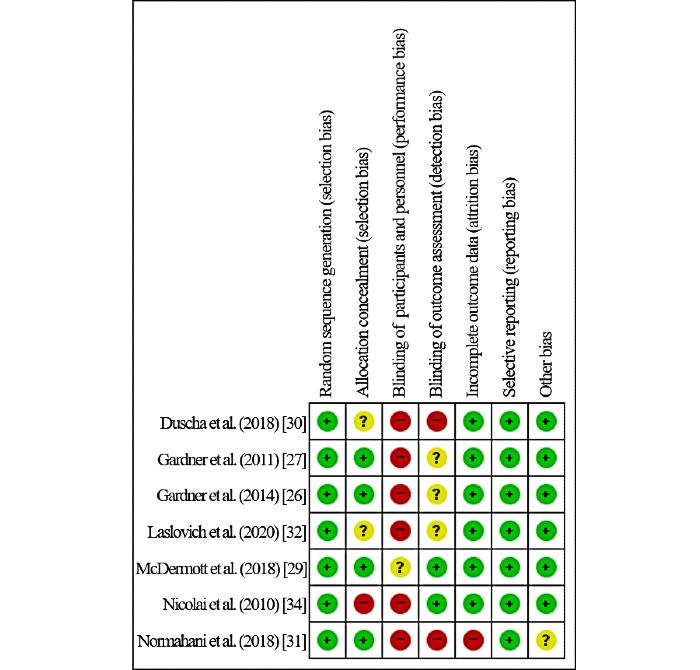
The risk of bias analysis is shown in Figure 2 (individual studies) attrition bias and reporting bias were generally assessed as low
and Figure 3 (summary graph). All of the studies were assessed risk. With the exception of studies that reported that assessors
to have a low risk of selection bias. Due to maintaining the were not blinded due to resource constraints [30,31], detection
blinding of investigators and participants in exercise bias was assessed as unclear [26,27,32] or low risk [29,34].
http://mhealth.jmir.org/2021/2/e24080/ JMIR Mhealth Uhealth 2021 | vol. 9 | iss. 2 | e24080 | p. 7
(page number not for citation purposes)
XSL• FO
RenderXJMIR MHEALTH AND UHEALTH Kim et al
Figure 2. Risk of bias: individual studies.
Figure 3. Risk of bias: summary graph.
http://mhealth.jmir.org/2021/2/e24080/ JMIR Mhealth Uhealth 2021 | vol. 9 | iss. 2 | e24080 | p. 8
(page number not for citation purposes)
XSL• FO
RenderXJMIR MHEALTH AND UHEALTH Kim et al
Meta-Analysis Findings: Effects of mHealth Exercise 0.03-0.87; P=.04), and 6MWT distance (SMD: 0.92, 95% CI
Interventions 0.59-1.24; PJMIR MHEALTH AND UHEALTH Kim et al
Figure 5. Forest plot of functional status. mHealth: mobile health; SMD: standardized mean difference; WIQ: Walking Impairment Questionnaire.
showed that the mHealth intervention groups did not show
QoL significant improvements in QoL compared with the control
Four studies reported QoL, two [29,31] of which were included groups (P=.48) but showed significant heterogeneity (χ2=37.3,
in the meta-analysis (Figure 6).
PJMIR MHEALTH AND UHEALTH Kim et al
difficult in HBET [3], HBET using mHealth technologies such activity trackers. It is important to monitor activity to promote
as wearable activity tracking devices seems to maintain high physical activity in patients with PAD [31]; however, activity
adherence. Future studies should report adherence rates; further, trackers may not have a sufficient impact in relation to inducing
among the various measures of adherence [35,37,38], an changes in health behaviors and improving adherence, as they
appropriate and accurate measure for adherence rates for patients provide a limited range of mHealth functions. Future studies
with PAD should be identified and applied. need to investigate the effects of providing patients with PAD
with a wider range of mHealth functions such as real-time advice
A total of seven studies were included in our systematic review,
and symptom monitoring [13,14,45], feedback and verification
and six studies were included in the meta-analysis. The studies
of achievement of individually set goals [6,13,14], and coaching
included in the meta-analysis all applied mHealth techniques
chatbots [46]. In addition, this study was not able to review
in HBET. During the 12-week interventions, the mHealth group
studies evaluating walking performance beyond 12 weeks, which
showed significant improvements in pain-free walking, maximal
was a result of the limited durations of the studies. Since all of
walking, and 6MWT distance when compared with the control
the studies were based on structured exercise programs with
group. In one study that was not included in the pooled analysis
recommended durations of at least 12 weeks [3], there were
of walking performance [29], the intervention was performed
limited findings for long-term effects. PAD is a chronic disease
for 9 months and showed no effects on 6MWT distance in the
for which treatment should involve sustained walking exercise;
mHealth group.
thus, it is important that interventions have effects on the
The functional status of the patients was measured using the long-term performance of walking exercises [3]. In future
WIQ, which has been validated as a measure of perceived studies, the effects of long-term mHealth-based exercise
difficulty concerning walking distances and speeds and the interventions will need to be identified.
ability to climb stairs [39]; significant improvements were seen
in walking distance but benefits regarding walking speed and
Conclusions
stair-climbing ability were not observed. These results are This study provides evidence that mHealth-based exercise
similar to those of other exercise intervention studies, which interventions applied through HBET for patients with PAD
reported significant effects on WIQ walking distance and no improve pain-free walking, maximal walking, 6MWT distance,
effects on other outcome measures [40,41]. and walking distance as elements of functional status. In
addition, an HBET group that received the mHealth intervention
The mHealth group did not show a significantly improved QoL. showed an adherence rate similar to the SET group. We found
In other studies, the effect of mHealth-based interventions on that using mHealth as part of exercise interventions is an
QoL was unclear. Some meta-analyses have reported that important strategy to improve the walking ability and exercise
mHealth-based interventions did not improve QoL in cancer adherence rate of patients with PAD at home or in the
survivors [42,43], while another study reported improved QoL community in their daily living environments. Future studies
in patients with coronary heart disease [44]. Therefore, the should consider the use of various and suitable functions of
long-term effect of mHealth interventions on QoL should be mHealth to improve the adherence rate and the effectiveness of
investigated further. exercise interventions.
Limitations
A major limitation of this study was that the type of mHealth
devices used in the reviewed studies was restricted to wearable
Acknowledgments
This research was supported by the Basic Science Research Program through the National Research Foundation of Korea (NRF)
funded by the Ministry of Education (2019R1A2C1007185) and the Brain Korea 21 FOUR Project funded by the National
Research Foundation (NRF) of Korea, Yonsei University College of Nursing.
Conflicts of Interest
None declared.
Multimedia Appendix 1
PRISMA (Preferred Reporting Items for Systematic Reviews and Meta-Analyses) checklist.
[DOC File , 68 KB-Multimedia Appendix 1]
Multimedia Appendix 2
Search strategies.
[DOCX File , 24 KB-Multimedia Appendix 2]
http://mhealth.jmir.org/2021/2/e24080/ JMIR Mhealth Uhealth 2021 | vol. 9 | iss. 2 | e24080 | p. 11
(page number not for citation purposes)
XSL• FO
RenderXJMIR MHEALTH AND UHEALTH Kim et al
Multimedia Appendix 3
Sensitivity analyses of pooled effect estimates.
[DOCX File , 36 KB-Multimedia Appendix 3]
References
1. McDermott MM. Lower extremity manifestations of peripheral artery disease: the pathophysiologic and functional
implications of leg ischemia. Circ Res 2015 Apr 24;116(9):1540-1550 [FREE Full text] [doi:
10.1161/CIRCRESAHA.114.303517] [Medline: 25908727]
2. Chaudru S, Jehannin P, de Müllenheim PY, Klein H, Jaquinandi V, Mahé G, et al. Using wearable monitors to assess daily
walking limitations induced by ischemic pain in peripheral artery disease. Scand J Med Sci Sports 2019
Nov;29(11):1813-1826. [doi: 10.1111/sms.13511] [Medline: 31271680]
3. Gerhard-Herman MD, Gornik HL, Barrett C, Barshes NR, Corriere MA, Drachman DE, et al. 2016 AHA/ACC Guideline
on the Management of Patients With Lower Extremity Peripheral Artery Disease: A Report of the American College of
Cardiology/American Heart Association Task Force on Clinical Practice Guidelines. Circulation 2017 Mar
21;135(12):e726-e779 [FREE Full text] [doi: 10.1161/CIR.0000000000000471] [Medline: 27840333]
4. Shu J, Santulli G. Update on peripheral artery disease: Epidemiology and evidence-based facts. Atherosclerosis 2018
Aug;275:379-381 [FREE Full text] [doi: 10.1016/j.atherosclerosis.2018.05.033] [Medline: 29843915]
5. Song P, Rudan D, Zhu Y, Fowkes FJI, Rahimi K, Fowkes FGR, et al. Global, regional, and national prevalence and risk
factors for peripheral artery disease in 2015: an updated systematic review and analysis. The Lancet Global Health 2019
Aug;7(8):e1020-e1030 [FREE Full text] [doi: 10.1016/S2214-109X(19)30255-4] [Medline: 31303293]
6. Harzand A, Vakili AA, Alrohaibani A, Abdelhamid SM, Gordon NF, Thiel J, et al. Rationale and design of a
smartphone-enabled, home-based exercise program in patients with symptomatic peripheral arterial disease: The smart step
randomized trial. Clin Cardiol 2020 Jun;43(6):537-545 [FREE Full text] [doi: 10.1002/clc.23362] [Medline: 32324307]
7. Lin E, Nguyen CH, Thomas SG. Completion and adherence rates to exercise interventions in intermittent claudication:
Traditional exercise versus alternative exercise - a systematic review. Eur J Prev Cardiol 2019 Oct;26(15):1625-1633. [doi:
10.1177/2047487319846997] [Medline: 31216860]
8. Treat-Jacobson D, McDermott MM, Bronas UG, Campia U, Collins TC, Criqui MH, American Heart Association Council
on Peripheral Vascular Disease; Council on Quality of CareOutcomes Research;Council on CardiovascularStroke Nursing.
Optimal Exercise Programs for Patients With Peripheral Artery Disease: A Scientific Statement From the American Heart
Association. Circulation 2019 Jan 22;139(4):e10-e33. [doi: 10.1161/CIR.0000000000000623] [Medline: 30586765]
9. Harwood A, Smith GE, Cayton T, Broadbent E, Chetter IC. A Systematic Review of the Uptake and Adherence Rates to
Supervised Exercise Programs in Patients with Intermittent Claudication. Ann Vasc Surg 2016 Jul;34:280-289. [doi:
10.1016/j.avsg.2016.02.009] [Medline: 27126713]
10. Argent R, Daly A, Caulfield B. Patient Involvement With Home-Based Exercise Programs: Can Connected Health
Interventions Influence Adherence? JMIR Mhealth Uhealth 2018 Mar 01;6(3):e47 [FREE Full text] [doi:
10.2196/mhealth.8518] [Medline: 29496655]
11. Lee J, Choi M, Lee SA, Jiang N. Effective behavioral intervention strategies using mobile health applications for chronic
disease management: a systematic review. BMC Med Inform Decis Mak 2018 Feb 20;18(1):12 [FREE Full text] [doi:
10.1186/s12911-018-0591-0] [Medline: 29458358]
12. Paldán K, Simanovski J, Ullrich G, Steinmetz M, Rammos C, Jánosi RA, et al. Feasibility and Clinical Relevance of a
Mobile Intervention Using TrackPAD to Support Supervised Exercise Therapy in Patients With Peripheral Arterial Disease:
Study Protocol for a Randomized Controlled Pilot Trial. JMIR Res Protoc 2019 Jun 26;8(6):e13651 [FREE Full text] [doi:
10.2196/13651] [Medline: 31244477]
13. Breen S, Ritchie D, Schofield P, Hsueh Y, Gough K, Santamaria N, et al. The Patient Remote Intervention and Symptom
Management System (PRISMS) - a Telehealth- mediated intervention enabling real-time monitoring of chemotherapy
side-effects in patients with haematological malignancies: study protocol for a randomised controlled trial. Trials 2015 Oct
19;16:472 [FREE Full text] [doi: 10.1186/s13063-015-0970-0] [Medline: 26481873]
14. Richards HS, Blazeby JM, Portal A, Harding R, Reed T, Lander T, et al. A real-time electronic symptom monitoring system
for patients after discharge following surgery: a pilot study in cancer-related surgery. BMC Cancer 2020 Jun 10;20(1):543
[FREE Full text] [doi: 10.1186/s12885-020-07027-5] [Medline: 32522163]
15. Farhad A, Farooqui SI, Amjad S, Khan AA. Role of structured and supervised exercise programmes in peripheral artery
disease patients with and without claudication - A Systematic Review and Metaanalysis. J Pak Med Assoc 2019
Jun;69(6):874-878 [FREE Full text] [Medline: 31201395]
16. Golledge J, Singh TP, Alahakoon C, Pinchbeck J, Yip L, Moxon JV, et al. Meta-analysis of clinical trials examining the
benefit of structured home exercise in patients with peripheral artery disease. Br J Surg 2019 Mar;106(4):319-331. [doi:
10.1002/bjs.11101] [Medline: 30791089]
http://mhealth.jmir.org/2021/2/e24080/ JMIR Mhealth Uhealth 2021 | vol. 9 | iss. 2 | e24080 | p. 12
(page number not for citation purposes)
XSL• FO
RenderXJMIR MHEALTH AND UHEALTH Kim et al
17. Jansen SCP, Hoorweg BBN, Hoeks SE, van den Houten MML, Scheltinga MRM, Teijink JAW, et al. A systematic review
and meta-analysis of the effects of supervised exercise therapy on modifiable cardiovascular risk factors in intermittent
claudication. J Vasc Surg 2019 Apr;69(4):1293-1308.e2. [doi: 10.1016/j.jvs.2018.10.069] [Medline: 30777692]
18. Parmenter BJ, Mavros Y, Ritti Dias R, King S, Fiatarone Singh M. Resistance training as a treatment for older persons
with peripheral artery disease: a systematic review and meta-analysis. Br J Sports Med 2020 Apr;54(8):452-461. [doi:
10.1136/bjsports-2018-100205] [Medline: 30979698]
19. Saratzis A, Paraskevopoulos I, Patel S, Donati T, Biasi L, Diamantopoulos A, et al. Supervised Exercise Therapy
and Revascularization for Intermittent Claudication: Network Meta-Analysis of Randomized Controlled Trials. JACC
Cardiovasc Interv 2019 Jun 24;12(12):1125-1136 [FREE Full text] [doi: 10.1016/j.jcin.2019.02.018] [Medline: 31153838]
20. van den Houten MML, Hageman D, Gommans LNM, Kleijnen J, Scheltinga MRM, Teijink JAW. The Effect of Supervised
Exercise, Home Based Exercise and Endovascular Revascularisation on Physical Activity in Patients With Intermittent
Claudication: A Network Meta-analysis. Eur J Vasc Endovasc Surg 2019 Sep;58(3):383-392 [FREE Full text] [doi:
10.1016/j.ejvs.2018.12.023] [Medline: 31235306]
21. Kieback AG, Espinola-Klein C, Lamina C, Moebus S, Tiller D, Lorbeer R, et al. One simple claudication question as first
step in Peripheral Arterial Disease (PAD) screening: A meta-analysis of the association with reduced Ankle Brachial Index
(ABI) in 27,945 subjects. PLoS One 2019;14(11):e0224608 [FREE Full text] [doi: 10.1371/journal.pone.0224608] [Medline:
31682633]
22. Miller MJ, Jones J, Anderson CB, Christiansen CL. Factors influencing participation in physical activity after dysvascular
amputation: a qualitative meta-synthesis. Disabil Rehabil 2019 Dec;41(26):3141-3150. [doi: 10.1080/09638288.2018.1492031]
[Medline: 30261758]
23. Higgins JPT, Altman DG, Gøtzsche PC, Jüni P, Moher D, Oxman AD, et al. The Cochrane Collaboration's tool for assessing
risk of bias in randomised trials. BMJ 2011;343:d5928 [FREE Full text] [Medline: 22008217]
24. Higgins JPT, Thomas J, Chandler J, Cumpston M, Li T, Page MJ, et al. Cochrane handbook for systematic reviews of
interventions. Second Edition. Chichester: John Wiley & Sons; 2019.
25. Hozo SP, Djulbegovic B, Hozo I. Estimating the mean and variance from the median, range, and the size of a sample. BMC
Med Res Methodol 2005 Apr 20;5:13 [FREE Full text] [doi: 10.1186/1471-2288-5-13] [Medline: 15840177]
26. Gardner AW, Parker DE, Montgomery PS, Blevins SM. Step-monitored home exercise improves ambulation, vascular
function, and inflammation in symptomatic patients with peripheral artery disease: a randomized controlled trial. J Am
Heart Assoc 2014 Sep 18;3(5):e001107 [FREE Full text] [doi: 10.1161/JAHA.114.001107] [Medline: 25237048]
27. Gardner AW, Parker DE, Montgomery PS, Scott KJ, Blevins SM. Efficacy of quantified home-based exercise and supervised
exercise in patients with intermittent claudication: a randomized controlled trial. Circulation 2011 Feb 08;123(5):491-498
[FREE Full text] [doi: 10.1161/CIRCULATIONAHA.110.963066] [Medline: 21262997]
28. Borenstein M, Hedges LV, Higgins JP, Rothstein HR. Introduction to meta-analysis. Chichester: John Wiley & Sons;
2011:77-86.
29. McDermott MM, Spring B, Berger JS, Treat-Jacobson D, Conte MS, Creager MA, et al. Effect of a Home-Based Exercise
Intervention of Wearable Technology and Telephone Coaching on Walking Performance in Peripheral Artery Disease: The
HONOR Randomized Clinical Trial. JAMA 2018 Dec 24;319(16):1665-1676 [FREE Full text] [doi: 10.1001/jama.2018.3275]
[Medline: 29710165]
30. Duscha BD, Piner LW, Patel MP, Crawford LE, Jones WS, Patel MR, et al. Effects of a 12-Week mHealth Program on
FunctionalCapacity and Physical Activity in Patients With PeripheralArtery Disease. Am J Cardiol 2018 Sep
01;122(5):879-884. [doi: 10.1016/j.amjcard.2018.05.018] [Medline: 30049464]
31. Normahani P, Kwasnicki R, Bicknell C, Allen L, Jenkins MP, Gibbs R, et al. Wearable Sensor Technology Efficacy in
Peripheral Vascular Disease (wSTEP): A Randomized Controlled Trial. Ann Surg 2018 Dec;268(6):1113-1118. [doi:
10.1097/SLA.0000000000002300] [Medline: 28498233]
32. Laslovich S, Alvar BA, Allison M, Rauh MJ. Effects of Lifestyle Physical Activity on Vascular Function in Asymptomatic
Peripheral Arterial Disease. Med Sci Sports Exerc 2020 Jan;52(1):8-15. [doi: 10.1249/MSS.0000000000002109] [Medline:
31361714]
33. Sterne JAC, Sutton AJ, Ioannidis JPA, Terrin N, Jones DR, Lau J, et al. Recommendations for examining and interpreting
funnel plot asymmetry in meta-analyses of randomised controlled trials. BMJ 2011;343:d4002. [Medline: 21784880]
34. Nicolaï SPA, Teijink JAW, Prins MH, Exercise Therapy in Peripheral Arterial Disease Study Group. Multicenter randomized
clinical trial of supervised exercise therapy with or without feedback versus walking advice for intermittent claudication.
J Vasc Surg 2010 Aug;52(2):348-355 [FREE Full text] [doi: 10.1016/j.jvs.2010.02.022] [Medline: 20478681]
35. Burns D, Razmjou H, Shaw J, Richards R, McLachlin S, Hardisty M, et al. Adherence Tracking With Smart Watches for
Shoulder Physiotherapy in Rotator Cuff Pathology: Protocol for a Longitudinal Cohort Study. JMIR Res Protoc 2020 Jul
05;9(7):e17841 [FREE Full text] [doi: 10.2196/17841] [Medline: 32623366]
36. Holden MA, Haywood KL, Potia TA, Gee M, McLean S. Recommendations for exercise adherence measures in
musculoskeletal settings: a systematic review and consensus meeting (protocol). Syst Rev 2014 Feb 10;3:10 [FREE Full
text] [doi: 10.1186/2046-4053-3-10] [Medline: 24512976]
http://mhealth.jmir.org/2021/2/e24080/ JMIR Mhealth Uhealth 2021 | vol. 9 | iss. 2 | e24080 | p. 13
(page number not for citation purposes)
XSL• FO
RenderXJMIR MHEALTH AND UHEALTH Kim et al
37. Picorelli AMA, Pereira LSM, Pereira DS, Felício D, Sherrington C. Adherence to exercise programs for older people is
influenced by program characteristics and personal factors: a systematic review. J Physiother 2014 Sep;60(3):151-156
[FREE Full text] [doi: 10.1016/j.jphys.2014.06.012] [Medline: 25092418]
38. Pavey T, Taylor A, Hillsdon M, Fox K, Campbell J, Foster C, et al. Levels and predictors of exercise referral scheme uptake
and adherence: a systematic review. J Epidemiol Community Health 2012 Aug;66(8):737-744. [doi:
10.1136/jech-2011-200354] [Medline: 22493474]
39. Regensteiner JG, Steiner JF, Hiatt WR. Exercise training improves functional status in patients with peripheral arterial
disease. J Vasc Surg 1996 Jan;23(1):104-115 [FREE Full text] [doi: 10.1016/s0741-5214(05)80040-0] [Medline: 8558725]
40. McDermott MM, Kibbe MR, Guralnik JM, Ferrucci L, Criqui MH, Domanchuk K, et al. Durability of Benefits From
Supervised Treadmill Exercise in People With Peripheral Artery Disease. J Am Heart Assoc 2019 Jan 08;8(1):e009380
[FREE Full text] [doi: 10.1161/JAHA.118.009380] [Medline: 30587066]
41. Pymer S, Palmer J, Harwood AE, Ingle L, Smith GE, Chetter IC. A systematic review of high-intensity interval training
as an exercise intervention for intermittent claudication. J Vasc Surg 2019 Dec;70(6):2076-2087. [doi:
10.1016/j.jvs.2019.03.050] [Medline: 31257120]
42. Seiler A, Klaas V, Tröster G, Fagundes CP. eHealth and mHealth interventions in the treatment of fatigued cancer survivors:
A systematic review and meta-analysis. Psychooncology 2017 Sep;26(9):1239-1253. [doi: 10.1002/pon.4489] [Medline:
28665554]
43. Xu A, Wang Y, Wu X. Effectiveness of e-health based self-management to improve cancer-related fatigue, self-efficacy and
quality of life in cancer patients: Systematic review and meta-analysis. J Adv Nurs 2019 Dec;75(12):3434-3447. [doi:
10.1111/jan.14197] [Medline: 31566769]
44. Su JJ, Yu DSF, Paguio JT. Effect of eHealth cardiac rehabilitation on health outcomes of coronary heart disease patients:
A systematic review and meta-analysis. J Adv Nurs 2020 Mar;76(3):754-772. [doi: 10.1111/jan.14272] [Medline: 31769527]
45. Yang YS, Ryu GW, Choi M. Methodological Strategies for Ecological Momentary Assessment to Evaluate Mood and
Stress in Adult Patients Using Mobile Phones: Systematic Review. JMIR Mhealth Uhealth 2019 Apr 01;7(4):e11215 [FREE
Full text] [doi: 10.2196/11215] [Medline: 30932866]
46. Piao M, Kim J, Ryu H, Lee H. Development and Usability Evaluation of a Healthy Lifestyle Coaching Chatbot Using a
Habit Formation Model. Healthc Inform Res 2020 Oct;26(4):255-264 [FREE Full text] [doi: 10.4258/hir.2020.26.4.255]
[Medline: 33190459]
Abbreviations
6MWT: 6-minute walk test
HBET: home-based exercise therapy
mHealth: mobile health
PRISMA: Preferred Reporting Items for Systematic Reviews and Meta-Analyses
PWT: peak walking time
QoL: quality of life
PAD: peripheral artery disease
RCT: randomized controlled trial
SET: supervised exercise therapy
SF-36: 36-Item Short Form Health Survey
SMD: standardized mean difference
VascuQoL: Vascular Quality of Life Questionnaire
WIQ: Walking Impairment Questionnaire
Edited by G Eysenbach; submitted 04.09.20; peer-reviewed by E Lin, S Misra; comments to author 18.11.20; revised version received
12.01.21; accepted 13.01.21; published 15.02.21
Please cite as:
Kim M, Kim C, Kim E, Choi M
Effectiveness of Mobile Health–Based Exercise Interventions for Patients with Peripheral Artery Disease: Systematic Review and
Meta-Analysis
JMIR Mhealth Uhealth 2021;9(2):e24080
URL: http://mhealth.jmir.org/2021/2/e24080/
doi: 10.2196/24080
PMID: 33587042
http://mhealth.jmir.org/2021/2/e24080/ JMIR Mhealth Uhealth 2021 | vol. 9 | iss. 2 | e24080 | p. 14
(page number not for citation purposes)
XSL• FO
RenderXJMIR MHEALTH AND UHEALTH Kim et al
©Mihui Kim, Changhwan Kim, Eunkyo Kim, Mona Choi. Originally published in JMIR mHealth and uHealth
(http://mhealth.jmir.org), 15.02.2021. This is an open-access article distributed under the terms of the Creative Commons Attribution
License (https://creativecommons.org/licenses/by/4.0/), which permits unrestricted use, distribution, and reproduction in any
medium, provided the original work, first published in JMIR mHealth and uHealth, is properly cited. The complete bibliographic
information, a link to the original publication on http://mhealth.jmir.org/, as well as this copyright and license information must
be included.
http://mhealth.jmir.org/2021/2/e24080/ JMIR Mhealth Uhealth 2021 | vol. 9 | iss. 2 | e24080 | p. 15
(page number not for citation purposes)
XSL• FO
RenderXYou can also read


