Electric Vehicle Uptake: Understanding the Print Media's Role in Changing Attitudes and Perceptions
←
→
Page content transcription
If your browser does not render page correctly, please read the page content below
Article
Electric Vehicle Uptake: Understanding the Print Media’s Role
in Changing Attitudes and Perceptions
Gail Helen Broadbent 1, *, Thomas Oliver Wiedmann 2                          and Graciela Isabel Metternicht 1

                                           1   Earth and Sustainability Science Research Centre, UNSW, Sydney, NSW 2052, Australia;
                                               g.metternicht@unsw.edu.au
                                           2   Sustainability Assessment Program, School of Civil and Environmental Engineering, UNSW,
                                               Sydney, NSW 2052, Australia; t.wiedmann@unsw.edu.au
                                           *   Correspondence: g.broadbent@unsw.edu.au

                                           Abstract: Passenger motor vehicle transport is a significant and growing emissions source contribut-
                                           ing to climate change. Switching from internal combustion engines to electric vehicles (EV) would
                                           significantly reduce most countries’ emissions, but for many consumers perceived barriers deter EV
                                           adoption. Consequently, government policies designed to incentivise a transition to EVs could benefit
                                           from consideration of the utility of communication channels such as print media for influencing
                                           consumer behaviour. This research explores the role that media and other communication channels
                                           writing about EVs play in consumer perceptions and awareness of government-initiated programs
                                           and policies to incentivise EV market transition. Using mixed methods of a media review and New
                                           Zealand car buyer surveys (questionnaires, interviews) (n = 893), we identified car buyers’ media use
                                 to update knowledge about cars, perceptions about EVs, and likelihood to buy, and tested awareness
                                    and popularity of incentives. We derive recommendations for policy improvements to accelerate EV
Citation: Broadbent, G.H.;                 uptake, including a significant role for the print media to disseminate relevant information, increase
Wiedmann, T.O.; Metternicht, G.I.          awareness of policies, and shift perceptions about EVs. We argue that social marketing programs
Electric Vehicle Uptake:                   should be enhanced to overcome lack of knowledge and misinformation, focusing on the market
Understanding the Print Media’s Role       segment next most likely to buy EVs.
in Changing Attitudes and
Perceptions. World Electr. Veh. J. 2021,   Keywords: electric vehicle; social marketing; diffusion of innovation; media; consumer choice;
12, 174. https://doi.org/10.3390/
                                           consumer attitudes; transportation; public policy
wevj12040174

Academic Editor: Joeri Van Mierlo

                                           1. Introduction
Received: 13 August 2021
Accepted: 22 September 2021                      Global transport emissions are approximately 23% and growing [1]. To rapidly tran-
Published: 30 September 2021               sition away from fossil-fuelled transport by 2050 requires 97% decarbonisation of the car
                                           fleet, assuming a business-as-usual growth in transport activity, and a substantial decrease
Publisher’s Note: MDPI stays neutral       in electricity emissions [2]. Any Internal Combustion Engine Vehicle (ICEV) sold continues
with regard to jurisdictional claims in    to emit the same level of CO2 per kilometre for its lifetime, whereas electric vehicle (EV)
published maps and institutional affil-    emissions decrease in tandem with electricity supply improvements [3]. Therefore, many
iations.                                   governments have aspirational goals to ban future sales of new fossil-fuelled cars [4], with
                                           many implementing policies designed to encourage electric vehicle (EV) adoption, with
                                           varying degrees of success [5].
                                                 To appeal to consumers more widely than EV early adopters, who are prepared
Copyright: © 2021 by the authors.          to act on climate change, the value proposition for a disruptive innovative technology,
Licensee MDPI, Basel, Switzerland.         which requires behaviour change, needs ongoing improvement using a whole product
This article is an open access article     approach [6]. The value proposition includes that EVs are affordable, and are perceived as
distributed under the terms and            such [7], rather than representing an unaffordable wish alien to many buyers’ economic
conditions of the Creative Commons         reality. Using a social simulation model, it was found that to effectively transition to EVs,
Attribution (CC BY) license (https://      policy measures ought to be enduring and encompass three facets: monetary, structural,
creativecommons.org/licenses/by/           and informational [8].
4.0/).

World Electr. Veh. J. 2021, 12, 174. https://doi.org/10.3390/wevj12040174                                     https://www.mdpi.com/journal/wevj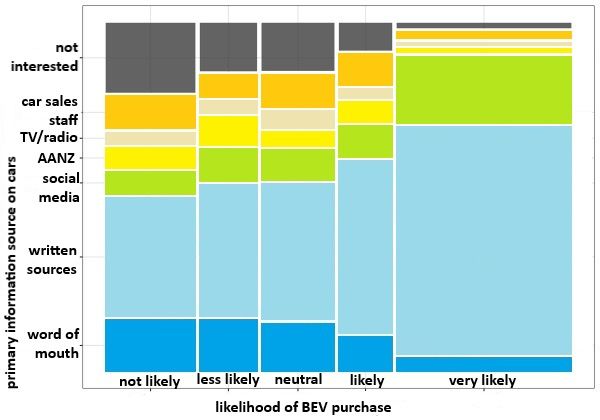
World Electr. Veh. J. 2021, 12, 174                                                                                           2 of 27

                                            This paper seeks to explore the links between policies, information, and communi-
                                      cations to improve the implementation of government policies and awareness of them,
                                      leading to increased EV adoption (see Section 3). In free market economies consumers
                                      have unrestricted choice on which vehicles they buy in the available pool, and inadequate
                                      consumer knowledge about EVs may be a key barrier to adoption, retarding transition to a
                                      more sustainable future [9,10]. Insufficient or incorrect information results in information
                                      asymmetry that can be considered as market failures, leading to negative externalities
                                      affecting the whole society and not just individual consumers [11]. Importantly, the Infor-
                                      mation Integration Theory [12] was used in experimental work on car buying by Mairesse
                                      et al. (2012, p. 549) [13] who indicated ‘thought and action are determined by the joint
                                      effect of multiple determinants’ and they proposed that consumers’ car purchase decisions
                                      resulted from the averaging of various attributes, which were of differing importance
                                      to them. Additionally, Krause et al. (2013, p. 439) [14] found that ‘most consumers are
                                      either uninformed or misinformed’ about EVs. Lack of knowledge and misperceptions
                                      potentially contribute to a rejection of alternative fuel vehicles [15].
                                            Additional to a lack of accurate knowledge, consumers’ perceptions may be more
                                      important than positive vehicle attributes [16]. Furthermore, disrupting the established
                                      motor vehicle regime would be difficult, as there is a web of limitations, and recorded
                                      successes have been largely underpinned by government support [17]. Therefore, changing
                                      consumers’ awareness and perceptions of innovations, such that EVs are included in their
                                      car shopping research, enabling informed choices well before they get to a showroom,
                                      could be a critical factor in fostering EV uptake.
                                            In this regard, the mass media play a significant role in closing the knowledge gap,
                                      but they do not inform all readers equally [18]. For example, by limiting the information
                                      that readers receive, the media can construct uncertainty around issues, which may serve
                                      to thwart adoption of behaviours and work against a change in attitude [19]. In addition,
                                      focusing on stories that are geographically proximate is more likely to engage readers [20].
                                      In short, the media could help establish and usefully promote a positive image for EVs,
                                      increase ‘visibility’ and acceptability to targeted communities, and help change attitudes
                                      about these vehicles.
                                            However, media outlets do not strictly just report the facts, instead likely inserting
                                      bias, whether intentional or unintentional, into their reporting [21,22]. News stories can be
                                      framed positively or negatively, influencing readers’ opinions and perceptions of issues [23],
                                      and involve complex interactions of human psychological traits, such as loss aversion [24].
                                      For instance, it is known that selective framing can result in climate change denial [25],
                                      perhaps by emphasising contrarian voices, as occurs in the UK and US [26]. Further,
                                      readers tend to seek out news outlets with culturally congruent world views [27], and such
                                      preferences are economically significant [28].
                                            We can draw parallels and links to our current understanding of the media’s role
                                      influencing people’s attitudes and perceptions of climate change, and extend that question
                                      to EVs, where there is a gap in that understanding. Thus, to complement government
                                      policies activating dynamic social processes [29], news outlets may contribute to a social
                                      tipping point by facilitating information sharing, affecting consumer behaviour.
                                            Many studies have focused attention on the attitudes and perceptions of car buyers
                                      towards EVs, affecting their willingness to buy, e.g., [14–16]. However, there is a gap in
                                      understanding how different segments of the car market utilise the media and potential
                                      links to their car buying preferences.
                                            Hence, the purpose of this paper is to explore the role that the written media and
                                      other communication channels play in consumer perceptions about EVs and awareness of
                                      government-initiated programs to incentivise market transition. Thus, by acting as sources
                                      of reliable up-to-date factual information about available policies and vehicle attributes,
                                      the media could help change people’s views, mobilising the market to adopt EVs. In this
                                      research, the mass media and print media are taken to include written communications
                                      that are produced mechanically or electronically.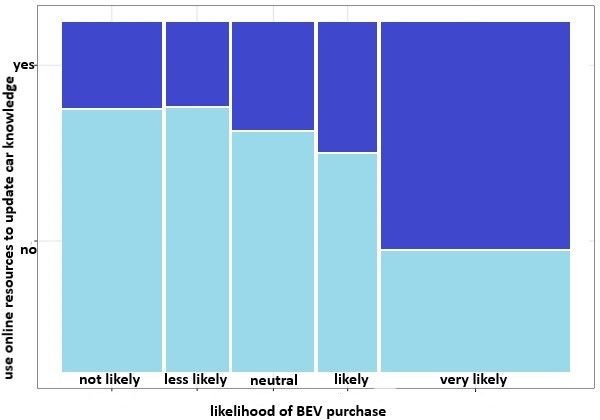
World Electr. Veh. J. 2021, 12, 174                                                                                             3 of 27

                                           To this end, New Zealand (NZ) affords a suitable case for study, as it is a country largely
                                      employing renewable electricity, high levels of newspaper readership [30] (Section 3.2.1),
                                      high vehicle ownership (Section 2.3), and multiple policies introduced in 2016 to boost EV
                                      volumes (Table S1). However, despite rapid adoption of EVs [31] by the innovators and
                                      early adopters since that time, EVs have not yet appealed to mainstream consumers and
                                      there is potential for the EV market to plateau rather than accelerate. It is posited that the
                                      media could be used in social marketing campaigns to ameliorate knowledge gaps among
                                      car buyers, especially the next most EV-ready segment, providing further opportunities for
                                      access to information.
                                           The paper is structured as follows: Section 2 provides background material about the
                                      impact of the media on people’s opinions and the importance of information in aiding con-
                                      sumer choice, including New Zealand’s car market and media consumption (Section 2.3).
                                      Section 3 explains the methodology and conceptual framework. Thereafter, Section 4
                                      provides the results, discussed in Section 5. Section 6 provides recommendations for action,
                                      and final considerations and conclusions are presented in Section 7. Following the refer-
                                      ences, the Supplementary Material contains supplementary data, to assist those wishing to
                                      have further details.

                                      2. Background
                                      2.1. Opinion-Based versus Fact-Based: The Media’s Role in Shaping Perceptions
                                           Coverage of climate change has been polarised by traditional media [32], thus shaping
                                      people’s understanding in different ways [33]. An analysis of climate change reporting
                                      noted that rather than presenting a balanced view of the news, reporters moved into
                                      an opinion-based interpretative pattern of journalism, thus shaping media debates [26].
                                      Researchers found the US’ partisan media strengthened the views of like-minded audiences
                                      about climate change and that Republicans used the media to reject messages about it [34].
                                      Aligning with that view [35] it was further argued that understanding these biases enhances
                                      comprehension of how news media use bias as a tool to distribute power. Further, it has
                                      been found the news media played a role in influencing peoples’ views on climate change,
                                      but only by acting as a conduit for political mobilisation by elites and advocacy groups,
                                      whereas accurate scientific knowledge played no role in shaping people’s actions [36].
                                           More positively, it was noted US mass media had a positive influence on hybrid
                                      vehicles sales in areas where the media reported climate change, with preliminary evi-
                                      dence suggesting the media can play a role in advocating for climate-friendly action and
                                      furthermore affecting consumer purchases [37]. Media bias about EVs has received some
                                      coverage [38]; for example, two projects [39,40] both reported there was a positive link
                                      between advertising spend and editorial content in newspapers, including those with
                                      online platforms, which may be relevant in the promotion of car models reviewed by
                                      motoring journalists reporting in the media.

                                      2.2. Information as a Driver of Consumer Choices
                                           Another influence on the development of a positive attitude towards EVs, thereby
                                      increasing acceptability, is the role of informational conformity (where people accept the
                                      information of others as factual) and social conformity (yielding to group pressure), which
                                      are well known phenomena [41]. Both mechanisms were highly significant for EV accep-
                                      tance [42]. Information helps people change their opinions, and research demonstrated
                                      that social delivery strongly impacts its effect [43].
                                           For a market to reach a tipping point requires powerful positive feedback loops [44]
                                      with small changes triggering non-linear change potentially facilitating a transition to-
                                      wards all new passenger vehicle sales being EVs rather than ICEVs [29]. Modelling [45]
                                      ascertained 5% of the total fleet (installed base) could engender such a transition. However,
                                      the percentage could be market dependent and inevitability cannot be guaranteed as gov-
                                      ernment action impacts on each market [46] and, importantly, consumer knowledge of such
                                      action is imperative. Evidence of the latter is NZ’s earlier attempts to introduce compressed
World Electr. Veh. J. 2021, 12, 174 4 of 27
natural gas vehicles to the fleet, any interventions were not sustained, the market did
not reach a tipping point, and eventually numbers fizzled out [47]. Such a result offers
a salutary lesson in the value of prolonged government action until the market can take
over, as has been demonstrated by Norwegian EV sales successes [5] where government
support has been sustained [48], and complemented by comprehensive media coverage,
which research has evidenced was a factor in encouraging 84% of Norwegian EV owners
to make a decision to buy an EV before reaching a showroom [49].
2.3. New Zealand Car Market and Media Readership
New Zealand has very high rates of car ownership, with a fleet of about four million
four-wheeled, light vehicles, making up about 93% of the total fleet, of which over 90%
are petrol fuelled and less than 1% plug-in electric [31], serving a population of some
five million people (https://www.stats.govt.nz/indicators/population-of-nz; accessed on
9 September 2021). New Zealand does not have a vehicle manufacturing industry and
imports all of its vehicles, many of them second-hand from other right-hand-drive markets
such as the UK and Japan [31]. Electric vehicles are permitted to be imported new, and
used (from UK or Japan), and the government publishes detailed monthly EV statistical
data [31].
Many New Zealanders read the media [30] across platforms, however, modern media
tend to deliver their news across multiple platforms and many people utilise different
platforms across time and people’s consumption of news is complex [50]. The level of
engagement of readers with news platforms, in particular the main newspaper mastheads
regardless of delivery platform, is not dissimilar to other countries such as Australia [51].
3. Conceptual Framework and Method
3.1. Conceptual Framework
Not only do governments need to employ policies evidenced to increase EV purchase
rates, they also ought to employ methods that could improve policy implementation lead-
ing to increased consumer action. Here, we apply systems thinking to better understand
the connections between policy, research, and practice, and how policy outcomes could be
improved through the application of evidence, including that acquired from car buyers
in different stages of acceptance of EVs as an innovative technology. With a focus on
the informational/communications aspect we utilise Knowledge to Action thinking [52]
including factors important for adoption: characteristics of the innovation, readiness for
the innovation, and processes used to foster change.
Shifting car buying behaviour towards favouring ‘environmental’ vehicles, such as
EVs, needs greater problem awareness to develop social norms and affect consumers’ atti-
tudes [10], and which are all linked to willingness to buy EVs [53–55]. We take these ideas
further and contend that to increase success rates, the segment next most likely to buy an
EV should be the focus of attention for updating policies regarding communications, in line
with social marketing techniques [56]. This is especially important if, over time, incentives
to encourage EV purchase are becoming more important, not less [57]. Developing an
understanding of factors affecting different consumer segments, including knowledge,
values, and attitudes, acquired from disparate sources, such as advertising, the media,
implementation of government policy and other people, can make a positive contribution
to changing people’s behaviour next time they buy a car.
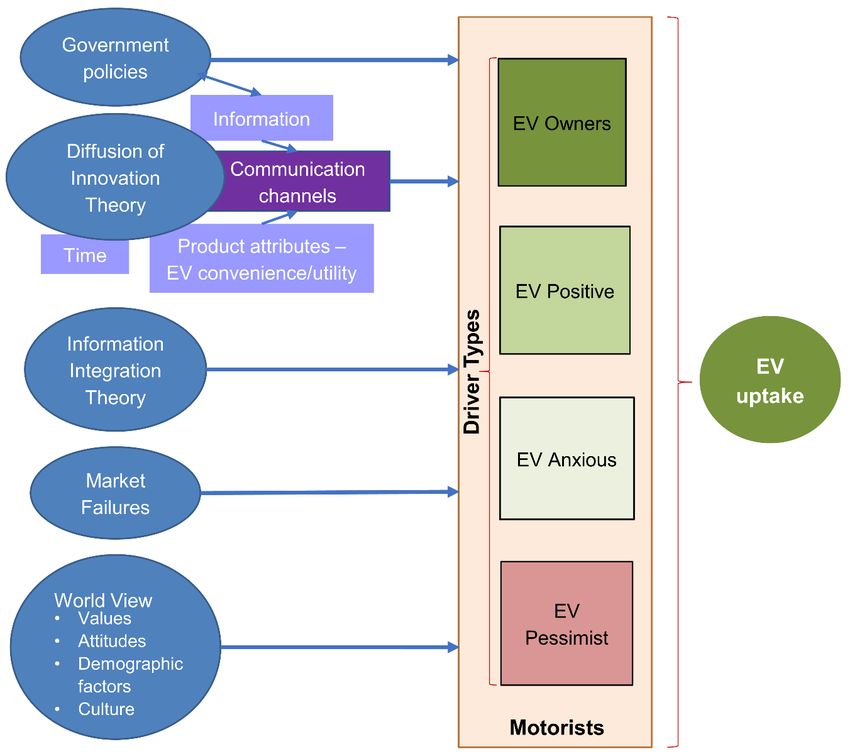
Hence, the conceptual framework of this research (Figure 1) contends that multiple
factors affect consumers’ purchasing decisions about whether to go electric or not. We
use Diffusion of Innovation Theory [58] (Table S2), Information Integration Theory [12],
differences in government policies [59], market failures [60], and the importance of a
consumer’s world view [61] to help explain influences that potentially change individual’s
behaviours and the choices they make.Electr. Veh. J. 2021, 12, x FOR PEER REVIEW 5 of 27
ferences
World Electr. Veh. J. 2021, 12, 174in
government policies [59], market failures [60], and the importance of a con- 5 of 27
sumer’s world view [61] to help explain influences that potentially change individual’s
behaviours and the choices they make.
Figure 1. framework
Figure 1. Conceptual Conceptual of framework of the
the theories andtheories and paradigms
paradigms influencinginfluencing
car buyingcar buying
action: action:
Rates of EVRates
uptake differ
of EV uptake
among car buying differ
motorists andamong car buying
are influenced bymotorists and areinertia
socio-technical influenced by socio-technical
that incorporates inertia
multiple thatincluding:
factors
Governmentincorporates
policies [59],multiple
Diffusionfactors including:
of Innovation Government
processes policies [59],Integration
[58], Information Diffusion ofTheory
Innovation processes
[12], market failures [60],
and consumers’ world views [61]. Each Driver Type represents a sub-set of car buyers, each with different[61].
[58], Information Integration Theory [12], market failures [60], and consumers’ world views attitudes and
Each Driver Type represents a sub-set of car buyers, each with different attitudes and perceptions
perceptions towards EVs, as part of the whole population of Motorists, and the label for each subset reflects these different
towards EVs, as part of the whole population of Motorists, and the label for each subset reflects
attitudes to EVs.
these different attitudes to EVs.
3.2. Methodological Approach
3.2. Methodological Approach
To gain a deeper understanding of the role of the media in the perceptions and
To gain aattitudes
deeper understanding of the EVs,
of car buyers towards role of
New theZealand
media in the was
(NZ) perceptions
used as aand
caseatti-
study (Section 1).
tudes of car buyers towardsemployed
The research EVs, Newmixed
Zealand (NZ) was
methods used as athe
to measure case study
same (Sectionin1).
variables different ways,
The research employed mixed methods to measure the same variables
triangulating results to increase trustworthiness and credibility [62]. in different ways,
triangulating results to increase
Firstly, trustworthiness
a desktop survey of New and credibility
Zealand’s [62]. print media (across platforms) that
leading
Firstly, apublish
desktoparticles
surveyonofcars
New Zealand’s leading
was undertaken to investigateprint media
how(across
EVs wereplatforms)
presented 2011–2019
that publish articles
(Sectionon3.2.1).
cars was
Theundertaken
written media to investigate
were selected howforEVs were presented
investigation as it 2011–
forms part of most
2019 (Section people’s
3.2.1). The written
media media wereand
consumption selected
is an for investigation
important sourceasthat
it forms part of as relatively
is perceived
most people’sreliable
media [50].
consumption
Secondly,and is an of
a survey important
car buyers source that3.2.2)
(Section is perceived as rela-in two parts to
was conducted
tively reliablegather
[50]. Secondly, a survey
quantitative of car buyers
and qualitative data:(Section
firstly,3.2.2) was conducted
by questionnaire, andin secondly
two through
parts to gather quantitative and qualitative data: firstly, by questionnaire, and secondly
interviews, to gain deeper and more nuanced views and to help reduce error and bias [21].
through interviews, to gain deeper
The interviews and more
also provided nuancedofviews
evidence and to help
questionnaire reducestability
response error and [63].
bias [21]. The interviews also provided evidence of questionnaire response stability [63].
3.2.1. Identification, Collation, and Analysis of New Zealand’s Print Media Treatment of
EVs: Newspapers and Car Magazines
New Zealand’s population of about 5 million people supports many newspapers
delivered across print and online platforms, which have a wide readership, and ‘77.6%, of
New Zealanders aged 14+ now read or access newspapers in an average 7-day period via
print or online (website or app) platforms’ [30]. An analysis was undertaken of NZ’s top tenWorld Electr. Veh. J. 2021, 12, 174 6 of 27
written sources (by readership) that publish articles about cars. The online title TradeMe
(https://www.trademe.co.nz/a/motors/cars accessed on 9 September 2021), although
popular, was excluded from the search as it largely functions as classified advertising for
cars on sale, with minimal news items about cars, although it does publish some reviews.
The Factiva database was searched from 1 January 2011 to 31 December 2019 for stories
about “electric vehicle*”, “Tesla”, “Elon Musk”, and “Dieselgate”, with those not relevant
to EVs eliminated from analysis. The online title Driven NZ published thousands of articles
about EVs in that period, therefore 501 stories were analysed. Each article was read in full
noting: date, author (or source), title, topic, subjects, and framing, by observing the tone of
words used to describe EVs. Percentages of positive, neutral, and negative framed articles
were calculated for each masthead.
3.2.2. Survey of Car Buyers
We compared car consumers in two samples, EV owners, and ICEV buyers by conduct-
ing two online questionnaires, followed by interviews with some respondents randomly
selected from a panel of volunteers from each group.
Sampling Frame and Survey Data Collection
The units of analysis were New Zealand car drivers, aged 18 or over, who intended to
buy a car at some future time, and thus were potential consumers of EV technology. Two
online questionnaires, each with the same questions, were implemented in March–April
2020 to compare car drivers who own EVs with car drivers of ICEVs who could potentially
buy an EV in the future. In the requests for participation, anonymity was guaranteed and
it was explained that participation gave tacit approval for retaining and using their data.
To sample consumers who drive ICEVs, the polling company YouGov was engaged
as its methodology, used in extensive election polling, has been relatively accurate [64].
YouGov randomly sampled ICEV consumers (n = 588) from its large national panel with
quotas for gender, region, and age, and those not intending to buy a car in the future
were exited from the survey. Prior to the main study a pilot study (n = 61) tested question
validity and enabled adjustment of question order. Interviews (n = 31) were conducted
with participants randomly selected from the half of all ICEV participants (n = 588) who
volunteered contact details.
To sample EV owners a separate questionnaire, delivered via the online platform
Qualtrics, was conducted (n = 305) using the same questions as the YouGov survey. To
obtain a sufficiently large sample of EV owners, requests for participation were posted on
the EV Owners Facebook page and the Better NZ Trust webpage. Although volunteers,
many of these people could be considered to be strongly opinionated because fewer
than 2% of New Zealand motorists own EVs [31] and therefore, as Innovators and Early
Adopters [58] most could be considered to be EV enthusiasts; thus, these participants
were likely to represent the majority view for current EV owners. More than half the
sample (n = 305) voluntarily provided contact details, from whom interviewees (n = 31)
were randomly selected.
Questionnaires
Four main themes were investigated: demographics; purchasing practices and vehicle
ownership; communication channels and knowledge acquisition; and EV and environmen-
tal perceptions, attitudes, and values. Table 1 lists the questions presented to participants
relevant to this study. Most questions were closed response and were either Likert Scaled
(1–5) or multiple choice with randomized row order to eliminate positional advantage;
“Don’t know” and “Other” were fixed at the end. Two questions were short open response.World Electr. Veh. J. 2021, 12, 174 7 of 27
Table 1. Wording used in the questionnaires for questions discussed in this paper. Further explained in Section 3.2.2.
Question Number Question Text
When you are considering what to buy for your next car, how much research do you do to familiarise
yourself with changes in market offerings? Choose the most appropriate response.
1: Very little, I just buy something similar to last time
2: I rely on the car sales staff at the dealership
A8
3: I do a lot of research
4: I rely on discussions with family and friends
5: I rely on someone else to choose and buy the car
6: Other—please specify
From which single source do you get MOST of your information about new car models coming onto
the market? Choose the source you use most often.
1: friends and family, that is by word of mouth
2: written sources: newspapers/magazines (print or online), including manufacturers websites
3: Social media (e.g., Facebook)
A13 4: AANZ
5: Television
6: radio
7: Car sales staff
8: Other- please specify
9: I am not really interested in finding out about cars
Thinking of the written media (print or online) including newspapers and magazines, please indicate
the sources you READ most often to update your knowledge about cars. Please select up to 3 options
A14 1: AANZ; 2: New Zealand Herald; 3: Dominion Post; 4: The Press; 5: Otago Daily Times; 6: Waikato
Times; 7: NZ Autocar; 8: Autotrader; 9: Driven NZ; 10: Stuff Motoring News; 11: International online
sources; 12: Social media; 13: Other—please specify; 14: I rarely, if ever, read about cars
Please write down three words (or short phrases) that pop into your head that you would use to
A21
describe electric vehicles. EVs are . . . ..[open]
The following list shows the initiatives that New Zealand has taken to increase the popularity of
electric cars (EVs)
1: EV Ride and Drive events where you can see and drive EVS
2: Importation of good quality second-hand EVs from Japan and UK permitted
3: First registration tax exemption for EVs (until 2021)
4: Allowed EVs to use lanes normally reserved for buses or vehicles with multiple occupants
5: Provision of a website with lots of information about EVs, including a list of car dealers who sell EVs
6: Support for the installation of a network of fast chargers about NZ
Initiatives
7: Smart phone app called EV Roam to enable motorists to find EV recharger locations
8: contestable fund that offers grants to help organisations, including charities, to buy EVs or install
rechargers, or other initiative to increase EV uptake
9: From 2021, the proposed clean car discount would subsidise the purchase price of cars with low
emissions whereas the first registration fee of cars with high emissions would pay an additional
registration fee
10: From 2021, the proposed clean car standard would require vehicle importers to reduce the average
emissions of their imports by increasing the number of cleaner cars they import
Please choose as many of the initiatives [from 1–10 listed above] that you have heard or read about, [or],
A22
11: I have not heard or read about any of these initiatives
Please choose the three most appealing to you [from 1–10 listed above] as a consumer that might help
persuade you to buy an EV, [or],
A23
11: don’t know
12: I would never buy an EV
On a scale of 1–5 where 1 represents not likely, 3 represents neutral and 5 represents very likely, how
A15-1 likely are you to buy a . . . ?
Fully electric car (BEV)
A15-2 Plug in Hybrid (PHEV)World Electr. Veh. J. 2021, 12, 174 8 of 27
Table 1. Cont.
Question Number Question Text
When thinking about car purchase, please consider the following qualities and indicate on a scale from
A17
1–5 how important each factor is to you when thinking whether to go electric or not
A17-2 Vehicle purchase price
Total ownership cost savings of EVs over time compared to conventional cars e.g., due to fuel cost
A17-3
savings
A17-7 The expected life of the battery
How do you think, overall, are EVs portrayed in the media: 1 = very negative; 2 = negative; 3 = middle,
A18 there is a mix of positive and negative; 4 = positive; 5 = very positive; 6 = I haven’t noticed any stories
in the media about electric cars
ICEV: Complete this statement: I would be more likely to buy an EV if . . . (open)
A24
EV: The main reason I bought a plug-in electric car is . . . (short answer)
When thinking about electric cars, which of the following statements most closely matches your
thoughts about buying an EV?
1: It’s about time, why wouldn’t you
2: Yes please, it would save how much fuel?
3: Yes please, but make it a plug-in hybrid for now
A16 4: Great idea but where would I charge it?
5 If everyone else is, then maybe . . . .
6: Will they save the planet? Don’t think so.
7: I would never be seen in one of those
8: I do a lot of driving, convince me
9: Don’t know
Interviews
Semi-structured interviews were conducted between May–June 2020 by Zoom or
telephone during New Zealand’s first lockdown period of the COVID19 pandemic. Inter-
viewees were specifically asked to describe their usual pre-lockdown behaviours. Ques-
tions focused on questionnaire themes. Interviews, with permission, were recorded and
transcribed using the online platform Otter.
Market Segmentation
To segment the market by attitude for the first analysis, participants of the two online
questionnaires were asked to choose a statement (see Table 1—A16) most closely reflecting
their attitude to EVs. Table S4a,b show these statements, derived from [65]. From the
first questionnaire presented to ICEV consumers (n = 588), those choosing: Statements 1
and 2 were allocated to the EV Positives (n = 154), Statements 3 and 4 to the EV Anxious
(n = 201), while Statements 6 and 7 were named EV Pessimists (n = 89). Participants of
the second questionnaire were EV Owners (n = 305), who mainly selected Statement 1,
and were compared to the other three segments. Segment labels encapsulate Driver Type
attitudes to EVs (Figure 1).
3.2.3. Statistical Data Analysis
Responses to the questionnaires were analysed in two ways. Firstly, the questionnaires
segmented car buyers according to their attitudes to EVs (Section 3.2.2 Market Segmenta-
tion), assigning participants to one of four segments hereafter referred to as ‘Driver Type’,
although some respondents did not fit and were excluded from this analysis. Secondly,
further analysis of all car buyers sampled by the two questionnaires (n = 893) was carried
out according to their likelihood to purchase a BEV (Table 1—A15-1).World Electr. Veh. J. 2021, 12, 174 9 of 27
Tests of Association by Driver Type
The metric of Driver Type was used to carry out tests of association and results of
different questions of interest for each driver. For categorical questions, Pearson’s chi-
squared test [66] was used as a test of association between two categorical variables. For
Likert-scale questions, an analysis of variance was used to test if there is a difference in the
mean Likert scores among the four Driver Types.
To evaluate their perceptions of EVs, participants were asked to ‘Write down three
words (or short phrases) that pop into your head that you would use to describe EVs’.
As many words/phrases are synonyms for one meaning, responses to open short-answer
questions used latent content analysis as it was more appropriate than manifest content
analysis [67]. Data analysis was conducted for the number of participants using synonyms
of words or short phrases with certain meanings of interest to describe EVs. Additionally,
respondents who used at least one negative word were tallied. Participants’ use of these
synonyms, or at least one negative word, was then compared to Driver Type using Pearson’s
chi-squared tests.
ICEV consumers were asked to complete this statement: ‘I would be more likely to
buy an EV if . . . ..’ (Question A24), to facilitate an understanding of their perceptions
of barriers to EV adoption, or potential incentives. Similarly, EV Owners were asked to
complete this statement: ‘The main reason I bought a plug-in electric car is . . . ’. Open text
responses were analysed and coded for specific themes [67] using an iterative process, thus
applying an inductive approach to search for meaning. Responses were read to generate
initial codes then reviewed, re-categorised if required, and after several passes, frequencies
for each of the final themes were recorded.
All p-values were adjusted to account for multiple hypothesis testing using a ‘Holm’
adjustment [68]. If there was evidence of an association between a question and Driver
Type after adjusting for multiple comparisons, this relationship was examined through
Mosaic plots, frequency histograms, or boxplots. All analysis and plotting used ‘R v4.0.20 .
In Mosaic plots, column width signifies sample size of that Driver Type, while the height
of individual “tiles” within the mosaic represents the proportion of each option.
Likelihood to Buy Ratio Tests
For the second analysis, a test was conducted to take into account that consumer
decisions are likely to integrate information they have relating to multiple attributes for the
vehicle they are considering for purchase and their personal circumstances (see Section 1
and Figure 1 Conceptual Framework). Thus, information consumers have gleaned from
multiple sources would likely contribute to that decision, which we have encapsulated by
asking respondents about their likelihood to buy an EV.
In this likelihood to buy ratio test all participants (n = 893), regardless of attitude
to EVs, were categorized into five groups; ‘not likely, ‘less likely, ‘neutral’, ‘likely’, and
‘very likely’, based upon their likelihood to buy battery electric vehicles (BEV) and their
response to question 15-1; this metric will be referred to as ‘likelihood to purchase BEV’.
Subsequently, ordinal logistic regression models were used to test the effect of participants’
information sources on their likelihood to purchase a BEV. This method appropriately
models the ordinal scale of the ‘likelihood to buy a BEV’ question and was undertaken
using the CLM function from the ordinal package in R (R-Package version 28) [69].
Separate models were fit for each further question of interest with appropriate filtering
applied, and likelihood ratio tests were used to test the strength of association between the
variables. All p-values were adjusted to account for multiple hypothesis testing using a
Holm adjustment [68]. Evidence of association between a question and the likelihood to
purchase a BEV after adjusting for multiple comparisons were further investigated using
Mosaic plots or boxplots. All analysis and plotting were done in ‘R v 4.0.20 .World Electr. Veh. J. 2021, 12, 174 10 of 27
3.3. Limitations
Fewer than 1% of New Zealand cars are EVs [31], and hence there are relatively few
EV owners compared to ICEV owners/drivers among the entire population of motorists.
Thus, compared to the sampling method employed for the ICEV drivers, the low numbers
of EV owners required an alternative method to source panel members for the EV owner
questionnaire (as described in Section 3.2.2). However, given that EVs comprise such a
small percentage of the fleet, EV owners who responded to the survey were assumed
to be representative of EV owners in general, as innovators and early adopters; this
assumption aligns with Diffusion of Innovation theory [58] that postulates early adopters
are enthusiastic about the technology. Another limitation of this study was that it took place
during the early days of the COVID 19 pandemic, which may have affected people’s views
of life in general. To overcome this potential limitation, during the interviews respondents
were asked to specifically recall behaviours prior to any lockdown and the results tallied
well with the questionnaire results.
4. Results
Results of the two parts of the research, the media survey and consumer survey, are
presented in Sections 4.1 and 4.2.
4.1. Media Survey
Table 2 synthesises the results of analysing articles published in New Zealand’s
principal written media publishing articles about cars from 2011 to 2019 inclusive.
Table 2. New Zealand’s written media—newspapers and magazines, with stories about cars, showing percentage of
positive, neutral and negative framed articles for each media outlet.
Media Outlet Readership Numbers/Week No. EV Articles Analysed Framing %
+ 0 –
Automobile Association of NZ 416,000 a 63 79 21 0
NZ Herald 1,844,000 a 446 65 27 8
Driven NZ (classifieds + news) 111,000 b 501 70 25 5
Otago Daily Times 253,000 a 101 85 13 3
The Press 314,000 a 387 71 22.5 6.5
Waikato Times 214,000 a 246 58 38 4
Dominion Post 432,000 a 424 61 34 5
NZ Autocar magazine 14,000 a 332 84 11 5
NZ Autotrader (classifieds +
N/A 56 91 9 0
news)
Stuff Motoring c 208,750 c 43 58 26 16
Notes: a Print is net readership in an average 7 days. Digital is average website visitation and app usage (if available) in an average
7 days. The above are cross-platform readership figures [30]. b Weekly readership http://www.voxy.co.nz/business/5/352922 (accessed
on 22 February 2021). c a paywall restricts access to Stuff articles. Monthly readership of Stuff Motoring at November 2019, (Nielsen CMI
Fused audiencefinder.stuff.co.nz/index.html)—averages to 208,750 reads per week.
4.2. Car Buyer Survey
4.2.1. Results of Driver Type Analysis
Participants of the two questionnaires (n = 893) generated responses that were anal-
ysed to enable NZ car buyers to be allocated to Driver Type dependent on their attitudes
to EVs, based on Question A16 (see Tables 1 and S4a,b). Some respondents (n = 144)
were unable to be allocated to one of the four selected Driver Types and were omitted
from further analysis regarding Driver Type comparisons, but they were included in the
likelihood to buy ratio tests (Section 4.2.2).
Table 3 displays the results of the statistical data analysis, and it provides evidence of
significant differences among Driver Types, with strong evidence of association betweenWorld Electr. Veh. J. 2021, 12, 174 11 of 27
Driver Type and most factors (p < 0.05); factors showing no correlations were: whether or
not a consumer purchased cars new or used (A3); use of magazines (A14) or newspapers
(A14) for research about cars; and household income (P4).
Table 3. Results from Pearson’s Chi-squared tests and ANOVAs for the questions of interest against ‘Driver Type’ (Question
A16). n is the number of samples left after filtering; method is the method used with test statistics being chi-squared test
statistics for chi-squared tests and likelihood ratio test statistics for ANOVAs. df is the degrees of freedom and ‘p-value’ are
the p-values that have been adjusted to account for multiple hypothesis testing using a Holm adjustment [68]. Table S10
provides the full wording for each question.
Question Number Issue n Method Test Statistic df p-Value
Gender Gender 748 Chisq 54.7 3A17_3 Importance of total ownership costs 740 ANOVA 266.4 3
World Electr. Veh. J. 2021, 12, 174                                                                                           13 of 27

      Table 4. Differences among Driver Types for: Likelihood of BEV and PHEV purchase (A15_1,2: mean Likert Score 1–5, 1 is
      the most negative and 5 the most positive); Perception of how the media portray EVs (A18: mean Likert Score 1–5); those
      choosing A18_ 6 ‘I have not noticed any stories in the media about EVs’ as a percentage; those choosing Option A14_14 ‘I
      rarely, if ever read about cars’ expressed as a percentage for each Driver Type.

                                                  EV Owners            EV Positives           EV Anxious        EV Pessimists
                     Factor
                                                    n = 305              n = 154                n = 201            n = 89
    Likelihood of buying BEV (A15_1)
                                                        4.82               3.33                  2.5                  1.9
          Mean Likert Scores 1–5
   Likelihood of buying PHEV (A15_2)
                                                        1.97               3.14                  3.49                 2.19
          Mean Likert Scores 1–5
  Perception of how the media portray
                                                        3.05               3.99                  3.78                 3.38
   EVs (A18) Mean Likert Scores 1–5
 “I have not noticed any stories in the
                                                        1.3%               7.1%                  6%                  5.6%
 media about EVs” (A18_6) Percentage
     “I rarely if ever read about cars”
                                                     11.1%                 26%                  31.8%                36%
           (A14_14) Percentage

                                             Asking respondents to select as many Government initiatives they had heard of was
                                       used as a measure of awareness, and percentages for each initiative are shown in Table 5
                                      ‘Aware’ column. A box plot (Figure S13) illustrates ‘initiative awareness’ (mean number of
                                       initiatives for each Driver Type).

      Table 5. Awareness and desirability of NZ Government incentives to foster EV uptake by each Driver Type as a percentage
      (See Table S10: A22; A23).

            Initiative                   EV Owners               EV Positives            EV Anxious            EV Pessimists
                                      Aware    Desirable       Aware    Desirable     Aware     Desirable   Aware       Desirable
 EV Ride and Drive Events              84.3       18.4          9.1        11.0        9.5         11.9       6.7            12.4
 Importation 2nd hand EVs              85.6       40.7          18.8       36.4        18.4        36.8       12.4           24.7
     First registration tax
                                       45.2       14.4          18.8       29.2        11.9        24.7       16.9           15.7
     exemption till 2021
     EV use of HOV lanes               61.0       10.2          13.6       25.3        11.4        21.4       12.4           20.2
     Information website               43.0       4.9           14.3       17.5        11.4        17.4       6.7            15.7
       Nation-wide fast
                                       87.5       53.4          35.7       48.1        38.3        56.2       36.0           22.5
       charge network
     Smart phone app for
                                       27.9       3.6           20.8       33.1        17.9        36.8       12.4           18.0
      recharger locations
     Contestable fund for
                                       59.7       13.4          7.8        11.5        6.5         7.5        6.7            4.5
         EV grants
        Proposed Clean
                                       73.8       29.2          30.5       51.3        30.3        42.8       23.6           31.5
         Car Discount
        Proposed Clean
                                       49.5       12.5          24.7       20.8        21.4        14.9       13.5           6.7
         Car Standard
    I am not aware of any
                                       0.7                      35.1                   38.3                   41.6
          initiatives
          Don’t know                              5.9                      3.2                     8.5                       12.4
  I would never buy an EV                                                  1.9                     1.5                       30.3
   I would have bought an
                                                  52.1
         EV anyway
World Electr. Veh. J. 2021, 12, x FOR PEER REVIEW 14 of 27
World Electr. Veh. J. 2021, 12, 174 14 of 27
I would never buy an
1.9 1.5 30.3
EV
I would have bought an Respondents were also asked for their top three preferred incentives that could encour-
52.1
EV anyway age or contributed to EV uptake. The ‘Desirable’ column in Table 5 shows the percentage
of respondents who selected individual initiatives as one of their three most preferred.
4.2.2. Results of Likelihood to Buy Ratio Tests
4.2.2.Table
Results of Likelihood
6 and Figures 4–6tosynthesise
Buy Ratio the
Tests
results of applying the tests described in Sec-
TableLikelihood
tion 3.2.3 6 and Figures to Buy4–6Ratio
synthesise
Tests. the results
Figure of applying
4 shows the tests
that drivers ‘verydescribed in
likely’ and
Section to
‘likely’ 3.2.3 Likelihood
purchase a BEVto Buy
usedRatio Tests.
written Figure
sources 4 shows
more that drivers
frequently ‘veryon
and relied likely’
word and
of
‘likely’
mouth lessto purchase
than those a BEV used written
‘not likely’ to buy asources more 5frequently
BEV. Figure shows that and
userelied on word
of online of
sources
mouth
is higherless
forthan those
those ‘notor
‘likely’ likely’
‘veryto buy atoBEV.
likely’ Figurea 5BEV.
purchase shows
The that useof
count of‘initiative
online sources
aware-is
higher for those ‘likely’ or ‘very likely’ to purchase a BEV. The count of ‘initiative
ness’ was subject to a further test to determine if there was any correlation with likelihood awareness’
was subject to
to purchase anaEVfurther test to determine
(p < 0.0001, Table 6—Aif22_count)
there wasand anythe
correlation
results arewith likelihood
shown to
as a box
purchase an
plot (Figure 6). EV (p < 0.0001, Table 6—A 22_count) and the results are shown as a box plot
(Figure 6).
Table 6. Results from Likelihood Ratio Tests undertaken using ordinal logistic regression models with ‘Likelihood of BEV
Table 6. Results
purchase’ as the from Likelihood
response Ratio
variable. n is Tests undertaken
the number using left
of samples ordinal
afterlogistic regression
filtering, models of
df is the degrees with ‘Likelihood
freedom of BEV
and ‘p-value’
are the p-values
purchase’ that havevariable.
as the response been adjusted tonumber
n is the accountof
forsamples
multiple
lefthypothesis testing
after filtering, using
df is a ‘holm’ofadjustment
the degrees freedom and[68].
‘p-value’
are the p-values that have been adjusted to account for multiple hypothesis testing using a ‘holm’ adjustment [68].
Question n Test Statistic df p-Value
A16_Driver
Question Type, attitude to EVs n Test731
Statistic 409.2 df 4World
WorldElectr.
Electr.Veh.
Veh.J.J.2021,
2021,12,
12,174
x FOR PEER REVIEW 15
15of
of27
27
World Electr. Veh. J. 2021, 12, x FOR PEER REVIEW 15 of 27
Figure5.
Figure 5. Mosaic
Mosaic plot
plot showing
showing the
the ratio
ratio of
of use
use of
of online
online sources,
sources, including
includingsocial
socialmedia,
media,to
tolikelihood
likelihood
Figure
of 5. Mosaic
purchasing a plot showing the ratio of use of online sources, including social media, to likelihood
BEV.
of
ofpurchasing
purchasingaaBEV.
BEV.
Figure 6. Box plot showing the number of initiatives consumers were aware of for each available
Figureof6.6.likelihood
Figure
score Boxplot
Box plotshowing
showing thenumber
the number
of BEV purchase. ofinitiatives
of
Each initiatives
box consumers
consumers
represents wereaware
were aware
the interquartile offor
of
range for each
each
(from available
available
the 25th to
score
score of
of likelihood
likelihood of
of BEV
BEV purchase.
purchase. Each
Each box
box represents
represents the
the interquartile
interquartile range
range (from
(from
75th percentiles), the dots represent outliers and the bold line in the box represents the median the
the 25th
25th to
to
score.
75th percentiles), the dots represent outliers and the bold line in the box represents the median
75th percentiles), the dots represent outliers and the bold line in the box represents the median score. score.
5. Discussion
5.
5. Discussion
Discussion
5.1. Introduction
5.1. Introduction
5.1. Introduction
Morenuanced
More nuancedinsights
insights into
into consumer
consumer behaviour
behaviour thanthanmight might otherwise
otherwise be ascer-
be ascertained
tainedMore
can nuanced
be gained insights
by into
segmenting consumer
the market behaviour
according than
to carmight
owners’otherwise
attitudes be ascer-
can be gained
tained can be by segmenting
gained by the market
segmenting the according
market to car owners’
according to car attitudes
owners’ to EVs, to
attitudes to
EVs,
rather
EVs,
rather
than than
simply simply
comparingcomparing
EV ownersEV owners
to driversto drivers
of ICEVs.of ICEVs.
Such Such
insights insights could
could better better
inform
rather than
informmakers simply
policy who comparing
makers who EV
could owners
take to drivers
more effective of ICEVs.
actions Such insights could better
policy
inform policy could
makers who take more
could effective
take more actions to:
effective raise to:
actions to:
raise awareness
awareness
raise awareness
of gov-
of governmentof gov-
ernment initiatives
initiatives to promote to EVs,
promote EVs,motorists
educate educate about
motorists about technology
technology advances, advances,
and influence and
ernment initiatives
influence consumer to promote EVs,
preferences and educate motorists
potentially future about technology
purchases of EVs, advances,
for example and
by
consumer preferences and potentially future purchases of EVs, for example by using
influence
using consumer
written media, preferences
including and
social potentially
media. future purchases of EVs, for example by
written media, including social media.
usingFirstly,
written media, including
thisresearch
researchtested social
testedthethe media.
concept that
Firstly, this concept that carcar buyers
buyers areare
notnot homogeneous
homogeneous [57,70],
[57,70], al-
Firstly,
although this this
was research
not the tested
primary thepurpose
conceptofthatthe car buyersand
research, are questionnaire
not homogeneous results[57,70],
pro-
though this was not the primary purpose of the research, and questionnaire results provide
although
vide strongthis was notto
evidence the primary
suggest purpose
there of the research,
are differences and questionnaire
of attitude results pro-
strong evidence to suggest there are differences of attitude amongamong car buyerscar buyers (Table
(Table S4a,b).
vide strong
S4a,b). evidence grouping
Furthermore, to suggestrespondents
there are differences
byType
Driver ofType
attitude among car buyers (Table
Furthermore, grouping respondents by Driver based on based
attitude oncorrelates
attitude correlates
with the
S4a,b). Furthermore,
with the variability grouping
of EV readinessrespondents by Driver
shownrespondents Type
among respondents based on attitude
(i.e., likelihood correlates
variability of EV readiness shown among (i.e., likelihood to buy a to BEV buyora
with or
BEV thePHEV
variability
in theof EV readiness
future), shown among
with significant respondents
differences shown among (i.e., likelihood
Driver Types to buy (pWorld Electr. Veh. J. 2021, 12, 174 16 of 27
PHEV in the future), with significant differences shown among Driver Types (p < 0.0001,
Table 3: A15_1, A15_2; Figure S11). Further analysis also shows a correlation between the
likelihood of buying a BEV and Driver Type (p < 0.0001, Table 6). EV Owners, as innovators
and early adopters, were most likely to buy a BEV in the future (Figure S11), and least
likely to buy a PHEV (Figure S12). The likelihood of buying a PHEV was strongest for the
EV Anxious, the late majority of mainstream consumers (Figure S12).
Previous research suggests attitudes to EVs are an important determinant of will-
ingness to adopt (Section 3.1). Based on attitudes to EVs, the segmentation of survey
respondents into four Driver Types (Section 3.2.2), where commonality of attributes enables
mapping against Diffusion of Innovation [58] niches (Table S2): EV Owners correspond
with Innovators and Early Adopters; EV Positives with Early Majority; EV Anxious align
with the Late Majority; and EV Pessimists with the Laggards.
5.2. Sources of Information
Our results suggest that car buyers, grouped according to attitudes to EVs, source
information about cars heterogeneously (p < 0.0001, Table 3—A13; Figure 2). Although
written sources were the most widely consulted by all car buyers, EV Owners significantly
used them more often than other Driver Types. Further evidence from Figure 4 and Table 6—
A13 (p < 0.0001) suggests that increasing use of written sources correlated with increasing
likelihood to buy a BEV. Further to that, those ‘least likely’ to buy an EV, while using
written sources more than other sources, had the highest ratio of being ‘not interested’ in
updating their knowledge about cars (Figure 4).
5.3. Media Portrayal and Influence on Attitudes to EVs
New Zealanders have high levels of newspaper readership, with almost 80% reading
a newspaper (across platforms) at least once a week [30]. Our results demonstrate that
when updating knowledge about cars there were no significant differences among Driver
Types for consultation of newspapers or car magazines (Table 3—A14_Newspapers, A14_
Car Magazines). Additionally, further testing demonstrated a lack of correlation between
the likelihood of BEV purchase and use of newspapers or car magazines to update a
consumer’s knowledge of cars (p = 1, Table 6, Figures S16 and S17). While it may seem
counter intuitive given the importance of written sources in updating knowledge of cars,
an analysis of articles about cars may provide clues to a lack of influence of newspapers
and car magazines on attitudes to EVs and on likelihood to buy an EV, especially for those
who did read articles about cars.
Our analysis of NZ’s mainstream print media (across platforms) publishing articles
on cars revealed that all mastheads investigated portrayed EVs in a positive frame more
often than not, between 58% and 91% of the time, with very low percentages of negative
articles (Table 2). All Driver Types perceived that EVs were treated in a positive manner by
the media (p < 0.0001, Table 3—A18; Table 4), but there were significant differences among
Driver Types about the degree of positivity in the media’s coverage of EVs (Figure S14).
Further testing suggests significant differences for how likely a respondent is to buy a
BEV and how they perceive the media to portray EVs (p < 0.0001, Table 6; Figure S18).
Interestingly, those most likely to buy a BEV next time they buy a car had a less rosy view
of how the media portrayed EVs (Figure S18).
An explanation for the lack of influence of car magazines and newspaper motoring
sections may lie in the content of those articles. Many respondents read articles about
EVs and, while they appreciated most articles were positive (Table 4, Figure S18), there
may be asymmetric impacts on their perceptions and attitudes (Section 1). Prior research
revealed that articles with a human-interest frame, by dramatizing the information, increase
perceived risk of an issue, strengthen negative emotions, and highlight potential problems;
although learning about the topic is simultaneously improved, it leaves an unbalanced
view [71]. Some car reviews analysed in the media survey (Section 3.2.1) were written by
motoring journalists and based on practical experience rather than press releases. WhileWorld Electr. Veh. J. 2021, 12, 174 17 of 27
many NZ journalists were positive, some potentially heightened negative perceptions of
EV attributes, such as battery life issues and high purchase price (e.g., an article in ‘The
Press’ (https://www.pressreader.com/new-zealand/the-press/20180512/2819903781630
03 (accessed on 9 February 2021)). By sowing seeds of doubt, such media articles are likely
to impact attitudes more than those that are totally positive in forming perceptions about
electric vehicles, as most research indicates negative messaging outweighs positivity [72],
including in journalism [73]. In addition, many car buyers appeared to be aware of ‘fluff’
pieces in the media, potentially discounting their content, as expressed by one interviewee
(ICEV#21) ‘a lot of the times I think that the journalist writes in a way that’s going to seek
approval from his audience. Yes, rather than rather than writing something that’s factual
and accurate’.
Our results also suggest limited influence of motoring articles in newspapers and
magazines as avenues to promote EVs. An analysis of respondent’s use of online sources,
including social media (Figure 5) illustrates that those most likely to buy a BEV next time,
used online resources significantly more than those who were least likely to buy a BEV
(p < 0.0001, Table 6—A14_online). Therefore, we contend that those developing social
marketing campaigns could investigate more fully on how the group next most likely to
buy an EV, the EV Positives, use online resources and social media. As Interviewee ICEV#12
explained: ‘I was more looking at [online] forums where people sharing their personal
experiences’ [to get information on cars]. Furthermore, newspapers and car magazines
could write stories on the existence of online forums, or set up their own online forums to
attract readers.
That EV Owners perceived EV media articles less positively than other Driver Types
may derive from EV Owners’ greater use of social media (Figure 3) and the types of articles
posted there. While they were positive about EVs, they may be more attuned to journalists’
treatment of EVs. The following extracts illustrate the basis of this rationale.
Interviewee EV #2: ‘No, this is normally a very large bias [in the media] and there’s
often not enough actual research taking place’. ‘I have friends who are totally confused
now’ [by claims in the press about petrol-hybrids being self-charging due to regenerative
braking]. ‘My Facebook feed often has stuff on there. The guys in a lot of the Facebook
groups, which is where I saw your article [request for participation in survey], they often
post up information on there as well’.
5.4. Perceptions of EVs as Expensive
Despite the Positives, Anxious, and Pessimists being more likely to perceive the media
portrayed EVs positively, it did not eliminate ‘expensive’ as a significant perception about
EVs (Table S9; Figures S2–S4).
Additional results (Table S10: Questions A17 and Table S8a) suggest a major hurdle
impeding EV purchase in NZ was the perceived lack of affordability, especially the higher
purchase price for new EVs and concerns about battery longevity, which affects total costs.
A typical opinion about affordability was from Interviewee ICEV#29: ‘They are starting to
take off in the country, but I just can’t justify it yet because they are too expensive.’
This perception could be expected, as in reality new EVs sold in NZ are more expensive
than similar model ICEVs and the media frequently reported about luxury imported EVs,
such as Jaguar and Tesla [74]. Furthermore, most EV Positives (80.5%) wrote they would
be more likely to buy an EV if they were cheaper to buy (Table S8a), providing evidence
of their perceptions of expense. As more than half the car buyers bought second-hand
cars (Table S3) and ICEV buyers had low awareness of the availability of second-hand EVs
(Table 5), which are cost effective options [75], the media could play a wider role in writing
more about budget conscious options helping foster a change in ICEV owners’ perceptions.
ICEV drivers had quite different perceptions of EV affordability than EV Owners,
who did not perceive EVs as ‘expensive’ as did other Driver Types (Table S9, Figure S1).
Such a difference could stem from EV Owners’ practical experience and greater overall
level of research about cars (Figure S5) and use of written sources (Figure 2), and theyYou can also read


