Environmental Statement 2018 - Hettich
←
→
Page content transcription
If your browser does not render page correctly, please read the page content below

Environmental Statement 2018
Platzhalter für ein Bild dieser Größe

In accordance with EU regulation no. 1221/2009
(EMAS III)
Hettich Holding GmbH & Co. oHG

with the companies in Kirchlengern / Bünde

Paul Hettich GmbH & Co. KG
Hettich Management Service GmbH
Hettich Maschinentechnik GmbH & Co. KG
Hettich Marketing- und Vertriebs- GmbH & Co. KG
Hettich Logistik Service GmbH & Co. KG

                                                  2
The protection of our environment, the protection of the health of our employees and the conservation
            of natural resources are an integral part of our economic success.
            We therefore operate according to foresighted sustainability guidelines, thus making an important
            contribution towards protecting nature and life.

            Our principles are:
                     introduction of environmentally-friendly and energy-saving production procedures
                     resource-saving design of our products
                     taking active precautions to prevent interruption of operational procedures
                     prevention of waste and ensuring environmentally-friendly disposal of unavoidable waste
                     use of environmentally-friendly basic commodities and raw materials
                     protecting the health of our co-workers and fellow human beings

            This environmental impact statement is a public declaration to our customers, suppliers and employees
            to show that environmental protection is treated seriously by HETTICH in Kirchlengern / Bünde. We are
            continually developing and implementing our environmental programme. We intend to reduce existing
            environmental pollution still further and actively promote the conservation of resources. We report at
            regular intervals on the success of the measures we introduce.

            The updated environmental statement for 2018 will be put forward for intermediate validation in April
            2019.

            Kirchlengern/Bünde, April 2018

               Sascha Groß                        Eckhard Meier                           Michael Lehmkuhl
            Managing Director                     Managing Director                       Managing Director
     Hettich Holding GmbH & Co. oHG          Paul Hettich GmbH & Co. KG              Paul Hettich GmbH & Co. KG

             Martin Palmer                                                   Sven Patzwald
Environmental Management Representative                         Environmental Management Representative
             Hettich Group                                              Site Kirchlengern/Bünde

                                                           3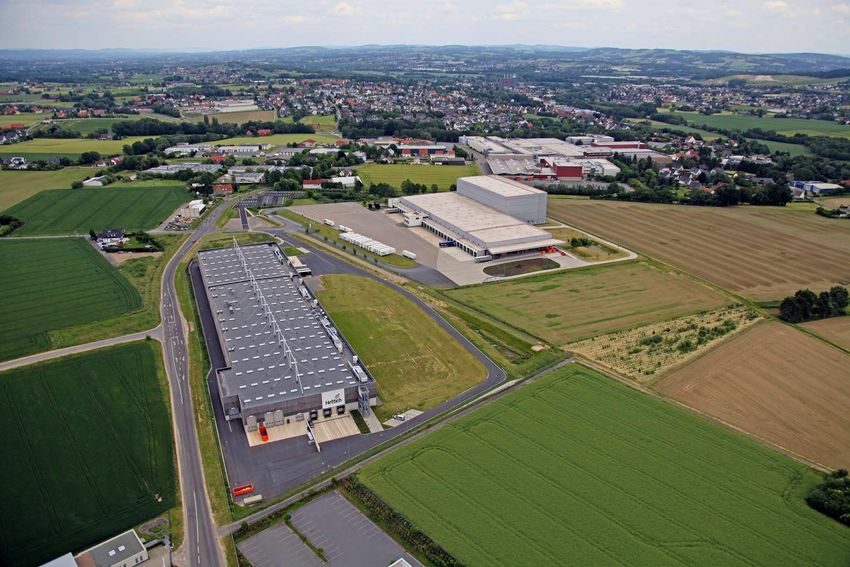
Table of Contents

       1     The Company                                                        6
       2     Environmental Management                                           8
       2.1   Environmental principles                                           8
       2.2   Description of the environmental management system                 9
       2.3   Eco-Audits                                                        11
       3     Environmental Apects of our Activity                              12
       3.1   Environmental relevance of the companies                          12
       3.2   Determination and monitoring of important environmental aspects   15
       3.3   Environmental goals and programme                                 17
       4     Presentation of Operative Environmental Performance               23
       4.1   Raw commodities and operating materials                           23
       4.2   Waste                                                             25
             Total amount of waste                                             25
             Specific amount of waste                                          26
             Waste amount wood panels                                          26
       4.3   Water and sewage                                                  27
             Water consumption                                                 27
             Waste water                                                       28
       4.4   Energy                                                            30
             Climate protection company                                        30
             Energy savings with new buildings                                 30
                  Hettich Forum B1                                             31
                  Production hall C2                                           32
                  Production hall B7                                           33
             Energy generation                                                 34
             Energy consumption                                                35
                  Proportion of renewable energies in energy consumption       35
                 Gas consumption                                               36
                  Power consumption                                            37
                  Heat consumption                                             38
       4.5   Exhaust and noise                                                 38
             Exhaust emissions                                                 38
             Direct emissions                                                  40
                  E-mobility test                                              41
             Indirect emissions                                                42
             Noise emissions                                                   42
       4.6   Soil and ground water                                             43
       5     Other Factors of the Environmental Performance                    43
             Approvals                                                         43
             Legal norms cadastre                                              43
             Environmental accidents                                           43
       6     Company Contact Person                                            44
       7     Name of the Authorized Environmental Advisor                      45
       8     Validity of the Environmental Impact Statement                    46

                                                      4
List of Drawings
Fig. 1: Organigram EHS officers Kirchlengern/Bünde                  10
Fig. 2: Comparison figures – Specific amount of waste               26
Fig. 3: Comparison figures – Rejection quota wood panels            26
Fig. 4: Comparison figures – Specific water consumption             27
Fig. 5: Comparison figures – Specific process gas consumption       36
Fig. 6: Comparison figures – Specific power consumption             37
Fig. 7: Comparison figures – Specific heat consumption              38
Fig. 8: Comparison figures – Specific CO2 emissions                 40
List of Tables
Table 1: Products HPH – Drawer runners and drawers                  12
Table 2: Products HMT – Working hours                               13
Table 3: Products HLS – Packages                                    14
Table 4: Important environmental aspects Kirchlengern/Bünde         16
Table 5: Completed activities up to April 2018                      19
Table 6: Environmental goals                                        21
Table 7: Raw commodities and operating materials used - 2017        23
Table 8: Essential types of waste - 2017                            25
Table 9: Water consumption - 2017                                   27
Table 10: Waste water - 2017                                        28
Table 11: Waste water load of the sewage treatment plants - 2017    29
Table 12: Own energy generation - 2017                              34
Table 13: Energy consumption – Comparison 2017 and previous years   35
Table 14: Specific CO2 emissions through energy consumption         39
Table 15: Air emissions of BImSchG plant (CHP) A5 in 2017           39
Table 16: Direct CO2 emissions due to gas consumption on site       40
Table 17: Vehicle fleet 2017 incl. mileage / consumption            40
Table 18: Average consumption vehicle fleet 2017                    40
Table 19: Business trips railway 2017                               40
Table 20: Surface areas 2016 [m2]                                   43

                                            5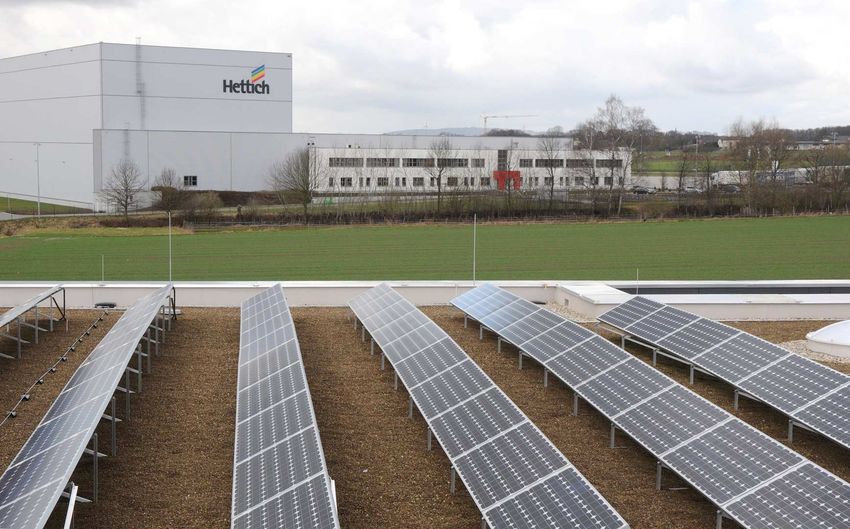
1 The Company

 Hettich - Technik für Möbel is recognized all over the              Hettich Holding GmbH & Co. oHG (HHO) controls the
 world. Our concept is based on four main pillars: quality,          company development within the Hettich Group,
 innovation, closeness to customers and reliability. This is         determines the comprehensive environmental principles
 what Hettich stands for; this is what we stand for! These           of the group, and authorizes budgets and large individual
 pillars are all of equal importance, ensuring our                   projects. The Environmental Department is a part of the
 consistency.                                                        HHO and reports directly to the Holding Management.

 As one of the largest manufacturers of furniture fittings           The largest company in Kirchlengern is Paul Hettich
 and partner to the furniture industry around the world,             GmbH & Co. (HPH), which develops and produces drawer
 Hettich with its kitchen, bathroom, office, living and              runners and complete drawer systems in metal for the
 bedroom furniture fittings sets standards in function,              national and international furniture industry, craft sector
 quality and comfort. An internationally active group of             and do-it-yourself market.
 companies with over 6,600 employees has evolved under
 the Hettich trademark. Customers are the furniture                  Hettich Management Service GmbH (HMS) provides
 industry, specialist dealers with the craft sector and Do-It-       internal services to all companies within the group.
 Yourself (DIY) branch. Hettich operates production                  These services include the preparation of prototypes,
 locations in North America, Europe and Asia, and has                customer samples, small batch production, life tests of
 subsidiaries and local offices around the world. At the             batch products and prototypes as well as other services,
 company headquarters in Kirchlengern/Bünde/                         e.g. data processing and the central purchasing activities.
 Germany, the group companies mentioned below
 employed about 2,600 employees in 2017. Many divisions              Hettich Marketing- und Vertriebs-GmbH & Co. KG
 operate three shifts.                                               (HMV) is responsible for the sales of all products of the
                                                                     group and is therefore the connecting point between
                                                                     production and customers.

                                                                 6
Platzhalter für ein Bild dieser Größe                                          Platzhalter für ein Bild dieser Größe

Hettich Maschinentechnik GmbH & Co. KG (HMT) is the                  The premises are not located in a designated nature reserve.
company responsible for the construction of special                  A stream called Markbach which empties into the river Else,
purpose machines. It develops and manufacturers assembly             flows adjacently to the premises. The flood plain of the river
machines, robot cells, welding devices and other special             Else extends to a railway embankment which borders the
purpose machines, not only for the Hettich Group but also
                                                                     company premises on the southern side. The designated
for the automotive, electrical and building hardware
                                                                     flood plain is mostly declared as nature preserve. Here the
industry.
                                                                     railway track forms the border of the nature preserve, too.
Hettich Logistik Service GmbH & Co. KG (HLS) runs the                The river Else itself as FFH area (according to the European
incoming goods departments for finished products and                 Habitats Directive) is an important ecological habitat.
commodities, their storage, picking and transportation
packaging. Goods are delivered exclusively by external               A small parcel of land between HLS and HPH is defined as a
transport agents.                                                    particular nature reserve, however it is not immediately
                                                                     adjacent to the company. Although the company is not
                                                                     located in a direct nature reserve, we do our utmost to
The property of the site Kirchlengern, Vahrenkampstraße              reduce emissions as far as possible with a complex plan of
                                                                     measures (e.g. by upstands in the delivery area of hazardous
12 bis16, is located in an industrial area. This is the postal
                                                                     substances, lockable restraining devices, mobile sewer
address, but not the whole property. The premises are
                                                                     sealing systems and emergency sets, training of employees,
bordered to the east by a public swimming pool, to the               regular inspections and audits and practical simulation of
west, south and north are residential and industrial                 trained emergency procedures). Hereby we could always
facilities. Immediately adjacent to the premises in                  safely prevent emissions of hazardous substances into the
Kirchlengern is the new HLS logistics centre (In der Lohge           soil, the ground water, gullies or even into one of the above-
50, Bünde) which was built in 2005. This centre is                   mentioned nature reserves.
integrated into the overall processes in Kirchlengern. In
addition, it also carries out logistics functions for the            The validation and this updated environmental statement
entire Hettich Group. North of HLS, the production hall C2           refer to the six Hettich Group companies mentioned above
was built by HPH.                                                    which are located in Kirchlengern / Bünde.

                                                                 7
2 Environmental Management

  2.1 Sustainability guidelines

  The Hettich Group of Companies accepts its responsibility for the conservation of natural resources and for health
  and safety at work for all employees. This is particularly reflected in the following aspects:

     We include environmental protection and occupational heath and safety in the company mission statement.

     We develop furniture fittings that meet the highest standards of quality, safety, environmental sustainability
     and energy efficiency. These characteristics are also included in the designing of the production processes and
     procurement of production facilities.

     We understand energy efficiency in all our activities as an integral part of environmental protection.

     We regard environmental protection and occupational health and safety aspects as separate criteria in all
     relevant processes, preferably in quantifiable form.

     We provide an effective environmental protection and occupational health and safety organisation and
     necessary information, human resources and budgets.

     We ensure the implementation of necessary measures through environmental and occupational health and
     safety committees.

     We review hazardous situations and the company’s emergency response plans at regular intervals and update
     them where necessary.

     We commit ourselves to annually defined environmental and occupational health and safety targets and
     review the performance within the framework of a management review.

     We regard legal requirements, relevant standards, further obligations and the state of the art as minimum
     requirements.

     We see continuous improvements in the sustainable reduction of energy consumption, avoiding environmental
     pollution, health risks and hazards in workplace as a compulsory part of the corporate culture.

     A successful environmental and occupational health and safety management requires responsible employees
     at all levels. We support the active participation with appropriate initial and further training.

     We involve suppliers, service providers and customers in our endeavours regarding environment and
     occupational health and safety.

     We maintain, through information and cooperation, a relationship with the general public and local and
     national authorities that is characterized by frankness and trust.

                                                              8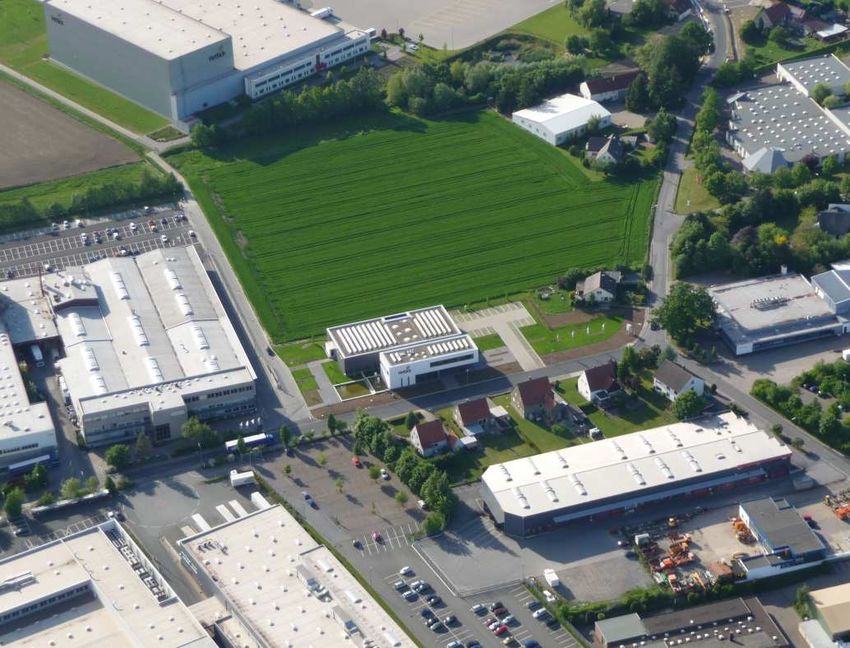
2.2 Description of the environmental management system

The environmental management system applies and                   Employees are designated within the environmental
implements the environmental principles and goals                 management system, who are responsible for monitoring
defined by the Board of Directors. This guarantees that           the environment-related areas assigned to them. Their area
the goals defined in the EMAS III are maintained, the             of responsibility covers the entire location. They report
operating licence is received and official requirements are       directly to the Managing Directors. The organizational
fulfilled when operating the production facilities. The           integration of all functions that are concerned with
application of the environmental management system                environmental protection (environmental management
also guarantees that negative impact on the environment           representative, environmental co-ordinator, water
is prevented, or at least reduced, in the best possible way       protection officers, etc.) is shown in the following
for all activities.                                               organizational chart (figure 1).

All management systems were combined into Hettich`s               Interested Parties
integrated management system (MSH) including the                  An evaluation has shown that the following interest
environmental management, occupational safety                     groups are involved in shaping relevant requirements for
                                                                  the MSH:
management, quality management etc. In so doing,
consistent higher-level processes are applied all over
                                                                  -   external customer B2C
Hettich Group.                                                    -   external customer B2B
                                                                  -   internal customer (marketing company)
All employees, particularly management personnel, are             -   internal customer (manufacturing facility)
responsible for the implementation of the management              -   company management
system.                                                           -   legislators and authorities
                                                                  -   normative institutions
Legal compliance, e.g. with respect to their significant          -   employees
environmental impact, is ensured through internal                 -   external suppliers
                                                                  -   external provider
regulations. All occupational health and safety and
                                                                  -   internal supplier/service provider
environment-related changes are checked continually by
external service providers and provided to us with                The individual requirements and their operational
comments.                                                         implementation by the MSH can be viewed in our
                                                                  Management System Manual.
The employees in Kirchlengern / Bünde are integrated in
several different ways into the environmental
management system. This is done via the continual
improvement processes, the corporate suggestion for
improvement system, the “environmental blackboards”,
the environmental committee, target agreements, the
environmental programme and a data file containing
environmental documentation, which can be accessed by
all employees having PC work stations.

                                                              9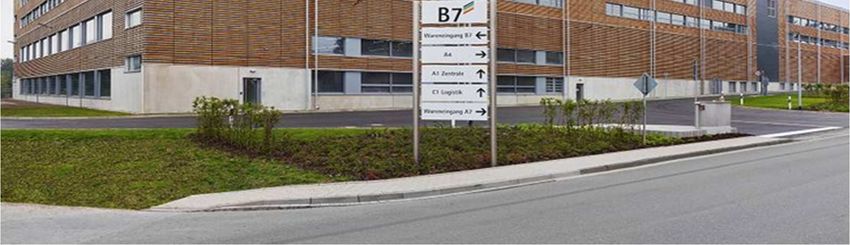
2 Environmental Management

 Fig. 1: Organigram EHS officers Kirchlengern / Bünde

                                MD HHO                    MD HPH                      MD HMS                        MD HMV                      MD HMT                       MD HLS

                                                                                                               Head of EHS
                                                                                                               Department
                                                                                                               Martin Palmer

    Electro Technican in                                                                                                                            Occupational Health and
           Charge                        Environmental                                                                   Waste Management             Safety Practitioner             Company Doctor
                                                                    Environmental
                                          Management                                                                           Officer                                                Werksarztzentrum
                                                                     Coordinator                                                                            Erhan Deli*
      Andreas König*                     Representative                                                                                                                                   Herford
                                                                                                                             Steffen Hädicke*            Steffen Hädicke*
       Harald Steffen*                                                 Uwe Kott
                                         Sven Patzwald                                                                           Uwe Kott                    Uwe Kott*                Fr. Dr. Kossmann*
      Timo Kammann*                                                                                                                                      Detlef Thorausch*

   Laser Protection Officer
                                                                                                                                                       Sewage Water
            Ralf Diedrich*                                                                     Fire and Explosion                                                                 Radiological Safety
                                                                  Dangerous Goods                                        Energy Management           Management Officer
            Tim Friedrich*
                                    Water Protection Officer*                                  Prevention Officer                                                                       Officer
           Waldemar März*
            Oliver Schnier*
                                                                 Management Officer                                            Officer
           Alexander Obst*                 Uwe Kott                                            Dirk Erdbrügger*                                                                        Lars Holzinger*
           Ralf Heermeier*                                      Thilo Richter* (external)                                     Harald Steffen         Klaus-Peter Birkmann
         Karsten Finkmann*                                                                      Uwe Ortmann*                                                                          Sven Jütersonke*
       Christoph Schwettmann*                                                                                                                          Ronny Ridzewski
           Marc Lehmann*

          TheBeauftragung
     * = Die  appointment ist is legallyerforderlich
                              rechtlich  required

                                                                                                     10
2.3 Eco-Audits
Eco-Audits or inspections are carried out regularly in order
to evaluate the environmental efficiency of our company
and to continually improve the environmental protection
programme. We check whether environmental management
activities are in accordance with the environmental
programme, that operational procedures correspond to the
environmental management system, and that the
environmental management system is suitable enough for
effective implementation of the environmental principles in
the company.
In addition to evaluating the environmental management
system, the Eco-Audit or inspection checks whether the
environment-related activities conform to the existing
environmental legislation and the EC Eco-Audit directive
(EMAS III) and ISO 14001:2015.
An environmental audit is carried out once every three years
for the entire site at Kirchlengern / Bünde. An interim audit
is also carried out every year in order to check and
determine the effectiveness and functional integrity of the
environmental management system. The Environmental
Management Representative, site Kirchlengern / Bünde, is
responsible for performing and co-ordinating the Eco-Audit
and the interim audit. He is supported by the site
Environmental Co-ordinator and the Hettich Group
Environmental Management Representative.
The eco audits or inspections are carried out by means of an
audit plan and comprise interviews, documentation checks
and inspections. Checks are carried out using function-
specific protocol checklists in which findings, measures and
implementation deadlines are documented.
113 Environmental Aspects of our Activity
3.1 Environmental relevance of the companies
Paul Hettich (HPH)
The production techniques used in Kirchlengern / Bünde Drawer production
require the use of cooling and lubricating fluids, oils, After being pre-manufactured on pressing/bending/welding
chemicals and other operating materials. These materials systems, they are first cleaned and pre-treated for powder
are defined as water-endangering and hazardous coating. This is done by means of acid degreasing, followed
materials and appropriate safety precautions are required. by cascade washing.
These materials are potentially hazardous to the
environment and are stored and used in specially After the drying process, the cleaned drawers are sent to
equipped storage areas and production plants in the low waste and low emission powder coating. A drawer
accordance with the statutory requirements. model is produced from precoated strip material. In this
case, degreasing and powder coating is not done in-house
Raw commodities and material-related aspects are linked The components are then fitted together, partly by robot,
directly to environmental protection through the into pre-finished complete drawers.
production processes and plant-related aspects. A
reduction in the environmental pollution can only be Drawer profile production
achieved if serious consideration is given to all aspects These are produced using profiling and pressing as well as
during the development phase for products and plants. assembly systems with high-strength and energy-saving
Due to the product characteristics a very good TOX insertion techniques. The powder coating is done in
recyclability is given (indirect environmental aspect). the same way as described for the drawers.
The resulting cleaning and rinsing water used in the pre-
Different production processes are applied in the treatment is treated in the company’s own sewage
Kirchlengern site in the production of drawer runners and treatment plant.
drawer systems at HPH.
. Table 1 shows the annual amount of products, which
increased by approximately 12 percent compared to 2016.
Drawer runner production
The strip steel used as raw material for the production of
the drawer runners is processed using presses and
profiling and punching systems. This equipment has
particular environmental relevance as hydraulic oil as
well as cooling and lubricating fluids are used.
The pre-manufactured basic components are partly joined Table 1: Products HPH – Drawer runners and drawers
together by welding machines or laser welding systems.
The components are then joined to the drawer runners in Products [t]
automatic assembly machines and by robots.
Period 2017
Drawer runners and
drawers 95,454
HPH
12Hettich Maschinentechnik (HMT)
HMT develops and produces custom-built special purpose In 2017 the working hours remained the same as in 2016.
machines for internal and external customers. The use of
classic metalworking applications is comparatively low.
Furthermore assembly operations of special machine
constructions dominate.
Table 2: Products HMT – Working Hours
Working hours
Period 2017
Industrial
HMT 75,344
133 Environmental Aspects of our Activity
Hettich Logistik Service (HLS)
At HLS logistics processes are developed in carefully
coordinated time windows with the help of modern
technology and software systems. In addition to the
processing of incoming goods and warehousing of
products, a focal point is dispatch of goods to customers
and subsidiaries with formation of packages (see Table 3).
The significant environmental relevance of HLS lies in the
use of transport packaging. With regard to the indirect
environmental impact, the special importance lies in the
selection of the transport routes and the logistics service
provider.
Due to the production increase, the amount of packagaes
at HLS increased by approximately 4 percent.
Table 3: Products HLS - Packages
Hettich Marketing und Vertrieb (HMV)
Packages
2017 HMV is a sales company. The main environmental
Period
pollution here comes from the sales representatives who
Packages cover long distances each year using company cars.
HLS 710,078
(siehe Table 15).
Hettich Holding (HHO)
Hettich Management Service (HMS)
HHO carries out purely administrative tasks. No activities
In prototype and small batch series, HMS uses lathes and are carried out that are of particular environmental
milling machines as well as plastic injection mounting relevance. The main focus of HHO is on intergroup tasks.
plants to process metal, wood and plastic. Furthermore, In this connection, the principles for the company group
presses and other machines are also used for sheet are developed.
metalworking. The Department Corporate IT (computer .
systems, cooling systems, emergency district heating
power station A8) is also located at HMS.
143.2 Determination and monitoring of important
environmental aspects
All environmental effects of our company are gathered Controllability – normal operation
according to the requirements of EMAS III and evaluated How good are the changes recognisable at normal
regularly concerning possible measures. From this, targets operation? Normal operation condition: Plant works
are derived (see table 5 and 6). without fault, all security and control systems are fully
functional.
The following table shows a summary of the results. These Controllability – Special situations
results depend on the assessment of importance with the
How good are the changes recognisable in special
levels “high”, “average”, “low”. Only those
situations (in the event of fault, system failure, fire,
environmental aspects, which are considered as being
catastrophes)?
important with at least average effects, are shown here.
The assessment is carried out by an expert determination Control potential
on the basis of the following aspects: How is the scope of influence for the improvement of
environmental impacts assessed?
Frequency of appearance
How often is the input material used or the output Compliance with legal requirements
material emitted? How intensive are legal requirements adhered to (e.g. from
legal requirements, requirements of regulatory approvals
Consumption rate / Output rate and other obligations)?
How high is the consumption rate / output rate?
We consider the life cycle in the assessment of
Environmental damage potential environmental aspects (see table below). Environmental
Which impacts on the environment can be expected? At aspects are already taken into account in the development
this, direct as well as indirect impacts are considered (e.g. of new products. Environmental aspects are also identified
emission for the power generation). in subsequent processes such as purchasing, production,
use and disposal. The resulting environmental impacts are
controlled via management processes and environmental
programme points.
153 Environmental Aspects of our Activity
Table 4: Important environmental aspects Kirchlengern/Bünde
Enviromental Influence
aspect expected? Result of the Result of the
Activity/ product Frequency Quantity Controllability Explanation
d: direct, type [y/n] calculation evaluation
i: indirect, type
Steel high Essential basic material, energy-intensive extraction
Raw material
Powder low Mass comparison to steel
production
Plastic From granulate to product (purchased part). Low
components Blackbox low
share of the end product
Auxiliary and
operating low Low throughput based on product mass
materials
Profiling
Disposal of
d: waste disposal j 5 2 1 10 low Frequent use, but good contollability
cooling
lubricants
Profiling
d: resource High consumption and high indirect environmental
Steel j 5 5 3 75 high
consumption impacts
consumption
d: energy
Profiling
consumption High consumption and high indirect environmental
j 5 5 2 50 high
Power i: resource impacts
consumption consumption
d: energy
Assembly
consumption High consumption and high indirect environmental
j 5 3 2 30 medium
Power i: resource impacts
consumption consumption
Product manufacturing
Drawer d: energy
production consumption Good contol potential and average consumption;
j 3 2 2 12 low
i: Ressourcen- quantity valuation based on primary energy
Gas consumption
verbrauch
d: resource
Transport
consumption
Fuel i: resource Indirctly, since transport via forwarding agents;
j 5 2 3 30 medium
consumption consumption average consumption and good controllability
i: traffic
emissions
Transport
accident at
d: water/soil
delivery of j 1 3 1 3 low
contamination
hazardous
material
Premises and d: energy
buildings consumption Low consumption for basic building functions and
j 5 2 1 10 low
Power i: resource good control potential
consumption consumption
Premises and d: energy
buildings consumption Only seasonal consumption, which is insignificant
j 2 2 2 8 low
Heat i: resource due to good building structures
consumption consumption
Mechanical No energy, area or material consumption; no
Utilisation
none -- -- -- -- -- --
phase
products emission
Electrical d: energy Only a small proportion of electrified fittings;
j 2 1 1 2 low
products consumption low power consumption per unit
Very durable and long-used consumer goods.
d: recycling All products are put into the disposal process.
Disposal
Products i: resource j 1 5 1 5 low The good controllability results from the choice of
consumption the product material (steel/plastic for drawers).
Steel can be recycled >95% without loss of value.
Evaluation system:
Frequency (=1-5) Evaluation of environmental aspects Low level 1 - 24 points
only comparative for the site Medium level 25 - 49 points
Quantity (=1-5) High level 50 - 75 points
Controllability (=1-3) e.g. low controllability means a The evaluation of chances and risks results, among other
high enviromental relevance and thus "3“ things, in the result of the assessment of environmental
Result = frequency x quantitiy x controllability aspects.
163.3 Environmental goals and programme
We have drawn up an environmental programme in order We have transferred the pending points of the former
to implement our environmental principles and achieve programme to our new environmental programme
our future environmental goals. The concrete measures (2018– 2020) and added further points. At the time of the
are defined and project officers are assigned to ensure revalidation in April 2018, 54 new points have been added.
implementation. The achievement of the environmental 64 percent of the current (up to 2020) dynamic
goals will be guaranteed through the timely environmental programme have been completed. 85
implementation of the individual points of the percent of the measures completed by April 2018 have
environmental programme. actually contributed to environmental relief. That is why
we can talk of a reasonable degree of implementation in
The programme points agreed by the management will be the dynamic environmental programme.
entered in a three-year list (EMAS audit cycle) and their
status will be updated. The new environmental An energy efficiency team of qualified employees from
programme points suggested by the environmental different specialist departments has been put together to
committee or in the monthly “Jour Fixe Umwelt und analyse all areas and work out possible areas of
Sicherheit” (environment and safety) will be agreed by improvement. Furthermore supplementary energy
the management and will be checked at the next efficiency audits have been introduced within the scope of
appointment with the environmental advisor. The a proven production management method (TPM). As a
environmental points that have not been completed at result of these audits, we could achieve energy savings of
the end of the three-year period will be carried forward more than 8,600 kWh p.a. in 2017.
into the next environmental programme. Previous We continue to analyse potential (see environmental
experience has shown that, through this procedure, there programme) and in so doing we expect a considerable
is a significantly higher implementation rate in the reduction, especially in the amount of power consumed.
environmental programme. This is also reflected in the environmental targets achieved
last year and the current year for this area alone.
The environmental goals and measures will be checked
and updated in the interim audit and in the
environmental audit. Furthermore the Management
Representative, the Environmental Coordinator and the
other officers, ensure that the environmental goals are
planned, implemented and monitored by the
environmental committee as well as the “Jour Fixe”. The
Management Representative and the Environmental
Coordinator are responsible for monitoring and ensuring
that measures are carried out on schedule. They report to
the Managing Director and the environmental committee.
173 Environmental Aspects of our Activity
Perpetuum 2016 Energy Efficiency Prize
On 24 February 2016, the Hettich trainees Marcel Pavel
and Henrik Klußmann (Paul Hettich GmbH & Co. KG)
received the junior staff PERPETUUM 2016 Energy
Efficiency Prize for optimizing a powder coating machine.
The trainees, both in their third year of apprenticeship,
independently developed a demand-oriented control
system for a powder coating plant. As a result, the annual
savings amount to 192,000 kWh of electric power and thus
to almost 50,000 euros per year. This measurement
already pays off after one month and is also suitable for
other locations of the company.
Sustainability Award 2016 of the Environmental
Foundation of the East Westphalian economy
As early as 1999, the Hettich group of companies has
cooperated with a comprehensive school in Löhne, the
„Bertolt-Brecht-Gesamtschule“. In the course of this we
developed a concept of a „globalization workshop
sustainability“ for the grade12 advanced course for social
studies. The previous development of the sustainability
issues of globalization at school is the basis for the
workshops. Building on this, the globalization workshops
take place at Hettich for practical absorbtion. On this
occasion the students have the opportunity to match their
theoretical knowledge with the experiences of an
internationally operating company. The students are given
the possibility to gain deep and genuine insight into the
sustainability aspects of globalization, particularly
regarding the focal points India and China, as well as into
different national environmental standards and their
implementation.
For this longtime cooperation „ globalization workshop
sustainability“ Hettich was awarded - in equal shares with
another company - the 10,000 euro Sustainability Prize
2016 of the Envrironmental Foundation of the East
Westphalian economy.
18Table 5: Completed activities up to April 2018
Environmental Environmental target / measure Reference Responsible Date Status
aspect year (company)
Energy
consumption Done.
The aim is to optimise the heating system in Facility
Hall C2 by adapting the control system 2016 Management 08/2016 The use of plant waste heat has reduced
between the CHP unit and the boiler. (HMS) boiler demand by 80 percent compared with
the previous year.
Done.
In the new Hall B7, the heating energy Facility
requirement is to be approximately 48 percent 2016 Management 06/2016 B7 was put into operation. The saving
below the latest Energy Saving Ordinance. (HMS) amounts to approx. 336,000 kg/a CO2 after
implementation.
Done.
The photovoltaic system on the roof of hall
Facility
B7 took over its collector task at the
Own power generation through photovoltaics 2017 Management 02/2018
beginning of February 2018 and was able to
(HMS)
generate 5,200 kWh in the same month.
Expectations for 2018 are 240 MWh.
In the new hall B7, only 30 percent of the Done.
conveyor technology is heated compared to Engineering Production will proceed as planned. The
2017 06/2017
C2. This corresponds to savings of 844 MWh (HPH) consequent savings of 30 percent are
per year. achieved.
By optimising the Q3 oven drawers, materials Production Done.
are used that consume less energy during 2016 Manager 12/2016 End-consumers save a total of 74,000 kWh
heating processes. (HPH) per year.
Installation is complete. The saving amounts
Installation of a chiller which is switched off Facility
to 1,221 kWh/weekend, corresponding to
voer the weekend. Savings of 60,000 kWh/a 2018 Management 12/2018
63,492 kWh/a. Aditional savings result from
expected. (HMS)
shutdowns on public holidays.
Consumption of
resources Production Done.
Optimised material utilisation in Manager
prefabrication relieves the environment by 2018 12/2016 The necessary measures were implemented in
(HPH) the last area in November 2017. Savings of
approx. 100 tons of steel per year.
140 tons were achieved.
Done.
Euro pallets are to be loaded more effectively Hall Management At 8.6 percent, the growth of loaded packages
2017 yearly
through packaging measures. (HLS) per pallets is a good four times higher than
the 2 percent increase in purchased pallets.
Reduction of material consumption at the Production
assembly lines. Reduction of waste through Manager Done.
camera systems and tchnical measures to less 2015 12/2017 The measure was successfully implemented,
than 1 percent. (HPH)
the savings achieved can be put at 10 t/a.
193 Environmental Aspects of our Activity
Table 5: Completed activities up to April 2018 (continuation)
Environmental Environmental target / measure Reference Responsible Date Status
aspect year (company)
Consumption of Done.
resources Production
Optimized material utilisation in An enviromental relief of 18 tons of steel per
2017 Manager 06/2017 year was achieved. Savings will also increase
prefabrication.
(HPH) in the coming years as production volumes
increase.
Done.
Use of new process technology compared to Planning has been completed and the plant is
Engineering currently under constuction. Hazardous
chemical treatment saves 89,000 litres of 2017 07/2017
(HPH) substance substitution is 100 percent
hazardous material per year.
achieved, as no hazardous substances are
required by the new process
Traffic emissions
Done.
Engineering The first 3D printer went into operation in
Use of own 3D printer saves the delivery of (HPH) July 2016. Along with the expected benefit of
2016 07/2016
components by the service provider. the technology the savings increase as well.
Current savings of 50 t Co2 per year have
been achieved.
20The following table summarises the essential pending and the new environmental goals.
Table 6: Environmental goals
Environmental Environmental target / measure Referen Responsible Date Status
aspect ce year (company)
Consumption of
Optimised heating control of the paint
resources Tests are carried out at different
removal systems during production pauses. Competence
temperatures. At the determind
Annual savings of about 15,000 litres of 2018 centre surface 12/2018
temperature, a heating saving can then also
hazardous materials and heating energy (HPH)
be quantified.
expected.
Production
By redesining the packaging, 2,000 m2 of manager Initial tests on packaging have been carried
2018 07/2018
cardboard can be saved annually. (HPH) out. An evaluation is still pending.
Expected extension of the durability of
storage batteries by 100 percent and relief
2018 Hall management 12/2019 In planning.
of the environment through no longer
(HPH)
necessary replenishment of battery water.
Energy An intelligent welding fume extraction
consumption system regulates the output according to the Engineering
2018 07/2018 The conversion is planned for mid-2018.
quantity of running systems. Annual savings (HPH)
of 12,000 kWh expected.
The conversion has been carried out and an
An intelligent light circuit reduces energy
Control service enviromental relief has been achieved. The
consumption by around 60 percent. Savings 2018 12/2018
(HPH) actual savings can be determined after one
of about 12,000 kWh expected.
year.
The installation of an intelligent heating
control system in injection moulding Facility
machines relieves the environment when the 2018 Management 12/2018 The measures are being examined.
system is at a standstill. Savings of 1,500 (HMS)
kWh/a per machine expected.
Facility
Conversion of lighting in hall A3 to LED. Management 12/2018
2018 Approval is pending.
Expected savings of 53,000 kWh/a. (HMS)
Production
Avoidance of energy consumption on Already implemented at 2 of 3 plants.
manager
weekends at the punches in building C2. 2016 12/2017 Calculation will be done after conversion
(HPH)
Expected savings of 35 MWh/a. of all systems.
Facility
Replacement of the conventional light
Management 12/2018 The lighting in C2 is to be completely
sources in building C2 by LEDs. Calculated 2016
(HMS) replaced by LEDs.
savings of 166 MWh.
Traffic emissions
The vehicle were procured and will be used
Reduction of fleet consumption of company
accordingly. An evaluation will take place
vehicles. Savings of 30 percent per vehicle
Fleet 12/2014 at the end of the test, at the end of 2018.
thanks to e-hybrid cars. A BMW i3 vehicle
2011 management extendet to: Update: A final evaluation is still pending,
with range extender as pool vehicle and a
(HMS) 12/2018 but the first test result are so good that
VW Golf plug-in hybrid are to be used to
another vehicle with range extender was
gather user experience.
purchased in 2017 and one in 2018.
214 Presentation of Operative Environmental Performance
The development of the operational environmental Problems with the significance of environmental indicators
protection over the last years is described below and can occur as a result of delayed production activities. It
illustrates the environmental performance of our must also be noted that material thicknesses have been
company site. In order to be able to illustrate the reduced (specific product weight) over the last years. This
changes effectively when compared to the previous years, can have an adverse affect on the environmental
we have introduced relative environmental performance performance values, as more product items are produced
values. The raw materials used (strip steel, powder paint from the raw materials. Also because of production-related
and wood panels) have been taken as reference sizes changes on the site in the last years (e.g. energy-intensive
when determining these values. On the one hand, the laser welding plants, increased use of transfer lines or
environmental performance values allow the sharply increased, energy-intensive use of robots, increased
effectiveness of environmental relief measures to be office technology, increased single layer powder-
illustrated without being influenced by production coating,…), the performance values are in some cases
variations. On the other hand, meaningful environmental pushed to the limits.
performance values assume at least a constant product
and process spectrum on the site. With the adjustment of the management system to
EMAS III, a few core indicators (CO2 emissions, energy
The table below summarizes the development of index consumption, waste generation) have also been adjusted.
values compared to the previous year: Many of the newly required indicators have been a fixed
part of the management review of Hettich for many years.
1. Specific amount of waste - 8.6 % From the measurement of greenhouse gases and the other
emissions into the air, it is clear to us that only the CO2
2. Rejection quota wood panels - 62.4 %*
emissions which have also been taken into consideration in
3. Specific process water consumption - 8.8 %
the last few years have a corresponding relevance.
4. Specific power consumption - 3.1 %
5. Specific process gas consumption - 0.7 %
6. Specific heat consumption + 18.1 %
7. Specific CO2 emission - 3.6 %
* The high number results from the closure of a
production unit with subsequent clearance of the
inventory in the previous year. These shares again were
recycled.
Platzhalter für ein Bild dieser Größe
224.1 Raw commodities and operating materials
Various raw commodities and operating materials are required either directly or indirectly in the production of our
products, the operation of production systems, for packaging the products, etc. The purchasing of the raw commodity
amount and the operating material amount is in line with the increase in production in 2017. Only the amount of the
used wood panels increased by appoximately 429 percent, since a new drawer has been produced since 2017 after the
end of the preliminary product in 2016.
Table 7: Raw commodities and operating materials - 2017
Raw commodities and operating materials [t]
Period 2017
Strip steel / sheet metal 104,169
Wood panels 4,099
Powder paint 1,003
Cardboard packaging 5,036
Oils and grease 149
Cooling lubricants 6
Chemicals for paint removal 141
Chemicals for the pre-treatment
128
and cleaning of sewage
Total raw and operating materials 114,731
234 Presentation of Operative Environmental Performance
The new European regulation on chemicals “REACH“ All necessary checks and measures have been carried out
(Registration, Evaluation and Authorisation of Chemicals) or introduced in our companies in Kirchlengern/Bünde, in
came into force on 1 June 2007. This has meant a order to fulfil the REACH requirements, also in relation to
comprehensive revision of the applicable chemical suppliers and customers.
regulation. It is not only the chemical industry that is We are also prepared conceptually for the conversion to
affected but also the so-called “downstream users”, to the Globally Harmonized System of Classification and
which the Hettich companies in Kirchlengern / Bünde Labelling of Chemicals (GHS). Transitional requirements
belong. They are obliged to use the chemicals and exist for the introduction and implementation of the
preparations only as indicated by the manufacturer. If changed circumstances. The uniform system, established
different uses are required, the manufacturer must be
globally by the United Nations, for the classification of
requested to apply for this or the user himself must
register such uses with the authorities. Furthermore bans chemicals and their labelling on packages and in safety
on substances are controlled through REACH. data sheets was progressively implemented for pure
substances (by 12/2010) and was introduced for mixtures
by12/2015 . Updates are made regulary.
Platzhalter für ein Bild dieser Größe
244.2 Waste
Total amount of waste
A waste sorting system has been put into practice in Within the scope of waste disposal, we keep on working
Kirchlengern / Bünde covering at present 41 types of exclusively together with certified specialised waste
waste. The annual amounts are registered and management companies.
documented both in a waste balance sheet and in the A large portion of the waste produced by us can be
annual report from the officer waste disposal. The recycled and brought back into the economic cycle. The
different types of waste are separated by type and recycling rate is 98 percent.
collected for disposal in suitable containers located on In 2017 the waste amount increased by approx. 11
the company premises. In the beginning of the year percent, in line with the increase in production.
2013, the waste disposal on site has been assigned to two Table 8 shows the annual amount of waste for 2017.
new waste disposal companies. They were included in our
environmental policy right from the beginning. Prior to
placement of the order, the strict environmental
requirements demanded in the tender were confirmed by
on-site audits at the disposers.
Table 8: Essential types of waste - 2017
Waste [t]
Period 2017
Powder paint 35
Mixed scrap 11,025
Cardboard packaging 653
Waste wood 354
Plastic 60
Other waste 293
Total amount of “non-hazardous waste” 12,420
Paint sludge 218
Phosphate water 64
Emulsion 68
Waste oils 11
Operating materials containing oil 16
Total amount of “hazardous waste” 377
254 Presentation of Operative Environmental Performance
Fig. 2: Comparison figures– Specific amount of waste Specific amount of waste
[kg/t] The presentation of the specific waste (fig. 2)
Specific amount of waste
[kg refuse (excluding scrap, building has been adjusted by the disproportionately
rubble, green waste,bulky removal represented scrap. The specific amount of
waste)/
waste was almost 13.0 kg/t product since 2009
t product (total)]
could be reduced below the long-term average
with 11.7 kg/t in 2014. Since 2015
the specific amount of
waste increased again.
Compared to the
previous year, there
was an improvement of
8.6 percent.
[Year]
Please note: The presentation of the specific amount of waste has
slightly been changed in 2013 by excluding the asbestos waste which The product content is made up of three main groups:
accumulates at restoration works, because this kind of waste is not steel, powder coating and wood panels.
influenced by production.
Fig. 3: Comparison figures – Rejection quota wood panels Waste amount wood panels
[%] The rejection quota of wood panels was
Rejection quota wood panels
[waste wood panels/ reduced considerably in 2006 by changing
Raw material wood panels] supplier. Further adjustments were made in
2007. A further significant reduction was also
achieved in 2008 by optimising processes and
systems and since then remains at a low level.
In 2016 the product phased out, so that no
further waste was generated. As a result of
the subsequent adjustment of inventories, the
key figure increased sharply in 2016. With the
new product start-up in 2017, the key figure
is slightly above the average of previous years.
[Year]
264.3 Water and sewage
Process water is used mainly for cleaning and degreasing in the drawer production (halls A8/B4/B5/C2) in
Kirchlengern/Bünde. Furthermore smaller amounts are used for the cooling lubricant supply for the profiling systems.
In 2015, evaporative cooling plants were put into operation for cooling in C2. As a result the water consumption
increased during summer months.
Water consumption
Table 9: Water consumption– 2017
Water consumption [m3]
Period 2017
Sanitary water 13,980
Process water
11,454
(A8/B4/B5/C2)
Total
25,670
consumption
In all areas, water consumption did not increase more than the increase in production compared to the previous year.
The specific process water consumption (see figure 4, in m3 process water/t product) decreased by 8.8 percent
compared with the previous year. The key figure has improved slightly as a result of regular jour fixes, in whitch
consumption is analysed and measures are derived.
Fig. 4: Comparison figures – Specific process water consumption
m3/t
Specific process water consumption
[m³ process water / t product]
[Year]
274 Presentation of Operative Environmental Performance
Waste water
Waste water accumulates in the form of production, The surface water of the paved yard areas and the picking
sanitary and precipitation rainwater sewage. The hall collect in a surface seminatural retention reservoir
production and sanitary sewage is discharged into the with primary clarifier and 1,400 m³ impoundment volume,
sewage system that is connected to the local sewage before draining off into a receiving water course.
treatment plant in Löhne.
In Factory A, there are three large capacity underground The rainwater from factory C2 accumulates in a surface
rainwater retention systems that relieve the receiving retention reservoir (1,245 m³) before draining off into a
water in case of heavy rainfall. The twin flow channels receiving water course.
near A3, A8 have volumes of 690 m³ and 302 m³
respectively. The backwater channel at the building The waste water from the production results exclusively
extension of A5 has a volume of 28 m³. from the drawer production (HPH). The water is then
The part of the precipitation water coming from the roof treated in the company’s own waste water treatment plant
area in factory B is passed through a surface seminatural
before being routed into the public drainage system.
retention reservoir with a volume of 400 m³ and then
discharged directly into a small watercourse (receiving Samples are taken to ensure that limit values are observed
water). For the precipitation water of B7 there is an (see Table 11).
additional above-ground retention pond with a volume of
1,200 m³. The sewage treatment plants are monitored through our
The water from the roof area of the high-rack storage C1 own and official measurements, maintenance work, regular
is retained by a surface backwater reservoir with a inspections and visual checks. The limit values specified
volume of 610 m³ and a subsurface backwater channel will certainly be maintained in accordance with the
with a volume of 27 m³. external laboratory analyses.
The concentration of substances discharged from the
Table 10: Waste water – 2017 sewage treatment plants into the public sewage (direct
Waste water discharger) results in the following annual load
(calculation based on three measuring reports
Period 2017 predetermined from public authorities for each sewage
treatment plant from 2017, see Table 11) for the
Sanitary water 13,980 subsequent communal sewage treatment plant. The limit
value of the parameters subject to mandatory testing had
Waste water from treatment
at no time been exceeded.
as well as full desalination 6,843
plant
The difference between process water consumption and
waste water evaporates based on the water and component
temperature as well as the large surface of the product in
the area of the pre-treatment plant and in drying the
drawers before the powder coating.
The sewage treatment plants comprise a neutralization, a
flocculation and a filtration.
28Table 11: Waste water load of the sewage treatment plants B4 and C2 in 2017
Waste water load of the sewage treatment plants
Value determined Limit value Annual load [g/a]
Parameter Unit
ø
AOX 1) mg/l 0.03 1 141
LHKw 2) mg/l 0.01 0,1 47
Zinc mg/l 0.04 2 188
Hydrocarbons mg/l 1.03 10 8,130
1) Absorbing organically-linked halogenates
2) Low volatile halogenated hydrocarbons
Platzhalter für ein Bild dieser Größe
294 Presentation of Operative Environmental Performance
Platzhalter für ein Bild dieser Größe
4.4 Energy Energy savings with new buildings
For heating of buildings and degreasing baths, district In 2009, the Hettich Forum opened. The building is
heating is procured on site from a district heating plant outstanding due to a far-reaching consideration of energy
that generates electricity as well as heat (combined heat and ecological aspects. This includes all areas such as use of
and power). The plant came into operation in 1994 and
energy, building material and area consumption. As an
until the beginning of 2010 also supplied heat to the
neighbouring municipal swimming pool “Aqua Fun” and energy-neutral building, the Hettich Forum serves as a
an adjoining housing estate. model for a sustainable, futuristic building design. The
Today, natural gas is the most important source of energy insulation which is 40 mm thick consists to a large extent of
that is used to generate heat in the production facilities environmentally-friendly cellulose material.
(baking furnaces in the powder coating as well as heating
the paint removal baths) and for the combined heating
and power stations A5, A8 and C5 as well as for the peak
load boiler A5 und C2. The Logistics Centre which came
into operation in 2006 is also heated by natural gas. A
special feature here is the efficient gas-infrared heating
system in the picking area.
The electricity mostly is supplied from the public grid.
Since 2007, power is supplied via medium-voltage lines
between the transformer substation and the factory.
30Hettich Forum B1
The heating supply is secured through the company’s own In June 2009, the Hettich Group was awarded the Green
district heating system with its efficient heat generation Building Award for the Hettich Forum in the “New Building”
from production waste heat as well as a combined heat category.
and power system. The energy requirement of 30 kWh/m2
is 80 percent under the specific requirement per year It has been possible to achieve
specified by the energy conservation regulation. In this a good energy balance with “0
way, 226,618 kWh can be saved annually, which is equal litre house” standard for the
to the annual consumption of 21 separate houses. The Hettich Forum through drastic
lighting in the entire Hettich Forum uses energy-saving measures to reduce the energy
bulbs with dimmable, electronic ballasts. requirement including the
A light management system using LED technology in the provision for the production of
exhibition and boulevard area reduces the effective solar energy. In fact in 2009,
switch-on time and decreases the annual power the consumption in the
consumption by 25 percent. In addition to the energy- building fell short of the
saving measures, the integrated 239 m2 photovoltaic values allowed in the Energy
system produces more than 25,000 kWh of power per Conservation Regulation by 76
year. With this output, up to 1,500 energy saving bulbs of percent. This represents a real
20W can be operated at the same time.
saving equivalent to 24,000
The greater part of the heating and warm water is
litres of heating oil. The CO2
supplied by the additional 6 m2 thermal water system. On
5 March 2009, Hettich received the European emissions avoided hereby offset 450,000 car kilometres
Commission’s GreenBuilding Partner certificate in (equivalent to 11 times round the earth).
recognition of exemplary planning and furnishing of the
building as well as the implementation of the “Green .
Building” principles in accordance with the directives of
the European project for the improvement of energy
efficiency in commercial buildings.
Platzhalter für ein Bild dieser Größe
314 Presentation of Operative Environmental Performance
Production hall C2
The requirements set by the company and the experience
gained in the context of the Hettich Forum have also
been used in the 14,000 m² production hall C2 which was
completed in September 2012. The sustainability features
include a façade which is predominantly designed of
wood (renewable and 1,630 t CO2 binding building
material) and a heating requirement that is about 72
percent under the requirements specified in the building
regulation (enEV). Furthermore, the electricity
consumption for lighting was reduced by approx. 70
percent compared to normal lighting.
This holistic sustainability concept for the predominantly
timber-built Hettich production hall was awarded the
„Best Practice Encergy Efficiency“ label of the German
Energy Agency in the category „building-related projects“.
Furthermore, the hall constructed for production of the
drawer system ArciTech was awarded the NRW Timber
Construction Prize 2014. Due to the new building more
than 1,600 tonnes of CO2 have been permanently taken
out of the atmosphere.
In 2015, the Chamber of Architects of North Rhine-
Westphalia and the Ministry of Building, Living, Urban
Development and Transport of North Rhine-Westphalia
also presented an award for exemplary buildings.
Platzhalter für ein Bild dieser Größe
32You can also read


