Erasmus Exchange Studies at SRUC Semester 1 - September 2020
←
→
Page content transcription
If your browser does not render page correctly, please read the page content below

Erasmus Exchange Studies at SRUC
Semester 1 – September 2020
We are delighted to invite applications for Erasmus study at SRUC for
the first semester of 2020-21.

 SRUC runs degree courses in the areas of Agriculture, Animal & Biological
 Sciences, Business Management, Environment & Countryside and
 Horticulture. This booklet is aimed at those wishing to come to study with                               Aberdeen
 us, for a semester or full year, at undergraduate degree level (EQF level
 6).
                                                                                                          Edinburgh
 SRUC has six campuses in total, three of which offer degree level study,                           Ayr
 each with its own areas of specialism.

 SRUC Aberdeen, in the north east of Scotland, is located on the outskirts
 of Aberdeen city centre – a vibrant student-friendly city, and surrounded by
 some of Scotland’s most outstanding scenery: mountains, lochs, beaches,
 castles, and whisky! If you like the great outdoors, this is a difficult location
 to beat.

 SRUC Ayr, on the west cost of Scotland, offers a modern campus environment in the seaside town of Ayr.
 The beautiful and diverse landscape of the region features extensive livestock and arable farmland, rare
 Atlantic woodlands in gorge valleys, country estates, rugged coastlines, and rolling moorlands and hills. There
 are also stunning views across the Firth of Clyde to the Isle of Arran and atmospheric Mull of Kintyre.

 SRUC Edinburgh, located in Scotland’s capital city, offers Erasmus students the opportunity to live in one of
 Europe’s leading cities. Edinburgh is a great city for students – vibrant and full of activity, yet small enough to
 get around easily. Edinburgh’s historic centre, with its majestic castle and gardens, and its enviable location
 near the sea and surrounded by hills, are some of the reasons it’s often voted the best city in the UK.

             Aberdeen                                     Ayr                              Edinburgh

                                                                             www.sruc.ac.uk/education
About SRUC
SRUC is a unique institution – one of the largest organisations of its kind in Europe. We
deliver comprehensive skills, education and business support for the land-based
industries in Scotland and beyond, founded on world class and sector-leading research,
education and consultancy. Our aim is to build a culture of excellence through the
development of a Rural University College. We offer courses from entry level and access
courses, through Higher National (HNC/HND) and degree programmes, to Masters and
PhD level study.

How to Apply
Students studying a semester at SRUC normally take 4 modules. Each module is worth the equivalent of 7.5
ECTS credits – students gain a total of 30 ECTS credits during their time at SRUC. Study is undertaken at
undergraduate degree level (EQF level 6) – the third and fourth years of a Scottish Honours degree.

Interested students should complete and return an application form (please contact is to receive one), reading
the accompanying notes carefully. While the information contained in this booklet is as accurate as possible,
some modules may be rescheduled or removed from our timetable. Please choose your timetable from the
lists found at the end of each campus listing and mark your choice on the application form. You are encouraged
to choose from one timetable only, though we will consider applications with modules selected from two
timetables.

Any questions can be directed to Erasmus@sruc.ac.uk

 Term dates for Semester 1 are as follows:
     •   Induction Day: to be confirmed
     •   Semester start: 14th of September 2020
     •   Exam Revision Week: 23rd of November 2020
     •   Exams (2 weeks) – 30th November until 11th December 2020

Late arrival
We recognise that our semester dates will not necessarily tie up with the dates at your own institution. However,
it’s very important to try and arrive on time for the start of the course. If you know that you won’t get here in
time, please let us know. We would strongly discourage you from missing any more than one or two classes,
and only then if absolutely unavoidable.

English Language
Our courses are taught and assessed in English – for their own sake, students must be confident that they
have a good enough level of English language in order to cope. As a guide, we would expect undergraduate
students to have an English language level of B2 in the Common European Framework of Reference for
Languages (CEFR); an Upper Intermediate level equivalent to IELTS 6.5.

Staying for more than one Semester
Most Erasmus students choose to spend one semester at SRUC, but some do decide to stay for the full
academic year. If you choose to stay on for an extra semester following your arrival at SRUC you should speak
with the Education Office as soon as possible in order to process an application for Semester 2 study. This
will be subject to approval from your home institution.
Early departure
The academic year ends officially on 31st of May 2020. By then you will know your final
marks. Our own students may be called on to attend the Academic Boards which
finalise marks and take place in June, and so are required to be present until the end
of the academic year. While this is technically the case for Erasmus students, we do
recognise that your studies will have finished by the time your exams finish at the end
of May, and so it is normally possible for those studying in Semester 2 to go home at
that point.

Confirmation of grades
The Exam Board within SRUC is held in the middle of June, at which point student grades will be discussed
and ratified. Letters of confirmation of final grades will be provided following this Exam Board for students
attending first semester, second semester, and the full year. Upon request from the student’s home institution
it is possible for provisional grades for first semester students to be provided via email at the beginning of
March; however, these will be subject to approval in the June exam board and as such are subject to change,
so should be used as a guide to final grade only until the confirmation letter arrives after the June exam board.
Table 1 below provides the Grade Scale used within SRUC, providing an outline of how our grading system
corresponds with the Erasmus Grading Scale.

    Table 1: University of Glasgow Grade Scale (used at SRUC)

                                  Pass                                                     Fail
         Excellent        Very Good           Good        Satisfactory   Marginal Fail   Clear Fail          Poor Fail

           A                B                    C            D               E              F                  G
     A1 A2 A3 A4 A5      B1 B2 B3            C1 C2 C3      D1 D2 D3        E1 E2 E3      F1 F2 F3            G1 G2 H
     22 21 20 19 18     17 16 15             14 13 12      11 10 9          8 7 6         5 4 3               2 1 0
    ERASMUS Grading Scale

         Excellent        Very      Good         Satis-    Sufficient        Fail                     Fail
                          Good                  factory
            A              B             C         D            E             FX                       F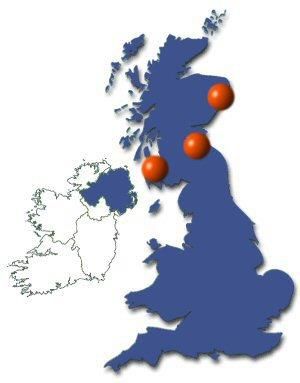
Accommodation
We cannot guarantee accommodation – arranging accommodation is your responsibility, but there are people
you can contact who may be able to offer advice and assistance.

At the Aberdeen Campus:

There is a hall of residence on campus in Aberdeen. They may have rooms available. Please contact
Gwen.Bruce@sruc.ac.uk for further information.

If there are no rooms in halls, there is a good private rental market in Aberdeen. The Aberdeen Education
Office will be able to offer further assistance and advice: email Ruth.Pirie@sruc.ac.uk or
Aberdeen@sruc.ac.uk. Useful websites include:

    •   http://www.spareroom.co.uk/flatshare/aberdeenshire/aberdeen
    •   http://www.accommodationforstudents.com/Aberdeen.asp
    •   http://uk.easyroommate.com/Student-Accommodation/scotland/aberdeenshire/Aberdeen-flatshare
    •   http://www.gumtree.com/flatshare-offered/aberdeen

At the Ayr Campus:

There is a hall of residence on campus in Ayr. They may have rooms available. Please contact the Ayr Campus
Senior Tutor, Jan.Connell@sruc.ac.uk for further information.

If there are no rooms in halls, there is a good private rental market in Ayr. The Ayr Education Office will be
able to offer further assistance and advice: email Gillian.Dixon@sruc.ac.uk or Ayr@sruc.ac.uk. Useful
websites include:

    •   http://www.spareroom.co.uk/flatshare/ayrshire/ayr
    •   http://www.citylets.co.uk/student-accommodation-south-ayrshire/ayr/
    •   http://www.gumtree.com/flatshare/south-ayrshire

At the Edinburgh Campus:

SRUC does not have any student residences in Edinburgh. There are several private halls of residence in the
city, which many students make use of. These include:

    •   https://www.unite-students.com/student-accommodation-edinburgh
    •   https://www.iq-student-accommodation.com
    •   http://www.collegiate-ac.com/
    •   http://www.mansionstudent.co.uk/edinburgh-student-accommodation/
    •   https://www.zigguratstudents.com
    •   http://thestudenthousingcompany.com/
    •   http://freshstudentliving.co.uk/

These private halls commonly offer full-year contracts, but some may offer a half year if they are not full.

Most Erasmus students arrange to arrive in the city promptly or slightly earlier than the start of their course,
arrange temporary accommodation for their arrival, and search for a room in a shared flat to rent while they
are here. Edinburgh has a large rental market so students do not struggle to find suitable accommodation.

Contact the Edinburgh Education Office for further assistance and advice: email Jenny.Thomson@sruc.ac.uk
or Edinburgh@sruc.ac.uk. Useful websites include:

    •   https://www.facebook.com/groups/edaccomm/
    •   http://www.studentpad.co.uk/
    •   http://www.citylets.co.uk/flats-rent-edinburgh/
    •   http://www.accommodationforstudents.com/Edinburgh.asp
    •   http://www.spareroom.co.uk/flatshare/midlothian/edinburgh
    •   https://espc.com/
    •   https://www.lettingweb.com/
    •   https://www.gumtree.com/flatshare-offered/edinburgh
SRUC Aberdeen Campus
SRUC Aberdeen is located on the Craibstone Estate, about 5 miles from the centre of Aberdeen, Scotland’s
third largest city. Road and rail links, and international air and sea communications with Aberdeen are
excellent. There is easy access to the neighbouring countryside, from the scenic delights of Royal Deeside to
the castles of Aberdeenshire and the hillwalking, climbing and winter sports of the Cairngorm Mountains.
Queries of a local nature, including questions about accommodation, can be directed to:
Education Office, SRUC Aberdeen
T: +44 1224 711022 and +44 1224 711123
E: Ruth.Pirie@sruc.ac.uk or Aberdeen@sruc.ac.uk
SRUC Aberdeen runs courses in the subject areas of:
Agriculture Business Management
We have specified for each option whether it is a Year 3 or 4 module, to indicate the level of study. Prior
learning requirements have been specified where appropriate.
Modules available are as follows:
Advanced Agronomy (Year 3)
Provisional timetable slot: Monday PM
The aim of the module is to provide an understanding of the physiological basis of biomass and yield production by crop
canopies. This framework can be applied to a wide range of agricultural and horticultural crops, to explain how variation
in environmental and management factors affects growth and yield and to discuss practical approaches to maximising
yield. Requires some prior knowledge of Agriculture.
Animal Feed Technology (Year 4)
Provisional timetable slot: Monday PM
The applied animal nutritionist needs to be aware of current concepts of nutrition science and how these influence the
formulation and production of diets for livestock. The module will provide a detailed analysis of issues and techniques
which are relevant to applied animal nutritionists and will explore the relationship between the needs of the animal and
the way these are met from foods produced on the farm and from by-products and compounded foods.
Requires some prior knowledge of livestock nutrition.
Business Marketing (Year 4)
Provisional timetable slot: Wednesday AM
In this module the principal responsibilities of the marketing function within an organisation will be examined. Within this
context, emphasis will be placed on an analysis of the competitiveness of organisations. Students will be provided with
an overview of the essential principles and concepts of consumer behaviour. This will be related to how organisations
develop strategies based on an understanding of consumer behaviour. Both domestic and international marketing issues
will be considered. The module will also equip students with the means of understanding and applying numeric market
forecasting techniques which can be used in management decision taking.
Food and Agri-Business Economic Policy (Year 4)
Provisional timetable slot: Thursday PM
This module will provide an appreciation of the structure of the food and agriculture industries and the major national
and international policy issues in this area.
Livestock Production Technology (Year 3)
Provisional timetable slot: Thursday AM
The efficient production of high quality animal products is based on a sound understanding of animal science and a
range of established and novel technologies. This module explores the current and future application of animal science,
technology and biotechnology in improving the efficiency of livestock production systems in terms of the health and
welfare of the animals and the suitability of their products for modern market requirements.
Management Skills and Entrepreneurship (Year 3)
Provisional timetable slot: Wednesday AM
This module is designed to further advance the student’s understanding of business management techniques. Students
will then apply these in order to develop their knowledge and understanding of the entrepreneurial skills required by
managers in the small business and corporate sectors.Management Strategies (Year 3)
Provisional timetable slot: Monday AM
This module is designed to allow students to appreciate the importance of and need to develop a strategy for business.
Students will apply the various tools and techniques of strategic management for analysis, evaluation and formulation
of strategy allowing them to understand the process of implementation of strategic decisions and the management of
change in an organisation.
Research Skills and Data Analysis (Year 3)
Provisional timetable slot: Tuesday PM
Research investigation generally involves a process of generating and testing hypotheses – statements relating to our
expectations about the relationships between different variables. Statistical analysis of data allows us to prove or
disprove such hypotheses so that conclusions can be made. This module will introduce basic qualitative and quantitative
data analysis methods, in particular focusing on how to develop hypotheses and make inferences from the particular
(experiments and surveys) to the general (the whole population). The aim of the module is to provide the student with a
basic knowledge of quantitative statistics and qualitative analytical methods such that the most appropriate method is
chosen for a given situation. (Note: this module has all its teaching and examinations in Semester 1, but a later project
is submitted in March. This can be done from your home institution if you are only studying for the first semester.)
The UK Agri-Food Industries (Year 3)
Provisional timetable slot: Thursday PM
This module is designed to develop an understanding of the structure and operation of the food chain both upstream
and downstream of the farm and to explore the outlook for these industries. The module will also provide an overview
of the interrelationships that exist between the key operators within the food chain.
Provisional Timetables – Aberdeen:
Agriculture Timetable
Monday Tuesday Wednesday Thursday Friday
Management Skills Livestock
AM and Production
Entrepreneurship Technology
Food and Agri-
Advanced
Business Economic
Agronomy or Research Skills
PM Policy or The UK
Animal Feed and Data Analysis
Agri-Food
Technology
Industries
Business Management Timetable
Monday Tuesday Wednesday Thursday Friday
Business Marketing
Management or Management
AM
Strategies Skills and
Entrepreneurship
Food and Agri-
Business Economic
Advanced Research Skills
PM Policy or The UK
Agronomy and Data Analysis
Agri-Food
IndustriesSRUC Ayr Campus
SRUC Ayr is based on the new Riverside Campus in the centre of Ayr town, which offers good shopping, social
and sports facilities. There is a strong tradition of tourism in Ayrshire, and bus/rail links offer access to all that
the west coast of Scotland has to offer. Scotland’s largest city, Glasgow, is within easy reach, and Prestwick
Airport is only a couple of miles away, offering excellent links throughout Europe.
Queries of a local nature can be directed to:
The Education Office, SRUC Ayr
T: +44 1292 886200 (+44 1292 886405 for accommodation queries)
E: Ayr@sruc.ac.uk (Gillian.Dixon@sruc.ac.uk for accommodation queries)
SRUC Ayr runs courses in the subject areas of:
Agriculture Animal and Biological Sciences
Environment and Countryside
We have specified for each option whether it is a Year 3 or 4 module, to indicate the level of study. Prior
learning requirements have been specified where appropriate.
Modules available are as follows:
Action for Biodiversity (Year 4)
Provisional timetable slot: Tuesday PM
This module will look at the mechanisms for delivering biodiversity conservation, the successes and conflicts that they
have caused and their impact on wider land use and planning issues. The wide-ranging involvement of groups and the
large number of initiatives involved in the delivery of biodiversity conservation mean that case studies will be a valuable
method of approaching the topic and will give you the scope to critically assess the success of these initiatives in a
seminar format.
Advanced Agronomy (Year 3)
Provisional timetable slot: Tuesday PM
The aim of the module is to provide an understanding of the physiological basis of biomass and yield production by crop
canopies. This framework can be applied to a wide range of agricultural and horticultural crops, to explain how variation
in environmental and management factors affects growth and yield and to discuss practical approaches to maximising
yield. Requires some knowledge of Agriculture.
Ecology: Management and Impacts (Year 3)
Provisional timetable slot: Thursday AM
This module reinforces and develops an understanding of ecological principles and how they inform good management
practice. The wider countryside and anthropogenic habitats are emphasised. An understanding of the use of the
ecological literature is developed and students gain practice in presenting complex scientific material to an audience.
Experimental and Analytical Techniques (Year 3)
Provisional timetable slot: Thursday AM
The aim of this module is to strengthen the practical skills of the students and to introduce them to advanced techniques
and instrumentation used in laboratory and field scientific research by providing practical experience under supervision.
The focus will be primarily directed towards specialist techniques and instrumentation not covered in the earlier years
of study.
Historical Geography (Year 3)
Provisional timetable slot: Friday PM
This module is for students who have an interest in landscape history and want to find out more on how to research it.
It also covers aspects of establishment of an archive and issues with preservation and presentation of material – this is
of relevance to countryside managers and land managers who may have such site information and need to use it for
their own site’s management planning/development, as well as feeding into visitor interpretation. The module is taught
using a mix of lectures and two case studies looking at a particular area of Scotland.
Livestock Production Technology (Year 3)
Provisional timetable slot: Monday PM
The efficient production of high quality animal products is based on a sound understanding of animal science and a
range of established and novel technologies. This module explores the current and future application of animal science,
technology and biotechnology in improving the efficiency of livestock production systems in terms of the health and
welfare of the animals and the suitability of their products for modern market requirements.Management Skills and Entrepreneurship (Year 3) Provisional timetable slot: Thursday PM This module is designed to further advance the student’s understanding of business management techniques. Students will then apply these in order to develop their knowledge and understanding of the entrepreneurial skills required by managers in the small business and corporate sectors. Managing Environmental Community Projects (Year 3) Provisional timetable slot: Friday AM Involving local communities is a key part of work in a wide range of contexts today. Indeed, in practical terms, key sources of funding can only be accessed via engagement with community groups. Policies and initiatives are continually being developed that give this approach impetus. The approach requires a different style of working – as facilitator rather than leader. There is a wide range of agencies, approaches and people involved in this work. It is therefore vital that students have a clear understanding of the principles that underlie this type of working, good practice in implementation and the different roles played by different agencies/workers. The complexity of funding environmental projects and the potential sources and difficulties of managing multiple funders need to be considered for successful projects. New Perspectives in Plant Protection (Year 3) Provisional timetable slot: Friday PM The objectives of this module are to provide you with knowledge of pest/weed population dynamics, disease epidemiology and pesticides. As crop protection is still dominated by the use of pesticides in the majority of crop systems, the aim is to introduce the discovery and mode of action of pesticides, and to make you aware of the effects of such agents on the environment as well as the strategies to avoid resistance. The forecasting of pest, disease and weed outbreaks, and the use of the appropriate pesticide dose will also be introduced within the context of rationalising pesticide use. Research Skills and Data Analysis (Year 3) Provisional timetable slot: Tuesday AM Research investigation generally involves a process of generating and testing hypotheses, which are basically statements relating to our expectations about the relationships between different variables. Statistical analysis of data allows us to prove or disprove such hypotheses so that conclusions relating to those relationships can be made. It provides weight to arguments where logical reasoning is not possible or sufficient. The module will introduce basic qualitative and quantitative data analysis methods, in particular focusing on how to develop hypotheses and make inferences from the particular (experiments and surveys) to the general (the whole population). The aim of the module is to provide the student with a basic knowledge of quantitative statistics and qualitative analytical methods such that the most appropriate method is chosen for a given situation. (Note: this module has all its teaching and examinations in Semester 1, but a later project is submitted in March. This can be done from your home institution if you are only studying for the first semester.) The UK Agri-Food Industries (Year 3) Provisional timetable slot: Friday AM This module is designed to develop an understanding of the structure and operation of the food chain both upstream and downstream of the farm and to explore the outlook for these industries. The module will also provide an overview of the interrelationships that exist between the key operators within the food chain. See next page for Ayr timetables
Provisional Timetables – Ayr:

Agriculture
         Monday          Tuesday         Wednesday       Thursday              Friday

                      Research Skills                                    The UK Agri-Food
 AM
                     and Data Analysis                                       Industries

                        Action for
         Livestock                                   Management Skills
                      Biodiversity or                                    New Perspectives
 PM     Production                                         and
                        Advanced                                         in Plant Protection
        Technology                                   Entrepreneurship
                        Agronomy

Animal and Biological Sciences
         Monday          Tuesday         Wednesday       Thursday             Friday
                                                     Experimental and
                      Research Skills
 AM                                                     Analytical
                     and Data Analysis
                                                       Techniques
         Livestock                                   Management Skills
                        Advanced                                         New Perspectives
 PM     Production                                         and
                        Agronomy                                         in Plant Protection
        Technology                                   Entrepreneurship

Environment and Countryside
         Monday          Tuesday         Wednesday      Thursday             Friday
                                                                            Managing
                                                        Ecology:
                      Research Skills                                     Environmental
 AM                                                  Management and
                     and Data Analysis                                     Community
                                                        Impacts
                                                                            Projects
                                                     Management Skills
                         Action for                                          Historical
 PM                                                        and
                        Biodiversity                                        Geography
                                                     Entrepreneurship
SRUC Edinburgh Campus
SRUC Edinburgh is located on the Edinburgh University King’s Buildings Campus, in the south of the city. Three miles from
the city centre, and a similar distance from the outlying Pentland Hills, Edinburgh offers a unique combination of urban and
rural environments. The city’s airport is nearby, and rail and bus links are excellent. Edinburgh, with a population of half a
million people, and an unusually large and diverse student population (over 62,000 students study in Edinburgh) offers
community, variety and a wealth of activities to recommend it as a popular place in which to live and study.
Queries of a local nature, including questions about accommodation, can be directed to:
The Education Office, SRUC Edinburgh
T: +44 131 535 4049/4041
E: edinburgh@sruc.ac.uk
SRUC Edinburgh runs courses in the subject areas of:
Agriculture
Animal and Biological Sciences
Business
Management
Environment and Countryside
Horticulture
We have specified for each option whether it is a Year 3 or 4 module, to indicate the level of study. Prior learning
requirements have been specified where appropriate.
Modules available are as follows:
Action for Biodiversity (Year 4)
Provisional timetable slot: Tuesday PM
This module will look at the mechanisms for delivering biodiversity conservation, the successes and conflicts that they
have caused and their impact on wider land use and planning issues. The wide-ranging involvement of groups and the
large number of initiatives involved in the delivery of biodiversity conservation mean that case studies will be a valuable
method of approaching the topic and will give you the scope to critically assess the success of these initiatives in a seminar
format.
Advanced Agronomy (Year 3)
Provisional timetable slot: Thursday AM
The aim of the module is to provide an understanding of the physiological basis of biomass and yield production by crop
canopies. This framework can be applied to a wide range of agricultural and horticultural crops, to explain how variation in
environmental and management factors affects growth and yield and to discuss practical approaches to maximising yield.
Requires some knowledge of Agriculture.
Animal Feed Technology (Year 4)
Provisional timetable slot: Monday PM
The applied animal nutritionist needs to be aware of current concepts of nutrition science and how these influence
the formulation and production of diets for livestock. The module will provide a detailed analysis of The issues
faced by the Animal Fed industry and techniques USED which are relevant to applied animal nutritionists, as well
as exploring the relationship between the needs of the animal and the way these are met from foods produced
on the farm or from by-products and compounded foods.
Requires some prior knowledge of livestock nutrition.
.
Animal Science and Society (Year 3)
Provisional timetable slot: Thursday PM
This module provides an opportunity to consider the broad aspects of the relationship between man and domesticated
animals. It builds on knowledge of livestock production systems, animal nutrition and animal welfare gained in modules
studied in years 1, 2 and 3. It will be seminar-based with individual students leading a presentation and discussion of the
individual learning outcomes.
Business Marketing (Year 4)
Provisional timetable slot: Tuesday AM
In this module the principal responsibilities of the marketing function within an organisation will be examined. Within this
context, emphasis will be placed on an analysis of the competitiveness of organisations. Students will be provided with an
overview of the essential principles and concepts of consumer behaviour. This will be related to how organisations develop
strategies based on an understanding of consumer behaviour. Both domestic and international marketing issues will beconsidered. The module will also equip students with the means of understanding and applying numeric market forecasting techniques which can be used in management decision taking. Climate Change and the Global Environment (Year 3) Provisional timetable slot: Thursday PM The aim of this module is to explain the processes of climate change and to understand the consequences at a global level. The interrelationships between the earth’s different compartments (the geosphere, hydrosphere, atmosphere and biosphere) will be described and their interactions discussed. The exchange of matter and energy by these compartments will be considered, and the earth’s climatic systems will be introduced. The consequences of alterations to the earth’s climatic system as a consequence of human activity will be described. The consequences of change on plant, animal and human populations will be assessed. Ecology: Management and Impacts (Year 3) Provisional timetable slot: Monday PM This module reinforces and develops an understanding of ecological principles and how they inform good management practice. The wider countryside and anthropogenic habitats are emphasised. An understanding of the use of the ecological literature is developed and students gain practice in presenting complex scientific material to an audience. Environmental Chemistry and Toxicology (Year 3) Provisional timetable slot: Tuesday PM This module aims to develop an understanding of the origin, fate and effects of pollutants in the environment and in ecosystems. It is also intended to increase the student’s awareness of issues relating to the use and occurrence of agrochemicals and other environmentally important chemicals. Environmental Economics (Year 4) Provisional timetable slot: Monday PM Economic systems depend on resources and services provided by the environment and thus a healthy economy ultimately depends on a healthy and well-managed environment. Environmental economics is the application of the principles of economics to the study of how environmental and natural resources are developed and managed. This module will develop and use tools of economic analysis to discuss key environmental economics issues. Emphasis will be placed on the development of appropriate analytical tools for non-market goods valuation. The role of the government in managing and regulating natural resource use and sustainability will be examined. Ethnobotany (Year 3) Provisional timetable slot: Thursday PM This module is designed to provide students with an appreciation and understanding of ethnobotany (“the study of the relationship between people and plants” - ethno meaning people and botany meaning plants). Students will learn how plants are critical to the lives of people and gain an understanding of why man should use plant resources in a sustainable way. An overview of conservation methods used will be provided and students will gain an understanding of laboratory techniques used to evaluate plant material for future uses. Experimental and Analytical Techniques (Year 3) Provisional timetable slot: Monday AM The aim of this module is to strengthen the practical skills of students and to introduce them to advanced techniques and instrumentation used in laboratory and field scientific research by providing practical experience under supervision. The focus will be primarily directed towards specialist techniques and instrumentation not covered in the earlier years of study. Horticultural Taxonomy (Year 3) Provisional timetable slot: Thursday AM This module is designed to provide students with a deeper understanding of plant classification and nomenclature throughout the complete range of taxa used within horticulture. Students will gain an appreciation of the complexity of plant nomenclature and classification and how this relates to horticultural plantsmanship. The module builds on knowledge gained in the ‘Plantsmanship’ and ‘Plant Classification & Systematics’ modules from year 2 of the course, and allows a deeper understanding of taxonomy and its importance within horticulture. Integrated Catchment Management (Year 4) Provisional timetable slot: Tuesday AM Fresh water and coastal water resources are under increasing pressure worldwide from a wide range of “stakeholders”, including domestic, industry, conservation, fisheries and power supply. Effective management of these resources is best carried out at a catchment scale, with all user demands and effects on the water resource taken into account. This module will explore the physical, chemical and biological characteristics of catchments, illustrate the conflicting demands for water use and impact of water users and seek to identify technical, planning and educational tools for effective management. Livestock Production Technology (Year 3) Provisional timetable slot: Tuesday PM The efficient production of high quality animal products is based on a sound understanding of animal science and a range of established and novel technologies. This module explores the current and future application of animal science, technology and biotechnology in improving the efficiency of livestock production systems in terms of the health and welfare of the animals and the suitability of their products for modern market requirements. Mammalian Growth, Development and Reproduction (Year 3) Provisional timetable slot: Tuesday AM Lifetime performance and well-being of mammals is intrinsically linked to their development from one-cell stage onwards, with events in utero and post-natally contributing to both current and subsequent growth and to reproductive competence
as adults. This module will explain key processes at crucial stages of mammalian development, explore animal growth and
 factors influencing muscle formation and meat quality, evaluate factors influencing mammalian reproduction and look at
 the importance of notable environmental and health-related factors influencing mammalian growth and reproduction.

 Management Skills and Entrepreneurship (Year 3)
 Provisional timetable slot: Friday AM
 This module is designed to further advance the student’s understanding of business management techniques. Students
 will then apply these in order to develop their knowledge and understanding of the entrepreneurial skills required by
 managers in the small business and corporate sectors.

 Management Strategies (Year 3)
 Provisional timetable slot: Thursday AM
 This module is designed to allow students to appreciate the importance and need to develop a strategy for business.
 Students will apply the various tools and techniques of strategic management for analysis, evaluation and formulation of
 strategy, allowing them to understand the process of implementation of strategic decisions and the management of change
 in an organisation.

 New Perspectives in Plant Protection (Year 3)
 Provisional timetable slot: Friday PM
 The objectives of this module are to provide you with knowledge of pest/weed population dynamics, disease epidemiology
 and pesticides. As crop protection is still dominated by the use of pesticides in the majority of crop systems, the aim is to
 introduce the discovery and mode of action of pesticides, and to make you aware of the effects of such agents on the
 environment as well as the strategies to avoid resistance. The forecasting of pest, disease and weed outbreaks, and the
 use of the appropriate pesticide dose will also be introduced within the context of rationalising pesticide use.

 Plant Biotic Interactions (Year 4)
 Provisional timetable slot: Monday PM
 The module focuses on developing an in-depth understanding of the variety and diversity of interactions between plants
 and other organisms. This knowledge will help explain how biotic interactions may be manipulated to obtain a beneficial
 effect. The module is intended to bridge the gap between the earlier explanation of the basic biological information and the
 application of biological knowledge which will be the key feature of other plant-related modules in year 4.

 Sustainable Environmental Management (Year 4)
 Provisional timetable slot: Friday AM
 This module will focus on the environmental obligations and responsibilities facing organisations and the benefits that can
 be realised when effective management programmes are implemented. Module content will also cover techniques and
 protocols used to determine organisations’ wider environmental impacts and provide appropriate mitigation. Measuring the
 effectiveness of Environmental Management Systems (EMSs) will also be discussed.

 The UK Agri-Food Industries (Year 3)
 Provisional timetable slot: Thursday PM
 This module is designed to develop an understanding of the structure and operation of the food chain both upstream and
 downstream of the farm and to explore the outlook for these industries. The module will also provide an overview of the
 interrelationships that exist between the key operators within the food chain.

See next page for Edinburgh timetables
Timetables – Edinburgh:

Agriculture
          Monday                Tuesday          Wednesday       Thursday              Friday
                                                                                  Management Skills
                                                                 Advanced
 AM                         Business Marketing                                          and
                                                                 Agronomy
                                                                                  Entrepreneurship
                                Action for
                              Biodiversity or
        Animal Feed             Livestock                    The UK Agri-Food     New Perspectives
 PM
        Technology              Production                       Industries       in Plant Protection
                               Technology

Animal and Biological Sciences
          Monday                Tuesday          Wednesday       Thursday              Friday
      Experimental and      Mammalian Growth,
 AM      Analytical          Development and
        Techniques            Reproduction
        Animal Feed
       Technology or
                                                             Animal Science and   New Perspectives
 PM      Ecology:
                                                                  Society         in Plant Protection
      Management and
          Impacts

Business Management
          Monday                Tuesday          Wednesday       Thursday              Friday
                                                                 Advanced
                                                                                  Management Skills
                                                                Agronomy or
 AM                         Business Marketing                                          and
                                                                Management
                                                                                  Entrepreneurship
                                                                 Strategies
                                Livestock
        Animal Feed                                          The UK Agri-Food
 PM                            Production
        Technology                                               Industries
                               Technology

Environment and Countryside
          Monday                Tuesday          Wednesday       Thursday              Friday
      Experimental and         Integrated                                            Sustainable
 AM      Analytical            Catchment                                            Environmental
        Techniques            Management                                            Management
         Ecology:               Action for
      Management and          Biodiversity or                 Climate Change
 PM     Impacts or            Environmental                   and the Global
       Environmental          Chemistry and                    Environment
        Economics               Toxicology

Horticulture
          Monday                Tuesday          Wednesday       Thursday               Friday
                                                                                  Management Skills
      Experimental and                                                            & Entrepreneurship
                                                                Horticultural
 AM      Analytical         Business Marketing                                      or Sustainable
                                                                Taxonomy
        Techniques                                                                  Environmental
                                                                                     Management
           Ecology:                                           Climate Change
      Management and            Action for                    and the Global      New Perspectives
 PM
      Impacts or Plant         Biodiversity                   Environment or      in Plant Protection
      Biotic Interactions                                      Ethnobotany
You can also read


