ESO Operational Transparency Forum - 19 May 2021 - Slido code #OTF
←
→
Page content transcription
If your browser does not render page correctly, please read the page content below

Slido code #OTF

                     You have been joined in listen only mode,
                     please ensure your cameras are turned off

ESO Operational
Transparency Forum
19 May 2021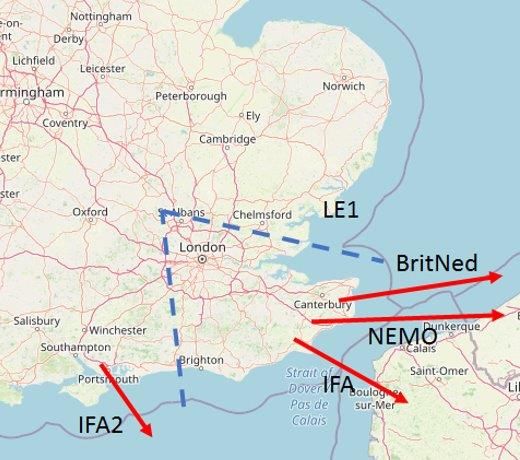
Slido code #OTF

Introduction | Slido code #OTF
Following your feedback, we are continuing to use Slido and Microsoft Teams. Please visit www.sli.do and enter the code #OTF
to ask questions & provide us with post event feedback.
We will answer as many questions as possible at the end of the session. We may have to take away some questions and
provide feedback from our expert colleagues in these areas during a future forum. You can also ask questions using the normal
chat function.
These slides, event recordings and further information about the webinars can be found at the following location:
https://data.nationalgrideso.com/plans-reports-analysis/covid-19-preparedness-materials

Regular topics for this week:                                       Deep dives and additional topics for this week:
Questions from last week                                            Update on topics
                                                                    Winter Outlook 2021
Business continuity
                                                                    e-GAMA
Demand review and outlook
                                                                    ALoMCP Update (accelerated loss of mains change
Costs for last week                                                 programme)
Constraints                                                         GSR027 Update (frequency risk and control report)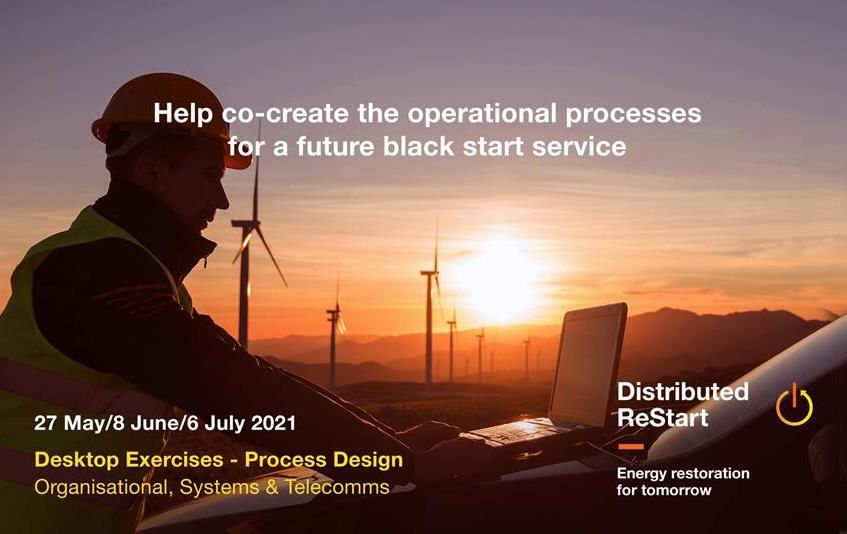
Slido code #OTF

Update on topics
Availability of TO assets
Please note that the TOs are not registered as market participants and therefore REMIT obligations do not apply to them.
We have sought legal advice on how best we, as NGESO, can discharge any REMIT obligations we may hold whilst ensuring we
do not breach any rules regarding sharing of other peoples data (i.e. specific asset availability). We are still in discussions on this
and will update when we have something to share.

9 May BSC Bulletin 360: Delay in publishing MEL/SEL data
On 9 May, Elexon issued a Bulletin regarding a delay to the publication of MEL/SEL data. We have investigated and can confirm
that this was caused by a large volume of dynamic data redeclarations in a short time frame.
We are following up with the counterparties directly.
As a reminder, dynamic data should only be updated via EDL when there is a requirement that affects the next four hours.
Redeclarations affecting the timeframe beyond this should be submitted by EDT. Submitting large volumes of redeclarations for
the same unit through EDL can cause errors in data acceptance and the BM systems slowing down and potentially crashing.
Slido code #OTF

   Protecting Critical Staff to maintain Critical Operations
                       Enhanced                                                      Office access for
                       shift rota                     Lockdown                       essential reasons
   Operational
   areas                                                                                          Awareness of potential for
   restricted &                                               Reviewing lessons learnt            local lockdowns/spikes in
   critical staff                                                  & building into BAU            infection
   protected                          Industry
                                      engagement
                           Majority of                                               Gradual
                           employees WFH                                         reoccupation

          Pandemic Plans
          Activated

                                                                                                    Restrictions to
Pre-Pandemic                                                                                        operational areas
                                                                                                    relaxed
                                                                                                                 Post-
                            Identify & respond to system operability challenges
                                                                                                                 Pandemic
Slido code #OTF Questions from last week Q: Looks like there was a spike in night-time demand on the 10th of May (pink line on your chart). Do you have an idea what led to this spike?
Slido code #OTF
Demand | Latest demand suppression assessment
In agreement with Ofgem & BEIS we are ceasing the publication and reporting of the demand supporting assessment.

Data on demand suppression was being calculated using a comparison with pre-COVID demand levels, and we can no
longer be sure that any changes are attributable to COVID alone.

We hope that you found the ESO's assessment of the demand suppression insightful and useful.

All the historical data on this is available on the ESO Data Portal in the Coronavirus Demand Suppression dataset.
Slido code #OTF

Demand | Last 7 days outturn
Slido code #OTF

Demand | Week Ahead
Slido code #OTF

Demand | Late Bank Holiday forecast
Slido code #OTF

ESO Actions | Thursday 13 May Peak
Slido code #OTF

ESO Actions | Sunday 16 May Minimum
Slido code #OTF

Transparency | 10 to 16 May costs

                                                                                        Due to a data issue, the costs for 10
                                                                                        May have not yet been processed

*Includes operating reserve, STOR, fast reserve, other reserve, negative reserve
Note: AS costs are estimated at this timescale so small discrepancies may be observed
Slido code #OTF
Transparency | 10 to 16 May constraint breakdown
Key driver for thermal constraint
spend was to manage the B7
boundarySlido code #OTF
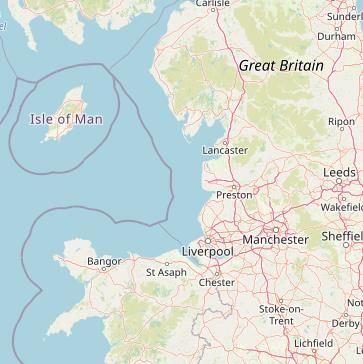
Transparency | Thermal Constraints
B2
Scotland 19-Apr 26-Apr 3-May 10-May 17-May 24-May 31-May 7-Jun 14-Jun
B6 (SCOTEX)
B4
B2/B4 (SSE SP2)
England and Wales 19-Apr 26-Apr 3-May 10-May 17-May
B6
B7 (SSHARN3)
(GM SNOW) B7
LE1 (SEIMP)
GMSNOW
Long term viewSlido code #OTF Winter Outlook: Current Margin focus • Current focus on period of maximum demand • Whole system: Capacity market • Transmission system: Operational view • Information presented as averages of the different components • We also report on ACS demand: but this too is an average • Averages are a good indicator • when natural variability doesn’t cause system issues • Tighter margins means variability more likely to impact system operation • Represent different interconnector scenarios on same display
Slido code #OTF

Future Margin Focus
•   Periods of tight margins
•   Still present average component view
•   Also give information on natural
    variability around mean
•   When variability comes from multiple
    sources, no longer possible to show
    component values
•   Can also present probabilities of tight
    margins as well as typical range
•   Would need separate graphs for
    different interconnector
•   Will allow for better risk planning
•   More appropriate for a system with less
    generous margins
Slido code #OTF
e-GAMA
What is it? How is it going?
• e-GAMA is the replacement the generation • e-GAMA went live on 18 March
side of TOGA, for submitting outage data • The new system has performed well so far, with
• Only large power stations are obliged to 100% delivery of information to BMRS
submit data, although others can and do • All checks show that it is accurately picking up
• E-GAMA streamlines the process of and reporting REMIT data
submitting data by utilising REMIT data for • Internal auditing shows the accuracy of the
those generators that submit REMIT data generation data we receive is of higher quality
through Elexon than we previously received through TOGA
• It avoids the need for duplication of data • We are currently auditing longer range data,
feeds out to 3 years ahead, against what was held in
• Other users can submit through a Salesforce TOGA, to ensure that all users are submitting
front end their longer range data either through REMIT or
• Outage data is required out to three years e-GAMA Salesforce.
ahead • There are no changes to the nature of the data
• Outage data is processed by e-GAMA and published on BMRS, but there is increased
sent through to Elexon BMRS where it is accuracy
publishedSlido code #OTF
ALoMCP Update (Accelerated Loss of Mains Change Programme)
Progress to 14 May 2021
• 15 months to deadline
• 62% of required capacity engaged
Capacity Breakdown
Engagement
Required
38% Applicatio
ns
Received
48%
Indpendent
Notifications
14%Slido code #OTF ALoMCP Update (Accelerated Loss of Mains Change Programme) Impact on the Critical RoCoF Risk – April 2021
Slido code #OTF

ALoMCP Update (Accelerated Loss of Mains Change Programme)
 Impact on the Vector Shift Risk – April 2021
Slido code #OTF

ALoMCP Update (Accelerated Loss of Mains Change Programme)
Programme Costs to Date
    • Approved applications to 6,856 sites, for a capacity of 12,423 MW at a cost of £23.33m in
      payments to distributed generation owners
    • Invoiced charges of £15.9m to date give us a view of outturn costs per site and MW

   ALL DNOs /         Admin        Admin cost   Total cost /   Total cost /   Assumptions
iDNOs cumulative     cost / site     / MW           site          MW          Includes all applications and all compliance reported
                                                                              without ALoMCP payment
 costs invoiced to

   26 February         £268          £114         £1,796          £767        6,885 sites for 16,126 MW

    31 March           £291          £123         £2,000          £846        7,049 sites for 16,661 MW
     14 May            £318          £138         £2,120          £921        7,499 sites for 17,254 MW
Slido code #OTF
ALoMCP Update (Accelerated Loss of Mains Change Programme)
Implications for Summer 2021 Outlook
• We don't expect to spend additional money • New outreach to increase engagement
securing Vector Shift risks in 2021 from smaller generators
• Following implementation of "FRCR“, RoCoF • www.futureproofyourpower.co.uk
risks will be secured using the Dynamic
• Continued one to one engagement for
Containment product for the majority of time
• The enduring value of risk reduction for the larger generators
programme is • Actions to address risks associated with
• A reduction in frequency response generator built-in protection – wind
requirements (back to baseline). 1MW turbines and invertors for photovoltaics
of Dynamic Containment currently • Countdown to completion has started
costs £150k per annum, compared to
£2k one-off cost per change through You can find programme information - here
the programme.
• A reduction in the risk of unsecured
events having a significant impactSlido code #OTF
GSR027 Update (Frequency Risk & Control Report)
Frequency Risk & Control Report
• As part of E3C recommendations the ESO submitted the first Frequency Risk and Control Report to Ofgem on
1st April to guide frequency management for the next 12 months.
• The report found that LFDD risk could be reduced to a 1-in-270 year risk through a variety of measures,
including ALoMCP and Dynamic Containment, for a reduced cost of £244million.
• Last week Ofgem approved this submission, allowing the ESO to start implementation.
Implementation
Phase One (June)
• Removing the tighter frequency limit of 49.5Hz for smaller infeed losses, and instead only applying the wider
limit of 49.2Hz to all BMU-only infeed losses
• a number of BMU-only events which are secured under the previous policy have been re-evaluated and are
now more appropriately categorised as BMU+VS events, which under the FRCR proposals will no longer be
secured.
Phase Two (within three months following completion of Phase One)
• To allow BMU-only infeed loss risks to cause a consequential RoCoF loss, if the resulting loss can be
contained to 49.2Hz and 50.5Hz
You can find all GSR027 information, including the Authority’s approval - hereSlido code #OTF
Distributed Restart Desktop Exercises
Simulated Restoration Event
Our desktop exercises will demonstrate our proposed
operational requirements for a black start service from
DERs using an online simulation.
The desktop exercises are designed to be informative and
provide you with the opportunity to co-develop the process.
Choose from three dates over the next two months
Thursday 27 May 12:30pm-4pm
Tuesday 8 June 12:30pm-4pm
Tuesday 6 July 9am-12:30pm
To register email: Christopher.salter2@nationalgrideso.comSlido code #OTF Q&A After the webinar, you will receive a link to a survey. We welcome feedback to understand what we are doing well and how we can improve the event ongoing. Please ask any questions via Slido (code #OTF) and we will try to answer as many as possible now. If we are unable to answer your question today, then we will take it away and answer it at a later webinar. Please continue to use your normal communication channels with ESO If you have any questions after the event, please contact the following email address: box.NC.Customer@nationalgrideso.com
Audience Q&A Session ⓘ Start presenting to display the audience questions on this slide.
Slido code #OTF

Q&A
After the webinar, you will receive a link to a survey. We welcome feedback to understand what we are doing
well and how we can improve the event ongoing.
Please ask any questions via Slido (code #OTF) and we will try to answer as many as possible now. If we are
unable to answer your question today, then we will take it away and answer it at a later webinar.
Please continue to use your normal communication channels with ESO
If you have any questions after the event, please contact the following email address:
box.NC.Customer@nationalgrideso.com
You can also read


