EUROPEAN RETAIL PARKS - SUMMER 2019 - Cushman & Wakefield
←
→
Page content transcription
If your browser does not render page correctly, please read the page content below
EUROPEAN
RETAIL PARKS

SUMMER 2019
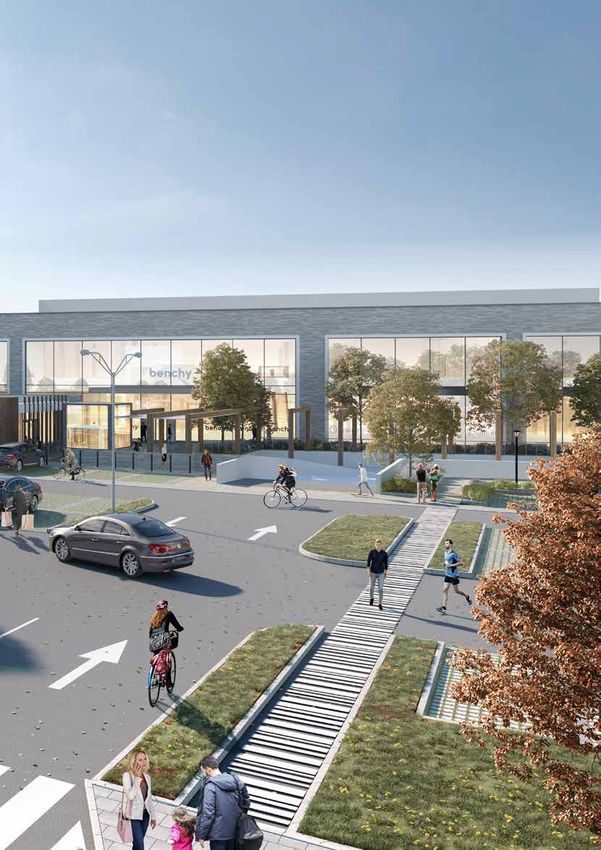
Cover photo – Drève Richelle Retail Park, Waterloo, Belgium
CONTENTS

EXECUTIVE SUMMARY           1

KEY HIGHLIGHTS              2

WESTERN EUROPE              5

CENTRAL & EASTERN EUROPE    9

WHAT’S NEXT                13

CAVEATS & DEFINITIONS      20
EXECUTIVE
SUMMARY
In recent years, European retail parks have experienced
a significant transformation with regard to the breadth
of tenant mix and quality of design.

Retail park development continues to evolve           on large cities with strong catchment areas and
across Europe. In Western Europe, where retail        high pedestrian flows, although the development
park development has reached maturity, the new        of small schemes is accelerating in some countries.
schemes have to be innovative and compelling to       Strong economic fundamentals, demographics and
be successfully developed. Many of the new retail     attractive catchment areas are the main criteria
park schemes include leisure and F&B to make          for site selection. However, some retailers are also
them more attractive as retail destinations. In       developing their own small retail parks, offering
Central and Eastern Europe, the market has relative   spaces to other brands and activities.
under supply, providing scope for increased levels
of retail park development activity.                  An increasing amount of older stock is now looking
                                                      dated and will require refurbishment/redevelopment
Affordability, flexibility, convenience and           going forward. Many landlords are reviewing their
accessibility are the main attractions for            retail park portfolios and identifying opportunities
new retail park occupiers and shoppers.               for redevelopment and alternative uses, although
                                                      these opportunities are currently restricted to the
European retail park floorspace increased by          major cities.
2.2% in 2018, reaching 50.1 million sq m. Overall,
995,000 sq m of new retail park space was             In Central and Eastern Europe, the outlook for the
completed, 15% less than in 2017.                     retail park market remains positive. Development
                                                      is turning to smaller schemes in smaller cities and
France was the most active country in 2018,           suburban areas, in addition to secondary and tertiary
accounting for more than a third of total new         locations. More dominant retail parks are expanding
space in Europe. Spain took second position with      by attracting mass market fashion retailers. Retailer
165,000 sq m, followed by the United Kingdom          expansion in smaller towns is creating opportunities
with 121,000 sq m of new space.                       for the development of small and medium schemes,
                                                      which is boosting opportunities for local developers.
A steady supply of new space is expected going
forward, with 1.45 million sq m of new retail park    The continued growth of online retail sales will
space scheduled for opening in 2019/2020.             have an increasing impact on the out-of-town
Nevertheless, quick and easy construction and a       retail market. However, retail warehousing remains
growing number of schemes below 5,000 sq m are        relatively less exposed than other sub-sectors, given
expected to boost the number of openings.             the more sustainable rental levels and continued
                                                      popularity of car-borne shopping.
In Western Europe, development continues to focus

1 / EUROPEAN RETAIL PARKS
KEY
HIGHLIGHTS
                                  TOTAL RETAIL PARK FLOORSPACE
                                  IN EUROPE WAS

                                  50.1
                                  MILLION SQ M

                                  AS OF 1 JANUARY 2019

                                                                 EUROPE          WE          CEE

                                   STOCK OF RETAIL PARK              50.1       44.4           5.7
                                   SPACE (MILLION SQ M)

                                   Y-Y GROWTH                       +2.2%       +1.9%      +4.0%

                IN 2018                                              APPROXIMATELY

   995,000        SQ M
                                                                     1.45
                                                                     MILLION SQ M

                                                                     OF NEW RETAIL PARK
       OF NEW RETAIL                                                 SPACE IS EXPECTED TO BE
      PARK SPACE WAS                                                 DELIVERED IN 2019/2020,
          COMPLETED                                                  WITH AROUND

                                                     1.3
       15%
                                                                      OF THIS SPACE IN
                          LESS THAN IN 2017
                                                     MILLION SQ M     WESTERN EUROPE

                EUROPE          WE       CEE                         EUROPE        WE         CEE

NEW RETAIL           995        776      219        NEW RETAIL          1,446     1,279        167
PARK SPACE                                          PARK SPACE TO
ADDED IN 2018                                       BE DELIVERED
(‘000 SQ M)                                         IN 2019/2020
                                                    (‘000 SQ M)

Y-Y GROWTH        -14.6%     -20.6%   +16.8%        Y-Y GROWTH         -27.3%   -20.8%     -55.4%

                                                                        WHAT’S NEXT: SUMMER 2019 / 2
KEY
HIGHLIGHTS

TOP 10 COUNTRIES FOR NEW RETAIL PARK SPACE (SQ M) IN 2018

        France

        Spain

United Kingdom

          Italy

      Romania

        Poland

      Germany

       Sweden

Czech Republic

      Slovakia

                   0         50    100            150         200         250         300     350         400
                                                                                             Thousands (sq m)
                                         New RP               RP Extensions

EUROPEAN RETAIL PARK DEVELOPMENT PIPELINE (SQ M) – TOP 10 COUNTRIES IN 2019/2020

        France

          Spain

United Kingdom

           Italy

        Poland

      Germany

       Sweden

       Belgium

Czech Republic

       Romania

                   0        100   200       300         400         500         600    700     800       900

                                                                                             Thousands (sq m)
                                         New RP               RP Extensions

3 / EUROPEAN RETAIL PARKS
SHOPPING CENTRE VS. RETAIL PARK PRIME RENTS €/SQ M/YR – MARCH 2019
3,000
2,500
2,000
1,500
1,000
500
0
Kingdom
Ireland
Switzerland
Luxembourg
Spain
France
Germany
Sweden
Netherlands
Italy
Finland
Belgium
Slovenia
Republic
Hungary
Portugal
Poland
Slovakia
United
Czech
Retail Parks Shopping Centres
EUROPEAN RETAIL PARK DEVELOPMENT BY REGION
3.0 40
35
2.5
30
Millions (sq m)
Millions (sq m)
2.0
25
1.5 20
15
1.0
10
0.5
5
0.0 0
2008
2009
2010
2011
2012
2013
2014
2015
2016
2017
2018
Est. 2019
Est. 2020
New Retail Park GLA Per Annum (left axis) WE - New Retail Park GLA Per Annum (left axis)
CEE - New Retail Park GLA Per Annum (left axis) Total GLA (right axis)
Note: Chart does not include Germany’s data
WHAT’S NEXT: SUMMER 2019 / 4
WESTERN
EUROPE

Key facts and figures

            Total retail park                      In 2018, 776,000                     Overall, 1.3 million
            floorspace in                          sq m of new retail                   sq m of new retail
            Western Europe                         park space was                       park space is
            amounted to 44.4                       delivered to the                     expected to open
            million sq m as of                     market, a 21%                        in 2019/2020,
1st January 2019. Germany,             decline on 2017. France, Spain       a 21% drop on 2018/2019.
the UK and France remain the           and the UK were the most active      Development is expected
largest markets in the region,         countries, accounting for 82%        to remain strongest in France,
accounting for more than               of new space in Western Europe.      with 782,000 sq m scheduled
74% of total retail park space.                                             for completion, representing
                                                                            54% of the total development
                                                                            pipeline in Europe.

Market Size
RETAIL PARK DEVELOPMENT IS OVERTAKING THAT OF SHOPPING CENTRES IN FRANCE

2018 saw retail development declining for the third      This is reflected in the development pipeline,
year in a row. Approximately 355,000 sq m of new         with 782,000 sq m of new retail park space
retail park space was completed, representing            currently under construction and expected to open
a 22% drop compared with 2017. While retail park         in 2019/2020. However, it is possible that a large
development has been decelerating, the volume            proportion of retail park openings maybe delayed.
of annual completions surpassed that of shopping         Around 200,000 sq m of new retail park space
centres which has been declining at an increasing        scheduled for opening in 2020 could be postponed
rate, -28% in 2018. There is a little evidence of        to the following year.
over-supply, although the market is slowly reaching
maturity. With lower rents and service charges, the
retail park format has proved attractive to retailers.
The improved design of the new generation of retail
parks has also contributed to the appeal of these
schemes to occupiers and visitors alike.

5 / EUROPEAN RETAIL PARKS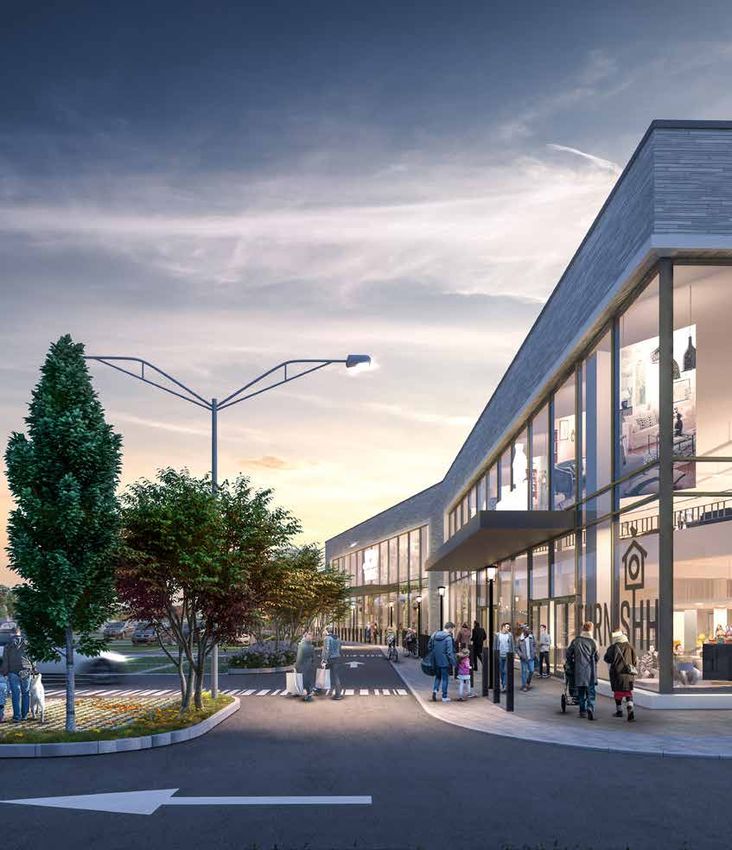
REDUCED LEVEL OF RETAIL PARK                             SOUTHERN EUROPE IS SEEING A VARIETY
DEVELOPMENT IN THE UK WITH                               OF TRENDS, WITH STRONG GROWTH IN
SHIFT TO SMALLER SCHEMES                                 SPAIN, POSITIVE ACTIVITY IN ITALY AND
Retail park development has declined significantly       MORE LIMITED DEVELOPMENT IN PORTUGAL
in the UK since its peak over 10 years ago. In 2017,     2018 was an exceptionally strong year for
retail park development activity was 148,000 sq          development in Spain, with 165,000 sq m of new
m, showing a solid increase on the previous year.        retail park space completed, four times higher
In 2018, the volume of new retail park completions       than in 2017. Retail park developers and landlords
decreased by 18% on 2017 and is expected to              are undertaking refurbishment projects and
remain at similar levels in 2019. New retail park        incorporating a broader range of commercial
developments increasingly include a leisure              and leisure occupiers to improve their appeal to
component to support the attractiveness and dwell        customers. Going forward, the retail park market will
time of the shopping destination.                        continue to attract investor interest. Development
                                                         opportunities in some cities (such as Seville)
In 2018, the 23,000 sq m shopping and leisure            are being used up and, with a lack of new prime
element at Thorpe Park, Leeds, saw key lettings          product, retail park development is expected to shift
to open A1 retailers such as M&S, Next and H&M.          to more secondary locations. In Italy, approximately
These were supported by a 10-screen Odeon                100,000 sq m of retail park space is currently under
cinema, a Pure Gym and a strong F&B offer.               construction and expected to be completed in the
                                                         next two years, almost equally divided between new
The majority of new retail park developments
                                                         space and extensions.
going forward are generally smaller schemes
of 5-8,000 sq m, based around smaller format
supermarkets plus value retailers. This new type
of ‘convenience retail park’ is typically let to Aldi,
Lidl, M&S plus value-variety retailers such as Home
Bargains, B&M or The Range. In tandem, a number
of outdated solus big box retail units including DIY
or former Toys R Us stores are being redeveloped
for mixed use residential or urban logistics schemes
in major cities.

                                                                                   WHAT’S NEXT: SUMMER 2019 / 6
WESTERN
EUROPE

EXPECTED RETAIL PARK OPENINGS – 2019/2020

STEEL                       GO LLEIDA              THE LEAF

      FRANCE                         SPAIN             BELGIUM
      SAINT-ETIENNE                  LÉRIDA            TERNAT

      70,000 SQ M                    55,000 SQ M       28,678 SQ M

      2020                           2020              2019

                            EMSPARK (EXTENSION
SETTIMO CIELO (EXTENSION)
                            & REDEVELOPMENT)

      ITALY – SETTIMO                GERMANY
      TORINESE (TURIN)               LEER                            LOCATION

                                                                     SIZE
      25,100 SQ M                    19,000 SQ M
                                                                     OPENING YEAR
      2019                           2019

                            Source: List AG                   Source: Cushman & Wakefield

7 / EUROPEAN RETAIL PARKS
WHAT’S NEXT: SUMMER 2019 / 8
CENTRAL &
EASTERN EUROPE

Key facts and figures

            Retail park                         In 2018, 219,000                     In 2019/2020,
            floorspace in                       sq m of new retail                   approximately
            Central & Eastern                   space was delivered,                 167,000 sq m of
            Europe amounted                     a 17% increase on                    new retail park
            to 5.7 million sq                   2017. Development                    space is expected
m as of 1st January 2019, with      activity was strongest in             to open – some 55% below
the Czech Republic, Romania         Romania, where 76,000 sq m            2018/2019. Poland has the
and Poland accounting for           of new retail park space was          largest development pipeline,
66% of the total retail park        delivered. Poland and the Czech       accounting for 44% of total
market in the region.               Republic took second and third        space scheduled for completion
                                    position respectively.                in 2019/2020.

Market Size
GROWING DEMAND FOR SMALLER RETAIL                     RETAIL PARK FORMAT BECOMING
PARKS IN THE CZECH REPUBLIC                           ESTABLISHED IN ROMANIA
                                                      With 1.3 million sq m, the size of the retail park
The Czech Republic remains the largest retail
                                                      market in Romania is comparable with the Czech
park market in Central and Eastern Europe. In
                                                      Republic, but retail park density remains at a low
2018, 24,000 sq m of new retail park space was
                                                      level. In 2018, 76,000 sq m of new retail park space
completed. However, there is increasing demand for
                                                      was opened, accounting for 73% of all new retail
local small retail park schemes serving only their
                                                      supply, making retail parks the most active retail
primary town or the closest regional catchment.
                                                      segment. Given the size of towns/cities in Romania –
Demand for retail park space is supported by
                                                      with only one city with a population above 500,000
newcomers, increasing interest from F&B and
                                                      – retail parks seem to be the most versatile and
leisure operators, value retailers and e-commerce
                                                      efficient type of retail. The format works well in
operators. This trend is expected to continue, with
                                                      larger towns, as well as smaller communities which
46,000 sq m currently under construction and
                                                      are unable to accommodate large shopping centres.
scheduled for completion in 2019/2020.
                                                      This is especially true in tertiary cities, such as
                                                      Roman, Slobozia and Bistrita, where retail parks will
                                                      be the dominant format for the foreseeable future.

9 / EUROPEAN RETAIL PARKS
STEADY GROWTH IN RETAIL PARK ELSEWHERE IN THE REGION, SMALL
SPACE IN POLAND SCHEMES IN SECONDARY AND TERTIARY
Over the last two years, retail park development in CITIES REPRESENT AN OPPORTUNITY FOR
Poland has accelerated. Retail parks are perceived RETAIL PARK DEVELOPMENT
as a format which can attract shoppers (easy access In Bulgaria, shopping centres have traditionally
and convenient one-stop shopping), occupiers been the main focus for retailers and developers.
(relatively low costs, a flexible floor layout) and However, market conditions are now changing, and
investors (an opportunity to enter smaller towns). retailers are looking to expand in second- and third
Approximately 74,000 sq m of new retail park space tier cities. This provides an opportunity for small-
was completed in 2018, a 21% increase on 2017. to-medium sized retail parks with easy access,
However, the popularity of shopping centres is clear affordable rents and good quality tenant mix. This
and new retail parks represented only 19% of all format is the main option for incoming retailers,
new space in 2018. A steady pace of development since there are generally few shopping centres in
is expected in 2019, with 73,000 sq m scheduled to areas with populations under 100,000.
open. A number of expanding retailers are focused
on smaller towns where retail parks are often the In Hungary, retail park development has been
only modern retail destination. limited and there have not been any new openings
over the last three years. Occupier demand remains
steady, but both domestic as well as international
tenants concentrate on the most dominant existing
schemes. This trend is expected to continue for the
foreseeable future, with no new projects scheduled
for completion in the near term.
In Slovakia, approximately 21,000 sq m of new retail
park space was completed in 2018. While this is in
line with 2017, the number of new schemes below
5,000 sq m is growing. Development is supported
by demand from consumers in smaller towns and
suburban areas who are looking for convenient
shopping facilities.
WHAT’S NEXT: SUMMER 2019 / 10CENTRAL &
EASTERN EUROPE
EXPECTED RETAIL PARK OPENINGS – 2019/2020
MORSKI PARK COLOSSEUM RETAIL
AVENTIN RP JIHLAVA
HANDLOWY (EXTENSION) PARK (EXTENSION)
POLAND ROMANIA CZECH REPUBLIC
GDAŃSK BUCHAREST JIHLAVA
16,500 SQ M 16,500 SQ M 11,000 SQ M
2019 2019 2020
ARENA CENTAR CAPITOL PARK LESKOVAC
CROATIA SERBIA
ZAGREB LESKOVAC LOCATION
SIZE
8,000 SQ M 6,500 SQ M
OPENING YEAR
2019 2019
Source: Cushman & Wakefield
11 / EUROPEAN RETAIL PARKSWHAT’S NEXT: SUMMER 2019 / 12
EUROPEAN RETAIL PARK TRENDS AND OUTLOOK

    STRENGTHS                 WEAKNESSES               OPPORTUNITIES                 THREATS

 Rental levels/service         Limited number          Under-supply of retail     Continued growth
 charges are generally         of occupiers in         parks in smaller cities     of online sales
   lower than prime             some markets
   shopping centres              particularly            Growth of value/            Autonomous
                               Western Europe          discount food sector      vehicles may impact
  Quick, easy and low                                                              the accessibility
   cost construction          Format not suitable       High levels of home           advantage
                                 for all types of       ownership in some           of out-of-town
  Good visibility and        retailers e.g. high end       CEE countries
   accessibility on               luxury brands                                   Population decline
    major roads                                          Population growth       in smaller secondary
                               Poor quality and            and residential         /tertiary cities in
       Continued                ageing stock in         development boom            some countries
     popularity of               some mature            in some large cities
  car-borne shopping               countries                                     Dominance of home-
                                                         Large, well-located     related sectors could
   In CEE, increasing              Poor road           sites on major arterial     lead to increased
    pool of potential          infrastructure in         routes may offer a       vulnerability during
       occupiers                some countries          range of other uses      economic slowdown

   Large floorspace                                       Rising demand
    allows for show-                                     from residential,
  rooming, as well as                                    last mile depots
 click & collect points                                   or e-commerce
                                                         showrooms may
    Close proximity                                       offer change of
     to large urban                                        use potential/
      populations                                          re-purposing

13 / EUROPEAN RETAIL PARKS
OUT OF TOWN RETAIL RETAIL PARKS RESPOND TO THE
NEEDS TO PROVIDE LOW CHANGING REQUIREMENTS OF
01 OPERATING COSTS TO
02 RETAILERS AND CONSUMERS
MITIGATE RISE OF ONLINE
Physical retail is very much alive – but it is Retail parks have proved to be an efficient
undergoing a significant evolution and the alternative to shopping centres, notably during
out-of-town market is not immune. times of economic uncertainty and retailer sales
volatility. With generally lower rents and service
The key driver of this change is the growth of charges, flexible floor layouts and increasing access
online shopping. In the UK, online sales currently to smaller cities, the retail park format is expected to
account for around 20% of the total, while in remain attractive to both existing occupiers and new
Continental Europe online sales rates are generally market entrants. Changing market conditions have
lower and vary according to market maturity. also had an impact on retailer expansion strategies,
Germany (c.15%) and France (c.10%) have the most which are increasingly focused on second and
mature online markets after the UK, while online third tier cities.
sales in Sweden and the Netherlands stand at
around 10% of the total. Retail park development is also supported by
increasing consumer demand for the convenience
The expected continued growth in online sales and accessibility associated with the out-of-town
will lead to disruption in the short to medium term, market. The improvement in the design of new
as retailers try to re-configure their distribution generation retail parks will also contribute to
networks to suit the omni-channel world. Indeed, enhancing their appeal to retailers and customers.
in order to get closer to customers, a number of
European big box retailers are opening smaller
formats in suburban locations in major cities, THE RELATIVE UNDER-SUPPLY
notably in areas with lower levels of car usage. OF RETAIL PARKS AND THEIR
03 ABILITY TO OPERATE IN SMALL
However, out-of-town retail offers a degree of
resilience by way of a low-cost option for occupiers,
CATCHMENT AREAS INDICATE
not to mention good accessibility for car-borne
FURTHER GROWTH POTENTIAL
shoppers and ongoing improvements to tenant mix
FOR THE FORMAT
such as more food & beverage and leisure operators.
In most of Western Europe, retail park markets are
As shops evolve more towards ‘showrooms’, the slowly reaching maturity. Many cities now have
availability of large and flexible units fits well adequate provision and some retail park stock has
with this trend, while many retail warehouse become obsolete. However, there have not been any
units and parks also provide enough space to run significant closures so far. Most have been limited to
click & collect and home delivery operations. older bulky goods schemes in secondary locations.
New retail park space continues to be developed,
In the event of change of use, the proximity of many although difficulties in the UK occupier market
retail parks to large urban populations could offer and the uncertain consumer outlook in France
potential solutions for last mile logistics operators, will reduce the pipeline going forward.
or indeed residential development opportunities,
particularly in markets such as the UK where there In Central and Eastern Europe, the retail park market
is an acute housing shortage. is in its relative infancy. Approximately 45% of total
stock is less than ten years old. While there has
been a significant amount of development, there is
still a relative under-supply of space in many areas,
especially in smaller towns.
WHAT’S NEXT: SUMMER 2019 / 14EUROPEAN RETAIL PARK TRENDS AND OUTLOOK
FOCUS ON SMALLER CITIES
AND SUBURBAN AREAS IN CO-LOCATION OF SHOPPING
04 CENTRAL AND EASTERN
05 CENTRES AND RETAIL PARKS
EUROPE VERSUS LARGER CITIES
IN WESTERN EUROPE
There is significant potential for the development
In Central and Eastern Europe, development is of retail parks adjacent to existing dominant
expected to focus on medium, small or even shopping centres in certain countries. In Poland, the
sub-5,000 sq m retail parks located in smaller 27,000 sq m Galeria Bursztynowa in Ostrołęka was
cities and suburban areas. Secondary and tertiary originally opened in 2014. In 2018, the scheme was
locations with a limited offer of modern retail space extended and the 5,000 sq m retail park was added.
will also attract retail park development. Jysk, Media Markt, Decathlon, Komfort and Smyk are
the main tenants in this new scheme.
In Western Europe, while there is a shift towards
smaller schemes, larger cities with high footfall In Spain, Capuchinos in Salamanca was born out
traffic, large catchment areas and good accessibility of the integration of a retail park and a shopping
are still the main focus for developers. Retail park centre to enhance the existing offer. In France, a
space is continuing to grow, as a number of small new hybrid format is also emerging which combines
and medium-sized schemes come to fruition. a retail park with a standard shopping centre,
Going forward, the lack of prime stock is expected including a strong focus on architectural design.
to favour increased levels of refurbishment activity
of secondary stock.
15 / EUROPEAN RETAIL PARKSEXPANDING RETAILERS AND
REPURPOSING, REBRANDING AND NEWCOMERS SUPPORT RETAIL
06 RESIZING OF RETAIL PARKS
07
PARK DEVELOPMENT ACROSS
EUROPE
Retail landlords will continue to experiment with 2018 was characterized by a number of expanding
different uses. In the Czech Republic, the 13,000 retailers and new entrants to the retail park market.
sq m Štěrboholy Retail Park opened in 2018 which Examples include German discounters Lidl and Aldi,
included three residential buildings. In Romania, the which have been pursuing retail park opportunities
forthcoming Prima Retail Park in Sibiu will include in a number of countries. These retailers can often
a 15,000 sq m shopping gallery with hypermarket generate significant additional footfall in retail park
in phase one, while the second phase will comprise locations. Other examples include the expansion
a mix of bulky goods retailers as well as a hotel. of Hornbach and Bauhaus in the Netherlands.
In Germany, the number of non-retail tenants is Homesense (part of the TK Maxx group),
increasing, with fitness, leisure, health & beauty Homesavers (part owned by B&M) and Harvey
operators, kindergartens and offices all expected Norman (the Australian furniture and electrical
to use ‘retail park’ space. goods retailer) are continuing to consolidate their
position as leading retailers in Ireland. More recently,
In some countries, the development of so-called Danish furniture retailer JYSK has committed to
third generation retail parks is increasing, with a number of new store openings. Costa Coffee
a specific focus on fashion (existing retail park and other coffee chains have built pods in a large
Campus Park Brno and planned retail park number of regional retail parks in the UK, which has
Znojmo Aventin in the Czech Republic). In some helped to increase footfall and dwell times. Budget
well-developed locations, retail parks are branding gym operators such as PureGym, The Gym Group
themselves based on a theme or a specific product and JD Gyms are also increasingly occupying space
category. Examples include Lanterna (Helsinki), in the UK retail parks.
which is specialised in home decor and building
supplies, Porrtipuisto (Vantaa), which is specialised In Central and Eastern Europe, the importance of
in home decor and a part of Tammisto retail park value retail is growing (Czech Republic, Poland
which is specialised in sports and outdoor products. – Dealz, Action, Tedi, Bulgaria – Pepco). E-shop
operators (such as Alza) are also increasingly
Big box operators and hypermarkets are also considering well-located retail parks as other
experimenting, some by reducing their space in pick-up points or showrooms.
order to accommodate multiple functions within
the same property. In Germany, some hypermarkets On the other hand, it is important to note that there
have reduced their size and created space which has is an increasing number of traditional out-of-town
been used by smaller specialist shops, F&B stations, retailers which are trialling smaller formats to access
eco-supermarkets and stores selling international inner urban areas of major cities, such as London,
goods (Turkish, Polish, Russian). One good Paris and Madrid. The main aims are to get closer
example is the transformation of five REWE to customers in higher footfall locations, protect
group stores in Romania, whereby the 4,000 sq m their brand and to test new trading formats. UK
XXL Megadiscount supermarkets were resized examples include Lidl and Aldi, which have a well-
and redeveloped into the smaller format Penny established regional network plan, with specific
supermarket and several other complementary locations and format criteria for opening local
stores, including Decathlon, Deichmann, Pepco, stores. For city store roll outs, Maisons du Monde
Takko and JYSK. opted for strong footfall locations, over and above
just convenience and mixed mission locations, where
In the UK, some first generation retail warehouse quality was selected over volume. Other similar
assets – primarily solus ‘big box’ units – are examples in various countries include Boulanger,
being redeveloped for mixed use schemes, Decathlon, Kiabi, Leroy Merlin, IKEA’s city centre
mainly residential led. Opportunities also exist ‘planning studio’ or B&Q which have also opened a
for redevelopment to urban logistics. new smaller format (500 sq m) in densely populated
London suburb.
WHAT’S NEXT: SUMMER 2019 / 16EUROPEAN RETAIL PARK TRENDS AND OUTLOOK
LEASING RISK SHIFTING FROM LANDLORDS OFFERING MORE
08 OCCUPIERS TO LANDLORDS
09 REASONS TO VISIT
In most countries, retail park occupiers expect Retail park landlords have been focused on
a fit out contribution from landlords. Regarding adjusting tenant mix to align with local needs.
lease lengths, ten years is becoming standard, with This includes increasing the F&B and leisure offer,
retailers commonly seeking breaks in year five or targeting fashion retailers and extending the offer
seven. Moreover, in some countries, lease lengths are of convenience goods and services. Larger parks
decreasing from 10-15 years to 6-7 years. Retailers have been investing more in leisure, particularly by
on retail parks are showing more flexibility around incorporating branded food operators and gyms.
the concept and unit size, which can vary by
location and market. The first phase of Rushden Lakes in the UK
originally opened in 2017, with a number of high
street retailers such as Hobbs and White Stuff not
previously represented in the out-of-town market.
The park is set around a boating lake and comprises
a large leisure element. Additional phases are due
to complete throughout 2019, which will enhance
the leisure offer to include a Cineworld cinema, an
indoor climbing centre and adventure golf alongside
A3 operators.
Some landlords have made improvements to the
external environment such as better landscaping
and design. In Germany, there is an increasing
number of entertainment events which take a place
in retail park car parks. This includes flea markets,
sports competitions, screens to watch sports
events, soccer and other world or European games.
Besides free parking, landlords have organised
free bus transport for customers. For example,
Flamingo retail park in Xanthi, Greece offers free
transport for customers by shuttle bus every 20-30
minutes. Another notable trend has been increased
marketing activity on social media.
17 / EUROPEAN RETAIL PARKSGROWING CONSUMER INTEREST RETAIL PARK SPACE AS A
10 IN SOCIAL, ENVIRONMENTAL AND 11 PROPORTION OF TOTAL NEW
ETHICAL ISSUES RETAIL SPACE IS INCREASING
Consumers are increasingly tuned in to social, Weaker consumer demand and rising costs are
environmental and ethical issues and developers forcing retailers to explore new formats and
are responding to this. For example, Redevco’s concepts and retail parks represent a viable
28,000 sq m Leaf Shopping Ternat retail park in option for many operators. Cheaper rents and
Belgium has a high degree of sustainability. The service charges and space flexibility are the
scheme re-used 50,000 tons of demolition material main factors attracting retailer interest. With city
from the old building and works with local partners dwellers avoiding commuting and looking for more
to minimize energy consumption, as well as having convenient locations, retailers are also changing
a number of green roof systems and solar panels. their strategies and are increasingly focused on
In France meanwhile, the “Valorpark” label is smaller retail units in smaller towns closer to
awarded to retail parks which are strongly engaged potential customers.
on issues of accessibility, the environment and
social responsibility. Overall, retail development is decreasing. In 2008
some 5.1 million sq m of new shopping centre and
2.5 million sq m of new retail park space was built.
However, in 2018, some 1.4 million sq m of shopping
centre and 1 million sq m of retail park space was
completed. This means that retail park development
has been decreasing at a slower pace than shopping
centre development and that retail park space as
a proportion of total retail space has increased.
WHAT’S NEXT: SUMMER 2019 / 18EUROPEAN RETAIL PARK TRENDS AND OUTLOOK
SHOPPING CENTRE VS. RETAIL PARK DEVELOPMENT
2008-2020 (EST.)
6 120
5 100
4 80
Millions (sq m)
Millions (sq m)
3 60
2 40
1 20
0 0
2008
2009
2010
2011
2012
2013
2014
2015
2016
2017
2018
Est. 2019
New Shopping Centre New Retail Park GLA Total RP Total SC Est. 2020
GLA Per Annum (left axis) Per Annum (left axis) GLA (right axis) GLA (right axis)
SHOPPING CENTRE/RETAIL PARK FLOORSPACE –
2009/2020 (EST.)
60%
40%
20%
0%
-20%
-40%
-60%
2009 2010 2011 2012 2013 2014 2015 2016 2017 2018 Est. Est.
2019 2020
SC annual growth rate RP annual growth rate
Note: Charts do not include Germany’s data
19 / EUROPEAN RETAIL PARKSCAVEATS & DEFINITIONS
Definition:
A Retail Park is defined as a scheme with at least 5,000 sq m of GLA,
mainly comprised of retail warehouse units, with traditional high
street goods retailers occupying a minority share of the space.
• Stock and pipeline figures are sourced from • UK Retail Park stock figures are provided
Cushman & Wakefield. All figures are as of by Trevor Wood Associates.
1st January 2019.
• All figures represent total GLA as far as possible
• Stock figures for Germany are sourced from – some might include retail GLA if total GLA is
Bulwiengesa and C&W (2018) in Germany. not available.
• Aggregated 2018 annual completions, 2018 y-o-y • All graphs and tables are based on information
growth, development pipeline 2019/2020 and from Cushman & Wakefield’s in-house European
historical development figures do not include Retail Park Database.
Germany, as annual openings before 2018 are
not available. • European Retail park stock and pipeline summary
includes data from: Austria, Belgium, Bulgaria,
• Stock figures in Finland include estimated data. Czech Republic, Finland, France, Germany, Greece,
Hungary, Ireland, Italy, Lithuania, Luxembourg, The
• Development pipeline figures (2019/2020) Netherlands, Poland, Portugal, Romania, Serbia,
include only schemes which are currently Slovakia, Spain, Sweden, and United Kingdom.
under construction.
WHAT’S NEXT: SUMMER 2019 / 20CONTACTS MARTIN SUPPLE INTERNATIONAL PARTNER EMEA RETAIL E: martin.supple@cushwake.com T: +44 20 7152 5898 JEAN BAHEUX INTERNATIONAL PARTNER EMEA RETAIL E: jean.baheux@cushwake.com T: +32 2 546 08 61 DARREN YATES HEAD OF EMEA RETAIL RESEARCH & INSIGHT E: darren.yates@cushwake.com T: +44 20 3296 3911 SILVIA JODLOWSKI SENIOR RESEARCH ANALYST EMEA RESEARCH & INSIGHT E: silvia.jodlowski@cushwake.com T: +44 20 3296 4233 Copyright © 2019 Cushman & Wakefield. All rights reserved. CUS42000570 06/19
You can also read


