Experience with the Implementation of the International Consultation and Analysis (ICA) Process - unfccc
←
→
Page content transcription
If your browser does not render page correctly, please read the page content below
Experience with the Implementation of the
International Consultation and Analysis (ICA)
Process
6th BRs and NCs lead reviewers meeting
11–12 March 2019
Bonn

        Xuehong Wang, Team Lead, International Consultation and Analysis Unit
        Mitigation, Data and Analysis Programme, UNFCCC secretariat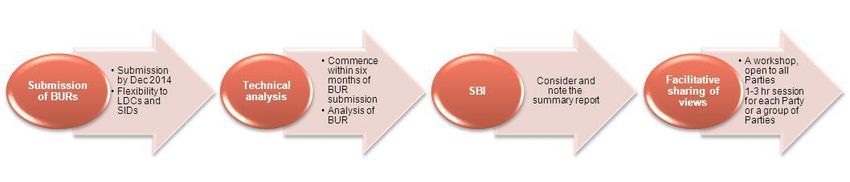
Outline of the presentation

         ICA update

            Experience and lessons learned

            Secretariat support

         Plan for 2019
The ICA Process

•    Implementation of the MRV arrangement for developing country Parties
•    Established since Cancun: decision 1/CP.16 and 2/CP.17
•    Two steps: technical analysis of BUR and FSV
•    The ICA process will be superseded by the Enhanced Transparency Framework under the
     Paris Agreement, with the submission of the last BURs no later than December 2024
Submission of BURs
Number of NAI Parties
Submission from NAIs that
exclude LDCs and SIDS
Submissions from LDCs and SIDS
5
74
34 79
40
74
submitted Not submitted LDCs and SIDS
Submitted Not submitted
NAIs that excludes LDCs and SIDS
Elements of BURs: GHG inventory; Mitigation actions; FTC needs and support received;
REDD plus activities for some PartiesImplementation Update
BUR analysis
Since May 2015
• BUR1: 45 Parties • 39 Parties went
• 63 BURs being
• BUR2: 25 Parties analyzed through 12
through FSV
• BUR3: 4 Parties sessions
rounds of analysis
• 167 experts involved
(including 52 CGE
Submission members) FSV session
Since Dec. 2014 Since May 2016Achievements from ICA Implementation
• Identification and prioritization of capacity-building needs of developing country Parties
• Improvements in reporting, enhancement of domestic MRV system and implementation of
climate actions by developing country Parties
• Empowers NFPs to solicit engagement of sectors and ministries in the MRV process
• Increasing capacity of national experts through BUR analysis
a) Helping Parties understand BUR reporting guidelines and methodologies
b) Training of team of technical experts (TTE) who also serve as national experts
• Showcasing achievements/ sharing of good practice and lessons learned through FSV
a) Establishment of domestic MRV system
b) Policy development in the context of NDC implementation
c) Facilitate potential collaboration between developed and developing countriesExperience and Lessons Learned
• More and more Parties requested well-targeted technical advice from TTEs
• The ICA process would benefit from regular meetings by co-leads to provide
guidance on consistency of approaches
• ICA process provides a useful “testing ground” for developing countries to participate in
MRV implementation and transition to the new transparency framework under the Paris
Agreement
• Synchronization of various reporting processes at the national level
a) BUR and NC submissions
b) REDD + technical annex
c) GHG inventory and NIR
• Consolidation of domestic MRV for GHG inventories, mitigation actions, and FTCSecretariat support to the ICA process
Support the intergovernmental process
• Support on-going negotiations on ICA and FSV sessions
• Support new negotiation items on SBSTA work on further technical guidance on
ETF
• Support CGE work
• Communication and outreach (ICA toolkit, newsletter, ICA side event, webinar)
Enhance the pool of expert resources
Update of the TTE training material (Cluster 1 modules)
Develop ICA support tools to improve efficiency and consistency of
the process
• IT tools: BUR-VTR and FSV Portal
• Non-IT tools: BUR checklist, summary report template, BUR analysis practice
guidance, step-wise guide for ICA, FSV record templatePublications Booklets and brochures to facilitate participation to the ICA process by developing country Parties http://unfccc.int/8621.php
Plan for 2019 on ICA

•   Forecast for BUR submissions in 2019
    a) Around 20 BURs
    b) At least 8 BURs with REDD+ annex

•   Four rounds of BUR analysis
    a) 25 February – 1 March 2019
    b) 27 – 31 May 2019
    c)   Early September 2019 (tentative)
    d) Early December 2019 (tentative)

•   Two FSV sessions at SBs in June 2019 and at COP25

•   Web-based forum to facilitate sharing of good practice in implementing MRV among
    technical experts and Parties
Get involved in ICA!
a) Total eligible experts: 262
• Limited experts with another UN language
• Limited pool of REDD+ experts
• Limited participation by AI experts
b) Enrol in the TTE training programme
and become eligible for BUR analysis!
c) Training in 2019
- 9th round: February – April 2019
- 10th round: October – November 2019
http://unfccc.int/national_reports/expert_training/training_for_the_technical_analysis_
of_burs/items/9279.phpThank you!! More information: http://unfccc.int/8621.php
You can also read


