Fishing for Food Security - The Importance of Wild Fisheries for Food Security and Nutrition - BiodiversityLinks
←
→
Page content transcription
If your browser does not render page correctly, please read the page content below
Fishing for Food Security
The Importance of Wild Fisheries
for Food Security and Nutrition
                                                                               APRIL 2016

 This publication was produced for review by the
                                              USAID – FISSt
                                                 United     atesFO
                                                         HING    Agency for Interna
                                                                   R FOOD         0 tional
                                              SECURITY
                  Development. It was prepared by Measuring Impact.
Table of Contents

I. PREFACE                                                                                                                                          03
II. OVERVIEW                                                                                                                                        04
III. FISHERIES AND GLOBAL DEVELOPMENT                                                                                                               07
IV. KEY OPPORTUNITIES FOR ACTION                                                                                                                    24
V. CASE STUDIES                                                                                                                                     28
VI.THE IMPORTANCE OF FISHERIES IN NINE FEED THE FUTURE PRIORITY
   COUNTRIES                                                                                                                                        32
VII.SOURCES                                                                                                                                         52

Figures
1. Global Fishing in 2010                                                                                                                           06
2. Fish contributions to animal protein supply                                                                                                      09
3. Voluntary submissions of marine fisheries catch data by FAO member countries and
    estimations including all fisheries known to exist                                                                                              10
4. Reconstructed global catch by fisheries sectors                                                                                                  11
5. Evidence base, poverty reduction benefits, and importance to biodiversity for specific
    conservation mechanisms                                                                                                                         18
6. The biological effects of fully protected, no-take marine reserves                                                                               21
7. Summary of potential biomass and financial gains that can be produced through sustainable
    fisheries management                                                                                                                            22
8. Rebuilding of Kenyan small-scale fisheries through gear restrictions and closed area
    management                                                                                                                                      23
9. Nutrition and food security statistics for Bangladesh                                                                                            33
10. Nutrition and food security statistics for Cambodia                                                                                             35
11. Nutrition and food security statistics for Ghana                                                                                                37
12. Nutrition and food security statistics for Kenya                                                                                                39
13. Nutrition and food security statistics for Liberia                                                                                              41
14. Nutrition and food security statistics for Malawi                                                                                               43
15. Nutrition and food security statistics for Mozambique                                                                                           45
16. Nutrition and food security statistics for Senegal                                                                                              47
17. Nutrition and food security statistics for Tanzania                                                                                             49
18. Odds of having eaten fish rather than meat by degree of food insecurity during the previous
    year                                                                                                                                            51

Tables
1. Summary of cumulative sanctuary area, total estimated fish catch, and fish consumption
outcomes at the Hail Haor wetland                                                                                                                   29

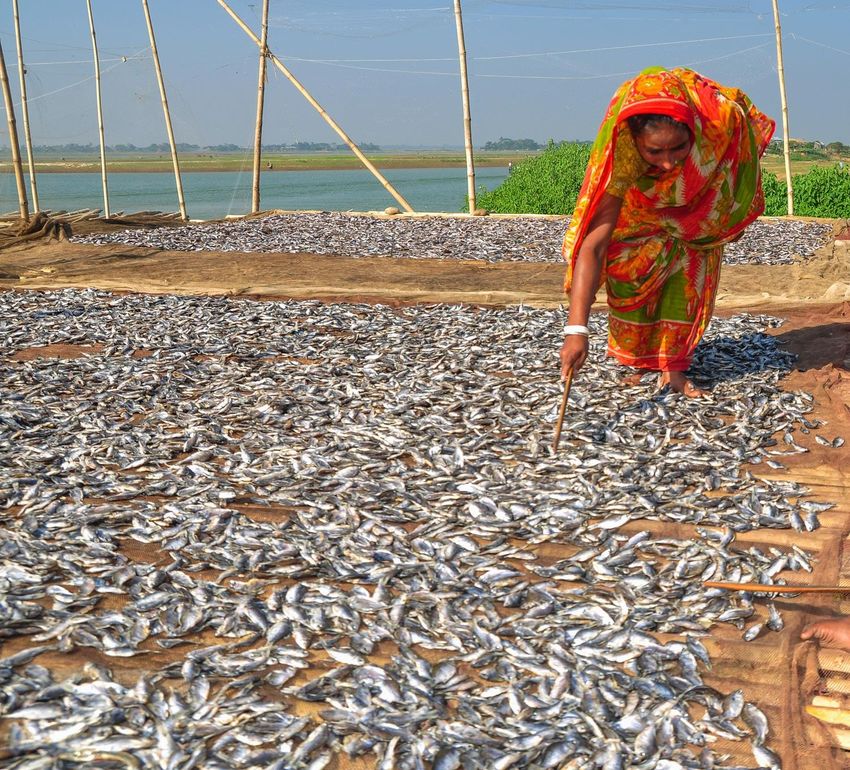
Cover photo: Woman drying fish in Bangladesh. Nine out of ten people engaged in secondary activities, such as fish processing, are women. Credit:
Balaram Mahalder; Back cover photo: A fisherman pulls up his net in Myanmar. Sharing the responsibility for resource management between
user groups and the government can empower fishers to use more sustainable practices. Credit: Balaram Mahalder

                                                                                    USAID – FISHING FOR FOOD SECURITY                                    1
Acronyms

DHS           Demographic and Health Survey

ECOFISH       Ecosystems Improved for Sustainable Fisheries Projects

FAO           Food and Agriculture Organization of the United Nations

FISH          Fisheries Improved for Sustainable Harvest

GDP           Gross Domestic Product

ICFG          Integrated Coastal and Fisheries Governance

MACH          Management of Aquatic Ecosystems through Community Husbandry

NOAA          National Oceanic and Atmospheric Administration

NTFP          Non-Timber Forest Product

PES           Payments for Ecosystem Services

USAID         United States Agency for International Development

The author’s views expressed in this publication do not necessarily reflect the views
of the United States Agency for International Development or the United States
Government.

About Measuring Impact: This work is made possible by the generous support of the
American people through the United States Agency for International Development (USAID)
under the terms of its requisition number REQ-EGAT-12-000014 (Measuring Impact)
implemented by Environmental Incentives, LLC; Foundations of Success; and ICF International.
Measuring Impact has been issued under contract number AID-OAA-C-12-00078 and supports
the same program objectives as described in RFP number SOL-OAA-000050.The Measuring
Impact initiative is funded and managed by the USAID Office of Forestry and Biodiversity/Bureau
for Economic Growth, Education, and Environment.

                                                                                   2
                                                       USAID – FISHING FOR FOOD SECURITY          2
1. Preface

According to both the United Nations Food and Agriculture Organization (FAO)
and the U.S. Congress, “agriculture” includes wild foods such as wild caught fish
as well as farmed foods. Frequently, however, international dialogues and
national action plans on food security overlook the important role that wild caught
fish and other wild foods play in food security and nutrition.

Technically, the terms “fishery” and “fisheries” only refer to the production of wild
fish, while “aquaculture” applies to farmed or cultured fish. Both fisheries and
aquaculture are included within the agriculture sector. Here, we use the phrase
“wild fisheries” as a reminder that we are referring to wild caught fish and not
farmed fish, although the term is redundant.

This briefing book was produced to highlight the importance of wild caught fish to
global and local food security and nutrition, local livelihoods and national
revenues, especially in many Feed the Future countries. Enhancing the natural
productivity of wild fisheries through improved management is not only possible,
but also critical to achieving global and local food security.

                                              USAID – FISHING FOR FOOD SECURITY     3
II. Overview
Fish is one of the most traded food commodities on the global market.
Food and Agriculture Organization of the United Nations (FAO) policies
highlight the importance of wild fish to food security.
Fish is an important staple food in many Feed the Future countries.
Fish is one of the most nutritious foods.
Successful management approaches can sustainably increase wild fish
productivity.
Women play an important role in the fisheries value chain.
Improved fisheries management is critical for climate change adaptation.
“People have
never consumed so
much fish or
depended so
greatly on the
sector for their
well-being as they
do today”
– FAO, The State of
World Fisheries and
Aquaculture 2014
Credit: Irwandi/AFN
Source: FAO 2014a.
USAID – FISHING FOR FOOD SECURITY 4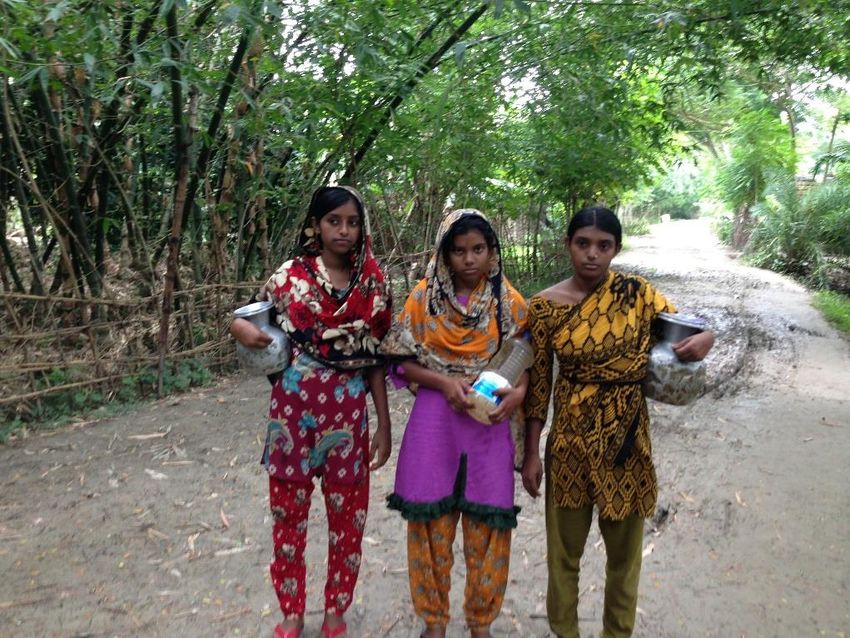
Need for Integrated Policies & Planning
on Wild Fisheries, Aquaculture, Water,
and Food Security
Many national food security plans do not include wild foods such as fish.
Over $50 billion is lost each year from the marine fishing sector due to
poor governance and lack of secure tenure.
About 20-30% of wild fish caught are used as fishmeal, primarily
exported for aquaculture; these small fish are important for food security
and livelihoods for coastal communities and for healthy ecosystems.
Fish exports can endanger domestic food security if an inclusive approach
to economic growth is not taken.
Improper siting of fish farms and poor land use practices can reduce water
quality and the natural productivity of wild fisheries and wetlands.
An integrated, systems approach to food security is urgently needed.
About 20-30%
of wild fish
caught are used
as fish meal,
primarily
exported for
aquaculture;
these small fish
are important
for food
security and
livelihoods for
coastal
communities.
Credit: Tushar Sharma
USAID – FISHING FOR FOOD SECURITY 5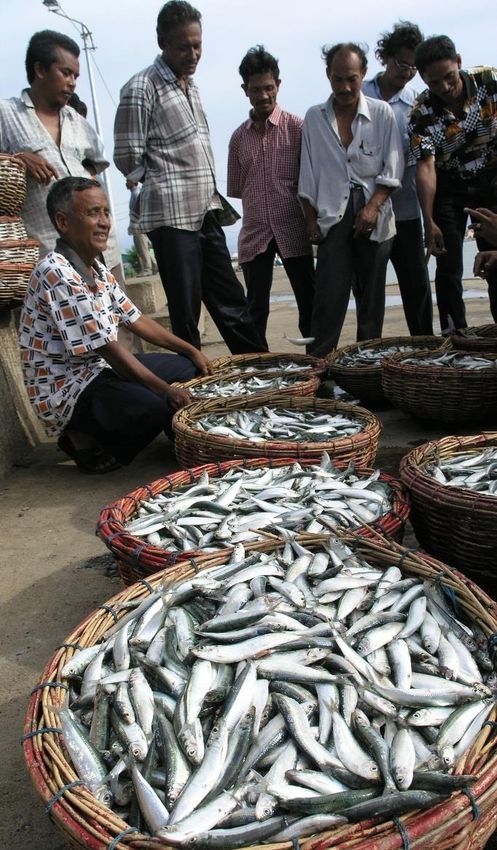
Global Fishing in the Ocean

 Figure 1. Global fishing (in tons per square kilometer) in 2010. These data
 combine official reported catch data and reconstructed estimates of unreported
 data (including major discards).

  Coastal waters are some of the most naturally productive areas on earth.
  Yet this natural productivity is threatened by poor fisheries management,
    lack of managed access, and illegal fishing. Enhancing the capacity of
 many countries in Southeast Asia and parts of Africa and Latin America to
 strengthen their fisheries management could help restore and improve wild
                             fisheries productivity.

Source: Sea Around Us (http://www.seaaroundus.org/data/#/spatial-catch)

                                                          USAID – FISHING FOR FOOD SECURITY   6
Credit: Peg Herring

    III. Fisheries and Global Development
                                                     Credit: Eric Sala WCS

                          USAID – FISHING FOR FOOD     7
                          SECURITY
Fish and Global Trade
According to the FAO (Food and Agriculture Organization of the United
Nations), fish are the most widely traded foods in the world, with about 50%
coming from developing countries.
The FAO estimates that the net value of fish exports from developing countries in
2011 was over $20 billion – greater than the net exports of rice, coffee, tea,
tobacco, and meat combined.
According to the FAO, wild fish and farmed fish each make up about 50% of the fish
produced each year, but China alone accounts for about 68% of aquaculture
products; excluding aquaculture products from China, wild fisheries account for
approximately 80-90% of fish production.
A recent analysis found that, among 220 Marine Stewardship Council certified
fisheries, only 7% are in developing countries. To maintain their comparative
advantage in the global seafood market, developing countries need to move towards
improved fisheries management.
Research on catch
reconstructions from the
Sea Around Us program
indicates that the
quantity of wild fish from
developing countries
may actually be much
higher that previously
reported.
Credit: Joan Drinkwin
Sources: Dyck and Sumaila 2010, Bonini et al. 2011, Sampson et al. 2015, FAO 2014a, Pauly and Zeller 2016.
USAID – FISHING FOR FOOD SECURITY 8
Fish and Food Security
FAO estimates that 2.9 billion people rely on fish for a substantial part
(greater than 20%) of their animal protein.
In several African and Asian countries, fish provide more that half of the
animal protein supply and are a food staple.
New research suggests that the contribution of wild fish to food security
may be even higher than previously thought in many developing
countries.
Figure 2. Fish Contribution to Animal Protein Supply.
Sources: FAO Fisheries and Aquaculture Department 2011, FAO 2014a, Pauly and Zeller 2014.
USAID – FISHING FOR FOOD SECURITY 9Wild Fish and Food Security
Global catches of wild marine fisheries are higher than previously
reported, contributing more to local and global food security.
A 10-year study involving over 50 institutions and 400 researchers
estimates that global marine fish catches were 50% higher than reported
and are declining due to poor management.
Figure 3. Voluntary submissions of marine fisheries catch data by FAO member
countries (“Reported catch,” solid gray line) and estimations including all
fisheries known to exist (“Reconstructed catch,” solid black line).
Wild fish catches are significantly higher than previously reported in
many developing countries, including several Feed the Future
priority countries.
Source: Pauly and Zeller 2016.
USAID – FISHING FOR FOOD SECURITY 10Wild Fish and Food Security
Industrial fishing vessels are largely responsible for most of the global catch,
discards (bycatch), and reported decline in fisheries.
Catches from artisanal and subsistence fisheries are often not reported in
official country reports to FAO, skewing their contribution to food security.
At the global scale, artisanal sector catches continue to show gradual
growth.
Non-commercial subsistence catches, particularly gleaning by women in
coastal areas, are usually neglected.
Figure 4. Reconstructed global catch by fisheries sectors.
Industrial fisheries are the source of the overwhelming majority of
the discards.
Source: Pauly and Zeller 2016.
USAID – FISHING FOR FOOD SECURITY 11Fish and Nutrition
Fish are rich in omega-3 fatty acids, which play an important role in
children’s brain development.
When eaten whole, fish are rich in essential micronutrients including
vitamin A, calcium, iron, and zinc.
Credit: USAID Feed the Future
In Ghana, researchers found that the addition of fish powder to traditional
maize porridge during weaning improved infant growth.
Sources: Lartey et al. 1999, FAO 2014a.
USAID – FISHING FOR FOOD SECURITY 12Fish and Nutrition
Fish heads are rich in Fish flesh is rich in
micronutrients such as protein and omega-3
iron, vitamin A, and zinc fatty acids
Fish bones are
rich in calcium
Credit: MK Oliver
Protein from fish has all of
the essential amino acids and Fish viscera are rich in
is more digestible that protein micronutrients such as
from plants iron and vitamin A
Sources: Roos et al. 2007, Kawarazuka 2010, Kawarazuka and Bene 2011, Tacon and Metian 2013.
USAID – FISHING FOR FOOD SECURITY 13Fish and Nutrition
A recent analysis on the role of fish in food and nutrition security found that
“farmed fish is an excellent source of animal protein but because of
species, size, and method of rearing, it is often inferior to small wild fish as
a source of essential fatty acids and micronutrients.”
In a study of fish consumption patterns in Bangladesh, researchers
concluded that “increased availability of fish from aquaculture may not have
fully compensated for the loss of fish from capture fisheries in terms of
dietary diversity, micronutrient intakes, and food and nutrition security,
particularly for the poorest consumers.”
Credit: Christopher Walker
Several pounds of wild fish are required to produce one pound of some species
of carnivorous farmed fish.
Credit: Christopher Walker
Sources: Beveridge et al. 2013, Belton et al. 2014, Waite et al. 2014, Bene et al. 2015.
USAID – FISHING FOR FOOD SECURITY 14Women in Fisheries
Women’s roles in the fisheries
sector include:
o Fishers/gleaners
o Sellers
o Boat owners
o Processors
o Marketers
o Investors
o Consumers
Credit: WorldFish
A recent study of wild fisheries
in nine fish producing countries
found that 46% of those
engaged in pre- and post-
harvesting activities were About 20% of inland fishers
women. are women.
Nine out of ten people engaged
in secondary activities such as
fish processing are women. Credit: Jessica Torres-Spence
Sources: The World Bank, FAO, and WorldFish Center 2010, WorldFish Center 2010, FAO 2014a.
USAID – FISHING FOR FOOD SECURITY 15Women in Fisheries
Women employed in the fisheries sector face a number of challenges,
including:
Restricted participation in fisheries management organizations due
to cultural barriers
Limited access to credit and microfinance
Lower incomes than men
Credit: Tushar Sharma
Because of their heavy involvement in post-harvest activities, women can be
disproportionately impacted by harmful fishing practices, such as the use of
explosives and chemicals that yield fish that appear normal but fall apart during
processing. FAO reports that these practices can reduce the incomes of women
fish processors.
Sources: WorldFish Center 2010, Matthews et al. 2012, FAO 2014a.
USAID – FISHING FOR FOOD SECURITY 16Fisheries and Climate Change
Credit: Somenath Mukhopadhyay
Credit: NOAA Credit: UNEP
Drought, changes in rainfall patterns, increased water temperatures,
coral bleaching, and ocean acidification pose significant threats to
terrestrial crops and fisheries
An estimated 850 million people benefit from ecosystem services
provided by coral reefs, including fisheries. Climate change is increasing
the frequency and severity of coral reef bleaching episodes, with negative
impacts on millions of people in developing countries who rely on coral
reef fisheries for food security and livelihoods.
The National Oceanic and Atmospheric Administration (NOAA)
announced in October 2015 that rising ocean temperatures are causing a
global coral bleaching event, threatening coral reef ecosystems and the
important services they provide.
Improved fisheries management and conservation of critical fish habitat
such as reefs and mangrove forests can enhance the resilience of coral
reef ecosystems to climate change impacts and are effective adaptation
strategies.
Sources: Hoegh-Guldberg et al. 2007, WRI 2011, FAO 2014a, Anthony et al. 2015, NOAA 2015.
USAID – FISHING FOR FOOD SECURITY 17Fisheries and Poverty Reduction
Figure 5. Evidence base, poverty reduction benefits, and importance to biodiversity
for specific conservation mechanisms.
NTFP: Non-timber forest products
PES: Payments for ecosystem services
A 2013 study found evidence to support the hypothesis that at least 10
conservation mechanisms had positive effects on poverty alleviation.
Some of the strongest evidence in support of poverty reduction
benefits came from fish spillover (the movement of fish from areas of
high population density) from marine reserves with no-take zones.
Fish spillover was more likely to benefit local communities if they
actively participated in management of the resource, and if the
benefits from spillover offset losses from the no-take zone.
Source: Leisher et al. 2013.
18
USAID – FISHING FOR FOOD SECURITY 18Wild Fisheries and Livelihoods
Wild fisheries and related activities
such as boat building and fish
processing support livelihoods for
more than 500 million people
worldwide.
Of those employed in the fisheries
sector, 95% live in developing
countries.
Small-scale fisheries in developing
countries provide employment for
about 90% of those working in the
sector.
Estimated number of fishers by
region:
o Asia: 30.8 million
o Africa: 5.6 million
Credit: USAID
o Latin America and Caribbean: 1.9
million
o Europe: 544,000
o North America: 314,000
o Oceania: 121,000 Wild fisheries support a variety of
livelihood activities throughout
the developing world.
Sources: Bene et al. 2010, Garcia and Rosenberg 2010, WorldFish Center 2011, FAO 2014a.
USAID – FISHING FOR FOOD SECURITY 19Successful Approaches to Increase
Wild Fisheries Productivity
Credit: WAWASH
Co-management, where fishers have a say in management decisions, is
a successful approach to increasing the productivity of wild fisheries.
Co-management: Sharing the responsibility for resource management
between user groups and the government can empower fishers to use
more sustainable practices.
Securing tenure rights: Secure tenure rights of fisheries resources is
important for improving their governance and sustaining livelihoods.
Ecosystem-based management: Conserving ecosystems through
measures such as identifying and protecting critical fish habitats and
using appropriate gear can increase their productivity.
Credit: WAWASH
Sources: FAO 2013, USAID 2013.
USAID – FISHING FOR FOOD SECURITY 20Successful Approaches to Increase
Wild Fisheries Productivity
Figure 6.The biological effects of fully protected, no-take marine reserves.Average and median
percent change in biomass, density, organism size, and species richness.All the increases are
statistically significant.
2 – 4% per year A 2009 review on the
biological effects of
for at least 30 fully protected, no-
take marine reserves
years found positive
impacts on fish
biomass, density, size,
and species richness.
N = number of reserves
Fully protected marine reserves that are well-managed and enforced can
increase the abundance, size, and diversity of fish within the reserve.
Fisheries can benefit from marine reserves through spillover.
Marine reserves have been shown to foster coral reef recovery and
increase the resilience of populations of commonly harvested fish
species.
A study analyzing the effects of 28 marine protected areas on catch per
unit effort of marketable fish found a 2-4% increase per year for at least
30 years.
Sources: Lester et al. 2009, Vandeperre et al. 2011, Barner et al. 2015, da Silva et al. 2015.
USAID – FISHING FOR FOOD SECURITY 21Potential for Global Fish Recovery
and Productivity
Figure 7. Summary of potential biomass
(in millions of metric tons per year) and +90B
financial gains that can be produced USD/year
through sustainable fisheries
management.
+782
MMT/year
2 – 4% per year
+17 for at least 30
MMT/year years fish biomass in the water per year
harvests per year
23% more in
profits per year
315% more
112% more
More Food More Fish More Profit
Recent analyses highlight the tremendous potential to recover ocean
productivity through improved fisheries management.
Source: California Environmental Associates et al. 2015.
USAID – FISHING FOR FOOD SECURITY 22Improved Management Can Rebuild
Wild Fisheries
Evidence from the United States:
o Of 44 wild fisheries populations reviewed in the U.S., 28 stocks, or
64%, were rebuilt or showed significant rebuilding progress.
o The estimated annual gross commercial revenue of those 28 U.S. fish
populations increased 92% from the start of rebuilding.
Rebuilding has also occurred in developed countries through improved
management, including the adoption of co-management, closed areas as
fish reserves, and restrictions on destructive fishing gear (e.g., beach
seines, bottom trawls).
Figure 8. Rebuilding of Kenyan small-scale fisheries through gear restrictions and
closed area management.
In Kenya, local communities
adopted cooperative
management approaches
that included closed areas
and gear restrictions on
beach seines, leading to the
recovery of fish biomass,
increases in fish size, and
significant increases in
fisher’s incomes
Sources: McClanahan et al. 2008, Worm et al. 2009, Sewell et al. 2013.
USAID – FISHING FOR FOOD SECURITY 23Credit: Toby Jorrin
IV. Key Opportunities for Action
USAID – FISHING FOR FOOD 24
SECURITY Credit: Jarret CassantiKey Opportunities for Action:
Secure Tenure
Globally, there is increasing awareness of the importance of wild
fisheries to global and local food security and the need for improved
management, secure tenure, and innovative financing to sustain them.
Secure tenure in fisheries could be as transformative as land tenure in
terrestrial agriculture.
FAO has published a set of internationally
agreed upon voluntary guidelines that promote a
human-rights based approach to sustainable
development of small-scale fisheries. The
guidelines place particular emphasis on
responsible tenure of fisheries resources as
critical for achieving food security, poverty
eradication, social stability, and sustainable
livelihoods.
USAID’s Bureau for Economic Growth, Education, and Environment Office of
Land Tenure and Resource Management and Office of Forestry and Biodiversity
have produced resources to aid in Agency programming around tenure.
Looking to the Sea to Sustainable Fisheries and
Small-Scale Fisheries Support Development Responsible Aquaculture:
and Marine Tenure: A Objectives: A Primer A Guide for USAID Staff
Sourcebook and Partners
Sources: USAID 2013, FAO 2015, Courtney and Jhaveri forthcoming.
USAID – FISHING FOR FOOD SECURITY 25Key Opportunities for Action:
Seafood Traceability
Forthcoming catch documentation
and traceability requirements by the
United States, a major seafood
importer, will create market
incentives for improved fisheries
management in source countries.
Wild and farmed seafood will be
required to document where it was
caught or farmed, the vessel and
gear used, and trace its supply
chain.
The U.S. Presidential Task Force on
Combating Illegal, Unreported, and
Unregulated Fishing and Seafood
Fraud calls for seafood traceability
as one measure to reduce illegal
fishing.
Globally, losses from illegal, unreported, and unregulated fisheries are
valued at $10-23 billion annually, constituting 20-30% of the catch from
key fisheries. This looting threatens the food security of 2.6 billion people
who rely on fish protein in developing countries. Forced labor and other
criminalities are often associated with illegal fishing. Credit: Kimie
Tanaka
Research supported by USAID/Senegal found that about 60% of the fish
caught in Senegal waters was taken illegally, resulting in $300 million per
year in lost revenues and threatening local livelihoods and food security.
Sources: Presidential Task Force on Combating IUU Fishing and Seafood Fraud 2015.
USAID – FISHING FOR FOOD SECURITY 26Key Opportunities for Action:
Market Demand
There is increasing market demand for seafood from sustainably
managed fisheries and niche fisheries. Major retailers such as Costco,
Target, and Walmart have committed in recent years to offering more
sustainable seafood choices. Sodexo, one of the world’s largest food
services corporation, has committed to stop serving at-risk seafood
species.
Innovative financial mechanisms are important in improving fisheries
management. Bloomberg Philanthropies launched the $53 million Vibrant
Oceans Initiative to improve fishing practices. The project will work with
investors to create financial incentives for fishers to manage fisheries more
sustainably.
Catalyzing market-based partnerships is a key component of the
Rockefeller Foundation’s Oceans & Fisheries Initiative, which aims to
increase the health and productivity of local fisheries by decreasing
unsustainable fishing pressures by putting the needs of poor and
vulnerable people at the center of innovative, equitable solutions.
Impact investment firms for fisheries are changing the way investment
capital is used to solve critical environmental and social problems.
Fish 2.0 is an international business competition that connects potential
investors with sustainable seafood businesses.
Credit: Kimie
Tanaka
Sources: NPR 2012, Bloomberg Philanthropies 2015, Fish 2.0 2015.
USAID – FISHING FOR FOOD SECURITY 27Credit: USAID
V. Case Studies
Credit: Omar Eid
USAID – FISHING FOR FOOD 28
SECURITYManagement of Aquatic Ecosystems
through Community Husbandry
Program: BANGLADESH
The Management of Aquatic Ecosystems through Community
Husbandry (MACH) Program was a nine-year, $14 million project jointly
developed and funded by USAID and the Government of Bangladesh
targeting more than 110 rural fishing villages.
MACH secured lease rights for local fishing communities and helped
them pioneer co-management of three degraded wetlands, including the
formation of Resource Management Organizations composed of fishers,
local politicians, and other stakeholders.
Fish consumption increased by 52%, fish catch went up by 140%, and
average household income rose by 33% between 1999 and 2006 across
targeted communities.
Other program accomplishments include: establishment of 63 fish
sanctuaries; 644,000 trees planted to replace swamp forest; and
wetlands restocked with 1.2 million native species fish.
Table 1. Summary of cumulative sanctuary area, total estimated fish catch, and fish
consumption outcomes at the Hail Haor wetland, one of the program’s sites.
Fish
Cumulative area of Total estimated
Year consumption
sanctuaries (ha) catch (T)
(g/person/day)
2000 5.65 2561 52
2001 8.87 2382 54
2002 18.11 3588 60
2003 103.79 2021 58
2004 103.79 4854 65
Sources: Thompson and Choudhury 2007, WRI 2008.
USAID – FISHING FOR FOOD SECURITY 29Integrated Coastal and Fisheries
Governance Program: GHANA
“Biribirieba,” a weekly
radio drama supported
by the ICFG program,
reached more than two
million Ghanaians
weekly and delivered
important messages
about coastal resource
management.
Credit: Sean Southey
The Integrated Coastal and Fisheries Governance (ICFG) program was
a $12.5 million initiative jointly funded by USAID and implementing
partners targeting coastal communities in the Western Region of Ghana.
ICFG worked with local and national partners to improve coastal
governance and fisheries management, address overfishing, and
increase socio-economic benefits for artisanal fishing communities.
Program achievements include:
o Adoption of Ghana’s first shoreline management plan
o Improved enforcement of fisheries laws
o Development of a toolkit for each Western Region district that
included case studies, technical information, and suggestions for
integrated coastal management projects
Sources: Coastal Resources Center 2014, Coastal Resources Center 2015.
USAID – FISHING FOR FOOD SECURITY 30
USAID – FISHING FOR FOOD SECURITY 30Projects –
FISH and ECOFISH Projects:
PHILIPPINES
PHILIPPLINES
The Fisheries Improved for Sustainable Harvest (FISH) project was a seven-
year (2003-2010) initiative supported by USAID with a target of increasing
fish stocks in four large economically important fishing areas by 10%.
The FISH project built local capacity to manage coastal resources and
marine fish stocks and to improve governance by:
o Building relationships between fishers, communities, and local authorities to
promote more effective enforcement and co-management of fisheries
resources
o Strengthening the ability of local governments to conduct fisheries
management as a public service
o Providing training to help local law enforcement units develop the skills to
monitor marine protected areas and fishing grounds and confront violators
The Ecosystems Improved for Sustainable Fisheries Projects (ECOFISH)
project is a five-year (2012-2017) initiative building on the progress made by
FISH and expands these approaches into eight marine key biodiversity
areas.
FISH project accomplishments
include:
Over 20 new marine
protected areas established
12.8% increase in fish stocks
within 77,000 hectares of
marine waters
31 law enforcement units put
into operation or
strengthened
65 new fishing effort
restrictions introduced
Credit: USAIDFISH
Sources: USAID 2010, USAID 2014a, USAID 2014b.
USAID – FISHING FOR FOOD SECURITY 31Credit: USAID
VI. The Importance of Fisheries in Nine
Feed the Future Priority Countries
USAID – FISHING FOR FOOD 32
SECURITY
Credit: USAIDImportance of Wild Fisheries for
Local Food Security: BANGLADESH
Fish provide an estimated 60% of dietary animal
protein supply.
Fisheries provide full-time employment for about
1.4 million people.
The fisheries sector in Bangladesh contributes
4% to the national Gross Domestic Product Land Area
(GDP) and 22% to agricultural GDP. Freshwater & Floodplains
Marine Area/Exclusive
Small indigenous fish species are commonly
cooked and eaten whole and are an important Economic Zone
source of nutrients, especially for the rural poor.
Figure 9. Nutrition and Food Security Statistics for Bangladesh.
Sources: Roos et al. 2007, Ahmed et al. 2012a, National Institute of Population Research and Training et al.
2013, Government of the People’s Republic of Bangladesh 2015.
USAID – FISHING FOR FOOD SECURITY 33Threats to Wild Fisheries:
BANGLADESH
Credit: WASHplus
Women’s involvement in the fisheries sector in Bangladesh is limited
by their lack of access to resources and training and by cultural
barriers to participation in fisheries management organizations.
Wild fisheries are threatened by habitat degradation, overexploitation
Credit: Kimie
due to poor management, and low compliance with existing fisheriesTanaka
management rules and laws.
Bangladeshi fisheries are highly vulnerable to climate change and
have low adaptive capacity.
Sources: Allison et al. 2009, Hussain 2010, Ahmed et al. 2012b, Government of the People’s Republic of
Bangladesh 2015.
USAID – FISHING FOR FOOD SECURITY 34Importance of Wild Fisheries for
Local Food Security: CAMBODIA
Fish provide an estimated 66% of dietary animal
protein supply.
Fisheries contribute 10% to the national GDP.
The livelihoods of almost 30% of Cambodians directly
depend on small-scale fisheries.
Land Area
Over half of people employed in the fisheries sector
are women. Freshwater & Floodplains
Marine Area/Exclusive
Cambodia’s 2014-2018 National Strategic Economic Zone
Development Plan highlights the importance of
conservation areas, community-based fisheries
management, and improved governance in addressing
these threats.
Figure 10. Nutrition and Food Security Statistics for Cambodia.
Sources: Hori et al. 2006, Navy and Bhattarai 2009, National Institute of Statistics et al. 2010, The World
Bank, FAO, and WorldFIsh Center 2010, FAO Fisheries and Aquaculture Department 2011.
USAID – FISHING FOR FOOD SECURITY 35Threats to Wild Fisheries:
CAMBODIA
Poor management of wild fisheries in Cambodia has resulted in declining
productivity and biodiversity.
Widespread use of illegal fishing methods, as well as climate change and
habitat loss, pose important threats to Cambodia’s fisheries.
Credit: Eric Thompson
Given the dependence on wild fisheries for nutrition and livelihoods in
Cambodia, especially among poor and marginalized communities, any
decrease in their productivity could have serious repercussions.
Sources: Navy and Bhattarai 2009, Sok et al. 2012, Cambodia Ministry of Planning 2015.
USAID – FISHING FOR FOOD SECURITY 36Importance of Wild Fisheries for
Local Food Security: GHANA
Fish provide an estimated 60% of animal
protein supply.
The fishing sector provides employment for an
estimated 2.4 million people.
Small-scale fisheries in Ghana contribute about
3% to the national GDP.
Land Area
The government established the Ministry of Freshwater & Floodplains
Fisheries and Aquaculture Development in
Marine Area/Exclusive
2013 to promote “sustainable management of
Economic Zone
the fisheries sector.”
Figure 11. Nutrition and Food Security Statistics for Ghana.
Sources: West Africa Trade Hub and USAID 2008, Republic of Ghana 2014a, Republic of Ghana 2014b,
Belhabib et al. 2015.
USAID – FISHING FOR FOOD SECURITY 37Threats to Wild Fisheries:
GHANA
Demand for fish in Ghana has outstripped supply, and fish stocks are in
serious decline.
Threats to fisheries include overfishing, poor management, and illegal,
unreported, and unregulated fishing by foreign fleets.
Recognizing the need to assess and mitigate the negative impacts of
illegal fishing, the Ghanaian government worked with FAO to develop the
2014 National Plan of Action to Prevent, Deter, and Eliminate Illegal,
Unreported, and Unregulated Fishing.
Credit: Kimie Tanaka
Improved fisheries management is urgently needed to sustain the
socio-economic importance of Ghanaian fisheries.
Sources: Falaye 2008, Republic of Ghana 2014b.
USAID – FISHING FOR FOOD SECURITY 38Importance of Wild Fisheries for
Local Food Security: KENYA
Fish provide an estimated 8% of dietary animal
protein supply.
The fisheries sector generates employment for
more than two million Kenyans through fishing,
boat building, fish processing, and other
activities.
Small-scale fishing is the primary source of Land Area
income for communities along Kenya’s lakes Freshwater & Floodplains
and coastline. Marine Area/Exclusive
Economic Zone
Kenya’s 2014-2017 National Nutrition Plan
promotes fisheries as a sector that can
contribute to the national nutrition agenda.
Figure 12. Nutrition and Food Security Statistics for Kenya.
Sources: FAO 2007, Kenyan National Bureau of Statistics and ICF Macro 2010, FAO Fisheries and
Aquaculture Department 2011, Republic of Kenya 2012, Republic of Kenya Ministry of Fisheries Development
2013, Gavenus 2014, The World Bank 2015.
USAID – FISHING FOR FOOD SECURITY 39Threats to Wild Fisheries:
KENYA
Credit: James Bowman
Some of the highest rates of HIV prevalence in Kenya are found in the
fishing communities that live in the Nyanza region around Lake Victoria.
Fishers’ mobility, which makes them difficult targets for public health
interventions, has been identified as a driver of this pattern.
Kenyan wild fisheries have experienced declines in both diversity and
productivity due to poor management.
Kenya currently derives little economic benefit from its valuableCredit:
marine Kimie
fisheries, which are primarily exploited by foreign vessels. Tanaka
Among western Indian Ocean countries, Kenya’s coral reefs are among
the most vulnerable to climate change-related coral bleaching.
Sources: Kenya National AIDS Control Council 2009, Cinner et al. 2012, Republic of Kenya Ministry
of Fisheries Development 2013.
USAID – FISHING FOR FOOD SECURITY 40
USAID – FISHING FOR FOOD SECURITY 40Importance of Wild Fisheries For
Local Food Security: LIBERIA
Fish provide an estimated 15% of dietary animal
protein supply.
Small-scale fisheries provide employment for
33,000 people, 60% of them women.
A recent analysis found that, if adequately
managed, fisheries can significantly contribute to
sustainably providing the country’s needs for
Land Area
animal protein.
Freshwater & Floodplains
During the recent Ebola outbreak in Liberia and Marine Area/Exclusive
subsequent bans on bushmeat consumption, Economic Zone
sellers switched to the sale of fish as an
alternative source of income.
Figure 13. Nutrition and Food Security Statistics for Liberia.
Sources: FAO Fisheries and Aquaculture Department 2011, Belhabib et al. 2013, World Food Programme
2013, Government of Liberia and FAO 2012, Malayea 2014, Liberia Institute of Statistics and Geo-Information
Service et al. 2014.
USAID – FISHING FOR FOOD SECURITY 41Threats to Wild Fisheries:
LIBERIA
Average per
capita annual fish
and shellfish
intake in Liberia
is estimated to be
5.0 kg,
significantly lower
than in
neighboring
countries like
Sierra Leone (25
kg) and Guinea
(10.5 kg).
Credit: Wasif Hasan
Illegal, unreported, and unregulated catches in Liberia are draining about
$75 million per year from the national economy.
The Liberian Bureau of National Fisheries has low enforcement capacity
and lacks resources to properly survey fisheries.
Liberia is very vulnerable to catastrophic wild fisheries declines due to its
high dependence on fish for food security.
Sources: Kebe et al. 2009, National Marine Fisheries Service 2011, Belhabib et al. 2013, Hughes et al. 2012.
USAID – FISHING FOR FOOD SECURITY 42Importance of Wild Fisheries for
Local Food Security: MALAWI
Fish provide an estimated 28% of dietary
animal protein supply.
Fisheries contribute 4% to the national GDP.
Capture fisheries in Malawi employ almost
60,000 fishers and indirectly employ more than
half a million people.
A key strategy in Malawi’s 2011-2016 Growth Land Area
and Development Strategy is to increase the Freshwater & Floodplains
productivity of the country’s fisheries.
Figure 14. Nutrition and Food Security Statistics for Malawi.
Sources: Government of Malawi 2010, National Institute of Statistics and ICF Macro 2010, FAO Fisheries
and Aquaculture Department 2011, Njaya 2011, IFPRI 2012, Donda and Mafaniso 2014.
USAID – FISHING FOR FOOD SECURITY 43Threats to Wild Fisheries:
MALAWI
Poor management of Malawi’s fisheries is resulting in rising prices,
declining catches, and decreased food security.
Climate change is expected to decrease the productivity of Malawi’s
fisheries.
In the wake of declining catches, rural fishing communities are turning to
environmentally destructive fishing gear in an effort to increase their
catch.
Credit: Asafu Chijere
Yields from Malawi’s lakes are declining significantly. Lake Chilwa’s
total catch has dropped by more than a third since the 1990s.
Sources: Government of Malawi 2010, Government of Malawi 2012, Tweddle et al. 2015.
USAID – FISHING FOR FOOD SECURITY 44The Importance of Wild Fisheries For
Local Food Security: MOZAMBIQUE
Fish provide an estimated 40% of dietary
animal protein supply.
About 330,000 people rely on small-scale
fisheries for their livelihoods.
Fisheries contribute almost 7% to the
country’s agricultural GDP. Land Area
Mozambique’s Fisheries Master Plan 2010- Freshwater & Floodplains
2019 focuses on increasing the contribution of Marine Area/Exclusive
fisheries to food security and economic Economic Zone
development.
Figure 15. Nutrition and Food Security Statistics for Mozambique.
Sources: World Health Organization 2010, FAO 2011, FAO Fisheries and Aquaculture Department 2011,
Benkenstein 2013, Benson et al. 2014, Oceanic Development 2014, World Food Programme 2015.
USAID – FISHING FOR FOOD SECURITY 45Threats to Wild Fisheries:
MOZAMBIQUE
Stocks of many small-scale fisheries are decreasing due to poor
management.
Illegal fishing practices, pollution from extractive industries, and climate
change also pose important threats to Mozambique’s fisheries.
Coastal communities in Mozambique identified fisheries degradation and
climate variability as the two main stressors impacting their livelihoods.
Credit: Rodrigo Mueche
Average per capita annual fish and shellfish consumption in
Mozambique is estimated to be 5.7 kg – among the lowest in the region.
Sources: Bunce et al. 2010, National Marine Fisheries Service 2011, Benkenstein 2013.
USAID – FISHING FOR FOOD SECURITY 46Importance of Wild Fisheries for
Local Food Security: SENEGAL
Fish provide an estimated 43% of dietary
animal protein supply.
The fisheries sector employs an estimated
600,000 people, 30% of them women.
Small-scale fisheries in Senegal contribute 3%
to the national GDP.
Land Area
Strategic objectives under Senegal’s National Freshwater & Floodplains
Strategy for Economic and Social Development Marine Area/Exclusive
include sustainable management and improved
Economic Zone
productivity of fisheries.
Figure 16. Nutrition and Food Security Statistics for Senegal.
Sources: FAO 2008, FAO Fisheries and Aquaculture Department 2011, Republic of Senegal 2012,
Belhabib et al. 2014, Belhabib et al. 2015.
USAID – FISHING FOR FOOD SECURITY 47Threats to Wild Fisheries:
SENEGAL
Wild fisheries in Senegal are threatened by poor management and
overexploitation.
About 60% of the fish taken from Senegal waters are taken illegally,
negatively affecting fish populations, local food security and fishers’
livelihoods, and resulting in $300 million in lost revenues annually.
Overexploitation of some high value species has led to their collapse.
Credit: HK Arun
Industrial fleets operating in Senegal are estimated to have discarded an
estimated 40% of their total catch between 1950 and 2010.
Sources: Thiao et al. 2012, Belhabib et al. 2014.
USAID – FISHING FOR FOOD SECURITY 48Importance of Wild Fisheries for
Local Food Security:TANZANIA
Fish provide an estimated 22% of dietary animal protein
supply.
The fisheries sector employs more than 4 million people.
Due in part to harmful fishing practices, the growth of the
fisheries sector has declined in recent years. Land Area
Tanzania’s National Strategy for Growth and Poverty Freshwater & Floodplains
Reduction recognizes the potential of sustainably Marine Area/Exclusive
managed fisheries to contribute to livelihoods and Economic Zone
nutrition.
Figure 17. Nutrition and Food Security Statistics for Tanzania.
Sources: United Republic of Tanzania Ministry of Finance and Economic Affairs 2010, United Republic of
Tanzania Ministry of Livestock and Fisheries Development 2010, FAO Fisheries and Aquaculture
Department 2011, National Bureau of Statistics (Tanzania) and ICF Macro 2011, The World Bank 2015.
USAID – FISHING FOR FOOD SECURITY 49Threats to Wild Fisheries:
TANZANIA
Tanzania’s fisheries face a number of challenges including over-
exploitation, destruction of fish habitats through blast fishing and other
harmful practices, and climate change.
Coastal fishing communities in Tanzania are particularly sensitive to
climate change due to their high dependence on fisheries for food security
and livelihoods.
Illegal fishing and trafficking of fish and fisheries products across
Tanzania’s borders divert valuable resources that could be utilized for
national economic growth and poverty reduction strategies.
A 2012 study on the
effectiveness of marine
protected areas in three
ecological zones in
Tanzania found that
they led to an increase
in fish catch and income
and a reduction in
harmful fishing
practices.
Credit: Philippe Guillaume
Sources: United Republic of Tanzania Ministry of Livestock and Fisheries Development 2010, Cinner et al.
2012, Machumu and Yakupitiyage 2013.
USAID – FISHING FOR FOOD SECURITY 50Demographic and Health Survey
Analysis: TANZANIA
Data from the 2010 Tanzania Demographic and Health Survey (DHS) were
analyzed to better understand associations between fish consumption and
select nutritional outcomes, as well as differences in fish and meat
consumption based on geography, household wealth, and degree of food
insecurity.
Rural households within the poorest wealth quintile consumed fish on
average almost three times more frequently than meat during the week
before the survey.
Rural households that experienced food insecurity in the previous year were
more dependent on fish than meat.
These findings suggest that poorer and more food insecure populations
depend more strongly on fish as a protein source.
Figure 18. Odds of having eaten fish rather than meat by degree of food insecurity*
during the previous year.
*Controlling for relevant socio-economic, environmental, and WASH variables.
Sources: National Bureau of Statistics (Tanzania) and ICF Macro 2011, Jacob and Assaf unpublished data.
USAID – FISHING FOR FOOD SECURITY 51VII. Sources
• Ahmed, M.K., et al., Participation of women in aquaculture in three coastal districts of Bangladesh: Approaches toward sustainable
livelihood. World Journal of Agricultural Sciences, 2012a. 8(3): p. 253-268.
• Ahmed, S., et al., Nutrient composition of indigenous and exotic fishes of rainfed waterlogged paddy fields in Lakshmipur, Bangladesh.
World Journal of Zoology, 2012b. 7(2): p. 135-140.
• Allison, E.H., et al., Vulnerability of national economies to the impacts of climate change on fisheries. Fish and fisheries, 2009. 10(2): p.
173-196
• Anthony, K., et al., Operationalizing resilience for adaptive coral reef management under global environmental change. Global Change
Biology, 2015. 21(1): p. 48-61.
• Barner, A.K., et al., Solutions for recovering and sustaining the bounty of the ocean combining fishery reforms, rights-based fisheries
management, and marine reserves. Oceanography, 2015. 28(2): p. 252-163.
• Belhabib, D., et al., When Reality Leaves a lot to the Imagination: Liberian Fisheries from 1950 to 2010. Available from:
http://www.seaaroundus.org/researcher/dpauly/PDF/2013/Others/WhenRealityLeavesalot.pdf., in Fisheries Centre Working Paper. 2013.
• Belhabib, D., et al., Fisheries catch misreporting and its implications: The case of Senegal. Fisheries Research, 2014. 151: p. 1-11.
• Belhabib, D., et al., Feeding the poor: Contribution of West African fisheries to employment and food security. Ocean & Coastal
Management, 2015. 111: p. 72-81.
• Belton, B. and S.H. Thilsted. Fisheries in transition: Food and nutrition security implications for the global South. Global Food Security
2014. 3(1): p, 59-66.
• Belton, B., et al. Faltering fisheries and ascendant aquaculture: Implications for food and nutrition security in Bangladesh. Food Policy,
2014. 44: p. 77-87,
• Bene, C., et al. Not by rent alone: analysing the pro-poor functions of small-scale fisheries in developing countries. Development Policy
Review, 2010. 28(3): p. 325-358.
• Bene, C., et al. Feeding 9 billion by 2050 – Putting fish back on the menu. Food Security 2015. 7(2): p. 261-274.
• Benkenstein, A., Small-Scale Fisheries in a Modernising Economy: Opportunities and Challenges in Mozambique. Available from:
http://www.saiia.org.za/research-reports/small-scale-fisheries-in-a-modernising-economy-opportunities-and-challenges-in-mozambique. 2013,
• Benson, T., et al., Assessing Progress Made toward Shared Agricultural Transformation Objectives in Mozambique. Available from:
http://www.ifpri.org/sites/default/files/publications/ifpridp01370.pdf. 2014.
• Beveridge, M.C.M., et al. Meeting the food and nutrition needs of the poor: the role of fish and the opportunities and challenges emerging
from the rise of aquaculture. Journal of Fish Biology, 2013. 83(4): p. 1067-1084.
• Bloomberg Philanthropies, Environment- Vibrant Oceans. Available from: http://www.bloomberg.org/program/environment/vibrant-oceans/.
2015.
• Bonini, S., et al. Design for Sustainable Fisheries – Modeling Fishery Economics. Available from:
http://www.mckinsey.com/client_service/sustainability/latest_thinking/design_for_sustainable_fisheries. 2011.
• Bunce, M., et al., Perceptions of climate change, multiple stressors and livelihoods on marginal African coasts. Environment, Development
and Sustainability, 2010. 12: p. 407-440
• Cambodia Ministry of Planning, National Strategic Development Plan 2014-2018. Available from:
http://www.mop.gov.kh/Home/NSDP/NSDP20142018/tabid/216/Default.aspx. 2015.
• California Environmental Associates et al. Ocean prosperity roadmap: Fisheries and beyond. Available from:
http://www.oceanprosperityroadmap.org/wp-content/uploads/2015/05/Synthesis-Report-6.14.15.pdf. 2015
• Cinner, J.E., et al., Vulnerability of coastal communities to key impacts of climate change on coral reef fisheries. Global Environmental
Change, 2012. 22(1): p. 12-20.
• Coastal Resources Center. The Integrated Coastal and Fisheries Governance (ICFG) Program for the Western Region of Ghana, Final
Report, 2014. Available from: http://www.crc.uri.edu/download/GH2009PW016_508.pdf. 2014.
• Coastal Resources Center. HEN MPOANO: Western Ghana Integrated Coastal and Fisheries Governance. Available from:
http://www.crc.uri.edu/projects_page/the-integrated-coastal-and-fisheries-governance-icfg-initiative-for-the-western-region-of-ghana/. 2015.
• Courtney, C.A. and Jhaveri, N.J. Marine Tenure and Small-scale Fisheries: A Sourcebook on Good Practices and Emerging
Themes. Washington, DC: USAID Tenure and Global Climate Change Program. Forthcoming.
• Courtney, C.A. and Jhaveri, N.J.. Looking to the Sea to Support Development Objectives: A Primer for USAID Staff and
Partners. Washington, DC: USAID Tenure and Global Climate Change Program. Forthcoming.
• da Silva I.M., et al. Spillover effects of a community-managed marine reserve. PLoS ONE, 2015. 10(4): e0111774.
USAID – FISHING FOR FOOD SECURITY 52Sources
• Donda, S. and H. Mafaniso, Fisheries management and conflicts in the Southeast Arm of Lake Malawi in Fragmentation of resource
management on the south east arm of Lake Malawi, S. Donda, et al., Editors. 2014, Lit Verlag: Zurich.
• Dyck, A.J. and U.R. Sumaila. Ocean Science Summary: Marine Fisheries and the World Economy. Available from:
http://www.pewtrusts.org/en/research-and-analysis/reports/2010/09/14/ocean-science-summary-marine-fisheries-and-the-world-
economy. 2010.
• Falaye, A.E., Illegal Unreported Unregulated (IUU) Fishing in West Africa (Nigeria & Ghana). Marine Resources Assessment Group Ltd,
London, 2008.
• FAO. Fishery country profile. Available from: ftp://ftp.fao.org/FI/DOCUMENT/fcp/en/FI_CP_KE.pdf. 2007.
• FAO, Fishery production system report 2008-Senegal Fisheries Sector. Available from: http://firms.fao.org/firms/fishery/472/en. 2008.
• FAO Fisheries and Aquaculture Department, Summary tables of Fishery Statistics: Food Balance Sheets 2011. Available from:
ftp://ftp.fao.org/FI/STAT/summary/FBS_bycontinent.pdf. 2011.
• FAO. Nutrition Country Profile: Republic of Mozambique. Available from: http://www.fao.org/docrep/017/ap844e/ap844e.pdf. 2011.
• FAO. Implementing Improved Tenure Governance in Fisheries. Available from: http://www.fao.org/docrep/018/i3420e/i3420e.pdf. 2013.
• FAO. The State of World Fisheries and Aquaculture. Available from: http://www.fao.org/3/a-i3720e.pdf. 2014a.
• FAO. Blue growth – unlocking the potential of seas and oceans. Available from: http://www.fao.org/zhc/detail-events/en/c/233765.
2014b.
• FAO. Voluntary Guidelines for Securing Sustainable Small-Scale Fisheries in the Context of Food Security
• and Poverty Eradication. Available from: http://www.fao.org/3/a-i4356e.pdf
• Fish 2.0. Fish 2.0: Where Seafood Businesses and Investors Connect. Available from: http://www.fish20.org/images/About%20Fish20.pdf. 2015.
• Garcia, S.M., and A.A. Rosenberg, Food security and marine capture fisheries: characteristics, trends, drivers and future perspectives.
Philosophical Transactions of the Royal Society of London B: Biological Sciences, 2010. 365(1554): 2869-2880.
• Gavenus, E., Association between small-scale fishery participation and severe household food insecurity: The case of Kenyan fishing communities
on Lake Victoria. Available from: http://ehsdiv.sph.berkeley.edu/ghe/wp-content/uploads/2014/05/Executive-Summary_Erika_May11.pdf in School
of Public Health. 2014,
• Global Fishing Watch. Global Fishing Watch- a technology initiative to illuminate global fishing activity. Available from:
http://globalfishingwatch.org/. 2015.
• Government of Liberia and FAO, Country Programming Framework. Available from: http://coin.fao.org/coin-
static/cms/media/14/13505800013300/fao_cpf_liberia_signed.pdf. 2012.
• Government of Malawi, State of environment and outlook report: Environment for sustainable economic growth. Available from:
http://www.unpei.org/sites/default/files/e_library_documents/Malawi%20State%20of%20the%20Environemnt%20and%20Outlook%20Report_201
0.pdf. 2010.
• Government of Malawi, National Fisheries Policy 2012-2017. Available from:
http://www.unpei.org/sites/default/files/event_documents/FISHERIES%20POLICY%20FINAL%2013.11.2012.pdf. 2012.
• Government of the People's Republic of Bangladesh, Department of Fisheries. Available from: http://www.fisheries.gov.bd/node/143. 2015.
• Hoegh-Guldbert, O., et al. Coral Reefs Under Rapid Climate Change and Ocean Acidification. Science, 2007. 318: p. 1737-1741.
• Hori, M., et al., Role of small-scale fishing in Kompong Thom Province, Cambodia. Fisheries Science, 2006. 72(4): p. 846-854.
• Hughes, S., et al., A framework to assess national level vulnerability from the perspective of food security: the case of coral reef fisheries.
Environmental Science & Policy, 2012. 23: p. 95-108.
• Hussain, M., Freshwater fishes of Bangladesh: Fisheries, biodiversity and habitat. Aquatic Ecosystem Health & Management, 2010. 13(1): p.
85-93.
• IFPRI, Food security portal Malawi. Available from: http://www.foodsecurityportal.org/malawi. 2012.
• Jacob, A. and Assaf, S. An analysis of fish consumption patterns among rural Tanzanian households. Unpublished data. 2015.
• Kawarazuka, N., The contribution of fish Intake, aquaculture, and small-scale fisheries to improving nutrition: a literature review., in The
WorldFish Center Working Papar No. 2106. 2010, The WorldFish Center: Penang, Malaysia.
• Kawarazuka, N. and C. Bene, The potential role of small fish species in improving micronutrient deficiencies in developing countries: building
evidence. Public Health Nutrition, 2011. 14(11): p. 1927-1938.
• Kebe, M., et al., A livelihoods analysis of coastal fisheries communities in Liberia. Available from: http://www.fao.org/3/a-i0909e.pdf. 2009.
USAID – FISHING FOR FOOD SECURITY 53Sources
• Kenya National AIDS Control Council, Kenya HIV prevention response and modes of transmission analysis. Available from :
http://siteresources.worldbank.org/INTHIVAIDS/Resources/375798-1103037153392/KenyaMOT22March09Final.pdf. 2009.
• Kenya National Bureau of Statistics (KNBS) and ICF Macro, Kenya Demographic and Health Survey 2008-09. 2010; Available from:
http://dhsprogram.com/pubs/pdf/fr229/fr229.pdf. 2010.
• Lartey, A., et al., A randomized, community-based trial of the effects of improved, centrally processed complementary foods on growth
and micronutrient status of Ghanaian infants from 6 to 12 months of age, American Journal of Clinical Nutrition, 1999. 70(3): p. 391-404.
• Leisher, C., et al., Does Conserving Biodiversity Work to Reduce Poverty? A State of Knowledge Review. Biodiversity conservation and
poverty alleviation: Exploring the evidence for a link. 2013. p. 43-59.
• Lester, S.E., et al. Biological effects within no-take marine reserves: a global synthesis. Marine Ecology Progress Series, 2009. 384: 33-46.
• Liberia Institute of Statistics and Geo-Information Service, et al., Liberia Demographic and Health Survey 2013. Available from:
http://dhsprogram.com/pubs/pdf/FR291/FR291.pdf. 2014.
• McClanahan, T.R., Hicks, C.C, and E. S. Darling. Malthusian overfishing and efforts to overcome it on Kenyan coral reefs. Ecological
Applications 18(6): 1516-29. 2008.
• Machumu, M.E. and A. Yakupitiyage, Effectiveness of marine protected areas in managing the drivers of ecosystem change: A case of
Mnazi Bay Marine Park, Tanzania. Ambio, 2013. 42(3): p. 369-380.
• Malayea, M., Ebola Affects Bush Meat Sale in Bong, in Daily Observer. 2014: Liberia.
• Matthews et al. A Gender Perspective on Securing Livelihoods and Nutrition in Fish-dependent Costal Communities. Available from:
http://anewcourse.org/wp-content/uploads/2013/04/WCS-Gender-Fisheries-2012.pdf. 2012.
• National Bureau of Statistics (NBS) [Tanzania] and ICF Macro, Tanzania Demographic and Health Survey 2010. Available from:
http://dhsprogram.com/publications/publication-fr243-dhs-final-reports.cfm. 2011.
• National Institute of Population Research and Training, Mitra and Associates, and ICF International, Bangladesh: Demographic and Health
Survey 2011. Available from: http://dhsprogram.com/pubs/pdf/FR265/FR265.pdf. 2013.
• National Institute of Statistics, Directorate General for Health, and ICF Macro, Malawi 2010 Demographic and Health Survey: Key findings.
Available from: http://dhsprogram.com/pubs/pdf/SR184/SR184.pdf. 2010.
• National Institute of Statistics, Directorate General for Health, and ICF Macro, Demographic and Health Survey: Key Findings. Available from:
http://dhsprogram.com/pubs/pdf/SR185/SR185.pdf. 2010
• National Marine Fisheries Service, Per Capita Consumption. Available from: http://www.st.nmfs.noaa.gov/st1/fus/fus11/08_percapita2011.pdf.
2011.
• National Oceanic and Atmospheric Administration, NOAA declares third ever global coral bleaching event. Available from:
http://www.noaanews.noaa.gov/stories2015/100815-noaa-declares-third-ever-global-coral-bleaching-event.html. 2015.
• National Public Radio (NPR). Sustainable Seafood Swims to a Big-Box Store Near You. Available from:
http://www.npr.org/sections/thesalt/2012/01/19/145474067/sustainable-seafood-swims-to-a-big-box-store-near-you. 2012.
• Navy, H. and M. Bhattarai, Economics and livelihoods of small-scale inland fisheries in the Lower Mekong Basin: a survey of three communities in
Cambodia. Water Policy, 2009. 11(S. 1): p. 31-51.
• Njaya, F., et al., The natural history of fisheries ecology of Lake Chilwa, southern Malawi. Journal of Great Lakes Research, 2011. 37: p. 15-25.
• Oceanic Development, Ex-Post and Ex-Ante Evaluation of the Protocol to the Fisheries Partnership Agreement Between the EU and the Republic of
Mozambique. Available from: http://ec.europa.eu/fisheries/documentation/studies/mozambique/doc/report-mozambique-2014_en.pdf. 2014.
• Pauly, D., and D. Zeller. So long and thanks for the fish: The Sea Around Us, 1999-2014, A fifteen year perspective. Available from:
http://www.seaaroundus.org/sea-around-us-reports/. 2014.
• Pauly, D., and D. Zeller. Catch reconstructions reveal that global marine fisheries catches are higher than reported and declining."
Nature Communications 7. doi: 10.1038/ncomms10244. 2016.
• Presidential Task Force on Combating IUU Fishing and Seafood Fraud: Action Plan for Implementing the Task Force Recommendations.
2015. Available from: http://www.nmfs.noaa.gov/ia/iuu/noaa_taskforce_report_final.pdf
• Republic of Ghana, National plan of action to prevent, deter, and eliminate illegal, unreported, and unregulated fishing. Available from:
ftp://ftp.fao.org/fi/DOCUMENT/IPOAS/national/Ghana/NPOA_IUU.pdf. 2014a.
• Republic of Ghana, Ministry of Fisheries and Aquaculture Development: MOFAD at a glance. Available from: http://www.mofad.gov.gh/?q=mofad-at-
a-glance. 2014b.
• Republic of Kenya, Ministry of Public Health and Sanitation, National Nutrition Action Plan 2012-2017, Available from:
http://scalingupnutrition.org/wp-content/uploads/2013/10/Kenya-National-Nutrition-Action-Plan-2012-2017-final.pdf. 2012.
USAID – FISHING FOR FOOD SECURITY 54You can also read


