CITIES AND CIRCULAR ECONOMY FOR FOOD - Ellen MacArthur Foundation
←
→
Page content transcription
If your browser does not render page correctly, please read the page content below
CITIES AND CIRCULAR ECONOMY FOR FOOD
CITIES AND CIRCULAR ECONOMY FOR FOOD • P
ORTO, PORTUGAL
CONTENTS
EXECUTIVE SUMMARY 2
1. PORTO’S UNIQUE ASSETS 3
2. URBAN AND PERI-URBAN FOOD PRODUCTION 5
3. URBAN FOOD CONSUMPTION 11
4. ORGANIC WASTE AND FOOD BY-PRODUCTS 13
6. INVESTIGATING THE BENEFITS OF A CIRCULAR ECONOMY FOR FOOD IN PORTO 15
APPENDIX 17
1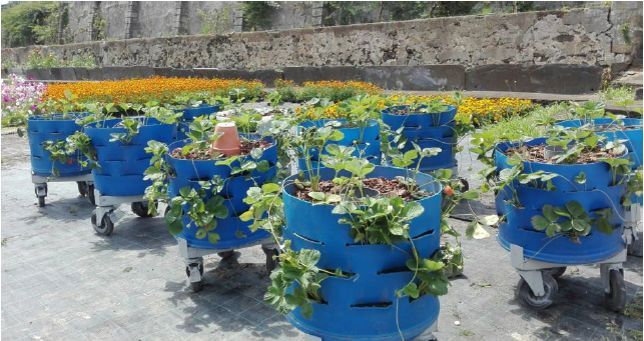
CITIES AND CIRCULAR ECONOMY FOR FOOD • P
ORTO, PORTUGAL
EXECUTIVE SUMMARY
Porto, Portugal
Situated near the sea along the river Douro, Porto is Portugal's second largest city. With a diverse
range of food production in the Porto Metropolitan Area (PMA), an innovative profile, and an
already active approach to improving the food system, the City of Porto is in a unique position to
begin the transition towards a circular economy for food. By establishing favourable policies,
facilitating collaborations across the entire food value chain, and undertaking its own initiatives,
the City of Porto could realise the circular economy vision and create significant economic, health,
and environmental benefits.
THE CITY OF PORTO CAN HARNESS THE THREE AMBITIONS DESCRIBED IN THE CITIES AND
CIRCULAR ECONOMY FOR FOOD REPORT:
1) Source food grown regeneratively, and locally where appropriate
2) Make the most of food
3) Design and market healthier food products
THE FOLLOWING ASSETS COULD BE LEVERAGED TO BUILD A THRIVING CIRCULAR FOOD SYSTEM
IN PORTO:
Projects connecting
Diverse regional food consumers with food
Strong innovation Part of a large vibrant Circular economy
production and production and
profile and start-up hub of 2 million roadmap including
national strategy on growing separation
friendly city people food system actions
biological agriculture and valorisation of
organics
A CIRCULAR ECONOMY REDESIGN IN PORTO REPRESENTS A USD 60 MILLION+ OPPORTUNITY
TO BUILD A REGENERATIVE, DISTRIBUTED AND SOCIALLY INCLUSIVE URBAN FOOD SYSTEM.
The following yearly benefits could be achieved in a scenario where regenerative farming methods are applied to
1
peri-urban2 3food production, 50% of food waste is prevented, and all organic waste is separately treated and
4
valorised. , ,
ECONOMY HEALTH SOIL HEALTH ENVIRONMENT CROP DIVERSITY
USD 12.8 million USD 28.5 million USD 11.8 million 67,000 tonnes farmers grow a wider
from reduced food in reduced health costs in avoided soil GHG emissions range of crops,
waste through due to lower pesticide degradation, by reduction worth enhancing biodiversity,
redistribution and use with wide adoption employing regenerative USD 7 million and
embedding climate
prevention of regenerative farming production and reducing change resilience and
22 million m3 of
practices food waste diversifying revenue
freshwater saved
streams
1
Peri-urban defined for Porto as the Metropolitan Area
2
All benefits are calculations by the Ellen MacArthur Foundation, see Appendix and City Analysis Guide for further details
3
For full list of positive outcomes see benefits section below
4
All benefits are calculations by Ellen MacArthur Foundation, see Appendix for further details. As the focus here was the Municipality of Porto, the benefits correspond to
the Municipality. However, benefits estimated for the Porto Metropolitan Area can be found in the appendix.
2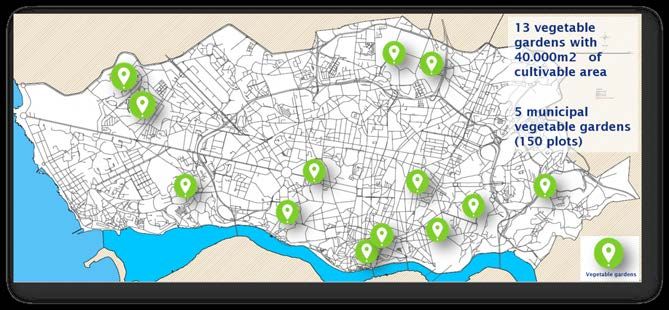
CITIES AND CIRCULAR ECONOMY FOR FOOD • P
ORTO, PORTUGAL
1. PORTO’S UNIQUE ASSETS
5
PORTO’S LOCATION PORTO CITY AND METROPOLITAN DEMOGRAPHICS
Porto population 214,587
Porto Metropolitan Area (PMA) 1,719,002
population
Commuters PMA 1,260,185
Commuters Porto 164,886
Porto density 5,181 persons/km2
PMA GDP EUR 29,074 million
Porto GDP/c EUR 12,257
Farmland in peri-urban area 43,689 ha
Source: City of Porto
Porto is the second largest city in Portugal. Located in the North Region, by the sea, Porto is a mid-income, global,
and well-connected community. The city, which dates back to Roman times and is a UNESCO World Heritage site,
is surrounded by 16 other municipalities that combine a unique range of assets, from industries and universities to
agricultural land, which can enable the transition to a circular economy for food.
5
Data from the Portuguese National Institute of Statistics (INE), Via the Municipality of Porto
Population: INE, 2017. Data online - Resident population (No.) by place of residence (NUTS - 2013)
Commuters PMA and Porto: INE, 2017. In Survey on Mobility in the Metropolitan Areas of Porto and Lisboa, 2017
Density: Calculation with data from INE, 2017;
GDP of Metropolitan Area: INE, Data online, 2016;
Per capita income: INE - Statistical annual report, 2015;
Area of farmland in Porto Metropolitan Area: INE, 2009, Agricultural census
3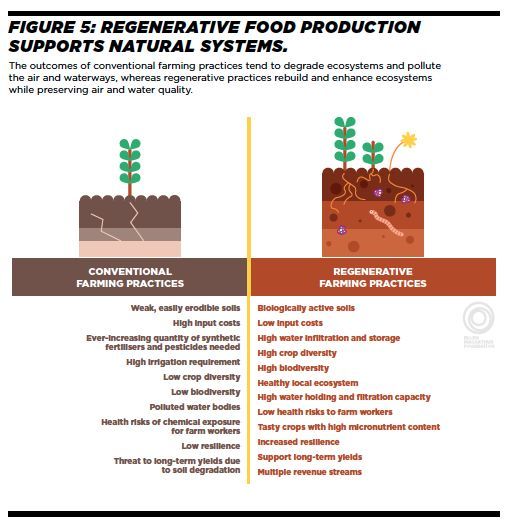
CITIES AND CIRCULAR ECONOMY FOR FOOD • P
ORTO, PORTUGAL
Porto’s and Porto Metropolitan Area’s unique assets include:
6
STRONG INNOVATION PROFILE: Porto was voted the top European start-up friendly city, spurred by
7
organisations such as ScaleUp Porto that combine local development, with innovation and the environment.
CIRCULAR ECONOMY ROADMAP: Porto Municipality recently developed a circular economy roadmap with the
8 9
ambition of becoming a circular city by 2030, following the national action plan and the momentum building
across Europe. The roadmap includes food system actions.
PRODUCER OF LARGE RANGE OF FOOD TYPES AND PRODUCTS: situated in a diverse geographic area and
next to the sea, Porto’s surrounding agricultural lands and fisheries produce a wide range of fruits, vegetables,
10
dairy, meat, and seafood.
MULTIPLE ONGOING INITIATIVES: from urban vegetable gardens and green roofs to separation of organics at
source, solidarity restaurants and influencing portion sizes, multiple initiatives aligned with the principles of a
circular economy are already at work in Porto.
11
LARGE TOURISM INDUSTRY: selected in 2017 as Best European destination to travel to, Porto welcomes
12
approximately 1.2 million visitors per year, generating a vibrant additional market for the local food system.
6
Porto. Porto vence o prestigiado World Excellence Award para a cidade europeia mais amiga das startups,
http://www.porto.pt/noticias/porto-vence-o-prestigiado-world-excellence-award-para-a-cidade-europeia-mais-amiga-das-startups-
7
ScaleUp Porto, http://scaleupporto.pt/about-scaleup-porto/
8
Porto Municipality, http://www.cm-porto.pt/economia-circular
9
Republica Portuguesa, Ambiente. Leading the transition – Action plan for circular economy in Portugal: 2017–2020,
https://circulareconomy.europa.eu/platform/sites/default/files/strategy_-_portuguese_action_plan_paec_en_version_3.pdf
10
See food production section for more information
11
European Best Destinations (2017), https://www.europeanbestdestinations.com/best-of-europe/european-best-destinations-2017/
12
PWC (2017), Standing out from the crowd: European cities hotel forecast for 2017 and 2018,
https://www.pwc.ch/en/publications/2017/european-hotels-forecast-report-2017-2018-web.pdf
4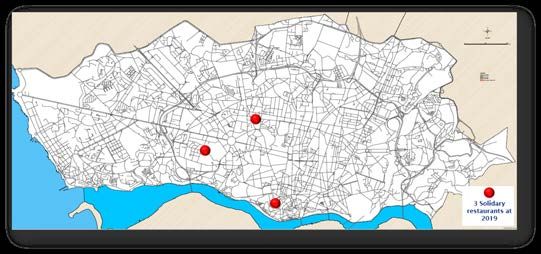
CITIES AND CIRCULAR ECONOMY FOR FOOD • P
ORTO, PORTUGAL
2. URBAN AND PERI-URBAN
FOOD PRODUCTION
Porto has been long recognised for its wine production, and indeed vast quantities are processed and stored on
13
the banks of the Douro. However, the Porto Metropolitan Area’s food production is also extensive and
wide-ranging, including seafood, meat and dairy, as well as fruits and vegetables (see Figure 2 for top products).
In terms of the contribution to the local GDP, PMA’s primary food production only accounts for 1.5%. However,
14
other food-related industries such as food manufacturing (fish canning, port wine blending, etc.), catering and
hospitality, and organic waste processing also represent significant contributions to the services and
15
manufacturing categories of GDP.
Peri-urban food production
16
The food production scene is very diverse, with relatively small local farms (9.5 ha) producing a wide range of
17
products. There are approximately 43,700 ha of farmland in the PMA, which could supply approximately a fifth of
18
its citizens’ dietary needs (Figure 1).
Dairy, beef, and horticulture dominate food production in the peri-urban scene (Figure 2). Agricultural production is
generally made up of intensive ranches with strong upstream and downstream linkages with the agrifood industry.
The PMA also has three sea fishing ports – Leixões in Matosinhos, Vila do Conde, and Póvoa do Varzim – with
seafood being one of the main sources of protein for the city’s residents.
Figure 1: Peri-urban farmland could feed just
under a fifth of the population
Horticulture is also a strong industry in the region,
especially in the sandy coastal strip of secondary
dunes between Mindelo and Apulia, covering an
area of about 15,000 ha.
At an organisational level, different structures help
coordinate producers. For example, milk
production follows mostly a cooperative type of
structure (Agros is the union of cooperatives for
the area), while many fishers are coordinated by
Producer Organisations. Docapesca, a
government agency, regulates the landing and
primary sales.
13
Encyclopædia Britannica, ‘Porto, Portugal’, https://www.britannica.com/place/Porto-Portugal
14
See for example Ramirez, based in Matosinhos, http://ramirez.pt/en/company/#company
15
INE (2016), National Institute of Statistics, Anuario Estatistico da Regiao Norte, p.246
16
Average farm size from sample of 67 farms. Source: Survey of Agricultural Structures, DRAPN (2017)
17
INE (2009), National Institute of Statistics, Agricultural Census
18
Estimated based on van Dijk, W., et al. , ‘Closing the life cycle of phosphorus in an urban food system: the case Almere (NL)’ (2017), Assumptions of the study: 1) The food
basket includes meat and dairy products, which represent 90% of the land requirement (animal feed), 2) Only 300 km2 are needed for plant-based products (65% cereals,
15% sugar beet, 10% fruit, 10% potatoes and vegetables) 3) 15% of the food basket is still imported (e.g. coffee, exotic fruit). For more information about production volumes
see Appendix – food production
5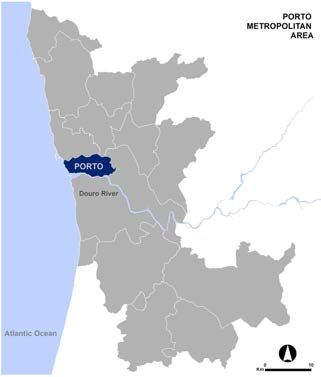
CITIES AND CIRCULAR ECONOMY FOR FOOD • P
ORTO, PORTUGAL
19
Figure 2: Top agricultural products in North region
Product Tonnes/year
Meat (cattle, poultry, and others) 76,766,000
Dairy and eggs 9,884,845
20
Grapes 316,227
Peri-urban food production and practices
21
Although the food flow patterns are not clear, there are existing initiatives, such as Prove, that are linking
producers with consumers, with the intention of creating a more locally integrated food system. Other initiatives,
22
such as AMAP, are also looking to diversify agricultural practices and transition to more regenerative modes of
production.
While the productivity of the land is high, changing production practices to ones that maintain healthy ecosystems
is particularly important in the face of climate change and land degradation, which is of growing concern in
23 24
Portugal. ,
In this context, the Porto Metropolitan Area comprises a wide range of farm and production types. Based on a
25
survey of 67 farms, 13 different types of farms were present, and 10% indicated they produced a variety of
agricultural crops through polyculture or a mix of agricultural crops and livestock.
Figure 3. Average fertiliser
consumption in Portugal and the world
26
(2016)
27
Portugal has recently begun implementing a national strategy for biological agriculture, which combines many of
the principles of regenerative agriculture. This comes at a time when it has been reported that the national
28
demand for biological products doubles the Portuguese supply. While Portugal’s fertiliser use is above the world
average (Figure 3), the new regulation seeks to expand the biological farming area, grow the market offer of
biological products, increase the procurement of these products, and expand the knowledge base at a production
29
and business level.
19
INE (2017), National Institute of Statistics – data online. Production by Geographic localization (NUTS – 2013)
20
Including both wine and table grapes
21
Prove, http://www.prove.com.pt/www/english.T9.php
22
Associação para a Manutenção da Agricultura de Proximidade – https://amap.movingcause.org/
23
European Court of Auditors (2018), Desertification in the EU – Background paper,
https://www.eca.europa.eu/Lists/ECADocuments/BP_DESERTIFICATION/BP_DESERTIFICATION_EN.pdf
24
The Independent (2018), https://www.independent.co.uk/environment/land-degradation-deserts-farming-agriculture-cattle-world-atlas-eu-europe-a8411856.html
25
DRAPNorte (2017) Regional Directorate for Agriculture and Fisheries of the North – metropolitan and local data. This data refers only to a sample of 67 farms at
metropolitan area and a sample of 728 farms in the North Region which responded to the survey of agricultural structures of 2017
26
The World Bank (2019), Fertiliser consumption [kg/ha of arable land], https://data.worldbank.org/indicator/AG.CON.FERT.ZS?end=2016&start=2002&view=chart.
27
DGADR – Direção-Geral de Agricultura e Desenvolvimento Rural. Boletim Informativo – Estratégia Nacional para a Agricultura Biológica e Plano de Ação,
https://www.dgadr.gov.pt/estrategia-nacional-para-a-agricultura-biologica
28
Publico (2018), Portugal importa 50% dos produtos biológicos que consome,
https://www.publico.pt/2018/11/13/economia/noticia/portugal-importa-50-produtos-biologicos-consome-1850958
29
Diário da República, 1.ª série – N.º 144 – 27 de julho de 2017. Resolução do Conselho de Ministros n.º 110/2017, https://dre.pt/application/file/a/107761804
6
CITIES AND CIRCULAR ECONOMY FOR FOOD • P
ORTO, PORTUGAL
Urban production and innovation
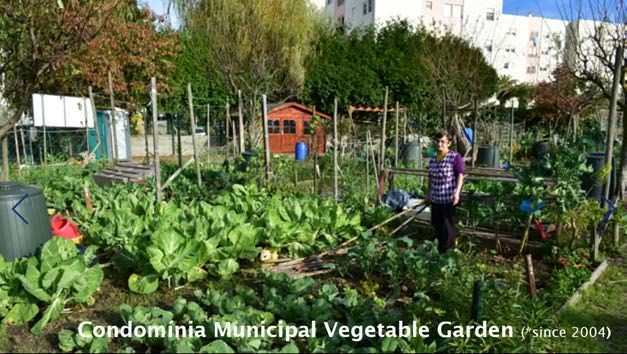
The City of Porto is a dense and vibrant area, but space was found to develop 13 vegetable gardens covering a
combined cultivable area of 4 ha, which have been producing food on a small scale since 2003 (Figures 4 and 5).
These gardens are jointly monitored by the Municipality and Lipor,30 and they not only serve household vegetable
needs, but also have been supplied with 400 composters, which combined return 120 tonnes of organic material
31
to the soil every year. However, it must be noted that they represent only a fraction of the 62.5 ha of agricultural
32
land in the Municipality of Porto, highlighting the potential for urban production to take in organic material and
33
supply local needs.
Figure 4: Location of the 13
vegetable gardens in the
City of Porto.
Source: Porto Municipality
Figure 5: Condominia Municipal
Vegetable Garden.
The garden was
established in 2004.
Source: Porto Municipality
34
Urban food production could soon reach higher levels. The Fifth Façade Project (PQAP) is exploring how to
35
include green roofs into the urban development agenda. Green roofs, already covering an area of 11 ha, would
not only increase the cultivable area of the city but would also create a range of other benefits, including
increasing the climate change resilience of the city (Figure 6).
30
LIPOR is the Municipalities Association responsible for the management, recovery and treatment of the municipal waste produced in the Porto municipality. It has a
complete Environmental Education Program that includes urban farming in various projects namely the “Horta à Porta” project (“Vegetable garden at Door”)
31
Porto Municipality
32
INE (2009), National institute of Statistics., Agricultural census
33
Risks of contamination from atmospheric pollutants must be considered in urban food production
34
City of Porto and Associação Nacional de Coberturas Verdes, http://www.greenroofs.pt/en/pqap
35
City of Porto
7CITIES AND CIRCULAR ECONOMY FOR FOOD • P
ORTO, PORTUGAL
Figure 6: Fifth Façade project. Green roofs can produce a wide range of benefits, from reducing energy use in
buildings, to increasing climate change resilience and local food production. Source: ANCV (National Association
of Green Roofs – Portugal)
8CITIES AND CIRCULAR ECONOMY FOR FOOD • P
ORTO, PORTUGAL
BOX A: FISH PRODUCTION AND CONSUMPTION IN PORTUGAL
Portugal is Europe’s largest consumer of seafood and the third largest in the world, with a consumption of 61.5 kg
36
per person – almost three times the average global per capita consumption.
37
While the world’s seafood production has been increasing in the last few decades, Portugal’s output has
decreased, due to a range of reasons, including geopolitical issues and overcapacity of the fishing fleet in the
1970s and ’80s. This has led to a trade imbalance illustrated by the Bacalhau (salted cod) – a cornerstone of
Portuguese cuisine. Representing approximately 40% of consumption, the fish cannot be found in local waters and
is mostly imported, accounting for the majority of fish imports of the country.
However, it is not an entirely bleak picture, there are lessons to be learnt from both the Portuguese fishery
production and tradition. Portuguese people consume a very diverse range of seafood, representing nearly 200
38
commercial species including fish, cephalopods, crustaceans and molluscs, and traditionally whole fish is
prepared including bones, whereas the trend in many countries is to eat fish fillets only. At the same time, most
39
seafood is consumed fresh (83%), 6% is salted, and 11% is processed either frozen, smoked or canned.
Emerging business models are further enabling diverse and local consumption trends by providing weekly fish
40
‘boxes’ with seasonally available fish and seafood. Often linked with artisanal fishing, these initiatives can lead to
a higher degree of integration between producers and consumers, among other societal and environmental
41
benefits. Recent public campaigns have successfully promoted the consumption of locally abundant fish species,
42
such as the chub and horse mackerel.
Beyond consumption, it is important to look at how seafood is obtained to promote practices in line with the
circular economy and discourage those, for example bottom sea trawling, that can be damaging for the
43 44
ecosystem. Throughout Europe, local groups of fishers, coordinated through the Fisheries Areas Network, are
starting to employ a broad set of strategies to increase the use and recycling of fishing gear (e.g. nets and crates)
to avoid it ending up in the sea as it is estimated that 46% of the Great Pacific Garbage Patch is disposed fishing
45
gear. The initiatives employed by European fishers range from fixing equipment and nets, and converting the
46
gear into other products when no longer repairable, to replacing plastics with biodegradable products. These
local communities of fishers are also turning what is often considered fish waste into a resource. For example,
47
making ‘leather’ out of fish skin to creating fish meal and pet food out of by-catch and by-products of fish.
36
Cordis (2018), ‘How much fish do we consume? First global seafood consumption footprint published’,
https://m.phys.org/news/2018-09-fish-consume-global-seafood-consumption.html
37
Ibid.
38
Cheila Almeida PhD thesis, University of Lisbon, http://repositorio.ul.pt/bitstream/10451/16023/1/ulsd069914_td_Cheila_Almeida.pdf
39
Cardoso et al. (2013), via thesis Cheila Almeida
40
See for example Cabaz do Peixe and Peixinho da Lota: https://www.cabazdopeixe.pt/index.php, https://peixinhodalota.pt/
41
Jacquet and Pauly, 2008. Funding priorities: big barriers to small-scale fisheries.
http://www.seas-at-risk.org/images/pdf/archive/Jacquet___Pauly_Barriers_to_Small-Scale_Fisheries.pdf
42
Docapesca: http://www.docapesca.pt/pt/comunicacao/noticias/item/campanha-do-carapau.html
43
Calouste Gulbenkian Foundation, 2017. Trawling in Portugal,
https://content.gulbenkian.pt/wp-content/uploads/2017/10/24162759/GulbenkianPolicyBrief_Arrasto_ENweb.pdf
44
For more information: https://webgate.ec.europa.eu/fpfis/cms/farnet2/about/at-a-glance/farnet_en
45
National Geographic (2018), ‘The Great Pacific Garbage Patch Isn’t What You Think it Is’,
https://news.nationalgeographic.com/2018/03/great-pacific-garbage-patch-plastics-environment/
46
Farnet Magazine (2018), https://webgate.ec.europa.eu/fpfis/cms/farnet2/sites/farnet/files/publication/farnetmag_16_en.pdf
47
Ibid.
9CITIES AND CIRCULAR ECONOMY FOR FOOD • P
ORTO, PORTUGAL
While the question of what a truly regenerative fishery looks like still remains, pursuing steps such as Marine
48
Stewardship Council certification of fisheries and innovative models that allow for consumption of locally
abundant species and design out waste, would certainly help make the best out of our natural resources.
48
Marine Stewardship Council, https://www.msc.org/home
10CITIES AND CIRCULAR ECONOMY FOR FOOD • P
ORTO, PORTUGAL
3. URBAN FOOD
CONSUMPTION
Traditionally, Porto’s meat and fish intake has been high, but current food trends towards
plant-based proteins are gaining traction in the region. Initiatives around food distribution and
tackling food insecurity are also seeing citizens adopt a healthier attitude to the food they
purchase and consume, as well as raising awareness of the need to reduce food waste.
HOW MUCH AND WHAT TYPES OF FOOD DO PEOPLE IN PORTO CONSUME? Just under 2 kg of food are
consumed per person per day in Portugal, culminating in over 150 thousand tonnes of food per year for the whole
49
Municipality of Porto. Meat and seafood consumption remains high, representing double and triple the world
50
average, with 93 kg of meat and 57 kg of seafood consumed per year. However, current trends of reducing meat
intake and searching for alternative sources
51
of proteins are being adopted, with the number of vegetarians
increasing fourfold in just one decade.
Increasing awareness of healthier eating is one of the main drivers for current food trends, resulting in a higher
52
demand for vegetarian dishes and, especially among more senior consumers, for fresh products. The concern
over healthy foods has led to a growing number of consumers opting for organic or biological products, leading to
investments by retailers in this area.
Increasing awareness about healthy eating is also driving demand for less processed foods, that are free of
artificial ingredients and that also use the whole food product in their preparation.
A full breakdown of the consumption of different food types can be found in the Appendix.
53
WHERE DO PEOPLE BUY THEIR GROCERIES? Supermarkets in Portugal hold 90% of the market share,
highlighting how important it is that they play a part in changing the food system. In the Porto Metropolitan Area,
54
other points of sale such as markets, for example Mercado do Bolhao and Mercado do Matosinhos, still attract
large numbers of people.
Other platforms are focusing on connecting producers with
consumers. For example, the Associação para a Manutenção
55
da Agricultura de Proximidade is looking to link consumers
with local producers that follow agroecological principles in
their practices. Similarly, in the fisheries area, Cabaz do Peixe
56
and Peixinho da Lota are not only directly connecting
consumers with fishers, but also increasing the diversity of
seafood that is consumed.
Figure 7: Location of existing and planned solidarity restaurants. It is expected that the three restaurants would
be able to sustain most people in need. Source: Porto Municipality.
49
Estimate based on national statistics. INE (2017), Balanca Alimentar Portuguesa,
https://ine.pt/xportal/xmain?xpid=INE&xpgid=ine_indicadores&indOcorrCod=0009116&contexto=bd&selTab=tab2
50
Cheila Almeida, Vanja Karadzic, Sofia Vaz (2015), ‘The seafood market in Portugal: Driving forces and consequences’, Marine Policy
51
The Portugal News Online (2017), ‘Number of vegetarians in Portugal rises by 400 percent in 10 years’,
http://theportugalnews.com/news/number-of-vegetarians-in-portugal-rises-by-400-percent-in-10-years/43482
52
Monteiro, Ana Caterina (2017), ‘O ABC do retalho em 2017’, http://www.hipersuper.pt/2017/03/29/tendencias-no-retalho-de-z/
53
Consumers International (2012), ‘The relationship between supermarkets and suppliers: what are the implications for consumers?’,
https://www.law.ox.ac.uk/sites/files/oxlaw/the_relationship_between_supermarkets_and_suppliers.pdf
54
Mercado do Bolhao, http://www.mercadobolhao.pt/pt/bolhao
55
Associações para a Manutenção da Agricultura de Proximidade, https://amap.movingcause.org/
56
Cabaz do Peixe, https://www.cabazdopeixe.pt/index.php, https://peixinhodalota.pt/
11CITIES AND CIRCULAR ECONOMY FOR FOOD • P
ORTO, PORTUGAL
FOOD INSECURITY ISSUES: Other initiatives, such as solidarity restaurants, are focusing on redistribution to
tackle food insecurity. The Batalha solidarity restaurant offers 200 complete meals per day to people in economic
need, granting them access to a healthy and balanced diet. Two new solidarity restaurants are planning to open
soon. They are run in a partnership that includes NGOs, hotels, professional nutritionists, a hospital, and the
Municipality of Porto – highlighting the importance of cooperation. Similarly, food donations are preventing food in
perfect condition from being lost and are reducing food waste by 11% per year. There are over 30 organisations
57 58
operating in Porto, such as ReFood, which reportedly distributed 20,000 meals in 2015.
Fruta Feia (‘ugly fruit’) is another organisation contributing to the reduction of food waste, by gathering misshapen
fruits and vegetables from farmers and marketing them. These products, which otherwise farmers would not be
able to sell, are offered through four different outlets in the Porto Metropolitan Area. At a national level, the
59
initiative has prevented nearly 1,400 tonnes of fruits and vegetables from going to waste.
57
Re-food, https://www.re-food.org/pt
58
Municipality of Porto
59
Fruta Feia, https://frutafeia.pt/en
12CITIES AND CIRCULAR ECONOMY FOR FOOD • P
ORTO, PORTUGAL
4. ORGANIC WASTE AND
FOOD BY-PRODUCTS
Porto’s waste management system is in development. Separate collection of organic waste from
households began in July 2018 and has not yet been applied to all households. However, a
successful programme for commercial establishments has been in place for over a decade.
LIPOR is responsible for the management, recovery, and treatment of the municipal waste produced in the Porto
Municipality and 8 of the 17 municipalities of the Porto Metropolitan Area (PMA). In alignment with national and
European goals, the separate collection of organics is planned to reach over 40,000 households (or 30% of the
city) in the short term.
The current valorisation method for the organics that are collected is treatment and conversion into Nutrimais – a
compost-like product that contributes nutrients and helps build soil health. Figure 9 shows the tonnes of Nutrimais
produced every year, and the potential area of farmland that it could currently cover.
60
Figure 8: Organic waste valorisation in Porto Metropolitan Area – 2017
Product Treatment Tonnes of % Potential Proportion treated
62
Nutrimais farmland circular in PMA
61
produced/yr coverage area
Compost derived Separation at source 12,000 15.3% 11%
63
product – Nutrimais and in-vessel
composting
Figure 9: Example of a
vermifertilisation system employed
in Porto.
Household organic waste can also be
composted in a decentralised manner,
and this is being developed through
composting and vermicomposting at
the municipal vegetable gardens.
Source: Porto Municipality
The production of compost products such as Nutrimais not only creates value in terms of regenerating agricultural
soils, but also creates economic value, and can help cover the costs of scaling separate organics collection. While
Nutrimais’ market price of EUR 55 per tonne and production cost of EUR 53 per tonne of organic waste (organic
waste to compost yield of 23%) mean that in isolation it would not be profitable, when the cost of the alternative
waste to energy treatment of EUR 53 per tonne (plus waste management tax) is factored in, it becomes net
profitable. Additional benefits from a reduction in wet waste, detrimental to sustaining combustion, have not been
factored into this analysis.
60
Applies to the eight municipalities where the organic waste is treated by LIPOR, other municipalities either do not separate organic waste or use mechanical biological
treatment; data on organic waste from LIPOR Waste Observatory, https://portal.lipor.pt/pls/apex/f?p=2021:1:0:
61
Current Nutrimais production could cover up to 15.3% of the farmland in the Porto Metropolitan Area
62
Proportion of organic waste that is separated at source and flows into the composting processes. The rates vary, Porto Municipality’s rate is 15.3%
63
LIPOR, https://www.lipor.pt/pt/residuos-urbanos/valorizacao-organica/nutrimais/
13CITIES AND CIRCULAR ECONOMY FOR FOOD • P
ORTO, PORTUGAL
It must be highlighted that home and neighbourhood composting can play a big role in scaling the organics
separation, especially when centralised facilities are working close to full capacity. Similarly, the costs and
challenges of separate organics separation should be considered.
THE ROLE OF DESIGN
It is important to emphasise the design aspect of the circular economy, which aims to prevent food from becoming
organic waste in the first place. While some initiatives are diverting food that would go to waste to people in need
64
through donations, LIPOR is working on two alternative projects: Embrulha (packaging) to provide biodegradable
65
packaging that allows people to take home their leftovers from restaurants; and Doce Certa (right portion), which
works with canteens, restaurants, and food system actors to define healthy and balanced meals in the right portion
size.
Design also applies to creating recipes that utilise by-products or foods that would become waste. Examples of this
66
are Continente’s ‘Panana’ and chutney products. LIPOR also provides recipes for cooking without waste and
recipes for products that are traditionally considered waste.
Finally, even more broadly, design applies also to systems and methods used by retailers to ensure that products
that are getting close to their expiration or best before date are sold in time.
More information on the mass of organic waste collected and type can be found in the Appendix.
64
For more information, see: https://www.lipor.pt/pt/educacao-ambiental/horta-da-formiga/desperdicio-alimentar/embrulha/
65
For more information, see: https://www.lipor.pt/pt/educacao-ambiental/horta-da-formiga/desperdicio-alimentar/dose-certa-2/
66
For more information: https://missao.continente.pt/noticias-eventos/panana-novo-produto-economia-circular and
https://missao.continente.pt/noticias-eventos/o-nao-leva-casa-acaba-doces-chutneys
14CITIES AND CIRCULAR ECONOMY FOR FOOD • P
ORTO, PORTUGAL
6. INVESTIGATING THE
BENEFITS OF A
CIRCULAR ECONOMY FOR
FOOD IN PORTO
Note: All calculations for the following benefits are based on estimated global benefits applied to the region. See
City Analysis Guide for further details on the factors used to calculate the estimated benefits.
The following priorities and scenarios that would shift Porto towards a circular economy for food were established
based on conversations with the Municipality of Porto and other relevant actors. City priorities or concrete next
67
steps that the city authority can take to move towards the goal are also outlined for each scenario. Further
details on the calculations, methods, and benefits for both Porto and the Porto Metropolitan Area can be found
in the Appendix.
SCENARIO A
What if all farmland in Porto’s peri-urban area was grown regeneratively?
DETAILED DESCRIPTION
The Porto Metropolitan Area holds 43,689 ha of agricultural area, which has the potential to produce a significant
volume and relatively diverse range of Porto’s food needs. In this scenario we modelled the economic, health, and
environmental benefits that transitioning towards regenerative practices would imply.
If all agricultural land in the Porto Metropolitan Area was farmed regeneratively, the following benefits would be
68
generated each year:
HEALTHIER AVOIDED SOIL CLIMATE WATER SAVINGS DIVERSE CROPS
CITIZENS DEGRADATION CHANGE 18 million m3 AND REVENUE
USD 26.7 million USD 9.9 million MITIGATION freshwater saved, STREAMS
in health savings due in avoided soil relieving pressure on potential to increase
36,698 tonnes
to reduced exposure degradation local water sources the diversity of crops
of CO2 avoidance,
to pollutants worth over USD 4 produced and build
million to society climate change
resilience into food
production
CITY PRIORITIES
The following priorities to start the transition towards a regenerative food production system have been identified
following conversations with the Municipality of Porto and other relevant stakeholders:
● Map food flows
● Source regeneratively produced foods
● Connect with local producers
67
The City of Porto is already active in several of these areas
68
Assuming that conventional farming practices are currently being employed. See Appendix for further details on regenerative production
15CITIES AND CIRCULAR ECONOMY FOR FOOD • P
ORTO, PORTUGAL
SCENARIO B
What if 50% of Porto’s food waste was prevented (as per the Sustainable Development Goals)?
DETAILED DESCRIPTION
While several initiatives are already active in Porto redistributing food and preventing it from going to waste, an
69
estimated over 16 thousand tonnes of food go to waste every year. While we recognise there are many
challenges in preventing food waste, the following benefits highlight the importance of making the most of our
food:
ECONOMIC SAVINGS HEALTHIER CITIZENS CLIMATE CHANGE WATER SAVINGS
USD 12.8 million USD 1.8 million MITIGATION 3.4 million m3
cost savings due to in health savings from 12,200 tonnes freshwater saved, relieving
preventing food prevented impacts from of CO2 avoided, worth the pressure on water
becoming waste agriculture USD 0.78 million to society sources
CITY PRIORITIES
The following priorities to scale food waste prevention have been identified following conversations with the
Municipality of Porto and other relevant stakeholders:
● Scale up current food waste prevention initiatives
● Work across food value chain to include and coordinate with all stakeholders
● Explore better food choices
SCENARIO C
What if all solid organic waste was diverted from landfill and used to support local regenerative farming?
DETAILED DESCRIPTION
Porto recently implemented a growing separate organics collection scheme, which now collects close to 10,000
70
tonnes of organic waste per year. However, this is only part of the estimated total 50,000 tonnes of organic
waste produced per year. Separate collection and treatment to transform it into organic fertiliser would result in the
following benefits:
ECONOMIC SAVINGS AND NUTRIENT-RICH ORGANIC CLIMATE CHANGE
NEW REVENUE STREAMS FERTILISER FOR CROPLAND MITIGATION
USD 1.8 million 12,000 tonnes 18,600 tonnes
worth of soil organic matter of compost product rich in organic of avoided CO2 emissions,
and USD 0.4 million in nutrients matter capable of covering worth USD 2.1 million to society
4,000 ha of farmland
CITY PRIORITIES
The following priorities to scale organic waste valorisation have been identified:
● Scale separate organics collection
● Explore decentralised treatment (e.g. home and neighbourhood composting)
● Valorise all organics
69
See Appendix for details and sources
70
Lipor Waste Observatory, https://portal.lipor.pt/pls/apex/f?p=2021:21:0.
16CITIES AND CIRCULAR ECONOMY FOR FOOD • P
ORTO, PORTUGAL
APPENDIX
REGENERATIVE FOOD PRODUCTION
● Benefits were calculated for the 43,689 hectares of farmland in Porto’s peri-urban area (which in this case
corresponds to the farmland in Porto Metropolitan Area)
● See additional City Analysis Guide with benefit factor table for details
● Benefits are quantified in comparison to conventional practices, as defined in the full Cities and Circular
Economy for Food r eport (see figure 5 below from the report)
FURTHER BACKGROUND INFORMATION ON REGENERATIVE FARMING PRACTICES
The figure below displays expected long-term outcomes from the use of conventional practices when compared to
the use of comprehensive regenerative farming practices. This figure is from page 27 of the Cities and Circular
Economy for Food r eport, where further information about regenerative practices can be found.
VALORISATION OF ORGANIC WASTE REFERENCE INFORMATION
● Benefits were calculated for the conversion of estimated total amount of organic waste produced in Porto
Municipality (see table below for details), excluding sewage sludge
● See additional City Analysis Guide with benefit factor table for details
17CITIES AND CIRCULAR ECONOMY FOR FOOD • P
ORTO, PORTUGAL
71
ORGANIC WASTE PRODUCTION IN PORTO AND PMA (2017)
Type Porto (tonnes/yr) PMA (tonnes/yr)
Residential* N/A N/A
Green waste 3,977.5 25,207.6
Commercial 5,357.5 21,700.1
Total collected 9,335.3 46,907.8
Total production (estimate)** 51,631.0 427,007.8
* Residential collection begun in mid-2018
** Estimate by the Ellen MacArthur Foundation based on data from the Lipor Waste Observatory
APPROACH FOR CALCULATING BENEFITS FROM FOOD WASTE PREVENTION
● Benefits were calculated for 16,276 tonnes of food waste of avoidable food waste. See table below for
details and sources
● Economic benefit estimated based on the value per mass of food and total mass of food waste
● See City Analysis Guide with benefit factor table for details on estimation of wider benefits
FOOD WASTE AND VALUE
Total / yr
72
Food Surplus 90.0 kg/person
73
Avoidable food waste 70.2 kg/person
Tn avoidable food waste 16,276 tonnes
74
Annual spend on food €1166/person
75
Mass of food consumed 1.94kg/person
76
Value of kg of food EUR 1.65/kg
77
Value of food waste EUR 22.7 million
78
Value of preventing 50% waste EUR 11.3 million
71
Residential separate organics collection started in mid 2018. Data from Lipor Waste Observatory
72
Lipor via City of Porto
73
Assuming 83% and 81% of food constitute the edible component for production and distribution respectively – Source: City of Porto
74
Based on expenditure on household expenditure, assuming 2.5 persons per household. Source: Household Budget Survey INE, 2017
75
Balanca Alimentar Portuguesa 2012–2016. INE 2017
76
Estimate based on annual spend on food and mass of food consumed per year per person
77
Estimate obtained by multiplying mass of avoidable food waste * value of a kg of food
78
As per the Sustainable Development Goals
18CITIES AND CIRCULAR ECONOMY FOR FOOD • P
ORTO, PORTUGAL
OVERALL BENEFITS TABLE FOR THE MUNICIPALITY OF PORTO AND THE PORTO METROPOLITAN AREA
POTENTIAL BENEFITS OF CIRCULAR ECONOMY SCENARIOS AND CITY PRIORITIES
79 80
Scenario City priorities Porto benefits PMA benefits
What if all ● Map food flows ● USD 26.7 million in health savings, USD 4.2 million
farmland in ● Source worth of greenhouse gas savings
Porto’s regeneratively ● USD 9.9 million in avoided soil degradation
peri-urban area produced foods ● 18.3 million m3 of water
was grown ● Connect with local
regeneratively? producers
What if 50% of ● Scale current food ● USD 12.8 million ● USD 105 million
Porto’s food waste prevention wasted market wasted market value
waste was initiatives value ● USD 14 million in
prevented (as ● Work across food ● USD 1.8 million in health savings
per the SDGs)? value chain health savings ● USD 5.9 million in
● Better food choices ● USD 0.8 million CO2 emission savings
in CO2 emission ● 25.9 million m3 of
savings water
● 3.4 million m3 of
water
What if all ● Scale separate ● Biofertiliser for ● Biofertiliser for
organic was is organics collection 4,000 ha of 29,000 ha of
valorised? ● Valorise all organics peri-urban peri-urban cropland
cropland ● USD 13.3 million in
● USD 1.8 million in soil organic matter
soil organic ● 136,800 CO2
matter emissions reduction,
● 18,600 tonnes worth USD 15.5
CO2 emission million in greenhouse
reduction, worth gas savings
USD 2.1 million
Note: The regenerative peri-urban agriculture scenario’s benefits are equal for both Porto and the Metropolitan
Area since the area converted for the benefits estimation is equal.
79
All benefits are calculations by Ellen MacArthur Foundation, see Cities Appendix for further details. The benefits estimated here are for the Municipality of Porto
80
Ibid.
19CITIES AND CIRCULAR ECONOMY FOR FOOD • P
ORTO, PORTUGAL
NOTE ABOUT THIS PORTO CITY STORY AND THE FULL REPORT
The Cities and Circular Economy for Food (2019) report was designed to initiate a deeper exploration of the role
that cities, and the businesses and governments in them, can have in the creation of a circular economy for food. It
acknowledges cities as only one key driver of change among many others. It advocates the circular economy as
one of several approaches that can support the development of a healthier and regenerative food system.
The focus city chapters were developed to demonstrate how cities around the world could benefit from applying
the vision set forth in the report. The conclusions draw on an extensive analysis of the current regional food
system, and benefit calculations are based on estimated global benefit factors applied to the local context. See
City Analysis Guide for further details on the research process and factors used to calculate the estimated benefits.
The authors of this city chapter collected information from a number of articles, publications, and reports, and
consulted more than 20 experts during its preparation. However, uncertainties remain within the document as the
scientific understanding of the various components of a circular economy for food supply continues to evolve.
The document does not intend to provide diet recommendations or advice on food consumption, although it does
highlight the role that food system players have in offering healthy foods with positive environmental impacts.
DISCLAIMER
The Porto city story has been produced by a team from the Ellen MacArthur Foundation. The city benefit
calculations use global factors supplied by SYSTEMIQ as part of the global Cities and Circular Economy for Food
report analysis. Those were applied to the local context in order to estimate the potential benefits for Porto in
transitioning to a circular economy for food model. The Ellen MacArthur Foundation makes no representations and
provides no warranties in relation to any aspect of the city story including regarding the advisability of investing in
any particular company or investment fund or other vehicle. Whilst care and attention has been exercised in the
preparation of the city story and its analyses, relying on data and information believed to be reliable, neither the
Foundation nor any of its employees or appointees shall be liable for any claims or losses of any nature in
connection with information contained in this document, including, but not limited to, lost profits or punitive or
consequential damages.
The Ellen MacArthur Foundation would like to thank the organisations who contributed to the Porto city story (see
following pages) for their constructive input. Contribution to the the city story, or any part of it, should not
necessarily be deemed to indicate any kind of partnership or agency between the contributors and the Ellen
MacArthur Foundation, nor an endorsement of its conclusions or recommendations.
© Ellen MacArthur Foundation 2019
The full Cities and Circular Economy for Food report and Porto city story can be found at:
https://www.ellenmacarthurfoundation.org/our-work/activities/cities-and-circular-economy-for-food
To quote the Porto city story, please use the following reference:
Ellen MacArthur Foundation, Cities and Circular Economy for Food: Porto (2019).
20CITIES AND CIRCULAR ECONOMY FOR FOOD • P
ORTO, PORTUGAL
ACKNOWLEDGEMENTS
We are very grateful for the support we have received in producing this focus city story. Special thanks go to our
Advisory Board, our local participant organisations for their active involvement, and also to the many academic,
industry, NGO, and government agency experts who provided invaluable perspectives.
LEAD PARTNER
CORE PARTNERS
PHILANTHROPIC PARTNERS
KNOWLEDGE PARTNER
CORE PROJECT TEAM
ELLEN MACARTHUR FOUNDATION SYSTEMIQ
Andrew Morlet, Chief Executive Martin Stuchtey, Managing Partner
Rob Opsomer, Systemic Initiatives Lead Jaap Strengers, Senior Associate
Clementine Schouteden, Project Lead Lauren Boutillier, Associate
Emma Chow, Project Manager Tilmann Vahle, Associate
Nick Jeffries, Case Study Programme Manager Florian Fesch, Intern
Luisa Santiago, Brazil Lead Lisa Griebel, Intern
Del Hudson, North America Lead Mayra Buschle, Working Student
Aurélien Susnjara, Research Analyst
Camille Gillet, Research Analyst
Marco Meloni, Research Analyst, Lead Author
Victoria Almeida, Brazil Associate
21CITIES AND CIRCULAR ECONOMY FOR FOOD • P
ORTO, PORTUGAL
PORTO CONTRIBUTORS
ALIADOS - THE CHALLENGES CONSULTING MUNICIPALITY OF PORTO, DEPARTMENT OF
Vasco Sousa, Co-founder & Managing Partner ENVIRONMENTAL PLANNING AND MANAGEMENT
Sara Velho, Senior Technician
LIPOR - INTERMUNICIPAL WASTE MANAGEMENT Nuno Morais, Senior Technician
OF GREATER PORTO, PORTUGAL Pedro Pombeiro, Head of Department
Susana Lopes, Senior Technician, Environmental
Engineer SONAE MC
Pedro Lago, Director: Sustainability and Circular
Economy
FURTHER CONTRIBUTORS
ELLEN MACARTHUR FOUNDATION DANONE
Ian Banks, Editorial Lead Merijn Dols, Senior Director of Business Processes,
Joe Iles, Editor Open Innovation & Cycles
Jocelyn Bleriot, Executive Officer; Head,
International Institutions & Governments INTESA SANPAOLO AND INTESA SANPAOLO
Clementine d’Orion, Network Manager INNOVATION CENTER
Sarah Churchill-Slough, Design and Massimiano Tellini, Global Head - Circular Economy
Branding Manager Luigi Riccardo, Innovation Specialist - Circular
Ross Findon, Media and Social Media Manager, Economy
Systemic Initiatives
PEOPLE’S POSTCODE LOTTERY
Katie Schuster, Communications Executive,
Will Humpington, Climate Change &
Systemic Initiatives
Environmental Programmes Advisor
Alix Bluhm, Communications Manager,
Systemic Initiatives PORTICUS
Sebastian Egerton-Read, Social Media Manager Federico Bellone, Regional Director for Latin
Vicky Deegan, Digital Project Manager America
CONKER HOUSE PUBLISHING SUEZ
Jo de Vries, Editor Henry Saint-Bris, Senior Advisor
Emma Parkin, Editor
TETRA PAK
Mario Abreu, Vice President - Sustainability
ADVISORY BOARD Sabine von Wirén-Lehr, Director Public Affairs
CALOUSTE GULBENKIAN FOUNDATION
Catarina Grilo, Manager, Sustainability Program THE FINNISH INNOVATION FUND SITRA
Luis Lobo Xavier, Director, Sustainability Program Hanna Mattila, Specialist, Circular Economy
VEOLIA
Gary Crawford, Vice President - International Affairs
22CITIES AND CIRCULAR ECONOMY FOR FOOD • P
ORTO, PORTUGAL
PROJECT MAINSTREAM BOARD WORLD ECONOMIC FORUM
AVERDA Sean de Cleene, Head, Food System Initiative
Malek Sukkar, Chief Executive Officer Antonia Gawel, Head, Circular Economy Initiative
DSM
Feike Sijbesma, Chief Executive Officer
PHILIPS
Frans van Houten, Chief Executive Officer
SUEZ
Jean-Louis Chaussade, Chief Executive Officer
VEOLIA
Antoine Frérot, Chief Executive Officer
ABOUT THE ELLEN
MACARTHUR FOUNDATION
CORE PHILANTHROPIC FUNDERS
GLOBAL PARTNERS
The Ellen MacArthur Foundation was launched in 2010 with the aim of accelerating the transition to the circular
economy. Since its creation, the charity has emerged as a global thought leader, putting the circular economy on
the agenda of decision-makers around the world. The charity’s work focuses on seven key areas: insight and
analysis; business; institutions, governments, and cities; systemic initiatives; circular design; learning; and
communications.
Further information: ellenmacarthurfoundation.org • @circulareconomy
23CITIES AND CIRCULAR ECONOMY FOR FOOD • P
ORTO, PORTUGAL
IMAGE CREDITS
In order of appearance:
PORTO: © JOYT, ADOBESTOCK.COM
LEMON: © GREY, ADOBESTOCK.COM
ROSEMARY: © MARGO555, ADOBESTOCK.COM
SUSHI: © VANKAD, ADOBESTOCK.COM
FISH: © TIMUR1970, ADOBESTOCK.COM
PINEAPPLE: © EMIL BIZYAEV, ADOBESTOCK.COM
AVOCADO: © ND700, ADOBESTOCK.COM
24You can also read


