REPORT ON ACTION PLAN FOR CLEAN-UP OF POLLUTED STRETCH OF BINDUSARA RIVER - Maharashtra Pollution Control Board
←
→
Page content transcription
If your browser does not render page correctly, please read the page content below
REPORT ON ACTION
PLAN FOR CLEAN-UP OF
POLLUTED STRETCH OF
  BINDUSARA RIVER
        JUNE, 2019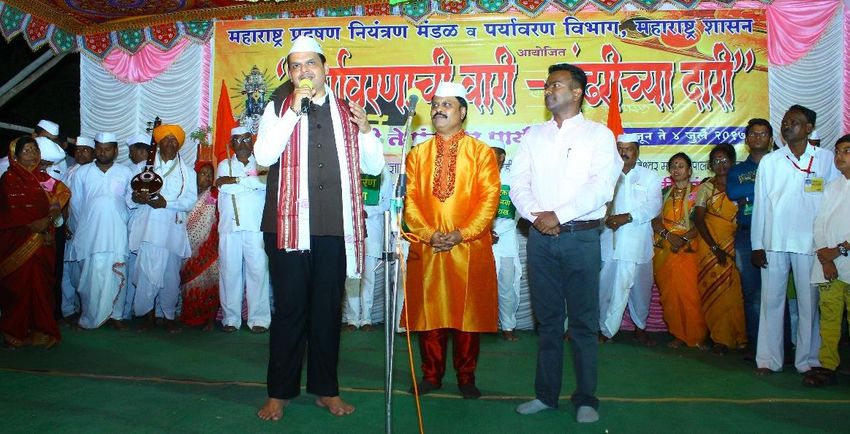
CONTENTS

BINDUSARA RIVER (Swarajnagar to Snehanagar) .......................................................................... 3
              Executive Summary of Action Plan Restoration of Water Quality of Bindusara River ........3
              Preamble -.........................................................................................................................................6
              Background ......................................................................................................................................8
              Status of Domestic Sewage Generation and Treatment ...........................................................10
              Drain out-falling into River Pedhi...............................................................................................12
              Status of Water Quality ................................................................................................................13
              Status of Ground Water Quality ..................................................................................................14
              Status of Industrial Effluent Generation and Treatment ..........................................................15
              Waste Management .......................................................................................................................17
       1.9.1         Solid Waste Management ............................................................................................17
       1.9.2         Bio-medical waste Management ..................................................................................17
       1.9.3         E-Waste management ..................................................................................................18
       1.9.4         Hazardous Waste Management....................................................................................19
              Dream Project of Government of Maharashtra (GOM), Namami Chandrabhaga ................19
              Involvement of Civil Society/Creation of awareness ...............................................................20
              Greenery Development Plan of Forest Department, Government of Maharashtra ..............28
              Plan for Restoration of Water Quality ........................................................................................30
              Proposed plans for maintaining e-flow.......................................................................................30

                                                             LIST OF TABLES

Table 1 Introduction of river stretch ........................................................................................ 10
Table 2 Status of sewage generation & treatment for Beed City ............................................. 10
Table 3 Funding Details for Proposed STP ............................................................................. 10
Table 4 Domestic sewage aspects on the river stretch ............................................................. 11
Table 5 Particulars of drains falling into the river ................................................................... 12
Table 6 Status of water quality of the drains ........................................................................... 12
Table 7 Water quality of Bindusara River at Beed, near intake water pump house at Dam, Village -
Paligaon, Taluka - Beed, District- Beed .................................................................................. 13
Table 8 Water Quality Index for 156 locations (surface water & ground water) during January -
2019.......................................................................................................................................... 15
Table 9 Ground water quality Beed District ............................................................................ 15

                                                                               1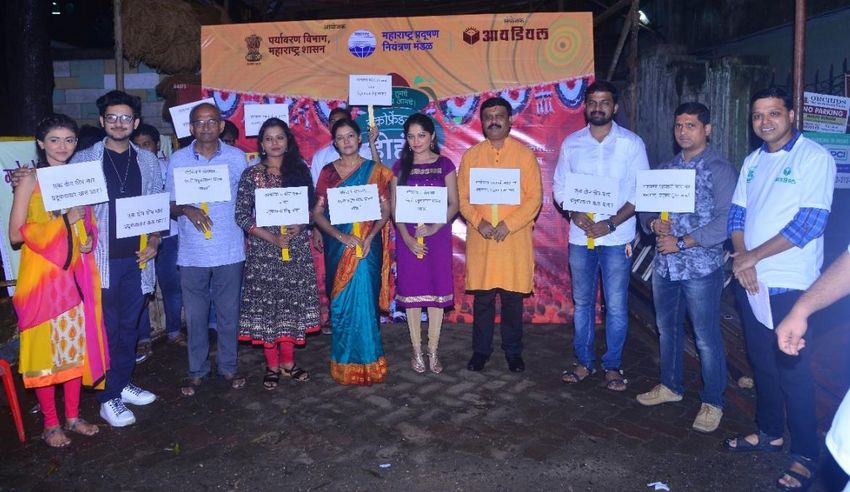
Table 10 Particulars of Industries situated in Jalna District .................................................... 16
Table 11 Highly Polluting Industries as on 31/3/2018. ........................................................... 16
Table 12 Status of Waste Management in Beed ...................................................................... 19
Table 13 Time Bound action plan to improve water quality for Bindusara River .................. 30
Table 14 Timelines for Implementation of Restoration Plan................................................... 31

                                                   LIST OF FIGURES

Figure 1 Stretch of Bindusara River .................................................................................................... 9
Figure 2 Map Showing Stretch of Bindusara River ............................................................................. 9
Figure 3 Map showing NWMP Station across stretch of Bindusara River .......................................13

                                                                    2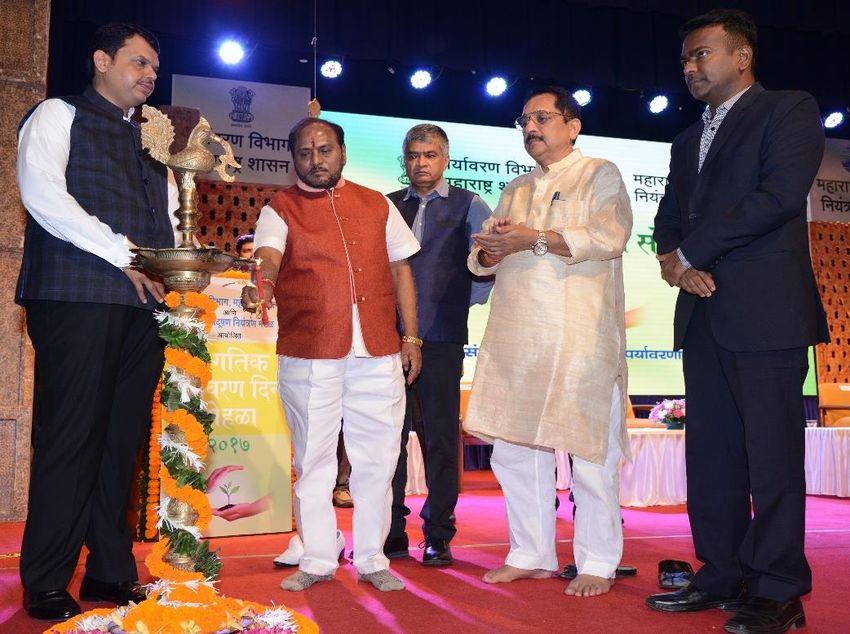
BINDUSARA RIVER (Swarajnagar to Snehanagar)
Executive Summary of Action Plan Restoration of Water Quality of Bindusara
River
Sr. Description of Item Details
No.
1. Name of the identified polluted river and : Swarajnagar to Snehanagar
its tributaries
2. Is river is perennial and total length of the : Non- perennial
polluted river Length- 700 m
3. Revised priority as per Jan. to Dec.2018 : Priority IV
Analysis results
4. No of drains contributing to pollution : Subhash Road nallah at Sathe Chowk, Sneha
and names of major drains Nagar, Beed. Length: 100 m. Width: 0.9 m
5. Major Towns on the banks of the river : Local Body Population
with population Beed 1,46,709
6. a. Sewage generation & Treatment in : Total Sewage generation- 22 MLD
MLD Total Sewage Treatment- Nil
b. Total no. of existing STPs and : Presently no STP provided. Proposed STP
proposed STPs with total capacities in with treatment capacity of 35 MLD.
MLD Total cost of project 165 Cr
Date of completion: March, 2020
c. Gaps in sewage treatment in MLD and : -
no. of towns not having STPs
7. Major industrial estates located with total : No major polluting industry is located in the
no. of industries catchment area. MPCB is does not allow any
industry to discharge treated/partially treated
effluent in to the river.
a. Total water consumption and total : NA
industrial effluent generation in MLD
b. No. of industries having captive ETPs : NA
and their treatment capacity in MLD
c. No of CETP’s and their treatment : No CETP
capacity
d. Gaps in treatment of industrial effluent : NA
Waste Management :
8. a. Solid Waste Generation & : Beed
processing Total MSW generated during the year 2017-
18: 65 MT/day
Total MSW treated during the year 2018-18:
18
18 MT/Day MSW generated at Beed
Municipal Council is disposed by
vermicmposting
3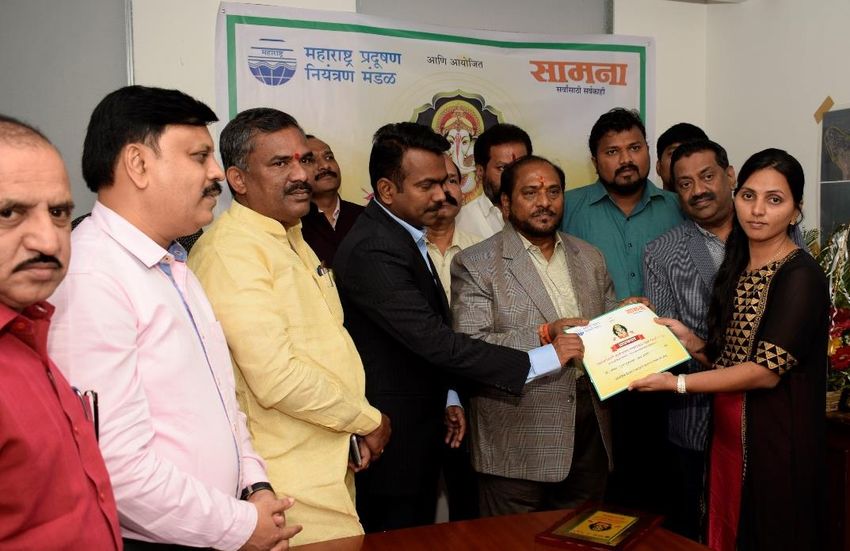
b. Biomedical Waste Generation & : Beed & Osmanabad:
treatment Total Biomedical waste generated: 897
kg/day.
Total Biomedical waste collected & treated:
897 kg/day
c. E-Waste Management Generation & : E-waste generated by industries is sent to
treatment MPCB authorized E-waste reprocessor.
d. Hazardous waste Management : There are 15 Hazardous waste generating
industries in Beed. These industries
generated about 1.62 MT Hazardous waste
in year 2017-18.
The HW from Jalna district is scientifically
disposed through Maharashtra Enviro
Power Ltd., MIDC Ranjangaon, Dist. Pune
CHWTSDF capacity – Landfill – 60000
MT/A, Incineration – 3 TPH.
9. Action plan includes mainly covering : RRC has already requested to Water
aspect such as Resource Dept, GoM for maintaining
(Proposal for utilization of sewage, minimum E-flows and water shed
ground water recharging or rain water
management, plantation on both sides of
harvesting, measures for regulating
ground water use, protection and the river, setting up of bio-diversity parks.
management of flood plain zone, Water resource department, GoM has
maintaining minimum E-flows and water prepared integrated State Water Plan,
shed management, plantation on both which includes recycling of Treated
sides of the river, setting up of bio- sewage.
diversity parks etc., as per Hon’ble NGT
MPCB - Action plan for Utilization of
Orders dated 20.09.2018 and
19.12.2018) Treated Sewage has been submitted to
CPCB.
10. Min. and Max. required time period for Max: 2 Years
implementation of action plans
11. Total estimated budget in crores towards : Presently no STP provided.
implementation of proposed action plans Proposed STP with treatment capacity of 35
with break-up ( e.g. No. of STPs, MLD.
capacity, total cost; No of CETPs, total
Total cost of project 165 Cr
capacity, Cost towards interception and
diversion of sewage/effluent to Date of completion: March, 2020
STPs/CETPs etc.,)
12. Whether ‘River Rejuvenation : River Rejuvenation Committee (RRC)
Committee (RRC) constituted by the constituted as per the Maharashtra
State Govt./UT Administration and If so, Government G.R. issued by the Environment
Date of constitution of ‘RRC’. Dept, GoM vide No. NGT 2018/PC-2/TC-3
dtd.13.12.2018.
13. Responsible Organisation (s) for : 1. Water Resource Department, GoM
implementation of proposed action plans 2. Urban Development Department
3. Beed Municipal Council
14. Expected deliverables w r to achieving : 1. To achieve 100% sewage collection and
Goals treatment
4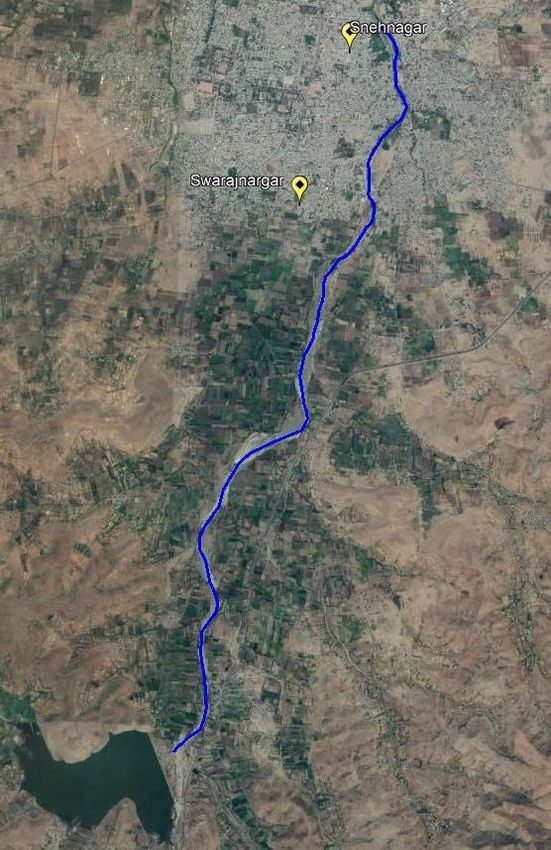
2. To achieve 100% MSW collection,
transportation and treatment.
3. To achieve river water quality of Bathing
standards by 2020.
4. Augmentation of River Flow and
restoration of water quality-2022
15. Initiatives taken by Govt. of Maharashtra : Maharashtra Government through it’s
and MPCB. forest department has announced The
Plantation Program in 2016 with the aim of
planting 2 crore & planted 2.82 crore
saplings. Forest Department has set the
target of plantation of 4Crore, 13Crore and
33Crore saplings under the mission of
50Crore plantation which shall be
accomplished in the three consecutive
years viz. 2017, 2018 and 2019.
GOM, announced ‘Namami Chandrabhaga
Abhiyan’ in year 2016. It is an initiative
taken to revive and rejuvenate the river
Chandrabhaga and to restore its historic
glory. Government of Maharashtra has
prepared a comprehensive plan for
cleaning of the river on the lines of
‘Namami Gange’. The aim of the mission
is to make the Chandrabhaga river
pollution free and conserve its purity and
sanctity up to year 2022.
MPC Board will provide financial &
technical assistance to villages in next
three years to comply with sewage & waste
management.
MPC Board has issued Direction to the
local bodies to make 25% budgetary
provision for scientific treatment and
disposal of Sewage and Solid Waste.
Accordingly, Municipal Corporations
have passed resolution in their General
Body meeting and reserved the funds.
These funds are reserved and made
mandatory to utilise for preparation of
DPR, establishing
treatment facility, O & M of treatment
facility etc. The review of the same is taken
from time to time by the Board.
MPC Board has issued directions to 08
Municipal Corporations to penalize to the
tune of 1pais/litre of sewage generation
under ‘Polluter pays principle’.
MPC Board has issued directions to non-
complying CETPs to penalize to the tune
of 2 paisa/litre for remediation &
5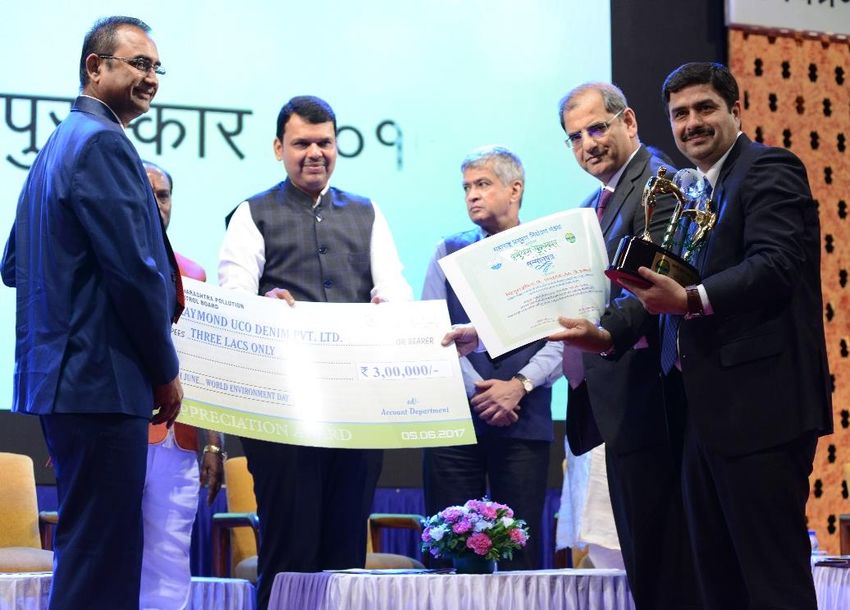
upgradation to comply with the consented
standards.
Budget Estimates & Pooling of Maharashtra Government has already
Resources from Local Bodies, State received proposal of Rs. 1104.54Cr. Under
Pollution Control Board, State State River Conservation Program & form
Government & Central Government this amount State Government will provide
necessary funds in next 3 years i.e. by 2022
for Sewage management
The Maharashtra Pollution Control Boards
has also reserved Rs. 461.42Cr. for
preparation of action plan for abetment &
Control of Pollution of River Water due to
sewage & solid waste disposal from B & C
Municipal Councils (342Nos of Urban
Local Bodies.), Nagar Panchyat & Gram
Panchayat for reducing polluted stretches
in compliance with Hon’ble NGT,
principal bench directions w.r.t. “More
River Stretches are now Critically
Polluted”. The said funds will be used for
DPR preparation, development of
infrastructure for sewage collection &
treatment & development of infrastructure
for Solid Waste Management. The DPR
preparation & implementation of the same
will be completed by year 2022 (i.e in next
3 years).
The Maharashtra Government through
Urban Development Department has
approved DPR of all 388 Urban Local
Bodies for Solid Waste Management. The
funds for the same amounting to Rs.
2560.0Cr has been already approved by
Government & the said DPRs will be
implemented & Solid Waste Management
issues will be resolved by December’2019.
Preamble -
In the matter of OA No. 673 of 2018-"More river stretches are critically polluted now: CPCB", the
Hon'ble NGT has passed order dated 20.09.2018 for constitution of River Rejuvenation Committee
(RRC) and Special Environment Surveillance Task Force (SESTF). The report comprises 351
polluted river stretches in India out of which 53 polluted river stretches are in Maharashtra. In the
state, 9 polluted stretches in priority I & 6 polluted stretches in priority II. It has been mandated to
prepare Action Plan for River Stretches and make them pollution free. In compliance of the orders of
the Hon'ble NGT, the State Government has constituted RRC.
6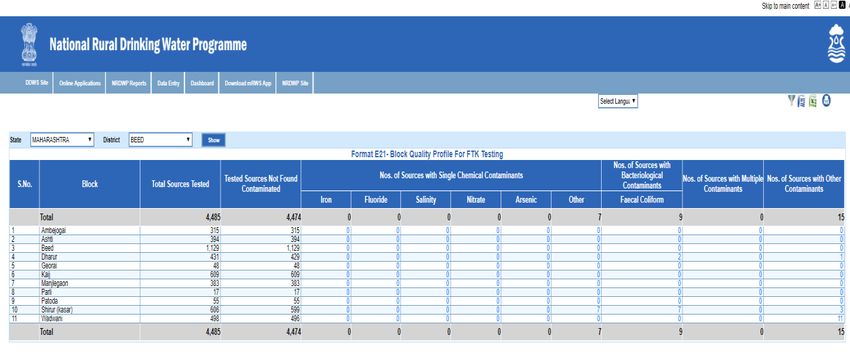
River Rejuvenation Committee (RRC) constituted as per the Maharashtra Government G.R. issued
by the Environment Dept, GoM vide No. NGT 2018/PC-2/TC-3 dtd.13.12.2018 with 5 members
under the guidance of Principal Secretary for preparation of action plans and to monitor the
implementation of these action plans. The members of RRC are as mentioned under:
1. Commissioner / Director, Directorate of Municipal Administration
2. Chief Executive Officer – Maharashtra Industrial Development Corporation
3. Director (Environment)
4. Director (Industries)
5. Member Secretary – Maharashtra Pollution Control Boards- Member & Co-ordinator of RRC
Further State Government also constituted District Level Special Task Force comprising of the
following:
1. Representative of District Collector
2. Representative of District Superintendent of Police
3. Representative of Regional Officer, MPCB
4. Representative of the District Judge of the concerned District
Meetings of the RRC Committee:
1st Meeting of River Rejuvenation Committee (RRC) convened on 14.12.2018.
RRC reviewed draft action plans of polluted river stretches of Priority I prepared by
Maharashtra PCB. It was decided by the all the committee members, to take review of local
bodies and accordingly to communicate the outcomes of the meeting to the Hon’ble NGT,
Principal Bench. Maharashtra PCB submitted nine draft action plans of polluted river
stretches of Priority I to CPCB along with minutes of 1st meeting of RRC and submitted
progress report of polluted river stretches to Hon’ble NGT on 15.12.2018
2nd Meeting of River Rejuvenation Committee (RRC) convened on 09.01.2019.
RRC reviewed draft action plans of polluted river stretches of Priority II prepared by
Maharashtra PCB. It was decided in the meeting to add in the draft action plans funding
details like source, name of scheme, timeline etc for proposed STPs by concern local bodies.
3rd Meeting of River Rejuvenation Committee (RRC) convened on 23.01.2019.
RRC reviewed and finalised draft action plans of polluted river stretches of Priority I, II, III,
IV and V prepared by Maharashtra PCB. RRC also decided to call the local bodies and review
the timelines proposed in action plans from time to time.
Maharashtra PCB submitted 53 draft action plans of polluted river stretches of Priority I, II,
III, IV and V to CPCB along with minutes of 2nd & 3rd meeting of RRC and submitted progress
report of polluted river stretches to Hon’ble NGT on 31.01.2019.
7 CPCB Task Team on Polluted River Stretches called MPCB to give presentation on Action
Plan for Priority-I & II polluted river stretches on 12.02.2019. Accordingly, the presentations
were reviewed by Task team & few improvements in the action plan were suggested.
4th Meeting of River Rejuvenation Committee (RRC) held on 16/02/2019 & it was decided
to communicate with Water Resource Department to maintain e-flow in the rivers of
Maharashtra adopting good irrigation practices, protection & management of flood plain zone
(FPZ), rain water harvesting, ground water charging, planation on both sides of river, Setting
up of biodiversity parks on flood plains by removing encroachments and Urban Development
department communicated to take necessary steps to provide adequate funds to urban local
bodies for installation of sewage treatment & MSW processing facilities in a time bound
manner so as to comply with the Hon’ble NGT.
5th Meeting of River Rejuvenation Committee (RRC) held on 25/06/2019. It was decided that
Director Environment will communicate with Water Resource Department and Urban
Development Department regarding provision of funds in time bound manner for installation
of STPs & MSWM facilities. RRC reviewed and approved Action Plans for restoration of
polluted river stretches in priority III, IV & V.
Achievable goal:
The objective/goal of the action plan is that the quality of river water should meet with the required
value as given under:-
Quality Parameter Standard to be achieved
BOD 3.0 mg/l.
Dissolved Oxygen (DO) More than 5.0 mg/l.
Faecal Coliform Less than 500 MPN/100ml.
Background
The Bindusara (also called Bendsura) is a small river flows in the district of Beed, It is a tributary
river of Sindphana and a sub-tributary of Godavari River. This river originates in the hills of Balaghat
near the village Waghira, in south of district Beed in Patoda taluka. The total length of the river is
about 40 km. This river is a rapid and seasonal river and is located about 10 km south of Beed. The
city of Beed is situated on the banks of Bindusara River.
8Figure 1 Stretch of Bindusara River
Figure 2 Map Showing Stretch of Bindusara River
9The river stretch extends from Swarajnagar to Snehanagar. The length of this stretch is 700 m. Beed
is situated on the banks of the river. The population along this stretch is 1.46790 as per 2011 Census.
The current status of the river as per the monthly sampling conducted between January to December
2018 reveals that water quality of the river falls in Priority V i.e. max BOD 4 mg/l.
Table 1 Introduction of river stretch
Sr.
Description of item Details
No.
1 Approx. length of stretch 700 m
Major Towns located on the bank along with Local Body Population
2
Population Beed 1,46,790
3 Stretch of River Perennial or Non Perennial Non-perennial.
Current status of polluted river stretch (Jan –
4 Priority-V
Dec 2018)
Status of Domestic Sewage Generation and Treatment
Total Population of Beed City is 1.8 lakh and quantity of domestic effluent is being generated about
11 MLD and there is no treatment given to the domestic effluent generated from Beed Municipal
Council area. Board has issued direction time to time to the Beed municipal council for taking
corrective measures to avoid river water pollution. All the domestic effluent generated from the city
goes through the various nallas to Bindusara River.
Table 2 Status of sewage generation & treatment for Beed City
Name and Sewage Designed
Stage (Construction/ Target date of
Council Address of Generation Capacity
Proposed) Completion
STP (MLD) (MLD)
Beed Beed 22.0 35.0 Proposed March-2020
Table 3 Funding Details for Proposed STP
Fund Allocation Details
Name Time line for
Designed Target date
Name of and various stages
Capacity of
ULB Address Present of work
(MLD) Source Allocation Utilization Completion
of STP Status of Completion
of Funds Status status
the work
10Total
165.8 Cr
Cetral
50 % by
Governm
Central
ent :
Governme
82.90 Crs
Munucip nt.
(50%) Work order is
al 25 % by Work yet to
Beed 35 State Nil issued on 18 March 2020.
Council State Start
Govt : July 2018
Beed governme
41.45 Crs
nt and 25
(25%)
% by
Local
ULB
Boady :
41.45 Crs
(25%)
Table 4 Domestic sewage aspects on the river stretch
Sr Particular Remarks
No
Details of drainage There are open drains in the city.
system/sewerage New projects propose collection system of 163 km and
1 network an STP with treatment capacity of 35 MLD.
present/proposed
Water resource department, GoM has prepared
integrated State Water Plan, which includes recycling
of Treated sewage.
MPCB has submitted Action plan for Utilization of
Treated Sewage to CPCB, in which it is mandated to
utilize treated sewage for different class of users like
Thermal Power Plants, Industrial Units, Construction
Proposal for utilization activities, non-potable municipal uses, Agriculture-
2 of sewage Irrigation, etc. depending on its availability.
The Infrastructure Projects are mandated by MPCB
to recycle 60% of treated sewage for secondary use
by providing duel pipeline.
The Local Bodies will be encouraged to reuse treated
sewage for various purposes including to Thermal
Power Plants wherever possible. e.g. Koradi TPS is
receiving 100 MLD of treated sewage from Nagpur
city.
STP sludge It is proposed that STP sludge is disinfected and used as
3
management manure.
The EC has mandated rainwater harvesting for
Proposal for ground projects above 20,000 Sq.m.
water recharging/rain G.S.D.A. is engaged in the development and
4
water harvesting management of groundwater resources in the State
through various schemes. The main aim is to provide
safe and potable drinking water to the community.
11 The G.S.D.A. is engaged, in the exploration,
development and augmentation of groundwater
resources in the State through various schemes. This
mainly includes, drilling of bore wells/tube wells
under Rural Water Supply Programme, rendering
technical guidance under minor irrigation programme
by locating suitable dug well sites, strengthening of
groundwater sources by water conservation measures,
artificial recharge projects for induced groundwater,
specific studies related to the periodic status of
groundwater availability, protecting the existing
groundwater resources through technical assistance
under Groundwater Act etc.
Adopting good Agriculture Department, GoM & Water Resource
5
irrigation practices Department, GoM is requested for implementation.
Protection and Water Resource Department, GoM is requested for
6 management of Flood implementation.
Plain Zones (FPZ)
Plantation on both sides Water Resource Department, GoM is requested for
7
of the river implementation.
Setting up of Water Resource Department, GoM is requested for
biodiversity parks on implementation.
8
flood plains by
removing encroachment
Drain out-falling into River Pedhi
There is one drain from Subhash Nagar that meets Bindusara River which carries untreated
domestic sewage.
Table 5 Particulars of drains falling into the river
Sr. Name of the
Discharge Length Width Depth
Location
No. drain (min/max) (km) (m) (m)
Min-200
Subhash Road Nala meeting to
Subhash Nagar CMD
1 Bindusara River at New 2 2.5 0.5
Nala Max-500
Mondha Road Bridge
CMD
Table 6 Status of water quality of the drains
Sr. No. Major Drain BOD (mg/l) COD (mg/l)
1 Subhash Nagar Nala - -
12Status of Water Quality
Figure 3 Map showing NWMP Station across stretch of Bindusara River
Water quality of River Bindusara is assessed at one location. It is observed that Dissolved Oxygen
range between 3.6 – 7.1 mg/1 putting together data of three years (2016-2018) which is no t
meeting the criteria limit of at least 4 mg/l. The Bio-chemical Oxygen Demand (BOD) varies
between 3.2 – 8.0 mg/1 for similar years which is exceeding the desired level of 3 mg/1. The
Chemical Oxygen Demand (COD) values ranged between 8.0-28.0 mg/l indicating low level of
industrial pollution. The Faecal and Total Coliform numbers respectively for the years referred are
in the range of 8-80 MPN/100ml and 20-220 MPN/100ml indicating significant contribution of
untreated sewage. The details of parameter specific concentration are provided in the table below:
Table 7 Water quality of Bindusara River at Beed, near intake water pump house at Dam,
Village - Paligaon, Taluka - Beed, District- Beed
DO BOD FC MPN TC MPN
Month Year pH Water Quality
(mg/L) (mg/L) /100ml /100ml
2017 7.8 6.8 8.0 2 140 Non Complying
January
2018 8.4 6.8 3.2 4 170 Non Complying
2017 7.9 6.9 5 2 170 Non Complying
February
2018 8.1 4.6 6.2 2 110 Non Complying
2017 8.2 7.2 3 2 110 Complying
March
2018 8 4.9 6.2 4 170 Non Complying
2017 7.9 7.2 3 4 170 Complying
April
2018 7.66 5.4 3.2 4 130 Non Complying
132017 8.2 7.1 2.8 2 140 Complying
May
2018 7.9 6.6 4.8 4 130 Non Complying
2017 8.1 6.6 4.6 2 170 Non Complying
June
2018 7.3 6.8 3.2 2 110 Non Complying
2017 8.6 6.9 3 4 140 Complying
July
2018 8.6 6.9 2.8 4 130 Complying
2017 8.1 6.2 3 2 130 Complying
August
2018 7.7 7.1 4.8 2 110 Non Complying
2017 8.5 7.2 3.2 4 120 Non Complying
September
2018 8.6 7.3 3.6 2 110 Non Complying
2017 8.8 6 3 4 120 Complying
October
2018 8.34 7.18 4 2 110 Non Complying
2017 8.2 6.8 3 4 120 Complying
November
2018 8.34 7.25 3.4 4 170 Non Complying
2017 8.2 6.8 3 4 120 Complying
December
2018 7.9 7.19 3.4 4 170 Non Complying
It is observed from the above analysis that most maximum BOD values recorded during the year
2017-18 do not comply with the bathing standards of 3mg/l. This may be due to non-availability of
the dilution water at disposal location in the river bed. The necessary dilution will be achieved by
way of discharging necessary water quantum required to maintain e-flow from dam in a periodical
manner. The usual water cycle of the release of water is mostly for irrigation and domestic purposes
from interval of 21 days to 45days. The continuous e-flow will be achieved subject to availability of
the water in the dam.
Status of Ground Water Quality
Maharashtra Pollution Control Board (MPCB) regularly monitors the water quality across 250 Water
Quality Monitoring Stations (WQMS) for both surface (155 on rivers, 34 on sea/creeks, 10 on drains,
1 dam) and ground water (24Borewells, 24Dugwell, 1 Handpumps, 1 Tubewell) under two programs
of NWMP (National Water Monitoring Programme) project titled GEMS (Global Environment
Monitoring System) and MINARS (Monitoring of Indian National Aquatic Resources). Surface
water samples are monitored every month whereas the ground water samples are monitored every six
months.
WQI for ground water
MPCB monitors ground water quality once in six months. Based on the stringency of the parameters
and its relative importance in the overall quality of water for drinking purposes each parameter has
been assigned specific weightage by CPCB. These weights indicate the relative harmfulness when
present in water. Nine parameters (pH, Total Hardness, Calcium Hardness, Magnesium Hardness,
Chloride, Total Dissolved Solids, Fluoride, Nitrate, Sulphate) are considered for calculating Water
Quality Index of ground water.
14Water Quality Index - Ground Water
WQI Water Quality Colour Code
300 Water Unsuitable for drinking
Table 8 Water Quality Index for 156 locations (surface water & ground water) during
January - 2019
WQI Category WQI Number of WQI values in different category
No. of WQI % of WQI
Good to Excellent 63-100 98 73.68
Medium to Good 50-63 12 9.02
Bad 38-50 9 6.77
Bad to Very Bad 38 and less 14 10.53
Total WQI values 133 100
Summary:
1. 110 WQI values or 82.70 % values are in category of Good to Excellent and Medium to
Good.
2. 9 WQI values or 6.77 % are in category of Bad.
3. 14 WQI values or 10.53 % are in category of Bad to Very Bad.
Table 9 Ground water quality Beed District
Status of Industrial Effluent Generation and Treatment
Maharashtra is one of the most highly industrialized states in India. With a rise in industrial estates
in the State, areas like Mumbai, Thane, Navi Mumbai, Kalyan, Nashik, Pune and Pimpri-Chinchwad
that have a large number of pollution-prone industries are facing chronic industrial pollution. In order
to maintain a safe distance between industrial units and rivers to avoid discharge of effluent into
15water bodies, the State has its policy which also states that no industry will be allowed to establish
along a river bank. Industries are being encouraged to recycle and reuse waste.
Table 10 Particulars of Industries situated in Beed District
Sr
Particulars Remarks
No
There is no any industries along the river bank.
Particulars of Industries in Jalna Statistics of Industries in Beed District
1
District Total no. of industries in red category: 113
Total no. of industries in orange category: 156
No. of Directions issued to NA
2
Industries
Total water consumption and NA
3 total industrial effluent
generation
No. of industries having captive NA
4 ETPs and their treatment
capacity in MLD
No. of CETPs existing in the No CETP
catchment of the polluted river
5
stretch and the treatment
capacity
No. of Industries that are
6 NA
members of the CETPs
Gaps in treatment of industrial
7 NA
effluent
OCEMS installation Status by
8 NA
Industries
Beed:
Hazardous waste generation during the year 2017-
Status of Hazardous Waste 18: 1.62 MT
9 Quantity of HW recycled: 1.2 MT
Generation and Treatment
Quantity of HW disposed in secured landfill: Nil
Quantity of HW disposed through incinerator:
0.42 MT
To monitor compliance of Consent conditions, performance of ETP, ECS and other measures, the
Board officials inspect industries regularly. There are 489 industries identified under “Highly
Polluting Industries”. Table 5.33 shows region-wise details of these highly polluting industries.
Table 11 Highly Polluting Industries as on 31/3/2018.
Amra Auranga Chandra Kolh Nagpu Nashi Navi Grand
Industry Kalyan Mumbai Pune Raigad Thane
vati bad pur apur r k Mumbai Total
Cement - - 5 - 1 - 1 - - - - - 7
16Distillery 1 15 - 17 - 1 22 - 36 - - 92
Dyes and
Dye-
- - 2 3 2 - 1 - 1 - 7 2 18
intermedia
tes
Fertilizer 1 2 - - - 1 1 4 - 1 3 - 13
Integrated
Iron and - - 1 - 1 - 4 - - 1 2 - 9
Steel
Oil
- - - - - 2 - - - - - - 2
Refinery
Pesticide - - - 1 5 - - 1 3 - 3 3 16
Pharmace
- 13 - 12 4 - - 2 15 9 14 23 92
uticals
Pulp &
- - 1 - - - - - - 1 - - 2
Paper
Sugar 1 55 2 - 41 - 5 35 - 63 - - 202
Tannery 1 - - - - - - - - - 1
Thermal
Power 2 1 7 - 2 1 12 3 - - - 1 29
Plant
Petro-
- - - - - - - - 1 - 5 - 6
chemical
Grand
5 87 18 16 73 4 25 67 20 111 34 29 489
Total
Waste Management
1.9.1 Solid Waste Management
In the state of Maharashtra there are total 271 local bodies , comprising of 27 Municipal Corporations,
16- ‘A’ Class Municipal Council, 54- ‘B’ Class Municipal Council, 154- ‘C’ Class Municipal
Council, 14- Nagar Panchayat, 06-Cantonment Board generating about 22897.83 MT of municipal
solid waste every day, of which the Contribution in terms of percentage by the corporation is 84.72
%, by A class council is 4.25 %, by B class council is 5.04 % , by C Class Council is 5.07 % and by
Others is 0.96 %. The overall percentage of treatment is 34.70 % i.e. 7945.544 MT/day quantity is
treated and the remaining is disposed in an unscientific manner. Out of 27 Municipal corporations,
24 Corporations have obtained Authorization from MPCB for 22 Nos of approved sites having
processing & disposal facilities and same are in operations. 109 Nos. of Municipal Councils having
partially processing & disposal facilities.
Total generation of MSW from Beed is about 65 MT/day. 18 Mt/day MSW processed thorough
vermicomposting& remaining is disposed by dumping without treatment.
1.9.2 Bio-medical waste Management
Total Bio-medical waste generation in Beed and Osmanabad district is 898 kg/day. All waste is
collected, transported and treated at CBMWTSDF located at Dawalwadi, Badnapur, Dist. Jalna. The
17CBMWTSDF has installed capacity of Incinerator 150 Kg/Hr and Autoclave with installed capacity
of 200 litre/cycle.
1.9.3 E-Waste management
Maharashtra Pollution Control Board awarded work order to M/s. IRG Systems South Asia
Pvt. Ltd. to carry out inventorisation of E-Waste generation in the State of Maharashtra.
Interim inventorisation report is submitted to MPCB and final report will be ready within one
month.
As per the Interim inventory report submitted to MPCB, the E-Waste generation for the year
2015 is approx. 6,46,509 MT.
Number of authorized dismantlers/ recyclers in the state of Maharashtra
Present Status of E-Waste dismantling and recycling capacity
1 E-Waste Dismantlers 70
2 E-waste Recyclers 08 77525 MTA
Total 78
E-Waste Treated (Recycled/Dismantled)
o Year 2015-16 : 4041.72 MT
o Year 2016-17 : 6720.69 MT
o Year 2017-18 : 7031.5 MT
CPCB has approved EPR of 261 producers for Maharashtra. The list of the producers is
enclosed here.
Annual report for the year 2017-18 is submitted.
Action Taken by MPCB
MPCB is undertaking regular monitoring of EPR Authorization conditions and regular
inspection of the collection points/ centers mentioned in EPR Plan.
MPCB has issued Directions u/s 5 of the Environment (Protection) Act, 1986 read with E-
waste (Management) Rules, 2016 to all Municipal Corporations in Maharashtra on
06/12/2018 for provision of collection centres.
Co-ordination with Various State Government Departments
Co-ordination with Urban Local Bodies (Municipal Committee /Council /Corporation).
Awareness through Public Notice
Constraints:
Channelization E-waste from informal sector to formal sector.
Awareness about impact of E-waste on Environment and Rules of E-waste is required.
Authorized collections and Segregation centers are required to be established by Local
Bodies.
181.9.4 Hazardous Waste Management
The state of Maharashtra has four Common Hazardous Waste Treatment, Storage and Disposal
Facilities. These facilities are located at MIDC Taloja, Trans-Thane Creek Industrial Area, MIDC
Ranjangaon, Pune and MIDC Butibori, Nagpur. These facilities collectively handle 340,847 MT of
Hazardous waste per annum.
There are 15 Hazardous waste generating industries in Beed district. These industries generated about
1.62 MT of Hazardous waste in year 2017-18. The HW from Beed district is scientifically disposed
through CHWTSDF at Maharashtra Enviro Power Ltd., MIDC, Ranjangaon, Dist. Pune having
capacity – Landfill –60,000 MT/A and Incinerable – 3 TPH.
Out of the 1.62 MT generation in 2017-18, 0.42 MT was Incinerable and 1.2 MT was Recyclable.
Table 12 Status of Waste Management in Beed
Sr.
Particular Remarks
No
Total generation of MSW – 65 MT/day.
1 Total MSW Generation
Existing MSW treatment and
2 18 MT/day MSW disposed through vermicmposting
disposal facilities
Hospitals are joined to CBMWTSDF- Champawati
Bio-medical waste Waste Management,A/p.Pali. Beed, Tal & Dist-Beed
3
Management Total generation: 897 kg/day
Total collection and treatment: 897 kg/day
E-waste generated by industries is sent to MPCB
4 E-Waste management
authorized E-waste reprocessor.
There are 15 Hazardous waste generating industries in
Beed. These industries generated about 1.62 MT
Hazardous waste in year 2017-18.
The HW from Jalna district is scientifically disposed
5 Hazardous Waste Management
through Maharashtra Enviro Power Ltd., MIDC
Ranjangaon, Dist. Pune
CHWTSDF capacity – Landfill – 60000 MT/A,
Incineration – 3 TPH.
Dream Project of Government of Maharashtra (GOM), Namami Chandrabhaga
GOM, has announced Namami Chandrabhaga Abhiyan on 18/03/2016 in the Budgetary Assembly
Session of 2016-17. Namami Chandrabhaga is an initiative taken to revive and rejuvenate the river
Chandrabhaga and to restore its historic glory. Considering the religious, social and economic
importance of the river Chandrabhaga, the Government of Maharashtra has decided to prepare a
comprehensive plan for cleaning of the river on the lines of ‘Namami Gange’. Hon’ble Finance
Minister, GOM, directed to issue the GR about finalization of working System of the Abhiyan, vide
19letter dt. 07/04/2016. The aim of the Namami Chandrabhaga Abhiyan is to make the Chandrabhaga
river pollution free and conserve its purity and sanctity up to year 2022 and others are as mentioned
below:
To maintain the permanent minimum continuous flow of water in the river bed.
To construct weirs in the river bed for maintaining water level.
To maintain & keep minimum environmental flow of water.
To make available sufficient public bathrooms & toilets as well as mobile bio-toilets to the
publics during Pandharpur yatras.
To install STP’s for treatment of domestic wastes and scientific disposal facilities for solid
waste generated from the villages & cities located on the bank of Chandrabhaga river.
To carry out the beautification & forestation of river banks.
To make reuse/recycle of treated industrial water generated from the industries and industrial
estates located in the catchment area of Chandrabhaga river.
As per the local need to work for public participation and development of pilgrimage area.
“Namami Chandrabhaga Pradhikaran”
Established under the Chairmanship of Hon’ble Chief Minister, GoM & Co-Chairmanship of Hon’ble
Finance Minister, GoM, having Divisional Commissioner, Pune as Member Secretary.
“High Power Committee”
Established under the Chairmanship of Hon’ble Chief Secretary, GoM of Maharashtra having
Divisional Commissioner, Pune as Member Secretary.
In this context, the Government has identified CSIR National Environmental Engineering Research
Institute (CSIR-NEERI) as ‘Nodal Technical Expert Agency’ the project. Bhima river originates in
Bhimashankar in Pune district. But when it reaches Pandharpur, it appears like a crescent moon, thus
deriving the name Chandrabhaga. It flows in a 370-km stretch between Pune and Solapur districts.
CSIR-NEERI was already involved by the Maharashtra Government to provide technological
solutions for sanitation and sewage treatment at important cities and pilgrim centers like Nashik and
Pandharpur. Furthermore, is retained CSIR-NEERI for technological interventions during the
execution of the Project ‘Namami Chandrabhaga’. The Maharashtra Government intends to cleanse
and make the holy river Chandrabhaga pollution free by the year 2022.
Similarly, on the line of Namami Chandrabhaga Maharashtra Government is in process of
undertaking various projects for clean-up of other rivers in the State.
Involvement of Civil Society/Creation of awareness
For sustainable development it is necessary to promote and create environmental awareness among
communities, businesses and governments. Therefore the Board organizes various environmental
awareness programs across the State of Maharashtra. During the year 2017-18 the following
programs on environmental awareness were conducted by the Board.
Month Subject Details
2022nd April World Earth Day Public awareness messages published in leading newspapers
2017 namely Dainik Samna, Sakaal, Divya Marathi, Loksatta, Indian
Express, Lokmat, Maharashtra Times of India, DNS, Hindustan
Times and Midday on the occasion of World Earth Day.
5th June World Environment The main event was organized at the Yashwantrao Chavan
2017 Day celebration Auditorium, Mumbai on 5th June, 2017 on occasion of World
Environment Day. Hon’ble Chief Minister of Maharashtra, Shri
Devendra Fadnavis, Hon’ble Minister of Environment, Shri
Ramdas Kadam and Member Secretary of MPCB, Dr. P.
Anbalagan attended this event. During this event, award
ceremony for Vasundhara Award competition organized for
industries, municipal corporations and CETPs was carried out.
On the occasion of World Environment Day, Vasundhara Short
Film Competition based on the environment was announced by
Hon’ble Chief Minister of Maharashtra at the main event. This
competition will be organized for professionals as well as
amateurs.
During this event, the award ceremony for Photothon 2017 took
place. This ceremony was presented by Member Secretary of
MPCB, Dr. P. Anbalagan. Villages which had participated in the
water conservation activity ‘Jalsanvardhan Panchayat – Ek Lok
Chalwal’ organized by Maharashtra Pollution Control Board,
Vanrai Pune and Zee 24 Taas were awarded at the hands of
Hon’ble Chief Minister of Maharashtra for their exceptional
performance. During this event, a short film festival related to
the environment was organized for three days at Yashwantrao
Chavan Centre, Mumbai with assistance from Enviro-Vigil and
as a joint effort by MPCB and Environment Department,
Government of Maharashtra. A large number of
environmentalists attended this festival. At this time, discussion
sessions with directors, producers, environment experts and
analysts were also organized.
21Hon’ble Shri Devendra Fadnavis, Chief Minister, GoM lighting the lamp during inauguration of the World
Environment Day program held at Y. B. Chavan Auditorium, Mumbai on 5th June 2017. Hon’ble Shri Ramdasji
Kadam, Minister for Environment, GoM, Shri Sumit Mallik (IAS), Chief Secretary, GoM and Dr. P. Anbalagan
(IAS), Member Secretary graced the occasion with their august presence.
On the eve of World Environment Day on 5th June 2017, Hon’ble Shri Devendra Fadnavis, Chief Minister, GoM
giving away Vasundhara Awards to the entrepreneurs who have introduced best environment-friendly practices in
their industry, at Y. B. Chavan Auditorium, Mumbai.
5th June World Environment On the occasion of World Environment Day (5th June, 2017)
2017 Day public awareness messages were published in Maharashtra
Times, Time of India, Loksatta, Indian Express, DNA,
Hindustan Times, Midday (Gujarati, Urdu and English),
Lokmat, Dainik Sakaal, Samna, Divya Marathi and in other
leading newspapers. Information about various control
22measures adopted for pollution control was published in this
section on behalf of MPCB.
5th June World Environment On the occasion of World Environment Day (5th June, 2017)
2017 Day public awareness programs related to the environment, canvas
paintings with messages about the environment, brainstorming
on public awareness and various other activities were organized
by We Love India on 5th June, 2017 at Bandra. Famous movie
artists, sportspersons and Hon’ble Environment Minister for
State were present during these activities.
4th July ‘Paryavaranachi An environmental public awareness campaign namely
2017 Vaari Pandharichya ‘Paryavaranachi Vaari Pandharichya Daari’ was organized on
Daari’ the occasion of Aashadhi Ekadashi and the foot pilgrimage to
Pandharpur. As environmental issues are equally detrimental to
urban and rural areas, fundamental messages such as plastic
waste removal, proper use of water, electricity and natural
resources, use of limited electrical power for agriculture, use of
organic fertilizers, proper waste management of wet waste and
dry waste were spread among the 10 lakh devotees who had
gathered for the Pandharpur pilgrimage. These messages were
made public through folk art, popularly known as Kirtan,
Bharud, and Povada. In this 15 day long pilgrimage, Sangeet
Natak Academy award winner, Smt. Chandabai Tiwari, famous
Shahir Shree Devanand Mali and Hari Bhakta Parayan Shri
Dnyaneshwar Maharaj Wabale created public awareness
through Bharud, Povada and Kirtan respectively. This year’s
Pandharpur pilgrimage was inaugurated at Pune by Hon’ble
Minister of State of Environment, Shri Ramdas Kadam.
Honorable dignitaries such as Member Secretary of MPCB, Dr.
P. Anbalagan and Hon’ble Mayor of Pune were present at this
event. Guidance for this pilgrimage was sought from Dr.
Prakash Khandge, a well-known researcher of folk arts. The
conclusion of this pilgrimage was organized on the eve of
Aashadhi Ekadashi in the presence of Hon’ble Chief Minister,
Shri Devendra Fadnavis, Mrs. Amruta Fadnavis, Cabinet
Minister (Solapur), Shri Vijay Deshmukh, Minister of Water
and Sanitation, Shri Babanrao Lonikar, Senior Cabinet Minister,
Shri Mahadev Jankar, Member Secretary of MPCB, Dr. P.
Anbalagan and other honorable dignitaries.
23Hon’ble Shri Devendra Fadnavis, Chief Minister addressing pilgrims on the eve of environment public awareness
campaign at Pandharpur on 4th July 2017, in the presence of Dr. P. Anbalagan (IAS), Member Secretary, GoM.
August 2017 92.7 Big FM Big The Big Green Ganesha activity was co-organized by 92.7 Big
Green Ganesha FM and MPCB in the city of Mumbai. During this activity, the
Big Green Ganesha van encouraged citizens at various locations
to celebrate an eco-friendly Ganesh festival and to donate
newspaper scrap for the even. During Ganesh festival a special
studio was set up at Lalbaghcha Raja in Mumbai city for 10
days. At this time, Hon’ble Chief Minister of Maharashtra,
Hon’ble Minister for Environment, Hon’ble State Minister for
Environment and film celebrities spread messages for public
awareness.
August 2017 Zee 24 Taas Eco- The Household Eco-friendly Ganesh Festival Competition was
Friendly Household organized at the state level as a joint venture by MPCB and Zee
Ganesh Festival 24 Taas. This competition has a large number of participants.
Competition Citizens celebrating household in a unique way had participated
in this competition from all over the state. Response to this
competition has been increasing over the years.
August 2017 ABP Maza Eco- A special public awareness campaign regarding celebrating an
Friendly Ganesh eco-friendly Ganesh festival in housing societies in major cities
Festival Competition in the State was organized by MPCB and ABP Maza, a news
channel. News about eco-friendly Ganesh festival celebrated in
housing societies at cities such as Mumbai, Pune, Nashik and
Nagpur was broadcast through the channel. Special programs on
eco-friendly Ganesh festival celebrations at housing societies
were also broadcast on the ABP Maza television channel. Well-
known celebrities from Marathi film industry, Sayali Sanjeev
and Rushi Saxema advertised the competition organized for
celebrating an eco-friendly Ganesh festival through promos.
Winners in this competition were awarded certificates by MPCB
and Prasad. Public relations officer of MPCB was present at this
time. These celebrities visited MPCB’s Mantralaya. Special
24news regarding the event was broadcast by ABP Maza television
channel.
August 2017 Household Eco- Eco-friendly household Ganesh festival decoration competition
Friendly Ganesh was organized jointly by MPCB and Loksatta at 6 divisions of
Festival Competition Loksatta newspaper at Mumbai, Pune, Nashik, Nagpur,
2017 organized by Ahmednagar and Aurangabad. More than 2000 people
Loksatta and MPCB. competed in this event. Prize distribution of this competition
took place at Yashwantrao Chavan Pratishthan at the hands of
Hon’ble Minister for Environment, Shri Ramdas Kadam, State
Minister for Environment, Shri Pravin Pote-Patil and Member
Secretary of MPCB, Dr. P. Anbalagan. A special column
regarding this event was published in all editions of Loksatta
newspaper.
August 2017 Eco-Friendly Ganesh Public awareness messages by celebrities from Marathi and
Festival UFO Digital Hindi film industry were publicized at 205 digital theatres by
Movies financial UFO Digital Movies for two weeks to promote an eco-friendly
assistance. Ganesh festival.
August 2017 Financial assistance To celebrate an environment friendly Ganesh festival, eco-
for DNA Eco friendly Ganesh idols based on the five natural elements were
Ganesha public installed in selected malls in Mumbai city on behalf of the
awareness campaign MPCB and DNA. MPCB played the role of co-convener in this
organized by DNA campaign organized by DNA. Prominent celebrities from the
and MPCB. Hindi film industry participated in this campaign.
August 2017 Financial assistance Eco-Green Ganesha competition was organized jointly by
for public awareness Environment Department of MPCB, Government of
activity, Times Green Maharashtra and Times of India group for public Ganesh
Ganesha. festival organizations and housing societies in Mumbai and
Pune. During this campaign, public awareness activities were
conducted in various malls, movie theatres and colleges. Eco-
friendly Ganesh festival workshops were conducted for school
students. Various activities and cleanliness campaigns were
conducted by college students for the eco-friendly Ganesh
ambassador during Ganesh idol immersion at Girgaon
Chowpati, Juhu beach and Versova beach at Mumbai. This
campaign was launched by popular actor, Vidyut Jammwal and
Hollywood Director, Chuck Russel at Lala Lajpat Rai College.
A special film for public awareness had been created by Times
group for this campaign. A dedicated column for this campaign
was published for 10 consecutive days in the newspaper, Times
of India.
August 2017 Eco-Ganesha Public Eco-friendly public Ganesh festival was organized at Mumbai,
awareness campaign Pune and Aurangabad with assistance from the newspaper,
organized by Dainik Dainik Samna. The prize distribution event was conducted in the
Samna and MPCB. presence of Hon’ble Minister for Environment, Shri
25Ramdasbhai Kadam and Member Secretary, MPCB, Dr. P.
Anbalagan.
Hon’ble Shri Ramdasji Kadam, Minister for Environment, GoM giving away prizes to the participants on the eve
of Eco-friendly Ganesha Public awareness campaign in the presence of Dr. P. Anbalagan (IAS), Member Secretary,
MPCB
August 2017 Public awareness Public awareness message of ‘Celebrate a pollution-free Diwali’
messages about eco- by Hon’ble Chief Minister, Hon’ble Minister for Environment
friendly Ganesh and Hon’ble State Minister for Environment were displayed on
festival displayed on bus stops in Mumbai city for a period of 15 days.
Times OOH BEST
bus stop shelters.
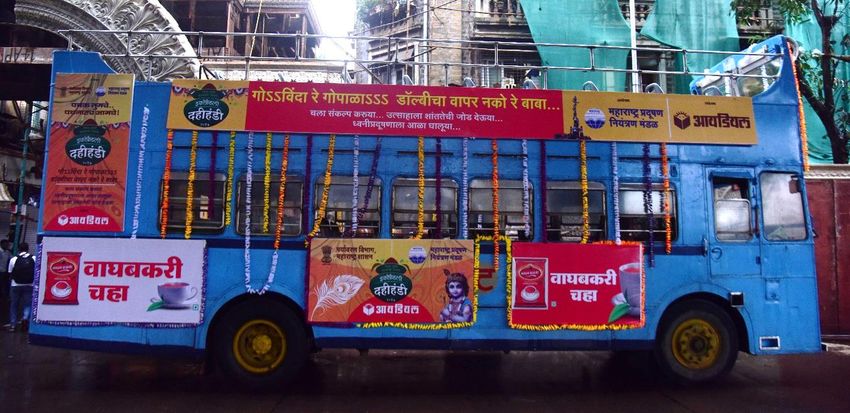
August 2017 Eco-friendly Dahi Eco Friendly Dahi Handi Festival 2017 was organized in
Handi 2017. association with IDEAL Book Company and MPCB. In this
program, anti-noise pollution awareness rally was organized by
famous Marathi film industry celebrities on the Open Deck Bus
Service of Best Transport Service. Notable film and TV
celebrities were present at this rally. On the eve of Dahi Handi,
this rally was organized in the presence of street-play celebrities
in Dadar, Lalbagh area. Eco-friendly Dahi Handi was smashed
in the presence of young celebrities from Zee TV and ETV. At
the time, in front of Chhabildas High School in Dadar, the noise-
free eco-friendly Dahi Handi was smashed along with
celebrities from the film and theatre industry. Public Relations
Officer, MPCB was present during this event.
26Anti-noise pollution awareness rally on the eve of Dahi-handi (Gopalkala) festival was organized with participation
of famous Marathi film industry celebrities on the Open Deck Bus Service of Best Transport Service in the month
of August 2017.
Anti-noise pollution awareness rally on the eve of Dahi-handi (Gopalkala) festival was organized with participation
of famous Marathi film industry celebrities on the Open Deck Bus Service of Best Transport Service in the month
of August 2017.
October Public Awareness A public awareness message saying ‘Celebrate a pollution-free
2017 message for Diwali Diwali’ by celebrities from the film industry was broadcast by
on television. the television channels Zee 24 Taas, ABP Maza, IBN Lokmat,
Star Pravah, Mi Marathi, TV9 Maharashtra, Saam TV, Jay
Maharashtra and Maharashtra One.
October Public Awareness A public awareness message saying ‘Celebrate a pollution-free
2017 message for Diwali Diwali’ was broadcast on leading FM Radio channels in the
on FM radio. State.
October Diwali Bus Stop A public awareness message saying ‘Celebrate a pollution-free
2017 messages in Mumbai, Diwali’ by Hon’ble Chief Minister of Maharashtra, Hon’ble
Pune and Nagpur. Minister for Environment and Hon’ble State Minister for
27Environment were displayed on bus stops in the cities of
Mumbai, Nagpur and Pune for a period of 15 days.
October Pollution-free Diwali Pollution-free Diwali Resolution Campaign Pledge 2017 was
2017 Resolution Campaign organized at Mantralaya to promote celebration of a pollution-
Pledge 2017. free Diwali. A pollution-free Diwali was pledged by students
from schools and colleges from the entire State in the presence
of Hon’ble Chief Minister of Maharashtra, Shri Devendra
Fadnavis. Hon’ble Minister for Environment, Shri Ramdas
Kadam, Hon’ble Minister of Water Resources & Irrigation, Shri
Girish Mahajan, Hon’ble State Tourism Minister, Shri
Jaykumar Rawal, Hon’ble Additional Chief Secretary of
Environment Department, Shri Satish Gavai, Hon’ble Chairman
of Maharashtra Pollution Control Board, Shri Milind Mhaiskar
and Hon’ble Member Secretary of MPCB, Dr. P. Anbalagan
attended this event. Students from various colleges in Mumbai
also attended this event. Live telecast of this event was broadcast
on leading news channels in the State. News about this event
was published in leading newspapers in the State.
Marc 2018 Eco-Friendly Holi. From the last few years, the widespread public awareness
campaigns organized by Maharashtra Pollution Control Board
to promote the celebration of an eco-friendly Holi have been
receiving an increasing response. This year on behalf of the
MPCB, eco-friendly colours were distributed for free to
employees and officers from MPCB, Hon’ble Ministers from
Mantralaya, Hon’ble Secretaries, Hon’ble Chairman, Hon’ble
Speaker and Members of Legislative Assembly and Legislative
Councils. Messages to promote the celebration of an eco-
friendly Holi were broadcast on television and radio channels.
Greenery Development Plan of Forest Department, Government of Maharashtra
Government of Maharashtra has been instrumental in increasing tree and forest cover all over the
State. GOM through its Forest Department has announced The Plantation Program in 2016 with the
aim of planting 2Crore trees on 1st July 2016 was a resounding success with the final total reported
figure of 2.82Crore saplings planted on a single day. After the successful implementation of 2Crore
plantation program on 1st July, 20 16, the Government of Maharashtra has designed the 50Crore
plantation program for 3 consecutive years viz. 4Crore, 13Crore and 33Crore for 2017, 2018 and
2019 respectively. 10% Bamboo, mangrove and medicinal plantation is also incorporated in this
plantation drive.
In the Second Phase, though the target was of 4Crore plantation from 1st to 7th July, 2017, actually
5.43Crore seedlings were planted due to overwhelming response of Government employees and
people at large. These saplings programs are driven with the involvement of 33 Government
Departments along with Students of Schools and Colleges, NSS, NCC, CSR, NGOs, Railways,
National Highways, Defense, NABARD and other stakeholders of Society.
28"Limca Book of World Records" has taken cognizance of these remarkable achievements of Forest
Department relating to plantation in 2016 and 2017 and felicitated with certificates. Thus Maharashtra
is the first State in India who acquired the place three years consequently in "Limca Book of
Records".
In the Third Phase, against the target of 13Crore plantation in 2018 between the period from 1st to
31st July 2018 we could plant 15.88Crore trees, again exceeding the said target. The response of the
public was overwhelming.
GoM continued this good work for the protection, enrichment and secure environment through
various Schemes and Programs. In the Fourth Phase, the year 2019 represents the most significant
and important step in completing this Mission of 50 crore plantation. In this year it was intended to
plant 33Crore saplings throughout Maharashtra. Preparation and Planning for the success of this
year's target have been initiated from 3rd August, 2018 i.e. immediately after completion of 13Crore
Plantation Program. Forest Officials along with Revenue machinery and all administrative
departments are working extremely hard with the active support of all sections of the society. The
details of this 2 Crore, 4Crore, 13Crore & 33Crore plantation program are attached as Annexure I,
II, III & IV respectively.
In an attempt to boost conservation and protection of forests and wild life in Maharashtra, the State
Forest Department has launched a drive aimed at roping in citizens to help the department in their
massive 50Crore trees plantation drive. A dedicated website greenarmy.mahaforest.gov.in has been
developed for registration of individuals and organizations as member of Green Army. I am happy
to say that up-till now around 60 lakh members have been registered and we hope we could cross the
1Crore membership in near Future.
For maintaining the transparency, accountability and credibility, all the data relating to site selection
for plantation with Geo-Tagging, development of Nurseries, digging of pits, availability of
manpower, actual plantation and survival of the trees planted etc. is uploaded on the Digital Platform
of Forest Department so that people can access the· data at any given point of time. This has helped
to build confidence amongst the people and their ever increasing participation in the plantation
programme.
For the registration of plantation by the individuals, private NGOs and other stakeholders of society
the mobile application called "My Plants" has been developed. Similarly, the programs like "Saplings
at the Door Step", "Digital visibility on social media", "publicity campaign" are being implemented
for greater public participation.
In Marathwada region of the State having low forest cover, a dedicated "Eco-Battalion" has been
established at Aurangabad for tree plantation and its protection under the Defense Ministry of GIO
considering establishing two more companies of this force at Beed & Latur.
The Forest Department is trying its level its level best to increase the Forest and Tree cover in the
State by various innovative ideas by involvement of people in the plantation & its protection
especially on Non-Forest areas as forest area is limited. Massive tree plantation program in urban &
29You can also read


