Northwest Territories Sport Fishing Regulations Guide - April 1, 2019 - March 31, 2020
←
→
Page content transcription
If your browser does not render page correctly, please read the page content below
Northwest Territories
    Sport Fishing
 Regulations Guide
 April 1, 2019 – March 31, 2020

                                  IT’S THE LAW
Table of Contents
  What’s New..................................................................................................... 1
  On-line Fishing Licences.......................................................................... 1
  Issues and Concerns................................................................................... 1
  Reporting Fishing Violations.................................................................. 1
  Your Sport Fishing Licence..................................................................... 2
  Residency......................................................................................................... 2
  General Regulations.................................................................................... 2
  Waste Disposal.............................................................................................. 4
  Angler Survey Program............................................................................. 4
  Catch and Release Fishing....................................................................... 4
  Additional Validations and Special Management Areas........... 5
  Great Slave Lake........................................................................................... 6
  Great Bear Lake............................................................................................ 6
  Land Claim Settlement Areas................................................................. 6
  General Fish Consumption Guidelines for the NWT................10
  Waters Closed to Sport Fishing...........................................................14
  Fork Length...................................................................................................14
  Attention All Anglers................................................................................15
  Daily Catch Limits (DCL) and Possession Limits (PL).............16
  Fish Species of the NWT.........................................................................22
  Barbless Hooks...........................................................................................27
  Reward for Salmon...................................................................................27
  Reward for Tagged Fish..........................................................................27
  Stir the Ashes...............................................................................................28
  Be Bear Aware.............................................................................................28
  Important Safety Information.............................................................29
  Catch Log........................................................................................................30
  For More Information..............................................................................34

This pamphlet is not an official statement of the law and is
provided for guidance only. The regulations summarized here
apply to anglers who are Northwest Territories (NWT) residents,
Canadian residents and non-residents. The fishing rights of
Indigenous people in the NWT are different from other fishers and
are not described in this pamphlet. The Northwest Territories Fishery
Regulations are made under the federal Fisheries Act, both of which
can be viewed at https://laws-lois.justice.gc.ca/eng/. Closures,
fishing quotas and size limits for fishing in the NWT may change
during the year. If you are in doubt about any regulation, contact a
Fishery Officer or Renewable Resource Officer before fishing.
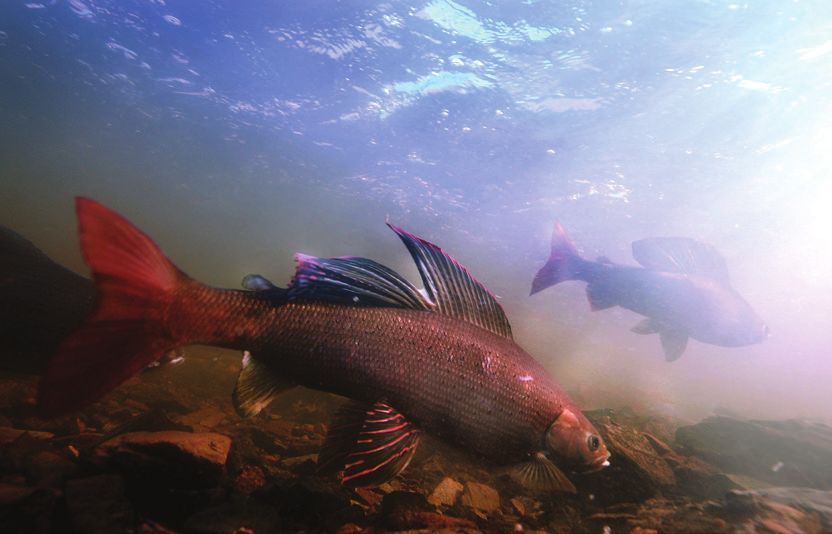
Cover Photo: P. Vecsei

                     NORTHWEST TERRITORIES SPORT FISHING REGULATIONS 2019-2020
What’s New Catch and release limits (Daily Catch Limits 0/Possession Limits 0) within 100m of the centerline of the Inuvik to Tuktoyaktuk Highway for Arctic grayling, burbot, ciscoes, inconnu, lake trout, northern pike, walleye and whitefish). Reduction in DCL and PL for all other waters in the Inuvialuit Settlement Region for Arctic grayling, lake trout, northern pike, walleye, and whitefish; including further reductions for lake trout and walleye during spawning periods. On-line Fishing Licences Fishing licences are now available on-line at: www.enr.gov.nt.ca. Always carry a copy of your licence with you when fishing. Any persons intending to fish lakes or rivers on Inuvialuit private lands must first register with either the local Hunters and Trappers Committee or the Fisheries Joint Management Committee. Issues and Concerns Managing healthy and sustainable fisheries for all users is the goal of Fisheries and Oceans Canada. If you have any concerns or comments regarding the current management of recreational fisheries, we want to hear from you. Please send your comments to: Fisheries and Oceans Canada Suite 301, 5204-50th Ave. Yellowknife, NT X1A 1E2 or by email to: XCA-NWTSportFishing@dfo-mpo.gc.ca Reporting Fishing Violations Violations of renewable resource legislation are serious offences. If you see something suspicious or illegal, please call and provide as much detail as possible, including the date, time, location, vehicle licence plate, air registration letters or boat registration number and nature of the incident. Help stop violations. The REPORT A POACHER toll-free line is in effect 24 hours a day, 7 days a week. Call 1-866-762-2437. Information provided on the line is passed on to a Renewable Resource Officer and Fisheries and Oceans Canada. NORTHWEST TERRITORIES SPORT FISHING REGULATIONS 2019-2020 1
Your Sport Fishing Licence
A Sport Fishing Licence is required by everyone except:
   NWT and Canadian residents under the age of 16 or 65 years
   of age and over, unless fishing in an area that requires an
   additional validation.
   Non-resident anglers under the age of 16 who are
   accompanied by a person holding a valid sport fishing licence,
   unless they are fishing in an area that requires an additional
   validation.
Annual sport fishing licences expire on March 31.

Residency
NWT RESIDENT – A Canadian citizen or permanent resident who
has resided continuously in the NWT for a period of three months
immediately preceding the day they began fishing. Season – $10.
CANADIAN RESIDENT – A Canadian citizen or permanent
resident who normally resides in any part of Canada other than
the NWT immediately preceding the day they begin to fish.
Season – $20 | 3-Day* – $15.
NON-RESIDENT – A person other than an NWT Resident or a
Canadian Resident. Season – $40 | 3-Day* – $30.
   The federal Goods and Services Tax (5% GST) will be added to all
   fees.
   Great Bear Lake Special Management Area validation may be
   obtained from any ENR office for $10 + GST.
   The number of days available on a licence and related fees are subject
   to change. Please contact vendors for current licence details.
   All licences are subject to conditions noted in the “Additional
   Validations” section.
* A 3-day licence is valid for three consecutive days commencing
  on the date stated on the licence.

General Regulations
Should you be convicted for a first offence under the Fisheries Act,
you may be liable to a fine up to $100,000. If you are uncertain
about any of the following items, contact a Fishery Officer or
Renewable Resource Officer BEFORE fishing.

Regulations under the Fisheries Act state that:
    You must carry your valid licence while fishing and be able
    to produce it at the request of an officer. NWT sport fishing
    licences expire March 31 of every year.

2             NORTHWEST TERRITORIES SPORT FISHING REGULATIONS 2019-2020
“Sport fishing” means fishing for pleasure and not for sale or barter and may include angling, spear fishing and dip netting. It is an offence to waste any fish that is suitable for food. Live fish cannot be used for bait. Live fish or live fish eggs cannot be put into NWT waters. A hand net may only be used for landing fish caught by angling. You may not use or possess a gaff while sport fishing. No person shall engage in spear fishing except while swimming. You may not dispose of fish or fish remains in the water or on the ice. At public sites, place fish remains and refuse in the provided containers. Dip nets may be used to catch ciscoes and suckers. The diameter of the dip net hoop cannot exceed one metre, and all other species of fish caught must immediately be returned to the water. Snagging of fish is prohibited. Except when preparing your fish for immediate consumption, where size limits are in place, fish are not to be cut, packed or otherwise dealt with in a manner where the length cannot be determined. Head and tail must be attached to Arctic grayling in the Mackenzie Management Zone. You must leave the skin on the fish to help in determining the species. The number of fish must also be identifiable. Fillets must be separated before freezing them. Two fillets are regarded as one fish. When stored in an area other than your permanent residence, fish must be marked with the name and Sport Fishing Licence number of the person who caught them. If you are transporting fish, this information must also be marked on the outside of the package. Fishing is prohibited within 23 metres downstream of any obstruction, fish way or leap. Only barbless hooks are permitted for angling in the Northwest Territories. The use of any unusual or special gimmick hooks is often illegal and best avoided. Hooks or lures must not be spring-loaded. You may not use lights to fish. Angling is fishing with a hook and line. During open water season, you may fish with only a single line or rod. No more than two hooks can be attached to the line. You must attend to your line at all times. While fishing through the ice, you may fish with a maximum of two lines. No more than two hooks can be attached to any line. You must remain within 50 metres (60 yards) of your line or lines. NORTHWEST TERRITORIES SPORT FISHING REGULATIONS 2019-2020 3
Waste Disposal
Please do not litter! Dispose of your garbage properly and help
keep our environment clean and safe. Litter can be hazardous
to fish, wildlife and other anglers. Discarding bait containers,
fishing line and other types of litter on land, on the ice or in the
water is illegal and perpetrators may face significant fines. When
possible, show your concern for the environment by cleaning up
after others.

Angler Survey Program
Fisheries and Oceans Canada, in cooperation with First Nations
and Renewable Resources Councils, coordinates angler survey
programs to gather catch and effort statistics as well as biological
data on game fish. Information, such as number of hours fished
and number of fish caught, is noted. This is being done as part of
a continuing program to ensure viable sport fisheries in the NWT
for future generations of anglers. Your cooperation is appreciated.
For more information, contact the Department of Fisheries and
Oceans Canada or your local Renewable Resources Council.

Catch and Release Fishing
    Please release your fish with care and respect.
    Use a hook remover or needle nose pliers to remove hooks.
    Minimize handling and keep fish in the water if possible.
    Do not hold fish for later release; this practice reduces survival.
    Your barbless hooks will make “Catch and Release” fishing
    easier.
    Avoid fighting your fish to complete exhaustion.
    Ensure you use the correct tackle for the targeted fish species.
    Fishing line that is too light can lead to lost lures or fish and
    extended fight times if a light drag is used.
    Avoid contact with the fish’s gills and eyes.
    Do not squeeze the fish.

4             NORTHWEST TERRITORIES SPORT FISHING REGULATIONS 2019-2020
Additional Validations and Special Management Areas
Area VI
Behchokò˛ Reliance
Area VI (See map for more details.)
112° 30'West
Yellowknife Łutselk’e
Mackenzie
River
118° W
Management
Area VI of Great Slave Lake is the area east
est
116° West
Area
of a line on 112°30’00’’W from the north
Great Slave Lake
shore of Great Slave Lake to the north shore
of Blanchette Island; and north of a line
Fort Providence from the most easterly point of Blanchette
NORTHWEST TERRITORIES SPORT FISHING REGULATIONS 2019-2020
Island to the most westerly point of Etthen
Fort Resolution Island, along the south shore of Etthen
Island then from the most easterly point of
Kakisa Etthen Island due east to the mainland.
Hay River
5Great Slave Lake
Great Slave Lake Management Areas
The Mackenzie River Management Area includes all rivers and
tributaries, including Kakisa River, and has special restrictions for
Arctic grayling and northern pike. Area VI on Great Slave Lake has
special restrictions for lake trout. See the Daily Catch Limits and
Possession Limits chart for more details.
Great Bear Lake
Great Bear Lake Special Management Area
Great Bear Lake includes all of the Camsell River upstream to
White Eagle Falls and all other tributaries to Great Bear Lake from
their mouths to 1 km upstream.
Any person, including those under 16 or 65 years of age and older,
must have a valid Sport Fishing Licence and Special Management
Area Licence to fish in this area. This validation may be obtained
from any ENR office for $10. For further information on sport
fishing in the Great Bear Lake Special Management Area, contact
the Délı˛nę RRC at (867) 589-8100.
Land Claim Settlement Areas
Inuvialuit
Settlement Region (ISR)
A
Gwich’in
Settlement Area (GSA)
Yukon
B
C
Sahtú
Settlement Area (SSA) Great Bear Lake
D
Nunavut
Tł�ch� Settlement Area
See narrative for Great Slave
further details. Lake
6 NORTHWEST TERRITORIES SPORT FISHING REGULATIONS 2019-2020Inuvialuit Settlement Region (ISR)
Any person, including those under 16 or 65 years of age and older,
must have a valid Sport Fishing Licence and validation to fish in the
ISR. This free validation may be obtained from a vendor of fishing
Arctic Ocean
licences or any ENR office. Any person intending to fish lakes or
rivers on Inuvialuit private lands must first register with either
the local Hunters and Trappers Committee or the Fisheries Joint
Management Committee (FJMC). If you are not able to register
during regular office hours, visit www.fjmc.ca. Persons fishing
within the ISR may be contacted at a later date by the FJMC and
asked to report their catch. For further information, see the Fishing
in the Inuvialuit Settlement Region brochure, available from all
INUVIALUIT
licence vendors in the SETTLEMENT
ISR, or www.fjmc.ca to learn more about why
this information is important toREGION
fisheries management in the ISR.
³
Arctic Ocean
Tuktoyaktuk
Sachs Harbour
Ulukhaktok
Inuvik
T:\Projects\2017\ENR_WFE_SportFishingGuideMaps_2017_12_11\MXDs\Inuvialuit_SettlementArea.mxd
Tuktoyaktuk Aklavik Paulatuk
Yukon Aklavik
Inuvik
Nunavut
Yukon
LEGEND NOTES
LEGEND NOTES DISCLAIMER
LEGEND
Communities
Inuvik Tuktoyaktuk Highway
Protected and Conservation Areas
THIS MAP IS FOR ILLUSTRATIVE PURPOSES ONLY. ACTUAL FEATURE BOUNDARIES
DEPICTED MAY NOT BE EXACTLY AS SHOWN. THE GOVERNMENT OF THE
Migratory Bird Sanctuary; Wildlife Sanctuary
NORTHWEST TERRITORIES AND THE NWT CENTRE FOR GEOMATICS
Municipal Boundaries National Park ARE NOT RESPONSIBLE FOR ERRORS OR DISCREPANCIES.
Communities Protected and Conservation Areas
International Territorial Recreation Park
Provincial or Territorial
100 50 0 100
Settlement Land Claim Parcel
Surface Inuvik Tuktoyaktuk Highway Migratory Bird Sanctuary; Wildlife Sanctuary 1:6,000,000 Kilometers
Surface/Subsurface
Municipal Boundaries National Park GIS KM 14/12/2018 Doc ID: MXD-597
QA/QC ___ __/__/____ NWT Centre for Geomatics
International Territorial Recreation Park
Provincial or Territorial
Settlement Land Claim Parcel
Surface
Surface/Subsurface
https://fjmc.ca/co-management/fisheries-management/
NORTHWEST TERRITORIES SPORT FISHING REGULATIONS 2019-2020 7Gwich’in Settlement Area (GSA) Yukon
Yukon
Sport fishing in the GSA is subject to the terms and conditions
of the Gwich’in Comprehensive Land Claim Agreement (GCLCA).
Permission may be required to access Gwich’in private lands for
the purpose of sport fishing. In general, most popular fishing
Arctic Ocean
areas in the GSA are on private lands and permission is required
to access them. Permission may be granted by the local Renewable
Resources Council (RRC). Contacts are: Nihtat RRC (Inuvik):
(867) 777-6652, Ehdiitat RRC (Aklavik): (867) 978-2340, Tetlit
RRC (Fort McPherson): (867) 952-2330, Gwichya Gwich’in RRC
(Tsiigehtchic): (867) 953-3608. In addition to Gwich’in private
lands, sport fishers should also be aware and respectful of the
Gwich’in Special Harvesting Areas identified in Volume II – Schedule
VI of the GCLCA. Subject to legislation (these regulations), sport
fishing is allowed in Special Harvesting Areas. Please contact
the GRRB at (867) GWICH'IN
777-6600 SETTLEMENT AREA
or visit their website:
www.grrb.nt.ca/fisheries_fishing.htm.
³
Inuvik
Aklavik
Fort McPherson
Tsiigehtchic
Yukon
Tuktoyaktuk
Fort Good Hope
Inuvik
T:\Projects\2017\ENR_WFE_SportFishingGuideMaps_2017_12_11\MXDs\Gwichin_SettlementArea.mxd
Aklavik
LEGEND
LEGEND Yukon
Communities
Communities Protected
Protected and
and Conservation
Conservation Areas
Areas
LEGEND
Municipal
Municipal Boundaries
Boundaries Territorial
Territorial Recreation
Recreation Park
LEGEND NOTES DISCLAIMER
Park
THIS MAP IS FOR ILLUSTRATIVE PURPOSES ONLY. ACTUAL FEATURE BOUNDARIES
LEGEND
Communities
Provincial or Territorial
Protected and Conservation Areas DEPICTED MAY NOT BE EXACTLY AS SHOWN. THE GOVERNMENT OF THENOTES
Provincial or Territorial
Municipal Boundaries Territorial Recreation Park NORTHWEST TERRITORIES AND THE NWT CENTRE FOR GEOMATICS
Provincial or Territorial ARE NOT RESPONSIBLE FOR ERRORS OR DISCREPANCIES.
Settlement Land Claim Parcel
Settlement
CommunitiesLand Claim Parcel
40 20 0 40
Settlement
Communities Land Claim Parcel ProtectedAreas
and Conservation Areas
Surface
Surface/Subsurface
Protected and Conservation
Proposed Candidate Protected Areas 1:2,500,000 Kilometers
Municipal Boundaries
Proposed National Wildlife Area
Surface
Municipal
SurfaceBoundaries
Proposed Territorial Recreation Park
Migratory Bird Sanctuary;Territorial Recreation
GIS
Wildlife Sanctuary
KM
Park
12/13/2017 Doc ID: MXD-597
QA/QC ___ __/__/____ NWT Centre for Geomatics
Provincial
International or Territorial
Surface/Subsurface
Surface/Subsurface National Park
Provincial or Territorial
Settlement
Proposed
Proposed Candidate Land ClaimProtected
Candidate Parcel
Territorial Recreation Park
Protected Areas
Areas
Settlement Land Claim Parcel
Surface
Proposed National
Proposed Wildlife Area
National Wildlife Area
Surface
Surface/Subsurface
Proposed
Proposed Territorial
Recreation Park
Territorial
Surface/Subsurface Recreation Park
Proposed Candidate Protected Areas
Proposed National Wildlife Area
Proposed Territorial Recreation Park
8 NORTHWEST TERRITORIES SPORT FISHING REGULATIONS 2019-2020Arctic Ocean
Sahtú Settlement Area (SSA)
Sport fishing in the SSA may be subject to terms and conditions in
accordance with the Sahtú Dene and Métis Comprehensive Land
Claim Agreement. Persons wishing to fish in the Special Harvesting
Area are advised to contact the local Renewable Resources Council
(RRC). Permission may be required to access Sahtú Dene and
Métis private lands. For further information on sport fishing in the
SSA or to access Sahtú private lands, contact the applicable RRC
or Land Corporation(s)
SAHTU DENE at: Norman Wells (867) 587-2455,
AND METIS
Délı˛nę (867) 589-4224, Fort Good Hope (867) 598-2193,
SETTLEMENT AREA
Colville Lake (867) 709-2200, or Tulí’ta (867) 588-4724.
³ Yukon
Inuvik
Nunavut
Yukon
Tsiigehtchic
Colville Lake
Fort Good Hope
Great Bear
Lake
Norman Wells
Délįne
Tulita Tuktoyaktuk
Gamètì
Yukon Wrigley Whatì
Inuvik
Aklavik
T:\Projects\2017\ENR_WFE_SportFishingGuideMaps_2017_12_11\MXDs\Sahtu_SettlementArea.mxd
LEGEND
Yukon
Communities Protected and Conservation Areas
Fort Simpson
Municipal Boundaries Land Claim Agreement area
LEGEND LEGEND
Provincial or Territorial NOTES DISCLAIMER
National Historic
THIS MAP IS FOR Site
ILLUSTRATIVE PURPOSES ONLY. ACTUAL FEATURE BOUNDARIES
Communities
LEGEND Protected and Conservation Areas DEPICTED MAY NOT BE EXACTLY AS SHOWN. THE GOVERNMENT OF THE
NOTES
Municipal Boundaries
Provincial or Territorial Sahtu Dene and Metis Settlement Area
Land Claim Agreement area
National Historic Site
NORTHWEST TERRITORIES AND THE NWT CENTRE FOR GEOMATICS
National Park
ARE NOT RESPONSIBLE FOR ERRORS OR DISCREPANCIES.
Sahtu Dene and Metis Settlement Area National Park
Settlement
Communities Land Claim Parcel
60 30 0 60
Communities Protected and Conservation Areas
Settlement Land Claim Parcel National Park Reserve
Surface Territorial Recreation Park
National Park Reserve
Surface/Subsurface
Proposed Candidate Protected Areas Protected and Conservation Areas
Tłįchǫ Land Use Plan (LUP) zone area 1:4,000,000 Kilometers
Municipal
Surface Boundaries
Migratory Bird Sanctuary;Territorial
Land ClaimRecreation
Agreement Park area
GIS KM 12/13/2017 Doc ID: MXD-597
Municipal Boundaries
Proposed National Wildlife Area
Proposed Territorial Recreation Park
Wildlife
QA/QC
Sanctuary
___ __/__/____ NWT Centre for Geomatics
Provincial or Territorial
Surface/Subsurface
International National Park Tłįchǫ Land
National Use Plan
Historic Site (LUP) zone area
Sahtu Dene and Metis SettlementTerritorial
Provincial or Territorial Area Recreation ParkNational Park
Proposed Candidate Protected Areas
Settlement
SettlementLand ClaimClaim
Land ParcelParcel National Park Reserve
Proposed National Wildlife Area
Surface
Surface
Proposed Territorial
Recreation Park Territorial Recreation Park
Surface/Subsurface
Surface/Subsurface Tłįchǫ Land Use Plan (LUP) zone area
Proposed Candidate Protected Areas
Proposed National Wildlife Area
Proposed Territorial Recreation Park
NORTHWEST TERRITORIES SPORT FISHING REGULATIONS 2019-2020 9Tłı˛cho˛ Settlement Area
For information on sport fishing terms and conditions within
Tłı˛cho˛ lands, please contact the Manager, Lands Section,
WEK’ÈEZHÌI MANAGEMENT
Department of Culture and Lands Protection at (867) 392-6381
AREA
or visit www.tlicho.ca.
³Great Bear
Lake
Nunavut
Wekweètì
Gamètì
Tuktoyaktuk
Whatì
Behchok
Inuvik Łutselk'e
Aklavik
Yellowknife Ndilǫ
T:\Projects\2017\ENR_WFE_SportFishingGuideMaps_2017_12_11\MXDs\Wekeezhii_ManagementArea.mxd
Detah
LEGEND
LEGEND Yukon Great Slave
Lake
Jean Marie River Communities
Communities Protected and
Protected and Conservation
Conservation Areas
Areas
LEGEND
Municipal
Municipal Boundaries
Boundaries Territorial Recreation
Territorial Recreation Park
Park
LEGEND
Provincial or Territorial NOTES
LEGEND
Provincial or Territorial
Communities Protected and Conservation Areas
NOTES DISCLAIMER
THIS MAP IS FOR ILLUSTRATIVE PURPOSES ONLY. ACTUAL FEATURE BOUNDARIES
Protected and Conservation Areas
DEPICTED MAY NOT BE EXACTLY AS SHOWN. THE GOVERNMENT OF THE
CommunitiesLand Claim
Settlement Parcel
Municipal Boundaries Land Claim Agreement area
Settlement
Communities Land Claim Parcel
Provincial or Territorial National Historic Site
NORTHWEST TERRITORIES AND THE NWT CENTRE FOR GEOMATICS
ARE NOT RESPONSIBLE FOR ERRORS OR DISCREPANCIES.
Protected and Conservation Areas
Sahtu Dene and Metis Settlement Area Territorial Natural Environment Park
Settlement Land Claim Parcel
Municipal Boundaries
Tłįchǫ Land Use Plan (LUP) zone area
40 20 0 40
Surface Migratory Bird Sanctuary;Territorial Recreation Park
Surface
Municipal
SurfaceBoundaries
Surface/Subsurface
Wildlife Sanctuary 1:3,000,000 Kilometers
Proposed Candidate Protected Areas
Provincial
International or Territorial
Surface/Subsurface
Proposed National Park Reserve
National Park
Surface/Subsurface
Proposed National Wildlife Area
Proposed Territorial Park
GIS
QA/QC
KM
___
12/13/2017
__/__/____
Doc ID: MXD-597
NWT Centre for Geomatics
Settlement
Proposed
Proposed CandidateLand ClaimProtected
Provincial or Territorial
Candidate Parcel
Territorial Recreation Park
Protected Areas
Areas
Settlement Land Claim Parcel
Surface
Proposed
Proposed National Wildlife Area
National Wildlife Area
Surface
Surface/Subsurface
Proposed
Proposed Territorial Recreation Park
Territorial Recreation
Surface/Subsurface Park
Proposed Candidate Protected Areas
National Parks
Proposed National Wildlife Area
Proposed Territorial Recreation Park
An NWT Sport Fishing Licence is not valid in a national park.
A separate national parks sport fishing licence is required for
each national park and may be obtained from a Parks Canada
Office. Please visit www.pc.gc.ca for contact information.
General Fish Consumption
Guidelines for the NWT
Why eat fish?
Eating fish contributes to a healthy, nutritious diet. Fish is an
excellent source of protein, calcium, minerals and omega-3 fatty
acids, which help maintain your health!
10 NORTHWEST TERRITORIES SPORT FISHING REGULATIONS 2019-2020How much fish should I eat each week? Canada’s Food Guide recommends at least two servings (equal to 150 grams, 5 ounces or 1/3 of a pound) of fish each week as a part of a healthy, balanced diet. Can fish be contaminated by chemicals in the environment? Fish, like other foods, can contain varying levels of chemical contaminants such as mercury. An environmental contaminant is any chemical in a food that would not normally be present. Environmental contaminants can result from human releases of contaminants to the environment or from natural activities that allow contaminants to enter the food chain. Are these contaminants harmful? The mere presence of a contaminant may not always be harmful. Small amounts of mercury can also be found in fish bought in the supermarket or caught in the wild. Do some fish contain more contaminants than others? Predatory fish that feed on other fish and reach a large size – like walleye, lake trout and northern pike – may contain levels of mercury in excess of consumption guidelines. Other fish species – like whitefish, cisco, suckers, grayling, Arctic char and inconnu – generally have very low levels of mercury, even in larger fish. Should pregnant women eat fish? Regular fish consumption by pregnant women and nursing mothers is overall beneficial for healthy prenatal and early childhood development. Fetuses, infants and young children are particularly sensitive to the effects of mercury. Unless there are specific fish consumption guidelines for a particular lake, women who are pregnant (or may be pregnant), nursing mothers and children under 12 are advised to limit their predatory fish consumption of lake trout and northern pike that are less than 60 cm (or 24 inches), and walleye that are less than 45 cm (18 inches), to a single serving per week. These groups are also advised to avoid lake trout and northern pike larger than 60 cm (or 24 inches) and walleye larger than 45 cm (or 18 inches). Non-predatory fish are a good choice for women of child-bearing age and children in terms of mercury exposure. Consuming fish contributes to a healthy, nutritious lifestyle. Women who eat fish are encouraged to continue breastfeeding to provide infants the best start to a healthy life. NORTHWEST TERRITORIES SPORT FISHING REGULATIONS 2019-2020 11
The Chief Public Health Officer has recommended limiting or
avoiding consumption of fish from specific lakes in the NWT
due to elevated levels of contaminants. This information is
updated regularly based on new research finding. Please visit
the GNWT Department of Health and Social Services website
www.hss.gov.nt.ca under the Topic section – Environmental
Contaminants.
Arsenic in Lake Water Around Yellowknife
On June 15, 2018, the NWT Chief Public Health Officer updated
the advice provided to residents and visitors of the Northwest
Territories about precautions they can take to avoid exposure to
elevated arsenic levels found in some small lakes around sites of
past industrial activity, such as Giant and Con Mines.
Based on available data, a map has been developed showing
levels of arsenic found in lake water. Public health advice may be
adjusted as more information becomes available from ongoing or
future monitoring or research activities.
Yellowknife River and Cameron River have been regularly tested
for arsenic for many years and have always
(
!
been shown (
!
to be
well below drinking water guidelines. It is safe to
( swim and fish in
§
! (
! Pro
(
!
these rivers; however, it is recommended not to drink (
!
untreated
(
!
(
! David
Lake
(
! (!
!(
water anywhere.
(
! (
! (
!
(
!
Yellowknife (
!
(
! (
! Shot Lake River
(
! Martin Lake (
! (
!
Trapper (
!
(
! Lake
§
(
! Prosperous Lake
(
! Gar Lake
(
! (
! (
!
David
(
!
(
! Lake
(
! (
! (
!
Lower
(
! (
! (
! Martin Giant Mine (
!
(
!
Lake (
!
(
!
(
! (
!
(!
! Yellowknife (
!
(
! Martin Lake (!
! ( Shot Lake River 4
(
! ( Trapper (
! (
!
(
! Lake
(
! Gar Lake
(
!
(
! (
!
(
! (
! Handle
Lower
(
!
Martin Lake
Giant Mine (
! (
! (
! (
! Hay Lake
Lake (
! (
!
(
!
(
! (
! (
! 4
(
! (
! (
! Joe Lake
Back (
!
(
! Fox Lake Fault Bay
(
!
(
!
Lake
Handle
Long Lake N'Dilo !
(
Lake !( (
! (
! (
! (
! Hay Lake (
!
(
! (
! (
!
3 (
!
(!(
Joe Lake
Back (
! Dettah
Fox Lake Fault Bay !
Jackfish Lake Access
Lake
Long Lake N'Dilo !
( Road
Legend (
! (
! (
!
(!
!(
Dissolved Arsenic (parts per billion) 3 (
! Dettah (
!
Legend ( !
! ( (!
! ( Jackfish Lake
Frame Access Stuart Lake
* Health Canada Drinking Water Guidelines (
! (Lake
! Road
for ArsenicArsenic
Dissolved = 10 parts perper
(parts billion
billion)
(
! Yellowknife
* Health Canada Drinking Water Guidelines (!
!(
( !
!
!
(
for Arsenic =0-9.9 ( billion
10 parts per (
!
(Lake
!
Frame
(
!
!
( 0-9.9 (
!
!
( 10-51.9 ( Yellowknife
! (
!
(
! Duck Lake!
(
!
( 10-51.9
Con Mine
!
(
!
(
52-99.9
52-99.9 (
! Duck Lake
Kam
!
( 100-499.9 (
! Con Mine Lake
!
( 100-499.9
(
! Kam
(
! Lake
!
(
!
( (>500
>500
!
(
!
Road (
! (
! (
!
Road (
! Grace Lake (
! Mason Lake
(
!
Watercourse Grace Lake (
! Dettah
Watercourse (
! (
! Dettah
(
!
Area of Interest (
!
Area
Mine Siteof Interest (
! (
!
Keg Lake
Keg Lake
Mine Site
Yellowknife
( Waterbody in the Area of Interest
!
Yellowknife
(Waterbody
! Peg Lake Yellowknife Bay
(
!
Waterbody in the Area of Interest
Peg Lake Yellowknife Bay
(
!
Waterbody 0 1 2 4
Please note that most geographical names have only one official form. Only certain geographical names require presentation in English and French Kilometers
0 1 2
These maps are updated at least once a year. Please consult
the HSS website, www.hss.gov.nt.ca, for the most up-to-date
information.
12 NORTHWEST TERRITORIES SPORT FISHING REGULATIONS 2019-2020§ (
!
Duckfish
Lake
( !
! (
(
! (
!
(
!
(
! Prosperous
Lake ((
!!!
( (
!
(
!
§
(
! (
!
!!
(( (
!
(
! (
! (
! (
!
(
!
(
! (
!
!
( (
! Prelude
Duckfish
(
! (
! (
! !!
( Lake
Lake ( !
(
! (
! (
! (
! (!
(
(
! (
! (
!
(
!
!
( (
! (
! (
! (
!
(
! ( !
! ( (
! (
!
( !
! ( !
! ( ( !
! ((
! (
! (
!
( !
( (
! (
! Prosperous (
! (
!
(
! (
! (
! (
! (!
!(!
( (
!
(
! (
! (
! (
! (
! Lake (
!
(
! !!
( (!
!(
!(! ( (
!
( ( !
! ( (
!
( (!
(
! (
! (
!
(
! (!
!( ! (
!
(
! ( Giant
! ( !
!
Prelude (
(
! (
! (
! !
( 4 (
!
(
! (
! (
! ( !
! ( Mine (!
! Lake
!
(
(
! (
! (
! ( !
! (( !(!
( Hay
(
! (
! (
! (
! ( Lake
!
(
! ( (
! (!
! (!
(
!
( (
! (
! (
!
( !
! ( (
! ! ! (!
!( (!
!( (
!
( !
( (
! (
! (
! ( !(
(
! (
! (
! (
!
(
! (!
! (!
! (!
!( ( N'Dilo!
! ( Dettah
! (
!
(
! 3 (
( !
! (
( (
! (
! Access!
( Stuart
(
! Lake (
!
( !(
!
(
! (
! !
(
! ( Giant ( ! ( ( Road !
! (
( (
! ! !
(
(
! (
! ( !
! ( 4
!
(
! (
!
(
! ( !
! ( Mine
(
! (
!
Hay (
! (
!
(!
!
(
! ( Yellowknife
! ( Lake
! ( Duck
! Lake
(!
( (
! Con (
!
(
! (
!
(
!
(
! ( !
! ( ( N'Dilo !
!
(
! (
!
( Dettah Mine (
!
3 (
! ( !
! (
!
(
!
(
!
(
! Access (Stuart Lake
! ( (
!
!!
(( !
( !(Road
(! (
!
Legend ( !( Dettah
!
Yellowknife (
! (
! ( !
! (
( Duck Lake
! Yellowknife Mason Lake
Jennejohn
(
! Con
(
! Mine
( !
! Bay
(
! Lake
Dissolved Arsenic (parts per billion)
Legend
(
!
(
! ( !
! ( ( (
!
(
! (
!
* Health Canada Drinking Water Guidelines (
! Dettah (
!
Dissolved Arsenic (parts per billion) (
!
Yellowknife Mason Lake (
!
for Arsenic = 10 parts per billion (
! Bay (
!
* Health Canada Drinking Water Guidelines
for Arsenic = 10 parts per billion
(
! 0-9.9 (
! (
!
0-9.9 (
! (
!
(
! (
!
(
! 10-51.9
(
! 10-51.9 (
!
(
!
(!
! 52-99.9
( 52-99.9 Great Slave Lake (
!
( 100-499.9
(!
! 100-499.9 Great Slave Lake (
! (
!
(
! >500 (
! (
!
(
! >500 (
!
(
!
(
!
Road
Road (
! (
!
Watercourse
Area of Interest
Watercourse
Mine Site
Area of Interest (
!
Yellowknife
Mine Site
Waterbody
Yellowknife
0 2.5 5 10
Waterbody Please note that most geographical names have only one official form. Only certain geographical names require presentation in English and French
Kilometers
0
Lakes with Lakes with Lakes with
green points yellow points orange, red or
purple points
Arsenic levels Arsenic levels Arsenic levels
are below Health are above Health are elevated (52
Canada’s drinking Canada’s drinking parts per billion
guidelines. It is water guidelines; and above). Water
recommended not however, occasional should not be
to drink untreated exposure does not consumed from
water from any lake. pose a significant these lakes. It is
However, these lakes risk for arsenic- also recommended
are considered safe related health to avoid fishing,
for swimming and effects. It is swimming, and
fishing. recommended not harvesting berries,
to drink untreated mushrooms and
water from any other edible plants
lake. These lakes within this zone.
are considered safe However, walking
for swimming and through this area
fishing. does not pose
a health hazard.
NORTHWEST TERRITORIES SPORT FISHING REGULATIONS 2019-2020 13Waters Closed to Sport Fishing
To conserve fish stocks, the following waters are closed to sport
fishing for all species during the times noted. All dates are
inclusive.
Waters Coordinates / Closure Dates
BIG FISH RIVER 68°39’N, 135°52’W
and Tributaries Closed year round
MOSQUITO CREEK 62°42’N, 116°05’W
and the waters of Great Slave May 1 - June 30
Lake within 1 km of the mouth
of Mosquito Creek
PROVIDENCE CREEK 61°15’N, 117°32’W
and the waters of the Mackenzie April 15 - May 30
River within 100 m of the mouth
of Providence Creek
YELLOWKNIFE RIVER 62°39’N, 114°15’W
between Prosperous Lake and September 1 - October 31
Bluefish Lake
BAKER CREEK 62°29’10”N, 114°21’36”W
April 15 - June 15
RAT RIVER 67°43’N, 136°15’W
August 7 - September 15
HUSKY CHANNEL 67°36’N, 134°51’W and 68°08’N,
135°16’W
August 7 - September 15
PEEL CHANNEL 68°07’N, 135°16’W and 68°13’N,
135°05’W
August 7 - September 15
FISH CREEK 67°43’42”N, 136°15’44”W
Closed year round
Fork Length
The measurement from the tip of the snout to the fork of the tail.
FORK LENGTH
14 NORTHWEST TERRITORIES SPORT FISHING REGULATIONS 2019-2020Attention All Anglers Help us keep Aquatic Invasive Species out of the NWT Aquatic invasive species (AIS) are non-native species whose introduction will likely cause harm to habitats and local species. It is prohibited for any person to import, possess, transport, release or introduce AIS that may result in the introduction of any species listed under the Federal Aquatic Invasive Species Regulations Schedule II. AIS thrive in the absence of their natural predators and have the potential to drastically alter ecosystems. AIS have already been responsible for significant devastation of some fisheries in Canada. The Aquatic Invasive Species Regulations came into force on May 29, 2015; these regulations are enforceable by Fishery Officers. When transporting your equipment between waterways always clean, drain and dry. Clean – clean off plants, animals and mud from gear and equipment, including waders, footwear, ropes, anchors, bait traps, dip nets, downrigger cables, fishing lines and field gear, before leaving water access. Drain – Drain water from boat, motor, bilge, bladder tanks, livewell and portable bait containers away from ramp. Dry – Dry everything for at least five days when moving between waters to kill small species not easily seen. NEVER dump live fish or other organisms from one water body into another. Zebra Mussels Zebra mussels are an aquatic invasive species that can easily spread between Canada’s freshwater lakes. The adults are small (1 to 3 cm in length) and attach to hard surfaces, while juveniles are microscopic in size and free-floating. Photo: US Geological Survey Photo: US National Park Service NORTHWEST TERRITORIES SPORT FISHING REGULATIONS 2019-2020 15
Daily Catch Limits (DCL)
and Possession Limits (PL)
 SPECIES         WATERS
Arctic Char      Hornaday River
                 All other NWT waters
Arctic Grayling All waters within the Gwich’in Settlement Area and
                Sahtú Settlement Area, excluding Great Bear Lake Special
                Management Area
                 Waters of the Inuvialuit Settlement Region within 100
                 meters of the centerline of the Inuvik to Tuktoyaktuk
                 highway between points 68°26’2.51”N, 133°45’53”W and
                 69°24’46.14“N, 133°01’26.50”W.
                 All other waters within the Inuvialuit Settlement Region
                 Mackenzie River Management Area on Great Slave Lake,
                 including Kakisa River and its tributaries (see Special
                 Management Areas section)
                 Baker Creek (near Yellowknife) and within 100 m
                 of the mouth
                 All other NWT waters, including Great Bear Lake Special
                 Management Area
Brook Trout      All NWT waters
Bull Trout       All NWT waters
Burbot           Dolomite Lake (Airport Lake), 68°18’N, 133°33’W
                 Waters of the Inuvialuit Settlement Region within 100
                 meters of the centerline of the Inuvik to Tuktoyaktuk
                 highway between points 68°26’2.51”N, 133°45’53”W and
                 69°24’46.14“N, 133°01’26.50”W.
                 All other NWT waters
Ciscoes          Dolomite Lake (Airport Lake), 68°18’N, 133°33’W
                 Waters of the Inuvialuit Settlement Region within 100
                 meters of the centerline of the Inuvik to Tuktoyaktuk
                 highway between points 68°26’2.51”N, 133°45’53”W and
                 69°24’46.14“N, 133°01’26.50”W.
                 All other NWT waters
Dolly Varden     Waters within the Gwich’in Settlement Area and Inuvialuit
                 Settlement Region
                 All other NWT waters
Goldeye          All NWT waters
Inconnu          Great Slave Lake and its tributaries

1. Daily Catch Limit is the number of fish of each species that a person
   may catch and retain in a 24 hour period from one midnight to the next
   midnight.
2. Possession Limit is the total number of fish of each species that a person
   is entitled to possess at any time. This includes fish kept at a person’s
   residence as well.

16             NORTHWEST TERRITORIES SPORT FISHING REGULATIONS 2019-2020
DCL PL SIZE LIMITS/OTHER RESTRICTIONS
0 0 Catch and release only
4 7 None
5 10 None
0 0 Catch and release only
5 10 None
1 1 Fork length may not be less than 36 cm (14 in)
0 0 Catch and release only. Please note: Sport fishing in Baker
Creek is prohibited for all species from April 15 - June 15.
3 5 None
3 5 None
2 3 None
5/0/5 5/0/5 April 1 - Aug 14 / Aug 15 - Oct 31 / Nov 1 - March 31
0 0 Catch and release only
5 10 None
175/0/175 175/0/175 April 1 - Aug 14 / Aug 15 - Oct 31 / Nov 1 - March 31
0 0 Catch and release only
175 175 None
0 0 Catch and release only
4 7 None
5 10 None
1 2 None
3. These limits apply to individuals only. Group fishing is NOT permitted.
4. Unless otherwise specified, a tributary includes the entire stream or river
which flows into a larger body of water.
5. Refer to page 14 for waters closed to sport fishing, seasonally or year-
round.
NORTHWEST TERRITORIES SPORT FISHING REGULATIONS 2019-2020 17SPECIES WATERS
Inconnu Waters of the Inuvialuit Settlement Region within 100
meters of the centerline of the Inuvik to Tuktoyaktuk
highway between points 68°26’2.51”N, 133°45’53”W and
69°24’46.14“N, 133°01’26.50”W.
Dolomite Lake (Airport Lake), 68°18’N, 133°33’W
All other NWT waters
Lake Trout Great Bear Lake Special Management Area
Waters of the Inuvialuit Settlement Region within 100
meters of the centerline of the Inuvik to Tuktoyaktuk
highway between points 68°26’2.51”N, 133°45’53”W and
69°24’46.14“N, 133°01’26.50”W.
Dolomite Lake (Airport Lake), 68°18’N, 133°33’W
Great Slave Lake and its tributaries from their mouth to 1 km
upstream
Trout Lake, 60°35’N, 121°19’W, and its tributaries
Stark Lake
Prelude Lake, Prosperous Lake, Walsh Lake, River Lake,
Banting Lake and Vee Lake
Alexie and Chitty Lake
All other waters within the Inuvialuit Settlement Region
All other NWT waters
Northern Pike Waters within the Gwich’in Settlement Area, Sahtú Settlement
Area, excluding Great Bear Lake Special Management Area and
Dolomite Lake (Airport Lake)
Waters of the Inuvialuit Settlement Region within 100
meters of the centerline of the Inuvik to Tuktoyaktuk
highway between points 68°26’2.51”N, 133°45’53”W and
69°24’46.14“N, 133°01’26.50”W.
All other waters within the Inuvialuit Settlement Region
Horn River, Mills Lake and the Mackenzie River between
118° W and 118°25’ W
Mackenzie River Management Area on Great Slave Lake and
its tributaries (see Special Management Areas section)
Hay River
Little Buffalo River and Resolution Bay (Resolution
Bay defined as waters within a straight line connecting
coordinates at Pine Point (61°00’N, 114°15’W) and Mission
Island (61°10’N, 113°46’W)
18 NORTHWEST TERRITORIES SPORT FISHING REGULATIONS 2019-2020DCL PL SIZE LIMITS/OTHER RESTRICTIONS
0 0 Catch and release only
5/0/5 10 / 0 / 10 April 1 - Aug 14 / Aug 15 - Oct 31 / Nov 1 - March 31
5 10 None
1 2 Only one lake trout may be removed from Great Bear
Lake Special Management Area during any fishing trip.
0 0 Catch and release only
1 / 0/ 1 1 / 0/ 1 April 1 - Aug 14 / Aug 15 - Oct 31 / Nov 1 - March 31
2 3 DCL – Only one can be from Area VI of Great Slave Lake.
PL – Only two can be from Area VI of Great Slave Lake.
Only one lake trout in possession in all areas of Great
Slave Lake may be more than 70cm (28 in) fork length.
1 1 None
3 5 Only one lake trout in possession may be more than
70 cm (28 in) fork length.
1 /0 / 1 1 /0 / 1 DCL/PL – apply to all of these lakes combined.
April 1 - Aug 31 / Sept 1 - Oct 31 / Nov 1 - March 31
0 0 Catch and release only
1 /0 / 1 1 / 0/ 1 April 1 - Aug 14 / Aug 15 - Oct 15 / Oct 16 - March 31
3 5 None
5 10 None
0 0 Catch and release only
3 5 None
1 1 Included in the total DCL/PL for the Mackenzie River
Management Area.
1 1 Included in the total DCL/PL for the Mackenzie River
Management Area.
1 2 Included in total DCL/PL for Great Slave Lake and
its tributaries.
1 2 Included in total DCL/PL for Great Slave Lake and its
tributaries.
NORTHWEST TERRITORIES SPORT FISHING REGULATIONS 2019-2020 19SPECIES WATERS
Northern Pike Great Slave Lake and its tributaries
Sandy Lake, 60°31’N, 114°35’W
Trout Lake, 60°35’N, 121°19’W, and its tributaries
Dolomite Lake (Airport Lake), 68°18’N, 133°33’W
Great Bear Lake Special Management Area
All other NWT waters
Rainbow Trout All NWT waters
Suckers All NWT waters
Walleye Waters of the Inuvialuit Settlement Region within 100
meters of the centerline of the Inuvik to Tuktoyaktuk
highway between points 68°26’2.51”N, 133°45’53”W and
69°24’46.14“N, 133°01’26.50”W.
All other waters within the Inuvialuit Settlement Region
Mosquito Creek
Horn River, Mills Lake, and the Mackenzie River between
118°W and 118°25’W
All waters within the Sahtú Settlement Area, Gwich’in
Settlement Area
Sandy Lake, 60°31’N, 114°35’W
Hay River and the Mackenzie River Management Area on
Great Slave Lake and its tributaries (see Special Management
Areas section)
Little Buffalo River and Resolution Bay (Resolution
Bay defined as waters within a straight line connecting
coordinates at Pine Point (61°00’N, 114°15’W) and Mission
Island (61°10’N, 113°46’W)
Trout Lake, 60°35’N, 121°19’W, and its tributaries
Moose River, 60°46’N, 121°21’W
Johnston Lake, 62°59’N, 114°12’W
Kam and Grace Lakes and the connector stream
All other NWT waters
Whitefish (All Waters within the Sahtú Settlement Area and Gwich’in
Species) Settlement Area, excluding Dolomite Lake (Airport Lake)
Waters of the Inuvialuit Settlement Region within 100
meters of the centerline of the Inuvik to Tuktoyaktuk
highway between points 68°26’2.51”N, 133°45’53”W and
69°24’46.14“N, 133°01’26.50”W.
All other waters within the Inuvialuit Settlement Region
Dolomite Lake (Airport Lake), 68°18’N, 133°33’W
All other NWT waters
20 NORTHWEST TERRITORIES SPORT FISHING REGULATIONS 2019-2020DCL PL SIZE LIMITS/OTHER RESTRICTIONS
3 5 None
1 1 None
2 3 None
5/0/5 10 / 0 / 10 April 1 - Aug 14 / Aug 15 - Oct 31 / Nov 1 - March 31
3 5 None
3 5 None
1 2 None
No Limit No Limit None
0 0 Catch and release only
1/4 1/7 April 1 - June 6 / June 7 - March 31
0/3 0/5 Closed May 1 - June 30 / Open July 1 - April 30
1/2 1/3 April 1 - June 6 / June 7 - March 31 Included in the total
DCL/PL for the Mackenzie River Management Area.
5 10 None
1 1 None
1/2 1/3 April 1 - June 6 / June 7 - March 31
1/1 1/2 April 1 - June 6 / June 7 - March 31 Included in total
DCL/PL for Great Slave Lake and its tributaries.
1/2 1/3 April 1 - June 6 / June 7 - March 31
0/1 0/2 April 1 - June 6 / June 7 - March 31 Included in total
DCL/PL for Trout Lake and its tributaries.
1/2 1/3 April 1 - June 6 / June 7 - March 31
0/4 0/7 April 1 - June 6 / June 7 - March 31
1/4 1/7 April 1 - June 6 / June 7 - March 31
10 20 None
0 0 Catch and release only
5 10 None
10/0/10 20/0/20 April 1 - Aug 14 / Aug 15 - Oct 31 / Nov 1 - March 31
5 10 None
NORTHWEST TERRITORIES SPORT FISHING REGULATIONS 2019-2020 21Fish Species of the NWT
Arctic Char Salvelinus alpinus
Arctic char have a dark green back that shades to silvery
sides with eye-sized pale white/pink spots without halos.
There are no spots on the tail. At spawning time the colours
of both sexes become more brilliant, particularly in the male,
which turns a vivid orange-red. The males also develop a
protruding, hooked lower jaw.
Anadromous (sea-run) forms of Arctic char are found from
Victoria Island to Banks Island and along the mainland coast
eastward from the Hornaday River. Land-locked lacustrine
char overlap the range of anadromous dolly varden, west of the
Mackenzie River.
Arctic Grayling Thymallus arcticus
The Arctic grayling, also known as the bluefish, is a beautiful
game fish with dark blue, pink and purple tones that have an
iridescent sheen. A striking feature is the sail-like dorsal fin,
which is especially pronounced in males.
Grayling are found throughout the mainland area of the NWT.
It is particularly common in the Great Slave and Great Bear
watersheds as well as the Mackenzie River and its tributaries.
22 NORTHWEST TERRITORIES SPORT FISHING REGULATIONS 2019-2020Bull Trout Salvelinus confluentus The back and upper sides of the bull trout range from dark blue to olive green, with the lower sides being paler in colour. Small yellow, orange or red spots mark the back and sides. Some spawning males develop bright red bellies and hooked lower jaws. Bull trout and dolly varden are very similar in colouration and are difficult to tell apart, especially smaller individuals. Bull trout, however, have a larger, broader, flatter head with eyes close to the top of the head and a more rounded body. Bull trout can be found in the Liard and Mackenzie watersheds in the Dehcho and southern Sahtú. They are known to inhabit streams that flow out of the Mackenzie Mountains such as the Kotaneelee, the North and South Nahanni and Keele rivers. Burbot Lota lota Burbot, commonly known as loche, cod or mariah in the NWT, have distinctive features, including an oval shaped tail and a barbel under the chin. A master of camouflage, their colour can range from yellow, light brown, tan or olive to a medium/ dark brown-green shade to almost black depending on the clarity of the water. Burbot are plentiful and widespread in the mainland area of the NWT, found mostly in rivers and larger lakes. They are plentiful at the outflows of small streams in the Mackenzie Delta where they congregate in early winter to feed on a variety of forage fish. NORTHWEST TERRITORIES SPORT FISHING REGULATIONS 2019-2020 23
Dolly Varden Salvelinus malma malma

     Dolly varden and bull trout are very similar in colouration and
     are difficult to tell apart. However, dolly varden have more oval,
     laterally compressed bodies and their heads do not dominate
     their profile.
     Dolly varden can be found in the western Mackenzie Delta and
     the fast-flowing cold streams along the northern slope of the
     Richardson Mountains as well as upstream on the Peel River
     watershed. The anadromous form is present in the Beaufort Sea
     in summer.

     Inconnu Stenodus leucichthys

     Inconnu, commonly called coney in the NWT, somewhat
     resembles a very large herring with dark back, silvery sides and
     large scales. A mature coney can range from a half meter to over
     a meter in length. Inconnu is a member of the whitefish family.
     Inconnu, common in the Mackenzie Delta, migrate upstream into
     the Peel, Arctic Red and Mackenzie rivers to spawn. Spawning
     runs of coney are also found further upstream in the Mackenzie
     in tributaries. Inconnu can be found in Great Slave Lake and
     tributary streams such as the Slave and Buffalo rivers where
     they spawn. They are occasionally caught in smaller streams
     such as the Hay River, Little Buffalo River and Taltson River.

24             NORTHWEST TERRITORIES SPORT FISHING REGULATIONS 2019-2020
Lake Trout Salvelinus namaycush Lake trout range from light green or gray to dark green, brown or almost black with a light coloured belly. Their whole body, including the dorsal, adipose and tail fins are covered with many light coloured spots. Lake trout are wide-spread in the NWT, including the Arctic Islands. They inhabit large lakes such as Great Slave and Great Bear where they support trophy fisheries. They are found in many shield lakes as well as in deep lakes along the Mackenzie Valley and tundra lakes which extend to the Arctic coast. Northern Pike Esox lucius Also known as jackfish, pike have long bodies with dark green to brown colouration along their back. The sides are lighter with irregular rows of yellow to whitish bean-shaped spots which run lengthwise on the body. The dorsal or back fin is near the tail end of the body. Pike can be found throughout most of the mainland NWT. They prefer warm, slow, heavily vegetated rivers and the warm, weedy bays of lakes. NORTHWEST TERRITORIES SPORT FISHING REGULATIONS 2019-2020 25
Walleye Sander vitreus

     Also known as pickerel or doré, the walleye is a member of the
     perch family. They have sharp teeth and two dorsal fins on their
     back, the front one supported by large, sharp spines. They vary
     in colour from olive-brown to golden brown to yellow with
     golden flecks on the scales and a white belly. Their large, silvery
     eyes are very distinctive.
     Walleye are found in the Mackenzie River watershed as far
     north as the delta. They are often plentiful in tributary streams
     of Great Slave Lake where they spawn and are sometimes found
     feeding throughout the summer. They are also plentiful in some
     inland lakes and rivers.

     Lake Whitefish Coregonus clupeaformis

     Lake whitefish have narrow silvery bodies which may shade
     to olive-brown or to almost black along the back depending on
     water clarity. The snout overhangs the lower jaw; the head may
     appear small in larger fish which may develop a distinct hump
     behind the head.
     Lake whitefish are found throughout the mainland area of the
     NWT. They occur in lakes, but are also found in large rivers and
     are plentiful in the Mackenzie Delta. Spawning takes place in the
     fall over reefs in lakes and also in rivers.

26             NORTHWEST TERRITORIES SPORT FISHING REGULATIONS 2019-2020
Barbless Hooks BEFORE:
BARBED
AFTER:
BROKEN
BENT
BARB
HOOK BARB
The use of barbless hooks
for sport fishing is
mandatory in the NWT.
Barbless hooks permit
easier removal of the hook, minimizing damage to the fish and
reducing handling time, which subsequently increases the chances
of survival for released fish. Many fish that are released after being
caught with a barbed hook later die from excessive handling or
bleeding. Barbless hooks can be purchased at local sporting goods
stores. Barbed hooks can easily be converted to barbless by either
crimping or filing the barb off.
Reward for Salmon
Fisheries and Oceans Canada (DFO) is investigating the effects of
climate change on the distribution and biology of Pacific salmon in
the Mackenzie River system and waters in the western Arctic. DFO
would like your help in obtaining a limited number of salmon, and
may accept whole fish or heads for this research. If you catch a
salmon and would like to participate, please freeze the whole
fish or head as soon as possible after capture,
note the date and location of capture,
and call the DFO Arctic Salmon
project office at (204) 984-2522 for
instructions on how to obtain your
reward. For more information about
Photo credit: Paul Vecsei
salmon research in the Canadian Arctic,
please visit www.facebook.com/arcticsalmon.
Reward for Tagged Fish
Fish are tagged to help fish managers learn about the distribution,
movements, relative abundance and growth rates of fish. With
this information, fish managers are better able to protect fish from
over-exploitation and the adverse effects of development. Fisheries
and Oceans Canada awards anglers who provide information about
tagged fish. If you catch a tagged fish, write down the species,
location where it was caught, the date it was caught, length, weight,
sex (if you can determine it) and the lure used to catch it. Mail this
information along with the tag to:
Fisheries Management Biologist
Fisheries and Oceans Canada
Suite 301, 5204-50th Ave.
Yellowknife, NT X1A 1E2
NORTHWEST TERRITORIES SPORT FISHING REGULATIONS 2019-2020 27Stir the Ashes
Don’t build campfires that are too large to extinguish
or to control. Smaller, lower intensity campfires are
best for cooking on and can be safely managed.
Before lighting a campfire, make sure you dig a fire pit down to
mineral soil; no organic or burnable material (wood, moss, twigs)
should be in the pit. The best fire pits have sand or gravel bottoms.
Clear the area around the pit of all woody or organic surface
debris. A safe clear area would be at least 10 feet in diameter. If
possible, use a ring of rocks as a guard against escaping sparks,
coal and other fire hazards.
Build your campfire away from flammable structures such as
tents, trees and buildings.
Never leave your campfire unattended.
Keep a pail of water and a shovel nearby and before leaving, make
sure the fire is completely extinguished.
Start by pouring water onto the fire until no smoke or flames are
visible. Stir the pile with a stick or the shovel and continue adding
water.
Repeat these steps until the campfire is out.
Enjoy your campfires this summer, but please do your part to prevent
wildland fires. To report a wildland fire, call: 1-877-NWT-FIRE or
1-877-698-3473, www.nwtfire.com.
Be Bear Aware
Stay alert and aware of your surroundings,
regularly stopping to scan for bears.
Make noise, especially when your visibility is limited.
If you are fishing along the shoreline, keep your fish on a stringer
and closely attended.
Clean your catch at the shoreline, not in camp.
Place fish remains in tightly sealed plastic bags and pack them
back to town.
Wash your hands, knives and cutting board after cleaning the fish.
Store your fish in a cool place and in a bear-resistant or odour-
proof container.
Before you make a camp, check for signs of recent bear activity
(tracks and droppings) or bear feeding activity (digging, animal
remains or garbage). If you find any of these choose another
place to camp.
Locate the food storage and cooking area separate from sleeping
areas. Clothes that may contain fish or cooking odours should
not be brought into your tent, rather store them in the food and
cooking area.
Keep a clean camp. Elimination of odour is essential.
28 NORTHWEST TERRITORIES SPORT FISHING REGULATIONS 2019-2020You can also read


