Pewsey Neighbourhood Development Plan (NDP) 2006 - 2026 - June 2015
←
→
Page content transcription
If your browser does not render page correctly, please read the page content below

Pewsey
Neighbourhood
Development Plan (NDP)
2006 - 2026

June 2015
Contents

1.0   Introduction                                     2
2.0   Planning Policy Context                          2
3.0   Physical Context                                 3
4.0   Area Covered by the Plan                         4
5.0   Vision of the Plan                               4
6.0   Main Objectives of the Plan                      5
7.0   Policies of the Plan                             6
      Theme 1: Development Strategy                     6
      Theme 2: Economy                                  7
      Theme 3: Natural Environment                     12
      Theme 4: Housing                                 14
      Theme 5: Transport                               16
      Theme 6: Heritage                                17
      Theme 7: Developer Contributions                 19
Appendices:
1.    Housing Development sites                        21
2.    Housing Survey                                   23
3.    Parish Council Policy Information                24
      Maps
      Map 1: Pewsey Parish                             25
      Map 2: Pewsey Community Area                     26
      Map 3: Conservation Areas                        27
      Map 4: Possible Employment & Housing Sites       28
      Map 5: Green Areas for Sport and Recreation      29
      Map 6: Conservation Areas and Listed Buildings   30

                                                        1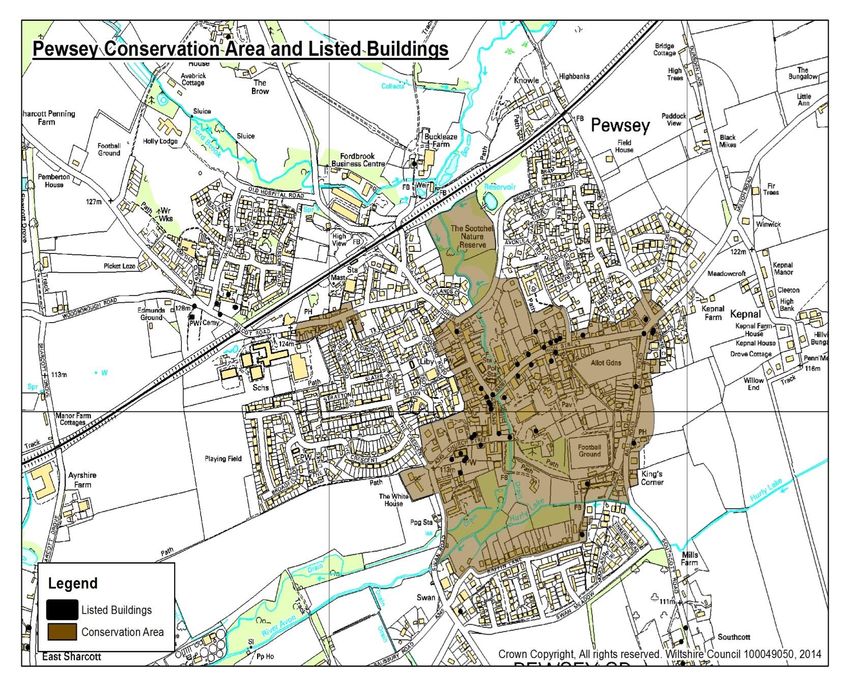
1.0   Introduction
1.1   The Localism Act invites communities led by a ‘Qualifying Body’, often the local
      Parish Council, to write Neighbourhood Development Plans (NDPs). Such plans set
      out how communities believe their area should be developed over a given period; for
      Pewsey, the NDP’s plan period mirrors the Wiltshire Core Strategy, running from
      2006 to 2026.
1.2   In April 2011 Pewsey Parish Council approved the setting up of an NDP Working
      Group under the chairmanship of the Parish Council Planning Committee Chairman.
      The NDP Working Group was charged with drafting an NDP for the Parish Council’s
      consideration and to cover development in Pewsey up until 2026.

2.0   Planning Policy Context
2.1   The Wiltshire Core Strategy (WCS) (adopted January 2015), saved policies of the
      Kennet Local Plan and adopted policies of the Wiltshire and Swindon Minerals and
      Waste Development Framework form the current Local Plan for the area covered by
      the NDP. Care has been taken to ensure that the NDP is in broad conformity with the
      policies of these plans.
2.2   In terms of the overall WCS and saved policies of the Kennet Local Plan, the NDP
      takes forward their policies, especially the focus on sustainable development
      including the reinforcement of the self-containment of Pewsey and enhancement of
      its role as a Local Service Centre (LCS). Information on how the NDP relates to and
      takes forward the policies of the WCS, including saved policies, is discussed through
      the plan.
2.3   In terms of the overall thrust of WCS and saved policies of the Kennet Local Plan, the
      NDP reflects the same general approach; a desire to achieve sustainable
      development by permitting growth on carefully selected urban or suburban sites
      within the village boundary (WCS policies CP1, CP2, CP34, CP35 and CP39),
      ensuring adequate infrastructure (WCS policies CP3 and CP 61), providing housing
      and sufficient affordable housing (WCS policies CP2 and CP43), reinforcing
      Pewsey’s role as a Local Service Centre (WCS policy CP2 and saved Kennet Local
      Plan policy ED24) and as a tourist attraction (WCS policies CP2, CP39, CP40 and
      saved Kennet Local Plan policy TR20), achieving growth without detriment to its
      character (WCS policy CP58), or to the wider environment including the AONB (WCS
      policies CP1, CP2, and CP51). Transport policy is taken forward in the NDP (e.g.
      WCS policies CP48, CP51, CP52, CP60 and CP61) which aims to reduce reliance on
      the car by improving self-containment of the village, and aims to improve access to
      sustainable modes.
2.4   Paragraph 216 of The National Planning Policy Framework (NPPF) provides
      guidance for emerging plans.
2.5   The saved policies from Kennet Local Plan remain extant until either deleted or
      incorporated into the WCS, through the partial review of the WCS. In November 2002
      the Pewsey Village Design Statement was published and adopted as planning
      guidance by Kennet District Council. The saved policies of Kennet Local plan, the
      WCS, the Village Design Statement, the Pewsey Community Plan and the NPPF
      therefore make up the formal planning context for the NDP and have been used as
      reference in the preparation of this plan.
2.6   A Neighbourhood Area Designation Application dated 29th Jan 2013 was approved
      by Wiltshire Council following the statutory period of consultation, establishing the
      area of Pewsey Parish as the plan area for the NDP (Map 1). An NDP Scoping report
      for Pewsey was published in July 2013 and a Sustainability Appraisal, incorporating
      and Strategic Environmental Assessment, was published in 2014.

                                                                                              2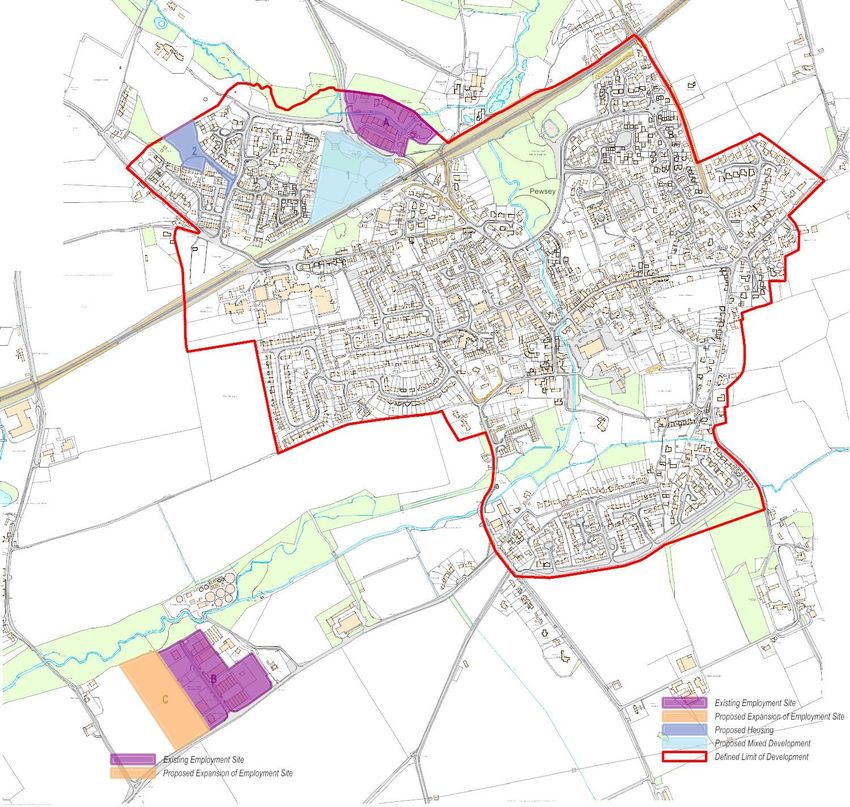
2.7   The longstanding policy of Pewsey Parish Council has been to contain development
      within the Pewsey village settlement boundary limits, defined as the Limits of
      Development (LoD) as set out in the WCS (Map 1).
2.8   The NDP will take forward the essence of the existing planning framework, providing
      for necessary growth in a sustainable way. In the Pewsey area this will mean
      adhering to Core Strategy and Parish Council requirements for development and
      providing for this within the LoD.

3.0   Physical Context
3.1   Pewsey is situated at the eastern end
      of the Vale of Pewsey within six miles
      of Marlborough (to the North) and
      fifteen miles of Devizes (to the west). It
      is the largest village within the Pewsey
      Community Area, which is made up of
      26 smaller parishes. A plan of the
      Community Area is shown in Map 2.
3.2   The area is predominantly rural and
      agricultural in nature. It is located within
      the North Wessex Downs Area of
      Outstanding Natural Beauty (AONB).
      Pewsey’s NDP area includes three Sites of Special Scientific Interest (SSSI) namely
      part of Jones’ Mill nature reserve along the River Avon to the east of Pewsey and
      along the river to the west at Sharcott and between Sharcott and Manningford
      Abbots.
      The headwaters of the Hampshire Avon flow through the parish and the Kennet and
      Avon Canal crosses from east to west.
3.3   This eastern area of Wiltshire is world famous for sites of archaeological and
      historical interest, for example Stonehenge, the Avebury monuments and the white
      horses carved into the chalk hillsides. To the northeast is Savernake Forest, which is
      a well‐known beauty spot. The village itself reflects local architectural and historic
      character, which contribute to the creation of a unique sense of place and identity.
      Pewsey village has a mixed architecture containing many listed buildings and
      buildings of special local interest. The village centre is a designated Conservation
      Area which is considered by English Heritage to be ‘At Risk’, primarily through gradual
      erosion from unsympathetic, modern development and the loss of features due to ad hoc
      alterations.
3.4   The Heritage, townscape and sense of place underpin the
      attractiveness of the area, including for tourism – an industry
      which plays a significant part in the local economy. This
      industry needs to be supported, for example by providing
      suitable and sufficient visitor accommodation but also by
      conserving and enhancing the natural and man‐made
      beauty on which it ultimately depends.
3.5   The Kennet Local Plan shows the LoD around Pewsey
      village. This policy is retained in the Core Strategy (CP1),
      and is carried forward in the NDP. Development is therefore
      constrained and should continue to be within the built up
      form of the village as shown by this line, unless specifically
      stated in the Plan.

                                                                                                3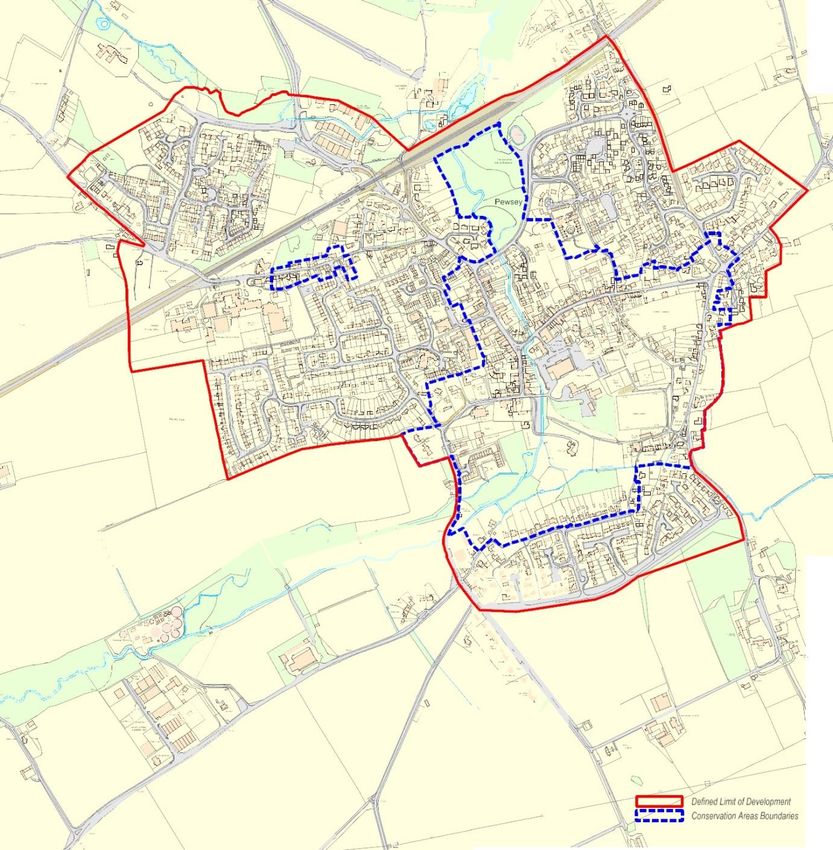
4.0 Area Covered by the Plan
4.1 The area covered by the plan has been agreed through public consultation as that of
Pewsey Parish (Map 1). This is considered to be appropriate for the following
reasons;
The area is clearly defined with
an existing, active Parish Council
and community that give it a tried
and tested administrative core, as
well as a distinct identity.
The physical geography of the
parish makes it a logical planning
unit. The development area is
central with countryside at all
borders, meaning the NDP is
unlikely to have cross‐boundary
issues with neighbouring
parishes.
The function of Pewsey as a Local Service Centre could mean that it is likely to
come under more development pressure than the surrounding villages. The
Working Group believes a plan is needed specifically to address the issues that
are likely to come from this functional role and take forward necessary growth in a
manner that is sustainable and acceptable to the community.
5.0 Vision of the Plan
5.1 Pewsey has a pleasant natural environment with an exceptionally strong community
spirit and enjoys high levels of local involvement. Although popular with tourists for its
historic character and rural setting, it continues to be a living and working village
which acts, and is designated as, a Service Centre for this part of The Pewsey Vale.
Pewsey Parish has a total population of 4679 according to the 2011 Census. The
village provides access to education, sport, health, social care, policing, retail and
professional services. It has a railway station which serves London and the West
Country.
5.2 Around 200 dwellings have been built
in Pewsey in the last five years and
sufficient employment sites have been
provided within the village to satisfy
demand in the recent past. The
community believes that a moderate
amount of development should
continue within the village LoD to
provide for both balanced residential
and employment needs in accordance
with the requirement outlined within
the Wiltshire Core Strategy. This
balanced approach between
residential and other uses must
underpin Pewsey’s continued role as a
provider of services to the village and
surrounding areas, whilst not
detracting from the quality of the village, its setting and the wider area within the
parish boundaries and AONB.
4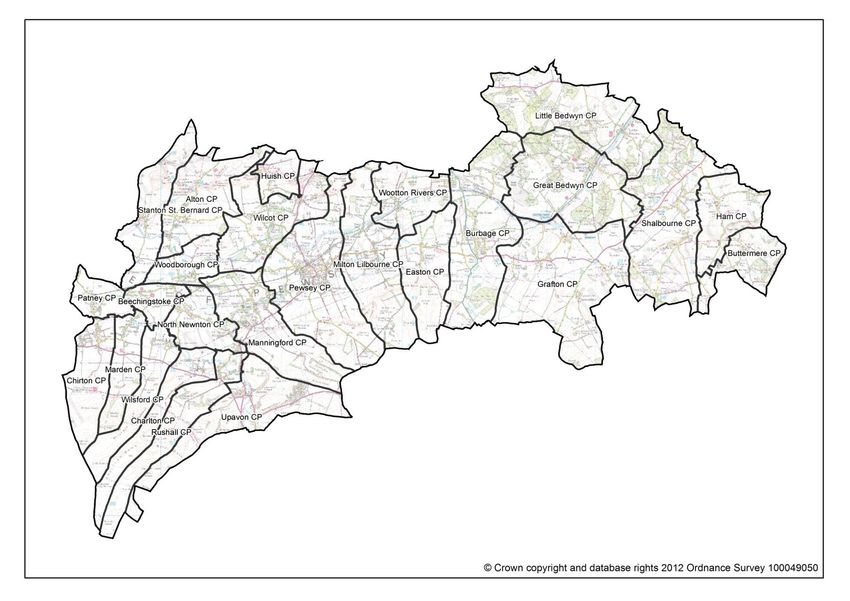
5.3 Protecting the natural environment within and without the defined settlement is
considered to be as important as protecting the local heritage. The village has a
number of green areas used for both sport and recreation. These will not be reduced
in number or size by any future development unless the loss results in some form of
like‐for‐like or enhanced benefit elsewhere within the village.
Likewise listed and non‐listed buildings and features that contribute positively and
significantly to the character of the village will be preserved and enhanced.
6.0 Main Objectives of the Plan
The following objectives for the Pewsey NDP have been proposed by the Working
Group and accepted by the Parish Council:
1. To manage development in
accordance with the
principles set out in the Core
Strategy and the wishes of
the community;
2. To ensure Pewsey
maintains and enhances its
role as a Service Centre;
3. To improve existing
infrastructure both to support
new development and to
enhance that serving the
existing village. To do so in
a manner that respects the
character and setting of the village;
4. To maintain and enhance all of the current green areas and sporting facilities;
5. To protect and enhance the character of the conservation area, and to ensure that
any and all development complements the character and heritage of the AONB,
local landscape, village and surrounding area and does not have a detrimental
effect on Listed Buildings
6. To protect the special setting of the village within the wider AONB and to
conserve and enhance the landscape within the parish boundary;
7. To enhance the economic sustainability of the village by ensuring that:
Sufficient employment sites are maintained and new sites are made available
as necessary in appropriate locations;
Village centre retail and commercial spaces are retained and enhanced;
The current village-centre, ground floor retail, business or employment
facilities are preserved;
Appropriate type and scale of employment, in particular tourism related, is
encouraged;
There is a blend of housing, jobs and facilities to attract and retain younger
people to ensure a balanced age profile within the area;
Existing transport links with the surrounding areas, towns and cities are
improved;
Village infrastructure is improved through securing developer contributions;
5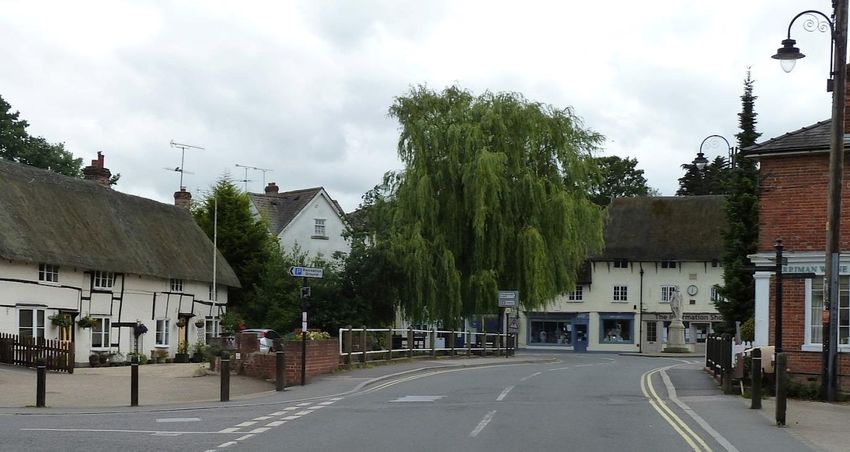
8. To allow appropriate housing development on developable sites within the village
LoD boundary.
9. To maintain and enhance the village character and to support the ‘working
village’ ethos whilst retaining its hospitality to visitors of all ages.
7.0 Policies
This section of the Plan contains the policies that, together with the Core Strategy
and the Framework, will manage development in the area until 2026. There are
policies to cover Development Strategy, Economy, Natural Environment, Housing,
Transport, Heritage and Developer Contributions.
7.1 The policies of the Pewsey NDP stem directly from the public consultation that
underpinned the Vision (and subsequent Objectives) and have also been drafted to
carry forward the NPPF and the planning policies of the Wiltshire Core Strategy. The
policies of the NDP originate from the Vision and address the Objectives by their
effects on controlling the development of the Area. In order to make the linkage clear,
each policy is preceded by a section detailing the relevant connections. The
following text then explains the origin and intentions of the policy.
7.2 Policy Theme 1 – Development Strategy
Development Strategy Context: References:
Pewsey NDP Objectives 1, 2, 6
Wiltshire Core Strategy CP1, CP2, CP18, CP44, CP50, CP51
National Planning Policy Framework 7,11,14,17,55,109,111,113,115
7.3 The Background and Intention
It is the wish of the community that development should be directed to within the
existing village boundary as defined by the Limit of Development (LoD). Similarly the
community wishes to see brownfield sites developed in preference to greenfield ones.
However the plan recognises the need to retain flexibility while controlling
development in the interests of sustainability. For this reason, the plan imposes a
presumption in favour of development within the LoD, subject to compliance with
other policies of the plan. As required by the NPPF, this leaves open the possibility of
limited development outside the boundary. This may come forward through a site
allocation DPD, through a neighbourhood plan or a rural exceptions site as defined
by the Core Strategy.
Theme 1: Policy 1 - i. Development on greenfield sites will only be
Development Strategy permitted where no developable (*) brownfield
sites are available.
ii. Development will take place only on developable
sites within the village LoD (as defined on Maps 1
& 3). However development outside the LoD may
be acceptable in exceptional circumstances
where both of the following apply;
no suitable site exists within the LoD
the development is brought forward through a
sites allocations development plan document
or through a neighbourhood plan or as a rural
exceptions site defined by the Core Strategy.
6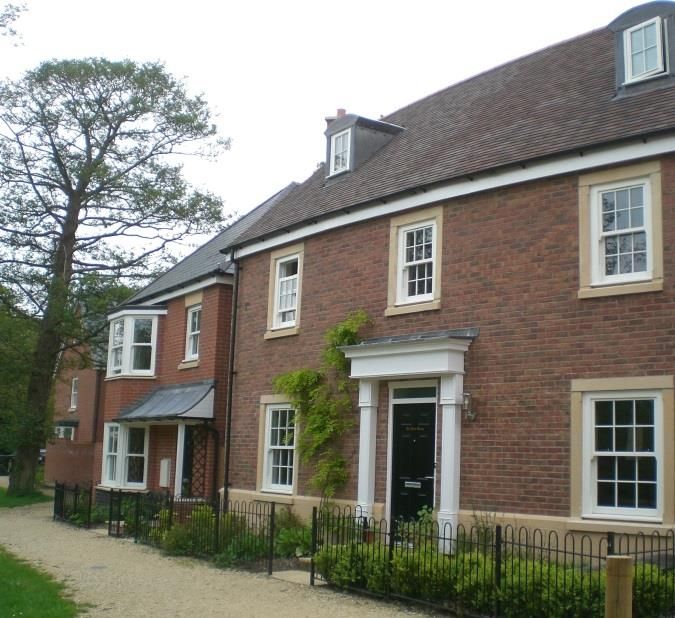
* NPPF Note 12: To be considered developable, sites should be in a suitable location for
housing development and there should be a reasonable prospect that the site is available and
could be viably developed at the point envisaged
7.4 Justification
The policy is designed to ensure that development is sustainable by:
making the most efficient use of land
by protecting the countryside, especially the AONB from unnecessary
inappropriate development
by focusing investment within the village, to enable regeneration and
enhancement.
7.5 Policy Theme 2 - Economy
Economy, Context: References:
Pewsey NDP Objectives Objectives 2, 7 and 9
CP2, CP3, CP 18, CP34, CP35, CP36, CP39, CP40,
Wiltshire Core Strategy
CP49
National Planning Policy
Paragraphs 7, 17, 18‐28, 160, 183‐185
Framework
7.6 The Background and Intention
Pewsey is often referred to as ‘a working village’ and it is important that there is a
healthy local economy to ensure its continued vitality and balanced housing growth.
Maintaining such an economy requires the continued support of existing businesses
and opportunities for fresh enterprises. Location of employment sites within the
village is considered to be a key element of sustainability, both economically and
environmentally e.g. by retaining wealth within the community and by reducing the
need to travel.
7.7 Businesses provide employment for those who live and wish to work in the village. In
order to accommodate this, sufficient housing, including affordable housing, is
needed. The intention is to ensure that young people who work in, or have a family
connection to, Pewsey will be able to afford to live in the village and thus enable it to
continue to thrive as a mixed and vibrant community.
The community also wishes to encourage improvements to business infrastructure
such as faster broadband, which will be supported, provided this does not conflict
with other Plan policies. Small business premises will also be encouraged on
suitable, brownfield land.
7.8 The plan policies are intended to support a robust economy by:
Ensuring that there are sufficient employment sites to balance future residential
growth;
Retaining and enhancing the retail and office space in the village centre and
preventing development that would reduce this;
Supporting the regeneration of the village centre, especially on brownfield sites;
Supporting Wiltshire Council’s ‘Campus Project’;
Improving and enhancing the number of services being provided;
7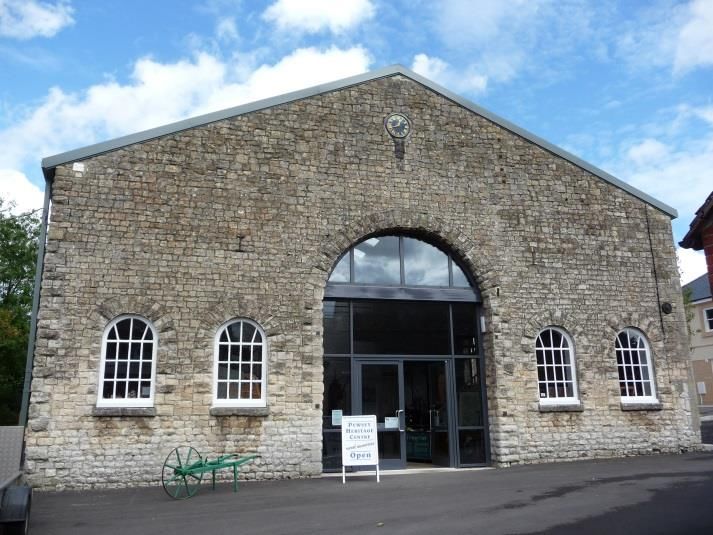
Offering adult education and perhaps facilities for sixth form education;
Promoting and encouraging tourism by encouraging suitable employment
opportunities which add value to the local economy;
Supporting the provision of suitable accommodation for both tourists and short
stay visitors;
Preserving and enhancing the built character and natural environment of the NDP
plan area, which underpins its attractiveness for investment.
Theme 2: Policy 2A - The i. Development and expansion of appropriate
Economy business uses on the following sites, as
shown on Map 4, will be supported:
Fordbrook Business Centre
Fordbrook Industrial Estate
Salisbury Road
ii. Mixed use developments will be encouraged
subject to being acceptable in accordance
with other policies of the plan. (Developers
should consider including live/work and home
office options for all housing schemes).
iii. Business use may be acceptable on windfall
sites and through conversion and adaptation
of existing buildings subject to being
acceptable in terms of other policies of the
plan.
7.9 Justification
It is considered essential that the total amount of commercial space is retained and
preferably expanded in order to retain and if possible improve Pewsey’s self-
containment and sustainability by reducing the need to travel as its population grows.
It is the policy of the plan to provide employment land from sites allocated in the
WCS. However, the plan recognises the need for flexibility in delivering these needs
and welcomes appropriate small scale business development, as well as moderate
scale mixed use developments at appropriate locations in the Parish.
7.10 There are three main existing employment sites in Pewsey: Fordbrook Business
Centre, Fordbrook Industrial Estate and Salisbury Road to the south (Map 4). The
Salisbury Road site, together with the identified Marlborough Road site is considered
together as Policy 2B of this plan, below.
7.11 Although not full, the Fordbrook sites are reaching capacity. Given an economic
upturn and/or significant housing development they might be unable to support the
overall sustainability aim of retaining balanced employment and residential growth.
There is limited potential to extend the Fordbrook Industrial Estate and the adjacent
Phillip’s Yard.
7.12 Improvements to business infrastructure, such as faster broadband, will be supported
provided they do not conflict with other plan policies. Small business premises will
also be encouraged on suitable, brownfield land.
8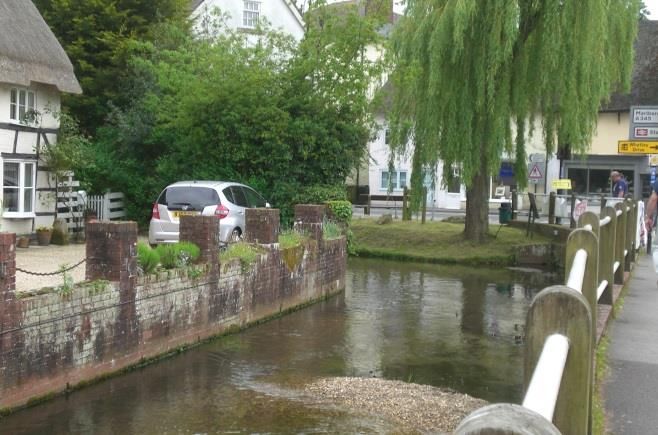
Theme 2: Policy 2B - The           i. A mixed use development comprising
        Economy                               residential development and a minimum of 0.5
        Marlborough Road and                  hectares of employment uses on land at
        Salisbury Road Sites                  Marlborough Road as identified on Map 4 will
                                              be permitted.
                                          ii. A minimum of 1.5 hectares of employment land
                                              on land at Salisbury Road Business site as
                                              identified on Map 4 will be permitted subject to
                                              the development demonstrating that account
                                              has been taken of the North Wessex Downs
                                              AONB Management Plan and that development
                                              protects, conserves and where possible
                                              enhances landscape character. Therefore the
                                              development of this site must include high
                                              quality design and landscape measures to
                                              ensure that the development is satisfactorily
                                              integrated into the landscape. The development
                                              should not have a harmful effect on traffic in the
                                              area.

7.13   Justification
       The saved policy position from the Kennet Local Plan (saved policy ED5) and the
       adopted Wiltshire Core Strategy (CP18) both refer to an employment site at
       Marlborough Road, to the north of the station. The NDP welcomes employment
       development at this location but, aware of the likely pressures on land for housing,
       particularly when the economy upturns, is concerned to build in additional flexibility.
7.14   Policy 2B therefore permits mixed use development at the Marlborough Road site
       and envisages an expansion of the Salisbury Road site to compensate for lost
       employment land at Marlborough Road.
7.15   The Wiltshire Workspace and Employment Land Review 2011 concluded that 1.9ha
       of employment land would be needed for Pewsey up until 2026. Land available at
       Marlborough Road (1.66 ha) and for an extension to Salisbury Road (up to 2 ha)
       exceeds this requirement.
7.16   The Marlborough Road site would be suitable for housing in many respects and is
       well located next to sustainable transport modes, in particular the railway station.
       However, on this site a ribbon of B1 employment uses immediately adjacent to the
       line would be acceptable, perhaps with B2 and B8 uses between these and any
       housing. In total it is anticipated that approximately 0.5 hectares of land could be
       given over to employment uses on the site.
7.17   Any development of the Marlborough Road site
       will constitute a Major Development. The NDP
       requires early discussion with the community
       and expects any Masterplan and/or application
       to include a Statement of Community
       Involvement.
7.18   Development of the extension to the Salisbury
       Road must be appropriately landscaped and not
       result in significant harm to the AONB or
       significantly increase the volume of traffic in the
       area. It must be acceptable in terms of all other
       policies of this plan.

                                                                                                   9
Theme 2: Policy 3 - The Economy i. Development of services and community
Service Centre Provision facilities that enhance the role of
Pewsey as a Service Centre will be
welcomed, subject to being acceptable
in terms of other policies of the
Development Plan.
ii. Conversion of residential properties for
provision of services, including retail will
be permitted subject to being acceptable
in terms of other policies of the
Development Plan.
iii. Conversion of properties currently used
as offices, retail or employment uses to
residential use will not normally be
permitted.
7.19 Justification
Pewsey acts as a Service Centre for the surrounding community and is designated
as such in the Core Strategy (CP18). The services are a mixture of public, retail and
professional, providing employment for those living in the NDP plan area and for
those who commute to and from it.
7.20 The presence of these facilities is considered central to the overall sustainability of
Pewsey. A balance between employment and housing reduces the need to travel, as
well as promoting vitality and viability of the settlement. It is therefore vital to the
economic future and to local employment that such services and the locations from
which they operate are maintained and encouraged.
7.21 It is important that there is the capacity within the plan to accommodate development
which will enhance Pewsey’s Service Centre role to the benefit of the local
community and the wider area. The anticipated increase in the Salisbury Plain
Garrison will mean more military personnel some of whom will use Pewsey’s
services. The plan is therefore generally supportive of improvements in facilities,
infrastructure and employment and opposed to their loss or deterioration.
7.22 The Wiltshire Council Campus Project is designed to centralise public and some
community services throughout the County and is relevant to Pewsey. In Pewsey the
facilities will be focussed on two sites – the Library and the Leisure Centre. The
project gives the opportunity to provide adult education facilities. Work is expected to
start in 2014/15. This project includes a possible move of Pewsey Police Station from
the village centre to the Leisure Centre. If this takes place it would leave a site in the
village centre available for development. The
Fire and Rescue Service located next to the
current police station will remain as a retained
force which needs to minimise reporting time
when called into action.
7.23 The Leisure Centre is close to Pewsey Vale
School. The Campus Project will benefit the
school by providing improved sports facilities
and additional community space. Privately run
retail outlets, together with the supermarkets,
(Spar and Co‐Op) make up the village centre.
These are interspersed with professional
10services including Bank, Solicitors office, Doctor’s Surgery, Dental Surgery and the
Post Office etc. The Plan opposes the conversion of these village centre premises to
residential accommodation and supports improvements and, where appropriate, an
increase in number. Subject to lack of conflict with other policies, the plan supports
the extension and expansion of existing businesses, especially where this will mean
the creation of new or the safeguarding of existing jobs.
7.24 There are three schools in Pewsey. The Primary School, the Secondary (Pewsey
Vale) School and St Francis (private primary/prep) all draw pupils from the parish and
surrounding areas. There is no sixth form education which means that those pupils
who wish to carry on their learning have to travel. The schools are considered to be
an important part of community life as well as underpinning the sustainability of the
settlement by reducing the need to travel.
Proposals from the Educational Authority
to expand educational facilities would be
strongly supported.
7.25 This Service Centre Policy supports
suitable employment, retail or service
development that will regenerate or
enhance the village centre providing it
respects the historic buildings and
Conservation Area. Such development
could provide enhanced ground floor retail or office space. Second floor residential
accommodation is considered acceptable especially if it is small and affordable and
provides security to the outlet. The conversion of retail or office space to residential at
ground floor however is considered unacceptable and will be strongly resisted.
7.26 Any scheme to regenerate the village centre must preserve or enhance the character
of the Conservation Area. Additionally design should be of a high standard as
required by this plan and the Village Design Statement whilst being complementary to
the surroundings in terms of form, type, scale and materials.
Theme 2: Policy 4 - The i. Proposals for sustainable tourism
Economy: Tourism Development development will be supported, providing
there is no conflict with other policies of
the Development Plan.
7.27 Justification
Pewsey lies in an AONB and is blessed with numerous attractions: scenic, historic,
architectural, natural and archaeological, and as such is popular with visitors, with the
potential to attract more. In particular, local features such as Savernake Forest and
the Kennet and Avon canal are used or visited all year round. The Heritage Centre
has recently been refurbished and acts as a local museum, run by volunteers.
There is capacity to do more to capitalise on these assets, which already make a
valuable contribution to the local economy.
7.28 The village and surrounding area are not able to provide sufficient overnight
accommodation for visitors and this reduces their per capita spend. Subject to
planning considerations regarding local impact, expansion of tourist accommodation
would be supported. There is a need to promote the area as a sustainable tourist
attraction, this is currently being actively addressed by the Community Partnership
and the Chamber of Commerce.
117.29 The plan aims to support the provision of overnight tourist accommodation and to
support initiatives which promote tourism and related employment, using the
surrounding area.
7.30 Policy Theme 3 - Natural Environment (See Appendix 5: Map 5)
Policy Origin Reference
Pewsey NDP Objectives Objective 4
Wiltshire Core Strategy CP18, CP50, CP52
National Planning Policy Framework Paragraphs 7, 70, 76 109‐118, 183‐185
7.31 The Background and Intention
Pewsey is situated in the Vale of Pewsey - a
broad valley running east/ west between
escarpments to the north and south. This is a
unique environmental area of chalk hills and flat,
highly fertile soils in the Vale, encompassing an
agricultural plain of some significance. It is vital
that this natural environment is not adversely
affected by development. All design should
minimise the impact of new buildings on the
environment, green open space, landscape and
wildlife habitats. This is an issue of conservation,
preservation and enhancement for both humans and wildlife.
7.32 Within the parish, itself totally within the AONB, there are areas of green space.
These are valued for various reasons but include human use for recreation, e.g.
sporting facilities such as football and rugby grounds, bowls and tennis clubs and as
habitat for wildlife. Often they also make a contribution to landscape and townscape
value as well, being part of the quintessentially rural character of Pewsey. These
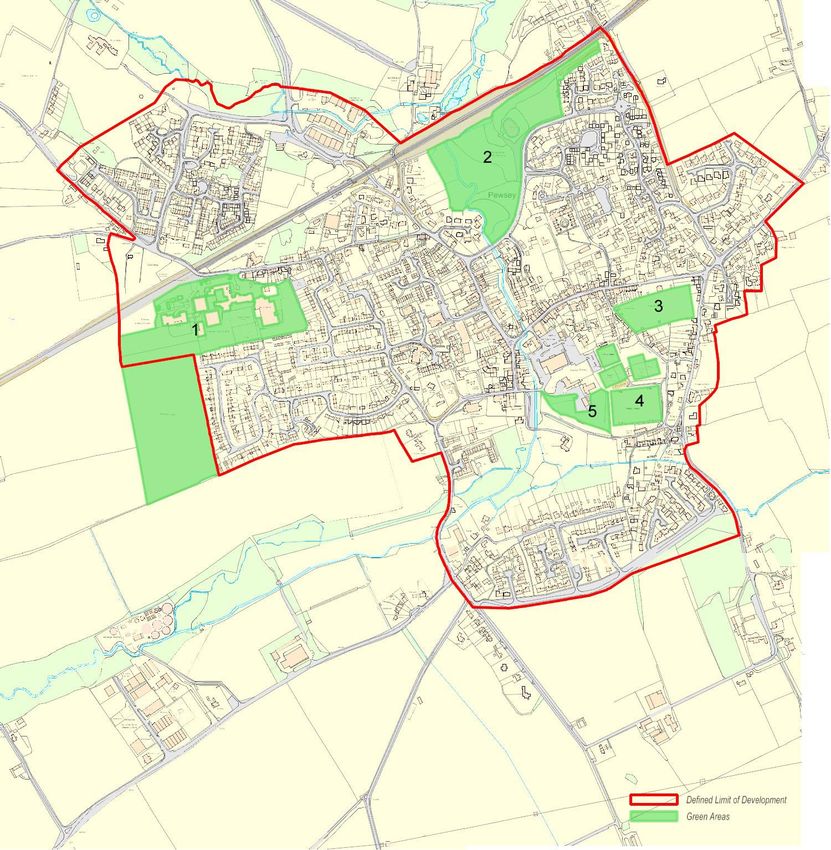
areas are described at (Map 5)
7.33 Examples of combined and harmonious human and natural use include The Grove
and The Scotchel, which are nature reserves through which there are paths for
walking. Also included under this heading are two well‐used allotment areas. There
are five children’s play areas spread throughout the village.
7.34 Some, though not all of the valued areas are officially designated and protected. For
example, part of Jones’ Mill, where historically the fields were flooded meadows and,
more latterly watercress beds through which the
River Avon flows, is recorded as a Site of
Special Scientific Interest (SSSI). Pewsey Down
is a County Wildlife Site and lies to the south of
the village, where its White Horse carved into the
hillside overlooks the houses below. (Map 5)
7.35 The Kennet and Avon Canal has attractive
moorings at Pewsey Wharf. The River Avon – a
world class chalk stream – has a huge diversity
of flora and fauna. It rises to the east of Pewsey
and its headwaters flow through the village, the parish and onwards south through
the Vale and into Hampshire. In Pewsey Parish there are three areas designated as
12SSSI’s along its borders. Both river and canal contribute to the scenic and
environmental quality of the area and provide opportunities for employment and
recreation. There is, as in much of Pewsey Vale, good quality agricultural land which
should be safeguarded from development in accordance with National policy.
7.36 The intention of NDP policy is to safeguard and positively enhance green open
spaces, recreational area, fine landscapes and habitats for the benefit of both the
human community but also for local wildlife and flora. The use of CIL to improve or
enhance the natural environment in these areas may be made, or 106 contributions
may be sought from developers. For example, Hurly Stream and other green areas
such as the Scotchel and the Grove could benefit.
7.37 No development should have a detrimental effect on the habitat of protected species.
Protected species should be conserved and enhanced wherever possible. Probable
effects of proposals on wildlife will be assessed on a site by site basis by suitably
qualified experts, and where protected species are involved a survey will be required,
depending on the advice of the County Ecologist.
Theme 3: Policy 5 - The Natural 1. Where appropriate, development should
Environment seek to maintain and if possible enhance
wildlife habitat through suitable
landscaping and green infrastructure.
This may involve off-site and on-site
works.
Local Priorities include:
Improvement works to The Scotchel,
The Grove and The River Avon, such as:
New southern boundary fence to the
Scotchel.
Resurfacing the Scotchel footpath.
Clearing and rebuilding banks of the
River Avon where it passes through
the village.
2. Proposals for enhancement of
landscape and nature, by incorporating
features at the design stage, will be
considered favourably. Specific priorities
in Pewsey include:
River Avon including the head waters.
Jones’s Mill (SSSI)
The Scotchel
All Tree Preservation Orders (TPOs)
The Kennet and Avon Canal and
Wharf
The Rectory Grove
Two Allotment sites
The Sports fields
Pewsey Hill and the White Horse
Martinsell Hill and its Bronze Age fort
137.39 Justification
The rich and diverse natural environment of Pewsey, including flora and fauna,
landscape and human recreational space, which together form the rural setting of the
village, is highly valued by the community and this has been reinforced by
consultation responses. Some elements of this are protected under formal
designations.
7.40 The underlying aim of the NDP is to ensure that all future development within Pewsey
NDP area is sustainable. This means creating a village that is better and richer at the
end of the plan period than it was at the beginning. This will be considered in terms
of:
Flora and fauna conservation and, wherever possible, enhancement. In
particular development will be required to retain as many existing trees as
possible, especially mature specimen trees;
Human life quality, including mental wellbeing and physical health (for example
through provision of recreation, green open space, fine views and allotments);
Conservation of natural resources including good quality agricultural land and all
greenfield land, recognising that the supply is finite;
7.41 Policy Theme 4 – Housing (Map 4)
Policy Origin Reference
Pewsey NDP Objectives Objectives 1, 6, 7, 8 and 9
Wiltshire Core Strategy CP1, CP2, CP18, CP41, CP43, CP44,
CP45,CP46, CP48, CP57, CP58, CP67
National Planning Policy Framework Paragraphs 7, 17, 47‐55, 56‐66, 128‐141,
183‐ 185
7.42 Background and Intention
The housing requirement for the Pewsey Community Area as a whole is set out
in the Core Strategy (CP18). Approximately 600 dwellings are stated to be
required within this entire Community Area between 2006 and 2026.
7.43 Within Pewsey Parish, there is one settlement identified in the Core Strategy,
namely Pewsey Village a designated Local Service Centre. Pewsey Village will
therefore be expected to take the majority of development and growth. Appendix
1sets out the approach to the identification of housing sites within the NDP and is
for information purposes only.
7.44 It is the intention that:
The plan ensures that sufficient housing is provided for market needs;
All housing will be built within the Limit of Development unless exceptional
circumstances require otherwise, in accordance with this Plan and Wiltshire Core
Strategy. Sites are proposed at:
- Marlborough Road (Mixed Use)
- The Old Hospital Site
Sufficient affordable housing as evidenced in accordance with the Wiltshire Core
Strategy and of an appropriate mix and type are provided, see also Appendix 3.
14 Good quality design will be a pre-requisite that respects the vernacular and is of
appropriate local materials. New housing should be built to high environmental
standards and, where possible, provide a proportion of energy needs by
renewable means. Self-build of an acceptable standard and design will be
encouraged.
The high environmental standards for new homes should include limiting their
impact on the environment and in particular their CO2 emissions.
Innovative solutions to energy and water needs (including drainage) will be
viewed positively, providing such features are architecturally and environmentally
acceptable, including amenity and visual impact.
Development proposals should demonstrate an awareness of likely impact of
climate change. They must demonstrate both how they propose to reduce and
withstand such impacts.
Proposals for housing will be required to demonstrate how they are acceptable in
flood risk terms by means of a Flood Risk Assessment.
Affordable housing provided will be occupied in accordance with Wiltshire
Council’s Affordable Housing Allocation Policy including criteria on any change of
occupants. The occupancy will be secured by means of Section 106 Agreements.
Theme 4: Policy 6 - Housing 1 New housing development is acceptable in
principle on approximately 1 hectare of land at
Marlborough Road together with a minimum of
0.5 hectare of employment land identified by
Policy 2B and on the Old Hospital Phase 3
site. Both sites are identified on Map 4. Both
sites are indicated in Appendix 1.
2 The provision of affordable housing will be in
line with Wiltshire’s Core Strategy Policy.
7.45 Justification
An assessment of the number of sites available and an estimate of the possible
capacity for houses is set out in Appendix 1 (for information purposes only). Detailed
discussion can also be found in the accompanying SA.
7.46 At the request of Pewsey Parish Council, a housing survey was carried out between
May and June 2013 in order to provide information on the current affordable housing
requirements in the Parish. The findings of this survey are summarised at Appendix 2
which includes a discussion of Housing for the Elderly.
7.47 Policy Theme 5 - Transport
Policy Origin Reference
Pewsey NDP Objectives Objectives 1 and 7
Wiltshire Core Strategy CP18, CP60, CP61, CP65, CP66
National Planning Policy Framework Paragraphs 7, 17, 29‐40, 75, 183‐185
157.48 The Background and Intention
Pewsey is in the centre of a rural area and is at the intersection of the National Cycle
Routes 4 and 45. The car is often the most practical means of transport.
Alternatively, there is a regular bus service to larger towns like Salisbury, Swindon
and Marlborough plus an ‘on demand’ service for outlying communities in the Vale.
Pewsey has a main-line station which provides a fast service to London in
approximately an hour. This is a popular commuter service for people living in
Pewsey and those from the surrounding Vale.
7.49 Pewsey is not on a designated freight route (Wiltshire Freight Strategy) and is
surrounded by minor rural roads that link with the A345 which runs north/south and
the B3087 (leading to the A346 and A338) which runs east/west through the village.
These roads are not designed or made for HGVs, which can do a significant amount
of damage to the surface, corners and shoulders. Disproportionate increases in
vehicle movement (especially heavy traffic) resulting from any proposed development
must be avoided in the absence of significant improvements to road infrastructure.
Conversely, through traffic is considered to be of benefit to the village and the Plan
strongly opposes any proposal to create a bypass.
7.50 It is intended that policy will:
Oppose developments that significantly increase road movements, especially
heavy goods traffic;
Ensure that all development
promotes sustainable modes of
transport where possible and
helps reduce the need to travel;
Ensure that any new 2 or more
bedroom dwellings will have a
minimum of two off‐road
parking spaces;
Require business development
to provide some off‐road
parking for customers and staff;
Require developer
contributions to improve
transport issues, for example
provide a cheaper alternative to the station car park and better pedestrian access
to the station.
Strongly support the continuation of the current train service to London and the
South West.
Theme 5: Policy 7 – Transport i New development in the village will usually
be required to provide off-street car parking
as part of the development, or conveniently
located near to it. The amount needed will
be assessed on a case-by-case basis and
take into account the type of development,
its location and its impact on the overall
parking provision in the village.
ii New development should encourage and
enable the use of sustainable transport
modes and alternatives to the car.
iii Developer contributions will be sought to
provide new or improved transport related
16infrastructure.
iv. Proposals that improve parking facilities
and provide and enhance safe and suitable
access to the train station will be supported.
7.51 There is a mainline railway station, with services to the South west and Paddington.
The running time to London is about an hour. This
is an important facility for those who live in the
Pewsey area and work further away. Commuters
add much to the socio/economic activity in the
village. However, employment within the village
that better balances the needs of resident workers
will be supported to encourage self‐containment.
The station currently provides car parking facilities
that are considered expensive and a cheaper
alternative would be welcomed.
7.52 To access the station yard from the village,
pedestrians currently have to cross a busy road at
a corner on a rise without any safety measure from
approaching traffic. A pedestrian crossing has been
proposed for some years but the necessary finance
has not been available. This requirement has been
assessed by Wiltshire Highways and the solution involves the use of five sets of
traffic lights at a cost of a quarter of a million pounds. Another possible solution may
involve the use of a longer, but safer, route with suitable directional signage.
Developer contributions may be sought to finance or part‐finance an acceptable
solution.
7.53 Policy Theme 6 – Heritage (Map 3)
Policy Origin Reference
Pewsey NDP Objectives Objectives 1,5,7,9
Wiltshire Core Strategy 57,58
National Planning Policy Framework 17, 28, 57-58, 60-61, 126-141
7.54 The Background and Intention
Pewsey has a mixture of architectural styles with a unifying emphasis on the local
vernacular, including local materials such as decorative brickwork, stone, thatch,
slate, clay pan tile and timber. Scale, with the
exception of some key buildings, is small and
typical of that in a large rural village. It is
important that any new houses should continue
this careful combination of local styles, design
features and themes while remaining open to
high quality modern designs, especially where
these reflect the highest environmental standards
and are not discordant with their neighbours.
177.55 The centre of Pewsey is covered by two designated Conservation Areas (CAs); the
Pewsey Conservation Area which covers the historic village core and the Wilcot Road
Conservation area (CA) (Map 3). There are also a number of Grade II Listed Buildings
scattered throughout the NDP area. The Church is the only Grade I Listed Building.
(Map 6)
7.56 The Whatley Drive development, off Broomcroft Road, is on one of the last remaining
building sites of any size within the
Conservation Area. The sites now
identified for possible development are
not within the Conservation Area, or
within the curtilage of listed buildings. It is
considered important that that this plan
excludes development which might have
an adverse effect on any of the heritage
assets. New buildings should contribute
to the diversity and individuality of the
village, whilst reflecting local character
and distinctiveness.
Theme 6: Policy 8 - i. Proposals within the Conservation Areas, or
Heritage which are likely to affect its setting should
demonstrate how they have reflected the
advice of the following in the design and
location of buildings:
Pewsey Conservation Area Appraisal
(2009)
Pewsey Village Design Statement (2007)
ii. Within the Conservation Area a higher
standard of design and construction will be
required, particularly in terms of detailing and
use of good quality local and traditional
materials.
iii. Proposals which include the sensitive
conservation of listed buildings or the
enhancement of the designated
Conservation Areas, especially the public
realm and elements identified as being ‘at
risk’ will be welcomed.
7.57 Justification
Pewsey’s attractiveness and appeal depends on the quality of the build and natural
environment and the character of traditional local building styles, including local
materials. During the last three decades significant damage to the village, especially
to the Conservation Areas and to the character has occurred, mainly due to
insensitive development and piecemeal changes such as loss of historic detail e.g. in
terms of finials, mouldings and cast iron guttering, replacement of traditional windows
and doors with PVC, loss of traditional roof covering materials, installation of crude
modern porches, loss of chimneys, installation of satellite dishes and loss of and
damage to boundary walls in brick and stone.
7.58 This gradual degradation has been particularly noticeable in the Wilcot Road area
and has led to this Conservation Area being declared ‘At Risk’ by English Heritage.
18The Pewsey Conservation Area Appraisal and Management Plan has also identified
structures “at risk”. The purpose of this policy is to reverse this trend, improve the
quality of the village as a whole especially the Conservation Areas and protect Listed
Buildings and their settings. To this end all new development will need to be of a
higher than normal standard in terms of design, blending harmoniously with
neighbours and should use high quality, local and traditional materials.
7.59 Policy Theme 7 - Developer Contributions
Policy Origin Reference
Pewsey NDP Objectives 3, 4, 7
Wiltshire Core Strategy CP3
National Planning Policy Framework 21,35,70,114,117
7.60 The Background and Intention
Developers may be required to contribute towards the provision of local infrastructure
and to mitigate impacts of development proposals in order to make them acceptable
in planning terms, in accordance with National and Core Strategy policy. This may
include both CIL contributions and those made by section 106 agreement.
Theme 7: Policy 9 - Developer In Pewsey, developer contributions may
Contributions be sought to deal with site specific
issues and the wider need for local
infrastructure.
Local priorities include:
Transport related infrastructure,
Re-fencing the Scotchel boundary
along Broomcroft Road,
Refurbishing historic structures
including the Arch to the north of the
High Street, the Glass’ tomb and the
stone table to the Miller’s chest
tomb - both in the churchyard.
These repairs are noted in the
Pewsey Conservation Area
Character Appraisal,
Extension of two Consulting Rooms
to Pewsey Surgery to accommodate
additional patients resulting from
housing developments,
To improve or enhance the
Conservation Area,
To provide pedestrian crossings at
Manor Court and Broomcroft Road
for safety of residents,
To improve the water catchment
channels, for example Hurley
Stream and the River Avon.
To maintain and improve community
19meeting places like the Bouverie
Hall, Scout Hut, Wesleyan Hall and
the Leisure Centre.
Improve sporting facilities like the
football, rugby, bowls and tennis
Club pavilions.
7.61 Justification
As a service centre, Pewsey requires more investment in order to help retain and,
where possible, enhance this function. It is considered to be fair that fresh
development, especially that likely to place significant new demands on infrastructure
should help to meet the costs of construction and maintaining it. At the same time,
requirements should not be so onerous that they render schemes unviable.
In Pewsey the key areas where investment is needed are set out in the policy above.
The Heritage Centre
Before
After A
20Appendix 1: Housing development sites within the Limits of Development (LoD) in
Pewsey Village June 2014 (for information only)
A review of potential housing sites within the LoD has been undertaken. The basis for this
was an analysis carried out in February 2014 based on figures provided by Wiltshire Council
which showed that, of the 600 houses allocated for Pewsey Community Area in the Core
Strategy to be delivered by 2026, 411 had been built or are developable on allocated sites.
(256 homes have in fact already been built in Pewsey Parish alone).
This leaves 189 to be identified in the Community Area as a whole (600 minus 411).
Approximately 104 (60%) (A proportion similar to other Service Centres) are considered
appropriate for Pewsey village since this is the Service Centre and much of the remaining
Community Area is rural. The dwellings can be accommodated within the village LoD to
reinforce its role as Service Centre and to avoid building on the AONB.
Of the 104 remaining to be identified:
The following sites have been granted Planning Permission:
Southcott (10)
Stratton Rd site (4)
High Street next to Martins shop (2)
Broadfield site (4)
54 Ball Road (2)
Total 22 Dwellings
This leaves a requirement for 104 minus 22 = 82.
In assessing sites for these dwellings, the following were considered:
Sites subject to a planning application
Developable sites identified in the 2012 SHLAA that are within the LoD.
Sites Subject to an Outstanding Planning Applications are:
Dewey’s River Street site 9
Behind the Crown Inn 14
Total 23
The total requirement then falls to 82 minus 23 = 59. In fact this requirement is exceeded by
the sites identified by the NDP. These are as follows:
Estimated dwellings involving redevelopment of village centre 12
Estimated Windfall allocation sites between 2014 and 2026 (Wiltshire Council estimate
for the Community Area is 6.3/year which equals 75.6 dwellings for 12 yrs. Pewsey
village allocation is therefore 75.6 x 60% = 45 dwellings. Subtract 29 dwelling for which
there are applications above leaves an estimated Windfall quota of 16 dwellings 16
Local Allocated Sites in the Pewsey NDP (Developable SHLAA sites):
Marlborough Road site 49
Old Hospital Phase III site 9*
Total 86
21Sites Granted Planning Permission 22
Outstanding Applications 23
Estimated dwellings involving redevelopment of village centre 12
Windfall 16
Marlborough Road site 49
Old Hospital Phase III site 9*
Total Identified 131
Requirement 104
Plan exceeds requirement by 27
It can be seen that the above calculations demonstrate that Pewsey can more than meet the
housing requirements of the Core Strategy, by this calculation and that all necessary
development for housing can be achieved on sites within the Limits of Development (the
village boundary).
Monitoring will take place to ensure that sites remain deliverable and an adequate supply
going forward is maintained.
The figures used above and the calculated requirement for a further 82 houses in the NDP
area as at July 2014 agree with those in the Wiltshire Council Housing Land Supply
Statement of April 2014.
* As at September 2014 the developer’s actual estimate is for 25 dwellings on this site. This
would yield a total of 43 dwellings over and above the published Core Strategy requirement
for Pewsey.
22Appendix 2: Wiltshire Council Housing Survey
A housing survey was carried out between May and June 2013 at the request of Pewsey
Parish Council to provide information on the current affordable housing requirements in the
parish. The response to the survey was very high, indicating a high level of concern about
this issue among the local community. Key findings are set out below. The report should
be read alongside other information including Wiltshire Council’s Housing Register and the
Strategic Housing Market Assessment.
The majority of respondents were owner‐occupiers (73.6%), while (16.8%) live in
socially rented properties.
A third of respondents live in two bed‐room properties and another third in three
bed‐room properties.
Just under (50%) travel less than ten miles to work, the remainder more. This is a
reflection that Pewsey with its good communication links, bus and train, offers suitable
accommodation to those who wish to commute.
The majority (74.8%) of respondents support new homes being built in the parish while
25.2% were opposed.
The type of house required was, in order of preference, semi‐detached, terraced,
detached, bungalow, and flat.
Respondents considered that there is a lack of suitable housing in Pewsey, especially
for young people and those with a family in the village. The expressed need was mainly
for one, two or three bedroom houses, with two bedrooms ranked the highest.
Accommodation for the elderly
Although there is a slowly increasing elderly population in Pewsey, the Housing Survey
shows that there is no specific additional requirement for dwellings for older people in
Pewsey. At present there are two warden‐supported facilities and one that offers elderly care
within the village. In addition, the new Whatley development has accommodation specifically
designed for retired owners. However, mindful of the ageing population and in accordance
with the community’s wish to provide housing for all sections of the community, the plan is
not opposed in principle to further development of housing for the elderly.
23Appendix 3: Pewsey Parish Council Policy Information
1. Parking within the village is free as a deliberate policy of the Parish Council to support
the local economy.
2. The current direct train service to London is strongly supported.
3. Where possible and in accordance with Wiltshire Council’s Affordable Housing
Allocation Policy, affordable housing will be used for local people.
24MAPS
Map 1: Pewsey Parish with the Limit of Development in Red. (See also Map 3 for greater
detail.)
25Map 2: Pewsey Community Area
26Map 3: Pewsey Conservation Areas and Limit of Development
27Map 4: Pewsey Employment and Housing Sites
Key
1. Marlborough Road mixed site
2. Old Hospital site: Phase 3
A. Fordbrook Business site
B. Salisbury Road Business site
C. Extension to Salisbury Road Business site
28Map 5: Green Areas for Sport and Recreation
Key
1. School playing fields
2. Scotchell
3. Allotments
4. Recreation Area – football, tennis, bowls
5. Rectory Grove
29Map 6: Conservation Areas and Listed Buildings
30You can also read


