Submission to An Bord Pleanála Regarding Proposed Oakley Manor SHD at Shackleton Road, Oldtown, Celbridge, Co. Kildare 31st January 2019
←
→
Page content transcription
If your browser does not render page correctly, please read the page content below

Submission to An Bord Pleanála
       Regarding Proposed Oakley Manor SHD
at Shackleton Road, Oldtown, Celbridge, Co. Kildare

                              31st January 2019

   Chair: Stephen Johnston;            Treasurers: Sean Darcy & Brian Carpenter.
                                                                                   1
Stephen Johnston
                                                                                Celbridge Community Council
                                                                        The Mill Celbridge Community Centre
                                                                                                   Celbridge
                                                                                                  Co. Kildare
                                                                                                  W23 P6P5

                                                                                             31st January 2019
Strategic Housing Unit
An Bord Pleanála
64 Marlborough Street
Dublin 1
D01 V902

      Re: Case # 303295 - Strategic Housing Development Application for the construction of 251
      residential units (167 no. houses and 84 no. apartments/duplex units), a creche (261.5 m2 ),
      diversion and undergrounding of existing 38kV overhead cable and erection of two new ESB pylons,
      upgrade of existing junction at corner of Shackleton Road and Old Town Road to accommodate new
      filter lane and crossing point; and provision of new vehicular entrance onto Shackleton Road and
      two new vehicular entrances onto Oldtown Road; and all associated works on Land at Shackleton
      Road, Oldtown, Celbridge, Co. Kildare
Dear Sir / Madam,
As a representative voice for the community, Celbridge Community Council wishes to make a submission
outlining our views regarding the above mentioned Strategic Housing Development (SHD) planning
application to An Bord Pleanála. Celbridge Community Council was established as a voluntary community
group in 1975 and has since been actively involved in many aspects of community life in Celbridge. Our goal
is to promote and improve community life and to influence in a positive way the physical development of the
area for the benefit of all those who live and work there.
This site for the proposed development is by far the most poorly located of the Key Development Areas
zoned for residential development in the Celbridge Local Area Plan 2017-2023 and, as such, requires a
coherent strategic execution of objectives outlined in the Kildare LECP, Kildare CDP, Celbridge LAP and
Celbridge ISP if any of the town’s identified infrastructural deficits are to be rectified and requires the
developer to go above and beyond in terms of meeting sustainability criteria. This submission outlines a
number of concerns grounded in the difficulties that residents of the Shackleton Road / Oldtown Road area
already encounter accessing public transport, the national road network, services and community facilities. It
also suggests measures that should be in place before development is permitted at the site in question.
We trust that An Bord Pleanála will carefully consider our concerns regarding this SHD application and
impose appropriate conditions to ensure development that enhances rather than detracts from the quality
of life of both the future residents of the proposed development and the existing residents of Celbridge.
Yours faithfully,

Stephen Johnston
Chairperson
Celbridge Community Council

              Chair: Stephen Johnston;                  Treasurers: Sean Darcy & Brian Carpenter.
                                                                                                             2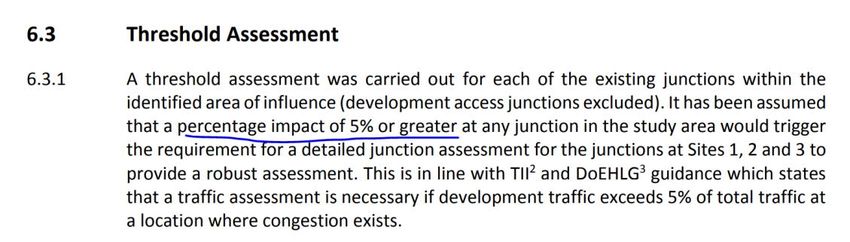
1.     Introduction                                                                                       4

2.      Celbridge Community Council’s Concerns                                                             4
     No Strategic Transport Management Plan                                                                4
     Unsatisfactory Developer’s Transport Assessment                                                       4
     No Public Transport Strategy for Celbridge                                                            5
     Funding for Infrastructural Improvements                                                              6
     National Road Network (M4/N4) at Capacity                                                             6
     Lack of Resilience in Water Supply Network                                                            6
     Lack of Strategy Given Peripheral Location of Proposed Development                                    6
     Highest Density within the Development Poorly Positioned                                              8
     Central Boulevard                                                                                     8
     Crèche Location and Parking                                                                           8
     Provision for Leisure / Play Space                                                                    9
     Integration of School within Neighbourhood                                                           10
     Adjoining Roads                                                                                      11
        Shackleton Road                                                                                   11
        Oldtown Road                                                                                      12

3.      Traffic & Transport in Celbridge                                                                  13
     Traffic in Celbridge                                                                                 13
     Public Transport Service                                                                             13
     Car Dependency v Public Transport Usage (Oldtown Area)                                               14
     Analysis of Transport Assessment included in Planning Application                                    16

4.      Needs Identified for Celbridge                                                                    20
     Strategic Transportation Plan                                                                        20
     Consolidate Development                                                                              21
     Implementation and Infrastructure Delivery                                                           22
     Water Supply and Waste Water Infrastructure                                                          22
     Robust and Resilient Water Supply Infrastructure                                                     22
     Deficits in Social Infrastructure in Celbridge                                                       23

                Chair: Stephen Johnston;                      Treasurers: Sean Darcy & Brian Carpenter.
                                                                                                          3
1. Introduction
Celbridge Community Council acknowledges the high demand for housing in Celbridge and supports the
provision of same in a strategic manner that rectifies rather than exacerbates infrastructural deficits.
However, Celbridge Community Council has a number of concerns from the wider Celbridge context down to
the detail of the proposed Oakley Manor development application.
This submission
outlines Celbridge Community Council’s concerns regarding the proposed development
presents more detailed thoughts on Traffic & Transport (a theme that’s at the heart of many of our
concerns!)
highlights a number of needs that have been identified for Celbridge by bodies other than ourselves.
2. Celbridge Community Council’s Concerns
No Strategic Transport Management Plan
A strategic transport management study for Celbridge is long overdue and the Transport Management
Plan that was due to be delivered by August 2018 has not been completed. Kildare County Council
added an objective to produce this to the final version of the Celbridge Local Area Plan 2017-2023 in
direct response to concerns raised by many, most notably the Department of Housing, Planning,
Community and Local Government1. Celbridge Community Council considers a Transport Management
Plan to be an essential tool for guiding planning decisions for Celbridge. This plan should include
strategies and action items for
how bus prioritisation measures might be implemented given the physical constraints (road
widths, etc.) of the village so residents can get to Hazelhatch, Dublin and surrounding towns in
an acceptable time by means of public transport.
tackling the inadequacies of the cycling infrastructure around Celbridge to encourage higher
uptake on non-vehicular transport
delivery of the desperately needed second vehicular bridge and the supporting road
infrastructure needed to relieve town centre traffic congestion and to assist residents in getting
to and from Hazelhatch with as few delays as possible
Unsatisfactory Developer’s Transport Assessment
Though specifically requested by Kildare County Council to collate traffic count information and
determine the proposed development’s contribution to traffic levels at the Liffey bridge, the Transport
Assessment submitted with this application cannot, we believe, be relied upon to be impartial. We
found it to be “creative” in its presentation of its findings. Junction capacity analysis for the base year
1 http://www.kildare.ie/CountyCouncil/Planning/DevelopmentPlans/LocalAreaPlans/CelbridgeLocalAreaPlan2017-
2023/1.%20Minister%20for%20Hsg%20Planning%20Comm%20%20Local%20Gov.pdf
Chair: Stephen Johnston; Treasurers: Sean Darcy & Brian Carpenter.
4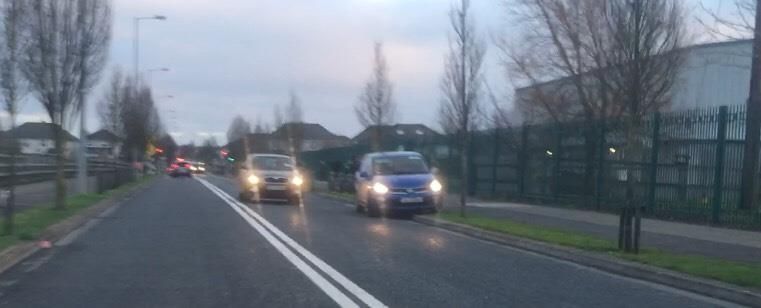
2014 (RPS Feasibility Study2 re. new bridge) showed the River Liffey Bridge to already be operating
above practical capacity during peak times so the impact of any increase in traffic at this location will
be very noticeable. Items that merit further scrutiny are:
when the real AM peak time at the Liffey bridge actually is – while 08:00-09:00 may be the AM
peak when averaged across all of the junctions in Celbridge, and most certainly would be for
junctions near the proposed Oakley Manor development due to schools traffic, there is a lot of
movement by commuters before 08:00 and recent traffic counts performed by Clifton Scannell
Emerson recognise this – the number crossing the bridge towards Dublin/ Hazelhatch between
07:00-08:00 is 86 higher than the number in Systra’s report for the 08:00-09:00 period
the mode of transport that will be used for travel from the proposed Oakley Manor
development. The Transport Assessment
makes assumptions based on the 2016 Census Mode Share for Journey to Work and
School or College for the whole of Celbridge – we believe that the patterns will be
different in the 07:00-08:00 period as most journeys will be people travelling long
distances rather than going to school and we know that this part of town has lower public
transport usage and higher private vehicle usage than other parts of Celbridge that are
better connected with public transport
estimates 97 vehicle trips from the proposed development in the AM period (08:00-
09:00)
claims that only 40/97 vehicles will cross the bridge in the AM period (08:00-09:00) – we
believe this number will be higher in the period between 07:00-08:00
the calculations that imply that the impact of traffic from the proposed development would
be less than 5% at the bridge as these seem to be based on a figure that is calculated from
[proposed development traffic] as a percentage of [all traffic at the bridge - travelling in both
directions] when it’s common knowledge that the AM peak issues are caused by the outbound
flows of traffic and it’s primarily outbound traffic that the proposed development would
generate during AM peak times.
No Public Transport Strategy for Celbridge
A strategy to address the public transport needs of Celbridge must be progressed with the NTA as a
matter of urgency. Celbridge has an extremely high and unsustainable rate of car dependency for a
growing town in the Dublin Metropolitan Area that feeds high numbers of workers and students to
Dublin - almost 70% of all commuters from Celbridge to Dublin city and suburbs use private vehicles.
The BusConnects proposals included route suggestions that would improve the public transport
service for residents of Celbridge and North Kildare and there is no reason why some of the proposals
could not be progressed in advance of the full roll out of the BusConnects network redesign for the
Greater Dublin Area if the appropriate pressure was put to bear on the NTA
The Shackleton Road needs all day public transport connectivity
2
http://www.kildare.ie/CountyCouncil/RoadsandTransportation/TrafficManagementPlans/Celbridge%20River%20Crossong
%20Feasibility%20Report%202015.pdf
Chair: Stephen Johnston; Treasurers: Sean Darcy & Brian Carpenter.
5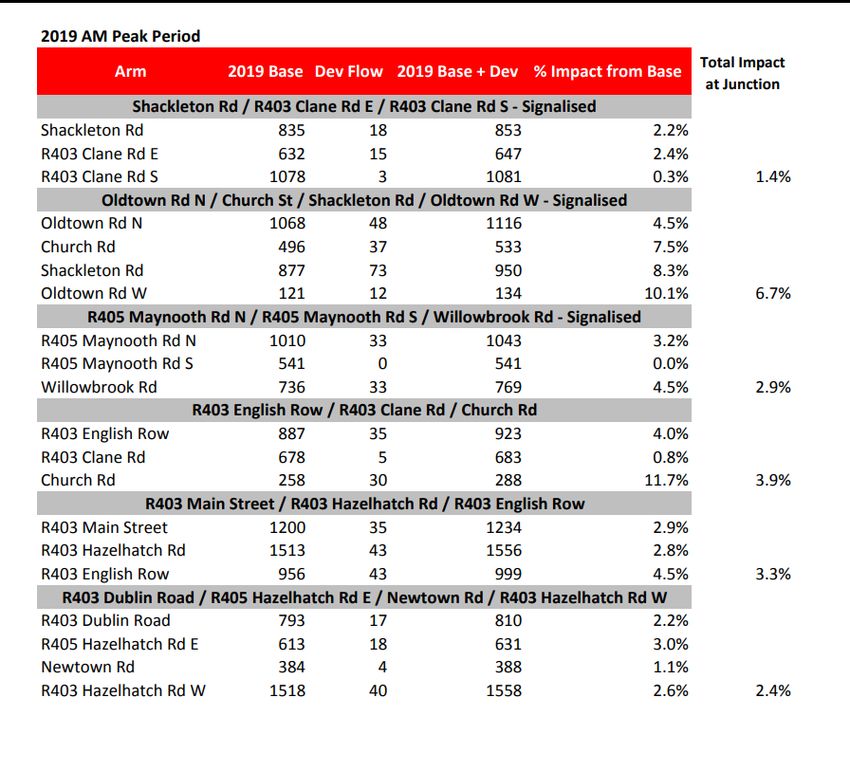
Car dependency amongst residents in the Oldtown part of town is noticeably higher than in
parts of town that are serviced by a more robust public transport service so development at this
location will not be sustainable as the developers try to convey
Funding for Infrastructural Improvements
The Department of Housing, Planning, Community and Local Government raised concerns in a
February 2017 letter to Kildare County Council3 requested Kildare County Council to look at
implementing measures such as a Special Development Contribution to help fund rectification of
infrastructural deficits and it is our view that it would be very remiss of Kildare County Council to fail
to do this only to refuse to fund infrastructural changes in Celbridge in the future due to lack of
funding.
National Road Network (M4/N4) at Capacity
Measures need to be taken to protect Celbridge from being used as a rat run for M4/N4 commuters
whenever there is a road traffic accident that results in delays on the national road network – the
M4/N4 needs better resilience and a Park ‘n’ Ride facility that attracts more commuters out of cars
and onto sustainable modes of transport.
Lack of Resilience in Water Supply Network
Celbridge does not currently have a resilient water supply or waste water network and its existing
mains pipework needs an overhaul. This lack of resilience affected large numbers who could not
benefit from a diversion of supply during a water supply outage in January 2019 – while a diverted
supply was arranged, it was only beneficial to some estates and about 10,000 people were left without
any water for about 36 hours. This was not a one-off as a similar issue affected the north/west of
Celbridge in July 2018
Lack of Strategy Given Peripheral Location of Proposed Development
The proposed development is poorly located in terms of access to
services and community facilities
public transport
the national road network
The Oldtown KDA is by far the most poorly located of all the KDAs for access to everything except
schools. The site is to the western side of town, about 1km from the nearest shops and 1.3km+ from
3 http://www.kildare.ie/CountyCouncil/Planning/DevelopmentPlans/LocalAreaPlans/CelbridgeLocalAreaPlan2017-
2023/1.%20Minister%20for%20Hsg%20Planning%20Comm%20%20Local%20Gov.pdf
Chair: Stephen Johnston; Treasurers: Sean Darcy & Brian Carpenter.
6
the town centre. It is clearly the most car dependant of all the KDAs zoned for residential
development under the Local Area Plan.
Distances from the location of the proposed development to services support this:
Service Min. Distance
in Km
Town Centre 1.30
Supermarket (Tesco) 1.00
Convenience store (Texaco Spar) 1.00
Healthcare / Dental 1.25
Primary school – boys 0.20
Primary school - girls 1.30
Primary school – mixed ET 1.30
Secondary school – mixed 2.70
Secondary school – girls only 0.75
Secondary school – boys only 2.70
Dublin bus – 67X (peak service only) 0.20
Dublin bus – 67 (regular service) 1.20
Hazelhatch Train Station 3.50
Regional Bus Service bus stop – 120/123 0.60
M4 Junction 6 4.20
N4 Junction 5 7.20
Kildare County Council reduced the scale of the Oldtown KDA between the Draft and Final versions of
the LAP from the originally envisaged 47.5 ha (1425 units) to 13.5 ha (411 units) and reduced the
density from 35 to 30 units per hectare following concerns raised in a letter from the Dept of
Environment, Community & Local Government4 (in February 2017 during consultation on the Draft
LAP) as these lands were considered more peripheral to retail and community facilities in Celbridge.
The proposed density of 35.2 units per hectare reflects the originally planned density for this
KDA rather than the reduced density of 30 units per hectare as stated in the final LAP. While
higher densities are to be encouraged, this is quite high given the peripheral location of the site
relative to facilities, amenities and employment centres – it is concerning that no measures are
being taken to improve services for the area in or close to the location of the proposed
development
Along with the reduction in size of the KDA, anything vaguely strategic regarding development
of these lands and supporting infrastructure was also removed so Celbridge Community Council
believes that there is now an acute risk that development here both in the short and long term
will proceed in a piecemeal manner without the forethought of a Masterplan or similar to
ensure proper planning and sustainable development at such a peripheral location. There is a
real fear that the estate-by-estate sprawl that Celbridge has been subjected to for so long will be
allowed to continue unabated without provision of community facilities, a Western relief road
or anything that would add real value to both the existing and new residents of this part of
town.
4 http://www.kildare.ie/CountyCouncil/Planning/DevelopmentPlans/LocalAreaPlans/CelbridgeLocalAreaPlan2017-
2023/1.%20Minister%20for%20Hsg%20Planning%20Comm%20%20Local%20Gov.pdf
Chair: Stephen Johnston; Treasurers: Sean Darcy & Brian Carpenter.
7It should be noted that land with capacity for an additional 150+ dwellings is currently for sale adjacent
to this site on the Shackleton Road so it’s 400+ dwellings that we’ll see built in this part of town in the
foreseeable future - the impact of this should be borne in mind.
Highest Density within the Development Poorly Positioned
Higher density is proposed to be built in Area 3 to the rear of the proposed development. This will
make it even less likely that residents from the higher density part of the development will walk, cycle
or use public transport – distances to public transport, services and community facilities in Celbridge
will be an additional 250-500m for these residents. This is unsustainable, will encourage higher car
dependency and drive higher volumes of traffic through the estate. In the absence of plans to enhance
services and amenities in this area of town, highest densities should be closest to the front affording
residents best access to the amenities and services that already exist in the Celbridge.
Central Boulevard
Further thought needs to be given to the main thoroughfare into the proposed development referred
to by the developer as the “central boulevard”. Journeys will be made into this development to access
play facilities and the crèche. If, as is per the design statement, this boulevard street becomes an
access route facilitating “future development to the west” (if further O'Flynn lands are zoned for
residential development in the future), then it will become even busier still. The specifications of the
road may not be best suited to the type of usage it would be subjected to in the longer term but if no
cycle paths are provided for and journeys on this route increase significantly, it won’t be possible to
retrofit cycle paths. Ideally such a “spine like” central boulevard would be avoided in favour of a “child
safe” central space and, if future development occurs at the back, then those lands should be accessed
by vehicular traffic from the Oldtown Road (beyond the site that’s being reserved for a primary school)
Crèche Location and Parking
The location of the crèche and number of designated parking spaces need to be reassessed given the
inevitable use of the crèche by families from outside the development.
The developers seem to believe that usage of the crèche will primarily be by residents of the
development but childcare facilities are at a premium in Celbridge5 so their assumption will almost
certainly be proven unfounded. Provision of childcare in Celbridge has not kept pace with demand.
5 The Kildare LECP 2016-2021 highlights that while urban Kildare has on average greater numbers of pre-school
services, there is very low provision in towns such as Celbridge. This confirms our experience.
Chair: Stephen Johnston; Treasurers: Sean Darcy & Brian Carpenter.
8The crèche facility is located in Area 3 at the rear of the development – this will mean additional traffic
through the development. Additionally, provision is only made for 12 dedicated parking spaces
adjacent to the crèche on the following basis6
“The childcare facility has can accommodate 68 children and up to 12 staff members, leading to a
requirement for 23 spaces. 12 dedicated spaces have been provided along the drop-off road outside
the creche, and any shortfall can be accommodated in the surrounding on-street parking, which are
likely to be available during operating hours. We consider this appropriate as it is likely the majority
of children will live within the proposed development and within walking distance of the facility”
On the basis that the developer’s assumption is incorrect, both positioning of the crèche and the
number of dedicated parking spaces allocated should be re-examined.
It is also worth highlighting that the play equipment to be installed adjacent to the crèche is noted as
being only for 3-6 year olds. Equipment should also be provided for 6-12 year olds in order to facilitate
use by primary school children in afterschool care. A larger play space would thus be advisable at this
location.
Provision for Leisure / Play Space
Play provisions need to be improved to better cater for all age groups and to consolidate to fewer
locations. Celbridge Community Council notes that the developer originally intended a large play space
under the high voltage power lines7 so we welcome the decision to relocate play space into the heart
of the development as it will both benefit from passive surveillance and constitute an infinitely
preferable play experience compared to under power lines! Whilst we support the relocation of play
space away from the power lines, we question how well the proposals to dot a few small play areas for
younger children around the estate meet the needs of residents.
The proposals in this planning application are as follows:
Four small play areas are dotted around the development (two in Area 1, one in Area 2, one in
3).
Active play equipment is specified as being primarily for 3-6 year olds in all play areas that
contain equipment and also for 6-12 year olds in some.
The proposed location of the crèche is adjacent to a play area with equipment for only 3-6 year
olds.
The active play area marked as for age 12+ is very close to the high voltage power lines and the
proposal for it being a ball court is unconvincing.
A decent sized play area should be situated close to the front of the development. Either this play area
or the one beside the childcare facility should cater for use by school children both before and after
school (e.g. when parents of Junior & Senior Infant kids are hanging around waiting for older kids to
6 p. 13 Planning & Design Statement - http://oakleymanor.ie/wp-content/uploads/2018/12/7.-Planning-and-Design-
Statement.pdf
7 In response to opinions expressed by An Bord Pleanala as outlined in Landscape Report
http://oakleymanor.ie/wp-content/uploads/2018/12/1.-Landscape-Report.pdf
Chair: Stephen Johnston; Treasurers: Sean Darcy & Brian Carpenter.
9finish up). As mentioned above in relation to the location of the childcare facility, only 3-6 year old play
facilities are planned beside the crèche but this doesn’t make sense given the likely usage of the
childcare facility for children in after school care. Having just one, or at most two, larger play areas
within the whole development would seem to be a better option than dispersing random play
equipment throughout the development.
The Celbridge Integrated Services Programme 2016-2020 recognised
“A significant need for a single large (all ages) playground or a spread of smaller playgrounds
around the town. In particular play and recreation areas targeting preteens/teens need to be
considered.”
and laid out the following Community Facilities & Amenities objectives
◦ Develop existing and new play space targeting preteens/teens
◦ Consider community facilities and amenities as a central component of town planning
Given lack of progress on these objectives and the dearth of play facilities in the town, play areas and
the Active Leisure area in this development will undoubtedly attract people from outside the
development. Positioning a larger play area closer to the front of the development would contain
movement of people from outside the estate and make it more accessible for the wider community
living in the Oldtown area of Celbridge.
Provision for adult play equipment within the development and play space targeted at teens would
also be welcomed and in keeping with the needs outlined in the Celbridge ISP. If the developer wishes
to engage with us, we can assist with surveying the young people in our town to gauge the most
suitable types of play space.
With the removal of the plans for a neighbourhood park in this area of town due to the downscaling of
the Oldtown KDA, Celbridge Community Council fears that the amount of residential development
provided during the lifetime of this LAP will be maximised at the expense of the future ability to
provide an easily accessible neighbourhood park to serve residents from the western side of town. Any
future park in the Oldtown area would be set back further from the Shackleton Road if it’s built at all.
Integration of School within Neighbourhood
The strategy for integrating the site reserved for the school into the neighbourhood looks
questionable. The design concept for the Oldtown KDA states
“Site layouts should seek to fully integrate the identified primary school site into the urban
structure of the neighbourhood. School buildings should be designed to front onto new streets and
spaces so that they contribute to the streetscape and the character of this KDA.”
but having a row of houses "back onto" rather than "face onto" a site for a school wouldn’t have the
future school fronting onto new streets. There is also scope for this site being put to shared use
(school + community facility) and it would be far better if the integration were planned from the start.
Whilst the Department of Education may not have immediate plans for building a school at this
location, if the targets for growth in Celbridge during the next decade are realised there will be a need
for this site and a marker should be laid down that it will be integrated into the neighbourhood in a
Chair: Stephen Johnston; Treasurers: Sean Darcy & Brian Carpenter.
10manner the will work well for families attending the school to avoid resistance from residents in the
future.
Positioning playgrounds adjacent to schools is a great option so there should be permeability into the
site reserved for the school at the play area so school kids could use it whilst waiting to go into school
in the mornings and during the hour that junior & senior infants would be hanging around waiting on
older siblings.
Adjoining Roads
The physical works planned for the roads immediately adjacent to the site (the Shackleton and
Oldtown Roads) do not go far enough and the plans miss an opportunity to rectify existing issues with
these roads, for example,
something could be done to improve the Scoil na Mainistreach school set-down and pick-up
arrangements
the Oldtown Road could be future-proofed for longer term usage & alleviate some of the
problems being experience by residents and the nursing home due to the volume of traffic
already using it as a rat-run between Celbridge and Maynooth.
Shackleton Road
Shackleton Road can experience high traffic volumes at peak hours. The junction of Shackleton /
Oldtown Roads is particularly busy at school drop-off and pick-up times. Scoil na Mainistreach is
opposite the planned Oakley Manor development and, despite the double white lines, children are
regularly dropped off for school and picked up along this road with dangerous overtaking of parked
vehicles.
Celbridge Community Council welcomes the proposal to include a right turn filter lane on the
Shackleton Road for traffic turning onto Church Road (from the Clane Road side). This should assist
with some of the delays in the run up to the 09:00 Scoil na Mainistreach starting time. However, we
are disappointed to see that there are no proposals to address the lack of set-down infrastructure for
Scoil na Mainistreach. The site for the proposed development is the only green field site with potential
for rectifying the issue with Scoil na Mainistreach so failing to require a change to the road design here
will cement the issue for the long term.
Chair: Stephen Johnston; Treasurers: Sean Darcy & Brian Carpenter.
11Oldtown Road
Celbridge Community Council welcomes the proposal to widen the Oldtown Road and construct a
cycleway adjacent to the development but questions whether adequate width is being allowed for the
types of usage this road currently experiences and will experience in the longer term.
There is a preschool 1km out this road which cannot safely be accessed by cyclists or pedestrians.
Though too narrow in many places for cars to pass one another safely, this road has become
increasingly heavily used by private hire buses and people commuting to/ from Maynooth who wish to
avoid heavy traffic both on the Maynooth Road in Celbridge and in Maynooth itself. As the population
in this part of town increases, usage such as this is only set to increase especially if alternative routes
to/from Celbridge are not constructed.
Entrances to dwellings and the Nursing Home on the Oldtown Road are used for turning and stopping
while parents/minders collect children from Scoil na Mainistreach so obstructions for residents,
deliveries and ambulances are a regular occurrence.
Chair: Stephen Johnston; Treasurers: Sean Darcy & Brian Carpenter.
123. Traffic & Transport in Celbridge
Celbridge is a heritage town that grew from a small estate village. It faces the following challenges in
relation to movement for commuters and those journeying within the town:
Many of its roads cannot be altered to prioritise buses or incorporate dedicated cycle paths
Many school children are too nervous to cycle due to concerns for their safety.
Celbridge suffers from serious peak-hour traffic congestion due to the volume of traffic that traverses
the single bridge over the Liffey every morning and evening.
The bottleneck at the bridge impacts all bus routes and access to Hazelhatch train station.
This problem is set to worsen until a second bridge and accompanying road network can be delivered
for the town.
Traffic in Celbridge
Celbridge is renowned for traffic congestion due to the bottlenecks at the single bridge over the Liffey.
The bridge in Celbridge is 200 years old and was not designed for the volume of traffic it is subjected to
in the 21st Century.
The M4/N4 is at capacity and regular road traffic accidents on the N4 result in traffic diverting through
Celbridge to avoid congestion thus making an already painful delay to cross the bridge in Celbridge
unbearable for residents.
Additional road infrastructure is desperately needed currently in Celbridge
a second bridge further west of the existing one is the most pressing need
a ring road that facilitates much shorter journey times to Hazelhatch Train Station from as many
parts of North Celbridge as possible is essential to encourage a modal shift from private cars to
public transport
a ring road that connects residents from the western part of town to the Maynooth Road for
journeys to Maynooth and to access Junction 6 on the M4 is essential to reduce traffic volumes
on the Maynooth Road and thus expedite bus journeys along the Maynooth Road
Public Transport Service
Access to public transport from the proposed development is inadequate as
the only buses passing the proposed location for Oakley Manor along the Shackleton Road are
◦ 5 morning 67X buses (leaving between 07:10-07:47am Monday-Friday) and
◦ 4 evening 67X buses (arriving home in the evenings between 17:45-18:55 Monday-Friday)
the distance to the closest bus stops for the regular 67 service outside of the times served by
the 67X is 1.2km+
the distance to bus stops on the regional Bus Eireann 120/123 route are 600m but this service
◦ is only of use by people destined for the city centre or westwards (Clane & beyond
towards Edenderry/Tullamore) – it cannot be used by passengers destined for or needing
to interchange at places on the route into Dublin
Chair: Stephen Johnston; Treasurers: Sean Darcy & Brian Carpenter.
13◦ is unreliable (this may change under GoAhead but the change may be for the worst!)
◦ can be hard to avail of at peak times due to capacity issues (especially on the return
journey from Dublin City Centre!)
◦ is costly for anyone who needs to interchange with another mode of transport as Bus
Eireann regional routes are not included in multi-operator fare capping and the
BusConnects proposals do not plan to integrate use of regional bus services on the 90
minute fare
the distance to Hazelhatch train station is 3.5km+ (with ridiculous queues to cross the bridge
during peak times - typically 07:30-09:15 and 17:15-18:45) – the Kildare LECP 2016-2021 calls
out the challenges in accessing train services ancillary to Celbridge
all buses (67X, 67, 120/123, feeder bus to Hazelhatch) must queue in congested traffic to cross
the bridge as there are no bus prioritisation measures available (nor are these possible with
the current infrastructure!)
the feeder bus service to Hazelhatch would not be a viable option for Oakley Manor residents
as
◦ it only serves the east and south of the town – the Planning & Design Statement8 (p.4)
erroneously states that a feeder bus serving the Hazelhatch Train Station passes the
Shackleton Road frontage
◦ the feeder bus service is extremely limited and only serves a small number of trains
to/from Hazelhatch
◦ the journey time to Hazelhatch on the feeder bus is inconsistent and unpredictable due to
traffic congestion meaning that the targeted train service can be missed and resulting in
lengthy delays getting to Dublin – a bus journey will be preferred as once the passenger is
on the bus there is no uncertainty about the time that will be needed to interchange
Car Dependency v Public Transport Usage (Oldtown Area)
c.48% of workers from Celbridge work in Dublin city & suburbs and almost 70% of these rely on cars for
their commutes to Dublin. The commute from Celbridge to work / college is already arduous for many.
It takes way longer than the 30-40 minute limit beyond which negative mental health implications can
be observed. Celbridge is one of the towns with the highest percentages of commuters who commute
for more than an hour (18.6%)9. Most residents are already very selective about where they would
consider working or studying due to commute times but journeys of 70-75 minutes each way are not
uncommon.
This level of car dependency reflects the difficulties that commuters from Celbridge experience availing
of public transport services. In a town that is supposed to be part of the Dublin Metropolitan Area, this
level of car dependency is ludicrous and is increasingly contributing to deterioration of quality of life for
residents of the town. If Celbridge was part of the hinterland region, home buyers would expect lesser
access to public transport but Celbridge is considered part of the Dublin Metropolitan Area and is being
8
http://oakleymanor.ie/wp-content/uploads/2018/12/7.-Planning-and-Design-Statement.pdf
9
http://www.cso.ie/en/releasesandpublications/ep/p-cp6ci/p6cii/p6td/
Chair: Stephen Johnston; Treasurers: Sean Darcy & Brian Carpenter.
14developed aggressively as a centre that can take significant extra population in the next decade so
public transport needs to be a key consideration here.
There would be a higher take up of public transport services amongst residents if the services were
adequate (in terms of timetables and capacity) and if it didn't take so long to get onto a bus or train in
the first place (distance from bus stops / train station, congestion trying to get to them, etc.).
Figures from http://emra.ie/maps/ support this showing that residents of the part of town in which the
site for Oakley Manor is located (marked with a red X in the following images) has the highest rates of
private car usage and lowest rates of public transport usage in Celbridge.
Mode of Transport - Private Motor Vehicle
Mode of Transport – Public Transport
Chair: Stephen Johnston; Treasurers: Sean Darcy & Brian Carpenter.
15The Transport Assessment10 (p.30) considers that no additional public transport provision will be
required to support the proposed development. It comes to this conclusion after painting a glossy
picture of the public transport provision for the area. This doesn’t bode well for sustainable living at this
location - without better public transport provision, this development will be highly dependent on cars
for transport for most things.
Analysis of Transport Assessment included in Planning Application
The Transport Assessment commissioned by the property developers is so dense with technicalities
that it is difficult to follow how the key findings are arrived at or where the figures are obtained from.
It seems high on obfuscation and certainly was not written to be comprehended by persons who are
not well versed in transport planning. Celbridge Community Council have had little difficulty following
traffic and transport assessments that others have prepared (as these were written with the less
technical reader in mind) but feels that this particular assessment fails to communicate its findings in a
clear enough manner. We thus have doubts regarding the conclusions it draws based on the analysis
and fear that Systra are creatively downplaying the traffic impact expected from the proposed
development.
We have compared junction turning counts from this report with those included in reports compiled
by others (2014 RPS and 2018 Clifton Scannell Emerson) and note discrepancies especially in volume
from English Row (R403) turning onto the bridge. In the figure below, we have superimposed counts
from the other traffic studies onto Systra’s Network diagram of the 2018 AM Base.
10
http://oakleymanor.ie/wp-content/uploads/2018/12/3.-Transport-Assessment.pdf
Chair: Stephen Johnston; Treasurers: Sean Darcy & Brian Carpenter.
16Both the RPS and Systra studies used 08:00-09:00 as peak time but the Clifton Scannell Emerson study
recognised that the Liffey bridge in particular is busier before 08:00 – we imagine this is because
commuters travelling longer journeys need to leave town at this time to get to their jobs. 08:00-09:00
makes sense as the AM peak for schools traffic but the biggest crunch time for commuters streaming
out of Celbridge towards Dublin is before 08:00. Many commuters need to traverse the Liffey bridge
and for those heading towards Junction 6 on the M4, both the Maynooth Road and the R449 can be
extremely congested before 08:00 (due to the volumes trying to get to Intel in Leixlip and volumes
from the north of town trying to get onto the M4). The junction at the east/south of the Liffey Bridge
was already noted to be operating above practical capacity in the 2015 feasibility study on options for
a new bridge11 and continues to do so in 2019 with exacerbated queuing (impacting all users of public
transport in addition to private car users).
The following figures from Census 2016 Profile 6 - Commuting in Ireland show that the bulk of
movement by school children is between 08:30-09:00 but the bulk of movement by commuters is
between 07:30-08:00 and that the number of commuters on the move from 07:00-07:30 is higher than
the number of commuters on the move from 08:00-08:30.
11
http://www.kildare.ie/CountyCouncil/RoadsandTransportation/TrafficManagementPlans/Celbridge%20River%20Crossong%20Feasibi
lity%20Report%202015.pdf
Chair: Stephen Johnston; Treasurers: Sean Darcy & Brian Carpenter.
17Celbridge Community Council questions the following decision to use 08:00-09:00 as peak hour at the
bridge.
While the traffic surveys may indicate a network peak hour period of 08:00-09:00 and 17:30-18:30 for
Celbridge as a whole and/or for the junctions closest to the proposed new development, the morning
peak is earlier for Dublin bound traffic crossing the Liffey bridge so Systra's report barely pays lip
service to Kildare County Council's request that they analyse the impact on traffic levels in Celbridge
town centre. Use of the earlier/ busier AM time as peak would be very important to assess the
proposed development’s impact on traffic at the bridge.
Regarding the following assertion
Celbridge Community Council have noted that the 2019 base figure at each turn is the combined total
of outbound and inbound traffic but it’s common knowledge that the AM peak issues are caused by
the outbound flows of traffic so this approach is questionable.
Celbridge Community Council believes that a Traffic Congestion Formula – i.e.
([proposed development traffic] / [outbound traffic at the bridge]) x 100
would give a more accurate reflection of the proposed development’s contribution to traffic than the
Traffic Level Formula they used– i.e.
([proposed development traffic] / [all traffic at the bridge - both directions]) x 100
It is primarily outbound traffic that the proposed development would generate during AM peak times
so the analysis needs to focus on this.
Systra have relied upon the 2016 Census
Mode Share for Journey to Work and School
or College figures for the whole of Celbridge
to determine how many journeys from the
proposed development will be vehicle trips.
Given our belief that the AM peak time for
traffic at the bridge is 07:00-08:00 and this is
not a time when many children will be
travelling to school, the walking and bicycle
mode share will be significantly lower before
08:00.
Chair: Stephen Johnston; Treasurers: Sean Darcy & Brian Carpenter.
18Regarding the threshold for a detailed junction assessment, Celbridge Community Council feels that
the impact from the proposed development is close enough to the 5% threshold to merit a more
detailed assessment.
40 vehicles that originate in the proposed
development are estimated to cross the
Liffey bridge between 08:00-09:00.
Celbridge Community Council expects car
dependency to be higher in the proposed
development than other better
positioned locations in town so believes
40 to be too conservative.
Celbridge Community Council also
expects the number to be higher between
07:00-08:00.
834 of the 1518 vehicles crossing the
bridge are crossing from Main St or
English Row.
If 45 vehicles originated in the proposed
development then (45/834) x 100 = 5.4%
Celbridge Community Council are not in a position to second guess transport modelling outputs but
based on our knowledge of human behaviours from residents of the Oldtown area of town, can
question the inputs used in Systra’s modelling. Much comes back to the need for an impartial
Transport Management study which can be a comparative benchmark for all developer commissioned
studies.
Celbridge desperately needs strategic thinking and a clear framework for how transport infrastructure
will support the sustainable growth and development of the town. Until an impartial analysis of the
transport problems has been performed and the accompanying recommendations have been
incorporated into the LAP, Celbridge needs protection from piecemeal development motivated by
commercial gain where the developers have a clear agenda of downplaying the impact that their
development will have on traffic in the town. Isolated transport assessments carried out on a
development-by-development basis are not strategic enough.
Chair: Stephen Johnston; Treasurers: Sean Darcy & Brian Carpenter.
194. Needs Identified for Celbridge
The Department of Housing, Planning, Community and Local Government raised concerns in a February 2017
letter to Kildare County Council12 during preparation of the Celbridge Local Area Plan 2017-2023 and
specifically advised Kildare County Council to take a number of actions. This letter will be referred to multiple
times below.
Strategic Transportation Plan
NEED: An action item (1.1.2) was included in the Kildare Local Economic and Community Plan (LECP)
2016-202113 for a “strategic Land Use and Transportation Study of north east Kildare including
the Metropolitan area towns of Leixlip, Maynooth, Celbridge and Kilcock to inform the strategic
development of this area” to be carried out in 2017. This action item was to meet the objective
(1.1) of providing infrastructure and services that keep pace with sustained population growth
and facilitate a high quality of life for all residents.
RESPONSE: To date, Celbridge Community Council is unaware of any progress on a North East Kildare Land
Use & Transportation Study.
NEED: The Department of Housing, Planning, Community and Local Government expressed concern to
Kildare County Council regarding how it plans to ensure that new development is clearly phased
on the basis of the timely delivery of identified new strategic infrastructure for the overall town
including Strategic road network and bridge infrastructure over the River Liffey that addresses
the acknowledged congestion problem in the town and the additional traffic generated from
new development.
RESPONSE: Kildare County Council responded to the concerns raised by the Department and others
regarding the need for a strategic road network and bridge infrastructure by introducing an
objective (MTO3.114) into the LAP to prepare a Transport Management Plan and Public
Transport Strategy within 12 months of the date of adoption of the Celbridge Local Area Plan
2017-2023.
The Transport Management Plan and Public Transport Strategy were due to be delivered in
August 2018 but this did not happen. This is now almost 6 months overdue.
All public transport strategy is being rolled into the NTA’s BusConnects project but that
project is being progressed in a “broad strokes” manner at Dublin Metropolitan Area level.
It was clear from the report that was produced15 and from a number of conversations with
the NTA that the needs of North Kildare had not been analysed in any great depth. Since
the network redesign has returned to the drawing board and decisions for North Kildare are
12
http://www.kildare.ie/CountyCouncil/Planning/DevelopmentPlans/LocalAreaPlans/CelbridgeLocalAreaPlan2017-
2023/1.%20Minister%20for%20Hsg%20Planning%20Comm%20%20Local%20Gov.pdf
13
http://www.kildarelcdc.ie/wp-content/uploads/2016/01/Kildare-LECP-2016-2021.pdf
14 MTO3.1: To seek to prepare, within 12 months of the date of the adoption of the Celbridge Local Area Plan, a Transport
Management Plan and Public Transport Strategy for Celbridge to support the sustainable growth and development of the town
and to identify strategic connections for pedestrian, cyclist, bus, vehicle movement and links to the railway stations in
consultation with statutory agencies, key stakeholders and the local community. Upon completion, the recommendations of
the TMP shall be integrated into the LAP by way of a statutory amendment, where appropriate
15 North Kildare is entirely missing from the maps and analysis presented in Chapter 3 (Patterns of Demand) of the BusConnects
report - https://busconnects.ie/media/1235/chapter3patternsofdemand.pdf
Chair: Stephen Johnston; Treasurers: Sean Darcy & Brian Carpenter.
20being deferred until the design for the whole of the Dublin area is reworked, it is as yet
unclear to what degree the NTA will promote public transport for Celbridge. It remains to
be seen whether a modal shift from private cars to public transport can be expected in
Celbridge – i.e. whether services will
serve more passsengers through improved routes,
be reliable enough,
be frequent enough, etc.
Kildare County Council are working on a plan to improve safety for vulnerable road users at
the existing bridge and to introduce changes to traffic flow to try buy some time until a
second bridge can be constructed. The scope of this work may have extended to an entire
Transport Management Plan but we are not aware of Kildare County Council’s intentions
here
Celbridge Community Council expected the recommendations from the Transport
Management Plan to be integrated into the Local Area Plan in the projected timeframe.
When this did not materialise, we expected that it would be produced before any
significant development would be permitted. Ignoring the need for a Transport
Management Plan and Public Transport Strategy and allowing bolt-on developments in an
ad hoc manner will exacerbate the already significant issues.
Celbridge Community Council questions the rationality of allowing development on this
scale to proceed in Celbridge until the gravity of the concerns raised by the Department are
satisfactorily addressed by Kildare County Council and the NTA.
Consolidate Development
NEED: The Department of Housing, Planning, Community and Local Government expressed concern to
Kildare County Council about its plans to zone for residential development on the western
periphery of Celbridge and advised Kildare County Council to delete proposed residential
zonings on the western periphery of Celbridge.
RESPONSE: Kildare County Council significantly reduced the size of the Oldtown KDA in response to the
Department’s concerns about the peripheral location of the site relative to services but in so
doing removed the following which would have been a great boost for this part of town:
o objective to construct a Western Outer Link Road to relieve congested roads town (link road
was to connect from the Clane Road and come out on the Maynooth Road close to Junction 6
on the M4) and
o local retail units of a scale appropriate to a local centre (500-1000 sq m retail/commercial)
o neighbourhood parks providing for both passive and recreational activities including a
multi‐use games area
and ensured that development at this location would proceed in a piecemeal fashion without
the benefit of strategic planning.
Chair: Stephen Johnston; Treasurers: Sean Darcy & Brian Carpenter.
21Implementation and Infrastructure Delivery
NEED: The Department of Housing, Planning, Community and Local Government expressed concern to
Kildare County Council about its plans to phase delivery of new strategic infrastructure relative
to delivery of new residential development. The Department advised Kildare County Council to
include an Implementation and Infrastructure Delivery Schedule in the LAP.
RESPONSE: Kildare County Council did not include an Implementation and Infrastructure Delivery Schedule
in the LAP and, while funding might be applied for under the Urban Regeneration and
Development Fund going forward, it is still unclear to us whether Kildare County Council intends
to prioritise Celbridge for infrastructural investment at all. Kildare County Council indicated that
they would look at preparing a Special Development Contribution Scheme under Section 48 /
Section 49 of the Planning and Development Act 2000 to support the preparation and
implementation of the Transport Management Plan. A plan for funding the delivery of
infrastructure would reassure existing residents of the town that the overall town may benefit
from the new residential development by virtue of the infrastructural enhancements that would
accompany/precede it.
Celbridge Community Council is not aware of any progress on a Special Development
Contribution Scheme. The developer of these 251 dwelling units won’t be able to afford to build
a second bridge for the town. Neither will the developer of any single one of the other
developments that will happen around the town in the coming years. However, the combined
contributions of many developers should make some impression on rectification of
infrastructural deficits in Celbridge which are on such a scale that the source of funding really
needs to be taken seriously.
Water Supply and Waste Water Infrastructure
NEED: The Department of Housing, Planning, Community and Local Government expressed concern to
Kildare County Council regarding how it plans to ensure that new development is clearly phased
on the basis of the timely delivery of identified new strategic infrastructure for the overall town
including required water supply and waste water network infrastructure that can service the
new residential zonings of the LAP.
RESPONSE: Kildare County Council responded to the concerns raised by the Department by highlighting that
Irish Water “is now the responsible body for the operation of public water services” and while
“Kildare County Council intends to work in close collaboration with Irish Water in ensuring the
satisfactory delivery of Irish Water’s Service Programme as it relates to Kildare including
Celbridge” the message was that responsibility lies with Irish Water. Recent water supply
outages raise the question of how well Irish Water and Kildare County Council are collaborating.
Robust and Resilient Water Supply Infrastructure
NEED: The public were recently (6th - 7th January 2019) irate when, for the second time in 6 months,
thousands of residents were without water after a mains pipe burst. The outage lasted for about
36 hours and affected an estimated 10,000 residents – some additional residents did benefit
from a diverted water supply but this was totally incapable of supplying the whole of the North
& West of town. The alternative source was incapable of feeding water to the west of town
where the proposed Oakley Manor development is due to be built. The same issue occurred
Chair: Stephen Johnston; Treasurers: Sean Darcy & Brian Carpenter.
22only 6 months ago in July 2018 close to the site of the January 2019 burst so it's clear that the
water supply infrastructure is not being prioritised.
RESPONSE: No concrete measures have been made known to residents of Celbridge regarding plans to
improve resilience in the water supply network. While Irish Water may claim that the water
network is capable of supplying the water to new estates, as they have done in the case of this
planning application, there will always be burst pipes or maintenance and, if most of the North
and West of Celbridge (c. 16,000 people) lose water supply in these events, this is
unsatisfactory. The water supply infrastructure is both fragile and lacks the resilience to divert
water from another supply. It’s a very basic requirement of water supply systems that the layout
should be such that no consumer is without water supply during repair of any section of the
system. Building resilience into the mains water supply network should be a pre-condition of
this development.
Deficits in Social Infrastructure in Celbridge
The Kildare LECP 2016-2023 highlighted that a need for a Family Resource Centre has been identified
for Celbridge. Additionally, the Celbridge Integrated Services Programme Plan (ISP) 2016-2020
identified a number of objectives including the following
Area Goal Objective
Children & The goal relating to children and young 3. Extend youth provision through the expansion of
Young People people is to increase the range of service services and recreation facilities for young people in
and supports available to children and Celbridge for teenagers to develop.
young people in Celbridge to enable them
to reach their full potential.
Health The goal relating to health is to promote 10. Increase affordable transport options to hospital.
‘healthy Celbridge’ by increasing the
provision and access to health services and
supports within the community
Community The goal relating to community facilities 18. Develop existing and new play space targeting
Facilities & and amenities is to support the ongoing preteens/teens
Amenities use and development of facilities and
19. Consider community facilities and amenities as a
amenities in Celbridge for use by the local
central component of town planning
community.
Infrastructure The goal is to plan, develop and maintain 35. Increase access to and reduce the cost of public
& Transport Celbridge to have the infrastructure and transport to and from main towns and Dublin
transport to enable it to be a dynamic Metropolitan area
sustainable town.
36. Promote the development of high quality cycle lanes
and walking opportunities
37. Work to address issues that exists in relation to
parking, pathways and lighting
None of these objectives are “made up” – they reflect very real needs for the residents of Celbridge
and need to be given serious consideration when planning is being granted.
Chair: Stephen Johnston; Treasurers: Sean Darcy & Brian Carpenter.
23You can also read


