Fluconazole-Resistant Candida glabrata Bloodstream Isolates, South Korea, 2008-2018 - CDC
←
→
Page content transcription
If your browser does not render page correctly, please read the page content below
Fluconazole-Resistant Candida
         glabrata Bloodstream Isolates,
            South Korea, 2008–2018
               Eun Jeong Won,1 Min Ji Choi,1 Mi-Na Kim, Dongeun Yong, Wee Gyo Lee, Young Uh,
                Taek Soo Kim, Seung Ah Byeon, Seung Yeob Lee, Soo Hyun Kim, Jong Hee Shin

      In support of improving patient care, this activity has been planned and implemented by Medscape, LLC and Emerging
 Infectious Diseases. Medscape, LLC is jointly accredited by the Accreditation Council for Continuing Medical Education (ACCME),
 the Accreditation Council for Pharmacy Education (ACPE), and the American Nurses Credentialing Center (ANCC), to provide
 continuing education for the healthcare team.
      Medscape, LLC designates this Journal-based CME activity for a maximum of 1.00 AMA PRA Category 1 Credit(s)™.
 Physicians should claim only the credit commensurate with the extent of their participation in the activity.
      Successful completion of this CME activity, which includes participation in the evaluation component, enables the participant
 to earn up to 1.0 MOC points in the American Board of Internal Medicine's (ABIM) Maintenance of Certification (MOC) program.
 Participants will earn MOC points equivalent to the amount of CME credits claimed for the activity. It is the CME activity provider's
 responsibility to submit participant completion information to ACCME for the purpose of granting ABIM MOC credit.
      All other clinicians completing this activity will be issued a certificate of participation. To participate in this journal CME
 activity: (1) review the learning objectives and author disclosures; (2) study the education content; (3) take the post-test with a
 75% minimum passing score and complete the evaluation at http://www.medscape.org/journal/eid; and (4) view/print certificate.
 For CME questions, see page XXX.
                               Release date: February 17, 2021; Expiration date: February 17, 2022

 Learning Objectives

        Upon completion of this activity, participants will be able to:
           • Assess the mortality and antifungal resistance (including fluconazole resistance) of C. glabrata bloodstream isolates,
           based on a study of South Korean
             multicenter surveillance cultures collected during an 11-year period (2008–2018)
           • Evaluate antifungal resistance molecular mechanisms, including amino acid substitutions of fluconazole-resistant C.
             glabrata bloodstream
             isolates, based on a study of South Korean multicenter surveillance cultures collected during an 11-year period (2008–
             2018)
           • Determine the clinical and public health implications of outcomes and antifungal-resistant molecular mechanisms of
           fluconazole-resistant C.
             glabrata bloodstream isolates, based on a study of South Korean multicenter surveillance cultures collected during an 11-
           year period (2008–2018)
 CME Editor
 Jude Rutledge, BA, Technical Writer/Editor, Emerging Infectious Diseases. Disclosure: Jude Rutledge has disclosed no relevant
 financial relationships.
 CME Author
 Laurie Barclay, MD, freelance writer and reviewer, Medscape, LLC. Disclosure: Laurie Barclay, MD, has disclosed no relevant
 financial relationships.
 Authors
 Disclosures: Eun Jeong Won, MD, PhD; Min Ji Choi, PhD; Mi-Na Kim, MD, PhD; Dongeun Yong, MD, PhD; Wee Gyo Lee, MD,
 PhD; Young Uh, MD, PhD; Taek Soo Kim, MD; Seung Ah Byeon, MS; Seung Yeob Lee, MD, PhD; Soo Hyun Kim, MD,
 PhD; and Jong Hee Shin, MD, PhD, have disclosed no relevant financial relationships.
Author affiliations: Chonnam National University Medical School,          (W.G. Lee); Yonsei University Wonju College of Medicine, Wonju,
Gwangju, South Korea (E.J. Won, M.J. Choi, S.A. Byeon, S.Y.               South Korea (Y. Uh); Seoul National University College of
Lee, S.H. Kim, J.H. Shin); Asan Medical Center, University of             Medicine, Seoul (T.S. Kim)
Ulsan College of Medicine, Seoul, South Korea (M.-N. Kim);
                                                                          DOI: https://doi.org/10.3201/eid2703.203482
Yonsei University College of Medicine, Seoul (D. Yong);
Ajou University School of Medicine, Suwon, South Korea
                                                                          1
                                                                              These first authors contributed equally to this article.

                              Emerging Infectious Diseases • www.cdc.gov/eid • Vol. 27, No. 3, March 2021                                31
RESEARCH
We investigated the clinical outcomes and molecular PDR1 mutants. This deficit might be attributable to
mechanisms of fluconazole-resistant (FR) Candida gla- Pdr1p amino acid substitutions (AAS) found in FR
brata bloodstream infections. Among 1,158 isolates col- and fluconazole-susceptible dose-dependent (F-SDD)
lected during multicenter studies in South Korea during isolates (7,13,14), which can impede determination of
2008–2018, 5.7% were FR. For 64 patients with FR whether specific Pdr1p AAS result in fluconazole re-
bloodstream infection isolates, the 30-day mortality rate sistance. Therefore, the aim of this study was to inves-
was 60.9% and the 90-day mortality rate 78.2%; these tigate the clinical outcomes, molecular mechanisms,
rates were significantly higher than in patients with flucon- and genotypes associated with antifungal-resistant
azole-susceptible dose-dependent isolates (30-day mor-
BSI isolates of C. glabrata collected during multicenter
tality rate 36.4%, 90-day mortality rate 43.8%; pFluconazole-Resistant C. glabrata, South Korea
Multidrug resistance was defined as resistance to as the mean normalized expression level relative to
both fluconazole and echinocandins (2). that of C. glabrata ATCC 90030 (fluconazole MIC 8
mg/L, set as 1.0).
Clinical Characteristics
Candidemia was defined as the isolation of Candida Statistical Analysis
from >1 blood culture (20), and cases with invasive Quantitative variables are expressed as means with
candidiasis without candidemia or colonization were standard deviations, whereas categorical variables
excluded. All demographic characteristics and clinical are expressed as counts and percentages. Categori-
conditions potentially related to candidemia mortal- cal variables were compared by using the χ2 test or
ity rates at the time of candidemia onset were investi- Fisher exact test, Student t–test or the Mann–Whit-
gated (21–23). Previous use of antifungal agents was ney U test to compare quantitative variables, as ap-
defined as administration within 3 months before the propriate. Cox proportional hazards models were
onset of candidemia. A lack of antifungal therapy was used to evaluate potential risk factors for 30- and
defined as no antifungal therapy or treatment with 90-day mortality rates by calculating the hazard ra-
antifungals for 1 in vitro– Cox) tests were used to calculate the 30- and 90-day
active antifungal (according to the susceptibility pat- survival probabilities in subgroup analyses. All data
tern of the isolate) for >72 hours (23,24). Therapeutic were analyzed by using SPSS Statistics 26.0 (IBM,
failure was defined as either persistence of Candida in https://www.ibm.com). Statistical significance was
the bloodstream despite >72 hours of antifungal ther- determined at a level of p72 hours (23,24). All-cause mortality rates were as-
sessed at 30 and 90 days after the first positive blood Incidence of Antifungal Resistance
culture result. Mortality rates also were analyzed for The annual proportion of C. glabrata BSI isolates
patients with candidemia who were infected with among all Candida BSI isolates increased from 11.7%
297 SDD isolates of C. glabrata as controls. This study to 23.9% (mean 18.6%) during the study period (Table
was approved by the Institutional Review Board of 1). The rate of fluconazole resistance (MIC >64 mg/L)
Chonnam National University Hospital (approval no. increased from 0% (0/68 isolates) to 8.3% (14/168
CNUH-2020-117). isolates) during the study period. Among the 1,158
BSI isolates of C. glabrata, 66 (5.7%) were resistant to
Multilocus Sequence Typing and Molecular Mechanisms fluconazole, 16 (1.4%) were resistant to echinocandin,
Multilocus sequence typing (MLST) and PDR1 se- and 6 (0.5%) were resistant to multiple drugs. Of the
quencing were performed for all antifungal-resis- 16 echinocandin-resistant isolates, 6 (37.5%) were
tant isolates of C. glabrata and for 212 F-SDD con- also resistant to fluconazole; thus, these isolates were
trol isolates by using methods described previously MDR. Isolates of echinocandin-resistant and MDR C.
(14,21,25). PDR1 sequences of each isolate were com- glabrata were initially found in 2013 and then annu-
pared and analyzed on the basis of the reference ally from 2016 to 2018. Resistance to amphotericin B
PDR1 sequence of C. glabrata (GenBank accession (MIC >2 mg/L) was not detected in any isolate, but 79
no. FJ550269) (14). The FKS1 and FKS2 sequences of (6.8%) isolates had voriconazole MICs that exceeded
79 isolates that exhibited full or intermediate resis- the ECV (0.25 mg/L). All 64 FR isolates were associ-
tance to micafungin (MIC >0.12 mg/L) or caspofun- ated with a voriconazole MIC >0.5 mg/L.
gin (MIC >0.25 mg/L) were compared with those of
C. glabrata (GenBank reference sequence nos. FKS1 Mortality Rate of FR Candida glabrata BSIs
XM_446406 and FKS2 XM_448401) (14). The expres- The mortality rate for 64 patients with FR C. glabrata
sion levels of CgCDR1, CgCDR2, and CgSNQ2 were BSI isolates was 60.9% at 30 days (Appendix Table
evaluated for 30 FR isolates of C. glabrata harbor- 2). Univariate Cox regression analyses revealed
ing FR-specific Pdr AAS and for 65 F-SDD control that a high Charlson comorbidity index (p = 0.051),
isolates without FR-specific Pdr AAS, as described liver disease (p = 0.015), intensive-care unit admis-
previously (26,27). The cycle threshold (Ct) of each sion (p = 0.071), severe sepsis (p = 0.039), lack of
gene was normalized to that of URA3 to determine antifungal therapy (pRESEARCH
Table 1. Incidence of antifungal resistance in Candida glabrata BSI isolates, based on cultures collected during a multicenter
surveillance study, South Korea, 2008–2018*
No. (%) C. glabrata BSI isolates‡
Study No. participating % C. glabrata of all No. BSI isolates of Fluconazole Echinocandin Multidrug
year hospitals† Candida BSI isolates C. glabrata tested resistance resistance§ resistance¶
2008 13 11.7 68 0 0 0
2009 8 16.0 67 4 (6.0) 0 0
2010 8 16.8 60 4 (6.7) 0 0
2011 10 16.0 85 4 (4.7) 0 0
2012 11 17.0 108 3 (2.8) 0 0
2013 7 16.9 73 4 (5.5) 1 (1.4) 1 (1.4)
2014 7 22.1 123 11 (8.9) 0 0
2015 10 17.2 110 5 (4.5) 3 (2.7) 0
2016 10 21.2 123 4 (3.3) 4 (3.3) 2 (1.6)
2017 13 21.6 173 13 (7.5) 4 (2.3) 1 (0.6)
2018 13 23.9 168 14 (8.3) 4 (2.4) 2 (1.2)
Total 19 18.6 1158 66 (5.7) 16 (1.4) 6 (0.5)
*BSI, bloodstream infection.
†Hospitals participating in this laboratory-based nationwide multicenter surveillance system differed each year.
‡Antifungal susceptibility was determined by using the Clinical and Laboratory Standards Institute M27–4ED broth microdilution method (16). Interpretive
categories of resistance were determined by using Clinical and Laboratory Standards Institute document M60-ED (17). We deposited 76 antifungal-
resistant isolates of C. glabrata in the Korea Collection for Type Culture (KCTC; Jeongeup-si, Korea), including those showing resistance to fluconazole
alone (60 isolates, KCTC nos. 37113–37172), echinocandin alone (10 isolates, KCTC nos. 37176–37185), and both fluconazole and echinocandin (6
multidrug-resistant isolates, KCTC nos. 37110–37112, 37173–37175). All 76 isolates were identified as C. glabrata by sequence analysis using the D1/D2
domain (GenBank accession nos. MW349716–90 and MW351777).
§Echinocandin resistance was confirmed by the identification of resistance hot-spot mutations in FKS1 and FKS2 in isolates that exhibited full or
intermediate resistance to micafungin (MIC >0.12 mg/L) or caspofungin MIC (>0.25 mg/L).
¶Multidrug resistance was defined as resistance to both fluconazole and echinocandins.
(p = 0.001) were associated with the 30-day mortality patients with F-SDD C. glabrata (17 days for FR vs. 90
rate. The 30-day mortality rates were 88.9% (8/9) days for F-SDD; p2 isolates in the same ST (257 isolates in 11
p2
fungal therapy (HR 0.31 [95% CI 0.138–0.695]; p = isolates. Excluding 5 Pdr1 AAS (P76S, P143T, D243N,
0.004) was the only protective factor with respect to E259G, and T745A), 1 additional Pdr1p AAS was
90-day mortality (Appendix Table 3). Kaplan–Meier found in each of 2 F-SDD isolates (0.9%, n = 212); 1 (59
survival analysis showed that the mortality dynam- FR isolates) or 2 (6 FR isolates) additional Pdr1p AAS
ics of the FR group (64 patients) decreased during was found in 65/66 (98.5%) FR isolates.
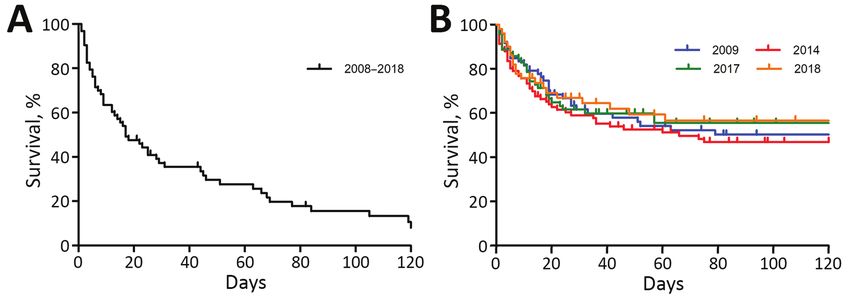
the study period, whereas the F-SDD group (297
patients) exhibited a plateau period of decreasing AAS in Pdr1p Shown in Only FR isolates
cumulative survival from 30 to 90 days, which was Each of the 49 Pdr1p AAS was found alone in 59 FR
similar in each of the 4 years of the study period isolates of C. glabrata and their MLST genotypes (Ta-
(Figure). The median survival of patients with FR ble 3). In 38 (64.4%) isolates, AAS were found in 3 do-
C. glabrata BSI was significantly shorter than that of mains of Pdr1p, the inhibition (33.9%), fungal-specific
34 Emerging Infectious Diseases • www.cdc.gov/eid • Vol. 27, No. 3, March 2021Fluconazole-Resistant C. glabrata, South Korea transcription factor (11.9%), and activation (18.6%) resistant to echinocandins, whereas 2%–3% were re- domains; AAS were outside the main domains in 21 sistant to echinocandins during 2015–2018. The emer- (35.6%) isolates. Of 49 Pdr1p AAS, 16 were described gence of echinocandin-resistant BSI isolates of C. gla- previously for FR isolates, whereas 33 (67.3%) were brata in South Korea might reflect the increased use newly found in this study. Of these potentially nov- of echinocandin antifungals as the initial option for el Pdr1p AAS, 5 (P327L, G346S, H576Y, T607A, and candidemia after insurance coverage for echinocan- G788W) were shared by 2 isolates with the same gen- dins began in 2014 (32). Of 16 echinocandin-resistant otype. Among these, 2 AAS (G346S [ST2] and H576Y isolates, 6 (37.5%) were also resistant to fluconazole, [ST7]), were shared by 2 isolates from the same hos- indicating multidrug resistance. Overall, our 11-year pital in the same year. Quantitative reverse transcrip- nationwide surveillance revealed an increasing in- tion PCR revealed that 30 FR isolates harboring the cidence of C. glabrata causing BSI and an increasing Pdr mutation exhibited significantly higher mean propensity for development of antifungal resistance expression levels of CgCDR1, CgCDR2, and CgSNQ2 in South Korea, consistent with surveillance data than 65 control F-SDD isolates (FR vs. F-SDD; 11.5- vs. from other countries (1,2,4,5,30). 1.5-fold for CgCDR1, p
RESEARCH

with previous reports of C. glabrata BSIs (34,40). The                       D243N), all 7 isolates of ST55 harbored E259G,
median survival of patients with FR C. glabrata BSIs                         and all 4 isolates of ST59 harbored T745A, suggest-
(17 days) was also significantly shorter than that of                        ing the presence of MLST genotype–specific Pdr1p
patients with F-SDD C. glabrata BSIs (90 days). These                        AAS. P76S/P143T/D243N in Pdr1p was found to be
findings are consistent with the results in a recent re-                     common in China, Iran, and Australia (13,14,43,44),
port regarding C. glabrata BSIs in South Korea, which                        which accords with the high prevalence of ST3 in
showed that a high fluconazole MIC was associated                            the study collections. Thus, the results of this study
with a poor outcome, although only 5 isolates in that                        suggest that 5 Pdr1p AAS are MLST genotype–spe-
study were FR (37).                                                          cific; because these AAS were found in both FR and
    In this study, MLST revealed that 56.1% of FR                            F-SDD isolates, we confirmed that they cannot be re-
and 56.3% of echinocandin-resistant BSI isolates                             sponsible for azole resistance.
belonged to ST7, which accords with ST7 being the                                 A single-point mutation in PDR1 can contribute
most common MLST genotype (47.8%) in South Ko-                               to azole resistance in C. glabrata (7,8). Our results
rea (21). We found that 100% (6/6) of MDR isolates                           show that, in FR isolates, AAS are scattered through-
belonged to ST7, which harbored the V239L muta-                              out the entire protein without distinct hotspots, as re-
tion in the mismatch repair gene (MSH2) associated                           ported previously (7,13,41,45). Therefore, determin-
with hypermutability (21,25). Given that the utility                         ing whether a certain Pdr1p AAS is a GOF mutation is
of MSH2 gene mutations as antifungal-resistance                              difficult without data from gene editing experiments
markers remains controversial (41,42), further sur-                          for all variable regions. A previous study identified
veillance studies are needed. To date, few studies                           57 FR-specific AAS by comparing azole-susceptible
have been conducted on MLST genotype–specific                                and azole-resistant matched isolates recovered from
differences in Pdr1p polymorphism among C. gla-                              different clinical specimens (7). Furthermore, 91%
brata BSI isolates. We found that all 50 isolates of                         (74/81) of FR isolates from BSIs or vaginal infections
ST3 harbored the same Pdr1p AAS (P76S/P143T/                                 contained a Pdr1 mutation, compared with 5.6%

 Table 2. Pdr1 AAS in 66 FR isolates and 212 F-SDD BSI isolates of Candida glabrata and their MLST genotypes, based on cultures
 collected during a multicenter surveillance study, South Korea, 2008–2018*
                                  No.        No. with     No. isolates with 5 Pdr1p AAS found in No. isolates with additional Pdr1p
 MLST            Fluconazole isolates echinocandin              both FR and F-SDD isolates         AAS except for 5 Pdr1p AAS
 genotype        susceptibility tested     resistance     P76S P143T D243N E259G T745A               1          2          Total
 ST7                  FR           37           6†                                                  34          3           37
                    F-SDD          98           3                                                    0                       0
 ST3                  FR           7            0          7         7        7                      6          1            7
                    F-SDD          43           1          43       43       43                      0                       0
 ST26                 FR           7            0                                                    6                       6
                    F-SDD          10           1                                                    0                       0
 ST22                 FR           1            0                                                    1                       1
                    F-SDD          16           1                                                    0                       0
 ST10                 FR           2            0                                                    2                       2
                    F-SDD          9            0                                                    0                       0
 ST55                 FR           2            0                                    2               2                       2
                    F-SDD          6            1                                    6               1                       1
 ST2                  FR           2            0                                                    2                       2
                    F-SDD          3            0                                                    0                       0
 ST6                  FR           1            0                                                    1                       1
                    F-SDD          5            2                                                    0                       0
 ST59                 FR           1            0                                            1       1                       1
                    F-SDD          3            1                                            3       0                       0
 ST1                  FR           2            0                                                    2                       2
 ST12               F-SDD          2            0                                                    0                       0
 Other STs‡           FR           4            0                                    1               2          2            4
                    F-SDD          17           0          2         2        2                      1                       1
 Total, no. (%)       FR           66           6          7         7        7      3       1      59         6§        65 (98.5)
                    F-SDD         212           10         45       45       45      6       3      2¶                    2 (0.9)
 *AAS, amino acid substitution; BSI, bloodstream infection; FR, fluconazole-resistant; F-SDD, fluconazole-susceptible dose-dependent; MLST, multilocus
 sequence typing; ST, sequence type.
 †All 6 isolates showed multidrug resistance, defined as resistance to both fluconazole and echinocandins.
 ‡Includes 21 STs that were each unique to a single isolate.
 §Each of 6 FR isolates harbored 2 additional Pdr1 AAS (E340G/D919Y [ST7], Y556C/F580I [ST7], N132S/G1099S [ST7], F832L/L833V [ST3],
 G189V/E340G [other ST], and L366P/E555D [other ST]).
 ¶Two F-SDD isolates harbored additional Pdr1 AAS (V502I [ST55] and R250K [other ST]).

36                              Emerging Infectious Diseases • www.cdc.gov/eid • Vol. 27, No. 3, March 2021
Fluconazole-Resistant C. glabrata, South Korea
Table 3. Pdr1 AAS in 59 FR isolates of Candida glabrata BSI isolates and their MLST genotypes, based on cultures collected during a
multicenter surveillance study, South Korea, 2008–2018*
Pdr1 AAS (no. isolates)†
MLST No. Fungal-specific
genotype isolates Inhibition domain transcription factor domain Activation domain Other regions
ST7 34 P327L (2), G334V (1), H576Y (2), G583C (1) P927S (1), G943S (1), S236N (1), P258S (1),
E340G (1), E340K (1), S947L (1), D954N (1), P258L (1), V260A (1),L280S
G346S (1), L347F (1), G1088E (1), Y1106N (1) (1), Y556C (1), E714D (1),
L375P (1), R376Q (1), T752I (1), N768D (1), R772K
S391L (1) (1), K776E (1), G788W (2),
L825P (1), T885A (1)
ST26 6 K365E (1), R376Q (1), N1091D (1) S316I (1)
F377I (1), E388Q (1)
ST3 6 L347F (1) Y584D (1) T1080N (1), Y1106N (1) A731E (1), N764D (1)
ST1 2 T607A (2)
ST2 2 G346S (2)
ST10 2 S337F (1), I392M (1)
ST55 2 F294S (1), P258S (1)
ST6 1 G1079R (1)
ST22 1 Y932C (1)
ST59 1 E369K (1)
Others 2 L935F (1) P696L (1)
No. (%) 59 20 (33.9) 7 (11.9) 11 (18.6) 21 (35.6)
isolates
No. (%) 49 15 (30.6) 5 (10.2) 10 (20.4) 19 (38.8)
Pdr1 AAS
*AAS, amino acid substitutions; BSI, bloodstream infection; FR, fluconazole-resistant; MLST, multilocus sequence typing; ST, sequence type.
†Previously reported Pdr1 AAS are shown in bold.
(1/18) of F-SDD isolates (25). In our study, we found in mice infected with F-SDD isolates (12). C. glabrata
that 98.5% (65/66) of FR BSI isolates and 0.9% (2/212) might persist in the body by replicating inside phago-
of F-SDD BSI isolates harbored an additional 1 or 2 cytes, eventually leading to cell lysis, rather than by
Pdr1p AAS after exclusion of 5 genotype-specific active escape (the method used by C. albicans) (47,49).
AAS (P76S, P143T D243N, E259G, and T745A). After This process might partly explain the elevated cumu-
exclusion of 6 additional FR isolates that harbored 2 lative mortality rate for patients with Pdr1 mutants.
Pdr1p AAS (because determining which of the 2 AAS Appropriate antifungal therapy was the only inde-
was critical for fluconazole resistance was difficult to pendently associated protective factor, with respect
determine), we found 49 Pdr1p AAS that were pres- to 30- and 90-day mortality rates, in patients infected
ent alone in 59 FR isolates, strongly suggesting that with FR C. glabrata isolates. In patients who received
these AAS were FR-specific. Of the 49 Pdr1p AAS, inadequate antifungal therapy and azole monothera-
16 have been described for FR isolates (7,13,14,25,43– py, the 30-day mortality rates were 90% (antifungal
46). In this study, FR isolates exhibited higher mean therapy) and 88.9% (azole monotherapy), which were
CgCDR1, CgCDR2, or CgSNQ2 expression levels, significantly higher than those of the patients receiv-
compared with F-SDD isolates; all FR C. glabrata iso- ing combination therapy (36.4%) or appropriate anti-
lates were also resistant to voriconazole (MIC >0.5 fungal therapy (47.7%). Previous antifungal exposure
mg/L), implying that fluconazole and voriconazole was not an independent risk factor for death among
resistance are governed by the same mechanism (i.e., patients with FR isolates, although it was identified
a GOF mutation in the transcription factor for Pdr1p) in 62.5% (40/64) of patients. Given that previous
(7,8). Overall, our findings demonstrate that most FR antifungal exposure is a risk factor for antifungal-
BSI isolates of C. glabrata in South Korea harbor FR- resistant Candida BSI (50), further studies including F-
specific Pdr1p AAS. SDD C. glabrata BSIs might elucidate the relationship
The cause of the high mortality rate associat- between previous antifungal exposure and death.
ed with FR C. glabrata BSIs remains unclear. In this Taken together, these findings suggest that the high
study, we focused on FR-specific Pdr1p AAS. PDR1 mortality rate associated with FR C. glabrata BSIs can
mutations are associated with increased virulence be explained by the combination of FR and the viru-
of C. glabrata, expression of adhesins, and adherence lence of Pdr1 mutants.
to host epithelial cells (7,12,47,48). The fungal loads The first limitation of our study is that a Candida
in the kidney, spleen, and liver were higher in mice species might develop resistance within a patient dur-
infected with the FR Pdr1 mutant of C. glabrata than ing antifungal therapy; such resistance can be iden-
Emerging Infectious Diseases • www.cdc.gov/eid • Vol. 27, No. 3, March 2021 37RESEARCH
tified through serial isolates, but we tested only the parasitology. Dr. Choi works at the laboratory of medical
first isolate from each patient during 2016–2018. Sec- mycology, focusing on invasive fungal infections, at
ond, our results did not show that FR, PDR1 mutants, Chonnam National University Hospital. She has conducted
or previous antifungal exposure were independent collaborative studies of the epidemiology of candidemia
risk factors for death in patients with C. glabrata BSIs. and related molecular resistance mechanisms.
A total of 1,158 nonduplicate BSI isolates of C. glabrata
from 19 university hospitals in South Korea were ob-
References
tained during the 11-year study period, and the hospi- 1. Arendrup MC. Epidemiology of invasive candidiasis. Curr
tals participating differed each year; therefore, we could Opin Crit Care. 2010;16:445–52. https://doi.org/10.1097/
not select an appropriate control group of F-SDD iso- MCC.0b013e32833e84d2
2. Arendrup MC, Patterson TF. Multidrug-resistant Candida:
lates. These limitations were partly overcome in a recent
epidemiology, molecular mechanisms, and treatment. J Infect
study involving 197 adult patients with C. glabrata BSI Dis. 2017;216(Suppl_3):S445–51. https://doi.org/10.1093/
during January 2010–February 2016 at 7 university hos- infdis/jix131
pitals in South Korea. In that study, FR was shown to be 3. Jensen RH, Johansen HK, Søes LM, Lemming LE, Rosenvinge
FS, Nielsen L, et al. Posttreatment antifungal resistance
associated with the 30-day mortality rate in a multivari-
among colonizing Candida isolates in candidemia patients:
ate analysis (37). Third, only limited numbers of patients results from a systematic multicenter study.
infected with F-SDD BSI isolates of C. glabrata were in- Antimicrob Agents Chemother. 2015;60:1500–8.
cluded in our mortality analysis. Nevertheless, we in- https://doi.org/10.1128/AAC.01763-15
4. Pfaller MA, Diekema DJ, Turnidge JD, Castanheira M,
cluded a total of 297 patients infected with F-SDD BSI
Jones RN. Twenty years of the SENTRY antifungal
isolates of C. glabrata, which included all patients with surveillance program: results for Candida species from
C. glabrata from the participating hospitals in 2010, 2014, 1997–2016. Open Forum Infect Dis. 2019;6(Suppl 1):S79–94.
2017, and 2018. The 30-day mortality rates of patients https://doi.org/10.1093/ofid/ofy358
5. Chapman B, Slavin M, Marriott D, Halliday C, Kidd S,
infected with F-SDD C. glabrata isolates were similar
Arthur I, et al.; Australian and New Zealand Mycoses
among those 4 years (32.0%–39.2%), despite differences Interest Group. Changing epidemiology of candidaemia in
in participating hospitals and collection periods; the 30- Australia. J Antimicrob Chemother. 2017;72:1103–8.
day mortality rate was similar to those reported in pre- https://doi.org/10.1093/jac/dkx047
6. Tan TY, Hsu LY, Alejandria MM, Chaiwarith R, Chinniah T,
vious studies (21,33–37).
Chayakulkeeree M, et al. Antifungal susceptibility of
In conclusion, we demonstrated that nearly all invasive Candida bloodstream isolates from the Asia-Pacific
FR BSI isolates of C. glabrata in South Korea harbored region. Med Mycol. 2016;54:471–7. https://doi.org/10.1093/
FR-specific Pdr1p mutations by excluding MLST mmy/myv114
7. Ferrari S, Ischer F, Calabrese D, Posteraro B, Sanguinetti M,
genotype–specific Pdr1p AASs and that the isolates
Fadda G, et al. Gain of function mutations in CgPDR1 of
were associated with higher 30-day (60.9%) and 90- Candida glabrata not only mediate antifungal resistance
day (78.2%) mortality rates. These results suggest but also enhance virulence. PLoS Pathog. 2009;5:e1000268.
that Pdr1 mutants are associated with a risk for death https://doi.org/10.1371/journal.ppat.1000268
8. Tsai HF, Krol AA, Sarti KE, Bennett JE. Candida glabrata
in such patients. In addition, appropriate antifungal
PDR1, a transcriptional regulator of a pleiotropic drug
therapy was the only independent protective factor resistance network, mediates azole resistance in clinical
against death in patients with FR isolates. Because of isolates and petite mutants. Antimicrob Agents Chemother.
the increasing prevalence of FR BSI isolates of C. gla- 2006;50:1384–92. https://doi.org/10.1128/AAC.50.4.1384-
1392.2006
brata worldwide, improved detection and appropri-
9. Hull CM, Parker JE, Bader O, Weig M, Gross U, Warrilow AG,
ate antifungal treatments are critical. et al. Facultative sterol uptake in an ergosterol-deficient
clinical isolate of Candida glabrata harboring a missense
This research was supported by the Basic Science Research mutation in ERG11 and exhibiting cross-resistance to
azoles and amphotericin B. Antimicrob Agents Chemother.
Program through the National Research Foundation of
2012;56:4223–32. https://doi.org/10.1128/AAC.06253-11
South Korea funded by the Ministry of Education (grant 10. Abbes S, Mary C, Sellami H, Michel-Nguyen A, Ayadi A,
no. NRF-2019R1A2C1004644). Ranque S. Interactions between copy number and
expression level of genes involved in fluconazole resistance
in Candida glabrata. Front Cell Infect Microbiol. 2013;3:74.
About the Author https://doi.org/10.3389/fcimb.2013.00074
11. Vu BG, Moye-Rowley WS. Construction and use of a
Dr. Won is an associate professor at Chonnam National recyclable marker to examine the role of major facilitator
University Hospital and Chonnam National University superfamily protein members in Candida glabrata drug
Medical School, Gwangju, South Korea. Her interests are resistance phenotypes. MSphere. 2018;3:e00099–18.
https://doi.org/10.1128/mSphere.00099-18
the epidemiology, molecular identification, and resistance 12. Ferrari S, Sanguinetti M, Torelli R, Posteraro B, Sanglard D.
mechanisms of invasive fungal infections and medical Contribution of CgPDR1-regulated genes in enhanced
38 Emerging Infectious Diseases • www.cdc.gov/eid • Vol. 27, No. 3, March 2021Fluconazole-Resistant C. glabrata, South Korea
virulence of azole-resistant Candida glabrata. PLoS resistance. Nat Commun. 2016;7:11128. https://doi.org/
One. 2011;6:e17589. https://doi.org/10.1371/journal. 10.1038/ncomms11128
pone.0017589 26. Niimi M, Nagai Y, Niimi K, Wada S, Cannon RD, Uehara Y,
13. Hou X, Xiao M, Wang H, Yu SY, Zhang G, Zhao Y, et al. et al. Identification of two proteins induced by exposure of
Profiling of PDR1 and MSH2 in Candida glabrata bloodstream the pathogenic fungus Candida glabrata to fluconazole.
isolates from a multicenter study in China. Antimicrob J Chromatogr B Analyt Technol Biomed Life Sci.
Agents Chemother. 2018;62:e00153–18. https://doi.org/ 2002;782:245–52. https://doi.org/10.1016/S1570-
10.1128/AAC.00153-18 0232(02)00668-2
14. Arastehfar A, Daneshnia F, Zomorodian K, Najafzadeh MJ, 27. Sanguinetti M, Posteraro B, Fiori B, Ranno S, Torelli R,
Khodavaisy S, Zarrinfar H, et al. Low level of antifungal Fadda G. Mechanisms of azole resistance in clinical
resistance in Iranian isolates of Candida glabrata recovered isolates of Candida glabrata collected during a hospital survey
from blood samples in a multicenter study from 2015 to of antifungal resistance. Antimicrob Agents Chemother. 2005;
2018 and potential prognostic values of genotyping and 49:668–79. https://doi.org/10.1128/AAC.49.2.668-679.2005
sequencing of PDR1. Antimicrob Agents Chemother. 28. Won EJ, Shin JH, Choi MJ, Lee WG, Park YJ, Uh Y, et al.
2019;63:e02503–18. https://doi.org/10.1128/AAC.02503-18 Antifungal susceptibilities of bloodstream isolates of Candida
15. Hou X, Xiao M, Chen SC, Wang H, Yu SY, Fan X, et al. species from nine hospitals in Korea: application of new
Identification and antifungal susceptibility profiles of antifungal breakpoints and relationship to antifungal usage.
Candida nivariensis and Candida bracarensis in a multi-center PLoS One. 2015;10:e0118770. https://doi.org/10.1371/
Chinese collection of yeasts. Front Microbiol. 2017;8:5. journal.pone.0118770
https://doi.org/10.3389/fmicb.2017.00005 29. Xiao M, Sun ZY, Kang M, Guo DW, Liao K, Chen SC, et al.;
16. Clinical and Laboratory Standards Institute. M27 reference China Hospital Invasive Fungal Surveillance Net
method for broth dilution antifungal susceptibility testing (CHIF-NET) Study Group. Five-year national surveillance of
of yeasts. 4th ed. Wayne (PA): Clinical and Laboratory invasive candidiasis: species distribution and azole
Standards Institute; 2017. susceptibility from the China Hospital Invasive Fungal
17. Clinical and Laboratory Standards Institute. Performance Surveillance Net (CHIF–NET) Study. J Clin Microbiol.
standards for antifungal susceptibility testing of Yeasts. 2018;56:e00577–18. https://doi.org/10.1128/JCM.00577-18
1st ed. CLSI supplement M60. Wayne (PA): Clinical and 30. Hou X, Xiao M, Chen SC, Kong F, Wang H, Chu YZ,
Laboratory Standards Institute; 2017. et al. Molecular epidemiology and antifungal susceptibility
18. Clinical and Laboratory Standards Institute. Epidemiological of Candida glabrata in China (August 2009 to July 2014): a
cutoff values for antifungal susceptibility testing. 2nd ed. multi-center study. Front Microbiol. 2017;8:880.
CLSI supplement M59. Wayne (PA): Clinical and Laboratory https://doi.org/10.3389/fmicb.2017.00880
Standards Institute; 2018. 31. Ko JH, Jung DS, Lee JY, Kim HA, Ryu SY, Jung SI, et al.
19. Rivero-Menendez O, Navarro-Rodriguez P, Bernal-Martinez L, Changing epidemiology of non-albicans candidemia in Korea.
Martin-Cano G, Lopez-Perez L, Sanchez-Romero I, et al. J Infect Chemother. 2019;25:388–91. https://doi.org/
Clinical and laboratory development of echinocandin 10.1016/j.jiac.2018.09.016
resistance in Candida glabrata: molecular characterization. 32. Choi H, Kim JH, Seong H, Lee W, Jeong W, Ahn JY, et al.
Front Microbiol. 2019;10:1585. https://doi.org/10.3389/ Changes in the utilization patterns of antifungal agents,
fmicb.2019.01585 medical cost and clinical outcomes of candidemia from
20. Pappas PG, Kauffman CA, Andes DR, Clancy CJ, Marr KA, the health-care benefit expansion to include newer
Ostrosky-Zeichner L, et al. Executive summary: clinical antifungal agents. Int J Infect Dis. 2019;83:49–55.
practice guideline for the management of candidiasis: 2016 https://doi.org/10.1016/j.ijid.2019.03.039
update by the Infectious Diseases Society of America. Clin 33. Ruan SY, Huang YT, Chu CC, Yu CJ, Hsueh PR.
Infect Dis. 2016;62:409–17. https://doi.org/10.1093/cid/civ1194 Candida glabrata fungaemia in a tertiary centre in Taiwan:
21. Byun SA, Won EJ, Kim MN, Lee WG, Lee K, Lee HS, et al. antifungal susceptibility and outcomes. Int J Antimicrob
Multilocus sequence typing (MLST) genotypes of Candida Agents. 2009;34:236–9. https://doi.org/10.1016/
glabrata bloodstream isolates in Korea: association with j.ijantimicag.2009.02.021
antifungal resistance, mutations in mismatch repair gene 34. Horn DL, Neofytos D, Anaissie EJ, Fishman JA,
(Msh2), and clinical outcomes. Front Microbiol. 2018;9:1523. Steinbach WJ, Olyaei AJ, et al. Epidemiology and outcomes
https://doi.org/10.3389/fmicb.2018.01523 of candidemia in 2019 patients: data from the prospective
22. Kim MN, Shin JH, Sung H, Lee K, Kim EC, Ryoo N, et al. antifungal therapy alliance registry. Clin Infect Dis.
Candida haemulonii and closely related species at 5 university 2009;48:1695–703. https://doi.org/10.1086/599039
hospitals in Korea: identification, antifungal susceptibility, 35. Lee I, Morales KH, Zaoutis TE, Fishman NO, Nachamkin I,
and clinical features. Clin Infect Dis. 2009;48:e57–61. Lautenbach E. Clinical and economic outcomes of decreased
https://doi.org/10.1086/597108 fluconazole susceptibility in patients with Candida glabrata
23. De Rosa FG, Trecarichi EM, Montrucchio C, Losito AR, bloodstream infections. Am J Infect Control. 2010;38:740–5.
Raviolo S, Posteraro B, et al. Mortality in patients with https://doi.org/10.1016/j.ajic.2010.02.016
early- or late-onset candidaemia. J Antimicrob Chemother. 36. Eschenauer GA, Carver PL, Patel TS, Lin SW, Klinker KP,
2013;68:927–35. https://doi.org/10.1093/jac/dks480 Pai MP, et al. Survival in patients with Candida glabrata
24. Nguyen MH, Clancy CJ, Yu VL, Yu YC, Morris AJ, bloodstream infection is associated with fluconazole dose.
Snydman DR, et al. Do in vitro susceptibility data predict Antimicrob Agents Chemother. 2018;62:e02566–17.
the microbiologic response to amphotericin B? Results of a https://doi.org/10.1128/AAC.02566-17
prospective study of patients with Candida fungemia. J Infect 37. Ko JH, Peck KR, Jung DS, Lee JY, Kim HA, Ryu SY, et al.
Dis. 1998;177:425–30. https://doi.org/10.1086/514193 Impact of high MIC of fluconazole on outcomes of Candida
25. Healey KR, Zhao Y, Perez WB, Lockhart SR, Sobel JD, glabrata bloodstream infection: a retrospective multicenter
Farmakiotis D, et al. Prevalent mutator genotype identified cohort study. Diagn Microbiol Infect Dis. 2018;92:127–32.
in fungal pathogen Candida glabrata promotes multi-drug https://doi.org/10.1016/j.diagmicrobio.2018.05.001
Emerging Infectious Diseases • www.cdc.gov/eid • Vol. 27, No. 3, March 2021 39RESEARCH
38. Tortorano AM, Dho G, Prigitano A, Breda G, Grancini A, hospitals in China. Infect Drug Resist. 2019;12:771–81.
Emmi V, et al.; ECMM-FIMUA Study Group. Invasive fungal https://doi.org/10.2147/IDR.S202058
infections in the intensive care unit: a multicentre, 45. Whaley SG, Berkow EL, Rybak JM, Nishimoto AT,
prospective, observational study in Italy (2006–2008). Barker KS, Rogers PD. Azole antifungal resistance in
Mycoses. 2012;55:73–9. https://doi.org/10.1111/ Candida albicans and emerging non–albicans Candida species.
j.1439-0507.2011.02044.x Front Microbiol. 2017;7:2173. https://doi.org/10.3389/
39. Lortholary O, Renaudat C, Sitbon K, Madec Y, fmicb.2016.02173
Denoeud-Ndam L, Wolff M, et al.; French Mycosis Study 46. Tantivitayakul P, Lapirattanakul J, Kaypetch R,
Group. Worrisome trends in incidence and mortality of Muadcheingka T. Missense mutation in CgPDR1 regulator
candidemia in intensive care units (Paris area, 2002–2010). associated with azole-resistant Candida glabrata recovered
Intensive Care Med. 2014;40:1303–12. https://doi. from Thai oral candidiasis patients. J Glob Antimicrob Resist.
org/10.1007/s00134-014-3408-3 2019;17:221–6. https://doi.org/10.1016/j.jgar.2019.01.006
40. Pfaller MA, Andes DR, Diekema DJ, Horn DL, Reboli AC, 47. Pais P, Galocha M, Viana R, Cavalheiro M, Pereira D,
Rotstein C, et al. Epidemiology and outcomes of invasive Teixeira MC. Microevolution of the pathogenic yeasts
candidiasis due to non-albicans species of Candida in 2,496 Candida albicans and Candida glabrata during antifungal
patients: data from the Prospective Antifungal Therapy therapy and host infection. Microb Cell. 2019;6:142–59.
(PATH) registry 2004-2008. PLoS One. 2014;9:e101510. https://doi.org/10.15698/mic2019.03.670
https://doi.org/10.1371/journal.pone.0101510 48. Ni Q, Wang C, Tian Y, Dong D, Jiang C, Mao E, et al. CgPDR1
41. Singh A, Healey KR, Yadav P, Upadhyaya G, Sachdeva N, gain-of-function mutations lead to azole-resistance and
Sarma S, et al. Absence of azole or echinocandin resistance in increased adhesion in clinical Candida glabrata strains.
Candida glabrata isolates in India despite background Mycoses. 2018;61:430–40. https://doi.org/10.1111/myc.12756
prevalence of strains with defects in the DNA mismatch 49. Brunke S, Hube B. Two unlike cousins: Candida albicans and
repair pathway. Antimicrob Agents Chemother. C. glabrata infection strategies. Cell Microbiol. 2013;15:701–8.
2018;62:e00195–18. https://doi.org/10.1128/ https://doi.org/10.1111/cmi.12091
AAC.00195-18 50. Lortholary O, Desnos-Ollivier M, Sitbon K, Fontanet A,
42. Bordallo-Cardona MÁ, Agnelli C, Gómez-Nuñez A, Bretagne S, Dromer F; French Mycosis Study Group.
Sánchez-Carrillo C, Bouza E, Muñoz P, et al. MSH2 gene Recent exposure to caspofungin or fluconazole influences
point mutations are not antifungal resistance markers in the epidemiology of candidemia: a prospective multicenter
Candida glabrata. Antimicrob Agents Chemother. study involving 2,441 patients. Antimicrob Agents
2018;63:e01876–18. https://doi.org/10.1128/AAC.01876-18 Chemother. 2011;55:532–8. https://doi.org/10.1128/
43. Biswas C, Marcelino VR, Van Hal S, Halliday C, AAC.01128-10
Martinez E, Wang Q, et al. Whole genome sequencing of
Australian Candida glabrata isolates reveals genetic diversity Address for correspondence: Jong Hee Shin, Department of
and novel sequence types. Front Microbiol. 2018;9:2946.
Laboratory Medicine, Chonnam National University Medical
https://doi.org/10.3389/fmicb.2018.02946
44. Yao D, Chen J, Chen W, Li Z, Hu X. Mechanisms of azole School, 42 Jebong-ro, Dong-gu, Gwangju 61469, South Korea;
resistance in clinical isolates of Candida glabrata from two email: shinjh@chonnam.ac.kr
40 Emerging Infectious Diseases • www.cdc.gov/eid • Vol. 27, No. 3, March 2021You can also read


