For Information - TTC Mobile
←
→
Page content transcription
If your browser does not render page correctly, please read the page content below
For Information

Annual Review of TTC’s Safety, Health and Environment
Management System

Date: June 12, 2019
To: TTC Board

Summary

The subject report, reviewed at the TTC Audit and Risk Management Committee on
June 3, 2019 is forwarded to the TTC Board for information.

Contact

John O’Grady, Chief Safety Officer
416-393-4229
john.o’grady@ttc.ca

Annual Review of TTC’s SH&E Management System                            Page 1 of 1
For Action

Annual Review of TTC’s Safety, Health and Environment
Management System

Date: May 29, 2019
To: Audit and Risk Management Committee
From: Chief Safety Officer

Summary

The TTC manages and mitigates occupational health and safety, operational safety,
and environmental risks due to our operations, activities, and services in a systematic
and consistent manner through the TTC’s Safety, Health & Environment (SH&E)
Management System. Over the past several years, the TTC has been developing and
implementing a Safety, Health & Environment (SH&E) Management System to manage
its occupational health and safety, operational safety, and environmental risks. A SH&E
Management System is a comprehensive and proactive approach to managing SH&E
risk. The system goes beyond a simple sum of individual or isolated safety and
environmental management programs and activities such as investigation, inspection or
training. It is designed to improve SH&E performance and reduce risk by integrating all
its processes into a continuous improvement cycle of Plan-Do-Check-Act.

A review of TTC’s Safety, Health and Environment (SH&E) Management System is
conducted by the Safety, Security and Environment (SX) Committee on an annual
basis. The purpose of the annual review is to evaluate the effectiveness and adequacy
of TTC’s SH&E Management System and to identify opportunities for continuous
improvement, ensuring the on-going management of TTC’s SH&E risk.

The period between Q4 2017 to Q3 2018 was reviewed by the SX Committee in March
2019. The review was completed through analysis of: performance indicators,
audit/assessment results, regulatory oversight, findings from other transit agencies,
status of SH&E initiatives, and group/departmental management reviews. This involved
both a top down and a bottom up review as detailed below.

This report summarizes the results of the aforementioned review. It includes
Opportunities for Improvement in TTC’s SH&E Management System and the 2019 to
2021 TTC Corporate SH&E Goals and Objectives.

Recommendations

It is recommended that the Audit and Risk Management Committee:

Annual Review of TTC’s SH&E Management System                                Page 1 of 11
1. Approve management’s approach to continuously improving the effectiveness of
   TTC’s SH&E Management System, identifying opportunities for improvement, and
   developing corporate SH&E goals and objectives.
2. Direct staff to develop a quarterly report detailing compliance to SH&E regulatory
   orders to provide assurance that Commissioners have discharged their legal
   responsibilities.
3. Receive this report, the Opportunities for Improvement and the 2019 to 2021 TTC
   Corporate SH&E Goals and Objectives for information.
4. Forward this report, the Opportunities for Improvement and the 2019 to 2021 TTC
   Corporate SH&E Goals and Objectives to the TTC Board for information.

Financial Summary

The recommendations in this Report have no additional funding implications beyond the
combined costs of the Safety and Environment Department that were included in the
2019 Operating Budget and approved by the TTC Board on January 24, 2019.

Equity/Accessibility Matters

An effective and robust SH&E Management System is essential to the protection of
vulnerable populations in the community, among customers and employees. This
review is management’s tool for ensuring continuous improvement.

Decision History

The full report of the annual review, including the Opportunities for Improvement and the
2019 to 2021 TTC Corporate SH&E Goals and Objectives, have been approved by the
SX Committee. We have been conducting an annual review of TTC’s SH&E
management system with the Executive for a number of years, however this is the first
time this review is provided to the ARMC and to the Board. From this point forward, this
annual review will be presented to the ARMC and the Board to provide members with
information on the functioning of the TTC’s SH&E Management System which will help
them fulfill their legislative duties as corporate directors.

Issue Background

The TTC’s SH&E Management System is built on the TTC’s commitment to protect the
environment and the safety and health of its workers, customers and the general public.

Annual Review of TTC’s SH&E Management System                                 Page 2 of 11
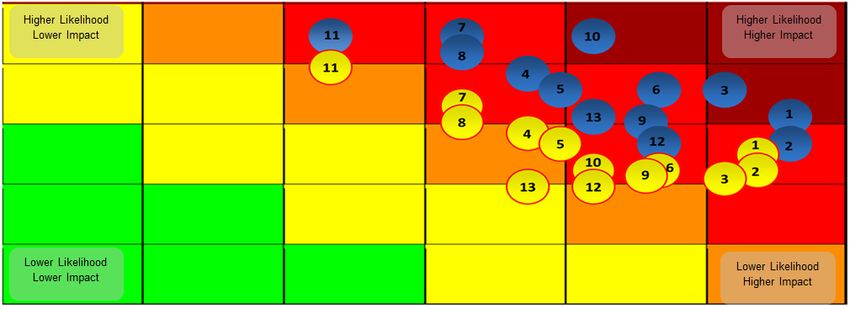
The SX Committee meets annually to review the SH&E Management System at TTC, to ensure its continuing suitability, adequacy and effectiveness. This review identifies opportunities for continuous improvement and evaluates how well the SH&E Management System is functioning in supporting the safety and security cornerstone of TTC’s Corporate Plan. Under safety and environmental legislation, Board members are considered directors of a corporation and have prescribed duties to take all reasonable care to ensure that the TTC complies with safety and environmental legislation and all regulatory orders. As such, they should be aware of the TTC’s SH&E Management System and its performance. Comments The information listed below summarizes the results from the analysis of the following inputs: Safety risks, Performance indicators, Audit/assessment results, Regulatory oversight, Status of SH&E initiatives, and Group/departmental management reviews. Safety Risks One of the key steps in developing a proper SH&E Management System is to identify and assess safety hazards and environmental aspects. The TTC has implemented a Corporate Risk Review process to provide adequate oversight of risks. The Corporate Risks are identified by the Executive and Management Team during risk workshops. This process is currently under review by the Audit, Risk and Compliance Department. The purpose of the Corporate Risk Review is to ensure the adequacy of controls for the most significant corporate risks. Since all relevant stakeholders are present during a risk review, representing various departments across the organization, adequate oversight and communication of the TTC’s Corporate Risks is achieved. The result is that the SX Committee is assured that safety and environmental risks are being managed to a level that is as low as reasonably practicable (ALARP). The heat map below highlights the Corporate Safety Risks that have been fully or partially assessed. Annual Review of TTC’s SH&E Management System Page 3 of 11
Yellow Bubbles: The placement of the yellow bubbles on the heat map represents the current risk levels with the
existing controls in place, i.e. the risk score today. The risks that reside in the upper right quadrant are the most
significant risks for the TTC. Risks that reside in the lower left quadrant are risks that have been mitigated to a lower
likelihood and impact. Risks in the other two quadrants, the upper left and the lower right, represent mid-level risks.
As more mitigation strategies are implemented the location of the bubble will shift closer to the bottom and/or left.
Blue Bubbles: The placement of the blue bubbles on the heat map represent the inherent risk levels without any
controls in place. Since the blue bubble represents the inherent risk and not the current risk, the location of the blue
bubble will not change as we continue to reduce the risk level.
SH&E Performance
From the statistical analysis and moving annual comparison of SH&E performance data,
the table below highlights the performance indicators where adverse trends were
observed:
Note: The data has been updated to the end of Q4 2018.
SH&E Performance Indicator Identified Trends
1. Occupational Lost- The moving annual LTIR and NLTIR to the
Time Injury Rate (LTIR) end of Q4 2018 were both higher than their
and No-Lost Time corresponding rates to the end of Q4 2017.
Injury Rate (NLTIR) Emotional trauma injuries, resulting from
Acute Emotional Events, Assaults, Threats,
and Collision injury event types represent
approximately 30% of the overall lost time
and no lost time injuries during the review
period. To improve the areas of acute
emotional trauma and psychological health
and safety, a formal program based on CSA
Standard Z1003 – Psychological Health and
Annual Review of TTC’s SH&E Management System Page 4 of 11SH&E Performance Indicator Identified Trends
Safety in the Workplace will be developed.
(See Goal 1-10 in Attachment 1)
Ergonomic related injuries (e.g. overexertion,
reach/bend/twist, repetition) account for 22%
of all lost time injuries, and 14% of all no lost
time injuries over the review period. The
Ergonomic Musculoskeletal Disorder
Prevention Program, currently being
implemented, focuses on preventing such
injuries and resolving ergonomic concerns
(See Goal 8-1 in Attachment 1).
2. Customer and Public The moving annual bus collision rates (Total,
Safety Performance Not-Preventable and Preventable) to the end
of Q4 2018 were higher than their
corresponding rates to the end of Q4 2017.
To improve the focus and accountability for
public and customer safety, a comprehensive
Corporate Program – Traffic Safety will be
developed in 2019. This will include all
aspects of surface operational safety and
comprise the TTC contribution to the City’s
Vision Zero Program (See Goal 2-7 in
Attachment 1).
3. Operational Safety Both the moving annual average platform
Performance overshoots and the moving annual average
signal violations per month to the end of Q4
2018 were higher than their corresponding
rates to the end of Q4 2017.
Through the implementation of Automatic
Train Control (ATC), platform overshoots and
signal violations will decrease significantly as
the ATC zones expand over the network.
Audit / Assessment Results
A number of internal and external audits and other safety assurance activities were
conducted to examine different aspects of the SH&E Management System. Based on the
findings, corrective actions were established and are tracked on an on–going basis.
Annual Review of TTC’s SH&E Management System Page 5 of 11The table below summarizes the status of corrective actions from audits conducted in
previous years. Further details on the findings and corrective actions from these audits
are available upon request.
Overdue Corrective
Audit Corrective Action Status
Actions
APTA (2014) 112 of 112 completed N/A
Waste Management (2015 15 of 20 completed 0 of 5
Fire Safety Program
24 of 24 completed N/A
(2016)
Subsurface Environmental
6 of 12 completed 0 of 6
Contamination (2017)
Biohazard Control
10 of 33 completed 0 of 23
Program (2017)
SH&E Communication
34 of 39 completed 0 of 5
(2017)
There were two audits conducted in the current review period between Q4 2017 and Q3
2018. First, in April 2018, the American Public Transportation Association (APTA)
conducted a regular triennial audit to assess the effectiveness and improvement of the
Safety Management System in controlling against TTC’s operational risks, its adequacy
in meeting corporate goals and objectives, and whether it meets contemporary industry
standards. The final audit report along with TTC’s Safety Improvement Plan in response
to the findings will be presented at the June Board meeting.
Second, as a result of the diesel fuel spill at Queensway Bus Garage on June 6, 2018, a
comprehensive Environmental Compliance Audit was undertaken for Queensway Bus
Garage. A corrective action plan was developed and is being tracked to completion.
Details of this audit will be presented at a future Audit and Risk Management Committee
meeting.
Status of SH&E Initiatives
The table below summarizes the status of SH&E initiatives. As a result of previous
annual reviews, there were 11 new or revised SH&E Management System corporate
programs or processes approved by the SX between October 2017 and December
2018. To date, these processes are close to being fully implemented across the TTC.
Date Completed/
Achievement Developed/Revised Date Implemented/%
Completed/Implemented
Operational and Occupational Safety
Annual Review of TTC’s SH&E Management System Page 6 of 11Date Completed/
Achievement Developed/Revised Date Implemented/%
Completed/Implemented
1. SH&E SOFTWARE: Acquire
and implement a commercial- Contract Awarded August
off-the-shelf (COTS) enterprise 2018
N/A
SH&E Software solution to
manage SH&E processes Phase 1 underway
through 2 phases.
2. Fire Safety Program (Revise) √ Q4 2017
Q1 2018 (Standard)
3. Mechanical Material Handling
√ Associated Programs in
Equipment Standard (Develop)
development 2019 to 2021
Unionized Terms of
Reference approved
4. JHSC Improvement Project / January 2018
√
Terms of Reference (Revise)
Multi-Workplace Terms of
Reference 80%
5. Workplace Hazardous Materials
N/A 87%
Control Program (Implement)
6. Hazardous Energy
Control/Lockout Tagout N/A 67%
Program (Implement)
7. Hearing Loss Prevention
N/A 83%
Program (Implement)
8. Active Fall Protection Program
√ 40%
(Develop and Implement)
9. Management of OHS Hazards
√ Q4 2017
and Risks Standard (Develop)
10. OHS Hazard Identification and
Risk Assessment (HIRA) √ Q3 2018
Procedure (Develop)
11. Workplace Violence Program
√ 84%
(Implement)
Annual Review of TTC’s SH&E Management System Page 7 of 11Date Completed/
Achievement Developed/Revised Date Implemented/%
Completed/Implemented
12. Musculoskeletal Disorder
(MSD) / Ergonomics Program √ 75%
(Implement)
13. Suicide Prevention Program
√ Q4 2018
(Develop)
Environmental
14. Discharged Water Program
N/A Q2 2018
(Implement)
15. Waste Management Program
N/A 68%
(Implement)
16. Subsurface Contaminant
Management Program √ Q4 2018
(Develop)
17. Environmental Due Diligence
for Buying and Leasing
√ Q2 2018
Properties Procedure (Develop
and Implement)
Regulatory Oversight
The table below summarizes and compares the number of events/documents issued
that have involved interactions with the Ministry of Labour (MOL), Ministry of
Environment, Conservation, and Parks (MECP), Technical Standards and Safety
Authority (TSSA), and City of Toronto including any orders issued between Q4 2017 to
Q3 2018 (current review period) and Q4 2016 to Q3 2017 (previous review period). All
orders and violations have been resolved.
Number (Q4 2017 to Q3 Number (Q4 2016 to Q3
Type of Event/Documents Issued
2018) 2017)
Occupational Health and Safety Compliance
MOL Orders 36 51
MOL Field Visit Reports 108 128
Annual Review of TTC’s SH&E Management System Page 8 of 11Number (Q4 2017 to Q3 Number (Q4 2016 to Q3
Type of Event/Documents Issued
2018) 2017)
MOL Regulatory Agency Interaction 63 incidents resulting in 82 incidents resulting in 150
Reports (RAIR) Issued 133 interactions interactions
16 (2 resolved at Stage
Work Refusals 17 (2 resolved at Stage 1)
1)
Worker Safety Complaints 10 27
Critical Injuries 23 33
Section 52/53 Notices of Accident 0 1
Customer Concerns 0 1
Environmental Compliance
TSSA orders 3 0
City of Toronto Notices of Violation 1 0
MECP Inspection Reports 4 2
Group/ Departmental Management System Reviews
In November 2018, groups/departments within the TTC performed group/department
level SH&E management reviews to assess their SH&E performance between Q4 2017
and Q3 2018. These bottom up reviews were based on a variety of SH&E performance
data compiled by the Safety and Environment Department and were guided by a set of
questions designed to assist the groups/departments in their performance evaluation.
Group/department level SH&E management system reviews identified a number of
priorities, initiatives and opportunities for improvement including the need to improve
customer and public safety, the need to improve in the area of acute emotional trauma
and psychological health and safety and the need to improve organizational
understanding of the SH&E management system.
Annual Review of TTC’s SH&E Management System Page 9 of 11Opportunities for Improvement
As a result of this review, the following three opportunities for improvement were
identified:
Opportunity Solutions / Strategic Options
Solution:
Develop a corporate standard for management of
platform passenger loads and apply it to all at risk
Opportunity to improve
stations with a set of triggers for mitigation actions for
the focus and
all accountable departments.
accountability for
Public and Customer Develop and implement a comprehensive Traffic
Safety Safety Program that would include all aspects of
surface operational safety and comprise the TTC
contribution to the City’s Vision Zero Program. (Goal
2-7)
Solution:
A Working Group was formed in 2018 at the
recommendation of the SX Committee. The group is
Opportunity to improve currently assessing data to identify trends and causal
the areas of acute factors, outline current actions and initiatives. The
emotional trauma and group will be releasing findings and
psychological health recommendations.
and safety
A formal Program based on CSA Standard Z1003 –
Psychological Health and Safety in the Workplace has
been added to the Corporate SH&E Goals and
Objectives. (Goal 1-10)
Solution:
Revamp the Safety & Environment Department
Opportunity to improve
website into a Safety Portal that is easier to navigate
organizational
and which provides departments with detailed
understanding of the
information on safety processes and programs, as well
SH&E Management
as contact information for each program area. (Goal 1-
System and facilitate
1)
safety support for
Groups and Safety & Environment Department will also consider
Departments additional communication methods and opportunities
to increase organizational awareness of SH&E
processes and supports available.
TTC Corporate SH&E Goals and Objectives
As a result of this review, the 2019 to 2021 TTC corporate SH&E goals and objectives
were established. These goals and objectives are attached to this report as Attachment
1.
Annual Review of TTC’s SH&E Management System Page 10 of 11Contact John O’Grady, Chief Safety Officer 416-393-4229 john.o’grady@ttc.ca Signature John O’Grady Chief Safety Officer Attachments Attachment 1 - 2019 to 2021 TTC Corporate SH&E Goals and Objectives Annual Review of TTC’s SH&E Management System Page 11 of 11
Attachment 1

2019 TO 2021 TTC CORPORATE SAFETY, HEALTH AND
ENVIRONMENT GOALS AND OBJECTIVES
The key output of the SH&E Management System Review is to establish corporate level goals
and objectives for 2019 to 2021.
The Group / Department level effort is categorized as follows. Please note, since the Q3 2018
re-organization of the Safety & Environment Department, implementation of SH&E Projects
(Standards, Programs, Procedures, Plans) within Groups and Departments that no longer have
embedded safety staff are being supported by the Safety Specialists, Occupational Hygienists
and Environmental Advisors.
       Category   Percentage of Effort     Description of Effort

          1               0 to 25          S&E to formalize or evaluate existing processes with
                                           minimal involvement required from Groups and
                                           Departments.

          2              25 to 50          Development and/or implementation of a program with
                                           some existing processes and minor to moderate gaps.
                                           Group/Department effort required will vary by
                                           applicability of the program.

          3              50 to 75          Development and/or implementation of a program with
                                           minimal existing processes and moderate to major
                                           gaps. Group/Department effort required will vary by
                                           applicability of the program.

Goal 1: Continue to strengthen and improve the effectiveness of the
     SH&E Management System
                                                       Involved        Group/
                                    Lead
 Item Objective                                        Groups/       Department      Start        Finish
                                    Department
                                                       Departments     Effort

          S&E Department
          Intranet Website.
          (Revamp as a Safety
          Portal to enhance
   1      understanding and     S&E                    S&E                1        Q1 2019        Q3 2019
          connectivity of the
          SH&E Management
          System and facilitate
          safety support)

2019 to 2021 TTC Corporate SH&E Goals and Objectives                                              1
Attachment 1
Involved Group/
Lead
Item Objective Groups/ Department Start Finish
Department
Departments Effort
Contractor and
Construction SH&E S&E
2 Management All 2 Q3 2018 Q2 2020
Standard (develop EC&E
and implement)
Propose leading
3 indicator metrics for S&E All 1 Q1 2019 Q4 2019
the CEO report
S&E
Operations
Service
Delivery
Vehicles
Procure SH&E
Infrastructure &
Software to Completed
Engineering 3 Q1 2016
4 manage SH&E S&E Q2 2018
business EC&E
processes M&P
Information
Technology
Services (ITS)
Human
Resources
SH&E Software
Phase 1:Implement
incident reporting, Same as 4 3 Q3 2018 Q4 2020
4a S&E
investigation and above
corrective action
tracking module
SH&E Software
Phase 2: Implement
additional modules Same as 4 3 Q2 2019 Q4 2021
4b S&E
to support business above
processes
2019 to 2021 TTC Corporate SH&E Goals and Objectives 2Attachment 1
Involved Group/
Lead
Item Objective Groups/ Department Start Finish
Department
Departments Effort
Management of
Occupational
Health and Safety
Completed
5 (OHS) Hazards and S&E All 3 Q2 2016
Q4 2017
Risks Standard
(develop and
approve)
Hazard Procedure
Identification and approved
5a Risk Assessment S&E All 3 Q4 2018
Procedure
Q1 2019 Q2 2022
(implement)
Job Safety
Analysis Procedure
5b S&E All 3 Q2 2018 Q2 2022
(develop and
implement)
Real-Time Hazard
Assessment
5c S&E All 3 Q2 2020 Q1 2023
Procedure (develop
and implement)
Human
Resources
(HR)
Operations
Training Centre
(OTC)
Evaluate Training &
Competency Operations
6 element of the SH&E S&E Service 1 Q3 2018 Q2 2019
Management Delivery
System
Vehicles
Infrastructure &
Engineering
EC&E
2019 to 2021 TTC Corporate SH&E Goals and Objectives 3Attachment 1
Involved Group/
Lead
Item Objective Groups/ Department Start Finish
Department
Departments Effort
Evaluate
Procurement
7 element of the SH&E S&E All 1 Q2 2018 Q2 2019
Management
System
Corporate
Standard -
Personal Protective
8 S&E All 1 Q1 2018 Q4 2019
Equipment (PPE)
(update and
implement)
Workplace
Inspection
9 S&E All 2 Q3 2018 Q4 2020
Standard (develop
and implement)
Psychological
Emotional
Health and Safety
10 S&E Trauma Injury 2 Q1 2019 Q4 2020
Program (develop
Working Group
and implement)
2019 to 2021 TTC Corporate SH&E Goals and Objectives 4Attachment 1
Goal 2: Systematically manage occupational safety hazards with
serious injury potential
Involved Group/
Lead
Item Objective Groups/ Department Start Finish
Department
Departments Effort
Operations
Service Delivery
Mechanical
Material Handling Vehicles
Completed
1 Equipment S&E Infrastructure & 2 Q3 2015
Q1 2018
Standard (develop Engineering
and approve)
M&P
EC&E
Safe Operation of
Powered Lift Same as 1
1a S&E 2 Q1 2018 Q4 2020
Trucks (develop above
and implement)
Safe Operation of
Overhead Cranes
Same as 1
1b and Hoists S&E 2 Q3 2019 Q4 2021
above
Program (develop
and implement)
Safe Operation of
Vehicle Lifting Same as 1
1c S&E 2 Q1 2020 Q3 2022
Devices (develop above
and implement)
Operations
Service Delivery
Vehicles
Hazardous Energy
Control/ Lockout Infrastructure &
2 S&E 3 Q3 2016 Q4 2020
Tagout Program Engineering
(implement)
M&P
OTC
EC&E
2019 to 2021 TTC Corporate SH&E Goals and Objectives 5Attachment 1
Involved Group/
Lead
Item Objective Groups/ Department Start Finish
Department
Departments Effort
Operations
Vehicles
Working at Heights
Infrastructure & Completed
3 Standard (develop S&E 2 Q3 2014
Engineering Q3 2016
and approve)
M&P
EC&E
Active Fall Program
Protection Same at 3 approved
3a S&E 2 Q1 2018
Program above
(implement) Q2 2018 Q4 2020
Mobile Elevated
Work Platform Same as 3
3b Program (develop S&E above 2 Q2 2019 Q4 2021
and implement)
Ladder Safety Same as 3
3c Program (update S&E above 2 Q3 2018 Q4 2020
and implement)
Scaffolding Same as 3
3d Program (develop S&E above 2 Q1 2020 Q4 2022
and implement)
Operations
Service Delivery
Machine Guarding
Vehicles
4 Standard (develop S&E 3 Q1 2020 Q4 2022
and implement) Infrastructure &
Engineering
EC&E
2019 to 2021 TTC Corporate SH&E Goals and Objectives 6Attachment 1
Involved Group/
Lead
Item Objective Groups/ Department Start Finish
Department
Departments Effort
Operations
Electrical Safety Service Delivery
Standard (gap S&E
Vehicles
5 analysis against Subway 2 Q2 2019 Q2 2020
requirements in CSA Infrastructure Infrastructure &
Standard Z462) Engineering
EC&E
Fatigue
Management
(assess fatigue risk Operations
factors & evaluate
current protective Service Delivery
6 measures against S&E Vehicles 1 Q2 2019 Q2 2020
accepted best
practice in the rail / Infrastructure &
public transit Engineering
industry)
Service Delivery
Vehicles
Traffic Safety
7 Program (develop S&E Operations 2 Q1 2019 Q4 2020
and implement)
Infrastructure &
Engineering
2019 to 2021 TTC Corporate SH&E Goals and Objectives 7Attachment 1
Goal 3: Update existing SH&E processes to ensure compliance with
legislation and best practice
Involved Group/
Lead
Item Objective Groups/ Department Start Finish
Department
Departments Effort
Operations
Service Delivery
Fire Safety Plans
Vehicles
(review and update
1 S&E 1 Q1 2018 Q2 2019
for all surface Infrastructure &
properties) Engineering
Audit, Risk, and
Compliance
Operations
Service Delivery
Hearing Loss Vehicles
Prevention
2 S&E Infrastructure & 2 Q4 2016 Q4 2019
Program
(implement) Engineering
HR
EC&E
Operations
Service Delivery
Vehicles
Infrastructure &
Hazardous
Engineering
Materials
Management EC&E
3 S&E 1 Q1 2016 Q1 2020
Program OTC
(WHMIS/GHS)
ITS
(implement)
M&P
Audit, Risk, and
Compliance
2019 to 2021 TTC Corporate SH&E Goals and Objectives 8Attachment 1
Involved Group/
Lead
Item Objective Groups/ Department Start Finish
Department
Departments Effort
Operations
Managing Heat Service Delivery
Stress Procedure
4 S&E Vehicles 1 Q1 2017 Q4 2019
(develop and
implement) Infrastructure &
Engineering
Operations
Service Delivery
Managing Cold
Stress Procedure Vehicles
5 S&E 1 Q1 2018 Q4 2019
(develop and
Infrastructure &
implement)
Engineering
Operations
Service Delivery
Hot Work Vehicles
6 Procedure (develop S&E Infrastructure & 2 Q2 2017 Q4 2019
and implement) Engineering
EC&E
Workplace
7 Violence Program S&E All 2 Q1 2018 Q4 2019
(implement)
Smoke Free
Workplace Policy
8 S&E All 1 Q4 2018 Q3 2019
(update and
implement)
2019 to 2021 TTC Corporate SH&E Goals and Objectives 9Attachment 1
Goal 4: Manage business to ensure compliance with all applicable
environmental laws and regulations
Involved Group/
Lead
Item Objective Groups/ Department Start Finish
Department
Departments Effort
Operations
OTC
Service
Delivery
Discharged Water Completed
1 S&E Vehicles 2 Q4 2016
Program (implement) - Q2 2018
Infrastructure
& Engineering
EC&E
Operations
M&P
OTC
Service
Delivery
Waste Management
2 S&E 3 Q2 2017 Q2 2020
Program (implement) Vehicles
Infrastructure
& Engineering
EC&E
Operations
Service
Delivery
Subsurface
Contaminant Vehicles Completed
3 S&E 1 Q4 2017
Management Infrastructure Q1 2019
Program (implement) & Engineering
EC&E
2019 to 2021 TTC Corporate SH&E Goals and Objectives 10Attachment 1
Involved Group/
Lead
Item Objective Groups/ Department Start Finish
Department
Departments Effort
Operations
Service
Delivery
Fuel Management
4 Program (develop S&E Vehicles 1 Q2 2018 Q4 2020
and implement)
Infrastructure
& Engineering
EC&E
Operations
Storage Tank Infrastructure
5 Program (develop S&E & Engineering 1 Q1 2020 Q4 2021
and implement)
Service
Delivery
Vehicles
Operations
Service
Delivery
Anti-Idling Standard
6 S&E Vehicles 1 Q4 2017 Q4 2020
(implement)
Infrastructure
& Engineering
Environmental Plan
7 S&E Not applicable 1 Q1 2018 Q3 2019
(update and approve)
2019 to 2021 TTC Corporate SH&E Goals and Objectives 11Attachment 1
Goal 5: Improve planning and preparedness for emergencies
Involved Group/
Lead
Item Objective Groups/ Department Start Finish
Department
Departments Effort
Comprehensive Best-
Practice Emergency
Management Program
(develop and
Audit, Risk,
implement) Executive
and
1 1 Q2 2019 Q4 2019
Program to include risk Compliance All Depts
and resilience (ARC)
assessments, and
business continuity
Goal 6: Improve JHSC effectiveness to support a robust Internal
Responsibility System (IRS)
Involved Group/
Lead
Item Objective Groups/Depart Department Start Finish
Department
ments Effort
Roll-out new unified
1 union JHSC Terms S&E All 2 Q1 2018 Q2 2019
of Reference
Develop and roll-out
2 new staff JHSC S&E All 2 Q2 2018 Q2 2019
Terms of Reference
2019 to 2021 TTC Corporate SH&E Goals and Objectives 12Attachment 1
Goal 7: Ensure SH&E Management System is functioning effectively
Involved Group/
Lead
Item Objective Groups/ Department Start Finish
Department
Departments Effort
Operations
EC&E
Service Delivery
Conduct SH&E audit Vehicles
on Workplace
1 S&E Infrastructure & 2 Q2 2020 Q4 2020
Hazardous Materials
Control Program Engineering
OTC
ITS
M&P
Infrastructure &
Engineering
Conduct APTA Yard Q1 2019 Q2 2019
2 S&E Operations 1
Safety Peer Review
Vehicles
Operations
Conduct SH&E audit Service Delivery
on the Asbestos
3 S&E Infrastructure & 2 Q2 2020 Q3 2020
Management
Program Engineering
EC&E
Operations
Service Delivery
Conduct SH&E audit Vehicles
4 on the Respiratory S&E Infrastructure & 2 Q2 2019 Q3 2019
Protection Program Engineering
EC&E
2019 to 2021 TTC Corporate SH&E Goals and Objectives 13Attachment 1
Involved Group/
Lead
Item Objective Groups/ Department Start Finish
Department
Departments Effort
Conduct follow up Q3 2020 Q4 2020
5 SH&E audit on IR&I S&E All 2
Corporate Program
Operations
Service Delivery
Vehicles
Conduct SH&E audit
on the Hazardous Infrastructure &
6 Energy S&E Engineering 2 Q1 2021 Q2 2021
Control/LOTO EC&E
Program
M&P
OTC
Operations
Service Delivery
Conduct SH&E audit
Vehicles
7 on the Discharged S&E 1 Q2 2021 Q3 2021
Water Program Infrastructure &
Engineering
Goal 8: Reduce the frequency of lost time injuries at the TTC
Group/
Lead Involved Groups
Item Objective Department Start Finish
Department / Departments
Effort
Musculoskeletal
Disorder Prevention
1 S&E All 3
(Ergonomics) Q2 2018 Q2 2020
Program (implement)
2019 to 2021 TTC Corporate SH&E Goals and Objectives 14You can also read


