Tunisia | ECO-LEF in Tunisia: a case study
←
→
Page content transcription
If your browser does not render page correctly, please read the page content below
Tunisia | ECO-LEF in Tunisia: a case study

     The ECO-LEF system for managing packaging waste in Tunisia is an example
     of a state-run system; it has been operated by the national waste
     management agency, known as ANGeD (Agence Nationale de Gestion des
     Déchets), since 2001. Companies that introduce packaged products into the
     market have the option to contribute voluntarily to ECO-LEF, but are not
     obliged to do so. The private companies participating in the system do not play
     any active role in the management of ECO-LEF. Most of the recyclable material
     collected under the system is provided indirectly by waste pickers working in
     the informal sector. However, these informal pickers are unable to access
     ECO-LEF's storage points, and have to sell their recyclables to intermediaries
     for lower prices than they would otherwise achieve. The quantity of recyclable
     materials collected under the system (primarily certain types of plastic and
     aluminium) has decreased significantly since 2009. Currently, the ECO-LEF
     system is undergoing a process of reform.

     Background
     Tunisia is a lower middle-income country located in North Africa, with a total population of over
     11.7 million.1 Its coastline extends for over 1,148 km and it is a major tourist destination; 9 million
     tourists visited the country in 2019.
     In the course of the decentralisation process initiated with the Constitution of 2014, new
     municipalities have been founded. Today there are 350 municipalities covering the country’s
     territory and decision-making is transferred to the municipal level. The first municipal elections in
     May 2018 and the publication of the “Code des Collectivités locales” represent a first step in the
     decentralisation transition. Waste management has partly become the responsibility of the
     municipalities. In addition to the newly acquired competencies, however, municipalities require the

     1   http://www.ins.tn/fr/themes/population
Country report – Tunisia

necessary budget to set up a functioning waste management system. In order to improve solid
waste management systems, local authorities across the country will need to work together with
the private sector and NGOs.

Current waste collection and recycling provision in Tunisia
Since the promulgation of Law no. 96-41 on Wastes and the Control of their Management and
Disposal2, together with the associated legislation required to apply it, Tunisia has set up several
systems for collecting and treating certain categories of waste and recovering valuable materials,
one of which is known as ECO-LEF. In an effort to strengthen the waste collection and recycling
industries, the Tunisian government has passed measures to encourage the creation of micro-
enterprises in the sector in 2004.
The municipal-level waste collection rate across Tunisia is at almost 80%.3 The country’s entire
land area, including rural areas, is now covered by municipal-level services for collecting solid waste
based on the decentralisation process through increasing the number of municipalities.
Responsibility for waste management is devolved to local authorities. The country produces over
2.8 million tonnes of solid waste a year (Diagnostic, Solid waste management strategy, Ministry of
local affairs, 2019), and this figure is increasing at the rate of 2.8% per year. According to the MLAE,
about 80% of waste generated is disposed of appropriately, while about 20% is dumped in
inappropriate areas or stays in the environment.
Waste is only separated at source in a small number of areas. A number of waste sorting projects
have been set up since 2005 in an attempt to demonstrate the benefits of an organised sorting
system, including those at Hay El Khadhra, Sidi Bousaid, Djerba and Tunis. One project that is
appreciated by other communities that want to implement similar systems is the city cooperation
between the Tunisian municipality El Guettar and the Waste Management Company of the district
Böblingen in Germany. A first concept of plastic waste collection was put in place and permits to
pay municipal taxes. Besides, a recycling centre with a small sorting unit has been opened in
December 2019.4 The success of other projects was however limited, due to financial and
organisational challenges.5
Despite all these efforts, 95% of all waste collected is landfilled or dumped. There are currently
ten landfill sites and 56 transfer stations operating in Tunisia. However, three landfill sites
(Monastir, Kerkennah and Djerba) and six transfer stations were closed due to protests in the
aftermath of the Arab spring. Currently, there are no waste treatment facilities (e.g. mechanical-
biological treatment or waste incineration plants) anywhere in the country.

Financing solid waste management in Tunisia
Details of the costs associated with the management of solid waste are patchy, as there is no
analysis-based accounting system in place. Solid waste management in Tunisia is financed from
various sources, including municipal taxes, the proceeds of a so-called ‘eco-tax’ and hotel taxes
(particularly in areas popular with tourists). The following points are worthy of particular mention:
     ● As of 2017, only 27% of the population pays municipal taxes.
     ● The Depollution Fund (FODEP) is a special fund attached to the Tunisian Treasury and set
          up under Law No. 92/122 of 29 December 1992, which incorporated provisions on
          funding management in 1993. It is the main source for 80% of funding for waste treatment
          (landfills) and forms part of ECO-LEF. The eco-tax has to be paid on certain imported raw
          materials and unfilled packaging made of certain materials, such as plastic.

2 Loi n° 96-41 du 10 juin 1996 relative aux déchets et au contrôle de leur gestion et de leur élimination
3 Diagnostic, Solid waste management strategy, Ministry of local affairs, 2019
4https://www.wtert.net/bestpractice/306/El-Guettar-Tunisia-Project-Partnership-of-the-Waste-Management-Company-Boeblingen-

Germany.html
5 WAMA-Net report, Waste separation experiences in Tunisia, 2019

                                                                                                                      page 2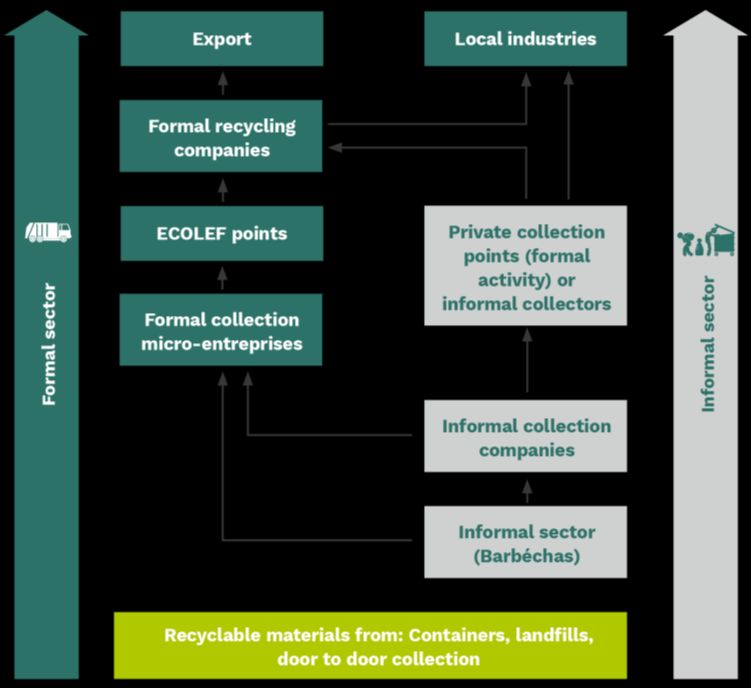
Country report – Tunisia

    ● Hotels pay 2% of their turnover each year (1% to municipalities, 1% to a tourism protection
        fund) to cover various services, including solid waste management.
    ● The central government also contributes to funding.
Despite these different sources of funding, the financial resources currently available are not
considered sufficient to manage current and future waste levels properly.

Legal basis
From a legal point of view, waste management in Tunisia is governed primarily by two pieces of
legislation: the Local Government Code of 2018 and Law No. 96-41 of 10 June 1996 on Wastes
and the Control of their Management and Disposal. The full list of laws governing the EPR also
includes:
    ● Law 96-41 of June 1996 on Wastes and the Control of their Management and Disposal.
    ● Law 92-122 of December 1992 establishing a depollution fund (FODEP) and introducing
      an eco-tax.
    ● Law 97-11 of February 1997 promulgating the local taxation code.
    ● Decree 2317-2005 of August 2005, establishing a national waste management agency
      (ANGeD).
    ● Decree 97-1102 of June 1997, as amended by Decree 2001-843 of April 2001, on
      conditions and procedures for the take-back and management of used packaging bags
      and packaging material.

Plastic bag ban
As a response to the grave environmental problems caused by single use plastic bags, a Ministerial
Council meeting on 18 December 2015 approved measures to reduce the use of single-use plastic
bags and replace them with more environmentally-friendly alternatives.
A new government decree banning single use plastic bags was published in the Official Journal of
the Republic of Tunisia (JORT) on 16 January 2020. The decree, known as Decree No. 32, was
preceded by a series of measures that paved the way for its provisions. Since 1 March 2020, single
use plastic bags (defined as bags with thicknesses of less than 40 microns or capacities of less
than 30 litres, primary packaging bags more than 15 microns thick and oxo-degradable plastic
bags) have been banned in supermarkets. On 1 January 2021 the ban will be extended to cover all
forms of production, importation, marketing and storage activities.

EPR for packaging: the ECO-LEF system

About the system
ECO-LEF is a public system for the recovery and recycling of packaging waste, delivered in
partnership with local authorities. It covers the collection of packaging waste under agreements
with the national waste management agency ANGeD and the recycling of certain types of plastic
waste, carried out under set terms of reference and in accordance with agreements in order to
obtain monthly quotas of the materials concerned.
ECO-LEF focuses particularly on plastic and metal packaging items with capacities of 100ml and
over. Most of its materials come in the form of drinks bottles (PET), milk bottles (HDPE), plastic
films and bags (PP) and metal boxes (aluminium). Under the current system, producers and other
companies contributing voluntarily to ECO-LEF are not involved in organisational decisions related
to the system’s operations.

                                                                                           page 3
Country report – Tunisia

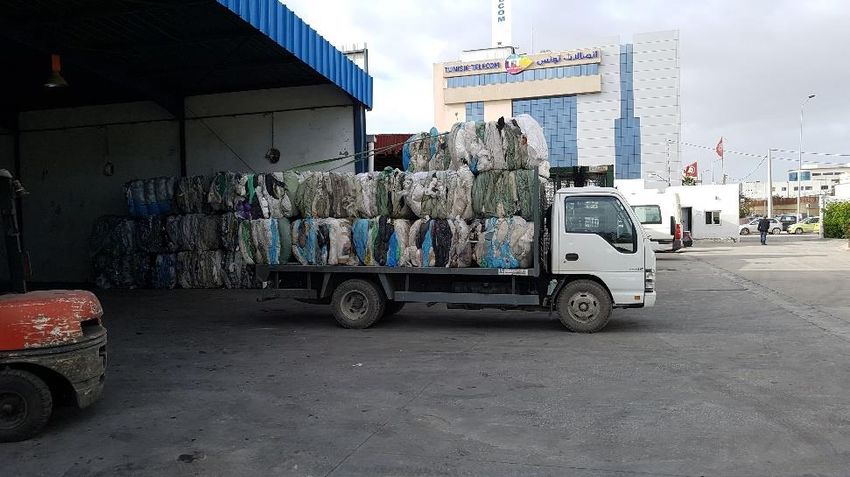
Photo 1: A recycling truck in Tunisia (© cyclos 2018)

Financing of ECO-LEF
The ECO-LEF system is governed by a decree that specifies how packaging waste should be
collected and managed. The initiative is financed primarily from the eco-tax fund.
In addition, the system also standardises conditions and arrangements for taking back and
managing packaging bags and used packaging. Companies that introduce packaged products into
the market are required to do one of the following:
    ● Recover the packaging themselves, in which case they are responsible for managing the
      used packaging they introduce to the market;
    ● Delegate this task to an authorised company, operating on their behalf.
    ● Use the state system for recovering used packaging.
Since producers contribute to ECO-LEF on a voluntary basis, only a small part of ECO-LEF's budget
comes from producer contributions. Selling the collected materials also generates a small portion
of the scheme’s funding.

Collection of packaging waste within ECO-LEF
Under the ECO-LEF system, recyclable materials are collected by small companies that are
approved and authorised by ANGeD. The authorised collection companies buy the materials from
informal collectors known as ‘Barbechas’ and pay them immediately after the recyclables have
been weighed. In practice, the collection companies sell what they collect to ECO-LEF, however,
they are not under any obligation to do so. The quantities collected are brought to ‘ECO-LEF points’,
a network of dedicated storage facilities and prepared for sale to recycling companies.

                                                                                              page 4
Country report – Tunisia
18000
15500
15700
16000 15000
14246
13500
14000
12000 11000
Tonnes
10000 8700 8400 8263
7400 7000
7000
8000 6517
5400
6000
3366 3400
4000 2605
2000 1178
0
2000 2005 2010 2015 2020
Figure 1: Quantities of waste collected under the ECO-Lef system (Source: Chaabane et al. 20196)
As the graph shows, the quantities of waste collected under the ECO-LEF system have decreased
considerably since 2009 and amounted to just 3,400 tonnes in 2018. There are a number of
reasons for this, including changes in the economy (such as material market and price),
competition between ECO-LEF and private collectors, in addition to more waste management
activity being carried out by informal collectors. Interest among recyclers in participating in the
system has also dropped due to the decreased collected quantities. Furthermore, by the current
ECO-LEF system, there is no obligation to carry out separate collection, and there are no mandatory
targets for collection or recycling. The fact that the system is funded by voluntary contributions by
producers putting packed goods on the Tunisian market, makes it also difficult for ECO-LEF to
secure sustainable funding.
ECO-LEF and the informal waste sector
The recycling sector is currently driven almost exclusively by informal collectors/waste pickers
known as ‘Barbechas’, who collect recyclable fractions from containers and/or landfills without
having any legal status. The existence of this informal waste management sector is considered a
sensitive issue in Tunisia. The Barbechas operate in both high- and low income districts of every
city in the country. The conclusions of a recent analysis of formal and informal waste management
activity are summarised in Figure 2 below.
6Chaabane et al. 2019: Shifting Towards Sustainable Tourism: Organizational and Financial Scenarios for Solid Waste Management in
Tourism Destinations in Tunisia: https://www.mdpi.com/2071-1050/11/13/3591
page 5Country report – Tunisia
Figure 2: Material flows and role of the informal sector (Source: Chaabane et al. 20196, own
representation)
Informal waste collectors are not sufficiently involved in the current ECO-LEF system, despite their
significant contribution to recovering materials and preserving the ecosystem. Incorporating the
informal collectors into the formal economy could be beneficial for the Barbechas in terms of
income and social security as well as for the Tunisian population at large in terms of public and
environmental health and economic prosperity.
Under the current ECO-LEF system, Barbechas have no direct access to the system’s collection
points, which are open only to holders of commercial licences approved by ANGeD. This means that
the majority of Barbechas cannot profit from the high prices guaranteed by ECO-LEF and are
forced to work with intermediaries offering lower prices. ECO-LEF buys 1 kg for 750 millimes, and
sells the same quantity to the recyclers for 250 millimes7. The government subsidizes 500
millimes per kilograms. The price is not flexible and does not take the materials’ market price
changes into consideration.
Current challenges in the ECO-LEF system
The current ECO-LEF system offers potential for optimisation regarding several aspects, some of
which are set out below:
● Organisational set-up and responsibilities of stakeholders:
- Only a few producers are members of the ECO-LEF system, and they are not subject
to mandatory fees. Contributions are made on a voluntary basis and are not
monitored.
- Producers are not involved in the organisational aspects of the system, meaning
they cannot influence how ECO-LEF and its financial flows are managed.
- Consumers are not obliged to comply with a specific separate collection system,
since they are not part of the system and their responsibilities within the system
are not clear.
7
250 millimes equal about 0.08 Euro (as of Sept. 2020)
page 6Country report – Tunisia
● Lack of (reliable) data:
- The total quantity of collected “packaging material” entering the waste system at
national level is not calculated. The available data only covers packaging waste
collected officially under ECO-LEF and does not include collection by formal and
informal private companies not member of the system. Also, the available data
concerns the total mixed waste collected by the municipalities as well as the waste
entering the landfills.
- There is a lack of accurate data on the amount of packaging being introduced to
the Tunisian market.
● Financial sustainability:
- The system of payment for collection is not flexible enough to take into account
variations in prices for recyclables, hence, currently, ECO-LEF only becomes
relevant to formal collectors when the prices offered by the private sector
decrease.
-The cost of waste collection has to be covered by municipalities (local authorities)
and the financing model is unsustainable.
● Scope of and access to ECO-LEF:
- ECO-LEF only accepts certain materials with positive market values, such as foils,
bags and PET beverage bottles. Other materials are not collected or recycled, and
many resources are consequently lost.
- Waste pickers, of which there are reckoned to be between 10,000 and 15,000 in
Tunisia, collect around 80% of the total packaging collected but are not formally
part of the system. They only collect materials with positive market values, such as
PET and cans.
- The system of payment for collection is not flexible enough to meet the needs of
collectors and recyclers.
● Littering is still a pressing and visible problem everywhere, and the tourism sector as an
important sector in Tunisia (beach resorts in particular) is affected by this highly visible
pollution caused particularly by the non-collected packaging waste and the poor recycling
infrastructure in the country.
● There is a lack of incentives for innovation or to expand the recycling industry in Tunisia.
Lessons learned
We can thus identify the following lessons from Tunisia’s experience:
● EPR systems should be based on a participatory approach involving multiple stakeholders.
Producers must play an important part of the EPR system to ensure the organisation and
a sustainable funding of the system.
● A clear legal framework is needed for the system to work effectively.
● Targets should be set in order to measure the success of the system.
● If stakeholders are given more than one way of fulfilling their obligations, there must be a
system for checking exactly what action they are taking in this regard.
page 7Country report – Tunisia
● Government should be more involved in the system to ensure that standards and targets
are enforced.
● The responsibilities of all the stakeholder groups involved must be set out clearly.
● When setting up EPR systems in low- and middle-income countries, it is important to
consider the role small-scale collectors and recyclers should play.
● Transparency is essential.
● The role of the municipalities/local authorities must be well defined, and its staff must be
informed, educated and trained accordingly.
● The structure of the EPR should be flexible enough to adapt as necessary (e.g. to economic
changes or technological developments).
Information correct as of June 2020
Contact details for national authorities
Ministry of the Environment:
Tunisian Ministry of the Environment
Tel: +216 70 243 804
Website: www.environnement.gov.tn
National Waste Management Agency (ANGeD)
Tel: (+216) 71 79 15 95 / (+216) 71 79 38 68
Email:
Website: http://www.anged.nat.tn/
Imprint
Published by: info@giz.de
contact@prevent-waste.net
Deutsche Gesellschaft für Internationale
www.giz.de
Zusammenarbeit (GIZ) GmbH
https://prevent-waste.net/en/epr-toolbox/
PREVENT Waste Alliance
Friedrich-Ebert-Allee 32 + 36 cyclos GmbH
53113 Bonn Westerbreite 7
Germany 49084 Osnabrück
Germany
Tel. +49 61 96 79-0
https://cyclos.de
Fax +49 61 96 79-11 15
Authors:
Agnes Bünemann, Jana Brinkmann, Dr. Stephan Löhle and Sabine Bartnik.
Bonn, Germany 21 September 2020
The EPR Toolbox was developed within the PREVENT working groups "Conserving resources" and "Closing packaging cycles" in
cooperation with its members. The views and opinions of the authors do not necessarily reflect the positions of all PREVENT Waste
Alliance members or official policy positions of the governments involved.
page 8You can also read


