From the lab to the living room Improving health and wellbeing
←
→
Page content transcription
If your browser does not render page correctly, please read the page content below

2018 Issue

From the lab to the living room
Improving health and wellbeing

From the lab to the living room
                     Senior lecturer Dr Natalie Plank from the School of Chemical and Physical Sciences
                     is developing ‘lab on a chip’ biosensors that will make fertility tests more accessible.
                                                               19

Improving health and wellbeing in our communities

     A global shortage of                          New faculty hits the                          Celebrating 25 years
         self-esteem                                ground running                                     in style
                18                                             21                                               23

3    A boost for innovation                 16     Keeping New Zealand on track            34    A quarter century of service

5    Inside White Island                    20     The economics of happiness              35    So ready to read

7    MOOCs breaking the mould               22     Bringing locals and land together       37    From Paengaroa to Parliament

8    Conservation by numbers                24     The myth buster                         38    Rugby career kicks off

10   Fire, fury, and foreign policy         28     Reducing health inequalities            39    Kitchen stories

13   Putting creativity to work             31     Mapping the world of Dickens            40    Oceania unveiled

14   Weather dependent                      33     Who’s in my room?                       41    The last photograph
Stay connected
                                                                                             p 0800 VICTORIA (842 867)
                                                                                                w www.victoria.ac.nz
                                                                                                  t @VicUniWgtn
                                                                                           l VictoriaUniversityofWellington
                                                                                        f VictoriaUniversityofWellingtonAlumni
                                                                                                    i VicUniWgtn
                                                                                            Keep your contact information
                                                                                                     up to date
                                                                                                 e alumni@vuw.ac.nz
                                                                                                       Events
         From the Vice-Chancellor                                                         Contact us to receive invitations for
                                                                                             both local and global events

H     ealth and wellbeing are the cornerstones of a happy life and a well-functioning
      society, but they mean much more than simply the absence of illness and
infirmity—they encompass a broad state of mental and social wellbeing.                         w
                                                                                                 e rsvp@vuw.ac.nz
                                                                                                 http://bit.ly/2bWR0J2
  One of our eight areas of academic distinctiveness at Victoria University of                         Gifting
Wellington is improving the health and wellbeing of our communities, which is
the theme of this issue of Victorious.                                                  Contact the Development Office if you
  The University has many academic units involved in health and wellbeing               are interested in making a donation of
research. Our capability is multidisciplinary, and we are actively working to                     funds or resources
improve health and wellbeing in our communities by coordinating research and              e development-office@vuw.ac.nz
teaching across a number of key areas: Science, Engineering, and Design; Health                  p +64 4 463 5871
Services and Policy; Arts, Education, and Business.
  Thanks to our proximity to central government, district health boards, and                         Victorious
many non-governmental organisations, we are also making major contributions
to understanding how health outcomes can be improved by better policy settings,
                                                                                         e communications@lists.vuw.ac.nz
increased education, new technology, and reduced inequality.                              Victorious is published by Victoria
  In 2017, we established the new Faculty of Health, which builds on our existing         University of Wellington, Te Whare
strengths in areas such as nursing and midwifery, health policy and delivery,             Wānanga o te Ūpoko o te Ika a Māui
and biomedical research, as well as the University’s broader expertise in public         PO Box 600, Wellington, New Zealand
policy, government, business, and industrial relations. Creating a new faculty is                 Editor: Samuel Burt
an enormous and challenging undertaking, but under the leadership of Professor
                                                                                             Design lead: Stephen Garrett
Gregor Coster, the Faculty has been a standout success. You can read more about
Professor Coster and the Faculty in this issue.                                            Editorial team: Crispin Anderlini,
  We are also committed to improving health and wellbeing in other ways. Since               Elizabeth Beattie, Sarah Boyd,
2017, we have been a health-promoting university, using guidelines from the World           Alix Chapman, Vicky Cotterell,
Health Organization and the Okanagan Charter (an international charter for                 Lucy Dickie, Katherine Edmond,
health-promoting universities and colleges) to create healthy working, learning,              Jo Fisher, Samantha Fisher,
and living environments. One result of this was the creation of the Student                  Craig Gamble, Kristina Keogh,
Wellbeing Awareness Team, a student-led group that organises events, campaigns,             Kirsten McDougall, Fiona Shaw,
and projects promoting a well-balanced life while studying at university.                   Andrew Smith, Guy Somerset,
  Together with the Treasury and the International Journal of Wellbeing, in                Heidi Stedman, Grace Taylor, and
September we also co-hosted the highly successful Third International Conference                    Jolene Williams
on Wellbeing and Public Policy, bringing together more than 350 policymakers                Photographs (unless otherwise
and wellbeing researchers from around the world to share the latest findings on                credited): Image Services,
wellbeing and quality of life.                                                              Victoria University of Wellington
  This issue of Victorious highlights many other examples of how our research               Cover image: Dr Natalie Plank,
contributes to improving the health and wellbeing of our communities, and                   photographed by Mike Heydon,
how our academics, students, alumni, and professional staff are working hard to                    Jet Productions
improve health and wellbeing across the University and within society.
                                                                                                    ISSN 1172-0387
  Victoria University of Wellington values its role as a civic university. A civic
                                                                                        © Victoria University of Wellington 2018
university is one that values close involvement with the social, cultural, and
economic life of its city and region. It naturally follows that the health and             The views expressed in Victorious
wellbeing of our communities is at the heart of everything we do, because                 are not necessarily those of Victoria
community wellbeing is the combination of social, economic, environmental,                     University of Wellington.
cultural, and political conditions that are essential for individuals and                This publication is printed using soya-
communities to flourish and fulfil their potential.                                      based inks. The paper is manufactured
  This is the mandate upon which Victoria University of Wellington was founded          and sourced from paper mills that have
more than 120 years ago, and it remains just as important today.                         accredited and audited environmental
                                                                                        qualifications and use sustainably grown
Professor Grant Guilford
                                                                                          and harvested well-managed forests
Vice-Chancellor
                                                                                            and elemental chlorine free pulp.
t @GrantGuilford

                                                                1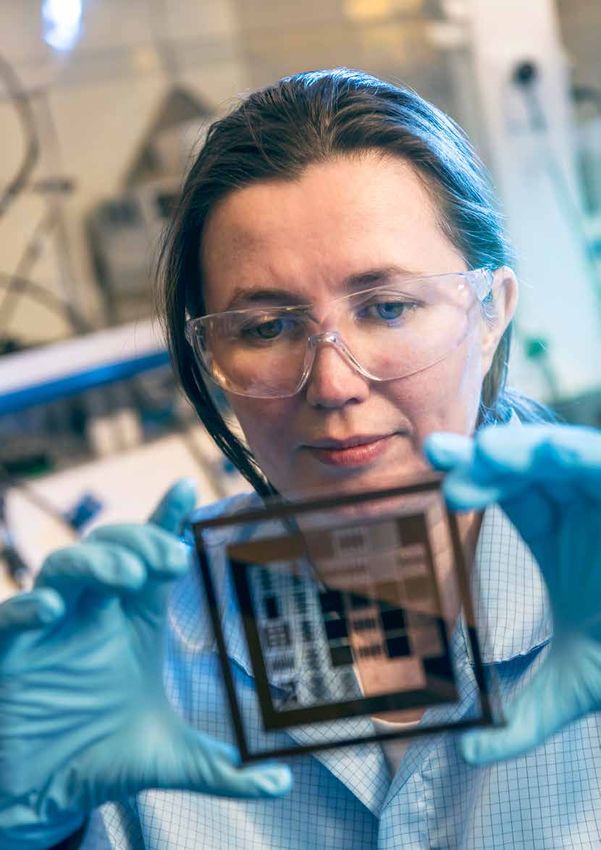
University of Wellington
In September, the University Council voted to recommend to the Minister of Education that the
 legal name of the University be changed to University of Wellington. The Council also backed
the adoption of a new Māori name, Te Herenga Waka, and made a commitment to the ongoing
    use of the word ‘Victoria’ to ensure the University’s heritage is honoured and maintained.

C    hancellor Neil Paviour-Smith says
     the decision was a challenging one
for the Council and he acknowledged
                                               the University and Wellington.
                                                 Grant says a vibrant and successful
                                               Wellington offering an enhanced student
the significance of the name Victoria to       experience and exceptional liveability for
alumni, students, and staff. “After careful    staff is critical to the University’s future.
consideration, the Council is satisfied that   “Similarly, a world-class university in
the name change is in the best interests       Wellington is vital for the city and region
of the University and is an important next     to flourish.”
step in achieving the University’s vision        While the word Victoria has great
and long-term prosperity.”                     personal significance to many alumni,
  The Council’s decision follows well over
a year of research, advice from experts,
                                               he says, it is problematic in many other
                                               respects.
                                                                                                 Welcoming
and discussion with staff, students,
alumni, and stakeholders, including a
                                                 “It is used prominently in the
                                               names of at least seven other tertiary
                                                                                                  all waka
                                                                                               T
consultation period during which close to      educational institutions and, to some,
                                                                                                    he recommended new
2,500 submissions were received.               the word Victoria evokes misleading
                                                                                                    Māori name—Te Herenga
  Vice-Chancellor Professor Grant              or adverse associations such as with
                                                                                               Waka—is also the name of the
Guilford acknowledges that there is a          Victoria in Australia; with colonisation,
                                                                                               University’s marae, and means
“very understandable deeply personal           dispossession, and discrimination; and
                                                                                               the mooring place of canoes.
connection to the name Victoria among          with the staid nature of Victorian society
                                                                                                 Te Herenga Waka has been
many alumni”.                                  rather than the creativity of Wellington.
                                                                                               at the heart of the University
  “Unfortunately, however, the external          “Others have noted the incongruity
                                                                                               community for more than
context in which the University operates       of naming a university after a monarch,
                                                                                               three decades and the name
has changed very significantly and our         given that monarchies symbolise
                                                                                               signifies that all people are
current name of Victoria University of         heredity, stability, and power, whereas
                                                                                               welcome on the marae.
Wellington is no longer working well           universities symbolise meritocracy,
                                                                                                 Deputy Vice-Chancellor
for us.”                                       innovation, and speaking truth to power.”
                                                                                               (Māori) Professor Rawinia
  The rationale for the Council’s decision       Grant says the name change fits into
                                                                                               Higgins says, “In using
crystallised around a number of key            a wider programme of work to build the
                                                                                               Te Herenga Waka for the whole
points: the proposed change of name            University’s international reputation,
                                                                                               University, we are saying that
to University of Wellington emphasises         which is not yet in keeping with the
                                                                                               people from around the rohe, all
the word ‘Wellington’, which enhances          teaching and research excellence of the
                                                                                               around the country, and beyond,
the University’s differentiation as            University.
                                                                                               can tether their metaphorical
New Zealand’s globally ranked capital            “Realising our ambitions in an
                                                                                               canoes and find shelter here.
city university; it allows the achievements    increasingly competitive and financially
                                                                                               Once people have finished at
of the University to build the global          challenging sector requires the University
                                                                                               the University they can head
reputation of the city and vice versa;         to have a name that is both better aligned
                                                                                               off on their journey, while still
and it creates a common destiny and            to Wellington and more distinctive
                                                                                               maintaining a deep connection
enduring sense of partnership between          internationally.”
                                                                                               to Te Herenga Waka.
                                                                                                 “The name also reflects
                                                                                               the idea of coming to the city
             READ MORE ABOUT THE COUNCIL’S DECISION                                            through the harbour, and being
                                                                                               anchored and firmly placed
                              w www.victoria.ac.nz/name                                        here.”

News                                                                 2
A boost for innovation
      Wellington has a growing reputation as a start-up city, and a new partnership between
      Victoria University of Wellington’s commercialisation arm, Viclink, and New Zealand
                 financial services company Booster will take this even further.

T     he New Zealand Innovation Booster
      is a game-changing partnership
that will see Booster—whose executive
                                                  Under the partnership, Booster will
                                                invest a minimum of $2 million a year for
                                                five years in a portfolio of new start-ups.
                                                                                              innovative ideas become productive
                                                                                              businesses.
                                                                                                “Commercialisation of research has
chairman Paul Foley and managing                  The partnership reflects the shared         long been seen as an opportunity
director Allan Yeo are both alumni—             commitment of the University and              to enhance the contribution of our
invest at least $10 million in start-up         Booster to encourage entrepreneurialism       universities to New Zealand,” says
businesses spun out of the University’s         and economic growth in New Zealand,           Allan Yeo. “Historically, this financing
world-leading research.                         says Vice-Chancellor Professor                has relied on angel funding or venture
  It is the first time a New Zealand            Grant Guilford.                               capital, which means opportunities to
financial institution has joined forces           “Booster is a Wellington-based              date have not only been hard to come by,
with a university to invest in its start-ups.   company and this investment will              but future commercialisation and growth
  Launching the partnership, Minister           increase the chance the start-ups will        benefits leave New Zealand.
of Finance Grant Robertson praised              take root in a city we are both proud to        “We are excited to be an integral part
Viclink and Booster for their leadership in     be part of,” he says.                         in growing these innovative Kiwi ideas for
“unlocking capital we need if we’re going         Dr Anne Barnett, chief executive officer    the future benefit of New Zealand.”
to achieve the goals we have around             of Viclink, explains that the money the         Viclink currently has equity in nearly
research and innovation”.                       partnership injects will give the start-      20 start-ups based on university
  He said the initiative “provides a            ups more security in their cash-hungry        research, including Avalia
massive opportunity not only for the            formative years.                              Immunotherapies, scientific instruments
researchers at Victoria University of             “Having the support of Booster              company Magritek, and medical
Wellington but also for the wider               dramatically improves the chances of          diagnostics company Ferranova.
New Zealand economy to be able to lift          the start-ups growing faster, making            It aims to double that portfolio within
the value of what we do and develop             them more attractive to other investors.”     the next decade.
partnerships that will sustain the                For Booster, the partnership reflects its   w https://bit.ly/2OEzTwS
standard of living New Zealanders want.”        commitment to New Zealand by helping

                                                                    3                                                             News
Dame Therese Walsh and Neil Paviour-Smith

                                Leading the way
               Two leaders on the Victoria University of Wellington Council are ensuring
                              the University is primed for future success.

N     eil Paviour-Smith is the University’s
      new Chancellor, succeeding
Sir Neville Jordan, while Dame Therese
                                              serves on the boards of ASB, Contact
                                              Energy, and Antarctica New Zealand.
                                              She is also a trustee of Wellington
                                                                                                The Council “isn’t just there to tick off
                                                                                             day-to-day things,” says Dame Therese.
                                                                                             “We need to have courage and push
Walsh has succeeded Neil as                   Regional Stadium and a member of the           boundaries, without disrupting what is
Pro-Chancellor, the Chancellor’s deputy.      Government’s Major Events Investment           working well. It’s that nice balance you
Both were elected unanimously by their        Panel. She joined the Council in 2016.         need to reach in your deliberations.”
fellow Council members and took up              Neil and Dame Therese took up                   Name simplification feeds into one of
their positions at the start of 2018.         their leadership reins as the Council          the priorities Neil sees for the University
  Neil, a Victoria University of Wellington   prepared for one of the bigger decisions       over the next few years—increasing
Commerce alumnus, is managing                 in its history—whether to simplify             international recognition for the high
director of sharebroking and investment       the University’s name to University of         quality of its teaching and research.
firm Forsyth Barr and a former director       Wellington.                                       He would also like to see the University
of NZX and Chartered Accountants                “Victoria has been a core part of the        continue to strive to enhance the overall
Australia and New Zealand. He joined the      University’s identity for a long time, but     student experience and increase its
Council in 2013.                              we need to keep thinking about the future      engagement in Wellington. “Wouldn’t
  Dame Therese, who studied Accounting        and how the University projects itself,”       it be great if in, say, a decade’s time
at the University, is an independent          says Neil. “There were compelling reasons      Wellington is considered to be one of the
director who is chair of TVNZ and             to at least have the discussion. It was        world’s great student cities? In my view,
incoming chair of Air New Zealand, and        never going to be a decision taken lightly.”   the potential is there to aspire to.”

News                                                               4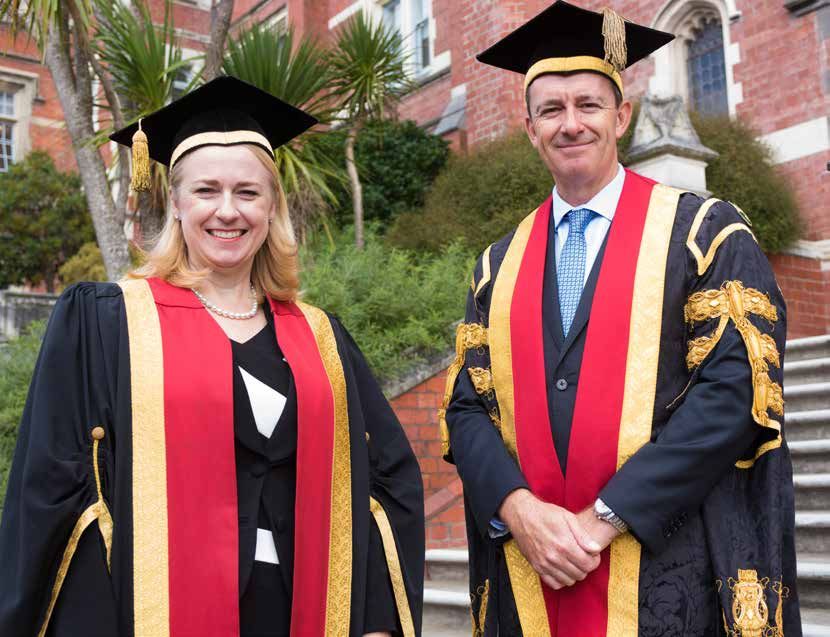
The heart of Whakaari /                move away from the centre of the         could signal a volcanic eruption,”
                                       volcano. The ability to send drones      Ian says.
White Island volcano is a              into the heart of the plume will mean      As well as improving scientific
boiling, toxic plume that              scientists can get better samples and    understanding of volcanoes, this
has prevented attempts by              a more accurate picture of what is       equipment could also be vital
researchers to get a glimpse           happening inside the volcano.            in preparing for, and managing,
                                                                                emergencies, providing a pre-
inside—until now.                                                               prepared field kit that can measure
                                                                                   changes in a volcano and track
N     ew technology developed
      by Victoria University
of Wellington’s Dr Ian
                                                                                       eruptions in near real-time.
                                                                                           Ian is excited about
                                                                                             the possibilities the
Schipper and his
                                                                                               technology will open up
research team has
                                                                                                 for scientific research.
helped to create
                                                                                                    “Our work shows
a fleet of drones
                                                                                                    drones are useful for
capable of taking
                                                                                                     far more than just
samples deep
                                                                                                      taking pictures,”
inside volcanic
                                                                                                      he says. “As well
plumes.
                                                                                                       as collecting
  “Researchers
                                                                                                       measurements
can’t get within
                                                                                                      from the most toxic
a few hundred
                                                                                                      environments, they
metres of White
                                                                                                     could also be used
Island’s plume
                                                                                                    to monitor air quality
because the air is so
                                                                                                   and track pollutants
toxic,” Ian says. “With
                                                                                                 and respond to fires,
these drones, we can
                                                                                               dust storms, and many
send miniature versions
                                                                                             other airborne hazards.”
of our instruments straight
                                                                                            Ian worked alongside
into the plume to take
                                                                                       researchers from GNS Science,
samples.”
                                                                                    the University of Cambridge,
  Researchers currently take
                                                                                and the Research Institute for
samples from as close to the volcano
                                                                                Development in France on this
as safely possible. These samples
                                         “Our research team’s aim is to build   project. This research has been
are often contaminated, however, as
                                       a system mounted onto these drones       funded for two years by New Zealand’s
the volcanic gases of interest pick
                                       that can tell us how hot a volcano is    Earthquake Commission.
up dust or other particles from the
                                       and how deep the magma runs, and         e   Ian.Schipper@vuw.ac.nz
surrounding environment as they
                                       measure changes in the gases that

                                                         5                                                          News
Citizen Kun
 What does it take to become a New Zealander? A Victoria University of Wellington academic
tested this question with an unusual case and ended up breaking new ground in citizenship law.

F    rom 2015 until 2016, Professor Claudia
     Geiringer from the Faculty of Law
gave legal assistance to Roland Kun, the
                                              cases where the applicant was going to
                                              bring a lot of money to New Zealand.
                                                 “They didn’t regard it as being in the
                                                                                              with distinguished fellow Sir Geoffrey
                                                                                              Palmer, who provided strategic advice, and
                                                                                              solicitor and Victoria University alumna
former Nauruan opposition Member of           public interest simply to protect people        Antoinette Besier, Claudia successfully
Parliament who spent a year trapped in        from unfair treatment. And that was             convinced DIA that its interpretation of
Nauru when his passport was revoked           the battle we needed to have—to get it          the law was incorrect—“so much so that
after he was accused of being involved in     recognised that it was in New Zealand’s         they’ve amended their policy documents”.
anti-government protests.                     public interest in certain circumstances          Claudia says this legal victory has
  Mr Kun’s wife, who is an Australian         for hardship of individuals to be avoided,      opened the door for future applicants
citizen, and three children had recently      especially where children are involved.”        to make a case for citizenship on
settled in New Zealand at the time, and he       Claudia coordinated an open letter to then   humanitarian grounds.
was unable to leave Nauru to rejoin them.     Minister of Foreign Affairs Murray McCully        Mr Kun was granted a New Zealand
He was the children’s primary caregiver.      calling for New Zealand to suspend its aid      passport and was able to return to his
  The case created an international           funding to Nauru, which the Government          family. Claudia says the outcome of this
furore, but the legal mechanisms for          then did, but she knew diplomatic               case, which she has since written about
getting Mr Kun out of Nauru were unclear.     intervention could only go so far.              in an academic article, strengthened her
This is where Claudia stepped in.                “I knew it would be very difficult to        faith in New Zealand’s legal system.
  She explains that New Zealand’s             get Roland citizenship because it was a           “The fact that they said, ‘Yes we were
Citizenship Act has a provision allowing      delicate political situation. I believed our    wrong, and now that we relook at it, we’re
the Minister of Internal Affairs to grant     interpretation of the law was the correct       going to completely change our approach’
foreign nationals citizenship in special      one, but first we had to convince DIA           and the fact that the Minister took them
circumstances.                                it was wrong about the law, and then            up on that, is extraordinary—it shows the
  “The Department of Internal Affairs (DIA)   we had to convince the Department               rule of law is alive in New Zealand in a way
was mainly using this provision in cases      to reassess the facts in a way that was         that it is certainly not in Nauru.
where there was a really obvious and          favourable to our client, in a situation full     “In this particular case, I think we saw
concrete public benefit to New Zealand—       of political sensitivities.”                    the best of our public service in action.”
to be in a sports team for instance, or in       It was a formidable task, but together       e Claudia.Geiringer@vuw.ac.nz

News                                                               6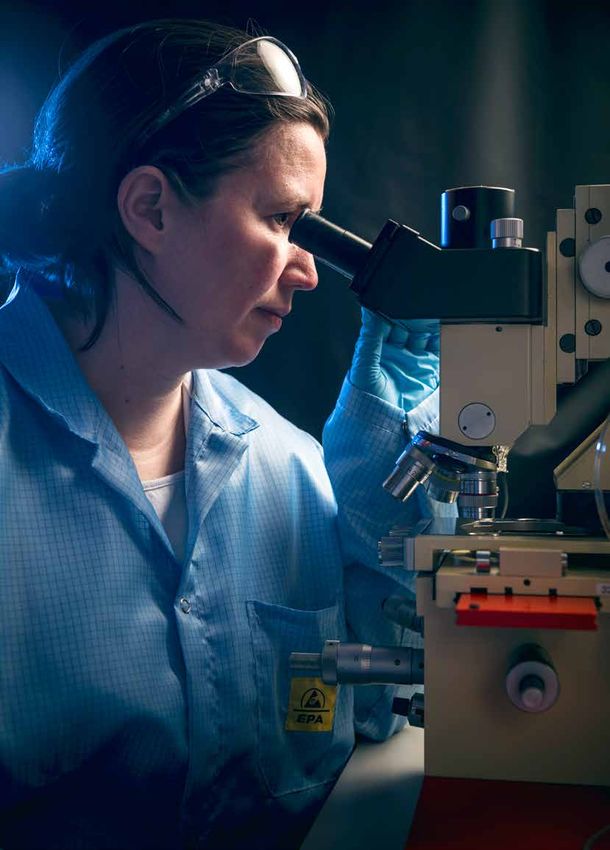
MOOCS
BREAKING
THE
MOULD
“Quality education for everyone, everywhere”—this is the idea
  on which the edX online learning platform was founded by
  Harvard University and MIT in 2012, and it’s the aspiration
  that is continuing to push Victoria University of Wellington’s
  own programme of edX massive open online courses
  (MOOCs), to create a range of unique courses.

G    oing from strength to strength,
     the programme now boasts the
world’s first restorative justice MOOC
                                          geology, popular culture, politics,
                                          art, and literature of our high-altitude
                                          landscapes and the cultural identities
and is breaking new ground at home        attached to mountains.
with New Zealand’s first bicultural         In the year ahead, the University’s
series of MOOCs.                          MOOCs will delve into the realm of
  Exploring the New Zealand landscape     ethical leadership and will also return
through the lens of both Māori            to the coldest, driest, and windiest
and Pākehā cultures, New Zealand          continent on Earth for a fresh new
Landscape as Culture: Islands (Ngā        Antarctic virtual field trip.
Motu) focused on the country’s islands      Discussions are also underway with
and the impact they have on culture, to   award-winning design studio Weta
teach learners to think about landscape   Workshop to develop a course revealing
as an expression of culture.              the secrets to creating participants’
  This was followed up by New Zealand     own fictitious world through realistic
Landscape as Culture: Maunga              props, costumes, and environments.
(Mountains), which explored the

w www.victoria.ac.nz/edx-victoria

     Victoria          MORE THAN              Learners               11,000+
 University of           HALF of             range from             LEARNERS
   Wellington          learners are           10 TO 90
  is the ONLY         from the USA,          YEARS OLD
  university in       UK, Canada, or
 New Zealand             Australia
 providing edX
     MOOCs

                                                              7                      News
Conservation by numbers
    New Zealand has amazing birdlife: nocturnal parrots, birds that can’t fly, unique and
    beguiling birdsong, and varieties that turn up after 50 years of being thought extinct.
Unfortunately, many native species require wildlife management programmes and their clever
                      camouflage often makes them hard to monitor.

T   his is why Professor Stephen Marsland
    from the School of Mathematics and
Statistics is co-leading a large, inter-
                                                   “Our research is unique as it uses
                                                 automatic field recordings and the
                                                 birds can range from 5 to 500 metres
                                                                                                Stephen and his team of researchers
                                                                                              use their knowledge of the different
                                                                                              species and statistical methods to
disciplinary project using mathematics,          away from the microphone. This means         turn the call rates into estimates of the
data science, and new technology to help         that there can be a lot of background        numbers of birds present. “The software
New Zealand birds survive.                       noise, which can make it hard to             that we are writing will be freely
  The project involves collaboration with        distinguish the calls.                       available to everybody who wants to
mathematicians, ecologists, statisticians,         “Sometimes there are a lot of              use it, from community groups through
electronic specialists, engineers, and iwi       species singing all at once. If you have     to the Department of Conservation and
from across New Zealand.                         a small number of species and high-          other researchers,” he says.
  “The aim of this project is to take            quality recordings, then the problem           “Not only are we developing new
recordings of birds collected in the field       is reasonably simple, but this isn’t         mathematical techniques, but we also
and identify all those that are calling, using   necessarily realistic. We’re interested in   get to try them out in the field and see
mathematical and computational methods           the real-world version where you have a      the difference they make.”
such as machine learning,” says Stephen.         lot of species and noisy recordings.”        e   Stephen.Marsland@vuw.ac.nz

Research                                                             8
Photo: Dr Joe Marlow
Deep-sea dwellers
We still don’t really know what lives deep in the waters of Fiordland—especially when it
comes to the creatures lurking more than 40 metres beneath the surface—
but Associate Professor James Bell is on a mission to find out.
E arlier this year, James and a group of
researchers spent 10 days aboard the
Department of Conservation (DOC) vessel
and set a baseline so it can measure
any changes caused by humans. It’s a
piece of work that has been in the long-
The students also had the opportunity
to set up, test and deploy brand new,
custom-built underwater research
Southern Winds, exploring the waters of term monitoring plan of DOC and local equipment.
the Fiordland (Te Moana o Atawhenua) conservation group the Fiordland Marine “Fieldwork gives students the
Marine Area, including the Dusky, Guardians for a number of years. opportunity to observe and see science in
Doubtful, and Breaksea Sounds. Using “Previous studies have looked at what action, as well as hands-on experience of
state-of-the-art underwater equipment, types of creatures live down there, but what it’s like to collect real data that’s going
the group was able to focus on marine life we’re the first group to measure the to be used to help manage the area.”
living 40 to 150 metres deep. abundance of them, which will make it This trip was the first time DOC has
“There’s very little information on marine a lot easier to measure future changes,” funded a Victoria University-led team to
life at these depths, considering how many James says. conduct fieldwork in Fiordland.
animals live there,” says James, who is A group of PhD students and one recent “This was a fantastic opportunity to
with the School of Biological Sciences. PhD graduate accompanied James on the develop our relationship with DOC and
“Most studies focus on above 40 metres, research trip. the Fiordland Marine Guardians,” says
because you can scuba dive to see what’s “This kind of trip is an opportunity very James. “We hope to do more work
there. It was great to get a look at the few people get,” says James. “It gave the in the area, especially looking at how
amazing creatures that live at these depths students a chance to see how research environmental and climate change might
using specialised equipment.” works in the field, including solving affect it.
James and his sponge ecology research problems when things don’t work out as “This is a perfect example of how the
group received funding for the expedition planned—like having a soldering iron research we do has real-life impact in
from DOC, which wanted to measure flown in by helicopter to fix some of our New Zealand.”
the abundance of organisms in the area equipment!” e James.Bell@vuw.ac.nz
9 ResearchFire,
fury, and
foreign
policy
When Dr Van Jackson started
writing his new book on the North
Korean crisis, he wasn’t sure whether
or not there would be a nuclear war
by the time he’d finished it.
V an, a senior lecturer in the School
of History, Philosophy, Political
Science and International Relations,
To deal with this challenge, Van
started a blog about his writing process
called Nuke your Darlings, which he
Along
the way there
is an expert on foreign policy and published in real time. Adding more were some historic moments,
security issues in the United States writing to his daily workload might seem including the summit between Trump
and Asia–Pacific. He’s asked regularly counter-intuitive, but Van insists it and Kim Jong-un in Singapore last June.
by international media to comment helped in a big way. In the end, the brinkmanship subsided
on North Korea and published his first “It became a self-accountability and crisis was averted, albeit not
book, Rival Reputations: Coercion and mechanism. I didn’t want to fall short through conventional diplomacy. Van
Credibility in US–North Korea Relations, of the expectations I’d created, and puts it down largely to North Korean
with Cambridge University Press in 2016. the blog forced me to find time to work strategy and Trump’s capriciousness.
“Last year, we started seeing Trump on the book even on days when I was “I hate to say it, but this train was
and Kim Jong-un making threats of insanely busy.” driven primarily by Kim Jong-un,” he
nuclear war and trading personal As the crisis unfolded, Van diligently says. “But at least it’s not war—it’s
insults—this was all unprecedented. worked on his book while continuing to infinitely better from where we were
“I was very concerned by what I was engage with the media and maintaining last year.”
seeing. In the midst of that crisis, just a busy teaching schedule. He says there Van is originally from the United States,
after Trump threatened ‘fire and fury’ were times when the looming deadline where he worked for the Department of
against North Korea, the editor from my put a strain on his life, but his desire Defense in the Pentagon. His new book,
first book called me up and asked, ‘What to make sense of the crisis helped him titled On the Brink: Trump, Kim, and the
Threat of Nuclear War, will be published
Illustration: doamama / Shutterstock.com
do you think about writing a book about through.
the origins of the nuclear crisis?’ “I was just consumed with worry, and in November.
“Cambridge was making an offer trying to express that worry publicly. It Despite the nuclear crisis having
I couldn’t say no to—it’s a once in a wasn’t enough to write a thousand-word cooled down, Van is wary of getting too
lifetime thing. For academics, there’s opinion piece—the book was like having comfortable. “Wars can happen even
basically no better publisher.” a larger canvas on which to explain how when nobody wants them to, and the
There was a catch though—he had we got to the point where two world underlying nuclear situation that bred
to write the 90,000-word book from leaders were threatening each other the crisis in 2017 hasn’t changed.”
scratch, and had only six months to do it. with nuclear war.” e Van.Jackson@vuw.ac.nz
News 10Solving
political puzzles
How do small- and middle-sized states navigate an increasingly turbulent world?
How do they find ways to construct order out of anarchy?
T hese are the questions Associate
Professor David Capie, director
of the Centre for Strategic Studies,
think it’s part of our responsibility
to generate an informed public
discussion about foreign policy,
is asking—and he says there’s security issues, and defence
never been a better time to policy.
explore them.
“If you think of these
“I’m interested in “We don’t try to push a
particular line so much as
questions in terms of puzzles in international raise questions and try to
New Zealand and our region, politics, so it’s a very stimulate debate.”
it’s just infinitely fascinating This year the Centre is
at the moment. The Centre fun time to be doing undertaking a number
is really interested in what this sort of work.” of activities to celebrate
the consequences are for its twenty-fifth birthday,
New Zealand when it comes to —David Capie including a maritime security
things like the rise of China, the conference. In July, the
changing role of the United States, Centre hosted the launch of the
and issues like the situation on the Government’s new Strategic Defence
Korean Peninsula. We’re thinking about Policy Statement in the University’s
what challenges and problems are out Council Chamber.
there, and what New Zealand can do to “New Zealand doesn’t have a big think-
respond to them.” something he says has become a much tank culture, and there aren’t many that
The Centre gives David the greater focus for the Centre over the have been around for 25 years. I think
opportunity to not only teach and past few years. it’s pretty special for the University, and
research these issues, but also to “We’ve stepped up our engagement more broadly for New Zealand.”
contribute to the wider public debate— on a whole range of big issues. We e David.Capie@vuw.ac.nz
11 ProfileTempted by our vibrancy
M argaret, who joined Victoria
University of Wellington as Vice-
Provost (Research) at the end of July, saw
Western Ontario in her native Canada, she
has an impressive track record in external
research funding, having secured more
an institution “on a very positive trajectory. than $39 million over the past 11 years as a
It had a sense of real vibrancy. There was principal investigator.
an openness to change and exploring new Margaret’s vision for research at
directions I found very appealing.” Victoria University “is encapsulated in
She also liked the idea of being directly the University’s positioning around the
responsible for delivering research again; global–civic ethos: it’s about excellent
as much as she loved her chief scientist research that makes a difference;
job and the broader perspective it gave research that is internationally
her, “it was more about influencing than recognised, in part because it has a
delivering”. particularly New Zealand flavour to it”.
Professor Margaret Hyland Margaret was on secondment to MBIE That flavour manifests itself in many
loved her 18 months as chief from the University of Auckland, where ways, she says.
she was deputy dean of its Faculty of “One is our connectedness. We have
scientist at the Ministry of Engineering. She joined the university in access to particular environments
Business, Innovation and 1989 and her other roles there included and ecosystems, including science
Employment (MBIE) and three years as associate deputy vice- and business ecosystems. We also
was sad to leave. But the chancellor, research. have access to unique databases. And
In 2015, Margaret was the first woman then, really importantly, there is our
opportunity to lead research at to be awarded the Royal Society indigeneity—mātauranga Māori and the
New Zealand’s top university Te Apārangi’s prestigious Pickering Medal distinctive contributions possible through
for research quality doesn’t for excellence in technology, for her engagement with Māori thinking, Māori
pioneering research to reduce fluoride researchers, iwi, and Māori enterprises.
arise every day and was too emissions from aluminium smelting. I see at this University a serious
tempting to pass up. A former professor of chemical and commitment to exploring how that can be
materials engineering at Auckland, with done well.”
a PhD in chemistry from the University of e Margaret.Hyland@vuw.ac.nz
Authentic engagement
N ow, she is bringing the skills
she developed as a ‘specialist
generalist’ during this period to Victoria
interplay between theory, discourse, and
public policy.
She put this research into practice at
University of Wellington as the new the University of Auckland and Auckland
Deputy Vice-Chancellor (Engagement). University of Technology, and she sees
“While working at the Committee civic engagement as central to the work
for Auckland, the Mayor’s Office, the of universities.
University of Auckland, and the City “Our work is supported by public funds
Centre Advisory Board, I experienced to deliver the critique, analysis, and
the challenges of finding common innovation that leads to positive change.
ground between interest groups as the This requires authentic engagement with
amalgamation unfolded. the communities we are here to serve—we
“It was an enormously complex can only play a role if we listen carefully
Dr Lucy Baragwanath was process that continues to evolve, to what our communities need, and think
at the coalface during one of but ultimately it depended on effective laterally about where we can help.
engagement. Once people knew you “Ultimately, I want Victoria University
the most complex governance were open to different perspectives of Wellington to be renowned for actively
projects in New Zealand and different approaches, they were far engaging with people wanting to discuss
in recent years, working in more willing to seek common ground new ideas or ways of doing things. Rather
various capacities for groups with you.” than simply sitting back and analysing
Lucy’s interest in these challenges what’s going on in the world, we need
involved in the amalgamation emerged during her doctoral and to be working with the communities we
of Auckland’s local government postdoctoral research into globalisation serve to enable change.”
into a single ‘super city’. and New Zealand, which focused on the e Lucy.Baragwanath@vuw.ac.nz
Profile 12On the set of Wild, directed by MFA(CP) Film student Steph Miller.
Putting creativity
to work
In a world where many traditional jobs are at risk of automation, creativity and imagination will
play a crucial role in the future of human work.
V ictoria University of Wellington’s
new Master of Fine Arts (Creative
Practice) (MFA(CP)) is preparing students
industry to get into. We provide them
with opportunities that will help them
discover where they can fit in the
Liam says a highlight was recording with a
chamber orchestra assembled from some
of the top talent from the New Zealand
for this eventuality by allowing them professional world of the arts.” School of Music—Te Kōkī orchestra.
to explore the boundaries of their For their end-of-year projects, “It was exciting to work with a variety
imaginations in partnership with some of students across the four streams are of instruments and create a work that
Wellington’s top creative talent. teamed up with one another and with demonstrates the ambition and scale that
An industry-focused creative arts other Wellington creative practitioners I’m capable of,” he says.
degree, the MFA(CP) was established to create exciting new works. Each is Theatre students Liam Kelly and
to inspire collaboration and innovation able to choose a project that focuses on Sam Tippet won two Fringe Festival
through highly intensive practical where they want to go in their careers, awards for their MFA(CP) show, How to
training. The degree has four streams— whether that means producing and Write an Album in 12 Hours. Liam says,
Film, Theatre, Music, and Design—and directing a film, designing a multimedia “The programme taught me so much
offers students the opportunity to build performance, or engineering the about the business side of theatre and
networks in Wellington’s competitive soundtrack for a computer game. how to manage myself as an artist.
creative industries, develop specialist Liam Reid from the Music stream I’m now keen to take the show on tour
skills, and gain an understanding of worked with Film students Steph Miller nationally, perhaps even internationally.”
creative processes. and Shu Run Yap on Wild, a short film that w www.victoria.ac.nz/mfa
Dr Paul Wolffram, director of the explores post-traumatic stress disorder. e Paul.Wolffram@vuw.ac.nz
Miramar Creative Centre where the Film
and Music streams are taught, says the
MFA(CP) represents an exciting new
direction for the University. SEE A SHOWREEL OF STUDENT WORK ON THE
“The MFA(CP) is an industry training MIRAMAR CREATIVE CENTRE WEBSITE
degree—a Master’s programme
designed to take top students and w www.victoria.ac.nz/2018-showreel
prepare them for what can be a difficult
13 NewsWeather dependent
Tahlia Crabtree, Andrew James, Dr Jim McGregor
The weather is one of the most enduring topics of conversation—and Victoria University of
Wellington’s new Master of Meteorology (MMet) is certainly getting people talking.
“Back in the 1960s, meteorologists programme here at the University, and more international students applying.
weren’t taken as seriously as they are they’ve always appreciated our input to Jim says meteorology has changed
now,” says Dr Jim McGregor from the their training programme.” a lot since he first started studying it,
School of Geography, Environment and Andrew James, who was one of the first especially since the advent of weather
Earth Sciences. “There was the saying MMet graduates and now has a full-time satellite technology in the 1970s. As
‘The best way of doing a weather role at MetService, says the programme the field has become more advanced,
forecast is to look out the window and prepared him well for operational work. the demand for quality meteorological
see what’s happening.’” “The MMet was a fantastic programme. information has skyrocketed.
Jim has been teaching at the University A team approach is vital to weather Regional councils rely heavily on
since 1983 and now leads the MMet, forecasting, and this was reflected in meteorologists for information about
which is unique in New Zealand. the training. Collaboration within the climate and extreme weather events,
Offered typically every second year, class was strongly encouraged, as do the aviation, agricultural, and
the first cohort of students graduated and I now count a lot of classmates insurance industries.
in May 2018. as close friends.” “In a country that depends so heavily
The programme is taught in Andrew’s former classmate and on transportation, agriculture, and the
partnership with MetService, which current colleague Tahlia Crabtree says land, the weather is hugely important,”
is a short walk from the University’s she enjoyed the programme’s balance of says Jim.
Kelburn campus. MetService leads the theory and practical work. Originally from Cumbria in the United
programme’s two professional courses, “You’re learning by applying your Kingdom—which he describes as
during which the students work at knowledge to the weather each day. “probably wetter than Wellington”
MetService as paid employees. When I started officially forecasting at —Jim says there’s no better place to
“The whole programme is developed MetService, I felt confident since I’d study meteorology than New Zealand’s
around our relationship with already had plenty of practice.” capital city.
MetService,” says Jim. “Over the The programme already attracts “It’s stimulating. We can experience
years, we’ve built up a lot of trust and top-achieving maths, engineering, and four seasons in a day, so it keeps things
understanding with them. MetService physics students, and as it continues to interesting.”
has been very supportive of building the build its reputation Jim expects to see e Jim.McGregor@vuw.ac.nz
News 14Better, faster, stronger
government
A new accelerator programme supported by Victoria Business School
is helping put Wellington on the world map for government innovation.
T he programme—Lightning Lab
GovTech—developed by Wellington
innovation hub Creative HQ and based
picked up by similar programmes and
agencies overseas, “allowing Wellington,
and by extension New Zealand, to
and, as such, it’s already attracting
international interest. One of the key
issues of interest is around how to gauge
on the methodologies used in their become a global hub of government the success of entrepreneurial ventures
successful series of business accelerator innovation”. that can’t just be measured in traditional
programmes, provides a platform for Recognising the programme’s financial terms.”
selected teams to create ‘better, faster, potential, major sponsors Spark and The innovations to spring out of the
and stronger government’. Revera have committed to support the programme should create real and
Launched earlier this year, GovTech’s programme for three years. positive changes, but Stephen says there
first cohort brings together 13 teams Victoria Business School’s director of are other flow-on effects.
from central and local New Zealand entrepreneurship Professor Stephen “GovTech will also contribute to
government, the public and private Cummings says it’s exciting for the School upskilling, training, and educating
sectors, and an international team to lend its expertise to the venture. local entrepreneurial talent in the
from Taiwan Water Board, to design, “Our researchers and students can Wellington ecosystem and provide us
develop, and test new approaches and help provide insights around effective with the opportunity to contribute to
technologies to improve government, innovation and entrepreneurship in the international scholarship in this under-
civic, and social systems. Creative HQ civic sector. researched area.”
head of acceleration Brett Holland says “This is one of the first entrepreneurial e Stephen.Cummings@vuw.ac.nz
the innovations have the potential to be incubators applied to civic enterprise
A room with a view
Victoria University of
Wellington’s supporting
partnership with the news
and current affairs website
Newsroom is going from
strength to strength, with nearly
200 think pieces, analyses, and
other articles now contributed
to it by the University.
N ewsroom launched in early 2017,
founded by co-editors Mark
Jennings, former head of news at
on issues affecting social, economic,
environmental, and cultural wellbeing.
“We recognised that Newsroom, with
Story of the Year for investigations editor
Melanie Reid.
“The University is adding more articles
MediaWorks (including Newshub across its aim to cover ‘the things that matter’, to the site each week,” says Grant. “Many
TV channel Three and Radio Live), and was a kindred spirit, and so it has proved,” of our academics have had conversations
Tim Murphy, former editor-in-chief of the says Grant. with policymakers and influencers,
New Zealand Herald. The website was At the awards ceremony, attended by received an invitation to speak at events,
named joint Website of the Year in the Prime Minister Jacinda Ardern, judges and appeared in other media as a result of
2018 Voyager Media Awards. praised Newsroom for its in-depth and being seen there.
The University was a supporting investigative reporting, saying it “has “The partnership is helping them reach
partner from the beginning, with Vice- secured its place as a go-to website for a wider audience with their research and
Chancellor Professor Grant Guilford hard-hitting news coverage”. thinking and to fulfil their role as a critic
seeing the relationship as a natural fit In all, Newsroom and its journalists and conscience of society.”
for the University and its commitment to were finalists in 16 categories, winning w www.newsroom.co.nz
promoting and leading public discussion four, including Reporter of the Year and
15 NewsKeeping New Zealand on track
In 2015, New Zealand was one of 193 countries to adopt the United Nations’ Sustainable
Development Goals (SDGs) that promise to ‘transform our world’ by 2030.
to account on its obligations—a role Girol says the website will be a catalyst
the University demonstrated in April for regular conversations on the SDGs and
when it hosted a day-long summit will serve as a valuable resource for all
bringing together leaders from business, New Zealanders.
government, and the tertiary sector to “We also hope it will facilitate
discuss how to progress the SDGs. collaboration across all sectors and be
In June, Girol—with the help of used to inform and influence public policy
the School of Government’s Toby to achieve the development goals.”
W hile head of the School of
Government Professor Girol
Karacaoglu is first to admit the SDGs
Moore and statistics analyst Andrea
Fromm—launched a website that aims
to ‘hold a mirror’ up to New Zealand’s
Girol says the website is another
way the School can uphold its role as
critic and conscience of society, while
may not be at the forefront of most progress in achieving the 17 economic, strengthening the University’s academic
New Zealanders’ minds, he’s heartened environmental, and social goals. focus on sustainability.
at the increasing engagement with Every quarter, the website will be updated “The University is independent of
them by the public sector, businesses, with the latest Statistics New Zealand data political bias, so we’re able to show
non-governmental organisations, local to show the country’s performance against the New Zealand public exactly where
government, and iwi. measures under each goal. we stand on any of the 17 goals. That
He’s also adamant that Victoria Graphs show clearly the progress over transparency is vital to keeping the
University of Wellington has a role to time and the website allows comparisons Government on track.”
play in increasing public awareness of with how New Zealand’s performance e Girol.Karacaoglu@vuw.ac.nz
the SDGs and holding the Government stacks up against other countries. w www.sdg.org.nz
Outside the mind
“We learn about these theories and challenges in the classroom, but we don’t really see them,”
says Anjela Frost, a current Master’s student in Forensic Psychology. “Completing this internship
has given me the chance to see how forensic psychology actually works in the real world.”
A njela is referring to Forensic
Psychology 401, a work placement
undertaken by all Forensic Psychology
mental health to how crime is covered
by the news media. The findings of
the students’ projects are often used
Master’s students at Victoria University to inform policy and develop new
of Wellington. programmes for the organisations they
Every year, these students spend work for.
12 weeks working at organisations Annabelle Wride, who is researching
including the Department of the role of substance use in criminal
Corrections, the New Zealand Police, offending, says her work may help to
and Oranga Tamariki (the Ministry develop drug treatment programmes in
for Children), completing research New Zealand.
projects with real-life impact and “My work will provide the organisation
seeing how the skills they learn in with background information that they
their programme apply in the real could use to inform the development
world. Victoria University is the only of new treatment programmes,”
New Zealand university to offer this Annabelle says.
Master’s programme. “Applying our skills in real-world
“This course is invaluable for students projects is the best part of this
in terms of showing them first-hand the placement,” Anjela says. “We could
significant impact their knowledge and do written work in the classroom or
research skills in forensic psychology can anywhere, but this placement is a
have on important policy and, ultimately, chance to get out in the field and work
on people’s lives,” says programme with real people.”
director Associate Professor Louise Dixon. e Louise.Dixon@vuw.ac.nz
Students work on projects ranging w www.victoria.ac.nz/forensic
from the links between nutrition and
Annabelle Wride“Health and wellbeing is about much more than the absence of illness. Victoria
University of Wellington researchers from the social sciences to the laboratory,
from the humanities to the performing arts, from policy and law to the hospital
corridors, are finding new ways to understand and contribute to the health and
wellbeing of our communities.”
—Professor Annemarie Jutel
Chair of Improving Health and Wellbeing in our Communities,
one of the University’s areas of academic distinctiveness.Sarah Tuck, Bop Murdoch, Jody Burrell
A GLOBAL SHORTAGE
OF SELF-ESTEEM
A social enterprise based in Wellington’s CBD is at the forefront of a global movement to bring
mental health out of the shadows.
C oLiberate was established by
Bop Murdoch, Jody Burrell, and
Sarah Tuck, graduates of Victoria University
says Sarah. “But, in doing this, we
saw a much bigger need around the
mental health challenges that many
Manukau Health, the most recent
addition—a two-day Mental Health
First Aid Certificate—has gone from
of Wellington’s Theatre programme who New Zealanders face, and wanted to try strength to strength. The programme
were named earlier this year as the most to develop a venture that might help make has already been delivered to teams
influential Wellingtonians working in people more resilient.” across 42 organisations, including the
health science by the Wellington Regional The trio began evolving CoLiberate New Zealand Transport Agency and the
Economic Development Agency. two years ago by developing different Royal New Zealand Police College, as well
“It’s about making self-care cool,” says workshops and testing ideas for a as numerous individuals.
Bop. “We’ve developed a gym-like culture business model that could help Kiwis “Mental health first aid is the help given
that normalises personal emotional strengthen their mental health and to someone who is having a mental health
wellbeing in an attempt to eliminate the wellbeing. crisis such as a panic attack, self-injury,
stigma around mental illness and support “We can see now that our work in or aggressive behaviour,” says Jody. “The
the community to value mental fitness as theatre has been useful for building course teaches people how to assist
much as physical fitness. There is a global mental wellbeing in a range of individuals someone who is struggling with their
shortage of self-esteem,” she says. and, better still, for building a sense of mental health, experiencing distress
Their first venture together was a pride in doing what it takes to look after or a mental health crisis. There is an
nationally touring theatre company, your wellbeing while simultaneously doing overwhelming need for this kind of care in
Pat-A-Cake Productions. your best work,” says Bop. our community,” she says.
“We were full-time artists building a CoLiberate is now firmly established in Jody says the work brings her all the
community through theatre projects and Wellington, with offerings ranging from a joy that theatre once did. “The care
we found that the most important part Wellness Wānanga—where participants that we’re able to give people is what’s
of our work was preparing people to feel share experiences—to Mindful Clay so rewarding. It really feels like we’re
mentally capable on stage, by building Sculpting and Reflective Writing. handing over a gift.”
self-esteem and generating purpose,” Accredited by Ko Awatea at Counties w www.coliberate.co.nz
Improving Health and Wellbeing 18FROM THE LAB TO
THE LIVING ROOM
Fertility can be a fraught issue for many people, and fertility tests are an expensive and time-
consuming process. But senior lecturer and MacDiarmid Institute principal investigator
Dr Natalie Plank plans to change this by creating technology that will move routine fertility
tests from the lab to the doctor’s office, or even the patient’s home.
N atalie, who is with the School of
Chemical and Physical Sciences,
and her research team are using their
The majority of this processing will
happen on the surface of carbon
nanotubes—tiny tubes one billionth of
nanoscale and their potential real-
world applications.
“My research combines physics,
recent Marsden grant of $950,000 over a metre in diameter that make it easier materials science, electrical
three years to fund the development of to create a portable device. These engineering, and a touch of
‘lab on a chip’ biosensors. tubes can easily attract and process biotechnology,” she says. “Working
“These biosensors have the potential biomaterials, making them perfect for at the MacDiarmid Institute has
to cause a paradigm shift in the way this kind of sensor. given me a lot of opportunities for
we run routine tests,” says Natalie. Although Natalie’s current research interdisciplinary work, which has really
“Taking fertility tests from the lab to a focuses on fertility, the technology helped with creating these biosensors.”
small portable test that can work with a she is developing could have many The research is still in its early stages,
pinprick of blood is a huge goal, but one other applications.
but Natalie says it is proceeding well.
that we’ll be working hard to achieve.” “Making blood tests faster and easier
“We have evidence that our design is
Natalie explains the sensors will detect will be beneficial for fertility patients, but
feasible, and we’ve been able to detect
one particular hormone in the blood. When the knowledge we gain from this research
oestrogen well. Funnily enough, we won’t
a person puts a small sample of blood into will potentially benefit other areas where
the sensor, biomaterials inside the sensor sensing of biomaterials is needed, such start the bulk of the work until later in
will bind to any trace of the hormone they as food safety or biosecurity,” she says. 2018, as I have been on parental leave.
find. Once this binding happens, the device Natalie’s background is in So you could say I have a lot of first-hand
will send out an electronic signal to show astrophysics, where she became experience with blood tests and fertility!”
the outcome of the test. fascinated with materials on the e Natalie.Plank@vuw.ac.nz
19 Improving Health and WellbeingYou can also read


