Global Overview for Entrepreneurial Investments - BNP ...
←
→
Page content transcription
If your browser does not render page correctly, please read the page content below

BNP PARIBAS
GLOBAL ENTREPRENEUR & FAMILY REPORT 2021

Global Overview
                                           01
                                           PART

for Entrepreneurial
Investments

Contents
p.2    elcome to the 2021 Global Entrepreneur and Family
      W
      Report by BNP Paribas Wealth Management: Part I
p.3   Contributors
p.4   Word from the editor
p.5   Research methodology and sampling
p.6   Key findings

p.9                              p.33
SECTION 1                        SECTION 2

Covid-Era                        2021: Portfolio
Portfolio trends                 strategies and market
p.10	Spotlight on               outlook
      entrepreneurial
                                 p.34 The mindset on credit
      investment choices
                                 p.40	2021 investment themes:
p.12	Portfolio allocation
                                       Unlocking growth
      snapshot: Equities joint
      top, despite volatility    p.47 In conclusion
p.18	Spotlight on private
      assets: Enduring
      attraction of private
                                 p.48 About us
      equity and real estate
p.26	Covid-Era investment
      climate

                                                  BNP PARIBAS GLOBAL ENTREPRENEUR & FAMILY REPORT 2021   -1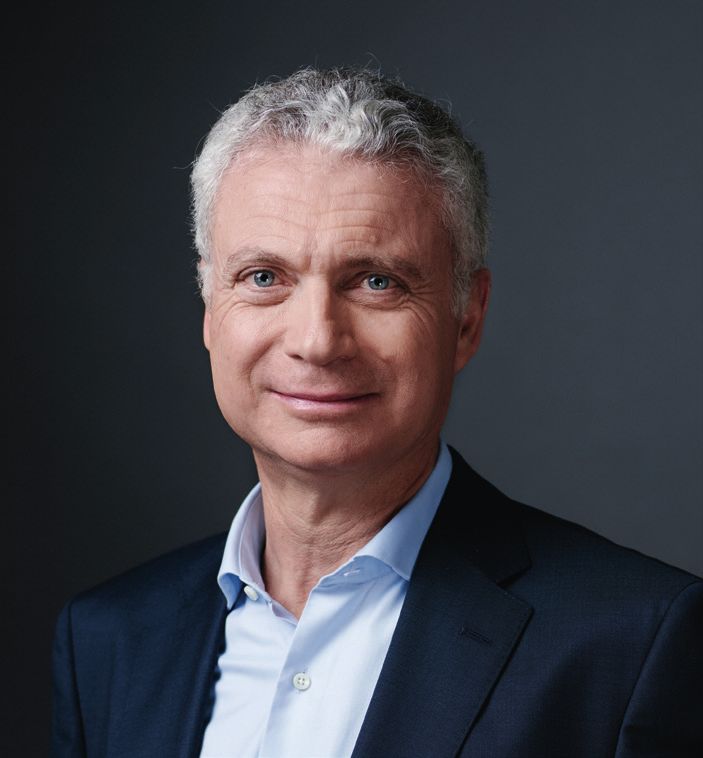
EDITORIAL

                                                           Welcome
               to the 2021 Global Entrepreneur and Family
               Report by BNP Paribas Wealth Management
                                                           Elite entrepreneurs and leading families influence the world’s economies,
                                                           both through their personal investments and through their businesses. They
                                                           are a powerful driver for economic growth.

                                                           In our new study, our seventh one, we explored their investment decisions and
                                                           the motivations behind them. Fascinating to see how they have pursued their
                                                           goals over the last year when we all experienced firsthand strong market
                                                           turbulence, continued low interest rates, and the social and economic impact
                                                           of the unprecedented global health crisis.

                                                           At the top of their list, we see the desire for strong investment strategies and
                                                           diversification, with equities being a preferred asset class. They are eager for
                                                           co-investment opportunities. New tech remains a hot topic. And finally, their
                                                           own businesses are one of their preferred investments for generating returns.

                                                           I invite you to delve into the fascinating details of how elite entrepreneurs and
                                     Vincent Lecomte       leading families have managed over the last year.

                                                           Why do entrepreneurs and families bank with us?

                                                           Serving these clients is part of our DNA as a global wealth manager. They
                                                           benefit from our best-in-class offering: personalized wealth planning,
                                                           sustainable investment solutions, credit and private equity. But we don’t stop
                                                           there. We open the doors to the expertise of the entire BNP Paribas Group,
                                                           from our investor-grade capital markets capabilities, real estate solutions,
                                                           securities services, M&A, and finally to borrowing opportunities thanks to our
                                                           Group’s solid foundations.

                                                           We accompany some of the world’s most demanding entrepreneurs and
                                                           leading families. As a responsible wealth manager serving a sustainable
                                                           economy, our objective has always been to improve our own understanding of
                                                           how to support entrepreneurs and families, both personally and professionally.

                                                           This is the purpose of the report.

                                                                                                                      Vincent Lecomte
                                                                                                            CEO BNP Paribas Wealth Management

2 - BNP PARIBAS GLOBAL ENTREPRENEUR & FAMILY REPORT 2021
Contributors

      Edmund Shing                    Claire Roborel De Climens                 Prashant Bhayani
 Global Chief Investment Officer            Global Head of Private           Chief Investment Officer (Asia)
BNP Paribas Wealth Management            and Alternative Investments        BNP Paribas Wealth Management
                                       BNP Paribas Wealth Management

                           Larry Young                        Tasha Vashisht
                         Head of International             Head of Thought Leadership,
                          Investment Group                      Aon Client Insight
                        BNP Paribas Real Estate

                                                                            BNP PARIBAS GLOBAL ENTREPRENEUR & FAMILY REPORT 2021   -3
Word from the editor

               W
                                elcome to the 2021 Global               open‑minded now on how different instruments,
                                Entrepreneur & Family Report from       including credit, could be used to enhance their
                                BNP Paribas Wealth Management.          portfolio and business performance.
                                This is the seventh iteration of the
                                                                        Crucially, we are able to preview their future
               flagship research study conducted by Aon on behalf
                                                                        investment strategies, which are under consideration
               of BNP Paribas Wealth Management, through which
                                                                        as vaccine rollouts pick up pace unevenly across the
               we have explored the attitudes, behaviours and
                                                                        world. Respondents tell us that they want to learn
               investment choices of nearly 16,000 high net worth
                                                                        how to respond to the low interest rate environment,
               and ultra-high net worth entrepreneurs across the
                                                                        how to integrate smart technologies in their business
               world. Since 2015, one of the bank’s missions – in
                                                                        and what the discussion of the ‘Green New Deal’ in
               collaboration with the world’s most successful
                                                                        Europe and the US means for them. Other aspects of
               entrepreneurs – has focussed on assessing the unique
                                                                        the bank’s 2021 Investment Themes are resonating
               contribution of entrepreneurship to the real economy.
                                                                        strongly in specific countries, including how to
               While entrepreneurship remains a consistent thread       respond to economic developments in China and the
               across all years of the study, we have made some         opportunity of changing post-pandemic consumption
               changes in 2021 to reflect the updated strategy of the   habits.
               bank. For the first time, we have expanded the scope
                                                                        To bring it all to life, and consistent with previous
               of our target audience to include multi-generation
                                                                        years, we continue to visualise selections of our
               families, addressing the critical importance of family
                                                                        survey data and highlight the most interesting
               businesses to the world’s economies.
                                                                        insights, including trends by demographic profile. Our
               This year, we gathered feedback from 920 respondents     data is contextualised by expert commentary from
               across 19 countries, spanning the Americas, Europe,      across BNP Paribas – from wealth management to the
               the Gulf Cooperation Council and Asia. Average           corporate and institutional bank, asset management
               investable wealth was USD17.2 million.                   and real estate – enriching the conversation with
                                                                        clients.
               After a year that will never be forgotten, it will
               come as no surprise that the theme of our research       We hope you enjoy the 2021 Global Entrepreneur &
               is navigating the COVID-era market environment.          Family Report mini-series. As ever, we would like to
               As our survey was conducted in the first quarter of      thank this year’s participants for their contributions.
               2021, it provides a timely snapshot. Respondents
               are reflecting on how their attitudes to asset classes
               like stocks, private equity, real estate and cash were
               impacted by persistent uncertainty since the onset of
               the pandemic in March 2020.
                                                                                          Tasha Vashisht
               Most held their nerve and, in some cases, responded                        Head of Thought Leadership,
               to financial market volatility by increasing exposure                      Aon Client Insight
               to certain asset classes. Many are even more

4 - BNP PARIBAS GLOBAL ENTREPRENEUR & FAMILY REPORT 2021
Research methodology
                                  & sampling

The research programme was undertaken by Aon’s                 The research methodology involved a mixed
Client Insight team between January and February               online and telephone survey programme with
2021. The audience of participants was high net worth          920 participants spanning 19 countries. In addition,
and ultra-high net worth entrepreneurs and multi-              Aon’s Client Insight team conducted interviews with
generation families.                                           experts across the bank in Europe, the United States,
                                                               the Gulf Cooperation Council and Asia.

         TOTAL SAMPLE                                                      REGIONS

    920
                                     Countries covered:
                                     Belgium, Brazil, China,
                                     France, Germany,
                                     Gulf Cooperation
                                                                      60%
                                                                        EUROPE
                                     Council, Hong Kong,
                                     Indonesia, Italy,
                                     Luxembourg,                                                         23%          APAC
                                     Netherlands, Poland,
                                     Singapore, Spain,
                                     Switzerland, Taiwan,
                                     Turkey, United Kingdom
                                                                                                            12% USA
                                     and United States                                                      5% GCC

            GENDER                                                             AGE

  75%
                                     Throughout this report,
                                     we use the following                                    59%
                        25%          definitions:
                                     • ‘Millennipreneur’:
                                                                                               36 TO 54
     MALE                FEMALE        Entrepreneur
                                       aged 35 or younger.           32%
                                                                      35 AND
                                     • ‘Boomerpreneur’:
                                       Entrepreneur                   UNDER
                                       aged 55 or older.
                                     • ‘Ultrapreneur’:
                                                                                                                       9%
                                                                                                                      55 AND
                                       Entrepreneur with                                                               OVER
                                       investable assets
                                       valued at USD25 million
                                       or more.

   USD17.2 M
   AVERAGE INVESTABLE ASSETS
                                                   50%
                                               FIRST-GENERATION
                                                                                                 50%
                                                                                            MULTI-GENERATION
                                                ENTREPRENEURS                                   FAMILIES

                                                                                     BNP PARIBAS GLOBAL ENTREPRENEUR & FAMILY REPORT 2021   -5
KEY FINDINGS

               Equities,                                                                         Inflation,
               rather than their own
               business, have topped                                                             volatility,
               US and European                                                                   the changing tax
               entrepreneurs’ portfolio                                                          environment and
               allocations for the third
                                                                                                 corporate debt
               year in a row                               Private                               are the biggest threats
               Despite the huge disruption of
               the crisis, allocations to equities         equity and                            38% consider inflation a serious
               and own businesses are 38%,
               on average, of global investable
                                                           real estate                           risk: it is ranked as the number
                                                                                                 one concern about the investment
               wealth. In Europe and the US,               had enduring appeal                   climate overall, both in Europe and
                                                                                                 the GCC. In the US, continued stock
               equities have supplanted own                to Ultrapreneurs during
               business three years in a row.                                                    market volatility is more worrying.
                                                           the COVID‑19 crisis                   High levels of corporate debt are
               Fifty-three percent increased
               their portfolio allocations towards         45% of Ultrapreneurs increased        problematic to 39% in APAC, while
               stocks in the last 12 months,               their allocations to direct           the changing tax and regulatory
               particularly in APAC, with Hong             private equity deals; 39% to          environments are additionally
               Kong (70%) and Singapore (67%)              Private Equity funds. The main        challenging for Ultrapreneurs (36%).
               leading the way.                            advantages were higher returns
                                                           and access to top-performing
                                                           fund managers. Multi-generation
                                                           families were most likely to
                                                           cite diversification as the key
                                                           driver. Real estate also attracted
                                                           higher inflows from 46% of
                                                           Ultrapreneurs, with diversification
                                                           and ease of transfer to family the
                                                           chief benefits.

6 - BNP PARIBAS GLOBAL ENTREPRENEUR & FAMILY REPORT 2021
25%
are holding more cash
                                                                         Smart
                                                                         technology,
                                                                         portfolio

                                    52%
than required right now
Millennipreneurs are twice as                                            diversification
likely as Boomerpreneurs to feel
                                                                         and energy
                                                                         transition
they are holding excess cash.
However, in many regions, this
                                    are more likely now
buffer is important for injecting                                        are the most popular
                                    than 6‑12 months
capital into their businesses                                            investment themes
or other private investments.       ago to consider credit
                                                                         for 2021
In APAC, 29% say they would         The primary use of credit is
like to hold more cash than         leverage for their businesses,       82% believe enabling smart
they do now. But, globally, 71%     which 58% cite as their driver for   technology is an important
would reduce their cash position    borrowing; in the GCC and APAC,      investment theme for 2021, while
if negative interest rates were     close to two-thirds use credit       79% are interested in learning
brought in.                         in this way. Multi-generation        how to diversify their portfolios
                                    families are more likely to be       in an era of low interest rates
                                    enthusiastic about the different     - the most important theme in
                                    uses of credit than other            APAC (82%). The ‘Green New
                                    entrepreneurs.                       Deal’ is an important item on
                                                                         the policy agenda in both the US
                                                                         and Europe, with some action
                                                                         already taken in response by 51%
                                                                         and 42% respectively, to their
                                                                         businesses and investments.
                                                                         This compares to only 30% who
                                                                         have taken action in APAC on
                                                                         energy transition - although a
                                                                         further 61% want to learn more
                                                                         about this theme.

                                                                          BNP PARIBAS GLOBAL ENTREPRENEUR & FAMILY REPORT 2021   -7
8 - BNP PARIBAS GLOBAL ENTREPRENEUR & FAMILY REPORT 2021
SECTION 1

   Covid-Era
Portfolio trends

             BNP PARIBAS GLOBAL ENTREPRENEUR & FAMILY REPORT 2021   -9
SECTION 1 / COVID-ERA PORTFOLIO TRENDS
Spotlight on entrepreneurial
Regions
Average Portfolio Asset Allocation
EUROPE (n = 550) APAC (n = 209) USA (n = 80) GCC (n = 50)
15% 14% 11% 15% 13% 13%
16% 12% 19% 13%
12%
19% 10% 7% 18% 8%
6% 8%
9% 8%
6% 29% 4% 6% 24%
16% 5% 4%
5% 5% 13% 3%
4% 4% 5% 4%
Own business Fixed income Private equity funds Real estate funds Direct real estate deals
Stocks Cash Direct private equity deals Hedge funds on’t know
D
Due to rounding, percentages presented throughout this chart may not precisely reflect the absolute figures.
Top 3 investment themes
EUROPE (n = 555) APAC (n = 210) USA (n = 80) GCC (n = 50)
Diversifying portfolios in Diversifying portfolios in Seeking out positive
47% 55% Enabling smart technologies 54% 46%
the era of low interest rates the era of low interest rates (above inflation) yields
Seeking out positive New consumption habits Diversifying portfolios in
Enabling smart technologies 46% 40% 51% 44%
(above inflation) yields after the pandemic the era of low interest rates
Seeking out positive Energy transition and Impact of generational
43% Enabling smart technologies 37% 51% 42%
(above inflation) yields the ‘Green Deal’ change on quality of life
Gender
Investment Climate Concerns 2021 Investment Strategy
37% Growth: Invest in companies that will 39%
Risks of inflation 38% grow quicker than average 30%
33% 22%
High levels of corporate debt 30%
Momentum: Invest with market trends 28%
Significant drop in global/domestic 33% Contrarian: Invest against 19%
stock markets 31% market trends 18%
Impact of de-globalisation on 32% Value: Pick stocks whose value 11%
specific companies and sectors 23% is underestimated 18%
Market concentration on a small 25% Impact: Invest in companies that generate 7%
number of technology stocks 25% societal or environmental benefits 5%
Changing tax/regulatory 24% 2%
Don’t know
environment 30% 1%
23%
Inability to exit illiquid investments 18%
Implications of high levels 22% Female respondents (N = 227)
of government debt 24% Male respondents (N = 693)
21%
Equity valuations being too high 20%
Accelerated tensions between 20%
China and the US 26%
Implications of a zero-yield 20%
environment 18%
20%
Risks of deflation 22%
2%
None of the above 3%
10 - BNP PARIBAS GLOBAL ENTREPRENEUR & FAMILY REPORT 2021investment choices
Age
Own business Average Portfolio Asset Allocation
Stocks
Fixed income UNDER 55 (n = 828) 55 AND OVER (n = 85)
Cash
Private equity funds 14% 14% 12%
24% 11%
Direct private equity deals 19% 10%
9%
Real estate funds 6%
6% 4%
Hedge funds 28%
5% 7%
Direct real estate deals 18% 5%
4%
3%
Don’t know 4% 2%
Impact on cash holdings Views on credit
UNDER 55 (n = 828) 55 AND OVER (n = 85) UNDER 55 (n = 828) 55 AND OVER (n = 85) Much more willing
to consider credit
26% 14% I now hold more of my 19% 6%
22% Slightly more willing
investable wealth in cash
than ideally required. to consider credit
35% o more or less willing
N
48% The right amount of my
investable wealth is held to consider credit
in cash. 45%
56% Slightly less willing to consider
I now hold less of my credit
investable wealth in cash 30%
Far less willing to consider credit
than ideally required. 13%
37% Don’t know
17% 4% 11% 15%
Founder Background
Use of Credit
60% 59% 60%
50% 58% 50%
46%
40%
To support 40%
my business
46% 34% 33% 32%
30% To enhance 30%
the performance
of my investment 30% 30%
20% portfolio 20%
28%
To purchase real estate To purchase real
for my own occupation estate for rental For leisure /
10% 10%
purposes personal 8%
requirements
0% 0%
7%
Family business entrepreneurs (N = 460)
I hardly rely on credit
First-generation entrepreneurs (N = 460) solutions
Views on credit
FAMILY BUSINESS ENTREPRENEURS (n = 460) FIRST-GENERATION ENTREPRENEURS (n = 460) Much more willing to consider credit
31% Slightly more willing to consider credit
33%
29%
36% No more or less willing to consider credit
Slightly less willing to consider credit
25% 12% Far less willing to consider credit
10%
11% 6% Don’t know
5%
BNP PARIBAS GLOBAL ENTREPRENEUR & FAMILY REPORT 2021 - 11SECTION 1 / COVID-ERA PORTFOLIO TRENDS
PORTFOLIO ALLOCATION SNAPSHOT
Equities joint top,
despite volatility
E
very year since 2014, the BNP Paribas Global Entrepreneur &
Family Report has presented a portfolio allocation snapshot
of highly successful entrepreneurs across the world. Over the
past two years, we found that equities and entrepreneurs’
own business ventures captured the highest proportions of their
investable wealth, as entrepreneurs favoured asset classes that
would generate superior financial returns.
Then, in March 2020, the COVID-19 pandemic brought worldwide
economic activity almost to a standstill and sent financial markets
on a lengthy rollercoaster ride. Twelve months later and we are
still very much in the COVID-era, but overall portfolio trends are
more consistent with the pre-pandemic picture. Equities and owned
businesses remain in joint first place in their financial portfolios,
each accounting for 19% of investable assets [ FIGURE 1 ].
12 - BNP PARIBAS GLOBAL ENTREPRENEUR & FAMILY REPORT 2021PORTFOLIO ALLOCATION SNAPSHOT
#1
Equities in joint first place globally
despite 2020 market turbulence
14%
FIXED
19%
INCOME
13%CASH
STOCKS
10%
PRIVATE EQUITY
FUNDS
6% DIRECT PRIVATE
19%
OWN
EQUITY DEALS
6% REAL ESTATE FUNDS
BUSINESS
4% DIRECT REAL
ESTATE DEALS
5% HEDGE FUNDS
4% COMMODITIES
Approximately what is the current allocation of your
[ FIGURE 1 ]
total financial portfolio across the following asset classes?
Note: This chart illustrates the average allocation across each asset class based on all responses (N = 913).
Not all entrepreneurs are allocated to all asset classes.
Source: 2021 BNP Paribas Global Entrepreneur & Family Report
BNP PARIBAS GLOBAL ENTREPRENEUR & FAMILY REPORT 2021 - 13SECTION 1 / COVID-ERA PORTFOLIO TRENDS
Although there are some variations across countries, these are not
as wide-ranging as previous years. At the top end, equities comprise
between roughly a quarter and a fifth of portfolio allocations: for
example, in Taiwan (26%), Italy (24%), Spain and the UK (22% each)
and Brazil (23%).
What does stand out is that in two regions – the US and Europe –
equities have now supplanted own business as the preferred asset
class for three years in a row. The exceptions to this in Europe
are France and Poland: the only two markets in the region where
allocations to own business are higher than equities (21% and 22%
respectively).
The typical portfolio in the Gulf Cooperation Council (GCC) region
bucks the trend back to equities since the inception of the crisis. GCC
entrepreneurs also have almost a quarter (24%) of their wealth tied
up in their own business ventures. Only 30% of portfolio holdings in
this region are classified as ‘alternative’ investments (i.e. real estate,
private equity, commodities and hedge funds) compared to 35% for
the overall sample.
Another notable exception to the global story is the APAC region. In
line with our findings from January 2020, entrepreneurs in several
Asian markets continue to significantly prefer investing in their own
businesses over equities (29% vs. 16% respectively).
Respondents from this region typically have far higher average net
worth than in other markets (at least USD25 million) and these
‘Ultrapreneurs’ have chosen to allocate nearly twice as much
to their own businesses as public markets. In fact, own business
allocations have reached 41% in China, with Hong Kong (38%) and
Singapore (36%) not far behind [ FIGURE 2 ].
14 - BNP PARIBAS GLOBAL ENTREPRENEUR & FAMILY REPORT 2021PORTFOLIO ALLOCATION SNAPSHOT
But allocations to own business are top in APAC and the GCC
Direct private
Commodities
equity funds
Hedge funds
equity deals
estate deals
Real estate
Direct real
business
income
Private
40 > 44%
Stocks
funds
Fixed
Cash
Own
30 > 39%
20 > 29%
10 > 19%
0 > 9%
Overall (N = 913) 19% 19% 14% 13% 10% 6% 6% 4% 5% 4%
Europe (N = 550) 16% 19% 15% 14% 10% 6% 6% 4% 5% 5%
APAC (N = 209) 29% 16% 11% 12% 9% 4% 7% 4% 5% 3%
USA (N = 80) 13% 18% 15% 13% 12% 8% 6% 5% 5% 4%
Belgium (N = 50) 16% 16% 18% 14% 10% 6% 7% 3% 6% 4%
Brazil (N = 24) 12% 23% 18% 22% 4% 7% 5% 5% 2% 2%
China (N = 40) 41% 13% 7% 10% 9% 2% 8% 3% 7% 1%
France (N = 89) 21% 20% 13% 10% 11% 5% 6% 4% 6% 3%
Germany (N = 95) 15% 19% 16% 15% 11% 6% 5% 5% 5% 4%
Hong Kong (N = 40) 38% 12% 8% 9% 10% 4% 8% 4% 5% 1%
Indonesia (N = 44) 20% 17% 16% 14% 7% 5% 7% 4% 4% 6%
Italy (N = 47) 16% 24% 12% 13% 9% 5% 7% 3% 4% 6%
Luxembourg (N = 25) 9% 19% 15% 15% 10% 9% 7% 4% 5% 6%
Netherlands (N = 50) 16% 16% 15% 12% 9% 8% 8% 5% 7% 5%
Poland (N = 25) 22% 15% 13% 19% 9% 6% 5% 3% 3% 4%
Singapore (N = 40) 36% 13% 8% 10% 9% 2% 9% 5% 6% 2%
Spain (N = 49) 15% 22% 14% 16% 10% 6% 5% 3% 4% 4%
Switzerland (N = 45) 16% 16% 14% 9% 11% 8% 7% 5% 8% 7%
Taiwan (N = 45) 13% 26% 16% 15% 8% 5% 6% 5% 3% 4%
Turkey (N = 25) 11% 21% 14% 20% 10% 5% 3% 3% 6% 6%
UK (N = 50) 12% 22% 17% 14% 11% 7% 5% 4% 5% 3%
USA (N = 80) 13% 18% 15% 13% 12% 8% 6% 5% 5% 4%
GCC (N = 50) 24% 19% 13% 13% 8% 4% 8% 4% 3% 2%
Approximately what is the current allocation of your total financial portfolio
[ FIGURE 2 ]
across the following asset classes?
Note: This chart illustrates the average allocation across each asset class based on all responses (N = 913).
Not all entrepreneurs are allocated to all asset classes.
Source: 2021 BNP Paribas Global Entrepreneur & Family Report
BNP PARIBAS GLOBAL ENTREPRENEUR & FAMILY REPORT 2021 - 15SECTION 1 / COVID-ERA PORTFOLIO TRENDS
That said, Asian Ultrapreneurs have also responded quickly to new
stock market opportunities during the COVID-19 crisis. 56% have
increased their portfolio allocations to stocks in the last 12 months
[ FIGURE 3 ]. Entrepreneurs in Hong Kong (70%) and Singapore (67%) are
most likely to have led the way, albeit their final allocations are well
below the global average, at 12% and 13% respectively.
In Europe, similarly, 53% increased allocations to equities over the
last 12 months – but the likelihood varied considerably by country.
For instance, more than 7 out of 10 entrepreneurs invested more
of their portfolio in stocks in the UK, Switzerland, Belgium and
Luxembourg during the crisis; compared to Italy (21%) and Spain
(23%), where allocations were already relatively high.
Finally, the surging appetite for equities was not matched by growing
demand for other asset classes in Europe. Nearly two-thirds of
European entrepreneurs either maintained or decreased their
allocations to commodities, private equity and real estate. 72% say
their investment in fixed income remained the same or declined,
echoing trends observable at the global level.
However, strikingly nearly a third of the global audience say they
have decreased their cash position in response to the crisis.
Edmund Shing is Global Chief Investment Officer of BNP Paribas Wealth Management.
Describing the change in investment preferences since the onset of the crisis, he says:
It was dependent on age, but we saw a big move towards technology – software
and internet companies. Entrepreneurs have always had a bias towards these
high growth companies, but this accelerated with the pandemic. We also saw the
impact of holding cash – a disastrous asset to hold. In the property segment, there
was a lot of caution around commercial property, i.e. retail and office; but residential
property has been OK.”
16 - BNP PARIBAS GLOBAL ENTREPRENEUR & FAMILY REPORT 2021PORTFOLIO ALLOCATION SNAPSHOT
31%
of entrepreneurs reduced
their cash position during the crisis
Increased
Stayed the same
Decreased
% of Respondents Overall Europe APAC USA
Stocks (N = 812) 53% 38% 9% 53% 39% 8% 56% 35% 9% 56% 33% 11%
Hedge funds (N = 436) 39% 47% 14% 44% 44% 12% 34% 52% 14% 28% 52% 20%
Commodities (N = 387) 37% 44% 18% 38% 45% 17% 33% 46% 21% 40% 50% 10%
Direct real (N = 403) 36% 47% 17% 36% 49% 15% 42% 43% 15% 30% 37% 33%
estate deals
Private equity (N = 638) 35% 50% 15% 36% 51% 13% 32% 53% 15% 40% 46% 15%
funds
Own business (N = 712) 35% 48% 18% 35% 50% 14% 29% 44% 27% 40% 46% 14%
Direct private (N = 485) 34% 49% 16% 36% 48% 15% 28% 54% 18% 31% 49% 20%
equity deals
Real estate (N = 528) 33% 55% 12% 36% 54% 10% 17% 70% 13% 47% 35% 18%
funds
Cash (N = 818) 32% 37% 31% 36% 36% 28% 17% 35% 48% 45% 39% 16%
Fixed income (N = 749) 27% 55% 18% 28% 58% 14% 22% 50% 29% 35% 50% 15%
[ FIGURE 3 ] Over the course of the COVID-19 crisis, have your allocations changed at all?
Note: This chart illustrates the proportion of respondents who select each option, sample size varies by asset class and region.
Not all entrepreneurs are allocated to all asset classes.
Source: 2021 BNP Paribas Global Entrepreneur & Family Report
BNP PARIBAS GLOBAL ENTREPRENEUR & FAMILY REPORT 2021 - 17SECTION 1 / COVID-ERA PORTFOLIO TRENDS
SPOTLIGHT ON PRIVATE ASSETS
Enduring attraction
of private equity
and real estate
T
he volatility experienced at the start of the pandemic in
March 2020 triggered understandable caution about buying
illiquid investments that cannot be easily converted into
cash. But as the crisis continued, Ultrapreneurs and families
reappraised the advantages of staying invested – particularly in
private equity1 and real estate – and eventually increased allocations
to these asset classes.
Private Equity consists of investing in unlisted companies at different stages of their growth,
(1)
with a view to optimising their value creation by supporting their managers’ development strategy.
18 - BNP PARIBAS GLOBAL ENTREPRENEUR & FAMILY REPORT 2021SPOTLIGHT ON PRIVATE ASSETS BNP PARIBAS GLOBAL ENTREPRENEUR & FAMILY REPORT 2021 - 19
SECTION 1 / COVID-ERA PORTFOLIO TRENDS

                                      Globally, one in three enhanced their portfolio commitment to either
                                      private equity funds (35%) or direct private equity deals (34%) during
                                      the crisis. Conversely, approximately just one in six decreased their
                                      commitment over the course of 2020 – overwhelmingly because they
                                      found the pandemic-related risks and macroeconomic uncertainty
                                      too great.
                                      But among the Ultrapreneur community, 45% increased allocations
                                      to direct PE deals and 39% to PE funds. Those at the USD10 million
                                      asset threshold responded similarly, with 48% investing more into
                                      PE funds. Combining these two ways of investing, private equity has
                                      captured 15% of the UHNW financial portfolio – indicating it is more
                                      attractive to these clients than fixed income or cash (12% each).

                        This is not a surprise to Claire Roborel de Climens, Global Head of Private and Alternative
                        Investments at BNP Paribas Wealth Management. She comments:

                                Private equity investors are not short-term. They are driven by long-term
                                vision as direct or indirect equity shareholders. This asset class was very
                        resilient in 2020, experiencing much lower volatility than public markets. Patient
                        capital is ideally suited for such kinds of uncertain periods.”

                                      For the wealthiest entrepreneurs and families, the advantages of
                                      private equity remain consistent and clear, even during a wholly
                                      unanticipated global economic crisis [ FIGURE 4 ]. The two main drivers
                                      for Ultrapreneurs to increase PE investments were the access to top-
                                      performing fund managers (cited by 41%) and, linked to this, the
                                      high returns potential offered by this asset class (38%).

                        Ms Roborel de Climens continues:

                                 When the crisis hit, the Private Equity firms immediately put an action plan
                                 in place to assist the management of their companies, re-negotiated credit
                        lines with the banks, sent their operating partners into the companies to support the
                        managers – and, if necessary, decided capital injection. In this context, proactivity
                        is critical, and the decision process must be quick and focused. This is one of the
                        benefits of this asset class – and our clients realise that.”

20 - BNP PARIBAS GLOBAL ENTREPRENEUR & FAMILY REPORT 2021
SPOTLIGHT ON PRIVATE ASSETS
Ultrapreneurs and
families see the opportunity of
private equity
in a crisis
40 > 45%
30 > 39%
Overall $10m to $25m Europe APAC USA
20 > 29%
(N = 312) $24.9m or more (N = 211) (N = 49) (N = 36)
0 > 19% (N = 92) (N = 61)
Higher returns compared to mutual funds 34% 27% 38% 38% 27% 19%
Opportunity to diversify my investments 33% 33% 30% 34% 27% 36%
My private banker advised me to do this 30% 29% 26% 32% 18% 33%
Access to top-performing fund managers 29% 33% 41% 29% 33% 33%
Prospect of sustainable opportunities 29% 30% 11% 28% 29% 36%
Access to high-growth privately-held companies 28% 28% 34% 27% 24% 25%
that are not yet listed
Cash is unattractive in this interest rate environment 25% 28% 20% 24% 31% 22%
Closer alignment to my risk appetite 25% 20% 33% 22% 35% 28%
Tax regime is favourable right now 24% 35% 23% 27% 20% 22%
Lower volatility than listed markets 20% 21% 21% 18% 22% 25%
You said you increased your allocation to private equity in 2020.
[ FIGURE 4 ]
Were any of the following factors important to your decision?
N = 312
The chart above represents the respondents who have private equity funds and/or direct private equity deals in their portfolios and increased their allocations
to either or both in 2020.
Source: 2021 BNP Paribas Global Entrepreneur & Family Report
BNP PARIBAS GLOBAL ENTREPRENEUR & FAMILY REPORT 2021 - 21SECTION 1 / COVID-ERA PORTFOLIO TRENDS
Growth trajectory of
private equity is appealing to
millennipreneurs
Overall
(N = 920)
Return of investment that meets my expectations 32%
High growth sector that I want 32%
Sector focus that I want 23%
Recommendation to me by my private banker or wealth manager 23%
Management fees are reasonable 21%
Support/financing of the real economy 21%
Tax regime is favourable 21%
Recommendation to me by a close family friend / trusted advisor 21%
Correct risk appetite for my needs 21%
Innovative compared to the traditional funds available on the market 19%
Avoids holding my investable assets in cash 16%
Geographic focus that I want 16%
Allows consolidation of my investments under the same manager 15%
Female Male 35 and under 36-54 55 and over Investor Non-investor
(N = 227) (N = 693) (N = 293) (N = 540) (N = 87) (N = 727) (N = 186)
40% 40%
30% 30%
20% 20%
10% 10%
Gender Age PE investor
Which of the following factors are most influential to your decision to invest in private
[ FIGURE 5 ]
equity in future?
N = 920
Source: 2021 BNP Paribas Global Entrepreneur & Family Report
22 - BNP PARIBAS GLOBAL ENTREPRENEUR & FAMILY REPORT 2021SPOTLIGHT ON PRIVATE ASSETS
Among multi-generation families, the prospect of diversification was
the primary driver for rebalancing in favour of private equity (cited
by 36%).
Other features have resonated more powerfully in APAC (and also to
those with less capital to invest, for whom funds are the only viable
option), including interesting new sustainable opportunities.
The combination of private equity’s high-growth trajectory and
potential for strong financial returns differentiate this asset class,
especially for Millennials [ FIGURE 5 ].
It is a similar story for real estate, which accounts for 11% of the
overall investment portfolio through funds and direct deals.
As with private equity, overall, one in three real estate investors
increased their financial commitment to real estate.
But in some instances, the surge in interest was far more significant
than that. This is especially true for Ultrapreneurs and their families
investing directly in real estate, 46% of whom enhanced their
commitment during 2020. The straightforward, easy to understand
nature of bricks and mortar is a strong part of its appeal even at the
highest level of wealth.
BNP PARIBAS GLOBAL ENTREPRENEUR & FAMILY REPORT 2021 - 23SECTION 1 / COVID-ERA PORTFOLIO TRENDS
This asset class has continued to attract investment despite market
uncertainty – again as a diversification opportunity, but also as an
efficient wealth transfer mechanism to the next generation and a
hedge against inflation [ FIGURE 6 ].
Larry Young is Head of the International Investment Group at BNP Paribas Real Estate.
Reflecting on the months since the start of the pandemic, he comments:
The pandemic was a shock to the real estate industry as a whole. In 2020,
volumes were down although not by as much as people thought they would
be. The biggest decline was in Asia, where the crisis started and from where
investors had furthest to travel; Asian investment went down approximately 40%
relative to European investment, which declined by 22%. Investment dropped least
in pan-European markets.”
Across APAC, 42% participated in more direct real estate deals to
take advantage of the environment.
The demand for real estate was most visible in Asian financial hubs,
Singapore (75%) and Hong Kong (50%); and important European
centres of wealth, Luxembourg (73%) and Switzerland (53%).
Mr Young points out that there are several sub-sector nuances that need to be considered
within real estate:
There is a complete change in the type of real estate investors are looking at,
compared to pre-pandemic. The office leasing market has lots of question
marks, with ‘working from home’ perceived to be the new normal. Pre-crisis, capital
cities like Amsterdam already had lots of people working from home, while generally
speaking in older cities, like Paris and Milan, people worked primarily from the office.
We don’t know how this will look in years to come.”
He continues:
Meanwhile, there are 50 shades to retail – what’s happening with luxury
boutiques is very different to the big shopping centres. We are beginning to
see things bottom out, as it has been an unloved sector for a while. Hotels are also
badly affected as tourism stopped and that is still continuing. Business travel remains
hugely affected. However, it is a V-shaped market so as soon as markets recover, so
will this market.”
24 - BNP PARIBAS GLOBAL ENTREPRENEUR & FAMILY REPORT 2021SPOTLIGHT ON PRIVATE ASSETS
Real estate
has multi-faceted appeal
to entrepreneurs and families
Overall
(N = 258)
This investment represents a good diversification opportunity 31%
An investment I can pass on to the next generation 29%
These investments are less risky than others 28%
This asset represents a hedge against inflation 27%
This asset class is straightforward to understand 26%
These investments are tangible 24%
Cash is unattractive in this environment 24%
Access to top-performing fund managers 23%
Economic conditions look favourable 23%
Fees are reasonable 23%
Tax regime is favourable right now 21%
$10m to $24.9m $25m or more Europe APAC USA
(N = 73) (N = 50) (N = 176) (N = 38) (N = 27)
50% 50%
40% 40%
30% 30%
20% 20%
10% 10%
Net Worth Region
You said you increased your allocation to real estate in 2020.
[ FIGURE 6 ]
Were any of the following factors important to your decision?
The chart above represents the respondents who have direct real estate deals and/or real estate funds in their portfolios and
increased their allocations to either or both in 2020.
N = 258
Source: 2021 BNP Paribas Global Entrepreneur & Family Report
BNP PARIBAS GLOBAL ENTREPRENEUR & FAMILY REPORT 2021 - 25SECTION 1 / COVID-ERA PORTFOLIO TRENDS
Covid-Era
investment
climate
A
lthough it didn’t feel that different to the preceding nine
months, the start of 2021 was associated with tremendous
optimism across the world that vaccines and government
stimulus would be foundational to rapid economic recovery.
Five months in and that path to recovery looks longer and bumpier
than originally may have been hoped. Even once the COVID-19
pandemic is in the rear-view mirror, entrepreneurs and families
identify several challenges to wealth creation on the horizon, linked
to how the crisis was handled by policymakers and businesses.
In fact, 77% of our respondents can cite at least three aspects of
the investment climate they are worried about in relation to their
portfolio.
Asked to pinpoint specific concerns, 38% now consider inflation to
be a serious risk. Higher household savings ratios and unprecedented
fiscal stimulus have pushed inflation to the top of their agenda, even
if there are few indicators of it being a current challenge.
Runaway price inflation is particularly troubling to entrepreneurs
based in emerging economies (such as Poland, 72%; and Indonesia,
58%) and those with volatile currencies, including Turkey (84%) and
Brazil (52%).
26 - BNP PARIBAS GLOBAL ENTREPRENEUR & FAMILY REPORT 2021BNP PARIBAS GLOBAL ENTREPRENEUR & FAMILY REPORT 2021 - 27
SECTION 1 / COVID-ERA PORTFOLIO TRENDS

                                      Naturally, these are not the only perceivable threats to their
                                      investment activities, with distinct aspects of the climate cutting
                                      through regionally. So, while inflation is the priority for entrepreneurs
                                      in the GCC and Europe, it is market volatility in the US. High levels
                                      of corporate debt are problematic to 39% in APAC, ranking as their
                                      number one concern, especially in Singapore (58%), China (43%) and
                                      Hong Kong (38%).
                                      Ultrapreneurs also focus on corporate debt, probably because of its
                                      implications to their own ventures and private investments into other
                                      firms. The changing tax and regulatory environment are other front-
                                      of-mind threats (cited by 36%).

                        Prashant Bhayani is Chief Investment Officer for BNP Paribas Wealth Management, Asia.
                        He comments:

                                Since 2009, and before the pandemic, there was an increase of debt usage.
                                Entrepreneurs were borrowing to grow, and we have seen increases in
                        leverage combined with an attractive lower interest rate environment. China is a
                        big proportion of the bond market (in terms of issuers) in Asia. Before the pandemic,
                        there were some selective defaults, and these have now picked up. It is not a torrent,
                        but investors know that central bank policies, like extended loans for the leisure
                        sector, cannot continue forever.”

28 - BNP PARIBAS GLOBAL ENTREPRENEUR & FAMILY REPORT 2021
COVID-ERA INVESTMENT CLIMATE
Inflation risk
is worrying entrepreneurs
and families globally
Overall
(N = 920)
Risks of inflation 38%
Significant drop in global/domestic stock markets 32%
High levels of corporate debt 31%
Changing tax/regulatory environment 28%
Impact of de-globalisation on specific companies and sectors 25%
Market concentration on a small number of technology stocks 25%
Accelerated tensions between China and the US 25%
Implications of high levels of government debt 24%
Risks of deflation 21%
Equity valuations being too high 20%
Inability to exit illiquid investments 19%
Implications of a zero-yield environment 19%
None of the above 3%
Europe APAC USA GCC Brazil
(N = 555) (N = 210) (N = 80) (N = 50) (N = 25)
60% 60%
40% 40%
20% 20%
0% 0%
Region
Since the COVID-19 pandemic, are you more concerned with any aspects
[ FIGURE 7 ]
of the investment climate?
N = 920
Source: 2021 BNP Paribas Global Entrepreneur & Family Report
BNP PARIBAS GLOBAL ENTREPRENEUR & FAMILY REPORT 2021 - 29SECTION 1 / COVID-ERA PORTFOLIO TRENDS
Concerns about inflation should be framed in the context of
entrepreneurs’ cash position since the crisis. For example, even
though one in three entrepreneurs reduced their cash holdings
during 2020, 25% still feel they are currently holding more cash
than required.
This is not universally the case, with Millennipreneurs (32%) twice as
likely to feel this way than Boomerpreneurs (14%). Those in Europe
(30%) and the US (29%) feel strongest that their cash position is
excessive. That said, most respondents can pinpoint advantages
to having a significant ‘buffer’, including the option to inject more
capital into their own businesses (or other businesses), if required.
The reverse trend is observable in other regions, with 29% in APAC,
wishing they could have a more substantial savings cushion. In
Brazil, the respondent base is evenly split between the viewpoints.
As investors look ahead to another unpredictable six months, finding
solutions that address inflation risks and excessive cash will be
critical for portfolio strategy.
And given the strange economic uncertainty, the opposite problem
– of deflation – also remains a realistic possibility on the horizon.
Seventy-one percent say they would reduce their cash position if
negative interest rates were introduced. This view is even more
prevalent in Switzerland (89%) and Belgium (80%)
Mr Shing concludes:
There are deflationary effects. We need wage inflation for inflation to happen,
which we do not currently have. People are underestimating the deflationary
effects of technology: large swathes of staff are working from home and in future
that may be accounted for by companies as an employee benefit, resulting in lower
pay. Artificial intelligence is gradually replacing aspects of white-collar jobs, putting
pressure on the service economy. The rise in freelancing, which is a good way for
companies to cut costs, also puts downward pressure on wages.”
The question of where entrepreneurs could invest instead is the focus
of the next section.
30 - BNP PARIBAS GLOBAL ENTREPRENEUR & FAMILY REPORT 2021COVID-ERA INVESTMENT CLIMATE
25%
of global entrepreneurs feel
their cash position is excessive
I now hold more
The right amount of my investable
of my investable wealth wealth in cash than
is held in cash. ideally required.
55% 25%
I now hold less of my
investable wealth
in cash than ideally
19% required.
Overall
(N = 920)
35 and under 36-54 55 and over Europe APAC USA GCC Brazil
(N = 293) (N = 540) (N = 87) (N = 555) (N = 210) (N = 80) (N = 50) (N = 25)
100% 100%
16% 17% 37% 14% 29% 18% 22% 32%
80% 51% 55% 80%
58% 53%
56%
59% 36%
60% 60%
48%
40% 40%
32% 30% 29% 32%
20% 23% 20%
20%
14%
10%
0% 0%
Age Region
What has been the impact of market conditions on the investable wealth
[ FIGURE 8 ]
you keep in cash?
N = 920
Source: 2021 BNP Paribas Global Entrepreneur & Family Report
BNP PARIBAS GLOBAL ENTREPRENEUR & FAMILY REPORT 2021 - 31SECTION 2 / 2021: PORTFOLIO STRATEGIES AND MARKET OUTLOOK 32 - BNP PARIBAS GLOBAL ENTREPRENEUR & FAMILY REPORT 2021
SECTION 2

2021: Portfolio
strategies and
market outlook

            BNP PARIBAS GLOBAL ENTREPRENEUR & FAMILY REPORT 2021   - 33
SECTION 2 / 2021: PORTFOLIO STRATEGIES AND MARKET OUTLOOK
The mindset
on credit
Economic uncertainty and volatility unleashed by the pandemic have
resulted in significant changes in investor attitudes. Preferences,
particularly among Ultrapreneurs and families, are shifting towards
private equity, real estate and stocks, while also holding more cash
reserves than required.
Looking ahead, changing mindsets around the investment climate
may determine another area of portfolio strategy. Huge fiscal stimulus
has underlined that the low interest rate environment is here to stay,
changing the entrepreneurial perspective on credit.
34 - BNP PARIBAS GLOBAL ENTREPRENEUR & FAMILY REPORT 2021BNP PARIBAS GLOBAL ENTREPRENEUR & FAMILY REPORT 2021 - 35
SECTION 2 / 2021: PORTFOLIO STRATEGIES AND MARKET OUTLOOK

                                                                 Entrepreneurs are more
                                                                 willing now to increase
                                                 exposure to credit
                                                                                   No more or less willing
                                                                                   to consider credit

                                                                                                                       Much more willing
                                                                                 31%                                   to consider credit
                       Slightly more willing
                           to consider credit
                                                                                                     18%
                                                                34%
                                                                                                                               Slightly less willing
                                                                                                                               to consider credit
                                                                                                            11%
                                                                              Overall
                                                                                                             5%              Far less willing
                                                                              (N = 920)                                      to consider credit

                                                                                                       1%    Don’t know

                                           Female                Male             35 and under 36-54              55 and over
                                           (N = 227)            (N = 693)              (N = 293)   (N = 540)        (N = 87)

               100%                                                                                                                                    100%
                                               7% 1%               5% 1%                  5%           4% 1%           15%
                                                                  11%                     12%          10%
                                              11%
               80%                                                17%                     25%          16%             13%                             80%
                                              22%
                                                                                                                        6%
                                                                  33%                                  32%             45%
               60%                                                                                                                                     60%
                                              26%                                         25%

               40%                                                                                                                                     40%

                                                                  34%                                  36%
                                              32%                                         33%
               20%                                                                                                                                     20%
                                                                                                                       22%

               0%                                                                                                                                       0%

                                                       Gender                                         Age

               [ FIGURE 9 ]   To what extent has your view on credit changed over the last 6 to 12 months?
               N = 920
               Source: 2021 BNP Paribas Global Entrepreneur & Family Report

36 - BNP PARIBAS GLOBAL ENTREPRENEUR & FAMILY REPORT 2021
THE MINDSET ON CREDIT
There has been a significant increase in enthusiasm, with 52% more
likely now than 6 to 12 months ago to consider credit [Figure 9].
Multi-generational families are twice as likely to feel their attitude
to credit has become much more positive than other entrepreneurs.
Willingness to rely on credit rises even higher in the US (79%) and
Europe (56%), regions where interest rates are either at historic lows
or in negative territory.
In APAC, there is more nuance, with those in Taiwan (44%), Indonesia
(40%) and China (28%) most likely to feel more enthusiastic about
increasing their credit exposure, compared with Hong Kong (18%) and
Singapore (11%), where the appetite has declined.
Family business Self-starter
Europe APAC USA GCC Brazil entrepreneurs entrepreneurs
(N = 555) (N = 210) (N = 80) (N = 50) (N = 25) (N = 460) (N = 460)
100% 100%
4% 3% 4% 1% 4% 4% 5% 1% 6% 1%
9% 10% 28% 8% 20% 10% 12%
20% 18% 10%
80% 25% 80%
38% 11%
44%
7% 33%
60% 30% 16% 60%
40% 29%
51%
40% 40%
40%
36% 36%
16% 31%
20% 20%
21%
16%
0% 0%
Region Founder
background
BNP PARIBAS GLOBAL ENTREPRENEUR & FAMILY REPORT 2021 - 37SECTION 2 / 2021: PORTFOLIO STRATEGIES AND MARKET OUTLOOK
Credit
is being leveraged for both
businesses and portfolios
Overall
(N = 920)
To support my business 58%
To enhance the performance of my investment portfolio 46%
To purchase real estate for my own occupation 32%
To purchase real estate for rental purposes 32%
For leisure / personal requirements 30%
I hardly rely on credit / lending solutions 8%
Female Male 35 and under 36-54 55 and over
(N = 227) (N = 693) (N = 293) (N = 540) (N = 87)
75% 75%
50% 50%
25% 25%
0% 0%
Gender Age
[ FIGURE 10 ] How do you primarily use credit to fulfil your requirements?
N = 920
Source: 2021 BNP Paribas Global Entrepreneur & Family Report
38 - BNP PARIBAS GLOBAL ENTREPRENEUR & FAMILY REPORT 2021THE MINDSET ON CREDIT
Globally, the primary uses of credit are leverage for entrepreneurial
businesses, which 58% cite as their driver for borrowing. This is
particularly important to Boomerpreneurs (61%) and entrepreneurs
in Germany (62%), the GCC region and APAC, where close to two-
thirds do so.
The regional exception to this use of credit is the US, where
entrepreneurs were significantly more likely to use leverage to
enhance portfolio performance. Many younger clients, including more
than half (54%) of Millennipreneurs, also take this approach.
In fact, this use of credit is gaining popularity in some European
financial hubs, including Luxembourg (72%), the UK and Switzerland
(64% each), and the Netherlands (58%).
Credit and leverage are typically more popular among multi-
generation family businesses than first-generation entrepreneurs,
and more likely to be deployed for real estate purposes as well.
Family business Self-starter
Europe APAC USA GCC Brazil entrepreneurs entrepreneurs
(N = 555) (N = 210) (N = 80) (N = 50) (N = 25) (N = 460) (N = 460)
75% 75%
50% 50%
25% 25%
0% 0%
Region Founder
background
BNP PARIBAS GLOBAL ENTREPRENEUR & FAMILY REPORT 2021 - 39SECTION 2 / 2021: PORTFOLIO STRATEGIES AND MARKET OUTLOOK
2021 INVESTMENT THEMES
Unlocking
growth
Having watched the global economy go into partial shutdown
in response to the pandemic in 2020, it’s natural to feel that the
only way is up for 2021 and beyond. There is, however, widespread
recognition that investment objectives, strategies and the risk-
reward trade-off should be adjusted compared to before the crisis.
After all, the uneven pace of vaccine rollouts, uncertainty over
timescales for lockdown easings and the potential impact of new
variants all make it very difficult to forecast with confidence.
40 - BNP PARIBAS GLOBAL ENTREPRENEUR & FAMILY REPORT 2021BNP PARIBAS GLOBAL ENTREPRENEUR & FAMILY REPORT 2021 - 41
SECTION 2 / 2021: PORTFOLIO STRATEGIES AND MARKET OUTLOOK

                                                                        32%
                                                         are opting for growth strategies
                                                             to tap into the recovery

                                                                               Momentum
                                                                               Invest with
                                                                               market trends
                                                                                                                  Contrarian
                                                                                                                  Invest against
                                                                                                                  market trends

                                                                                     26%
                         Growth
           Invest in companies
                                                                                                           19%
         that will grow quicker
                                                                                                                                        Value
                   than average
                                                                                                                                        Pick stocks
                                                                                                                                        whose value is
                                                     32%
                                                                                                                                        underestimated
                                                                                                                      16%

                                                                                                                                        Impact
                                                                                           2021                                         Invest in companies
                                                                                       Investiment                      6%              that generate societal or
                                                                                         strategy                                       environmental benefits

                                                                                                                    1% Don’t know

                       Female           Male         35 and under       36-54       55 and over      Europe       APAC        USA           GCC       Brazil
                       (N = 227)      (N = 693)         (N = 293)      (N = 540)      (N = 87)       (N = 555)   (N = 210)   (N = 80)      (N = 50)   (N = 25)

               50%                                                                                                                                               50%

               25%                                                                                                                                               25%

               0%                                                                                                                                                0%
                               Gender                                         Age                                            Region

                        What are your investment considerations for 2021, in anticipation of the global
               [ FIGURE 11 ]
               economic recovery? [Investment strategy]
               N = 920
               Source: 2021 BNP Paribas Global Entrepreneur & Family Report

42 - BNP PARIBAS GLOBAL ENTREPRENEUR & FAMILY REPORT 2021
2021 INVESTMENT THEMES
Despite this, global entrepreneurs are determined to see the upside
and are adjusting their portfolio behaviour in response. 32% are
embracing Growth strategies this year, seeking to tap into companies
that enjoy above-average growth potential prospects for the next
12 months. Female entrepreneurs are significantly more likely to
favour Growth strategies than male (39% vs. 30%).
Globally, just over a quarter (26%) are opting for Momentum
strategies, which aim to invest with market trends. This is surprisingly
consistent across generations and wealth, with pockets of popularity
in specific regions. For example, in APAC and the GCC, Momentum
strategies are even more compelling than Growth, selected by one in
three. In France, Momentum is preferred by 38%.
Commenting on these findings, Mr Bhayani adds:
COVID-19 in effect boosted the penetration of e-commerce, AI, online food
delivery, online education and online medicine (which really only took off
once the pandemic started). Everything went online and companies in these sectors
have kept the economy functioning. They will continue to draw attention from
entrepreneurs already interested in the theme.”
Contrarian strategies (which seek to invest against market trends)
are more than twice as popular with Millennipreneurs than
Boomerpreneurs (20% vs. 8%).
The aspirations for growth are nuanced and must be carefully
balanced with a notable intolerance for putting wealth at risk. Just
over half (53%) are seeking to maintain their wealth by reducing
risk.
Smart technology is the investment theme that entrepreneurs find
most compelling for unlocking growth during the recovery, if it can
be aligned to their new wealth objective and changing risk appetite.
BNP PARIBAS GLOBAL ENTREPRENEUR & FAMILY REPORT 2021 - 43SECTION 2 / 2021: PORTFOLIO STRATEGIES AND MARKET OUTLOOK
Almost half
are diversifying portfolios due
to the low-rate environment
Already acting on implications of this theme
Interested but not acting on implications of this theme
Not following but would like to receive information
Not interested in this theme
Don’t know / Not sure
0% 20% 40% 60% 80% 100%
% of Respondents
Diversifying portfolios in the era of low interest rates 48% 30% 16% 5%
Enabling smart technologies 45% 37% 15% 3% 1%
Seeking out positive yields 43% 31% 19% 5% 1%
Energy transition and the ‘Green Deal’ 39% 37% 18% 5% 1%
New consumption habits after the pandemic 38% 35% 19% 7% 1%
Strong governance to make profitable investments 37% 36% 21% 4% 1%
Impact of generational change on quality of life 36% 36% 20% 6% 1%
Challenges of a negative-yield world 32% 36% 24% 8% 1%
Vaccines, recovery and reflation 31% 40% 21% 8% 1%
China’s opening of capital markets and economic reform 27% 39% 23% 10% 1%
Looking ahead to the next 12 months, which of the following themes
[ FIGURE 12 ]
do you feel are most relevant to your business/investments?
N = 920
Source: 2021 BNP Paribas Global Entrepreneur & Family Report
44 - BNP PARIBAS GLOBAL ENTREPRENEUR & FAMILY REPORT 20212021 INVESTMENT THEMES
Globally, 82% are interested in integrating smart technology in their
businesses or making them a focus of their investments. In fact,
45% are already acting on this theme. Entrepreneurs in Brazil (64%),
Poland (68%), Turkey (60%), Switzerland (58%) and the Netherlands
(56%) are most likely already to be taking action.
Mitigating the impact of the monetary policy environment is the
second most compelling investment theme. Globally, 79% cite
diversifying their portfolios in an era of low interest rates as an
important topic to learn more about.
Similarly, 74% select the related theme of seeking out positive (above
inflation) yields as important for their self-education – particularly in
Indonesia, the UK, Poland and Germany.
Different investment themes resonate in each region. Along with
responding to vaccine rollouts, the opening of China’s capital markets
is the theme where fewest entrepreneurs have taken any action
but are currently most interested (39%), especially in Hong Kong,
Singapore and Taiwan. Their yearning for information is matched in
Europe, especially in Germany (48%), Italy (46%), Poland (44%) and
France (41%).
Others are more concerned with long-term trends, including those
where there have been dramatic behavioural shifts or policymaking
has been accelerated by the pandemic. The ‘Green New Deal’ is an
important item on the policy agenda in both the US and Europe,
and is already cutting through strongly in these regions, with action
taken by 51% and 42% of entrepreneurs respectively, presumably as
they decarbonise their business operations and portfolios.
The post-pandemic world is also occupying the minds of Brazilian
entrepreneurs. Along with the US, one in two of these entrepreneurs
is adapting their strategy to new emerging consumption habits.
BNP PARIBAS GLOBAL ENTREPRENEUR & FAMILY REPORT 2021 - 4546 - BNP PARIBAS GLOBAL ENTREPRENEUR & FAMILY REPORT 2021
In conclusion
In Part I of this year’s report, we have assessed how       themes to refresh their investment strategies. These
entrepreneurs and families are responding to the            include (but are not limited to) integrating smart
COVID-era market environment.                               technologies to assist with business transformation
                                                            and the global transition from fossil fuels to new
Despite the chaos triggered by the onset of the
                                                            types of energy production.
pandemic, most respondents increased their
allocations to equities, particularly in APAC, and          In Part II, we re-visit the new potential for sustainable
maintained their exposure to other asset classes. The       investing, looking at the impact journey from selection
typical risk-return profile has shifted more in favour of   through to monitoring. This is especially relevant
wealth preservation. But having built up ample cash         in the year of the UN Climate Change Conference
buffers, some respondents (especially Ultrapreneurs)        (COP26) and at a time when both the European Union
have shifted more capital to private equity and real        and the US agree that a ‘Green New Deal’ is integral
estate to diversify further and benefit from access to      to the economic recovery.
high-quality fund managers.
                                                            In Part III of this mini-series, we step away from
The most notable shift in portfolio attitudes has been      investments to look at the wider private and
the increased willingness to use credit. This may be        professional needs of elite entrepreneurs and families.
because the crisis has cemented the belief that the         This includes some of the new areas that families, in
low interest rate environment is here to stay. More         particular, are looking for in their family governance
than half now say they are more open to credit than         arrangements as they re-evaluate business strategy,
before the crisis and perceive advantages for their         private investments and the involvement of the next
businesses and portfolio performance.                       generation.

The question of where to invest in the COVID-               Our purpose is to identify the actions and information
era environment is top-of-mind, as tough market             that will help global and family entrepreneurship to
scenarios like inflation, rising corporate debt and         thrive. We hope you enjoyed Part I and stay tuned for
changing tax policies loom on the horizon. Looking          Part II.
ahead, entrepreneurs identify several compelling

                                                                                BNP PARIBAS GLOBAL ENTREPRENEUR & FAMILY REPORT 2021   - 47
ABOUT US
BNP Paribas Aon’s client
Wealth Management Insight team
In a world that is ever changing, entrepreneurs and Owned by Aon plc, Aon’s Client Insight team is a
families need to build their wealth strategy with a leading insight and strategy consultancy to the global
partner they trust. wealth industry. We specialise in understanding
ultra/high net worth individuals and the financial
Our experts create tailored solutions by drawing on
institutions with which they interact, sharing our
our extensive network and specific expertise to help
expertise with business leaders to enable them to
you build a bridge between your professional and
drive business growth and performance.
personal wealth. We are here to advise you every step
of the way. Backed by our global wealth management As a global team of consultants, we have a deep
network, our business centers around the world understanding of the challenges facing the wealth
and our Corporate and Investment Bank, you benefit management sector and the opportunities for growth.
from the services of a leading banking and financial We have a passion for improving client outcomes. Our
institution. core competencies are client engagement studies,
thought leadership, brand tracking assessments and
Our Wealth Management division with EUR402 billion
strategic consulting.
of assets under management is a leading global
private bank – number seven globally and number To date, we have collected more than 150,000
one in the Eurozone – with offices in three hubs in individual client responses globally – providing
Europe, Asia and the USA and 6,800 professionals. Our unparalleled insight to the institutions we work with.
knowledge of local investment climates and culture
This research in this report was conducted and
makes us the natural wealth management partner
written by Aon UK Limited, part of Aon plc. Aon UK
for clients wanting to manage, preserve and develop
Limited is authorised and regulated by the Financial
their wealth across borders over the long term. We
Conduct Authority.
have been recently recognized “Best Private Bank
in the World”, “Best Private Bank in Europe”, “Best Aon plc (NYSE: AON) is a leading global professional
Private Bank in Hong Kong” and “Best Private Bank services firm providing a broad range of risk,
in US West”. retirement and health solutions. Our 50,000 colleagues
in 120 countries empower results for clients by using
wealthmanagement.bnpparibas
proprietary data and analytics to deliver insights that
reduce volatility and improve performance.
48 - BNP PARIBAS GLOBAL ENTREPRENEUR & FAMILY REPORT 2021You can also read


