GLOBAL RISK ANALYSIS March 2021 - ACAPS
←
→
Page content transcription
If your browser does not render page correctly, please read the page content below
GLOBAL RISK ANALYSIS March 2021
INTRODUCTION
ACAPS Global Risk Analysis outlines a number
of key contexts where a notable deterioration
may occur within the next six months, leading to
a spike in humanitarian needs

The crises identified in this report have been selected
                                                           For the next six months, ACAPS              WHAT IS A RISK?
                                                           has identified the following eight risks:
because there are certain events or factors (trig-                                                     Risk is a function of probability and impact. ACAPS defines a
gers) that may emerge over the coming six months,                                                      risk as the probability of a hazard or multiple hazards occurring,
which point towards a hazard materialising and leading                       Colombia                  combined with the estimated impact of the hazard(s). The risk
                                                               High                                    level (low, medium, or high) posed by a hazard rises as either the
to a potential shift or change in the current situations                     Venezuela                 probability of it occurring or the severity of the expected impact
of the monitored countries.
                                                                                                       increases, or both.
ACAPS analysts conduct daily monitoring and inde-                                                      Overall, the occurrence of a risk prompts a change from the sta-
pendent analysis of more than 150 countries, including                       Lebanon
                                                                                                       tus quo, which leads to a notable deterioration in the humanitar-
risk analysis and risks analysis updates.                                    Myanmar                   ian situation and a higher number of people in need, or a higher
                                                             Medium
                                                                             Nicaragua                 severity of need.
ACAPS continues to closely monitor the identified
risks, to see how they evolve and whether or not they                        Ukraine                   The ACAPS risk methodology combines probability with impact
                                                                                                       for each hazard or combination of hazards. This gives us the risk.
materialise. You can find updates on the risks identi-
                                                                                                       Risks fall into one of three categories: low, medium, or high.
fied in the October 2020 Global Risk Analysis at the                         Libya
end of this report.                                             Low                                    In this report, some risks are raised as ‘new trends’ and others
                                                                             Western Sahara            as ‘rapid and marked deterioration’. A deteriorating humanitarian
                                                                                                       situation that continues at the same rate is considered a trend
                                                                                                       rather than a risk; these are not included in the report.

2   ACAPS RISK ANALYSIS — MARCH 2021
INTRODUCTION
KEY PRINCIPLES OF RISK ANALYSIS LIMITATIONS OTHER FORWARD-LOOKING ANALYSIS FROM ACAPS
Risk analysis requires a solid understanding of the context and • Considering the diversity and complexity of the crises in this ACAPS often produces country-specific risk reports, scenarios,
an investigation of how the variables that could cause or resist report, it has not been possible to cover each one in detail. and anticipatory notes as part of our forward-looking analytical
change interact. Instead, we have highlighted the broad evolution of each work. Some recent publications that complement this global
crisis to flag potential deteriorations and inform operational, analysis are:
Risk analysis is not an exact science. An event identified as a strategic, and policy decision-makers.
hazard might not evolve or materialise as expected, or not have • Post-COVID-19 scenarios
• The focus on risk analysis means that we have not considered
the projected impact. Events or factors (triggers) that were • Yemen risk overview
multiple possible factors that could lead to an improvement
expected to drive a shift or change in the current situation may • Sahel scenarios
in a given context.
not occur or new factors might arise, preventing the expected • Yemen risk alert
change or shift in the situation from happening. • We do not publish our full risk monitoring, but rather an edited • South Sudan Scenarios
version that we think is relevant for the humanitarian sector.
The probability of a risk does not need to be high for it to be a
concern. A hazardous event estimated to have a 50% probability • In this report we have not given attention to unforeseen
of occurring should be a cause for concern for humanitarians. In circumstances that may change the course of events, such
some cases, a probability as low as 30% (a less than one-in-three as sudden onset disasters, including natural hazards like
earthquakes or volcanic eruptions.
chance of occurring) may be of concern.
• Information gaps limit the analysis.
• While efforts were made to ensure that all information was
current at the time of publication, the fluidity of situations in
some countries means that significant changes can occur
quickly.
Read more about our risk methodology
3 ACAPS RISK ANALYSIS — MARCH 2021GLOBAL *The risks identified on this map
Risk level
High
RISK ANALYSIS
are expected to materialise within
the next six months.
Medium
Low
MARCH 2021
UKRAINE
Moderate conflict escalation in
Donbas leads to casualties and an
LEBANON
Subsidies for basic goods are
increase in humanitarian needs
removed, leading to a marked
deterioration of economic conditions
and food insecurity, and an increase
NICARAGUA in political violence
New legislation that highly limits
humanitarian operations adds
MYANMAR
Militarisation of political space and
to unmet needs and worsens
the public sphere, and the escalation
humanitarian conditions WESTERN SAHARA of violence by the military junta, result
Localised fighting aggravates in greater access constraints,
existing protection concerns and worsening of needs, and heightened
results in increased protection needs protection concerns, particularly for
and limited access to services ethnic minority groups
COLOMBIA
Significant escalation of
LIBYA
Disruption of the political process
conflict leads to increased
leads to conflict escalation and an
displacement, attacks in
increase in humanitarian needs
urban areas, and reduced
humanitarian access, as well VENEZUELA
as a spike in the number of Worsening living conditions and
confinement events and attacks reduced access to humanitarian
on social leaders assistance and basic services lead to
a spike in displacement to Colombia
The border lines and names of the countries or territories indicated on this map comply with
official international practices (UN) and do not in any way reflect an ACAPS political stance.
4 ACAPS RISK ANALYSIS — MARCH 2021Risk level High
COLOMBIA PROBABILITY
Significant escalation of conflict leads to increased
displacement, attacks in urban areas, and reduced
IMPACT
humanitarian access, as well as a spike in the number
of confinement events and attacks on social leaders
RATIONALE There is a risk of significant conflict escalation as state secu- IMPACT
rity forces lack capacity and presence, and armed groups are
Following the demobilisation of the Revolutionary Armed Forces of taking advantage of or are imposing containment measures Multiple humanitarian consequences are likely in the event of
Colombia (FARC-EP), many non-state armed groups in Colombia to consolidate control over disputed areas, including areas conflict escalation, especially if coupled with the extension of
have fragmented and created new alliances. New armed groups previously controlled by the FARC-EP. The escalation is likely COVID-19 containment measures, such as mobility restrictions
have emerged along the border with Venezuela in areas such as to manifest in conflict spreading to urban areas, where armed and prolonged states of emergency in some areas of the country.
Catatumbo, and along main narcotrafficking routes including north- groups have formed alliances with urban criminal groups. Armed Limited freedom of movement and the state of emergency are
ern Antioquia, Choco, and the wider Pacific Coast region. Fighting groups have started using social media more frequently for already translating into reduced service provision and reduced
for territorial control and control over irregular economies such as online recruitment, especially of young men and women who humanitarian presence. Fighting is likely to negatively impact
drug production and trafficking has intensified. The presence and have lost their jobs because of the pandemic. The recruitment humanitarian access in the affected areas.
involvement of Mexican drug cartels in alliances and rivalries add of new members would increase armed groups’ capacity to carry
If armed group activity against civilians increases both in rural
further complexity to the conflict (Pares 06/2020; Indepaz 08/2020). out attacks in urban areas (El Tiempo 26/09/2020; El Espectador
and urban areas, this will result in targeted attacks on social
Since the beginning of the COVID-19 pandemic, state presence in 24/09/2020). Escalation of conflict could also lead to a spillover
leaders, human rights activists, and teachers; massacres; and
some areas has further weakened. Armed groups have begun to into Venezuela, as various armed groups already have control
take advantage of national containment measures to impose their over areas at the Colombia-Venezuela border (Semana 15/02/2021;
own measures and exercise social control over civilians, especially Infobae 14/02/2021).
in conflict-affected regions (HRW 15/07/2020). Under the pretext of
Significant conflict escalation would become more likely should
containing the spread of the virus, armed groups have imposed
financial constraints, aggravated by COVID-19, render Colombia
highly restrictive and illegal COVID-19 prevention measures such
unable to reduce violence and inequality as per the 2016 peace
as business closures, roadblocks, checkpoints, curfews, and
agreement, resulting in armed groups taking advantage of the
quarantines in at least 11 of Colombia’s 32 departments. This is
situation to organise attacks and expand territorial control.
facilitated by the scarce institutional presence in some regions
of the country (ACAPS 27/11/2020).
5 ACAPS RISK ANALYSIS — MARCH 2021Risk level High
COLOMBIA
Number of massacres1 over 2020 and the beginning of 2021
increased confrontations between rival armed groups for terri- 18
torial control or confrontations between armed groups and state
forces (Indepaz 13/02/2021; Universidad de los Andes 15/10/2020). 16
Clashes between armed groups over territorial disputes will
14
generate displacement. While this mostly affects Colombian
Source: INDEPAZ (23/03/2021)
communities, Venezuelan refugees and migrants have also been 12
victims of threats and displacement, and will be increasingly
10
exposed to both (W Radio 25/11/2020).
8
Significant conflict escalation would likely lead to further
confinement of civilian populations, increased presence of 6
antipersonnel mines, and threats or attacks against members of
communities living in conflict-affected areas, such as farmers, 4
indigenous people, and Afro-Colombian communities. Demobi-
2
lised members of the National Liberation Army (ELN) and/or the
FARC-EP are at high risk of targeted attacks (ACLED 03/02/2021; 0
Jan Feb Mar Apr May Jun Jul Aug Sep Oct Nov Dec
InSight Crime 10/12/2020; UN Colombia 07/01/2021; Universidad Nacional
de Colombia 06/09/2020).
2020 2021
1. In this report ACAPS uses the term ‘massacres’ in the context of Colombia with the meaning of “intentional murder of four or more people in a defenceless state”
as defined by the Historical Memory Group. In Colombia, there is no agreed upon legal definition of the term ‘massacres’ and the use of the term varies according
to the sources (DW 24/08/2020; Centro Nacional de Memoria Historica last view 26/03/2021; Historical Memory Group 06/2016).
6 ACAPS RISK ANALYSIS — MARCH 2021Risk level High
VENEZUELA PROBABILITY
Worsening living conditions and reduced access to
humanitarian assistance and basic services lead to
IMPACT
a spike in displacement to Colombia
RATIONALE Humanitarian constraints and harassment against humanitarian IMPACT
organisations will likely force many national CSOs, NGOs, and
In December 2020, after winning 91% of seats in the National INGOs to suspend or close their operations, decreasing their Significantly reduced access to basic services, goods, and
Assembly with a low voter turnout, President Nicolás Maduro’s ability to implement programmes to respond to people’s needs. humanitarian assistance, coupled with the effects of COVID-19,
government gained formal control of all major political insti- This could likely increase the number of people in need in Ven- is expected to lead to worse living conditions and a severe rise
tutions in Venezuela. The post-electoral period has left the ezuela. in humanitarian needs (ICG 30/12/2020; Council of Foreign Relations
opposition weakened and holding very limited political power (AP 22/01/2021). A survey conducted by FAO in nine states of Vene-
Nationwide fuel shortages are hampering the movement of peo-
10/12/2020). It has also been accompanied by an increase in har- zuela in September 2020 showed that over 70% of those surveyed
ple and goods, including humanitarian aid, and limiting people’s
assment and intimidation of civil society organisations (CSOs) did not have enough food or limited the diversity of their diet, and
access to food and essential services such as healthcare. The
and groups, NGOs, and media outlets by security forces, includ- more than 50% reported consuming less healthy and nutritious
economic crisis is also a driver of humanitarian needs in the
ing office raids, detention of members/staff, arrest warrants, and food (FAO 01/2021). Food security and nutrition are expected to
country. Hyperinflation is causing price increases and household
the freezing of bank accounts (HRW 21/12/2020). Such activities deteriorate because of decreased purchasing power, as well as
purchasing power is low, as illustrated by the monthly minimum
are expected to continue over the next six months. local food production challenges (OCHA 2021). Continuation of
wage - which could buy less than 2% of the monthly basic food
or increases in fuel shortages will affect overall movement and
National NGOs will continue to face increased difficulties in regis- basket in November 2020 (CENDA 28/12/2020). The price of food
humanitarian access to people in need of assistance, as well as
tering or updating their registration, resulting in months of delays and services is likely to increase or remain the same, while the
the entire food production chain - especially food distribution in
in the implementation of activities or the suspension of opera- minimum wage will likely decrease and hyperinflation will con-
indigenous communities and hard-to-reach areas (Food Security
tions. The situation risks being further aggravated by the Novem- tinue. As a result, access to basic services and goods, including
Cluster Venezuela 15/09/2020). Fuel shortages will also affect
ber 2020 announcement by the new National Assembly of a new food, will be very limited.
Venezuelans who travel across the country to cross the border
law meant to significantly restrict the access of NGOs to foreign
into Colombia. The lack of public transport will force people to
funding (Food Security Cluster Venezuela 15/09/2020; Caracas Chronicles
journey on foot, putting them at risk of extortion, physical and/or
06/01/2021; BBC 08/12/2020; DW 03/12/2020; UN News 18/12/2020).
sexual violence, and exploitation.
7 ACAPS RISK ANALYSIS — MARCH 2021Risk level High
VENEZUELA
Estimated migration flows and protection concerns at the Venezuela-Colombia border
Venezuela
Estimated migration ows and protection concerns at the Venezuela-Colombia border
Worsening living conditions and a significant increase in
humanitarian needs are likely to lead to increased migration and
displacement flows. Over 330,000 Venezuelans are projected to
leave the country and be in transit throughout the region in 2021.
According to some sources, this number could be higher - if not LARA
CARABOBO
CARACAS
double - if the border between Colombia and Venezuela reopens ZULIA
(key informant interview 15/03/2021). Of the 330,000, an estimated
160,000 migrants and refugees will pass through Colombia, PANAMA
To Centra
l America -
O ver 3000 e
s timated mig
over 90,000 through Ecuador, around 76,000 through Peru, rants
TÁCHIRA VENEZUELA
and around 3,000 through Central America and Mexico (R4V
10/12/2020). These are estimates based on the continuation of a ia
APURE
b
olom
To C
deteriorating trend; the number could also be higher if NGOs are s
rant
mig
significantly hampered in their operations. Insecurity, violence, 0 est
ima
ted
00
176
and persecution are other reasons for leaving Venezuela and Ov
er
are expected to drive migration and refugee movements, as the mi
gr
an
ts
ted
excessive use of force by government forces increases (Mixed
a
tim
BOGOTA es
00
00
Migration Centre 01/2020). r9
ts
ve
COLOMBIA
an
-O
or
igr
d
m
ua
Ec
ed
To
at
tim
es
00
80
r7
BRAZIL
ve
Armed conflict in Colombia
-O
ru
Capital
Pe
To
Dangerous border crossings
Exposure to extortion,
Data sources:
exploitation and violence ACAPS, Natural Earth Data, Regional
Refugee and Migrant Response Plan
ECUADOR
Migration flows Map created by MapAction (15/03/2021)
8 ACAPS RISK ANALYSIS — MARCH 2021Risk level Medium
LEBANON PROBABILITY
Subsidies for basic goods are removed, leading
to a marked deterioration of economic conditions
and food insecurity, and an increase in political
IMPACT
violence
RATIONALE The expected deterioration in living conditions, driven by the cur- IMPACT
rency depreciation and subsidy removal, is likely to drive further
People in Lebanon have suffered from mounting public debt protests across Lebanon. The rapid and unprecedented currency The removal of subsidies will result in immediate price increases
and currency devaluation since October 2019. The compounded depreciation, which has reached 15,000 Lebanese pounds to 1 for basic commodities such as wheat, fuel, and medicine. This
effects of economic deterioration and a negative perception USD, has already led to the re-ignition of protests in March 2021 will reduce households’ purchasing power, pushing more people
of the response to the Beirut blast in August 2020 led to the (Middle East Eye 16/03/2021). Poverty levels increased from 30% of under the poverty line and severely restricting access to basic
government’s resignation on 10 August. The government of the Lebanese population in 2018 to 45% in 2019. Salaries have goods, particularly for refugee populations and poor Lebanese
Hassan Diab remains in a caretaker capacity until a new cabinet not increased in line with inflation, decreasing purchasing power households. Almost half of the Lebanese population and all
is formed. The formation of a new government has been stalled and pushing more people into poverty (WFP 12/12/2020; World Bank Syrian refugees already live with dire levels of food insecurity
however, hampering any political or economic reforms (Al Jazeera 01/12/2020). Depreciating currency, the risk of subsidies being (WFP 24/02/2021; Inter-Agency Coordination 18/12/2020). The impact
07/03/2021; Alarabiya News 18/02/2021; Al-Monitor 29/11/2020). removed, and soaring prices triggered further demonstrations in of the subsidy removal, compounded by governmental control
Beirut in June and December 2020 (AP 30/06/2020; BBC 08/12/2020). over foreign capital, will likely be felt by up to 90% of Lebanese
The Lebanese government subsidises fuel, flour, medications,
residents and all Syrian refugees across all of the country’s
and other essential commodities to maintain affordable prices The protests are likely to turn into violent demonstrations and trig-
cities within the next six months (Arabian Business 27/08/2020;
of basic products (Arabian Business 05/01/2021). In late 2020, the ger a violent police response. This has already happened in Tripoli:
Financial Times 16/06/2020).
governor of Lebanon’s Central Bank publicly stated that deplet- following the announcement of a COVID-19 curfew amid already
ing foreign currency reserves were likely to push the state to deteriorating economic conditions, protests sparked between 14
remove subsidies (Qantara 04/01/2021). Recent public statements January - 8 February 2021 and spread to other cities including
suggested that resources for subsidies are likely to last up to Beirut (BBC 28/01/2020; Al Jazeera 08/03/2021). Since 2019, security
approximately June 2021, depending on how much money forces have exercised increasing violence against and repression
remains in the foreign reserve (Bloomberg 16/03/2021). of protesters, through arrests and detentions (LCPS 31/10/2020;
Amnesty International 22/09/2020; HRW 02/09/2020; HRW 17/01/2020).
9 ACAPS RISK ANALYSIS — MARCH 2021Risk level Medium
LEBANON 12000
Official and black market exchange rate LBP to USD between February 2020-February 2021
Source: Banque du Liban - Lira rate - Lebanese Lira
10000
8000
6000
The removal of subsidies is likely to drive an increase both in the 4000
number of people suffering from food insecurity and malnutrition
and the severity of their needs. It is likely to increase the adoption 2000
of negative coping mechanisms by the country's poorest, ranging
from eating less food or choosing a less diverse diet to child labour,
0
crime, and migration.
21
20
20
21
20
20
0
20
20
20
0
20
20
l2
r2
n
p
b
b
n
ec
g
ov
ct
ay
ar
Ju
Ap
Ja
Se
Fe
Fe
Ju
Au
O
D
M
N
M
There is a high probability that subsidy removal would provide a
Black market USD rate Official Banque du Liban USD rate
foundation for mass political mobilisation, social tensions, and
rivalry over resources (LBC Group 04/03/2021). The increase in pro-
tests and violence is likely to result in the antagonisation of social Number of protests and riots in Lebanon between February 2020-February 2021
and sectarian identities and deeper fragmentation. High protection 300 Sudden decrease in the
value of the Lebanese lira
concerns are also expected as a result, including physical violence,
Source: ACLED (access 04/03/2021)
250
sexual harassment, evictions, tensions between Lebanese people
and refugees, and significant migration. Increases in crime, sub- 200
Growing frustration due to
stance abuse, suicide, and domestic violence would also be likely. lack of political and economic
150 reform and increase in
COVID-19 restrictions
Civil unrest, road blockages, and riots will lead to service gaps Beirut port explosion
100
and deterioration, particularly in urban centres. In the absence of
government support, humanitarian and development organisations 50
and civil society will likely try to fill the gaps. Many challenges
0
will be difficult for humanitarians to overcome, including currency
0
20
20
20
20
20
20
0
20
21
20
20
21
r2
l2
exchange, procurement, market availability, access, and coverage.
ct
g
p
ov
ec
ay
n
n
b
ar
b
Ju
Ap
Au
Se
Ju
Ja
Fe
Fe
O
M
N
D
M
Protests (peaceful demonstrations) Riots (violent demonstrations)
10 ACAPS RISK ANALYSIS — MARCH 2021Risk level Medium
MYANMAR PROBABILITY
Militarisation of political space and the public sphere,
and the escalation of violence by the military junta,
IMPACT
result in greater access constraints, worsening of
needs, and heightened protection concerns, particularly
for ethnic minority groups
RATIONALE and transport have been affected and the price of essential com- Myanmar 08/03/2021; GardaWorld 08/03/2021; HRW 12/02/2021). Activists
modities such as rice, oil, and gas has increased (UNOPS 10/03/2021). and CSOs will face increased scrutiny and targeted intimidation,
On 1 February, the Myanmar military staged a coup for the third There is a high risk that the coup by the military junta, coupled with impacting their ability to operate. Ethnic minority groups are par-
time in 35 years and ordered a year-long state of emergency prolonged COVID-19 containment measures, will affect and worsen ticularly at risk because of high levels of pre-existing discrimination
under Sections 417 and 418(a) of the 2008 Constitution, alleging access, provision, and supply of goods, including for humanitarian and historical and ongoing clashes between the military and ethnic
mass fraud in the November 2020 elections (Reuters 31/01/2021; assistance (Myanmar Now 23/02/2021; Reuters 25/02/2021; GardaWorld armed groups. Frequent nationwide internet blackouts will increase
Nikkei 13/11/2020). The military junta established the State Admin- 17/02/2021). difficulties in accessing and sharing information, directly affecting
istrative Council as a means to legitimise the coup (Myanmar Times freedom of assembly and expression. This tactic is likely to be
Conflict in Shan, Kachin, and Kayin states and in Bago region is
02/02/2021). Chief ministers and party members of the National implemented in the long term, with dire consequences for those in
still active, and resulted in displacement throughout December
League for Democracy were arrested and detained, and a series of need as well as for CSOs.
2020 and January and February 2021 - with no signs that this will
legislative and judicial laws were passed, including a cybersecurity
subside in the next six months (IDMC 09/03/2021; OCHA 23/12/2020). In The needs of people requiring humanitarian assistance because
law and an amendment of the Ward or Village Tract Administration
Rakhine state, the security situation remains precarious, and the lull of armed conflict will likely increase as humanitarian operations
Law, previously abolished in 2016. This has serious repercussions
in fighting since the general elections is particularly fragile (Radio face greater access constraints. CSOs providing assistance in hard
for freedom of speech and assembly (Eleven Media Group 17/02/2021;
Free Asia 29/12/2020). The impact of the military junta’s takeover on to-reach areas, such as Rakhine, northern Shan, or Kayin states, will
The Irrawaddy 16/02/2021; Frontier Myanmar 20/02/2021; Fortify Rights
03/2015).
armed conflict is unclear but is likely to affect access to human- face heightened scrutiny - impacting the quality and quantity of ser-
itarian assistance and livelihood activities, and may leave certain vice provision. As the banking system comes to a standstill, cash
As the military junta continues to consolidate its grip on power, humanitarian needs unmet. and voucher assistance will be severely affected, with a medium
anti-coup protests - which began in cities including Mandalay, risk of higher levels of debt. Protection concerns will rise as pop-
Yangon, and the capital Nay Pi Taw - have gained considerable IMPACT ulation groups requiring humanitarian assistance seek livelihood
momentum countrywide. Bankers, municipal councils, teachers, opportunities in areas of armed conflict and political instability.
health workers, transport workers, and religious groups are all As protests continue, protestors will very likely be met with Populations in areas not controlled by the military junta are likely
joining the movement. Continued pressure by these sectors and increasing levels of violence, including the use of lethal weapons, to experience higher rates of food insecurity and increased health
groups is highly likely to continue (Reuters 16/02/2021). Cash flows indiscriminate targeting, raids, arrests, and detention (Frontier needs because of limited service provision.
11 ACAPS RISK ANALYSIS — MARCH 2021MYANMAR
Chain of plausability:
ASSUMPTIONS HAZARD HUMANITARIAN IMPACT
Military coup
Establishment of
State Administra- Militarisation of Increase in In areas of active
tive Council political space protection concerns, conflict, food
and the public particularly for ethnic security and health
sphere minority groups needs are unmet
Amendment of
legislative and
judicial laws
Greater
humanitarian
Armed conflict access constraints,
Protests continues
continue to gain Disruption of particularly
momentum and public services for CSOs
become more continues in the
organised long-term
Increase in
large-scale use
of lethal force
against
population
12 ACAPS RISK ANALYSIS — MARCH 2021MYANMAR
Timeline of events in 2021
14 FEBRUARY
6 FEBRUARY
Introduction of Section 26 FEBRUARY
Internet and social media
505(a) of the Penal Code Military junta
shutdown ordered by the
and Criminal Procedure fires UN envoy.
1 FEBRUARY military junta.
9 FEBRUARY Amendment Law.
Military coup – detention 19 FEBRUARY
First instance of live
of senior NLD figures and First protestor killed.
ammunition used on
state of emergency
protesters.
announced.
Time
16 MARCH
8 FEBRUARY 15 FEBRUARY At least 182 people killed
Curfew imposed by Introduction of the and 2,175 people
military junta. Electronic Transactions arrested, charged,
13 FEBRUARY Law or sentenced since the
4 FEBRUARY
22 FEBRUARY start of the coup.
Street protests and the Law Protecting the
Privacy and Security of General strike, shutting
arrest of the first set of
Citizens amended. of businesses.
protesters.
13 ACAPS RISK ANALYSIS — MARCH 2021Risk level Medium
NICARAGUA PROBABILITY
New legislation that highly limits humanitarian
operations adds to unmet needs and worsens
IMPACT
humanitarian conditions
RATIONALE two humanitarian organisations - which had provided material
aid following hurricanes Eta and Iota - were facing possible
In September 2018, as a result of ongoing demonstrations closure because of difficulties in registering as foreign agents prevalence of chronic undernutrition is 17%; rates are as high
against the Nicaraguan government, a statement issued by (La Prensa 09/03/2021). This law poses a significant access constraint as 30% in some regions. Food insecurity is closely related to
the national police prohibited anti-government protests (El País for national and international organisations and agencies that poverty and to frequent natural disasters (WFP 12/2020).
28/09/2018). This prohibition remains in place as at 25 March. receive foreign funding or which have links to foreign countries.
Since September 2018, the government has issued more laws In November 2020, hurricanes Eta and Iota hit Nicaragua. These
Human rights organisations were already facing restrictions and hurricanes affected 60% of the national territory, triggering
that considerably restrict the exercise of human rights and
persecution from the government. There is a moderate risk that intense flooding and landslides which resulted in the destruction
forms of opposition and dissent, resulting in the government
humanitarian organisations that provide material aid will also of homes, agriculture, and fishery-based livelihoods. More than
gaining more political control (Amnesty International 15/02/2021; OAS
see their operations being hampered as a result of the bureau- three million people were exposed, with an estimated 1.8 million
06/01/2021; Diálogo 05/03/2021).
cratic difficulties imposed by the Foreign Agents Act. This will people affected. There are still 730,600 people in need and new
In October 2020, the Nicaraguan parliament passed the Foreign likely lead to worsening humanitarian conditions and limited or weather events could increase this number (UN 22/02/2021). Peo-
Agents Act. This legislation requires all people and entities no response capacity for existing and new needs. ple affected by the economic crisis and the hurricanes, or who
(including humanitarian organisations and agencies) who face food insecurity, often rely on aid provided by humanitarian
receive funds or goods from foreign governments or entities IMPACT organisations to meet their needs. These include WASH, health,
to register with the government and report on activities on a food, education, and the recovery of livelihoods and agricultural
monthly basis in order to operate in the country. If they do not In the event that the operations of humanitarian organisations production. If humanitarian organisations temporarily or per-
register as foreign agents and comply with the requisites and are hampered, the following humanitarian needs linked to the manently close their operations, existing and new needs will be
procedures of the act, they could be forced to shut down (Govern- socio-political and economic crisis, as well as to natural dis- unmet - increasing the number of people in need.
ment of Nicaragua 19/10/2020). asters, are expected to go unmet. Nicaragua is in fact facing
a socio-political and economic crisis that has been worsening Migration flows are also likely to increase, as people leave Nicara-
As a result of this law, as at 5 February 2021 two prominent gua because of worsening socio-economic conditions and a lack of
since the 2018 political events. It is also one of the least devel-
organisations that promote human rights and freedom of speech access to services and aid. The lack of human rights organisations
oped countries in Latin America in terms of basic services, and is
and press had announced the closure of their operations in rejec- could also lead to more violent repression and human rights viola-
vulnerable to recurrent natural disasters (World Bank 09/10/2020).
tion of the legislation (El País 05/02/2021). As at 9 March 2021, tions from state actors, as well as increased protection concerns.
Food insecurity and malnutrition remain a key concern as the
14 ACAPS RISK ANALYSIS — MARCH 2021Risk level Medium
NICARAGUA
Timeline: Current consequences and expected impact of approved Laws in Nicaragua
SEP 2018 OCT 2020
JUL 2018 SEP 2020 DEC 2020
Prohibition of protests Special Law on
Laws passed
against the government cybercrime
Anti-terrorism law against Law for the defense of the
money laundering, financing rights of the people to
of terrorism and proliferation Foreign agents act independence, sovereignty
of weapons of mass and self-determination for
destruction. peace
Time
Humanitarian organisations
Very vague text. that do not register as foreign
Depending on the agents are no longer allowed Annuls the political
Consequences
interpretation, it risks being to operate. Organisations competition for the 2021
used to criminalise any have closed down and others general elections
Violation of human rights; Control over social
form of opposition are facing obstacles to
excessive use of force media, repression,
register as foreign agents
against protesters; censorship, persecution
criminalisation of the
opposition
PRIMARY IMPACTS: SECONDARY IMPACTS:
LIMITED OR NO
INCREASED POLITICAL RESPONSE INCREASED
MIGRATION EXISTING NEEDS PROTECTION HUMAN RIGHTS
VIOLENCE CAPACITY FOR HUMANITARIAN
FLOWS WORSENED ISSUES VIOLATIONS
EXISTING AND NEEDS
NEW NEEDS
15 ACAPS RISK ANALYSIS — MARCH 2021Risk level Medium
UKRAINE PROBABILITY
Moderate conflict escalation in Donbas leads
to casualties and an increase in humanitarian
IMPACT
needs
RATIONALE of agreement around the holding of local elections in Donbas
contribute to the risk of renewed fighting (Liveuamap 16/03/2021;
The ceasefire agreement reached in July 2020 between Ukrain- ACLED 19/02/2021; Kyiv Post 15/03/2021; Donbass Insider 09/03/2021).
ian and pro-Russian forces in eastern Ukraine led to a significant
Conflict escalations in Ukraine are often politically motivated
decrease in the level of conflict (ACLED 24/11/2020). Low-level con-
and increase around significant political dates or events (ACLED
flict continues however, and the number of ceasefire violations
19/02/2021). The Ukrainian president is preparing to host a dip-
has been increasing since December 2020 - with a 22% increase
lomatic summit in August 2021 aiming to refocus international
in violations reported in January 2021 compared to December
attention on the conflict in Crimea (President of Ukraine 18/01/2021).
2020. More than 80% of the ceasefire violations in January and
Similarly, the 30th anniversary of Ukrainian independence will
February 2021 were reported in Donetsk region, where a rising
take place on 24 August (112.International 25/12/2020). It is likely
number of military casualties has been reported since December
that conflict incidents will increase because of attempts by polit-
2020 (OSCE accessed 02/03/2021). These developments increase
ical stakeholders to reassert their positions in preparation for
the probability of the latest ceasefire collapsing, leading to
these events. If political negotiations fail, military preparedness
renewed conflict escalation in Donbas.
between GCA and NGCA intensifies, and ceasefire violations
Since December 2020, active preparatory military activities increase, there is a risk that the ceasefire could fail and moder-
have been reported in both government- controlled areas (GCA) ate, localised conflict escalations could be seen.
and non-government-controlled areas (NGCA), including repair
works, digging of trenches, and new arms being bought such
as drones or missiles (The Defense Post 28/01/2021). Increased
military preparedness on both sides, an unstable political
situation, growing anti-Russia sentiment, and a pervasive lack
16 ACAPS RISK ANALYSIS — MARCH 2021Risk level Medium
UKRAINE
IMPACT
Localised fighting is likely to be centred between 0-30km along
the 427km-long contact line dividing east Ukraine into GCA and
NGCA. Critical infrastructure such as hospitals, schools, and
WASH facilities are likely to be affected by localised fighting,
resulting in increased needs for WASH, health, and education.
Water infrastructure in south Donbas is likely to be affected.
68% of the 3.4 million people considered in need of humanitar-
ian assistance in Ukraine live within 20km of the contact line. Number of ceasefire violations in east Ukraine before and after the ceasefire agreement
Renewed conflict will increase the severity of their needs and
25,000
their reliance on increasingly negative coping mechanisms
(OCHA 15/02/2021).
Two out of five entry-exit crossing points between GCA and NGCA 20,000
that are currently open will likely close in the event of conflict
escalation, further limiting mobility that is already constrained
by COVID-19 movement restrictions. Around 50% of people in
15,000
need living in the affected areas are elderly or have a disability,
Ceasefire agreement takes
and are therefore expected to face difficulties in moving to safe effect on 27/07/2020
areas because of movement limitations (OCHA 15/02/2021). The
10,000
conflict is expected to result in extreme humanitarian access
constraints, worsened by insecurity and movement restrictions
in both GCA and NGCA, aggravating the already difficult access
situation and capacity of NGOs. 5,000
Industrial facilities in Mariupol, Donetsk, and Horlivka store
chemical and explosive materials. Conflict around these areas
0
will increase the risk of pollution, leading to illnesses and agri- May Feb
Jun Jul Aug Sep Oct Nov Dec Jan
cultural damage in already hard-to-reach areas. 2020 2020 2020 2020 2020 2020 2020 2020 2021 2021
Source: OSCE (4/03/2021)
17 ACAPS RISK ANALYSIS — MARCH 2021Risk level Low
LIBYA PROBABILITY
Disruption of the political process
leads to conflict escalation and an
IMPACT
increase in humanitarian needs
RATIONALE among local armed groups also remains a challenge, impeding IMPACT
the creation of a unified state security apparatus. Failure to
A ceasefire agreement between the Libyan National Army (LNA) appoint a defense minister or unite military and political insti- If the peace process and ceasefire fail, conflict is likely to esca-
and the Government of National Accord (GNA) was reached tutions could undermine the peace process, potentially delaying late between the GNA, the LNA, and local and foreign armed
in October 2020, following conflict escalation around Tripoli the election and aggravating political disputes (Financial Times groups. Tripoli, Sirte, and Aljufra governorates would be most
between April 2019-June 2020. Conflict levels have decreased, 15/03/2021; ICG 15/02/2021). affected by fighting because of their political importance and oil
but the agreement is very general and open to competing inter- reserves. If fighting erupts, up to 150,000 people are expected
Although troop withdrawals and foreign fighter repatriation
pretations, misunderstandings, or intentional ambiguity - which to be displaced within three months from and within Tripoli,
were at the centre of the ceasefire agreement, foreign armed
are likely to undermine the peace process (UN 19/01/2021). Sirte, and Benghazi governorates to safer areas. Up to 250,000
groups and mercenaries remain in Libya, sustaining rivalries
people would need additional assistance in conflict areas (IOM
A new interim executive authority was elected by the Libyan between military factions (Reuters 21/02/2021). The failure of the
31/07/2019). Some IDPs, particularly those from Tripoli, would
Political Dialogue Forum in February 2021 with a mandate to new authority to achieve political progress and get sustained
experience displacement again, after having returned to their
formulate a new government, establish a safe security situation, support from foreign countries such as Turkey, Russia, United
areas of origin during the ceasefire.
and organise elections in December 2021 (EC 07/02/2021). The Arab Emirates, and Egypt could lead to local and foreign armed
task of creating a cabinet that satisfies all factions has been groups rejecting the new authority and returning to violence,
challenging for the Prime Minister designate Abdul Hamid Dbei- disrupting the fragile ceasefire. Growing fragmentation within
bah, and disputes about new appointments were still ongoing the parliament and tensions between local actors attempting
as at mid-March. The new government is likely to face serious to exert control over territories and national resources would
challenges in unifying divided institutions and the military, and likely lead to renewed conflict, aggravated by mercenaries and
in reaching an agreement on oil revenues. Gaining legitimacy continued foreign weapon inflows.
18 ACAPS RISK ANALYSIS — MARCH 2021Risk level Low
LIBYA
Expected displacement in the event of the conflict escalation in Libya
Fighting is expected to affect critical facilities such as airports,
TUNISIA
oil facilities, hospitals, schools, and water and sanitation TRIPOLI
Z WA R A AL
infrastructure, leading to decreases in service provision and AZZAWYA ALMARGEB
JABAL AL
AKHDAR
increased levels of needs. Migrants will be particularly vulnera- DERNA
ALMARJ
ble to conflict-driven protection concerns, as they are expected BENGHAZI
to experience increased incidents of killings, torture, arbitrary M I S R ATA
detention, sexual abuse, forced labour, extortion, and exploita-
WEST
tion as a result of the escalation. 53% of migrants in Libya live in Ajdabiya
the west region (IOM 02/03/2021; OCHA 31/12/2020). NALUT TO B R U K
S I RT
Disputes over control of the Libya Central Bank and oil revenues,
compounded by fragmentation and a lack of political stability, AL JABAL
AL GHARBI EAST
will likely have severe economic consequences (Financial Times
15/03/2021). Lack of resources and disrupted access will likely
A L WA H AT
increase shortages of medical supplies and delays in salaries for
medical staff, leading to additional pressures on and interrup- Direction of migration
ALJUFRA
Settlements
tion of services in healthcare facilities, which are already over- CAPITAL WA D I A S H S H AT I
SOUTH
whelmed by COVID-19. Humanitarian access will be hampered by Borders
INTERNATIONAL
heavy fighting, mine contamination, and movement restrictions. PROVINCE
Data sources:
A significant increase in the number of humanitarian access
SEBHA
Fieldmaps, IOM, Natural Earth Data
UBARI ALKUFRA
Map created by MapAction (16/03/2021)
constraints can be expected (OCHA 15/02/2021). MURZUQ
19 ACAPS RISK ANALYSIS — MARCH 2021Risk level Low
WESTERN SAHARA PROBABILITY
Localised fighting aggravates existing protection
concerns and results in increased protection needs
IMPACT
and limited access to services
RATIONALE
gees in camps near Tindouf, Algeria, who have been waiting to IMPACT
Clashes erupted between Morocco and the independence-seek- return to Western Sahara. Western Sahara’s self-determination
ing Sahrawi movement, the Polisario Front, over the contested referendum is increasingly unlikely to happen, the international The increase in conflict between the Polisario Front and Morocco
territory of Western Sahara in late 2020 for the first time in 29 political peace process has stagnated, and there has been no will expose Sahrawi people to more violence and protection con-
years. On 13 November 2020, Moroccan soldiers entered the Special Representative of the Secretary General for Western cerns, worsen humanitarian needs such as food, water, and shel-
UN-monitored buffer zone between Morocco and Polisario-con- Sahara appointed since May 2019 (El Confidencial 14/11/2020; ter, disrupt humanitarian access, and cause displacement. While
trolled areas, violating the 1991 ceasefire agreement. They Arab News 17/11/2020). The latest escalation in conflict resulted the 30,000 people living in Polisario-controlled areas are likely
aimed to re-open the Guerguerat border crossing - the main in a decision by the Polisario movement to resume its policy of to be affected the most, there is a moderate risk that the human-
route connecting Morocco with Mauritania - which had been armed resistance (Morocco World News 18/11/2020; Middle East Eye itarian impact will extend to the 500,000-600,000 people living
blocked by supporters of the Polisario Front for three weeks. The 24/01/2021). The lack of progress towards a political resolution, in Morocco-controlled areas of Western Sahara and the 170,000
Polisario Front accused the Moroccan security forces of shoot- coupled with the Moroccan government’s steadily increasing Sahrawi refugees living in camps in Algeria (Al Jazeera 11/12/2020;
ing civilians, and targeted Moroccan military posts in response. control, is likely to cause the Polisario movement to undertake Geographical 17/06/2020; The New Humanitarian 02/04/2019).
Although the violence had died down by early December, the US localised attacks along the Berm - a 2,700km sand wall that
subsequently recognised Moroccan sovereignty over the con- Insecurity is highly likely to increase protection incidents against
divides areas controlled by Morocco and the Polisario - in an
tested territory. Several African and Middle Eastern countries Sahrawi activists and people associated with them in Moroc-
attempt to bring international attention to its cause.
then opened consulates in Laayoune - Western Sahara’s capital, co-controlled areas (Jacobin 30/01/2021; HRW 18/12/2020; Pressenza
which is controlled by Morocco - increasing the international Even small-scale, localised attacks are likely to trigger a heavy- 17/02/2021; The New Yorker 10/02/2021; Inventa 13/10/2020). Suspected
recognition of Morocco’s control (Pressenza 17/02/2021; IAI handed response by Moroccan forces seeking to crack down on Sahrawi activists and supporters are likely to experience close
16/01/2021). the Polisario movement in their controlled areas. In the longer surveillance and harassment, and be subjected to interrogation,
term, this could become a driver for regional tensions between arrest, and imprisonment. Sahrawi people are likely to be sepa-
These developments are likely to drive increasing frustration Morocco and Algeria - the main supporter of the Polisario. rated from family members who are living in areas administered
among the Polisario movement, which has been waiting for a by competing parties.
resolution of the conflict since 1975, and among Sahrawi refu-
20 ACAPS RISK ANALYSIS — MARCH 2021Risk level Low
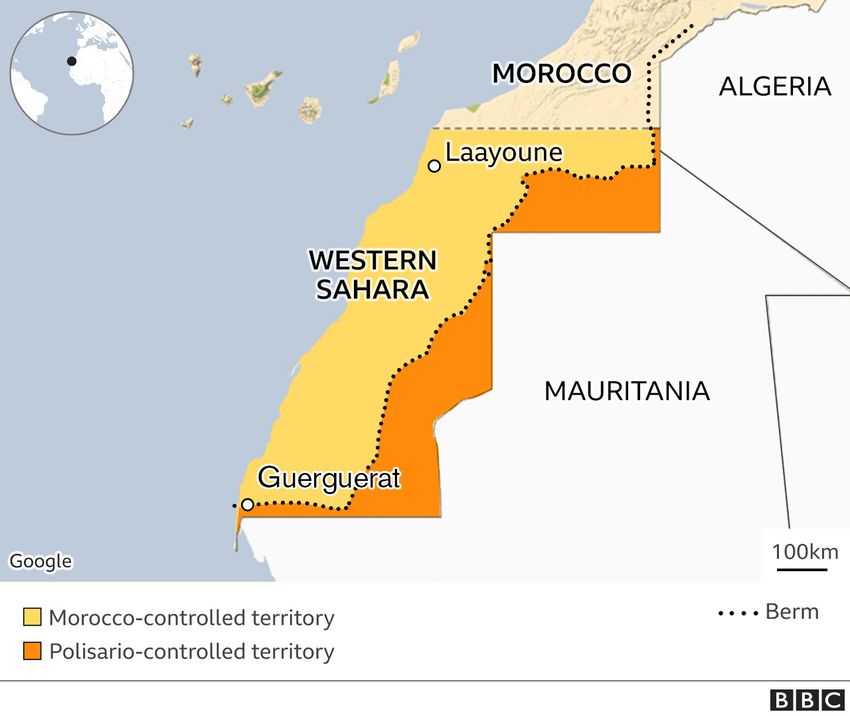
WESTERN SAHARA
Western Sahara - territories controlled by Morocco and the Polisario Front and refugee camps in Algeria
Civilians in Polisario-controlled areas will be caught in the
crossfire and exposed to violence, which may force them to flee
into Algeria. The remaining population is likely to lack access
to assistance because of restricted humanitarian access. The
Refugee
Berm is significantly contaminated with landmines and explosive camps
remnants of war, limiting mobility between areas controlled by
the Polisario and Morocco (MINURSO 01/02/2021). Increased levels
of insecurity could further hamper both people’s movement and
humanitarian interventions, isolating the Sahrawi people from
services and assistance.
New arrivals would put additional pressure on already over-
stretched camps on the border with Algeria, which are highly
dependent on aid to survive because of a lack of access to
sustainable livelihoods (Oxfam 23/11/2020). The insecurity impli-
cations could hamper humanitarian movements in the camps,
with serious consequences for refugees, particularly regarding
their access to essential goods and services including food and
hygiene items.
Source: BBC (10/12/2020) modified by ACAPS to display refugee camps and Guerguerat crossing
21 ACAPS RISK ANALYSIS — MARCH 2021UPDATE
FROM THE
OCTOBER 2020 haiti High risk level
An unusually active hurricane season leads to higher levels
LEBANON/SYRIA High risk level
The deepening socio-economic crisis in Lebanon leads
RISK ANALYSIS of food insecurity and humanitarian needs in a country with
already limited national response capacity
Even though the latest Atlantic hurricane season did not affect
Syrian refugees to opt for unsafe return to Syria, increasing
humanitarian needs
Lebanon continues to experience a deepening socio-economic
These risks were identified Haiti as expected, social and economic factors have continued crisis with a deteriorating political and healthcare situation. Pov-
erty among Syrian refugees in Lebanon dramatically increased in
to impact people’s food security and overall living conditions, as
in the October 2020 report; highlighted by ACAPS in the October 2020 Global Risk Analysis. 2020. Around 90% of the 1.5 million Syrian refugees in the country
below each risk, we have The high prices of goods, the weakened value of the Haitian live in extreme poverty, up from 55% in 2019 (WFP 18/12/2020). The
number of Syrian refugees who are food insecure also increased,
gourde, the economic effects of COVID-19, and below-average
provided an update on the autumn harvests continue to affect livelihoods and drive acute from 29% in 2019 to 49% in 2020 (UNHCR, UNICEF, WFP 31/12/2020).
COVID-19 contingency measures resulted in increased humani-
situation. food insecurity countrywide (FEWS NET 28/01/2021). 4.4 million
people are expected to face Crisis (IPC Phase 3) or higher levels tarian needs and aggravated difficulties in sustaining livelihoods
of food insecurity in the months of March-June 2021. 4 million and income. This increased people’s reliance on negative coping
people were projected to face IPC Phase 3 levels and above in the mechanisms, particularly among the poorest and most vulnera-
August 2020-February 2021 period (IPC 09/2020; IPC 04/09/2020; ble in the country (3RP 31/12/2020; 3RP 31/11/2020). Overall poverty
FEWS NET 16/09/2020). and access to basic services in Lebanon is likely to continue
to worsen in 2021, affecting all population groups (World Bank
Security conditions have also deteriorated in Haiti as a result 01/12/2020).
of an increase in kidnappings for ransom, assassinations, and
social and political protests. These factors were not taken into Despite these circumstances and the severity of needs, the total
consideration in the risk analysis published in October, and are number of Syrian refugee returnees in 2020 was 9,351 - less than
having a significant impact on food security and other sectors half of the 22,728 returns registered in 2019 (UNHCR accessed
such as education. New protests broke out in the capital Port- 31/12/2020). This can be attributed to the fact that the decision of
au-Prince in mid-February 2021 in an effort to drive out President refugees to go back to Syria is influenced mainly by the security
Jovenel Moise, whose term was expected to end on 7 February. and safety situation, economic growth and possibilities, public
Continued violence, civil unrest, and kidnappings could constrain service availability, and personal ties to their places of origin in
access to markets or close down market areas, disrupting market
supply and further deteriorating food availability and access
(FEWS NET 31/01/2021).
22 ACAPS RISK ANALYSIS — MARCH 2021UPDATED
ANALYSIS
RISK Syria - and less so by the poor living conditions in Lebanon (IPL
09/11/2020). In a needs assessment conducted in 2020, 81% of
8.2 million people are projected to need food security and liveli-
hoods assistance in 2021, compared to 6.2 million in 2020 (OCHA
key informants among the Syrian returnees from all countries 12/2020; OCHA 01/2020). The most recent IPC analysis (covering
of displacement - including Lebanon - said that the worsening October-December 2020) projected 7.1 million people (16% of
economic situation in their place of displacement was the most the analysed population) to face Crisis (IPC Phase 3) and higher
important factor for returning, followed by a need to protect levels of food insecurity (IPC 12/2020). Conflict-affected areas
properties, cultural ties, and the improvement of the security continue to be particularly impacted by food insecurity. Although
situation in their location of origin (HNAP 01/01/2021). Unless the the economy has continued to deteriorate as projected, in Feb-
situation significantly improves in Syria, refugees are unlikely to ruary the government implemented some measures meant to
return; this differs from the risk highlighted in the October 2020 improve the situation; these included the decision to devaluate
Global Risk Analysis. the Sudanese pound in an attempt to merge the gap between the
managed and parallel markets (FEWS NET 02/2021). In December
2020, the US removed Sudan from the state sponsors of ter-
rorism list, which may make it easier for Sudan to access debt
sudan High risk level
relief packages and other multilateral loans and financing (USIP
Severe economic deterioration leads to an inability of the 06/02/2020).
state to cope with immense economic and food insecurity
Severe economic deterioration and a significant increase in food
insecurity, as identified in the October 2020 Global Risk Analysis,
has gradually been materialising. Despite it being the harvest
period, staple food prices continued increasing atypically
between December 2020-January 2021. The prices of non-ce-
real food items increased by 20-40% between January-February
2021 and were 250-450% higher than in February 2020 (FEWS NET
02/2021; FAO 10/02/2021). The rapid depreciation of the Sudanese
pound has also resulted in a 60-85% drop in household purchas-
ing power. The situation led to protests in January and February
across Sudan and the declaration of a state of emergency in
seven regions of the country (Dabanga Radio 09/02/2021; AfricaNews
09/02/2020; The Guardian 16/02/2021).
23 ACAPS RISK ANALYSIS — MARCH 2021UPDATED RISK ANALYSIS
deposit by the Central Bank of Yemen (CBY) in Aden (UNSC affected Mayo-Sava, Mayo-Tsanaga, and Logone-et-Chari divi-
yemen High risk level
25/01/2021). This could also push the GoY towards significant sions (GCR2P 18/01/2021; HRW 2021; OCHA 05/02/2021). In December
Continued depreciation of the Yemeni riyal drives up inflation, reforms within CBY Aden, aimed at improving transparency and 2020, 460 protection incidents were reported, including cases of
reducing households’ purchasing power and their ability to possibly encouraging foreign financial support, which could looting, extortion of properties, and injuries. The same month,
meet basic needs potentially contribute to currency stability. If the current situa- two suicide attacks were carried out in Mayo-Sava division, and
tion continues however, dwindling foreign currency reserves will there was also a violent attack on four islands of Lake Chad
The risk of inflation being driven up by the continued depreci-
continue to drive inflation up, affecting people’s ability to afford in Lagone-et-Chari division, with casualties and abductions
ation of the Yemeni riyal, as identified in October’s Global Risk
food and other basic commodities. The escalation of conflict reported. In 2020, violence triggered the internal displacement
Analysis, remains high. This is mostly a result of the depletion
since the beginning of February in Marib - the main source of oil of 322,000 people. Over 115,000 refugees and 123,000 return-
of foreign currency reserves and the likely continuation of com-
and liquefied gas in Yemen - could significantly disrupt oil and ees live in the Far North. Humanitarian access continues to be
peting economic regulations between the Government of Yemen
gas facilities and extraction operations, affecting GoY revenues highly constrained. In December 2020, some areas of the region
(GoY) and Ansar Allah-controlled areas.
and currency stability. were reported to be inaccessible without armed escorts (OCHA
Since January 2021, the riyal in GoY-controlled areas has resumed 01/02/2021).
a steady depreciation, following a temporary appreciation in
December 2020 related to the announcement of a new cabinet
and the release of funds from the Saudi deposit to cover letters
cameroon High risk level
of credit for the import of basic commodities. The value of the Rise in violent events targeting civilians, IDPs, and refugees
riyal in December 2020 increased to YER 640 per 1 USD; it then in the Far North region results in increased displacement and
started to depreciate again up to YER 860 per 1 USD in January protection needs
2021, from an average of YER 778 per 1 USD throughout 2020.
Boko Haram’s violence against civilians in the Far North region,
The value of the riyal in Ansar Allah-controlled areas remained
as well as related fatalities, increased slightly during most
stable at around YER 595 per 1 USD in January 2021, in line with
of 2020 - but have so far decreased in 2021 (ACLED accessed
the average in 2020.
08/03/2021). Although the risk identified by ACAPS in October
The bilateral support by the Kingdom of Saudi Arabia to the GoY - 2020 has not materialised, violence and humanitarian needs in
which contributes to the stability of the riyal in Yemen - is likely to the region continue to be high.
be affected by a UN Panel of Experts’ report highlighting a lack of
Targeted attacks and events of generalised violence became
transparency, allegations of corruption, and misuse of the Saudi
more frequent in 2020 than in the previous years, and particularly
24 ACAPS RISK ANALYSIS — MARCH 2021You can also read


